Tag Archives: gay

 My Week, For What It Was Worth

On playing football with the Boys of Taormina
I have never been attracted to German boys. They can be among the most beautiful, but the language itself has always struck me as cold and harsh. Yet Severin, from Bremen, changed all that. He has been with me for a week now, sleeping beside me in the small hotel on Via Don Giovanni Bosco. Alfio, the receptionist, seemed rather taken with him and turned a blind eye when I asked whether Severin could stay until he got settled. His new job as a waiter has been delayed for another week, though the restaurant promised that his room would soon be ready.

I learned that Severin had a boyfriend, a Spaniard called Estaban, who had remained behind in Turin. He spent a great deal of time on the phone to him, usually trying to reassure him that, although he was sharing a bed with another guy, nothing had happened.

That was partly true. We had both once been Pietro’s “boys”, and there was a reluctance on either side to go where a dead man had already been. It was as though Pietro still maintained some hold over us; we might almost have been brothers, and anything sexual felt faintly incestuous. Yet every morning, when I woke, I would find Severin with his arm draped around me, cuddling, it seemed, with someone he trusted.

Severin is easy to be around: always a few steps behind me wherever I go, yet never overstaying his welcome. He has told me much about his homeland, where his father taught at the University of Bremen and his mother at the University of the Arts. Bremen, he said enthusiastically, was a working-class city that had built its fortune on its port and shipyards — a fact not lost on the Allies during the Second World War, when the city was heavily bombed.

After leaving school, Severin worked at Beck’s Brewery, but was dismissed after being caught having sex with a fellow worker on the bottling line. His abrupt departure prompted him to travel across Europe, eventually ending up in Turin, where he met Pietro and became, in effect, a kept man.

Pietro had obviously singled Severin out for his Nordic looks — a twenty-first century vision of the Aryan “master race”: blond hair, blue eyes, pale skin. There was also the fact that Severin was athletic, and a devoted supporter of Werder Bremen.

Severin discovered that I too liked football and had once played competitively when I was younger. That discovery prompted him to buy a cheap football and seek out a patch of wasteland where we could have a kickabout. Before long, local boys began drifting over to join in, and soon we found ourselves playing fierce, high-intensity matches, with slabs of concrete serving as goalposts.

It became an Italo-Anglo-German affair, proof that football can be loved by everyone, regardless of nationality. Alas, the Italian boys put Severin and me to shame; too many years of smoking, drinking, and inactivity had rendered us ineffective against the tireless boys of Taormina. But it made me feel like a young boy again – innocent and carefree.
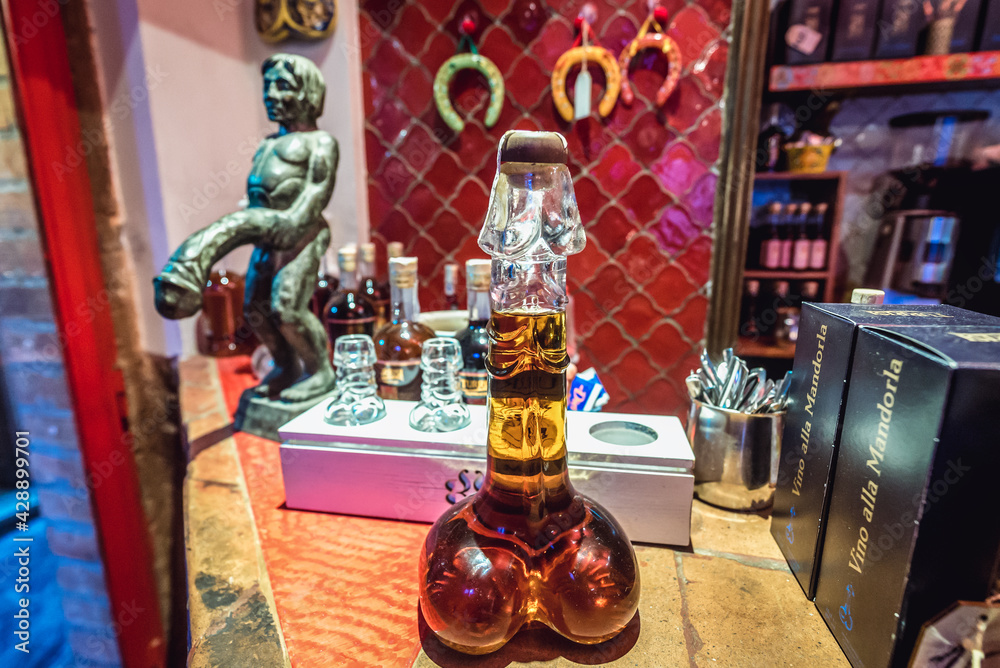
The focus is the big phallus…
Alfio had a night off and promised to take us to Castelmola, a picturesque medieval hilltop village perched directly above Taormina. “It will be the perfect night for you guys,” he said with a wink, though it seemed more likely that he fancied his chances with Severin, who remained entirely oblivious to his advances.

Alfio ordered a taxi, and a journey that should have taken ten minutes was completed in half the time. The dusty Mercedes hurtled up the steep, narrow, winding road, revealing breathtaking glimpses of Mount Etna and the Ionian coast below.

We arrived in a small square, from which Alfio led us up a short flight of stone steps into Bar Turrisi. Judging by the greetings he received, he appeared to know everyone there.

Alfio explained that Castelmola had grown around the ruins of a tenth-century Norman castle, its streets narrow, ancient, and full of charm. Bar Turrisi, however, was something else entirely. Opened after the war and passed down through generations, it was said to have been founded by descendants of families who had migrated centuries earlier from Pompeii, bringing with them the city’s ribald fertility symbols. The restaurant, Alfio told us with evident delight, still celebrated that inheritance.

At first, the significance of this escaped both Severin and me, but we soon understood. Across all four storeys, there were penises everywhere one looked: wall paintings, well-endowed statues, phallic liquor bottles, shot glasses, lamps, mirrors, even the plumbing fixtures above the bathroom sinks. The food menu itself was shaped like a penis.

“I knew you would be impressed,” Alfio said, guiding us towards a table overlooking Taormina below. “The people here never wanted to be part of Taormina. They value their independence. But Castelmola was founded to watch over and protect the town.” Unfortunately, night was already beginning to fall, and the views slowly disappeared. The blue sea darkened into a black mass, though the lights of Taormina still sparkled beneath us.

“They filmed The White Lotus at the Four Seasons San Domenico Palace in Taormina,” Alfio told us. “The cast used to come here regularly. They started calling this place ‘the penis bar’.”

Alfio ordered a Sicilian pizza, its ingredients largely a mystery to me apart from the cheese, though it tasted wonderful. We washed it down with a local almond wine, supposedly an aphrodisiac, which Alfio clearly hoped might improve his chances with Severin. As for me, I seemed excluded from his ambitions, though he nevertheless ordered another bottle — this one in a distinctly phallic shape, decorated with traditional Sicilian artwork — and insisted that I drink a generous amount of it.

As my stupor deepened, I found myself wondering how one might write about an overdose of penises without making it sound tacky — which, strangely enough, it was not. “They are symbols of sexual potency and fertility,” Alfio explained smugly, once again for Severin’s benefit, “and also of the virility of Sicilian men.” Severin, meanwhile, remained blissfully unaware of the attention directed at him.

It was only when yet another bottle of almond wine appeared, and Alfio insisted that I finish most of it, that I finally grasped his strategy: get me drunk enough, and he might have Severin to himself. By then, however, it was too late for me to do much about it.

The next morning I woke with a punishing hangover, Severin’s arm once again draped around me. My head throbbed, and Severin seemed in no hurry to wake himself. Still, I managed a smile. Alfio’s attempt to seduce him had failed.

On hearing a story that amused me…but shouldn’t have
At a restaurant in Taormina, an old man told us the story of his brother, Salvatore, who, back in 1958, had been abandoned by the woman he was supposed to marry. The humiliation drove him into such despair that he swallowed an overdose of sleeping pills. He was taken to hospital in Syracuse, where, still determined to end his life, he hurled himself from a window — only to land on a balcony below. Bruised but alive, he was carried back upstairs. Three hours later, he climbed to the very same window and jumped again. This time he missed the balcony and died.

“Oh,” I laughed awkwardly, “third time lucky.”

The old man responded by banging his walking stick sharply against the table, which suggested that my attempt at humour had not been appreciated.

On not upsetting a Sicilian…
“The Cosa Nostra is still active in Sicily,” Alfio told us. “But these days it is discreet. Drugs, the pizzo, infiltrating businesses — that is where the money is.”

“What is the pizzo?” I asked.

“Protection money,” he replied. “Money extracted through intimidation or extortion. It comes from the Sicilian word pizzu — ‘beak’ in English. To let someone ‘fari vagnari u pizzu’ — ‘wet their beak’ — means to pay them off.”

The warning beneath Alfio’s explanation was perfectly clear: do not offend the Mafia. Fortunately, that seemed unlikely. I would soon be leaving Sicily — and leaving Alfio and Severin behind with it.

“But honour can be dangerous too,” Alfio continued. “Even an ordinary man in the street feels the need to defend his honour. So you must be careful not to insult him.”

Severin then recalled an unsettling story he had once read online, one that seemed to confirm Alfio’s point.

In 1993, a father, unable to bear the shame of having a homosexual son who worked as a prostitute, allegedly paid for him to be murdered. The son was shot in the stomach while soliciting clients in Messina. His father was later jailed for hiring an eighteen-year-old assassin to carry out the attack.

“There, you see?” Alfio said triumphantly. “That old man in the restaurant — the one whose brother needed three attempts to kill himself — was offended by your joke. But he only banged his walking stick on the table, when he could just as easily have paid someone to shoot you.”

And then he laughed.

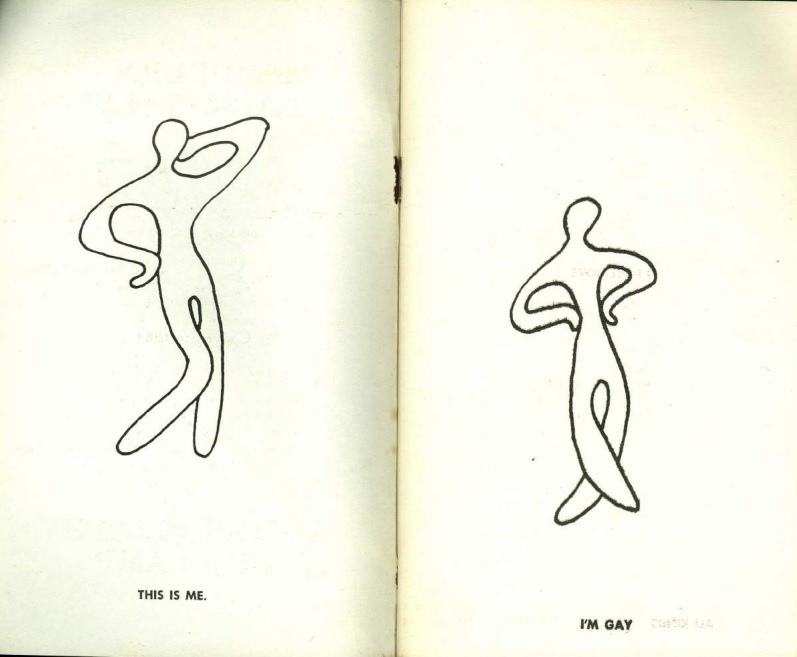
On finding old illustrations…
On the cute and willing…

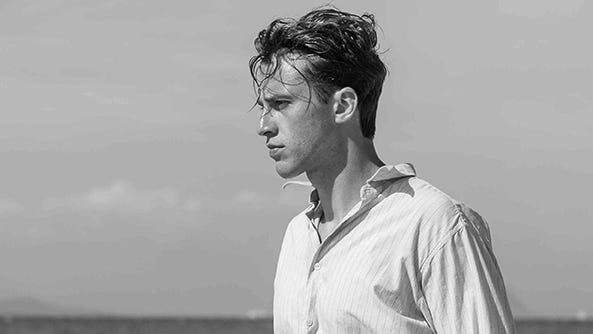
Michelange Bédard. Photo by Fernando Landin, 2026

Charlie: The Promise of Paris – Partie 4

Not for the first time, Charlie had not been entirely honest. When we arrived at his parents’ apartment, it was immediately clear they hadn’t been expecting me. It made my situation more disconcerting. Still, they welcomed me into their tastefully decorated rooms—ornate, unmistakably Parisian.

I had left Thomas, Ambre and Léo behind, taking my first tentative steps towards reconciliation with Charlie. Yet I could not shake a lingering sense of disappointment. All three had hugged me as I left—our plan à quatre had come to an end, but it would stay with me for a long time. We crossed Paris in uneasy silence, neither of us willing to admit that we had both behaved badly.

“This is completely unexpected,” Charlie’s mother said. “But it is a wonderful surprise, and we are delighted to see you both. I have not seen Charlie for such a long time, and at last we get to meet the person he shares an apartment with.”

Charlie leaned in and whispered in my ear. “My mother still hopes I might give her grandchildren and refuses to accept that it will never happen.”

His father shook my hand warmly and patted my shoulder. “Come in and make yourself at home,” he said. “I shall make coffee for us all.”

“You never said anything about visiting,” his mother added. “If I had known, I would have prepared something special. Never mind—we shall go out. I’ll call Thomas and see if he can join us.”

Charlie cut in quickly. “Thomas is working. I have already seen him, but he sends his love to Maman.” He glanced at me cautiously; it could not have escaped her notice.

“Such a shame,” his father sighed. “It is not often we have both our sons together. “But” he added, turning to me, “when Charlie and Thomas are in the same room, things can become a little… lively. Perhaps it is for the best.”

It was certainly for the best. If Charlie and Thomas had begun arguing, it would have been about one thing—me—and that would have made everything unbearably awkward. I might even have had to explain that I had been caught in a love tryst with both their sons.

“Follow me,” Charlie said.

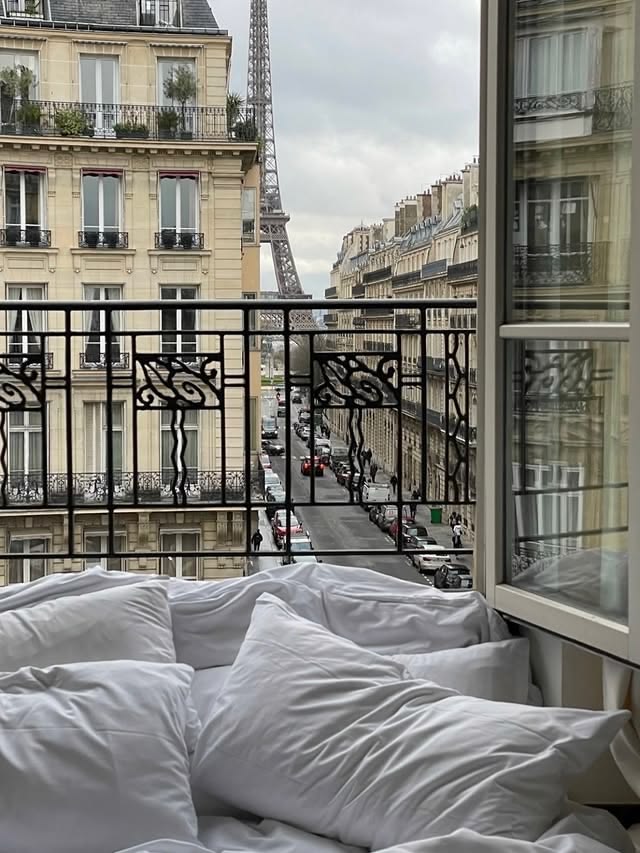
He led me through the apartment to a bedroom that had clearly once been his. The bed sat directly beneath the window; he climbed onto it and pushed open the large panes. The street stretched out in a straight line towards the Seine, and on the opposite bank, the Eiffel Tower rose above everything.

“This room is perfect in summer,” he said. “It’s wonderful to sleep with the windows open, your head almost out in the street.” Six soft pillows were stacked against the iron grille. I placed my holdall beside his and pretended to take an interest in the view.

“I’m glad you came with me,” he admitted. “For a moment, I thought you might stay with Thomas—and that would have made me very unhappy.”

If he was expecting reassurance, I wasn’t going to give it.

“I’m very upset about those photographs in Le Pénis,” I said. “Why, Charlie? Why pose naked—and not have the decency to tell me?”

“I was foolish,” he admitted, “but I found it exciting. It was some time ago, when I went to Lille with Matis. He persuaded me to pose. I knew he intended to submit them to magazines in France. I was wrong on two counts: I thought they weren’t good enough, and I never expected you to see them.”

“But I did, Charlie.”

“Yes,” he said quietly. “And I regret that. But I must live my own life.”

“And what about me? Did you ever consider how I might feel?”

“I always consider your feelings, Miles. But I suspect your problem isn’t really the photographs. It’s something that was mentioned earlier.”

“What do you mean?”

“That you have never seen me naked. That we have never made love.”

My silence gave him his answer.

“You, see?” he said softly. “I knew that was on your mind. But you must understand—my reluctance is for your own protection. I have lived carelessly, in both Paris and London, and I promised myself I would not return to that life. It does not mean I don’t love you—quite the opposite. And when it does happen, it will be because the moment is right. Love is meant to be something beautiful.”

It was not the explanation I had expected, and it did nothing to satisfy me.

A faint flush rose to his cheeks; he chose his words carefully.

“Despite appearances, I am a shy person. And yes—before you say it—those photographs were difficult for me. I had to force myself. But there is something else.”

I stared at him, incredulous. Shy was the last word I would ever have used to describe Charlie.

“There is also the fact,” he continued, “that you are highly sexed. We are compatible in many ways, but not in that.”

“So it’s my fault?”

“I didn’t say that,” he replied quickly. “But I know you will seek sex elsewhere. I just didn’t expect it to be with my brother.”

Since his arrival in Paris, everything had become a quiet contest of blame—and he was adept at shifting it onto me.

“If you want me to apologise for last night, I won’t.”

“Your promiscuity frightens me,” he said. “I’m afraid you will catch something—and put me at risk as well.”

“If you think I’ve been sleeping around, you are mistaken. Yes, I’m attracted to people—but for years, the only person I’ve wanted is you.” I sat down on the neatly made bed. “Last night was an exception. I was angry, drunk—and yes, I find Thomas attractive. But it wasn’t planned. It just happened. It was new to me. I won’t pretend I didn’t enjoy it. But I also need to live my own life.”

“But you have hurt me,” Charlie said, his voice breaking. “I never imagined that you would make love to my brother before me.”

We had reached an impasse.

“If you like, I can return to Thomas and leave you alone.”

“Non!” he exclaimed. “I want you to stay with me. We must try to make this work.”

“But I don’t see how we can. Our trust has been compromised—by both of us.”

For the first time since I had known him, I saw fear in Charlie’s eyes.

“I beg you not to give up on us. I came to Paris to make our relationship work. I am certain we can return to the life we have in England and put all this behind us.”

I was not so sure. Away from Charlie, I had tasted a kind of freedom that had awakened something in me. If we were to make this work, he would have to change—and I doubted that he would. And yet, despite my coldness, I felt a flicker of pity. I considered forgiving him for those revealing images in Le Pénis. I also wanted his forgiveness—for Thomas, for Ambre, for Léo. In the space of twenty-four hours, everything between us had shifted. But if I gave in now, Charlie would always hold the advantage.

My phone buzzed. A WhatsApp message lit up the screen: Bianchi, in Verona. His timing was uncanny, as though he had sensed an opening and meant to claim it.

“Let’s talk about this later,” I said.

Charlie’s parents took us out for dinner at a small restaurant on rue de Passy. It was expensive, and I felt slightly underdressed, out of place. His parents made polite conversation in English as we waited for our main courses. I played my part, courteous and attentive, while Charlie remained withdrawn and silent.

“What is the matter?” his mother asked. “Is something troubling you?”

“No,” he replied. “I’m just tired.”

“Charlie tells us you are a writer,” his father said, turning to me with quick interest. “Is it true you write about travel?”

“It is,” I said. “But I would like to write about other things.”

“Have you considered a novel?”

“I have,” I admitted. “But I’m not sure I have the patience—or the skill—to write a good one.”

“My sister, Cecilie, has written a book,” his mother announced. “It was dreadful. She attempted a grand romance, with a few murders thrown in. It ended up chaotic—and not at all romantic.”

“My Aunt Cecilie knows about murder,” Charlie interjected. “Her first husband was killed by his business partner, and she became very wealthy as a result. We have often suspected she was having an affair with the man who killed him.”

“That will do, Charlie.”

But he continued, undeterred.

“Of course, infidelity is common in our family. You must look around this table to realise there are secrets waiting to be uncovered.”

He looked at each of us in turn—his parents, then me. I remembered what Thomas had told me: that he suspected he was not his father’s son. The flicker in his father’s expression suggested there might be truth in it—or at least, guilt of another kind.

“Should I assume something is wrong between you?” his mother asked.

Charlie left the answer to me.

“I think every relationship has its difficult moments,” I said evenly. But the mood had already soured.

Charlie’s behaviour throughout the meal suggested he might not be as ready to forgive as he had claimed.

Afterwards, we made strained conversation as we walked back to his parents’ apartment. Rain had begun to fall, quietly at first, then more steadily—as though the evening required it.

Inside, we were offered brandy—expensive, warming. I was pleased to discover that his father smoked. He suggested we step out onto the balcony together. Closing the French doors behind us, he gestured for me to sit.

Below us, the hum of traffic drifted upward, mingling with the occasional burst of laughter from passers-by in the street.

In the half-light, I could see Charlie in him. His thinning grey hair had once been as dark and full as his son’s. He carried himself with a surprising vitality, every inch the businessman—someone accustomed to inspiring confidence, to being believed.

“You are the only person Charlie has ever introduced to us. That must mean you are important to him.” He spoke calmly, with quiet precision. It was not a question, but a statement. “And yet, the circumstances suggest there is a problem between you.”

“We’ve been very happy together,” I said. “But let’s just say we have both done things we now regret.”

“Would you care to elaborate?”

It was a difficult decision. Should I tell him everything? Neither of his sons would come out of it well—nor, for that matter, would I. But there was something in his manner, a steadiness, that suggested he would not rush to judgement.

“Before you answer,” he said, “allow me to tell you a few things. I love both my sons, but—as Charlie implied—there are secrets in this family. Charlie is my flesh and blood, but he takes after his mother, who, in her youth, was… let us say, complicated.” He paused briefly. “I am closest to Thomas, though he is not my son in the strict sense. I am not his biological father. He was the result of one of his mother’s affairs. And yet, Thomas is very like me. He has loved me in a way that has made me deeply proud.”

He hesitated, then continued.

“But do not imagine that fault lies only with their mother. I, too, have been unfaithful—many times. Age tempers these things or perhaps exhausts them. We settle, eventually. But my sons… they have inherited more than we intended. In their own ways, they are becoming what we once were.” He studied me for a moment. “Am I close to the truth of your situation?”

“I believe you are, sir.”

And so, I told him everything.

As I spoke, I watched him carefully, searching for some flicker of judgement or surprise. But he remained composed, listening, nodding occasionally, as though nothing I said was entirely unfamiliar. When I finished, he was silent for a long moment.

“The question I must ask,” he said at last, “is which of my sons you love.”

“I suppose the honest answer is that I love them both.”

“But love is a delicate thing,” he replied. “Do not mistake it for desire. I suspect it is Charlie whom you love. Thomas, perhaps, is a distraction.” He took a measured breath. “I am not surprised by Charlie’s actions. Nor am I surprised that Thomas would seek to provoke his brother. That is their nature. But you, Miles—you are the unknown quantity. Everything now depends on how you choose to respond.”

“That is the problem,” I admitted. “I don’t know how to deal with it.”

“Charlie craves attention,” he said. “He will do almost anything to be noticed. But beneath that, there is a boy who wants to settle down with someone he truly loves—and he is afraid to reveal those feelings.” He paused, weighing his words. “If you want my advice—and I offer it as someone who knows his son—then leave him. Leave Paris without telling him where you are going. Let him believe that he might lose you.”

He glanced out into the night before continuing.

“He will return to England in a hurry, convinced that you have gone back there. Whether you are waiting for him… or not, is entirely your decision.”

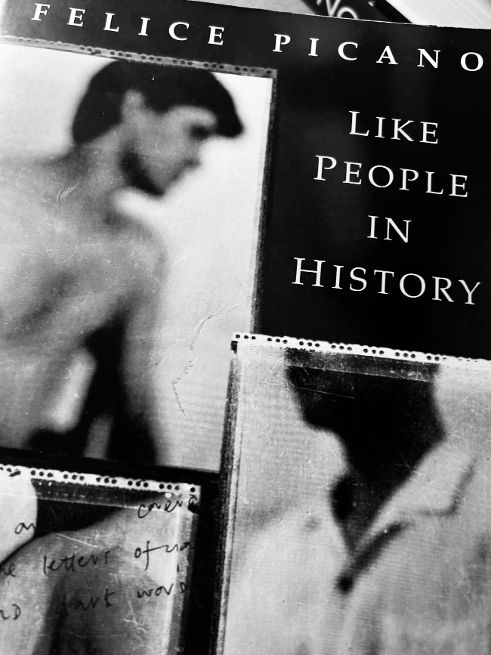
Boys Burn Quiet: Open, Heaven

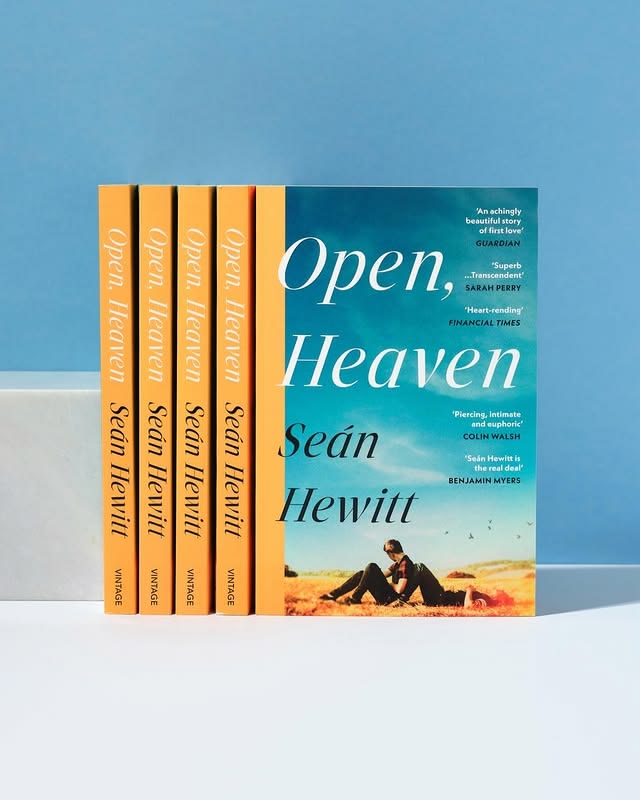
Open, Heaven: Seán Hewitt (2025)

“Now, this nightly ritual had been my secret for years. In my mind, it was linked somehow to that scene – the distance, the watching but never touching. I fixated only on those I thought would not reciprocate, but I could imagine the moment of pre intimacy when they would give in and a secret would be made between us. I understood that this was what desire was: wanting something I could not have, dreaming of holding it. But even then I knew there was a risk, a contradiction: if, by some chance, the object of my desire desired me, I had the sense that the desire might evaporate altogether. So, although there was this burning, urgent thing, I could not exorcise it, and my imagination went into overdrive under restraint. There was never a release, never a completion that didn’t feel soiled and voyeuristic.”

Joshua handed me a pristine paperback. “Read this,” he said. “I think you’ll like it.” The book looked untouched; seeing my hesitation, he added, “I enjoyed it so much I’m giving all my friends a copy.”

I don’t think I’ve ever known anyone do that, and I found myself wondering whether they could really afford such generosity.

But Joshua was right.

The novel is a debut from Seán Hewitt, better known until now as a poet, memoirist, and critic. He is also Assistant Professor in Literary Practice at Trinity College Dublin and a Fellow of the Royal Society of Literature. His first poetry collection, Tongues of Fire, won the Laurel Prize in 2021—the same year he published J.M. Synge: Nature, Politics, Modernism. His memoir, All Down Darkness Wide, followed in 2023, and then came 300,000 Kisses: Tales of Queer Love from the Ancient World; a second poetry collection, Rapture’s Road, appeared in 2024.

Which brings us to Open, Heaven, a debut that confirms him as an all-rounder.

It is, in a way, a love story without quite becoming one—an infatuation we hope will deepen into something more, though it never does.

James, a teenager, dreams of a life beyond his small village; his emerging desires threaten to unsettle his shy exterior. Then he meets Luke—unkempt, handsome, charismatic, and impulsive—sent to stay with his aunt and uncle on a nearby farm.

As the seasons pass, a bond forms between them, one that quietly reshapes their lives. Yet James remains uncertain of Luke’s feelings, and as summer draws to a close, he faces a choice: risk everything for the possibility of love, or let it slip away.

I have a weakness for bad boys, so it was inevitable that I fell for Luke—made all the more appealing by the fact that he turns out to be straight. I was less taken with James, who seems destined to spend the rest of his life wondering, What if I’d forced the issue? Though perhaps that’s unfair. He could just as easily have been me.

I suspect I’ll carry my own catalogue of missed opportunities. Memory has a way of softening the past, making it seem brighter, simpler—chiding you for not taking a chance. But it was never that simple.

Hewitt proves especially perceptive when it comes to these almost-relationships—the ones that hover on the edge of possibility but never quite materialise.

I finished the book still hoping, right up to the final pages, that something might finally happen between them. Afterwards, I read other readers’ responses; the consensus, unsurprisingly, was that it leaves an aching feeling.

 My Week, For What It Was Worth

On driving behind a cute-assed cyclist…
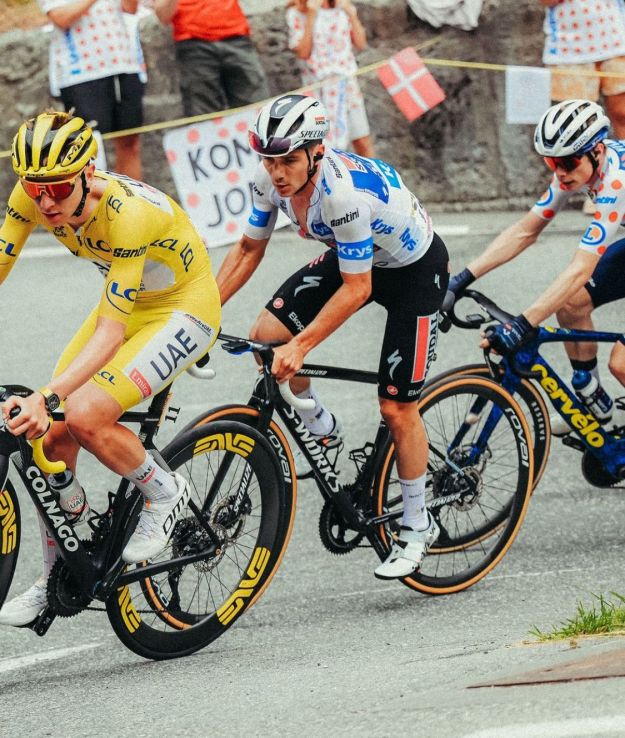
I found myself trailing a cyclist who was hammering the pedals with admirable ferocity; his lycra-clad form rose and fell in a hypnotic rhythm, all sleek lines and aerodynamic intent. There’s something undeniably compelling about a well-put-together rider on a racing bike—graceful, efficient, almost cinematic.

But as I pulled alongside to overtake, the illusion collapsed rather abruptly. What I had taken for youthful athleticism was, in fact, a fully paid-up member of the MAMIL brigade—Middle-Aged Men in Lycra—an increasingly unavoidable presence on the roads. The term, apparently coined by Mintel in 2010, captures a very specific phenomenon in modern cycling culture.

The charitable definition goes something like this: men typically aged 35–50+ who embrace high-performance cycling, clad in tight technical gear and mounted on eye-wateringly expensive carbon-fibre machines. It’s said to be driven by a desire for physical challenge, a reprieve from work and domesticity, and perhaps a quiet rebellion against the passing of time.

Which is all very noble, of course.

And yet—at the risk of sounding deeply ungenerous—I can’t help but feel a flicker of disappointment every time the helmet comes into focus. If you’re hoping for lithe, Tour de France–calibre elegance, you may be better off watching the actual Tour de France. Out here on ordinary roads, the reality is… rather more middle management on wheels.

On binge-watching The Count of Monte Cristo…
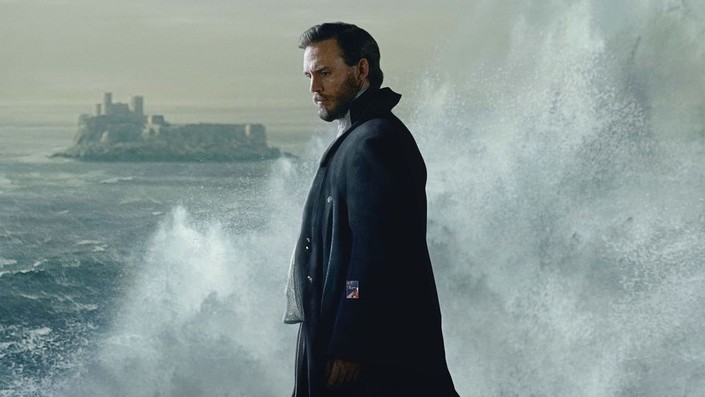
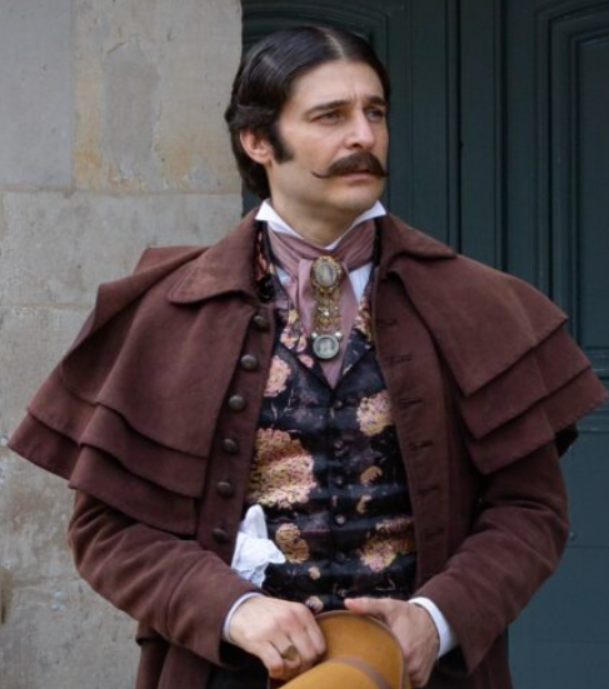
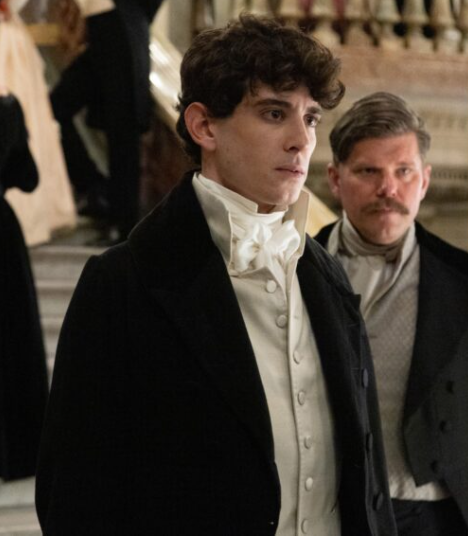
There was only one real reason for watching The Count of Monte Cristo—not the recent film, but the Italo-French collaboration from two years ago. My interest lay not with Edmond Dantès himself, nor with the familiar arc of his imprisonment and revenge, but with two Italian actors—Lino Guanciale and Nicolas Maupas—who have recently piqued my curiosity.

Edmond Dantès, a sailor falsely accused of treason, is imprisoned in the Château d’If off Marseille. After fifteen years, he escapes, discovers treasure on an uninhabited island, and assumes the identity of the Count of Monte Cristo, plotting revenge against those who betrayed him. Like the figure in the Alexandre Dumas novel, he emerges compelling, if inevitably vengeful.

The production is noted for its cinematic look, authentic costumes, and striking Mediterranean locations. Reviews were mixed: The Guardian criticised its wooden dialogue and performances, though conceded it could still be an enjoyable watch.

It wasn’t Sam Claflin in the lead, nor was it Jeremy Irons—though Irons was, as ever, effective as the ageing Abbé Faria, lending the role a quiet authority.

Instead, my attention returned to Guanciale and Maupas. I’ve seen Lino Guanciale as the lead in two Italian-language series: La porta rossa, where he plays a ghost, and Il Commissario Ricciardi, where he sees them. Here, he appears as a chubbier Luigi Vampa, a quieter presence but still recognisable.

Nicolas Maupas, born to a French father and Italian mother, is best known as Filippo Ferrari in Mare fuori, set in a juvenile prison in Naples. In this adaptation, he plays Albert de Morcerf with a naïve, easy charm that makes the character immediately likeable.

My interest in Italian television and film feels increasingly insatiable, though it relies almost entirely on subtitles. Here, however, The Count of Monte Cristo was performed in English, allowing both Guanciale and Maupas to speak in my native tongue—an accommodation that also reflects the ambitions of an international co-production, assembling a cast drawn from Italy, France, Denmark, and England.

Lino Guanciale as Luigi Vampa
Nicholas Maupas as Albert de Morcerf

On ditching a short story…
I wrote a short story but something didn’t sit right. I thought it was good, but there was an uneasiness. Like it had the making of something but lacked oomph. And I worked at it from several angles but still it gave me reservations. I showed it to someone and they said, “This is not you at all.” And so the story was shelved.

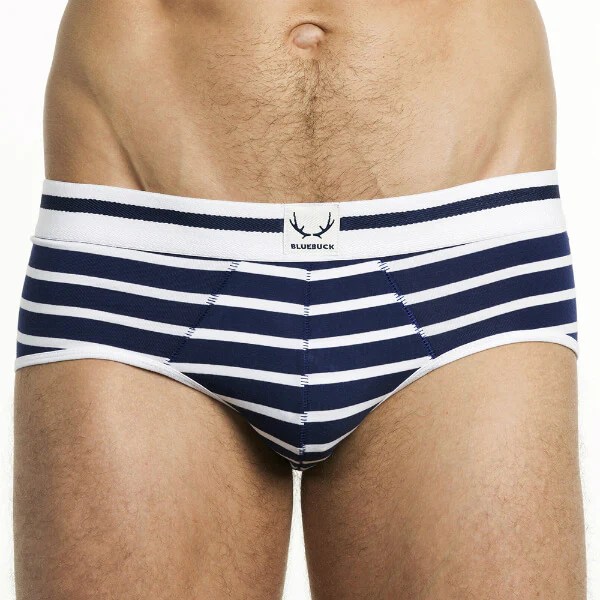
On seeing a young guy’s underwear…
The only thing colourful about him was his underwear, which I discovered by accident, though afterwards I wondered if anything about it had been accidental at all. He carried himself so carefully, as if afraid of drawing attention, yet there it was—a glimpse of colour (blue and white) that didn’t belong to the guy I thought I knew. It unsettled me, not because it was bold, but because it suggested he was.

On hearing somebody talking about an elderly writer…
“At some stage he will be afraid to start writing a new book because he might die before he finishes it.”

Privacy is what we used to call liberty
Ubiquitous cameras in public spaces. Online tracking, data harvesting, targeted ads. Governments or corporations monitoring our behaviour. Something fundamental has shifted in how we understand freedom. 

Liberty used to mean freedom from intrusion. The right to be left alone, to speak, think, move, and live without constant oversight. Privacy is now treated as a narrower, more technical concern—something about data protection, personal information, or what you choose to share.

Privacy is what we used to call liberty.

On the cute and willing…

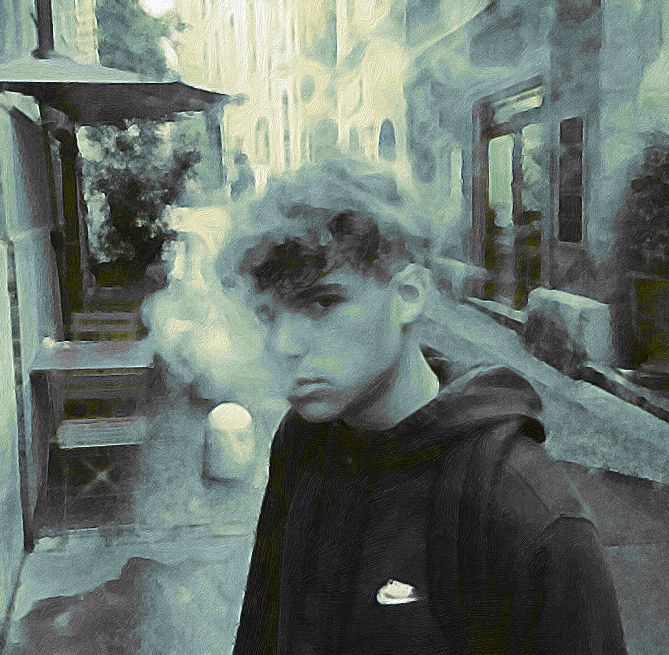
Ilya Kovalev. Photo by Archie the Photographer, 2026.

My Week, For What It Was Worth

On chilling out in a Southern Italian town…

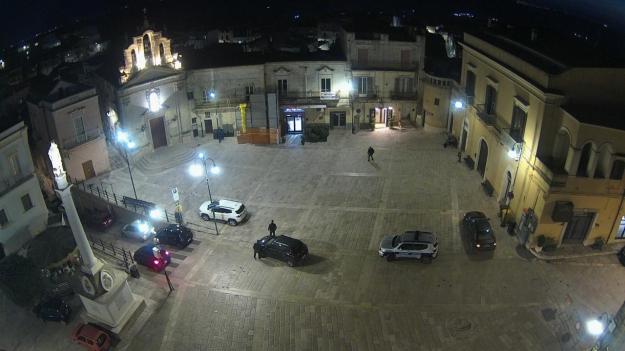
Montescaglioso is where a story ends. But I picked a week when the Italian weather was unwelcoming: fine by day, but extremely foggy by night. It is to be expected, because Montescaglioso sits high on a hill.

And then the winds came—strong Sciricco and Maestrale winds that brought heavy rain and quickly sent it away again. For this reason, the locals were happier to stay indoors until conditions improved.

Montescaglioso is where the heart beats a little slower.

Where there are people, I watch them… observing their character and capturing their mannerisms. Most are unaware that this old town was once inhabited by Greeks and Romans.

Some of them will end up in a story.

There is the young boy who is inconspicuous in the corner of a café; he drinks Coke with lemon and reads a paperback copy of Black Run by Antonio Manzini. Every few pages he stops and scrolls through his iPhone. He appears to have friends, but at that moment is bored with his own company.

Then there is the handsome boy, whom I watch with curiosity until it becomes something closer to obsession. He eats pasta with one hand, while the other rests inside his underwear, absent-mindedly playing with himself. He stops when he realises I am watching, and I am immediately disappointed. I want to tell him it is none of my business what he does, but that feels like a perverse thing to say.

The teenagers who congregate beneath the tall statue of San Rocco, the patron saint of Montescaglioso, in Piazza Roma. They are immaculately dressed in smart jeans, designer puffer jackets, and new trainers, because the nights are chilly. They talk for hours because there is nothing else for them to do. I do not understand what they are saying—they speak too fast—but they seem friendly.

The man who pulls up in a Grande Panda and sees me sitting on a bench outside an old building, its yellow paint faded with time. He speaks remarkably good English and educates me on the history of the town: the stories of local people who left at the beginning of the last century and moved to New York and Toronto. He tells me that Francis Ford Coppola is a second-generation Italian-American, born to parents of southern Italian descent. His paternal grandparents emigrated from Bernalda, which is only a few miles away, and the director now owns a hotel there.

The old man who walks his dog every evening and stops to talk. He points to the Chiesa di San Rocco and tells me it was badly damaged in an earthquake that struck Montescaglioso in 1827, and was later restored with the construction of stone vaults and a new façade. He tells me that ancient Greek tombs were once discovered beneath the piazza, and that the church once stood outside the town—there is the possibility of undiscovered graves beneath the surrounding houses.

I decide that there is much history to be found, but I am only interested in the present, where the young people appear permanently sun-tanned, animated, and possessed of an easy, unstudied allure that feels particular to this part of the world—especially to someone from northern Europe.

On lusting over Benjamin Voisin in The Stranger…

I know somebody who claims to have met French actor Benjamin Voisin. It may or may not be true because that person has a tendency to tell lies. But the story he tells is a good one because he said that Voisin smoked a lot, wasn’t completely fluent in English, but came across as a nice chap. And he was convinced that he was gay, but that bit has yet to be confirmed.

I first saw Voisin in François Ozon’s Summer of 85 (Été 85), and at the time I thought the director might have chosen a better-looking boy. But then came the trailer for Ozon’s The Stranger (L’Étranger), along with the publicity stills, and I kept finding myself asking, “Who is that good-looking guy?”

It has felt like an age waiting for The Stranger to arrive. Based on Albert Camus’ novella, it was originally shot in colour, though Ozon ultimately chose to release it in black and white—a decision that feels entirely right.

There is a scene in which Meursault (Voisin) kills an Arab boy. He studies the body on the ground—first the armpits, then the lips—before firing… several times. It’s one of Ozon’s familiar devices, turning something ostensibly straightforward into something quietly, disconcertingly homoerotic.

“I wanted to make everything erotic,” Ozon says. “The girls are erotic. The boys are erotic. The nature is erotic. Everything has to be erotic and sensual. That’s what I wanted. And the choice of the black-and-white [cinematography]was a way to show this sensuality in the world.”

If that wasn’t enough we see Voisin’s naked body a few times, a pretty bum that requires squeezing, and even get a glimpse of his manhood.

On coming upon an unwelcome adversary…

The boyfriend of the love of your life stands before you. What are you supposed to do? Granted, he’s good-looking. But he lays claim to someone who should be mine. For that reason, I can’t ignore everything that’s wrong with him. I want lightning to strike him dead. There is a solution to this jealousy—but it’s not one I dare to consider.

On reading an anecdote from Rufus Wainwright…
“What’s the best thing a cabbie has said to you?”

“Well, my handle on Uber is just the letter R, and I went into a cab once and the driver said, “R, what’s that stand for?” And I said, “Rufus.” And he said, “Oh, like Rufus Wainwright? I wonder what happened to him?” I just went along with it…”

As flies to wanton boys are we to the gods…

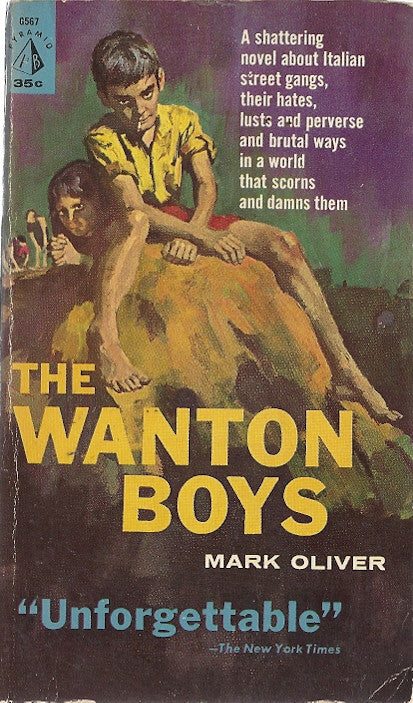
The Wanton Boys, Mark Oliver, 1959.

He was a thin, brown-eyed, sad-looking boy, one of ten children of a poor Italian fisherman who had been drowned at sea. Sometimes he begged a little, and sometimes he stole, but hunger grew in him every day. There was no more salt in the home, only garlic to help the long loaves down. Garlic or one of the half-rotten tomatoes that the wasteful spaghetti-makers threw away, and it was a race in the mornings to get to the garbage cans before the dogs and the other starving scavengers.”

I found a parcel on the doorstep. Tearing it open, I uncover a battered copy of The Wanton Boys. I am beside myself with excitement. It’s an early birthday present from a friend too impatient to wait for the day itself. This ragged mass-market copy, improbably, is worth a small fortune.

The blurb is enticing:

“A shattering novel about Italian street gangs, their hates, lusts and perverse and brutal ways in a world that scorns and damns them.”

I love a book about lust – and perverse and brutal ways.

On the cute and willing…

Vimzrut. Photo by Ruslan Pukshyn, 2026

Charlie: The Promise of Paris – Partie 3

Caught Between Brothers, Desire, and Sex
French films—where sex feels real. Skin is just skin, textured, imperfect; faces carry lines; bodies are allowed to be naked, warm, a little unguarded. That was my first thought when I woke the next morning: that I had been inside a film, and now there lingered a soft, satisfied glow, the sense that something good had happened.

We were all naked.

Thomas lay close beside me, his right arm draped across my chest. Ambre was sprawled over our legs, her head tipped over the edge of the bed. Léo’s head was tucked beneath my left arm, one leg thrown across my midriff. I couldn’t have moved even if I had wanted to.

It had been very late when we returned to Thomas’s rooms. We had drunk far too much. And somewhere in that blur, the three of them had shown me something about sex in France—something unforced, unashamed, almost instinctive. The rest dissolved into fragments, but I woke with a lingering, uncertain impression: that, perhaps, I had crossed a threshold I hadn’t expected and shared something new.

And then I thought of Charlie, back home.

The anger I’d felt—at discovering those explicit photographs of him in Le Pénis—had dulled overnight, settling into something cooler, more measured. In its place came the faint, unsettling sense that the balance had shifted. I hadn’t replied to his messages, hadn’t answered the calls he’d tried to make. I imagined him now: alone, uneasy, carrying the weight of a secret no longer entirely his own.

And there was something else.

I had slept with Thomas, with Ambre, with Léo. The thought lingered, complicated and strangely satisfying. That I had been with Charlie’s brother felt, in some quiet, private way, like the sharpest form of retaliation available to me—an unspoken act that tilted things, however slightly, back in my favour.

For it to have the effect I imagined, Charlie would have needed to take the first Eurostar of the morning and walk through the door at that exact moment—only then would he have found us as we were, the four of us bound together by something reckless, unguarded, and impossible to explain away.

“Bonjour,” Thomas murmured into my ear, his voice still heavy with sleep as his fingers idly traced my chest. “How are you today, my English lover?”

Léo was awake too, stretching out beside me. It was only then I noticed the words Esprit libre tattooed along his arm—something I had somehow missed before. “Miles,” he breathed softly, shifting closer, his warmth pressing into mine.

Amid all of this, Ambre slept on, undisturbed, as though the morning belonged entirely to her dreams.

Thomas was the first to get up. The night before, he had warned us that he had work in the morning—that he would come to regret his small indulgences. I watched as he slipped from the bed and wandered, still naked, into the small kitchenette to make coffee.

He moved with an easy, unselfconscious grace—tall and lean, his pale skin catching the soft morning light. There was something quietly inviting in the ease of his body, a softness to him that made it difficult to look away.

I felt, unexpectedly, a flicker of disappointment as he pulled himself from the warmth of us, as though something of the night had gone with him.

Léo took it as an invitation to move closer. He kissed me softly, his lips brushing mine, the faint roughness of his stubble grazing my skin. There was a quiet confidence in him, a suggestion that the night could easily begin again.

But Ambre, roused by the promise of coffee, chose that moment to wake. With a casual gesture, she tossed a crumpled sheet over us both before slipping out of bed and wandering into the kitchenette, where she joined Thomas and helped herself to a stale croissant.

“What are you thinking about?” Léo asked.

“I’m thinking about that Bertolucci film—the one where a brother and sister take in his teenage friend.”

Innocents,” he said, after a moment. “The Dreamers was the English title. It shows how different French sensibilities can be—more permissive, less constrained. Like Les Enfants Terribles, with its own tangled intimacy between brother and sister. But there are no siblings here.” He paused, a faint smile forming. “The only brother worth mentioning is Charlie, who—if I understand correctly—has managed to embarrass himself rather thoroughly with his boyfriend.”

“Ah, Charlie,” I said. “That’s something I’ll have to deal with.”

Ambre perched on the edge of the bed, finishing the last of her croissant. She retrieved her phone from the floor and began tapping out a message, only half-listening.

“Miles,” Léo went on, his tone light, almost teasing, “you find yourself in a rather enviable position. You’re able to make comparisons—observe what each brother has to offer. Charlie, who, judging by Le Pénis, is… generously endowed. And Thomas, whom you seemed to appreciate last night, is rather more modest. Would you agree?”

Ambre raised her little finger in the air, a mischievous glint in her eye. “I don’t think Thomas is in any position to impress anyone with the size of his bifler,” she said, laughing.

She wasn’t entirely wrong, I thought. Thomas may have come second to Charlie in that regard, but there was something about him—something understated, quietly appealing—that stirred a different kind of interest in me.

As if to underline the point, Thomas reappeared with the coffee and came to stand over me, the morning light catching him in a way that made it difficult to think of anything else.

“What are you going to do about Charlie?” he asked.

“I’ll message him later,” I said.

“Forgive me, Miles,” Ambre added, almost lightly. “But I’ve already messaged him. I told him you spent the night with us—nothing more than that, of course—but enough for him to understand that the four of us may have… misbehaved.”

“Oh,” I said, caught off guard. “Was that wise?”

Thomas came to sit beside me and brushed a quick kiss against my cheek. “Brothers are meant to share their toys,” he said with a faint smile. “And besides, Ambre’s right—after what he did to you, he deserved to hear something.”

Léo shifted closer, his touch unexpectedly intimate, then lifted his gaze to meet mine. “There’s a difference, isn’t there,” he said quietly, “between posing for photographs and actually taking part in something.”

And just like that, I felt it—the subtle, unwelcome shift. The balance, which had briefly seemed to favour me, tilted back toward Charlie.

After showering and dressing, we followed Thomas down to the bar below. We found a table outside and ordered Orangina, which he promptly fortified with generous measures of Cointreau. It might have suited the night before, but just after midday the taste felt oddly sharp, almost unwelcome.

“A few of these,” Thomas said, with quiet encouragement, “will put you in the right frame of mind to speak to my little brother.”

The conversation was interrupted when one of Thomas’s colleagues appeared at the table, breathless with excitement. She spoke quickly, hands moving as much as her voice, pausing only when someone cut in with a question.

Thomas frowned, then glanced at me, unwilling to let me be shut out of something so clearly urgent. He began to translate, his English halting, searching for the right words as he went.

“She… she is saying… a group of American boys, they went into a café nearby, last night. And—how you say—they noticed a very beautiful French girl, sitting with her friends.” He hesitated, brow furrowing. “One of them, as… a kind of bet, tries to speak with her. But she is not interested. She shows this, very clearly. Still… he continues.”

Thomas paused, as if rearranging the story in his head.

“Then a French boy—he does not like this—and he punches the American. In the face.” He gestured vaguely to his own cheek. “And after this… it becomes worse. The American, he takes out a gun. He fires. He misses, but… the café, it is chaos. People shouting, more guns, even knives…”

He exhaled, shaking his head slightly.

“The police are called—the Préfecture. The Americans, they run upstairs, to escape. And then…” He faltered, searching again. “A policeman, he is pushed from a window. He falls—rolls over the awning—and lands in the street below.”

Ambre and Léo both reacted with open disgust, though how much of the story was true remained uncertain. Léo placed a hand on my knee and gave it a small, deliberate squeeze, as if to underline the gravity of what we’d just heard.

But the moment quickly lost its weight.

Outside Bar Dieudonné, Charlie was standing on the pavement.

The others hadn’t noticed him yet, but I had—and for a second, I could only stare, caught somewhere between disbelief and recognition.

He moved towards us, a travel bag slung over his shoulder, running a hand through his thick hair. I tried to read his expression—whether it was anger, or embarrassment—but couldn’t quite settle on either. By then, Thomas had seen him too, his voice cutting gently through the table.

“Charlie. What are you doing here?”

Charlie’s eyes went straight to me, sharp, accusing. “I thought it would be easier to come to Paris,” he said, “since none of my messages or calls were being answered.”

Thomas stood to greet him, pulling him into a brief embrace, but there was something restrained in it—something almost reluctant. I felt it too, that same flicker of disappointment.

It seemed Charlie had a way of appearing wherever I went.

Charlie dropped his bag to the floor and pulled up a chair, his movements abrupt, almost territorial. He made a visible effort to ignore Thomas, Ambre, and Léo, as though shutting them out might simplify things. As for me, I still had no idea what I was going to say.

The waitress slipped away unnoticed, sensing the shift in the air, and Thomas drew up a chair of his own. The five of us sat there, suspended in a strained, uncomfortable silence.

Charlie broke it.

“It seems I have gate-crashed an orgie,” he said, placing deliberate weight on the final word.

No one reacted. Ambre and Léo shifted awkwardly, and Thomas reached for my hand, a quiet gesture of support.

“We were drunk,” I said at last. “I had reason to be. It’s not every day you discover your partner naked in a gay magazine.”

“I wanted to explain that,” Charlie replied, his tone tightening, “but I haven’t exactly been given the chance.”

“Then explain,” Thomas said evenly.

Charlie exhaled. “They were taken a long time ago. I was in Paris, and someone offered me a lot of money to pose. I didn’t tell you, Miles, because I knew it would upset you.”

“That’s true,” I said. “But not as much as it did yesterday.”

“It isn’t something shameful,” he continued. “The male body is beautiful. I liked the idea that someone thought I was worth photographing. And posing for images like that is not the same as…” He hesitated, his gaze flicking toward Thomas before settling back on me. “…what you’ve done. With my brother. And the others.” His glance toward Ambre and Léo carried a trace of disdain.

“It was one night,” Léo said lightly. “It didn’t mean anything.” Ambre let out a small, disbelieving snort.

Charlie shook his head, his frustration now turning toward Thomas. “I can’t forgive you. This happens every time I have something of my own—you take it. That’s why I left for England. And still, somehow, you manage it.”

“Wait,” I cut in. “None of this would have happened if we hadn’t found those photos.”


“That’s not true,” Charlie said, his voice sharpening. “I knew something was going on between you and Thomas. When you came to Paris, I knew you’d see each other. So Ambre’s message…” He gave a small, bitter smile. “It didn’t surprise me. It only confirmed what I already suspected.”

“We are French,” Thomas said, with a faint, knowing shrug. “We do the wildest things when they are expected of us. We have welcomed Miles—made him feel at home. For that, you should be grateful, Charlie.”

Ambre, who had been silent until now, leaned forward, her tone calm but unflinching.

“And we also know that the two of you don’t sleep together. Miles hasn’t even seen you naked.” She tilted her head slightly. “That isn’t natural. The fault is yours, Charlie. You are boyfriends, yes? And yet you keep him at a distance. So he looks elsewhere.” Her gaze shifted to me, softer now. “I hope last night was good for you.”

She had, with disarming ease, landed on the truth.

“It’s true,” I said. “I don’t really know what we are, Charlie. We live together; we get on well—but I’d be embarrassed to explain it to anyone else. That this is all there is.”

Charlie looked unsettled, as though trying to assemble a response that would satisfy both me and him.

“You came to Paris to find him,” Thomas said, more gently now. “That must mean something. Forget everything else—what’s happened, what you think it means. If you came here to make things right, then do it. There is still something between you worth saving.” He paused, then added, without apology, “As for Miles—I won’t pretend otherwise. I like him. And I know he likes me. But I also have Ambre, and Léo. They know who I am. I follow what I feel, while I can. There’s something in that, little brother.”

In a few quiet sentences, Thomas stripped the argument back to its core, leaving little room for accusation.

Charlie drew a breath. “I’ve spoken to our parents,” he said. “I’m staying with them while I’m in Paris. I asked if Miles could stay too—they said yes.” He glanced at me, something softer now beneath the tension. “But if you’d rather stay here… with Thomas… I’ll understand.”

I realised then how deeply I had been pulled into something that had begun long before me—a quiet, unresolved rivalry between two brothers. I hadn’t expected to stand at its centre, still less to feel responsible for how it might end.

I loved Charlie. That much was certain.

But Thomas—there was something about him, something immediate and consuming, that I couldn’t ignore.

And it seemed, whether I was ready or not, that a choice had to be made.

The David Problem: Notes from a Life

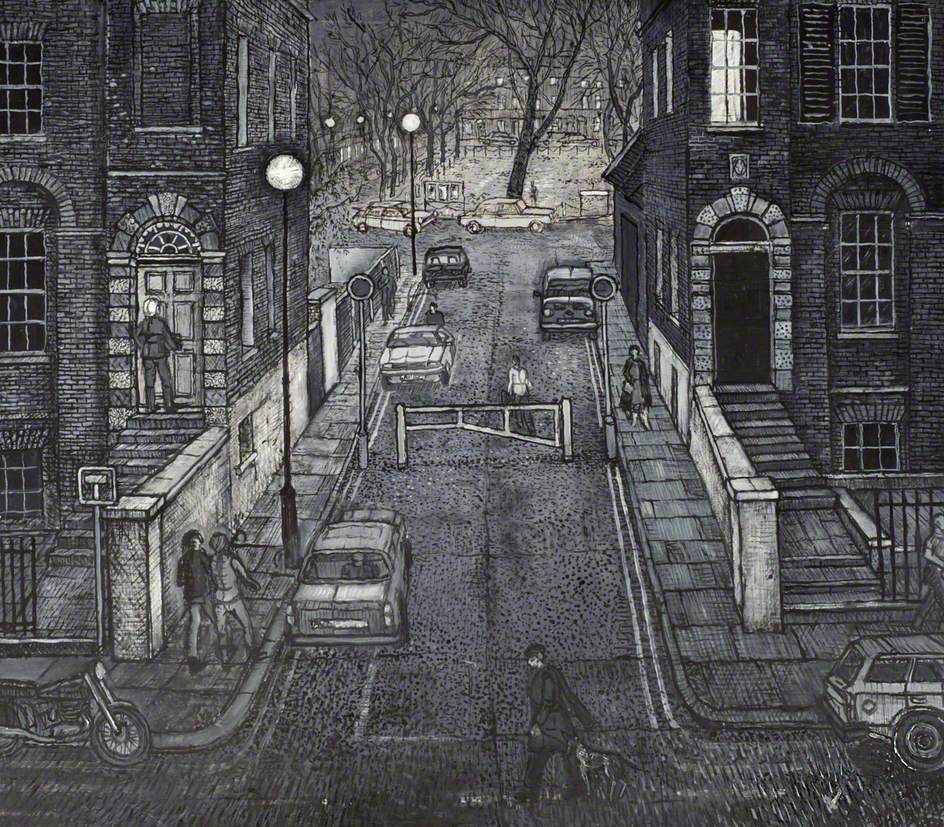
Peter Snow – Cleaver Square from Kennington Park Road (1988). From the Southwark Art Collection.

The Countess, the Living, and the Dead

There was a video featuring Adam Rickitt, who had been big in Coronation Street, in which he appeared naked. The song had been around when David had been clinging to the frayed edges of his youth. He hadn’t pulled it off. Everything went downhill afterwards. Adam Rickitt went to New Zealand to appear in a soap and was accused of stealing a block of cheese, a bottle of HP Sauce and a jar of coffee from a supermarket. David had moved out of the family home because the banks were knocking at the door.

On Sunday night, they had called at a gay bar, and David saw Adam Rickitt on the screen again. “I would gladly have sniffed his bollocks,” he told Joshua, who turned his nose up. “What the fuck is this shite?”

David recalled dancing to Adam Rickitt at Cruz 101 in Manchester. He was high on ecstasy at the time. But he’d gone to a friend’s flat afterwards and written the best chapter of a book he had never written—longhand, too. Then he had left it behind, where it ended up in a black wheelie bin.

Mancunian days. Every weekend in the North West. But he remembered little. The only memory he retained was of a cute little chicken who had taken his shirt off and started singing, “Sexy… everything about you, so sexy.”

David went home with him. The biggest shithole in Longsight, with every room knee-deep in empty Coke bottles. The bed was hidden behind a mountain of takeaway boxes. It had taught him that all that glittered was definitely not gold.

He related the story to Joshua while walking home in the rain.

“You’re too posh,” Joshua warned him. “Too many frills and high expectations.”

“But I ended up with you,” David replied.

 “Your problem is that you look too much at the past, and forget about the future.”

“But there isn’t much of that left, is there?” 

David was feeling down.

March had been a bad month. April looked bleaker.

“There are too many deaths, Joshua. Once, I went to weddings all the time. Now I go to funerals. I suppose we’re all in the same boat, because everybody dies.”

But Joshua was too young to understand and nudged him on the arm. 

David was referring specifically to their next-door neighbour, who had surrendered to the inevitable. In the square, Dorothy Jerman had been known as the ‘Countess’ and lived alone. Not many had known why she was called the Countess, but there was a suggestion that it was a nickname given to her by a former landlord at the Prince of Wales opposite.

“That’s right,” she once told David. “He was the Brixton Bomber, a former boxer, who took over in the 1960s and upset residents by installing a juke box. It attracted teenagers and the lawyers and solicitors who lived nearby wanted a quiet pub and drove him away. But he was a good chap, and called me the Countess because he wanted to get into my knickers. Little did he know that I never wore any.”

The Countess, a portrait painter, had moved here in the early sixties when Cleaver Square had been different to what it became. She shared it with her kids after a messy divorce and remained after they had grown up and left. By all accounts, she was a ‘rebel’ who famously held wild parties that spilled out into the street. 

David inherited the house next door and on most fine days, the Countess could be found sitting on the front steps, a glass of wine at hand, either reading a paperback or making conversation with anyone who passed. 

And the Countess had loved Joshua from the moment David invited him to move in with him. Two fucking artists, David had mused. Joshua would sit on the steps as she stroked his blond hair and told him stories about her life.

She claimed to have chosen Cleaver Square on the recommendation of a friend, Innes Fripp, a landscape painter and portrait artist who had taught at the nearby City and Guilds of London Art School and once had a studio in the square.

David had looked up the connection and found that it might have been true. He also discovered that the area had once been called Prince’s Square, named after two houses flanking the entrance, built for Joseph Prince by Michael Searles in the 1760s. The name was changed in 1937, a throwback to Mary Cleaver, who had owned the land in the eighteenth century.

“This is where sea captains lived,” the Countess once boasted, “but the square fell on hard times by the end of the nineteenth century and attracted old music-hall stars instead. It fell on evil days—crumbling brick façades hiding three families across three floors. During the war, the council requisitioned many of the houses for bombed-out families. The trees died, and the gardens were razed.

“South of the river was one vast slum when I arrived. When I fled Chelsea’s superficiality, the square was dilapidated, with shabby red-brick houses—homes for dockers and clerks—but every door stood open. Everybody knew everybody else. Materially, they had little, but they shared it when needed. Then the developers came, and with them came the barristers, judges, and MPs. That was when the doors shut. The young people drifted away, saying the square was not worth living in—it was dead. That is how we ended up with John Major.”

The houses went for millions now, but the Countess had not been tempted to sell. She could have died a millionaire, but preferred to live with her memories and pry into the lives of people she did not know… and who might have looked down on her, had it not been for her cheek and charisma.

When David arrived in the square, the Countess welcomed him as somebody who lived on her level. Shortly before he died, David’s uncle, William, had kicked out the previous tenants with a view to selling it. It was vacant when David discovered that the property now belonged to him.

But now the old woman had died.

It was good fortune that the Countess had resolutely refused to lock her front door. Joshua had gone looking for her and found the body slumped in a fireside armchair: a flute of flat champagne beside her and a dog-eared copy of Valley of the Dolls in her lap. He had panicked and gone running round to David, with no idea what to do.

Only the day before, David had made an unnerving discovery. The Countess had told him that he was not an Aries after all, but a Taurus. It had taken sixty-two years to learn the truth. But David, who normally paid little heed to astrology, realised that he preferred being a ram to a bull—it was better for a gay man, he suggested.

“A cusp baby,” the Countess commiserated, “and if it helps, you have adopted elements from each star sign.

“You do love a grand romance—you throw yourself into it, heart first, and breathe your partner in as though they were oxygen. But you bruise easily in love, my dear, and you’re far too quick to feel taken for granted. You’ve a weakness for strays as well—people from all walks, the straighter the better.”

“I do have a weakness for working-class boys,” David agreed. “And Joshua comes from a relatively poor family in Thamesmead.”

“Really?” said the Countess. “I had no idea. He speaks with such charm and dignity—and is incredibly handsome. And Thamesmead is perfectly lovely in the summer.”

“I met him when he was only twenty-one and working at Morrisons. For some reason, I was walking around the lake and came across him standing there, looking at the birds on the water. I found out later that he didn’t know one bird from another—except when we were talking about cocks. He had been cruising for a shag, which he didn’t get, but we talked. I pointed out that Thamesmead had been the setting for A Beautiful Thing, which turned out to be his favourite film. Eighteen years later, here we are.”

The Countess had not finished.

“You may have secret love affairs or fall in love with someone who is quite unavailable to you.”

“That’s not true.” David had been a bit too quick to reply, and the Countess raised her eyes, because she had not, for one minute, believed him.

David was thinking about Miles, his provincial friend, whom he had first met when the boy was eighteen. Putting Joshua aside, he had spent the last eight years trying to seduce Miles, but had failed at every attempt. Unknown to Joshua, David had once fallen in love with Miles. It was never reciprocated, but that feeling never changed. Miles was only interested if you happened to be a good-looking French or Italian boy—certainly not somebody like David.

“Are we referring to Freddie, dear?” the Countess asked.

Freddie lived in Hammersmith and was the same age as Miles, but his eccentricities annoyed David—not least his tendency to point out dead people whom he claimed to see at the most inappropriate times. Once, David had slept with him, and Freddie had told him that there was an old woman sitting knitting at the bottom of the bed. He had also ingratiated himself with the Countess because he claimed that a family friend had used his name for a character in The Archers. That had gone down extremely well, because she listened to the programme without fail.

“The last time that I saw Freddie,” she laughed, “he suggested that there was the presence of two dead women—Christine and Hannah—who once ran a brothel here. I talk to them all the time now, and suggest that far worse things have happened in my time.”

“It is definitely not Freddie,” said David, “and I would appreciate it if you did not repeat that to Joshua.”

“Because Venus represents attraction, and the twelfth house is associated with the feet,” she said, “your feet may be especially attractive—and have erogenous zones!”

He had turned his nose up.

David and Joshua headed home and passed the Countess’s house, which stood in darkness.

“I wonder what will happen to the house,” Joshua speculated.

“Well,” said David, “she must have had a will, and I suppose everything will go to her family.”

They were both aware that the Countess had fallen out with her three children, and only one of her grandsons, Owen, ever visited her. The two of them had known him as a young teenager and knew that he did much of the maintenance work around the house, though there were difficulties the Countess had often fretted over.

“If Owen gets everything,” Joshua mused, “it could prove interesting.”

David thought that Owen had grown into a striking young man, but conveniently overlooked that he suffered from a severe case of ADHD, which made him prone to violent bouts of temper.

“He would most likely sell it and become fabulously wealthy,” he suggested.

David knew that the Countess was of sound mind and that she had deliberately led her family to believe that she suffered from delusions—among them that she saw thousands of long-tailed birds clinging to a tree in her back garden, that the other trees were covered in hundreds of cats, and that dead dogs with fiery eyes lived beneath the bushes.

“At least it stops them visiting a crazy woman,” she had laughed.

“Whoever it is left to will find it contested,” David added, “because they will say that the Countess was of unsound mind when she made it.”

“Maybe she was deranged,” Joshua decided. “She often claimed that all sorts of famous people visited her at one time or another. She once told me a magnificent story about Vivienne Westwood, David Bowie, and Marc Bolan coming to tea—and that they ended up bouncing along the street on great big orange balls.”

Space hoppers,” David implied. “I had one when I was a small child in the 1970s. Did you know that Russell Harty was also a personal friend of the Countess?”

David knew that Joshua would not know who Russell Harty was.

“What was he famous for?”

“Sexual escapades with much younger men,” David replied, “and for hosting chat shows on television.”

David had met him once, when he had still been young enough to turn heads in the street. Harty had just returned from Paris, where he had lunched with Nureyev and Charlotte Rampling at the British Embassy. He made small talk, and David was disappointed that this brief encounter on Greek Street had not led to anything more. Still, it had been enough for him to brag about at Comptons.

A few months later, Harty was dead, having suffered liver failure—a result of hepatitis.

“The Countess knew everyone, or said she did. And now there’s no one left to confirm it.”

“That’s the problem,” said Joshua. “Did these encounters actually happen? Was she connected, or just a brilliant bullshitter? I often wonder the same about some of your stories.”

That last comment hurt David.

“Everything I tell you is true.”

“But nothing ever seems to happen to me. The Countess knew famous people. And you’ve done things—wild things—that make my existence seem ordinary.”

“The older you get, what once seemed ordinary suddenly becomes fascinating. We all look back and realise that we did something special.”

The funeral was due to take place the following Friday. The cortège would leave Cleaver Square at lunchtime and travel to Lambeth Crematorium, where a short service would take place before she was handed over to the devil.

Joshua unlocked the door and turned to David. “Do you think we’ll see anybody famous at the funeral?”

“Probably not,” David replied.

My Week, For What It Was Worth

On returning to that bronze statue…

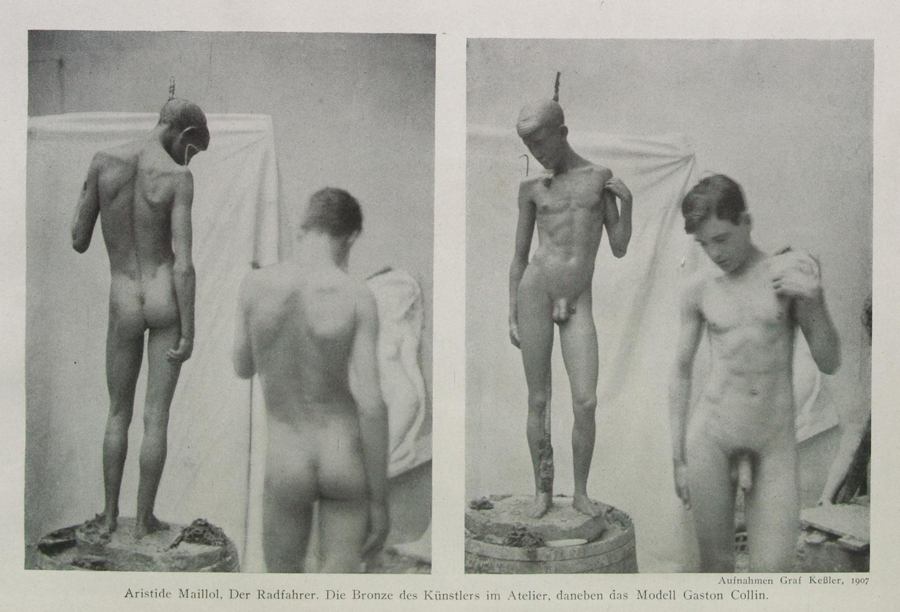
Gaston George Colin (1891–1957), by most accounts a young cyclist, perhaps even a jockey, and later a pilot—but certainly a chauffeur to Harry Graf Kessler, the well-connected German diplomat, writer, and patron of modern art.

Kessler’s diaries reveal that he began a relationship with the seventeen-year-old in 1907, hosting him both at the family castle and during stays in Paris, Rome, and Denmark.

While in Paris that same year, Kessler asked his friend Aristide Maillol to create a life-sized marble statue of the young man. He was said to have wanted a likeness of Narcissus, inspired by ancient Greece, which he saw as a culture where relationships between men and youths were openly acknowledged.

The outcome, however, was not a marble statue but a smaller bronze work, The Racing Cyclist (Le coureur cycliste), capturing a classical ideal of beauty and strength.

Maillol, who rarely worked with male nudes, struggled with the piece—his efforts complicated by Kessler’s constant attention to detail. The sculpture was not cast until early 1909, and Maillol remained dissatisfied, noting its unusual proportions, particularly the enlarged head and penis.

It was eventually exhibited in the French pavilion of Decorative Arts at the Turin Universal Exhibition in 1911.

Following the Nazis’ rise to power in 1933, a fearful Kessler left Germany for Paris, later moving on to Mallorca and finally to southern France. It was only in 1985, when his early diaries were discovered in a bank vault, that the extent of his fixation on Gaston Colin came to light.

Four casts are known: Kessler’s original is now held at the Kunstmuseum Basel, while others are in the Museum Folkwang, the Musée d’Orsay, and the Bavarian State Painting Collection in Berlin. Additional versions may exist, as Maillol is believed to have produced a second edition around 1925.

On finding that Joseph (or Sam) was queer…

It turns out Joseph lied to me. I found out that the flirty boy with the rolled sleeves, the nice arse, and the quiet smile is called Sam. And he hasn’t served me coffee for weeks. I still go in every day, but he’s disappeared—off studying, or back to his girlfriend. Then on Monday, he came in as a customer, joking with the staff behind the counter. A good-looking guy followed him in. Sam touched him lightly on the arm, and the guy patted him on the arse. They left holding hands, and I had to accept that Sam wasn’t available to me anymore.

It was an emotional snap. The interest hadn’t been given time to fade; it just hit a wall. That turns into jealousy very quickly—why them, not me? Seeing that physical ease between them—the touch, the closeness—intensified everything. It wasn’t simply that he was taken; it was seeing what that looked like. That’s what stung more than I expected. I told myself not to inflate things beyond what they were. I hadn’t even been rejected—just abruptly cut off.

I had to stop idealising someone I’d barely interacted with, especially once they became unavailable. That was the truth of it: there had been no real interaction. My mind had filled in the gaps, making Sam more significant than he ever really was.

But there was still that lingering feeling—a symbol the mind clings to—a sense of missed opportunity.

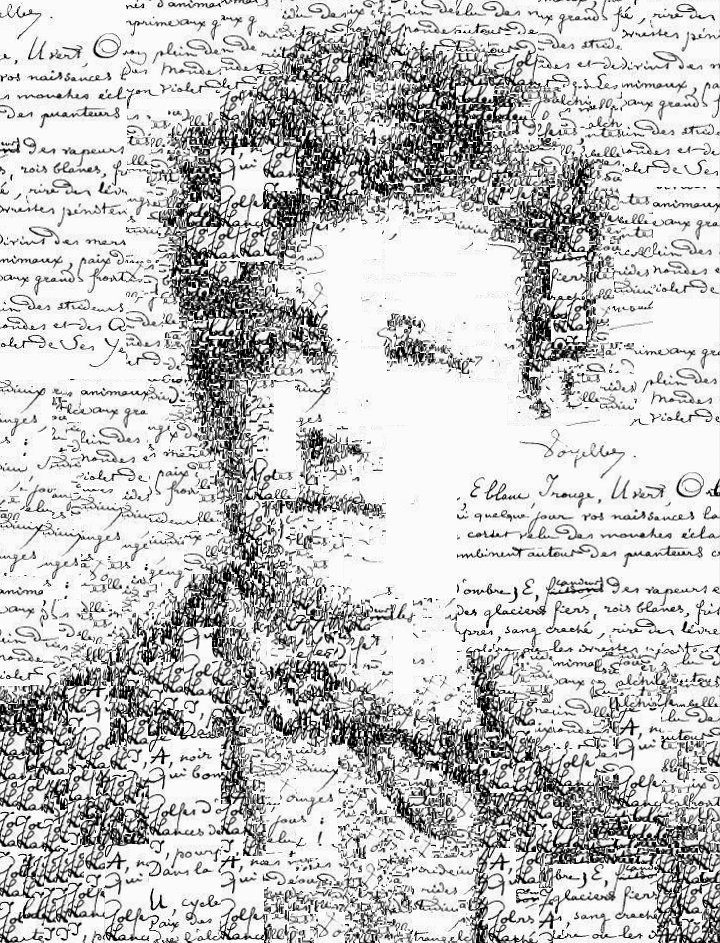
On discovering Arthur Rimbaud’s homoerotic poem

Stupra II (1871)
Our buttocks are not theirs.
I have often seen people unbuttoned behind some hedge;
and, in those shameless bathings where children are gay,
I used to observe the form and performance of our arse.

Firmer, in many cases pale, it possesses striking forms
which the screen of hairs covers;
for women, it is only in the charming parting
that the long tufted silk flowers.

A touching and marvellous ingenuity such as you see only
in the faces of angels in holy
pictures imitates the cheek
where the smile makes a hollow.

Oh! for us to be naked like that,
seeking joy and repose,
facing one’s companion’s glorious part,
both of us free to murmur and sob?

Arthur Rimbaud (1854-1891)

The Latin ‘stupra’ is plural for stuprum, which means an obscene and/or illegitimate copulation. Because of their explicit homoerotic content, these poems were not published during Rimbaud’s lifetime. They first appeared in a private, limited edition in 1923.

On watching a film that seemed familiar…

There was a similarity — a flicker of déjà vu. It softened the boundary between experience and memory, as though something new had already been lived. For a moment, my mind misread the present as the past, conjuring a false familiarity. Certain scenes felt strangely recognisable, as if they belonged to me already.

To Dream is a story of friendship — hopeful, intimate — set against a harsh inner-city backdrop. Best friends Luke and Tommy live in an unforgiving corner of London. Having dropped out of school and still at home, they find themselves dreaming of what might come next. Their shared ambition has always been escaping: to leave London’s grime behind for an imagined American paradise. It is a dream that has carried them through the realities of abusive homes, and one that binds them tightly together. But as family tensions worsen, and Luke’s new love interest begins to unsettle their bond, loyalty pushes Tommy toward a decision that will alter their lives forever. (Winter Film Festival – New York City).

Change the setting, reshape the structure — the dynamic remains. Four years on, as I approached the final instalment of Perfectly Hard and Glamorous, this little-seen B-movie felt like an omen.

Then I realised what I had missed: the father. There is always an abusive father. Somehow, I had forgotten him.

To Dream. United Kingdom (2026). Directed and produced by Baltimore-born, London-based Nicole Albarelli. Starring Freddie Thorp, Edward Hayter, Adam Deacon, Frank Jakeman.

On the cute and willing…
Artem. Photo by Archie – Saint Petersburg (2025)

The Truth Will Set You Free, but it Will Also Hurt

Harry Oldham is writing a novel based on his criminal and sordid past. To do so, he has returned to live at Park Hill, where he grew up, and the place that he once left behind. That was then and this is now, in which the old world collides with the new. (Parts 1 to 23 are available to read in the menu)

Perfectly Hard and Glamorous – Part 24

April 2025

I swear there were tears in Tom’s eyes when he finished reading the closing chapter of my story. The reasons were unclear. Perhaps he believed I had been dealt a cruel hand. Perhaps he had come to realise that Jack—his father—had played a part in my abrupt departure from family and closest friends. And then there was Paolo’s suicide, and the shameful way the police had treated us.

I was young, and everything had become intolerable. The only option had been to nick a car and head for London, where I was unknown and made to feel thoroughly unwelcome. But youth is resilient, and even though it took me nearly forty years, I climbed out of the gutter and—dare I say it—became almost respectable.

I knew, of course, that I had played a part in my own downfall.

But this was now, and something had shifted the moment Tom revealed who his father was. We had become unlikely lovers—the ageing novelist and the young drug dealer. It pulled the past sharply into the present, and with it came complications.

The most obvious issue was the age difference. Tom had gate-crashed my world and taken root within it. The intrusion had been deliberate, set in motion by his father, Jack. Yet Tom had stayed; a compelling glimpse into a generation with which I had no real connection. More than anything, I had watched him change—from a surly young man into someone capable of warmth and compassion—and that, to me, had been irresistible, though I had no right to expect anything at all.

There was also Jack, whose hand I had last shaken forty years earlier, when my fate had been sealed. Those final words—“Seeing your boyfriend?” He had meant Paolo, whose own destiny was unfolding elsewhere, and without me. At the time, I had taken Jack’s question as sarcasm, but years later, when time had dulled the memory, I began to hear it differently; perhaps he had been genuinely interested.

The question still lingered.

I imagined Jack asking it again: “Seeing your boyfriend?” Only now he was no longer referring to Paolo, but to his own son—and this time, I heard it as a threat.

But there was another complexity that I hadn’t expected. 

A letter arrived on April Fool’s Day, forwarded by my publisher. It promised answers to past events.

One sunny morning, a few days later, I found a dilapidated bench overlooking the city centre. I waited until he arrived and sat beside me. He was a very old man now, moving only with difficulty, supported by a walking stick. He reminded me of someone from long ago. “If you’re not with the Mooney’s, then who are you with? You’re not with the Park lads—I’ve never seen you before.” “We’re the Geisha Boys,” Jack had explained.

We did not look at one another but stared out at the view.

“I did a lot of business here. Do you remember this bench, Harry? It’s where you and Paolo first met.” The voice was frail, the muscles long since weakened.

“How was Torremolinos?” I asked.

“I don’t remember,” Frank Smith replied. “I drank too much, smoked too much, and the wife would’ve read the riot act afterwards. Gone now, bless her. She was the only one who could keep me in line.”

He turned to me and held out a conciliatory hand.

“I thought you might punch me,” he said. “But I told myself, if you did, it would probably kill me.”

I shook his hand. More than that, I offered him a cigarette, which he accepted.

“We’ve spent a lot of time shaking hands and sharing cigarettes—but I think this is a first for us, Harry. I came here thinking I might give you a hard time, for old times’ sake, but I realised it was only in my head. I don’t have the strength for that anymore. I’m ninety-two now.”

“I got your letter.”

“My daughter has a way with words. Not like me—I’d have been dead before I finished it. She didn’t want to send it. Thought I was too old to be dredging up the past.”

Frank began to cough, and I hoped it wouldn’t take him before he had the chance to explain. When it passed, he took another drag on the cigarette.

“We left things badly, Harry. But I watched from a distance. I had connections in the Met—they kept me informed. There were a few scrapes, as you know, but my boys saw to it.”

I thought back to the arrests. Three for soliciting, twice for violence, once for shoplifting. I had always assumed the London coppers had gone easy on me.

“It worked, Harry,” he went on. “I knew you’d come good in the end. You became a successful writer. That eased my conscience. And here we are.”

“It’s only possible to ease a conscience if you had one to begin with.”

“I’m going to tell you a few things, and I want you to listen. Will you let me?”

I nodded.

“Sheffield was a bad place in the eighties. Crime, vice—the police were struggling to keep a lid on it. We were under pressure to get results, whatever it took. Some of us became… unorthodox. But we got results, and that kept the ‘pips and crown’ happy.

I was tasked with clearing out criminal gangs who thought they could make money exploiting a minority—the gays. We had to infiltrate them, and the best way was to pose as bent coppers who could help them. I’ll admit, I took my share of hush money along the way.

“We started with the weakest gang—that’s where you came in. The others thought they were paying me to remove the competition. What they didn’t know was that I’d use the same tactic on them. And it worked. There were smaller players too—groups who saw what happened and abandoned their plans. If I’d failed, Harry, I suspect you might have tried your hand as a small-time operator yourself.”

So far, Frank had told me nothing I didn’t already know.

“You might have wondered how you got pulled into it. There was a night I came to your flat—we thought you’d set fire to Manor Library. You’d just had a bath, and I did something small, just to make a point. I ran a finger down your chest. I expected you to live up to your reputation and kick off. But you didn’t. That made me think. Had I stumbled onto something about Harry Oldham that he didn’t yet know himself?

“I already had Paolo in my pocket—that was easy. He was scared out of his wits, would have done anything. What I needed was someone who looked the part and could handle himself. That was you, Harry. My instincts were right, though I was surprised how naturally you took to it—not least, becoming involved with Paolo.

“The rest, as they say, is history. I made Inspector off the back of it.”

Frank had mentioned Paolo, and even now, after all these years, it still hurt.

“I never saw Paolo again, Frank. And I never got the chance to say goodbye.”

“You mentioned having a conscience. But I must ask you the same. Did you have a conscience, Harry? You were happy enough to take the money. It only stopped when Billy Mason outed you.”

“Maybe I only found my conscience afterwards.”

“At the time, I thought I was doing the right thing. And, if I’m honest, I hated queers—and then the AIDS crisis began, and I hated them even more. But I changed. And the two people who changed me were Paolo and you.”

“What do you mean, Frank?”

“I liked Paolo. Sweet little Paolo, always polite. I never had any intention of outing him to his parents. I liked you too, Harry—rough and ready. If I kept you in line, everything held together. And you were different from the others. There was a spectrum: Andy, a complete head case; Jack, who wanted to be the same but didn’t have it in him; and you, who didn’t have the faintest idea what you wanted to be. I never intended to out you either. But I needed you both to believe that I could.

“And don’t think I didn’t have regrets. I had plenty. Things went downhill quickly. I hadn’t realised that DC Ian Thornhill was such a bastard. He hated queers even more than I did—and he had it in for you, Harry. He couldn’t understand why I was trying to protect you. To him, you were scum who deserved locking up. I came back from holiday to find you’d been arrested and charged. The work I had to do to sort that out…”

“And Paolo’s death made everything worse. Questions were asked—why he’d taken his own life. I was one of them.

“The gaffers got involved as well. The ringleaders managed to slip away, leaving their lackeys to take the fall. There were bigger names mixed up in it all—judges, solicitors, doctors, even coppers. Anyone with something to hide. What they were doing was illegal, but they were never charged. They knew the right people, high up in the force. I questioned it, and do you know what the gaffers said? Keep quiet, Frank, and we’ll make sure you’re looked after. The weight of it landed on ordinary blokes looking for a cheap thrill. The publicity ruined most of them.

“And then everything changed after Hillsborough. New bosses came in, looking for scapegoats. Everything had to be squeaky clean. They started reopening old cases—anything where the police might be held accountable. It got uncomfortable. I was questioned about Paolo, about you, about my role in it all. What I’d done was illegal too—and there was no one left to protect me.”

“What happened?”

“I left the force. And I’ve been looking over my shoulder ever since, expecting a knock at the door.”

Frank’s revelations showed me a side of him I had never imagined. Not once had I thought him capable of regret. It changed something between us—but it did not change what had happened. And once again, I knew I had to accept my own share of the blame.

Frank had not finished.

“I’ve read all your books, Harry. Had to, didn’t I? In a way, it gave me some satisfaction knowing you’d made something of yourself.”

“There’s something you should know,” I told him. “The next book is finished. It’s about the Geisha Boys—Andy, Jack, Paolo, me… and you, Frank. And you don’t come out of it well.”

He smiled.

“I’m not going to ask you to leave me out. What’s done is done. Go ahead—publish it. But there are a few things I need to say first.”

Frank gripped my arm.

“Do you know what happened to Andy and Jack?”

“I’ve met Jack’s son,” I said. “Tom. It’s a long story. I know Jack was asking questions about me, but he doesn’t know anything about Andy.”

“Things changed after you left for London,” Frank went on. “The case was closed as far as the exploitation went, but there was another side to it. Andy and Jack thought they could carry on without you… but it didn’t work out that way.

“I knew Andy was trouble, but you pushed him over the edge. Everything started to unravel. He began operating on his own—serious stuff: drugs, armed robbery, the lot. Jack wanted no part of it.

“But the deeper Andy got, the more he attracted attention from people bigger and smarter than him. All we had to do was wait. It ended badly, a few years later. Beaten to death at a flat in Nottingham. His body wasn’t found for weeks. I won’t pretend I was sorry.”

For years, I had held on to the hope that one day I might reconcile with Andy and Jack. Wishful thinking. But learning that Andy—my oldest friend—was dead still struck hard.

“Did Jack know?”

“Probably not,” Frank said. “Andy turned on everyone who knew him. The family kept it quiet. By then, Jack’s lot had already moved out of Park Hill.”

“We looked up to Andy,” I said. “He was everything we thought we wanted to be.”

“But he couldn’t cope without you.”

“That was his choice,” I said, bitterness creeping in. “I needed him. I needed Jack. But then I got arrested. That settled any doubts they had about me. After that, they didn’t want me anymore.”

“That part was your doing. You wanted out—you made that clear enough. I wanted to hold off, because I wasn’t going to be around, but you forced my hand. If you’d waited, it would have ended anyway… just without the mess it caused.”

I wanted to ask Frank something I had asked myself countless times. The answer mattered.

“Do you think I was to blame for Paolo’s death?”

“Well,” he said, “his family certainly did. According to them, you turned him into a queer and drove him to take his own life. They moved back to Italy afterwards. Not what you wanted to hear, is it?”

“No, Frank.”

“But I knew Paolo loved you. He told me. I told him not to be a sentimental fool. So—do I think you were to blame?” He paused. “No. I don’t. If anything, I’m the one who should carry that. And there’s something else I need to tell you. Something that changes everything.”

“When I came back from holiday, I couldn’t find my notebook—the one with all the names, addresses, telephone numbers. I searched my desk. Gone. A few days later, I needed a file from Ian Thornhill’s desk, and while I was looking, I found the notebook buried under a stack of papers. When I asked him about it, he said he’d needed a number for a case. Which case? I asked. He said he couldn’t remember.

“I checked the notebook—made sure nothing was missing—and noticed a coffee stain on the page for M. There were only three entries there. Two were old informants already inside. The third was Moretti—Paolo.

“I asked Ian again. He said he’d needed Paolo’s number in a hurry and had grabbed my notebook instead of going through the files. It sounded plausible. But something didn’t sit right.

“I checked the records. There had been calls and visits between Paolo’s family and other officers—but none from Ian. Anyone else might have thought nothing of it—that he’d passed the number on to someone else. But I knew better.

“That night, I took him for a drink. Started talking about Paolo’s case. Told him the gaffer was asking questions about the lead-up to the suicide, that I needed to know everything—even anything off the books—so I could cover for everyone if it came to it.

“That’s when he told me.”

“Told you what?”

“A few days before they found Paolo’s body, someone had called asking for me. Ian told him I was on holiday. But the caller said he’d been told to ring me for a number. And the idiot gave it to him—just like that. No questions. And worse than that, Ian reckoned the caller was Andy.”

“What?” I gasped. “Andy didn’t even know him.”

“Let me finish, Harry.”

“After that, I went to Park Hill to find him. It wasn’t difficult. He was with Jack in the Parkway. I told Jack to clear off and dragged Andy outside. That’s what I liked about that place—plenty of dark corners. He looked a mess: bags under his eyes, stubble on his chin, drunk. There was no fight in him. I pinned him against the wall and told him exactly what I thought.”

“What was that?”

“Oh, Harry,” he sighed. “Don’t you see?”

I didn’t.

“The next day, I went to see Paolo’s family. I asked his mother if he’d received any calls before he died. No, she said—she’d tried to intercept them all. But then she let something slip. There had been one call she hadn’t reached in time—when your mate managed to pass on a message, telling Paolo to meet you at your usual place.”

“What place?”

“An abandoned factory.”

“Frank, I can’t believe that. Are you saying—”

“Yes,” Frank said. “I told Andy what I suspected. Paolo had gone out, thinking he was meeting you. But when he got there, it was Andy. And Andy blamed him for everything—for coming between you, for being queer, for making you the same.”

I shook my head, unable to take it in.

But Frank went on.

“He killed Paolo. Pushed him from the edge of the building.”

“No, Frank. That can’t be true. Andy was many things, but not that. I don’t believe it.”

“All Andy said to me that night at Park Hill were two words: Prove it. But that was enough. Enough to know I was right. And he was right too—because he knew I could never make it stick.”

I broke down, and Frank let me.

“It was good to see you again, Harry. I mean that. And I’m sorry things turned out the way they did.”

“Why didn’t you tell me all this years ago?”

“I thought about it. But I knew what you’d do. You’d have wanted revenge.”

He was right.

“There’s an expression—never shit on your own doorstep. I remember saying that to Billy Mason. He did me a favour—a big one—and he waited for the right moment to return it. Took his chance somewhere else… Nottingham, as it happens.”

“What are you saying?”

Frank struggled to his feet.

“I have to go,” he said. “My daughter’s picking me up in five minutes.” He began to hobble away, then paused.

“I meant to ask,” he said. “Are you seeing anyone?”

“Would you believe me if I said I was involved with Jack’s son?”

“Yes,” he said, with a faint smile. “I would.”

My Week, For What It Was Worth

On reading Like People in History…


In January 2000, somebody called Gregory Nash pencilled his name on the front page of a paperback book. I don’t know what happened to it for the next 26 years, but a few weeks ago, a friend found it at a second hand book shop in London and gave it to me as a present.

Published in 1995, Like People in History, by Felice Picano, traced not just the protagonists’ lives but provided the defining moments of American gay history between 1954 and 1991. 

‘The big novel we’ve all been waiting for – the gay Gone with the Wind,’ wrote Edmund White at the time, which was hardly surprising. Picano and White were both founding members of the Violet Quill Club, considered to have been a gay urban version of the Bloomsbury Group. They met regularly in Manhattan and on Fire Island in the early 1980s to discuss their works in progress.

I must explain that I thoroughly enjoyed the book although comparing it with Gone with the Wind didn’t do it any favours. 

“Sex is the defining characteristic,” critic Patricia Rodriguez wrote back then. “He (Picano) buys into every stereotype that many gays wince at, giving ammunition to bigots. Nothing’s ever as good as it was when THEY were on the cutting edge.”  (Fort Worth Star-Telegram 1995).

If I have interpreted her correctly, Rodriguez was referring to the 1970s. The archetypal mincing queens with moustaches and lots of hair, who danced to loud disco music, and spoke to each other like they were girls. 

“Mary, you are too much. She’s giving everything. Don’t be so dramatic, girl.” 

Well, they were having a good time, and who could have blamed them. 

But afterwards it became a problem with some gays, particularly for those who hadn’t been there. Such as me. 

I guess that what I am trying to say is that the seventies gay scene (particularly in the USA) aged badly. Too flamboyant and in your face – and decades before RuPaul hyped it up again. 

If AIDS curtailed the eighties, then the reset came in the 1990s. 

Since then, everything seems to have been less colourful and non-scene, and which those from the 1970s might consider boring.

I prefer it this way.

Picano, who published 17 novels and eight volumes of memoirs, died last year, and was better qualified to write about the scene than most. And he did it well. Me? I am trying my best not to come across as a disrespectful and ungrateful cunt.

My adopted copy of Like People in History goes onto my gay literature shelf and stands alongside other members of the Violet Quill Club: Christopher Cox, Robert Ferro, Michael Grumley, Andrew Holleran and George Whitmore. Four had died of AIDS by 1990 and only Holleran is still alive. 

 Last word to Picaro:

“We were all friends and lovers – literally. Robert Ferro and Michael Grumley were partners since the University of Iowa writing school. Andrew Holleran was also at that school. Michael and Robert were together for years. I met Edmund White in Greenwich Village in 1976, and George Whitmore in ‘77. Chris Cox was Edmund’s boyfriend: George and I were tempestuous boyfriends at the time, but he was instrumental in forming the group. Robert was also very socially active, so he and George pulled it together.”

On coming upon a skanky boy…


I don’t know your name. I don’t know how old you are. I don’t know where you live. I know absolutely nothing about you.

But I do know that you are a bad apple that has fallen from the tree. Realise that people judge you for what you are.  A skank – dirty, untrustworthy, disreputable, and sexually promiscuous.

Levi, the Polish boy with the Yorkshire accent, once picked up on something I had written.

“Boys who stuff their hands down their underwear because they think it makes them hard. Boys who pretend their sweet smelling piss and cum fingers are guns.”

He understands that I am hopelessly addicted to skanky boys.

And lust is only a starting point for deeper connections.

On realising that if I had been around in 1960…


I would have been going to the cinema and masturbating over Alain Delon in Plein Soleil. That unnatural beauty, chilling menace and simmering homoeroticism. And don’t get me started on Rocco and his Brothers.

On that furtive glance from beneath his baseball cap…
The look that said: “I know that we’ve known each other for ten years, and I know that you’ve always loved me, and I’ve been a complete shit to you. But now that I’m in my prime, I’m ready and willing to have that relationship.”

On the barman who smiled at me…
I cannot say, in all honesty, whether he was handsome or not. But beauty is not everything. He was shy, and polite, which said something. And when he faced me there was a hint of attraction that appealed to my shallow mind. 

I cannot say that wearing shorts was a good idea either. I know fine legs when I see them and yet I was still deciding whether it was the case here. But he was brave enough to wear them on a cold March night and that showed guts. And when the realisation hit that I was still staring at them, I knew that he probably had good legs after all. 

But what absolutely blew me away was when, amidst his boredom, he saw that I was giving him attention and cracked a most beautiful smile. It was all so sudden. A big genuine smile. The last time a chicken smiled like that, he ended up moving in with me. 

On the cute and willing…
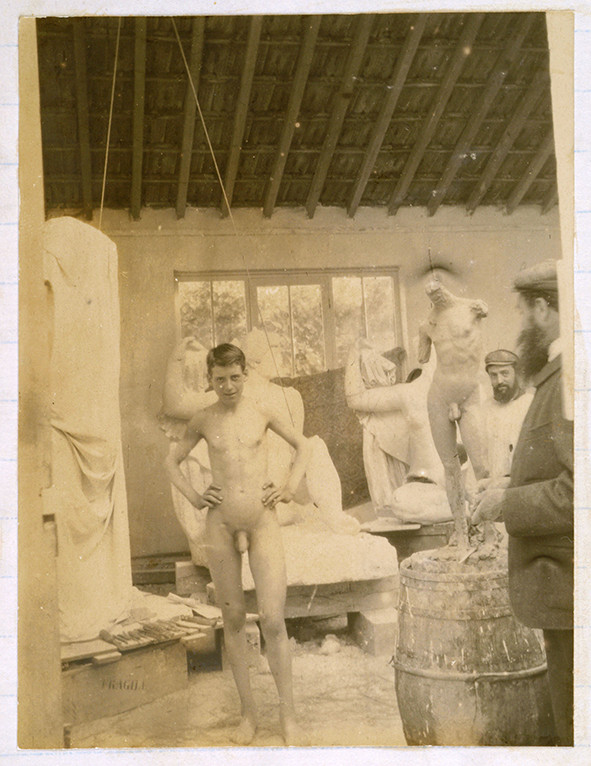
Marcelo Jimenez, model. Photograph by Ryan Duffin