Tag Archives: gay

There’s No One Left Who Wanted Me Anymore

Harry Oldham is writing a novel based on his criminal and sordid past. To do so, he has returned to live at Park Hill, where he grew up, and the place that he once left behind. That was then and this is now, in which the old world collides with the new. (Parts 1 to 22 are available to read in the menu)

Perfectly Hard and Glamorous – Part 23

March 1985

They played You Spin Me Round (Like a Record) on the radio. We used it in our act, and every time I heard it, it cut deep—a reminder that everything had gone tits-up.

I had wanted that night at the big house to end things. It had—but not as I’d imagined.

My body ached, inside and out. The lesions across my back, my legs, my arse burned like hell.

The night after the police bust, I tried phoning Paolo. No answer. I needed to see him. I wanted to hold him, to tell him everything would be alright, even though I didn’t believe it myself.

Over the next few days, I made call after call. Nothing. He never rang back. I began to wonder if he wanted rid of me—if he blamed me for it all. If he did, I needed him to understand that I was a victim too.

I couldn’t face going out. I stayed in, watching television, drifting through the day.

“Harry, what the hell’s up with you?”

Dad came home from work. Mum had already told him I’d been moping around the flat.

“Where are Andy and Jack? Why aren’t you out with them? I know you get up to no good, but even that’s better than hanging round here under your mum’s feet.”

I shrugged. Said nothing. They’d find out soon enough.

On the sixth day, Mum went into town. I trashed my bedroom. When she got back, I was gone, leaving chaos behind.

I’d decided to go to Paolo’s house.

I knocked and waited. Movement inside. The door opened to a woman wiping her hands on a towel—Paolo’s mother. She looked exhausted.

“Is Paolo in?”

“Who wants to know?”

“Harry. Can you tell him I’m here?”

She tried to close the door. I stopped it.

“Please,” I said. “I need to speak to him.”

She looked me up and down, eyes wet.

“I just need to know he’s alright.”

“Paolo has told us everything,” she said, her Italian accent hardening her words. “The last thing we need is you turning up here.”

I waited, hoping he’d appear, that he’d tell her it was fine. The house stayed silent.

“My son’s life is ruined,” she said. “He is a finocchio. He will be mocked, blackmailed… and in time, he will die a lonely death.”

“That won’t happen.”

She held rosary beads tight in her hand.

“My beautiful Catholic boy has danced with the devil. If anyone could have saved him, it was you. But you danced with him too. If you had been strong, this shame would not have happened.” She paused. “He trusts you. He thinks he is in love with you.”

“I love him too.”

“It is not love,” she snapped. “It is sodomy. Against the will of God.”

It landed hard.

“Paolo is not here. We sent him to his Aunt Luisa in London. He must return to answer police questions. After that, he will go to relatives in Montescaglioso.”

I felt myself breaking.

“Will you tell him I came?”

“He would never forgive me if I didn’t,” she said, dabbing her eyes. “He will be back Saturday. His father will be working. Ring then. Say goodbye—and promise me you will never contact each other again.”

I nodded. I had no intention of keeping it.

*****

I saw Andy and Jack before they saw me.

They were by the steps outside our block. Andy leaned against the wall in jeans and a white Levi T-shirt. Jack sat on the bottom step in black shorts and a Sheffield Wednesday top, staring at something on his knee.

They looked up as I approached.

I stopped in front of them. Waited.

Then I saw it on the wall behind them:

HARRY IS A QWEER

“Bum bandit,” Andy said, not even looking at me. Jack glanced around, pretending it wasn’t aimed at anyone.

“I want to explain,” I said.

Andy shoved his hands in his pockets and turned to face me. Jack kept his head down.

“What I can’t get over,” Andy said, “is knowing someone for years, then finding out they’ve been living a lie.”

“I never lied.”

“But you turned out queer. What’s that supposed to mean for us? All those years—were you fancying us?”

It seemed every bloke thought that.

“Maybe I didn’t know at first. But don’t flatter yourself. Not every ‘queer’ thinks you’re a catch. I don’t see girls throwing themselves at you either.”

“You’re a bent cunt!”

“Do you want to hear him out?” Jack asked, tentative.

“Don’t bother,” Andy snapped.

“At first I was blackmailed by Frank Smith,” I said. “Then I got pulled into something bigger.” I told them everything.

Andy spat.

“So, it’s true?” he said, almost hopeful it wasn’t.

“Yes. I made good money doing it.”

“But you never told us,” Jack said.

“How could I? What would you have said? Why didn’t I walk away? Because once I started… I liked it.”

“Where does that curly-haired little cunt fit in?” Andy asked. “You denied everything.”

“Paolo? He was in the same position. We got close.”

“Is he your boyfriend?” Jack asked.

No one had ever asked me that.

“Yes,” I muttered. “I suppose he is.”

Silence.

Andy lit a cigarette, offered one to Jack. Not to me.

“Show him,” Jack said.

Andy pulled out a torn front page of The Star.

POLICE SMASH GAY SEX RING

My stomach dropped.

“Want me to read it?” Andy asked.

I nodded.

“It says this is the second operation targeting fucking queers. Loads arrested. My mate Harry—turns out he’s one of them. Charged as a bender.”

Not exactly true—but close enough.

“Your mum and dad will see it,” Jack added.

Andy wasn’t finished.

“We’re done, Harry. You’re not one of us. Not anymore.”

“I want to sort this out—”

“Fuck that.”

I turned to Jack. “Is that what you want?”

He met my eyes. Said nothing.

That was answer enough.

I offered my hand to Andy. Geisha Boys never shook hands.

“Don’t want to catch anything,” he said. “I don’t want AIDS.”

I offered it to Jack. He took it. Held it tighter than I expected.

Then I left them.

“Seeing your boyfriend?” Jack called.

“I’m ringing him Saturday.”

Too much information.

“Harry is a queer!” Andy shouted after me.

His handiwork was on the wall.

*****

In the 1980s, everyone bought The Star. Ritual. Dad picked it up near work, read the football first, then the headlines on the bus home.

They were waiting.

Mum crying. Dad with his head in his hands.

I knew.

“Everything alright?” I asked.

“A few days,” Dad said. “That’s all you’ve got. Pack your things and get out. We’re ashamed of you. We don’t want to know you.”

His voice faltered.

“I won’t be able to show my face. My son’s a Nancy boy.”

*****

Saturday afternoon.

I rang Paolo. His mother answered.

“He’s not here. An old schoolfriend called. He went out for the day.”

“Did you tell him I’d ring?”

“I did,” she said coolly. “It seems he doesn’t want to speak to you.”

I tried again later. Still nothing.

“Tell him to call me.”

“I’ll tell him,” she said, “but he seems more interested in his other friends now.”

“What’s that supposed to mean?”

“It means he’s moving on. Someone like you isn’t what he wants anymore.”

I slammed the phone down.

*****

There was no reprieve from my parents. I delayed packing, hoping they’d calm down.

They didn’t.

On Monday, Dad gave me an ultimatum.

“When I get home Wednesday, you’d better be gone. If not, I’ll throw you out.”

I stood on the balcony, looking over the city. Below, Andy and Jack laughed as they walked down the hill.

Adam came up behind me, wrapping his arms around me.

“What’s going on, Harry? I don’t like it.”

“Me neither,” I said. “But I’m stuffed.”

*****

Tuesday evening.

I packed a few clothes into my Adidas bag. Counted the money I’d made. Hid it at the bottom.

Tomorrow I’d go to June’s.

My parents’ voices drifted from the other room.

I wished I hadn’t turned out such a disappointment. Then again, I always had been. Trouble from the start. Crime. Violence. And now this.

Fuck them, I thought. Fuck all of them. I was still a Geisha Boy.

I went into the lounge, turned on the TV. They left the room.

Basketball on Channel 4. I barely watched.

I picked up The Star.

A body found at a derelict factory in Attercliffe. I recognised the place—we’d smashed it up once. I flicked through, checking for more about the ‘gay sex ring’.

Nothing.

That night I went to Paolo’s street. Waited at a bus stop, hoping he’d appear.

Hours passed.

He never did.

I went home for the last time.

Voices inside. Not just my parents.

They stopped when I slammed the door.

“Harry, come here.”

Two uniformed officers sat on the sofa. Mum and Dad in armchairs. By the window—Ian. The lanky copper I despised.

I thought they’d come to arrest me again.

“Fuck me. What now?”

“It’s a delicate matter,” Ian said. “Sit down.”

I squeezed between the officers.

“When did you last see Paolo Moretti?”

“Not since the arrest. And he won’t speak to me.”

“And since then?”

A cold grip of panic.

“What do you mean? Has something happened?”

“Workmen found his body this morning. 

“No,” I said. “No, that’s not—”

“Found him at the bottom of an old lift shaft.”

Everything stopped.

“He jumped,” Ian added. “Couldn’t handle the shame. Mess everywhere. No note.”

I stood, almost collapsing. One of the officers caught me.

“Goes to show,” Ian laughed, “another homosexual bites the dust.”

“YOU FUCKING BASTARD!”

*****

Early Wednesday morning.

Dark. Empty road. A sign: London – 80 miles.

I didn’t remember how far I’d come.

After the police left, nothing was said.

I lay on my bed and cried into the pillow. Not since infant school.

I needed Andy and Jack—but they were gone.

More than anything, I needed Paolo. I thought of his body beside mine—warm, alive—and it almost broke me.

Gone.

Forever.

I thought about jumping from the balcony. Joining him.

Sometime after midnight, I took my bag and walked out. Said nothing. Not to my parents. Not even to Adam.

A Renault 5 sat near the flats.

I broke in. Hotwired it. Jack had taught me well.

I drove onto the Parkway. Then the M1. Straight towards London.

Fuck them all.
The David Problem: Notes from a Life


The Boys of Harrow… and Rockley Beach

David had been researching his new novel: a story set in nineteenth-century Woolwich, where two families are pitched against one another. The plot was already mapped out, but he now wanted to weave in an episode he had discovered in an old newspaper.

In 1850, thirty-three boys were expelled from the Carshalton and Woolwich Military Academies for what the paper called “grossly immoral practices.” The report described their behaviour as being of “a distressing and disgusting nature.” Their humiliation was made public: they were marched through the streets and deposited on the doorsteps of their families.

David decided that the youngest son of the genteel Morgan family would be one of these unfortunate boys.

But the discovery distracted him. As he continued searching, he found other accounts of young men disgraced and dismissed from the armed forces.

In 1976, several young airmen in the Royal Air Force were reportedly paid to perform sex acts at parties hosted by executives from influential companies. The story surfaced soon after eighteen soldiers were dismissed for posing for suggestive photographs in a gay magazine.

A decade later, two sailors were discovered together in a cabin aboard HMS Torbay. The ensuing investigation implicated three more men, including an officer, for homosexual acts.

David knew from experience that when boys were thrown together, it was almost inevitable that those inclined that way would find one another. The thought brought back pleasant memories of his schooldays at Harrow in the 1970s—before he was expelled, that is.

When he was fifteen, David had been caught in flagrante delicto with another boy. Peter had been a year older and known to most as ‘cock of the school’. David had been afraid of Peter because he strutted around as if he owned the place. He was the toughest boy—and the most arrogant—and Peter had often been at the end of his cruel jibes. 

One sunny evening David had found a spot under a tree to read his well-thumbed copy of The Passing of the Modern Age. He had been disturbed by a group of older boys on their way to rugby practice. They hadn’t noticed him in the shadows and passed by without comment. David watched them go and marvelled that boys’ legs could be extremely attractive.

He had just tackled the crisis of individualism when someone came out of the bushes. Peter had split from the group and doubled back. David, in awe of the older boy, feared the worst and put his book down.

“Come with me,” said Peter.

David did as he was told and followed Peter through the bushes towards the tractor shed. There was no doubt that Peter was going to inflict some kind of schoolboy torture on him. He expected to see other boys waiting to witness his humiliation.

But there was nobody around.

Inside the shed, Peter forced David up against the back wheel of the groundsman’s Massey Ferguson. He stuck his bubble-gum tongue inside David’s mouth and started kissing him. David had not resisted. 

“Let me make love to you,” Peter had instructed and began tugging at David’s trousers. He stuffed the trailing end of David’s school tie into his mouth to stop him making any noise and bent him over the wheel of the tractor. That, as David reflected later, had been the most exciting thing that had ever happened.

They returned to the tractor shed often after that—until the day the groundsman, having left his house key in the tractor, came back for it. He found them both naked and reported them to the headmaster. They were expelled from the school and never saw each other again.

That first encounter with Peter never left his thoughts. All these years later, he accepted that their relationship had been purely physical—there had been no love between them. What remained was the memory of contact, and the illicit thrill of something strictly forbidden. The excitement, as someone had once put it, lay in the chase.

But David’s thoughts also drifted to Nigel—or Nige, as he preferred to be called—a young sailor he had met in the late eighties.

David had been twenty-five, holidaying with friends in Barbados. It was a hot July, and most days were spent lounging on the crowded stretch of Rockley Beach. Fifteen years later, he returned to the same place and found it completely deserted.

He could still remember the book he’d been reading—Koko, a horror-mystery by Peter Straub—pristine when he bought it at the airport, dog-eared within days. He had set it down in the sand, closed his eyes, and listened to the conversations drifting around him.

Vendors moved along the beach, trying to persuade holidaymakers that the unlabelled bottles of pure aloe vera they carried were the secret to a perfect tan. David had bought one, of course, only to discover it did nothing except increase the risk of sunburn. 

David had drifted off for a few minutes, and when he woke he found himself surrounded by young men in tight bathing costumes. “Sailors from a British warship,” his friend Debbie smirked. They were gathered in small clusters, towels spread out on the sand, cans of beer passed easily between them.

The one he later learned was called Nige lay stretched out nearest to him. David found himself drawn to the pale, slender body—the long legs, the flat stomach, and the way his shorts seemed to accentuate what lay beneath—of the nineteen-year-old.

They fell into conversation, and David learned that Nige was an able seaman aboard HMS Intrepid. A bit rough and ready, he thought—the Yorkshire accent lending him an air of unpolished charm—but friendly. More than anything, David found him most handsome.

It was David who suggested a beer at an open-air bar at the far end of the beach. They talked and drank bottles of Banks—“pee beer,” as the young Black barmaid jokingly called it—until they noticed the beach had emptied and a magnificent sunset had taken hold in the west. In Barbados, the day did not fade so much as vanish; the sun slipped cleanly into the sea, and night arrived almost at once. Then the tree frogs began to make themselves heard.

David never quite reflected on what followed.

Nige, in T-shirt and shorts, remarked with easy indifference that he felt hot and sticky, and wished he were back aboard ship for a shower. David—less innocently—suggested he come back to his room instead, where he could use his. The young seaman accepted without hesitation, and the two of them crossed the road together.

A few words might have applied; aroused, horny, frisky, and most definitely ‘in the mood’. Nige took his shower and invited David to join him, which was all that he had hoped for. And then they had indulged in hours of drunken sex, only halted by Nige’s necessity to get back to ship before curfew.

David stood naked in the doorway as Nige left. At that exact moment, Anderson—a good-looking, God-fearing porter—passed by, his glance lingering just long enough for curiosity to harden into suspicion, and then into something closer to disgust.

Still, David and Nige agreed to meet again the following day.

Only years later, after some research, did David grasp how serious the consequences might have been had they been reported. Nige—young, impulsive—would likely never have considered that homosexuality was an offence in the armed forces, one that could have led to immediate dismissal. David, meanwhile, would have risked falling foul of the island’s colonial laws, under which homosexuality was illegal. A conviction might have meant life imprisonment in Glendairy Prison, notorious for its brutality, overcrowding, and inhumane conditions—grimly known as a “house of horrors” before it was destroyed by fire during a riot in 2007.

Ignorance had allowed David to preserve certain memories, untouched and untroubled.

But he sometimes wondered what had become of Nige, who would now be fifty-six and long since retired—no doubt altered by time: the silky crew cut gone, the firmness of youth softened into weight, skin loosening, and body hair in unwelcome places. Had they passed each other in the street, he might not have given him a second glance—and Nige, he suspected, would have done the same.

Things had changed.

Homosexuality was legalised in the British armed forces at the turn of the millennium. But Barbados had been slower to catch up. The island had enacted its Sexual Offences Act in 1992, which carried a grim warning: “Any person who commits buggery is guilty of an offence and liable on conviction on indictment to imprisonment for life.” Even worse, the law specified that the offence applied “whether natural or unnatural, involving the use of the genital organs for the purpose of arousing or gratifying sexual desire.”

Homosexuality had gone entirely underground, though David took some comfort in the fact that prosecutions had been relatively few. It was not until 2022 that the law was finally repealed, and same-sex relationships legally recognised, when the Sexual Offences Act was declared unconstitutional.

David finally admitted the truth: he had let himself grow lazy. His novel would never be finished if he continued to daydream.

My Week, For What It Was Worth

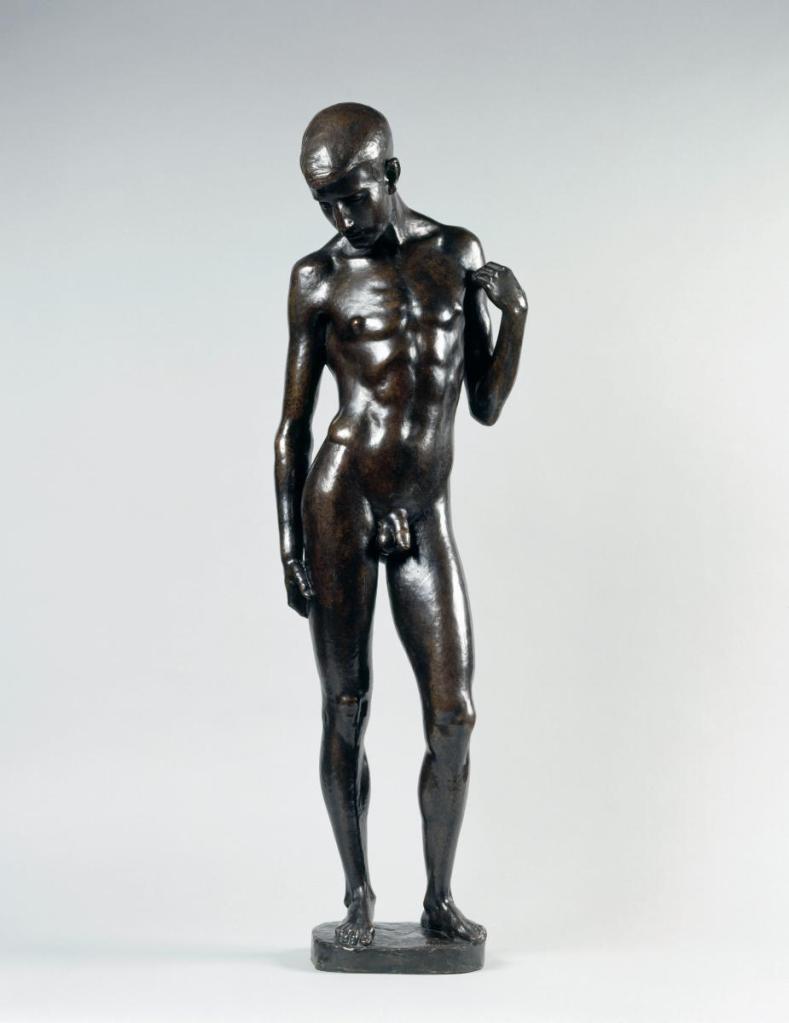
Le coureur cycliste (1907-08). Gaston George Colin was a young cyclist, Harry Graf Kessler a rich German aristocrat attracted by his figure, and Aristide Maillol the French sculptor stuck between them.

On falling for a bronze statue…
Aristide Maillol. He seduced us with stone. Flirted in bronze. Gaston Colin. A mystery. Le Cycliste. A favour for a friend. Harry Graf Kessler. But Maillol didn’t do dick. But Charlie said, “It is conceivable that he hated the male penis. Much the same as I do with the female vagina.”

On realising that I know nothing about female anatomy…
And so, to be real, I know nothing about female anatomy. Where to stick it? What to do? What to say? Multiple choice. Confused with a clitoris, vulva and a vagina. In case of emergency. Anus. Refer to Dummies Guide to Girl Parts.

On teenage scally boys messing with me…
Broken promises and lies. Rebellious and street smart. Teenage scally boys who disrespected me. No trust, I told them. I’m burned now. I kicked the shit out of one of them. They threw eggs at me.

On flirting with the guy with a girlfriend…
A flick of the eyes. Said it all. My heart surged. Not my normal type. A bit chunky. But good chunky. Everything changed. There was hope. 

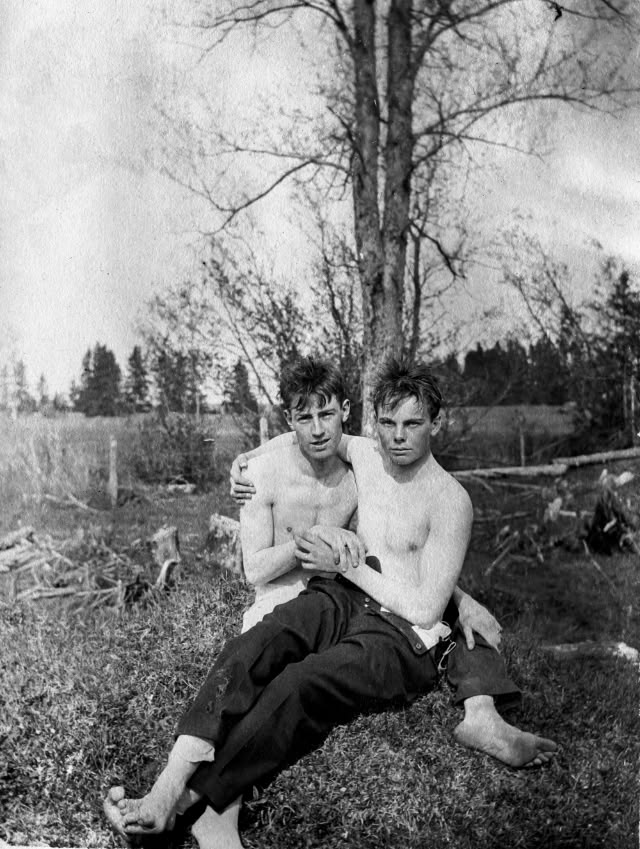
On discovering Len and Cub…
Sweet boys. Lives can be forgotten. Lives can be rediscovered. Long after they are dead. I liked Cub.

Leonard “Len” Keith and Joseph “Cub” Coates fell for each other in early 20th-century New Brunswick, at a time and place where queer relationships were taboo. 

On a house in a small Italian village…
Tuscany. Eight houses. Fifteen people. Nine males. One handsome twink actor. No money to buy. Gutted.

On choosing my gay pen name…
Pericoloso Eros.

On lusting after Matchstick Man…
Getting thinner. Getting stickier. Getting bonier. Dickier. His girlfriend? Getting bigger, rounder, cockier. Fat bitch! 

On being jealous over Joe…
Because some Aussie twink in Perth claimed him and explored his cargo before I had the chance. 

On listening to two guys talking…
“Your psychology is impressive. Wikipedia or Chat GPT?”

On someone’s thoughts about Saturday Night Live…
“Here’s the thing: I’ve rarely met a British person living in the US who has actually found SNL funny. It’s hard to say why this is.” – Emma Brockes (The Guardian)

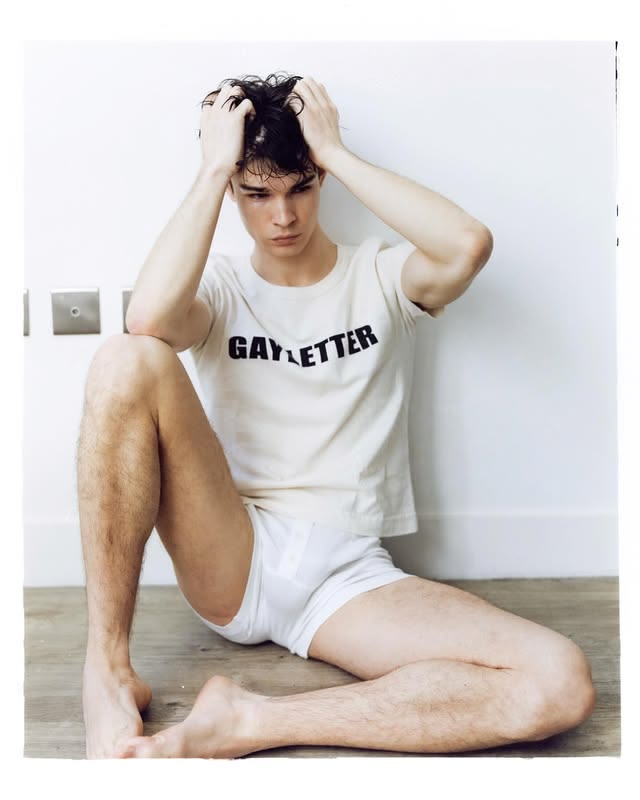
On the cute and willing…

Finny Tapp, model. Photographed by Gleb Behrens

Cruel is the Gospel That Sets Us All Free

Harry – Charlie Marseille (2026)

Harry Oldham is writing a novel based on his criminal and sordid past. To do so, he has returned to live at Park Hill, where he grew up, and the place that he once left behind. That was then and this is now, in which the old world collides with the new. (Parts 1 to 21 are available to read in the menu)

Perfectly Hard and Glamorous – Part 22

March 1985

If Billy Mason knew everything that happened in Sheffield, then Frank Smith knew even more. That was frightening.

“Now is not the time to pull out.”

“I mean it, Frank,” I said. “We’re done. It doesn’t matter what you say or do. It’s too late.”

We sat around June’s kitchen table with mugs of tea. Frank and June faced us while a lanky CID copper loitered in the doorway. I drummed my fingers on the plastic tablecloth and waited.

Frank picked up a custard cream and nibbled it.

“Alright,” he said. “Billy’s cottoned onto your deviances, but that doesn’t change our arrangement.”

“Except Billy knows we’ve been in contact,” I said. “And it won’t be long before the Rufus Gang know too.”

Frank lit a John Player Special and slid the packet across the table. Paolo had noticed that Frank always smoked when he was thinking. We sat in silence.

June looked sympathetic, but the crease in her forehead told me we weren’t going to like what came next. Paolo bit his lip and rested a nervous hand on my leg.

Frank finally spoke.

“All I ask is that you work tomorrow night. That’s it. After that, it’s over.”

“No,” I said immediately. “We’re not doing it.”

“Well,” he replied calmly, “things might look bleak for you, Harry. Less so for Paolo. Do as I ask and you both walk away.”

He paused.

“But…”

“There’s always a fucking but, Frank.”

“If you refuse, I’ll have no choice but to tell Paolo’s parents.”

“You bastard.”

He shrugged. “It’s not too much to ask.”

Paolo’s hand tightened painfully around my leg. His greatest fear was that his parents would discover the truth about him. Frank knew it.

Blackmail again.

We both understood there was no real choice.

“Just do your stuff and give me the details afterwards,” Frank said. “Names. What they got up to.”

The evidence he’d gathered must have filled a dozen notebooks, yet nothing ever seemed to happen.

“Mind you,” he added with a smirk, “I’m not sure what you’re going to tell the Rufus Gang. Looks like you’ll be going to ground when they come after you. Fuck me, Harry—everyone’s going to have it in for you.”

I already knew that.

“The thing is,” he went on, “the gaffers are starting to lean on me. Especially with this AIDS business kicking off. I hope you’ve both been careful.”

We hadn’t. We’d never even thought about it.

“Oh, my poor loves!” June said softly. “You must be careful. Best you stop now.”

“Fucking queers. Hope it wipes the lot of you out.”

The lanky copper had spoken for the first time.

I’d always assumed my early death would come from a fight or some stupid mistake. AIDS felt distant, unreal—something that happened to other people.

“We have to go,” Frank said, standing.

Paolo spoke quietly.

“Isn’t there something you want to say to us, Frank?”

Frank paused at the door.

“Yeah,” he said. “You’re right. The fucking miners’ strike is over.”

Then he walked out with the other copper.

*****

The waiting’s over, in shock they stare and cue fanfare

The house stood on the edge of the city overlooking the moors. More mansion than house. Flash cars lined the courtyard.

Someone said it had once belonged to a steel magnate. Now it was owned by a man building a retail empire.

Our final gig was going to be the most extravagant yet.

A DJ had set up beneath a row of spotlights. Frankie Goes to Hollywood blasted through the room while beautiful young boys in skimpy shorts carried trays of drinks among the well-heeled guests.

“You might find yourselves a rich sugar daddy tonight.”

Our minder Kenny surveyed the room with amusement. He was built like a tank and clearly capable of handling trouble.

We were taken into an adjoining room where two blond lads were already undressing.

“Are you the Sheffield boys?” one asked.

The rule of Park Hill was not to answer straight away. I simply nodded.

“Mikey,” he said, offering his hand. “This is Joey. We’re Manchester boys.”

It was rare to see lads our age.

I dropped my battered Adidas bag on the sofa.

Paolo wandered over to a silver statuette of a naked boy and examined it closely—his usual trick when he didn’t want to talk to strangers.

“Been doing this long?” Joey asked.

“Too long,” I said. “But this is the last time.”

Mikey and Joey exchanged looks.

“Good luck with that,” Mikey said. “Nobody walks away from Ronnie Rufus.”

We’d heard the stories: ruthless money-making, nobody crossing them.

The DJ burst into the room.

“Hi-energy tonight,” he announced. “Same format, no set list. I’m meant to wind them up until they turn into animals. Fifteen minutes.”

I cracked open the door and peered through.

The room was packed.

Joey stood behind me, watching too.

“See that bloke?” he whispered, pointing to a lonely figure. “Used to be straight.”

“Did he?”

“Apparently, he and his mates tried a Ouija board one night. Next thing he’s a raging homosexual.”

I laughed.

“He reckons a ghost penetrated him and he liked it.”

“Let’s hope the ghost leaves me alone.”

Joey pointed again.

“Recognise the guy in the flowery shirt?”

I shook my head.

“That’s Bobby Blue. TV chat show host. But the rest—professors, teachers, vicars, company bosses, yuppies with too much money.”

I was a council-estate lad. It was strange to think men like this had come to watch four working-class boys behave badly.

Mikey and Joey opened the show.

We watched through the crack in the door as they danced, warming the crowd.

“What are we going to do?” Paolo whispered.

“Nothing else for it,” I said. “We go on like always.”

“And then it’s finished?”

“Yeah. We leave tonight and cut all contact.”

Paolo slipped his arms around me.

“Do you think they’ll leave us alone?”

I already knew the answer.

“No,” I said. “We’ll probably have to disappear for a while.”

Our set was meant to be the centrepiece.

We followed Mikey and Joey onto the floor. Afterwards they’d have time to recover—cigarettes, drinks, a breather—before returning.

We wouldn’t.

Until then we danced.

We touched each other, teased the crowd, played to the music. By the time Evelyn Thomas hit her pounding climax I was inside Paolo, holding back so it looked real.

The real thing came later—for anyone willing to pay twenty quid.

The music stopped abruptly.

“Five minutes each!” the DJ shouted. “Hand your money to the little chicken and form a queue.”

The lights dropped. Music roared back.

Spotlights fixed on us.

For a moment nobody moved.

Then one man stepped forward and handed over a twenty-pound note.

Others followed.

After that everything dissolved.

Hands dragged me in every direction. Bodies pressed against me. I was twisted, pinned, shoved onto a table.

Pain spread through my back and legs.

Across the room I saw the others struggling too. Paolo was taking the worst of it. His slim frame was no match for the men pulling at him. Tears streamed down his face.

Then something cracked across my back.

A whip.

Pain exploded through me.

Again.

Cheers from the crowd.

Again—across my back, then my arse.

Kenny shouted for them to stop, trying to pull people away.

Too late.

The room spun.

I saw Paolo—wide-eyed, terrified—shouting my name.

Then blue lights flashed through the windows.

Sirens screamed closer.

And everything went black.

*****

Because these stardust memories fail to please

“He needs to go to hospital,” the ambulance man said.

I came round inside the ambulance.

“Nah,” said the lanky copper from June’s house. “He’s coming with us.”

“But he needs treatment.”

The copper ignored him.

“Where’s Frank?” I asked.

“Two weeks in Torremolinos.”

Of course he was.

The copper—who said his name was Ian—threw my clothes at me.

“Get dressed.”

The ambulance man handed me water.

“Where are we going?” I asked.

“Back to the nick.”

“And Paolo?”

“Locked up with the rest.”

Frank had sold us out. The moment he realised we were quitting; he’d arranged the raid.

Once dressed, I was handcuffed and pushed into a police car.

At the station the custody sergeant looked up.

“And Harry’s here for what reason?”

Ian recited the charges.

“Contravening the Sexual Offences Act 1956. Gross indecency. Public decency offences. Age of consent violations. Assault occasioning actual bodily harm. Living on the earnings of prostitution.”

The sergeant raised his eyebrows.

“Cell two.”

Ian dragged me down the corridor and kicked me hard before throwing me inside.

That was when I knew I’d reached the bottom.

My body hurt, but the shame hurt more.

I had probably lost my friends, my family, and any future I thought I had.

And prison still waited.

The cell held a wooden platform and a filthy toilet.

A blanket was tossed in before the door slammed shut.

The hatch opened seconds later. Ian looked in.

“You lot fucking disgust me.”

Then it slammed shut again.

I hardly slept.

The next morning, I was taken to the Magistrates’ Court, where a duty solicitor listened as I told him everything.

“You must plead not guilty,” he said. “When this goes to Crown Court we’ll argue entrapment. A good barrister will try to shame the police.”

He paused.

“But I must warn you—cases involving homosexuals aren’t going well now. There’s mass hysteria about AIDS.”

I noticed he had called me a homosexual.

I followed his advice and was released on police bail.

Walking hurt. I considered a taxi until I remembered my money had been in the bag left behind the night before.

The police station was miles out of town.

So, I walked home.

It took two hours.

Charlie: The Promise of Paris – Partie 1


Paris in the spring. The city had emerged from winter into blooming flowers, mild air, and sudden rain showers. Not like England, where winter still clung stubbornly to everything.

If I returned to Paris, Charlie had insisted that he should be the one to take me. It was the city where he had grown up, where his family still lived. But to Charlie’s frustration, he had not been able to come. He had recently landed a job as a nightclub DJ—something he had wanted desperately and had then come to hate.

“No, Charlie, you’ve only been here a few weeks. You can’t take a holiday.”

His anger and frustration were matched only by my hidden delight.

“You cannot go to Paris without me,” Charlie had pleaded.

“It is work, not pleasure,” I told him, adopting a serious tone. “I’m being paid to write about an art gallery.” It was an elaborate lie.

“But you’re not an art expert. I would have been able to tell you what is good and what is bad.”

I shrugged this off, quietly pleased at my good fortune.

“There’s no choice in the matter. I must go, and that’s that.”

Before I left, Charlie looked me straight in the eye.

“You must promise that you won’t see Thomas.”

“Charlie, I’m going to be busy. I won’t have time to see anyone—least of all Thomas.” 

He was not placated.

“Promise me. Cross your heart that you’ll have no contact with him.”

“I promise I won’t see Thomas,” I lied. “Cross my heart and hope to die.”

Thomas was Charlie’s older brother, of dubious parentage, and I had met him only once, years earlier, when he stayed at our apartment for a few days. Charlie was convinced that Thomas had tried to seduce me.

That part was true.

Nothing had happened, but Thomas had left an impression.

We messaged each other regularly. More accurately, we flirted—quite shamelessly—and Charlie had no idea.

It was the same with Bianchi in Verona. Charlie had no idea that he existed either.

I climbed the steps from the Métro at Rue du Bac and found the bar on Boulevard Saint-Germain. Bar Dieudonné stood on a corner, occupying the first two floors of a traditional Haussmann building. A striped, blue awning ran along the façade, beneath which stainless-steel tables and matching chairs spilled onto the pavement. A handful of people sat outside, lingering over drinks.

This was the bar that Thomas managed, though I couldn’t see him. A young waiter took my order and raised his eyebrows slightly when I asked for a café crème—it was well into the afternoon.

I have always thought the best parts of this neighbourhood were the little streets that slipped away from Boulevard Saint-Germain: narrow cobbled lanes with outdoor cafés and dusty curio shops. But there was no work to do, and there would be plenty of time for wandering. For now, I sat back and watched the passing crowds—bohemians and tourists alike—talking loudly, smiling, drifting past in loose, cheerful hordes.

A small Algerian boy approached and held out his hand.

My French is about as good as my Italian, and I struggled for something to say. In the end I muttered “fuck off,” which only earned me a puzzled look. I waved him away instead, and he slunk back into the crowd, looking dejected.

I assumed I must be close to the house where Jean‑Paul Marat, one of the more notorious figures of the French Revolution, had been stabbed to death while writing in his bath. Yet this elegant corner of the 6th arrondissement had attracted many other ghosts over the years—Oscar Wilde, Charles Baudelaire, Ernest Hemingway, Jean‑Paul Sartre, and Simone de Beauvoir, among countless others. Shadows from earlier lives, but still somehow present.

A pair of hands suddenly covered my eyes from behind.

“Ah,” a voice said. “I see my intended lover has finally arrived.”

It was Thomas—tall, slender, delicate, with skin as pale as snow. A baseball cap hid most of his blond hair, which seemed to have been cut short. He kissed me lightly on both cheeks and then pulled me into a hug that felt surprisingly strong for someone with such an elegant frame.

“I hope my brother isn’t hiding somewhere, ready to appear and ruin everything.”

“I’m alone,” I said, “though Charlie has an uncanny ability to know everything that goes on—even when he isn’t there.”

Thomas sat opposite me and smiled, revealing perfect white teeth.

A small pang of guilt drifted through me.

“Where does Charlie think you’re staying?”

“An Airbnb,” I replied. “That way he won’t be able to track me down quite so easily.”

For a moment I wondered what I was doing here. Why was I willing to jeopardise everything with Charlie?

There was only one honest answer: sex.

My friend Levi says I have an addiction to it, and he may be right. On the Eurostar to Paris I had looked up the symptoms, and the similarities with my own life had been unsettling: continuing despite knowing the consequences; using it as a coping mechanism for something missing; an inability to control the urges; risky behaviour; escaping shame through sex; living a secret life to hide things from partners; compulsive pornography; confusing sexual attraction with intimacy.

The list had felt uncomfortably familiar.

I loved Charlie, and I had good reason to believe that he loved me. He was the perfect pin-up boy—French, handsome, with a body people envied. Everyone said they were jealous of us. The perfect couple.

Yet I also knew that Charlie would happily sleep with anyone who offered, while somehow maintaining an aversion to sleeping with me. That hurt more than I cared to admit. It was an awkward conversation we had both avoided.

Which meant I was always looking elsewhere.

Charlie, I suspected, probably was too.

Thomas, I decided, was the next closest thing to sleeping with Charlie. The same genes, the same beauty—though expressed differently. He possessed an allure that was quieter, more evocative.

And impossible to ignore.

“I must work until late,” he said, “but you can stay in my rooms upstairs.”

I slung my bag over my shoulder and followed him through a large doorway beside the bar. We climbed several flights of marble stairs, the walls decorated with faded mosaic patterns, until we reached his door.

“I should apologise,” Thomas said as he unlocked it. “My rooms are untidy. I’m not as particular as Charlie.”

He wasn’t exaggerating.

The place reminded me of the many student apartments I had visited over the years—not dirty exactly, but nothing seemed to belong anywhere.

The main room was dominated by an enormous television fixed to the wall. Beneath it sat what could only be described as a gaming command centre, surrounded by controllers, headsets, and cables. A huge brown leather sofa occupied the middle of the room.

Unopened boxes were stacked in three corners, while the fourth had become a kind of tech graveyard—a tangled nest of charging cables, old headphones, and abandoned power banks. The window ledges were crowded with pot plants, some thriving, others clearly beyond saving.

The small kitchen counters were cluttered with dishes and coffee mugs—clean, but apparently without a cupboard willing to receive them. In one corner sat the remains of several breakfasts: croissants, chocolatines, pain aux raisins, brioche, alongside fresh bread, ground coffee, and hot chocolate.

It seemed Thomas lived almost entirely on whatever the pâtisserie across the street happened to produce.

The bedroom was no better.

A floordrobe of clean and discarded clothes spread across the wooden floor. He had adopted the “bare mattress” aesthetic: no sheets, the bed unmade, pillows scattered in all directions except where they were meant to be.

“Throw your bag in here,” he said casually. “Like I warned you—it’s a bit of a mess.”

The bathroom was clean, though untidy. Half-empty bottles of shower gel and shampoo lined the edge of the shower, alongside an assortment of deodorants and colognes. Toothpaste tubes lay scattered near the sink. Two toothbrush holders stood side by side, each containing a single toothbrush.

The toilet and bidet had been recently cleaned with pine disinfectant, and a full roll of ‘papier toilette’ had been folded into an elegant point, as if in a luxury hotel.

The illusion was spoiled, however, by the pile of discarded cardboard tubes that had accumulated beside the waste bin.

I had the impression that Thomas wanted to impress in certain places, though for the most part the effort had fallen short.

The contrast between the way Thomas and Charlie lived could hardly have been greater. Still, I wasn’t too concerned. I had stayed in places far worse than this.

Charlie had insisted that Thomas had a girlfriend, although the tone of Thomas’s messages to me had suggested otherwise. Flirty, flirty French boy.

But one small detail gave me pause: the two separate toothbrushes.

Almost as if he had read my thoughts, Thomas chose that moment to complicate matters.

“My girlfriend, Ambre, will be along later,” he said nonchalantly. “She’s bringing my friend Léo with her. They’ve promised to take you out this afternoon.”

I was left alone and cleared a small space for my neatly folded clothes. There would be no confusion about what belonged to whom. I also placed my own toothbrush beside the others.

That meant there were now three toothbrushes in the bathroom.

I made myself a strong coffee and waited for the arrival of Ambre and Léo.

They arrived in a burst of energy. Like Thomas and Charlie, their English was excellent, and although they often slipped into French when speaking to each other, they were careful to translate whatever they had said.

Ambre was a slim brunette who seemed to radiate personality. Bright and bubbly, she swept through the rooms with an effortless charm that felt distinctly French.

Léo, by comparison, was quieter.

He looked about twenty: dark-haired, reasonably handsome, with the faint beginnings of a moustache that might have taken months to achieve.

“Thomas was right,” Ambre said with a wink. “You are a very handsome homo boy. So, we must take you to Le Marais and let our boys decide for themselves.”

I couldn’t quite tell whether Léo was gay or not, but he appeared perfectly happy to be included in the plan.

They were easy to get along with, and before long it felt as though we had known each other for years. We wandered through several crowded bars, drinking pastis and mimosas, before eventually stopping at Joe le Sexy—a shop that might best be described as a kinky gay boutique, selling everything from books to toys and explicit magazines.

Ambre bought several bottles of Rush poppers and dropped them into a brown paper bag that did little to disguise where they had come from.

Léo grew visibly embarrassed when I began leafing through several issues of Le Pénis, a magazine that contained exactly what its title suggested. He peered over my shoulder, offering approving or disapproving noises depending on the size and shape of the appendage on display.

Up to this point I had become so caught up in the carefree afternoon that I hadn’t checked my phone. When I finally glanced at it in the shop, several messages from Charlie were waiting.

They followed a familiar pattern: polite curiosity slowly hardening into anxiety once I hadn’t replied.

“Where are you?”

“Did you find the art gallery?”

“What are you doing this afternoon?”

“Answer me.”

“Make sure you do not go to find Thomas.”

I carefully composed a reply.

“All good, Charlie. Found the gallery. Busy talking. Call you later x”

Almost immediately a thumb-up appeared

I felt strangely comfortable with the small fiction I had created. The sunshine had put me in a carefree mood, and the alcohol had washed away any lingering doubts that I might be behaving like a bit of a skank.

When I put my phone away, Léo was still browsing through Le Pénis. I rested my chin lightly on his shoulder, and he seemed perfectly content for me to share the explicit photographs with him. He smelled faintly of Bleu de Chanel and something musky beneath it.

I decided that I really did like French boys.

He turned the pages idly, but suddenly something caught my eye, and I stopped him at once.

“What is it?” Léo asked.

“Turn back a few pages.”

He flipped slowly through the magazine until I told him to stop.

I froze.

Léo stared at the page, trying to understand what had unsettled me.

Unsettled wasn’t quite the word. It felt more like a bomb going off.

“I can’t believe it,” I said quietly. “These are photographs of Charlie.”

Léo looked puzzled. I later forgave him for not recognising him—he had apparently never met him—but there was no doubt in my mind.

Several glossy colour images showed Charlie completely naked, proudly demonstrating that this magazine truly deserved its title. In Charlie’s case, it might more accurately have been called Grandiose Le Pénis.

The penis was magnificent.

A rush of conflicting sensations flooded through me. Mortification. Confusion. Disbelief.

And anger—enough to make me want to tear someone’s head off.

“Fuck me, Léo,” I muttered. “That’s my boyfriend.”

“What are you saying?”

“I’m saying that this enormous dick shouldn’t be in here.”

Léo didn’t seem to know how to respond and called Ambre over for support. He spoke rapidly in French while she gave short replies that sounded increasingly disapproving.

“Let me see,” she said.

Léo held up the magazine while she studied the photographs of Charlie, although what this was meant to accomplish remained unclear to me.

“And you did not know?” she asked.

“No!” I snapped.

“Maybe it is AI,” she suggested thoughtfully. “Maybe this zizi does not belong to him. Maybe it has been… enhanced.”

“The point isn’t the size of his dick,” I said. “The point is that he’s showing it in a magazine—especially when…”

I stopped myself.

“Especially when what?” Léo asked.

“Especially when I have absolutely no idea what size his dick is,” I said. “Because I’ve never seen it.”

Ambre and Léo exchanged a quick glance. Neither seemed to know what they were supposed to say.

“Ça va aller,” Ambre said gently. “We must speak with Thomas. Perhaps he knows something about this. I will call him now.”

She stepped outside the shop and spoke quickly into her phone.

“Poor thing,” said Léo softly.

Ambre returned a few minutes later, slightly out of breath.

“I spoke with Thomas. He knows nothing about it.”

By that point I had slipped into a strange kind of numb shock.

Ambre bought the offending issue of Le Pénis and dropped it into the same brown bag that already contained the bottles of poppers.

“And now,” she announced firmly, “we are going to find another bar and get you extremely drunk.”

My Week, For What It Was Worth

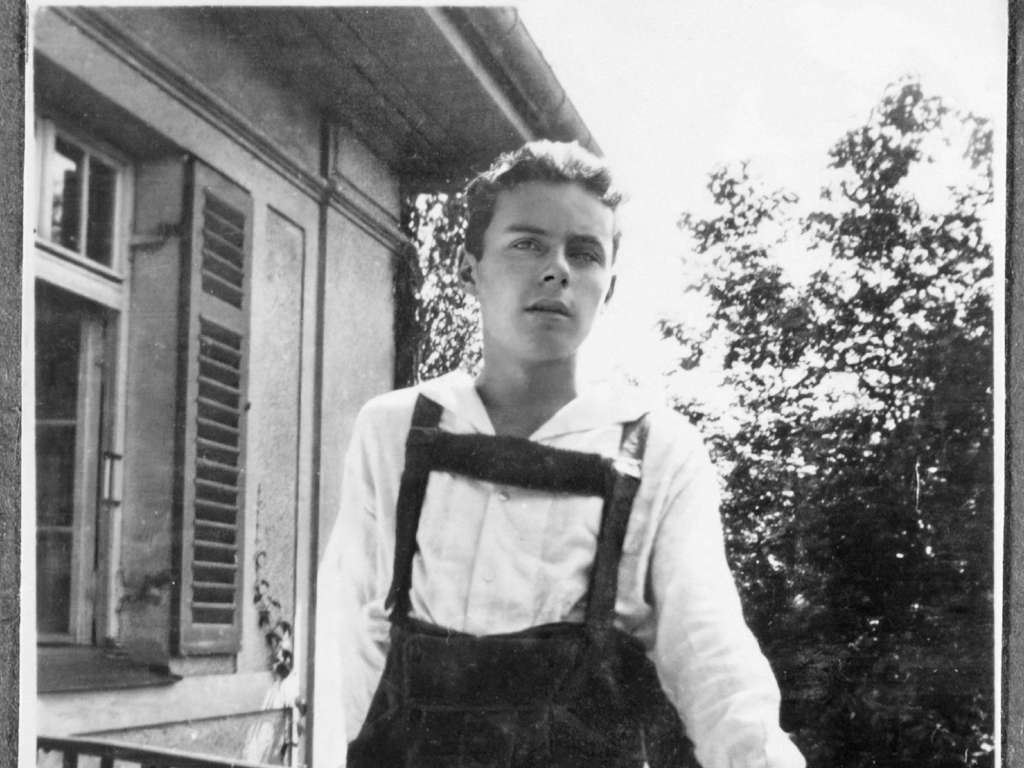
Klaus Mann (1906 – 1949)

On finding a photo of 16-year-old Klaus Mann…

Klaus Mann. Cute twink. What did you become? A chaotic mix: part mongrel, openly queer, a junkie, and premature anti-Fascist. The eldest son of German literary giant Thomas Mann. Born with a permanent side-eye for the world and zero patience.

Every book he published before 1933 got tossed straight into the flames during the Nazi book burnings.

His 1942 autobiography, The Turning Point, reads like a roll call of lost friends; an unsettling number of the people in it had died by suicide, more than feels believable in one life.

Seven years later, in Cannes, he followed the same tragic path.

“Memories are made of peculiar stuff, elusive and yet compelling, powerful and fleet. You cannot trust your reminiscences, and yet there is no reality except the one we remember.” – Klaus Mann (The Turning Point)

On being famous in a hundred years…

I will die and in a hundred years people will decide that I was iconic. Maybe I was just too avant-garde for my era, and everyone needed a lot of time to catch up. Or maybe… I was just a shit writer and in a hundred years time people won’t be writing at all. And when they rediscover my work, it will make my shit writing seem like that of an intellectual. 

On hearing about an intriguing snack…

“He said that he would fix me a snack, but that it might take a little time. I read while he disappeared into the kitchen. When he returned fifteen minutes later, he handed me a plate containing three salted crackers and an unknown delicacy that had been thinly spread over each one. I asked what it was, but he shushed me and said that they were best eaten straight away. I ate them and afterwards he told me that the crackers had been covered with his sperm.”

On the urge to write gay porn…

I write gay sex scenes in which nothing really happens. So why not write gay porn where everything does? The thought crosses my mind, but embarrassment stops me. I have no wish to shock anyone, or to offend.

People tell me there is money in it. In that world you can have sex with anyone you like on the page—the most beautiful man, the ugliest. No limits, no refusals. Anything can happen because you decide it does.

The urge to write it grows stronger.

But then my unhealthy fascination with Baron Corvo returns, as it often does, and he appears in my dreams again. He reminds me—rather coldly—that, like him, I am already sufficiently depraved, bordering on the disgusting, and that there is really no need to write about it.

On realising what I look at each morning…

I’ve started following a French blog called Gay Cultes—my daily hit of a beautiful male body, a little lust, and a sprinkle of homo culture. And it makes me a little jealous because it is simple and never misses. 

On loving these lines in a book…

“He spat and beat his donkey, which farted, kicking one leg. I followed his advice, as the commotion I seemed to be causing was making me a little uncomfortable.”

On observing three guys in a band…

Three guys are standing there with guitar cases on their backs, talking among themselves. From what I catch, they’re starting a band.

For a second I feel this urge to tell them they’re absolutely doomed. Not because of the music—who knows, they might be good. But visually? It’s a disaster. Two chubby guys and one tall, spotty skeleton. 

On finding a good poem…

Together
Sleeping together … how tired you were …
How warm our room … how the firelight spread
On wall and ceiling and great white bed!
We spoke in whispers, as boys will do,
And now it was l—and then it was you
Slept a moment, to wake-time fled;—
“I’m not a bit sleepy,” one of us said.
I woke in your arms,—you were sound asleep.
So close together we had tried to creep,—
Clinging fast in the darkness, we lay
Sleeping together,—that yesterday!

C. Mansfeld

On hearing a man say to his small son…

“Gi’ it a look. It’s reyt callin’ out, innit? All sat there beggin’ for it—everythin’ tha needs t’ knock up a proper bit o’ slopdosh, if tha’s not soft.” 

*****

Did I believe in life after love? In love after love? In life after life? I was unsure at that time.

But we were happy.

The David Problem: Notes from a Life


An Afternoon at Kennington

F Scott Fitzgerald often used seasonal change to reflect the emotional trajectory of his characters. In The Great Gatsby, the narrative opens in the optimism of spring, reaches its fevered climax on the “hottest day” of summer, and concludes amid the quiet decay of early autumn. A similar pattern might be observed in David’s work. It has been noted that in almost all his books he refers to a particular season in the opening paragraph—yet, once established, the season is never mentioned again.

He pondered this as he walked through Kennington Park with Joshua. He was trying to compose the opening paragraph of a new book yet found himself unable to begin without invoking spring. The task was made more difficult by Joshua, who insisted on talking without pause.

Joshua waved a hand across the grass toward the flowerbeds, where the first signs of growth were beginning to appear.

Spring again.

“Freddie told me a weird thing. He was walking through the park and saw Bob Marley playing football with some guys from the Rasta Temple.” Joshua waited for a reaction, but David was still wrestling with the seasons and didn’t respond. “Are you listening to me?”

“Don’t you think it’s strange that Freddie was at this spot when he saw Bob Marley playing football?”

“That would have been impossible because Bob Marley died in 1981, and what year was Freddie born in?” 

Joshua had been prepared for this and guessed that Freddie was a millennial child. “That’s why the story is so spooky, but he swears that it was Bob Marley playing football, and that he waved to him.”

David had long decided that Freddie was kooky.

“I’ve told you before,” Joshua continued. “Freddie is a ‘ghost whisperer’ and sees things that we can’t.” 

“Like the ghost of Bob Marley?”

“Well Freddie did research and discovered that Bob Marley used to stay at house in St. Agnes Place and that he was photographed playing football here.”

David did not believe in the afterlife and regretted that Joshua seemed so easily taken in by it all. He was reminded of the time Freddie had visited Cleaver Square and claimed it was haunted by a man—someone who had murdered his female partner, a widow who made her living selling greengroceries.

“I can’t believe you can’t smell the cauliflowers,” Freddie had shouted.

Not long afterwards, while researching for a book, David came across a newspaper article from the 1960s that described Cleaver Square as “a square for the dead.”

“Freddie talks bullshit,” David sighed. Yet he could recall once seeing a photograph of Bob Marley playing football.

“There was that time we were walking along Kennington Lane,” Joshua went on, “and Freddie said he could see a man playing a barrel organ. I couldn’t see anything. But Freddie described two barefoot boys running out of a nearby house to collect pennies from passers-by. The man shouted, ‘’Ere you two—hop it!’ Do you know who he said one of the boys was?”

“I’ve no idea.”

“Charlie Chaplin—as a boy.”

David was not persuaded.

“How interesting.”

“And another time we were outside the Tankard and Freddie said he saw Charlie Chaplin peering in at the men from the vaudeville—dressed in chequered suits and bowler hats.”

David knew well enough that Chaplin had grown up around here. It had once inspired him to begin a short story about the time Chaplin destroyed an entire film rather than pay taxes on it. The incident was true enough, but the manuscript had never been finished and was still languishing somewhere.

Joshua had no idea, but David had once slept with Freddie. It had happened at a New Year’s Eve party near Elephant & Castle, when David had been in his forties and Freddie an irritating little twink. As the years passed, he had only grown more annoying—though also better looking. Now that David was in his sixties, he occasionally toyed with the idea of feigning an interest in the paranormal in the faint hope that past conquests might somehow be revived. But he had been with Joshua for eighteen years, and the thought of the “ghost twink” was quickly put out of his mind.

David sat down on a park bench.

“This is where Gay Pride began,” he said. “It was 1986. I was twenty-two and not brave enough. I came a few years later, when there was a big demonstration for gay rights. Thousands turned up. I remember Ian McKellen urging everyone to be open about their sexuality—to come out. I also recall Sandie Shaw singing.”

“Sandie who?”

David had forgotten that Joshua was still in his thirties, and the generation gap seemed to widen the older he grew. These days, while Joshua championed the big gay events, David preferred to avoid them. The crowds and the screaming queens were banished. The last time Pride had come around, he had spent the day rereading Edmund White’s A Boy’s Own Story instead. It had been the first gay book he had ever read, and he had kept it hidden beneath his mattress in case his mother found it.

Later, at the White Bear Theatre bar, David sipped a white rum and tonic. It was about all he could drink since being diagnosed with Type 2 diabetes—the small indignities of growing old, though it seemed these days that everyone was diabetic. Joshua, meanwhile, drank a pint of Madri, blissfully unaware of the perils that lay ahead in later life.

“I once saw a play in the theatre behind here,” David said. “I can’t remember what it was called, but it had something to do with a ring that had belonged to Leonardo da Vinci. It passed through a group of frequently naked gay men in America at the end of the twentieth century. My straight friend went to the bar during the interval, and someone asked him, ‘You watching the football?’ It turned out a match was being screened in the pub.

“‘Nah,’ he said. ‘I’m watching the queer play out the back. Mind you, I probably won’t stay if there are any more cocks showing.’

“That was it—that was the title: Leonardo’s Ring. Which said it all.”

Joshua had wanted to take David to see a Henry Moore sculpture on the Brandon Estate, but the older man had dismissed the idea.

“If there are two artists I hate most, it’s Henry Moore… and Barbara Hepworth. The whole world seems obsessed with Barbara fucking Hepworth.”

Afterwards David felt a twinge of guilt, because Joshua was also an artist. These days everyone seemed to be a fucking artist. Joshua made contemporary work too—it was his passion—but to David it often appeared absurd. Of course, he would never say so and accepted that the pieces had to be displayed around the apartment.

Joshua had also begun attracting the attention of collectors. Works that once sold for a few pounds now fetched thousands. Occasionally it crossed David’s mind that one day Joshua might become more famous than he was—and under his own name. David, despite being a well-known writer, had always published under a nom de plume.

“I would have liked to have been young and gay in the eighties,” Joshua said.

“Are you kidding?”

“But it was so pioneering—gay rights, marches for equality. Groundbreaking stuff.”

“And it was also miserable. There was nowhere to go. Queer bashing. Cottaging. Rent boys in dirty bedsits. Plucking up the courage to buy a copy of Gay Times at the newsagents. And, of course, AIDS.”

That generational divide again. Joshua had never lived in a society more backward than the one he knew now. In fact, David believed things were infinitely better. He had grown weary of people who complained endlessly about discrimination, forgetting how bleak the past had often been.

“There’s something else you should consider,” David added. “If you had been young and gay in the eighties, then now you’d be old and gay in the ‘roaring’ twenties.”

My Week, For What It Was Worth


On the boy delivering junk mail…
He stopped some distance from the door. He seemed like a prowling cat suddenly aware that there might be danger. He stayed still, contemplating whether to proceed or retreat. His eyes were nervous and suspicious. And I, standing almost naked in the doorway, smiled as if to say, “I might only be wearing yesterday’s dirty Calvin Klein’s but I’m no threat.” But he made his decision and turned away.

On the woman who told me…
“It was a long time ago. I was young and pregnant and very drunk. I went to a guy in Spain who agreed to give me a tattoo on my huge stomach. I chose that yellow, grinning, trippy smiling ‘acid’ face. After I gave birth it looked like a deflated balloon and I’ve had to live with it.”

On resolving Liam’s finances…
Liam the skater boy, who is short, cute, wears round glasses and has hairy legs. He told me that his girlfriend had moved out and now he was struggling to pay the rent. The briefest thought crossed my mind. I nearly suggested that he sell his body, and become my rent boy. But I didn’t. I remembered that I will not pay for sex until I am old.

On buying old homoerotic novels…
My compulsion to buy vintage homoerotic novels – The Loom of Youth, Despised and Rejected, Tell England. The age of innocence… or was it? Those intense male relationships that remained aesthetic, psychological, and slightly dangerous, rather than purely physical. The obsession with male beauty and youth. The internal conflict between desire and morality. The longing that could not be fulfilled.

On meeting the boy with the moustache…
The small skinny student with an angelic face who had grown a moustache. I hated it and resisted the urge to say so because I knew that he already lacked confidence. He, who couldn’t look me in the eye like he was ashamed of something. Who looked slightly scruffy in the careless way that hinted at potential—like a statue still hidden inside the stone.

On getting lots of messages…
Like naughty schoolboys sniggering at other people’s shortcomings, we trade a constant stream of nonsense and casual insults about the world around us. It is the only language we seem to share, the only ground we truly have in common. From boys to men—ten years of a love affair that never happened. And yet each message makes my heart sing, filling me with a fragile hope, and I find myself wondering whether, somewhere on the other end, he might be feeling the same.

On listening to David reminiscing…
An old song came on the radio: Calling Occupants of Interplanetary Craft. A sci-fi anthem about humanity attempting telepathic contact with extraterrestrial beings. I had never heard it before and mocked the corny American DJ intro.

David frowned. It turned out to be one of his favourites.

“Days at sea,” he said. “I think of a cloudy afternoon on a choppy Mediterranean, sailing from somewhere to somewhere. Feeding coins into a jukebox and drinking weak shandy from white plastic cups. Enough of it that we convinced ourselves we were drunk, though really it was just hormonal schoolboys egging one another on.

“It was a big hit for The Carpenters. Actually a cover of a song by a group called Klaatu, who people once claimed were The Beatles recording under a pseudonym. Absolute bollocks.”

The Better Boy Problem


Pepperoni Passion.
BBQ Chicken Bliss.

“I don’t get you,” said the boy behind the counter. “You’ve already got a great boyfriend.”

“But there’s always someone better.”

He looked at me.

“Is there? From where I’m standing, this new guy’s a loser.”

Pause.

“You’re the only one who thinks he isn’t.”

Hot Honey Dough Balls?

Charlie – The Comfort of Anonymity

Image: Charlie Besso

February ended with an odd remark from Charlie.

“I searched online,” he said, “and found no evidence that you have ever written anything.”

In one sense this was reassuring. I write under an assumed name, after all. Yet it was also unsettling, because the remark revealed that Charlie had been looking. If he were ever to find my work, he might not appreciate how frequently he appears in it.

He forgets that I am blocked from viewing his Instagram page, though that obstacle proved easily solved with a hastily created fake profile.

“Some people prefer to remain anonymous,” I told him.

Charlie cannot understand this. The French boy dreams of fame and dabbles in anything that might propel him towards it. I, on the other hand, prefer the safety of obscurity.

My friend David, a successful author, has written under a nom de plume for decades. As he once explained, “If I knew a book would succeed, I’d happily publish it under my real name. But writers are haunted by failure. Imagine the shame of having that failure attached to the real you.”

I have never had the heart to tell him that his real identity can be discovered by anyone, anywhere in the world.

Charlie might have uncovered my secret already, had he possessed a little more information. A few weeks ago I typed the titles of several of my stories into Google. To my alarm, an AI assistant suggested that they might have been written by me. It had linked three titles to Spotify playlists of the same name on my profile. I quickly changed the account name, but the episode left me with an uneasy realisation: artificial intelligence will always be a few steps ahead of us.

Anonymity, it turns out, is fertile ground for paranoia.

Charlie later recommended that I watch a short film on YouTube.

“It is about a writer with a mental block,” he said, “who rents a summer house and becomes obsessed with a young boy on the beach.” Then he gave me a mischievous wink. “Watch it. It is very you.”

The film was Belgian. It followed Louis, an ageing writer who becomes fixated on Tommy, a young man who visits the beach each day with his girlfriend. The obsession rekindles Louis’s imagination, and in the novel he begins to write he conveniently drowns the girlfriend, leaving Tommy entirely to himself. At least, I think that is what happens. The ending leaves you uncertain whether the events belong to fiction or reality.

Charlie was right. It was “very me”, in the sense that I often begin with a person and build a story around them. What Charlie did not know was how close that description came to the truth. I found myself wondering whether he had somehow hacked into my laptop.

“Why did you search for my work?” I asked.

He hesitated.

“Well,” he said eventually, “I am curious about what you are writing—and whether it is good.”

That was the dilemma. Long ago I realised that I depend on acceptance for survival, and that my writing might reveal far more of my inner life than I would ever willingly confess.

“I’m not sure I could face the shame of criticism,” I said. “Or the possibility of being exposed as incompetent.”

It was meant as an offhand remark, yet it revealed more than I intended.

I half expected reassurance, perhaps even encouragement. None came.

“I suppose we are all afraid that people might see our flaws,” Charlie said thoughtfully. Then he smiled.

“Except, of course, when you do not have any. Like me.”