
Tag Archives: Journal

 My Week, For What It Was Worth

On playing football with the Boys of Taormina
I have never been attracted to German boys. They can be among the most beautiful, but the language itself has always struck me as cold and harsh. Yet Severin, from Bremen, changed all that. He has been with me for a week now, sleeping beside me in the small hotel on Via Don Giovanni Bosco. Alfio, the receptionist, seemed rather taken with him and turned a blind eye when I asked whether Severin could stay until he got settled. His new job as a waiter has been delayed for another week, though the restaurant promised that his room would soon be ready.

I learned that Severin had a boyfriend, a Spaniard called Estaban, who had remained behind in Turin. He spent a great deal of time on the phone to him, usually trying to reassure him that, although he was sharing a bed with another guy, nothing had happened.

That was partly true. We had both once been Pietro’s “boys”, and there was a reluctance on either side to go where a dead man had already been. It was as though Pietro still maintained some hold over us; we might almost have been brothers, and anything sexual felt faintly incestuous. Yet every morning, when I woke, I would find Severin with his arm draped around me, cuddling, it seemed, with someone he trusted.

Severin is easy to be around: always a few steps behind me wherever I go, yet never overstaying his welcome. He has told me much about his homeland, where his father taught at the University of Bremen and his mother at the University of the Arts. Bremen, he said enthusiastically, was a working-class city that had built its fortune on its port and shipyards — a fact not lost on the Allies during the Second World War, when the city was heavily bombed.

After leaving school, Severin worked at Beck’s Brewery, but was dismissed after being caught having sex with a fellow worker on the bottling line. His abrupt departure prompted him to travel across Europe, eventually ending up in Turin, where he met Pietro and became, in effect, a kept man.

Pietro had obviously singled Severin out for his Nordic looks — a twenty-first century vision of the Aryan “master race”: blond hair, blue eyes, pale skin. There was also the fact that Severin was athletic, and a devoted supporter of Werder Bremen.

Severin discovered that I too liked football and had once played competitively when I was younger. That discovery prompted him to buy a cheap football and seek out a patch of wasteland where we could have a kickabout. Before long, local boys began drifting over to join in, and soon we found ourselves playing fierce, high-intensity matches, with slabs of concrete serving as goalposts.

It became an Italo-Anglo-German affair, proof that football can be loved by everyone, regardless of nationality. Alas, the Italian boys put Severin and me to shame; too many years of smoking, drinking, and inactivity had rendered us ineffective against the tireless boys of Taormina. But it made me feel like a young boy again – innocent and carefree.

The focus is the big phallus…
Alfio had a night off and promised to take us to Castelmola, a picturesque medieval hilltop village perched directly above Taormina. “It will be the perfect night for you guys,” he said with a wink, though it seemed more likely that he fancied his chances with Severin, who remained entirely oblivious to his advances.

Alfio ordered a taxi, and a journey that should have taken ten minutes was completed in half the time. The dusty Mercedes hurtled up the steep, narrow, winding road, revealing breathtaking glimpses of Mount Etna and the Ionian coast below.

We arrived in a small square, from which Alfio led us up a short flight of stone steps into Bar Turrisi. Judging by the greetings he received, he appeared to know everyone there.

Alfio explained that Castelmola had grown around the ruins of a tenth-century Norman castle, its streets narrow, ancient, and full of charm. Bar Turrisi, however, was something else entirely. Opened after the war and passed down through generations, it was said to have been founded by descendants of families who had migrated centuries earlier from Pompeii, bringing with them the city’s ribald fertility symbols. The restaurant, Alfio told us with evident delight, still celebrated that inheritance.

At first, the significance of this escaped both Severin and me, but we soon understood. Across all four storeys, there were penises everywhere one looked: wall paintings, well-endowed statues, phallic liquor bottles, shot glasses, lamps, mirrors, even the plumbing fixtures above the bathroom sinks. The food menu itself was shaped like a penis.

“I knew you would be impressed,” Alfio said, guiding us towards a table overlooking Taormina below. “The people here never wanted to be part of Taormina. They value their independence. But Castelmola was founded to watch over and protect the town.” Unfortunately, night was already beginning to fall, and the views slowly disappeared. The blue sea darkened into a black mass, though the lights of Taormina still sparkled beneath us.

“They filmed The White Lotus at the Four Seasons San Domenico Palace in Taormina,” Alfio told us. “The cast used to come here regularly. They started calling this place ‘the penis bar’.”

Alfio ordered a Sicilian pizza, its ingredients largely a mystery to me apart from the cheese, though it tasted wonderful. We washed it down with a local almond wine, supposedly an aphrodisiac, which Alfio clearly hoped might improve his chances with Severin. As for me, I seemed excluded from his ambitions, though he nevertheless ordered another bottle — this one in a distinctly phallic shape, decorated with traditional Sicilian artwork — and insisted that I drink a generous amount of it.

As my stupor deepened, I found myself wondering how one might write about an overdose of penises without making it sound tacky — which, strangely enough, it was not. “They are symbols of sexual potency and fertility,” Alfio explained smugly, once again for Severin’s benefit, “and also of the virility of Sicilian men.” Severin, meanwhile, remained blissfully unaware of the attention directed at him.

It was only when yet another bottle of almond wine appeared, and Alfio insisted that I finish most of it, that I finally grasped his strategy: get me drunk enough, and he might have Severin to himself. By then, however, it was too late for me to do much about it.

The next morning I woke with a punishing hangover, Severin’s arm once again draped around me. My head throbbed, and Severin seemed in no hurry to wake himself. Still, I managed a smile. Alfio’s attempt to seduce him had failed.

On hearing a story that amused me…but shouldn’t have
At a restaurant in Taormina, an old man told us the story of his brother, Salvatore, who, back in 1958, had been abandoned by the woman he was supposed to marry. The humiliation drove him into such despair that he swallowed an overdose of sleeping pills. He was taken to hospital in Syracuse, where, still determined to end his life, he hurled himself from a window — only to land on a balcony below. Bruised but alive, he was carried back upstairs. Three hours later, he climbed to the very same window and jumped again. This time he missed the balcony and died.

“Oh,” I laughed awkwardly, “third time lucky.”

The old man responded by banging his walking stick sharply against the table, which suggested that my attempt at humour had not been appreciated.

On not upsetting a Sicilian…
“The Cosa Nostra is still active in Sicily,” Alfio told us. “But these days it is discreet. Drugs, the pizzo, infiltrating businesses — that is where the money is.”

“What is the pizzo?” I asked.

“Protection money,” he replied. “Money extracted through intimidation or extortion. It comes from the Sicilian word pizzu — ‘beak’ in English. To let someone ‘fari vagnari u pizzu’ — ‘wet their beak’ — means to pay them off.”

The warning beneath Alfio’s explanation was perfectly clear: do not offend the Mafia. Fortunately, that seemed unlikely. I would soon be leaving Sicily — and leaving Alfio and Severin behind with it.

“But honour can be dangerous too,” Alfio continued. “Even an ordinary man in the street feels the need to defend his honour. So you must be careful not to insult him.”

Severin then recalled an unsettling story he had once read online, one that seemed to confirm Alfio’s point.

In 1993, a father, unable to bear the shame of having a homosexual son who worked as a prostitute, allegedly paid for him to be murdered. The son was shot in the stomach while soliciting clients in Messina. His father was later jailed for hiring an eighteen-year-old assassin to carry out the attack.

“There, you see?” Alfio said triumphantly. “That old man in the restaurant — the one whose brother needed three attempts to kill himself — was offended by your joke. But he only banged his walking stick on the table, when he could just as easily have paid someone to shoot you.”

And then he laughed.

On finding old illustrations…

On the cute and willing…

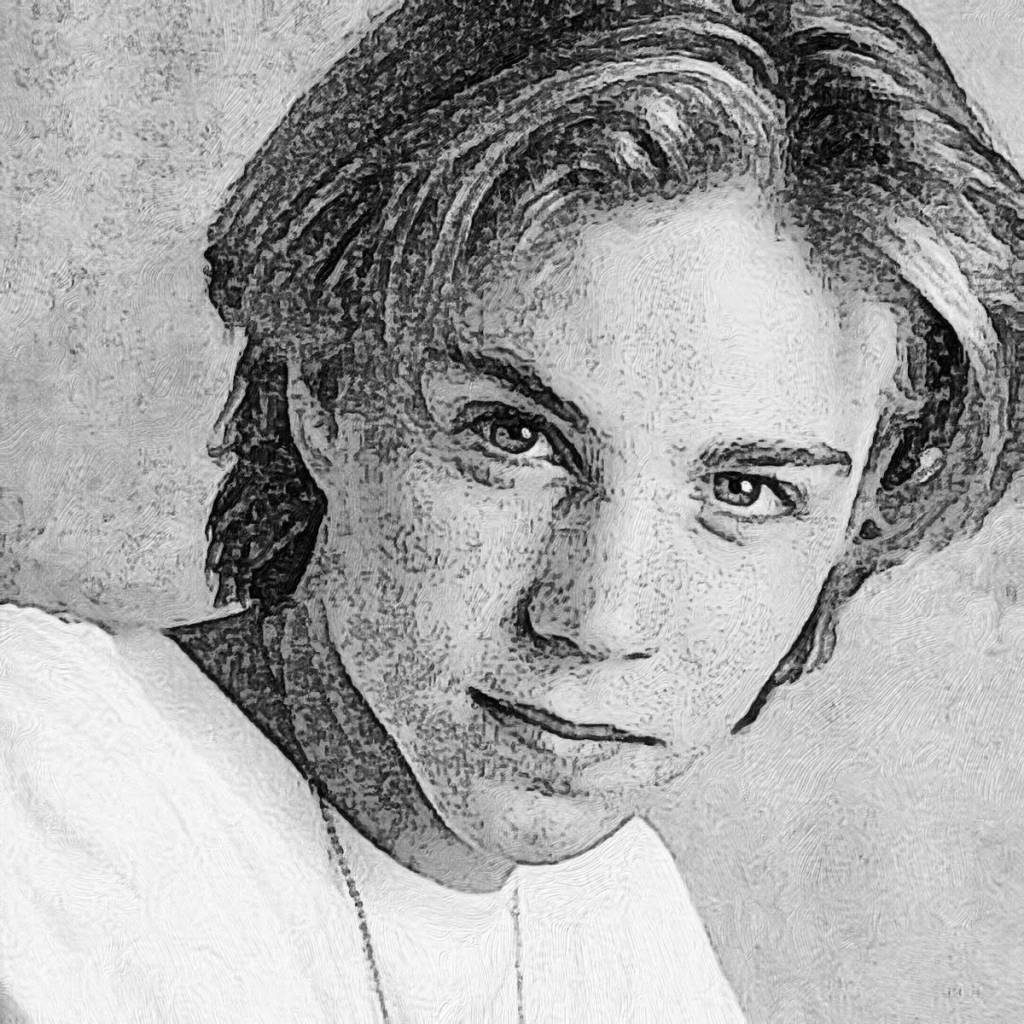
Michelange Bédard. Photo by Fernando Landin, 2026

 My Week, For What It Was Worth

On leaving Montescaglioso…
On from Montescaglioso—which I missed the moment I left on the small bus to Matera. I must return. The hilltop town exists in its own world, seemingly remote from the rest of Italy, yet it was warm and welcoming, and somehow managed to revive me.

It was really a minibus, stopping at every opportunity to pick up local women. For them, the journey to Matera felt like a day out—temporarily freed from household chores and feeding their families. They all seemed to know one another, speaking in rapid Italian, their voices rising and falling as they complained about the small details of their everyday lives. And yet, I couldn’t help feeling a quiet jealousy—that they could afford to live such ordinary, mundane lives.

There was only one other man on the journey, and he kept to himself, absorbed in his music. He looked about eighteen, and I imagined he was on his way to meet a girl in Matera. But then his phone rang, and the conversation turned to something entirely different: La Dolce Vita Orient Express, a new train service set to begin in May.

The route sounded almost romantic. It would begin in Rome, travel to Venice, then head down the Adriatic coast to Bari. From there, passengers would be shuttled to Matera—my destination—with its cave churches and underground water cisterns. Back on the train in Bari, the journey would continue towards Taormina in Sicily—which made my ears prick up—before heading on to Palermo and eventually returning to Rome.

It seemed the young man was being offered a job in Matera, one that would benefit from this new train service. He played it cool—neither accepting nor refusing—but you could tell he understood that opportunities like this don’t come around often.

The bus dropped me at Matera Centrale station, where I discovered that my train to Altamura was actually departing from Matera Sud, about two kilometres away. It required a short connecting train journey to get there. It was only once I was on that train that I learned Matera had once been derided as a symbol of poverty, yet had since reinvented itself as a creative hub—full of boutique hotels, buzzing cafés… and, of course, plenty of tourists.

On travelling to Taormina…
It was surreal, but we met like lost friends—two people who shared a past, yet barely knew each other. I spotted Severin, with his blond hair and Germanic good looks, as we waited for the ITA Airways flight from Bari–Karol Wojtyła to Catania. The airport name didn’t sound remotely Italian, and I soon discovered why—it was Polish, named after Pope John Paul II.

Severin was from Bremen and had spent the last few years living in Turin. He, too, had been one of Pietro’s “lost” boys, and after Pietro’s sudden death had found himself with a modest sum of money and nowhere to live. I had been more fortunate, receiving a similar amount but allowed to remain in the Verona apartment, thanks to the generosity of Signora Bruschi. But now my home is back in England.

We hadn’t seen each other since that Christmas when Pietro had taken us out for a meal at a restaurant in Milan. It was there we met Elio, who turned out to be Pietro’s favourite—and who had inherited the bulk of his estate, enough to ensure he would never need to work again.

Severin, now in his late twenties, seemed genuinely pleased to see me, and was delighted to discover that we were both bound for Taormina. He looked thinner than I remembered, and had begun to grow a small goatee—something Pietro would never have approved of. Good on him, I thought. I noticed a bruise on his chin, and he explained he had been caught up in Turin’s May Day demonstrations, when protesters tried to break through a police cordon. I hadn’t expected Severin to have become quite such a rebel.

On the aircraft, we talked about old times, each of us offering a quiet, tentative sympathy to the other. Once, we had been adversaries; now, we were something closer to conspirators. Severin had tried to contact Elio after Pietro’s death, but had been met with a swift rebuff. He had also tried to reach me, but hadn’t known where to find me. The chance meeting at the airport had clearly delighted him.

Severin was heading to Taormina to work as a waiter for the summer season. The money Pietro had left him had run out, and now he survived by drifting from one job to the next.

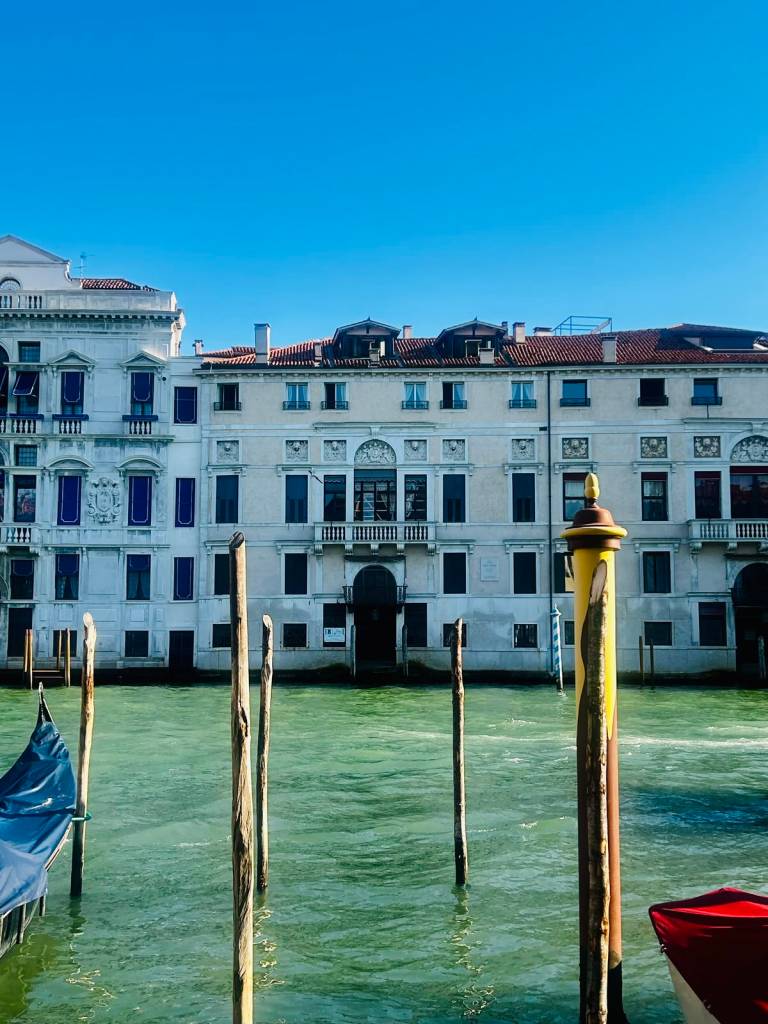
After arriving in Catania, we caught a train to Messina and got off at Taormina–Naxos. From there, we took the bus up into Taormina, where the heavens promptly opened. Inadequately dressed, we wandered through its charming maze of ancient, narrow cobbled alleyways, and along the bustling, elegant—largely pedestrianised—Corso Umberto. We dodged the hundreds of tourists clutching umbrellas, and after the calm of Montescaglioso, I found the crowds slightly overwhelming. Yet it was the smooth, endless stretch of the Mediterranean that held my gaze—and the uneasy thought that Mount Etna lay somewhere close by, hidden in the rainclouds.

It soon became clear that Severin had nowhere to stay. His plan had been to wander the streets of Taormina in search of something cheap. Until his job began—and with it, the promise of a room—the chances of finding affordable accommodation seemed slim. The town may once have existed in a kind of beautiful poverty, but ever since Victorian writers, poets, and artists had discovered it, its fortunes had changed. And soon, the La Dolce Vita Orient Express would be arriving too.

I was staying at a small hotel on Via Don Giovanni Bosco, its balconies overflowing with flowers, and—true to my nature—I offered Severin a bed until he found his footing. At the very least, it meant I wouldn’t be entirely alone as I tried to settle into a strange town.

On never trusting Mount Etna…
Everybody in Taormina wants you to visit Mount Etna. It is one of the highest volcanoes in Europe, and one of the most active in the world. Alfio, who works on reception at my hotel, suggested that Severin and I take a guided tour. But we both look at Etna and feel quietly relieved by the forty-five kilometres between us and its summit. Never trust an active volcano.

From Taormina, a plume of white smoke drifts from the summit, with no immediate sign of eruption. Yet, according to Alfio, Etna has entered a new eruptive phase that began at Christmas. The crater, he says, is emitting lava, ash, and the occasional flow. He tries to reassure us that Etna poses no real threat to Taormina. Apart from the light dusting of ash that sometimes falls when the wind turns, he tells us to follow the advice of the locals—the Sicilian way is not to worry.

He recalls that, as a small child, he once saw flames suddenly shoot up from the crater, only to subside just as quickly. The same thing happened again the following morning.

Alfio doubts we’ll manage to get up at dawn, but suggests taking us to a hill above the ruined amphitheatre to watch the sunrise. Despite getting to bed at two in the morning, and waking with the lingering effects of strong wine, we let ourselves be dragged through the narrow streets.

The sun rose from the southern edge of Italy and caught the white dome of Etna, tinting it a soft, rose-pink. The colour spread quickly down the snow, deepening until the whole summit glowed like a ruby instead of pale white. Night’s shadows slipped off the slopes, giving way to a rich purple that sank into the valleys and over the orange groves, darkening as it went—until the morning light washed across everything, and the mountains returned to their steady, familiar greens and browns.

That was as near to Mount Etna as I cared to be.

On a poem about Taormina…
I found a poem about Taormina on All Poetry which was written by someone referred to only as ecekaradag13, and who appears to have a fondness for Italy.

Taormina
Above the Ionian Sea,
this teatro of pretense
where German tourists
photograph Greek ruins
through the lens of their prosperity,
never seeing the Sicilian boys
who sweep their marble steps
for coins that disappear
into foreign pockets.
The ancient theater still echoes
with tragedies more honest
than the comedy performed daily
by boutique owners
selling “authentic” Sicily
to cruise ship pilgrims
seeking enlightenment
at duty-free prices.
Etna smolders in the distance,
that honest mountain
which at least admits
its capacity for destruction,
unlike the hoteliers
who smile in four languages
while their housekeepers
scrub other people’s dreams
from Egyptian cotton sheets.
In the shadow of San Domenico,
where Wilde once walked
his particular exile,
the local boys still gather
at sunset, their beauty
a currency more reliable
than the lira,
their bodies maps
of an economy
the guidebooks never mention.
The bougainvillea blooms
in violent purple protest
against the limestone walls,
while below, the working class
of Giardini-Naxos
send their children
up the mountain
to serve aperitivos
to those who mistake
privilege for culture,
consumption for communion
with the divine.
This is paradise
built on the backs
of the invisible,
where even the gods
have learned to speak
the international language
of tourist euros.

On the cute and willing…

Julien Rondard. Photo by Wanderley Da Costa.

 My Week, For What It Was Worth

On driving behind a cute-assed cyclist…
I found myself trailing a cyclist who was hammering the pedals with admirable ferocity; his lycra-clad form rose and fell in a hypnotic rhythm, all sleek lines and aerodynamic intent. There’s something undeniably compelling about a well-put-together rider on a racing bike—graceful, efficient, almost cinematic.

But as I pulled alongside to overtake, the illusion collapsed rather abruptly. What I had taken for youthful athleticism was, in fact, a fully paid-up member of the MAMIL brigade—Middle-Aged Men in Lycra—an increasingly unavoidable presence on the roads. The term, apparently coined by Mintel in 2010, captures a very specific phenomenon in modern cycling culture.

The charitable definition goes something like this: men typically aged 35–50+ who embrace high-performance cycling, clad in tight technical gear and mounted on eye-wateringly expensive carbon-fibre machines. It’s said to be driven by a desire for physical challenge, a reprieve from work and domesticity, and perhaps a quiet rebellion against the passing of time.

Which is all very noble, of course.

And yet—at the risk of sounding deeply ungenerous—I can’t help but feel a flicker of disappointment every time the helmet comes into focus. If you’re hoping for lithe, Tour de France–calibre elegance, you may be better off watching the actual Tour de France. Out here on ordinary roads, the reality is… rather more middle management on wheels.

On binge-watching The Count of Monte Cristo…
There was only one real reason for watching The Count of Monte Cristo—not the recent film, but the Italo-French collaboration from two years ago. My interest lay not with Edmond Dantès himself, nor with the familiar arc of his imprisonment and revenge, but with two Italian actors—Lino Guanciale and Nicolas Maupas—who have recently piqued my curiosity.

Edmond Dantès, a sailor falsely accused of treason, is imprisoned in the Château d’If off Marseille. After fifteen years, he escapes, discovers treasure on an uninhabited island, and assumes the identity of the Count of Monte Cristo, plotting revenge against those who betrayed him. Like the figure in the Alexandre Dumas novel, he emerges compelling, if inevitably vengeful.

The production is noted for its cinematic look, authentic costumes, and striking Mediterranean locations. Reviews were mixed: The Guardian criticised its wooden dialogue and performances, though conceded it could still be an enjoyable watch.

It wasn’t Sam Claflin in the lead, nor was it Jeremy Irons—though Irons was, as ever, effective as the ageing Abbé Faria, lending the role a quiet authority.

Instead, my attention returned to Guanciale and Maupas. I’ve seen Lino Guanciale as the lead in two Italian-language series: La porta rossa, where he plays a ghost, and Il Commissario Ricciardi, where he sees them. Here, he appears as a chubbier Luigi Vampa, a quieter presence but still recognisable.

Nicolas Maupas, born to a French father and Italian mother, is best known as Filippo Ferrari in Mare fuori, set in a juvenile prison in Naples. In this adaptation, he plays Albert de Morcerf with a naïve, easy charm that makes the character immediately likeable.

My interest in Italian television and film feels increasingly insatiable, though it relies almost entirely on subtitles. Here, however, The Count of Monte Cristo was performed in English, allowing both Guanciale and Maupas to speak in my native tongue—an accommodation that also reflects the ambitions of an international co-production, assembling a cast drawn from Italy, France, Denmark, and England.

Lino Guanciale as Luigi Vampa
Nicholas Maupas as Albert de Morcerf

On ditching a short story…
I wrote a short story but something didn’t sit right. I thought it was good, but there was an uneasiness. Like it had the making of something but lacked oomph. And I worked at it from several angles but still it gave me reservations. I showed it to someone and they said, “This is not you at all.” And so the story was shelved.

On seeing a young guy’s underwear…
The only thing colourful about him was his underwear, which I discovered by accident, though afterwards I wondered if anything about it had been accidental at all. He carried himself so carefully, as if afraid of drawing attention, yet there it was—a glimpse of colour (blue and white) that didn’t belong to the guy I thought I knew. It unsettled me, not because it was bold, but because it suggested he was.

On hearing somebody talking about an elderly writer…
“At some stage he will be afraid to start writing a new book because he might die before he finishes it.”

Privacy is what we used to call liberty
Ubiquitous cameras in public spaces. Online tracking, data harvesting, targeted ads. Governments or corporations monitoring our behaviour. Something fundamental has shifted in how we understand freedom. 

Liberty used to mean freedom from intrusion. The right to be left alone, to speak, think, move, and live without constant oversight. Privacy is now treated as a narrower, more technical concern—something about data protection, personal information, or what you choose to share.

Privacy is what we used to call liberty.

On the cute and willing…

Ilya Kovalev. Photo by Archie the Photographer, 2026.

My Week, For What It Was Worth

On chilling out in a Southern Italian town…

Montescaglioso is where a story ends. But I picked a week when the Italian weather was unwelcoming: fine by day, but extremely foggy by night. It is to be expected, because Montescaglioso sits high on a hill.

And then the winds came—strong Sciricco and Maestrale winds that brought heavy rain and quickly sent it away again. For this reason, the locals were happier to stay indoors until conditions improved.

Montescaglioso is where the heart beats a little slower.

Where there are people, I watch them… observing their character and capturing their mannerisms. Most are unaware that this old town was once inhabited by Greeks and Romans.

Some of them will end up in a story.

There is the young boy who is inconspicuous in the corner of a café; he drinks Coke with lemon and reads a paperback copy of Black Run by Antonio Manzini. Every few pages he stops and scrolls through his iPhone. He appears to have friends, but at that moment is bored with his own company.

Then there is the handsome boy, whom I watch with curiosity until it becomes something closer to obsession. He eats pasta with one hand, while the other rests inside his underwear, absent-mindedly playing with himself. He stops when he realises I am watching, and I am immediately disappointed. I want to tell him it is none of my business what he does, but that feels like a perverse thing to say.
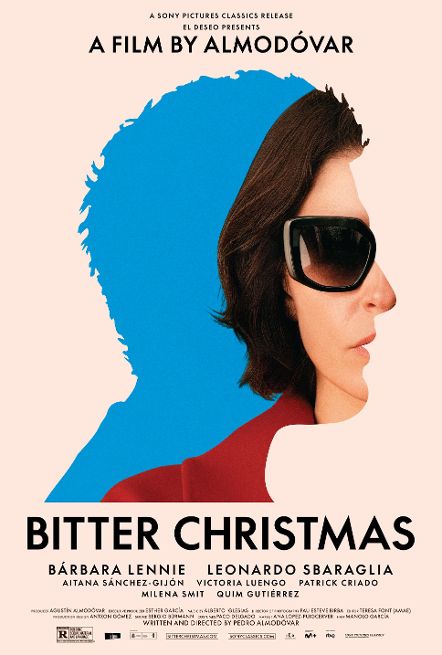
The teenagers who congregate beneath the tall statue of San Rocco, the patron saint of Montescaglioso, in Piazza Roma. They are immaculately dressed in smart jeans, designer puffer jackets, and new trainers, because the nights are chilly. They talk for hours because there is nothing else for them to do. I do not understand what they are saying—they speak too fast—but they seem friendly.
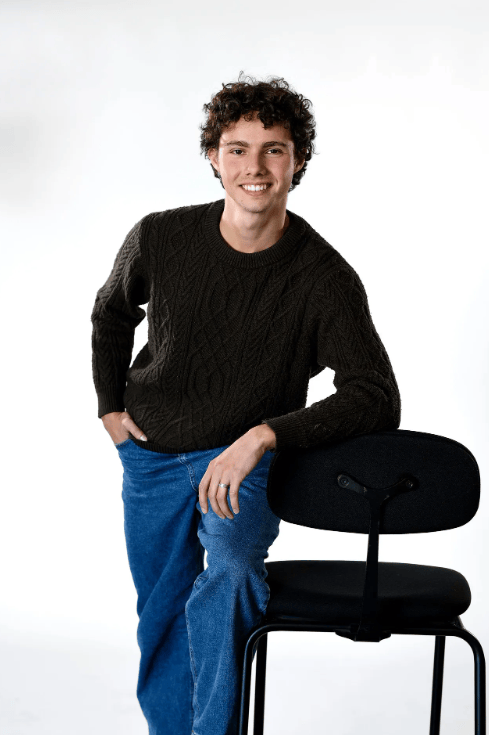

The man who pulls up in a Grande Panda and sees me sitting on a bench outside an old building, its yellow paint faded with time. He speaks remarkably good English and educates me on the history of the town: the stories of local people who left at the beginning of the last century and moved to New York and Toronto. He tells me that Francis Ford Coppola is a second-generation Italian-American, born to parents of southern Italian descent. His paternal grandparents emigrated from Bernalda, which is only a few miles away, and the director now owns a hotel there.

The old man who walks his dog every evening and stops to talk. He points to the Chiesa di San Rocco and tells me it was badly damaged in an earthquake that struck Montescaglioso in 1827, and was later restored with the construction of stone vaults and a new façade. He tells me that ancient Greek tombs were once discovered beneath the piazza, and that the church once stood outside the town—there is the possibility of undiscovered graves beneath the surrounding houses.

I decide that there is much history to be found, but I am only interested in the present, where the young people appear permanently sun-tanned, animated, and possessed of an easy, unstudied allure that feels particular to this part of the world—especially to someone from northern Europe.

On lusting over Benjamin Voisin in The Stranger…

I know somebody who claims to have met French actor Benjamin Voisin. It may or may not be true because that person has a tendency to tell lies. But the story he tells is a good one because he said that Voisin smoked a lot, wasn’t completely fluent in English, but came across as a nice chap. And he was convinced that he was gay, but that bit has yet to be confirmed.

I first saw Voisin in François Ozon’s Summer of 85 (Été 85), and at the time I thought the director might have chosen a better-looking boy. But then came the trailer for Ozon’s The Stranger (L’Étranger), along with the publicity stills, and I kept finding myself asking, “Who is that good-looking guy?”

It has felt like an age waiting for The Stranger to arrive. Based on Albert Camus’ novella, it was originally shot in colour, though Ozon ultimately chose to release it in black and white—a decision that feels entirely right.

There is a scene in which Meursault (Voisin) kills an Arab boy. He studies the body on the ground—first the armpits, then the lips—before firing… several times. It’s one of Ozon’s familiar devices, turning something ostensibly straightforward into something quietly, disconcertingly homoerotic.

“I wanted to make everything erotic,” Ozon says. “The girls are erotic. The boys are erotic. The nature is erotic. Everything has to be erotic and sensual. That’s what I wanted. And the choice of the black-and-white [cinematography]was a way to show this sensuality in the world.”

If that wasn’t enough we see Voisin’s naked body a few times, a pretty bum that requires squeezing, and even get a glimpse of his manhood.

On coming upon an unwelcome adversary…

The boyfriend of the love of your life stands before you. What are you supposed to do? Granted, he’s good-looking. But he lays claim to someone who should be mine. For that reason, I can’t ignore everything that’s wrong with him. I want lightning to strike him dead. There is a solution to this jealousy—but it’s not one I dare to consider.

On reading an anecdote from Rufus Wainwright…
“What’s the best thing a cabbie has said to you?”

“Well, my handle on Uber is just the letter R, and I went into a cab once and the driver said, “R, what’s that stand for?” And I said, “Rufus.” And he said, “Oh, like Rufus Wainwright? I wonder what happened to him?” I just went along with it…”

As flies to wanton boys are we to the gods…

The Wanton Boys, Mark Oliver, 1959.

He was a thin, brown-eyed, sad-looking boy, one of ten children of a poor Italian fisherman who had been drowned at sea. Sometimes he begged a little, and sometimes he stole, but hunger grew in him every day. There was no more salt in the home, only garlic to help the long loaves down. Garlic or one of the half-rotten tomatoes that the wasteful spaghetti-makers threw away, and it was a race in the mornings to get to the garbage cans before the dogs and the other starving scavengers.”

I found a parcel on the doorstep. Tearing it open, I uncover a battered copy of The Wanton Boys. I am beside myself with excitement. It’s an early birthday present from a friend too impatient to wait for the day itself. This ragged mass-market copy, improbably, is worth a small fortune.

The blurb is enticing:

“A shattering novel about Italian street gangs, their hates, lusts and perverse and brutal ways in a world that scorns and damns them.”

I love a book about lust – and perverse and brutal ways.

On the cute and willing…

Vimzrut. Photo by Ruslan Pukshyn, 2026

My Week, For What It Was Worth

On returning to that bronze statue…

Gaston George Colin (1891–1957), by most accounts a young cyclist, perhaps even a jockey, and later a pilot—but certainly a chauffeur to Harry Graf Kessler, the well-connected German diplomat, writer, and patron of modern art.

Kessler’s diaries reveal that he began a relationship with the seventeen-year-old in 1907, hosting him both at the family castle and during stays in Paris, Rome, and Denmark.

While in Paris that same year, Kessler asked his friend Aristide Maillol to create a life-sized marble statue of the young man. He was said to have wanted a likeness of Narcissus, inspired by ancient Greece, which he saw as a culture where relationships between men and youths were openly acknowledged.

The outcome, however, was not a marble statue but a smaller bronze work, The Racing Cyclist (Le coureur cycliste), capturing a classical ideal of beauty and strength.

Maillol, who rarely worked with male nudes, struggled with the piece—his efforts complicated by Kessler’s constant attention to detail. The sculpture was not cast until early 1909, and Maillol remained dissatisfied, noting its unusual proportions, particularly the enlarged head and penis.

It was eventually exhibited in the French pavilion of Decorative Arts at the Turin Universal Exhibition in 1911.

Following the Nazis’ rise to power in 1933, a fearful Kessler left Germany for Paris, later moving on to Mallorca and finally to southern France. It was only in 1985, when his early diaries were discovered in a bank vault, that the extent of his fixation on Gaston Colin came to light.

Four casts are known: Kessler’s original is now held at the Kunstmuseum Basel, while others are in the Museum Folkwang, the Musée d’Orsay, and the Bavarian State Painting Collection in Berlin. Additional versions may exist, as Maillol is believed to have produced a second edition around 1925.

On finding that Joseph (or Sam) was queer…

It turns out Joseph lied to me. I found out that the flirty boy with the rolled sleeves, the nice arse, and the quiet smile is called Sam. And he hasn’t served me coffee for weeks. I still go in every day, but he’s disappeared—off studying, or back to his girlfriend. Then on Monday, he came in as a customer, joking with the staff behind the counter. A good-looking guy followed him in. Sam touched him lightly on the arm, and the guy patted him on the arse. They left holding hands, and I had to accept that Sam wasn’t available to me anymore.

It was an emotional snap. The interest hadn’t been given time to fade; it just hit a wall. That turns into jealousy very quickly—why them, not me? Seeing that physical ease between them—the touch, the closeness—intensified everything. It wasn’t simply that he was taken; it was seeing what that looked like. That’s what stung more than I expected. I told myself not to inflate things beyond what they were. I hadn’t even been rejected—just abruptly cut off.

I had to stop idealising someone I’d barely interacted with, especially once they became unavailable. That was the truth of it: there had been no real interaction. My mind had filled in the gaps, making Sam more significant than he ever really was.

But there was still that lingering feeling—a symbol the mind clings to—a sense of missed opportunity.

On discovering Arthur Rimbaud’s homoerotic poem

Stupra II (1871)
Our buttocks are not theirs.
I have often seen people unbuttoned behind some hedge;
and, in those shameless bathings where children are gay,
I used to observe the form and performance of our arse.

Firmer, in many cases pale, it possesses striking forms
which the screen of hairs covers;
for women, it is only in the charming parting
that the long tufted silk flowers.

A touching and marvellous ingenuity such as you see only
in the faces of angels in holy
pictures imitates the cheek
where the smile makes a hollow.

Oh! for us to be naked like that,
seeking joy and repose,
facing one’s companion’s glorious part,
both of us free to murmur and sob?

Arthur Rimbaud (1854-1891)

The Latin ‘stupra’ is plural for stuprum, which means an obscene and/or illegitimate copulation. Because of their explicit homoerotic content, these poems were not published during Rimbaud’s lifetime. They first appeared in a private, limited edition in 1923.

On watching a film that seemed familiar…

There was a similarity — a flicker of déjà vu. It softened the boundary between experience and memory, as though something new had already been lived. For a moment, my mind misread the present as the past, conjuring a false familiarity. Certain scenes felt strangely recognisable, as if they belonged to me already.

To Dream is a story of friendship — hopeful, intimate — set against a harsh inner-city backdrop. Best friends Luke and Tommy live in an unforgiving corner of London. Having dropped out of school and still at home, they find themselves dreaming of what might come next. Their shared ambition has always been escaping: to leave London’s grime behind for an imagined American paradise. It is a dream that has carried them through the realities of abusive homes, and one that binds them tightly together. But as family tensions worsen, and Luke’s new love interest begins to unsettle their bond, loyalty pushes Tommy toward a decision that will alter their lives forever. (Winter Film Festival – New York City).

Change the setting, reshape the structure — the dynamic remains. Four years on, as I approached the final instalment of Perfectly Hard and Glamorous, this little-seen B-movie felt like an omen.

Then I realised what I had missed: the father. There is always an abusive father. Somehow, I had forgotten him.

To Dream. United Kingdom (2026). Directed and produced by Baltimore-born, London-based Nicole Albarelli. Starring Freddie Thorp, Edward Hayter, Adam Deacon, Frank Jakeman.

On the cute and willing…

Artem. Photo by Archie – Saint Petersburg (2025)

My Week, For What It Was Worth

On reading Like People in History…


In January 2000, somebody called Gregory Nash pencilled his name on the front page of a paperback book. I don’t know what happened to it for the next 26 years, but a few weeks ago, a friend found it at a second hand book shop in London and gave it to me as a present.

Published in 1995, Like People in History, by Felice Picano, traced not just the protagonists’ lives but provided the defining moments of American gay history between 1954 and 1991. 

‘The big novel we’ve all been waiting for – the gay Gone with the Wind,’ wrote Edmund White at the time, which was hardly surprising. Picano and White were both founding members of the Violet Quill Club, considered to have been a gay urban version of the Bloomsbury Group. They met regularly in Manhattan and on Fire Island in the early 1980s to discuss their works in progress.

I must explain that I thoroughly enjoyed the book although comparing it with Gone with the Wind didn’t do it any favours. 

“Sex is the defining characteristic,” critic Patricia Rodriguez wrote back then. “He (Picano) buys into every stereotype that many gays wince at, giving ammunition to bigots. Nothing’s ever as good as it was when THEY were on the cutting edge.”  (Fort Worth Star-Telegram 1995).

If I have interpreted her correctly, Rodriguez was referring to the 1970s. The archetypal mincing queens with moustaches and lots of hair, who danced to loud disco music, and spoke to each other like they were girls. 

“Mary, you are too much. She’s giving everything. Don’t be so dramatic, girl.” 

Well, they were having a good time, and who could have blamed them. 

But afterwards it became a problem with some gays, particularly for those who hadn’t been there. Such as me. 

I guess that what I am trying to say is that the seventies gay scene (particularly in the USA) aged badly. Too flamboyant and in your face – and decades before RuPaul hyped it up again. 

If AIDS curtailed the eighties, then the reset came in the 1990s. 

Since then, everything seems to have been less colourful and non-scene, and which those from the 1970s might consider boring.

I prefer it this way.

Picano, who published 17 novels and eight volumes of memoirs, died last year, and was better qualified to write about the scene than most. And he did it well. Me? I am trying my best not to come across as a disrespectful and ungrateful cunt.

My adopted copy of Like People in History goes onto my gay literature shelf and stands alongside other members of the Violet Quill Club: Christopher Cox, Robert Ferro, Michael Grumley, Andrew Holleran and George Whitmore. Four had died of AIDS by 1990 and only Holleran is still alive. 

 Last word to Picaro:

“We were all friends and lovers – literally. Robert Ferro and Michael Grumley were partners since the University of Iowa writing school. Andrew Holleran was also at that school. Michael and Robert were together for years. I met Edmund White in Greenwich Village in 1976, and George Whitmore in ‘77. Chris Cox was Edmund’s boyfriend: George and I were tempestuous boyfriends at the time, but he was instrumental in forming the group. Robert was also very socially active, so he and George pulled it together.”

On coming upon a skanky boy…


I don’t know your name. I don’t know how old you are. I don’t know where you live. I know absolutely nothing about you.

But I do know that you are a bad apple that has fallen from the tree. Realise that people judge you for what you are.  A skank – dirty, untrustworthy, disreputable, and sexually promiscuous.

Levi, the Polish boy with the Yorkshire accent, once picked up on something I had written.

“Boys who stuff their hands down their underwear because they think it makes them hard. Boys who pretend their sweet smelling piss and cum fingers are guns.”

He understands that I am hopelessly addicted to skanky boys.

And lust is only a starting point for deeper connections.

On realising that if I had been around in 1960…


I would have been going to the cinema and masturbating over Alain Delon in Plein Soleil. That unnatural beauty, chilling menace and simmering homoeroticism. And don’t get me started on Rocco and his Brothers.

On that furtive glance from beneath his baseball cap…
The look that said: “I know that we’ve known each other for ten years, and I know that you’ve always loved me, and I’ve been a complete shit to you. But now that I’m in my prime, I’m ready and willing to have that relationship.”

On the barman who smiled at me…
I cannot say, in all honesty, whether he was handsome or not. But beauty is not everything. He was shy, and polite, which said something. And when he faced me there was a hint of attraction that appealed to my shallow mind. 

I cannot say that wearing shorts was a good idea either. I know fine legs when I see them and yet I was still deciding whether it was the case here. But he was brave enough to wear them on a cold March night and that showed guts. And when the realisation hit that I was still staring at them, I knew that he probably had good legs after all. 

But what absolutely blew me away was when, amidst his boredom, he saw that I was giving him attention and cracked a most beautiful smile. It was all so sudden. A big genuine smile. The last time a chicken smiled like that, he ended up moving in with me. 

On the cute and willing…

Marcelo Jimenez, model. Photograph by Ryan Duffin

My Week, For What It Was Worth

Le coureur cycliste (1907-08). Gaston George Colin was a young cyclist, Harry Graf Kessler a rich German aristocrat attracted by his figure, and Aristide Maillol the French sculptor stuck between them.

On falling for a bronze statue…
Aristide Maillol. He seduced us with stone. Flirted in bronze. Gaston Colin. A mystery. Le Cycliste. A favour for a friend. Harry Graf Kessler. But Maillol didn’t do dick. But Charlie said, “It is conceivable that he hated the male penis. Much the same as I do with the female vagina.”

On realising that I know nothing about female anatomy…
And so, to be real, I know nothing about female anatomy. Where to stick it? What to do? What to say? Multiple choice. Confused with a clitoris, vulva and a vagina. In case of emergency. Anus. Refer to Dummies Guide to Girl Parts.

On teenage scally boys messing with me…
Broken promises and lies. Rebellious and street smart. Teenage scally boys who disrespected me. No trust, I told them. I’m burned now. I kicked the shit out of one of them. They threw eggs at me.

On flirting with the guy with a girlfriend…
A flick of the eyes. Said it all. My heart surged. Not my normal type. A bit chunky. But good chunky. Everything changed. There was hope. 

On discovering Len and Cub…
Sweet boys. Lives can be forgotten. Lives can be rediscovered. Long after they are dead. I liked Cub.

Leonard “Len” Keith and Joseph “Cub” Coates fell for each other in early 20th-century New Brunswick, at a time and place where queer relationships were taboo. 

On a house in a small Italian village…
Tuscany. Eight houses. Fifteen people. Nine males. One handsome twink actor. No money to buy. Gutted.

On choosing my gay pen name…
Pericoloso Eros.

On lusting after Matchstick Man…
Getting thinner. Getting stickier. Getting bonier. Dickier. His girlfriend? Getting bigger, rounder, cockier. Fat bitch! 

On being jealous over Joe…
Because some Aussie twink in Perth claimed him and explored his cargo before I had the chance. 

On listening to two guys talking…
“Your psychology is impressive. Wikipedia or Chat GPT?”

On someone’s thoughts about Saturday Night Live…
“Here’s the thing: I’ve rarely met a British person living in the US who has actually found SNL funny. It’s hard to say why this is.” – Emma Brockes (The Guardian)

On the cute and willing…

Finny Tapp, model. Photographed by Gleb Behrens

My Week, For What It Was Worth


On the boy delivering junk mail…
He stopped some distance from the door. He seemed like a prowling cat suddenly aware that there might be danger. He stayed still, contemplating whether to proceed or retreat. His eyes were nervous and suspicious. And I, standing almost naked in the doorway, smiled as if to say, “I might only be wearing yesterday’s dirty Calvin Klein’s but I’m no threat.” But he made his decision and turned away.

On the woman who told me…
“It was a long time ago. I was young and pregnant and very drunk. I went to a guy in Spain who agreed to give me a tattoo on my huge stomach. I chose that yellow, grinning, trippy smiling ‘acid’ face. After I gave birth it looked like a deflated balloon and I’ve had to live with it.”

On resolving Liam’s finances…
Liam the skater boy, who is short, cute, wears round glasses and has hairy legs. He told me that his girlfriend had moved out and now he was struggling to pay the rent. The briefest thought crossed my mind. I nearly suggested that he sell his body, and become my rent boy. But I didn’t. I remembered that I will not pay for sex until I am old.

On buying old homoerotic novels…
My compulsion to buy vintage homoerotic novels – The Loom of Youth, Despised and Rejected, Tell England. The age of innocence… or was it? Those intense male relationships that remained aesthetic, psychological, and slightly dangerous, rather than purely physical. The obsession with male beauty and youth. The internal conflict between desire and morality. The longing that could not be fulfilled.

On meeting the boy with the moustache…
The small skinny student with an angelic face who had grown a moustache. I hated it and resisted the urge to say so because I knew that he already lacked confidence. He, who couldn’t look me in the eye like he was ashamed of something. Who looked slightly scruffy in the careless way that hinted at potential—like a statue still hidden inside the stone.

On getting lots of messages…
Like naughty schoolboys sniggering at other people’s shortcomings, we trade a constant stream of nonsense and casual insults about the world around us. It is the only language we seem to share, the only ground we truly have in common. From boys to men—ten years of a love affair that never happened. And yet each message makes my heart sing, filling me with a fragile hope, and I find myself wondering whether, somewhere on the other end, he might be feeling the same.

On listening to David reminiscing…
An old song came on the radio: Calling Occupants of Interplanetary Craft. A sci-fi anthem about humanity attempting telepathic contact with extraterrestrial beings. I had never heard it before and mocked the corny American DJ intro.

David frowned. It turned out to be one of his favourites.

“Days at sea,” he said. “I think of a cloudy afternoon on a choppy Mediterranean, sailing from somewhere to somewhere. Feeding coins into a jukebox and drinking weak shandy from white plastic cups. Enough of it that we convinced ourselves we were drunk, though really it was just hormonal schoolboys egging one another on.

“It was a big hit for The Carpenters. Actually a cover of a song by a group called Klaatu, who people once claimed were The Beatles recording under a pseudonym. Absolute bollocks.”

The Isherwood Problem: Youth, Age and the Right to Desire

Don Bachardy and Christopher Isherwood. Early 1950s. Photograph by Zeitgeist Films / Everett Collection.

My friend David is reading a biography of the writer Christopher Isherwood on his Kindle. It has taken him a long time to get through—not because the book is difficult, but because it is extremely long. He joked that his Kindle had travelled with him from London to Munich and Paris, and back again, and he had only reached the fifty-percent mark.

“That’s the problem with an e-book,” he said. “We don’t talk about pages anymore. We obsess over percentages.”

I suggested that perhaps he was in too much of a hurry to finish it.

“That’s true,” he reflected, “but don’t you always have one eye on what you’re going to read next?”

David is a lot older than me, and I’m not entirely sure where we first met. He is educated, though—one of those men whose words are almost always guaranteed to entertain. We were walking beside the canal from Paddington Station towards Little Venice. It was dark, lonely, and faintly threatening. I half-expected a knife-wielding mugger to emerge from the shadows at any moment.

For someone like me, who comes from the provinces, London can feel dangerous. David had no such concerns. He regarded nighttime as the best time to wander its quieter streets, harvesting inspiration for his novels, though on this occasion he had also had to tolerate my repeated complaints.

He tried to change the subject.

“The other day I went into Daunt Books on Marylebone High Street,” he said, “and overheard two older women talking. One of them said, There are so many books to read, and so little time left to do it. That made me think about my own mortality. It’s probably why I’m in such a hurry to finish the Isherwood biography.”

It was the first time I’d heard him refer to his age in that way. I’d never really considered that it might trouble him.

It was my turn to change the subject.

“To be honest, I’ve never read Isherwood,” I said. “I find him a bit of a privileged bore.”

He seemed not to hear me.

“There are several comparisons between Isherwood and myself,” he continued. “I’ve been struggling to come up with new ideas recently, and while reading the biography I came across a quote from his diaries: A lack of creative inclination to cope with a constructed, invented plot—the feeling, why not write what one experiences from day to day? Why invent, when life is so prodigious?”

He paused, as if letting the words settle.

“That resonated with me. I’ve decided that my future writing will only be based on real life experiences. That will be far more satisfying.”

David’s work had always relied on a radiant imagination—several bestsellers proved that—but this declaration unsettled me. As if anticipating my concern, he smiled.

“I have a lifetime of fascinating stories involving my closest friends,” he said. “Some of them might raise a few eyebrows.”

“Did Isherwood do as he suggested?” I asked.

“Absolutely. He created characters based on people he knew. Sometimes he even wrote about himself in the third person, omniscient. I plan to do the same. I’ll call my character David—and absolve myself of any blame.”

Little Venice. Where the canals whisper secrets under the London stars

We passed moored canal barges. Most were dark, but a few glowed from within: a man cooking over a tiny stove, a woman bent over her laptop, someone stretched out watching television. Their lives were visible through brightly lit portholes, as if privacy were optional.

“There are other similarities between Isherwood and me,” David went on. “When he was forty-eight he met his long-term partner, who was only eighteen. Does that sound familiar? Joshua was twenty-one when I met him. I was forty-four. Seventeen years later, we’re still together.”

“To be honest,” I said, “I’m surprised your relationship has lasted this long.”

I thought of the times he had propositioned me, and of the occasions I had refused him. I would have been eight when he met Joshua, who was now approaching forty. I had been in my early twenties when I first met David.

“The secret,” he said, “is not to make a relationship exclusive. Not my words—Isherwood’s. He and Don Bachardy both had sex with other people.”

It sounded close to a confession.

“Young men enjoy the benefits of being with an older man,” he continued. “Even if they get their sex elsewhere. Boys can take on the identity of their mentor. Bachardy picked up Isherwood’s accent within a year. Joshua is still his own person, but he always comes home. He values stability.”

Above us, traffic thundered along the Westway flyover. Sirens cut through the night. London had become a city of constant alarm. We were nearing Little Venice—named, supposedly, by Lord Byron, who compared its rubbish-filled waters to the Italian city he had once lived in. In the darkness we could just make out Browning’s Island.

“This is where Paddington Bear was once carried by a swan,” David joked. “Though I suppose that means nothing to you.”

My mind was elsewhere.

“I know times were different,” I said, “but Isherwood might today be accused of grooming a young boy.”

“I knew you’d say that,” David replied. “And yes—you’re right. An established literary figure and a college freshman. There were even unkind rumours in New York that he was with a twelve-year-old. His friends disliked Bachardy. But they turned a moral weakness into a long-term relationship. Rather like Joshua and me.”

He paused.

“Back then, people were blissfully unaware. Today everything is played out before a global audience. If the same thing happened now, Isherwood would be cancelled—even if nothing illegal had occurred. We used to call it boy-love. An appreciation of male beauty going back to the Greeks and Romans. Now it’s considered dirty. That’s something I struggle with.”

A person with limited education is at a disadvantage when arguing with David. He always has the clever words ready. My clumsiness betrayed me.

“Can’t you see that there’s something disgusting about the age difference?”

He frowned—not so much at my disapproval, but at my inelegance.

“When I was young,” he said, “homosexuality wasn’t acceptable. Many of us missed out on young love. Then the AIDS crisis came. Now we grow old resentful, because there’s a void. Is it so terrible that we try to recover something we lost? You’re the generation without constraint. You don’t understand our predicament.”

He stopped walking.

“No matter how old you are,” he said, “there will always be something exquisite about youth.”

“Why?” I asked. “Isherwood came from an even older generation. And what you’re saying sounds pederastic to people my age.”

“When Isherwood was young in the 1920s, he was driven out of Germany by the Nazis. Berlin became dangerous. By the time Bachardy appeared, Isherwood was already considered ancient. Some say the boy did the chasing. The relationship later became non-sexual. Bachardy had other lovers.”

A group of students approached—three boys, two girls—laughing loudly before falling into an awkward silence as they passed us. I recognised the look. Suspicion. Not for the first time, I’d been mistaken for a male hooker. I resisted the urge to run after them and explain myself.

David smirked.

“I think I know why you struggle with age disparity,” he said. “That look on your face—it wasn’t moral outrage. It was embarrassment. Shame. You’re ashamed to be seen with someone older.”

He shook his head.

“That’s not a virtue I admire. One day you’ll find yourself old without warning. And the object of your desire will be much younger. I hope that boy doesn’t think the way you do now.”

Christopher and His Kind is a 1976 memoir by Christopher Isherwood first printed in a 130-copy edition

Life Story: The Third Drop

I noticed him but he chose not to notice me. After he had dropped his mobile phone on the floor for the third time, he realised that he had to say something.