Tag Archives: life experiences

My Week, For What It Was Worth


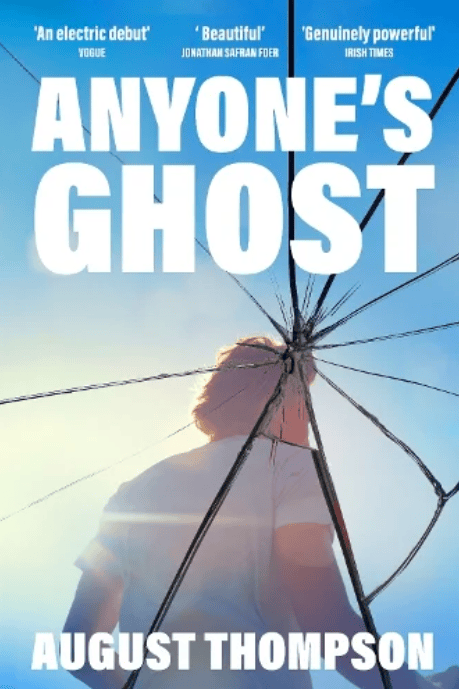
Two Camus

Cool. Only one word to describe them.

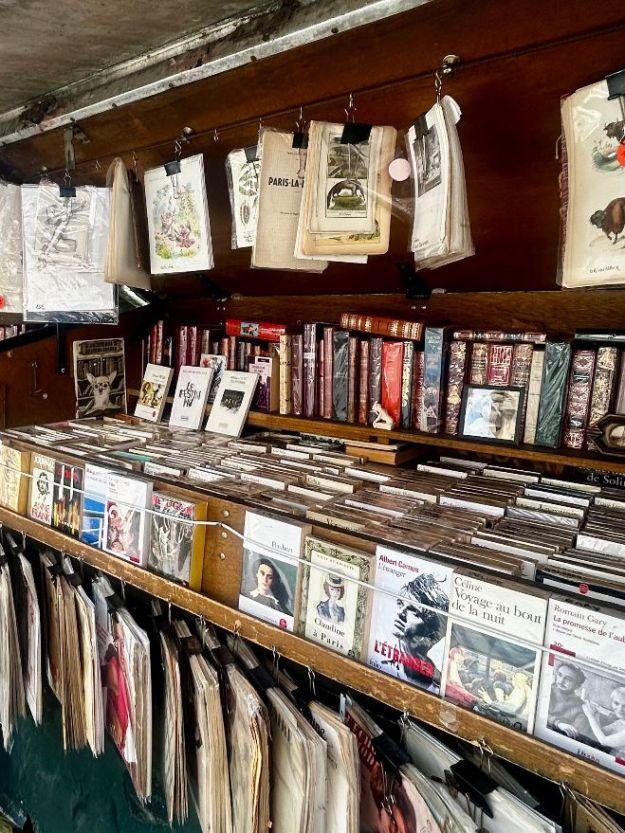
The famous booksellers along the River Seine are known as les bouquinistes. Together, they form the world’s largest open-air book market, turning the banks of the Seine into a cultural landmark once described as “the only river in the world that runs between two bookshelves.”

Apparently, the boîtes have to be painted Vert Wagon — Carriage Green — the same colour traditionally used for Parisian park benches, railings and Morris columns.

Deej wanted to see every single one.

Strange, really, considering he can’t understand a word of French.

“I want to buy things I can display around my flat,” he said.

The tradition of open-air bookselling dates back to the sixteenth century, when mobile peddlers sold pamphlets, engravings and second-hand books from baskets and temporary stalls on the bridges of Paris.

The regulations remain strict, with the emphasis still firmly on vintage print: antiquarian and rare leather-bound books, second-hand French literature and classic translations, old postcards, stamps, historical maps, retro advertising posters and hand-painted engravings.

Deej dragged me past what felt like every stall, stopping to browse hundreds of books.
And after all that, he bought two Albert Camus novels — L’Étranger and La Peste.

Which, given that he can’t read French, he could quite easily have bought on Amazon.


My Vocabulary Needs Work

It’s basically about improving my writing. Every post nudges it somewhere new and, hopefully, slightly more interesting. I sent a sample to David, a man who knows about these things, and asked what he thought.

“Dangerous, slightly absurd, affectionate, sexy in places, and with that very particular Miles-ish ability to notice something completely inappropriate at precisely the wrong moment. But, as someone who feeds on dictionaries and masturbates over a thesaurus, please try and extend your vocabulary.”

Fair enough.

He pointed me towards Tom Read Wilson and his gloriously camp ‘Word of the Day’ posts on Instagram. And honestly? He turned out to be charmingly eccentric, ridiculously articulate, and incredibly camp.

Tom Read Wilson


The Problem with Soungouroffs

“What is the worst thing that can happen to an artist?” asked Philippe Garnier in perfect English.

He was a distinguished gentleman and sat beside me while his golden Labrador chased other dogs around Square Georges Cain. They raced along the circular path with a freedom not usually afforded to them; dogs of every shape and size playing together as though they had temporarily forgotten their differences.

Garnier is an art expert, which seems to be a surprisingly popular profession in Paris.

I know absolutely nothing about art, except that I like certain types of paintings. Usually, those of an explicit and homoerotic nature.

“I shall tell you,” he said. “It is for your work to be attributed to somebody else entirely.”

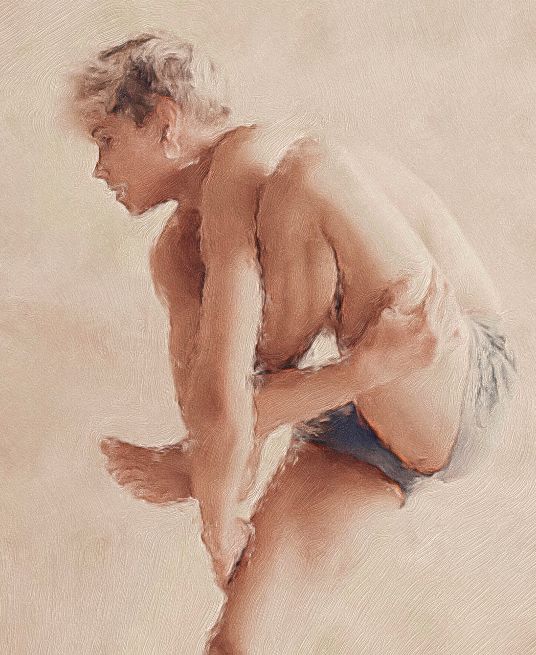
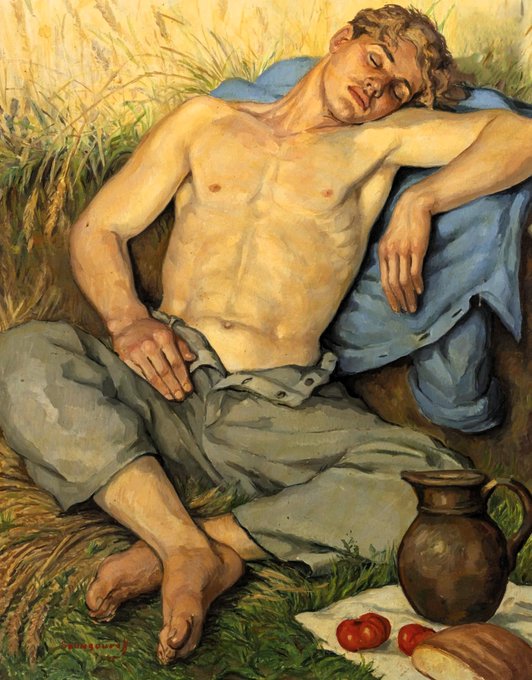
He showed me an image on his phone. A shirtless young man was lying peacefully in the heat of an afternoon.

“La Sieste,” Garnier explained. “Painted in 1945. Relief, peace and escape from conflict. The work of an Estonian painter called Anatoli Soungouroff. Do you think he is a sailor or a fisherman?”

I studied the boy and liked him.

“He was extremely beautiful,” I said, “and I wouldn’t have cared what he did.”

The dog returned to his master and did a large shit directly in front of us.

Without hesitation, Garnier bent down and scooped it up with a poop bag. He tied the handles without once losing his train of thought.

“Soungouroff moved to France in 1930 and made his creative homes in Paris and Cannes. He became friends with Jean Cocteau, Christian Bérard and Roger Peyrefitte. But by the 1960s he was starving. He paid his bar tab at a gay bar, Le Zanzibar, by painting murals of young sailors and gypsies on the walls. One of them was thirty feet long.”

He sounded like a man of my taste and therefore worthy of further investigation.

“The point I am making,” he continued, “is that Soungouroff’s work is often attributed to another painter — Antonin Ivanovich Soungouroff — who was a different artist entirely.”

Garnier went to deposit Baguette’s poop in a nearby bin.

Yes, his dog really was called Baguette.

“But,” he continued when he returned, “if you see a painting of a young male — a fisherman, sailor or harlequin — painted by a Soungouroff, then it will almost certainly be the work of ‘Tola’. Look for the same full lips. The same baggy eyes that reveal secrets.”

I looked again at the young man on Garnier’s phone.

He certainly had lips.

And eyes.

Note:
The “eternal bachelor” was Anatoli Sergeevich “Tola” Soungouroff (1911–1982).


A Little Shelter from the World

Paris at night. Au Café du Marais.

Music plays softly in the background, which Deej describes as ‘folky-wolky’. We are tired, but clink our coffee cups together and agree that we are good friends.

Then the storm clouds gather.

Rain splatters the worn flagstones, tentative at first, then with increasing intensity. The thunder comes next, followed by sudden flashes of lightning and, finally, the great blanket of rain racing down the street towards us.

Soon, the customers are marooned beneath huge umbrellas, huddled together against the deluge. But ours feels the most comfortable, the most welcoming, as though it has been placed there especially for us. A little shelter from the world.

The sky keeps flashing. Thunder rumbles overhead, gathering force until it erupts into cataclysmic explosions. The noise drowns out the music, so the waiter turns it up.

Dylan sings Lay Lady Lay, about some girl lying across a big brass bed.

This old song haunts me wherever I go.

I know very little about Dylan, except that he once looked better than his songs and smelt worse.


Shagdough

“Nah,” said Deej. “Not my scene at all.”

But I made him go to a gay bar anyway.

“Are you shagdough?”

That’s Deej-speak for asking if I’m begging for it.

I show compassion. I take him down a backstreet to a place for older queers, where there is at least a possibility that I might become shagdough.

There is hardly anyone in.

A murderer sits staring at us from a dark corner. An abuser pretends to look at his phone but is really taking sneaky pictures. A kidnapper sings karaoke, thrusts a microphone into our faces and insists that we sing along in French. A mugger offers to buy us expensive drinks.

We’ve exhausted the entire clientele.

I love the danger.

Deej is absolutely shitting himself.


A Straight Faggot

We walked back to the hotel. The streets are wet now, cleansed of people, the city briefly emptied by the storm.

But there are voices in the distance.

Out of sight at first, but getting closer.

Then comes a shrill scream from a flamboyant queen, followed by a high-pitched cackle that seems to echo between the buildings. Four guys turn the corner. Another over-the-top scream, loud enough to wake everyone in the surrounding hotels. Then that awful cackle again.

The others tell him to be quiet, but he is clearly drunk and beyond caring.

They pass us, disappearing into the wet darkness.

Deej turns to me.

“What an annoying faggot! Why can’t he be a straight faggot like you?”


In the Silence & On the Timeline

“I think about you a great deal, and you know this without my needing to tell you, but in the silence and between the lines you must read all the affection I feel for you and all the tenderness stored in my heart.”

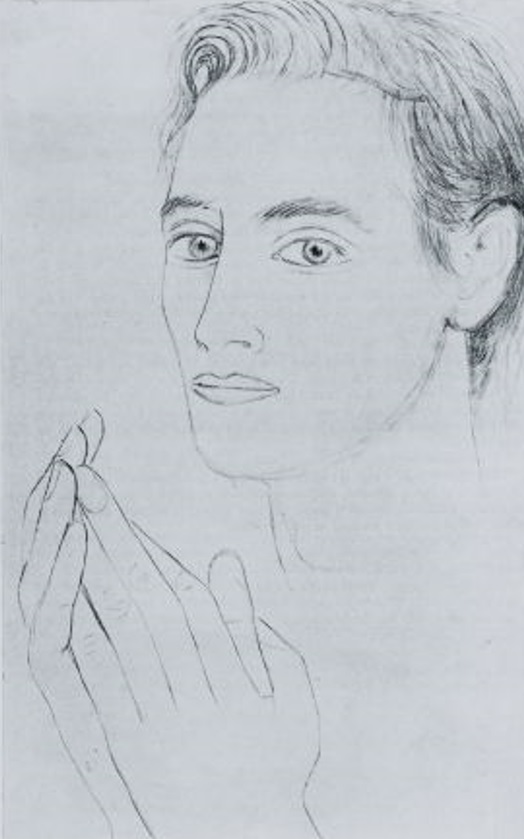
From a lost letter from 1936 and written by 38-year-old Federico García Lorca to his lover, Ramírez de Lucas, who was barely 16 at the time. Ramírez de Lucas may have been the lover who inspired Lorca’s ‘Sonnets of Dark Love’.

It now translates as:

me thinking about you 24/7 like it’s literally my full-time job 😭 you already know I’m down bad, so I don’t even need to say it. but pls read between the lines bc there’s actually a ridiculous amount of love and affection in my heart for you rn ❤️‍🩹 

Ramírez de Lucas aged 18, drawn by Gregorio Prieto.

Appetising Young Boys for Sale

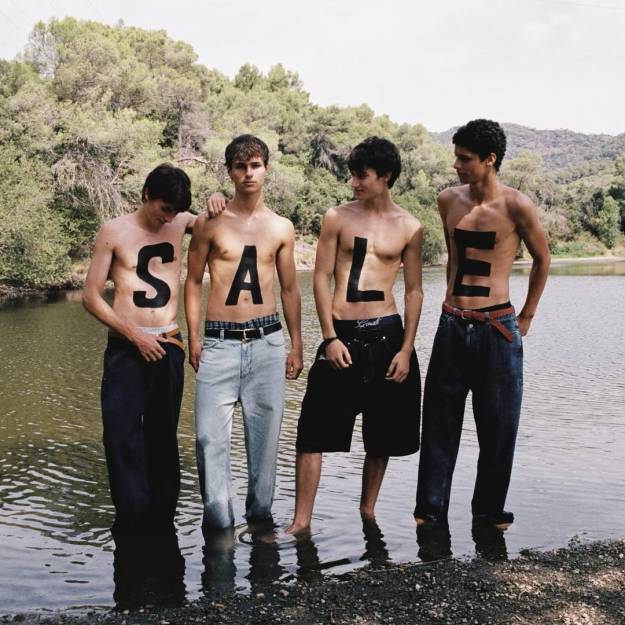
Four boys. Boys for sale. They’re going cheap. Only ten euros. That — or thereabouts. Nice boys. Rather pale. Through lack of sleep. Feed them protein shakes. Stop them getting stout. If I should say they weren’t very greedy, I could not, I’d be telling you a tale. Four boys. Boys for sale. Come take a peep. Have you ever seen such nice boys for sale? 


On the Cute and the Willing
Hessel de jong. Photo by Renie Saliba.

My Week, For What It Was Worth


The Things That Keep Us Here

I have immense admiration for those who fight invisible battles every day, push through intense pain, and somehow find the strength to rebuild their lives. Their journeys are a reminder that healing is possible, and that even the darkest periods can eventually give way to hope.

I came across Zach Montana on Instagram.

This guy pushes my buttons.

A little digging online reveals that Zach has been open about his mental health struggles following a drive-by shooting at his home. The trauma profoundly affected his well-being, plunging him into severe panic disorder and debilitating insomnia.

Those dark days are there to see online, and they make for disturbing viewing. There is something unsettling about watching somebody caught in the grip of fear, unable to escape his own mind.

The 28-year-old singer and TikTok creator began listening to ambient music in the middle of the night as a way of managing his disorder. There is something strangely intimate about that: the small rituals people invent to get themselves through the hours when sleep refuses to come.


A Boy in Love, Unfortunately …

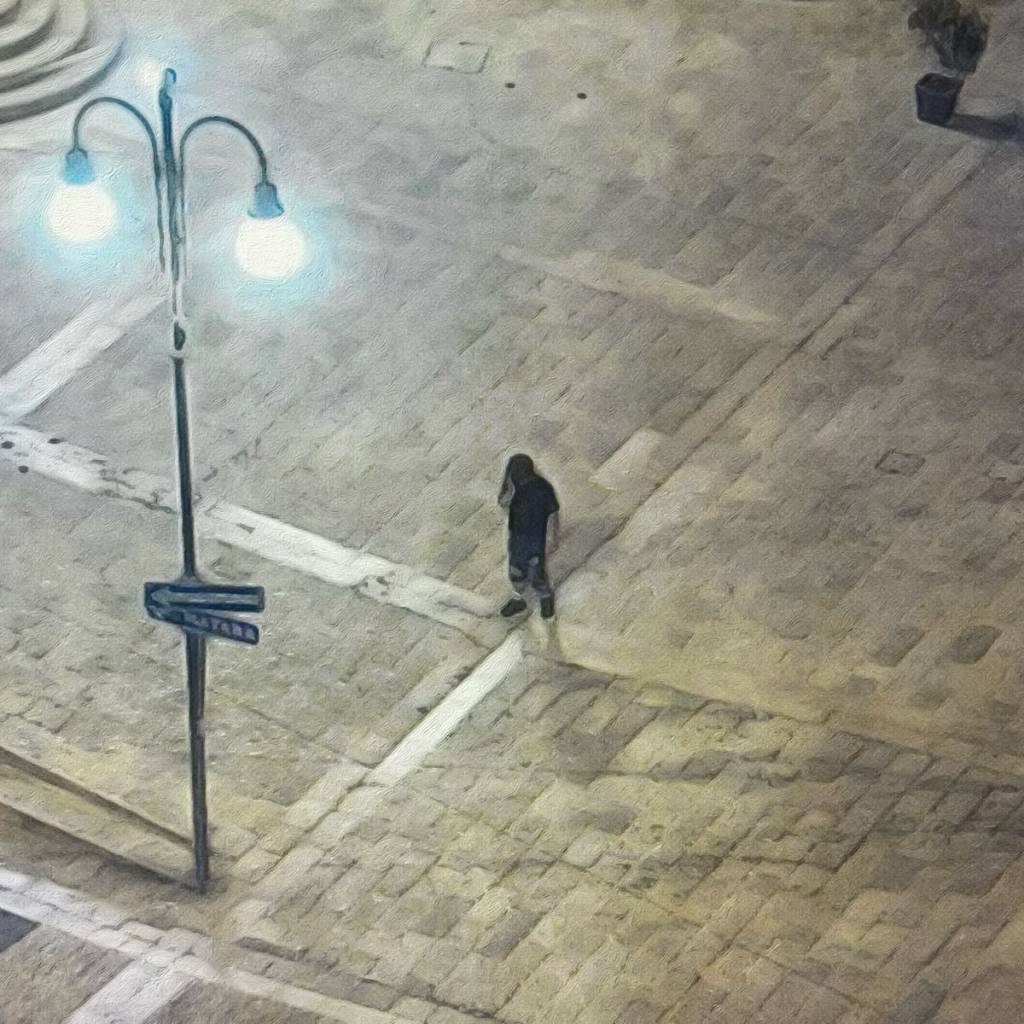
He’d been pacing around the piazza for, like, an hour, one hand going absolutely feral with the gestures while the other was glued to his phone. Yeah. This boy was down bad. In love, basically.


Michelangelo and Other Bad Ideas …

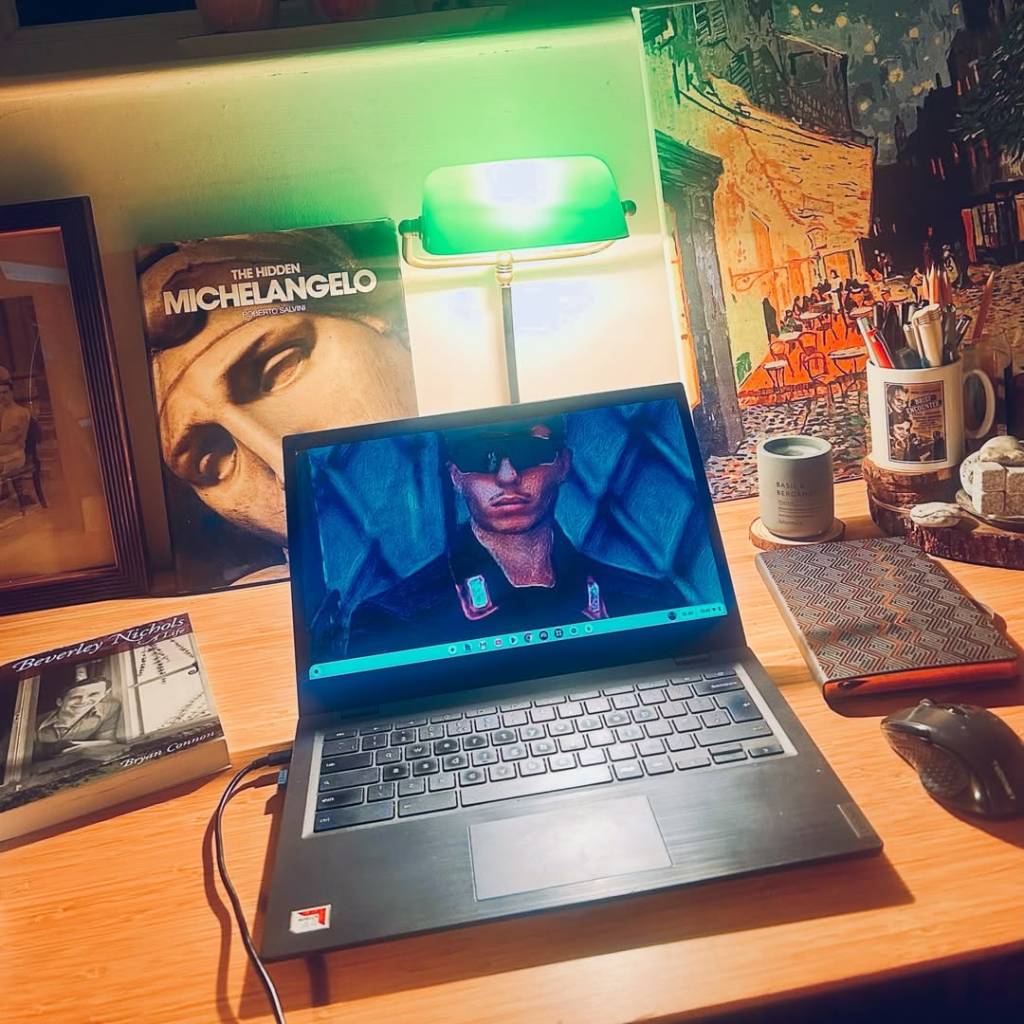
The handsome carabiniere. Main character energy, but make it literary. Michelangelo, old books & questionable late-night thoughts. Romanticising the chaos since forever.


A Dirty Mind …

Am I the only one who thinks Troye Sivan is dirty?

Not filthy dirty. Seductive dirty.

There is something about the way he moves. Videos like Rush and My My My! are all uninhibited physicality, nightlife sweat and celebratory desire. He looks tough, physical, almost animal-like. There is something raw about it. Something that hints at naughty desires without ever quite spelling them out.

Then there is that wild, untamed intensity. Roguish. Edgy. He has the look of someone who might push a boundary simply to see whether anyone notices.

But perhaps he is dirty in another way.

I imagine a mind that can take an innocent remark and give it an entirely different meaning. A fondness for crude jokes, suggestive words and the sort of playful naughtiness that turns an ordinary moment into something else entirely.

A dirty mind.

Desire used mischievously, perhaps, to heighten the excitement.

I’m getting ahead of myself.

Yes.

Troye Sivan is dirty.


Under the Surplice …

Thinking that my agnostic tendencies were showing, Signora Bruschi insisted that I go to Holy Mass with her.

I’d never realised that it was such a social occasion.

Before it started, Signora Bruschi stood outside talking to the dozens of women she knew. They wafted folding fans, complained about the heat, and predicted how hot it would be inside the church. But this was merely the forerunner to what really mattered: the latest gossip from the neighbourhood.

I was a spectator who didn’t quite grasp the conversations, smiling and frowning according to the situation.

My interest waned.

Attention switched to the teenage boys milling around the entrance.

They all favoured crisp white T-shirts with black shorts. They all seemed to dress the same in Italy: bella figura, that cultural obsession with looking effortlessly put together while remaining practical in the intense heat.

Style is treated as a social responsibility rather than a temporary trend. The sharp contrast of clean white against stark black creates an instant athletic frame. The T-shirts are rarely sloppy or oversized, and the shorts typically sit perfectly above the knee.

It is a reliable summer uniform: a neutral canvas for the things that really matter—expensive sunglasses, a luxury watch, pristine trainers.

The boys prodded one another and tried to trip each other up. The same things teenage boys did in every country.

But then they were called to action.

They disappeared through an arched doorway beside the church. One by one, they slipped into white cotte, their black curls making it difficult to tell them apart.

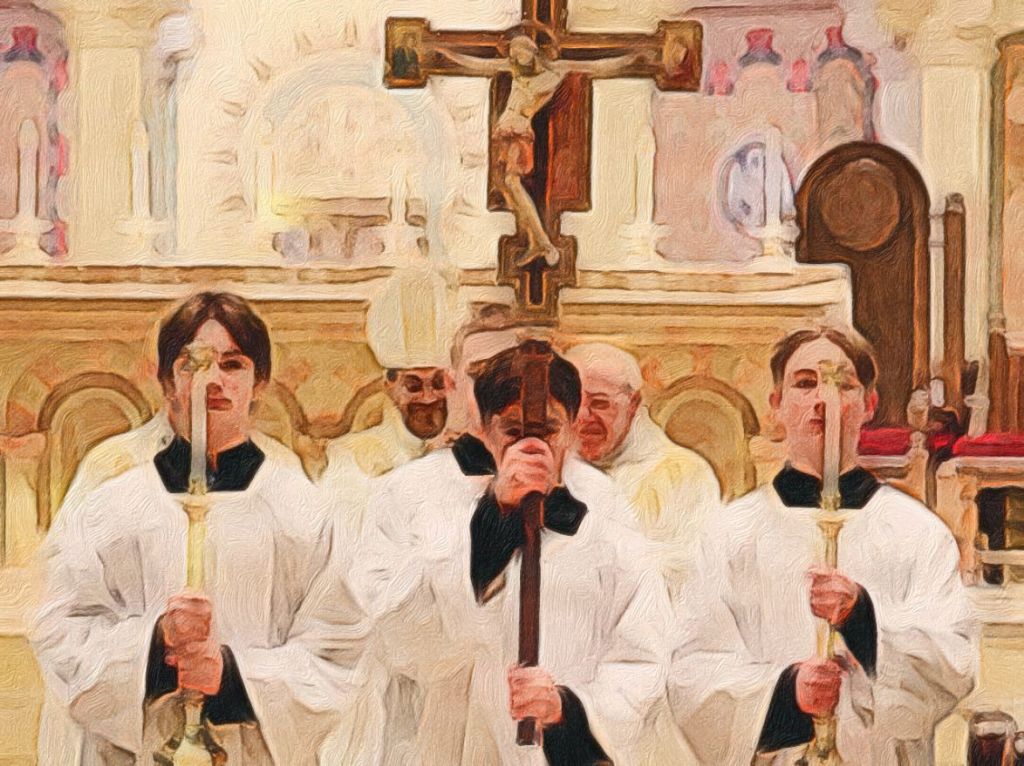
They reappeared as altar servers, suddenly possessed of an air of importance. One carried the processional cross, which he propped against the wall of an adjacent house. The others clutched unlit candles.

And then they waited while everyone went into church.

Cantiamo te, Signore della vita was sung. Don Carlo and the chierichetti walked down the aisle in a serious procession, the processional cross held high and the boys carrying flickering candles.

The tomfoolery had been left outside.

These boys—some happy to be there, others clearly not—were rising to the challenge. For a few minutes, they seemed to understand that something was expected of them and that they were capable of becoming something other than the boys who had been pushing and shoving outside.

And I smiled.

They paraded past, their clothes hidden beneath long white surplices; their true identities given away by flashy new trainers—Nike Air Force 1s, Adidas Sambas and New Balance 550s.

It was the trainers that betrayed them.

Beneath the white cotton, beneath the solemn expressions and the ritual and the incense, they were still those same boys outside the door. The church had given them candles, a cross and a moment of gravity, but it hadn’t managed to take away their swagger.

Perhaps that was what I liked about it. For all its ceremony, Holy Mass had not changed them at all. It had simply given them another costume to wear.


On the Cute and the Willing …
Photo by Paolo Roversi (2026)

My Week, For What It Was Worth

On returning to that bronze statue…

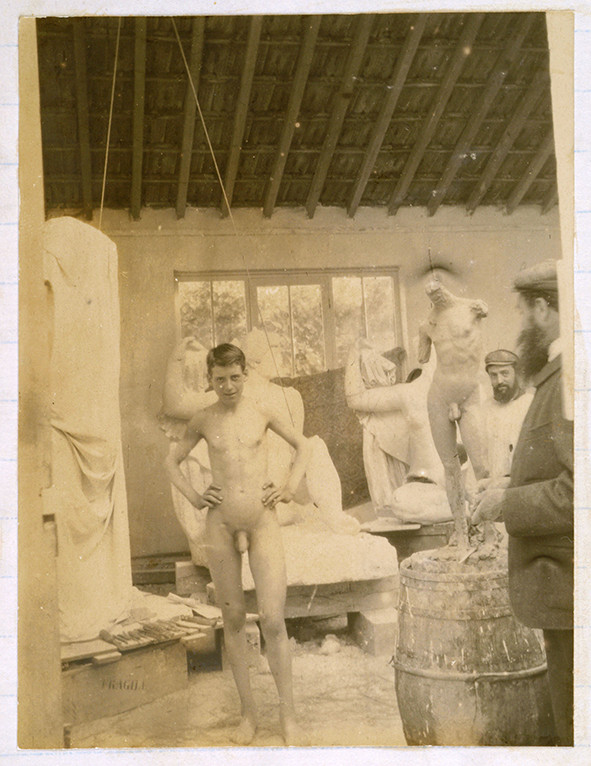
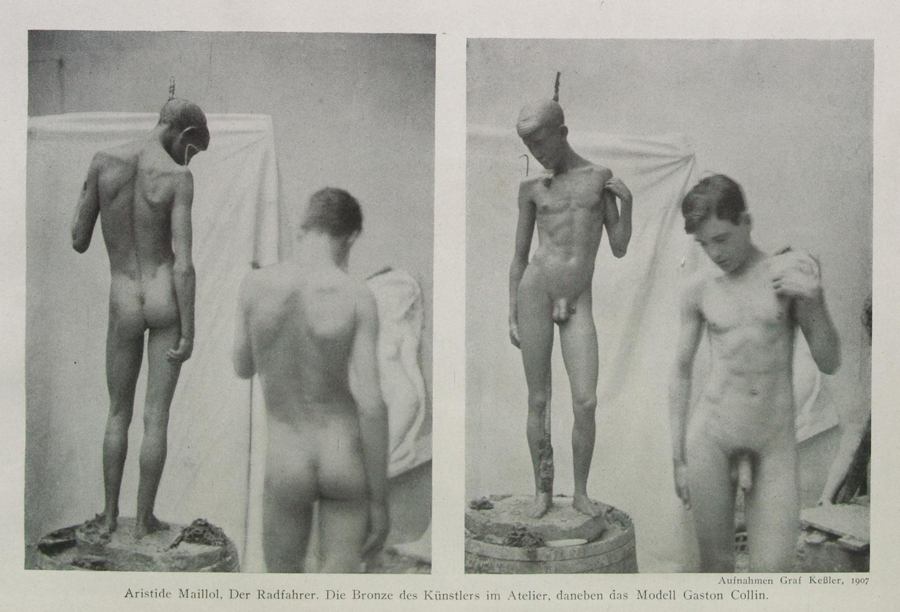
Gaston George Colin (1891–1957), by most accounts a young cyclist, perhaps even a jockey, and later a pilot—but certainly a chauffeur to Harry Graf Kessler, the well-connected German diplomat, writer, and patron of modern art.

Kessler’s diaries reveal that he began a relationship with the seventeen-year-old in 1907, hosting him both at the family castle and during stays in Paris, Rome, and Denmark.

While in Paris that same year, Kessler asked his friend Aristide Maillol to create a life-sized marble statue of the young man. He was said to have wanted a likeness of Narcissus, inspired by ancient Greece, which he saw as a culture where relationships between men and youths were openly acknowledged.

The outcome, however, was not a marble statue but a smaller bronze work, The Racing Cyclist (Le coureur cycliste), capturing a classical ideal of beauty and strength.

Maillol, who rarely worked with male nudes, struggled with the piece—his efforts complicated by Kessler’s constant attention to detail. The sculpture was not cast until early 1909, and Maillol remained dissatisfied, noting its unusual proportions, particularly the enlarged head and penis.

It was eventually exhibited in the French pavilion of Decorative Arts at the Turin Universal Exhibition in 1911.

Following the Nazis’ rise to power in 1933, a fearful Kessler left Germany for Paris, later moving on to Mallorca and finally to southern France. It was only in 1985, when his early diaries were discovered in a bank vault, that the extent of his fixation on Gaston Colin came to light.

Four casts are known: Kessler’s original is now held at the Kunstmuseum Basel, while others are in the Museum Folkwang, the Musée d’Orsay, and the Bavarian State Painting Collection in Berlin. Additional versions may exist, as Maillol is believed to have produced a second edition around 1925.

On finding that Joseph (or Sam) was queer…

It turns out Joseph lied to me. I found out that the flirty boy with the rolled sleeves, the nice arse, and the quiet smile is called Sam. And he hasn’t served me coffee for weeks. I still go in every day, but he’s disappeared—off studying, or back to his girlfriend. Then on Monday, he came in as a customer, joking with the staff behind the counter. A good-looking guy followed him in. Sam touched him lightly on the arm, and the guy patted him on the arse. They left holding hands, and I had to accept that Sam wasn’t available to me anymore.

It was an emotional snap. The interest hadn’t been given time to fade; it just hit a wall. That turns into jealousy very quickly—why them, not me? Seeing that physical ease between them—the touch, the closeness—intensified everything. It wasn’t simply that he was taken; it was seeing what that looked like. That’s what stung more than I expected. I told myself not to inflate things beyond what they were. I hadn’t even been rejected—just abruptly cut off.

I had to stop idealising someone I’d barely interacted with, especially once they became unavailable. That was the truth of it: there had been no real interaction. My mind had filled in the gaps, making Sam more significant than he ever really was.

But there was still that lingering feeling—a symbol the mind clings to—a sense of missed opportunity.

On discovering Arthur Rimbaud’s homoerotic poem

Stupra II (1871)
Our buttocks are not theirs.
I have often seen people unbuttoned behind some hedge;
and, in those shameless bathings where children are gay,
I used to observe the form and performance of our arse.

Firmer, in many cases pale, it possesses striking forms
which the screen of hairs covers;
for women, it is only in the charming parting
that the long tufted silk flowers.

A touching and marvellous ingenuity such as you see only
in the faces of angels in holy
pictures imitates the cheek
where the smile makes a hollow.

Oh! for us to be naked like that,
seeking joy and repose,
facing one’s companion’s glorious part,
both of us free to murmur and sob?

Arthur Rimbaud (1854-1891)

The Latin ‘stupra’ is plural for stuprum, which means an obscene and/or illegitimate copulation. Because of their explicit homoerotic content, these poems were not published during Rimbaud’s lifetime. They first appeared in a private, limited edition in 1923.

On watching a film that seemed familiar…

There was a similarity — a flicker of déjà vu. It softened the boundary between experience and memory, as though something new had already been lived. For a moment, my mind misread the present as the past, conjuring a false familiarity. Certain scenes felt strangely recognisable, as if they belonged to me already.

To Dream is a story of friendship — hopeful, intimate — set against a harsh inner-city backdrop. Best friends Luke and Tommy live in an unforgiving corner of London. Having dropped out of school and still at home, they find themselves dreaming of what might come next. Their shared ambition has always been escaping: to leave London’s grime behind for an imagined American paradise. It is a dream that has carried them through the realities of abusive homes, and one that binds them tightly together. But as family tensions worsen, and Luke’s new love interest begins to unsettle their bond, loyalty pushes Tommy toward a decision that will alter their lives forever. (Winter Film Festival – New York City).

Change the setting, reshape the structure — the dynamic remains. Four years on, as I approached the final instalment of Perfectly Hard and Glamorous, this little-seen B-movie felt like an omen.

Then I realised what I had missed: the father. There is always an abusive father. Somehow, I had forgotten him.

To Dream. United Kingdom (2026). Directed and produced by Baltimore-born, London-based Nicole Albarelli. Starring Freddie Thorp, Edward Hayter, Adam Deacon, Frank Jakeman.

On the cute and willing…

Artem. Photo by Archie – Saint Petersburg (2025)

A Kind of Fear. A Small Retreat


The thought had never even occurred to me. I genuinely just assumed he wasn’t interested. That was the simple explanation. I made a move, Oscar politely declined, and I retreated into my own embarrassment like a responsible adult.

But Alfie wouldn’t let it go.

“There’s a lot of energy around you,” he said. “It makes people feel exposed. They don’t always know how to handle it.”

I laughed it off at first. It sounded dramatic. But later I started replaying things.

I had been too focused on not humiliating myself to notice the details. The pause before he answered. The way he clenched his fists. The fact that he held eye contact just a second too long before looking away.

Alfie had noticed.

“There was interest,” he said carefully. “But when he realised it might actually become something real, he pulled back. Did you see him blush?”

I hadn’t. I’d been too busy overthinking my own tone of voice.

“He wasn’t rejecting you,” Alfie continued. “He was protecting himself.”

I don’t know. Maybe that’s giving him too much credit. Maybe it’s just a way of coping. But when I think about it now — the way he looked at me before he looked away — it didn’t feel cold. It felt cautious.

“He finds you intimidating,” Alfie added. “Magnetic. But intimidating.”

That word stuck.

Maybe he’s not distant. Maybe he’s careful.

And maybe — just maybe — the story isn’t over.

The Boy Danced Naked Under the Apple Tree

Naked – Charlie Marseille (2026)

The apples were nearly ripe. Red where the sun had kissed them too hard, green in the hollows of shade. Some were freckled, some split open already, pale flesh browning, bees drunk on the sugar. The smell hung low and thick. 

He didn’t decide to dance. It happened the way shivering happens. One bare foot scraped the ground, testing it. His shoulders rolled, stiff and then looser, like he was shrugging off something heavy. His arms lifted, awkward, elbows bent too sharply, wrists slack. He laughed under his breath at how stupid he must look, alone in a field with no one to see.

That was part of it. The not-being-seen.

But the boy danced naked under the apple tree.

Tolerance is a very dull virtue. It is boring

“A bore is someone who deprives you of solitude without providing you with company.” – Oscar Wilde

Why do people talk shit and think that I am interested? The problem is me. I sit and listen and do my best to look interested, but it gives them an excuse to come back and talk even more boring shit. I need to stop being a drip tray.

My Head is Full of Random Shit

*****

“Video Angelus internehilium et imortalis Even as we speak our hearts entwine. Senex et angelus video venestus caelum. Equiden lavare in meus vita empeteus Ah eeh ah eeh ah.”

*****

The boy who likes the excitement of fear.

“I worry about being thrown off the carousel in later life.” 

A skinny body and dirty pants.

*****

“He’s got it. Yeah, baby, he’s got it. I’m your Penis, I’m your fire. At your desire. Well, I’m your Penis, I’m your fire. At your desire.”

*****

Be careful who you choose because it can go wrong.

Is it that Bailey is still a virgin?

A shelter on a beach full of books.

A lake in an abandoned quarry.

Is it love that never quite reaches an orgasm?

A boy who turns up late is always popular.

Pasticcio.

The Organ of Lorenzini.

That Moment: Boy in the Black Hoodie

Scally Boy – Charlie Marseille (2026)

Four guys are waiting for a haircut. One hides inside a black hoodie so that all I can see is the tip of his nose. I call him a ‘scally boy’ – someone with edge, rawness, no inhibition; danger; lower social class. People only see what they must see: confidence, arrogance, hardness. They fail to see his vulnerability, his ignorance of those who might exploit him, and his lack of ambition.

When it is his turn, he stands and takes his hoodie off—but he gets it wrong. As he pulls it over his head, his T-shirt comes with it and he is left half-naked. He corrects things quickly, but it is too late. I have already processed every inch of him: the pale skin, the smoothness, the flat stomach, the black hairs showing above his waistband, the tattoo on his arm that says Adam.

Such a shame, I think, because he is primed for one thing only—a girl. His masculinity, the expectation, the understanding that anything else will not do. The girl will fall in love with Adam, but what he feels about her will not matter. He will have done what is expected and will display her like a trophy before discarding her for another.

Adam catches my eye and snarls, “Do you like what you see, faggot?”

Charlie: The Rumour of Possibility

He is completely unaware and does not expect to be photographed at all – Charlie Marseiiles

There is a game that Charlie likes to play. I blame the streak of melodramatic French in him — he can’t help speculating about everyone. We ducked into a bright little coffee shop to escape the damp, heavy air outside. Amid the hiss of the coffee machine, steamy windows, damp clothes and the sweet smell of pastries, Charlie zeroed in on a guy sitting alone, scrolling on his phone, blissfully unaware he’d become the latest target of Charlie’s imagination.

“What is he looking at? Who is he messaging?” Charlie whispered while we waited for our takeaway. I’d heard these questions a hundred times, and I hardly had the energy to answer anymore. His curiosity could tip into something nosy, even a bit rude, and I’d told him more than once that it bordered on prying. Still… I had to admit, despite my protests, it was often weirdly entertaining.

And he was already off. “It’s all very mysterious, but I’ve got a theory,” he said, eyes locked on the boy with the coffee. “He is telling someone he woke up without a care in the world… until a man in the street annoyed him. So he punched him — once — and killed him. And now that boy over there is a murderer.”

Sometimes I wondered whether he was just trying to make me laugh, or if there was something darker in the way he saw people. I glanced at the poor guy and found myself, just for a moment, considering whether Charlie’s wild theory wasn’t entirely impossible.

Straight Out of Verona – Part 3 – Cinzia

I had never been to Lake Garda before, and I was surprised by how much it reminded me of the coast. The water was a soft turquoise, rippling with silver and white crests. The hills rolled gently, dotted with olive groves and cypresses. Braccobaldo Beach turned out to be a mix of pastel colours – terracotta roofs, lemon-yellow houses, pale pink facades – and construction sites.

Cola took me to the pebbly beach where his friends hung out and introduced me to Leo and Sandro. His girlfriend, Cinzia, came from San Giorgio in Salici. She relaxed on a sun lounger, attracting attention from cheeky young Italian boys who had arrived on scooters. Cola sat glaring at them, but he needn’t have worried because it was obvious that Cinzia was in love with him. She spoke in English (because it was better than my Italian) and wanted my views about Donald Trump and Giorgia Meloni, who she plainly didn’t like.

Cinzia asked what I did for a living, and I told her that I was a writer, which sounded grander than it was meant to be. I explained that the novel I was writing, if it ever got published, would struggle to sell because only romantic fiction was keeping the book market alive. She raised an eyebrow when I told her that people had moved on from Harry Potter and were now interested in raunchy romantasy books.

The boys went swimming in the lake, and we watched as they grappled and tried to duck each other underwater. These were the last antics of teenage boys, a final celebration before they became men. All three were dark and handsome, but skinny Cola towered above the others. They had known each other since school, Cinzia told me, and were inseparable, but that was about to change. Leo was training for the army, Sandro was joining the Carabinieri, but she was unsure what the future held for Cola.

I asked how he was able to afford a brand new Abarth 500, and she laughed. It was not his car; it belonged to a signor from Torricelle who liked Cola and let him use the car in exchange for doing jobs around his big house in the hills. Cola was very skilful, she said, and could put his mind to anything that involved manual work. He was not, she added with sarcasm, very good academically. And she worried about what might happen if the signor dispensed with his services.