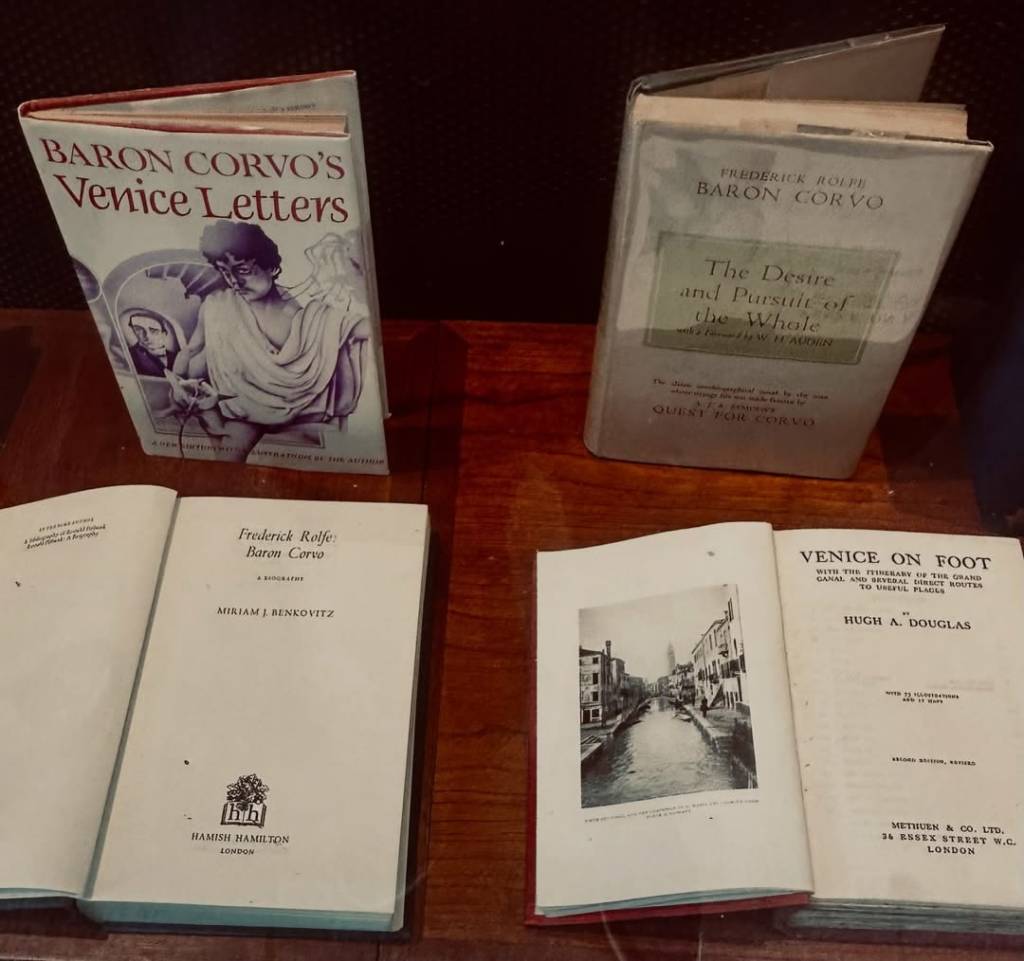
He who desires must pursue his desire though the whole world obstructs him.
Someone once told me I weave stories and aliases the way Baron Corvo did. I took it as a compliment.
He invented himself. Collected names. Drifted through Venice like fact and fiction were basically the same thing.
And then there’s the small matter of how he ended up: broke, alone, and dying in Venice.
Let’s hope I’m only following the interesting parts of his life.
Although, knowing me, the aliases are already in place.
Dreamlike
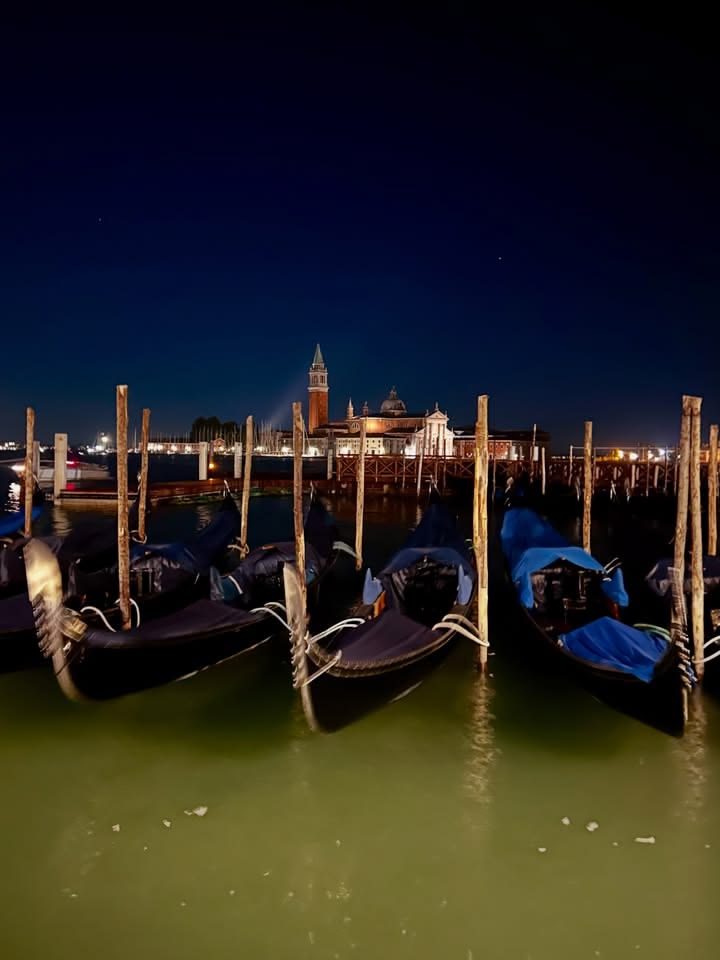
I didn’t bargain for Venice. In fact, I tried pretty hard to get out of it. But here we were. Midnight. The lagoon was dark. And the echoing performance of the Marangona — the great bell of the Campanile di San Marco — rolled across the city.
Ragazzo
The young boy chases around Campo Santa Maria Formosa.
Young Italian boys do this.
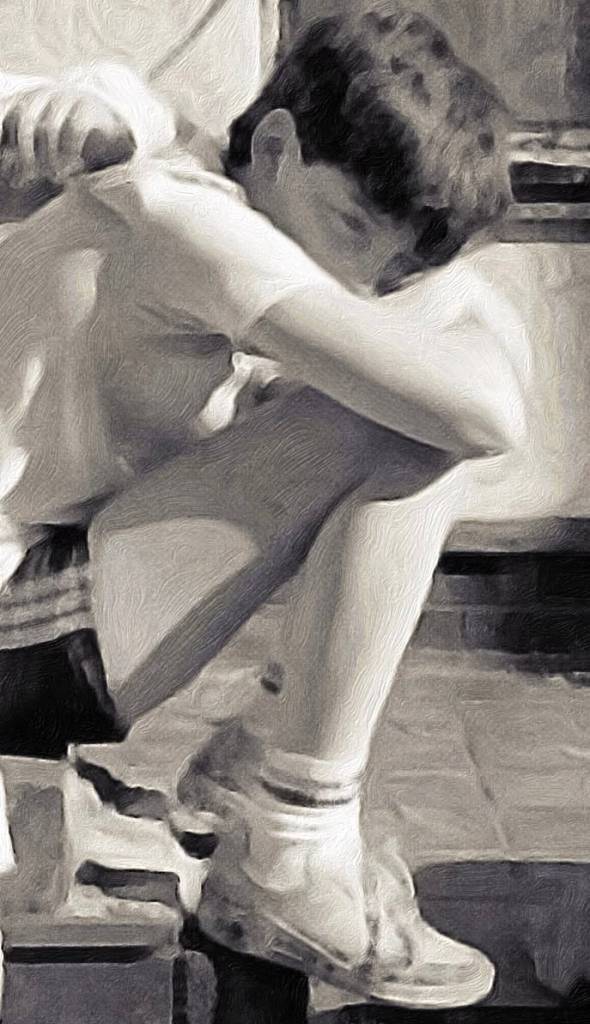
A flash of skinny brown legs. Too much energy with nowhere else to go. And they are happy. Any worries belong to mamma and papa.
He is told to stop running.
He has no intention of doing so.
He scatters the seagulls around the old vera da pozzo, watching them flap away, delighted with himself. For a moment, the whole campo belongs to him.
Then he stumbles.
Down he goes on the ancient cobbles.
He is brave. He gets back up, examines his grazed knee, and limps back to mamma and papa. They tell him it is nothing. Nothing to worry about.
This is good enough for him.
Away he runs again.
Every now and then he stops to admire the blood on his knee.
Then off he goes.
Conformity
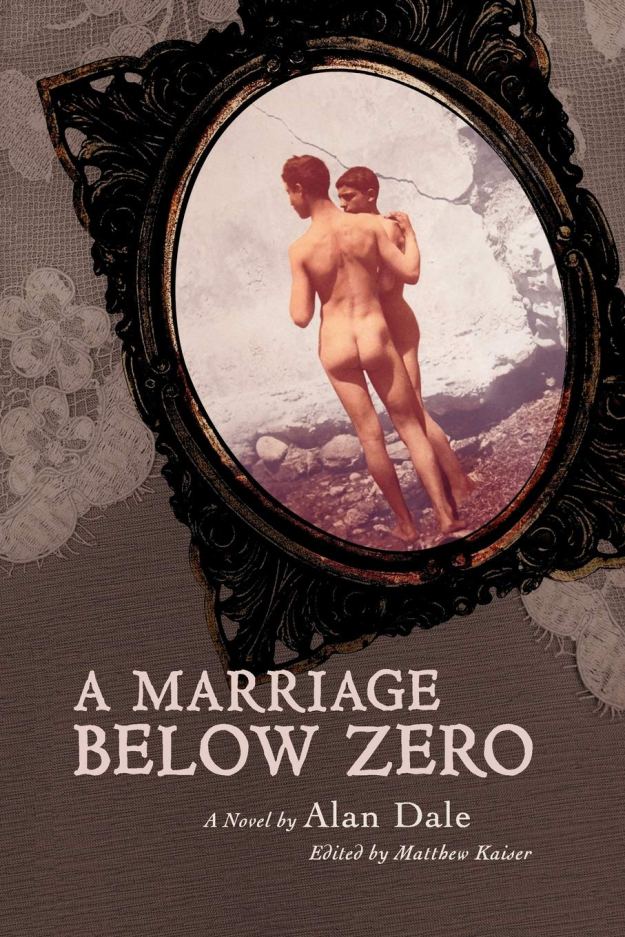
“To be accepted by society, you must follow the laws it prescribes. The right to be eccentric must be earned – and it takes time to earn it.“
Alan Dale: A Marriage Below Zero (1889)
An anonymous reviewer in Bedford’s Magazine described it as “A saturnalia in which the most monstrous forms of human vice exhibit themselves shamelessly.”
Veneziano
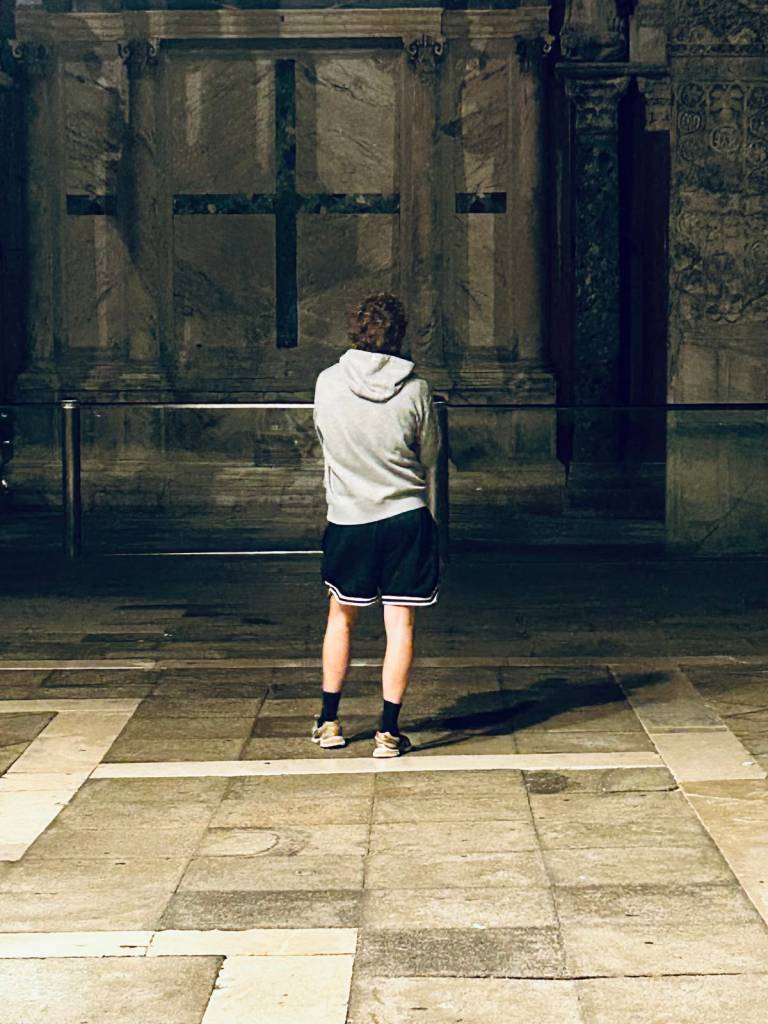
I’ll call you Santino. Little saint. Distinctive. Warm.
What brings you to Piazza San Marco so late at night?
Every night.
There has to be a story.
Why do you stand there, deep in thought? Is it a little prayer passing silently between your lips?
And what made you think nobody would notice you?
Just an ordinary boy in ordinary clothes.
Always the same.
But you don’t know what caught me.
The legs.
It is always the legs.
Anthology
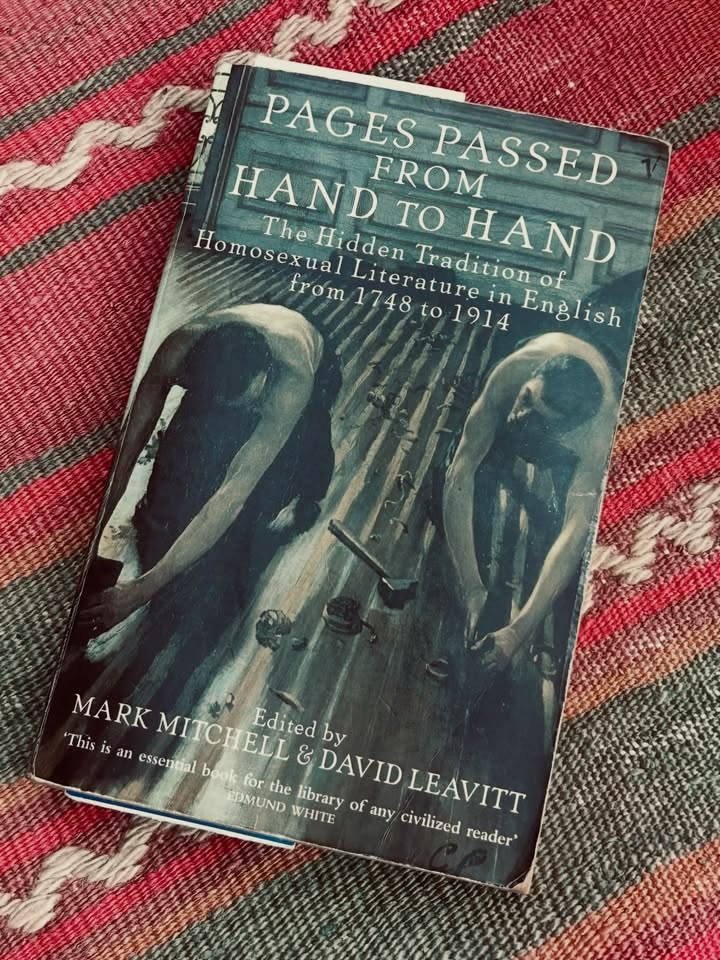
Gay intrigue, hidden in plain sight. Queerness didn’t appear — it evolved. Passed hand to hand, century to century. Turns out history was never straight.
Phantasmagoric
Old books. Old photographs. Old movies. Queer history. Vintage Italian library music.
An old head on young shoulders. And a young dick attached.
On the Cute and the Willing
Sacha at Universe Scout and Street Hunting
Strip away the noise of colour.
Black and white forces us to look beyond the surface and feel the raw essence of a moment. Light and shadow cut across the face. The gaze becomes deeper. Even the smallest details matter—the texture of the hair, the metallic glint of a simple bracelet.
Monochrome doesn’t simply capture a scene. It captures a feeling.
It turns a moment into something timeless. Something almost poetic.
An obsession with grabbing hold of vintage books at a reasonable price. I have a curious interest in the Sitwells. Twice, quite inadvertently, I have found myself meeting a few of the modern ones. But it is the dead Sitwells who remain the most famous — and the most eccentric.
Sometimes there is a surprise hidden inside.
Osbert Sitwell, modernist author, poet, satirist and prominent cultural figure, lived from 1892 to 1969. Alongside his equally famous siblings, Edith and Sacheverell, he was known for his formidable personality, eccentricity and fierce nonconformity.
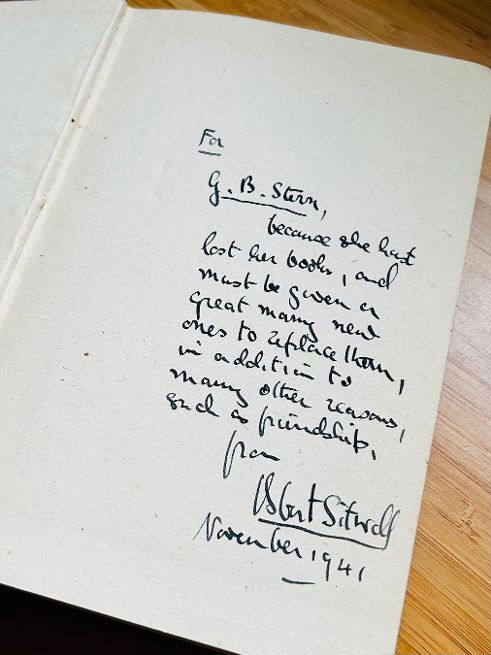
His book Open the Door was published in 1941. That same year, with characteristic generosity, Osbert sent copies to friends.
In my copy there is an inscription:
For G. B. Stern, because she lost her books, and must be given a great many new ones to replace them, in addition to many other reasons, and a friendship, from Osbert Sitwell, November 1941.
G. B. Stern — Gladys Bronwyn Stern — was an English novelist, playwright, journalist and literary critic. Over a career spanning six decades she wrote more than forty novels, as well as plays, short stories, screenplays and memoirs. She moved through the literary world of London with friends and acquaintances including H. G. Wells, W. Somerset Maugham, Rebecca West and Noël Coward.
And then there is the reason for Osbert’s inscription.
In 1941, during the German air raids on London, Stern’s home was hit by a bomb and completely destroyed. She survived physically unharmed, but lost almost everything: her house, her library, family heirlooms, papers and personal belongings.
She emerged from the rubble with virtually nothing.
Except the clothes she was wearing and her favourite walking stick.
And then, two months later, Osbert Sitwell sent her a book.
A Fox at Battersea
I get why David Hockney’s muse, Peter Schlesinger, left him for Eric Boman (1946–2022). I mean, who wouldn’t have? I found this photograph in a book, taken by Schlesinger at Battersea in 1977. I’d say Boman was a bit of a ‘Fox’, as they said in the 1970s. Wouldn’t you agree? Schlesinger famously recalled that people would crash their cars in the street just to steal a glance at him. He was a rare creature: as beautiful on the inside as he was on the outside, leaving an undeniable and unforgettable mark on the world. And yet, somehow, he still isn’t worthy of a Wikipedia page.
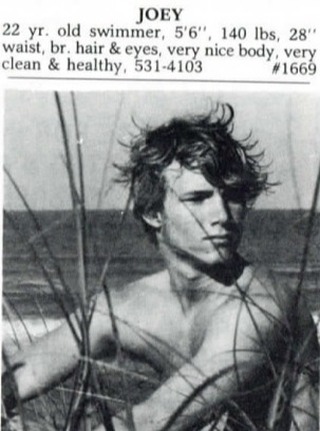
What Becomes of Joey?
Getting my head around the fact that Joey, turning a trick or two in 1987, would be 61 now. I’m sure he never imagined that the beauty being advertised here was something temporary. We are shallow and cruel. We fall for youth, then discard it when it disappears. Would we even give Joey the time of day now?
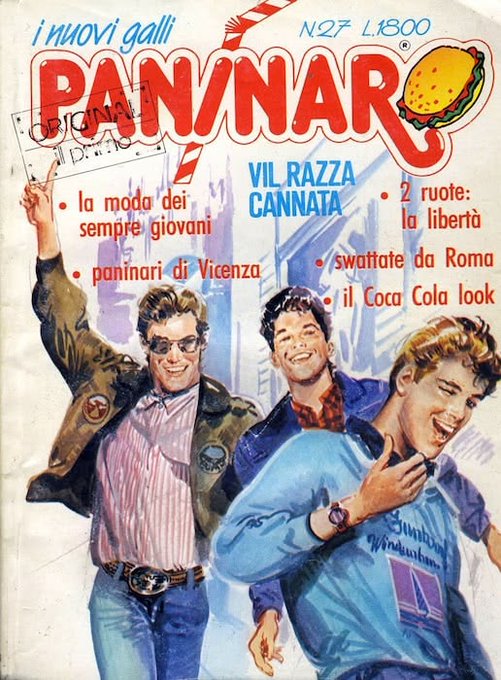
Troppo giusto!
Paninaro. Milan, 1980s. Fast food. Designer labels. Mopeds. New York fantasies. Basically, a whole aesthetic before anyone called it an aesthetic. I wish I’d been a Paninaro.
“Girls, boys, arts, pleasure,/ Food, cars, travel, food, cars, travel, travel,/ New York, New York, New York,/ Armani, Armani, A-A-Armani, Versace, Cinque”.
The Decadent Comrades
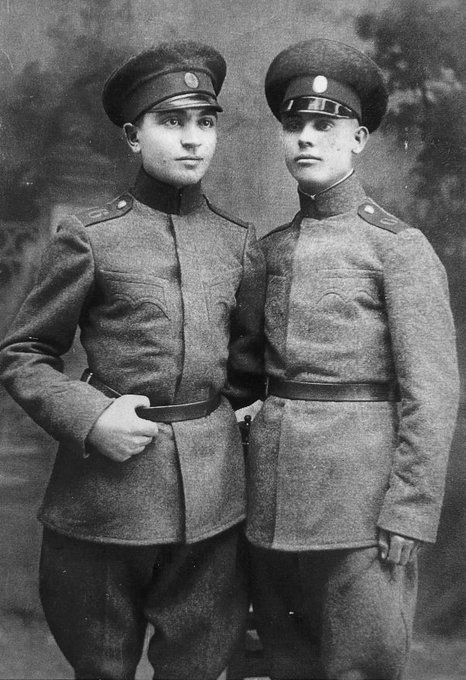
Casimir, destroyer of peace, and Leonid, son of the lion, shared a love of baked apple, cinnamon and each other. Branded remnants of ‘bourgeois decadence’ and capitalist moral decay, they were shunned by their comrades. In their loneliness, they turned to a growing art form called ‘gaysky pornsky’.
Bedtime Books
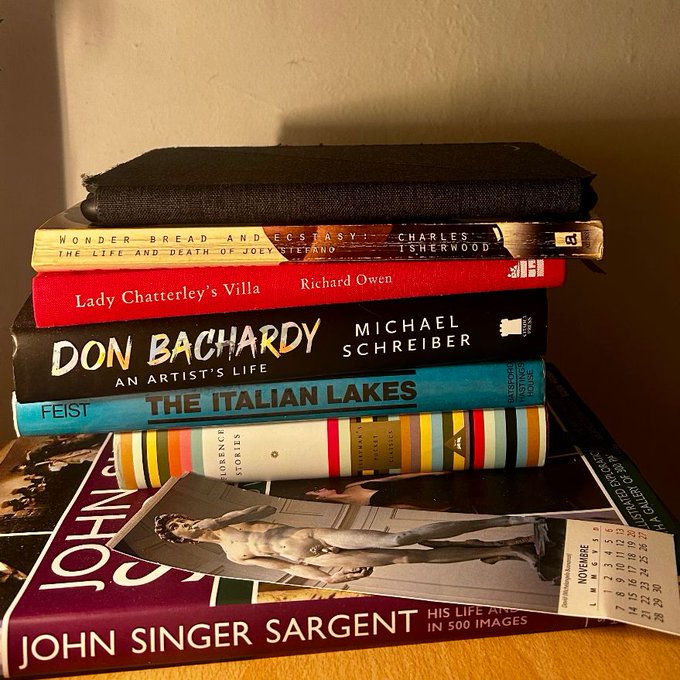
Bedside table energy: beautiful men, Italian lakes, doomed artists and absolutely no intention of going to sleep.
That Unspoken Rizz
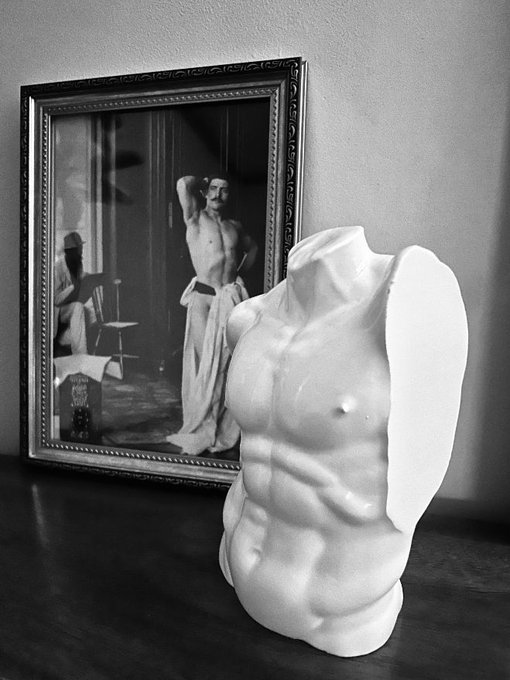
The Split from Desire. True eroticism in representation. Classic inspo. The male form as the ultimate standard of aesthetic excellence. Male beauty has been serving since antiquity.
German Decadence
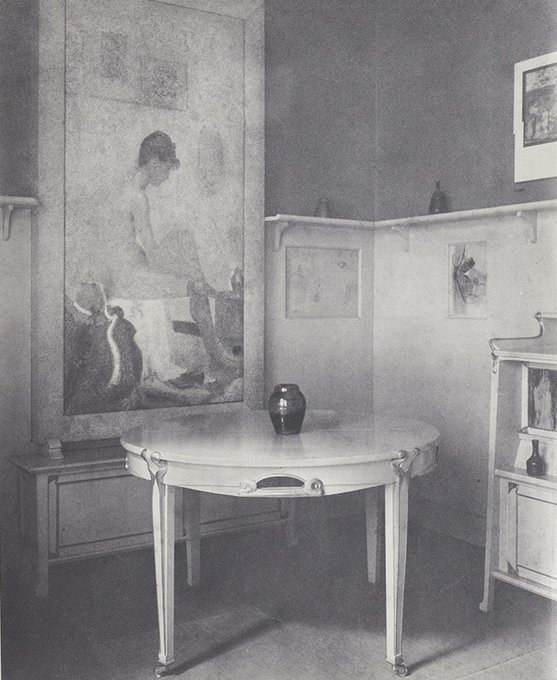
Says it all. The dining room of Harry Graf Kessler’s apartment in Berlin, circa 1900. An inherent critic of the rigid, hyper-masculine culture of Imperial Germany. He expressed his aesthetic and homoerotic interests in everyday life, writing in his diaries about his attraction to athletes at boxing matches in London or handsome sailors in Belgium.
“For the boy was beautiful: blond curly hair, blue eyes which seemed to catch all the dim light of the tap-room, a spare but tightly muscled chest seen through a shirt open to his navel (because, evidently, its buttons had long ago been parted from it). The lad moved about the edges of the room, in the shadows, with pitchers of water and cider, alert to the needs of the other guests but observant, too, of the traveler at the corner table. Once or twice their glances met, and then our spy or informer might have heard the young man continue under his breath, “Yes, with a little expert attention and some new garments you might be a worthy page for Torben Lerche!”
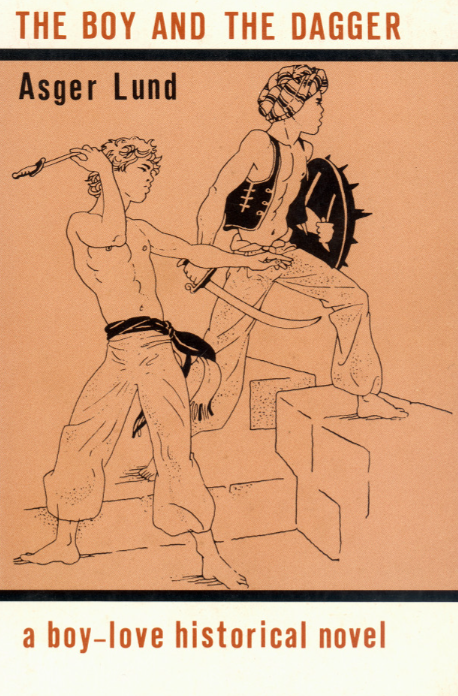
Asger Lund,The Boy and the Dagger(1961) Drengen og dolken
This might be historical ‘boy-love pulp fiction’.
Or perhaps something stranger.
Asger Lund was one of the many names used by the Danish writer and artist Kjeld Asger Frydenlund (1929–2013). The Boy and the Dagger was originally published in Denmark in 1961, although my copy is the English edition, published in October 1982 by Spartacus in Amsterdam. It is described as a “boy-love historical novel” and illustrated by Richard Steen.
Germany. France. Spain. North Africa.
It sounds like an adventure novel, but there is something much more peculiar going on here.
Frydenlund was a draftsman before he became a writer. His influences included Art Nouveau, Pierre Joubert and comic strips. Mostly black and white. Strong lines. Boys.
And then the names begin to multiply.
Stanley W. Baker. Pete Freeman. Horst Irgens. Asger Lund. Richard Steen. Sometimes simply RS. All the same man.
From 1952 onwards, under RS and later Richard Steen, he produced drawings of boys in a stark black-on-white style. From around 1960, as Horst Irgens, the drawings became darker and more photographic, using heavy shadows, hatching and stippling.
Then, from the 1970s, came Asger Lund.
Writer. Artist. Pseudonym. Another identity.
There is something fascinating about it all. Not simply the book itself, but the strange little underground world around it — pulp novels, drawings, pseudonyms and magazines, all circulating in a culture that now feels almost impossibly distant.
The Boy and the Dagger.
Even the title sounds like something I should probably not be reading.
Most of us live to old age and never achieve the notoriety that Arthur Rimbaud did. He was only thirty-seven when he died, minus a leg, in 1891.
I like a bit of Rimbaud.
I even like his poetry.
We are stuck, however, with the knowledge that this raw, untamed youth, this rebellious genius, was, in truth, a bit of a ‘dirty arse’. And yet we gaze at Étienne Carjat’s iconic 1871 portrait, taken when Rimbaud was only seventeen, and lust after the boy with the wild, uncombed hair, slightly crooked tie and defiant stare.
Why wouldn’t we admire someone who, in that same year, penned the Sonnet of the Arsehole — originally titled L’Idole, or Le Sonnet du Trou du Cul — that gloriously obscene little collaboration with Paul Verlaine? Rimbaud wrote the opening quatrains; Verlaine supplied the tercets.
Rimbaud still prods me up the bum from time to time.
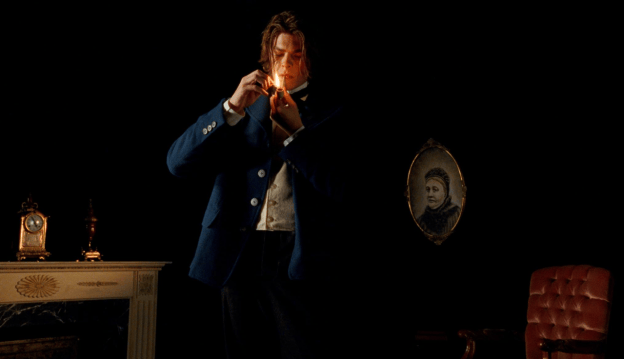
The latest occasion is the result of a new three-hour biopic, A. Rimbaud, written, co-produced and directed by American independent filmmaker Patrick Wang.
The chances of seeing it seem fairly remote, given its slow-burn release schedule.
Australian actor Blake Draper plays Rimbaud in what appears to be almost a one-man film.
“Utterly captivating to watch, in no small part because Draper balances theatrical expressiveness with nuance for the movie camera,” writes Variety.
Before He Was Gone
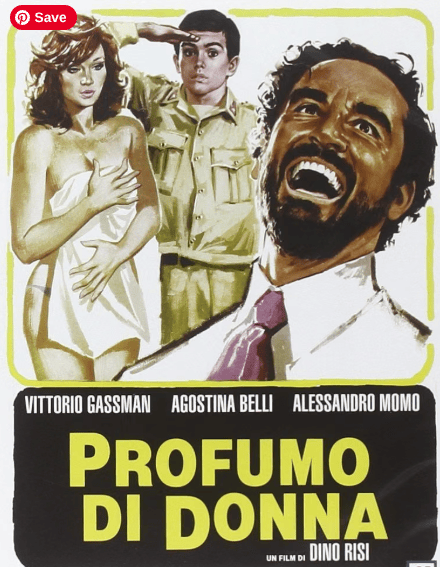
I managed to watch Profumo di donna (1974), the last film made by the Italian actor Alessandro Momo before his tragic death in a motorbike accident.
Its English title was Scent of a Woman. The film received two Oscar nominations and would later become the direct inspiration and source material for the much better-known 1992 American remake starring Al Pacino and Chris O’Donnell.
You might recall that Momo was only seventeen and not legally permitted to ride a motorcycle. The bike’s owner, 21-year-old actress Eleonora Giorgi, was investigated over the circumstances surrounding his death but was never indicted, having reportedly been told by Momo that he was 21.
I now have two observations.
First, Momo looked tiny, although there appear to be no reliable details about his height. One piece of information I came across suggests that he was actually a normal-height, slender adolescent rather than someone of unusually short or “tiny” stature.
Second, Momo looked about twelve years old. He certainly didn’t look 21, as he had apparently told Giorgi.
But what a handsome little devil he was.
I couldn’t help feeling sad watching him, knowing that just days after completing the film he would be dead. Never to grow old. Never to become the actor he might have become. There is something particularly poignant about seeing someone so young on screen when you know that their entire adult life has already been taken away from them.
Something else annoyed me, and it is something I have noticed in quite a few old Italian films: the way the dialogue was dubbed in post-production.
It always comes across as rather obvious—and often strangely awkward. The voices seem to exist slightly apart from the people speaking, as though everyone has been dubbed after the fact, which, of course, they were.
A bit of research suggests that the practice had roots in the Fascist regime’s attempts to eliminate regional dialects in favour of “standard” Italian. Dubbing subsequently became deeply embedded in Italian filmmaking, for a whole variety of practical and artistic reasons.
In Profumo di donna, Momo was dubbed by Sandro Acerbo, who would go on to have a very successful career as a voice actor.
So there I was, watching a fifty-something-year-old film, admiring an impossibly handsome seventeen-year-old actor, being irritated by the dubbing, and all the while knowing that the young man on the screen had only a few days left to live.
Cinema can be a rather strange thing.
A Man On My Bed
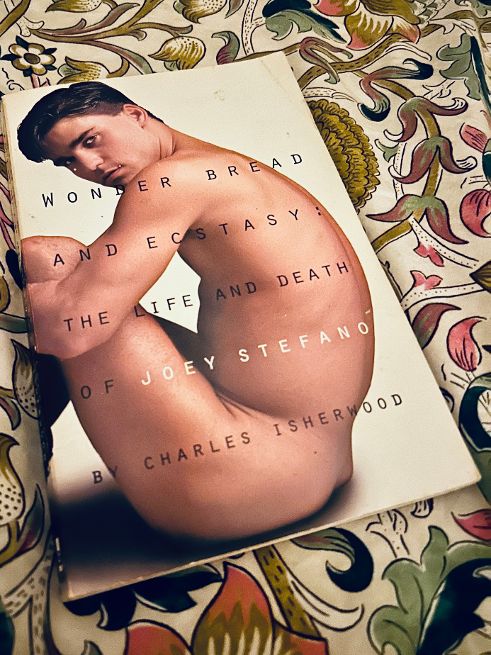
I walked into my room and found Joey Stefano naked on my bed. Actually it was a copy of Wonder Bread and Ecstasy: The Life and Death of Joey Stefano by Charles Isherwood that was published in 1996.
It makes it a very old book in my eyes.
I don’t want to say too much about Joey Stefano because it will spoil things for next week.
But, you will have surmised from the title that he is dead.
My friend David put me onto Joey Stefano.
“The two of you would have been most incompatible,” he suggested. “He wasn’t called the ‘hungry bottom’ for nothing.”
For the Only English Person I Know
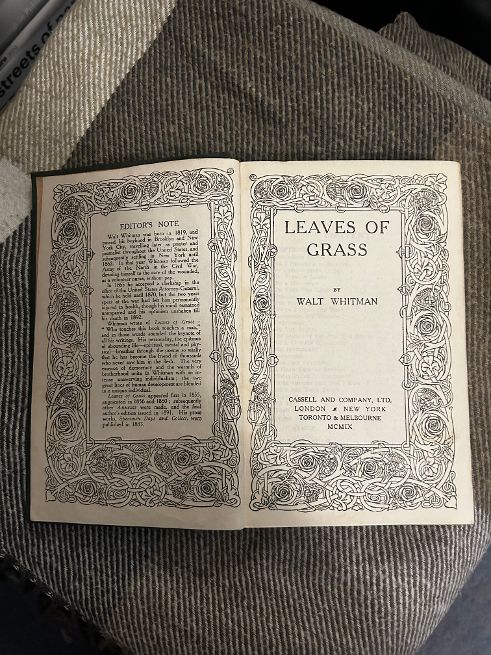
Luigi Bevilacqua, that elegant old gentleman, left me a gift, carefully wrapped in green floral Tassotti paper and tied with gold-coloured string.
It was a small book in a blue cloth case binding.
If I considered the book about Joey Stefano to be veryold, then this book was absolutely ancient.
Leaves of Grass by Walt Whitman.
This particular English-language edition was published in 1909.
“Luigi sells second-hand books in Veronetta,” said Signora Bruschi. “He found this copy in a storeroom and will find it hard to sell.”
There was a handwritten card inside.
“Per l’unica persona inglese che conosco.”
For the only English person that I know.
The Algorithm Did Well
Scrolling through my phone because I’m bored, and the Al Gore-ithms point me towards 17-year-old Corin Altemus, who is a multidisciplinary artist. Yes, I had to look that up as well.
Altemus spends long periods being bored too, and turns to YouTube to talk about whatever happens to pop into his head. He slaps. I could watch and listen to him all day. I could probably talk with him all day too.
His Instagram feed is full of his artwork. It all looks good, although I don’t actually understand any of it. But tucked in amongst the art are a few random poems.
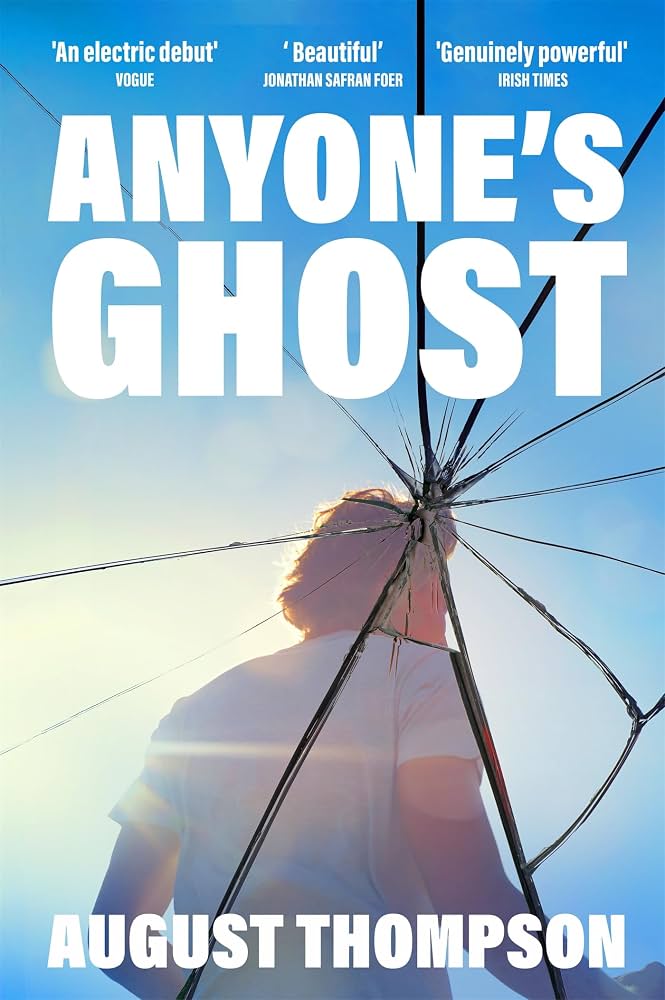
“No, no. Don’t joke. I’m trying here, trying to be real for a minute. It’s hard to explain. It’s like when you’re listening to a favourite song and there’s this one part you love – a guitar riff or the way the singer says something. And you wait and wait, enjoying it all, but just fucking dying for that moment. And when the moment comes, it’s like you can let go and finally be happy. That’s how people – that’s how I – feel around you.”
I looked to the right of his eyes, behind him, and let things blur. It was everything at once – the only thing I ever wanted. “Thanks man. That’s really nice of you.”
From Anyone’s Ghost, August Thompson, 2025.
There is something in this passage that I recognise from my own life, although I have never quite known what to do with that recognition. I have known what it is to wait for a moment and to attach too much importance to it, and I have known the strange fear that comes with wanting to take things further. Perhaps sometimes we hold back not because we don’t want something badly enough, but because we want it so badly that we are frightened of what might happen if we reach for it. There are things that remain precious precisely because we never tested how far they might have gone.
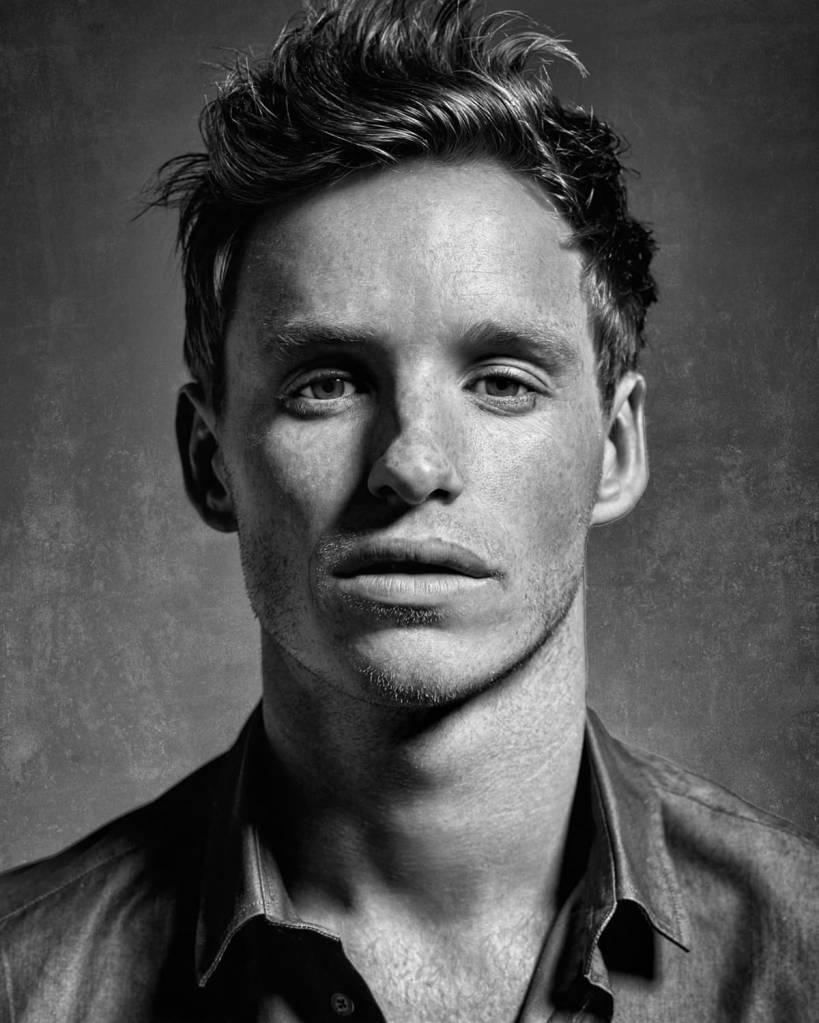
Imagine that Eddie Redmayne sat down beside you on the steps. He might do that. Soft-spoken, bookish and entirely unthreatening. His dandyish sense of style, expressive features and quiet politeness feel oddly familiar to me. He’s the perfect amount of gay—not in a sexual sense, but in that elusive way some men seem to embody a gentle elegance without ever feeling performative.
Fallen in love with …
Nineteen-year-old French student Didier Gaspard Owen Maximilien. Some people volunteer. Some climb Everest. Didier licked a straw from an orange juice vending machine, slid it back into the dispenser, edited the footage into a short film, and posted it with the caption: “city is not safe.” Singapore fined him S$600 (about $465). He’s either the villain in a public health campaign or the greatest shitposter of his generation. There is no middle ground.
Too beautiful to know it …
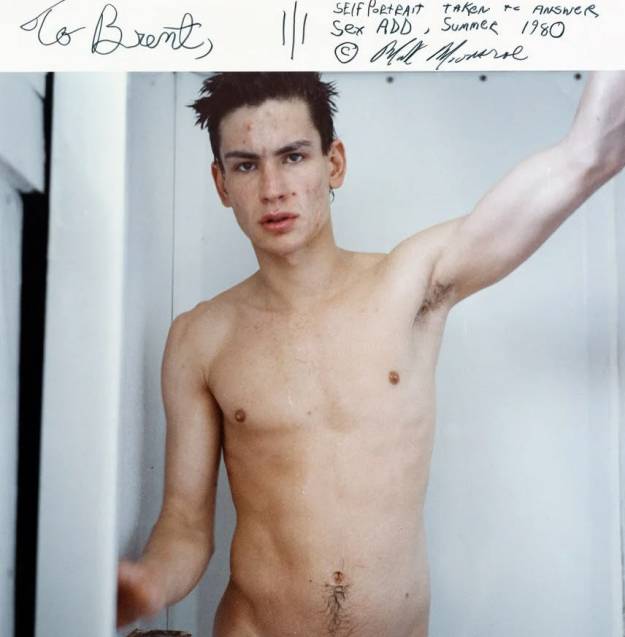
“It kills me to look at my old photographs of myself and my friends. We were such beautiful, sexy kids but we always felt bad because we thought we were ugly at the time. It was because we were such outcasts in high school and so unpopular. We believed what other people said. If any one of us could have seen how attractive we really were we might have made something better of our lives. I’m the only guy that I know who wanted to run away to be a prostitute.” ―Mark Morrisroe (1959–1989)
Mark Morrisroe. Self-Portrait (to Brent), 1982
The book I haven’t opened yet …
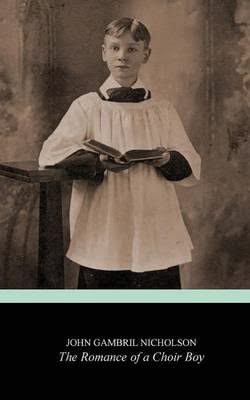
Why do I feel faintly guilty after receiving a copy of The Romance of a Choirboy from a friend in London? I haven’t even read the first page, yet it has already acquired that awkward quality of a book which almost seems to require an explanation simply for owning it.
Part of me wonders whether I should leave it exactly where it is.
John Gambril Nicholson wrote the novel between 1896 and 1905, although it wasn’t privately printed until 1916. It tells the story of Philip, an Anglican minister whose emotional and romantic fixation on a schoolboy called Teddy is presented with complete sincerity. More than a century later, it’s difficult to read the premise without immediately recognising the imbalance of age, authority and power. Today we would simply describe the relationship as predatory.
And yet, the novel refuses to disappear. It still surfaces in studies of late Victorian and Edwardian literature, less because people admire it than because it captures attitudes that respectable society often preferred not to acknowledge. Reading an uncomfortable book isn’t an endorsement of its ideas any more than visiting a museum is an endorsement of history. Even so, I suspect this is one of those books I’ll keep eyeing suspiciously from across the room before eventually deciding whether curiosity gets the better of me.
The boy you shouldn’t like …
A twenty-something, hard-partying gay fashion model who doesn’t wear underwear. I’ve come across a few of those.
That’s the premise of Proud, HBO Max’s new Polish drama series.
Ignacy Liss stars as Filip, a carefree young man who is forced to grow up almost overnight after a family tragedy leaves him the guardian of his late sister’s infant daughter, Tosia.
We should be angry with him. We should probably be disappointed in him too.
But we aren’t, because there’s something undeniably appealing about him.
Maybe it’s the soft jawline, the expressive eyes, or the raw vulnerability that slips through the bravado.
Liss, who is straight and, away from the screen, a married father, makes for an infuriatingly convincing bad boy.
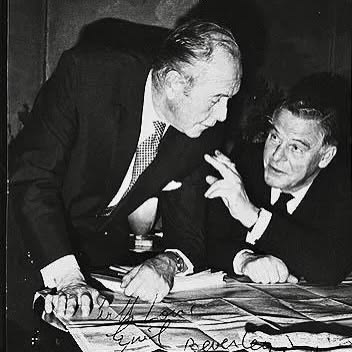
A forgotten actor, a lost Hitchcock film, the lifelong companion of Beverley Nichols, and a pioneer of British television. The remarkable life of Cyril Butcher deserves to be remembered.
Cyril Butcher
Metaphorically speaking, I spent two days and one long night sitting opposite Cyril Butcher at Signora Bruschi’s kitchen table. I questioned him, shared my frustrations and searched for answers that never came. The only response was the occasional concerned glance from Signora Bruschi, who had begun to suspect that I was talking to myself.
I assured her it was research. Anyone who has spent hours buried in old newspapers, forgotten magazines and fading archive material will know how easily the outside world disappears.
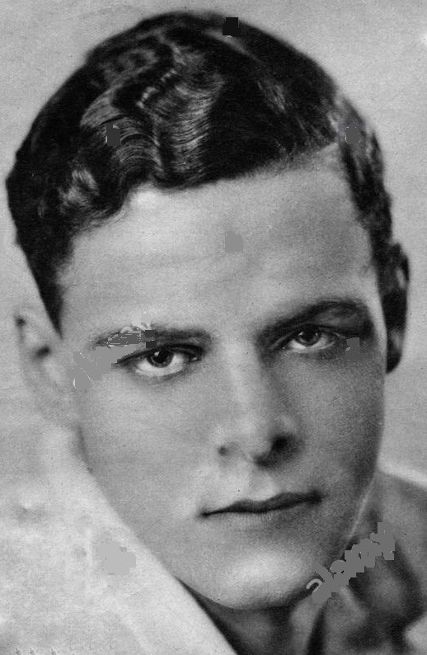
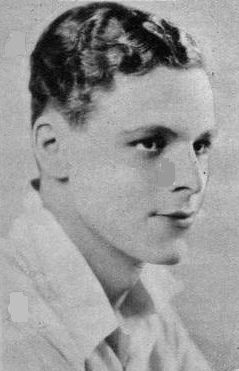
The trail began with a copy of Film Weekly from 1930. There, among its yellowing pages, was a photograph of a dreamy-looking young man named Cyril Butcher. He was twenty years old and had just become one of two winners of a nationwide competition offering a six-month scholarship at Elstree Studios, worth £250 together with a weekly salary of £10.
There had been 6,783 entrants, although Film Weekly never revealed precisely what they had been asked to do. One winner was always a young man and the other a young woman. Butcher entered through the Picture House in Ipswich; his fellow winner, Aileen Despard, represented the Rialto Cinema in Raynes Park, south-west London.
Standing six feet tall, weighing eleven and a half stone, with brown hair and brown eyes, Butcher evidently impressed a formidable judging panel. Among them were some of British cinema’s most promising directors, including Alfred Hitchcock, Ewald André Dupont, Norman Walker and Walter Summers.
The prize was more than a scholarship. British International Pictures quickly placed the two winners in a ten-minute comedy short entitled An Elastic Affair, directed by Hitchcock himself. The film premiered at the London Palladium, where Butcher and Despard were presented with contracts by the studio’s founder, John Maxwell.
Ironically, An Elastic Affair was a talking picture shown in a theatre that had yet to install sound equipment. Audiences watched the performances in silence.
Butcher appeared simply as ‘The Boy’; Despard as ‘The Girl’. One contemporary reviewer described his performance as “amateurish”, before generously conceding that he had never acted before. After a further screening in Ipswich, the film disappeared from circulation. Today it is regarded as one of Alfred Hitchcock’s lost films.
Later that same year Butcher appeared as ‘Dancer’ Johnny in Richard Eichberg’s crime melodrama Night Birds. It proved to be his final screen role.
I showed his photograph to Signora Bruschi.
“Bel ragazzo,” she murmured thoughtfully.
Then, after another glance:
“Omosessuale?”
She had guessed correctly.
Two years after his brief flirtation with cinema, Butcher came to the attention of Beverley Nichols, already one of Britain’s best-known writers. Novelist, journalist, playwright, broadcaster, composer and public speaker, Nichols embodied the glittering world of the Bright Young Things while carefully concealing his homosexuality from public view.
The two met during auditions for a theatrical adaptation of Nichols’ bestselling novel Evensong, itself inspired by the celebrated Australian soprano Dame Nellie Melba, whom Nichols had known personally during her later years.
Nichols was thirty-four. Butcher was twenty-two.
Their meeting would shape the rest of Butcher’s life.
He moved into Nichols’ cottage, Allways, at Glatton in Cambridgeshire, a picturesque Tudor thatched house whose gardens later inspired Nichols’ celebrated gardening trilogy beginning with Down the Garden Path.
Whether Fleet Street suspected the true nature of their relationship is difficult to judge. If rumours circulated, editors exercised remarkable discretion. Newspapers invariably described Butcher as a friend, visitor or business associate, never anything more intimate.
For more than half a century they remained together.
When Beverley Nichols died in 1984, after fifty-three years of companionship, Butcher inherited the largest share of his estate, valued at £131,750.
The public knew Beverley Nichols.
Very few remembered Cyril Butcher.
The obvious question is what Butcher himself made of it all.
The archives, frustratingly, have little to say.
His own voice is almost entirely absent. He left no memoir, no revealing interviews and no collection of personal letters that might explain the man behind the carefully posed publicity photographs. Almost everything we know comes from newspapers, theatre programmes and the lives of other people. It is enough to reconstruct his career, but rarely enough to understand his character.
Cyril Butcher
His family background was rather more remarkable than his modest film career might suggest.
Henry Ernest Butcher, Cyril’s father, was born in Ipswich and trained at the Royal Academy of Music before leaving England to pursue a career in German opera. For twelve years he sang across Germany, Austria, Switzerland and Poland, establishing himself on the Continental stage. In Cologne, in 1907, he married Gertrud Maria Maassen. Two years later, while the couple were living in St Gallen, Switzerland, their only son, Cyril, was born.
The First World War abruptly transformed the family’s fortunes.
As an Englishman working in the Austro-Hungarian Empire, Henry Butcher found his contracts cancelled almost overnight. Effectively stranded in Vienna, he reinvented himself under the Germanised name Heinrich Butscher and spent three years playing imposing villains and heavy dramatic roles for Viennese film companies.
Meanwhile, young Cyril was sent to the relative safety of Switzerland, where he spent the war at boarding school. Although born abroad, he was brought up as unmistakably English, eventually returning with his parents when they settled once again in Ipswich in 1919.
The stage fascinated him from an early age.
Before that dream could become reality he spent a brief period as a cadet in the Merchant Navy, only to discover that life at sea held little appeal. He abandoned it for work in a gasworks while nurturing rather more glamorous ambitions. He hoped to become a dancer in musical revues and, failing that, imagined a career as a writer.
Then came the Film Weekly competition.
Winning transformed an unknown twenty-year-old into a national curiosity almost overnight. Newspapers delighted in reporting the details that today seem wonderfully quaint. He stood six feet tall, weighed eleven and a half stone, had brown eyes and brown hair, and apparently possessed exactly the sort of wholesome good looks that British International Pictures believed audiences wanted to see.
Yet the promise proved fleeting.
After An Elastic Affair and Night Birds, film producers looked elsewhere. The great cinematic career that had seemed so certain never materialised.
The theatre, however, proved more welcoming.
When his screen career faltered, Butcher found steady work in the musical revues he had always loved. In October 1931 he appeared as Captain Donegal in a revival of Florodora, followed by performances in This World of Ours, Fanfare and Noël Coward’s Words and Music. He was never a leading man, but he worked consistently, quietly building a respectable theatrical career.
It was during this period that Beverley Nichols entered his life.
Beverley Nichols
Whether Butcher genuinely fell in love with Nichols or recognised the opportunities that accompanied the relationship can never be known. The two possibilities are not mutually exclusive. Affection and ambition have often travelled together, particularly in professions where introductions and patronage mattered.
What is beyond dispute is that Butcher’s horizons widened dramatically.
Between 1932 and 1935 he wrote the stage and screen pages for Nora Shackleton Heald, editor of The Queen, the weekly magazine read by Britain’s aristocracy and fashionable society. When Heald moved to The Lady the following year, Nichols also became one of its occasional contributors.
Butcher was increasingly making his living not simply as an actor, but as a journalist.
He also wrote for The Sketch, contributing a series entitled The Worst Moments of My Life, in which well-known public figures recalled their most embarrassing or uncomfortable experiences. The articles were later collected in In Extremis: Worst Moments in the Lives of the Famous, published in 1934.
Then there was the matter of Brighton.
That year the town council published a promotional booklet about the seaside resort under Beverley Nichols’ name. It later emerged that the work had in fact been ghost-written by Butcher, with Nichols content to accept the credit.
It raises an intriguing possibility.
If Butcher could disappear so completely behind Nichols’ public persona once, might he have done so on other occasions?
The evidence simply isn’t there.
But it is difficult not to wonder.
The theatre remained Butcher’s natural home throughout the 1930s.
Between 1936 and the outbreak of the Second World War he appeared in a succession of musical revues and stage productions. He rarely enjoyed star billing, but there was satisfaction in regular work, and he increasingly found opportunities beyond acting.
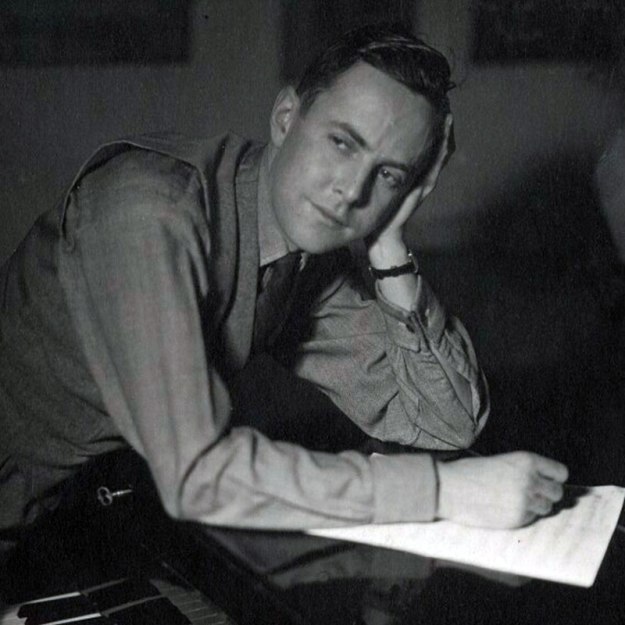
Together with the pianist, composer and playwright Albert Arlen, he wrote and directed Counterfeit, a comedy thriller in twenty scenes. After previewing in Richmond it transferred to London’s Duke of York’s Theatre, where it featured a young Charles Hawtrey, years before the Carry On films would make him a household name.
The reviews, unfortunately, were lukewarm.
Around the same time, Beverley Nichols found himself under growing financial and personal pressure. In 1937 he sold Allways, the idyllic Cambridgeshire cottage that had inspired his famous gardening books. Publicly, the sale was attributed to the need to finance his latest West End production, Floodlight, itself destined to disappoint at the box office.
There may, however, have been another reason.
Village gossip had become increasingly hostile. Nichols’ frequent male visitors attracted attention, while rumours of moonlit skinny-dipping parties and young local men invited to the house circulated far beyond Glatton. Whether exaggerated or not, such stories carried genuine danger. Homosexuality remained a criminal offence, and a whispering campaign could destroy both careers and reputations.
War interrupted everything.
In 1940 Butcher joined the Royal Navy. Little has emerged about his wartime service, but once peace returned he resumed the theatrical life that had been placed on hold for six long years.
Nichols and Butcher settled at Merry Hall in Ashtead, Surrey, in 1946. The elegant Georgian house, surrounded by extensive gardens, would become famous through Nichols’ gardening books, although behind the scenes Butcher was contributing far more than readers realised.
In 1949 he wrote Dear Heart!, a comedy staged by the Playwrights’ Theatre Group at London’s Chepstow Theatre Club. By then, however, another medium was beginning to eclipse the stage.
Television.
Beverely Nichols and Cyril Butcher
When Butcher began writing a television column for The Sketch in 1950, the medium was still finding its feet. His weekly articles charted life inside the BBC’s Alexandra Palace studios and later recorded the birth of commercial television with the curiosity of someone who recognised he was witnessing history in the making.
Five and a half years later he crossed the divide himself.
Associated-Rediffusion, Britain’s first Independent Television contractor, recruited Butcher to write and direct drama. It proved to be the defining chapter of his professional life.
Today, when scenes can be filmed repeatedly until perfection is achieved, it is easy to forget how television drama was once created.
In the 1950s almost everything went out live.
A forgotten line, a jammed door, a misplaced prop or a camera appearing in shot became part of the broadcast forever. If a programme needed repeating, there was no videotape waiting on a shelf. The entire cast and crew returned to the studio and performed the production all over again from the beginning.
It demanded absolute concentration.
Between 1955 and 1960 Butcher directed episodes of The Granville Melodramas, ITV Play of the Week, ITV Television Playhouse and Murder Bag. Week after week he helped establish the grammar of British television drama at a time when the rules were still being invented.
His achievements have largely been forgotten.
Yet millions of viewers watched programmes that passed through his hands.
In 1953, while rehearsing Nichols’ little-known play La Plume de ma Tante at Bromley Theatre, Butcher left midway through production after being called away to direct a television adaptation of Evensong—the very work that had first brought the two men together more than twenty years earlier.
Life has a curious habit of closing circles.
In 1958 Nichols and Butcher moved for the last time, settling at Sudbrook Cottage in Richmond, where they would remain together for the rest of their lives.
By the end of the 1950s, Butcher’s career had begun to change direction.
For two years he served as Senior Director of Schools Programmes before returning briefly to drama. By now, however, the industry’s priorities were shifting. The man who had once directed ambitious live productions increasingly found himself overseeing factual programmes with decidedly less glamour. Titles such as Shopping For You, Shop on the Corner, election coverage and broadcasts from the Ideal Home Exhibition reflected the changing demands of commercial television rather than any decline in his ability.
His final appointment at Associated-Rediffusion was as Head of its newly established Commercial Production Department.
Then came an altogether unexpected opportunity.
Television in Ethiopia was in its infancy. The Ethiopian Television Service had only recently begun broadcasting when Butcher accepted the post of Director-General, moving to Addis Ababa in 1965. For two years he helped shape a national broadcaster from the ground up, an experience unlike anything he had previously encountered.
His contribution did not go unnoticed. Emperor Haile Selassie awarded him the Order of the Ethiopian Empire in recognition of his work.
By the time Butcher returned to Britain, the pace of his life had slowed considerably.
In 1967 and 1968 he and Beverley Nichols embarked on an extended journey through South Africa, Singapore and the Far East while researching The Sun in My Eyes. Nichols wrote the text; Butcher supplied the photographs.
The arrangement had become familiar.
One man occupied the public stage.
The other often worked quietly behind the scenes.
Retirement, when it finally came, was only partial. Butcher continued to review television for The Stage, lent his support to plans for a fringe theatre in Wimbledon and, in 1984, became the subject of Old Stagers, a BBC Radio 2 programme celebrating veterans of British theatre and entertainment.
It was a rare moment in which the spotlight fell, however briefly, upon him.
When Beverley Nichols died in 1984, Butcher inherited the greater part of an estate valued at £131,750. He continued living at Sudbrook Cottage, despite suggestions that the house might have to be sold to meet taxes and other liabilities.
It never was.
Four years later, in 1988, Cyril Butcher died at the age of seventy-nine.
The handsome young man from Film Weekly had long since disappeared.
There are still people who remember Beverley Nichols and who knew of his lifelong relationship with Butcher. Most biographies suggest that, by their later years, companionship had replaced passion. Nichols’ attraction to younger men is well documented, as are his discreet encounters with the “rough trade” of London, while Butcher appears to have accepted those indiscretions with quiet resignation.
What passed between them in private is known only to history.
It is tempting to wonder whether Butcher’s contribution to Nichols’ success extended beyond the few acknowledged examples. We know that he ghost-wrote at least one published work and spent decades living alongside one of Britain’s most prolific authors. Did other manuscripts pass beneath his pen? Did other ideas become Nichols’ bylines?
The evidence is silent.
Perhaps it always will be.
After two days and one long night sitting opposite Cyril Butcher at Signora Bruschi’s kitchen table, I know a great deal more about his life than I did when I began.
I know that he was the young man who caught Alfred Hitchcock’s eye and starred in one of the director’s lost films. I know that he spent more than fifty years beside one of Britain’s most celebrated writers, helped shape the earliest years of commercial television, accepted an imperial decoration from Haile Selassie and quietly contributed to British theatre, journalism and broadcasting.
Yet, in another sense, I know almost nothing about him.
The archives reveal the milestones of his life, but not the life itself.
They tell us where he worked, whom he loved and what he achieved, yet remain stubbornly silent on the questions that matter most: what kind of man was he, what made him happy, what made him laugh and, when the lights finally went out, whether he believed he had lived the life he wanted.
Perhaps that is the fate of those who spend their lives just beyond the spotlight.
History remembers the stars.
It is less kind to those who helped them shine.
As I left Signora Bruschi’s kitchen, I glanced once more at the photograph of the twenty-year-old Cyril Butcher.
For a fleeting moment, it felt as though he was looking back.
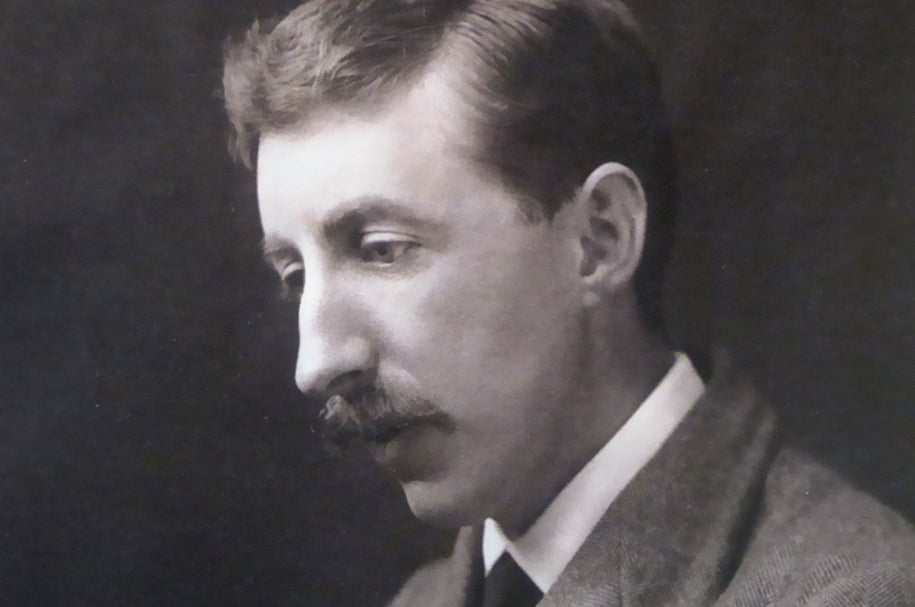
E.M. Forster spent much of his life hiding a part of himself.
In a diary entry from 1964 he wrote:
‘I should have been a more famous writer if I had written or rather published more, but sex has prevented the latter’.
Between 1905 and 1910 he published four novels—Where Angels Fear to Tread, The Longest Journey, A Room with a View and Howards End. By the time A Passage to India appeared in 1924, Forster had grown weary of writing about marriage and the relationships between men and women. It would be the last novel published during his lifetime.
Instead, his imagination increasingly turned towards relationships between men. He wrote stories that explored same-sex desire but refused to publish them, convinced that the world in which he lived was not ready for them.
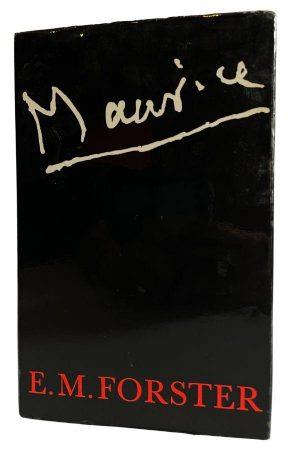
His novel Maurice finally appeared in 1971, a year after his death. It tells the story of Maurice Hall, whose love affair with his Cambridge friend Clive Durham ultimately gives way to a deeper relationship with the young gamekeeper Alec Scudder. Defying class prejudice, social convention and the threat of blackmail, the novel ends not in tragedy but in hope.
Forster wrote Maurice in 1913–14, yet he could never quite let it go. He revised the manuscript in 1932 and again between 1952 and 1960, repeatedly reworking the ending while remaining determined that the lovers should find happiness.
It is difficult not to wonder whether Maurice became the life that Forster wished he might have lived himself.
While at Cambridge he was infatuated with Hugh Owen Meredith, who is widely believed to have inspired the character of Clive. He was also drawn to working-class men and, in 1930, began a relationship with the London policeman Bob Buckingham that lasted for forty years. During his travels abroad he formed other relationships, reportedly experiencing sex for the first time with a soldier on an Egyptian beach when he was thirty-eight.
In 1970, the biographer P. N. Furbank observed:
“He achieved physical sex very late, and found it easier with people outside his own social class; and it remained a kind of private magic for him – an almost unattainable blessing, for which another person was mainly a pretext.”
The executor of Forster’s estate was Professor W. J. H. Sprott of Nottingham University, best known for translating Sigmund Freud’s New Introductory Lectures on Psycho-Analysis. Among Forster’s papers he discovered the manuscript of Maurice, together with the unfinished novel Arctic Summer, largely written in 1911, which also explored homosexual themes.
There were also a number of short stories written between 1903 and 1958. Published posthumously in 1972, only two had appeared during Forster’s lifetime; the remainder were either overtly homoerotic or explicitly gay stories that would almost certainly have been considered indecent by contemporary standards.
Within his closest circle, Forster made little attempt to conceal his sexuality. He shared successive drafts of Maurice with trusted friends including Siegfried Sassoon, Lytton Strachey, Edward Carpenter, Christopher Isherwood, Xiao Qian and Forrest Reid.
Beyond that circle, however, he was intensely guarded.
In 1962, John Bayley wrote in The Guardian that “the homosexual themes underlie all his novels.”
Forster replied:
“Are you aware that homosexuality is still a criminal offence, and any public implication of it therefore objectionable.”
As Kate Symondson notes on the British Library website, Forster was only sixteen when Oscar Wilde was sentenced in 1895 to two years’ hard labour—the maximum penalty—for homosexual acts. It was a warning that stayed with him for the rest of his life.
The dangers faced by Maurice and Alec were not merely fictional. They reflected the laws, prejudices and fears that shaped Forster’s own existence.
Only in 1967, with the passing of the Sexual Offences Act, were private homosexual acts between men over the age of twenty-one decriminalised in England and Wales. By then Forster was eighty-eight years old, and the novel that had meant so much to him still remained unpublished.
There had been a thunderstorm warning across the Veneto, but nobody believed it. They complained about the relentless heat and the pitiless sun, longing instead for shorter days, cold mornings, and snow.
Even so, the wind hinted that relief might finally be on its way. It rattled the café awnings, scraped chairs across pavements, and sent menus tumbling into the next street. In Signora Bruschi’s courtyard the washing twisted itself tightly around the line, while the terracotta pots overflowing with pelargoniums, lavender, salvias, petunias and Mexican fleabane bore the worst of it. One of the smaller pots toppled from the kitchen step and shattered. Even the tiny finches that usually flitted between the potted citrus trees abandoned the branches for the shelter of a shaded corner, where they sang with frantic urgency. Signora Bruschi rushed outside clutching a broom and shouted for us to rescue the washing before it blew away.
It was Cola who first noticed the bruised-purple cloud creeping across the sky. Others followed behind it, darker still, advancing with slow deliberation as though reluctant to commit themselves. They lingered above the city, steadily subduing the sun. With every passing minute the light faded, the heat loosened its grip, and the stale air trapped inside the old stone walls for weeks was finally released. When the wind eased, Signora Bruschi scolded us for throwing the clean washing into the basket instead of folding it properly.
An uneasy stillness settled over Verona. The city seemed to pause in expectation. Even the finches fell silent.
Bianchi stepped into the doorway and sniffed the air. It carried that strange sweetness that always arrives before heavy rain, reminding us of freshly cut grass. He pointed towards the sky, where the clouds had taken on an unsettling greenish hue, their tops spreading into broad, flat anvils. For a fleeting moment the sun broke through, casting dramatic shafts of light that sharpened every corner of Signora Bruschi’s courtyard.
Then came the first distant growl of thunder from somewhere beyond Lake Garda.
A blinding flash of lightning sent Bianchi darting back inside. From neighbouring houses came cheers, laughter and exaggerated cries of alarm. Only a handful of raindrops struck the marble flagstones before Signora Bruschi ushered everyone indoors.
Moments later the wind returned with renewed force, and the rain followed.
It swept across the city from the west in solid sheets, lashing the parched streets and hammering rooftops. The sheer weight of water became a roaring wall of sound that swallowed everything else. Gutters overflowed, torrents cascaded from the roofs, and water surged across the courtyard until it pooled outside the kitchen door. Drains that had lain dry for weeks surrendered almost immediately. Through the window we watched the neighbouring buildings dissolve behind a curtain of rain until they became little more than grey silhouettes.
“The heavens are teeming,” Signora Bruschi cried.
Brilliant forks of lightning split the sky, vanishing almost as soon as they appeared. Each flash was followed by a violent crack and then a rolling explosion of thunder that rattled the windowpanes and shook the house to its foundations.
Again.
And again.
“I hope it stops soon,” Bianchi whispered.
Cola, however, seemed delighted.
He dashed into the courtyard, pulling off his T-shirt as he ran, and stood ankle-deep in the rising water, lifting his face towards the sky as the rain drenched him within seconds. By the time he wandered back inside, his jeans clung to his legs and streams of water spread across Signora Bruschi’s kitchen floor. Without missing a beat, she clipped him around the back of the head, snatched a towel from the washing basket, and thrust it into his hands.
“My son is stupido,” she sighed, with equal measures of exasperation and affection.
Pietro’s Books, Bianchi’s Curiosity …
College has broken up for the summer and, when he is not working, Bianchi is usually either trailing me around Signora Bruschi’s house or reading in my apartment. Since my return, our hostess has been content for him to stay, but she has made it abundantly clear that no relationship of any kind is to develop between us. Consequently, Bianchi has taken up residence in my rooms while I have been relegated to sharing Cola’s bed.
My stay in Verona is only temporary, and I have no illusions that, once I return to the UK, Bianchi will have any claim on my Italian life.
For now, however, he has been quietly investigating my possessions in an earnest attempt to learn everything he can about me. He has also been working his way through Pietro’s boxes, which Signora Bruschi finally carried down from the attic for me to sort.
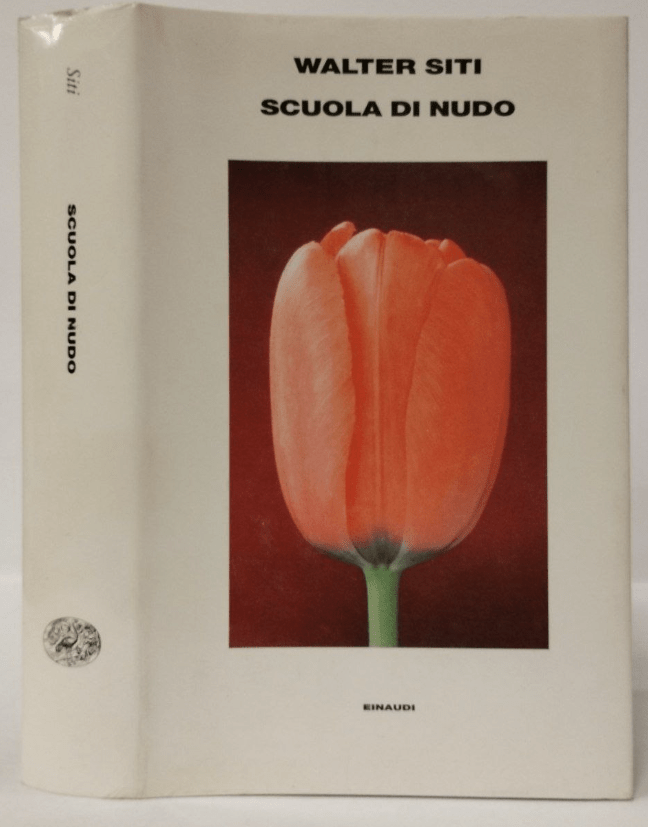
That is how Bianchi came to be sitting on my sofa with one of Pietro’s hardback novels from the 1990s.
Scuola di nudo is an intimidating thing: six hundred pages of uninterrupted Italian, which effectively rules out any possibility of my reading it.
“It is about a university professor in Pisa,” Bianchi explained, “who explores his obsession with male beauty and desire, and who is very critical of his colleagues.”
“Would I like it?” I asked.
“Probably not. I think you like magazines instead.”
The remark was aimed squarely at the infamous French copy of Le Pénis lying beside my bed, a publication that, until then, he had politely pretended not to notice.
“There is no plot,” he continued. “But it is interesting. And there are many scandals.”
I suspect Bianchi has already grown bored with the novel, despite his insistence to the contrary, and is persevering with it largely because he thinks it will impress me.
I looked up the author, Walter Siti, and discovered that he taught at several Italian universities, wrote screenplays, and has also been a reviewer for La Stampa.
As for Scuola di nudo, I remain none the wiser. Bianchi’s fractured English synopsis is, I suspect, as close to understanding the novel as I am ever likely to get.
Not my Taormina …
Severin wishes I were back in Taormina. I’m not so sure.
Dolce & Gabbana recently unveiled its new Alta Sartoria collection at the Teatro Antico, with the Ionian Sea below and Mount Etna rising behind it. The guest list was suitably glamorous: Erling Haaland and Isabel Haugseng Johansen, Theo James and Ruth Kearney, Christian Bale, Monica Bellucci, Jennifer Lopez and Michele Morrone.
I wasn’t invited.
That, in a way, is the point.
Taormina isn’t really for north European wastrels like Severin and me. It’s for people willing to spend the equivalent of a monthly mortgage on a single night’s stay, pay limousine prices for taxis and happily buy things marked up tenfold simply because they can.
It is the most expensive destination in Sicily.
We visited out of season and enjoyed it, although even then the White Lotus pilgrims were beginning to get on my tits. According to Severin, they’ve since become unbearable.
I left after a few weeks. He stayed.
He now spends sixteen hours a day working in a restaurant, and even the flat that came with the job has lost its appeal. The owners have suggested he share it with three other young waiters, each expected to pay an exorbitant rent. Rooms are scarce in Taormina, they say.
Watching from afar, I realise the place isn’t really for me.
Give me the Taormina where writers, poets, artists and photographers arrived on the backs of flea-bitten donkeys and drank cheap wine in tiny houses with compacted earth floors.
Give me Alfio, paid peanuts to work in a hotel whose rooms now cost five times what I paid only weeks ago. The same Alfio who took us where the locals ate, introduced us to the Taormina hidden behind the postcards, and preferred the company of ordinary people to wealthy tourists.
Give me the sweaty boys chasing a football across a dusty patch of wasteland, before somebody decides it would make the perfect site for another luxury boutique hotel.
Severin won’t last the summer.
Sooner or later, he’ll leave Sicily in search of something better.
I’m tempted to invite him to Verona. But that would test Signora Bruschi’s generosity.
The First Twink …
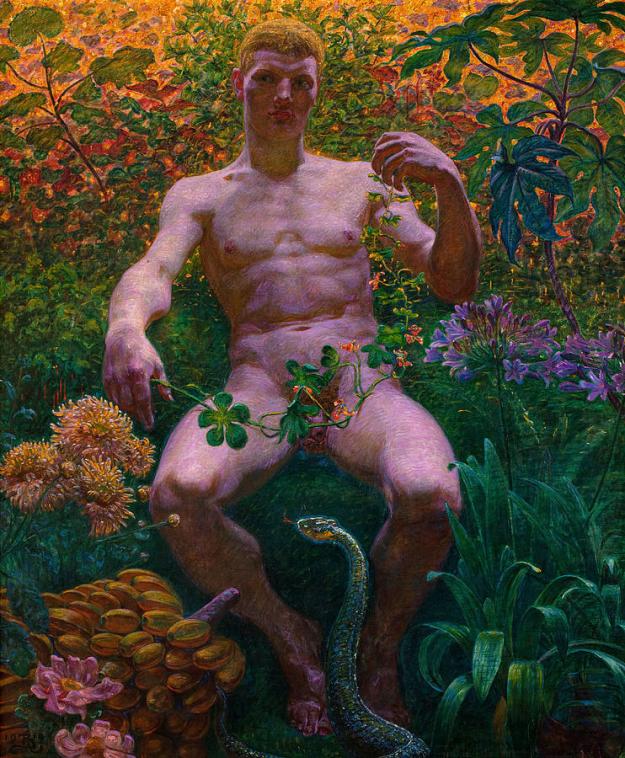
“Adam, as in Adam and Eve. I think he was the first twink and he was definitely a power bottom. The snake of it all in the garden is sus to me.” – Grant Gibbs
Adam in Paradise. Kristian Zahrtmann (2020)
On the cute and willing…
Ruslan Danilchenko. Photographed by Kiana Beijleveld
“Thus began a friendship entirely different from any Gordon had known before. He did not know what his real sentiments were; he did not even attempt to analyse them. He only knew that when he was with Morcombe he was indescribably happy. There was something in him so natural, so unaffected, so sensitive to beauty. After this Morcombe came up to Gordon’s study nearly every evening, and usually Foster left them alone together, and went off in search of Collins.
“Indeed this friendship, coupled with his admiration for Ferrers, was all that kept Gordon from wild excesses during the dark December days and the drear opening weeks of the Easter term. During the long morning hours, when Gordon was supposed to be reading history, more than once there came over him a wish to plunge himself into the feverish waters of pleasure, and forget for a while the doubts and disappointments that overhung everything in his life. At times he would sit in the big window-seat, when the school was changing class-rooms, and as he saw the sea of faces, some big, some small, who had drifted with the stream, and had soon forgotten early resolutions and principles in the conveniently broadminded atmosphere of a certain side of Public School Life, he realised how easily he could slip into that life and be engulfed. No one would mind; his position would be the same, no one would think worse of him. Unless, of course, he was caught. Then probably everyone would turn round upon him; that was the only unforgivable sin – to be found out. But it was rarely that anyone was caught; and the descent was so easy. In his excitement he might perhaps forget a little.”
I have never quite understood what all the fuss was about.
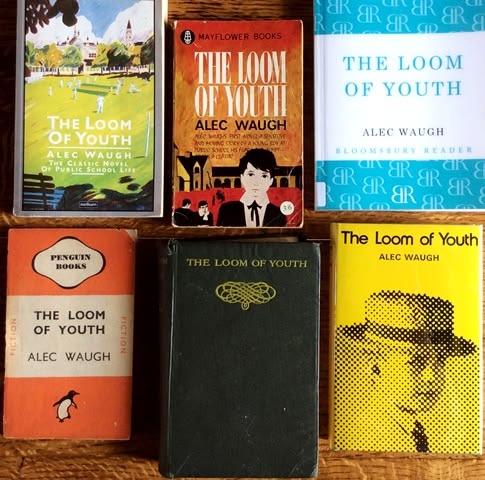
When The Loom of Youth by Alec Waugh was published in 1917, it provoked a minor literary scandal.
Written when Waugh was just seventeen and a half, the novel is both a realistic and romantic portrait of the early twentieth-century British public school system. Through its protagonist, Gordon Caruthers, he explores the complex social hierarchies, academic pressures and personal relationships that shape life at the fictional Fernhurst School.
The novel broke long-standing Victorian taboos by acknowledging the romantic and homosexual attachments that could develop between schoolboys, although by modern standards its treatment is remarkably restrained.
Indeed, the two passages reproduced above are about the only real indication that Gordon Caruthers and his fellow pupil, Morcombe, shared anything approaching a romantic attachment.
Contemporary reviews were, for the most part, favourable, though many cautiously skirted around the subject, resorting to euphemisms such as “immorality”, “decadence”, “sentimental relations” and “unhealthy” adolescent behaviour.
The fiercest opposition came not from the literary press but from conservative periodicals, educational journals and coordinated letter-writing campaigns organised by public school authorities, who regarded the novel as a damaging attack on their institutions.
Waugh depicted a world in which schoolboys cheated, schoolmasters were often out of touch, and both could become easy targets for the casual cruelties of adolescence.
He also challenged the Victorian conviction that team sports—particularly rugby and cricket—instilled the moral character and leadership required to govern the British Empire.
Then there was the schoolboy slang, which horrified many critics and parents, who dismissed the dialogue as vulgar, ungentlemanly and symptomatic of cultural decline.
As Waugh had himself been educated at Sherborne School in Dorset, the school quickly recognised itself as the model for Fernhurst and regarded the novel as a profound betrayal. By exposing the realities of life inside one of England’s elite public schools, Waugh opened institutions that had long been shielded from public scrutiny and, in the process, stirred anxiety among parents and former pupils alike.
Sherborne believed it had little choice but to expel him from its old boys’ association, the Old Shirburnian Society.
Reading it today, it is difficult to see what so alarmed its detractors. What once seemed a shocking exposé now reads as an unusually perceptive, and surprisingly tender, account of adolescence.