On writing a long story…

It was the story that gave this site its name. Perfectly Hard and Glamorous was originally meant to be nothing more than a platform for a single, serialised story. But it didn’t quite turn out that way—other characters and other stories found their way in, and gradually took over.
The journey began four years ago and came to an end yesterday. Along the way, it wandered, stirred a bit of controversy, and at times became unexpectedly difficult to write. But despite all the twists and turns, it arrived where it was meant to—just not quite where I had imagined.
I wrote it mainly for myself. It was a way of proving that I could sustain something long-form and actually see it through without losing momentum. It also gave me space to experiment with different styles. Because of that, it isn’t perfect—but I enjoyed writing it, even if it didn’t always find an audience. I could go back and start again, reshape it entirely, but there are too many other things now that I want to write.
So how does it feel?
Strange, really. A mix of emotions. There’s a sense of achievement—a quiet, personal victory—but also a lingering sense of loss. Almost like a small ending, or a kind of absence. I imagine it’s not unlike what authors feel when they finish a novel.
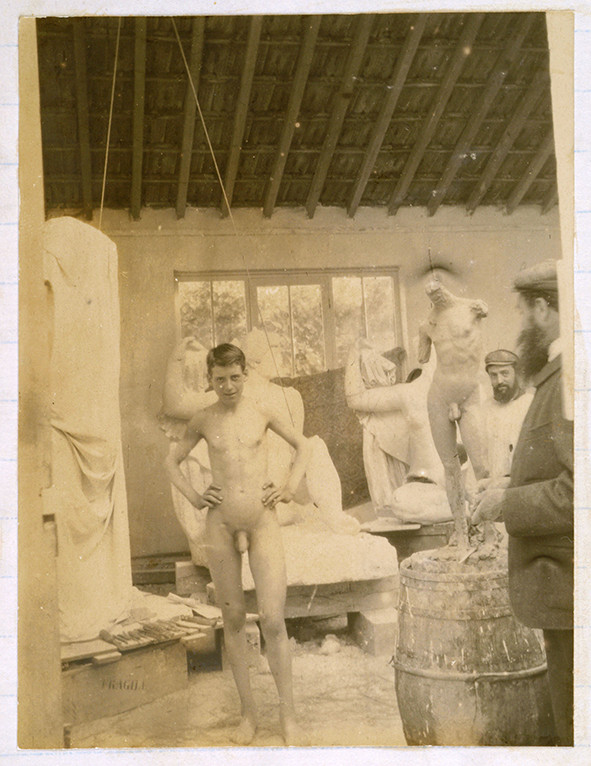
The characters stay with you. Some you grow fond of, others less so, but they all leave their mark. So, goodbye to Harry, Andy, and Jack. Goodbye to Paolo—who I grew so attached to that I had no choice but to let him go. Goodbye to Tom, who may yet find his way into something else. And goodbye to Park Hill in Sheffield—seen here from its struggles in the 1980s to its later reinvention.
It’s over now.
On finding an old photograph by Herbert List…
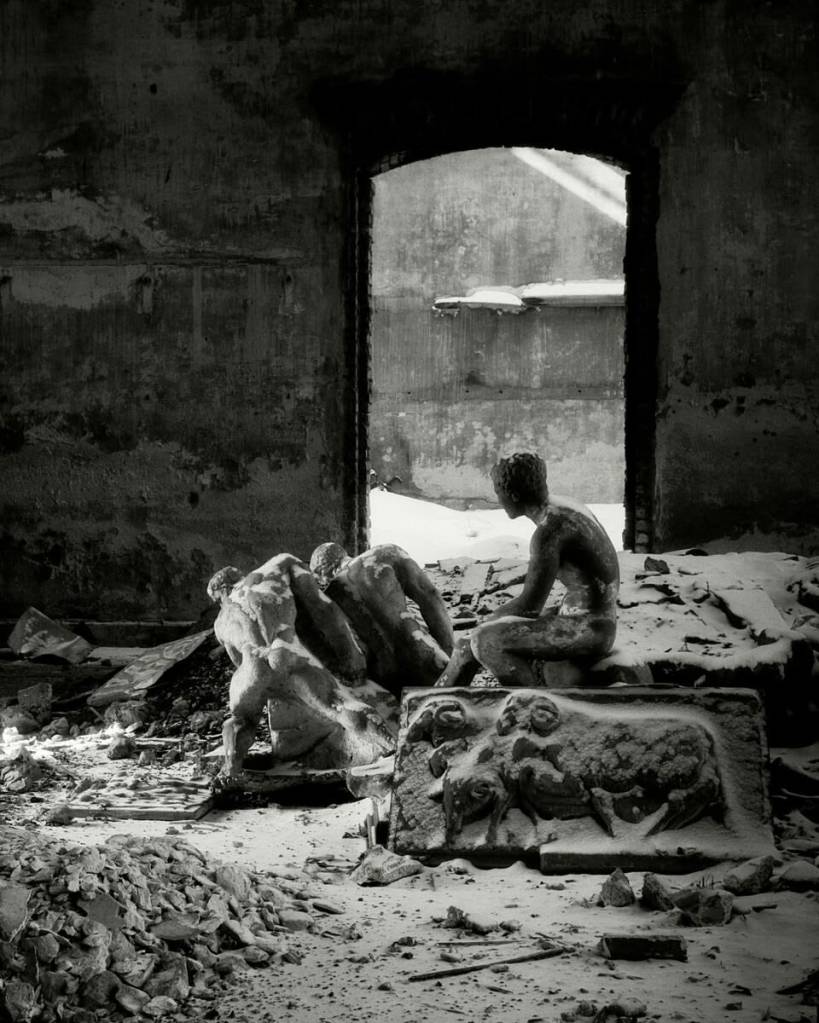
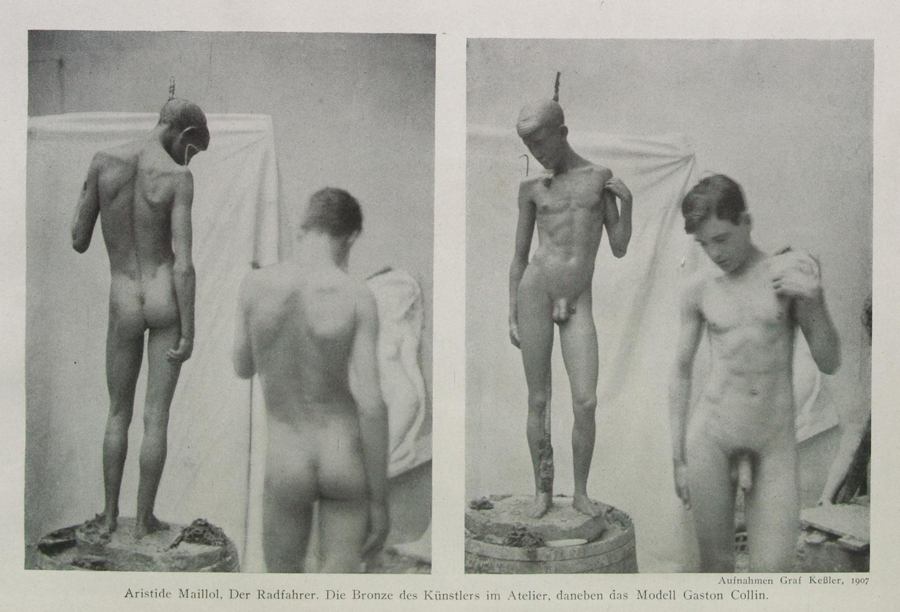
In 1945, Herbert List faced the ruins of Munich just as the dust had settled, capturing the wreckage and those who remained to pick up the pieces. The devasted Academy of Arts’ storeroom. The figural group on the left is probably a design for a large motorway monument by Josef Thorak. The seated figure in the middle is a plaster cast of the seated Hermes of the Herculaneum with an aries-relief from the school of German artist Adolph Hildebrand.
On dreaming about Pasolini in Roma…
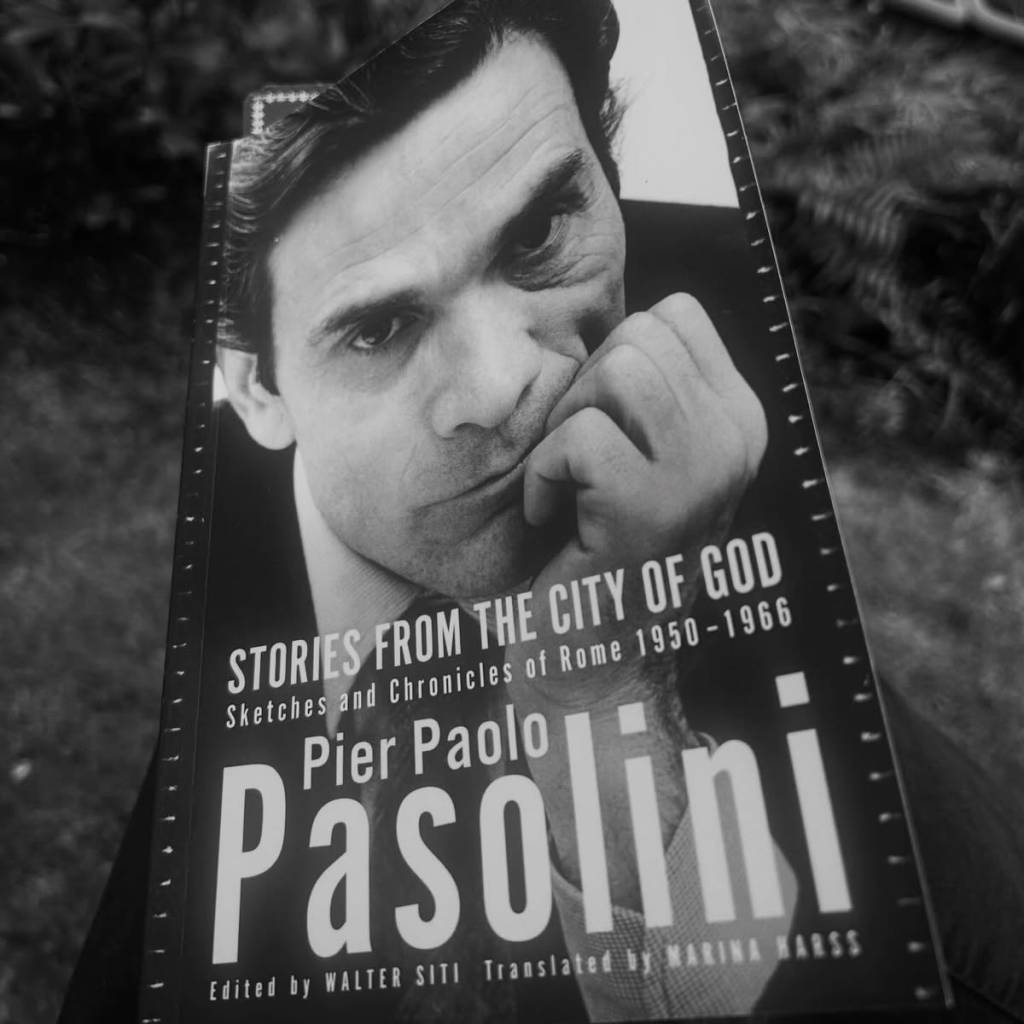
Whilst in Paris, in brief moments of sleep, I dreamt that I met Pasolini in Rome and he gave me a book to read. It was a collection of short stories about the city which he had written when he was young. I told Thomas about the dream, and he secretly ordered me a book that was delivered the next day by a cute Algerian guy. Reading it, I realised I had subconsciously named a character in one of my own stories after Pier Paolo Pasolini.
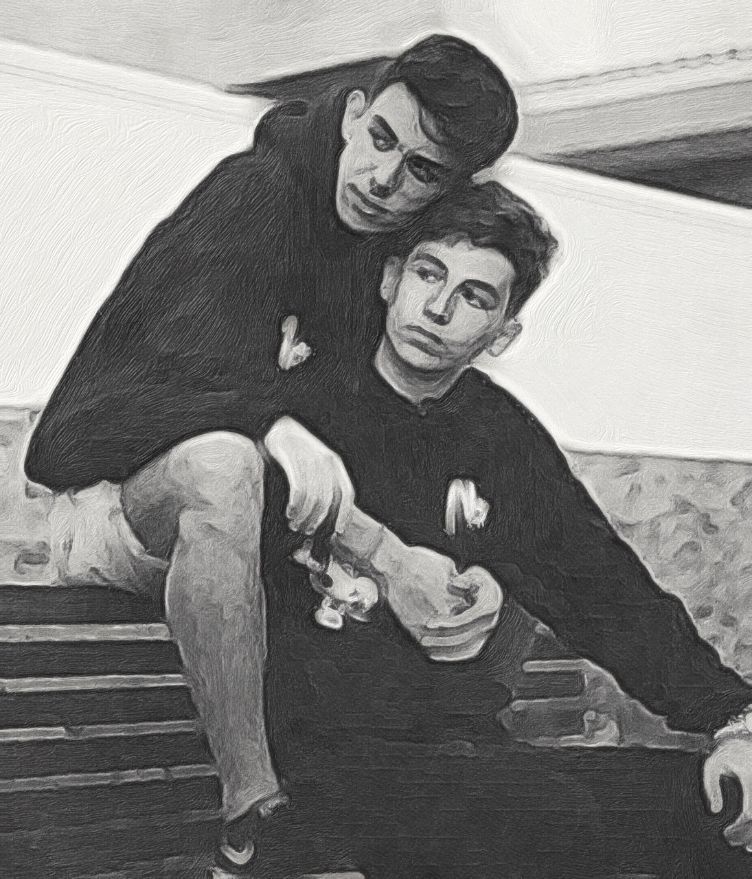
I might be the reincarnation of Pasolini. The more I write; the more shocking it becomes, and soon I shall be left with only gay porn to write about. But Pasolini’s writing career faded and he directed films instead that were also shocking. And Thomas said that the more daring we become, only murder can silence us. My friend, Freddie the Fraud, once told me that when I am in Italy, the ghost of murdered Pasolini follows me, like he wants to get into my shorts.
On finding an old manuscript about William Butler Yeats…
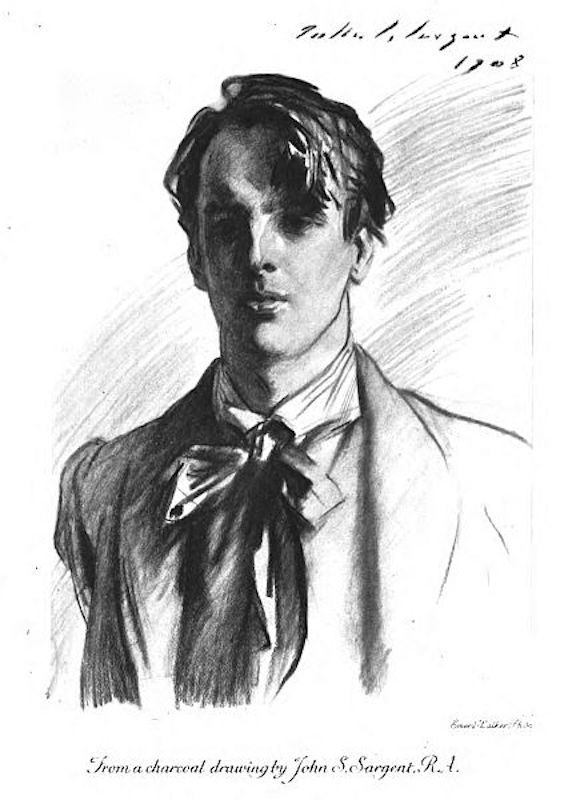
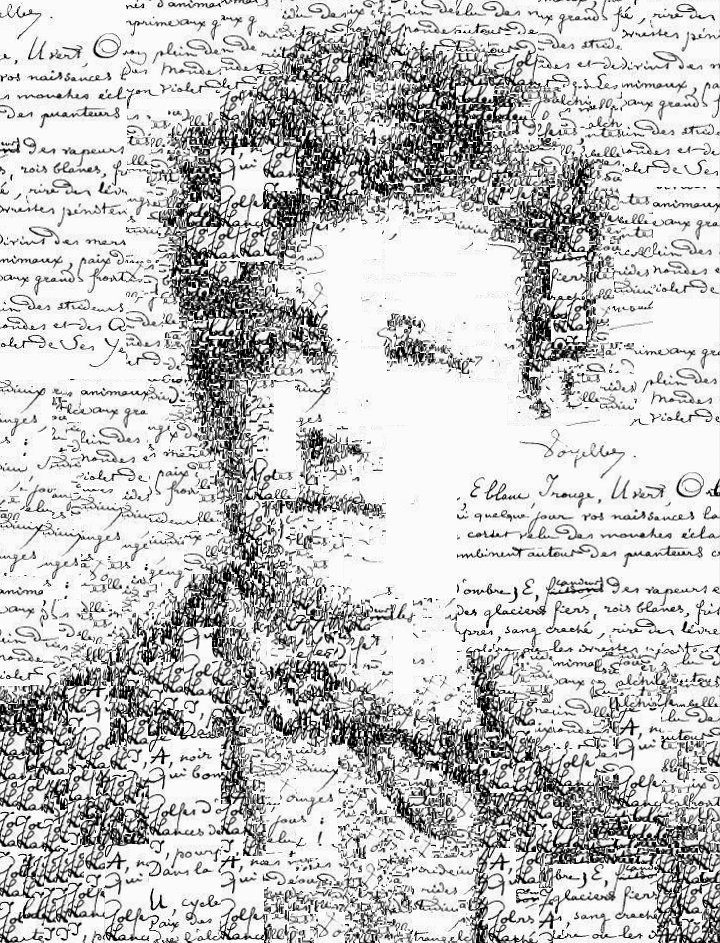
William Butler Yeats (1865-1939) was an Irish poet, dramatist, writer and literary critic.
He was ‘not available’ to admiring young men.
“No,” the young Irishman would have said. “Surely the stirrings within me are meant for naught but the fairer sex, and no other creature besides.”
Katharine Tynan, a prolific Irish poet and novelist who was a regular contributor to The Sketch magazine during the 1890s, was one of those who were enamoured by him:
Prominent in the disorder is a book bound like a mediaeval missal in cherry-coloured brocade and tarnished gold.
What may that fine thing be I ask. He answers with a slight blush. “That is my MS book. A friend brought me the cover from Paris, and I had the book made to fit it.”
I inspect the book. It is such thick paper as one finds in editions (le luxe, and, one imagines, must be rather uncomfortable to write upon). The fine book is a part of the literary dandyism which rather distinguishes Mr. Yeats.
In the old Dublin days he was as untidy as a genius newly come from the backwoods. He was an art student then, and generally bore the stains of the studio.
He used to affect scarlet ties, which lit up his olive face. They were tied most carelessly. Ordinary young men who had been at school with him, and resented his being a genius, used to say that the carelessness was the result of long effort but one never believed them.
Now he wears the regulation London costume, plus a soft hat, and his ties are dark silk, knotted in a soft bow. He is extremely handsome in his strange way; he is very tall and very slender, so dark that he was once taken for a Hindu; by a Hindu, a long, delicate, oval face, beautiful brows, and large, melancholy, velvety brown eyes that see visions.
There used to be a picture of Willie in his boyhood on an easel over against me as I sat. The dusky face had carnations in the cheeks which now are pale olive. If it was at all representative of him, he must have been a beautiful boy, full of rich Eastern colour. I did not meet him till a year or two later, when he had assumed the man’s colourless cheeks, with the silky, dark, very youthful beard he then wore.
William Butler Yeats – The Sketch – Wednesday 29 November 1893
On not giving PSB about The Beatles…

Why does every generation have an obsession with The Beatles? The fucking Beatles. I’m one for old music but I don’t get the hype around them. It wasn’t as if they lasted long. Boring. Give me the Pet Shop Boys. They’ve lasted longer and still hit us like they’re trying to be young again. But the gay one doesn’t/never appealed to gays, while the straight one did/does. Happy 40th Anniversary.
On watching Before Night Falls…
Reinaldo Arenas, an exiled Cuban writer suffering from AIDS, took his own life in New York in 1990. It was a dramatic end to a dramatic life—the final escape of someone who had always been in flight: first from abandonment and neglect as a child, then from stark poverty, and finally from sexual and political persecution. Arenas was imprisoned several times in Cuba by Castro’s government, his manuscripts frequently confiscated. On one occasion he was detained on a vague morals charge and subjected to repeated indignities and cruelties, including torture. He arrived in the United States during the Mariel boatlift of 1980, that headlong exodus of more than a hundred thousand people—an event he renders vividly in his memoir, Before Night Falls, published in 1993.
I confess I knew nothing of his story until I watched Julian Schnabel’s 2000 film, drawn from both the autobiography and Jana Boková’s 1990 documentary Havana.
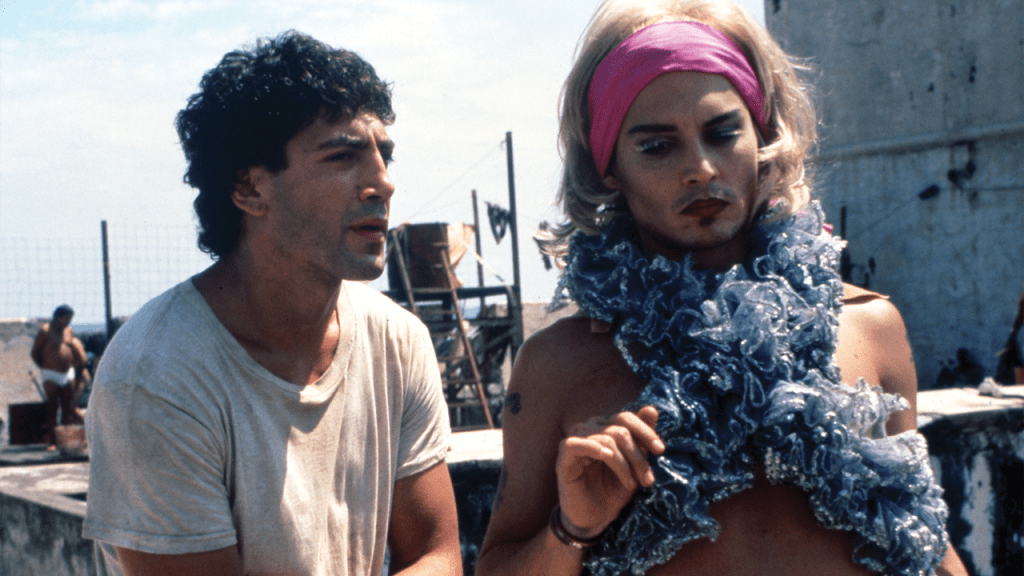
A few things to note. Javier Bardem is excellent as Arenas. But others linger: Johnny Depp—who once took a piss beside me—appears twice, as the outrageous Bon Bon with the big arse and as Lt. Víctor; Sean Penn turns up as Cuco Sánchez; and Olivier Martinez as Lázaro Gómez Carriles. It was Martinez who did it for me. Handsome—absurdly so. Not anymore. He dated Kylie for a while, married and divorced Halle Berry, and somewhere along the way the looks went with it.
On the cute and willing…