
On meeting an artist’s muse…
Alfio had spent far more time with us than his employer at the hotel would have appreciated. The young Sicilian thought nothing of closing reception for a few hours in order to show us the hidden corners of Taormina. For that, Severin and I were grateful, for it allowed us to avoid the endless groups of tourists who traipsed through the town from morning until night. Alfio led us down narrow alleys to viewpoints overlooking the coastline; to small cafés and restaurants frequented only by locals; and introduced us to people whom he thought we might find interesting. For Severin, who would be working here throughout the summer, this was invaluable, and more than once the thought crossed my mind that he might never leave at all. It also occurred to me that this generosity may not have been entirely selfless on Alfio’s part. He knew that I would soon be leaving Sicily, and that afterwards he would have Severin to himself.
One such person Alfio introduced us to was an elderly gentleman named Santo, who lived in a modest upstairs apartment on Via Bagnoli Croci. The visit stemmed from a conversation I had had with Alfio about Baron Wilhelm von Gloeden and the photographs he had taken of young Sicilian boys in the 1890s. My friend David is involved in a forthcoming exhibition of von Gloeden’s work in London, and had spoken to me about the controversy that already surrounded it.
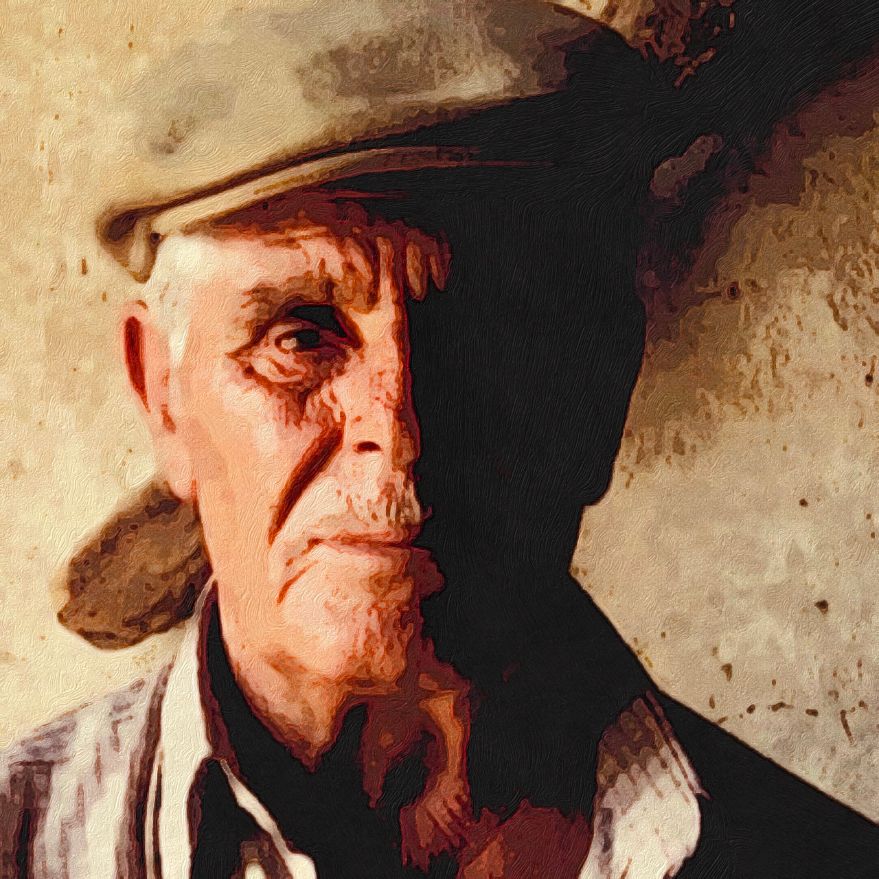
Santo spoke no English, and Alfio conversed with him in the local dialect. He welcomed us warmly with a toothless smile. His apartment was small and crowded with the mementos of a lifetime. Sacred images covered the walls, save for a faded black-and-white photograph hanging beside the door. Looking more closely, I saw that it depicted a barely clothed young boy seated upon a rock. The old man noticed my interest and said something to Alfio, who translated for me. The photograph was of Santo himself at the age of sixteen, taken in the 1950s, and it might easily have been mistaken for a von Gloeden image had the photographer not already been long dead by then.
Santo opened the small window to let in some air and gestured for us to sit while he prepared hot lemon tea. Alfio explained that Santo had worked many jobs in Taormina over the years: fisherman, labourer, barber, before spending his later working life in a hotel much like his own. Now in his eighties, Santo told Alfio that the old photograph had been taken by the German photographer Konrad Helbig. Following in the legacy of von Gloeden, others had come to Taormina hoping to emulate his work.
Yet Santo remembered little about the man himself, beyond the fact that he had paid him a few lire, as he had done with several of Santo’s male friends. The money had been welcome, and Santo admitted that he might have earned more had he posed nude, as some of the others did. But it all seemed impossibly distant now, he told Alfio — another life belonging to another century.
On three teenage brothers…
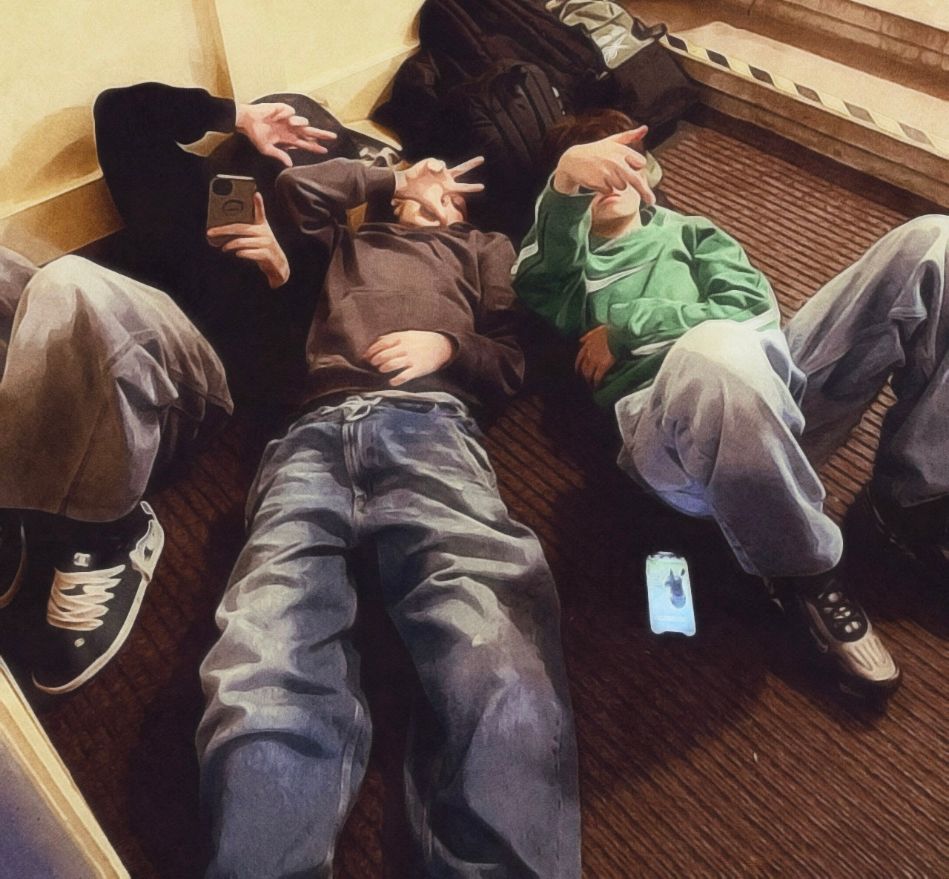
The three German boys — aged twelve, thirteen, and fourteen — are paraded each day by their parents. They resemble one another in many ways: slender adolescent bodies, dark hair, the same boisterous, brotherly energy. Only the eldest wears spectacles; the younger two tease him mercilessly, blissfully unaware that they will soon follow him into short-sightedness themselves.
Their father indulges the rowdy behaviour with an almost inevitable pride — perhaps because he sees in them an echo of his own youth — and so the task of keeping them in line falls, as ever, to the mother. Each morning the boys greet us with exaggerated politeness, only to dissolve into giggles once they have passed. Severin says they call us the schwules paar — the gay couple — though more from a desire to provoke laughter in one another than from any malice.
“But,” Severin says, “I have no doubt at all that the eldest boy is most definitely gay.”
On saying goodbye to everyone…
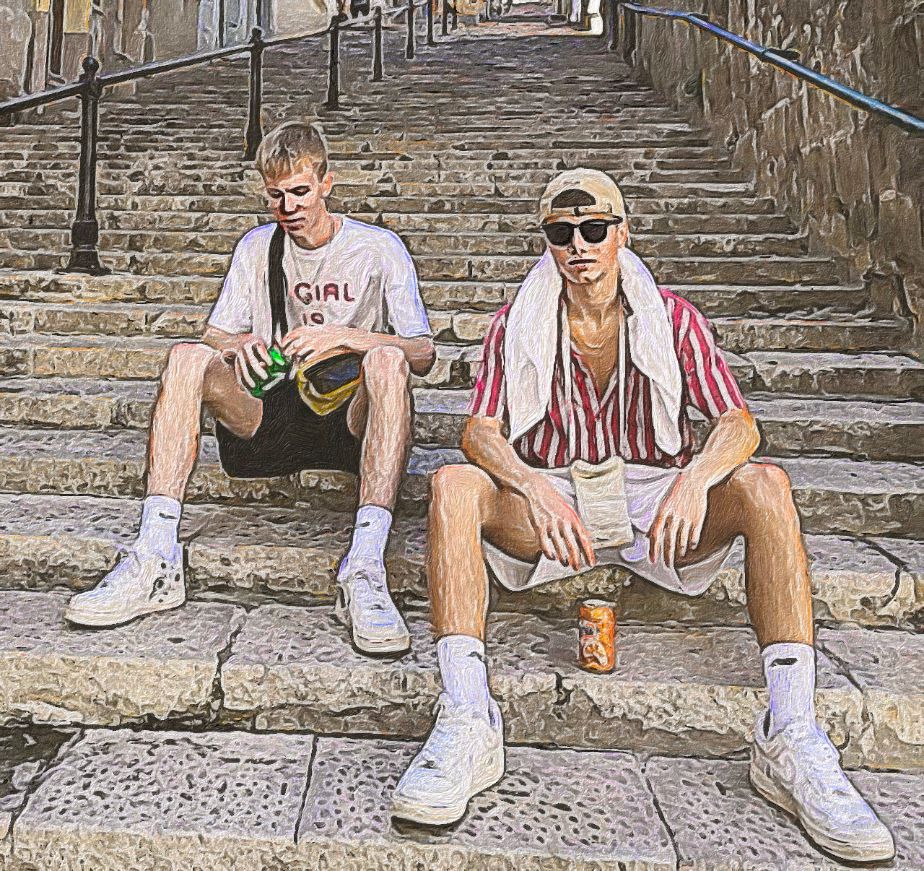
I must move on. My time in Taormina has come to an end. I know it will remain one of those memories that returns in old age, vivid and untouched by time. The town had always possessed a certain allure in my imagination, though the reality proved different from what I had once envisioned. The days of Wilhelm von Gloeden making his way there along rough donkey tracks are long gone. Taormina is now an expensive resort town, crowded with visitors from every corner of the world. Yet, as with any place, I have always been drawn less to what the masses come to see than to what lies beyond their notice.
For that, I remain grateful to Alfio, who revealed a version of Taormina few tourists ever encounter. Before I left, the young Sicilian first shook my hand, then reconsidered and embraced me instead. It felt unexpectedly sincere.
I shall miss the boys who emerged from the shadows each evening to play football on the wasteland. Once, long ago, boys like them would have been exploited by those who paid them to pose for dubious photographs. Now the balance has reversed; they have become the opportunists themselves, charming wealthy tourists into buying cheap souvenirs at outrageous prices. Yet beneath the hustling they were still only boys, quick to abandon commerce the moment a plastic football appeared, racing about in clouds of dust and laughter.
And I shall miss Severin most of all — someone I had long ago consigned to the past. By chance our paths crossed again in a crowded airport, and we both ended up in Taormina. Once, we had regarded each other with suspicion, each secretly wondering whether Pietro had preferred the other. In time, we came to understand how foolish that jealousy had been.
Severin had remade himself into a wanderer, drifting wherever happiness seemed possible. I suspected that once I departed, he would move in with Alfio and perhaps even become his lover. Yet I could not shake the feeling that, sooner or later, he would return to hustling in the back streets again.
When the time came for me to leave, Severin thanked me for giving him a bed and kissed me on both cheeks. “I shall miss our pecks,” he said. “Always a peck for morning, noon, and night.” He made me promise that we would keep in touch and, for once, I found myself hoping that we would.
On the cute and willing…