On meeting an artist’s muse… Alfio had spent far more time with us than his employer at the hotel would have appreciated. The young Sicilian thought nothing of closing reception for a few hours in order to show us the hidden corners of Taormina. For that, Severin and I were grateful, for it allowed us to avoid the endless groups of tourists who traipsed through the town from morning until night. Alfio led us down narrow alleys to viewpoints overlooking the coastline; to small cafés and restaurants frequented only by locals; and introduced us to people whom he thought we might find interesting. For Severin, who would be working here throughout the summer, this was invaluable, and more than once the thought crossed my mind that he might never leave at all. It also occurred to me that this generosity may not have been entirely selfless on Alfio’s part. He knew that I would soon be leaving Sicily, and that afterwards he would have Severin to himself.
One such person Alfio introduced us to was an elderly gentleman named Santo, who lived in a modest upstairs apartment on Via Bagnoli Croci. The visit stemmed from a conversation I had had with Alfio about Baron Wilhelm von Gloeden and the photographs he had taken of young Sicilian boys in the 1890s. My friend David is involved in a forthcoming exhibition of von Gloeden’s work in London, and had spoken to me about the controversy that already surrounded it.
Santo spoke no English, and Alfio conversed with him in the local dialect. He welcomed us warmly with a toothless smile. His apartment was small and crowded with the mementos of a lifetime. Sacred images covered the walls, save for a faded black-and-white photograph hanging beside the door. Looking more closely, I saw that it depicted a barely clothed young boy seated upon a rock. The old man noticed my interest and said something to Alfio, who translated for me. The photograph was of Santo himself at the age of sixteen, taken in the 1950s, and it might easily have been mistaken for a von Gloeden image had the photographer not already been long dead by then.
Santo opened the small window to let in some air and gestured for us to sit while he prepared hot lemon tea. Alfio explained that Santo had worked many jobs in Taormina over the years: fisherman, labourer, barber, before spending his later working life in a hotel much like his own. Now in his eighties, Santo told Alfio that the old photograph had been taken by the German photographer Konrad Helbig. Following in the legacy of von Gloeden, others had come to Taormina hoping to emulate his work.
Yet Santo remembered little about the man himself, beyond the fact that he had paid him a few lire, as he had done with several of Santo’s male friends. The money had been welcome, and Santo admitted that he might have earned more had he posed nude, as some of the others did. But it all seemed impossibly distant now, he told Alfio — another life belonging to another century.
On three teenage brothers… The three German boys — aged twelve, thirteen, and fourteen — are paraded each day by their parents. They resemble one another in many ways: slender adolescent bodies, dark hair, the same boisterous, brotherly energy. Only the eldest wears spectacles; the younger two tease him mercilessly, blissfully unaware that they will soon follow him into short-sightedness themselves.
Their father indulges the rowdy behaviour with an almost inevitable pride — perhaps because he sees in them an echo of his own youth — and so the task of keeping them in line falls, as ever, to the mother. Each morning the boys greet us with exaggerated politeness, only to dissolve into giggles once they have passed. Severin says they call us the schwules paar — the gay couple — though more from a desire to provoke laughter in one another than from any malice.
“But,” Severin says, “I have no doubt at all that the eldest boy is most definitely gay.”
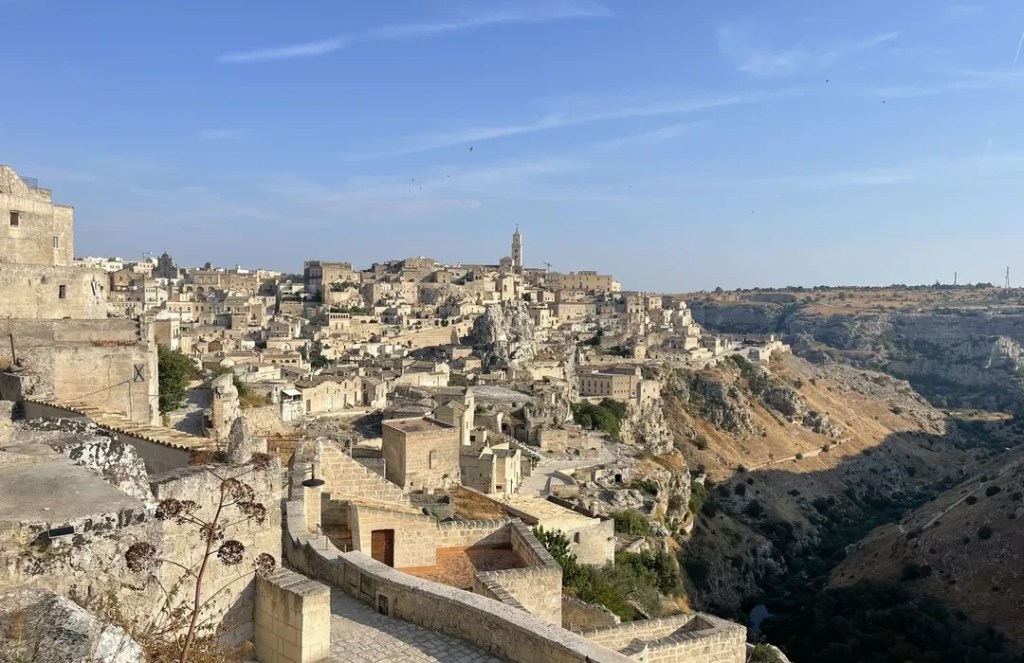
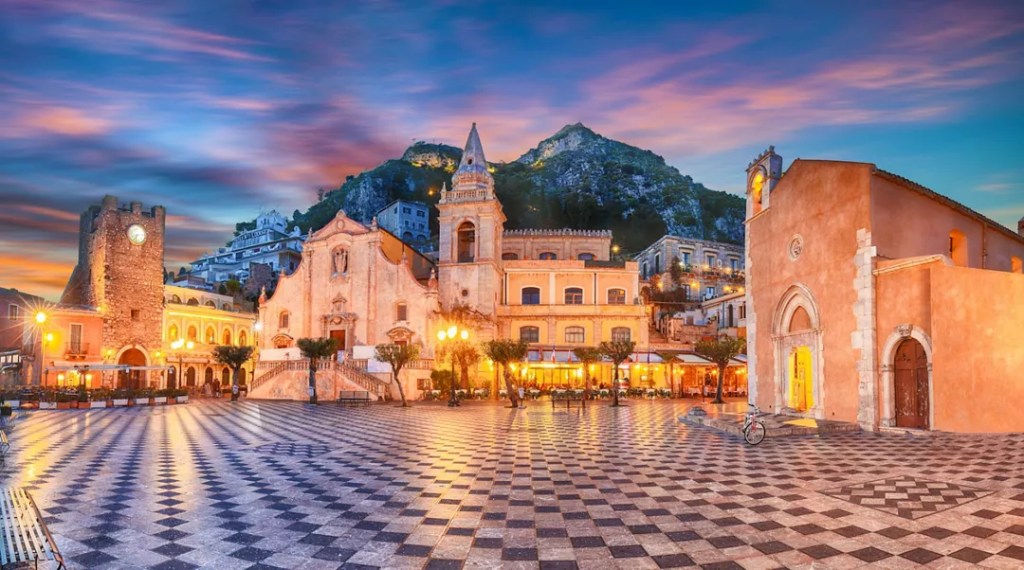
On saying goodbye to everyone… I must move on. My time in Taormina has come to an end. I know it will remain one of those memories that returns in old age, vivid and untouched by time. The town had always possessed a certain allure in my imagination, though the reality proved different from what I had once envisioned. The days of Wilhelm von Gloeden making his way there along rough donkey tracks are long gone. Taormina is now an expensive resort town, crowded with visitors from every corner of the world. Yet, as with any place, I have always been drawn less to what the masses come to see than to what lies beyond their notice.
For that, I remain grateful to Alfio, who revealed a version of Taormina few tourists ever encounter. Before I left, the young Sicilian first shook my hand, then reconsidered and embraced me instead. It felt unexpectedly sincere.
I shall miss the boys who emerged from the shadows each evening to play football on the wasteland. Once, long ago, boys like them would have been exploited by those who paid them to pose for dubious photographs. Now the balance has reversed; they have become the opportunists themselves, charming wealthy tourists into buying cheap souvenirs at outrageous prices. Yet beneath the hustling they were still only boys, quick to abandon commerce the moment a plastic football appeared, racing about in clouds of dust and laughter.
And I shall miss Severin most of all — someone I had long ago consigned to the past. By chance our paths crossed again in a crowded airport, and we both ended up in Taormina. Once, we had regarded each other with suspicion, each secretly wondering whether Pietro had preferred the other. In time, we came to understand how foolish that jealousy had been.
Severin had remade himself into a wanderer, drifting wherever happiness seemed possible. I suspected that once I departed, he would move in with Alfio and perhaps even become his lover. Yet I could not shake the feeling that, sooner or later, he would return to hustling in the back streets again.
When the time came for me to leave, Severin thanked me for giving him a bed and kissed me on both cheeks. “I shall miss our pecks,” he said. “Always a peck for morning, noon, and night.” He made me promise that we would keep in touch and, for once, I found myself hoping that we would.
On playing football with the Boys of Taormina… I have never been attracted to German boys. They can be among the most beautiful, but the language itself has always struck me as cold and harsh. Yet Severin, from Bremen, changed all that. He has been with me for a week now, sleeping beside me in the small hotel on Via Don Giovanni Bosco. Alfio, the receptionist, seemed rather taken with him and turned a blind eye when I asked whether Severin could stay until he got settled. His new job as a waiter has been delayed for another week, though the restaurant promised that his room would soon be ready.
I learned that Severin had a boyfriend, a Spaniard called Estaban, who had remained behind in Turin. He spent a great deal of time on the phone to him, usually trying to reassure him that, although he was sharing a bed with another guy, nothing had happened.
That was partly true. We had both once been Pietro’s “boys”, and there was a reluctance on either side to go where a dead man had already been. It was as though Pietro still maintained some hold over us; we might almost have been brothers, and anything sexual felt faintly incestuous. Yet every morning, when I woke, I would find Severin with his arm draped around me, cuddling, it seemed, with someone he trusted.
Severin is easy to be around: always a few steps behind me wherever I go, yet never overstaying his welcome. He has told me much about his homeland, where his father taught at the University of Bremen and his mother at the University of the Arts. Bremen, he said enthusiastically, was a working-class city that had built its fortune on its port and shipyards — a fact not lost on the Allies during the Second World War, when the city was heavily bombed.
After leaving school, Severin worked at Beck’s Brewery, but was dismissed after being caught having sex with a fellow worker on the bottling line. His abrupt departure prompted him to travel across Europe, eventually ending up in Turin, where he met Pietro and became, in effect, a kept man.
Pietro had obviously singled Severin out for his Nordic looks — a twenty-first century vision of the Aryan “master race”: blond hair, blue eyes, pale skin. There was also the fact that Severin was athletic, and a devoted supporter of Werder Bremen.
Severin discovered that I too liked football and had once played competitively when I was younger. That discovery prompted him to buy a cheap football and seek out a patch of wasteland where we could have a kickabout. Before long, local boys began drifting over to join in, and soon we found ourselves playing fierce, high-intensity matches, with slabs of concrete serving as goalposts.
It became an Italo-Anglo-German affair, proof that football can be loved by everyone, regardless of nationality. Alas, the Italian boys put Severin and me to shame; too many years of smoking, drinking, and inactivity had rendered us ineffective against the tireless boys of Taormina. But it made me feel like a young boy again – innocent and carefree.
The focus is the big phallus… Alfio had a night off and promised to take us to Castelmola, a picturesque medieval hilltop village perched directly above Taormina. “It will be the perfect night for you guys,” he said with a wink, though it seemed more likely that he fancied his chances with Severin, who remained entirely oblivious to his advances.
Alfio ordered a taxi, and a journey that should have taken ten minutes was completed in half the time. The dusty Mercedes hurtled up the steep, narrow, winding road, revealing breathtaking glimpses of Mount Etna and the Ionian coast below.
We arrived in a small square, from which Alfio led us up a short flight of stone steps into Bar Turrisi. Judging by the greetings he received, he appeared to know everyone there.
Alfio explained that Castelmola had grown around the ruins of a tenth-century Norman castle, its streets narrow, ancient, and full of charm. Bar Turrisi, however, was something else entirely. Opened after the war and passed down through generations, it was said to have been founded by descendants of families who had migrated centuries earlier from Pompeii, bringing with them the city’s ribald fertility symbols. The restaurant, Alfio told us with evident delight, still celebrated that inheritance.
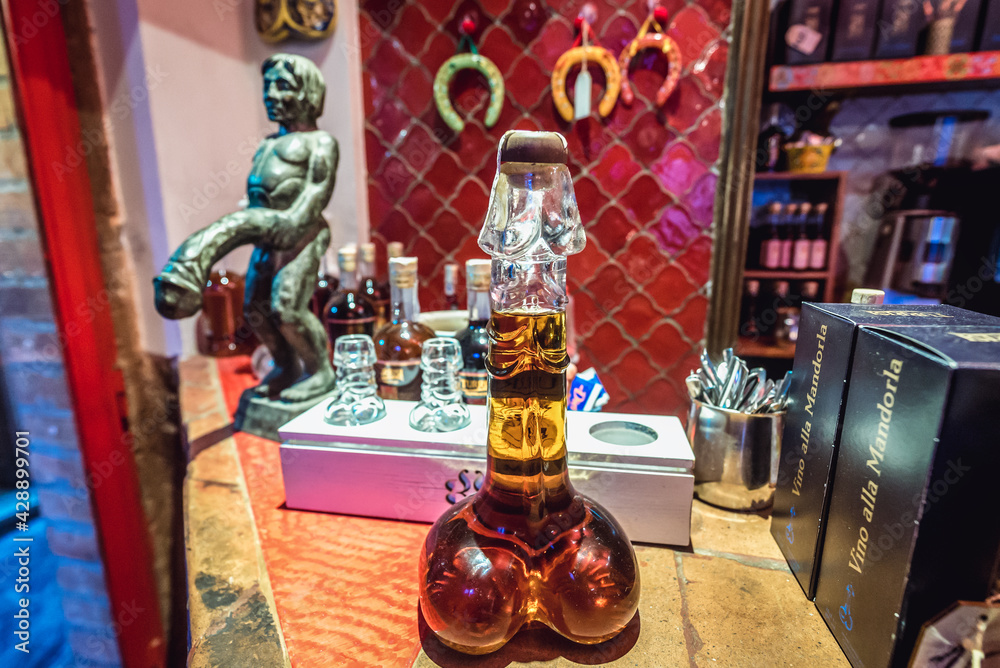
At first, the significance of this escaped both Severin and me, but we soon understood. Across all four storeys, there were penises everywhere one looked: wall paintings, well-endowed statues, phallic liquor bottles, shot glasses, lamps, mirrors, even the plumbing fixtures above the bathroom sinks. The food menu itself was shaped like a penis.
“I knew you would be impressed,” Alfio said, guiding us towards a table overlooking Taormina below. “The people here never wanted to be part of Taormina. They value their independence. But Castelmola was founded to watch over and protect the town.” Unfortunately, night was already beginning to fall, and the views slowly disappeared. The blue sea darkened into a black mass, though the lights of Taormina still sparkled beneath us.
“They filmed The White Lotus at the Four Seasons San Domenico Palace in Taormina,” Alfio told us. “The cast used to come here regularly. They started calling this place ‘the penis bar’.”
Alfio ordered a Sicilian pizza, its ingredients largely a mystery to me apart from the cheese, though it tasted wonderful. We washed it down with a local almond wine, supposedly an aphrodisiac, which Alfio clearly hoped might improve his chances with Severin. As for me, I seemed excluded from his ambitions, though he nevertheless ordered another bottle — this one in a distinctly phallic shape, decorated with traditional Sicilian artwork — and insisted that I drink a generous amount of it.
As my stupor deepened, I found myself wondering how one might write about an overdose of penises without making it sound tacky — which, strangely enough, it was not. “They are symbols of sexual potency and fertility,” Alfio explained smugly, once again for Severin’s benefit, “and also of the virility of Sicilian men.” Severin, meanwhile, remained blissfully unaware of the attention directed at him.
It was only when yet another bottle of almond wine appeared, and Alfio insisted that I finish most of it, that I finally grasped his strategy: get me drunk enough, and he might have Severin to himself. By then, however, it was too late for me to do much about it.
The next morning I woke with a punishing hangover, Severin’s arm once again draped around me. My head throbbed, and Severin seemed in no hurry to wake himself. Still, I managed a smile. Alfio’s attempt to seduce him had failed.
On hearing a story that amused me…but shouldn’t have At a restaurant in Taormina, an old man told us the story of his brother, Salvatore, who, back in 1958, had been abandoned by the woman he was supposed to marry. The humiliation drove him into such despair that he swallowed an overdose of sleeping pills. He was taken to hospital in Syracuse, where, still determined to end his life, he hurled himself from a window — only to land on a balcony below. Bruised but alive, he was carried back upstairs. Three hours later, he climbed to the very same window and jumped again. This time he missed the balcony and died.
“Oh,” I laughed awkwardly, “third time lucky.”
The old man responded by banging his walking stick sharply against the table, which suggested that my attempt at humour had not been appreciated.
On not upsetting a Sicilian… “The Cosa Nostra is still active in Sicily,” Alfio told us. “But these days it is discreet. Drugs, the pizzo, infiltrating businesses — that is where the money is.”
“What is the pizzo?” I asked.
“Protection money,” he replied. “Money extracted through intimidation or extortion. It comes from the Sicilian word pizzu — ‘beak’ in English. To let someone ‘fari vagnari u pizzu’ — ‘wet their beak’ — means to pay them off.”
The warning beneath Alfio’s explanation was perfectly clear: do not offend the Mafia. Fortunately, that seemed unlikely. I would soon be leaving Sicily — and leaving Alfio and Severin behind with it.
“But honour can be dangerous too,” Alfio continued. “Even an ordinary man in the street feels the need to defend his honour. So you must be careful not to insult him.”
Severin then recalled an unsettling story he had once read online, one that seemed to confirm Alfio’s point.
In 1993, a father, unable to bear the shame of having a homosexual son who worked as a prostitute, allegedly paid for him to be murdered. The son was shot in the stomach while soliciting clients in Messina. His father was later jailed for hiring an eighteen-year-old assassin to carry out the attack.
“There, you see?” Alfio said triumphantly. “That old man in the restaurant — the one whose brother needed three attempts to kill himself — was offended by your joke. But he only banged his walking stick on the table, when he could just as easily have paid someone to shoot you.”
On leaving Montescaglioso… On from Montescaglioso—which I missed the moment I left on the small bus to Matera. I must return. The hilltop town exists in its own world, seemingly remote from the rest of Italy, yet it was warm and welcoming, and somehow managed to revive me.
It was really a minibus, stopping at every opportunity to pick up local women. For them, the journey to Matera felt like a day out—temporarily freed from household chores and feeding their families. They all seemed to know one another, speaking in rapid Italian, their voices rising and falling as they complained about the small details of their everyday lives. And yet, I couldn’t help feeling a quiet jealousy—that they could afford to live such ordinary, mundane lives.
There was only one other man on the journey, and he kept to himself, absorbed in his music. He looked about eighteen, and I imagined he was on his way to meet a girl in Matera. But then his phone rang, and the conversation turned to something entirely different: La Dolce Vita Orient Express, a new train service set to begin in May.
The route sounded almost romantic. It would begin in Rome, travel to Venice, then head down the Adriatic coast to Bari. From there, passengers would be shuttled to Matera—my destination—with its cave churches and underground water cisterns. Back on the train in Bari, the journey would continue towards Taormina in Sicily—which made my ears prick up—before heading on to Palermo and eventually returning to Rome.
It seemed the young man was being offered a job in Matera, one that would benefit from this new train service. He played it cool—neither accepting nor refusing—but you could tell he understood that opportunities like this don’t come around often.
The bus dropped me at Matera Centrale station, where I discovered that my train to Altamura was actually departing from Matera Sud, about two kilometres away. It required a short connecting train journey to get there. It was only once I was on that train that I learned Matera had once been derided as a symbol of poverty, yet had since reinvented itself as a creative hub—full of boutique hotels, buzzing cafés… and, of course, plenty of tourists.
On travelling to Taormina… It was surreal, but we met like lost friends—two people who shared a past, yet barely knew each other. I spotted Severin, with his blond hair and Germanic good looks, as we waited for the ITA Airways flight from Bari–Karol Wojtyła to Catania. The airport name didn’t sound remotely Italian, and I soon discovered why—it was Polish, named after Pope John Paul II.
Severin was from Bremen and had spent the last few years living in Turin. He, too, had been one of Pietro’s “lost” boys, and after Pietro’s sudden death had found himself with a modest sum of money and nowhere to live. I had been more fortunate, receiving a similar amount but allowed to remain in the Verona apartment, thanks to the generosity of Signora Bruschi. But now my home is back in England.
We hadn’t seen each other since that Christmas when Pietro had taken us out for a meal at a restaurant in Milan. It was there we met Elio, who turned out to be Pietro’s favourite—and who had inherited the bulk of his estate, enough to ensure he would never need to work again.
Severin, now in his late twenties, seemed genuinely pleased to see me, and was delighted to discover that we were both bound for Taormina. He looked thinner than I remembered, and had begun to grow a small goatee—something Pietro would never have approved of. Good on him, I thought. I noticed a bruise on his chin, and he explained he had been caught up in Turin’s May Day demonstrations, when protesters tried to break through a police cordon. I hadn’t expected Severin to have become quite such a rebel.
On the aircraft, we talked about old times, each of us offering a quiet, tentative sympathy to the other. Once, we had been adversaries; now, we were something closer to conspirators. Severin had tried to contact Elio after Pietro’s death, but had been met with a swift rebuff. He had also tried to reach me, but hadn’t known where to find me. The chance meeting at the airport had clearly delighted him.
Severin was heading to Taormina to work as a waiter for the summer season. The money Pietro had left him had run out, and now he survived by drifting from one job to the next.
After arriving in Catania, we caught a train to Messina and got off at Taormina–Naxos. From there, we took the bus up into Taormina, where the heavens promptly opened. Inadequately dressed, we wandered through its charming maze of ancient, narrow cobbled alleyways, and along the bustling, elegant—largely pedestrianised—Corso Umberto. We dodged the hundreds of tourists clutching umbrellas, and after the calm of Montescaglioso, I found the crowds slightly overwhelming. Yet it was the smooth, endless stretch of the Mediterranean that held my gaze—and the uneasy thought that Mount Etna lay somewhere close by, hidden in the rainclouds.
It soon became clear that Severin had nowhere to stay. His plan had been to wander the streets of Taormina in search of something cheap. Until his job began—and with it, the promise of a room—the chances of finding affordable accommodation seemed slim. The town may once have existed in a kind of beautiful poverty, but ever since Victorian writers, poets, and artists had discovered it, its fortunes had changed. And soon, the La Dolce Vita Orient Express would be arriving too.
I was staying at a small hotel on Via Don Giovanni Bosco, its balconies overflowing with flowers, and—true to my nature—I offered Severin a bed until he found his footing. At the very least, it meant I wouldn’t be entirely alone as I tried to settle into a strange town.
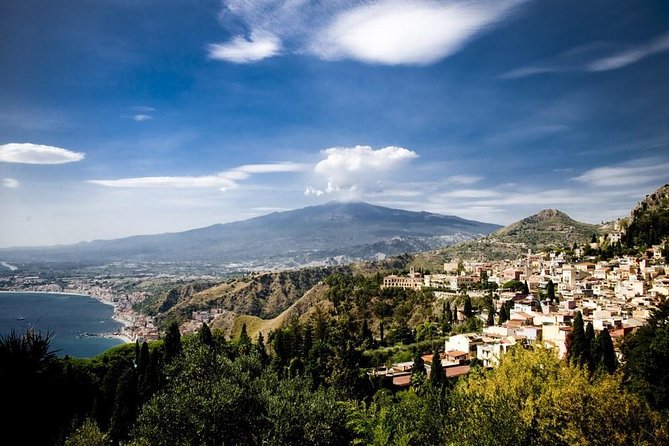
On never trusting Mount Etna… Everybody in Taormina wants you to visit Mount Etna. It is one of the highest volcanoes in Europe, and one of the most active in the world. Alfio, who works on reception at my hotel, suggested that Severin and I take a guided tour. But we both look at Etna and feel quietly relieved by the forty-five kilometres between us and its summit. Never trust an active volcano.
From Taormina, a plume of white smoke drifts from the summit, with no immediate sign of eruption. Yet, according to Alfio, Etna has entered a new eruptive phase that began at Christmas. The crater, he says, is emitting lava, ash, and the occasional flow. He tries to reassure us that Etna poses no real threat to Taormina. Apart from the light dusting of ash that sometimes falls when the wind turns, he tells us to follow the advice of the locals—the Sicilian way is not to worry.
He recalls that, as a small child, he once saw flames suddenly shoot up from the crater, only to subside just as quickly. The same thing happened again the following morning.
Alfio doubts we’ll manage to get up at dawn, but suggests taking us to a hill above the ruined amphitheatre to watch the sunrise. Despite getting to bed at two in the morning, and waking with the lingering effects of strong wine, we let ourselves be dragged through the narrow streets.
The sun rose from the southern edge of Italy and caught the white dome of Etna, tinting it a soft, rose-pink. The colour spread quickly down the snow, deepening until the whole summit glowed like a ruby instead of pale white. Night’s shadows slipped off the slopes, giving way to a rich purple that sank into the valleys and over the orange groves, darkening as it went—until the morning light washed across everything, and the mountains returned to their steady, familiar greens and browns.
That was as near to Mount Etna as I cared to be.
On a poem about Taormina… I found a poem about Taormina on All Poetry which was written by someone referred to only as ecekaradag13, and who appears to have a fondness for Italy.
Taormina Above the Ionian Sea, this teatro of pretense where German tourists photograph Greek ruins through the lens of their prosperity, never seeing the Sicilian boys who sweep their marble steps for coins that disappear into foreign pockets. The ancient theater still echoes with tragedies more honest than the comedy performed daily by boutique owners selling “authentic” Sicily to cruise ship pilgrims seeking enlightenment at duty-free prices. Etna smolders in the distance, that honest mountain which at least admits its capacity for destruction, unlike the hoteliers who smile in four languages while their housekeepers scrub other people’s dreams from Egyptian cotton sheets. In the shadow of San Domenico, where Wilde once walked his particular exile, the local boys still gather at sunset, their beauty a currency more reliable than the lira, their bodies maps of an economy the guidebooks never mention. The bougainvillea blooms in violent purple protest against the limestone walls, while below, the working class of Giardini-Naxos send their children up the mountain to serve aperitivos to those who mistake privilege for culture, consumption for communion with the divine. This is paradise built on the backs of the invisible, where even the gods have learned to speak the international language of tourist euros.
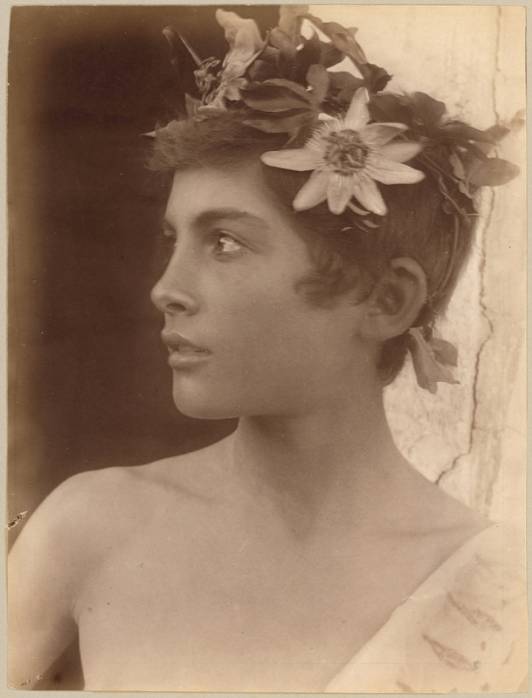
Giacomo crowned with passion-flowers. c.1890-1900. Wilhelm von Gloeden
Art, Innocence, and the Burden of Looking Back
David was in a quandary; the problem was of his own making. It was a friend of Joshua who wanted a name — a name that would read ‘curated by’ and command attention. Of course, David had agreed, but now he had his regrets.
An email from Pamela Hutchinson had been the source of it all. This exhibition is inappropriate and offensive. When David failed to respond, she went to the media, who were only too eager to champion her cause.
“Fucking do-gooder,” he had moaned to Joshua.
But it transpired that she knew far more than he had anticipated.
“The boys he used were underage and exploited by an unscrupulous man.” Those were the words a journalist from The Standard had used over the phone.
“How does anyone know that?”
The exhibition at the McDonald Gallery on Wellington Street was to include sixty photographs taken by the German, Wilhelm von Gloeden. The concept mirrored a similar exhibition mounted by the photographer in the 1890s.
Back then, there had been no objection to von Gloeden’s work.
“The Victorians were either more accepting or considerably more naïve,” David reflected. “His work has been displayed all over the world, and I doubt they faced the kind of problems I’m dealing with now.”
David wasn’t selecting the photographs — that responsibility lay with Nathaniel Wilson, the American who had approached him — but he had agreed to write a critical essay for the catalogue. Yet as the backlash grew, it was David whom people sought out. Mail Online had already published a particularly damning article, one that threatened his reputation as a credible writer.
Joshua had researched von Gloeden and discovered that his notoriety only emerged in the latter part of the last century. Before then, his work had received glowing reviews from newspapers around the world.
“Count von Gloeden is very clever in the way he introduces nude figures of Sicilian boys into his landscapes. It is something quite out of the ordinary, and for those who appreciate artistic work, the figure studies — with their almost classical subjects — will be found of especial interest.”
He read this passage out aloud to David, who noted that it came from a newspaper published in 1909.
“I suppose it’s my fault,” Joshua reasoned. “I must admit, I didn’t realise the subject matter might be considered objectionable now.”
The story of Count Wilhelm von Gloeden had always fascinated David. He had first encountered his work in an old book — The Spell of the Southern Shores; or, From Sea to Sea in Italy — written by Caroline Atwater Mason in 1915. It had been illustrated with landscape images taken by von Gloeden.
Von Gloeden had been born into a well-heeled Prussian family in 1856 and later travelled to Naples, where his cousin, Wilhelm von Plüschow, a photographer who also specialised in pictures of young nude men, encouraged him to take up photography. In his early twenties, suffering from tuberculosis, von Gloeden moved on to Taormina, then a remote village, only accessible by donkey, in Sicily.
He was one of two men credited with turning Taormina into a tourist destination.
The first was Otto Geleng, a Prussian painter who, having fallen ill in Rome, travelled to Taormina in 1863 to convalesce. When three Parisian critics came to visit, the only local inn — the Bellevue — proved inadequate, and Geleng transformed the house in which he was staying into a hotel. It became the Hotel Timeo, still thriving today. When the critics returned to France, the articles they wrote drew the first wave of tourists from Prussia and France, soon followed by visitors from Holland, England, America, Russia, and Poland.
The next was Von Gloeden, a member of the German nobility, who was wealthy, extravagant, sociable — and more than a little eccentric. He kept a large collection of birds — ravens, parrots, nightingales, canaries — and delighted in teaching them to talk and whistle military marches.
He began taking photographs as a hobby, but when his stepfather was accused of treason by Kaiser Wilhelm II and stripped of his possessions, the flow of money to Taormina dried up. Von Gloeden was forced to rely increasingly on photography for his income.
He installed a studio and laboratory in his villa and printed images of local landscapes and architecture as postcards and souvenirs.
The baron also set about persuading shy, nubile young boys to pose in the manner of Greek statues.
“Many of the pictures have a fascinating charm that recalls the odes of Horace and other classical poets of these sunlit lands. All his models seem to the manner born, their graceful lines and quiet, expressive faces harmonising so perfectly with surroundings of luxuriant foliage, abundant flowers, and sunlit glades.”
That, along with their easy smiles, was about all they wore.
David rang Nathaniel, who seemed to be keeping a low profile in New York.
“The problem,” David said, “is that people now see the photographs as child pornography.”
“They’re of their time,” Nathaniel replied. “They belong to a particular moment in photography — when people were still working out how to handle flesh in strong light and shadow. And you must admit, for such an early stage, it’s handled with real skill.”
“What are you getting at?”
“I mean,” Nathaniel went on, “you’re looking at sun-darkened skin under a harsh, blazing light — not the pale tones you’d get in England’s softer sunshine.”
David was none the wiser. It sounded as though Nathaniel was reading from notes laid out in front of him.
“And besides,” Nathaniel continued, “this was when photography was beginning to supplant fine art. Visitors wanted clarity — every detail sharp, everything evenly lit. That was what they valued.”
If David had been hoping for reassurance from Nathaniel, he wasn’t finding it.
“But the nude photographs appear to be of underage boys,” David suggested.
“They’re not underage boys,” Nathaniel replied. “They’re dark-skinned, classically proportioned lads — fine-limbed peasant boys. I’ll grant you, the work does come under scrutiny from time to time, but we are talking about art.”
“If that’s the case,” David said, “then I’ll forward all media enquiries to you.”
He ended the call and turned to find Joshua hovering with fresh information.
“I came across something about a von Gloeden exhibition in Sydney — in the nineties, I think. Detectives were sent in after a complaint, quite high-level, claiming the photographs amounted to child pornography. But in the end, they decided the images were harmless.”
“Exactly,” David said, warming to the argument, finding himself cast as an unlikely devil’s advocate. “Why do people take offence at something so trivial? The models themselves hardly seem troubled by any sense of impropriety.”
“But…” Joshua hesitated, choosing his words carefully, “there’s no getting around the fact that von Gloeden used these photographs of nude boys not just as art, but as a kind of advertisement — for the sort of clientele Taormina began to attract.”
“That’s a bit harsh,” David replied, though he was aware that von Gloeden had been openly homosexual and known for his late-night revelries, both at his villa and in the surrounding meadows. It spoke to von Gloeden’s charm — and his influence — that the people of Taormina tolerated his unconventional behaviour, even when it involved their own sons. The town, after all, had prospered, riding a wave of economic growth driven by the very visitors he helped to draw there.
Joshua continued.
“I don’t think we can deny that von Gloeden was a gentleman who liked young boys and took a great many photographs of them — mostly nude.”
That night, David resolved to look more closely into von Gloeden’s life and work. What he found would help him reach a decision: whether to withdraw from the exhibition or stay and weather the criticism.
He trawled through old newspapers and discovered that attitudes had shifted in the latter part of the twentieth century, and that von Gloeden’s reputation had suffered accordingly. The tone had hardened. One writer dismissed him as “that poor old homosexual, the Baron von Gloeden, who hid lust behind an academic glass.” Another claimed the photographs seemed “designed for a market of privileged oglers,” while a third described him as “an artful dodger whose work slipped past the censors.” Even the more measured critiques carried an edge, suggesting his images gratified “three desires at once: art, classical tranquillity, and the sanctioned glimpse of desirable bodies.” One publication went further still, branding von Gloeden a charlatan.
Von Gloeden’s work seemed almost tame by today’s standards, yet he could not ignore the fact that his steady production of homoerotic images had proved immensely profitable, earning him admiration across Europe.
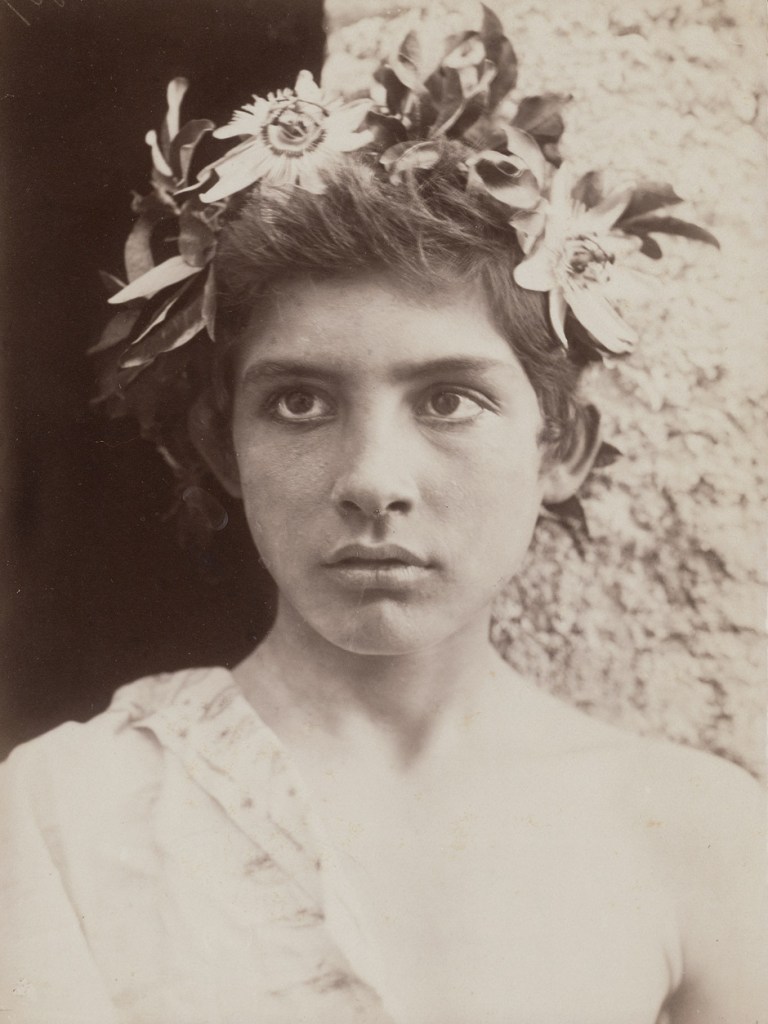
Most of the photographs, he noted, were sepia-toned, printed on gold-hued salted paper. The boys posed with a certain taste and deliberation: a dark-haired youth stretching eagerly sideways and upwards to peer through a window; a group of boys reclining along the rough parapet of a height overlooking a lake ringed by mountains. Both compositions made full use of their romantic natural settings. The wider body of work followed similar themes, many images featuring boys whose graceful bodies were adorned with wreaths of laurel and flowers, set against pale masonry or slender columns. In some, distant bays appeared through arching boughs heavy with white blossom.
One journal compared von Gloeden’s photographs to the paintings of Lawrence Alma-Tadema.
But, as he delved deeper, David discovered a great many photographs of completely naked boys that left nothing to the imagination.
He also came across a reference to Pancrazio Buciunì, who had died in 1963, a year before David was born. At fourteen, he had entered von Gloeden’s service and later became one of his most frequent models — known as Il Moro — and, likely, his lover. Von Gloeden had taken more than 7,000 exposures and, upon his death in 1931, left them all to Buciunì.
In 1936, Buciunì was prosecuted by the Fascists for possession of “pornographic material,” and many of the Baron’s plates were destroyed under court order. Yet he had the foresight to conceal around 1,500 of them beneath the stones of his floor. While von Gloeden’s photographs had already travelled widely across the world, it was largely thanks to Buciunì’s intervention that many of the surviving images — including those now destined for exhibition — had endured at all.
But David’s thoughts kept circling back to the present.
Pamela Hutchinson, who had first raised concerns, spoke for a wider audience — those whose views were shaped by a more modern moral framework.
The ages of the boys had never been definitively established, and David discovered that many may have perished in the 1908 Messina earthquake, though Taormina itself seemed to have escaped the worst of it. In truth, the extent to which minors were depicted erotically might never be fully known.
There was also the question of power: von Gloeden, a wealthy aristocrat, and the impoverished peasant boys who lived at his mercy. In Sicily, young boys commonly went nude at the beach, and across much of the Mediterranean, homosexuality was often regarded as a passing phase in adolescence.
For struggling families, payment in exchange for their sons posing for von Gloeden would have been difficult to refuse. Yet it was equally hard to ignore the likelihood that he exploited these boys, his images serving, in part, the interests of sexual tourism.
David could not deny that, throughout the twentieth century, von Gloeden’s work had frequently been labelled obscene. What unsettled him was the realisation that earlier generations had not seen it that way at all — to them, it had been art: a new form, even, one that threatened to unsettle the dominance of traditional fine art.
Joshua interrupted.
“Have you made a decision yet?”
David toyed with a ruler, buying himself a moment, as though the answer required more thought than it did.
“I have,” he said at last. “For all the criticism, the exhibition matters. I need to write something that acknowledges everything we’ve uncovered — the admirable and the troubling — and accept that some will find it distasteful. There’s a temptation to sanitise the past, to smooth it into something more palatable, but ignoring it doesn’t make it disappear. It happened. The least we can do is face it honestly, from all sides.” He paused, then added, with a faint shrug, “Besides, as they say, even bad publicity has its uses.”
Giacomo garlanded with passion-flowers. c.1890-1900. Wilhelm von Gloeden
“I give my white-skinned boy a pearl Fair as his body and as strange As still pools veiled in mists that change Their mysteries as they wreathe and curl: — So that his visions ever be Wondrous and subtle as the sea, I give my white-skinned boy a pearl.”
This verse comes from The Seven Gifts by Edmund John, published in the May 1916 edition of The English Review. It was introduced with the following note: “Suggested by the fragment of a letter from an Athenian father to his son, in the time of Pericles, now in the possession of Sydney Oswald, Esqre.”
The note was almost certainly fiction—an artful screen to disguise the real impulse behind the poem. Edmund John liked writing about boys.
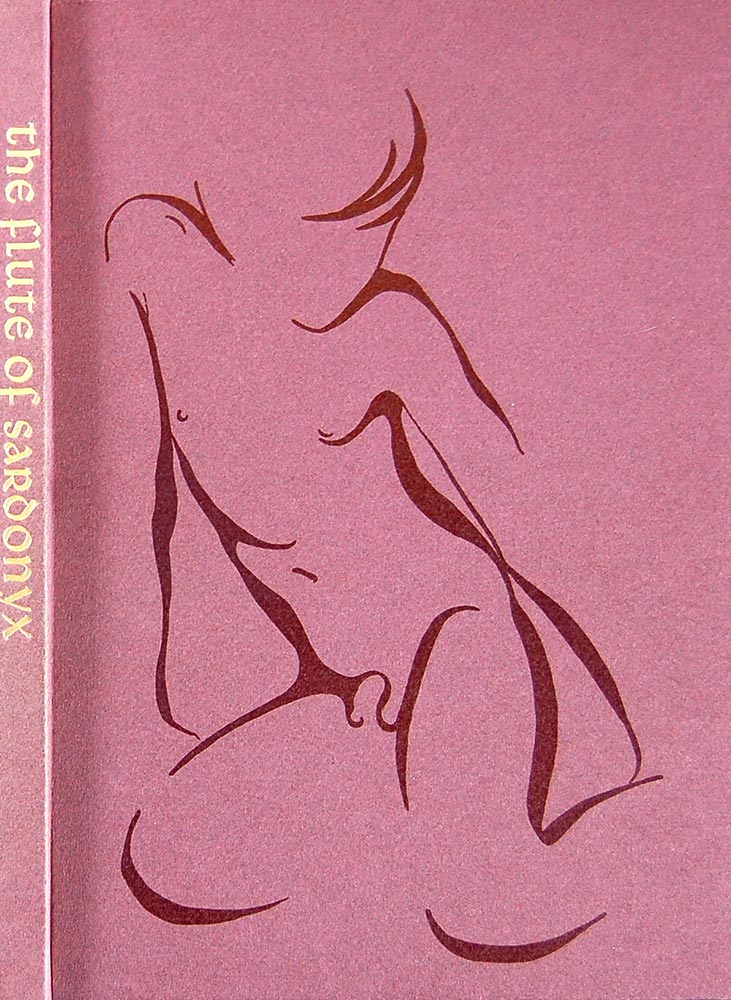
One of Britain’s most obscure poets, Edmund John (1883–1917) was never afforded the opportunity to establish a reputation. His premature death at thirty-three ensured that his name would slip quietly into obscurity. Only three volumes of poetry were published: The Flute of Sardonyx (1913), The Wind in the Temple (1915), and the posthumous Symphonie Symbolique (1919). Today, he is largely forgotten, his small but striking body of work almost entirely overlooked.
John was born in Woolwich on 27 November 1883 to a Welsh father and a Scottish mother. He studied science—particularly biology and chemistry—before turning to philosophy. With his brother, he ran a boys’ school in Crouch End, supplementing his income by coaching undergraduates.
Travel appears to have played an important role in his development as a poet. The introduction to Symphonie Symbolique suggests that Cuba left a lasting impression:
“Where the glowing colours of the South, the luxuriance of the tropics, provided his palette with a richness that it did not possess before, and gave to his verse an almost exotic warmth and splendour.”
The Flute of Sardonyx (1913). Reprinted in 1991 (The Old Stile Press) with pencil drawing by Nicholas Wilde
His first book of poetry, The Flute of Sardonyx, gained immediate notoriety upon publication. Critics were, for the most part, receptive—perhaps because many failed to grasp its implications. One who did not was James Douglas, a prominent literary critic, who launched a fierce attack on both Edmund John and Stephen Williams, author of the book’s introduction.
“Williams in the introduction of The Flute of Sardonyx seeks to justify or excuse these poems by citing Milton’s definition of poetry, and he implies that Milton meant by the word ‘sensuous’ not merely the normal, healthy, and wholesome senses of the normal, healthy, and wholesome human being, but also the debased, depraved and degraded sensations of a perverted and abnormal erotomania. I have not the slightest doubt that in a court of law an English jury and an English judge would not hesitate to condemn Mr John as being guilty of a gross offence against elementary propriety. I demand without delay the volume should be withdrawn in deference to what I believe to the inevitable and inexorable verdict of public opinion.”
One poem in particular, Salome, provoked Douglas’s outrage.
“These stanzas, I venture to affirm, are of a vileness hitherto unparalleled in English poetry. Nothing approximating to or of approaching depravity has, as far as I am aware, ever been tolerated in English literature.”
Others were scarcely more forgiving. A. E. Manning Foster, writing in The Bookmarker, observed:
“Salome is an Aubrey Beardsley picture in words, and yet it is not entirely pleasing. Mr John brings into his poem what Oscar Wilde in his play on Salome and Flaubert in his short story never did—an unhealthy, perverted strain.”
Herbert Jenkins, John’s publisher, abruptly withdrew The Flute of the Sardonyx, later reissuing it in a revised edition that was, as one commentator noted, “meeker than the Shakespeare we use at school.”
One of the few surviving biographical sketches of Edmund John appears in George Norman Douglas’s memoir Looking Back: An Autobiographical Excursion (1933).
“We met through his sending verses to The English Review after the publication of The Flute of Sardonyx, and it often struck me how greatly his person resembled his writings—sensuous and ornate, elaborate in manner, a little over-dressed, too many rings and tiepins, too much thought expended upon the colour of socks. He would have grown out of these incongruities had he lived. Meanwhile he was young and handsome.
“He could drink like a fish and remain perfectly sober. In those days I bought my whisky in kegs, and it was alarming to see how he could put it away. Good company! At such moments he cast off that veil of precocity, though a certain refinement always clung to him; it was part of his nature.”
John’s second volume, The Wind in the Temple, published in 1915, was widely praised.
“The superb loveliness of these stanzas are beyond praise,” wrote the Westminster Gazette. “Seldom has the enhancing beauty of Greek thought so captivated the soul of a poet; seldom has this enchantment been rendered so felicitously in modern verse.” The Evening Standard noted: “Although owing much to Arthur Symons, these poems have a magic all their own, for Mr John knows the value of the leash, the most difficult of all lessons to be learnt.”
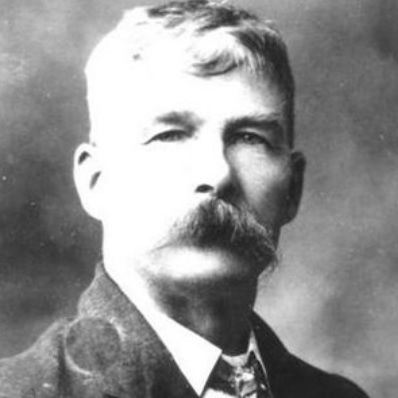
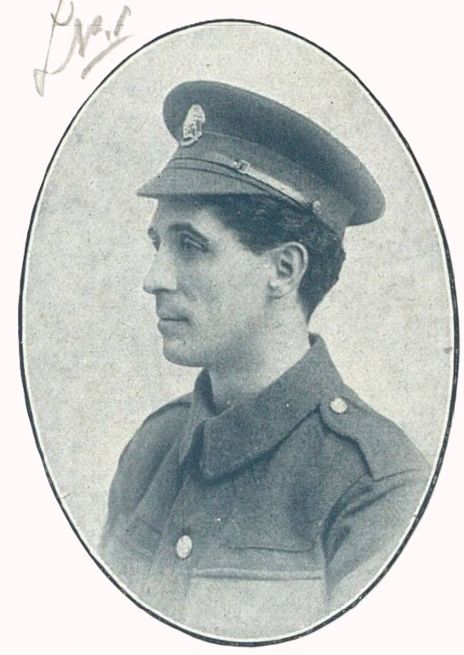
Edmund John in military uniform
Around this time, John enlisted in the 28th (London) Battalion, the Artist’s Rifles, to fight in the First World War. Founded in 1859 amid fears of a French invasion, the regiment attracted volunteers from public schools, universities, and the creative professions—painters, musicians, actors, architects.
John’s death in 1917 might easily be assumed to have been a casualty of war. Douglas, however, suggests otherwise.
“In his correspondence he told me that he had been invalided out of the army (in 1916) on account of his heart. He had also married for money, as he frankly confessed. His tastes were luxurious; coaching, and an occasional volume of verse would never make him feel at ease. It looked as if all were going well, yet I did not like the nervous tones of his letters….”
Seeking to recover his health, John travelled to Italy and settled in Taormina.
“It is a site of great distances—its soft colouring—its streets hushed at noonday as by some weird enchantment—its leaning walls in flower—its secluded gardens—its terraces—its lemon and almond groves; its crystal air, crystal and flare at noon, opal and pearl at either edge of the day; its castled crests and crumbling ruins.”
An obituary followed:
“On the 28th February (1917), at Taormina, Sicily, Edmund John, of heart failure, beloved husband of Kate Dalliba John, of Florence, and dearly loved eldest son of Thomas and Margaret John of 20 Cranley Gardens, London, aged thirty-three.”
Douglas corrected the record bluntly:
“I replied to John’s letter on the 19th of February 1917. On the 28th of the same month he killed himself. A miserable ending of which he seemed to have had a presentiment.”
From this point onward, certainty dissolves. The dead do not speak, and what remains is conjecture.
Certainly, John suffered from a debilitating heart condition and bouts of depression. But other forces may have contributed.
“Ah God, it was the Hope gave to me, Within the womb, of things unknown and fair, The Bud that blossomed into this Despair. Art Thou content, O God, with thus Thy work? Art Thou content that Thou hast planned so well? That Thy cold hands have thrust me into Hell?”
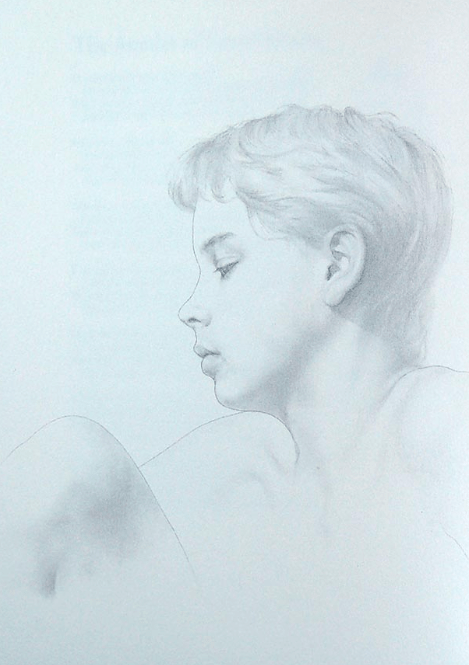
The Flute of Sardonyx. Pencil drawing by Nicholas Wilde (1991)
John’s poetry is suffused with Uranian themes—a term coined in the nineteenth century by Karl Heinrich Ulrichs, before the invention of the word homosexual.
“His eyes are brothers to the sun and sky, His body’s fragrance haunts the murmuring wood, And all the flowers are singing where he stood, And all the leaves are chanting their reply.”
In The Wind in the Temple, love is repeatedly figured as adolescent beauty.
“His body is like milk edged with rose-colour rare, With vine and lure of hemlock in his red-gold hair, Night-kissed, that burns and gleams; His grave sweet scarlet lips are parted voicelessly, His eyes like stars reflected in a violet sea Of dawn and dreams.”
And elsewhere:
“Harder, press harder with your scarlet mouth; Lie close, limbs woven of the passionate South; Twine nearer, subtle satin limbs of June, Burn your gold scented body into mine, Cling to my lips with yours of Graecian wine, Cling closer till the blood come and life swoon…”
Yes, Edmund John was a Uranian poet, and he harboured pederastic desires. Men and Boys (1924) reproduced part of a letter he wrote to a “young friend”:
“I have received your adorable, illustrated letter this morning and loved it so much I immediately made an altar before it, lit by amber candles in copper candlesticks, burnt incense before it and kissed its extreme beautifulness.”
Did his homosexuality weigh heavily upon him?
That John died in Taormina is suggestive. Long regarded as a “Queer Eden” for artists and intellectuals, the town was famed for its beauty, Greek mystique, and relative tolerance—an atmosphere reinforced by Wilhelm von Gloeden’s homoerotic photographs of local youths. Oscar Wilde and André Gide had passed through; later visitors would include Truman Capote, Tennessee Williams, Gore Vidal, Jean Cocteau, Thomas Mann, Somerset Maugham, and Roger Peyrefitte.
There is also the unresolved mystery of John’s marriage to Kate Dalliba, reportedly solemnised in Florence.
“Kate Dalliba, of St. John’s Wood. Famous for her Sunday night salon, referred to as The House of Music. Wealthy musicians in evening dress rub shoulders with poor and budding young geniuses in wrinkled light clothes and soiled linen. All here is democracy, art, Bohemianism.”
Born into a wealthy family in Cleveland, Ohio, Dalliba used her fortune to support artists such as Ezra Pound, Ida Rubinstein, Olga Rudge, and Ildebrando Pizzetti. She lived in Florence and maintained her London house as a free lodging and performance space for travelling musicians and artists.
It is entirely possible that John, described by George Norman Douglas as being poor, was drawn to her wealth. He had openly admitted that he married her for money. The rich older woman and the handsome young poet might have passed, outwardly, as a conventional May–December match.
Whether Dalliba later recognised the truth of the arrangement—and whether this recognition had consequences for John—remains unknown. She herself lost most of her fortune in the Wall Street Crash of 1929.
What remains is a handful of poems, a scandal, a life cut short, and the faint outline of a gifted, troubled poet whose voice—sensuous, excessive, and dangerous—proved too much for his time.
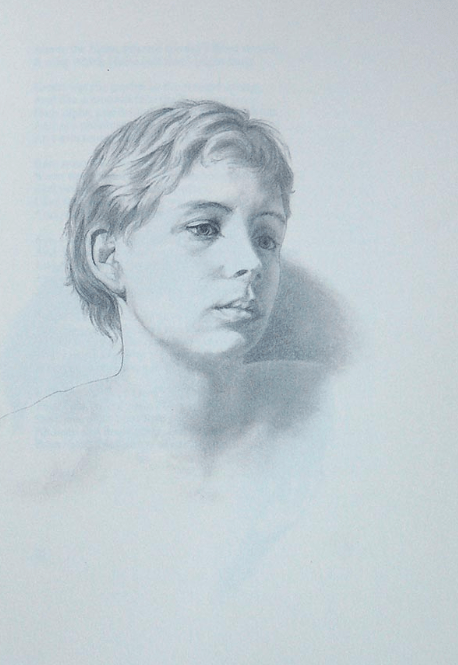
The Flute of Sardonyx. Pencil drawing by Nicholas Wilde (1991)