Art, Innocence, and the Burden of Looking Back
David was in a quandary; the problem was of his own making. It was a friend of Joshua who wanted a name — a name that would read ‘curated by’ and command attention. Of course, David had agreed, but now he had his regrets.
An email from Pamela Hutchinson had been the source of it all. This exhibition is inappropriate and offensive. When David failed to respond, she went to the media, who were only too eager to champion her cause.
“Fucking do-gooder,” he had moaned to Joshua.
But it transpired that she knew far more than he had anticipated.
“The boys he used were underage and exploited by an unscrupulous man.” Those were the words a journalist from The Standard had used over the phone.
“How does anyone know that?”
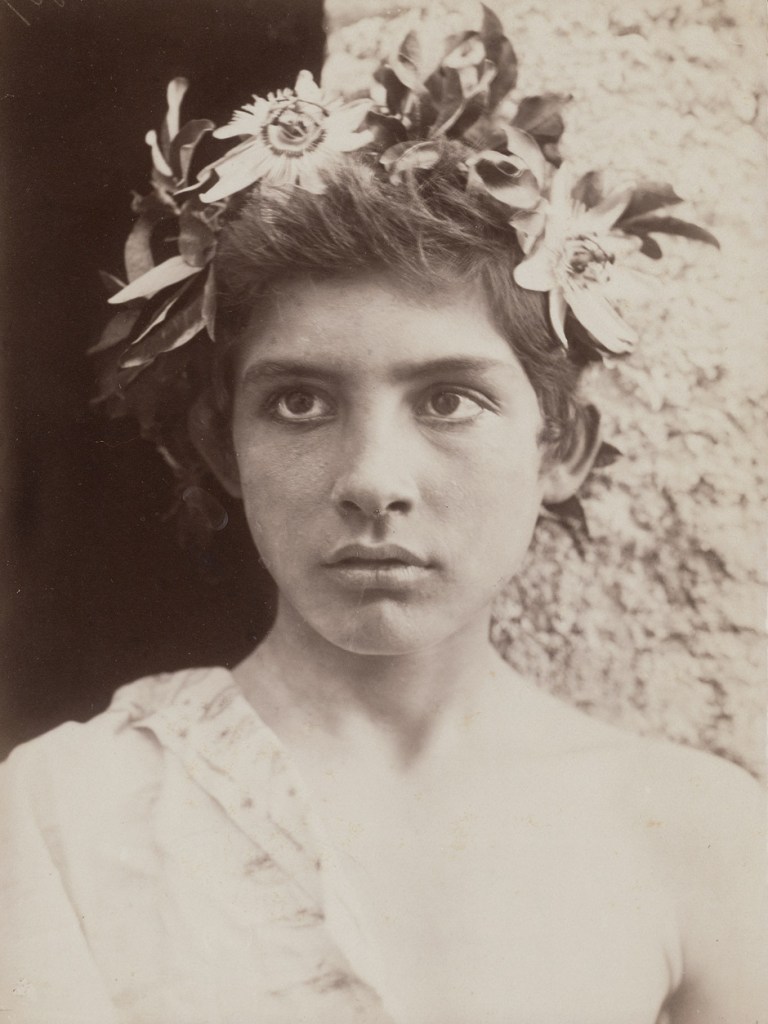
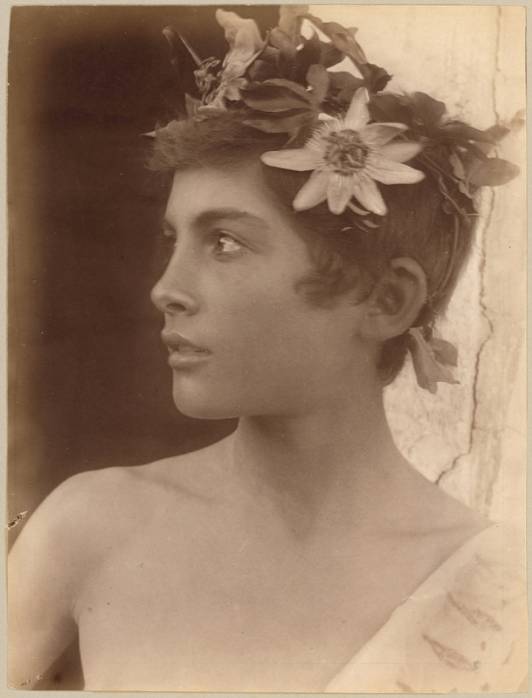
The exhibition at the McDonald Gallery on Wellington Street was to include sixty photographs taken by the German, Wilhelm von Gloeden. The concept mirrored a similar exhibition mounted by the photographer in the 1890s.
Back then, there had been no objection to von Gloeden’s work.
“The Victorians were either more accepting or considerably more naïve,” David reflected. “His work has been displayed all over the world, and I doubt they faced the kind of problems I’m dealing with now.”
David wasn’t selecting the photographs — that responsibility lay with Nathaniel Wilson, the American who had approached him — but he had agreed to write a critical essay for the catalogue. Yet as the backlash grew, it was David whom people sought out. Mail Online had already published a particularly damning article, one that threatened his reputation as a credible writer.
Joshua had researched von Gloeden and discovered that his notoriety only emerged in the latter part of the last century. Before then, his work had received glowing reviews from newspapers around the world.
“Count von Gloeden is very clever in the way he introduces nude figures of Sicilian boys into his landscapes. It is something quite out of the ordinary, and for those who appreciate artistic work, the figure studies — with their almost classical subjects — will be found of especial interest.”
He read this passage out aloud to David, who noted that it came from a newspaper published in 1909.
“I suppose it’s my fault,” Joshua reasoned. “I must admit, I didn’t realise the subject matter might be considered objectionable now.”
The story of Count Wilhelm von Gloeden had always fascinated David. He had first encountered his work in an old book — The Spell of the Southern Shores; or, From Sea to Sea in Italy — written by Caroline Atwater Mason in 1915. It had been illustrated with landscape images taken by von Gloeden.
Von Gloeden had been born into a well-heeled Prussian family in 1856 and later travelled to Naples, where his cousin, Wilhelm von Plüschow, a photographer who also specialised in pictures of young nude men, encouraged him to take up photography. In his early twenties, suffering from tuberculosis, von Gloeden moved on to Taormina, then a remote village, only accessible by donkey, in Sicily.
He was one of two men credited with turning Taormina into a tourist destination.
The first was Otto Geleng, a Prussian painter who, having fallen ill in Rome, travelled to Taormina in 1863 to convalesce. When three Parisian critics came to visit, the only local inn — the Bellevue — proved inadequate, and Geleng transformed the house in which he was staying into a hotel. It became the Hotel Timeo, still thriving today. When the critics returned to France, the articles they wrote drew the first wave of tourists from Prussia and France, soon followed by visitors from Holland, England, America, Russia, and Poland.
The next was Von Gloeden, a member of the German nobility, who was wealthy, extravagant, sociable — and more than a little eccentric. He kept a large collection of birds — ravens, parrots, nightingales, canaries — and delighted in teaching them to talk and whistle military marches.
He began taking photographs as a hobby, but when his stepfather was accused of treason by Kaiser Wilhelm II and stripped of his possessions, the flow of money to Taormina dried up. Von Gloeden was forced to rely increasingly on photography for his income.
He installed a studio and laboratory in his villa and printed images of local landscapes and architecture as postcards and souvenirs.
The baron also set about persuading shy, nubile young boys to pose in the manner of Greek statues.
“Many of the pictures have a fascinating charm that recalls the odes of Horace and other classical poets of these sunlit lands. All his models seem to the manner born, their graceful lines and quiet, expressive faces harmonising so perfectly with surroundings of luxuriant foliage, abundant flowers, and sunlit glades.”
That, along with their easy smiles, was about all they wore.
David rang Nathaniel, who seemed to be keeping a low profile in New York.
“The problem,” David said, “is that people now see the photographs as child pornography.”
“They’re of their time,” Nathaniel replied. “They belong to a particular moment in photography — when people were still working out how to handle flesh in strong light and shadow. And you must admit, for such an early stage, it’s handled with real skill.”
“What are you getting at?”
“I mean,” Nathaniel went on, “you’re looking at sun-darkened skin under a harsh, blazing light — not the pale tones you’d get in England’s softer sunshine.”
David was none the wiser. It sounded as though Nathaniel was reading from notes laid out in front of him.
“And besides,” Nathaniel continued, “this was when photography was beginning to supplant fine art. Visitors wanted clarity — every detail sharp, everything evenly lit. That was what they valued.”
If David had been hoping for reassurance from Nathaniel, he wasn’t finding it.
“But the nude photographs appear to be of underage boys,” David suggested.
“They’re not underage boys,” Nathaniel replied. “They’re dark-skinned, classically proportioned lads — fine-limbed peasant boys. I’ll grant you, the work does come under scrutiny from time to time, but we are talking about art.”
“If that’s the case,” David said, “then I’ll forward all media enquiries to you.”
He ended the call and turned to find Joshua hovering with fresh information.
“I came across something about a von Gloeden exhibition in Sydney — in the nineties, I think. Detectives were sent in after a complaint, quite high-level, claiming the photographs amounted to child pornography. But in the end, they decided the images were harmless.”
“Exactly,” David said, warming to the argument, finding himself cast as an unlikely devil’s advocate. “Why do people take offence at something so trivial? The models themselves hardly seem troubled by any sense of impropriety.”
“But…” Joshua hesitated, choosing his words carefully, “there’s no getting around the fact that von Gloeden used these photographs of nude boys not just as art, but as a kind of advertisement — for the sort of clientele Taormina began to attract.”
“That’s a bit harsh,” David replied, though he was aware that von Gloeden had been openly homosexual and known for his late-night revelries, both at his villa and in the surrounding meadows. It spoke to von Gloeden’s charm — and his influence — that the people of Taormina tolerated his unconventional behaviour, even when it involved their own sons. The town, after all, had prospered, riding a wave of economic growth driven by the very visitors he helped to draw there.
Joshua continued.
“I don’t think we can deny that von Gloeden was a gentleman who liked young boys and took a great many photographs of them — mostly nude.”
That night, David resolved to look more closely into von Gloeden’s life and work. What he found would help him reach a decision: whether to withdraw from the exhibition or stay and weather the criticism.
He trawled through old newspapers and discovered that attitudes had shifted in the latter part of the twentieth century, and that von Gloeden’s reputation had suffered accordingly. The tone had hardened. One writer dismissed him as “that poor old homosexual, the Baron von Gloeden, who hid lust behind an academic glass.” Another claimed the photographs seemed “designed for a market of privileged oglers,” while a third described him as “an artful dodger whose work slipped past the censors.” Even the more measured critiques carried an edge, suggesting his images gratified “three desires at once: art, classical tranquillity, and the sanctioned glimpse of desirable bodies.” One publication went further still, branding von Gloeden a charlatan.
Von Gloeden’s work seemed almost tame by today’s standards, yet he could not ignore the fact that his steady production of homoerotic images had proved immensely profitable, earning him admiration across Europe.
Most of the photographs, he noted, were sepia-toned, printed on gold-hued salted paper. The boys posed with a certain taste and deliberation: a dark-haired youth stretching eagerly sideways and upwards to peer through a window; a group of boys reclining along the rough parapet of a height overlooking a lake ringed by mountains. Both compositions made full use of their romantic natural settings. The wider body of work followed similar themes, many images featuring boys whose graceful bodies were adorned with wreaths of laurel and flowers, set against pale masonry or slender columns. In some, distant bays appeared through arching boughs heavy with white blossom.
One journal compared von Gloeden’s photographs to the paintings of Lawrence Alma-Tadema.
But, as he delved deeper, David discovered a great many photographs of completely naked boys that left nothing to the imagination.
He also came across a reference to Pancrazio Buciunì, who had died in 1963, a year before David was born. At fourteen, he had entered von Gloeden’s service and later became one of his most frequent models — known as Il Moro — and, likely, his lover. Von Gloeden had taken more than 7,000 exposures and, upon his death in 1931, left them all to Buciunì.
In 1936, Buciunì was prosecuted by the Fascists for possession of “pornographic material,” and many of the Baron’s plates were destroyed under court order. Yet he had the foresight to conceal around 1,500 of them beneath the stones of his floor. While von Gloeden’s photographs had already travelled widely across the world, it was largely thanks to Buciunì’s intervention that many of the surviving images — including those now destined for exhibition — had endured at all.
But David’s thoughts kept circling back to the present.
Pamela Hutchinson, who had first raised concerns, spoke for a wider audience — those whose views were shaped by a more modern moral framework.
The ages of the boys had never been definitively established, and David discovered that many may have perished in the 1908 Messina earthquake, though Taormina itself seemed to have escaped the worst of it. In truth, the extent to which minors were depicted erotically might never be fully known.
There was also the question of power: von Gloeden, a wealthy aristocrat, and the impoverished peasant boys who lived at his mercy. In Sicily, young boys commonly went nude at the beach, and across much of the Mediterranean, homosexuality was often regarded as a passing phase in adolescence.
For struggling families, payment in exchange for their sons posing for von Gloeden would have been difficult to refuse. Yet it was equally hard to ignore the likelihood that he exploited these boys, his images serving, in part, the interests of sexual tourism.
David could not deny that, throughout the twentieth century, von Gloeden’s work had frequently been labelled obscene. What unsettled him was the realisation that earlier generations had not seen it that way at all — to them, it had been art: a new form, even, one that threatened to unsettle the dominance of traditional fine art.
Joshua interrupted.
“Have you made a decision yet?”
David toyed with a ruler, buying himself a moment, as though the answer required more thought than it did.
“I have,” he said at last. “For all the criticism, the exhibition matters. I need to write something that acknowledges everything we’ve uncovered — the admirable and the troubling — and accept that some will find it distasteful. There’s a temptation to sanitise the past, to smooth it into something more palatable, but ignoring it doesn’t make it disappear. It happened. The least we can do is face it honestly, from all sides.” He paused, then added, with a faint shrug, “Besides, as they say, even bad publicity has its uses.”