Author Archives: Delicto

 My Week, For What It Was Worth

On meeting an artist’s muse…
Alfio had spent far more time with us than his employer at the hotel would have appreciated. The young Sicilian thought nothing of closing reception for a few hours in order to show us the hidden corners of Taormina. For that, Severin and I were grateful, for it allowed us to avoid the endless groups of tourists who traipsed through the town from morning until night. Alfio led us down narrow alleys to viewpoints overlooking the coastline; to small cafés and restaurants frequented only by locals; and introduced us to people whom he thought we might find interesting. For Severin, who would be working here throughout the summer, this was invaluable, and more than once the thought crossed my mind that he might never leave at all. It also occurred to me that this generosity may not have been entirely selfless on Alfio’s part. He knew that I would soon be leaving Sicily, and that afterwards he would have Severin to himself.

One such person Alfio introduced us to was an elderly gentleman named Santo, who lived in a modest upstairs apartment on Via Bagnoli Croci. The visit stemmed from a conversation I had had with Alfio about Baron Wilhelm von Gloeden and the photographs he had taken of young Sicilian boys in the 1890s. My friend David is involved in a forthcoming exhibition of von Gloeden’s work in London, and had spoken to me about the controversy that already surrounded it.

Santo spoke no English, and Alfio conversed with him in the local dialect. He welcomed us warmly with a toothless smile. His apartment was small and crowded with the mementos of a lifetime. Sacred images covered the walls, save for a faded black-and-white photograph hanging beside the door. Looking more closely, I saw that it depicted a barely clothed young boy seated upon a rock. The old man noticed my interest and said something to Alfio, who translated for me. The photograph was of Santo himself at the age of sixteen, taken in the 1950s, and it might easily have been mistaken for a von Gloeden image had the photographer not already been long dead by then.

Santo opened the small window to let in some air and gestured for us to sit while he prepared hot lemon tea. Alfio explained that Santo had worked many jobs in Taormina over the years: fisherman, labourer, barber, before spending his later working life in a hotel much like his own. Now in his eighties, Santo told Alfio that the old photograph had been taken by the German photographer Konrad Helbig. Following in the legacy of von Gloeden, others had come to Taormina hoping to emulate his work.

Yet Santo remembered little about the man himself, beyond the fact that he had paid him a few lire, as he had done with several of Santo’s male friends. The money had been welcome, and Santo admitted that he might have earned more had he posed nude, as some of the others did. But it all seemed impossibly distant now, he told Alfio — another life belonging to another century.

On three teenage brothers…
The three German boys — aged twelve, thirteen, and fourteen — are paraded each day by their parents. They resemble one another in many ways: slender adolescent bodies, dark hair, the same boisterous, brotherly energy. Only the eldest wears spectacles; the younger two tease him mercilessly, blissfully unaware that they will soon follow him into short-sightedness themselves.

Their father indulges the rowdy behaviour with an almost inevitable pride — perhaps because he sees in them an echo of his own youth — and so the task of keeping them in line falls, as ever, to the mother. Each morning the boys greet us with exaggerated politeness, only to dissolve into giggles once they have passed. Severin says they call us the schwules paar — the gay couple — though more from a desire to provoke laughter in one another than from any malice.

“But,” Severin says, “I have no doubt at all that the eldest boy is most definitely gay.”

On saying goodbye to everyone…
I must move on. My time in Taormina has come to an end. I know it will remain one of those memories that returns in old age, vivid and untouched by time. The town had always possessed a certain allure in my imagination, though the reality proved different from what I had once envisioned. The days of Wilhelm von Gloeden making his way there along rough donkey tracks are long gone. Taormina is now an expensive resort town, crowded with visitors from every corner of the world. Yet, as with any place, I have always been drawn less to what the masses come to see than to what lies beyond their notice.

For that, I remain grateful to Alfio, who revealed a version of Taormina few tourists ever encounter. Before I left, the young Sicilian first shook my hand, then reconsidered and embraced me instead. It felt unexpectedly sincere.

I shall miss the boys who emerged from the shadows each evening to play football on the wasteland. Once, long ago, boys like them would have been exploited by those who paid them to pose for dubious photographs. Now the balance has reversed; they have become the opportunists themselves, charming wealthy tourists into buying cheap souvenirs at outrageous prices. Yet beneath the hustling they were still only boys, quick to abandon commerce the moment a plastic football appeared, racing about in clouds of dust and laughter.

And I shall miss Severin most of all — someone I had long ago consigned to the past. By chance our paths crossed again in a crowded airport, and we both ended up in Taormina. Once, we had regarded each other with suspicion, each secretly wondering whether Pietro had preferred the other. In time, we came to understand how foolish that jealousy had been.

Severin had remade himself into a wanderer, drifting wherever happiness seemed possible. I suspected that once I departed, he would move in with Alfio and perhaps even become his lover. Yet I could not shake the feeling that, sooner or later, he would return to hustling in the back streets again.

When the time came for me to leave, Severin thanked me for giving him a bed and kissed me on both cheeks. “I shall miss our pecks,” he said. “Always a peck for morning, noon, and night.” He made me promise that we would keep in touch and, for once, I found myself hoping that we would.

On the cute and willing…

Boy Italia

The Grudge Against Glory

Fate is inscrutable, chance is unreadable, and circumstance is unfathomable. No one knows what he may one day suffer. The private sorrows of Sir James Barrie illustrate the insecurity of mortal happiness. Life has bestowed on him fame without stint and wealth without measure. All over the world his plays are spouting money as a gusher spouts oil. Riches pursue him day and night. He cannot escape from the golden rivers. But fame and fortune do not exempt him from the furtive blows of fate. Of his four foster-sons, Michael Llewelyn Davies was the best beloved. On the eve of his twenty-first year he perishes like Milton’s Lycidas. The witless unreason of the tragedy shocks us. Is there a grudge against glory, a spite against fame, a vendetta against dazzling fortune? Is there immunity in obscurity?

– Sunday Express – 22 May 1921


Boys Burn Quiet: The Photographer Who Hid His Desire

Calabria, three young men in bathing trunks on the beach , April 2, 1954. Konrad Helbig.

The story is sad in its own way. Imagine spending a lifetime taking more than a hundred thousand photographs of beautiful places around the Mediterranean. Many are published in travel magazines such as Merian and Atlantis, or used to illustrate the travel guides of the 1950s and 1960s. Then old age arrives, you die, and the work is left behind and forgotten. Later, someone sorting through your estate — a friend, perhaps, or a distant relative — discovers something that was probably meant to remain secret.

When Konrad Helbig died in the German city of Mainz in 1986, a completely unknown collection of black-and-white photographs was found among his possessions. They were images of young Sicilian men, many of them nude, and they had never been published; more likely, nobody had even known they existed. Now, forty years later, Helbig is remembered less as a travel writer and photographer than for these newly uncovered erotic images.

I have tried, and failed, to discover more about Helbig.

Searching through archives, I found only a single contemporary mention of him: a 1961 review following the publication of Umbria: The Heart of Italy, with text by Harald Keller and photographs by Konrad Helbig. The reviews were mixed, sometimes scathing. One correspondent wrote: “Herr Helbig’s black-and-white photographs cover art, architecture, and landscape with wide-ranging sympathy. (I say nothing of his five colour plates, which are frankly disastrous.)”

Young male nude with outstretched arm, 1950–1959. Konrad Helbig.

His first published photographic collection was a volume on Sicily in 1956, followed by collaborations with Karl Heinz Hoenig in 1959 and, later, with photographer Toni Schneiders on Archipelago in 1962.

Yet one cannot help wondering whether Helbig’s true artistic interest lay elsewhere: in his studies of the male nude, composed in the style of Classical Greek and Roman sculpture. Had those photographs become known during his lifetime, his reputation would almost certainly have been destroyed.

Konrad Helbig was born in Leipzig in 1917. He fought in the Second World War, was captured by Soviet forces, and remained a prisoner of war until 1947. After his release, he studied art history and archaeology, concentrating particularly on the Mediterranean world. Of his private life, however, very little is known. I have met someone who had known him — indeed, someone who had posed for him — but he either could not remember, or would not reveal, anything beyond the sparse details already available.

And what of the photographs themselves? Helbig’s best-known posthumous collection is Homo Sum (Latin for “I Am Human”), published in 2003 and featuring what were described as “his boldest erotic works from the 1950s and 1960s.” Another volume, Ragazzi, was published in 2001. First editions of both books now sell for hundreds of pounds.

Young male nude lying in high grass, Sicily, ca. 1950–1959. Konrad Helbig.

 My Week, For What It Was Worth

On playing football with the Boys of Taormina
I have never been attracted to German boys. They can be among the most beautiful, but the language itself has always struck me as cold and harsh. Yet Severin, from Bremen, changed all that. He has been with me for a week now, sleeping beside me in the small hotel on Via Don Giovanni Bosco. Alfio, the receptionist, seemed rather taken with him and turned a blind eye when I asked whether Severin could stay until he got settled. His new job as a waiter has been delayed for another week, though the restaurant promised that his room would soon be ready.

I learned that Severin had a boyfriend, a Spaniard called Estaban, who had remained behind in Turin. He spent a great deal of time on the phone to him, usually trying to reassure him that, although he was sharing a bed with another guy, nothing had happened.

That was partly true. We had both once been Pietro’s “boys”, and there was a reluctance on either side to go where a dead man had already been. It was as though Pietro still maintained some hold over us; we might almost have been brothers, and anything sexual felt faintly incestuous. Yet every morning, when I woke, I would find Severin with his arm draped around me, cuddling, it seemed, with someone he trusted.

Severin is easy to be around: always a few steps behind me wherever I go, yet never overstaying his welcome. He has told me much about his homeland, where his father taught at the University of Bremen and his mother at the University of the Arts. Bremen, he said enthusiastically, was a working-class city that had built its fortune on its port and shipyards — a fact not lost on the Allies during the Second World War, when the city was heavily bombed.

After leaving school, Severin worked at Beck’s Brewery, but was dismissed after being caught having sex with a fellow worker on the bottling line. His abrupt departure prompted him to travel across Europe, eventually ending up in Turin, where he met Pietro and became, in effect, a kept man.

Pietro had obviously singled Severin out for his Nordic looks — a twenty-first century vision of the Aryan “master race”: blond hair, blue eyes, pale skin. There was also the fact that Severin was athletic, and a devoted supporter of Werder Bremen.

Severin discovered that I too liked football and had once played competitively when I was younger. That discovery prompted him to buy a cheap football and seek out a patch of wasteland where we could have a kickabout. Before long, local boys began drifting over to join in, and soon we found ourselves playing fierce, high-intensity matches, with slabs of concrete serving as goalposts.

It became an Italo-Anglo-German affair, proof that football can be loved by everyone, regardless of nationality. Alas, the Italian boys put Severin and me to shame; too many years of smoking, drinking, and inactivity had rendered us ineffective against the tireless boys of Taormina. But it made me feel like a young boy again – innocent and carefree.

The focus is the big phallus…
Alfio had a night off and promised to take us to Castelmola, a picturesque medieval hilltop village perched directly above Taormina. “It will be the perfect night for you guys,” he said with a wink, though it seemed more likely that he fancied his chances with Severin, who remained entirely oblivious to his advances.

Alfio ordered a taxi, and a journey that should have taken ten minutes was completed in half the time. The dusty Mercedes hurtled up the steep, narrow, winding road, revealing breathtaking glimpses of Mount Etna and the Ionian coast below.

We arrived in a small square, from which Alfio led us up a short flight of stone steps into Bar Turrisi. Judging by the greetings he received, he appeared to know everyone there.

Alfio explained that Castelmola had grown around the ruins of a tenth-century Norman castle, its streets narrow, ancient, and full of charm. Bar Turrisi, however, was something else entirely. Opened after the war and passed down through generations, it was said to have been founded by descendants of families who had migrated centuries earlier from Pompeii, bringing with them the city’s ribald fertility symbols. The restaurant, Alfio told us with evident delight, still celebrated that inheritance.

At first, the significance of this escaped both Severin and me, but we soon understood. Across all four storeys, there were penises everywhere one looked: wall paintings, well-endowed statues, phallic liquor bottles, shot glasses, lamps, mirrors, even the plumbing fixtures above the bathroom sinks. The food menu itself was shaped like a penis.

“I knew you would be impressed,” Alfio said, guiding us towards a table overlooking Taormina below. “The people here never wanted to be part of Taormina. They value their independence. But Castelmola was founded to watch over and protect the town.” Unfortunately, night was already beginning to fall, and the views slowly disappeared. The blue sea darkened into a black mass, though the lights of Taormina still sparkled beneath us.

“They filmed The White Lotus at the Four Seasons San Domenico Palace in Taormina,” Alfio told us. “The cast used to come here regularly. They started calling this place ‘the penis bar’.”

Alfio ordered a Sicilian pizza, its ingredients largely a mystery to me apart from the cheese, though it tasted wonderful. We washed it down with a local almond wine, supposedly an aphrodisiac, which Alfio clearly hoped might improve his chances with Severin. As for me, I seemed excluded from his ambitions, though he nevertheless ordered another bottle — this one in a distinctly phallic shape, decorated with traditional Sicilian artwork — and insisted that I drink a generous amount of it.

As my stupor deepened, I found myself wondering how one might write about an overdose of penises without making it sound tacky — which, strangely enough, it was not. “They are symbols of sexual potency and fertility,” Alfio explained smugly, once again for Severin’s benefit, “and also of the virility of Sicilian men.” Severin, meanwhile, remained blissfully unaware of the attention directed at him.

It was only when yet another bottle of almond wine appeared, and Alfio insisted that I finish most of it, that I finally grasped his strategy: get me drunk enough, and he might have Severin to himself. By then, however, it was too late for me to do much about it.

The next morning I woke with a punishing hangover, Severin’s arm once again draped around me. My head throbbed, and Severin seemed in no hurry to wake himself. Still, I managed a smile. Alfio’s attempt to seduce him had failed.

On hearing a story that amused me…but shouldn’t have
At a restaurant in Taormina, an old man told us the story of his brother, Salvatore, who, back in 1958, had been abandoned by the woman he was supposed to marry. The humiliation drove him into such despair that he swallowed an overdose of sleeping pills. He was taken to hospital in Syracuse, where, still determined to end his life, he hurled himself from a window — only to land on a balcony below. Bruised but alive, he was carried back upstairs. Three hours later, he climbed to the very same window and jumped again. This time he missed the balcony and died.

“Oh,” I laughed awkwardly, “third time lucky.”

The old man responded by banging his walking stick sharply against the table, which suggested that my attempt at humour had not been appreciated.

On not upsetting a Sicilian…
“The Cosa Nostra is still active in Sicily,” Alfio told us. “But these days it is discreet. Drugs, the pizzo, infiltrating businesses — that is where the money is.”

“What is the pizzo?” I asked.

“Protection money,” he replied. “Money extracted through intimidation or extortion. It comes from the Sicilian word pizzu — ‘beak’ in English. To let someone ‘fari vagnari u pizzu’ — ‘wet their beak’ — means to pay them off.”

The warning beneath Alfio’s explanation was perfectly clear: do not offend the Mafia. Fortunately, that seemed unlikely. I would soon be leaving Sicily — and leaving Alfio and Severin behind with it.

“But honour can be dangerous too,” Alfio continued. “Even an ordinary man in the street feels the need to defend his honour. So you must be careful not to insult him.”

Severin then recalled an unsettling story he had once read online, one that seemed to confirm Alfio’s point.

In 1993, a father, unable to bear the shame of having a homosexual son who worked as a prostitute, allegedly paid for him to be murdered. The son was shot in the stomach while soliciting clients in Messina. His father was later jailed for hiring an eighteen-year-old assassin to carry out the attack.

“There, you see?” Alfio said triumphantly. “That old man in the restaurant — the one whose brother needed three attempts to kill himself — was offended by your joke. But he only banged his walking stick on the table, when he could just as easily have paid someone to shoot you.”

And then he laughed.

On finding old illustrations…

On the cute and willing…

Michelange Bédard. Photo by Fernando Landin, 2026

The David Problem: Notes from a Life

The Slow Invisibility of David

There was a conversation David once had with his mother when he was about fourteen. He’d complained about Bank Holidays—that there were too many of them. As mothers do, she agreed. Whatever had prompted the outburst had long since slipped from memory. He was a schoolboy and should have welcomed the extra day off, but Bank Holidays irritated him. They still did.

In truth, they had little relevance to his life. A Monday would be no different from any other. What he preferred were the ordinary ones, when he could go about his business while everyone else worked. Not so the May Day Bank Holiday. If the weather held, the parks would be crowded, and the small café he visited each afternoon would be overrun with snotty-nosed kids.

That, at least, was still to come. For now, David was spending Sunday evening with Joshua and his friends at the King’s Arms, despairing of the whole scene. Bank Holidays drew out all the idiots who would otherwise be glued to whatever rubbish Netflix was serving. A day off work gave them licence to get drunk and be insufferable.

There were advantages, he had to admit. The students were out—released from lectures, granted a day to sleep off the previous night. David liked students. He liked young men who still had their lives ahead of them, who could do things they were too young to regret in the morning.

Joshua noticed his look of desperation.

“At what point does a chicken hawk become a pervert?”

“When he turns sixty-three,” David replied. Only the week before, he had celebrated his sixty-second birthday, and in his mind the label did not yet apply.

Still, he felt uneasy. The handsome boys no longer paid him any attention. They were absorbed in their girlfriends—or boyfriends—and David had become just another older man, regarded, if at all, with a kind of pity.

“Do you see it, Joshua? Do you see that I’m slowly becoming invisible?”

“I fail to see why you’d be interested in anyone else when you should be perfectly happy with me.”

David chose his words carefully. “That I can’t deny. But there is such a thing as window-shopping.”

Joshua turned back to his friends and drifted into a conversation about Madonna and Rosalía. David was tempted to tell them that Madonna belonged to him—that he had grown up with her music, that she was older than he was—but the argument would have been futile. Madonna had long since transcended age.

Once, David had appeared on a television programme with her, shortly after she released her first album—around 1983. He had been introduced as an exciting young writer. She had liked his spiky hair and remarked that he was handsome. For a fleeting moment, he had wondered if she might be coming on to him, though that would have led nowhere. If only, he found himself thinking now.

Joshua’s friends accepted David as his partner, but they had no idea who he really was. It had always been his rule: tell no one he was a successful author. He preferred to be taken for the stereotype—a ‘sugar daddy’ with too much time and nothing to do. Had he told them the story about Madonna, they would have smiled politely and dismissed it as the invention of a fanciful old man. And David, in turn, would have felt guilt at not having anticipated this phase of life—the gradual slowing, the dimming, the uneasy business of growing old.

But David wasn’t that old.

It was a conversation he returned to often with Joshua—usually at Joshua’s instigation, lamenting that he would turn forty in October. David could never quite accept the premise. If anyone had the right to complain, it was surely him. He was still good-looking, his hair thick and intact, though he had to admit he’d filled out around the waist.

The trouble was that David still thought like an eighteen-year-old, without quite acknowledging that age catches up with everyone. While his contemporaries were beginning to slow down, even contemplating retirement, he resisted the idea that anything essential should change simply because the years had passed.

There was also the matter of money.

The royalties from his novels had dwindled, and without a pension sufficient to sustain him, he found himself uneasy about the future. Joshua’s artwork, by contrast, was gaining attention; David suspected he was now earning more than he did. And yet it was still David who provided the house, who carried the financial weight of their life together. Would Joshua care for him when he grew old? An outsider might have answered yes without hesitation, but David was less certain. The age gap unsettled him. Once Joshua was secure, it seemed entirely possible he might choose someone younger, someone more in step with his own life.

Had David voiced these fears, he would have discovered that Joshua had no such intentions. He felt a genuine loyalty, even a debt, and was entirely content in the relationship. The thought of leaving had never crossed his mind. But the unease remained, quietly lodged in David, impervious to reason.

David, too, had grown bored with writing novels. It was becoming harder to find original ideas, and harder still to bring them to a satisfying close. Where once he might have produced two books a year, the pace had slowed; he was fortunate now if he managed one every couple of years. Research, he found, gave him more pleasure than the writing itself. He could spend weeks preparing—filling notebooks with observations and plans—only to discover, when the time came, that the inspiration to shape them had quietly deserted him.

At times he compared himself to Arthur Rimbaud, who abandoned poetry at twenty in favour of a life of action, travel, and trade—if selling coffee and firearms could be called that. Rimbaud had turned away from literature altogether, declaring a need to be “absolutely modern”: action instead of words. After his turbulent and violent affair with Paul Verlaine—an episode that ended with a gunshot wound and a prison sentence—he had likely grown weary of Parisian literary life and the weight of his own notoriety. David sensed a kinship there—though Joshua, at least, had not shot him in the hand—and conveniently overlooked the fact that Rimbaud had been forty-two years younger when he walked away.

It was not lost on him that Rimbaud’s true fame had come only after his death. During his brief career he had been known, certainly—an “enfant terrible” in certain Parisian circles—but his legend was constructed later, through publication and the romantic myth of his life. David found something both comforting and unsettling in that thought.

Whenever he considered Rimbaud, he also thought of Leonardo DiCaprio, who had played him so strikingly on screen. David’s own life had, at moments, been just as scandalous—perhaps more so—but he could not imagine anyone wanting to turn it into a film. And if they did, who, exactly, would be cast to preserve him in youth?

His publisher had offered another, more immediate concern. It had been framed as a warning: reputation alone would not be enough, nor would it guarantee a living. There were new forces at work now. AI was coming, the publisher had said, and for writers it would prove not just a novelty, but a threat.

After a life shaped by “what ifs,” he found himself waiting for the great comeback—if it ever came at all.

He became aware, with a faint jolt, that he had drifted out of Joshua’s conversation with his friends and no longer had any idea what they were talking about. He sat with his drink, half-listening, when a young couple approached, each carrying a glass.

“Do you mind if we sit here?”

David didn’t and shifted to make room. The boy caught his attention immediately—shortish, slim, almost theatrically handsome, with dark hair that fell into something wild and a small cross hanging from one ear. The girl was taller, darker, her face sharply drawn. She might have been strikingly glamorous, if not for the absence of make-up and the careless way she wore her hair. There was something unkempt about them both, a deliberate kind of disarray—grungy, even—which David found compelling.

He felt himself wavering between Joshua and his friends and these new arrivals, uncertain where to place his attention. Had he been honest, he might have admitted to a quiet jealousy—of their youth, their ease, the sense of life still gathering around them.

I’ll write a play, he thought suddenly. I’ll leave London, go somewhere warm, somewhere bright. The idea amused him even as it formed. There was something faintly ridiculous in it—but then, he had always had a weakness for the dramatic.

The young man nodded to David, then lapsed into silence. Neither of them seemed inclined to speak, and the quiet between them grew dense. Had it not been for David’s interest in the boy, he might have left—retreated to the safer promise of a comfortable bed and a good book.

The pub had filled quickly; the bar was now three deep with people waiting to be served. David was nearing the end of his drink and had no desire to join them. Again, the thought of an early night presented itself as the sensible option. But the couple intrigued him—especially the boy, and the curious fact that neither of them seemed to speak to the other. Joshua is right, he thought; I am turning into a pervert.

His days, lately, had been taken up with preparations for the Wilhelm von Gloeden exhibition, and with the uneasy awareness that the photographer was now widely regarded as reprehensible. He thought, too, of Baron Corvo, that notorious writer who had made little effort to disguise his vices. Would he be judged in the same way, after his death? The idea unsettled him, though he could not quite say why—he had done nothing, after all, that he considered wrong.

“Do you fancy my boyfriend, or something?”

David started; he hadn’t realised the girl was speaking to him. He looked at her, puzzled.

“You’ve been sitting there staring at him ever since we sat down.”

“I was thinking, that’s all.”

“Jess,” the boy said quietly, “don’t make a scene.”

Fucking kids, David thought—always on the brink of an argument. And yet, perversely, he liked the boy more for it.

“Well, stop staring at him,” she said.

The boy rose, lifting his empty glass. “I’m going to the bar. Same again, Jess?”

She nodded. David braced himself at the prospect of being left alone with her, but the boy had barely taken a few steps before turning back.

“Can I get you a drink, fella?”

The offer caught David off guard. “Yes, thank you,” he said after a moment. “A white rum and tonic, please.”

The boy disappeared into the crowd. For an instant, David felt a childish urge to turn to Jess and stick his tongue out at her—but he resisted it, not least because she seemed almost to tremble with irritation.

“Have you been together long?” he asked.

“Six months,” she replied sharply.

“You make a very nice couple.”

“We are.”

Within seconds, the boy was back, three drinks in hand.

“How did you manage that?” David asked.

“I don’t hang about,” he said with a grin. “Push to the front and shout the loudest.”

“Thank you,” David replied, taking the glass. “What’s your name?”

“Harrison.” He offered his hand as he sat down, and David shook it.

David became aware that Joshua had noticed. He was watching the three of them with a faint, unmistakable suspicion. David found that he rather liked it—a small reassurance that Joshua, too, could feel jealous when something threatened him. He chose to ignore the look, and before long Joshua was drawn back into conversation with his friends. There would be questions later; David would answer them with an air of innocent mystery.

“It’s busy,” Harrison said, by way of small talk, as though waiting for something more to take hold. Jess said nothing, merely sipped her drink. David nodded, the only one to acknowledge him.

Writers, he thought, are curious by nature. They ask questions. He knew it would irritate Jess further, but he had not come this far in life by holding back. A trace of his old arrogance returned.

“Tell me about yourself, Harrison.”

The moment the words were out, he realised he should have said yourselves. But he hadn’t—and, privately, he was glad of it.

“Not much to tell,” Harrison said, though something in his eyes suggested otherwise.

“What do you do?” David pressed.

Harrison hesitated, then gave a small, crooked smile. “Do you really want to know?”

David nodded, leaning forward slightly.

“The truth is…” Harrison paused, as if weighing the effect of it. “I’ve just got out of prison.”

It was the sort of confession that might have unsettled most people. David, however, took it in stride. He felt, instead, a flicker of interest—something sharper, more dangerous. I’ve always liked bad boys, he thought.

“Go on,” he said, unable to hide his curiosity.

Jess shot Harrison a warning look, but he only shrugged.

“It’s a long story,” he said. “Let’s just say drugs and knives were involved.”

“I don’t see you as the criminal type.”

“I’m just me,” he said with a shrug. “Things go wrong sometimes.”

“He’s a dickhead,” Jess cut in.

“What did you do?” David asked, ignoring her.

“I stole some drugs—top-grade ketamine. The blokes I took it from weren’t best pleased. They came after me, so… I stabbed two of them.”

“And you got caught.”

“Wasn’t difficult for the rozzers. CCTV and all that.”

The revelation should have landed like an apocalypse. Harrison was dangerous—there was no denying that—and yet he seemed almost to relish it. Still, there was something disarmingly guileless about him, as if the weight of what he was saying hadn’t quite settled. David found himself imagining Harrison in prison: too striking to go unnoticed. He was tempted—absurdly—to ask what it had been like.

“Forgive me,” David said, “but you seem too polite—too… innocent—for any of that.”

He felt Jess shift sharply beside him.

“For fuck’s sake,” she snapped. “He’s not right in the head. And if I’m not mistaken, you’re doing your best to get into his knickers.”

Harrison tried again to calm her. “Jess, shut up. He’s just being friendly.”

She turned on David. “What are you, then? Queer?”

David didn’t answer. He simply winked.

“It’s time we were going.”

Joshua was standing behind him. Whether he had heard any of it was unclear, though the timing suggested he had. David finished his drink and rose to join him.

“Nice talking to you,” Harrison said, almost apologetically, standing as well. “Sorry about… all that.”

David waved it off. “Think nothing of it. Enjoy the rest of your freedom,” he added, lightly.

Outside, while Joshua disappeared to the toilet, David lingered and realised he had enjoyed the encounter more than he ought to have. Another one bites the dust, he thought.

The door opened, and David hoped that it was Harrison who was coming after him. But things like that didn’t happen anymore. It wasn’t him. 

Boys Burn Quiet: Despised and Rejected

Extracts from Despised and Rejected by A.T. Fitzroy (Rose Allatini) (1918)

“Dennis thought again, with an odd pang of tenderness, how absurdly young he looked, and how his mother must love to stroke back the dark hair from his forehead. There was a photograph of her on the mantelpiece – a tired-looking woman with dull eyes and long slender hands. The father, from his portrait, was evidently thick-set, with side-whiskers and a self-assertive expression. A queer couple, they seemed, to have bred this finely-strung creature with the tanned face, sensitive level brows, and great black eyes that burned with a smouldering fire.”

“Dennis added in a lower voice, ‘I shouldn’t find one like you. I shouldn’t find anything half as good.’

Alan glanced up with a quick flush of pleasure. ‘You’ve liked meeting me, then… Ah, but you can’t have liked it half as much as I’ve liked meeting you. Think of it – after all this time and among these people, suddenly to come across another human being from the world I’ve almost forgotten!’

Dennis said half-aloud: ‘Consider the even greatest wonder of meeting someone from a world that one didn’t know really existed – that one had scarcely dared to dream into existence.’

Alan cried eagerly: ‘Then you’ll stop on here for a bit, won’t you? Give a poor starving wretch a chance!’

“It would be cruel to refuse Alan’s request. In spite of the magnitude of the task which the boy had set himself, and although he was engrossed in it heart and soul, he was still young enough to want his play-time, genuine play-time; not the play-time of which, he had told Dennis…. He was asking for play-time now, but Dennis knew that he must not yield; must tear himself away from a danger doubly dangerous, because, far from wishing to avoid it, he longed to succumb to it!”

***

These striking lines were considered daring in 1918 and, perhaps inevitably, Despised and Rejected was banned. Not, however, for the excerpts above, but for other seemingly innocuous lines:

“Isn’t this worth fighting for?” Dennis smiled as he answered the question: “It’s worth more than that; it’s worth – not fighting for!”

Despised and Rejected was published in May 1918, while Britain was still at war with Germany. It was first submitted to George Allen & Unwin, but Stanley Unwin rejected it on the grounds that the firm might be liable to prosecution. He instead suggested offering the novel to C.W. Daniel Ltd, which agreed to publish it.

The book was written under the pseudonym A.T. Fitzroy, the nom de plume of Rose Allatini, whose first novel had been published by Mills & Boon in 1914. She was born in Vienna in 1890 to a Polish mother and an Italian father, but was raised in England.

The publisher’s publicity offered a revealing indication of the novel’s themes:

“A vigorous and original story, dealing in an illuminating way the two classes of people who are very commonly misunderstood – the Conscientious Objectors who refuse military service, and the so-called Uranians whose domestic attachments are more in the way of friendship than of ordinary marriages.”

When reviews appeared, critics focused less on the anti-war message and more on what they perceived as the novel’s treatment of homosexuality:

“The treatment of sexual matters is strictly decorous and there is nothing to attract the reader in search of sensationalist fiction, which is just as well, for the author’s standpoint is pitifully repellant.”

This, however, was mild compared to what followed:

“It is a beastly book, full of unnatural vice, and not written in the admirable literary style which gave a glamour to a certain book by Oscar Wilde.”

And,

“If the author wished to enlist our sympathy for those who are congenitally, sexually perverted, it could be wished that she had asked our pity and not for our admiration, and did not consider such persons as necessary for the production of the higher type, that which the whole considers to be wrong is not therefore proved to be right.”

And,

“A thoroughly poisonous book, every copy which ought to be put on the fire forthwith.”

In September 1918, Charles William Daniel, the publisher of Despised and Rejected, appeared before Sir Charles Wakefield at the Mansion House. He had been summoned at the insistence of the Director of Public Prosecutions for making unlawful statements likely to prejudice recruitment, as well as the training and discipline of those serving in His Majesty’s Forces, contrary to Regulation 27 of the Defence of the Realm Regulations.

Notably, the homosexual content did not appear to be the central issue; rather, it was the novel’s anti-war message that provoked concern.

Daniel pleaded not guilty, and the case was adjourned to allow Sir Charles to read the book for himself. When proceedings resumed in October, Sir Charles stated that the question of obscenity was not before him, though he did not hesitate to describe the work as “morally unhealthy and most pernicious.”

Penalties totalling £460 were imposed on Daniel, with the threat of imprisonment should he default on payment. In all, 1,012 copies of Despised and Rejected had been printed, of which 667 had been sold; the remainder were confiscated.

The Herald, which had previously shown sympathy toward Oscar Wilde, launched an appeal to cover the fine. It was oversubscribed, and among the contributors was Stanley Unwin—who had originally rejected the manuscript.

After this, Despised and Rejected fell into obscurity until it was republished by Gay Men’s Press in 1988.

Today, a first edition can command prices in excess of £1,000, and even later editions are often costly. However, modern readers can obtain a more affordable paperback edition, now republished under Rose Allatini’s own name.

In her personal life, Rose Allatini married the composer Cyril Scott in 1921, and the couple had two children. They separated in 1939, after which she lived with fellow writer Melanie Mills—an arrangement that has prompted comparisons with the character of Antoinette in Despised and Rejected.

Over the course of her career, Allatini published around 40 novels under several names, including A.T. Fitzroy, Mrs Cyril Scott, and Lucian Wainwright, though the majority—around 30—appeared under the pseudonym Eunice Buckley. She died in 1980.

Rose Allatini (1890-1980)

 My Week, For What It Was Worth

On leaving Montescaglioso…
On from Montescaglioso—which I missed the moment I left on the small bus to Matera. I must return. The hilltop town exists in its own world, seemingly remote from the rest of Italy, yet it was warm and welcoming, and somehow managed to revive me.

It was really a minibus, stopping at every opportunity to pick up local women. For them, the journey to Matera felt like a day out—temporarily freed from household chores and feeding their families. They all seemed to know one another, speaking in rapid Italian, their voices rising and falling as they complained about the small details of their everyday lives. And yet, I couldn’t help feeling a quiet jealousy—that they could afford to live such ordinary, mundane lives.

There was only one other man on the journey, and he kept to himself, absorbed in his music. He looked about eighteen, and I imagined he was on his way to meet a girl in Matera. But then his phone rang, and the conversation turned to something entirely different: La Dolce Vita Orient Express, a new train service set to begin in May.

The route sounded almost romantic. It would begin in Rome, travel to Venice, then head down the Adriatic coast to Bari. From there, passengers would be shuttled to Matera—my destination—with its cave churches and underground water cisterns. Back on the train in Bari, the journey would continue towards Taormina in Sicily—which made my ears prick up—before heading on to Palermo and eventually returning to Rome.

It seemed the young man was being offered a job in Matera, one that would benefit from this new train service. He played it cool—neither accepting nor refusing—but you could tell he understood that opportunities like this don’t come around often.

The bus dropped me at Matera Centrale station, where I discovered that my train to Altamura was actually departing from Matera Sud, about two kilometres away. It required a short connecting train journey to get there. It was only once I was on that train that I learned Matera had once been derided as a symbol of poverty, yet had since reinvented itself as a creative hub—full of boutique hotels, buzzing cafés… and, of course, plenty of tourists.

On travelling to Taormina…
It was surreal, but we met like lost friends—two people who shared a past, yet barely knew each other. I spotted Severin, with his blond hair and Germanic good looks, as we waited for the ITA Airways flight from Bari–Karol Wojtyła to Catania. The airport name didn’t sound remotely Italian, and I soon discovered why—it was Polish, named after Pope John Paul II.

Severin was from Bremen and had spent the last few years living in Turin. He, too, had been one of Pietro’s “lost” boys, and after Pietro’s sudden death had found himself with a modest sum of money and nowhere to live. I had been more fortunate, receiving a similar amount but allowed to remain in the Verona apartment, thanks to the generosity of Signora Bruschi. But now my home is back in England.

We hadn’t seen each other since that Christmas when Pietro had taken us out for a meal at a restaurant in Milan. It was there we met Elio, who turned out to be Pietro’s favourite—and who had inherited the bulk of his estate, enough to ensure he would never need to work again.

Severin, now in his late twenties, seemed genuinely pleased to see me, and was delighted to discover that we were both bound for Taormina. He looked thinner than I remembered, and had begun to grow a small goatee—something Pietro would never have approved of. Good on him, I thought. I noticed a bruise on his chin, and he explained he had been caught up in Turin’s May Day demonstrations, when protesters tried to break through a police cordon. I hadn’t expected Severin to have become quite such a rebel.

On the aircraft, we talked about old times, each of us offering a quiet, tentative sympathy to the other. Once, we had been adversaries; now, we were something closer to conspirators. Severin had tried to contact Elio after Pietro’s death, but had been met with a swift rebuff. He had also tried to reach me, but hadn’t known where to find me. The chance meeting at the airport had clearly delighted him.

Severin was heading to Taormina to work as a waiter for the summer season. The money Pietro had left him had run out, and now he survived by drifting from one job to the next.

After arriving in Catania, we caught a train to Messina and got off at Taormina–Naxos. From there, we took the bus up into Taormina, where the heavens promptly opened. Inadequately dressed, we wandered through its charming maze of ancient, narrow cobbled alleyways, and along the bustling, elegant—largely pedestrianised—Corso Umberto. We dodged the hundreds of tourists clutching umbrellas, and after the calm of Montescaglioso, I found the crowds slightly overwhelming. Yet it was the smooth, endless stretch of the Mediterranean that held my gaze—and the uneasy thought that Mount Etna lay somewhere close by, hidden in the rainclouds.

It soon became clear that Severin had nowhere to stay. His plan had been to wander the streets of Taormina in search of something cheap. Until his job began—and with it, the promise of a room—the chances of finding affordable accommodation seemed slim. The town may once have existed in a kind of beautiful poverty, but ever since Victorian writers, poets, and artists had discovered it, its fortunes had changed. And soon, the La Dolce Vita Orient Express would be arriving too.

I was staying at a small hotel on Via Don Giovanni Bosco, its balconies overflowing with flowers, and—true to my nature—I offered Severin a bed until he found his footing. At the very least, it meant I wouldn’t be entirely alone as I tried to settle into a strange town.

On never trusting Mount Etna…
Everybody in Taormina wants you to visit Mount Etna. It is one of the highest volcanoes in Europe, and one of the most active in the world. Alfio, who works on reception at my hotel, suggested that Severin and I take a guided tour. But we both look at Etna and feel quietly relieved by the forty-five kilometres between us and its summit. Never trust an active volcano.

From Taormina, a plume of white smoke drifts from the summit, with no immediate sign of eruption. Yet, according to Alfio, Etna has entered a new eruptive phase that began at Christmas. The crater, he says, is emitting lava, ash, and the occasional flow. He tries to reassure us that Etna poses no real threat to Taormina. Apart from the light dusting of ash that sometimes falls when the wind turns, he tells us to follow the advice of the locals—the Sicilian way is not to worry.

He recalls that, as a small child, he once saw flames suddenly shoot up from the crater, only to subside just as quickly. The same thing happened again the following morning.

Alfio doubts we’ll manage to get up at dawn, but suggests taking us to a hill above the ruined amphitheatre to watch the sunrise. Despite getting to bed at two in the morning, and waking with the lingering effects of strong wine, we let ourselves be dragged through the narrow streets.

The sun rose from the southern edge of Italy and caught the white dome of Etna, tinting it a soft, rose-pink. The colour spread quickly down the snow, deepening until the whole summit glowed like a ruby instead of pale white. Night’s shadows slipped off the slopes, giving way to a rich purple that sank into the valleys and over the orange groves, darkening as it went—until the morning light washed across everything, and the mountains returned to their steady, familiar greens and browns.

That was as near to Mount Etna as I cared to be.

On a poem about Taormina…
I found a poem about Taormina on All Poetry which was written by someone referred to only as ecekaradag13, and who appears to have a fondness for Italy.

Taormina
Above the Ionian Sea,
this teatro of pretense
where German tourists
photograph Greek ruins
through the lens of their prosperity,
never seeing the Sicilian boys
who sweep their marble steps
for coins that disappear
into foreign pockets.
The ancient theater still echoes
with tragedies more honest
than the comedy performed daily
by boutique owners
selling “authentic” Sicily
to cruise ship pilgrims
seeking enlightenment
at duty-free prices.
Etna smolders in the distance,
that honest mountain
which at least admits
its capacity for destruction,
unlike the hoteliers
who smile in four languages
while their housekeepers
scrub other people’s dreams
from Egyptian cotton sheets.
In the shadow of San Domenico,
where Wilde once walked
his particular exile,
the local boys still gather
at sunset, their beauty
a currency more reliable
than the lira,
their bodies maps
of an economy
the guidebooks never mention.
The bougainvillea blooms
in violent purple protest
against the limestone walls,
while below, the working class
of Giardini-Naxos
send their children
up the mountain
to serve aperitivos
to those who mistake
privilege for culture,
consumption for communion
with the divine.
This is paradise
built on the backs
of the invisible,
where even the gods
have learned to speak
the international language
of tourist euros.

On the cute and willing…

Julien Rondard. Photo by Wanderley Da Costa.

Charlie: The Promise of Paris – Partie 4

Not for the first time, Charlie had not been entirely honest. When we arrived at his parents’ apartment, it was immediately clear they hadn’t been expecting me. It made my situation more disconcerting. Still, they welcomed me into their tastefully decorated rooms—ornate, unmistakably Parisian.

I had left Thomas, Ambre and Léo behind, taking my first tentative steps towards reconciliation with Charlie. Yet I could not shake a lingering sense of disappointment. All three had hugged me as I left—our plan à quatre had come to an end, but it would stay with me for a long time. We crossed Paris in uneasy silence, neither of us willing to admit that we had both behaved badly.

“This is completely unexpected,” Charlie’s mother said. “But it is a wonderful surprise, and we are delighted to see you both. I have not seen Charlie for such a long time, and at last we get to meet the person he shares an apartment with.”

Charlie leaned in and whispered in my ear. “My mother still hopes I might give her grandchildren and refuses to accept that it will never happen.”

His father shook my hand warmly and patted my shoulder. “Come in and make yourself at home,” he said. “I shall make coffee for us all.”

“You never said anything about visiting,” his mother added. “If I had known, I would have prepared something special. Never mind—we shall go out. I’ll call Thomas and see if he can join us.”

Charlie cut in quickly. “Thomas is working. I have already seen him, but he sends his love to Maman.” He glanced at me cautiously; it could not have escaped her notice.

“Such a shame,” his father sighed. “It is not often we have both our sons together. “But” he added, turning to me, “when Charlie and Thomas are in the same room, things can become a little… lively. Perhaps it is for the best.”

It was certainly for the best. If Charlie and Thomas had begun arguing, it would have been about one thing—me—and that would have made everything unbearably awkward. I might even have had to explain that I had been caught in a love tryst with both their sons.

“Follow me,” Charlie said.

He led me through the apartment to a bedroom that had clearly once been his. The bed sat directly beneath the window; he climbed onto it and pushed open the large panes. The street stretched out in a straight line towards the Seine, and on the opposite bank, the Eiffel Tower rose above everything.

“This room is perfect in summer,” he said. “It’s wonderful to sleep with the windows open, your head almost out in the street.” Six soft pillows were stacked against the iron grille. I placed my holdall beside his and pretended to take an interest in the view.

“I’m glad you came with me,” he admitted. “For a moment, I thought you might stay with Thomas—and that would have made me very unhappy.”

If he was expecting reassurance, I wasn’t going to give it.

“I’m very upset about those photographs in Le Pénis,” I said. “Why, Charlie? Why pose naked—and not have the decency to tell me?”

“I was foolish,” he admitted, “but I found it exciting. It was some time ago, when I went to Lille with Matis. He persuaded me to pose. I knew he intended to submit them to magazines in France. I was wrong on two counts: I thought they weren’t good enough, and I never expected you to see them.”

“But I did, Charlie.”

“Yes,” he said quietly. “And I regret that. But I must live my own life.”

“And what about me? Did you ever consider how I might feel?”

“I always consider your feelings, Miles. But I suspect your problem isn’t really the photographs. It’s something that was mentioned earlier.”

“What do you mean?”

“That you have never seen me naked. That we have never made love.”

My silence gave him his answer.

“You, see?” he said softly. “I knew that was on your mind. But you must understand—my reluctance is for your own protection. I have lived carelessly, in both Paris and London, and I promised myself I would not return to that life. It does not mean I don’t love you—quite the opposite. And when it does happen, it will be because the moment is right. Love is meant to be something beautiful.”

It was not the explanation I had expected, and it did nothing to satisfy me.

A faint flush rose to his cheeks; he chose his words carefully.

“Despite appearances, I am a shy person. And yes—before you say it—those photographs were difficult for me. I had to force myself. But there is something else.”

I stared at him, incredulous. Shy was the last word I would ever have used to describe Charlie.

“There is also the fact,” he continued, “that you are highly sexed. We are compatible in many ways, but not in that.”

“So it’s my fault?”

“I didn’t say that,” he replied quickly. “But I know you will seek sex elsewhere. I just didn’t expect it to be with my brother.”

Since his arrival in Paris, everything had become a quiet contest of blame—and he was adept at shifting it onto me.

“If you want me to apologise for last night, I won’t.”

“Your promiscuity frightens me,” he said. “I’m afraid you will catch something—and put me at risk as well.”

“If you think I’ve been sleeping around, you are mistaken. Yes, I’m attracted to people—but for years, the only person I’ve wanted is you.” I sat down on the neatly made bed. “Last night was an exception. I was angry, drunk—and yes, I find Thomas attractive. But it wasn’t planned. It just happened. It was new to me. I won’t pretend I didn’t enjoy it. But I also need to live my own life.”

“But you have hurt me,” Charlie said, his voice breaking. “I never imagined that you would make love to my brother before me.”

We had reached an impasse.

“If you like, I can return to Thomas and leave you alone.”

“Non!” he exclaimed. “I want you to stay with me. We must try to make this work.”

“But I don’t see how we can. Our trust has been compromised—by both of us.”

For the first time since I had known him, I saw fear in Charlie’s eyes.

“I beg you not to give up on us. I came to Paris to make our relationship work. I am certain we can return to the life we have in England and put all this behind us.”

I was not so sure. Away from Charlie, I had tasted a kind of freedom that had awakened something in me. If we were to make this work, he would have to change—and I doubted that he would. And yet, despite my coldness, I felt a flicker of pity. I considered forgiving him for those revealing images in Le Pénis. I also wanted his forgiveness—for Thomas, for Ambre, for Léo. In the space of twenty-four hours, everything between us had shifted. But if I gave in now, Charlie would always hold the advantage.

My phone buzzed. A WhatsApp message lit up the screen: Bianchi, in Verona. His timing was uncanny, as though he had sensed an opening and meant to claim it.

“Let’s talk about this later,” I said.

Charlie’s parents took us out for dinner at a small restaurant on rue de Passy. It was expensive, and I felt slightly underdressed, out of place. His parents made polite conversation in English as we waited for our main courses. I played my part, courteous and attentive, while Charlie remained withdrawn and silent.

“What is the matter?” his mother asked. “Is something troubling you?”

“No,” he replied. “I’m just tired.”

“Charlie tells us you are a writer,” his father said, turning to me with quick interest. “Is it true you write about travel?”

“It is,” I said. “But I would like to write about other things.”

“Have you considered a novel?”

“I have,” I admitted. “But I’m not sure I have the patience—or the skill—to write a good one.”

“My sister, Cecilie, has written a book,” his mother announced. “It was dreadful. She attempted a grand romance, with a few murders thrown in. It ended up chaotic—and not at all romantic.”

“My Aunt Cecilie knows about murder,” Charlie interjected. “Her first husband was killed by his business partner, and she became very wealthy as a result. We have often suspected she was having an affair with the man who killed him.”

“That will do, Charlie.”

But he continued, undeterred.

“Of course, infidelity is common in our family. You must look around this table to realise there are secrets waiting to be uncovered.”

He looked at each of us in turn—his parents, then me. I remembered what Thomas had told me: that he suspected he was not his father’s son. The flicker in his father’s expression suggested there might be truth in it—or at least, guilt of another kind.

“Should I assume something is wrong between you?” his mother asked.

Charlie left the answer to me.

“I think every relationship has its difficult moments,” I said evenly. But the mood had already soured.

Charlie’s behaviour throughout the meal suggested he might not be as ready to forgive as he had claimed.

Afterwards, we made strained conversation as we walked back to his parents’ apartment. Rain had begun to fall, quietly at first, then more steadily—as though the evening required it.

Inside, we were offered brandy—expensive, warming. I was pleased to discover that his father smoked. He suggested we step out onto the balcony together. Closing the French doors behind us, he gestured for me to sit.

Below us, the hum of traffic drifted upward, mingling with the occasional burst of laughter from passers-by in the street.

In the half-light, I could see Charlie in him. His thinning grey hair had once been as dark and full as his son’s. He carried himself with a surprising vitality, every inch the businessman—someone accustomed to inspiring confidence, to being believed.

“You are the only person Charlie has ever introduced to us. That must mean you are important to him.” He spoke calmly, with quiet precision. It was not a question, but a statement. “And yet, the circumstances suggest there is a problem between you.”

“We’ve been very happy together,” I said. “But let’s just say we have both done things we now regret.”

“Would you care to elaborate?”

It was a difficult decision. Should I tell him everything? Neither of his sons would come out of it well—nor, for that matter, would I. But there was something in his manner, a steadiness, that suggested he would not rush to judgement.

“Before you answer,” he said, “allow me to tell you a few things. I love both my sons, but—as Charlie implied—there are secrets in this family. Charlie is my flesh and blood, but he takes after his mother, who, in her youth, was… let us say, complicated.” He paused briefly. “I am closest to Thomas, though he is not my son in the strict sense. I am not his biological father. He was the result of one of his mother’s affairs. And yet, Thomas is very like me. He has loved me in a way that has made me deeply proud.”

He hesitated, then continued.

“But do not imagine that fault lies only with their mother. I, too, have been unfaithful—many times. Age tempers these things or perhaps exhausts them. We settle, eventually. But my sons… they have inherited more than we intended. In their own ways, they are becoming what we once were.” He studied me for a moment. “Am I close to the truth of your situation?”

“I believe you are, sir.”

And so, I told him everything.

As I spoke, I watched him carefully, searching for some flicker of judgement or surprise. But he remained composed, listening, nodding occasionally, as though nothing I said was entirely unfamiliar. When I finished, he was silent for a long moment.

“The question I must ask,” he said at last, “is which of my sons you love.”

“I suppose the honest answer is that I love them both.”

“But love is a delicate thing,” he replied. “Do not mistake it for desire. I suspect it is Charlie whom you love. Thomas, perhaps, is a distraction.” He took a measured breath. “I am not surprised by Charlie’s actions. Nor am I surprised that Thomas would seek to provoke his brother. That is their nature. But you, Miles—you are the unknown quantity. Everything now depends on how you choose to respond.”

“That is the problem,” I admitted. “I don’t know how to deal with it.”

“Charlie craves attention,” he said. “He will do almost anything to be noticed. But beneath that, there is a boy who wants to settle down with someone he truly loves—and he is afraid to reveal those feelings.” He paused, weighing his words. “If you want my advice—and I offer it as someone who knows his son—then leave him. Leave Paris without telling him where you are going. Let him believe that he might lose you.”

He glanced out into the night before continuing.

“He will return to England in a hurry, convinced that you have gone back there. Whether you are waiting for him… or not, is entirely your decision.”

Boys Burn Quiet: Open, Heaven

Open, Heaven: Seán Hewitt (2025)

“Now, this nightly ritual had been my secret for years. In my mind, it was linked somehow to that scene – the distance, the watching but never touching. I fixated only on those I thought would not reciprocate, but I could imagine the moment of pre intimacy when they would give in and a secret would be made between us. I understood that this was what desire was: wanting something I could not have, dreaming of holding it. But even then I knew there was a risk, a contradiction: if, by some chance, the object of my desire desired me, I had the sense that the desire might evaporate altogether. So, although there was this burning, urgent thing, I could not exorcise it, and my imagination went into overdrive under restraint. There was never a release, never a completion that didn’t feel soiled and voyeuristic.”

Joshua handed me a pristine paperback. “Read this,” he said. “I think you’ll like it.” The book looked untouched; seeing my hesitation, he added, “I enjoyed it so much I’m giving all my friends a copy.”

I don’t think I’ve ever known anyone do that, and I found myself wondering whether they could really afford such generosity.

But Joshua was right.

The novel is a debut from Seán Hewitt, better known until now as a poet, memoirist, and critic. He is also Assistant Professor in Literary Practice at Trinity College Dublin and a Fellow of the Royal Society of Literature. His first poetry collection, Tongues of Fire, won the Laurel Prize in 2021—the same year he published J.M. Synge: Nature, Politics, Modernism. His memoir, All Down Darkness Wide, followed in 2023, and then came 300,000 Kisses: Tales of Queer Love from the Ancient World; a second poetry collection, Rapture’s Road, appeared in 2024.

Which brings us to Open, Heaven, a debut that confirms him as an all-rounder.

It is, in a way, a love story without quite becoming one—an infatuation we hope will deepen into something more, though it never does.

James, a teenager, dreams of a life beyond his small village; his emerging desires threaten to unsettle his shy exterior. Then he meets Luke—unkempt, handsome, charismatic, and impulsive—sent to stay with his aunt and uncle on a nearby farm.

As the seasons pass, a bond forms between them, one that quietly reshapes their lives. Yet James remains uncertain of Luke’s feelings, and as summer draws to a close, he faces a choice: risk everything for the possibility of love, or let it slip away.

I have a weakness for bad boys, so it was inevitable that I fell for Luke—made all the more appealing by the fact that he turns out to be straight. I was less taken with James, who seems destined to spend the rest of his life wondering, What if I’d forced the issue? Though perhaps that’s unfair. He could just as easily have been me.

I suspect I’ll carry my own catalogue of missed opportunities. Memory has a way of softening the past, making it seem brighter, simpler—chiding you for not taking a chance. But it was never that simple.

Hewitt proves especially perceptive when it comes to these almost-relationships—the ones that hover on the edge of possibility but never quite materialise.

I finished the book still hoping, right up to the final pages, that something might finally happen between them. Afterwards, I read other readers’ responses; the consensus, unsurprisingly, was that it leaves an aching feeling.

 My Week, For What It Was Worth

On driving behind a cute-assed cyclist…
I found myself trailing a cyclist who was hammering the pedals with admirable ferocity; his lycra-clad form rose and fell in a hypnotic rhythm, all sleek lines and aerodynamic intent. There’s something undeniably compelling about a well-put-together rider on a racing bike—graceful, efficient, almost cinematic.

But as I pulled alongside to overtake, the illusion collapsed rather abruptly. What I had taken for youthful athleticism was, in fact, a fully paid-up member of the MAMIL brigade—Middle-Aged Men in Lycra—an increasingly unavoidable presence on the roads. The term, apparently coined by Mintel in 2010, captures a very specific phenomenon in modern cycling culture.

The charitable definition goes something like this: men typically aged 35–50+ who embrace high-performance cycling, clad in tight technical gear and mounted on eye-wateringly expensive carbon-fibre machines. It’s said to be driven by a desire for physical challenge, a reprieve from work and domesticity, and perhaps a quiet rebellion against the passing of time.

Which is all very noble, of course.

And yet—at the risk of sounding deeply ungenerous—I can’t help but feel a flicker of disappointment every time the helmet comes into focus. If you’re hoping for lithe, Tour de France–calibre elegance, you may be better off watching the actual Tour de France. Out here on ordinary roads, the reality is… rather more middle management on wheels.

On binge-watching The Count of Monte Cristo…
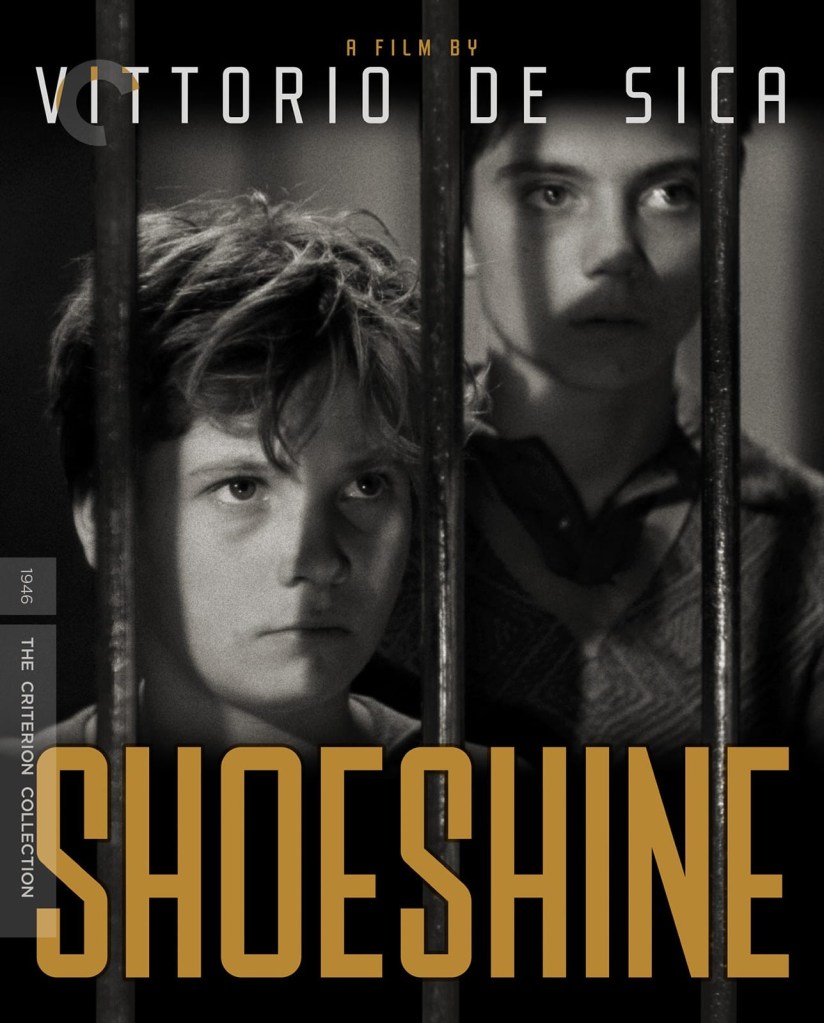
There was only one real reason for watching The Count of Monte Cristo—not the recent film, but the Italo-French collaboration from two years ago. My interest lay not with Edmond Dantès himself, nor with the familiar arc of his imprisonment and revenge, but with two Italian actors—Lino Guanciale and Nicolas Maupas—who have recently piqued my curiosity.

Edmond Dantès, a sailor falsely accused of treason, is imprisoned in the Château d’If off Marseille. After fifteen years, he escapes, discovers treasure on an uninhabited island, and assumes the identity of the Count of Monte Cristo, plotting revenge against those who betrayed him. Like the figure in the Alexandre Dumas novel, he emerges compelling, if inevitably vengeful.

The production is noted for its cinematic look, authentic costumes, and striking Mediterranean locations. Reviews were mixed: The Guardian criticised its wooden dialogue and performances, though conceded it could still be an enjoyable watch.

It wasn’t Sam Claflin in the lead, nor was it Jeremy Irons—though Irons was, as ever, effective as the ageing Abbé Faria, lending the role a quiet authority.

Instead, my attention returned to Guanciale and Maupas. I’ve seen Lino Guanciale as the lead in two Italian-language series: La porta rossa, where he plays a ghost, and Il Commissario Ricciardi, where he sees them. Here, he appears as a chubbier Luigi Vampa, a quieter presence but still recognisable.

Nicolas Maupas, born to a French father and Italian mother, is best known as Filippo Ferrari in Mare fuori, set in a juvenile prison in Naples. In this adaptation, he plays Albert de Morcerf with a naïve, easy charm that makes the character immediately likeable.

My interest in Italian television and film feels increasingly insatiable, though it relies almost entirely on subtitles. Here, however, The Count of Monte Cristo was performed in English, allowing both Guanciale and Maupas to speak in my native tongue—an accommodation that also reflects the ambitions of an international co-production, assembling a cast drawn from Italy, France, Denmark, and England.

Lino Guanciale as Luigi Vampa
Nicholas Maupas as Albert de Morcerf

On ditching a short story…
I wrote a short story but something didn’t sit right. I thought it was good, but there was an uneasiness. Like it had the making of something but lacked oomph. And I worked at it from several angles but still it gave me reservations. I showed it to someone and they said, “This is not you at all.” And so the story was shelved.

On seeing a young guy’s underwear…
The only thing colourful about him was his underwear, which I discovered by accident, though afterwards I wondered if anything about it had been accidental at all. He carried himself so carefully, as if afraid of drawing attention, yet there it was—a glimpse of colour (blue and white) that didn’t belong to the guy I thought I knew. It unsettled me, not because it was bold, but because it suggested he was.

On hearing somebody talking about an elderly writer…
“At some stage he will be afraid to start writing a new book because he might die before he finishes it.”

Privacy is what we used to call liberty
Ubiquitous cameras in public spaces. Online tracking, data harvesting, targeted ads. Governments or corporations monitoring our behaviour. Something fundamental has shifted in how we understand freedom. 

Liberty used to mean freedom from intrusion. The right to be left alone, to speak, think, move, and live without constant oversight. Privacy is now treated as a narrower, more technical concern—something about data protection, personal information, or what you choose to share.

Privacy is what we used to call liberty.

On the cute and willing…

Ilya Kovalev. Photo by Archie the Photographer, 2026.