Tag Archives: gay life

Charlie: The Promise of Paris – Partie 4

Not for the first time, Charlie had not been entirely honest. When we arrived at his parents’ apartment, it was immediately clear they hadn’t been expecting me. It made my situation more disconcerting. Still, they welcomed me into their tastefully decorated rooms—ornate, unmistakably Parisian.

I had left Thomas, Ambre and Léo behind, taking my first tentative steps towards reconciliation with Charlie. Yet I could not shake a lingering sense of disappointment. All three had hugged me as I left—our plan à quatre had come to an end, but it would stay with me for a long time. We crossed Paris in uneasy silence, neither of us willing to admit that we had both behaved badly.

“This is completely unexpected,” Charlie’s mother said. “But it is a wonderful surprise, and we are delighted to see you both. I have not seen Charlie for such a long time, and at last we get to meet the person he shares an apartment with.”

Charlie leaned in and whispered in my ear. “My mother still hopes I might give her grandchildren and refuses to accept that it will never happen.”

His father shook my hand warmly and patted my shoulder. “Come in and make yourself at home,” he said. “I shall make coffee for us all.”

“You never said anything about visiting,” his mother added. “If I had known, I would have prepared something special. Never mind—we shall go out. I’ll call Thomas and see if he can join us.”

Charlie cut in quickly. “Thomas is working. I have already seen him, but he sends his love to Maman.” He glanced at me cautiously; it could not have escaped her notice.

“Such a shame,” his father sighed. “It is not often we have both our sons together. “But” he added, turning to me, “when Charlie and Thomas are in the same room, things can become a little… lively. Perhaps it is for the best.”

It was certainly for the best. If Charlie and Thomas had begun arguing, it would have been about one thing—me—and that would have made everything unbearably awkward. I might even have had to explain that I had been caught in a love tryst with both their sons.

“Follow me,” Charlie said.

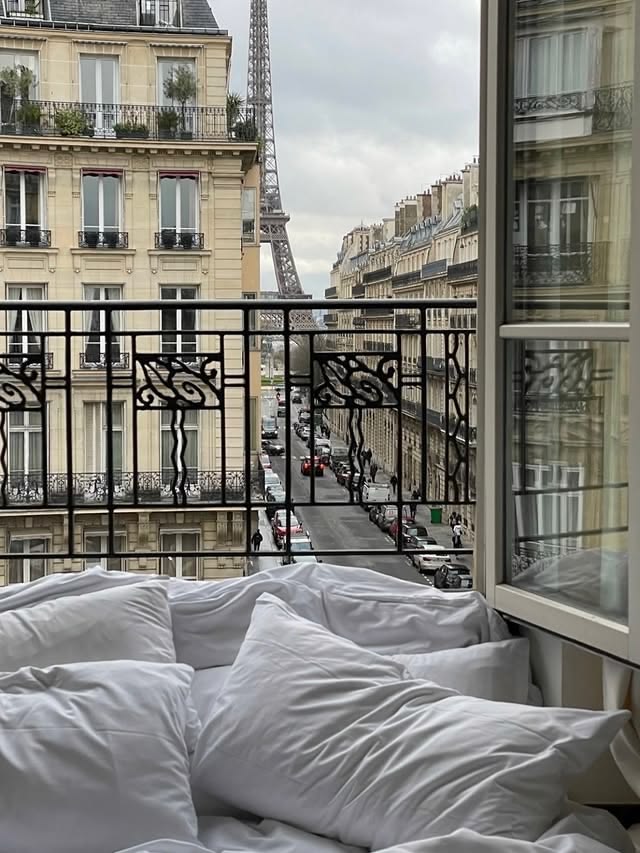
He led me through the apartment to a bedroom that had clearly once been his. The bed sat directly beneath the window; he climbed onto it and pushed open the large panes. The street stretched out in a straight line towards the Seine, and on the opposite bank, the Eiffel Tower rose above everything.

“This room is perfect in summer,” he said. “It’s wonderful to sleep with the windows open, your head almost out in the street.” Six soft pillows were stacked against the iron grille. I placed my holdall beside his and pretended to take an interest in the view.

“I’m glad you came with me,” he admitted. “For a moment, I thought you might stay with Thomas—and that would have made me very unhappy.”

If he was expecting reassurance, I wasn’t going to give it.

“I’m very upset about those photographs in Le Pénis,” I said. “Why, Charlie? Why pose naked—and not have the decency to tell me?”

“I was foolish,” he admitted, “but I found it exciting. It was some time ago, when I went to Lille with Matis. He persuaded me to pose. I knew he intended to submit them to magazines in France. I was wrong on two counts: I thought they weren’t good enough, and I never expected you to see them.”

“But I did, Charlie.”

“Yes,” he said quietly. “And I regret that. But I must live my own life.”

“And what about me? Did you ever consider how I might feel?”

“I always consider your feelings, Miles. But I suspect your problem isn’t really the photographs. It’s something that was mentioned earlier.”

“What do you mean?”

“That you have never seen me naked. That we have never made love.”

My silence gave him his answer.

“You, see?” he said softly. “I knew that was on your mind. But you must understand—my reluctance is for your own protection. I have lived carelessly, in both Paris and London, and I promised myself I would not return to that life. It does not mean I don’t love you—quite the opposite. And when it does happen, it will be because the moment is right. Love is meant to be something beautiful.”

It was not the explanation I had expected, and it did nothing to satisfy me.

A faint flush rose to his cheeks; he chose his words carefully.

“Despite appearances, I am a shy person. And yes—before you say it—those photographs were difficult for me. I had to force myself. But there is something else.”

I stared at him, incredulous. Shy was the last word I would ever have used to describe Charlie.

“There is also the fact,” he continued, “that you are highly sexed. We are compatible in many ways, but not in that.”

“So it’s my fault?”

“I didn’t say that,” he replied quickly. “But I know you will seek sex elsewhere. I just didn’t expect it to be with my brother.”

Since his arrival in Paris, everything had become a quiet contest of blame—and he was adept at shifting it onto me.

“If you want me to apologise for last night, I won’t.”

“Your promiscuity frightens me,” he said. “I’m afraid you will catch something—and put me at risk as well.”

“If you think I’ve been sleeping around, you are mistaken. Yes, I’m attracted to people—but for years, the only person I’ve wanted is you.” I sat down on the neatly made bed. “Last night was an exception. I was angry, drunk—and yes, I find Thomas attractive. But it wasn’t planned. It just happened. It was new to me. I won’t pretend I didn’t enjoy it. But I also need to live my own life.”

“But you have hurt me,” Charlie said, his voice breaking. “I never imagined that you would make love to my brother before me.”

We had reached an impasse.

“If you like, I can return to Thomas and leave you alone.”

“Non!” he exclaimed. “I want you to stay with me. We must try to make this work.”

“But I don’t see how we can. Our trust has been compromised—by both of us.”

For the first time since I had known him, I saw fear in Charlie’s eyes.

“I beg you not to give up on us. I came to Paris to make our relationship work. I am certain we can return to the life we have in England and put all this behind us.”

I was not so sure. Away from Charlie, I had tasted a kind of freedom that had awakened something in me. If we were to make this work, he would have to change—and I doubted that he would. And yet, despite my coldness, I felt a flicker of pity. I considered forgiving him for those revealing images in Le Pénis. I also wanted his forgiveness—for Thomas, for Ambre, for Léo. In the space of twenty-four hours, everything between us had shifted. But if I gave in now, Charlie would always hold the advantage.

My phone buzzed. A WhatsApp message lit up the screen: Bianchi, in Verona. His timing was uncanny, as though he had sensed an opening and meant to claim it.

“Let’s talk about this later,” I said.

Charlie’s parents took us out for dinner at a small restaurant on rue de Passy. It was expensive, and I felt slightly underdressed, out of place. His parents made polite conversation in English as we waited for our main courses. I played my part, courteous and attentive, while Charlie remained withdrawn and silent.

“What is the matter?” his mother asked. “Is something troubling you?”

“No,” he replied. “I’m just tired.”

“Charlie tells us you are a writer,” his father said, turning to me with quick interest. “Is it true you write about travel?”

“It is,” I said. “But I would like to write about other things.”

“Have you considered a novel?”

“I have,” I admitted. “But I’m not sure I have the patience—or the skill—to write a good one.”

“My sister, Cecilie, has written a book,” his mother announced. “It was dreadful. She attempted a grand romance, with a few murders thrown in. It ended up chaotic—and not at all romantic.”

“My Aunt Cecilie knows about murder,” Charlie interjected. “Her first husband was killed by his business partner, and she became very wealthy as a result. We have often suspected she was having an affair with the man who killed him.”

“That will do, Charlie.”

But he continued, undeterred.

“Of course, infidelity is common in our family. You must look around this table to realise there are secrets waiting to be uncovered.”

He looked at each of us in turn—his parents, then me. I remembered what Thomas had told me: that he suspected he was not his father’s son. The flicker in his father’s expression suggested there might be truth in it—or at least, guilt of another kind.

“Should I assume something is wrong between you?” his mother asked.

Charlie left the answer to me.

“I think every relationship has its difficult moments,” I said evenly. But the mood had already soured.

Charlie’s behaviour throughout the meal suggested he might not be as ready to forgive as he had claimed.

Afterwards, we made strained conversation as we walked back to his parents’ apartment. Rain had begun to fall, quietly at first, then more steadily—as though the evening required it.

Inside, we were offered brandy—expensive, warming. I was pleased to discover that his father smoked. He suggested we step out onto the balcony together. Closing the French doors behind us, he gestured for me to sit.

Below us, the hum of traffic drifted upward, mingling with the occasional burst of laughter from passers-by in the street.

In the half-light, I could see Charlie in him. His thinning grey hair had once been as dark and full as his son’s. He carried himself with a surprising vitality, every inch the businessman—someone accustomed to inspiring confidence, to being believed.

“You are the only person Charlie has ever introduced to us. That must mean you are important to him.” He spoke calmly, with quiet precision. It was not a question, but a statement. “And yet, the circumstances suggest there is a problem between you.”

“We’ve been very happy together,” I said. “But let’s just say we have both done things we now regret.”

“Would you care to elaborate?”

It was a difficult decision. Should I tell him everything? Neither of his sons would come out of it well—nor, for that matter, would I. But there was something in his manner, a steadiness, that suggested he would not rush to judgement.

“Before you answer,” he said, “allow me to tell you a few things. I love both my sons, but—as Charlie implied—there are secrets in this family. Charlie is my flesh and blood, but he takes after his mother, who, in her youth, was… let us say, complicated.” He paused briefly. “I am closest to Thomas, though he is not my son in the strict sense. I am not his biological father. He was the result of one of his mother’s affairs. And yet, Thomas is very like me. He has loved me in a way that has made me deeply proud.”

He hesitated, then continued.

“But do not imagine that fault lies only with their mother. I, too, have been unfaithful—many times. Age tempers these things or perhaps exhausts them. We settle, eventually. But my sons… they have inherited more than we intended. In their own ways, they are becoming what we once were.” He studied me for a moment. “Am I close to the truth of your situation?”

“I believe you are, sir.”

And so, I told him everything.

As I spoke, I watched him carefully, searching for some flicker of judgement or surprise. But he remained composed, listening, nodding occasionally, as though nothing I said was entirely unfamiliar. When I finished, he was silent for a long moment.

“The question I must ask,” he said at last, “is which of my sons you love.”

“I suppose the honest answer is that I love them both.”

“But love is a delicate thing,” he replied. “Do not mistake it for desire. I suspect it is Charlie whom you love. Thomas, perhaps, is a distraction.” He took a measured breath. “I am not surprised by Charlie’s actions. Nor am I surprised that Thomas would seek to provoke his brother. That is their nature. But you, Miles—you are the unknown quantity. Everything now depends on how you choose to respond.”

“That is the problem,” I admitted. “I don’t know how to deal with it.”

“Charlie craves attention,” he said. “He will do almost anything to be noticed. But beneath that, there is a boy who wants to settle down with someone he truly loves—and he is afraid to reveal those feelings.” He paused, weighing his words. “If you want my advice—and I offer it as someone who knows his son—then leave him. Leave Paris without telling him where you are going. Let him believe that he might lose you.”

He glanced out into the night before continuing.

“He will return to England in a hurry, convinced that you have gone back there. Whether you are waiting for him… or not, is entirely your decision.”

 My Week, For What It Was Worth

On driving behind a cute-assed cyclist…
I found myself trailing a cyclist who was hammering the pedals with admirable ferocity; his lycra-clad form rose and fell in a hypnotic rhythm, all sleek lines and aerodynamic intent. There’s something undeniably compelling about a well-put-together rider on a racing bike—graceful, efficient, almost cinematic.

But as I pulled alongside to overtake, the illusion collapsed rather abruptly. What I had taken for youthful athleticism was, in fact, a fully paid-up member of the MAMIL brigade—Middle-Aged Men in Lycra—an increasingly unavoidable presence on the roads. The term, apparently coined by Mintel in 2010, captures a very specific phenomenon in modern cycling culture.

The charitable definition goes something like this: men typically aged 35–50+ who embrace high-performance cycling, clad in tight technical gear and mounted on eye-wateringly expensive carbon-fibre machines. It’s said to be driven by a desire for physical challenge, a reprieve from work and domesticity, and perhaps a quiet rebellion against the passing of time.

Which is all very noble, of course.

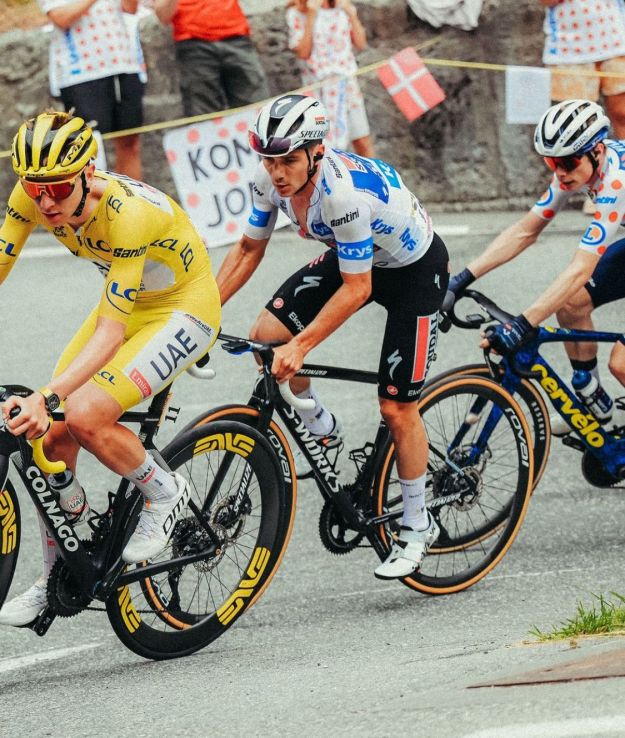
And yet—at the risk of sounding deeply ungenerous—I can’t help but feel a flicker of disappointment every time the helmet comes into focus. If you’re hoping for lithe, Tour de France–calibre elegance, you may be better off watching the actual Tour de France. Out here on ordinary roads, the reality is… rather more middle management on wheels.

On binge-watching The Count of Monte Cristo…
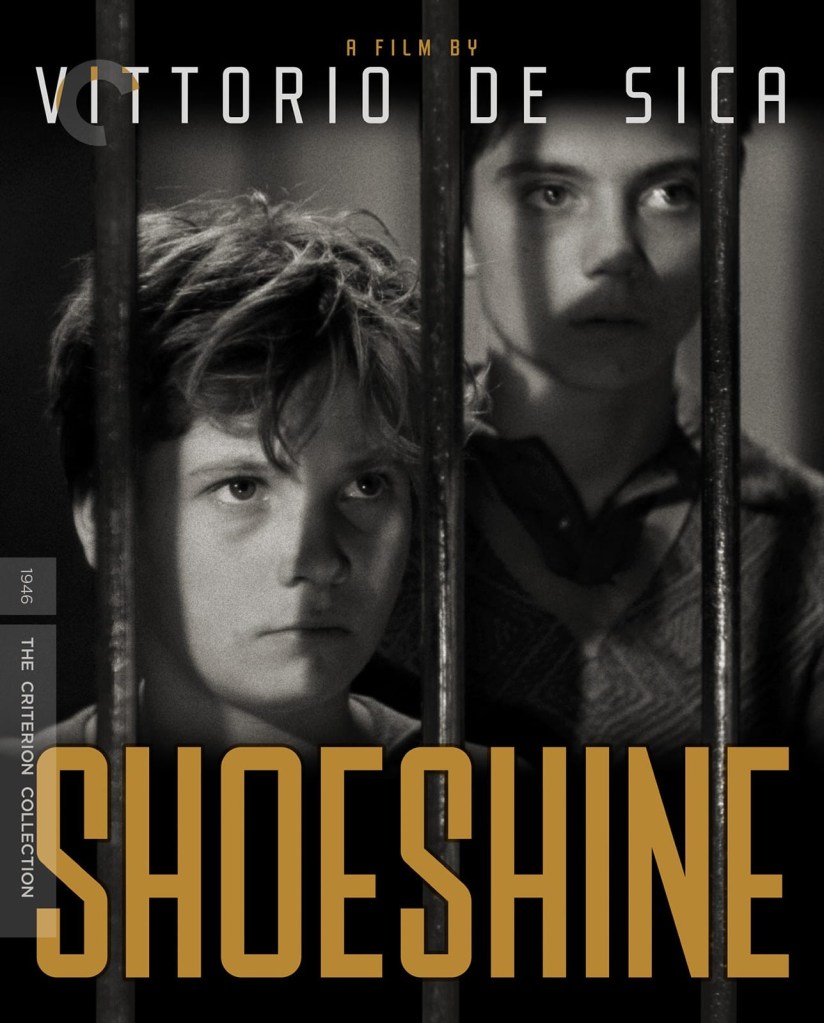
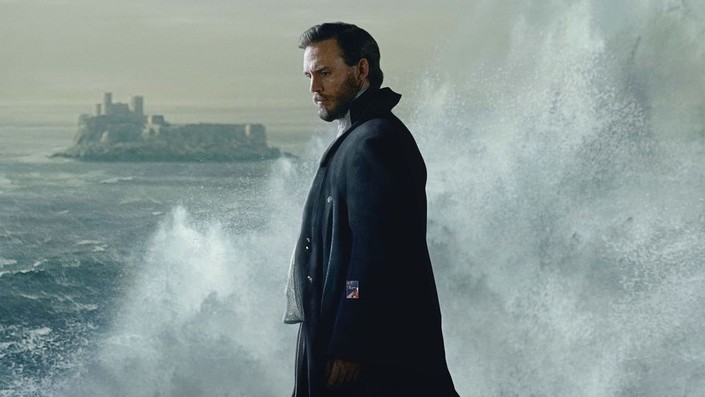
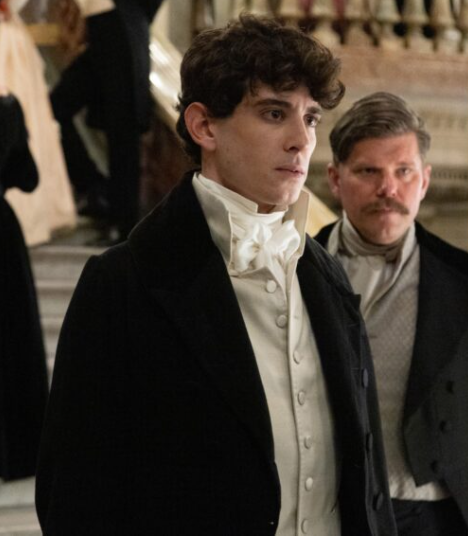
There was only one real reason for watching The Count of Monte Cristo—not the recent film, but the Italo-French collaboration from two years ago. My interest lay not with Edmond Dantès himself, nor with the familiar arc of his imprisonment and revenge, but with two Italian actors—Lino Guanciale and Nicolas Maupas—who have recently piqued my curiosity.

Edmond Dantès, a sailor falsely accused of treason, is imprisoned in the Château d’If off Marseille. After fifteen years, he escapes, discovers treasure on an uninhabited island, and assumes the identity of the Count of Monte Cristo, plotting revenge against those who betrayed him. Like the figure in the Alexandre Dumas novel, he emerges compelling, if inevitably vengeful.

The production is noted for its cinematic look, authentic costumes, and striking Mediterranean locations. Reviews were mixed: The Guardian criticised its wooden dialogue and performances, though conceded it could still be an enjoyable watch.

It wasn’t Sam Claflin in the lead, nor was it Jeremy Irons—though Irons was, as ever, effective as the ageing Abbé Faria, lending the role a quiet authority.

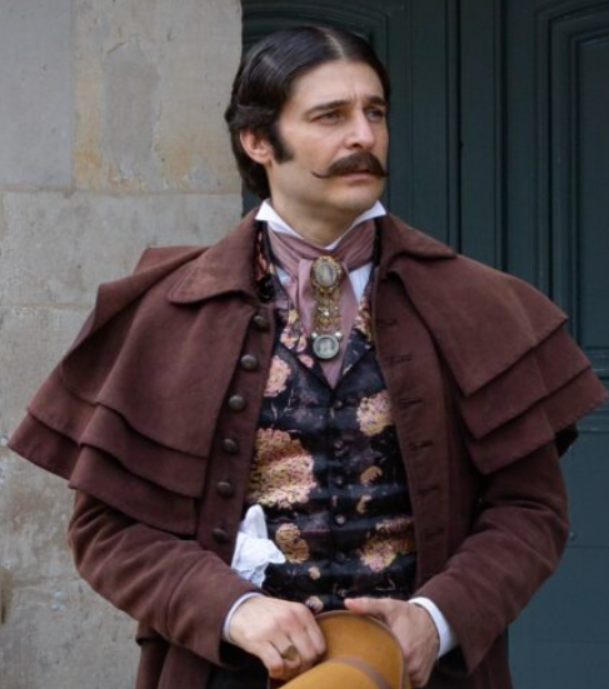
Instead, my attention returned to Guanciale and Maupas. I’ve seen Lino Guanciale as the lead in two Italian-language series: La porta rossa, where he plays a ghost, and Il Commissario Ricciardi, where he sees them. Here, he appears as a chubbier Luigi Vampa, a quieter presence but still recognisable.

Nicolas Maupas, born to a French father and Italian mother, is best known as Filippo Ferrari in Mare fuori, set in a juvenile prison in Naples. In this adaptation, he plays Albert de Morcerf with a naïve, easy charm that makes the character immediately likeable.

My interest in Italian television and film feels increasingly insatiable, though it relies almost entirely on subtitles. Here, however, The Count of Monte Cristo was performed in English, allowing both Guanciale and Maupas to speak in my native tongue—an accommodation that also reflects the ambitions of an international co-production, assembling a cast drawn from Italy, France, Denmark, and England.

Lino Guanciale as Luigi Vampa
Nicholas Maupas as Albert de Morcerf

On ditching a short story…
I wrote a short story but something didn’t sit right. I thought it was good, but there was an uneasiness. Like it had the making of something but lacked oomph. And I worked at it from several angles but still it gave me reservations. I showed it to someone and they said, “This is not you at all.” And so the story was shelved.

On seeing a young guy’s underwear…
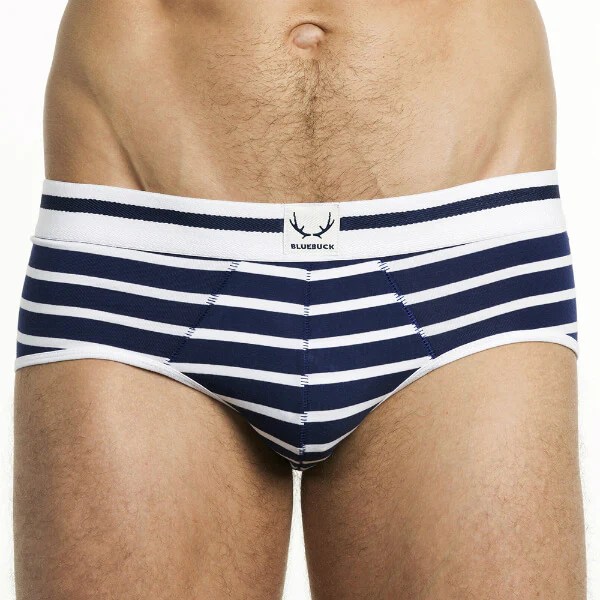
The only thing colourful about him was his underwear, which I discovered by accident, though afterwards I wondered if anything about it had been accidental at all. He carried himself so carefully, as if afraid of drawing attention, yet there it was—a glimpse of colour (blue and white) that didn’t belong to the guy I thought I knew. It unsettled me, not because it was bold, but because it suggested he was.

On hearing somebody talking about an elderly writer…
“At some stage he will be afraid to start writing a new book because he might die before he finishes it.”

Privacy is what we used to call liberty
Ubiquitous cameras in public spaces. Online tracking, data harvesting, targeted ads. Governments or corporations monitoring our behaviour. Something fundamental has shifted in how we understand freedom. 

Liberty used to mean freedom from intrusion. The right to be left alone, to speak, think, move, and live without constant oversight. Privacy is now treated as a narrower, more technical concern—something about data protection, personal information, or what you choose to share.

Privacy is what we used to call liberty.

On the cute and willing…

Ilya Kovalev. Photo by Archie the Photographer, 2026.

My Week, For What It Was Worth

On chilling out in a Southern Italian town…

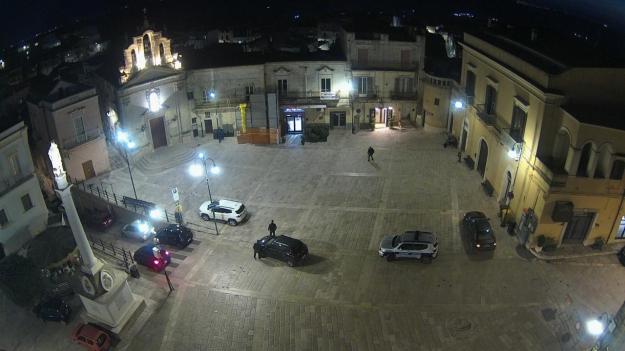
Montescaglioso is where a story ends. But I picked a week when the Italian weather was unwelcoming: fine by day, but extremely foggy by night. It is to be expected, because Montescaglioso sits high on a hill.

And then the winds came—strong Sciricco and Maestrale winds that brought heavy rain and quickly sent it away again. For this reason, the locals were happier to stay indoors until conditions improved.

Montescaglioso is where the heart beats a little slower.

Where there are people, I watch them… observing their character and capturing their mannerisms. Most are unaware that this old town was once inhabited by Greeks and Romans.

Some of them will end up in a story.

There is the young boy who is inconspicuous in the corner of a café; he drinks Coke with lemon and reads a paperback copy of Black Run by Antonio Manzini. Every few pages he stops and scrolls through his iPhone. He appears to have friends, but at that moment is bored with his own company.

Then there is the handsome boy, whom I watch with curiosity until it becomes something closer to obsession. He eats pasta with one hand, while the other rests inside his underwear, absent-mindedly playing with himself. He stops when he realises I am watching, and I am immediately disappointed. I want to tell him it is none of my business what he does, but that feels like a perverse thing to say.

The teenagers who congregate beneath the tall statue of San Rocco, the patron saint of Montescaglioso, in Piazza Roma. They are immaculately dressed in smart jeans, designer puffer jackets, and new trainers, because the nights are chilly. They talk for hours because there is nothing else for them to do. I do not understand what they are saying—they speak too fast—but they seem friendly.

The man who pulls up in a Grande Panda and sees me sitting on a bench outside an old building, its yellow paint faded with time. He speaks remarkably good English and educates me on the history of the town: the stories of local people who left at the beginning of the last century and moved to New York and Toronto. He tells me that Francis Ford Coppola is a second-generation Italian-American, born to parents of southern Italian descent. His paternal grandparents emigrated from Bernalda, which is only a few miles away, and the director now owns a hotel there.

The old man who walks his dog every evening and stops to talk. He points to the Chiesa di San Rocco and tells me it was badly damaged in an earthquake that struck Montescaglioso in 1827, and was later restored with the construction of stone vaults and a new façade. He tells me that ancient Greek tombs were once discovered beneath the piazza, and that the church once stood outside the town—there is the possibility of undiscovered graves beneath the surrounding houses.

I decide that there is much history to be found, but I am only interested in the present, where the young people appear permanently sun-tanned, animated, and possessed of an easy, unstudied allure that feels particular to this part of the world—especially to someone from northern Europe.

On lusting over Benjamin Voisin in The Stranger…

I know somebody who claims to have met French actor Benjamin Voisin. It may or may not be true because that person has a tendency to tell lies. But the story he tells is a good one because he said that Voisin smoked a lot, wasn’t completely fluent in English, but came across as a nice chap. And he was convinced that he was gay, but that bit has yet to be confirmed.

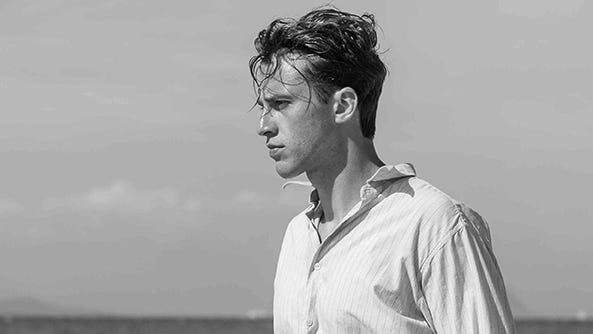
I first saw Voisin in François Ozon’s Summer of 85 (Été 85), and at the time I thought the director might have chosen a better-looking boy. But then came the trailer for Ozon’s The Stranger (L’Étranger), along with the publicity stills, and I kept finding myself asking, “Who is that good-looking guy?”

It has felt like an age waiting for The Stranger to arrive. Based on Albert Camus’ novella, it was originally shot in colour, though Ozon ultimately chose to release it in black and white—a decision that feels entirely right.

There is a scene in which Meursault (Voisin) kills an Arab boy. He studies the body on the ground—first the armpits, then the lips—before firing… several times. It’s one of Ozon’s familiar devices, turning something ostensibly straightforward into something quietly, disconcertingly homoerotic.

“I wanted to make everything erotic,” Ozon says. “The girls are erotic. The boys are erotic. The nature is erotic. Everything has to be erotic and sensual. That’s what I wanted. And the choice of the black-and-white [cinematography]was a way to show this sensuality in the world.”

If that wasn’t enough we see Voisin’s naked body a few times, a pretty bum that requires squeezing, and even get a glimpse of his manhood.

On coming upon an unwelcome adversary…

The boyfriend of the love of your life stands before you. What are you supposed to do? Granted, he’s good-looking. But he lays claim to someone who should be mine. For that reason, I can’t ignore everything that’s wrong with him. I want lightning to strike him dead. There is a solution to this jealousy—but it’s not one I dare to consider.

On reading an anecdote from Rufus Wainwright…
“What’s the best thing a cabbie has said to you?”

“Well, my handle on Uber is just the letter R, and I went into a cab once and the driver said, “R, what’s that stand for?” And I said, “Rufus.” And he said, “Oh, like Rufus Wainwright? I wonder what happened to him?” I just went along with it…”

As flies to wanton boys are we to the gods…

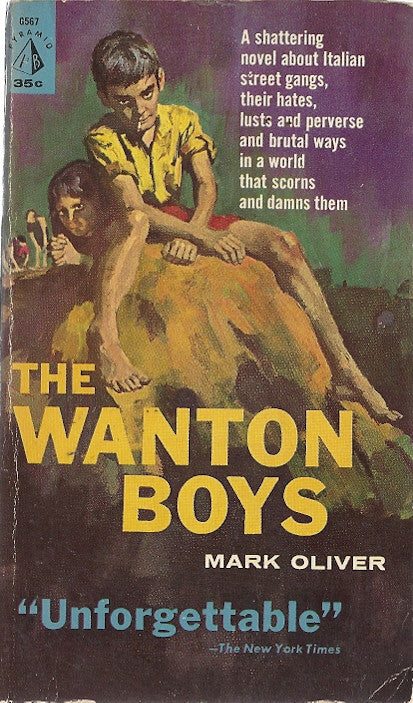
The Wanton Boys, Mark Oliver, 1959.

He was a thin, brown-eyed, sad-looking boy, one of ten children of a poor Italian fisherman who had been drowned at sea. Sometimes he begged a little, and sometimes he stole, but hunger grew in him every day. There was no more salt in the home, only garlic to help the long loaves down. Garlic or one of the half-rotten tomatoes that the wasteful spaghetti-makers threw away, and it was a race in the mornings to get to the garbage cans before the dogs and the other starving scavengers.”

I found a parcel on the doorstep. Tearing it open, I uncover a battered copy of The Wanton Boys. I am beside myself with excitement. It’s an early birthday present from a friend too impatient to wait for the day itself. This ragged mass-market copy, improbably, is worth a small fortune.

The blurb is enticing:

“A shattering novel about Italian street gangs, their hates, lusts and perverse and brutal ways in a world that scorns and damns them.”

I love a book about lust – and perverse and brutal ways.

On the cute and willing…

Vimzrut. Photo by Ruslan Pukshyn, 2026

Charlie – On Films, Subtitles, and Temper

Fury – Charlie Marseilles (2026)

There is a new film director in our apartment. Not literally, of course. But after seeing Kleber Mendonça Filho’s The Secret Agent at the cinema, we discovered that MUBI was showing a small collection of his earlier films. Trust Charlie to want to watch Aquarius, which—naturally—wasn’t among them.

The thing about Charlie is that he never gives up. He eventually found it on the Internet Archive, only to be dismayed that it was in Portuguese. He tried to locate English or French subtitles, but to no avail. The other thing about Charlie is that he is impatient.

I wrestled the TV remote from him and began investigating for myself. This was not what he wanted. “Give it back,” he ordered. “You’re wasting my time now.”

Call me childish, sulky—perhaps simply bad-tempered—but I had what can only be described as an adult tantrum. I threw the remote into his lap and stormed off to bed.

The next morning, Charlie went for the César Award. “I was frightened,” he claimed. “You threw the remote at my head. I believe I may even have been unconscious for a while.”

In Control of My Own Happiness

Communion – Red Farrow (2023)

A flicker of FOMO. A spoiled rich boy invites everyone to a birthday dinner, and I’m left out. I wasn’t meant to be there – and I wasn’t. Everyone’s buzzing, and no one gives a fuck whether I’m there or not. Still, life goes on. I grant myself a little grace, even if there isn’t much to give. Let them, I tell myself. Let them spend obscene amounts of money, drink too much, and throw it all up later. I’m in charge of my own happiness. I have a ‘wonder mind’. I buy prawn linguine, a tub of Ben & Jerry’s Chew Chew ice cream, and watch Fellini’s La Strada instead.

David: A Good Story, Apparently

“A swell so big and strong it will wipe clean everything before it.”

I got a message from David. The first I’d heard from him since our falling out in December. I hadn’t been expecting an apology and didn’t get one. I wasn’t even sure one was required. Some days I thought I might be the one who owed it. Still, the silence had broken, and that felt like something.

‘My boy turned forty this week and wanted to see where he was born. I took him to the Kapiʻolani Medical Center, where his mother gave birth to him. It wasn’t what he had in mind. But he stood straight, like the military taught him, and was too polite to tell me to go to hell. He was a Kamaʻāina — child of the land — but this wasn’t where he grew up.’

“What???” I replied.

David rang immediately.

I paused Heated Rivalry, which had literally just started. I hadn’t even got past the opening credits. Everyone had been talking about it, which was precisely why I’d been avoiding it. The same thing had happened with Adolescence. The louder the praise, the more stubbornly uninterested I became. But Heated Rivalry had the added incentive of steamy gay sex scenes — and I liked the idea that large audiences wanted that and were openly enjoying it. So fine. I’d given in. And then David called.

“It’s a paragraph I’ve just written,” he said. “I found a draft of something I wrote about Hawaii in the eighties. A good story’s been hiding in a drawer for forty years. It’s time to rewrite it. Update it.”

“Hawaii?”

“If memory serves, I based it on a Rolling Stone article about a teen suicide. But I think that was Kansas. Or somewhere like it. No idea why I chose Hawaii.”

“Suicide?”

“That only comes at the end.”

“Well,” I said, buying time, “I suppose there has to be a happy ending.”

“A suicide and a birth,” he said, as if that clarified things. “You get the opening now?”

I didn’t. Except that David was a successful writer, and it clearly made sense to him. Which, apparently, was enough.

“I think I know why I chose Hawaii,” he continued. “There was a film I saw. Big Wednesday. Surfing. Jan-Michael Vincent, Gary Busey. Semi-naked most of the time. Very young. Very hot.”

“Who?” My patience was thinning.

“Ah. Before your time. Though now that I think of it, that film was set in California.”

“Get to the point, David. The longer we talk, the longer I’m delayed from steamy gay sex. What’s the story actually about?”

“Whoa,” he laughed. “So you’ve sorted things out with Charlie. What did I tell you? You can’t keep a good man down.”

I froze. Had I really discussed my prolonged sexual drought with David?

“I’ll be brief,” he said. “It’s about jealousy. At least on one side. When three people are involved, somebody always loses.”

This was unexpected territory for him. David could spin a tight crime plot or disappear happily into a historical setting, but relationships were something he normally sidestepped entirely.

“It feels a bit left-field,” I said. “And why go back to something written that long ago?”

“It was shite,” he said cheerfully. “I never read past the first page after I shoved it in a drawer. My first novel came out ten years later — my style had changed completely by then. But time’s counting down. It feels like unfinished business. I want to turn it into something wonderful.”

“How old were you when you wrote it?”

“Let’s see… I started it in 1984, so I’d have been twenty. Finished it the year after. That’s why the characters were that age.” He paused. “It’ll read like I’m reliving myself.” Then, suddenly: “Goddammit. I remember now. I’d just read Michener’s Hawaii. That’s why. Oahu, specifically. And Magnum P.I. was on television.”
I thought about my own life. Whether anything I’d written would still exist in forty years. Whether I’d ever be considered established, in any meaningful sense. I’d been carrying an idea for a book for years, but inertia kept winning. Instead, I scraped a living writing about country houses and cities. It all felt increasingly dull. Stranger still, it occurred to me that David must have written that early draft on a typewriter — a genuinely painful way to work, as far as I was concerned.

He said he had to go.

“By the way,” he added, “I’ve finished the Isherwood biography on Kindle. It ended rather abruptly. One moment he was alive, the next he was gone. Dead. But I won’t mention it again. You seem sensitive about that.”

I restarted Heated Rivalry. Two seconds later, my phone buzzed.

‘Forgot to say. I’m going for a drink with a young man — a student — only nineteen. Just out of nappies, really. Don’t tell Josh, but of all people, I thought you’d like to know. 😏’

Life Story: The Third Drop

I noticed him but he chose not to notice me. After he had dropped his mobile phone on the floor for the third time, he realised that he had to say something.

Twink on Trial

Twink – Charlie Marseilles (2025)

Johnny had Sabrina Carpenter in his ears again, looping ‘Feather’ from Russell Square all the way to Wood Green. She didn’t know she was basically the narrator of his life, but one day he’d tell her. That’s what twinks do: dream big, unrealistic, sparkly dreams and somehow convince themselves it’ll all work out. Johnny didn’t care. He usually jumped head-first into the unknown anyway.

The day had been a slog. Instead of listening to his tutor, he’d spent two hours doodling in his notebook — the one with the Eric Ravilious cover he pretended made him look cultured. The tutor finally snapped and kept him back. “How would you describe your life?” he’d asked, like Johnny had personally offended academia.

Johnny had smiled. “Fed, pampered, and impatient. Honestly? My life is one long, sexy, pouty battle.”

The tutor hadn’t expected honesty. Or attitude. “In my day,” he’d muttered, “you would have been called a prostitute.”

Harsh, sure. But Sabrina would’ve had his back. She’d remind him he was eighteen, hot, and fully allowed to be desired — and if someone wanted to bankroll his glitter-coated lifestyle, that was on them. She’d conveniently skip the part about him being high twink maintenance: fine dining, special diets, beach holidays, designer clothes, and accommodation that didn’t smell like student desperation.

Alexander funded the whole thing, because Johnny lived for an Instagram-ready existence and the universe had not, so far, given him the bank account to match.

Twinks are vulnerable, Johnny decided, and love could never be found in a discount store.

When he got home, Alexander was already there, drinking wine and listening to Vivaldi — the soundtrack of men who’d survived ‘twink death’ and were now coasting through their late thirties in cashmere.

“We need to talk,” Alexander said. Serious voice. Terrible sign. Johnny tossed his Reiss puffer on the floor anyway. He was a trophy boy, and trophies didn’t hang themselves up.

Alexander cleared his throat. “The thing is… sugar babies aren’t really financially viable anymore. I need to do a quarterly business evaluation.”

Johnny froze. Thank God he’d kept all the receipts — he’d at least prove he’d been properly maintained. And he was not going down quietly.

“Look,” Johnny said, already shifting into survival mode, “you’re old enough to be fluent in PowerPoint and so I’m going to prepare a presentation of all my key deliverables. I think you’ll find them very compelling. Being adorable. Emotional availability. Pretending to like oysters. And really? That’s just the intro slide.”

Youth is a gift of nature, but age is a work of art


Suspicion — the cynic — grows tiresome after a while. He toys with a silver St. Christopher medal, the patron saint of twinks slipping through his fingers.

He’s doe-eyed, all innocence, and says, “I like older men.” I smile, let him think he’s got me hooked — but he’s no match for experience.

Still, he’s waiting for a response, so I play along.

“Why do you like older men?” My voice can’t quite hide the boredom.

“Because,” he says, “older men are more experienced.” An off-the-peg answer.

I lean forward. He flinches, thinks I might kiss him.

“Here’s how this goes,” I tell him. “You’ll want me to fall for you — to believe I can’t live without someone barely out of nappies. You’ll lead me on until you work out what you can get: a place to stay? Money? A holiday? A stop-gap? And then you’ll move on, find someone else.”

He’s shocked — hand over mouth, as if such despicable thoughts had never crossed his mind. But he knows it isn’t going well.

“I might be older,” I say, “but I once sat where you are now.”

He sinks into his seat.

“I played them all, never realising I’d grow old too. We all do — it’s the one thing we can’t control. But don’t worry. I’ve swapped seats, yes, but I’ve kept yours warm for you.”

Millions Once Watched

Forgotten – Charlie Marseilles

Noah sat cross-legged on the floor, eating a bowl of cornflakes. Henry had seen this before—only then, it was on a YouTube video during a train ride from Manchester to London. In that video, Noah had poured milk over his cereal and collapsed onto the floor to eat, idly watching his housemates move around him. They hadn’t said a word, stepping carefully to avoid him—an inconvenience they tolerated.

Now, Noah sat on the floor again, eating breakfast as Henry checked his bag, picked an apple from the fruit bowl, and scrolled through his messages before work. The scene unfolded in silence, broken only by the soft tap of Noah’s spoon against the bowl. Their life had become a loop of flashbacks—moments once broadcast to millions, now replayed quietly within the confines of their apartment.