The church doors swung open and the newlyweds emerged into the afternoon heat beneath a shower of rice and the ringing of bells.
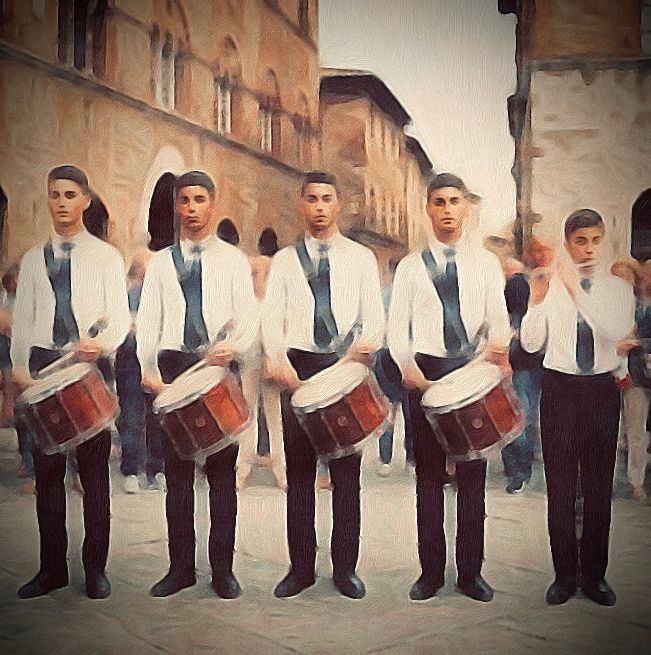
Forty paces away, five young musicians stood against the ancient stone wall of the piazza.
Four drummer boys and a piccolo.
They were impossibly handsome. Young, dark-haired and brown-skinned, dressed in white shirts, black trousers and polished black shoes. They stood in a neat row, looking rather more serious than the occasion required.
I fall in love too easily.
As the bride and groom stepped into the sunlight, the drummers raised their sticks.
The first strike seemed to shake the whole piazza.
Then the piccolo began.
A bright, piercing melody rose above the deep thunder of the drums, slipping between the old buildings and disappearing somewhere among the terracotta roofs. The five boys played without looking at the wedding guests. They simply stood there and played, as though the music belonged to them and we had merely been permitted to hear it.
I watched them.
I knew nothing about them.
Not their ages, where they lived, what they did when they weren’t playing at weddings. I didn’t even know their names.
And yet, for those few minutes, I loved them.
When the music ended, the bells suddenly seemed very loud.
The boys lowered their instruments. There was no bow, no waiting for applause. They simply turned and walked away, disappearing into a narrow alley beside the church.
As they went, one loosened his black tie. Another rolled up his sleeves. One of the drummers said something that made the others laugh.
And that was all.
They vanished into the old town, five young Italians swallowed by the afternoon.
I stood there for a moment longer.
It seemed terribly unfair that people could enter your life so completely and then disappear from it without ever knowing they had been there.
I would never see them again.
I would never know their names.
But for a few minutes in a sunlit piazza, four drummer boys and a piccolo had made me fall in love.
They all think he’s Number One. That’s what he tells himself, anyway.
Whose idea was it to call me Colvey?
Mum says it weren’t her. So who the fuck was it then? Like she never had a say in it. Couldn’t have been Dad, could it? No chance. No one even knows who the fuck Dad is, ‘cept Mum, and she ain’t saying shit.
Only thing she ever told me was his family were bare-knuckle fighting gypsies. Said I got his looks.
He was a bit of a looker, apparently.
Got Mum into bed one night, got her pregnant, then fucked off. Job done. Probably got half-brothers and sisters all over Newham. Probably had a scrap with most of ’em.
Didn’t exactly get an easy start, did I?
Had to fight to survive. Hated school. Didn’t go much anyway. Too much other stuff going on. Got expelled twice. Teachers thought they were getting rid of me. They never clocked that was exactly what I wanted.
Shoplifting. Drugs. Nicking motors. Few decent fights.
Kid stuff.
Coppers hated me. Still do. They reckon I’m a waste of space. Some little cunt from Newham who’s never gonna amount to nothing.
They don’t know shit.
I’m good with my hands. Must be Dad’s side of the family coming through. Good with my head too, when I bother using it.
You got to be good round here.
There’s always someone wants you gone. Someone wants what you’ve got. Someone thinks you’re trouble and reckons they’re the one who’s gonna sort you out.
But I ain’t scared of ’em.
They’re tossers.
I’ve got my boys.
And I pick every one of ’em. That’s important. Don’t just let any geezer in. They make me look good. They protect me. I protect them.
Well… mostly.
Got to keep ’em in line. Give one of ’em a slap now and then. Let ’em know who’s boss. They call it respect.
I call it keeping order.
Everyone thinks I’m fucking stupid.
Good.
Let ’em.
I’ve got things going on they ain’t even got a clue about. I make a living doing fuck all, basically. My boys make the trouble. I get my share of the readies.
Simple.
And they love it. That’s the funniest bit. They love being one of Colvey’s boys. Gives ’em a name. Gives ’em status.
Don’t fuck with Colvey and his boys.
Heard someone call us the London Boys once.
Fucking loved that.
Not Newham Boys.
London Boys.
Sounds bigger, don’t it? Like we’re not just some bunch of geezers knocking about the same few streets. Like we’re part of something.
London.
Biggest fucking city in the country and we’re right in the middle of it.
Via delle Argonne is a pleasant street, largely made up of fashionable apartments for Verona’s young professionals and a step up from the area where Signora Bruschi’s house lies. It was also a short cut to the hotel where Bianchi worked part-time.
Cola had spent the day moping around. Cinzia had been working and he was reduced to wandering between floors without any real notion of what he wanted to do. I had been writing in the shade offered by the balcony, only to be interrupted every half hour by Cola’s footsteps and his inevitable appearance beside me. He would slump into the same chair and rest his feet on the railings. A few minutes later he would wander off again.
When the light began to fade, he suggested that we walk to Hotel Italia and meet Bianchi as he finished his shift. Not so long ago, he would have jumped into that bright yellow Abarth 500 and been there within minutes. Now he seemed to regard the walk as the highlight of his day.
“I need to get a job,” he moaned as we strolled down Via delle Argonne, parked cars lining both sides. “I am going slowly mad with boredom.”
A little girl came out of a gateway riding a small scooter. She came to an abrupt halt when she noticed us. Then she turned around and shot back inside to the safety of the small yard, shielded by horse chestnuts and linden trees.
I felt sorry for Cola.
His life had been turned upside down by Sandro’s revelation that it was in his best interests to leave Signor Valenti’s employment. Cola was certain that he would land a warehouse job at Interporto Quadrante Europa. He had turned up for the interview only to be told that they couldn’t employ him without suitable references. He wasn’t in a position to ask Signor Valenti and, as I pointed out, the Agenzia delle Entrate would have no record of his employment because Cola had been paid cash in hand.
“The mighty have fallen on hard times,” Cola lamented.
“But you have somewhere to live and a mother who feeds you well.”
It was no consolation to him.
The street light hanging above the intersection with Via Rovereto flickered on.
“And in two weeks you will be leaving Verona,” Cola complained.
I regarded Cola as a little brother. I had watched him grow from boy to man. I was someone he loved and trusted. I would miss him when I went back to the UK.
We waited on the curb to allow three motor scooters to pass. They came to a halt at the crossroads and hesitated as though deciding which direction they should take. The small engines puttered; the riders looked at us, their faces hidden behind the visors of their crash helmets. One by one they killed their engines and lowered the scooters onto their kickstands.
Then they walked towards us.
“Mannaggia,” Cola muttered under his breath. “I knew this would happen.”
Perhaps I knew it too.
There was always going to be a leader. He turned out to be the tallest of them, a muscular man wearing a turquoise T-shirt. He had a metal chain wrapped around his wrist; so did the others, for that matter.
When they reached us, the leader flicked his wrist and unravelled the chain in one swift movement. He swung it at Cola, who tried to duck but was too slow. It caught him on the side of the head and immediately drew blood.
I tried to help Cola but was prevented by an equally forceful blow. One of the other riders swung his chain and smashed it against my cheek.
And then there were repeated metal links whipping through the air with a high-pitched metallic rattle.
Cola was on the floor trying to protect his face, but there was no mercy. I followed and ended up on my back. Blurred silver arcs cut through the light, the links catching the glare. My clothes were being ripped. There was the sudden shock of heavy impact crushing bone and muscle, followed by the cold, biting pinches of metal links wrapped tightly around skin.
And then it was over.
A haze through which I could see nothing clearly.
Blood splatter.
Stinging pain.
Nausea.
Moans and sobs, but whose were they?
I knew that the three riders had returned to their motor scooters, kick-started them and sped away.
I did not think that I would die. It was that I wanted to die.
And then came the two-tone sirens that I had come to recognise across European cities. I found them reassuring. Not like those wailing noises that the UK had adopted from the States.
They were coming for us.
I woke up in a brightly lit room, which hurt the one eye that I was able to see with. The swelling on the other had closed it shut.
Somebody was holding my hand and I had to turn my head to see who it was.
It was the face of an angel.
An angel with beautiful curly black hair, warm eyes that were teary, and a delicate nose. The angel had soft stubble on his chin and needed to shave.
The angel smiled.
“You are going to be fine,” Bianchi whispered.
But behind the angel was the devil, slouched in a chair.
A nurse walked into the room and noticed that I was awake.
“Fuori tutti,” came the instruction.
Bianchi and Lorenzo did as they were told.
Bianchi waved on the way out. Lorenzo nodded and muttered something.
“Ci vendicheremo.”
We will get revenge.
The nurse checked my blood pressure and stuck something inside my ear.
“Sei inglese?”
When I nodded, it hurt, as though something were banging around inside my head.
“You will live,” she said. “You are very lucky. A lot of cuts and bruises, but you will mend. You were sedated when you came in, so you will feel woozy.”
“And my friend?”
“He will also live,” she smiled. “But he has a broken arm that will take time to mend.”
Police officers came to interview me in the afternoon and asked me to provide a description of our attackers. I narrowed it down to every male who rode a scooter in Verona and wasn’t much help.
And then they asked about Signora Valenti.
I told them very little and was informed that I wasn’t being helpful by refusing to tell the truth.
I found out later that Bianchi couldn’t hold his shit.
He had already told the Carabinieri and the Polizia di Stato everything that had happened. He wanted to put the blame entirely on the Valenti family.
But not at first.
When Bianchi arrived home from work on the night of the attack, he found Signora Bruschi in a panic.
“Bianchi. Something terrible has happened. They have called from Ospedale Borgo Trento where Cola and Miles have been taken.”
Bianchi immediately called Cinzia and the three of them arrived to find that we were being treated in the Pronto Soccorso. They waited for six hours before being told to come back in the morning, when they would be allowed to visit.
Bianchi then telephoned his brother and accused him of being involved in the attack. After all, even if it wasn’t true, Lorenzo blamed me for taking Bianchi away from the family home.
Lorenzo denied any knowledge.
“Te lo giuro su mia madre!”
He turned up at Signora Bruschi’s and was told about Cola leaving his job with Alessandro Valenti and my having turned down Valentina Valenti’s offer of work.
Much to Bianchi’s surprise, Lorenzo listened patiently and became convinced that the Valenti family was responsible.
He brushed aside protests from Cinzia and Bianchi and vowed to get revenge. Lorenzo was no match for them, they said. But Lorenzo liked Cola, less so me, and he was also fearful for his little brother’s safety.
Lorenzo joined them the next morning.
Only two visitors were allowed in each room. Signora Bruschi and Cinzia sat with Cola, leaving Lorenzo to join Bianchi in my room.
At least Lorenzo is warming to me, I told myself.
Signora Bruschi, Cinzia and Bianchi took turns visiting each of us. Cola appeared to be in much worse condition, but his mother thanked the Lord that there would be no long-term effects.
Shit! I thought later. I don’t have travel insurance.
In the evening, when everybody had left, a doctor visited and said that we would both spend a few days in hospital before being allowed to go home. It was a precaution and would allow us to get the necessary rest.
He left me alone and told me to sleep.
As I was about to drop off, I was visited by Sandro, the handsome Carabiniere, who had started the night shift. He had seen Cola already, and I asked how he was.
“I have known Cola for a long time and he is headstrong. Don’t be surprised if he walks through the door at any moment.”
Sandro paused. He sat down in the chair that Bianchi had occupied for most of the day.
“How are you? I am sorry and feel responsible for what happened.”
“Do you think that it was the Valentis who were behind it?”
“Almost certainly, but it was only a warning.”
“A warning?”
“The Valentis are clever people. When Cola quit his job and you turned down an offer of work, they immediately became suspicious as to the reasons why. They realise that the Carabinieri will be behind it and will leave nothing to chance.”
I seemed to be caught up in a mafia story. The painful injuries reminded me that I wasn’t dreaming.
But, I thought, Sandro was extremely handsome.
I knew then that I was already on the mend.
“Your fiancée is very lucky.”
It was a poor attempt to flirt with Sandro, and he brushed it aside.
“It was a warning for you both to say nothing to anyone. If they thought that you had already done so, then the situation would be far more serious.”
“What do you mean?”
“You would both be dead. But that would attract too much attention.”
“That might be too late,” I told him. “Bianchi has told me that we have already featured on RAI news and ANSA.”
“But it will soon be yesterday’s news.”
“Will you arrest them?”
“There is no evidence to do so and, if I can say it politely, you are both insignificant and not worth jeopardising our investigations. Better to let things die down and be forgotten.”
I laughed.
It was almost a relief that things would not escalate further. I longed for the peace and quiet and comfort of Signora Bruschi’s home.
But Sandro hadn’t finished.
“I understand that you are returning to England.”
“Yes,” I replied, although I wasn’t certain that I would be fit enough.
“Then make sure that you do,” he warned. “It is better that you leave.”
*David remembered exactly what he was doing in the month Joshua was born.
It was October 1986, and David had just started writing for Blitz. In the same week, he also began writing for Look-In, the children’s magazine built around ITV’s seemingly endless supply of kids’ programmes. The contrast could hardly have been greater.
Blitz was all style, fashion and culture. Look-In required David to find words that might appeal to schoolchildren without making him sound like an adult trying desperately to appeal to schoolchildren. Yet, strangely enough, his best work turned out to be for the latter.
His editor praised him for bringing to life such characters as T-Bag, Super Gran and the cast of Jossy’s Giants. At twenty-two, David decided it was probably best not to put this particular achievement on his rapidly evolving CV.
His ambition was to write for The Face. That never came to fruition, but not for want of trying.
That summer, David had met Nick Kamen, whom he regarded as the most beautiful man in the world. With a confidence that now seemed almost incomprehensible, Kamen had agreed to be interviewed. There was no fee involved. They met twice in Hyde Park, where David discovered that he was a pleasant young man and, more importantly, precisely the sort of person David hoped might one day make excellent boyfriend material.
There was, however, one small problem.
Kamen was completely straight.
He also giggled whenever David flirted with him.
They recorded several hours of material, which inexplicably disappeared over the years. Kamen had dutifully talked about boxer shorts, Levi 501s and Madonna for what was probably the thousandth time, but had also opened up about his interests and ambitions.
Somewhere in a box in the attic at Cleaver Square there was, David was fairly sure, a typed manuscript of the interview, flatly rejected by The Face and, as far as he could remember, everybody else who had subsequently seen it.
There was also a chance that the box contained the fading photographs of the stunt David and his drunken friends had pulled that same year.
They had gone into a late-night launderette on Paddington Street, stripped down to their boxer shorts and attempted to recreate Kamen’s famous advert. They photographed one another with a Polaroid 600 and had the pictures developed at SupaSnaps.
The results had been less than inspiring.
Skinny white bodies. Boxers far too baggy. Not a hint of the effortless eroticism that had made Kamen famous.
Bloody hell, David thought. If Kamen had lived, he’d be sixty-four now.
Meanwhile, nine months earlier, Terry and Brenda Turner had suffered the consequences of a shag.
Joshua Turner was born.
His name had all the makings of an artist.
All of this came to light when David broached the subject of Joshua’s upcoming fortieth birthday.
David had decided to take Joshua away for his October birthday week.
They hadn’t been abroad together for a while.
When they had first met, David had spoiled Joshua with trips all over Europe. He hadn’t expected a relationship with a young man in his twenties to last, and this was his attempt to keep him for as long as possible. The boy from Thamesmead had suddenly stepped into a world that wasn’t meant for him, but he had taken to it with gusto.
Except the relationship had lasted.
Sixteen years, to be precise.
Eventually, the novelty of city breaks wore off.
In recent years, with a solid income from his artwork, Joshua had taken to travelling alone. A few days here, a few days there.
At first, David had been suspicious of these random jaunts.
There had been a photograph of Joshua on Instagram. He was leaning against a balcony rail, his back to the camera. David had immediately wanted to know who had taken it.
“A friend from Barcelona,” Joshua had said, irritated by the question.
David had been forced to accept that Joshua was entitled to live his own life.
But the fortieth birthday meant that they would travel together again.
“I’d like to go to Italy,” Joshua decided.
That got David thinking.
“Verona?”
“Absolutely not,” Joshua retorted.
“Why not?”
Joshua had looked at David with a raised eyebrow.
“If you’re suggesting that we’re going to meet up with Miles, then the answer is definitely no.”
“He’ll have left Verona by October,” David reasoned.
“No.”
Joshua had realised a long time ago that David was secretly in love with Miles.
The feeling was not reciprocated. David held no attraction for Miles whatsoever.
If only I was thirty years younger, David mused.
Joshua, however, still regarded Miles as a threat, and their friendship was cool at best.
“I’m thinking Rome or Venice. Or both.”
David began working on a plan, but Joshua had known him long enough to spot it.
“And if Miles comes anywhere near us, I shall be on the first plane home.”
David had to admit defeat.
He changed the subject.
“You do realise that it will also be your father’s seventieth birthday while we’re away?”
“That’s tough luck.”
“But won’t you be expected to see him?”
“No.”
It hadn’t been the easiest time when Joshua’s parents discovered that he was gay. After weeks of arguments, they had eventually accepted that nothing they did was going to change anything.
That fragile peace came to an end when they discovered that Joshua was moving in with David, a man twice his age.
Joshua’s father tracked David down and accosted him in the street. He had accused David of many things, but one word had hit home.
Paedophile.
David hadn’t spoken to Joshua’s parents since.
Of course, the relationship wasn’t meant to last. David’s friends had told him so. Somehow, much to their amazement, and occasionally his, it had held together.
David had struck gold.
Joshua was polite and never caused a problem. Unlike most men his age, he turned out to be a homebody, shunning wild nights out in favour of spending time at home with David.
David encouraged him to leave his job serving on the tills at Morrisons and rather enjoyed the idea of looking after Joshua financially. But it had been a strain when the family fortune nosedived and David’s income from writing dipped.
Back then, David had rented rooms in Paddington, or the edges of Tyburnia, as he liked to call it.
And then Uncle William left Cleaver Square to him.
They moved to Kennington and couldn’t quite believe the number of rooms that were suddenly available to them. Joshua insisted that they should each have a room for their work: David for his writing, Joshua for his art.
David soon realised that his young lover had talent. Sketching, photography, creating monstrosities out of almost nothing. He paid for Joshua to study at art school, which widened his horizons considerably.
Joshua was intent on becoming famous and used David’s connections to climb the social ladder.
And David watched as the passive young man he had first met turned into someone with an unwavering focus.
The boy from Thamesmead was no more.
The journey had been fun, and the two of them loved each other immensely.
But they no longer had sex.
David couldn’t remember the last time they had been intimate. He could, however, remember the last time Joshua had rejected his advances.
He had said he was tired and wanted to sleep.
David had heard that excuse before.
That was six years ago, and he vowed never to embarrass himself like that again.
For a while, David had thought it was because of his age. He compared them to Christopher Isherwood and Don Bachardy, W. H. Auden and Chester Kallman, perhaps even Andy Warhol and Jed Johnson.
Eventually, David realised that Joshua would have to satisfy his own urges, which explained his suspicions about the brief excursions abroad.
David told himself that he no longer cared.
That was far from the truth.
His sex drive hadn’t waned. The opportunities had.
Joshua, to borrow the words of Boy George, gave the distinct impression that he would rather have a cup of tea.
Oh, to be young again, thought David.
And then he wondered whether it was youth he really missed.
Deej wanted to visit Shakespeare and Company in Paris. For this, I was expected to travel 750 kilometres and hold his hand. It was probably a good idea to leave Verona for a while anyway. There is a lot I can do in Paris, but I prefer to remain elusive, slipping into the city unnoticed.
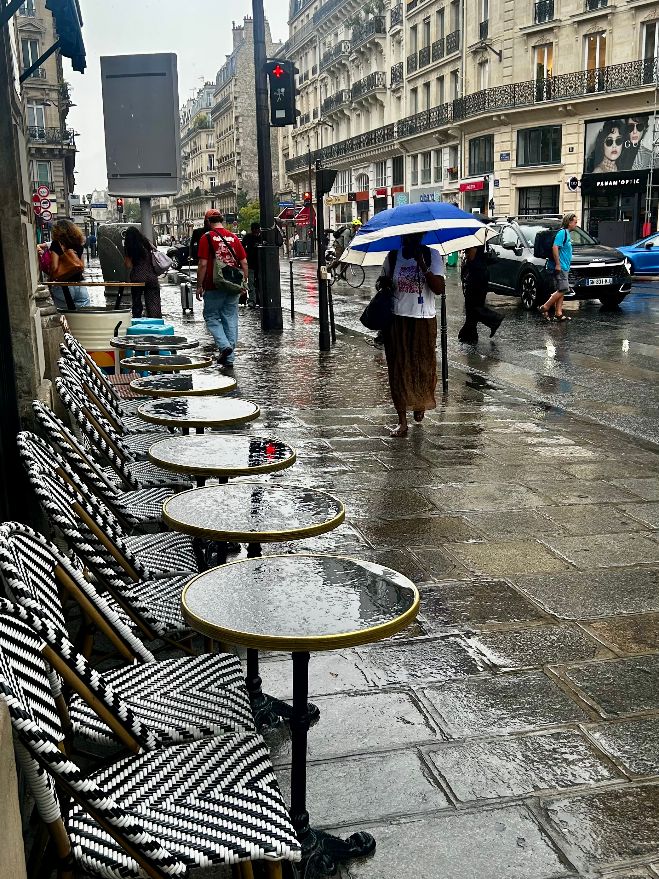
I met Deej at CDG and we caught the train to Châtelet–Les Halles, from where it was a ten-minute walk to Rue des Gravilliers. As soon as we emerged from the station, it started to pour with rain. I mean, fucking pour. Within minutes we were soaked.
The hotel was easy to miss. It occupied a collection of renovated buildings hidden behind two enormous wooden doors, with no sign to announce that we had arrived. The instructions, however, were perfect. Along a narrow path, up three flights of winding stairs and there it was: our room overlooking a tiny courtyard, with windows facing other windows on the opposite side.
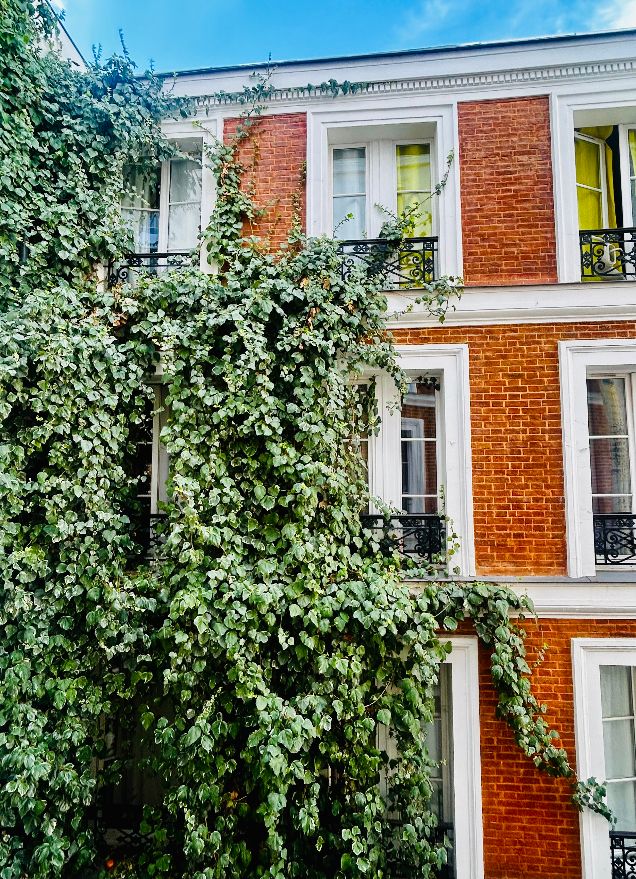
Ivy had taken over the walls. It climbed around the windows, covered some of them completely and seemed intent on swallowing the whole place.
The room was tiny but modern in a very nineties sort of way, and impeccably clean. A huge double bed occupied most of the space, leaving room for a small table and two chairs, a kitchenette and a bathroom that was little more than a cubby hole.
There was an art to taking a shower. There was nowhere to manoeuvre. Drop the shower gel and you were stuffed.
We had both travelled light: the shirts we were wearing, a couple of spare T-shirts and a pair of jeans. Unfortunately, the shirts had already got wet and were now hanging up to dry. Deej had already set his sights on one of my T-shirts and begged to borrow it.
I said no.
The next moment he was wearing it.
Deej, however, liked to sleep and would disappear for hours at a time.
I would wander off to my favourite place: a shaded courtyard filled with ivy and tall bamboo that kept out the sun. It was in almost permanent gloom. After the rain, the place filled with delicious scents and for a moment it seemed like something Gabriel García Márquez might have written in One Hundred Years of Solitude.
But this was France, where the heat had been insufferable and relentless.
Deej blamed me for the rain.
Eventually the sun returned, although the courtyard was so heavily shaded that every so often I had to look upwards just to check that it was still shining.
I spent hours reading there.
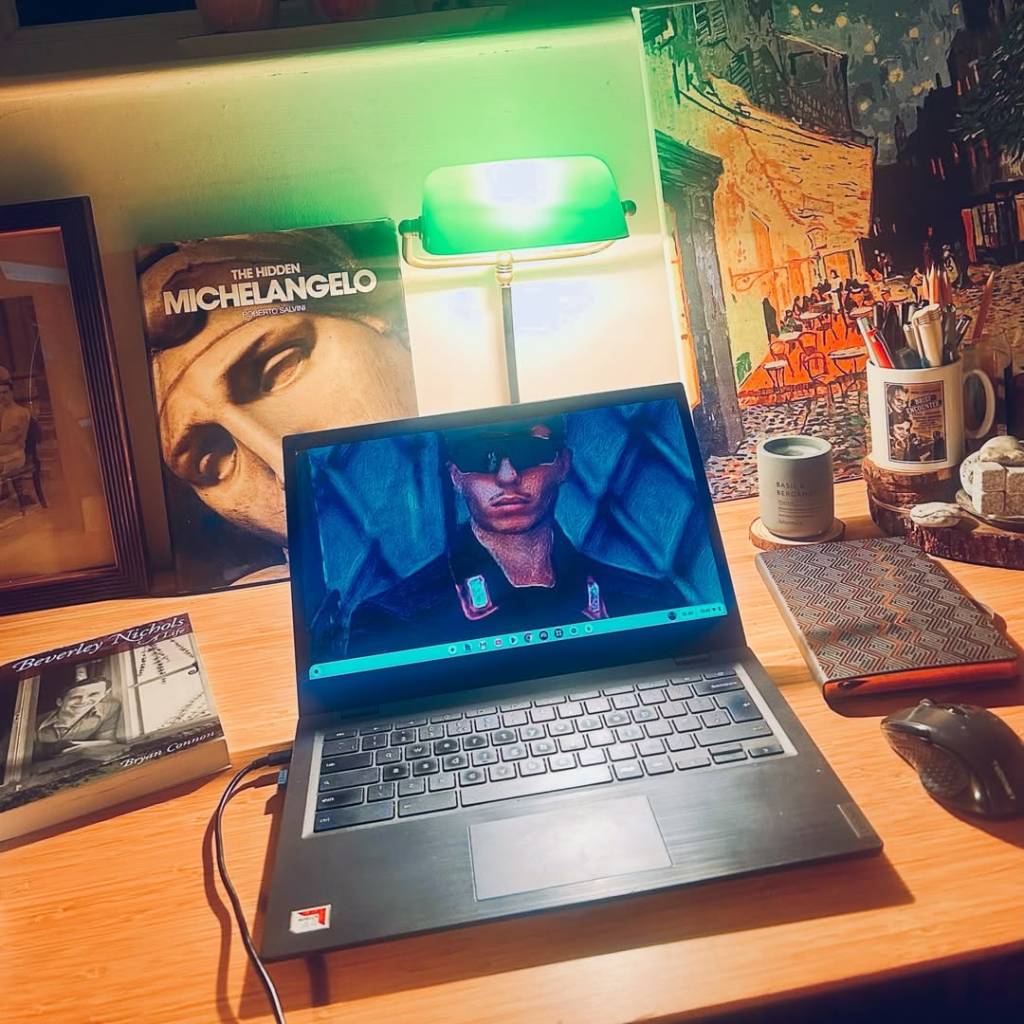
I finished my Beverley Nichols biography.
Deej cannot understand my fascination with dead people, which might explain why he frequently took to his bed.
Nichols had been one of the Bright Young Things of the 1920s. Look him up if you have never heard of him.
Shortly before his death in 1983, he said:
“Osbert Sitwell said that I was the first of the young bright people and now I am the last of them.”
I would have loved to have been Beverley Nichols. He had been everything I hoped to be.
From time to time I was joined by other guests: Americans, Spanish, Italians and Germans. They all behaved differently, but always with politeness. I would listen to their conversations because strangers can be an invaluable source of inspiration.
There was a Canadian couple with a son called Sam, probably fifteen or sixteen. He was ginger and had marvellous legs.
They sat around a table eating chicken baguettes bought from a local supermarket. The father complained that the bread contained sesame seeds, which seemed to be a disappointment.
“Why do you look like you are sucking dick?” Sam asked in a soft voice.
My ears pricked up.
“My jaw hurts,” his father explained. “Years ago I was eating semi-stale peanut brittle and something snapped. It hurt for a while but eventually the pain went away. Now I sometimes struggle to eat and it looks like I might be sucking dick.”
“Sam, what do you know about sucking dick?” asked a concerned Mommy.
I told Deej that I wasn’t doing the tourist thing. It was out of the question. I hate tourists. I hate the big queues, the clogged pavements and the meaningless photographs taken on phones that will probably never be looked at again. I hate the queues outside Shakespeare and Company, where people wait patiently to buy overpriced books they could probably buy cheaper somewhere else.
I have an urge to kick tourists whenever they get in the way.
I am like the Portuguese poet and writer Fernando Pessoa, who described active tourism as an expression of restless, unimaginative misery.
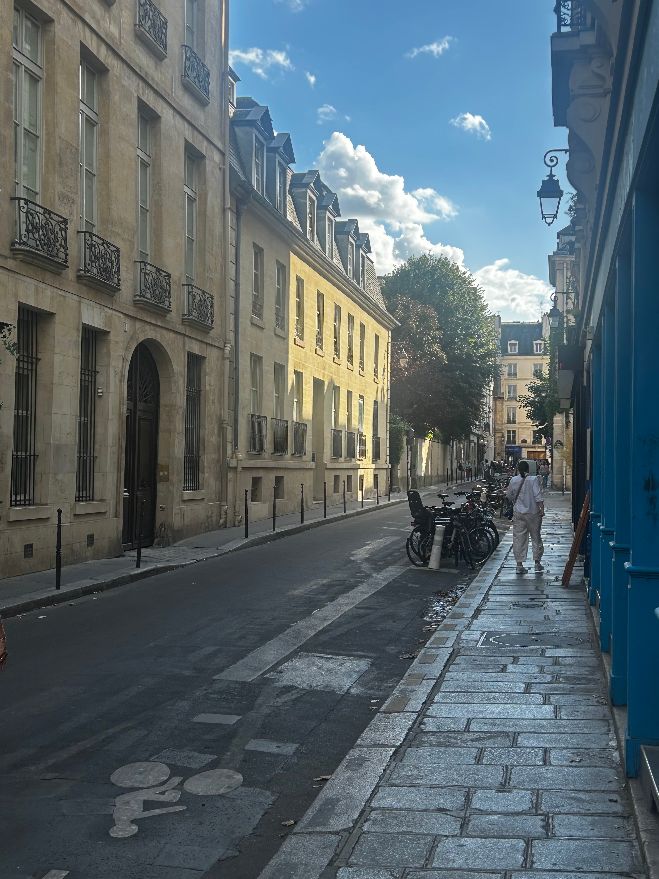
Instead, we explored the backstreets of Le Marais, where I learned that the district had once been the floodplain of the Seine. The bourgeoisie moved here in the seventeenth century, encouraged by King Henri IV’s creation of the Place des Vosges, then called Place Royale, between 1607 and 1612. What had once been marshland became the trendiest residential district in Paris.
I explained to Deej that the ground beneath our feet was soaked in blood and the guillotined heads of those same bourgeois.
Like an idiot, he looked down at the pavement to see what I meant.
In the early twentieth century, Le Marais was a bit of a shit show.
The grand houses had been divided into flats. Heavy industry moved into rooms where aristocrats had once danced. It became a no-go area where crime prospered and prostitutes gathered on street corners.
It is hard to imagine that now.
The authorities eventually ploughed money into Le Marais. Its buildings were renovated, its history brought back to life and its streets transformed.
I love Le Marais.
With its beautiful buildings, cafés and pocket parks, it has become one of my favourite districts in Paris.
I must tell you about the handsome French boy who was working at a bar we visited.
He was a picture to be treasured.
Wild dark hair, eyes with a quiet spark, teeth straight and orderly whenever he spoke. There were even a few traces of teenage spots on his cheeks, which somehow added to his appeal.
Deej, who is as straight as they come, was completely uninterested in my infatuation. While I followed the boy’s every movement, Deej noticed a mouse running beneath the tables and chairs. He was so fascinated by it that he failed to notice the dirty looks the boy was giving me.
He made it quite clear that he didn’t like me.
I would like to tell you that we met the boy in the street later. That he was hopelessly drunk and vomiting into the gutter. That we walked past him, looked at each other and laughed at his misfortune.
But we didn’t.
And perhaps that is the problem with real life. It so rarely provides the ending you deserve.
I have immense admiration for those who fight invisible battles every day, push through intense pain, and somehow find the strength to rebuild their lives. Their journeys are a reminder that healing is possible, and that even the darkest periods can eventually give way to hope.
I came across Zach Montana on Instagram.
This guy pushes my buttons.
A little digging online reveals that Zach has been open about his mental health struggles following a drive-by shooting at his home. The trauma profoundly affected his well-being, plunging him into severe panic disorder and debilitating insomnia.
Those dark days are there to see online, and they make for disturbing viewing. There is something unsettling about watching somebody caught in the grip of fear, unable to escape his own mind.
The 28-year-old singer and TikTok creator began listening to ambient music in the middle of the night as a way of managing his disorder. There is something strangely intimate about that: the small rituals people invent to get themselves through the hours when sleep refuses to come.
A Boy in Love, Unfortunately …
He’d been pacing around the piazza for, like, an hour, one hand going absolutely feral with the gestures while the other was glued to his phone. Yeah. This boy was down bad. In love, basically.
Michelangelo and Other Bad Ideas …
The handsome carabiniere. Main character energy, but make it literary. Michelangelo, old books & questionable late-night thoughts. Romanticising the chaos since forever.
A Dirty Mind …
Am I the only one who thinks Troye Sivan is dirty?
Not filthy dirty. Seductive dirty.
There is something about the way he moves. Videos like Rush and My My My! are all uninhibited physicality, nightlife sweat and celebratory desire. He looks tough, physical, almost animal-like. There is something raw about it. Something that hints at naughty desires without ever quite spelling them out.
Then there is that wild, untamed intensity. Roguish. Edgy. He has the look of someone who might push a boundary simply to see whether anyone notices.
But perhaps he is dirty in another way.
I imagine a mind that can take an innocent remark and give it an entirely different meaning. A fondness for crude jokes, suggestive words and the sort of playful naughtiness that turns an ordinary moment into something else entirely.
A dirty mind.
Desire used mischievously, perhaps, to heighten the excitement.
I’m getting ahead of myself.
Yes.
Troye Sivan is dirty.
Under the Surplice …
Thinking that my agnostic tendencies were showing, Signora Bruschi insisted that I go to Holy Mass with her.
I’d never realised that it was such a social occasion.
Before it started, Signora Bruschi stood outside talking to the dozens of women she knew. They wafted folding fans, complained about the heat, and predicted how hot it would be inside the church. But this was merely the forerunner to what really mattered: the latest gossip from the neighbourhood.
I was a spectator who didn’t quite grasp the conversations, smiling and frowning according to the situation.
My interest waned.
Attention switched to the teenage boys milling around the entrance.
They all favoured crisp white T-shirts with black shorts. They all seemed to dress the same in Italy: bella figura, that cultural obsession with looking effortlessly put together while remaining practical in the intense heat.
Style is treated as a social responsibility rather than a temporary trend. The sharp contrast of clean white against stark black creates an instant athletic frame. The T-shirts are rarely sloppy or oversized, and the shorts typically sit perfectly above the knee.
It is a reliable summer uniform: a neutral canvas for the things that really matter—expensive sunglasses, a luxury watch, pristine trainers.
The boys prodded one another and tried to trip each other up. The same things teenage boys did in every country.
But then they were called to action.
They disappeared through an arched doorway beside the church. One by one, they slipped into white cotte, their black curls making it difficult to tell them apart.
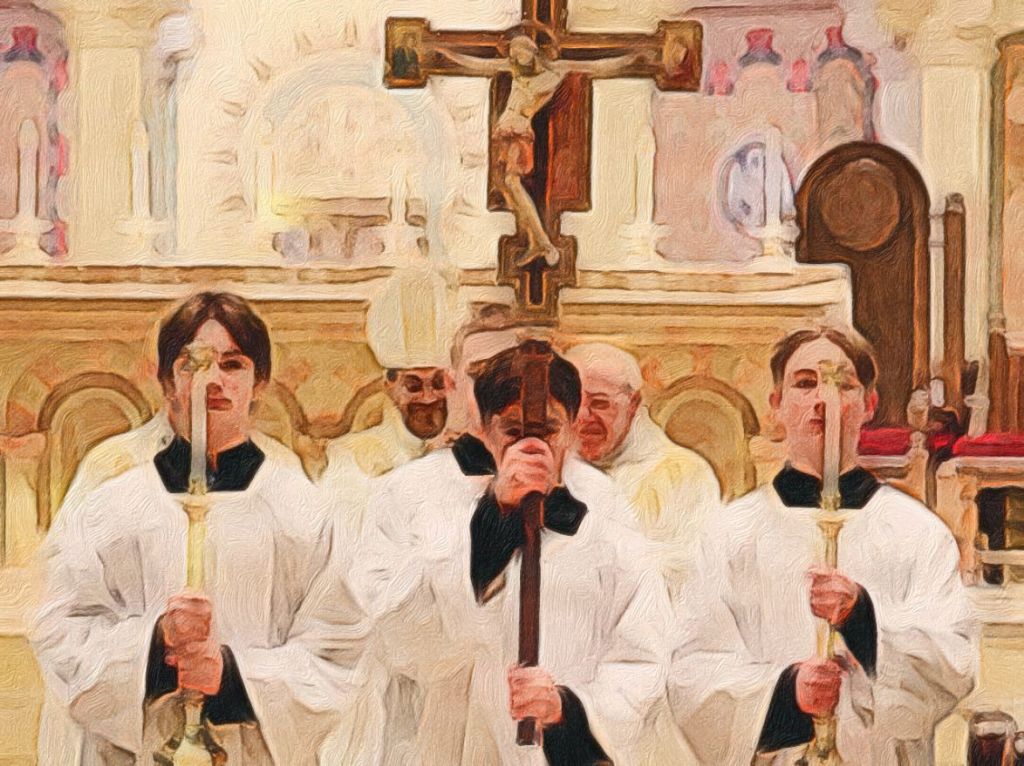
They reappeared as altar servers, suddenly possessed of an air of importance. One carried the processional cross, which he propped against the wall of an adjacent house. The others clutched unlit candles.
And then they waited while everyone went into church.
Cantiamo te, Signore della vita was sung. Don Carlo and the chierichetti walked down the aisle in a serious procession, the processional cross held high and the boys carrying flickering candles.
The tomfoolery had been left outside.
These boys—some happy to be there, others clearly not—were rising to the challenge. For a few minutes, they seemed to understand that something was expected of them and that they were capable of becoming something other than the boys who had been pushing and shoving outside.
And I smiled.
They paraded past, their clothes hidden beneath long white surplices; their true identities given away by flashy new trainers—Nike Air Force 1s, Adidas Sambas and New Balance 550s.
It was the trainers that betrayed them.
Beneath the white cotton, beneath the solemn expressions and the ritual and the incense, they were still those same boys outside the door. The church had given them candles, a cross and a moment of gravity, but it hadn’t managed to take away their swagger.
Perhaps that was what I liked about it. For all its ceremony, Holy Mass had not changed them at all. It had simply given them another costume to wear.
It was dark by the time we went out, but the heat was still oppressive. The only place left to buy milk was the little corner shop that opened and closed according to the whims of its owners. Nobody knew its hours. There was never any guarantee it would be open.
But Signora Bruschi had panicked. She needed milk for my morning coffee and for Bianchi’s Vitabella Corn Flakes. We could easily have managed without it, but she liked everything to be perfect. At confession, she would probably tell Don Carlo she had forgotten to buy milk and had therefore sinned.
Cola whistled as we walked. He had unbuttoned his shirt because he believed the months spent working for Signor Valenti had transformed him into a young Roman god. After sharing a bed with him for so long, I was inclined to agree. But Bianchi had been moved to the attic, and I was once again sleeping in my own room, with a large bed all to myself.
As we approached Via Cesare Trezza, Cola stiffened. He stopped whistling and buttoned his shirt. A young man stood beneath a streetlight, smoking a roll-up.
“Pezzo di merda,” Cola muttered.
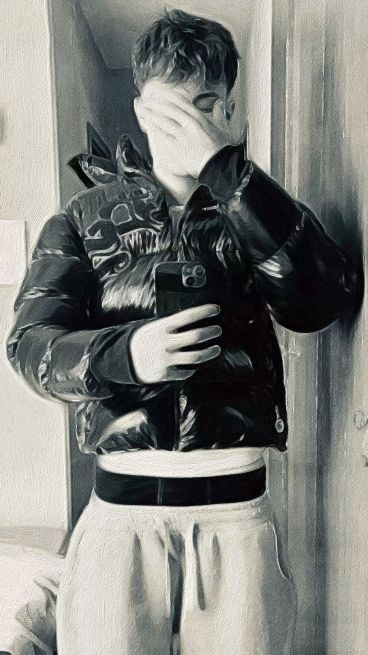
The man had dark skin and closely cropped black hair. He wore jeans and a designer puffer jacket with nothing underneath, exposing his bare chest. His trainers were scuffed but spotless. Silver rings glinted on his fingers, a faded tattoo disappeared beneath the collar of his jacket, and an expensive pair of sunglasses rested on top of his head.
As we drew level, he gave a low, taunting whistle intended for us alone.
“He’s Sinti,” Cola said once we had passed. “He hangs around here. Dangerous. If you ever see him again, cross the street.”
Dangerous, I thought.
But extraordinarily handsome.
A Collector of People
It is all mirrors and smoke screens: the endless quest to protect an identity.
I shared my work with a friend—one of the privileged few—and he recognised the characteristics of people we both know, though inhabiting the wrong bodies.
“I am a collector of people,” I told him. “And it has always been my intention to confuse.”
The Same Quiet Corner
I love the sun, but the sun does not love me. Shade is essential. It is time to discover whether cool air still exists. A time to slow down, to forget myself for a while and leave the rest of the world behind. Everybody needs a place to disappear.
Most days I come to these steps, where nobody thinks to look for me.
I sit beside carefully tended planters of oleander, bougainvillea and English lavender, the air fragrant with their scent. I drink my coffee in peace. It is silent except for the distant toll of a church bell or the occasional motor scooter threading its way through the alleyways.
Then a young man arrives. He always chooses a place nearby and settles down with a book. No matter what time I come, sooner or later he appears and quietly takes his seat. I ought to resent the intrusion, but I cannot. He is as pale as I am, and I suspect he, too, is a foreigner.
It is a curious thing.
We travel from distant places, only to find the same quiet corner of the world.
Circe’s Gift
Bianchi came up behind me and began ruffling my hair.
“Ti sto trasformando in un maiale,” he said. I’m turning you into a pig.
The display of affection was lost on me.
Later, I discovered that the bond between humans and pigs is forged in Homer’s The Odyssey by the powerful sorceress Circe on the island of Aeaea. When Odysseus’s crew stumble upon her palace, she welcomes them with a meal of cheese, barley, honey, and wine, laced with a potion. After they have eaten, she raises her wand and transforms them into swine, imprisoning them in her pens
Now I am a pig.
The Return of Antinous
People do not understand me. They cannot see why I am drawn to old things. But I am, and I have no idea why. More than anything, I like books about dead people.
At the moment I am reading a biography of Beverley Nichols, the English writer, playwright and broadcaster who died in 1983.
It is a banger.
His longing for intense, sometimes masochistic homosexual encounters existed alongside the refined, middle-class domesticity he cultivated in his bestselling memoirs.
Rather like me.
I would happily live my life as Beverley Nichols did, though I could do without the growing old part.
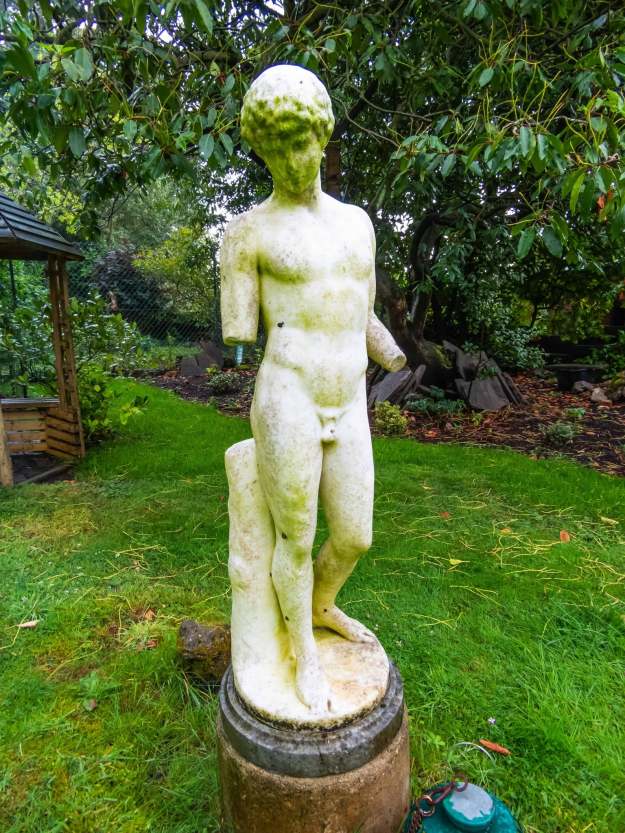
Which brings me to Antinous, the beautiful young Greek whose love affair with the Emperor Hadrian made him immortal. A statue of Antinous stood for decades in the gardens of Nichols’s house, Allways, in Glatton.
Nichols had bought the statue from Henry “Bogey” Harris, the wealthy London aesthete and art collector who lived in Bedford Square.
“Antinous would be much happier living in the Huntingdonshire countryside than at Bedford Square in London,” Nichols declared.
When Nichols sold the house, Antinous was left behind.
In the 1960s, the new owner ordered the statue to be removed. “One could clearly see his man parts and his bottom!” she complained.
It was thought to have been destroyed.
Imagine my delight to discover that, only a few years ago, Antinous was found abandoned in an overgrown corner of the garden. Restored to his former beauty, he now stands once more in his rightful place, gazing back towards the house below.
Cola returned from Torricelle with important news. Signora Valenti had asked him for my mobile number. Why she wanted it, he had no idea, but he had seen no reason not to give it to her.
I could think of several.
“She will contact you,” Cola said before tucking into the meatballs his mother had prepared. As far as he was concerned, that was the end of the matter.
Bianchi sat opposite, his bare foot brushing against my knee beneath the table. He hadn’t quite followed the conversation and raised an eyebrow, waiting for someone to explain.
Signora Bruschi stood at the hob, stirring a pan with her back to us. Even so, I knew she was listening to every word.
She was a wily woman.
When Cinzia had pleaded for Bianchi to stay with me because Lorenzo was making life difficult for him at home, Signora Bruschi had seen straight through the lie. She allowed him to remain, but not with me. While I had been banished to Cola’s room, Bianchi had temporary use of mine. Now she was clearing out a room in the attic that would soon become his.
Signora Valenti wasted no time.
Later that evening a message arrived asking whether I was free to meet her for coffee the following day.
I read it aloud and was about to reply that I wasn’t available when Signora Bruschi wiped her hands on her apron and joined us at the table.
“It would be rude to refuse,” she said. “After all, you have no reason not to go.”
Signora Bruschi invariably had the final word.
“But,” she added after a pause, “I think it would be better if Bianchi came with you.”
Bianchi’s face lit up.
Cola grinned.
“She wants your body,” he said.
At eleven the following morning we arrived at Liston 12 on Piazza Bra, its terrace overlooking the Roman Arena. It was crowded with tourists, most of whom had no idea they could have paid half the price simply by walking a few streets farther.
I scanned the tables until I spotted Signora Valenti sitting in the shade. She raised a hand to attract our attention.
She wasn’t alone.
Edoardo sat beside her.
Valentina Valenti looked effortlessly glamorous. Her long blonde hair was tied back and oversized designer sunglasses concealed much of her face. She wore a pale pink summer dress and white Jimmy Choo heels.
She rose to greet us, kissing each of us lightly on the cheek. Bianchi’s appearance seemed not to concern her in the slightest as she motioned for us to sit before signalling a waiter for four espressos.
Edoardo remained where he was, idly turning the pages of a menu. He looked profoundly bored by the ritual of introductions.
After I introduced Bianchi, Signora Valenti inclined her head politely.
“I had expected you to send me samples of your work,” she said. “When you didn’t, I was forced to find it online. It wasn’t easy.”
“I’m sorry,” I replied. “I write under a pen name.”
“I know,” she said with a faint smile. “But I am well connected. I know people who are very good at finding whatever I need.”
She reached into an expensive handbag and produced a leather notebook filled with beautifully handwritten notes.
“I know you’re a travel writer. I’ve read several of your articles. They’re well written…” She looked up. “If a little dull.”
Across the table Edoardo gave a quiet snort of amusement.
His dark hair was slicked back as though he had only just stepped out of the shower. A faint scar ran across one cheek. The moment he realised I had noticed it, he covered it with his hand. It was his eyes that lingered with me, however—cold, watchful and instinctively unfriendly.
“I’d like to offer you a job,” Signora Valenti continued.
“A job?”
“My husband’s business has become extremely successful and is expanding internationally. I want you to write the history of the estate—from its modest beginnings to what it has become today.”
“Why me?”
The waiter arrived balancing our coffees with exaggerated care, placing each cup before us as though performing on stage. Signora Valenti dismissed him with an impatient flick of her hand.
“Why not?”
I searched for a polite way to decline without giving offence.
“Everything you need will be available to you,” she continued. “There are boxes of historical records at Torricelli that must be sorted through. Edoardo has agreed to help.”
Judging by the expression on his face, Edoardo had agreed to nothing. He was here because his mother had decided he would be.
The project held little appeal. Neither did the prospect of spending weeks in Edoardo’s company.
“I’m delighted that’s settled,” she said brightly. “I should have been very disappointed had you refused.”
She waited, knowing perfectly well no objection was coming.
“Excellent,” she concluded. “Then it’s agreed.”
A cigarette appeared from nowhere. She lit it with practised elegance and leaned back looking entirely satisfied with herself.
Bianchi looked equally pleased.
“This means you’ll stay in Verona longer.”
“Which creates one problem,” I said. “The rules say I have to leave Italy soon. I’m only here as a tourist.”
“Problems like that don’t exist in our world.”
It was the first time Edoardo had spoken. His voice was flat, almost bored.
“Exactly,” said his mother. “Now, let’s discuss your fee.”
The offer was generous.
Three thousand euros was considerably more than I had ever been paid for a commission, and although the project would take time, it would still leave me free to accept other work.
An Alfa Romeo belonging to the Carabinieri was parked outside Signora Bruschi’s house when we returned.
“Che ci fanno qui?” Bianchi asked.
Two uniformed officers were just leaving. The younger of the pair held the front door open as we approached, taking a moment longer than necessary to look us up and down.
He seemed vaguely familiar.
Tall. Handsome. Short-cropped hair.
Our eyes met for several seconds, as though each of us felt we ought to recognise the other.
The editor of a magazine received my latest submission. It was different from my usual work; this time there were 2,500 words of creative writing.
Thankfully, he liked it.
Then came the revisions.
Lose the opening paragraphs. Move a sentence. Remove the relationship angle. Tone down my favourite character. Rewrite the ending.
He was starting to annoy me.
A typical comment read:
“Your writing has become noticeably more restrained… Readers tend to trust narrators who don’t feel the need to interpret everything for them.”
All I wanted to do was submit the piece and see a payment appear in my bank account.
But we got there in the end.
Before sending the final draft, I read it one last time and realised something rather irritating.
He was absolutely right.
*****
Photo by Victoria M.
A lesson in speaking Dutch …
Signora Scala lives in the building next door, but spends more time in Signora Bruschi’s kitchen than in her own. It is not unusual to find her sitting at the table chopping vegetables or helping to make bread. All the while she will be engaged in animated conversation, sharing the latest gossip with Signora Bruschi, who appears to tolerate these daily intrusions.
Though she does occasionally test her patience.
“Is there not a week that passes without her mentioning that she is related to the Della Scala family?”
The Della Scala family was the influential medieval dynasty that once ruled Verona. Signora Scala is not technically related to them; she acquired the surname through marriage. Nor does she seem aware that there are thousands of modern-day Scalas living in circumstances every bit as modest as her own.
Signora Scala speaks no English, which makes my presence a constant source of frustration for her, but a welcome distraction for Signora Bruschi and Cola whenever I wander into the kitchen.
“She’s talking bullshit,” Cola might announce loudly, while Signora Scala smiles and nods in complete agreement.
I am something else she struggles to understand.
She cannot comprehend why Signora Bruschi refuses to charge me rent for the apartment.
“He is family,” Signora Bruschi replies.
“But you could live comfortably if you made him pay.”
The truth is that Signora Bruschi is far from poor, and she seems genuinely offended whenever I suggest contributing financially.
Cola insists that his mother fears I might not be able to afford it, and would simply leave.
Signora Scala will tut loudly, make the sign of the cross, and declare, “Ed è anche omosessuale.”
As though I hadn’t understood a word, Cola inevitably provides a translation.
“She says you like to take it up the arse.”
This week, perhaps determined to prove a point, Signora Scala announced that she was taking in a lodger for a month. He was a young Dutch dancer performing with a contemporary dance company at the Teatro Romano. For this, she informed us, she would be paid €150 a week.
Signora Bruschi, quietly folding the ironing, rolled her eyes.
“And what is this Dutch boy called?” she asked politely.
“Jort,” Signora Scala replied.
Except she had decided there was a proper Dutch pronunciation, producing something closer to “Joooorrrrrt.”
Cola pounced immediately.
“Joooorrrrrt,” he bellowed in an impossibly deep voice.
“Sì, Joooorrrrrt,” she confirmed.
“Joooorrrrrt!” he shouted even louder.
“Joooorrrrrt!” she echoed.
“Joooorrrrrt!”
“Joooorrrrrt!”
By now they were practically competing to see who could produce the most theatrical rendition of the poor boy’s name.
It was the finest Joooorrrrrting I had ever witnessed.
“Oddio,” sighed Signora Bruschi.
*****
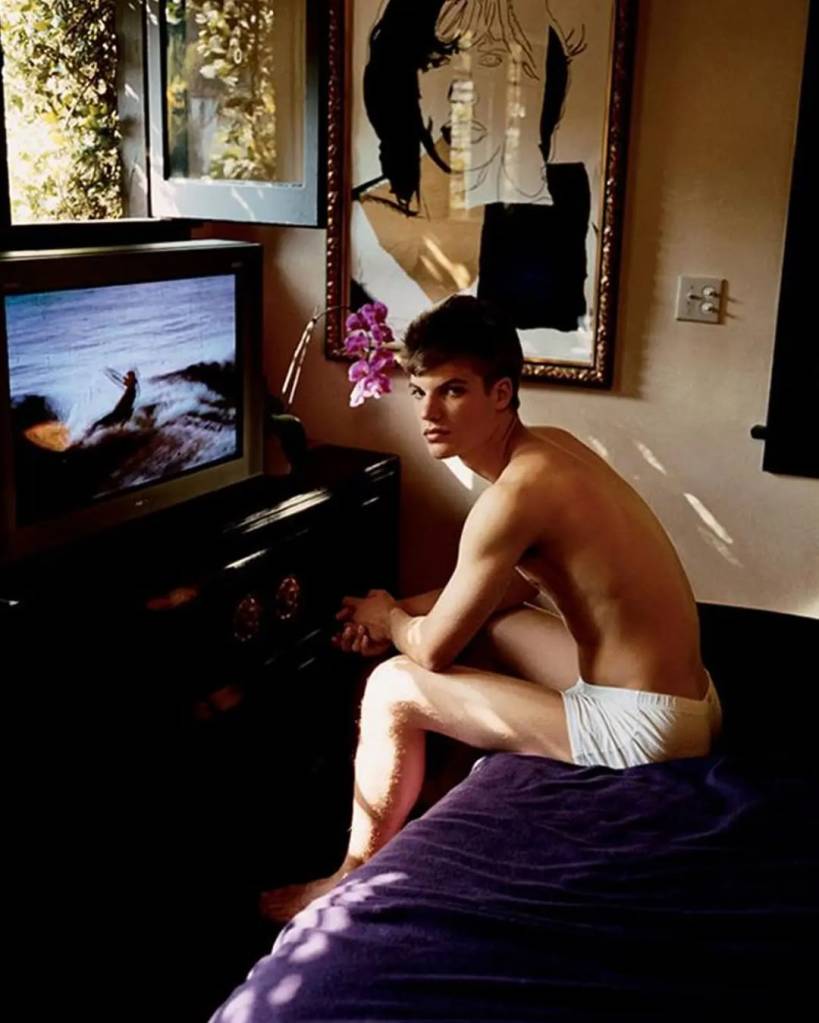
Photo by Paul Jasmin
On explaining a one night stand to Cola …
You just know, don’t you?
It is always the timid one, sitting quietly in the corner with the girls who want to protect him.
Halfway decent-looking, too.
Johnny from Tunbridge Wells.
He’ll ask if I want to play Spider-Man 2 and snort lines of coke from his psychology notes. He rarely has the coke, but it sounds impressive.
I ask whether his mother still buys his underwear. He blushes. He says no, but we both know he is lying.
He freezes like a rabbit caught in a trap, yet he has no real desire to escape.
The next few minutes will make or break him. At least, that’s how it will feel.
Eventually, he drops his jeans, revealing the underwear his mother chose for him.
Now what?
You tell him to take off the underwear. When he does, his embarrassment is written all over him.
*****
My favourite newspaper quote …
“Oh dear. Such a shame to see the US lose at football after their insanely embarrassing president cheated for them. Still, it really brought the world together. The last time this many people cheered on a Belgian resistance, it was 1914 and the Germans had just crossed the Meuse.”
Marina Hyde, writing in The Guardian, UK.
*****
On cargo shorts and crop tops …
Imagine that one hundred years from now someone discovers a single photograph of you. Your music has vanished. No recordings survive. No interviews. No reviews.
What would you want that photograph to say about you?
“Cunt-serving twink.”
Severin introduced me to a rising German Gen-Z singer called Siovo. He played him incessantly in Taormina and, now that I’m back in Verona, I find myself doing much the same.
Siovo is one of the few openly gay artists working in the German pop scene, writing songs that explore queer identity, unrequited love, modern relationships and isolation.
At least, that’s what Severin tells me.
My complete ignorance of the German language means Siovo could just as easily be singing about bin collections or discounted washing powder.
He has also cultivated a distinct visual identity, usually appearing in an unlikely combination of oversized cargo shorts and cropped tops.
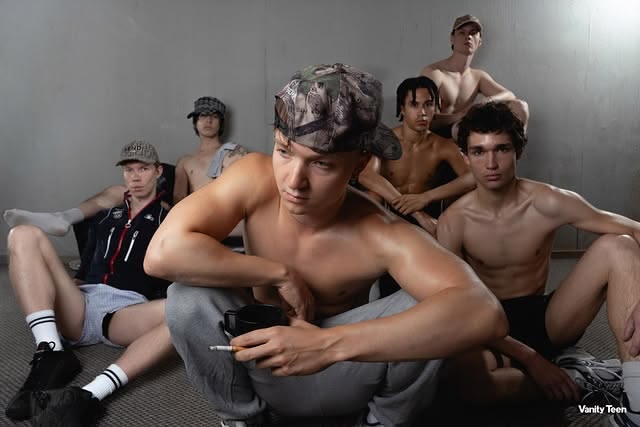
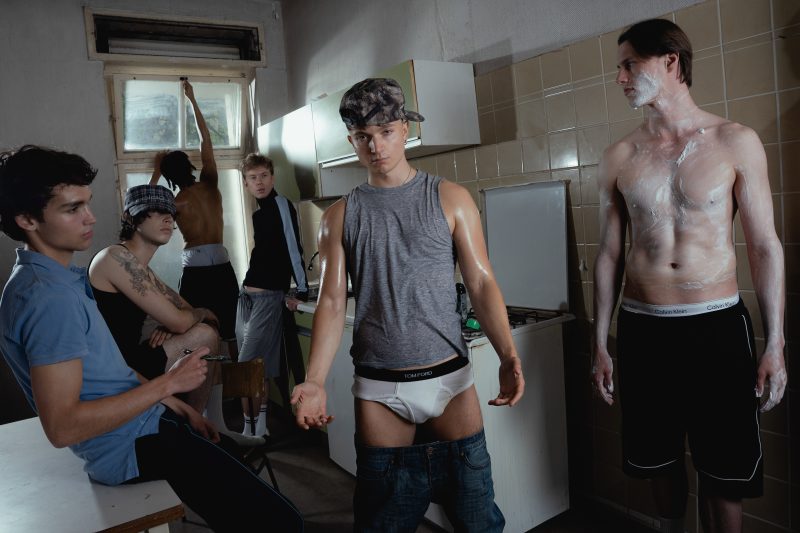
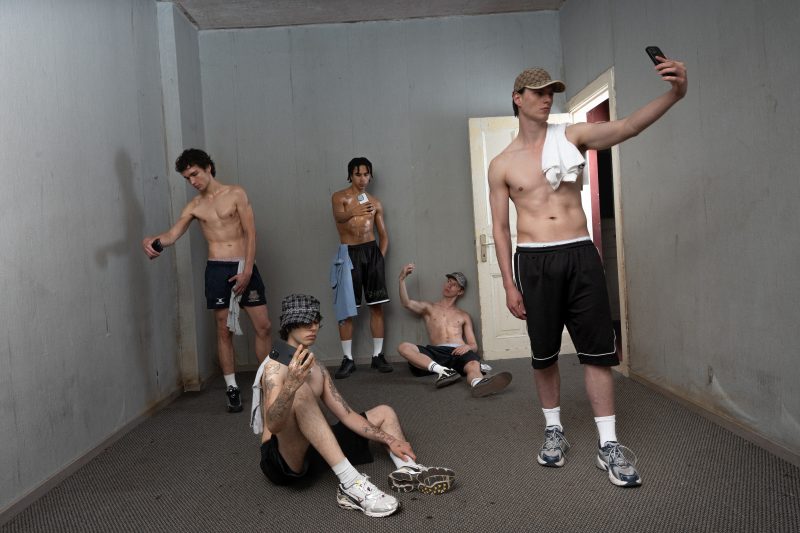
Naturally, I was delighted to discover that he had recently collaborated with photographer Nikolai Voelcker, whose work has a particular talent for capturing chavvy young men in various states of undress.
Lampoon magazine describes his photography rather more elegantly than I ever could:
“Photographer Nikolai Voelcker focuses on male dynamics. Friends joke, stretch limbs, shift postures, and press next to each other. Shoulders bump. Arms connect. These gestures do not carry disclaimers. They occur as part of casual time together. The camera records moments that raise questions about erotic currents in shared male space.
Photos by Nikolai Voelcker
*****
The Silence of Roca Rey …
The last person I saw fervently stroking and kissing rosary beads was Nico, my ex-boyfriend, who went through this disconcerting ritual every time we had sex.
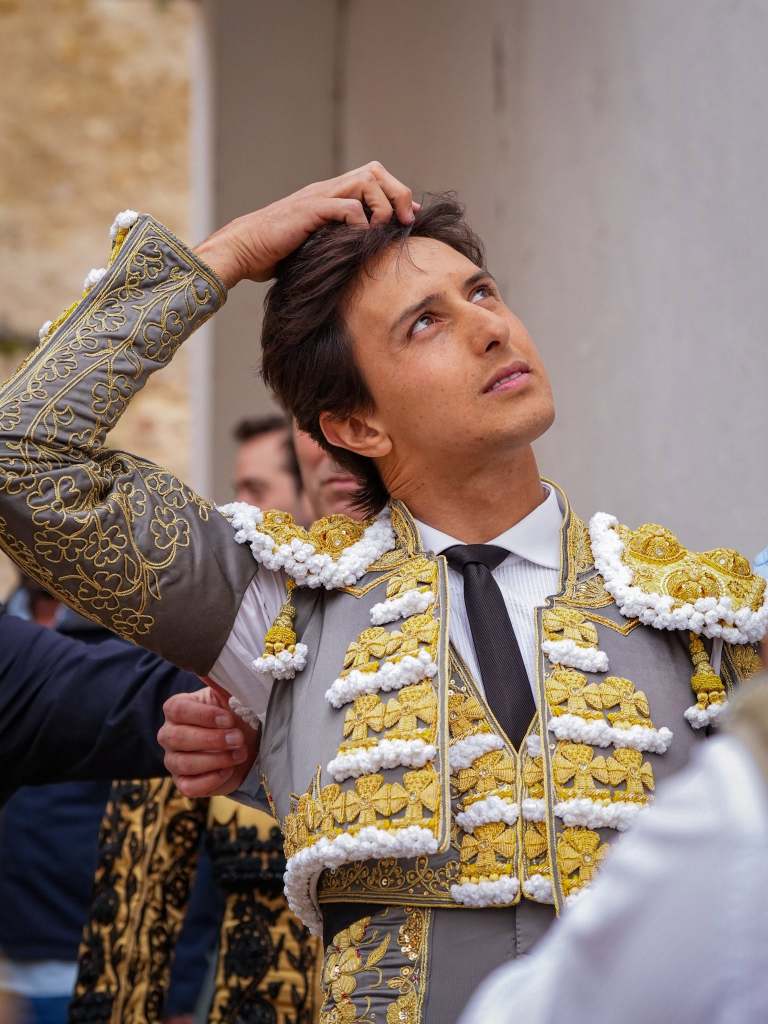
I thought about Nico while watching Albert Serra’s riveting documentary Afternoons of Solitude, about the Peruvian matador Andrés Roca Rey, who appears to share the same devout Catholicism.
Cola watched the documentary on Mubi Italia. It was in Spanish with Italian subtitles, and the only things I understood with any certainty were the bulls.
“Uomo coraggioso,” Cola murmured.
“Uomo bellissimo,” was my reply.
I watched it again later, this time with English subtitles.
Roca Rey is a strikingly handsome twenty-nine-year-old: a man of countless facial expressions and very few words, capable of selling out bullrings across Spain, France and Latin America.
The global controversy surrounding bullfighting rests on a direct clash between animal welfare and cultural preservation.
It is utterly riveting, but an extremely difficult watch.
There is blood. Lots of it. The bulls, after all, never come out on top.
Supporters defend bullfighting as a deeply rooted art form and historical tradition: an epic celebration of human skill, courage and intellect overcoming the raw power of nature.
Phil Hoad, writing in The Guardian, observed:
“Filming Rey in transit in a people carrier, getting apparelled in his hyper-camp getup, rehearsing his mannerisms in a lift, Serra is fundamentally interested in questions of performance and style. In the arena, he documents the finesse and attitude with which the matador confronts, corrals and quells the raw force of nature. In the ring, Rey has an extraordinary repertoire of gestures: preening head tosses straight from a Whitesnake gig; a glowering demon kill-mask out of kabuki theatre.”
Roca Rey spends much of the documentary sitting silently in a people carrier while an entourage of yes-men shower him with endless praise. You were magnificent. So brave. Nobody does it like you. Hoad captures it perfectly: “There’s something almost insecure about the nonstop stream of compliments Rey’s entourage lavish on him.”
Roca Rey rarely responds. More than once I found myself willing him to turn around and shout, “Shut the fuck up!” But he never does. He remains almost unnervingly silent, and those cherubically handsome, boyish looks only make him more fascinating to watch.
*****
On attempting to pick someone up …
I woke him from his slumber. He had been staring without realising it. When I moved, he was startled. That was the moment you knew. You were in complete control; he wasn’t. Sometimes it made me think I hadn’t lost it after all.
I asked why he had been staring. He denied it.
“Well, I was staring at you,” I replied.
That was usually the point where they folded. The bolder ones called your bluff, and when they did, I made a tactical retreat, giving them just enough space to realise they had missed their chance.
They always came back. By then, they wanted what they had pretended not to.
*****
On the cute and willing…
Tim Wolf at East West Models, Germany. Photo by Ralph Geiling.
On my trip around the world … A great deal of time has been spent talking to Severin, who is thoroughly enjoying his new life in Sicily. He has started work as a waiter in Taormina, where the heat is intensifying by the day.
When he is not working, he is busy fending off the advances of Alfio, the hotel receptionist who took an immediate liking to him. Severin has his reservations about Alfio and wishes he would stop asking him to spend the night. The only person with whom he truly feels comfortable, he tells me, is myself, and that is because we share a history — at least, in a non-sexual sense.
Severin insists that Alfio carries a flick knife in his back pocket and fears that he might use it against him if he does not get his way. I tell him that the chances of this happening are remote. Alfio, from what I have seen, is one of the sweetest and most charming hosts imaginable and the least likely person to become a murderer.
“It is Sicilian blood,” Severin claims. “Alfio is related to an influential family who are not afraid to inflict death upon their enemies.”
I ask where he acquired this alarming information, and he tells me it came from a young prostitute who — as it transpires — also had designs on Severin and had seen the two of them together in Piazza IX Aprile. German boys, it seems, can sometimes fail to recognise the simple mechanics of jealousy.
Alfio had, however, managed to secure tickets for them both to watch the new season of House of the Dragon on a large screen during the Taormina Film Festival. It is here that Severin and I differ greatly; I can think of few things more unbearable than sitting through several hours of fantastical nonsense.
Severin’s greatest excitement, however, was that Russell Crowe and his entourage had visited the restaurant where he works. He immediately called Alfio and instructed him to come over, only for him to be mistaken for a member of the paparazzi upon arrival and denied entry. In the end, Severin smuggled Alfio into his room above the restaurant, from where he was able to watch Russell Crowe dining through the window.
Severin’s colleagues dared him to ask for an autograph, no doubt hoping that he might provoke the actor’s notoriously volatile temperament. Alas, Severin was far too busy.
“After work,” Severin complained, “I had such a difficult time getting Alfio to leave because he was expecting to stay the night. And when I finally managed it, I discovered that my best boxer shorts were missing — although he denied knowing anything about them.”
Severin has also asked when I intend to return to Taormina, though that is unlikely to be for some time. Instead, he has already begun making plans for the autumn.
“I am going to go on a world tour, and I would like you to come with me,” he announced.
It soon became clear that his definition of a ‘world tour’ was somewhat more modest — Rome, Madrid, Lisbon, and Paris; a Gen Z interpretation of the Grand Tour.
The flaw in his plan is that he is unlikely to save enough money to accomplish it — and neither, for that matter, am I. Instead, I have suggested that, once the season has ended, he might join me in Verona at the home of Signora Bruschi, an idea which currently holds little appeal for him.
“But we would have such fun together,” he pleads.
The truth is that, when the time comes, Severin may find it far more difficult to leave Taormina than he presently imagines.
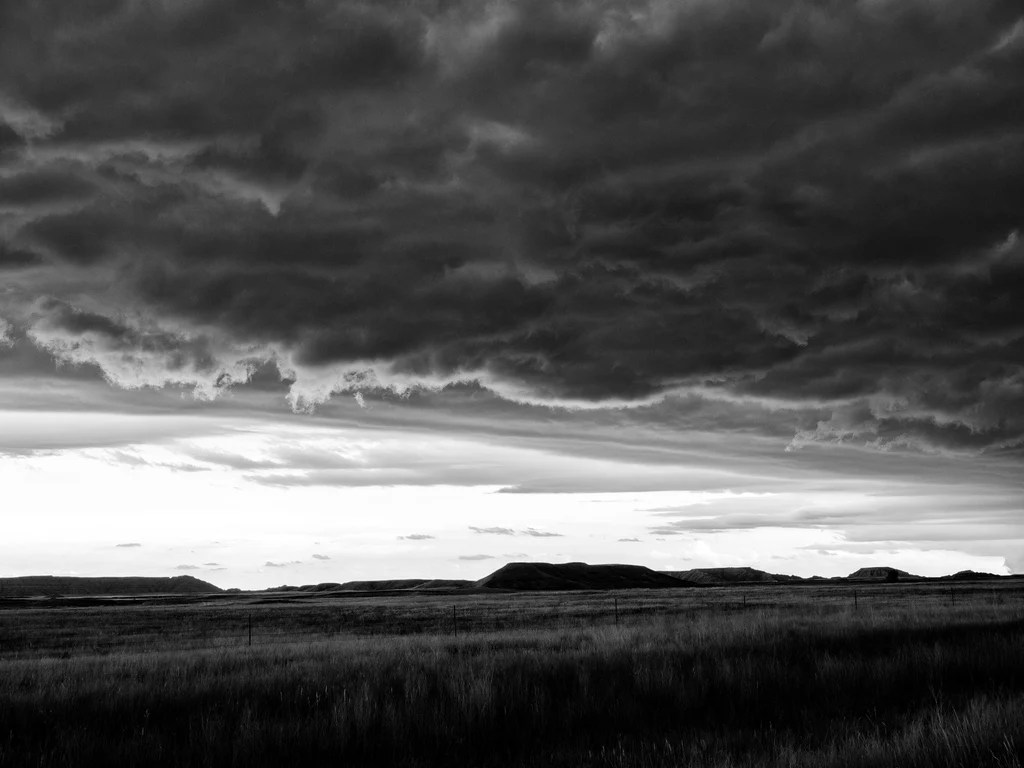
On not knowing where to go … Dark clouds. I’m in a wide open space. I’m standing. I’m all alone and staring into space. They blow across the landscape not knowing where to go. I tell myself, that is exactly how I’m feeling. Days and weeks have become one; time wasted on someone who doesn’t understand you.
On meeting someone from Archer City … Levi, the Polish boy with the broad Yorkshire accent, refers to those who attend the documentary festival as “lanyard wankers”. The bar where he works plays host to large numbers of them and he has very little time for their sort.
“They come in wearing lanyards around their necks and treat us like shit. Like they’re big shots with the most important jobs in the world and we should be grateful for their presence. Fucking wankers.”
Well, we met a lanyard wanker. He was American, and the badge around his neck informed us that he was called Michael and had worked on a documentary exploring border security between Mexico and Texas.
“You must try and see it,” he drawled, “and tell me what you think.”
When somebody says this, it usually means that you are contractually obliged to tell them that it is wonderful, even if it turns out to be a complete pile of shit.
But much to Levi’s disappointment, Michael was actually rather sweet, and unusually interesting.
“I come from Archer City,” Michael proudly told us. “About twenty-five miles south of Wichita Falls.”
Levi immediately broke into a rendition of Wichita Lineman to demonstrate that he had at least heard of the place.
“Wrong Wichita,” Michael corrected him. “That song is about Wichita, Kansas, although Jimmy Webb actually got the inspiration for it while driving through the Texas and Oklahoma panhandles. Archer City and Wichita Falls are most definitely in Texas.”
Michael asked what we did. I explained that I was a writer, which was somehow misconstrued as meaning that I was an author, and I saw no reason to correct him. Levi grinned and explained that he was merely a handsome barman.
“You ever heard of Larry McMurtry?”
The question was aimed squarely at me, because handsome barmen are apparently incapable of knowing anything about Larry McMurtry.
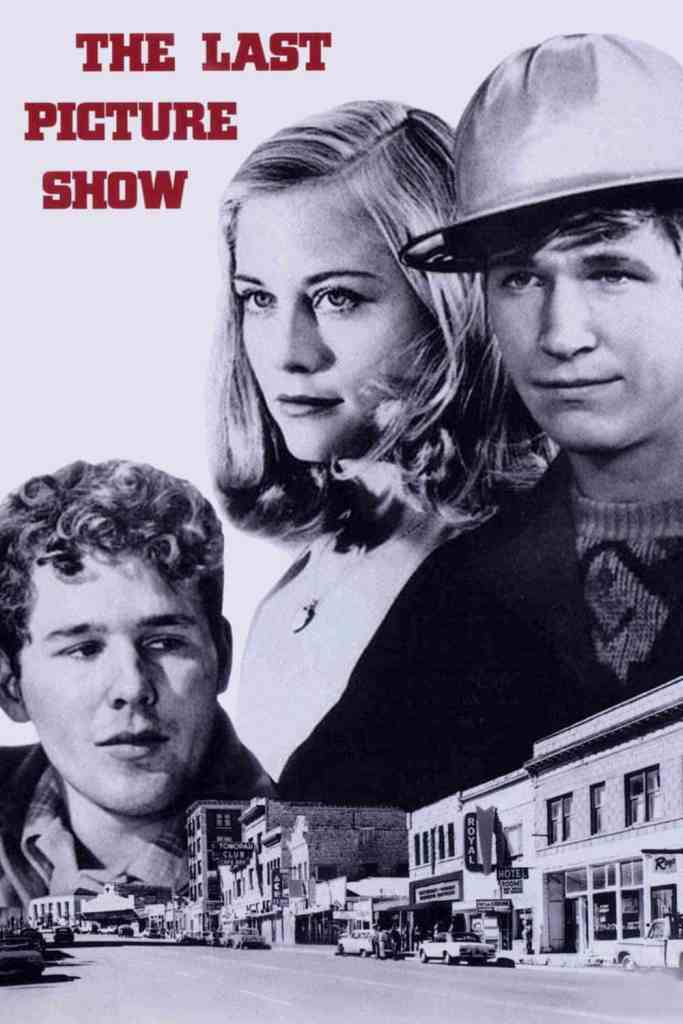
“McMurtry came from Archer City. It’s where they filmed his novel The Last Picture Show back in ’71, and its sequel, Texasville, in 1990.”
I had never seen the film, but it turned out that the handsome barman had.
“The Last Picture Show. Black and white. Classic film,” Levi declared. “Jeff Bridges, Cybill Shepherd and Timothy Bottoms.”
Michael looked impressed.
“Well, I have to admit, it’s a bleak film.”
“What’s it about?” I asked.
“Pitfalls, escapades, sex — but really, it’s about a teenage boy growing up in the 1950s. Back in the 70s, my grandpa was a Baptist deacon and a school board member who was fiercely opposed to them filming in Archer City. ‘Sickness in the stomach and further degradation and decay of the morals and attitudes we foist upon the youth of this county,’ he declared.
“Grandpa Joe was the stereotypical Texan — a bolo tie on Sundays, polished cowboy boots, a white shirt and khaki trousers. But he lost the battle, and do you know what he did, boys? He only went and appeared in the film as an extra.
“My folks never let him forget that. I don’t think they ever stopped reminding him.”
On finding out that I am a Zillennial … Nobody has ever described me in such a way before. I was somewhat startled to discover that I am apparently a Zillennial — a member of a curious micro-generation born between 1993 and 1998, the very year in which I entered the world. I only just made it.
It places me on a peculiar threshold: old enough to remember the final days of an analogue childhood, yet young enough to have grown into adulthood alongside the digital revolution. I belong to that brief moment in time when children still played outside until the streetlights came on, but later found themselves navigating a world of smartphones, social media, and an existence increasingly lived through screens.
There is something rather comical about discovering, at the age of twenty-eight, that one belongs to a category that nobody had previously thought to tell them existed. I mentioned it to my friend Joshua, who described my birth year as 1998 B.W. Intrigued, I asked him to explain.