That Moment: Orpheus Is Waiting For Me


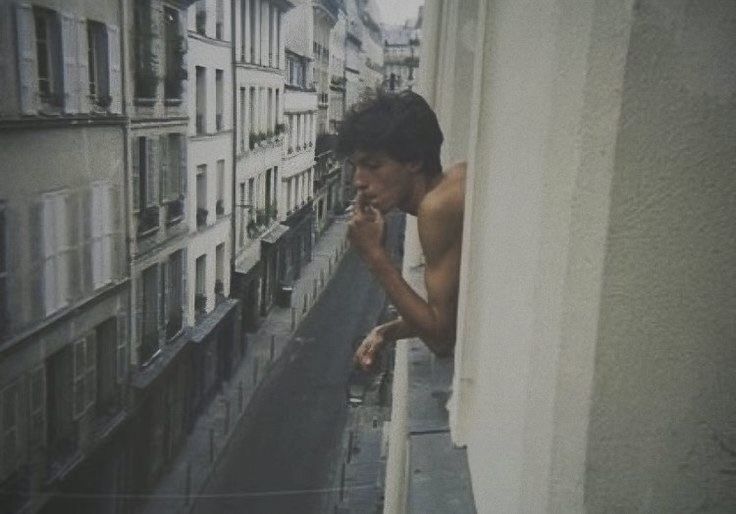
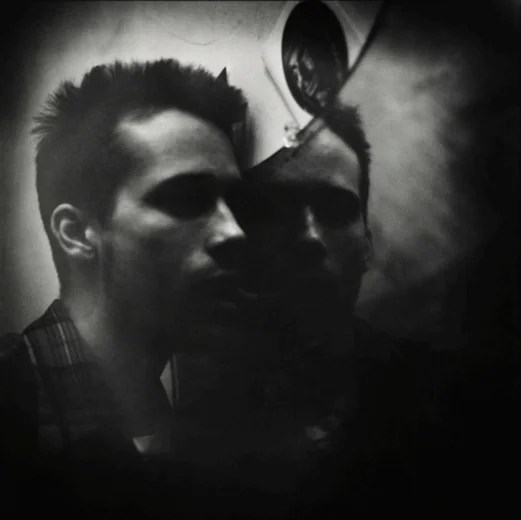
A razzle. A night on the town. Blurred lines. Anyone with a penis qualifies. Charlie says “You’re drunk!” I tell him that I’m tortured but coping nicely. “A walk in the fog is all that it needs to calm me.” But Charlie issues a warning. “Beware of Orpheus because he might seduce you on a back lane.” I am intrigued and walk into the fog calling for Orpheus.

Short Story: What the Crowd Cannot Have


The first time Brodie and Archie met was not under the best of circumstances.

It was a Friday afternoon beneath the Miller Theatre on West 51st Street. Brodie – hi-viz vest zipped to the throat – stood amid abandoned scaffolding, photographing stress fractures in the concrete. The air was dense with dust, old and mineral, as though the building itself were exhaling.

A figure emerged at the far end of the tunnel and walked towards him.

Brodie lowered the camera. He waited until the young man was close enough to see properly, then snapped, “What are you doing here? This is a restricted area. Turn around and go back the way you came.”

“I’m sorry,” the young man said. He spoke with an English accent, careful, almost courteous. “I didn’t realise. What was this tunnel used for?”

“The other side of that wall is backstage,” Brodie replied. “Probably for actors crossing beneath the stage. But there’s no time for questions. It’s unsafe down here. The roof could come down at any moment.”

It was an exaggeration. But saying it gave him a small, illicit thrill – authority borrowed from the place.

The young man hesitated. He had floppy brown hair, eyes dark and inquisitive despite the rebuke. “What are you doing?”

“I’m inspecting the structure,” Brodie said. “Everything looks glitzy up there. Down here it’s rot and age.” He paused. “You still haven’t explained why you’re trespassing.”

“I was just exploring.”

“Explore somewhere else.”

The young man’s shoulders dropped. As he turned, he fumbled the folder under his arm; papers spilled across the dusty floor.

“Shit – sorry. My script.”

Something softened in Brodie then, too late to retract the sharpness he’d already spent.


The second time they met was in the staffroom.

Brodie was entering notes on his laptop when the door burst open and a tide of people flooded in, loud with laughter, trailing the smell of coffee and citrus wipes. Lunch packs appeared: protein bars, yogurt, hummus, cut vegetables. Actors, Brodie thought, irritated beyond reason.

Michael wanted renovation proposals by Monday. Concentration felt impossible.

Then he saw him – the boy from the tunnel – laughing with the others, sleeves pushed up, script tucked under his arm as if it were a talisman.

Of course.

On their way out, the young man stopped at Brodie’s table. “I’m Archie,” he said, holding out his hand. His eyes lingered, dark and unguarded. “I think we got off on the wrong foot.”

Brodie hesitated, then took it. The contact was brief, oddly charged. “I’m Brodie. Forget about it. Just – stay out of the tunnel.”

Archie smiled, chastened and amused all at once.


After that, Brodie thought about him more than he liked to admit.

He knew he could be abrupt, inflated by his own sense of usefulness. Actors irritated him on principle. But Archie – English, polite, quietly intense – had unsettled him.

Late one night, Brodie searched the Playbill bios. Archie was a rising star: television work, the National Theatre, lead roles in the West End, now a Broadway debut.

Impressive.

What Brodie didn’t know was that Archie had been searching too. He’d asked about the surveys, about the renovation. He found the company. He found Brodie’s photograph.

Hazel eyes. Skin warm-toned, as if lit from inside. A face shaped by movement rather than posing.

Tasty, Archie thought, surprised by his own boldness.


Two years later.

Archie slipped out of the Walter Kerr Theatre the moment the curtain fell on Chatterton. No shower. No linger. Wool coat, beanie, scarf pulled high. He moved fast, before the autograph hunters gathered.

Outside, Broadway surged and glittered – yellow cabs, steam vents, neon, voices colliding. It still thrilled him. It always did. A world away from Buckinghamshire.

At the apartment, Brodie checked the clock: 10:30. Any minute now.

The flowers were arranged just so. Archie liked flowers. Brodie liked that Archie liked them.

When the door opened, relief moved through him like a current.

Tea was requested. Always tea. Archie shed the night – coat, scarf, public self – and collapsed onto the sofa. He spoke about the show, about the line he’d missed. Brodie stroked his hair, grounding him.

Later, Fleet Foxes floated from the bathroom. Steam curled beneath the door.

Brodie knew the routine by heart. He would collect the clothes, note the forgotten boxers, breathe in the faint, intimate salt of them – something human beneath the polish. It embarrassed him how much that scent moved him.

Archie emerged clean and fragrant: Le Labo, Dior and mint. Blue silk pyjamas. He smiled like someone stepping into safety.

They ate together. They watched television under the blanket Archie’s grandmother had made. Archie pressed close, smaller than he seemed onstage, all softness and thoughtfulness and unspoken worry.

Sometimes Brodie felt the weight of what he was not allowed to be – unseen, untagged, absent from photographs. Invisible by design. But here, in this private room, their bodies fit without explanation. The most erotic moments were those that could not be shared publicly.

Brodie was Archie’s shelter. Archie was Brodie’s undoing.

Brodie had watched hundreds of videos of Archie on YouTube, moments in which he appeared entirely at ease – charming interviewers, holding eye contact, listening with an attentiveness that felt generous rather than rehearsed. 

His answers were always articulate, delivered with that unmistakable smile. But Brodie could see what others missed. 

The exposure beneath the polish. The small betrayals of nerves: the way Archie’s smile lingered a fraction too long; the absent-minded stroking of his own arm as he spoke; the slow, circular massaging of each finger; the hand lifting to his hair, not to adjust it, but to reassure himself it was still there. 

These gestures were invisible to the audience, but to Brodie they were intimate, almost confessional – proof that the confidence was something Archie stepped into, not something he owned.

Thomas Chatterton had been an ideal role for Archie. The eighteenth-century poet – celebrated as the marvellous boy for his precocious brilliance and dead at seventeen – had been reimagined as the subject of a hugely successful Broadway musical. 

In his twenties, Archie might once have been considered too old for the part, but his fine, boyish beauty dissolved any such doubt. Night after night, he stepped into Chatterton with such ease that the distinction between role and actor began to blur. 

To the audience, he seemed timeless, suspended in youth and promise. To Brodie, there was something quietly unsettling in this devotion – the way Archie gave himself over to a boy who never lived long enough to be disappointed by what came after.

When the movie ended, the future rose between them.

“Would you come to London?” Archie asked quietly.

Brodie had been waiting for this. “Yes. If you ask me to.”

Archie’s eyes filled. “You’ll have to share me.”

Brodie pulled him closer. “I already do.”

The Patron Saint of Foolhardy Teenage Boys


A solitary figure stands above Kinder Scout. He cannot be seen, yet he watches from afar. The darkness thickens over the peaks, and a westerly wind rises as if summoned from nothing, but neither deters him. This is not a place for the unprepared. The temperature will fall; the warmth of the day will slip away, unnoticed, into the stone.

As the figure observes the six boys pitching their tents, a quiet certainty settles within him: he is powerless. He cannot call out. He cannot warn them. Leaning on his stick, he endures the bitter air and waits, bound to witness how they will meet the night. Their laughter will thin, their bravado ebb, as loneliness takes hold. Escape will become a wish rather than a choice, and sleep the only surrender, each of them willing the morning to arrive.

When he is certain the boys have fallen into a restless, unhappy slumber, the figure moves. He steps softly across rock and scrub, listening, careful not to betray his presence. Only when he is satisfied that he will not frighten them does he pause to peer into each tent. There he sees them cocooned within their sleeping bags, clinging to one another, sharing the fragile warmth of slender, adolescent bodies against the cold.

At last, he chooses a broad, ancient rock and settles there, a silent sentinel. He remains, guarding their sleep, until the first pale glow of the new day begins to rise in the east.

In Control of My Own Happiness

Communion – Red Farrow (2023)

A flicker of FOMO. A spoiled rich boy invites everyone to a birthday dinner, and I’m left out. I wasn’t meant to be there – and I wasn’t. Everyone’s buzzing, and no one gives a fuck whether I’m there or not. Still, life goes on. I grant myself a little grace, even if there isn’t much to give. Let them, I tell myself. Let them spend obscene amounts of money, drink too much, and throw it all up later. I’m in charge of my own happiness. I have a ‘wonder mind’. I buy prawn linguine, a tub of Ben & Jerry’s Chew Chew ice cream, and watch Fellini’s La Strada instead.

David: A Good Story, Apparently

“A swell so big and strong it will wipe clean everything before it.”

I got a message from David. The first I’d heard from him since our falling out in December. I hadn’t been expecting an apology and didn’t get one. I wasn’t even sure one was required. Some days I thought I might be the one who owed it. Still, the silence had broken, and that felt like something.

‘My boy turned forty this week and wanted to see where he was born. I took him to the Kapiʻolani Medical Center, where his mother gave birth to him. It wasn’t what he had in mind. But he stood straight, like the military taught him, and was too polite to tell me to go to hell. He was a Kamaʻāina — child of the land — but this wasn’t where he grew up.’

“What???” I replied.

David rang immediately.

I paused Heated Rivalry, which had literally just started. I hadn’t even got past the opening credits. Everyone had been talking about it, which was precisely why I’d been avoiding it. The same thing had happened with Adolescence. The louder the praise, the more stubbornly uninterested I became. But Heated Rivalry had the added incentive of steamy gay sex scenes — and I liked the idea that large audiences wanted that and were openly enjoying it. So fine. I’d given in. And then David called.

“It’s a paragraph I’ve just written,” he said. “I found a draft of something I wrote about Hawaii in the eighties. A good story’s been hiding in a drawer for forty years. It’s time to rewrite it. Update it.”

“Hawaii?”

“If memory serves, I based it on a Rolling Stone article about a teen suicide. But I think that was Kansas. Or somewhere like it. No idea why I chose Hawaii.”

“Suicide?”

“That only comes at the end.”

“Well,” I said, buying time, “I suppose there has to be a happy ending.”

“A suicide and a birth,” he said, as if that clarified things. “You get the opening now?”

I didn’t. Except that David was a successful writer, and it clearly made sense to him. Which, apparently, was enough.

“I think I know why I chose Hawaii,” he continued. “There was a film I saw. Big Wednesday. Surfing. Jan-Michael Vincent, Gary Busey. Semi-naked most of the time. Very young. Very hot.”

“Who?” My patience was thinning.

“Ah. Before your time. Though now that I think of it, that film was set in California.”

“Get to the point, David. The longer we talk, the longer I’m delayed from steamy gay sex. What’s the story actually about?”

“Whoa,” he laughed. “So you’ve sorted things out with Charlie. What did I tell you? You can’t keep a good man down.”

I froze. Had I really discussed my prolonged sexual drought with David?

“I’ll be brief,” he said. “It’s about jealousy. At least on one side. When three people are involved, somebody always loses.”

This was unexpected territory for him. David could spin a tight crime plot or disappear happily into a historical setting, but relationships were something he normally sidestepped entirely.

“It feels a bit left-field,” I said. “And why go back to something written that long ago?”

“It was shite,” he said cheerfully. “I never read past the first page after I shoved it in a drawer. My first novel came out ten years later — my style had changed completely by then. But time’s counting down. It feels like unfinished business. I want to turn it into something wonderful.”

“How old were you when you wrote it?”

“Let’s see… I started it in 1984, so I’d have been twenty. Finished it the year after. That’s why the characters were that age.” He paused. “It’ll read like I’m reliving myself.” Then, suddenly: “Goddammit. I remember now. I’d just read Michener’s Hawaii. That’s why. Oahu, specifically. And Magnum P.I. was on television.”

I thought about my own life. Whether anything I’d written would still exist in forty years. Whether I’d ever be considered established, in any meaningful sense. I’d been carrying an idea for a book for years, but inertia kept winning. Instead, I scraped a living writing about country houses and cities. It all felt increasingly dull. Stranger still, it occurred to me that David must have written that early draft on a typewriter — a genuinely painful way to work, as far as I was concerned.

He said he had to go.

“By the way,” he added, “I’ve finished the Isherwood biography on Kindle. It ended rather abruptly. One moment he was alive, the next he was gone. Dead. But I won’t mention it again. You seem sensitive about that.”

I restarted Heated Rivalry. Two seconds later, my phone buzzed.

‘Forgot to say. I’m going for a drink with a young man — a student — only nineteen. Just out of nappies, really. Don’t tell Josh, but of all people, I thought you’d like to know. 😏’

Shower Baths: Running the Messages, New York, 1910

A famous photograph by Lewis Wickes Hine, taken in July 1910, showing young male telegraph messengers using shower baths at the Postal Telegraph Company on Broadway, New York. Hine, working for the National Child Labor Committee, documented the harsh conditions of child labour, but this image highlighted a positive aspect: the company provided showers, recognising good grooming was good for business and tips, a rare perk for these boys.

“No, sir — it ain’t no cinch, lemme tell ya. This life’s all leg-work. We don’t get no steady pay, not by the day nor the week — it’s by the message, an’ that means you’re on the jump all the time. Soon as I dump one off, I’m tearin’ back to the office for another.

“Two bits an’ a half is what I get for each one I sling, an’ if I tote back an answer for the wire, that’s three more cents in my pocket. That’s why I’ll hang around for a reply — I ain’t no chump.

“A boy that drags his feet or lays down on the job won’t make nothin’, but a hustler like me? I clean up. I knock out thirty messages a day if my legs hold. That’s near twenty miles on the hoof, an’ don’t forget the stairs — an’ New York’s lousy with ’em. Offices from the street clear up to the sixth, seventh floor, an’ you gotta hoof it every step.”

That Moment: Boy in the Black Hoodie

Scally Boy – Charlie Marseille (2026)

Four guys are waiting for a haircut. One hides inside a black hoodie so that all I can see is the tip of his nose. I call him a ‘scally boy’ – someone with edge, rawness, no inhibition; danger; lower social class. People only see what they must see: confidence, arrogance, hardness. They fail to see his vulnerability, his ignorance of those who might exploit him, and his lack of ambition.

When it is his turn, he stands and takes his hoodie off—but he gets it wrong. As he pulls it over his head, his T-shirt comes with it and he is left half-naked. He corrects things quickly, but it is too late. I have already processed every inch of him: the pale skin, the smoothness, the flat stomach, the black hairs showing above his waistband, the tattoo on his arm that says Adam.

Such a shame, I think, because he is primed for one thing only—a girl. His masculinity, the expectation, the understanding that anything else will not do. The girl will fall in love with Adam, but what he feels about her will not matter. He will have done what is expected and will display her like a trophy before discarding her for another.

Adam catches my eye and snarls, “Do you like what you see, faggot?”

Where the Tide Still Knows Us


I placed the flowers in Robbie’s memory on the sand, arranging them slowly, as if touch still mattered. The tide crept in, cool around my ankles, withdrawing and returning with a rhythm that felt almost deliberate. This was a special place—not because it was beautiful, but because it had once borne the weight of our closeness, and even now seemed to breathe with it.

Stolen Words – Players – Edmund John

“Bambino carissimo: – Will you come and stay with me in Florence? A revederci carino.”


Players
I send thee cigarettes for thy delight.
Smoke my belov’d and think awhile of one
Who thinks and dreams of thee from sun to sun
Longing to have thee, lov’d one, in his sight;
To hold to his thy lissom body tight;
To press thy lips and, pressing, to surprise
Thy soul and his together in thine eyes …
If this be wrong, no love on earth is right!

By Edmund John
Schoolmaster and Poet (1883-1917)

Charlie: Almost. Almost. The Scent That Remained

Un amante italiano – Charlie Marseilles

Charlie didn’t go to Paris for Christmas. A family dispute—best addressed through absence—kept him away. Instead, he stayed with a cousin in Woodstock, near Blenheim Palace: an improbable place for pleasure. I was content with the opposite arrangement. Christmas alone. Eating, drinking, letting Netflix decide what mattered.

On Christmas Eve, I dreamed he climbed into bed and lay on top of me. His naked body was warm, yielding, unmistakably real. He kissed me. A faint musk rose from his skin—intimate, animal—stirring every sense at once. At last, I thought, this is the closeness.

I woke up with the sensation intact. The dream clung to me through Christmas morning, vivid enough to unsettle. I searched for an explanation and learned that smell can infiltrate dreams, especially when memory and desire are involved. Olfactory dreaming, they called it. Cologne was the usual example.

In the nineteenth century, a French physician, Alfred Maury, described inducing such dreams by getting his assistant to place eau de Cologne beneath his nose while he slept. On waking, Maury claimed to have dreamt of Cairo, of the perfumer Farina’s workshop, of adventures set loose by scent alone.

I hadn’t smelt Cologne. What lingered with me was the smell of a boy. And with it, a quieter truth: Charlie and I had never moved beyond kissing.

Someone, inevitably, had to puncture the theory. A psychiatrist dismissed the idea entirely. You don’t smell the coffee and wake up, she insisted. You wake up, then you smell the coffee.

I abandoned science and let Spotify take over. It suggested an album by Wolfgang Tillmans, which surprised me. I’d known him only as a photographer. The music turned out to be a sound work made for an exhibition—joy and heartbreak threading through collapse and repair.

I first encountered Tillmans years earlier through a Pet Shop Boys video composed almost entirely of mice living on the London Underground. Ever since, I’d found myself scanning platforms, tunnels, tracks—without success. A memory surfaced: my friend Stephen once worked on a four-hour Tillmans sound installation of It’s a Sin. He now despises the song completely.

Christmas dinner was an indulgence of sorts: cold baked beans eaten straight from the tin. I spent an hour scrolling through films before accepting, once again, that choosing outlasts watching. I downloaded the Christopher Isherwood biography David had recommended—the one that never seems to end—and fell asleep within pages.

When I woke, the room had darkened. Charlie had messaged: Will be home tonight at about eight x.

Transport on Christmas Day was nonexistent, yet somehow he’d convinced his cousin to drive him 130 miles. When Charlie arrived, I asked where his cousin was.

“Gone back,” he said.

“You didn’t invite him in?”

“It’s Christmas. He’ll want to be home.”

“And petrol money?”

He hesitated. “I didn’t think of that.”

Our former lodger once called Charlie a “me, me, me person.” Another friend was less generous and called him an asshole. Perhaps it was cultural. Perhaps it was simply him. Charlie struggled to imagine himself from the outside. I told myself it wasn’t malice. Just a narrow field of vision.

Despite the journey, he looked fresh, handsome. He smiled; I mirrored it. I considered mentioning the dream, then decided against it.

“Why come back early?”

“I shouldn’t have left you alone,” he said, without pause. “It’s Christmas.”

While he dropped his bag in the bedroom, I switched on the tree lights. We exchanged gifts a day early.

His were faultlessly chosen: Salò on Blu-ray, Sargent, Ramón Novarro, Edmund White, a glossy Igor Mattio photography book. Then he disappeared into the studio and returned with a canvas. He turned it around.

It was me.

He’d painted me sitting, relaxed, looking beyond the frame—as if caught somewhere warmer, lighter. My eyes were generous. My mouth was kind. Around my neck he’d included a thin silver chain, a birthday gift I wore only on rare occasions. The detail felt deliberate, almost intimate.

“I painted while you were writing,” he said. “I hope you like it.”

I had never been seen like that before. Not by anyone. I felt exposed, and cherished.

“I don’t know what to say,” I told him.

“One day,” he said lightly, “when you’re old—célèbre—people will say, painted by his French lover.’”

Charlie went to shower. Alone, I recognised a flicker of shame. I’d suspected his absence was a ruse. I’d rehearsed disappointment, punished him silently for not being who I wanted. The dream—so tender, so convincing—had fed that instinct. Sex can exist without love; love can exist without sex. The phrase circled uselessly.

Still, it would be nice.

There it was again. That reflex. The mind’s preference for negativity over positivity. 

Charlie returned wearing only grey jogging bottoms and a Santa hat. He stretched out beside me on the sofa, smelling faintly of crushed mandarins, and rested his head in my lap.

“A Christmas film,” he murmured. “Something cosy.”

I stroked his stomach as we watched The Holdovers: a misaligned teacher, a sharp-tongued cook, a boy full of grievance. By the end credits, Charlie was asleep.

I didn’t move. I was afraid that motion would undo everything. His weight, his warmth, the faint citrus on his skin—it felt provisional, like something borrowed. The room held its breath.

I loved him then with a sudden, almost painful tenderness. Not the urge to claim, but to preserve. To keep the moment intact, untouched by language or expectation.

I stayed exactly where I was.

And waited to see whether stillness could last.