Tag Archives: blogger

 My Week, For What It Was Worth

On leaving Montescaglioso…
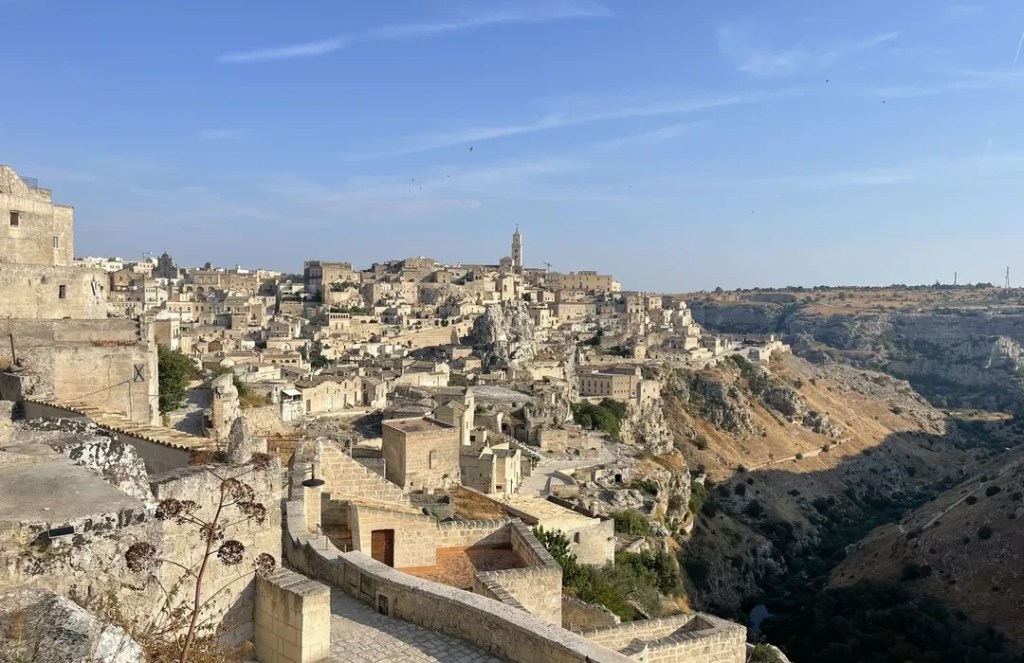
On from Montescaglioso—which I missed the moment I left on the small bus to Matera. I must return. The hilltop town exists in its own world, seemingly remote from the rest of Italy, yet it was warm and welcoming, and somehow managed to revive me.

It was really a minibus, stopping at every opportunity to pick up local women. For them, the journey to Matera felt like a day out—temporarily freed from household chores and feeding their families. They all seemed to know one another, speaking in rapid Italian, their voices rising and falling as they complained about the small details of their everyday lives. And yet, I couldn’t help feeling a quiet jealousy—that they could afford to live such ordinary, mundane lives.

There was only one other man on the journey, and he kept to himself, absorbed in his music. He looked about eighteen, and I imagined he was on his way to meet a girl in Matera. But then his phone rang, and the conversation turned to something entirely different: La Dolce Vita Orient Express, a new train service set to begin in May.

The route sounded almost romantic. It would begin in Rome, travel to Venice, then head down the Adriatic coast to Bari. From there, passengers would be shuttled to Matera—my destination—with its cave churches and underground water cisterns. Back on the train in Bari, the journey would continue towards Taormina in Sicily—which made my ears prick up—before heading on to Palermo and eventually returning to Rome.

It seemed the young man was being offered a job in Matera, one that would benefit from this new train service. He played it cool—neither accepting nor refusing—but you could tell he understood that opportunities like this don’t come around often.

The bus dropped me at Matera Centrale station, where I discovered that my train to Altamura was actually departing from Matera Sud, about two kilometres away. It required a short connecting train journey to get there. It was only once I was on that train that I learned Matera had once been derided as a symbol of poverty, yet had since reinvented itself as a creative hub—full of boutique hotels, buzzing cafés… and, of course, plenty of tourists.

On travelling to Taormina…
It was surreal, but we met like lost friends—two people who shared a past, yet barely knew each other. I spotted Severin, with his blond hair and Germanic good looks, as we waited for the ITA Airways flight from Bari–Karol Wojtyła to Catania. The airport name didn’t sound remotely Italian, and I soon discovered why—it was Polish, named after Pope John Paul II.

Severin was from Bremen and had spent the last few years living in Turin. He, too, had been one of Pietro’s “lost” boys, and after Pietro’s sudden death had found himself with a modest sum of money and nowhere to live. I had been more fortunate, receiving a similar amount but allowed to remain in the Verona apartment, thanks to the generosity of Signora Bruschi. But now my home is back in England.

We hadn’t seen each other since that Christmas when Pietro had taken us out for a meal at a restaurant in Milan. It was there we met Elio, who turned out to be Pietro’s favourite—and who had inherited the bulk of his estate, enough to ensure he would never need to work again.

Severin, now in his late twenties, seemed genuinely pleased to see me, and was delighted to discover that we were both bound for Taormina. He looked thinner than I remembered, and had begun to grow a small goatee—something Pietro would never have approved of. Good on him, I thought. I noticed a bruise on his chin, and he explained he had been caught up in Turin’s May Day demonstrations, when protesters tried to break through a police cordon. I hadn’t expected Severin to have become quite such a rebel.

On the aircraft, we talked about old times, each of us offering a quiet, tentative sympathy to the other. Once, we had been adversaries; now, we were something closer to conspirators. Severin had tried to contact Elio after Pietro’s death, but had been met with a swift rebuff. He had also tried to reach me, but hadn’t known where to find me. The chance meeting at the airport had clearly delighted him.

Severin was heading to Taormina to work as a waiter for the summer season. The money Pietro had left him had run out, and now he survived by drifting from one job to the next.

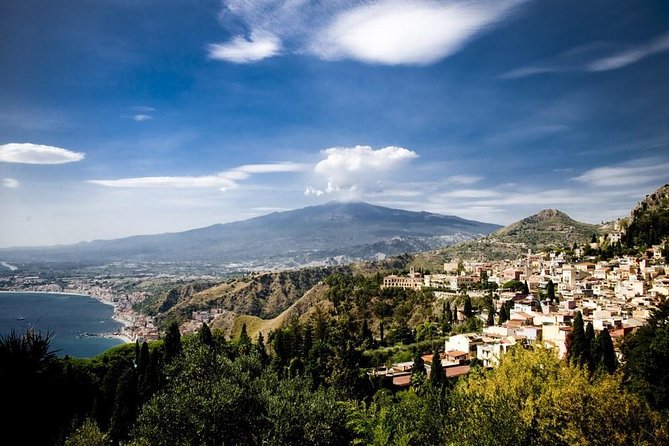
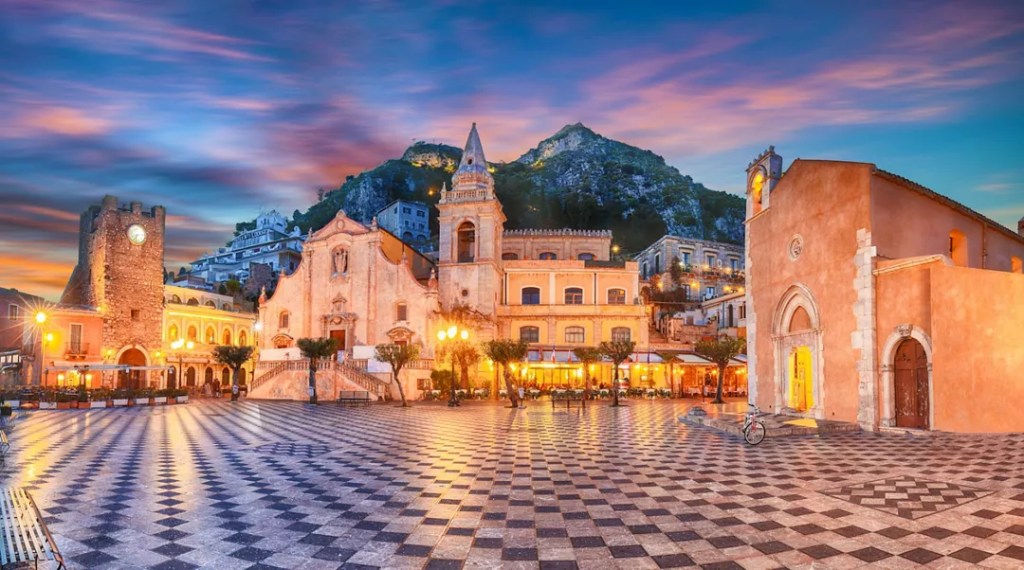
After arriving in Catania, we caught a train to Messina and got off at Taormina–Naxos. From there, we took the bus up into Taormina, where the heavens promptly opened. Inadequately dressed, we wandered through its charming maze of ancient, narrow cobbled alleyways, and along the bustling, elegant—largely pedestrianised—Corso Umberto. We dodged the hundreds of tourists clutching umbrellas, and after the calm of Montescaglioso, I found the crowds slightly overwhelming. Yet it was the smooth, endless stretch of the Mediterranean that held my gaze—and the uneasy thought that Mount Etna lay somewhere close by, hidden in the rainclouds.

It soon became clear that Severin had nowhere to stay. His plan had been to wander the streets of Taormina in search of something cheap. Until his job began—and with it, the promise of a room—the chances of finding affordable accommodation seemed slim. The town may once have existed in a kind of beautiful poverty, but ever since Victorian writers, poets, and artists had discovered it, its fortunes had changed. And soon, the La Dolce Vita Orient Express would be arriving too.

I was staying at a small hotel on Via Don Giovanni Bosco, its balconies overflowing with flowers, and—true to my nature—I offered Severin a bed until he found his footing. At the very least, it meant I wouldn’t be entirely alone as I tried to settle into a strange town.

On never trusting Mount Etna…
Everybody in Taormina wants you to visit Mount Etna. It is one of the highest volcanoes in Europe, and one of the most active in the world. Alfio, who works on reception at my hotel, suggested that Severin and I take a guided tour. But we both look at Etna and feel quietly relieved by the forty-five kilometres between us and its summit. Never trust an active volcano.

From Taormina, a plume of white smoke drifts from the summit, with no immediate sign of eruption. Yet, according to Alfio, Etna has entered a new eruptive phase that began at Christmas. The crater, he says, is emitting lava, ash, and the occasional flow. He tries to reassure us that Etna poses no real threat to Taormina. Apart from the light dusting of ash that sometimes falls when the wind turns, he tells us to follow the advice of the locals—the Sicilian way is not to worry.

He recalls that, as a small child, he once saw flames suddenly shoot up from the crater, only to subside just as quickly. The same thing happened again the following morning.

Alfio doubts we’ll manage to get up at dawn, but suggests taking us to a hill above the ruined amphitheatre to watch the sunrise. Despite getting to bed at two in the morning, and waking with the lingering effects of strong wine, we let ourselves be dragged through the narrow streets.

The sun rose from the southern edge of Italy and caught the white dome of Etna, tinting it a soft, rose-pink. The colour spread quickly down the snow, deepening until the whole summit glowed like a ruby instead of pale white. Night’s shadows slipped off the slopes, giving way to a rich purple that sank into the valleys and over the orange groves, darkening as it went—until the morning light washed across everything, and the mountains returned to their steady, familiar greens and browns.

That was as near to Mount Etna as I cared to be.

On a poem about Taormina…
I found a poem about Taormina on All Poetry which was written by someone referred to only as ecekaradag13, and who appears to have a fondness for Italy.

Taormina
Above the Ionian Sea,
this teatro of pretense
where German tourists
photograph Greek ruins
through the lens of their prosperity,
never seeing the Sicilian boys
who sweep their marble steps
for coins that disappear
into foreign pockets.
The ancient theater still echoes
with tragedies more honest
than the comedy performed daily
by boutique owners
selling “authentic” Sicily
to cruise ship pilgrims
seeking enlightenment
at duty-free prices.
Etna smolders in the distance,
that honest mountain
which at least admits
its capacity for destruction,
unlike the hoteliers
who smile in four languages
while their housekeepers
scrub other people’s dreams
from Egyptian cotton sheets.
In the shadow of San Domenico,
where Wilde once walked
his particular exile,
the local boys still gather
at sunset, their beauty
a currency more reliable
than the lira,
their bodies maps
of an economy
the guidebooks never mention.
The bougainvillea blooms
in violent purple protest
against the limestone walls,
while below, the working class
of Giardini-Naxos
send their children
up the mountain
to serve aperitivos
to those who mistake
privilege for culture,
consumption for communion
with the divine.
This is paradise
built on the backs
of the invisible,
where even the gods
have learned to speak
the international language
of tourist euros.

On the cute and willing…
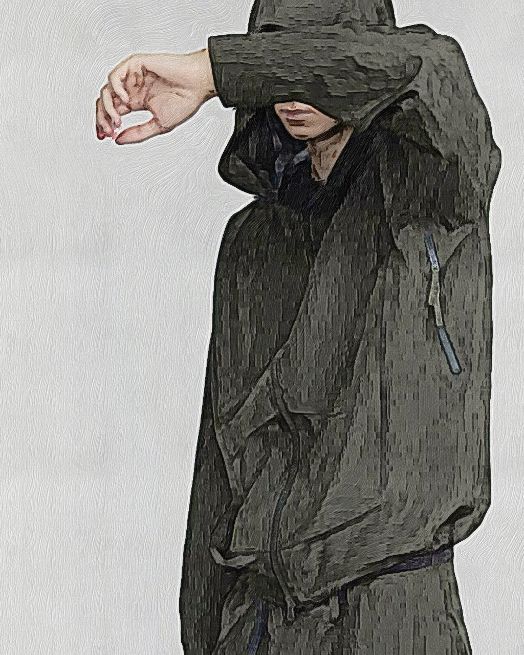
Julien Rondard. Photo by Wanderley Da Costa.

 My Week, For What It Was Worth

On driving behind a cute-assed cyclist…
I found myself trailing a cyclist who was hammering the pedals with admirable ferocity; his lycra-clad form rose and fell in a hypnotic rhythm, all sleek lines and aerodynamic intent. There’s something undeniably compelling about a well-put-together rider on a racing bike—graceful, efficient, almost cinematic.

But as I pulled alongside to overtake, the illusion collapsed rather abruptly. What I had taken for youthful athleticism was, in fact, a fully paid-up member of the MAMIL brigade—Middle-Aged Men in Lycra—an increasingly unavoidable presence on the roads. The term, apparently coined by Mintel in 2010, captures a very specific phenomenon in modern cycling culture.

The charitable definition goes something like this: men typically aged 35–50+ who embrace high-performance cycling, clad in tight technical gear and mounted on eye-wateringly expensive carbon-fibre machines. It’s said to be driven by a desire for physical challenge, a reprieve from work and domesticity, and perhaps a quiet rebellion against the passing of time.

Which is all very noble, of course.

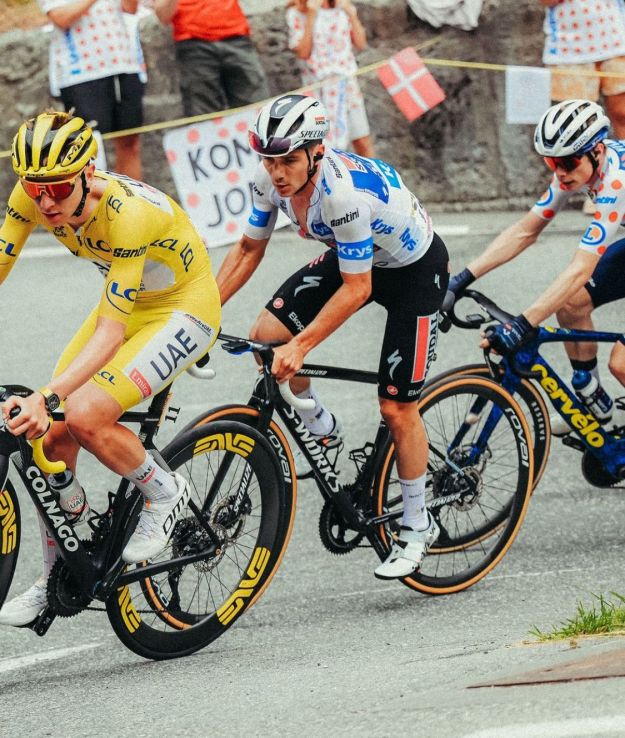
And yet—at the risk of sounding deeply ungenerous—I can’t help but feel a flicker of disappointment every time the helmet comes into focus. If you’re hoping for lithe, Tour de France–calibre elegance, you may be better off watching the actual Tour de France. Out here on ordinary roads, the reality is… rather more middle management on wheels.

On binge-watching The Count of Monte Cristo…
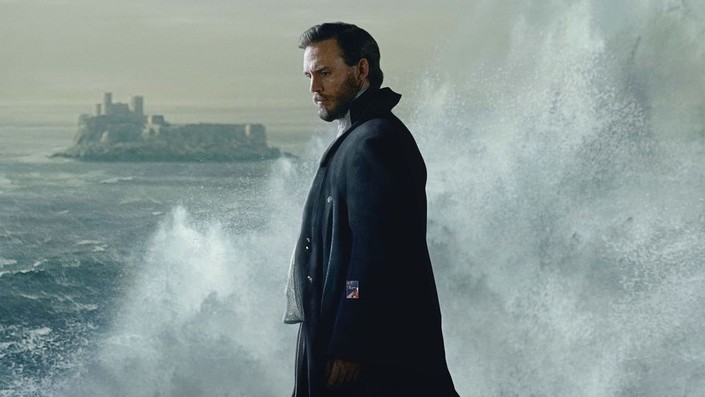
There was only one real reason for watching The Count of Monte Cristo—not the recent film, but the Italo-French collaboration from two years ago. My interest lay not with Edmond Dantès himself, nor with the familiar arc of his imprisonment and revenge, but with two Italian actors—Lino Guanciale and Nicolas Maupas—who have recently piqued my curiosity.

Edmond Dantès, a sailor falsely accused of treason, is imprisoned in the Château d’If off Marseille. After fifteen years, he escapes, discovers treasure on an uninhabited island, and assumes the identity of the Count of Monte Cristo, plotting revenge against those who betrayed him. Like the figure in the Alexandre Dumas novel, he emerges compelling, if inevitably vengeful.

The production is noted for its cinematic look, authentic costumes, and striking Mediterranean locations. Reviews were mixed: The Guardian criticised its wooden dialogue and performances, though conceded it could still be an enjoyable watch.

It wasn’t Sam Claflin in the lead, nor was it Jeremy Irons—though Irons was, as ever, effective as the ageing Abbé Faria, lending the role a quiet authority.

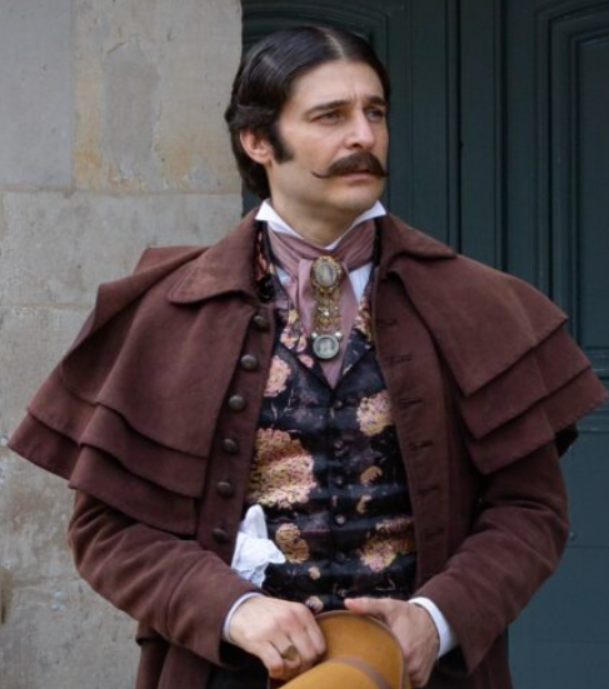
Instead, my attention returned to Guanciale and Maupas. I’ve seen Lino Guanciale as the lead in two Italian-language series: La porta rossa, where he plays a ghost, and Il Commissario Ricciardi, where he sees them. Here, he appears as a chubbier Luigi Vampa, a quieter presence but still recognisable.

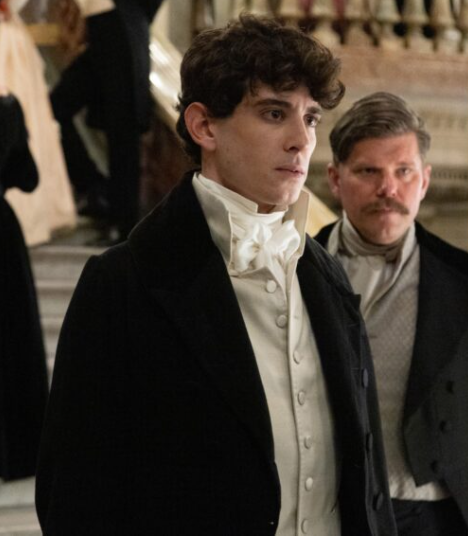
Nicolas Maupas, born to a French father and Italian mother, is best known as Filippo Ferrari in Mare fuori, set in a juvenile prison in Naples. In this adaptation, he plays Albert de Morcerf with a naïve, easy charm that makes the character immediately likeable.

My interest in Italian television and film feels increasingly insatiable, though it relies almost entirely on subtitles. Here, however, The Count of Monte Cristo was performed in English, allowing both Guanciale and Maupas to speak in my native tongue—an accommodation that also reflects the ambitions of an international co-production, assembling a cast drawn from Italy, France, Denmark, and England.

Lino Guanciale as Luigi Vampa
Nicholas Maupas as Albert de Morcerf

On ditching a short story…
I wrote a short story but something didn’t sit right. I thought it was good, but there was an uneasiness. Like it had the making of something but lacked oomph. And I worked at it from several angles but still it gave me reservations. I showed it to someone and they said, “This is not you at all.” And so the story was shelved.

On seeing a young guy’s underwear…
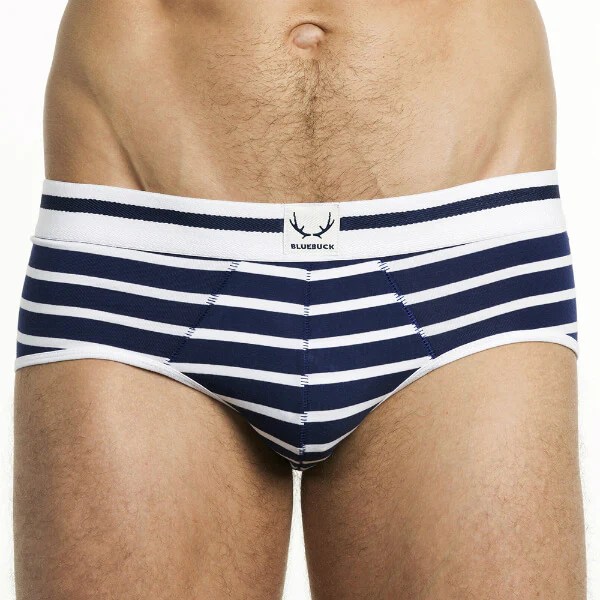
The only thing colourful about him was his underwear, which I discovered by accident, though afterwards I wondered if anything about it had been accidental at all. He carried himself so carefully, as if afraid of drawing attention, yet there it was—a glimpse of colour (blue and white) that didn’t belong to the guy I thought I knew. It unsettled me, not because it was bold, but because it suggested he was.

On hearing somebody talking about an elderly writer…
“At some stage he will be afraid to start writing a new book because he might die before he finishes it.”

Privacy is what we used to call liberty
Ubiquitous cameras in public spaces. Online tracking, data harvesting, targeted ads. Governments or corporations monitoring our behaviour. Something fundamental has shifted in how we understand freedom. 

Liberty used to mean freedom from intrusion. The right to be left alone, to speak, think, move, and live without constant oversight. Privacy is now treated as a narrower, more technical concern—something about data protection, personal information, or what you choose to share.

Privacy is what we used to call liberty.

On the cute and willing…
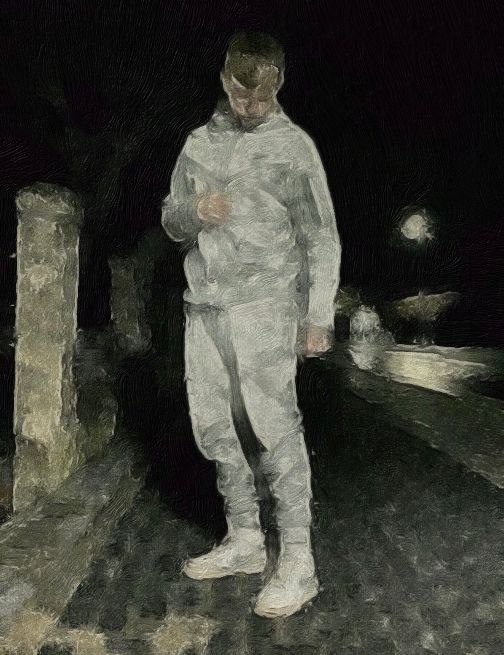
Ilya Kovalev. Photo by Archie the Photographer, 2026.

My Week, For What It Was Worth

On reading Like People in History…


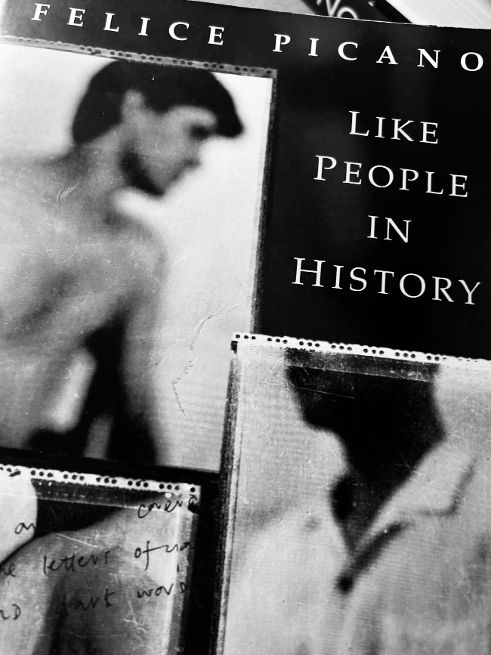
In January 2000, somebody called Gregory Nash pencilled his name on the front page of a paperback book. I don’t know what happened to it for the next 26 years, but a few weeks ago, a friend found it at a second hand book shop in London and gave it to me as a present.

Published in 1995, Like People in History, by Felice Picano, traced not just the protagonists’ lives but provided the defining moments of American gay history between 1954 and 1991. 

‘The big novel we’ve all been waiting for – the gay Gone with the Wind,’ wrote Edmund White at the time, which was hardly surprising. Picano and White were both founding members of the Violet Quill Club, considered to have been a gay urban version of the Bloomsbury Group. They met regularly in Manhattan and on Fire Island in the early 1980s to discuss their works in progress.

I must explain that I thoroughly enjoyed the book although comparing it with Gone with the Wind didn’t do it any favours. 

“Sex is the defining characteristic,” critic Patricia Rodriguez wrote back then. “He (Picano) buys into every stereotype that many gays wince at, giving ammunition to bigots. Nothing’s ever as good as it was when THEY were on the cutting edge.”  (Fort Worth Star-Telegram 1995).

If I have interpreted her correctly, Rodriguez was referring to the 1970s. The archetypal mincing queens with moustaches and lots of hair, who danced to loud disco music, and spoke to each other like they were girls. 

“Mary, you are too much. She’s giving everything. Don’t be so dramatic, girl.” 

Well, they were having a good time, and who could have blamed them. 

But afterwards it became a problem with some gays, particularly for those who hadn’t been there. Such as me. 

I guess that what I am trying to say is that the seventies gay scene (particularly in the USA) aged badly. Too flamboyant and in your face – and decades before RuPaul hyped it up again. 

If AIDS curtailed the eighties, then the reset came in the 1990s. 

Since then, everything seems to have been less colourful and non-scene, and which those from the 1970s might consider boring.

I prefer it this way.

Picano, who published 17 novels and eight volumes of memoirs, died last year, and was better qualified to write about the scene than most. And he did it well. Me? I am trying my best not to come across as a disrespectful and ungrateful cunt.

My adopted copy of Like People in History goes onto my gay literature shelf and stands alongside other members of the Violet Quill Club: Christopher Cox, Robert Ferro, Michael Grumley, Andrew Holleran and George Whitmore. Four had died of AIDS by 1990 and only Holleran is still alive. 

 Last word to Picaro:

“We were all friends and lovers – literally. Robert Ferro and Michael Grumley were partners since the University of Iowa writing school. Andrew Holleran was also at that school. Michael and Robert were together for years. I met Edmund White in Greenwich Village in 1976, and George Whitmore in ‘77. Chris Cox was Edmund’s boyfriend: George and I were tempestuous boyfriends at the time, but he was instrumental in forming the group. Robert was also very socially active, so he and George pulled it together.”

On coming upon a skanky boy…


I don’t know your name. I don’t know how old you are. I don’t know where you live. I know absolutely nothing about you.

But I do know that you are a bad apple that has fallen from the tree. Realise that people judge you for what you are.  A skank – dirty, untrustworthy, disreputable, and sexually promiscuous.

Levi, the Polish boy with the Yorkshire accent, once picked up on something I had written.

“Boys who stuff their hands down their underwear because they think it makes them hard. Boys who pretend their sweet smelling piss and cum fingers are guns.”

He understands that I am hopelessly addicted to skanky boys.

And lust is only a starting point for deeper connections.

On realising that if I had been around in 1960…


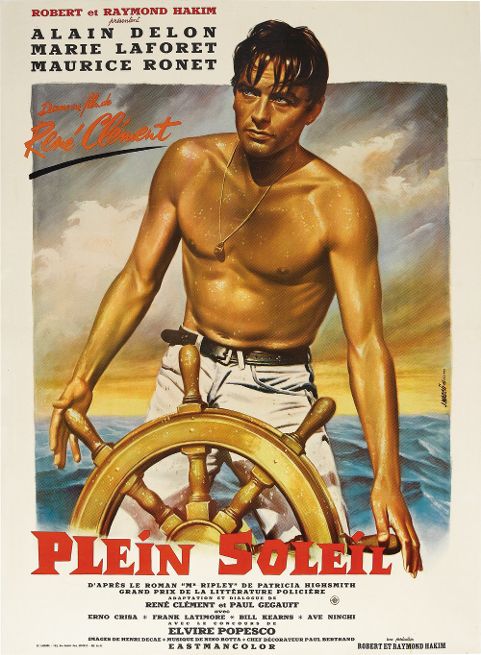
I would have been going to the cinema and masturbating over Alain Delon in Plein Soleil. That unnatural beauty, chilling menace and simmering homoeroticism. And don’t get me started on Rocco and his Brothers.

On that furtive glance from beneath his baseball cap…
The look that said: “I know that we’ve known each other for ten years, and I know that you’ve always loved me, and I’ve been a complete shit to you. But now that I’m in my prime, I’m ready and willing to have that relationship.”

On the barman who smiled at me…
I cannot say, in all honesty, whether he was handsome or not. But beauty is not everything. He was shy, and polite, which said something. And when he faced me there was a hint of attraction that appealed to my shallow mind. 

I cannot say that wearing shorts was a good idea either. I know fine legs when I see them and yet I was still deciding whether it was the case here. But he was brave enough to wear them on a cold March night and that showed guts. And when the realisation hit that I was still staring at them, I knew that he probably had good legs after all. 

But what absolutely blew me away was when, amidst his boredom, he saw that I was giving him attention and cracked a most beautiful smile. It was all so sudden. A big genuine smile. The last time a chicken smiled like that, he ended up moving in with me. 

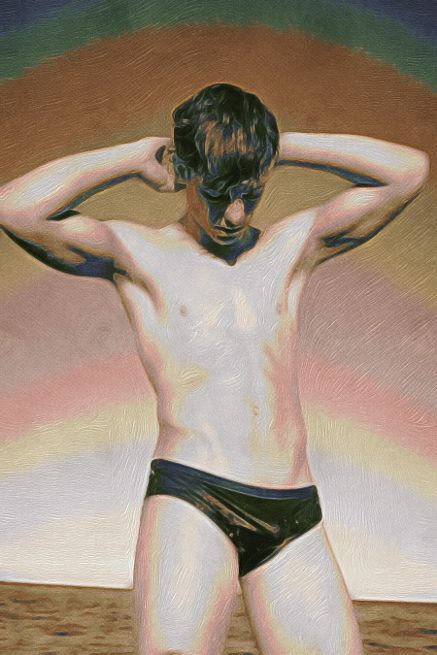
On the cute and willing…

Marcelo Jimenez, model. Photograph by Ryan Duffin

The David Problem: Notes from a Life


The Boys of Harrow… and Rockley Beach

David had been researching his new novel: a story set in nineteenth-century Woolwich, where two families are pitched against one another. The plot was already mapped out, but he now wanted to weave in an episode he had discovered in an old newspaper.

In 1850, thirty-three boys were expelled from the Carshalton and Woolwich Military Academies for what the paper called “grossly immoral practices.” The report described their behaviour as being of “a distressing and disgusting nature.” Their humiliation was made public: they were marched through the streets and deposited on the doorsteps of their families.

David decided that the youngest son of the genteel Morgan family would be one of these unfortunate boys.

But the discovery distracted him. As he continued searching, he found other accounts of young men disgraced and dismissed from the armed forces.

In 1976, several young airmen in the Royal Air Force were reportedly paid to perform sex acts at parties hosted by executives from influential companies. The story surfaced soon after eighteen soldiers were dismissed for posing for suggestive photographs in a gay magazine.

A decade later, two sailors were discovered together in a cabin aboard HMS Torbay. The ensuing investigation implicated three more men, including an officer, for homosexual acts.

David knew from experience that when boys were thrown together, it was almost inevitable that those inclined that way would find one another. The thought brought back pleasant memories of his schooldays at Harrow in the 1970s—before he was expelled, that is.

When he was fifteen, David had been caught in flagrante delicto with another boy. Peter had been a year older and known to most as ‘cock of the school’. David had been afraid of Peter because he strutted around as if he owned the place. He was the toughest boy—and the most arrogant—and Peter had often been at the end of his cruel jibes. 

One sunny evening David had found a spot under a tree to read his well-thumbed copy of The Passing of the Modern Age. He had been disturbed by a group of older boys on their way to rugby practice. They hadn’t noticed him in the shadows and passed by without comment. David watched them go and marvelled that boys’ legs could be extremely attractive.

He had just tackled the crisis of individualism when someone came out of the bushes. Peter had split from the group and doubled back. David, in awe of the older boy, feared the worst and put his book down.

“Come with me,” said Peter.

David did as he was told and followed Peter through the bushes towards the tractor shed. There was no doubt that Peter was going to inflict some kind of schoolboy torture on him. He expected to see other boys waiting to witness his humiliation.

But there was nobody around.

Inside the shed, Peter forced David up against the back wheel of the groundsman’s Massey Ferguson. He stuck his bubble-gum tongue inside David’s mouth and started kissing him. David had not resisted. 

“Let me make love to you,” Peter had instructed and began tugging at David’s trousers. He stuffed the trailing end of David’s school tie into his mouth to stop him making any noise and bent him over the wheel of the tractor. That, as David reflected later, had been the most exciting thing that had ever happened.

They returned to the tractor shed often after that—until the day the groundsman, having left his house key in the tractor, came back for it. He found them both naked and reported them to the headmaster. They were expelled from the school and never saw each other again.

That first encounter with Peter never left his thoughts. All these years later, he accepted that their relationship had been purely physical—there had been no love between them. What remained was the memory of contact, and the illicit thrill of something strictly forbidden. The excitement, as someone had once put it, lay in the chase.

But David’s thoughts also drifted to Nigel—or Nige, as he preferred to be called—a young sailor he had met in the late eighties.

David had been twenty-five, holidaying with friends in Barbados. It was a hot July, and most days were spent lounging on the crowded stretch of Rockley Beach. Fifteen years later, he returned to the same place and found it completely deserted.

He could still remember the book he’d been reading—Koko, a horror-mystery by Peter Straub—pristine when he bought it at the airport, dog-eared within days. He had set it down in the sand, closed his eyes, and listened to the conversations drifting around him.

Vendors moved along the beach, trying to persuade holidaymakers that the unlabelled bottles of pure aloe vera they carried were the secret to a perfect tan. David had bought one, of course, only to discover it did nothing except increase the risk of sunburn. 

David had drifted off for a few minutes, and when he woke he found himself surrounded by young men in tight bathing costumes. “Sailors from a British warship,” his friend Debbie smirked. They were gathered in small clusters, towels spread out on the sand, cans of beer passed easily between them.

The one he later learned was called Nige lay stretched out nearest to him. David found himself drawn to the pale, slender body—the long legs, the flat stomach, and the way his shorts seemed to accentuate what lay beneath—of the nineteen-year-old.

They fell into conversation, and David learned that Nige was an able seaman aboard HMS Intrepid. A bit rough and ready, he thought—the Yorkshire accent lending him an air of unpolished charm—but friendly. More than anything, David found him most handsome.

It was David who suggested a beer at an open-air bar at the far end of the beach. They talked and drank bottles of Banks—“pee beer,” as the young Black barmaid jokingly called it—until they noticed the beach had emptied and a magnificent sunset had taken hold in the west. In Barbados, the day did not fade so much as vanish; the sun slipped cleanly into the sea, and night arrived almost at once. Then the tree frogs began to make themselves heard.

David never quite reflected on what followed.

Nige, in T-shirt and shorts, remarked with easy indifference that he felt hot and sticky, and wished he were back aboard ship for a shower. David—less innocently—suggested he come back to his room instead, where he could use his. The young seaman accepted without hesitation, and the two of them crossed the road together.

A few words might have applied; aroused, horny, frisky, and most definitely ‘in the mood’. Nige took his shower and invited David to join him, which was all that he had hoped for. And then they had indulged in hours of drunken sex, only halted by Nige’s necessity to get back to ship before curfew.

David stood naked in the doorway as Nige left. At that exact moment, Anderson—a good-looking, God-fearing porter—passed by, his glance lingering just long enough for curiosity to harden into suspicion, and then into something closer to disgust.

Still, David and Nige agreed to meet again the following day.

Only years later, after some research, did David grasp how serious the consequences might have been had they been reported. Nige—young, impulsive—would likely never have considered that homosexuality was an offence in the armed forces, one that could have led to immediate dismissal. David, meanwhile, would have risked falling foul of the island’s colonial laws, under which homosexuality was illegal. A conviction might have meant life imprisonment in Glendairy Prison, notorious for its brutality, overcrowding, and inhumane conditions—grimly known as a “house of horrors” before it was destroyed by fire during a riot in 2007.

Ignorance had allowed David to preserve certain memories, untouched and untroubled.

But he sometimes wondered what had become of Nige, who would now be fifty-six and long since retired—no doubt altered by time: the silky crew cut gone, the firmness of youth softened into weight, skin loosening, and body hair in unwelcome places. Had they passed each other in the street, he might not have given him a second glance—and Nige, he suspected, would have done the same.

Things had changed.

Homosexuality was legalised in the British armed forces at the turn of the millennium. But Barbados had been slower to catch up. The island had enacted its Sexual Offences Act in 1992, which carried a grim warning: “Any person who commits buggery is guilty of an offence and liable on conviction on indictment to imprisonment for life.” Even worse, the law specified that the offence applied “whether natural or unnatural, involving the use of the genital organs for the purpose of arousing or gratifying sexual desire.”

Homosexuality had gone entirely underground, though David took some comfort in the fact that prosecutions had been relatively few. It was not until 2022 that the law was finally repealed, and same-sex relationships legally recognised, when the Sexual Offences Act was declared unconstitutional.

David finally admitted the truth: he had let himself grow lazy. His novel would never be finished if he continued to daydream.

My Week, For What It Was Worth

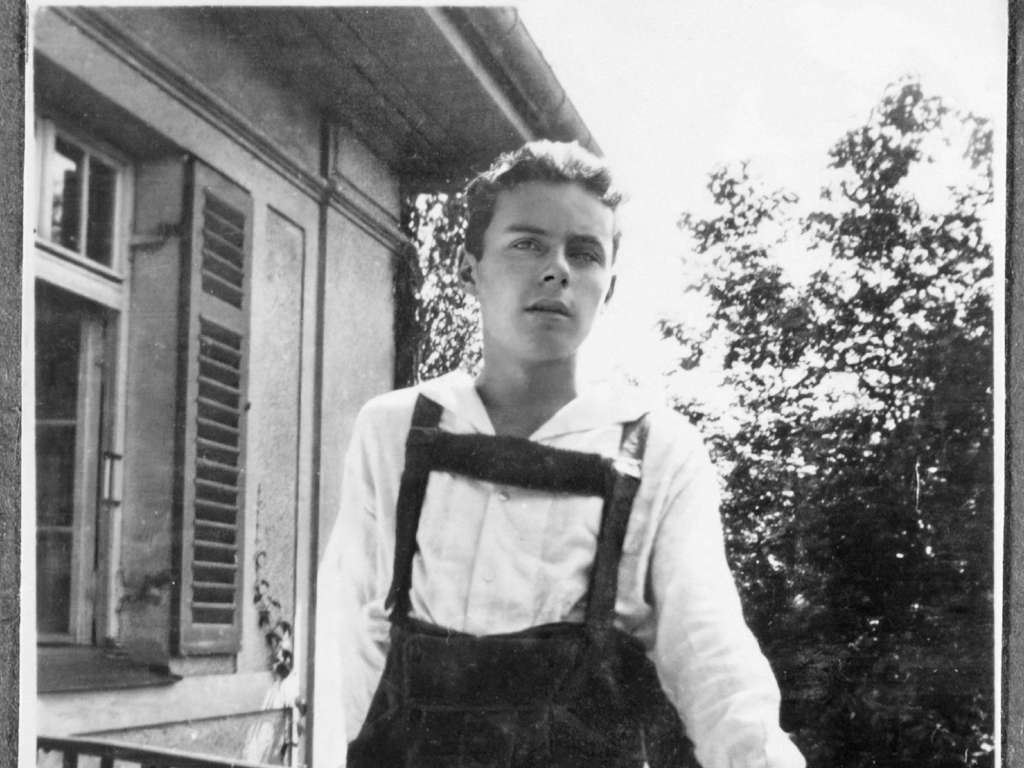
Klaus Mann (1906 – 1949)

On finding a photo of 16-year-old Klaus Mann…

Klaus Mann. Cute twink. What did you become? A chaotic mix: part mongrel, openly queer, a junkie, and premature anti-Fascist. The eldest son of German literary giant Thomas Mann. Born with a permanent side-eye for the world and zero patience.

Every book he published before 1933 got tossed straight into the flames during the Nazi book burnings.

His 1942 autobiography, The Turning Point, reads like a roll call of lost friends; an unsettling number of the people in it had died by suicide, more than feels believable in one life.

Seven years later, in Cannes, he followed the same tragic path.

“Memories are made of peculiar stuff, elusive and yet compelling, powerful and fleet. You cannot trust your reminiscences, and yet there is no reality except the one we remember.” – Klaus Mann (The Turning Point)

On being famous in a hundred years…

I will die and in a hundred years people will decide that I was iconic. Maybe I was just too avant-garde for my era, and everyone needed a lot of time to catch up. Or maybe… I was just a shit writer and in a hundred years time people won’t be writing at all. And when they rediscover my work, it will make my shit writing seem like that of an intellectual. 

On hearing about an intriguing snack…

“He said that he would fix me a snack, but that it might take a little time. I read while he disappeared into the kitchen. When he returned fifteen minutes later, he handed me a plate containing three salted crackers and an unknown delicacy that had been thinly spread over each one. I asked what it was, but he shushed me and said that they were best eaten straight away. I ate them and afterwards he told me that the crackers had been covered with his sperm.”

On the urge to write gay porn…

I write gay sex scenes in which nothing really happens. So why not write gay porn where everything does? The thought crosses my mind, but embarrassment stops me. I have no wish to shock anyone, or to offend.

People tell me there is money in it. In that world you can have sex with anyone you like on the page—the most beautiful man, the ugliest. No limits, no refusals. Anything can happen because you decide it does.

The urge to write it grows stronger.

But then my unhealthy fascination with Baron Corvo returns, as it often does, and he appears in my dreams again. He reminds me—rather coldly—that, like him, I am already sufficiently depraved, bordering on the disgusting, and that there is really no need to write about it.

On realising what I look at each morning…

I’ve started following a French blog called Gay Cultes—my daily hit of a beautiful male body, a little lust, and a sprinkle of homo culture. And it makes me a little jealous because it is simple and never misses. 

On loving these lines in a book…

“He spat and beat his donkey, which farted, kicking one leg. I followed his advice, as the commotion I seemed to be causing was making me a little uncomfortable.”

On observing three guys in a band…

Three guys are standing there with guitar cases on their backs, talking among themselves. From what I catch, they’re starting a band.

For a second I feel this urge to tell them they’re absolutely doomed. Not because of the music—who knows, they might be good. But visually? It’s a disaster. Two chubby guys and one tall, spotty skeleton. 

On finding a good poem…

Together
Sleeping together … how tired you were …
How warm our room … how the firelight spread
On wall and ceiling and great white bed!
We spoke in whispers, as boys will do,
And now it was l—and then it was you
Slept a moment, to wake-time fled;—
“I’m not a bit sleepy,” one of us said.
I woke in your arms,—you were sound asleep.
So close together we had tried to creep,—
Clinging fast in the darkness, we lay
Sleeping together,—that yesterday!

C. Mansfeld

On hearing a man say to his small son…

“Gi’ it a look. It’s reyt callin’ out, innit? All sat there beggin’ for it—everythin’ tha needs t’ knock up a proper bit o’ slopdosh, if tha’s not soft.” 

*****

Did I believe in life after love? In love after love? In life after life? I was unsure at that time.

But we were happy.

Stolen Words: Boys in the Trees – Carly Simon

By the Lake: An Ode to Freedom and Youth by Niv Shank. HeyBoyMag (2025)

“I’m home again in my old narrow bed
Where I grew tall and my feet hung over the end
The low beam room with the window looking out
On the soft summer garden
Where the boys grew in the trees.”

Boys in the Trees (1978). Lyrics by Carly Simon.

My Own Private Idaho – River Phoenix doesn’t just act – he drifts, aches, and unravels… and now we know that it was real

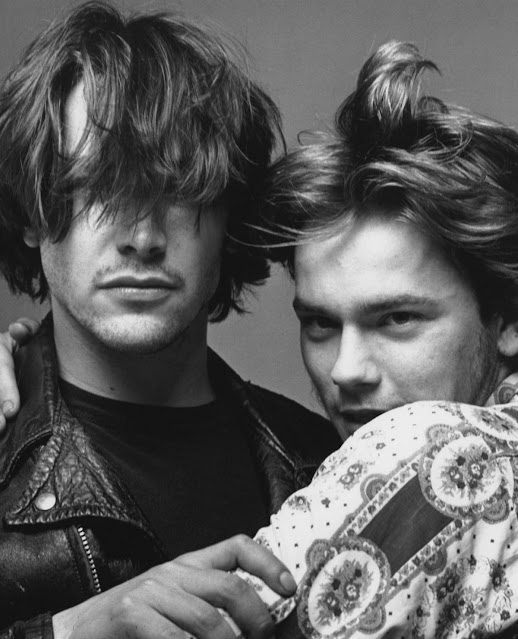
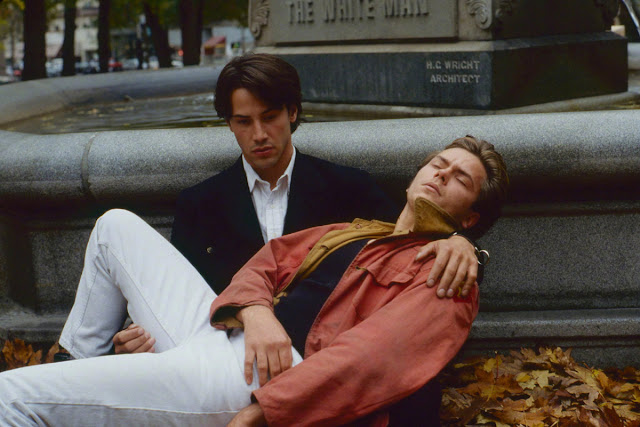
My Own Private Idaho. Keanu Reeves and River Phoenix. Promotional still (1991)

Scott: I only have sex with a guy for money.

Mike: Yeah, I know.

Scott: And two guys can’t love each other.

Mike: Yeah.

Mike: Well, I don’t know. I mean… I mean, for me, I could love someone even if I, you know, wasn’t paid for it… I love you, and… you don’t pay me.

Scott: Mike…

Mike: I really wanna kiss you, man… Well goodnight, man… I love you though… You know that… I do love you.

***

Watched ‘My Own Private Idaho’ for the first time. Charlie asked me if I’d seen Keanu Reeves recently because he looked old. But he was 61-years-old. River Phoenix still looks exactly the same… but that was how he left things. I remembered that I’d mentioned Phoenix before… but in one of my stories, he had appeared as a ghost. 

It wasn’t going to be called ‘My Own Private Idaho’… better than ‘Blue Funk’ or ‘Minions of the Moon’… and named after a B-52s song. Inspired by Shakespeare’s Henry IV plays… Prince Hal and Hotspur and Falstaff… but here it was Scott Favor, privileged bisexual, Mike Waters, narcoleptic gay hustler searching for his mother, and Bob Pigeon, coke-dealing chickenhawk. Gus Van Sant: “My films are usually about relationships. I think you make films about things you lack.”

I can’t stop thinking about River Phoenix because, I guess, I’m in love with yet another dead man.

1987… “Run to the rescue with love and peace will follow.” – River Phoenix.

1989… Star burning bright. Beautiful. Lightness. Creative. Camera object.

1991… Indie moment. ‘My Own Private Idaho’. Realism to fantasy. Challenging the norm. Self-destructive attitudes. Dark themes. Cool culture. Downbeat hustlers. Wanderers. A chance to become an adult actor. Gus Van Sant simply being Gus Van Sant. 

Keanu Reeves laying in bed playing with his nipple. What River Phoenix needed after making this movie – a bath, a shave, an exfoliating facial scrub.

“How do you see yourself fitting in with younger Hollywood acting?” (A sweet voice). “I don’t see any of them in the perspective or in the limelight of Hollywood. I really don’t ever want to get that objective or self-consciousness of my place in this world of showbusiness.”

1993… LA nightclub. Halloween. Music blasting. Sitting on a couch. Tired. Intoxicated. Skinny. Bad skin. Ticking time bombs. Heroine. Cocaine. Morphine. Marajuana. Valium. Cold remedies. Addiction is an open secret here. And then the star exploded all over the pavement. Never did anyone move from casual drug use to death so quickly. The night that Fellini died – ‘A director’s sweet life. An actor’s brief life.’

Retrospective.

2025… ‘My Own Private Idaho’. Turning point. A troubling effect. Midnight rock sessions. Alcohol. Uncontrollable drug use. Crystal meth. Hooked. No chance of going back now. Progressive and fatal. Like ‘The Little Shop of Horrors’…if you go too near to the plant it will eat you. The best performance… but from now on he didn’t care enough about himself to look after himself. What about those he left behind? Nobody did anything to help him when he was alive… guilt… and lasting sadness.

Have a nice day!

My Own Private Idaho. Keanu Reeves and River Phoenix. Promotional still (1991)
My Own Private Idaho. Keanu Reeves and River Phoenix. Movie poster (1991)

Stolen Words / The Beautiful Boy has been absent from our field of vision

Klein Youth – Charlie Marseilles

“We speak of the body of the young man at his fullest development, just on the brink of maturity, a young man who has retained some of his original innocence. The model for the classic Greek was the young athlete, from an aristocratic family, who competed in the nude in the original Olympic Games. It is not until later that the natural male form was used as a medium for the expression of godliness, an idea that later became the basis for a popular religious sect. A look back through the twentieth century will demonstrate just how long the Beautiful Boy has been absent from our field of vision. Examine the popular male images of the past 60 years. How many of them have been both young and beautiful?”

Helen Ziou – Valley Advocate Amherst – April 1984

Back off – I’m not that person now

The soul of a good time. But something changed. I’m not a social person anymore, but everybody wants me to be. They talk shit all night. I want to say, “Please go away, I prefer my own company now.”

You want them to be yours, but they’re not, and never will be

Image: Alex Avgud

If someone asked me who the love of my life was, it would be the one that I’ve been waiting 15 years for. That’s how long my infatuation has lasted. Waiting for something to happen. Waiting for him to realise that I am the one. But he knows all this, and isn’t in the slightest bit interested. It’s emotionally painful and challenging, and my resolve never weakens, but I know that it was never meant to be. I console myself with the things that are wrong about him. He is tall, blonde and lanky and everybody says that he has a tiny dick. He can be quite nasty. He spends money he probably doesn’t have. He is disorganised and incredibly untidy. And there’s the annoyance that everything is handed to him on a plate. A relationship would never have worked, and this one-sided love is best left unfulfilled. But despite all these flaws, love can be irrational, broken but still loved.