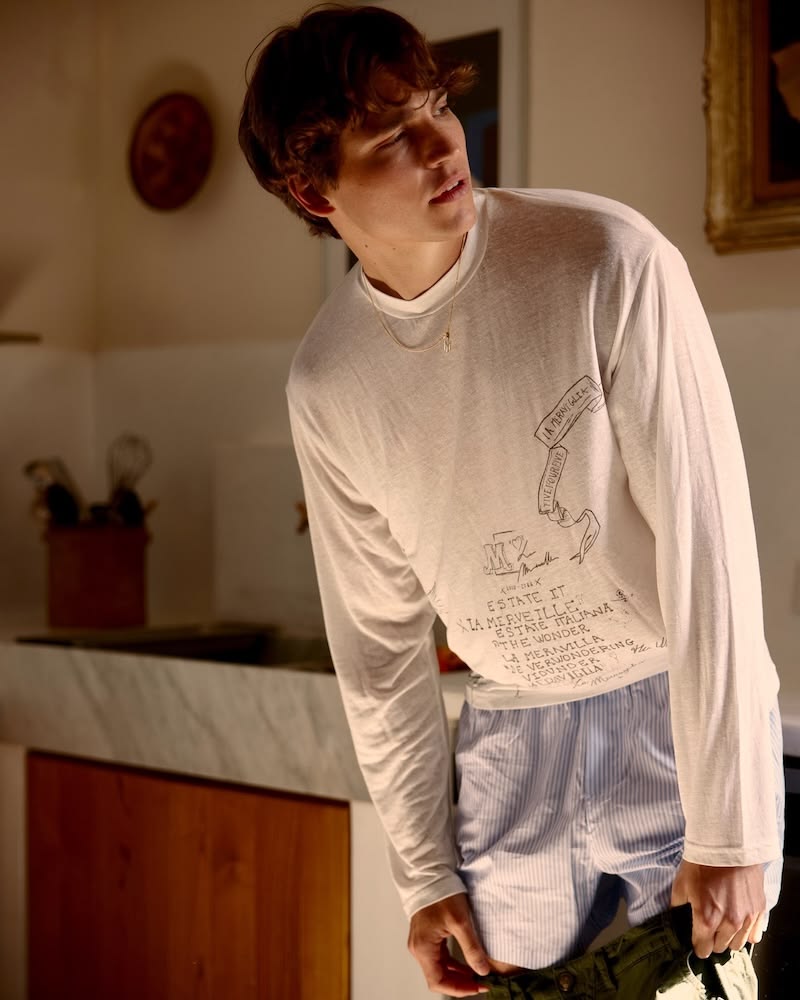
The Sinti Boy
It was dark by the time we went out, but the heat was still oppressive. The only place left to buy milk was the little corner shop that opened and closed according to the whims of its owners. Nobody knew its hours. There was never any guarantee it would be open.
But Signora Bruschi had panicked. She needed milk for my morning coffee and for Bianchi’s Vitabella Corn Flakes. We could easily have managed without it, but she liked everything to be perfect. At confession, she would probably tell Don Carlo she had forgotten to buy milk and had therefore sinned.
Cola whistled as we walked. He had unbuttoned his shirt because he believed the months spent working for Signor Valenti had transformed him into a young Roman god. After sharing a bed with him for so long, I was inclined to agree. But Bianchi had been moved to the attic, and I was once again sleeping in my own room, with a large bed all to myself.
As we approached Via Cesare Trezza, Cola stiffened. He stopped whistling and buttoned his shirt. A young man stood beneath a streetlight, smoking a roll-up.
“Pezzo di merda,” Cola muttered.
The man had dark skin and closely cropped black hair. He wore jeans and a designer puffer jacket with nothing underneath, exposing his bare chest. His trainers were scuffed but spotless. Silver rings glinted on his fingers, a faded tattoo disappeared beneath the collar of his jacket, and an expensive pair of sunglasses rested on top of his head.
As we drew level, he gave a low, taunting whistle intended for us alone.
“He’s Sinti,” Cola said once we had passed. “He hangs around here. Dangerous. If you ever see him again, cross the street.”
Dangerous, I thought.
But extraordinarily handsome.
A Collector of People
It is all mirrors and smoke screens: the endless quest to protect an identity.
I shared my work with a friend—one of the privileged few—and he recognised the characteristics of people we both know, though inhabiting the wrong bodies.
“I am a collector of people,” I told him. “And it has always been my intention to confuse.”

The Same Quiet Corner
I love the sun, but the sun does not love me. Shade is essential. It is time to discover whether cool air still exists. A time to slow down, to forget myself for a while and leave the rest of the world behind. Everybody needs a place to disappear.
Most days I come to these steps, where nobody thinks to look for me.
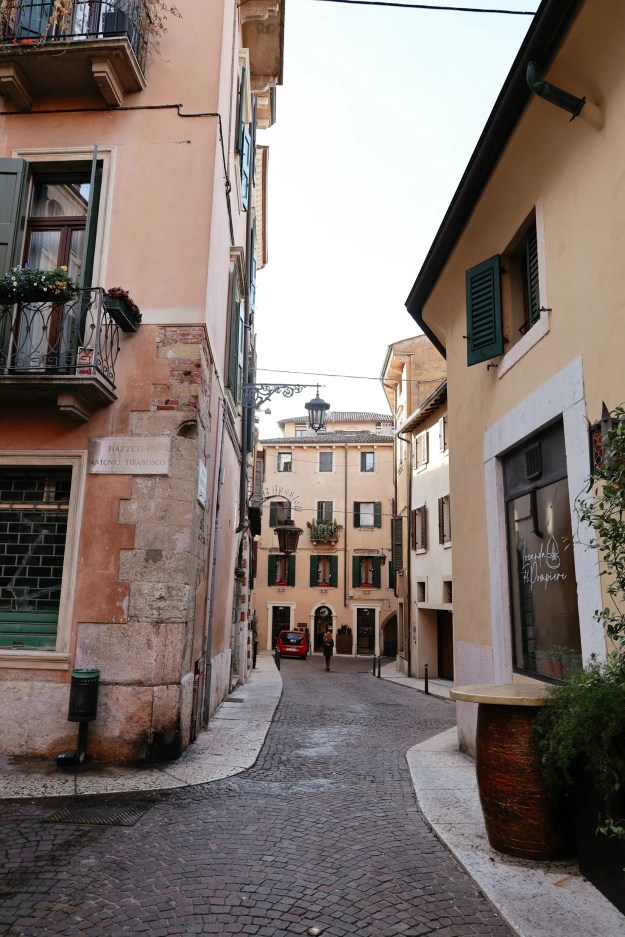
I sit beside carefully tended planters of oleander, bougainvillea and English lavender, the air fragrant with their scent. I drink my coffee in peace. It is silent except for the distant toll of a church bell or the occasional motor scooter threading its way through the alleyways.
Then a young man arrives. He always chooses a place nearby and settles down with a book. No matter what time I come, sooner or later he appears and quietly takes his seat. I ought to resent the intrusion, but I cannot. He is as pale as I am, and I suspect he, too, is a foreigner.
It is a curious thing.
We travel from distant places, only to find the same quiet corner of the world.
Circe’s Gift
Bianchi came up behind me and began ruffling my hair.
“Ti sto trasformando in un maiale,” he said. I’m turning you into a pig.
The display of affection was lost on me.
Later, I discovered that the bond between humans and pigs is forged in Homer’s The Odyssey by the powerful sorceress Circe on the island of Aeaea. When Odysseus’s crew stumble upon her palace, she welcomes them with a meal of cheese, barley, honey, and wine, laced with a potion. After they have eaten, she raises her wand and transforms them into swine, imprisoning them in her pens
Now I am a pig.
The Return of Antinous
People do not understand me. They cannot see why I am drawn to old things. But I am, and I have no idea why. More than anything, I like books about dead people.
At the moment I am reading a biography of Beverley Nichols, the English writer, playwright and broadcaster who died in 1983.
It is a banger.
His longing for intense, sometimes masochistic homosexual encounters existed alongside the refined, middle-class domesticity he cultivated in his bestselling memoirs.
Rather like me.
I would happily live my life as Beverley Nichols did, though I could do without the growing old part.
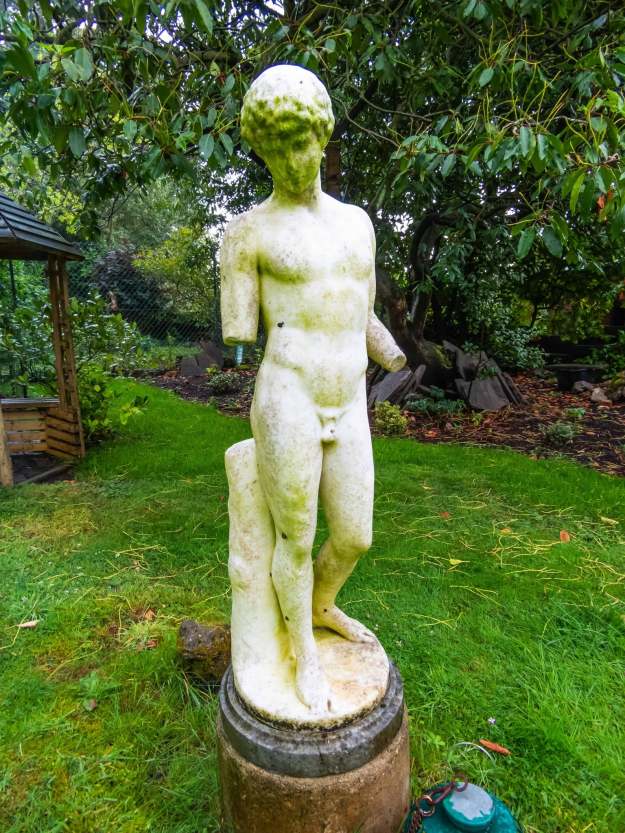
Which brings me to Antinous, the beautiful young Greek whose love affair with the Emperor Hadrian made him immortal. A statue of Antinous stood for decades in the gardens of Nichols’s house, Allways, in Glatton.
Nichols had bought the statue from Henry “Bogey” Harris, the wealthy London aesthete and art collector who lived in Bedford Square.
“Antinous would be much happier living in the Huntingdonshire countryside than at Bedford Square in London,” Nichols declared.
When Nichols sold the house, Antinous was left behind.
In the 1960s, the new owner ordered the statue to be removed. “One could clearly see his man parts and his bottom!” she complained.
It was thought to have been destroyed.
Imagine my delight to discover that, only a few years ago, Antinous was found abandoned in an overgrown corner of the garden. Restored to his former beauty, he now stands once more in his rightful place, gazing back towards the house below.
On the cute and willing…