Category Archives: Short Stories

The Avid Reader and Those Who Watched Him

Hollacombe Court was a typical new-build apartment complex just off the Uxbridge Road. Four six-storey blocks stood around a large courtyard, entered through a gated archway at one end or via doors at the base of each stairwell. It was elegant without pretension and suited young professionals who preferred life beyond the city.

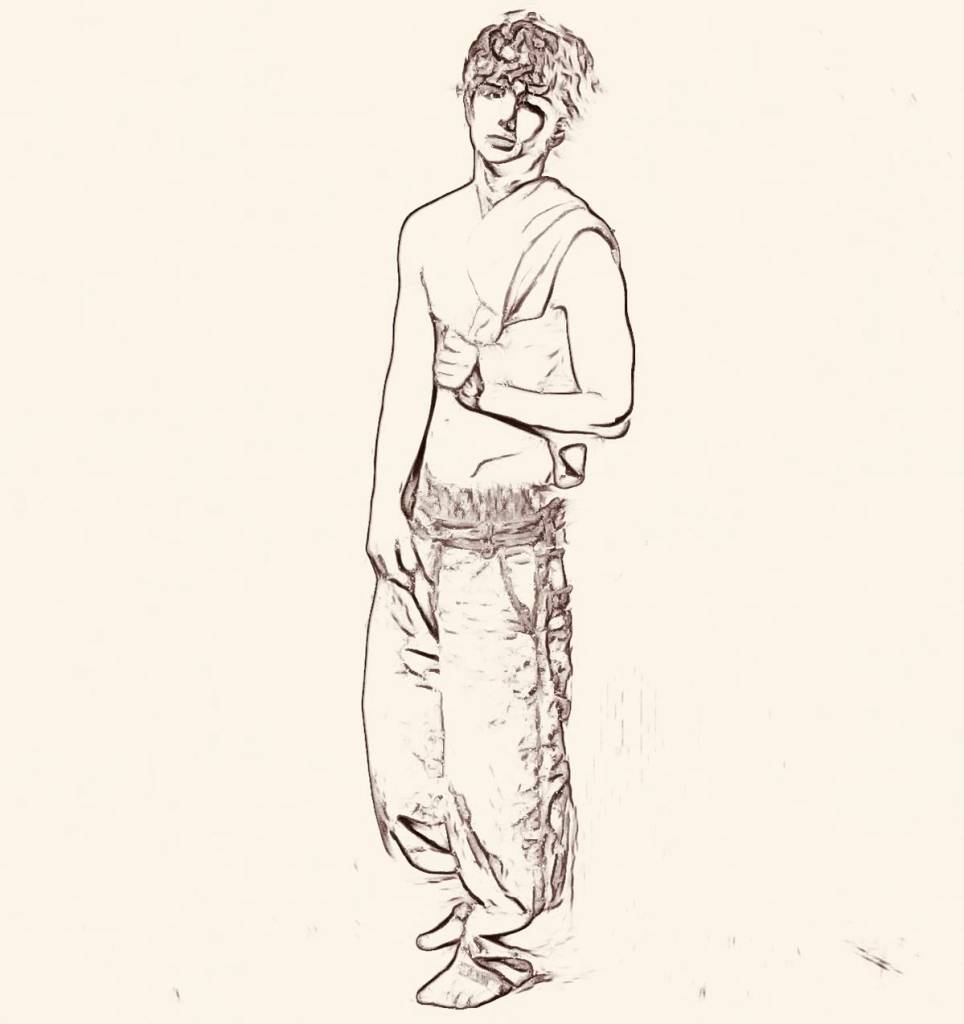
Elian—meaning God has answered—was of Iberian descent, though born in Dartford, and he had never considered moving to Spain. He had arrived at Hollacombe Court that summer and quickly became known to residents whose windows overlooked the courtyard. In his twenties, he might easily have been called handsome, and his athletic build drew the curious attention of anyone in search of an eligible bachelor.

He spent most summer evenings in the courtyard, with its cream flagstones, raised flowerbeds, and central water feature. He was often found sitting or stretched across one of the dozen stone benches set into the planted borders. He seemed to favour the one nearest the fountain, where water slipped between the fingers of the Greek god Zeus and fell into a circular pool below. Whether any of the residents could have named the statue, however, was open to question.

This was how Elian came to the notice of those living at Hollacombe Place.

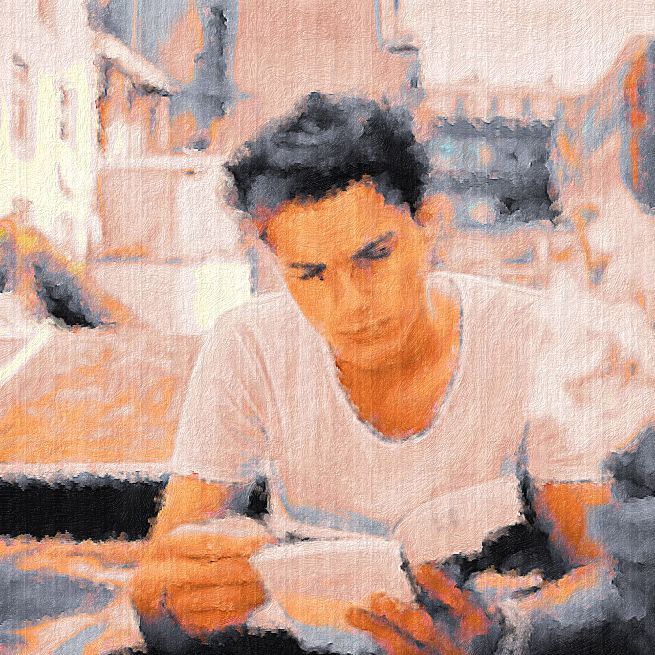
Most assumed he had finished work, eaten, and chosen to pass the remaining hours of the evening outdoors with a book. That, above all, was what people noticed. While others switched on the television, Elian could almost always be seen reading. What he read remained a mystery, as few residents used the courtyard, leaving him—more often than not—undisturbed.

To those who glanced out, Elian had become a fixture. His presence lent a quiet reassurance. If, by chance, he was absent, it stirred a faint unease, as though something were amiss. Many had even taken to checking for him several times over the course of an evening. When darkness fell, it became customary to watch him close his book and make the short walk back into his block, though no one knew which apartment was his.

But there were those at Hollacombe Court who watched Elian for more selfish reasons. Had you challenged them, they would have denied it, yet it was hard to ignore that they had fallen in love with him—his Mediterranean looks, olive skin, and thick, black hair. On hot, humid days, they took particular pleasure in seeing him in football shorts, his six-pack on show, his long, smooth legs stretched out before him.

Elian enjoyed those evenings because he was an avid reader, with a particular fondness for novels, and for that reason he never felt lonely. He could summon characters from any book he had read; they were his companions.

His favourite writers were Lee Child, Alan Hollinghurst, and Colm Tóibín, and he often imagined himself as the protagonist in their novels. He had also discovered the work of André Aciman and Tim Parks, whose books stirred his imagination in different ways. When he finished a novel, he placed it carefully on his bookshelf, arranged by author and in order of publication. The classics, however, held little appeal; he found them too dour and overly wordy for his taste.

But reading aside, there was another reason Elian liked to sit in the courtyard.

Reading in full view of so many people made him feel connected. He knew they watched him, desired him even, and he welcomed the attention. He wanted to belong to a society that saw only his outward form; his need for acceptance was universal. Being seen confirmed his existence and importance, satisfying a deep psychological need for belonging. At times, he wondered whether this desire to be observed was a way of compensating for a lack of inner confidence.

And he was able to do this without interference. He liked that people looked at him yet respected his solitude. This paradox became a careful balance between the social need for validation and the personal need for quiet, self-reflection, and protection. He wanted the thrill of being in the spotlight, but also the safety of anonymity. When alone, Elian was answerable to no one, and in that freedom he could exist without fear of judgement.

And so the summer passed in a kind of quiet contentment. Elian with his books, and the curious residents of Hollacombe Court satisfied to watch over him.

Gypsy Blood: Some Bare-Knuckle Fighter in his Family

Colvey said I had something and wanted to know more. I had no fuckin’ clue what he meant. He stepped in close, his face right up in mine, and for a second, I thought he was gonna headbutt me. His eyes were this icy blue—never noticed before—and they had that look that made you feel small. I stared back, like I wasn’t scared, but I was.

I wanted to ask what his problem was, but Colvey always said silence spoke louder than words. So I kept my mouth shut.

“There’s no one here,” he said. “Told the boys to fuck off.”

Just then, a bit of glass dropped from the busted skylight and smashed on the floor. He didn’t even blink. “But they’re still watching,” he said. “They wanna see me cut you.”

I didn’t dare look away. If I did, he’d know he had me. So, I just stared at his face. They said he had gypsy blood—some bare-knuckle fighter in his family. Probably bullshit. There was a scar under his left eye from when someone bottled him once. Bit of stubble, strong jaw, eyes like razors. Eyebrows shaped. Long lashes. Minty fuckin’ breath.

“You tryna stare me out, bro?”

Didn’t answer. Then he blinked. Looked away for half a second. Tiny moment, but I saw it.

Then—slick movement—blade at my cheek. Pressed it in till I felt it cut. Warm blood sliding down my face.

Door creaked open. Metal scraping.

“You cool?” Mason shouted.

“Fuck!” Colvey hissed. He was pissed.

“All good, bro,” he yelled back, easing the knife away.

I could tell he was gutted. He’d wanted to slice me good. Maybe he still would’ve, but Mason was climbing through the mess toward us.

“What’s going on?” Mason said.

Colvey wiped the knife on his T-shirt, leaving a red smear. “Nothin’, bro. Just sorting a few things. Where’s the boys?”

“They’ve gone. Told ‘em to call it.” Mason clocked the blood on my cheek. “Clean yourself up, dickhead.”

They turned to go. Colvey slung an arm around Mason’s shoulders. Whispered something. Kicked a paint can that rattled off into the dark.

My heart was still banging. I took deep breaths. I’d got off lucky. Stood my ground, though. Still here.

At the door, Colvey turned and shouted, “I’ll see you again, pussy!”

Mason flipped me the finger, then did that wanking motion. “Fuckin’ knobhead!”

That’s when I realised I’d pissed myself.


“Bro, answer your fuckin’ phone!” Blake was yelling when I finally picked up. Music blasting behind him. “I’ve been calling loads, you blanked me.”

“Yeah, been busy,” I said.

“Why’s Colvey after you?”

“I dunno,” I said. “Didn’t say.”

“He’s goin’ mental, bruv. Proper mental. Said he’s gonna kill you.”

“Well, he didn’t,” I said. “And I’m goin’ home to sleep.”

“Nah, come Billy’s,” Blake said. “The boys wanna hear what happened.”

I thought about it. But there was a wet patch on my joggers that made me feel sick, and a cut on my face that didn’t bother me at all.

I kept replaying it in my head. I’d done something to piss him off, that much was clear. I just didn’t know what. I hadn’t stolen from him, hadn’t touched his gear, hadn’t said shit behind his back. And I sure as hell hadn’t been with his girl. That was never happening.

Still, this was proper bad. I’d half expected him to stab me, but he hadn’t. Told myself Colvey’d never killed anyone—but who knew? Maybe he just hadn’t needed to.

What scared me most was thinking he might cut me off from the crew. Then what?

The night felt dead. Cold. Empty. And I felt smaller than I’d ever felt before.

Short Story: What the Crowd Cannot Have


The first time Brodie and Archie met was not under the best of circumstances.

It was a Friday afternoon beneath the Miller Theatre on West 51st Street. Brodie – hi-viz vest zipped to the throat – stood amid abandoned scaffolding, photographing stress fractures in the concrete. The air was dense with dust, old and mineral, as though the building itself were exhaling.

A figure emerged at the far end of the tunnel and walked towards him.

Brodie lowered the camera. He waited until the young man was close enough to see properly, then snapped, “What are you doing here? This is a restricted area. Turn around and go back the way you came.”

“I’m sorry,” the young man said. He spoke with an English accent, careful, almost courteous. “I didn’t realise. What was this tunnel used for?”

“The other side of that wall is backstage,” Brodie replied. “Probably for actors crossing beneath the stage. But there’s no time for questions. It’s unsafe down here. The roof could come down at any moment.”

It was an exaggeration. But saying it gave him a small, illicit thrill – authority borrowed from the place.

The young man hesitated. He had floppy brown hair, eyes dark and inquisitive despite the rebuke. “What are you doing?”

“I’m inspecting the structure,” Brodie said. “Everything looks glitzy up there. Down here it’s rot and age.” He paused. “You still haven’t explained why you’re trespassing.”

“I was just exploring.”

“Explore somewhere else.”

The young man’s shoulders dropped. As he turned, he fumbled the folder under his arm; papers spilled across the dusty floor.

“Shit – sorry. My script.”

Something softened in Brodie then, too late to retract the sharpness he’d already spent.


The second time they met was in the staffroom.

Brodie was entering notes on his laptop when the door burst open and a tide of people flooded in, loud with laughter, trailing the smell of coffee and citrus wipes. Lunch packs appeared: protein bars, yogurt, hummus, cut vegetables. Actors, Brodie thought, irritated beyond reason.

Michael wanted renovation proposals by Monday. Concentration felt impossible.

Then he saw him – the boy from the tunnel – laughing with the others, sleeves pushed up, script tucked under his arm as if it were a talisman.

Of course.

On their way out, the young man stopped at Brodie’s table. “I’m Archie,” he said, holding out his hand. His eyes lingered, dark and unguarded. “I think we got off on the wrong foot.”

Brodie hesitated, then took it. The contact was brief, oddly charged. “I’m Brodie. Forget about it. Just – stay out of the tunnel.”

Archie smiled, chastened and amused all at once.


After that, Brodie thought about him more than he liked to admit.

He knew he could be abrupt, inflated by his own sense of usefulness. Actors irritated him on principle. But Archie – English, polite, quietly intense – had unsettled him.

Late one night, Brodie searched the Playbill bios. Archie was a rising star: television work, the National Theatre, lead roles in the West End, now a Broadway debut.

Impressive.

What Brodie didn’t know was that Archie had been searching too. He’d asked about the surveys, about the renovation. He found the company. He found Brodie’s photograph.

Hazel eyes. Skin warm-toned, as if lit from inside. A face shaped by movement rather than posing.

Tasty, Archie thought, surprised by his own boldness.


Two years later.

Archie slipped out of the Walter Kerr Theatre the moment the curtain fell on Chatterton. No shower. No linger. Wool coat, beanie, scarf pulled high. He moved fast, before the autograph hunters gathered.

Outside, Broadway surged and glittered – yellow cabs, steam vents, neon, voices colliding. It still thrilled him. It always did. A world away from Buckinghamshire.

At the apartment, Brodie checked the clock: 10:30. Any minute now.

The flowers were arranged just so. Archie liked flowers. Brodie liked that Archie liked them.

When the door opened, relief moved through him like a current.

Tea was requested. Always tea. Archie shed the night – coat, scarf, public self – and collapsed onto the sofa. He spoke about the show, about the line he’d missed. Brodie stroked his hair, grounding him.

Later, Fleet Foxes floated from the bathroom. Steam curled beneath the door.

Brodie knew the routine by heart. He would collect the clothes, note the forgotten boxers, breathe in the faint, intimate salt of them – something human beneath the polish. It embarrassed him how much that scent moved him.

Archie emerged clean and fragrant: Le Labo, Dior and mint. Blue silk pyjamas. He smiled like someone stepping into safety.

They ate together. They watched television under the blanket Archie’s grandmother had made. Archie pressed close, smaller than he seemed onstage, all softness and thoughtfulness and unspoken worry.

Sometimes Brodie felt the weight of what he was not allowed to be – unseen, untagged, absent from photographs. Invisible by design. But here, in this private room, their bodies fit without explanation. The most erotic moments were those that could not be shared publicly.

Brodie was Archie’s shelter. Archie was Brodie’s undoing.

Brodie had watched hundreds of videos of Archie on YouTube, moments in which he appeared entirely at ease – charming interviewers, holding eye contact, listening with an attentiveness that felt generous rather than rehearsed. 

His answers were always articulate, delivered with that unmistakable smile. But Brodie could see what others missed. 

The exposure beneath the polish. The small betrayals of nerves: the way Archie’s smile lingered a fraction too long; the absent-minded stroking of his own arm as he spoke; the slow, circular massaging of each finger; the hand lifting to his hair, not to adjust it, but to reassure himself it was still there. 

These gestures were invisible to the audience, but to Brodie they were intimate, almost confessional – proof that the confidence was something Archie stepped into, not something he owned.

Thomas Chatterton had been an ideal role for Archie. The eighteenth-century poet – celebrated as the marvellous boy for his precocious brilliance and dead at seventeen – had been reimagined as the subject of a hugely successful Broadway musical. 

In his twenties, Archie might once have been considered too old for the part, but his fine, boyish beauty dissolved any such doubt. Night after night, he stepped into Chatterton with such ease that the distinction between role and actor began to blur. 

To the audience, he seemed timeless, suspended in youth and promise. To Brodie, there was something quietly unsettling in this devotion – the way Archie gave himself over to a boy who never lived long enough to be disappointed by what came after.

When the movie ended, the future rose between them.

“Would you come to London?” Archie asked quietly.

Brodie had been waiting for this. “Yes. If you ask me to.”

Archie’s eyes filled. “You’ll have to share me.”

Brodie pulled him closer. “I already do.”

The Patron Saint of Foolhardy Teenage Boys


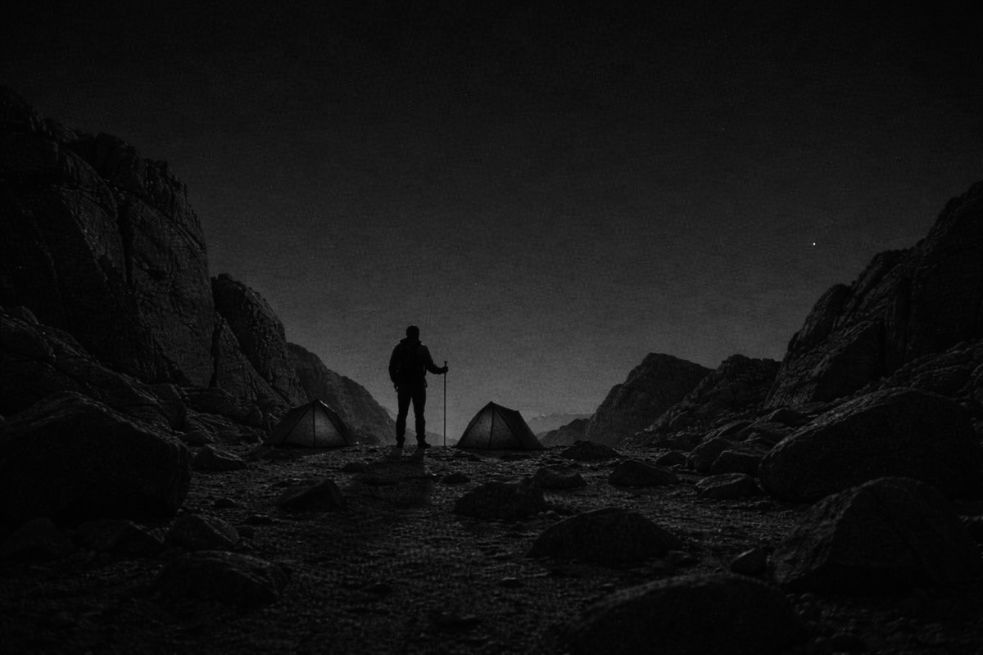
A solitary figure stands above Kinder Scout. He cannot be seen, yet he watches from afar. The darkness thickens over the peaks, and a westerly wind rises as if summoned from nothing, but neither deters him. This is not a place for the unprepared. The temperature will fall; the warmth of the day will slip away, unnoticed, into the stone.

As the figure observes the six boys pitching their tents, a quiet certainty settles within him: he is powerless. He cannot call out. He cannot warn them. Leaning on his stick, he endures the bitter air and waits, bound to witness how they will meet the night. Their laughter will thin, their bravado ebb, as loneliness takes hold. Escape will become a wish rather than a choice, and sleep the only surrender, each of them willing the morning to arrive.

When he is certain the boys have fallen into a restless, unhappy slumber, the figure moves. He steps softly across rock and scrub, listening, careful not to betray his presence. Only when he is satisfied that he will not frighten them does he pause to peer into each tent. There he sees them cocooned within their sleeping bags, clinging to one another, sharing the fragile warmth of slender, adolescent bodies against the cold.

At last, he chooses a broad, ancient rock and settles there, a silent sentinel. He remains, guarding their sleep, until the first pale glow of the new day begins to rise in the east.

The Shadowed Hand Behind the Letter


Being the transcript of a letter unearthed in the long-sealed vaults of the Royal Bank of Scotland, November 2025

George Walker Wood
66 Cavendish Street,
Marylebone
London

29 November, 1881

My dear Reader,

If by curious chance you hold this manuscript in your hands, I entreat you to read its contents with the utmost seriousness. Only by such attentive perusal shall you perceive that the pages which follow are both an explanation and a justification for their long concealment.

Should it prove that I still draw breath when these lines meet your eye, then I beg of you—burn them without delay, and disclaim all knowledge of ever having encountered them. The shame that would ensue from their divulgence is of so dreadful a nature that I scarcely dare commit the thought to paper.

I shall therefore begin at the point where first I made the acquaintance of one Johane—an Irish youth of some four-and-twenty years, of humble condition, and with every outward appearance of one who might easily draw misfortune to my door. He was, however, most commonly called Jack, and by that familiar name I shall refer to him henceforth. Dear Jack belonged to a loose fraternity of young loafers and street-bred rascals—variously known as the “London Boys”—a wild and merry set whose manners were as questionable as their morals, yet whose very recklessness possessed, for me, an unaccountable fascination.

In time I grew most attached to Jack, and he attended me frequently at my lodgings in Marylebone. There, behind doors safely bolted, we indulged in certain intimacies which, though common enough within that unseen sphere of which London pretends ignorance, would cause polite society to feign horror. Jack’s person was slight, his garments threadbare and ill-assorted, and he bore all the marks of those who are forced to wrest their sustenance from the streets; yet beneath that rough exterior there was a warmth and vigour not easily described. When fortune smiled and I had a few coins to spare, he would remain with me until morning, and those nights—cold, anxious, sweet as they were—remain fixed in my memory.

I suspect that my landlady, Mrs. Chivers, a stout matron of no small curiosity, had taken something of a liking to Jack as well; for once I discovered him seated at her kitchen table devouring a modest breakfast of bread and scrape. The glint of mischief in his eye, as he looked up at me over the crust, told me all I needed to know. She had chosen to see nothing of the nature of my rooms above.

My days were spent at the old desk overlooking Cavendish Street, where I composed articles for The London Figaro and The Dark Blue. Yet I had long nourished the ambition to attempt a novel—something that might echo, however faintly, the triumph of A Tale of Two Cities. My parents, never slow to remind me of my deficiencies, assured me that I lacked both imagination and creative faculty, that I was fit only to set down facts and order them neatly upon a page.

Still, I could not forget the tales Jack whispered to me during those winter nights—tales of gentlemen of rank who sought his company at a high price; of drawing-room adventures veiled beneath the richest draperies; of temptations and behaviours of which the world speaks only in scandalised murmurs. Spurred by these accounts, I sought the acquaintance of a certain printer known to an associate of Henry Ashbee—a man whose livelihood depended upon the discreet production of pamphlets of a decidedly provocative character.

Mr. William Lazenby, a sharp-eyed fellow, showed interest in my idea and agreed to an initial impression of two hundred and fifty copies. He offered me a share of the profits, subtracting his considerable costs, should I but write with candour. The sums he mentioned far exceeded any I had yet earned, and the promise of so easy a reward was exceedingly tempting. He informed me that the book should be sold exclusively by mail-order through an address in Paris, and insisted that I adopt a nom de plume, lest I bring inevitable ruin upon myself.

When I conveyed the scheme to Jack, he immediately demanded—nor without justice—a share of the proceeds, and further insisted that his own name be affixed to the work. I warned him that the police might take a dim view of such recklessness, but he merely laughed and declared that the “mutton-shunters”, knowing full well he could neither read nor write, would never suppose him connected to any printed matter. With that he tumbled himself upon the bed in his usual impudent fashion and suggested that we commence our “research” without delay.

By June the manuscript was completed, and I had settled upon what I deemed a most fitting title—The Sins of the Cities of the Plain. Though Mr. Lazenby scoffed at it, he conceded that the biblical suggestion would doubtless catch the eye of those gentlemen who take an interest in such hidden matters. I confess I feared that certain passages, dealing as they did with the concealed customs of our clandestine fraternity, might prove too recognisable to those acquainted with that shadowed realm.

Lazenby nevertheless published the work in two parts, and it found immediate favour among readers eager to feast upon the covert indulgences of the great and respectable.

Though I tremble at the thought of its reception, I take comfort that my own name has thus far escaped suspicion. I offer here my apologies to Mr. Simeon Solomon and Mr. James Campbell Reddie—both of whom have been unjustly whispered about in connection with this deception. Jack, meanwhile, basks in the admiration of his companions and seems persuaded that a century hence his name will still be spoken among certain circles of “inverts”, as he jests.

This very day I have deposited my first earnings at the Lombard Street branch of Messrs. Glyn, Mills, Currie & Co., alongside this confession, sealed and hidden, to remain in the vault until such time as Providence ordains its discovery. Should that day come, I trust that The Sins of the Cities of the Plain shall be regarded as a truthful and unvarnished portrait of those whose society I have come to cherish.

Ever, dear Reader, your faithful servant,

𝒢. 𝒲𝒶𝓁𝓀𝑒𝓇 𝒲𝑜𝑜𝒹
⌣⌣⌣⌣⌣⌣⌣⌣⌣
George Walker Wood

*****

Now read on to separate fact from fiction.

This edition contains the unabridged text of the first edition housed at the British Library, together with a new introduction by Wolfram Setz and a facsimile reproduction of the original volumes’ title pages.

The Sins of the Cities of the Plain is an influential Victorian erotic novel, originally published anonymously in 1881 and widely considered one of the first works of exclusively gay pornography in English. It is a fictionalized memoir attributed to real-life Irish prostitute Jack Saul.

The book is a narrative, presented as the “recollections” or “memoirs” of Jack Saul, detailing his experiences as a young male prostitute (a “Mary-Ann” or “rentboy”) in the clandestine gay underworld of Victorian London. It traces his escapades from boarding school into young adulthood, describing his sexual encounters with various men, from schoolboys and guardsmen to wealthy aristocrats and members of high society.

While attributed to Jack Saul, the actual author is debated by scholars, with some suggesting a ghostwriter or figures like the painter Simeon Solomon or James Campbell Reddie were involved. The book was privately printed in two volumes in 1881 by William Lazenby to avoid obscenity laws and sold for a high price.

The original printings are unobtainable today, but modern editions are widely available from various publishers, such as Valancourt Books and Mint Editions.

Twink on Trial

Twink – Charlie Marseilles (2025)

Johnny had Sabrina Carpenter in his ears again, looping ‘Feather’ from Russell Square all the way to Wood Green. She didn’t know she was basically the narrator of his life, but one day he’d tell her. That’s what twinks do: dream big, unrealistic, sparkly dreams and somehow convince themselves it’ll all work out. Johnny didn’t care. He usually jumped head-first into the unknown anyway.

The day had been a slog. Instead of listening to his tutor, he’d spent two hours doodling in his notebook — the one with the Eric Ravilious cover he pretended made him look cultured. The tutor finally snapped and kept him back. “How would you describe your life?” he’d asked, like Johnny had personally offended academia.

Johnny had smiled. “Fed, pampered, and impatient. Honestly? My life is one long, sexy, pouty battle.”

The tutor hadn’t expected honesty. Or attitude. “In my day,” he’d muttered, “you would have been called a prostitute.”

Harsh, sure. But Sabrina would’ve had his back. She’d remind him he was eighteen, hot, and fully allowed to be desired — and if someone wanted to bankroll his glitter-coated lifestyle, that was on them. She’d conveniently skip the part about him being high twink maintenance: fine dining, special diets, beach holidays, designer clothes, and accommodation that didn’t smell like student desperation.

Alexander funded the whole thing, because Johnny lived for an Instagram-ready existence and the universe had not, so far, given him the bank account to match.

Twinks are vulnerable, Johnny decided, and love could never be found in a discount store.

When he got home, Alexander was already there, drinking wine and listening to Vivaldi — the soundtrack of men who’d survived ‘twink death’ and were now coasting through their late thirties in cashmere.

“We need to talk,” Alexander said. Serious voice. Terrible sign. Johnny tossed his Reiss puffer on the floor anyway. He was a trophy boy, and trophies didn’t hang themselves up.

Alexander cleared his throat. “The thing is… sugar babies aren’t really financially viable anymore. I need to do a quarterly business evaluation.”

Johnny froze. Thank God he’d kept all the receipts — he’d at least prove he’d been properly maintained. And he was not going down quietly.

“Look,” Johnny said, already shifting into survival mode, “you’re old enough to be fluent in PowerPoint and so I’m going to prepare a presentation of all my key deliverables. I think you’ll find them very compelling. Being adorable. Emotional availability. Pretending to like oysters. And really? That’s just the intro slide.”

Fashion Brothers and the Absurd


“I’m in love with a Lego brick,” Josef said, grinning like it was the most normal thing in the world.

Tomas raised an eyebrow. “What do you know, Joe? Are you an AI prostitute now?”

“No,” Josef said seriously, as if clarifying a crucial fact. “I’m Gigolo Joe.” He slammed the cases into the trunk with mock solemnity.

“Are we ready?” Tomas asked.

“Ready when you are, brother. But make it fashion,” Josef said, voice smooth as a sales pitch.

Tomas laughed, a little bitter towards his little brother.“I used to be somebody. I used to take people places.”

Their parents groaned, caught between shame and exasperation. “Put some clothes on, Tomas!”

Something Worth Remembering

Dominik Datko and Maciej Poplonyk. Photographed by Arthur Iskandarov

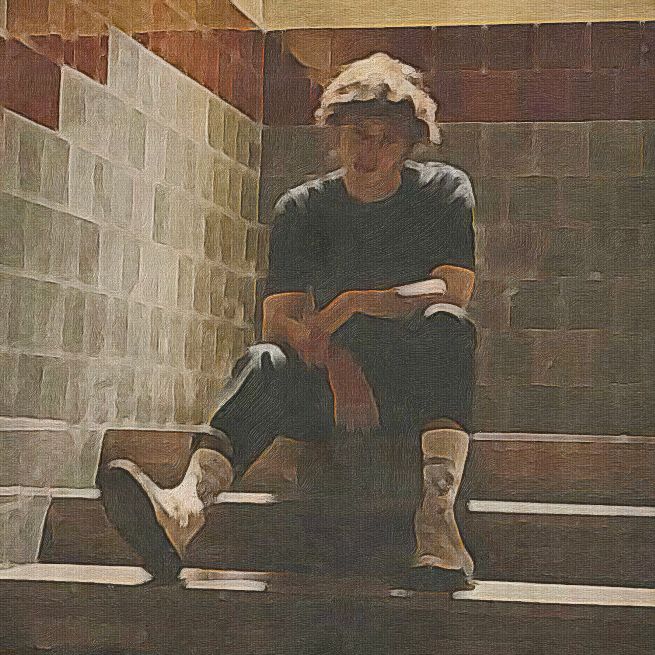
Dominic chose fourteen stone steps to sit on. They hadn’t been cleaned in a century; weathered and frost-damaged, they had taken on a patina — the greyness broken by lichens and mosses, ivy-leaved toadflax, and ryegrass. He rested his head against the iron railings and sighed.

Arthur sat thinking below him, his legs sprawled across the pavement. 

 “Once upon a time, a horse and carriage pulled up, and a well-dressed man — wearing a top hat and fine coat — disembarked and climbed these steps. He rang the bell and waited while an old butler answered the door, then handed over the hat and coat before being shown into a reception room.”

“How do you know that?” said Dominic, who lit a cigarette and looked towards the front door. There was no grandeur anymore. A glass door stood behind a padlocked gate; dirty net curtains protected the inside from prying eyes. The house was empty and unloved.

 “You only say it because you are describing something that you have seen or read. You don’t know what happened, because you weren’t here.”

Arthur picked up a piece of stone that had crumbled from one of the two pillars at the foot of the steps. He examined it before putting it inside a trouser pocket. This was something else to add to his ‘shelf of memories’. One day, when they were old men, he would pick up the piece of stone and show it to Dominic and say, “Do you remember the day we sat on those stone steps?” But he doubted that Dominic would grow old.

“My dear boy, despite your charm and privilege, you sadly lack imagination and prefer to live that shallow existence on TikTok and Instagram. Such a waste of an upbringing.”

Dominic laughed.

“And besides,” Arthur continued, “you will never become famous if you don’t contribute anything worthwhile that you can be remembered for.”

“That, my love, sounds too much like hard work,” Dominic replied. “But I envy you, Arthur, because you believe that writing those shitty little posts will turn you into a brilliant writer.”

There was a note of sarcasm in his voice, and Arthur knew that Dominic didn’t mean to be unkind.

“It is true. There are millions of tadpoles swimming in this huge pond. Why should anybody take notice of this one ordinary tadpole? But, Dominic, it’s not about being a brilliant writer. It’s about learning from mistakes — because I look back at some of the things I’ve written and cringe. But I remind myself that writing is about me, and I write for my own enjoyment.”

Marigold ‘Boy O’Boy’


Once, a handsome Sicilian boy, the son of Eros and a nymph, fell deeply in love with the sun, and couldn’t bear to stay another minute where he couldn’t see it. He worshipped it wherever he went, and when it wandered out of sight, especially at night, he couldn’t rest, because that object he loved wasn’t warm upon his tanned breast. For this reason, he never walked, stood, or lay in the shade, the love, in full sway, was boundless, and made his life its prey.

At one time, the sun remained under a cloud for eight days; during this period, the boy, Cylmenon, was very unhappy, and because he could not find his beloved, pined away and died. It was a tragic end for a fine young boy. When the sun shone again it found Cylmenon’s body near a fountain where he had tried to see the sun’s reflection, and so grieved was the sun, that it changed the lad’s body into a golden flower, of the first Marigold.

Study of a Sicilian boy with Passionflowers in his hair, Sicily, c.1899 – Baron Wilhelm von Gloeden

An explanation: Marigolds are known as “herbs of the sun” and represent the sun’s power, warmth, energy, and light. They are often associated with joy, optimism, passion, and creativity. This story is based on an obscure and forgotten poem from 1868 by Peter Spenser. Little is known about him other than that he was the eldest son of the Rev. Peter Spenser, Rector of Temple Ewell, near Dover. He wrote poetry for local newspapers across England and also published the magnificently titled ‘Parvula, or, a Few Little Rhymes: About a Few Little Flowers, a Few Little Birds, and a Few Little Girls, to Which Are Added, a Few Little Songs, and a Few Other Little Things.’ (1863)

The Ghost on All Hallows’ Eve


There is nothing to see, and yet—a ghost lingers. A handsome young man in fine attire, bearing no malice, drifting silently between the worlds. I see him, though you cannot. His gaze falls upon you with a tender awe—admiring, sorrowful, and tinged with jealousy that life continues without him.

Once, he loved a lady. He lost her, and now he wanders, unable to find his way back to her embrace. He is here, and there, and everywhere—a soft luminescence that clings to the hearts of the romantic and the doomed alike. Still, he searches for his beloved.

I tell him she no longer walks among the living, and he weeps, for he does not know where else to look. He is trapped in his own glass box of memory, with nowhere to go.

Beautiful young souls—he drifts above you, circling in a spectral dance. A shadowplay. Raise your hands and feel his trembling light, for this is All Hallows’ Eve, and he weeps.