Tag Archives: sicily

 My Week, For What It Was Worth

On meeting an artist’s muse…
Alfio had spent far more time with us than his employer at the hotel would have appreciated. The young Sicilian thought nothing of closing reception for a few hours in order to show us the hidden corners of Taormina. For that, Severin and I were grateful, for it allowed us to avoid the endless groups of tourists who traipsed through the town from morning until night. Alfio led us down narrow alleys to viewpoints overlooking the coastline; to small cafés and restaurants frequented only by locals; and introduced us to people whom he thought we might find interesting. For Severin, who would be working here throughout the summer, this was invaluable, and more than once the thought crossed my mind that he might never leave at all. It also occurred to me that this generosity may not have been entirely selfless on Alfio’s part. He knew that I would soon be leaving Sicily, and that afterwards he would have Severin to himself.

One such person Alfio introduced us to was an elderly gentleman named Santo, who lived in a modest upstairs apartment on Via Bagnoli Croci. The visit stemmed from a conversation I had had with Alfio about Baron Wilhelm von Gloeden and the photographs he had taken of young Sicilian boys in the 1890s. My friend David is involved in a forthcoming exhibition of von Gloeden’s work in London, and had spoken to me about the controversy that already surrounded it.

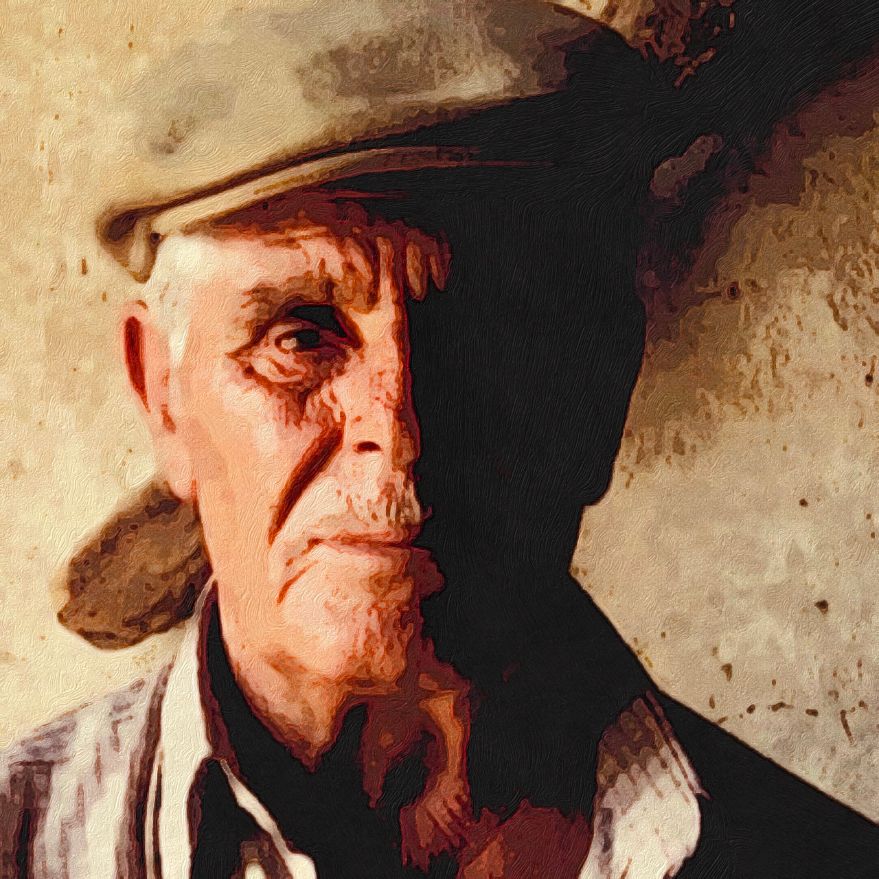
Santo spoke no English, and Alfio conversed with him in the local dialect. He welcomed us warmly with a toothless smile. His apartment was small and crowded with the mementos of a lifetime. Sacred images covered the walls, save for a faded black-and-white photograph hanging beside the door. Looking more closely, I saw that it depicted a barely clothed young boy seated upon a rock. The old man noticed my interest and said something to Alfio, who translated for me. The photograph was of Santo himself at the age of sixteen, taken in the 1950s, and it might easily have been mistaken for a von Gloeden image had the photographer not already been long dead by then.

Santo opened the small window to let in some air and gestured for us to sit while he prepared hot lemon tea. Alfio explained that Santo had worked many jobs in Taormina over the years: fisherman, labourer, barber, before spending his later working life in a hotel much like his own. Now in his eighties, Santo told Alfio that the old photograph had been taken by the German photographer Konrad Helbig. Following in the legacy of von Gloeden, others had come to Taormina hoping to emulate his work.

Yet Santo remembered little about the man himself, beyond the fact that he had paid him a few lire, as he had done with several of Santo’s male friends. The money had been welcome, and Santo admitted that he might have earned more had he posed nude, as some of the others did. But it all seemed impossibly distant now, he told Alfio — another life belonging to another century.
On three teenage brothers…
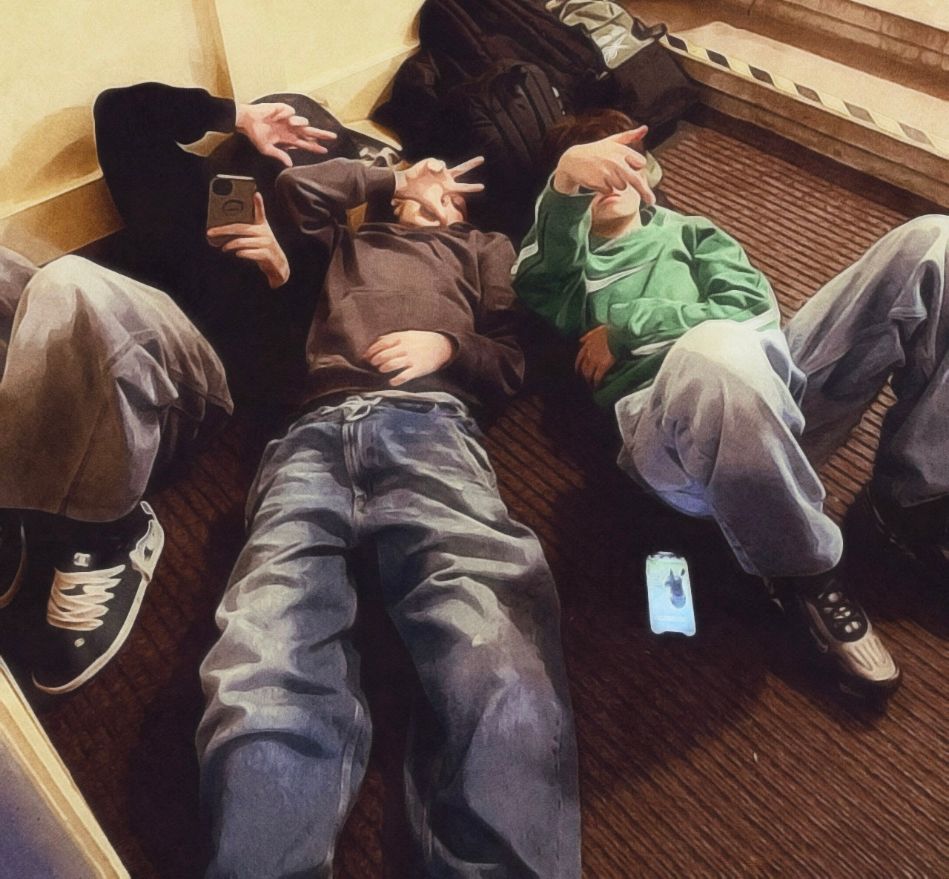
The three German boys — aged twelve, thirteen, and fourteen — are paraded each day by their parents. They resemble one another in many ways: slender adolescent bodies, dark hair, the same boisterous, brotherly energy. Only the eldest wears spectacles; the younger two tease him mercilessly, blissfully unaware that they will soon follow him into short-sightedness themselves.

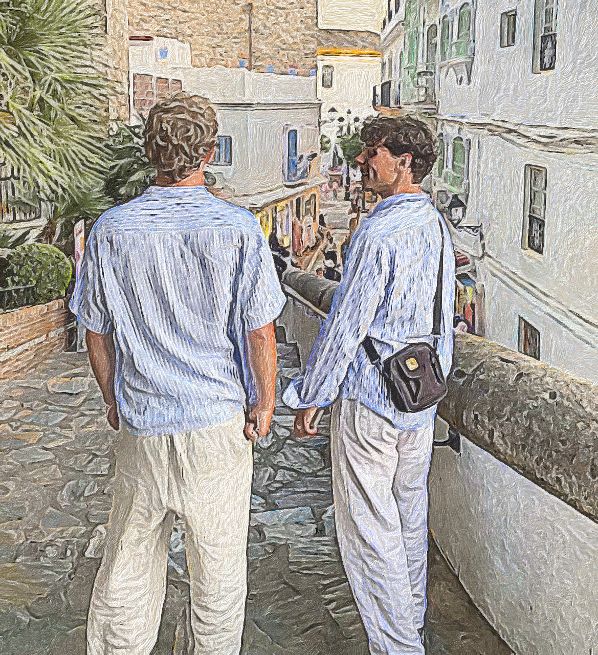
Their father indulges the rowdy behaviour with an almost inevitable pride — perhaps because he sees in them an echo of his own youth — and so the task of keeping them in line falls, as ever, to the mother. Each morning the boys greet us with exaggerated politeness, only to dissolve into giggles once they have passed. Severin says they call us the schwules paar — the gay couple — though more from a desire to provoke laughter in one another than from any malice.

“But,” Severin says, “I have no doubt at all that the eldest boy is most definitely gay.”
On saying goodbye to everyone…
I must move on. My time in Taormina has come to an end. I know it will remain one of those memories that returns in old age, vivid and untouched by time. The town had always possessed a certain allure in my imagination, though the reality proved different from what I had once envisioned. The days of Wilhelm von Gloeden making his way there along rough donkey tracks are long gone. Taormina is now an expensive resort town, crowded with visitors from every corner of the world. Yet, as with any place, I have always been drawn less to what the masses come to see than to what lies beyond their notice.

For that, I remain grateful to Alfio, who revealed a version of Taormina few tourists ever encounter. Before I left, the young Sicilian first shook my hand, then reconsidered and embraced me instead. It felt unexpectedly sincere.

I shall miss the boys who emerged from the shadows each evening to play football on the wasteland. Once, long ago, boys like them would have been exploited by those who paid them to pose for dubious photographs. Now the balance has reversed; they have become the opportunists themselves, charming wealthy tourists into buying cheap souvenirs at outrageous prices. Yet beneath the hustling they were still only boys, quick to abandon commerce the moment a plastic football appeared, racing about in clouds of dust and laughter.

And I shall miss Severin most of all — someone I had long ago consigned to the past. By chance our paths crossed again in a crowded airport, and we both ended up in Taormina. Once, we had regarded each other with suspicion, each secretly wondering whether Pietro had preferred the other. In time, we came to understand how foolish that jealousy had been.

Severin had remade himself into a wanderer, drifting wherever happiness seemed possible. I suspected that once I departed, he would move in with Alfio and perhaps even become his lover. Yet I could not shake the feeling that, sooner or later, he would return to hustling in the back streets again.

When the time came for me to leave, Severin thanked me for giving him a bed and kissed me on both cheeks. “I shall miss our pecks,” he said. “Always a peck for morning, noon, and night.” He made me promise that we would keep in touch and, for once, I found myself hoping that we would.

On the cute and willing…

Boy Italia

Boys Burn Quiet: The Photographer Who Hid His Desire

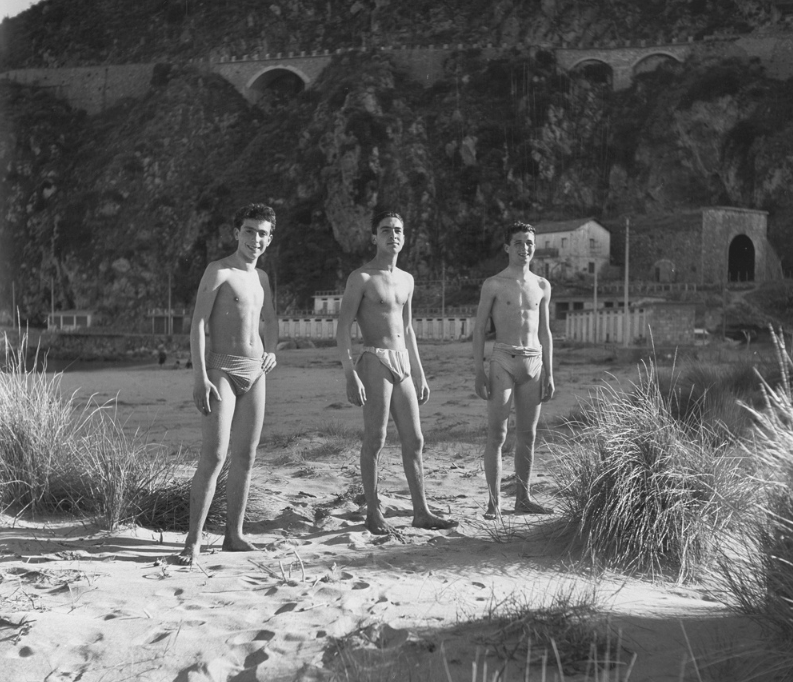
Calabria, three young men in bathing trunks on the beach , April 2, 1954. Konrad Helbig.

The story is sad in its own way. Imagine spending a lifetime taking more than a hundred thousand photographs of beautiful places around the Mediterranean. Many are published in travel magazines such as Merian and Atlantis, or used to illustrate the travel guides of the 1950s and 1960s. Then old age arrives, you die, and the work is left behind and forgotten. Later, someone sorting through your estate — a friend, perhaps, or a distant relative — discovers something that was probably meant to remain secret.

When Konrad Helbig died in the German city of Mainz in 1986, a completely unknown collection of black-and-white photographs was found among his possessions. They were images of young Sicilian men, many of them nude, and they had never been published; more likely, nobody had even known they existed. Now, forty years later, Helbig is remembered less as a travel writer and photographer than for these newly uncovered erotic images.

I have tried, and failed, to discover more about Helbig.

Searching through archives, I found only a single contemporary mention of him: a 1961 review following the publication of Umbria: The Heart of Italy, with text by Harald Keller and photographs by Konrad Helbig. The reviews were mixed, sometimes scathing. One correspondent wrote: “Herr Helbig’s black-and-white photographs cover art, architecture, and landscape with wide-ranging sympathy. (I say nothing of his five colour plates, which are frankly disastrous.)”

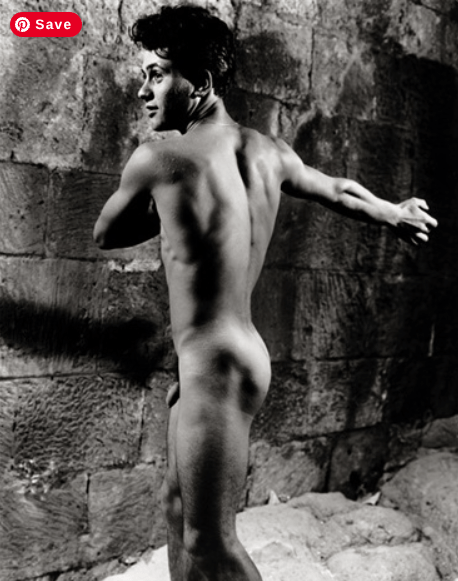
Young male nude with outstretched arm, 1950–1959. Konrad Helbig.

His first published photographic collection was a volume on Sicily in 1956, followed by collaborations with Karl Heinz Hoenig in 1959 and, later, with photographer Toni Schneiders on Archipelago in 1962.

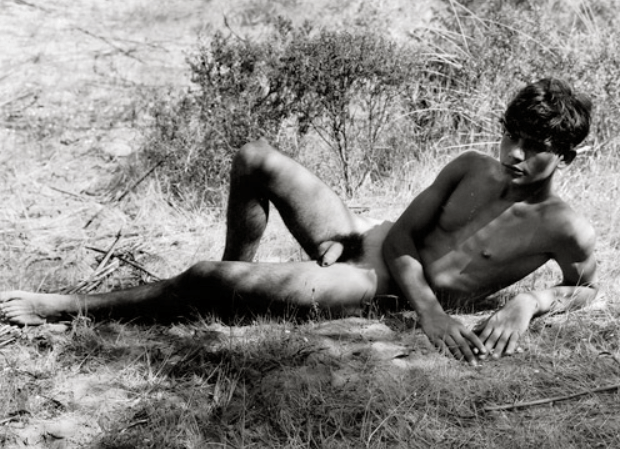
Yet one cannot help wondering whether Helbig’s true artistic interest lay elsewhere: in his studies of the male nude, composed in the style of Classical Greek and Roman sculpture. Had those photographs become known during his lifetime, his reputation would almost certainly have been destroyed.

Konrad Helbig was born in Leipzig in 1917. He fought in the Second World War, was captured by Soviet forces, and remained a prisoner of war until 1947. After his release, he studied art history and archaeology, concentrating particularly on the Mediterranean world. Of his private life, however, very little is known. I have met someone who had known him — indeed, someone who had posed for him — but he either could not remember, or would not reveal, anything beyond the sparse details already available.

And what of the photographs themselves? Helbig’s best-known posthumous collection is Homo Sum (Latin for “I Am Human”), published in 2003 and featuring what were described as “his boldest erotic works from the 1950s and 1960s.” Another volume, Ragazzi, was published in 2001. First editions of both books now sell for hundreds of pounds.

Young male nude lying in high grass, Sicily, ca. 1950–1959. Konrad Helbig.

 My Week, For What It Was Worth

On playing football with the Boys of Taormina
I have never been attracted to German boys. They can be among the most beautiful, but the language itself has always struck me as cold and harsh. Yet Severin, from Bremen, changed all that. He has been with me for a week now, sleeping beside me in the small hotel on Via Don Giovanni Bosco. Alfio, the receptionist, seemed rather taken with him and turned a blind eye when I asked whether Severin could stay until he got settled. His new job as a waiter has been delayed for another week, though the restaurant promised that his room would soon be ready.

I learned that Severin had a boyfriend, a Spaniard called Estaban, who had remained behind in Turin. He spent a great deal of time on the phone to him, usually trying to reassure him that, although he was sharing a bed with another guy, nothing had happened.

That was partly true. We had both once been Pietro’s “boys”, and there was a reluctance on either side to go where a dead man had already been. It was as though Pietro still maintained some hold over us; we might almost have been brothers, and anything sexual felt faintly incestuous. Yet every morning, when I woke, I would find Severin with his arm draped around me, cuddling, it seemed, with someone he trusted.

Severin is easy to be around: always a few steps behind me wherever I go, yet never overstaying his welcome. He has told me much about his homeland, where his father taught at the University of Bremen and his mother at the University of the Arts. Bremen, he said enthusiastically, was a working-class city that had built its fortune on its port and shipyards — a fact not lost on the Allies during the Second World War, when the city was heavily bombed.

After leaving school, Severin worked at Beck’s Brewery, but was dismissed after being caught having sex with a fellow worker on the bottling line. His abrupt departure prompted him to travel across Europe, eventually ending up in Turin, where he met Pietro and became, in effect, a kept man.

Pietro had obviously singled Severin out for his Nordic looks — a twenty-first century vision of the Aryan “master race”: blond hair, blue eyes, pale skin. There was also the fact that Severin was athletic, and a devoted supporter of Werder Bremen.

Severin discovered that I too liked football and had once played competitively when I was younger. That discovery prompted him to buy a cheap football and seek out a patch of wasteland where we could have a kickabout. Before long, local boys began drifting over to join in, and soon we found ourselves playing fierce, high-intensity matches, with slabs of concrete serving as goalposts.

It became an Italo-Anglo-German affair, proof that football can be loved by everyone, regardless of nationality. Alas, the Italian boys put Severin and me to shame; too many years of smoking, drinking, and inactivity had rendered us ineffective against the tireless boys of Taormina. But it made me feel like a young boy again – innocent and carefree.

The focus is the big phallus…
Alfio had a night off and promised to take us to Castelmola, a picturesque medieval hilltop village perched directly above Taormina. “It will be the perfect night for you guys,” he said with a wink, though it seemed more likely that he fancied his chances with Severin, who remained entirely oblivious to his advances.

Alfio ordered a taxi, and a journey that should have taken ten minutes was completed in half the time. The dusty Mercedes hurtled up the steep, narrow, winding road, revealing breathtaking glimpses of Mount Etna and the Ionian coast below.

We arrived in a small square, from which Alfio led us up a short flight of stone steps into Bar Turrisi. Judging by the greetings he received, he appeared to know everyone there.

Alfio explained that Castelmola had grown around the ruins of a tenth-century Norman castle, its streets narrow, ancient, and full of charm. Bar Turrisi, however, was something else entirely. Opened after the war and passed down through generations, it was said to have been founded by descendants of families who had migrated centuries earlier from Pompeii, bringing with them the city’s ribald fertility symbols. The restaurant, Alfio told us with evident delight, still celebrated that inheritance.

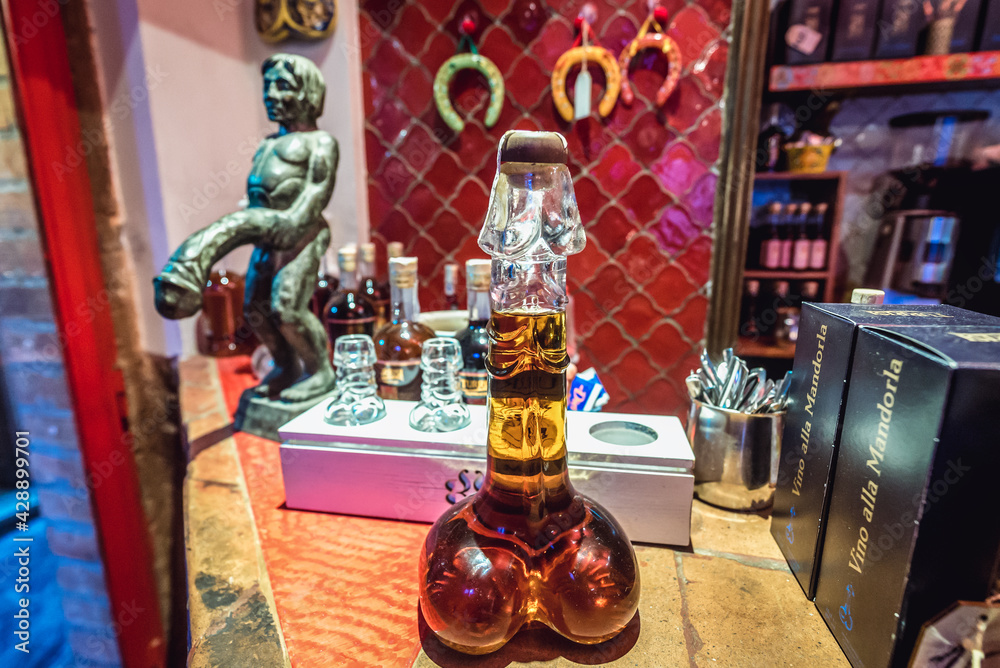
At first, the significance of this escaped both Severin and me, but we soon understood. Across all four storeys, there were penises everywhere one looked: wall paintings, well-endowed statues, phallic liquor bottles, shot glasses, lamps, mirrors, even the plumbing fixtures above the bathroom sinks. The food menu itself was shaped like a penis.

“I knew you would be impressed,” Alfio said, guiding us towards a table overlooking Taormina below. “The people here never wanted to be part of Taormina. They value their independence. But Castelmola was founded to watch over and protect the town.” Unfortunately, night was already beginning to fall, and the views slowly disappeared. The blue sea darkened into a black mass, though the lights of Taormina still sparkled beneath us.

“They filmed The White Lotus at the Four Seasons San Domenico Palace in Taormina,” Alfio told us. “The cast used to come here regularly. They started calling this place ‘the penis bar’.”

Alfio ordered a Sicilian pizza, its ingredients largely a mystery to me apart from the cheese, though it tasted wonderful. We washed it down with a local almond wine, supposedly an aphrodisiac, which Alfio clearly hoped might improve his chances with Severin. As for me, I seemed excluded from his ambitions, though he nevertheless ordered another bottle — this one in a distinctly phallic shape, decorated with traditional Sicilian artwork — and insisted that I drink a generous amount of it.

As my stupor deepened, I found myself wondering how one might write about an overdose of penises without making it sound tacky — which, strangely enough, it was not. “They are symbols of sexual potency and fertility,” Alfio explained smugly, once again for Severin’s benefit, “and also of the virility of Sicilian men.” Severin, meanwhile, remained blissfully unaware of the attention directed at him.

It was only when yet another bottle of almond wine appeared, and Alfio insisted that I finish most of it, that I finally grasped his strategy: get me drunk enough, and he might have Severin to himself. By then, however, it was too late for me to do much about it.

The next morning I woke with a punishing hangover, Severin’s arm once again draped around me. My head throbbed, and Severin seemed in no hurry to wake himself. Still, I managed a smile. Alfio’s attempt to seduce him had failed.

On hearing a story that amused me…but shouldn’t have
At a restaurant in Taormina, an old man told us the story of his brother, Salvatore, who, back in 1958, had been abandoned by the woman he was supposed to marry. The humiliation drove him into such despair that he swallowed an overdose of sleeping pills. He was taken to hospital in Syracuse, where, still determined to end his life, he hurled himself from a window — only to land on a balcony below. Bruised but alive, he was carried back upstairs. Three hours later, he climbed to the very same window and jumped again. This time he missed the balcony and died.

“Oh,” I laughed awkwardly, “third time lucky.”

The old man responded by banging his walking stick sharply against the table, which suggested that my attempt at humour had not been appreciated.

On not upsetting a Sicilian…
“The Cosa Nostra is still active in Sicily,” Alfio told us. “But these days it is discreet. Drugs, the pizzo, infiltrating businesses — that is where the money is.”

“What is the pizzo?” I asked.

“Protection money,” he replied. “Money extracted through intimidation or extortion. It comes from the Sicilian word pizzu — ‘beak’ in English. To let someone ‘fari vagnari u pizzu’ — ‘wet their beak’ — means to pay them off.”

The warning beneath Alfio’s explanation was perfectly clear: do not offend the Mafia. Fortunately, that seemed unlikely. I would soon be leaving Sicily — and leaving Alfio and Severin behind with it.

“But honour can be dangerous too,” Alfio continued. “Even an ordinary man in the street feels the need to defend his honour. So you must be careful not to insult him.”

Severin then recalled an unsettling story he had once read online, one that seemed to confirm Alfio’s point.

In 1993, a father, unable to bear the shame of having a homosexual son who worked as a prostitute, allegedly paid for him to be murdered. The son was shot in the stomach while soliciting clients in Messina. His father was later jailed for hiring an eighteen-year-old assassin to carry out the attack.

“There, you see?” Alfio said triumphantly. “That old man in the restaurant — the one whose brother needed three attempts to kill himself — was offended by your joke. But he only banged his walking stick on the table, when he could just as easily have paid someone to shoot you.”

And then he laughed.

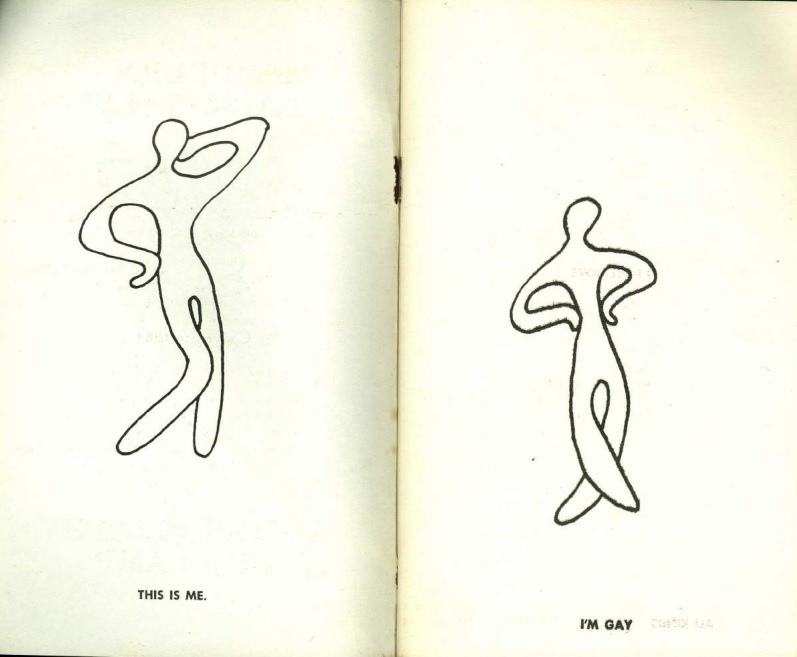
On finding old illustrations…

On the cute and willing…

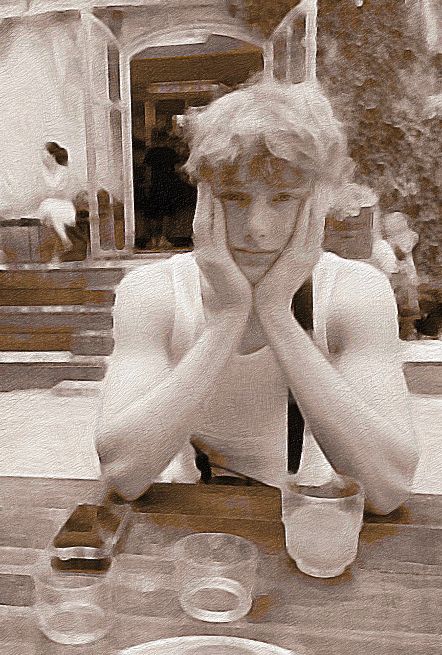
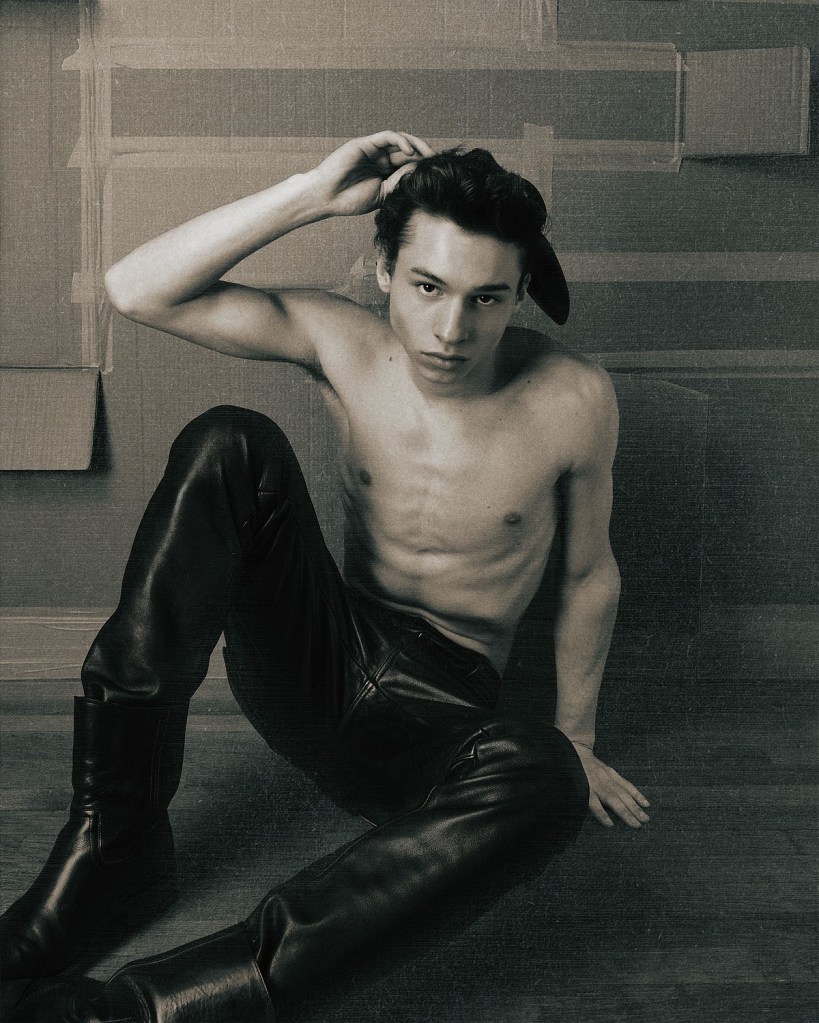
Michelange Bédard. Photo by Fernando Landin, 2026

 My Week, For What It Was Worth

On leaving Montescaglioso…
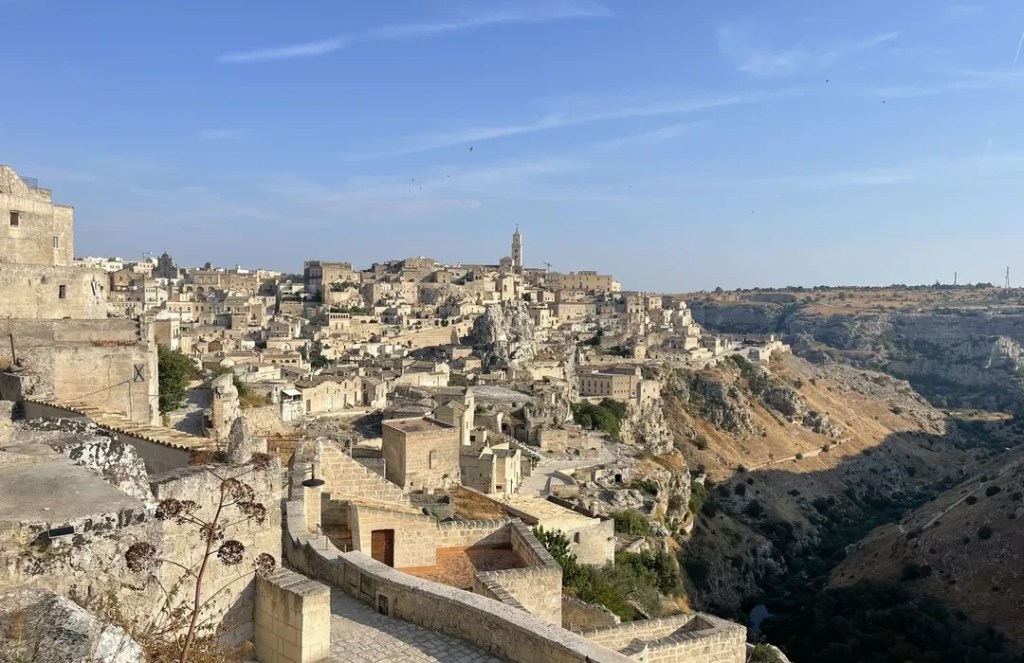
On from Montescaglioso—which I missed the moment I left on the small bus to Matera. I must return. The hilltop town exists in its own world, seemingly remote from the rest of Italy, yet it was warm and welcoming, and somehow managed to revive me.

It was really a minibus, stopping at every opportunity to pick up local women. For them, the journey to Matera felt like a day out—temporarily freed from household chores and feeding their families. They all seemed to know one another, speaking in rapid Italian, their voices rising and falling as they complained about the small details of their everyday lives. And yet, I couldn’t help feeling a quiet jealousy—that they could afford to live such ordinary, mundane lives.

There was only one other man on the journey, and he kept to himself, absorbed in his music. He looked about eighteen, and I imagined he was on his way to meet a girl in Matera. But then his phone rang, and the conversation turned to something entirely different: La Dolce Vita Orient Express, a new train service set to begin in May.

The route sounded almost romantic. It would begin in Rome, travel to Venice, then head down the Adriatic coast to Bari. From there, passengers would be shuttled to Matera—my destination—with its cave churches and underground water cisterns. Back on the train in Bari, the journey would continue towards Taormina in Sicily—which made my ears prick up—before heading on to Palermo and eventually returning to Rome.

It seemed the young man was being offered a job in Matera, one that would benefit from this new train service. He played it cool—neither accepting nor refusing—but you could tell he understood that opportunities like this don’t come around often.

The bus dropped me at Matera Centrale station, where I discovered that my train to Altamura was actually departing from Matera Sud, about two kilometres away. It required a short connecting train journey to get there. It was only once I was on that train that I learned Matera had once been derided as a symbol of poverty, yet had since reinvented itself as a creative hub—full of boutique hotels, buzzing cafés… and, of course, plenty of tourists.

On travelling to Taormina…
It was surreal, but we met like lost friends—two people who shared a past, yet barely knew each other. I spotted Severin, with his blond hair and Germanic good looks, as we waited for the ITA Airways flight from Bari–Karol Wojtyła to Catania. The airport name didn’t sound remotely Italian, and I soon discovered why—it was Polish, named after Pope John Paul II.

Severin was from Bremen and had spent the last few years living in Turin. He, too, had been one of Pietro’s “lost” boys, and after Pietro’s sudden death had found himself with a modest sum of money and nowhere to live. I had been more fortunate, receiving a similar amount but allowed to remain in the Verona apartment, thanks to the generosity of Signora Bruschi. But now my home is back in England.

We hadn’t seen each other since that Christmas when Pietro had taken us out for a meal at a restaurant in Milan. It was there we met Elio, who turned out to be Pietro’s favourite—and who had inherited the bulk of his estate, enough to ensure he would never need to work again.

Severin, now in his late twenties, seemed genuinely pleased to see me, and was delighted to discover that we were both bound for Taormina. He looked thinner than I remembered, and had begun to grow a small goatee—something Pietro would never have approved of. Good on him, I thought. I noticed a bruise on his chin, and he explained he had been caught up in Turin’s May Day demonstrations, when protesters tried to break through a police cordon. I hadn’t expected Severin to have become quite such a rebel.

On the aircraft, we talked about old times, each of us offering a quiet, tentative sympathy to the other. Once, we had been adversaries; now, we were something closer to conspirators. Severin had tried to contact Elio after Pietro’s death, but had been met with a swift rebuff. He had also tried to reach me, but hadn’t known where to find me. The chance meeting at the airport had clearly delighted him.

Severin was heading to Taormina to work as a waiter for the summer season. The money Pietro had left him had run out, and now he survived by drifting from one job to the next.

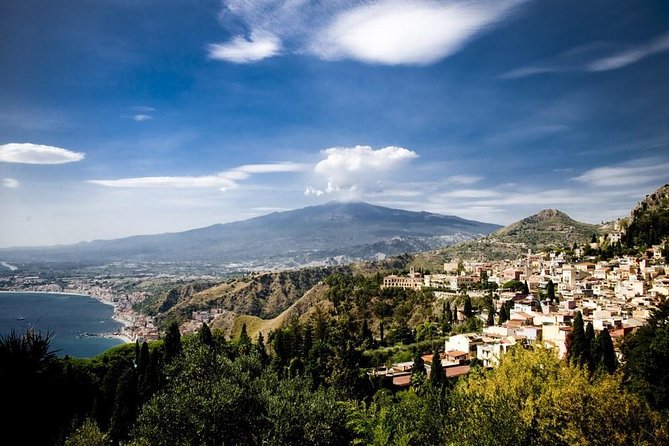
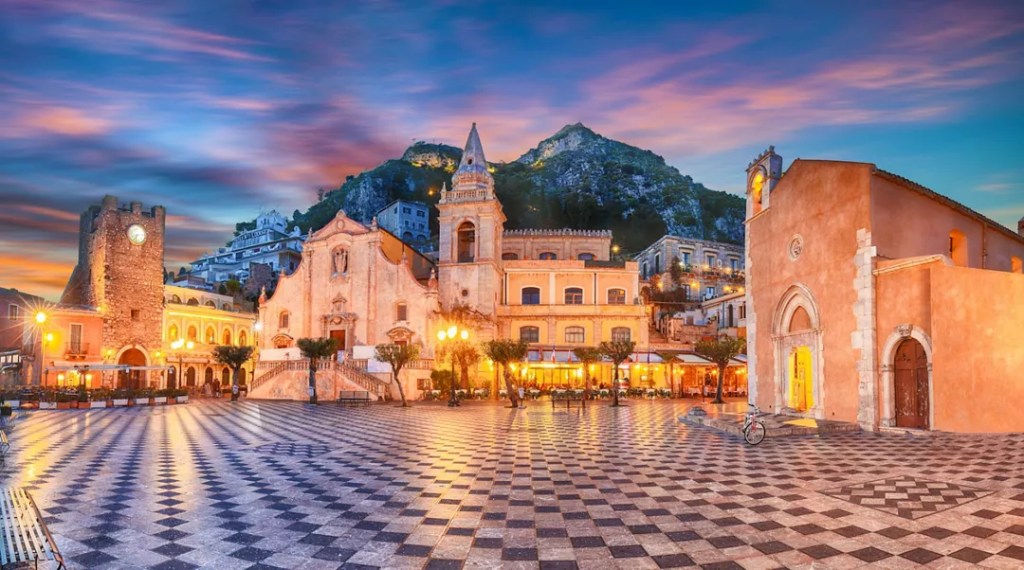
After arriving in Catania, we caught a train to Messina and got off at Taormina–Naxos. From there, we took the bus up into Taormina, where the heavens promptly opened. Inadequately dressed, we wandered through its charming maze of ancient, narrow cobbled alleyways, and along the bustling, elegant—largely pedestrianised—Corso Umberto. We dodged the hundreds of tourists clutching umbrellas, and after the calm of Montescaglioso, I found the crowds slightly overwhelming. Yet it was the smooth, endless stretch of the Mediterranean that held my gaze—and the uneasy thought that Mount Etna lay somewhere close by, hidden in the rainclouds.

It soon became clear that Severin had nowhere to stay. His plan had been to wander the streets of Taormina in search of something cheap. Until his job began—and with it, the promise of a room—the chances of finding affordable accommodation seemed slim. The town may once have existed in a kind of beautiful poverty, but ever since Victorian writers, poets, and artists had discovered it, its fortunes had changed. And soon, the La Dolce Vita Orient Express would be arriving too.

I was staying at a small hotel on Via Don Giovanni Bosco, its balconies overflowing with flowers, and—true to my nature—I offered Severin a bed until he found his footing. At the very least, it meant I wouldn’t be entirely alone as I tried to settle into a strange town.

On never trusting Mount Etna…
Everybody in Taormina wants you to visit Mount Etna. It is one of the highest volcanoes in Europe, and one of the most active in the world. Alfio, who works on reception at my hotel, suggested that Severin and I take a guided tour. But we both look at Etna and feel quietly relieved by the forty-five kilometres between us and its summit. Never trust an active volcano.

From Taormina, a plume of white smoke drifts from the summit, with no immediate sign of eruption. Yet, according to Alfio, Etna has entered a new eruptive phase that began at Christmas. The crater, he says, is emitting lava, ash, and the occasional flow. He tries to reassure us that Etna poses no real threat to Taormina. Apart from the light dusting of ash that sometimes falls when the wind turns, he tells us to follow the advice of the locals—the Sicilian way is not to worry.

He recalls that, as a small child, he once saw flames suddenly shoot up from the crater, only to subside just as quickly. The same thing happened again the following morning.

Alfio doubts we’ll manage to get up at dawn, but suggests taking us to a hill above the ruined amphitheatre to watch the sunrise. Despite getting to bed at two in the morning, and waking with the lingering effects of strong wine, we let ourselves be dragged through the narrow streets.

The sun rose from the southern edge of Italy and caught the white dome of Etna, tinting it a soft, rose-pink. The colour spread quickly down the snow, deepening until the whole summit glowed like a ruby instead of pale white. Night’s shadows slipped off the slopes, giving way to a rich purple that sank into the valleys and over the orange groves, darkening as it went—until the morning light washed across everything, and the mountains returned to their steady, familiar greens and browns.

That was as near to Mount Etna as I cared to be.

On a poem about Taormina…
I found a poem about Taormina on All Poetry which was written by someone referred to only as ecekaradag13, and who appears to have a fondness for Italy.

Taormina
Above the Ionian Sea,
this teatro of pretense
where German tourists
photograph Greek ruins
through the lens of their prosperity,
never seeing the Sicilian boys
who sweep their marble steps
for coins that disappear
into foreign pockets.
The ancient theater still echoes
with tragedies more honest
than the comedy performed daily
by boutique owners
selling “authentic” Sicily
to cruise ship pilgrims
seeking enlightenment
at duty-free prices.
Etna smolders in the distance,
that honest mountain
which at least admits
its capacity for destruction,
unlike the hoteliers
who smile in four languages
while their housekeepers
scrub other people’s dreams
from Egyptian cotton sheets.
In the shadow of San Domenico,
where Wilde once walked
his particular exile,
the local boys still gather
at sunset, their beauty
a currency more reliable
than the lira,
their bodies maps
of an economy
the guidebooks never mention.
The bougainvillea blooms
in violent purple protest
against the limestone walls,
while below, the working class
of Giardini-Naxos
send their children
up the mountain
to serve aperitivos
to those who mistake
privilege for culture,
consumption for communion
with the divine.
This is paradise
built on the backs
of the invisible,
where even the gods
have learned to speak
the international language
of tourist euros.

On the cute and willing…
Julien Rondard. Photo by Wanderley Da Costa.

Marigold ‘Boy O’Boy’


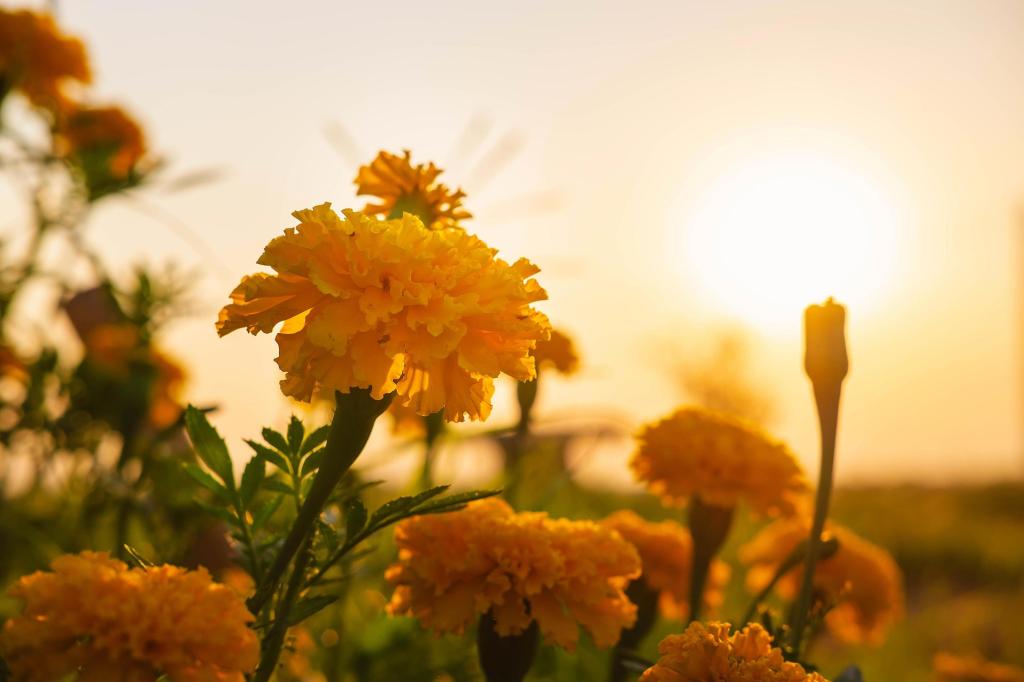
Once, a handsome Sicilian boy, the son of Eros and a nymph, fell deeply in love with the sun, and couldn’t bear to stay another minute where he couldn’t see it. He worshipped it wherever he went, and when it wandered out of sight, especially at night, he couldn’t rest, because that object he loved wasn’t warm upon his tanned breast. For this reason, he never walked, stood, or lay in the shade, the love, in full sway, was boundless, and made his life its prey.

At one time, the sun remained under a cloud for eight days; during this period, the boy, Cylmenon, was very unhappy, and because he could not find his beloved, pined away and died. It was a tragic end for a fine young boy. When the sun shone again it found Cylmenon’s body near a fountain where he had tried to see the sun’s reflection, and so grieved was the sun, that it changed the lad’s body into a golden flower, of the first Marigold.

Study of a Sicilian boy with Passionflowers in his hair, Sicily, c.1899 – Baron Wilhelm von Gloeden

An explanation: Marigolds are known as “herbs of the sun” and represent the sun’s power, warmth, energy, and light. They are often associated with joy, optimism, passion, and creativity. This story is based on an obscure and forgotten poem from 1868 by Peter Spenser. Little is known about him other than that he was the eldest son of the Rev. Peter Spenser, Rector of Temple Ewell, near Dover. He wrote poetry for local newspapers across England and also published the magnificently titled ‘Parvula, or, a Few Little Rhymes: About a Few Little Flowers, a Few Little Birds, and a Few Little Girls, to Which Are Added, a Few Little Songs, and a Few Other Little Things.’ (1863)