When the Sky Finally Let Go …
There had been a thunderstorm warning across the Veneto, but nobody believed it. They complained about the relentless heat and the pitiless sun, longing instead for shorter days, cold mornings, and snow.
Even so, the wind hinted that relief might finally be on its way. It rattled the café awnings, scraped chairs across pavements, and sent menus tumbling into the next street. In Signora Bruschi’s courtyard the washing twisted itself tightly around the line, while the terracotta pots overflowing with pelargoniums, lavender, salvias, petunias and Mexican fleabane bore the worst of it. One of the smaller pots toppled from the kitchen step and shattered. Even the tiny finches that usually flitted between the potted citrus trees abandoned the branches for the shelter of a shaded corner, where they sang with frantic urgency. Signora Bruschi rushed outside clutching a broom and shouted for us to rescue the washing before it blew away.
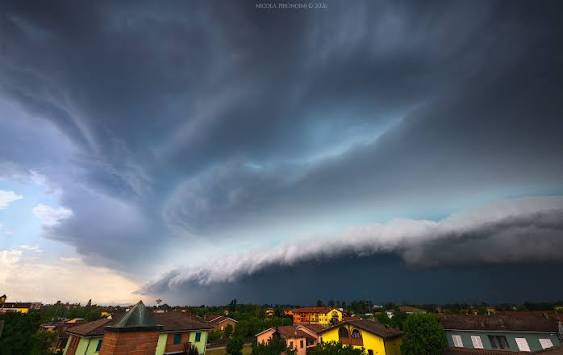
It was Cola who first noticed the bruised-purple cloud creeping across the sky. Others followed behind it, darker still, advancing with slow deliberation as though reluctant to commit themselves. They lingered above the city, steadily subduing the sun. With every passing minute the light faded, the heat loosened its grip, and the stale air trapped inside the old stone walls for weeks was finally released. When the wind eased, Signora Bruschi scolded us for throwing the clean washing into the basket instead of folding it properly.
An uneasy stillness settled over Verona. The city seemed to pause in expectation. Even the finches fell silent.
Bianchi stepped into the doorway and sniffed the air. It carried that strange sweetness that always arrives before heavy rain, reminding us of freshly cut grass. He pointed towards the sky, where the clouds had taken on an unsettling greenish hue, their tops spreading into broad, flat anvils. For a fleeting moment the sun broke through, casting dramatic shafts of light that sharpened every corner of Signora Bruschi’s courtyard.
Then came the first distant growl of thunder from somewhere beyond Lake Garda.
A blinding flash of lightning sent Bianchi darting back inside. From neighbouring houses came cheers, laughter and exaggerated cries of alarm. Only a handful of raindrops struck the marble flagstones before Signora Bruschi ushered everyone indoors.
Moments later the wind returned with renewed force, and the rain followed.
It swept across the city from the west in solid sheets, lashing the parched streets and hammering rooftops. The sheer weight of water became a roaring wall of sound that swallowed everything else. Gutters overflowed, torrents cascaded from the roofs, and water surged across the courtyard until it pooled outside the kitchen door. Drains that had lain dry for weeks surrendered almost immediately. Through the window we watched the neighbouring buildings dissolve behind a curtain of rain until they became little more than grey silhouettes.
“The heavens are teeming,” Signora Bruschi cried.
Brilliant forks of lightning split the sky, vanishing almost as soon as they appeared. Each flash was followed by a violent crack and then a rolling explosion of thunder that rattled the windowpanes and shook the house to its foundations.
Again.
And again.
“I hope it stops soon,” Bianchi whispered.
Cola, however, seemed delighted.
He dashed into the courtyard, pulling off his T-shirt as he ran, and stood ankle-deep in the rising water, lifting his face towards the sky as the rain drenched him within seconds. By the time he wandered back inside, his jeans clung to his legs and streams of water spread across Signora Bruschi’s kitchen floor. Without missing a beat, she clipped him around the back of the head, snatched a towel from the washing basket, and thrust it into his hands.
“My son is stupido,” she sighed, with equal measures of exasperation and affection.
Pietro’s Books, Bianchi’s Curiosity …
College has broken up for the summer and, when he is not working, Bianchi is usually either trailing me around Signora Bruschi’s house or reading in my apartment. Since my return, our hostess has been content for him to stay, but she has made it abundantly clear that no relationship of any kind is to develop between us. Consequently, Bianchi has taken up residence in my rooms while I have been relegated to sharing Cola’s bed.
My stay in Verona is only temporary, and I have no illusions that, once I return to the UK, Bianchi will have any claim on my Italian life.
For now, however, he has been quietly investigating my possessions in an earnest attempt to learn everything he can about me. He has also been working his way through Pietro’s boxes, which Signora Bruschi finally carried down from the attic for me to sort.
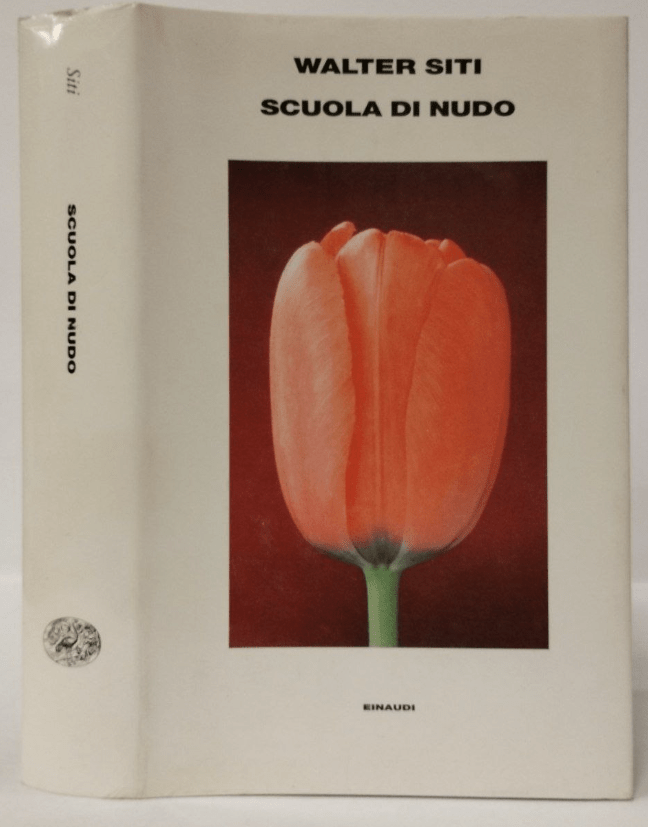
That is how Bianchi came to be sitting on my sofa with one of Pietro’s hardback novels from the 1990s.
Scuola di nudo is an intimidating thing: six hundred pages of uninterrupted Italian, which effectively rules out any possibility of my reading it.
“It is about a university professor in Pisa,” Bianchi explained, “who explores his obsession with male beauty and desire, and who is very critical of his colleagues.”
“Would I like it?” I asked.
“Probably not. I think you like magazines instead.”
The remark was aimed squarely at the infamous French copy of Le Pénis lying beside my bed, a publication that, until then, he had politely pretended not to notice.
“There is no plot,” he continued. “But it is interesting. And there are many scandals.”
I suspect Bianchi has already grown bored with the novel, despite his insistence to the contrary, and is persevering with it largely because he thinks it will impress me.
I looked up the author, Walter Siti, and discovered that he taught at several Italian universities, wrote screenplays, and has also been a reviewer for La Stampa.
As for Scuola di nudo, I remain none the wiser. Bianchi’s fractured English synopsis is, I suspect, as close to understanding the novel as I am ever likely to get.
Not my Taormina …
Severin wishes I were back in Taormina. I’m not so sure.
Dolce & Gabbana recently unveiled its new Alta Sartoria collection at the Teatro Antico, with the Ionian Sea below and Mount Etna rising behind it. The guest list was suitably glamorous: Erling Haaland and Isabel Haugseng Johansen, Theo James and Ruth Kearney, Christian Bale, Monica Bellucci, Jennifer Lopez and Michele Morrone.
I wasn’t invited.
That, in a way, is the point.
Taormina isn’t really for north European wastrels like Severin and me. It’s for people willing to spend the equivalent of a monthly mortgage on a single night’s stay, pay limousine prices for taxis and happily buy things marked up tenfold simply because they can.
It is the most expensive destination in Sicily.
We visited out of season and enjoyed it, although even then the White Lotus pilgrims were beginning to get on my tits. According to Severin, they’ve since become unbearable.
I left after a few weeks. He stayed.
He now spends sixteen hours a day working in a restaurant, and even the flat that came with the job has lost its appeal. The owners have suggested he share it with three other young waiters, each expected to pay an exorbitant rent. Rooms are scarce in Taormina, they say.
Watching from afar, I realise the place isn’t really for me.
Give me the Taormina where writers, poets, artists and photographers arrived on the backs of flea-bitten donkeys and drank cheap wine in tiny houses with compacted earth floors.
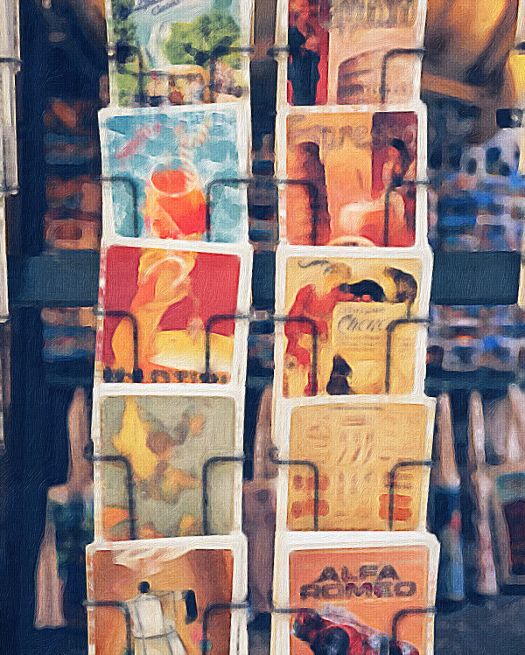
Give me Alfio, paid peanuts to work in a hotel whose rooms now cost five times what I paid only weeks ago. The same Alfio who took us where the locals ate, introduced us to the Taormina hidden behind the postcards, and preferred the company of ordinary people to wealthy tourists.
Give me the sweaty boys chasing a football across a dusty patch of wasteland, before somebody decides it would make the perfect site for another luxury boutique hotel.
Severin won’t last the summer.
Sooner or later, he’ll leave Sicily in search of something better.
I’m tempted to invite him to Verona. But that would test Signora Bruschi’s generosity.
The First Twink …
“Adam, as in Adam and Eve. I think he was the first twink and he was definitely a power bottom. The snake of it all in the garden is sus to me.” – Grant Gibbs
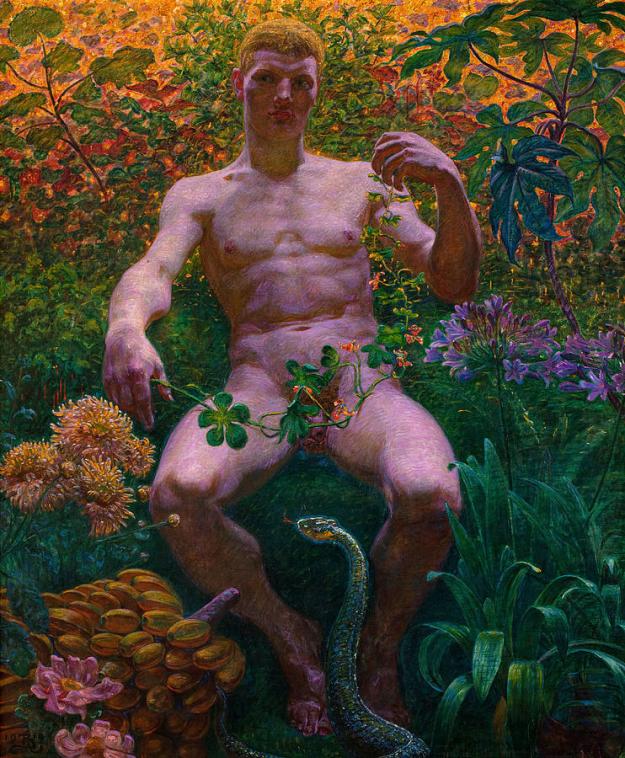
On the cute and willing…