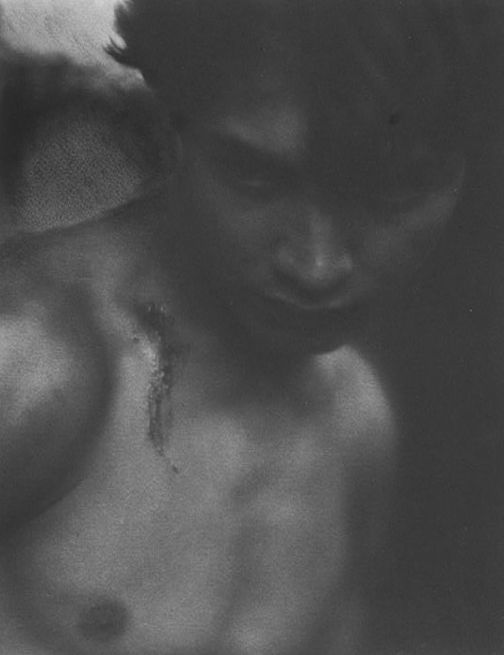
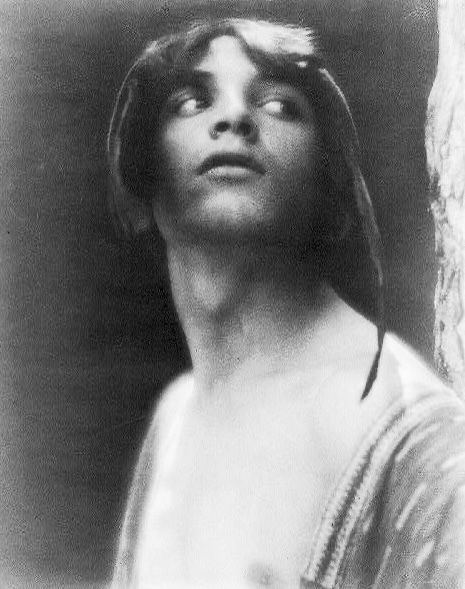
“I’ve been in love with Sergei Yesenin ever since I had a Russian literature class and he died in 1925.”
A comment posted by somebody who sympathised with my strange new-found love for Lord Byron.
I’d never heard of Sergei Yesenin. But, inquisitive mind that I am, I had to find out who he was.
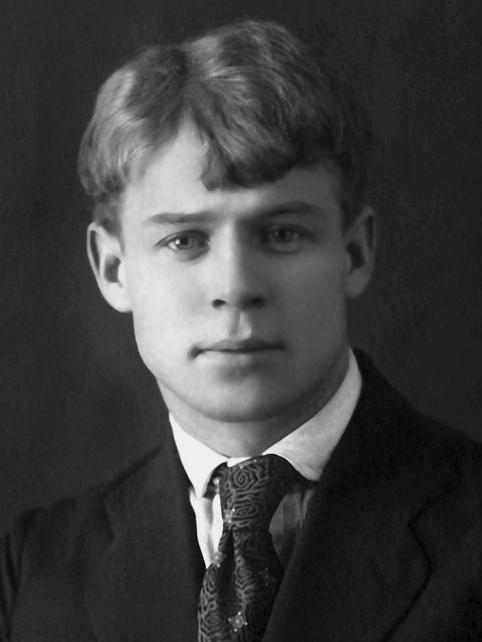
Sergei Yesenin (1895–1925) was a Russian poet and literary rogue. These days, he is something of a cult hero.
He wrote hundreds of poems, from lyrical verses inspired by Russian folk traditions and rural life to longer, more ambitious works. But, if I’m honest, he’s probably more interesting for the life he led than for his poetry.
There’s a quote attributed to him:
It’s always the good feel rotten. Pleasure’s for those who are bad.
It seems to sum up his chaotic Bohemian lifestyle, his alcoholism, public outbursts and brief, passionate relationships with women.
Born into a peasant family, Yesenin initially wrote nostalgically about the Russian countryside. But the world he celebrated was disappearing, swept aside by revolution, industrialisation and the changing face of Russia.
He welcomed the Bolshevik Revolution of 1917, believing it would empower the peasantry, but soon became disillusioned with the new regime. His increasingly erratic behaviour and criticism of Soviet life made him an awkward figure for the authorities, including Leon Trotsky, who was openly critical of him.
Yesenin married four times, with plenty of other women in between. Relationships overlapped, promises were made and abandoned, and chaos was never far away.
It isn’t hard to see why women (and, no doubt, men as well) fell for him.
His most famous marriage was to the American dancer Isadora Duncan. She spoke little Russian; he spoke no English. Somehow, they managed to make themselves understood — including during their spectacular public screaming matches.
They travelled across Europe and America, where Yesenin’s drunken escapades and violent outbursts made headlines. His alcoholism spiralled, and reports of cocaine use added to the picture of a man seemingly determined to destroy himself. Luxury hotel rooms and expensive restaurants became the settings for his increasingly notorious behaviour.
The marriage lasted barely a year.
There were also bar fights, public brawling, drunken insults and frequent brushes with the police. Yesenin was, in short, that literary bad boy.
By the age of thirty, he was in serious trouble. He suffered a mental breakdown and spent time in a psychiatric clinic.
Then he checked himself out and travelled to Leningrad, where he booked into the Angleterre Hotel.
According to the familiar account of his death, he found no ink in his room, cut his wrists and wrote an eight-line farewell poem in his own blood. He then hanged himself, reportedly from a heating pipe, although accounts of the precise circumstances differ.
The poem is known as Goodbye, my friend, goodbye. Its final lines have been translated in various ways:
Do not grieve or knit your brows — In this life there’s nothing new in dying. But nor, of course, is living any newer.
Even his death seemed to belong to the drama of his life. His suicide was followed by a wave of copycat deaths among admirers, cementing his reputation as a tragic literary figure.
And yet, almost a century later, Yesenin refuses to disappear.
A considerable body of speculation, along with a 2005 television miniseries, has kept alive the theory that he was murdered by the secret police and that his suicide was staged.
But would the authorities really have gone to the trouble of composing an eloquent farewell poem in his blood?
I doubt it.
There’s one final twist to the story. Yesenin had a son, Alexander, with the poet and translator Nadezhda Volpin. Born in 1924, Alexander Yesenin-Volpin went on to become a mathematician, logician, poet and prominent Soviet dissident. He later emigrated to the United States and became an important figure in the Soviet human rights movement.
Father and son never met.
Which seems a rather sad ending to the story of a man who spent his life making such a spectacular noise.
Raw, unpolished charisma. Deep-seated vulnerability beneath a tough exterior. A tragic beating heart.
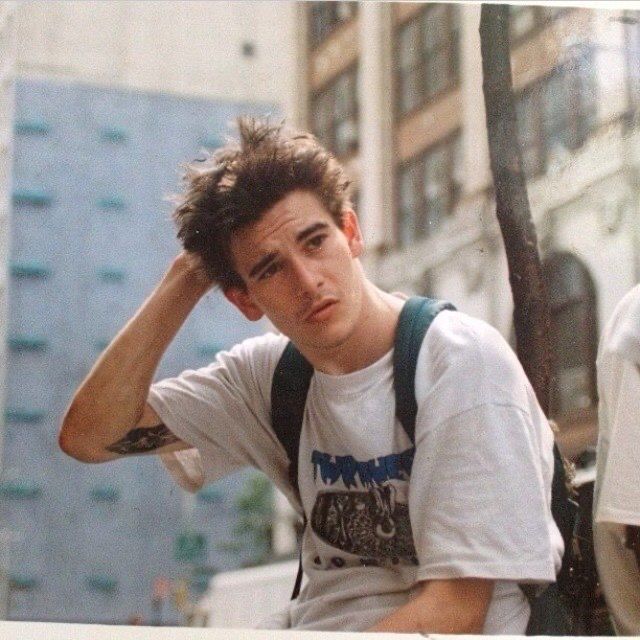
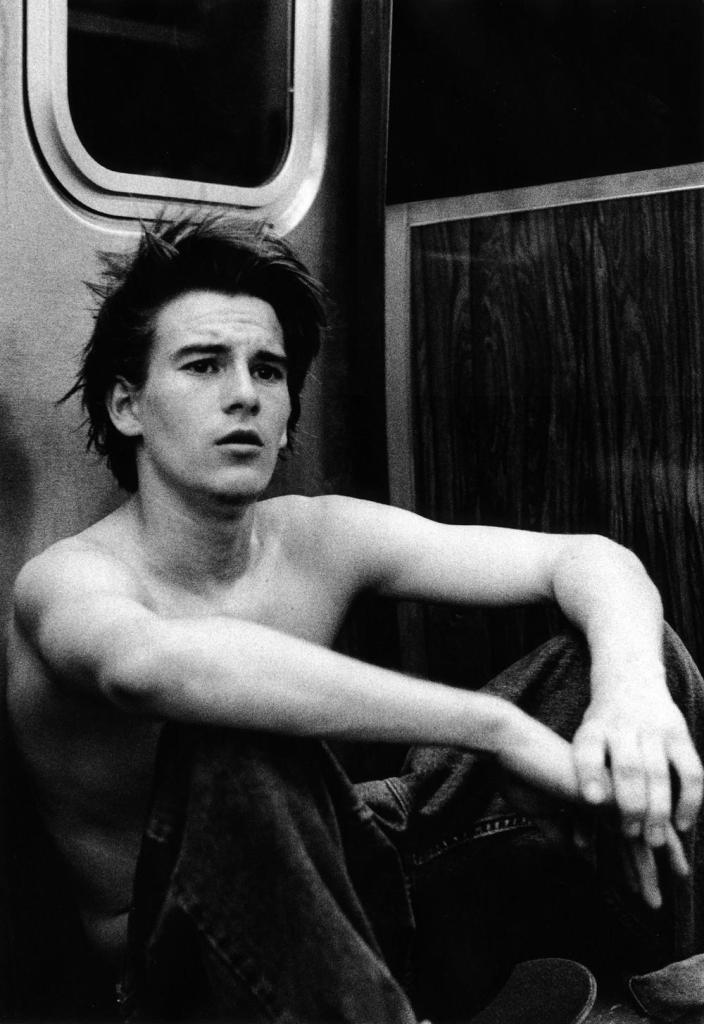
A few words to describe actor and skateboarder Justin Pierce, who died in 2000.
He was a bit of a looker.
Sharp, angular features. A symmetrical face. Strong jawline. High cheekbones. Intense, dark eyes. Dark hair that alternated between a sharp buzz cut, a messy, tousled style and chin-length waves, often tucked beneath a backwards baseball cap or a knitted beanie. And that layer of stubble, the faint moustache.
There was a dishevelled edge about him.
And the dress code.
Baggy cargos. Oversized skate tees.
He was a 90s rebel, a style icon for a generation of skaters who followed in his footsteps. The truth is, today’s skater boys probably have no idea who Justin Pierce was.
His claim to fame came when film director Larry Clark discovered him skating in New York’s Washington Square Park. He cast him in Kids, a film following 24 hours in the lives of aimless Manhattan teenagers, who prey on and protect one another. They drink, get high, talk trash. But mostly, they have unprotected sex.
Released in 1995, Kids was both condemned and praised for its uncompromising portrayal of teenage sex, drugs and violence.
It has since become a cult classic.
Pierce played Casper, a profane, drug-addicted skateboarder. The New York Times described him as:
“A reckless goon who spends his day huffing nitrous oxide, swilling beer and starting fights in the park.”
An antihero with chaotic charm.
“He’s really riveting,” his co-star Rosario Dawson said. “I had such a crush on Justin when we did the movie. He was such a mess.”
By all accounts, he could get seriously fucked up. Drunk. Arrested. There were also stories of fist fights with co-star Leo Fitzpatrick.
The line between Justin Pierce and Casper was never an easy one to draw.
Pierce grew up in Marble Hill, in northern Manhattan. As a teenager, he dropped out of school and moved into a basement apartment on 176th Street, known as the Dungeon, which was teeming with fellow skaters. His self-destructive streak wasn’t invented for the screen. Casper had been written specifically with him in mind.
“His style, his swagger, his whole thing was kind of unprecedented,” screenwriter Harmony Korine said. “He was supermagnetic, and there was something really beautiful about him. At the same time, he was completely uncontrollable. He went for it all of the time, and that’s part of what got him into trouble.”
In 1996, Pierce won the Independent Spirit Award for Best Debut Performance.
After Kids, he went on to appear in a further dozen films. His most recognisable mainstream role was Roach in the 2000 box-office comedy Next Friday, alongside Ice Cube. On television, he appeared in the HBO film First Time Felon (1997) and guest-starred in two episodes of Malcolm in the Middle in 2000.
But skateboarding remained his first love.
Pierce was an original rider for the Zoo York skate team. He featured prominently in the now-iconic Zoo York Mixtape video (1998) and was a founding member of the original Supreme crew, back when the brand was still a single shop on Lafayette Street.
After Kids, he moved to Los Angeles and married stylist Gina Rizzo in 1999.
But something was troubling him.
In July 2000, aged just 25, Pierce was found dead in his room at the Bellagio Hotel in Paradise, Nevada. His death was ruled a suicide. Reports indicated that two notes had been found, though their contents were never made public.
There has been speculation about the toll that drugs took on the young cast of Kids. Pierce struggled with substance abuse, something that was an open secret within the community. Another of his co-stars, Harold Hunter, died of a cocaine-induced heart attack in 2006.
Pierce’s death received relatively little attention at the time. But Kid 90, the 2021 documentary directed and produced by Soleil Moon Frye, brought him back into view for a new generation and offered another glimpse of the troubled young man behind the swagger.
Frye had spent four years going through footage she had shot as a teenager in the 1990s, along with her diaries and voicemails. What emerged was a time capsule of youth, excess, friendship and vulnerability.
Those who knew Pierce remembered his extraordinary good looks. Perhaps there was a little envy in their recollections, too. But there was affection as well. They remembered the magnetism, the swagger, the beautiful mess of him.
Jonathan Brandis and the loneliness of being forgotten
While researching Jonathan Brandis, I had the strange feeling that he reminded me of someone.
Then I realised.
He looked uncannily like my friend.
I would later discover that they shared some of the same torments.
But there is a difference.
Jonathan Brandis is dead.
My friend isn’t.
“I want to be remembered as an actor who put in some good work in the beginning of his career, even better work at the end of his career and slowly, successfully made the transition into writing and directing,” he told Nicki Swift in the Hartford Courant in 1994.
It didn’t end that way.
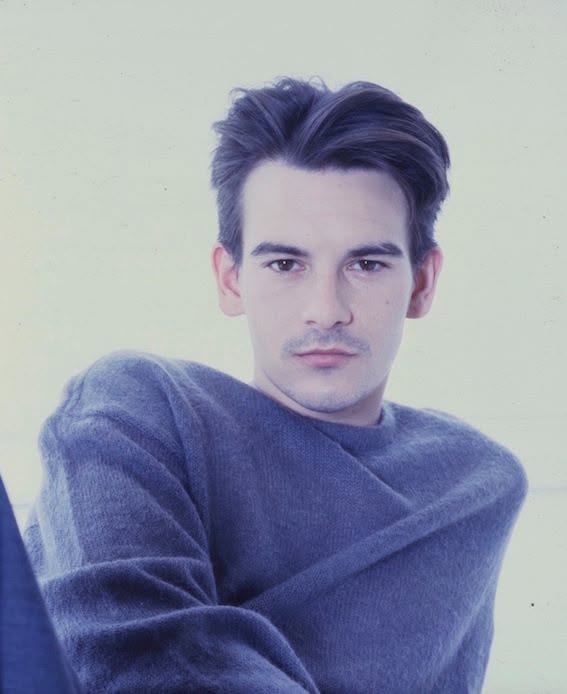
Brandis was boyishly handsome. Dark blond hair. Blue eyes.
Yes, the eyes were beautiful.
In the 1990s, Tiger Beat readers voted him their number one ‘dreamboat’, while Seventeen placed him among its ten sexiest guys.
At the height of his fame, he was receiving 4,000 fan letters a week. Three studio guards were needed to escort him through the mobs of fans at Universal Studios in Orlando, where seaQuest DSV, the Steven Spielberg-produced futuristic underwater fantasy, was filmed.
Between 1993 and 1995, Brandis played Lucas Wolenczak, a teenage computer genius who bonded with Darwin, a dolphin capable of communicating with the crew.
Born in Connecticut in 1976, Brandis began modelling for advertisements as a child. By nine, he had moved to Los Angeles.
There were television appearances in L.A. Law, Who’s the Boss?, Full House and Blossom.
Then came the films.
Most famously, he played Bastian in The NeverEnding Story II: The Next Chapter in 1991.
He auditioned for the role of Anakin Skywalker in Star Wars: Episode II – Attack of the Clones. Hayden Christensen got the part.
It was no big thing.
seaQuest DSV was just around the corner.
Then seaQuest was cancelled.
And suddenly the boy who had been everywhere was finding it difficult to get the roles he thought he deserved.
There were television movies. Smaller parts.
But the momentum had gone.
Brandis was devastated when most of his appearance in the 2002 war drama Hart’s War ended up on the cutting-room floor.
Underneath the persona, the long career lull — and the creeping realisation that he was no longer the boy Hollywood had once wanted — became sources of anxiety.
He began drinking heavily.
He allegedly told people he wanted to kill himself.
In November 2003, a friend found the 27-year-old Brandis hanging in the hallway of his Los Angeles apartment.
Paramedics rushed him to Cedars-Sinai Medical Center.
He died the following day.
There was no suicide note.
There were no drugs in his system.
At first glance, Brandis might seem like another tragic victim of Hollywood.
A beautiful young man who had been adored, then discarded.
But perhaps it was more complicated than that.
In his memoir Growing Up Urkel, Jaleel White writes about Brandis and the strange pressure placed on young actors who grow up in the business.
“Just like me, he had dedicated his entire life to achieving what Leonardo DiCaprio and the rest of his peer group had seemingly accomplished with ease.”
When White learned that Brandis had died, he wrote that he “cried for what felt like a fallen soldier.”
Years later, Brandis’s father offered another explanation.
He suggested that his son may have been bipolar.
“His death wasn’t due to the entertainment industry,” he said. “I look back now, and in his 20s, he showed signs of manic depression.”
Perhaps that is the more uncomfortable truth.
The industry may have contributed to the disappointment, the loss of status, the feeling of being forgotten.
But the darkness may have been there long before the lights went out.
Beauty, kindness, cinema — and one story I cannot tell
My French friend Thomas has a story about Gaspard Ulliel.
It is not shocking and not for me to tell. I wish I could. It is simply beautiful.
Xavier Dolan, the film director, came closest to putting it into words.
“Your discreet laugh, your attentive eye. Your scar. Your talent. Your listening. Your whispers, your kindness. Every feature of your person was actually made from a sparkly sweetness.”
Ah yes. The scar.
Gaspard Ulliel had that characteristic, dimple-like scar on his left cheek. He got it at the age of six when he tried to ride a Doberman pinscher like a horse and the dog caught him across the face with its claws. The scar became one of his most recognisable features — and, somehow, part of his beauty. Ulliel himself once said that it might have helped his acting because it added something to his face.
I recently watched two Ulliel movies.
In André Téchiné’s Les égarés (Strayed) (2003), he plays a mysterious young wanderer who leads a mother and her two children, fleeing from the Nazis, into the forest, where they spend a long period of survival, danger and sexual tension.
Kevin Thomas of The Los Angeles Times described Ulliel as an intense but assured seventeen-year-old, with a “feral quality” that was unsettling, but also the instincts and skills of a survivalist.
I love feral.
I then saw Jean-Pierre Jeunet’s Un long dimanche de fiançailles (A Very Long Engagement) (2004), which tells the story of a young woman’s relentless search for her fiancé, who has disappeared in the trenches of the Somme during the First World War.
Ulliel plays a gentle young soldier, psychologically broken by the horrors of war. His performance relies heavily on those expressive, soulful eyes and a melancholic vulnerability that lingers.
I love deeply romantic, tragic and hauntingly vulnerable boys.
These were his breakout roles.
Afterwards came the young Hannibal Lecter in Hannibal Rising (2007), and twelve years as the face of Chanel’s men’s fragrance, Bleu de Chanel.
His androgynous beauty and roles in films such as Strayed, Paris, je t’aime and Saint Laurent also made him an important gay icon for many viewers.
In Saint Laurent (2014), Ulliel played the iconic fashion designer Yves Saint Laurent, in a film that explored the designer’s homosexuality, his intense relationships and the gay world of 1970s Paris.
And then there was Louis Garrel.
Ulliel later spoke warmly about their kiss, which was not even in the original script. Bonello decided on the night that the scene needed it. Ulliel and Garrel agreed to give him one take. Ulliel described the moment as “magic”.
With It’s Only the End of the World (2016), he played Louis, a gay playwright returning home to his family in Xavier Dolan’s award-winning drama.
And in Paris, je t’aime (2006), in the “Le Marais” segment directed by Gus Van Sant, he appears as a young gay man flirting in a print shop.
But God gave him beauty…
…and God took it away.
Ulliel died on 19 January 2022, aged just thirty-seven, following a skiing accident at La Rosière resort in Savoie.
People spoke afterwards of his profound kindness, his discretion and his warmth.
And that is what brings me back to Thomas.
I still have no idea what his story is.
I only know that it is beautiful.
Perhaps that is enough.
For someone whose face seemed almost impossibly made for cinema, it is strangely fitting that what stays with me is not a film, or a photograph, or even that famous scar.
Some of the most beautiful people choose to live the hardest lives
I swear that I once read that there was a home in California for retired gay porn stars from the 1980s and 1990s. The weekly film night looked fun. But I stand to be corrected because I can’t find any evidence of it now.
I once knew a gay porn star. At least, that’s what he called himself. A bit of a fabrication, really. He made one movie and was dropped because of his inability to maintain an erection. The last I heard, he was a shop assistant at Mango Man in Alicante.
A lucky escape, really.
For all of us.
Yes. I’m stuck in a bubble of lube at the moment.
After being star-struck with Joey Stefano (RIP), another challenger surfaces for the ‘I fucked my life up’ award.
Christian Fox.
By the time you read this, it will be thirty years, almost to the day, since the 22-year-old died from a lethal ketamine overdose at his apartment in New Orleans. His body was discovered three days later. A suicide note was recovered from the scene.
There are a few social media posts that say Fox was ‘a lovely guy’.
But dead guys are always lovely guys.
The same thing happens when a young guy steals a car, evades a police chase and then wraps himself around a tree. Suddenly, he was a ‘lovely lad’.
I don’t know whether Christian Fox—love the name—was a lovely lad or not.
Chi Chi LaRue, patron saint of dead gay porn stars, called him one of the most challenging individuals to work with. He had a reputation for being difficult.
Beyond a shadow of a doubt, I would have liked him.
He ticked every box. And not just because of the athletic physique and ‘honey-blond’ aesthetic.
Born Christopher John McLaughlin in Port Hardy, British Columbia, in 1974, he had an unstable childhood and was placed into foster care at thirteen. He ran away after allegedly being sexually abused and travelled across Canada and the United States using fraudulent identification to conceal his age.
He became an underage dancer at late-night gay venues and adopted the name Christian Fox.
Don’t you admire the spunk of the kid?
He reportedly made his first adult film on his eighteenth birthday and became an exclusive model and actor for Falcon Studios. At the same time, he appeared in gay publications including Manshots, Jock, In Touch and Gay Video Guide.
Like Stefano, he bucked the trend and became known as a ‘premier bottom’ performer.
But Fox developed increasingly serious problems with substance abuse, making him progressively unreliable. By early 1996, his career was effectively over.
Fox had insisted that he would not allow his porn career to become something that wore him down or something of which he would eventually be ashamed.
When his talent agency terminated his contract, the writing was on the wall.
To secure legal residency in the United States, he entered into a marriage of convenience with an American friend and relocated to New Orleans.
But by then, the real problem wasn’t pornography.
It was everything else.
Substance abuse. Depression. Isolation. The inability to imagine what came next.
When Chi Chi LaRue warned him that he might suffer the same fate as Joey Stefano, Fox reportedly replied that he ‘wanted to go’.
LaRue also suggested that Fox was confused about his sexuality.
His neighbours only saw a young man who rode a motorcycle and walked around the French Quarter in a black leather jacket.
Success had come too easily and too young.
Behind the façade was a different world.
Fox was suffering from severe depression.
The porn industry didn’t care if somebody was mentally unstable. And when the cameras stopped rolling, Fox had no obvious way back into the real world.
Shortly before he was due to enter rehab, Fox attempted suicide by throwing himself through a plate-glass window. His injuries prevented him from being admitted.
His wife, Shawn, left him shortly afterwards.
And then, a month later, he was dead.
Twenty-two.
That is the bit I keep coming back to.
Not the body. Not the porn. Not the photographs. Not even the ridiculous mythology that grows around young men who die before they have had the opportunity to become anything else.
Twenty-two.
A whole life still sitting there, unused.
Perhaps that is why I like the idea of the retirement home for old porn stars. I want it to exist.
I want to imagine them at seventy, eighty, sitting around a communal television watching films they made when they were twenty, arguing about who had the best arse, complaining about the heating and asking what happened to everyone else.
Because somebody should get old.
Somebody should get the chance to become boring.
Somebody should survive long enough to look back and think:
“At least once a week, I get asked, ‘Whatever happened to that Joey Stefano biopic you were going to do?’
“Every time, I sigh and reply, ‘Still trying to find the financing. Got a million bucks?’
“This for nearly eighteen years.”
Director Chad Darnell wrote those words in 2019.
Things haven’t changed.
It seems that nobody is particularly bothered about Joey Stefano anymore.
Spare me the blushes. It’s unlikely that I’ll be rushing out to find VHS tapes of his work anytime soon.
Joey Stefano — real name Nicholas Anthony Iacona Jr. — was a gay porn actor whose career took off in the 1990s under the guidance of Chi Chi LaRue, the American adult-film director and producer.
I love one particular description of Stefano:
“Stefano was the first bottom to hit big.”
It leaves absolutely nothing to the imagination. And, yes, you’ve guessed correctly.
For a time, Joey — or “Nicky” to those who knew him — was on a high, appearing in more than fifty gay porn films.
High.
Quite literally.
He struggled with drug and alcohol abuse, and in 1994 he died from a drug overdose at a Hollywood motel. The combination was cocaine, morphine, heroin and ketamine.
“His ashen body spread across sweat-soaked sheets.”
There was also the intriguing story of the red shirt he was wearing when he died.
The shirt fascinated Chad Darnell, too. Writing in Queerty, he recalled:
“I was also obsessed with finding the infamous red shirt everyone spoke of in their interviews.”
Nearly eighteen years later, Darnell finally got his hands on it.
“Mike (Skee) called me and said he’d found something he had to show me. He had recently come across a box of Karen Dior’s clothing and each of the pieces had little notes pinned inside them. Dresses. Shirts. Jeans.
“He pulled out a red poplin shirt with a note that read: ‘Nicky died in this’.
“I still have no explanation as to why I felt the need to find this shirt for nearly eighteen years, but here it was. I felt like I had finally caught this ghost I had been chasing for nearly two decades.”
We can all be macabre sometimes.
But Joey Stefano had another claim to fame — and this one took him well beyond the world of gay porn.
Madonna chose Stefano to appear as a featured model in her bestselling and highly controversial coffee-table book, Sex, released in October 1992.
She had noticed him through his growing notoriety and his work as an erotic dancer at New York City’s Gaiety Theatre in the late 1980s and early 1990s. Following the book shoot, Stefano also made a cameo appearance in the music video for Madonna’s single Deeper and Deeper.
The collaboration fitted neatly into Madonna’s wider exploration of transgressive sexuality, underground art and marginalised queer subcultures during her Erotica era.
And then Stefano died.
His death didn’t exactly set the newspapers alight, but I stumbled across an old article in Britain’s Sunday Mirror.
It is fascinating — although perhaps more for its inaccuracies than its accuracy.
“A former boyfriend of Madonna took a chilling secret to the grave — he was HIV positive.”
The article described Stefano as Madonna’s former boyfriend and claimed that he was a 26-year-old bisexual who had been paid just £100 to pose naked with other men in what appeared to be an orgy.
It claimed that, on his deathbed, Stefano had told a friend that Madonna had turned her back on him because he was a junkie. It also claimed that he knew he was HIV positive but had never told Madonna.
According to the article, the two had met after Madonna saw Stefano dancing at a New York theatre. She stayed for two shows, tucked twenty-dollar bills into his G-string and told a friend he was “gorgeous”.
There is, however, a problem.
As far as I can establish, Stefano was never Madonna’s boyfriend. Nor was there, as far as I can establish, any official diagnosis of HIV.
That doesn’t necessarily mean the entire story was invented. It is entirely possible that Madonna distanced herself from Stefano as his drug problems became more severe.
Film editor Mickey Skee certainly believed Stefano had been abandoned by the people who once surrounded him.
“He was abandoned by the rich and famous who once swarmed around him,” Skee said. “And he bad-mouthed Madonna. She had promised to come and see him and help get him jobs. She never did.”
And that, perhaps, is the part of the story that interests me most.
Not the porn.
Not the red shirt.
Not even the Madonna connection.
It’s the strange little gap between the man Joey Stefano became and the people who had briefly found him fascinating.
He was famous enough to be photographed for Sex, famous enough to appear in a Madonna video, famous enough to inspire a biopic that someone spent eighteen years trying to finance.
And yet, when he died, the story almost disappeared.
“Dare I suggest that we are both infatuated with the same beautiful young man?” said John Singer Sargent.
“I fear that this is the case,” replied Baron Adolph de Meyer.
“Then it is true that we will both do our best to win his affections?”
“Yes,” said de Meyer. “You will teach him the skills required of an artist. I shall dazzle him from behind the camera.”
“May the best man capture his heart,” Sargent laughed.
The conversation is entirely fabricated.
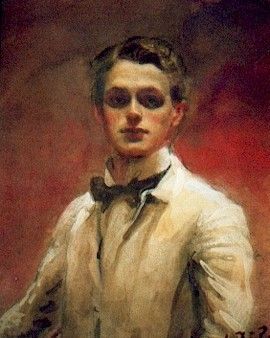
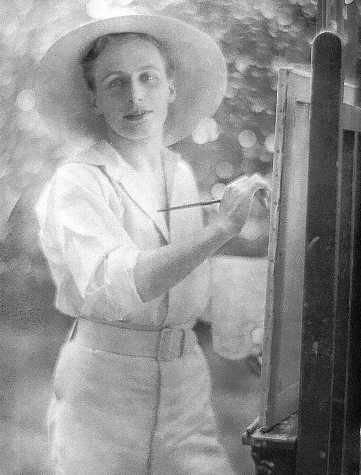
We shall never know whether John Singer Sargent, the American portraitist, or the pioneering French photographer Baron Adolph de Meyer, was tempted to seduce William Bruce Ellis Ranken, the extraordinarily handsome young artist who had studied at the Slade School of Art.
But it is an irresistible possibility.
The two older men had witnessed the disgrace of Oscar Wilde, and if such thoughts existed, they would have had to remain unspoken. Desire was one thing; admitting to it was quite another.
But suppose, for a moment, that they were both captivated by Ranken. Might he have replied, in that soft Scottish accent:
“I am flattered by your attention. I am happy to be seduced by either of you. If it advances my career, I shall willingly sacrifice my innocence. But you must understand that I already belong to someone else.”
That someone was Ernest Thesiger, Ranken’s fellow student at the Slade, who would go on to become an actor.
Perhaps Thesiger, with his taste for theatricality and his instinct for the deliciously ambiguous, might even have prophesied what I am suggesting here. The title of his 1927 autobiography seems almost to wink at us from across the decades:
Practically Correct.
“I knew that one day somebody would understand,” Thesiger might have said. “That we had to hide our forbidden passion.”
“But there were wicked tongues,” Ranken might have added. “The spiteful and the jealous, always watching, always waiting to discover something that was never meant to be discovered.”
According to the story, Ernest and Ranken’s sister, Janette, devised a solution. They would become brothers-in-law as well as lovers.
“I did not like the idea,” Ranken might have confessed. “But there was no choice. I shaved off my hair — an act of protest, shock and grief. And yet the three of us lived together in harmony, protected, at least for a while, from the prying eyes and insinuations of others.”
Whether any of this is true is another matter.
Perhaps that is precisely the problem with Ranken. There is so much about him that sounds invented even when it is not.
William Bruce Ellis Ranken was an extraordinarily handsome Edwardian aesthete: flamboyant, charming, fiercely dramatic and devoted to beauty. He inhabited a world of visual splendour, yet apparently possessed a warmth that made him unusually free of the snobbery one might expect from his surroundings.
He seems, in retrospect, almost too perfectly cast for the role.
And perhaps that is why the temptation to invent a little around him is so difficult to resist.
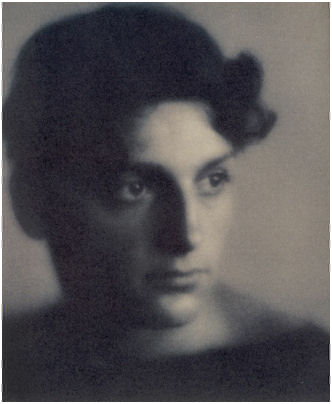
Ranken photographed by Baron Adolph de Meyer in 1902.
Almost forgotten in Italy. Completely forgotten by the rest of the world.
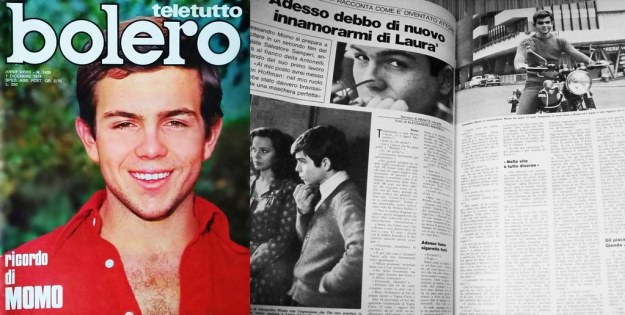
There was once a time when Alessandro Momo looked destined to take on the world.
But life dealt him a fatal blow.
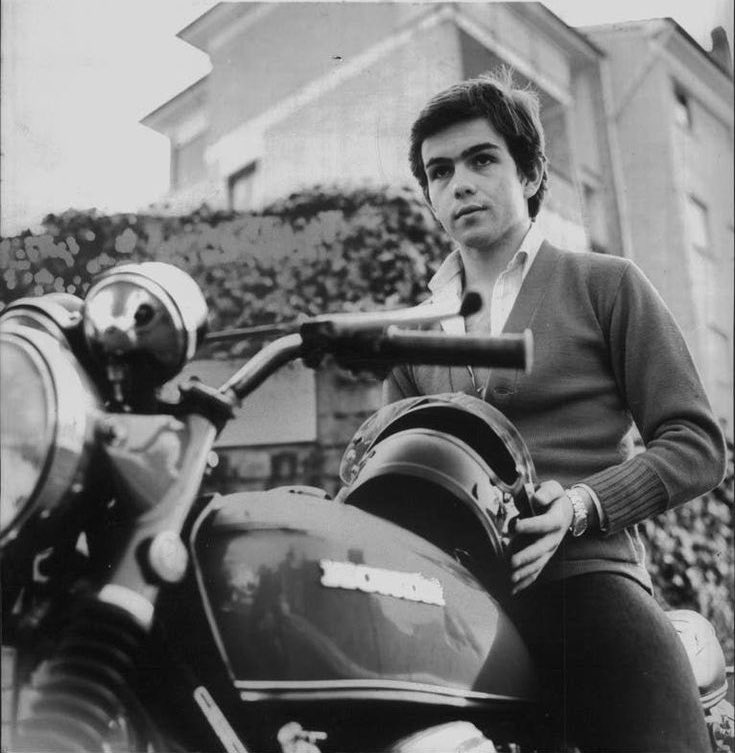
On November 19, 1974, the 17-year-old actor was speeding along Lungotevere Maresciallo Cadorna, a prominent and scenic stretch of boulevard running alongside the Tiber in Rome’s Della Vittoria quarter, on a borrowed Honda CB850 motorcycle.
“I’m lucky. The police won’t catch me.”
When a taxi turned left into Via Roberto Morra di Lavriano, Momo swerved, hit the taxi and was thrown more than ten metres into the opposite lane, his torso crushed against the motorcycle’s handlebars and fuel tank.
He was taken to Ospedale di Santo Spirito in Sassia with horrific injuries: a fractured fifth rib, subcutaneous emphysema of the left hemithorax, a left orbital haematoma, abrasions to the right parietal bone, bruising to his lips and nose, a contusion to the left hypochondrium, extensive contusions and abrasions to his limbs, a ruptured spleen and a lacerated stomach.
He underwent emergency surgery but died ten hours later.
There was something eerily reminiscent of James Dean in his death.
Like Dean and his fast cars, Momo regarded motorcycles as his great passion. And, like Dean, he died doing the thing he loved, at precisely the moment when his career seemed ready to take off.
The strikingly youthful, dark-haired adolescent, with his intense blue eyes, embodied the quintessential look of the brooding and magnetic 1970s Italian teenager.
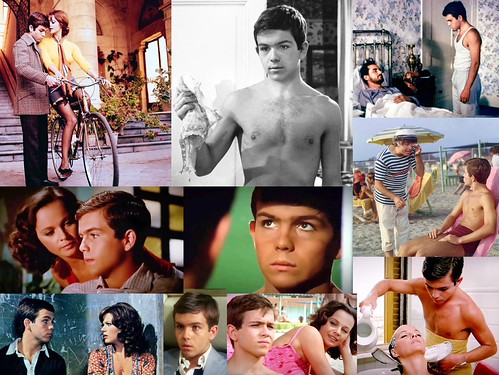
He projected a mixture of innocent charm and rebellious energy that defined his breakout performances in films such as Malizia (1973) and Profumo di donna (1974).
In Malizia, Momo played an intense, observant and brooding 14-year-old boy navigating his sexual awakening.
“The sexual curiosity of Momo is perverted and sadistic,” wrote one critic.
But there was something about Momo that captured the joys, anxieties and awkwardness of sexual awakening for a generation of young Italians.
At the time of his death, he had just completed Profumo di donna, in which he played a naive young military cadet nicknamed “Ciccio” — “Babyfat” — who is assigned to serve as the personal aide to a blind, retired army captain.
Its English title was Scent of a Woman. The film received two Oscar nominations and would later become the direct inspiration and source material for the 1992 American remake starring Al Pacino and Chris O’Donnell.
Before this, Momo had appeared in several films and, reportedly, never acted with his own voice. In both Malizia and Profumo di donna, he was dubbed by Sandro Acerbo, who would go on to make a successful career as a voice actor.
Newspapers initially reported that Momo was 19 when he died.
The error was significant.
It was subsequently discovered that he was only 17, just one week short of his eighteenth birthday, and therefore not legally entitled to ride a motorcycle.
The Honda had been lent to him by his romantic partner, the 21-year-old actress Eleonora Giorgi. She was investigated over the circumstances of the accident but was never indicted, having reportedly been told by Momo that he was 21. His family confirmed that he had repeatedly lied about his age.
Years later, Giorgi said that the immense guilt and psychological trauma following his death triggered a downward spiral into heroin addiction.
“With him, we were two solitary beings. This was our understanding. We were drifting, like a raft, but with a nuclear engine. Extremely strong, healthy, famous and scary young. Enviably beautiful. Together, even more so, because we multiplied our energy tenfold.”
And then, almost in an instant, it was over.
Alessandro Momo had been given the face, the talent and the moment. What he never got was the future. At seventeen, with Malizia behind him and Profumo di donna still waiting to be seen, he disappeared just as the world was beginning to notice him. Perhaps that is why his death feels so strangely unfinished: not simply because a young man died, but because somewhere beyond that November night in Rome was a life we will never know — all the films he might have made, the man he might have become, and the career that never had the chance to begin.
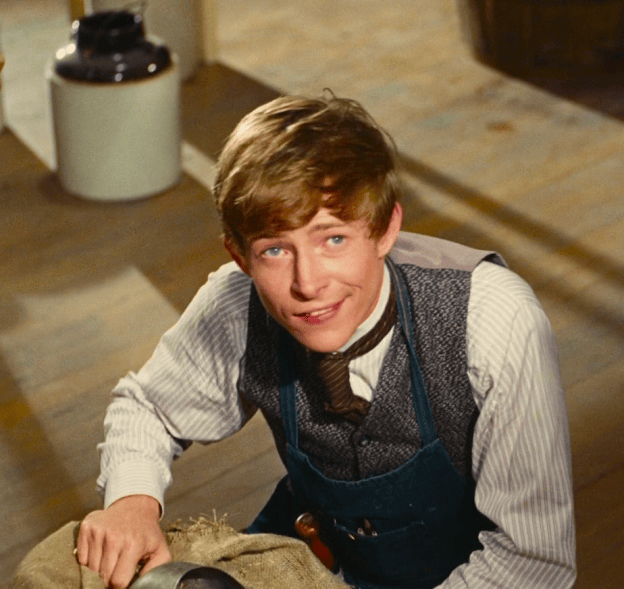
A screen test. A handsome, fair-skinned boy with freckles and reddish-blond hair. Small and slight. Youthful, expressive, innocent. He is energetic, pitch-perfect and physically effortless in the dance routine. There is a naivety about him, and a wide-eyed charm.
Gene Kelly, the director, is taken with the boy and casts him as seventeen-year-old Barnaby Tucker in the movie version of Hello, Dolly!
The actor is twenty-four-year-old Danny Lockin, who looks much younger than his age.
That was almost sixty years ago, and Lockin could never have known that he was destined to become the eternal Barnaby Tucker.
Nine years later, in August 1977, Lockin was found dead in a California apartment, stabbed and slashed nearly a hundred times, his body mutilated.
We will never know what went wrong with Danny Lockin. Nor will we ever know exactly what happened on the night he was murdered.
It is a classic Hollywood tale.
Lockin was born in Hawaii in 1943 and raised in Omaha, Nebraska. After leaving Benson High School and the dance team, the Checkers, he completed his schooling in Anaheim, California. He studied at Eugene Loring’s American School of Dance and later appeared in Carey Leverette’s Dance Arts Studio Festival.
There, he was spotted by Marc Platt, Radio City Music Hall’s choreographer, who recommended him for a San Francisco musical revue. Under Leverette’s management, Lockin studied acting and was cast in the film version of Gypsy in 1962. He had a small part in The Stripper the following year and appeared on television in Father of the Bride, several episodes of Dr Kildare, The Lieutenant and Mr Novak.
Lockin plunged into stage work, appearing in an Off-Broadway production of Morning Sun and, in 1964, a Broadway revival of West Side Story. The following year he auditioned for the role of Rolf in the film version of The Sound of Music.
But it was the role of the energetic store clerk Barnaby Tucker in Hello, Dolly! that made his name.
On either side of the film, Lockin played Barnaby on Broadway and in touring productions, appearing with ten Dollys: Betty Grable, Ginger Rogers, Ethel Merman, Phyllis Diller, Eve Arden, Dorothy Lamour, Annie Russell, Carol Channing and, of course, Barbra Streisand.
That was five years of Hello, Dolly!
Then the show abruptly closed on Broadway, and Lockin’s star faded almost as quickly as it had risen. He disappeared from public view. Drinking problems and possible substance abuse prevented him from working. There was a short run with Tom Sawyer in Kansas City, but at twenty-eight he returned to his mother’s house in Orange County and began teaching dance.
After his murder, a family friend said:
“He looked so young that it was difficult for him to find an adult role. He was frustrated that he couldn’t open new doors for himself. He was up against people who had the power and he told too many people off in the business. He began drinking because of his frustration and became more unruly and opinionated. He didn’t make many friends as a result.”
His temper. His demand for perfection. Perhaps they did him in.
His marriage to Kathryn Haas, a dancer in a stage production of Hello, Dolly!, in 1967 lasted only two years and ended following the birth of their son, Jeremy. Afterwards, Lockin became disillusioned with women and told friends that there had been a change in his sex life.
The engaging jack-in-the-box was bisexual.
In 1977, he appeared on The Gong Show at Burbank, hoping perhaps to be noticed again. Chuck Barris confusingly announced Lockin and his dance partner, Billy Jo Conway, as “Billy Jo and the Danny Trio.” They stormed it with a song-and-dance routine that earned them joint first place.
For a moment, it seemed as though something had returned.
On a high, his mother, Jean Lockin, took him for a meal before dropping him off at the Mug Bar in Garden Grove, where he intended to play pinball.
“He had the old light back in his eyes,” she said.
That was the last time she ever saw him.
On the night of August 21, 1977, Lockin’s killer, thirty-four-year-old Charles Leslie Hopkins, called the police and said that a man had entered his apartment and tried to rob him. When officers arrived at the Kona Palms apartment, they found Danny Lockin’s body.
Lockin had been wearing skin-tight dancing trousers without pockets for identification, and the body was so badly mutilated that the police were initially unable to identify him. Photographs of the lifeless face were circulated around the city, but his identity was eventually established when his fingerprints were matched with those taken following his previous arrests for drunken driving.
Hopkins, a known homosexual, was arrested after it was discovered that he had left the Mug Bar with Lockin and travelled with him to the apartment. Further investigation revealed that Hopkins had moved the body from room to room and attempted to clean up the blood before calling the police.
At his trial, Hopkins was convicted of voluntary manslaughter and sentenced to four years in prison.
Four years.
An inexplicable miscarriage of justice.
The irony is that shortly before his death, Lockin had recorded a song in a small studio he had rented.
“Today is grey, and I’m just waiting for some sunshine. But, gee, I wish tomorrow would appear.”
“He was no saint,” his mother reflected.
And now Danny Lockin is almost forgotten.
Except for Barnaby Tucker.
Except for those immortal lines from a song.
“Out there. Full of sunshine and full of sparkle. Close your eyes and see it glisten, Barnaby. Listen, Barnaby.”
Nicola Giancola, F. Holland Day, and the mystery of male beauty.
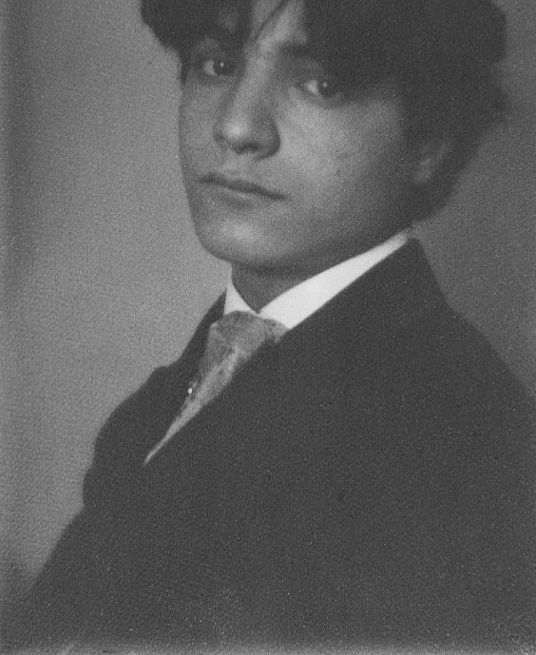
F. Holland Day, Portrait of Nicola Giancola, 1900.
Every old photograph asks the same questions. Who was this person? What did they fear? Whom did they love? What became of them? Every photograph is a small time capsule, preserving not just a face or a fleeting moment, but the enduring mystery of another human life.
When those photographs depict men, they often reveal something else: a world of relaxed intimacy and easy physical affection that feels startlingly unfamiliar today. Their expressions are open, their body language unguarded. To modern eyes, conditioned to read male beauty through the lens of sexuality, many of these images can appear strikingly, even unmistakably, gay.
Yet what draws us back to them is not simply curiosity. It is a curious blend of nostalgia, discovery, and recognition. They remind us that the language of masculinity has never been fixed, and that photographs can preserve not only people, but forgotten ways of being.
Few stories illustrate this better than that of Nicola Giancola (1886–1956).
It began when a friend sent me an old photograph he’d found online.
Giancola possessed a striking beauty that transcended the faded monochrome of the photograph. There was something in his gaze—confident yet vulnerable—that refused to remain trapped in the past. I wanted to know who he was.
The internet offered fragments: a handful of facts, a scattering of images, and tantalising references to Giancola’s connection with the American photographer Frederick Holland Day. But fragments were not enough. I wanted to turn fading photographs into a living man—to give substance to a ghost and answer questions that time had left forever unanswered. Every old photograph promises a story; the challenge is discovering how much of it can still be told.
Nicola Giancola was born in Campobasso, Italy, in 1886. His was a story shared by countless Italian families of the period.
Following Italian unification in 1861, the Molise region was devastated by chronic rural poverty, crippling taxation, and the decline of traditional agriculture. People left southern Italy in search of opportunity, many of them crossing the Atlantic to begin new lives in America.
Giancola was still a child when his family settled in the immigrant neighbourhoods of Chelsea, near Boston, Massachusetts. Like many boys of his generation, he contributed to the family income from an early age, working the streets as a shoeshine boy among the city’s growing Italian community.
His fortunes changed when he encountered Frederick Holland Day (1864–1933). Born into wealth and free from financial constraint, Day was a publisher, patron, and pioneering photographer who regarded photography not as mere documentation but as a legitimate form of fine art.
Exactly where the two first met remains uncertain, although the most plausible explanation lies in Day’s work at the Parmenter Street Mission in Boston’s North End, where he was closely involved with the Sunday School. One biographer memorably described him as the “Pied Piper of Parmenter Street.” He became mentor, benefactor, and friend to many underprivileged immigrant boys, often paying for their education and supporting them financially. He referred to them as his ‘Parmenter St. cherubs’.
Giancola, a gifted young artist whose striking good looks undoubtedly caught Day’s attention, soon became one of his favourites. Day financed his studies at the Eric Pape School of Art, paid for English lessons, and later used his influence to secure him work as a commercial artist.
Beginning in 1898, Day spent his summers at Little Good Harbor, his retreat near Five Islands, Maine. It became a haven for artists, writers, and the young men he had taken under his wing, including Giancola. They spent their days boating, swimming, reading, and playing board games, far removed from the crowded streets of Boston. Everyone wore identical sailor suits—a deliberate attempt by Day to erase outward distinctions of class and privilege and create a sense of equality among his companions.
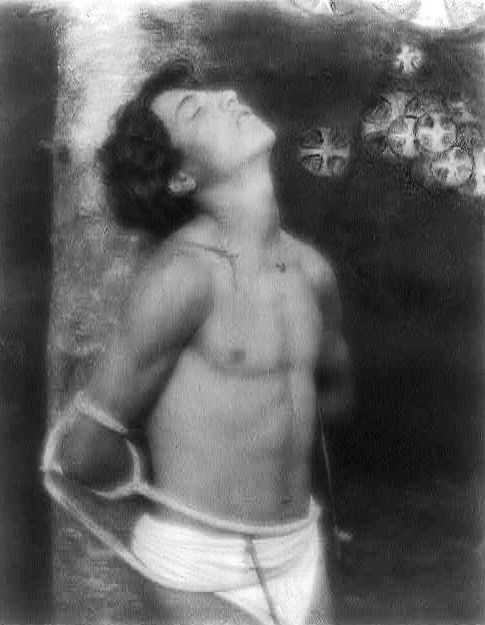
F. Holland Day, Saint Sebastian, 1906
Frederick Holland Day’s sexuality has long been the subject of debate. His photographs of the male nude, together with the surviving evidence of his friendships and correspondence, have persuaded many historians that Day was homosexual, although definitive proof remains elusive. His close friend and business partner Herbert Copeland is widely believed to have been homosexual. Day’s extensive photography of adolescent boys would undoubtedly invite suspicion today, yet at the turn of the twentieth century it was widely understood within the conventions of artistic classicism rather than viewed through a modern lens.
Whether Giancola posed for Day as a child is something we will probably never know. In 1904, a fire destroyed around two thousand of Day’s prints and negatives, taking many possible answers with it.
One revealing anecdote survives from Giancola’s youth. His mother reportedly disliked the attention her son received from Day and Copeland and disapproved of him sitting for the two men. Greeting Copeland one day, she remarked coolly, “It’s very good of you, Mr Copeland, to take such an interest in my son.” Before Copeland could reply, the self-assured boy interjected, “Nobody can help taking an interest in me, can they, Mr Copeland?” Whether apocryphal or not, the story suggests a young man who was already aware of the power of his own beauty.
Day’s photography was painstakingly theatrical. He constructed elaborate settings, dressed his models in carefully chosen costumes, and manipulated his negatives to create soft, dreamlike images that blurred the boundary between photography and painting. Religious narratives, classical mythology, and scenes from history provided the inspiration, with friends, acquaintances, and often Day himself transformed into idealised figures from another age.
As Giancola entered adulthood, he became the model for some of Day’s most celebrated photographs. Made on the Ames Estate at North Easton, Massachusetts, the images combine classical symbolism, religious imagery, and varying degrees of nudity. To many modern viewers they possess an unmistakable erotic charge.
In her biography F. Holland Day, Pam Roberts goes further, suggesting that Giancola may have been more than simply Day’s favourite model. She observes that there is “a far stronger homoerotic element in almost all the photographs for which Giancola is the model than in Day’s other male nudes.”
The surviving correspondence between the two men offers tantalising, though inconclusive, hints of emotional intimacy. In one letter Giancola wrote:
“I will never forget the day we were out to Brockton, how happy I was… I thought the world was mine. When both of us were walking arm in arm… what Paradise it was! Tell me, Mr Day, do you not remember the happy times we had there?”
I have read the letter dozens of times and still cannot decide what it reveals. It may be no more than the heartfelt gratitude of a young man whose life had been transformed. Or perhaps there is something else beneath the surface. Like the photographs themselves, the words resist certainty.
The romantic ambiguity becomes even more complicated when the story continues. In 1910, Giancola married Mary Gertrude Conroy, with whom he would have seven children.
It is difficult not to wonder whether Giancola understood exactly how much Day admired him. Day had financed his education, paid him to model, and repeatedly supported him financially. Surviving correspondence suggests that Giancola frequently appealed to his benefactor for money, including one request for a loan of five hundred dollars to pursue a wealthy woman in New York. Day obliged, continuing to assist him for several years.
The two men appear to have remained in contact until the 1920s, after which the trail grows cold.
F. Holland Day, Nicola Giancola, Head-and-Shoulders Portrait, 1906
Giancola established himself as a successful commercial artist, working for several New York advertising agencies while living in Rockville Centre and later the Bronx. Alongside his commercial work he developed a reputation as a landscape painter, exhibiting at Babcock Galleries in 1926.
His career later took him to Brazil before he eventually settled with his family in New Canaan, Connecticut. During the 1950s the Giancolas moved once more, this time to Clearwater, Florida, where his paintings were exhibited at the J. Arlos Ogg Studios.
Nicola Giancola died suddenly in 1956 at the age of seventy. Yet more than a century after Frederick Holland Day first turned his camera towards him, it is those haunting photographs—not the paintings, the advertisements, or the ordinary milestones of his life—that continue to keep his memory alive.
We began with an old photograph of a stranger. By the end of the search he is no longer quite a stranger—but neither is he entirely knowable. That, perhaps, is the true power of old photographs. They preserve not certainty, but possibility.
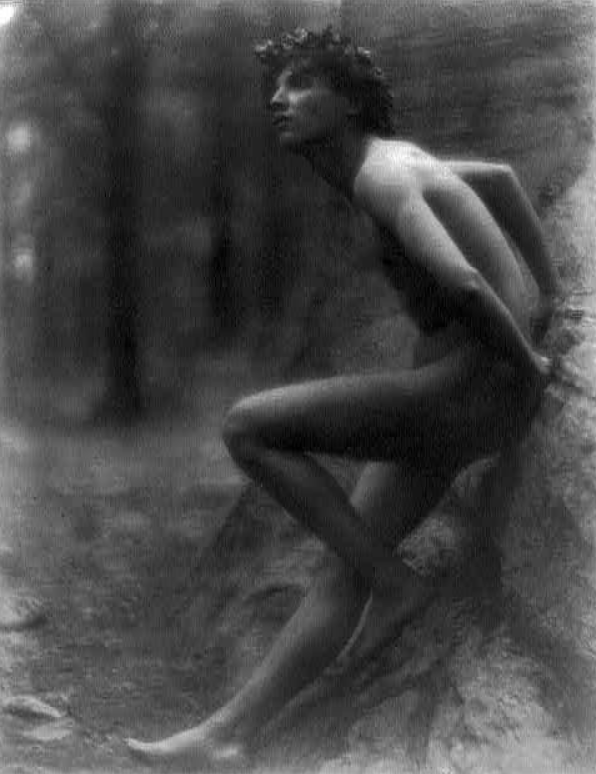
F. Holland Day, Nude Youth, with Laurel Wreath, Leaning Against Rock, 1907
F. Holland Day, Nicholas Giancola, facing right, portraying St. Sebastian, 1906
F. Holland Day, Youth in Winged Hat and Robe, 1907