To Find a Kiss of Yours: Federico García Lorca
(Translation by Sarah Arvio)
To find a kiss of yours
what would I give.
A kiss that strayed from your lips
dead to love.
My lips taste
the dirt of shadows.
To gaze at your dark eyes
what would I give.
Dawns of rainbow garnet
fanning open before God—
The stars blinded them
one morning in May.
And to kiss your pure thighs
what would I give.
Raw rose crystal
sediment of the sun.
Renowned for his vivid imagery and emotional intensity, Lorca’s work often circled longing and desire; here, those themes unfold through a sequence of questions—each one probing what the speaker might sacrifice for intimacy.
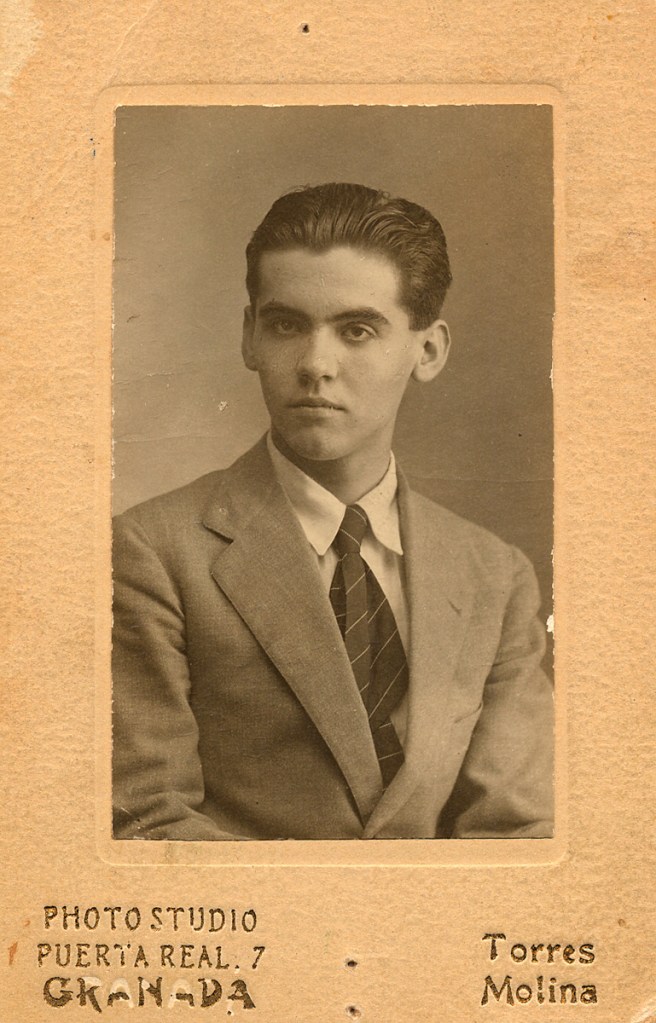
Federico García Lorca (1898–1936)
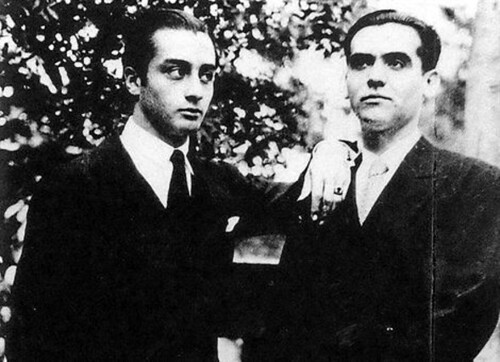
This year marks the 90th anniversary of Lorca’s death. He was, by all accounts, a striking man: Iberian elegance, cultural poise, a magnetic presence. Thick, dark curls; penetrating eyes; a face alive with expression. Today, Lorca is recognised as one of Spain’s most important poets—his reputation only sharpened by the brutality of his death at just 38.
In the early days of the Spanish Civil War, Lorca was arrested in Granada, imprisoned, and within days taken to a roadside outside the city and shot by forces aligned with Francisco Franco. The exact reasons were never formally clarified. The regime’s official statement reduced his execution to a bureaucratic fiction: he had died of “war wounds.”
His body has never been recovered, despite repeated attempts to locate the mass graves into which victims like him were cast. Ian Gibson’s The Assassination of Federico García Lorca remains one of the most thorough investigations into the circumstances of his death, suggesting that his sexuality—at least as much as his politics—made him a target. One member of the execution squad reportedly boasted of firing “two bullets into his ass for being a queer.”
Lorca’s romantic life remains partly obscured, but figures associated with him include sculptor Emilio Aladrén Perojo, composer Manuel de Falla, and writer Juan Ramírez de Lucas. Whether he shared a romantic relationship with Salvador Dalí is still debated.
Across his work, Lorca returned again and again to the tension between desire and repression. Male longing appears coded, fractured, and often veiled—its intensity heightened precisely because it could not be spoken plainly within the society he inhabited.