Category Archives: David

The David Problem: Notes from a Life

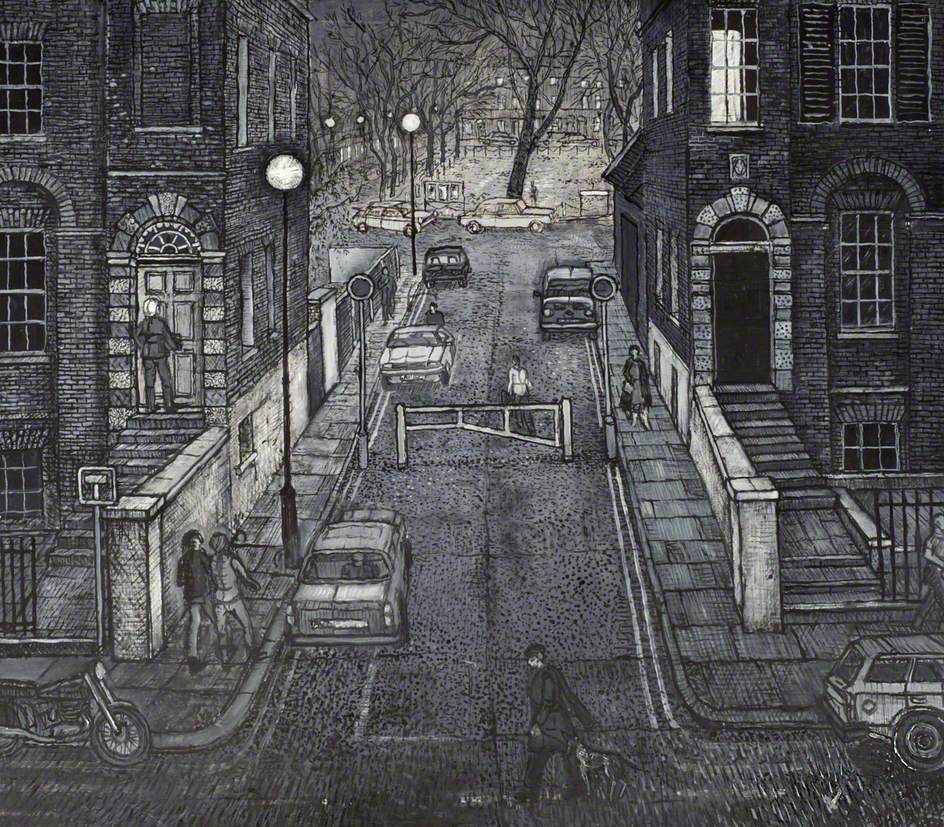
Peter Snow – Cleaver Square from Kennington Park Road (1988). From the Southwark Art Collection.

The Countess, the Living, and the Dead

There was a video featuring Adam Rickitt, who had been big in Coronation Street, in which he appeared naked. The song had been around when David had been clinging to the frayed edges of his youth. He hadn’t pulled it off. Everything went downhill afterwards. Adam Rickitt went to New Zealand to appear in a soap and was accused of stealing a block of cheese, a bottle of HP Sauce and a jar of coffee from a supermarket. David had moved out of the family home because the banks were knocking at the door.

On Sunday night, they had called at a gay bar, and David saw Adam Rickitt on the screen again. “I would gladly have sniffed his bollocks,” he told Joshua, who turned his nose up. “What the fuck is this shite?”

David recalled dancing to Adam Rickitt at Cruz 101 in Manchester. He was high on ecstasy at the time. But he’d gone to a friend’s flat afterwards and written the best chapter of a book he had never written—longhand, too. Then he had left it behind, where it ended up in a black wheelie bin.

Mancunian days. Every weekend in the North West. But he remembered little. The only memory he retained was of a cute little chicken who had taken his shirt off and started singing, “Sexy… everything about you, so sexy.”

David went home with him. The biggest shithole in Longsight, with every room knee-deep in empty Coke bottles. The bed was hidden behind a mountain of takeaway boxes. It had taught him that all that glittered was definitely not gold.

He related the story to Joshua while walking home in the rain.

“You’re too posh,” Joshua warned him. “Too many frills and high expectations.”

“But I ended up with you,” David replied.

 “Your problem is that you look too much at the past, and forget about the future.”

“But there isn’t much of that left, is there?” 

David was feeling down.

March had been a bad month. April looked bleaker.

“There are too many deaths, Joshua. Once, I went to weddings all the time. Now I go to funerals. I suppose we’re all in the same boat, because everybody dies.”

But Joshua was too young to understand and nudged him on the arm. 

David was referring specifically to their next-door neighbour, who had surrendered to the inevitable. In the square, Dorothy Jerman had been known as the ‘Countess’ and lived alone. Not many had known why she was called the Countess, but there was a suggestion that it was a nickname given to her by a former landlord at the Prince of Wales opposite.

“That’s right,” she once told David. “He was the Brixton Bomber, a former boxer, who took over in the 1960s and upset residents by installing a juke box. It attracted teenagers and the lawyers and solicitors who lived nearby wanted a quiet pub and drove him away. But he was a good chap, and called me the Countess because he wanted to get into my knickers. Little did he know that I never wore any.”

The Countess, a portrait painter, had moved here in the early sixties when Cleaver Square had been different to what it became. She shared it with her kids after a messy divorce and remained after they had grown up and left. By all accounts, she was a ‘rebel’ who famously held wild parties that spilled out into the street. 

David inherited the house next door and on most fine days, the Countess could be found sitting on the front steps, a glass of wine at hand, either reading a paperback or making conversation with anyone who passed. 

And the Countess had loved Joshua from the moment David invited him to move in with him. Two fucking artists, David had mused. Joshua would sit on the steps as she stroked his blond hair and told him stories about her life.

She claimed to have chosen Cleaver Square on the recommendation of a friend, Innes Fripp, a landscape painter and portrait artist who had taught at the nearby City and Guilds of London Art School and once had a studio in the square.

David had looked up the connection and found that it might have been true. He also discovered that the area had once been called Prince’s Square, named after two houses flanking the entrance, built for Joseph Prince by Michael Searles in the 1760s. The name was changed in 1937, a throwback to Mary Cleaver, who had owned the land in the eighteenth century.

“This is where sea captains lived,” the Countess once boasted, “but the square fell on hard times by the end of the nineteenth century and attracted old music-hall stars instead. It fell on evil days—crumbling brick façades hiding three families across three floors. During the war, the council requisitioned many of the houses for bombed-out families. The trees died, and the gardens were razed.

“South of the river was one vast slum when I arrived. When I fled Chelsea’s superficiality, the square was dilapidated, with shabby red-brick houses—homes for dockers and clerks—but every door stood open. Everybody knew everybody else. Materially, they had little, but they shared it when needed. Then the developers came, and with them came the barristers, judges, and MPs. That was when the doors shut. The young people drifted away, saying the square was not worth living in—it was dead. That is how we ended up with John Major.”

The houses went for millions now, but the Countess had not been tempted to sell. She could have died a millionaire, but preferred to live with her memories and pry into the lives of people she did not know… and who might have looked down on her, had it not been for her cheek and charisma.

When David arrived in the square, the Countess welcomed him as somebody who lived on her level. Shortly before he died, David’s uncle, William, had kicked out the previous tenants with a view to selling it. It was vacant when David discovered that the property now belonged to him.

But now the old woman had died.

It was good fortune that the Countess had resolutely refused to lock her front door. Joshua had gone looking for her and found the body slumped in a fireside armchair: a flute of flat champagne beside her and a dog-eared copy of Valley of the Dolls in her lap. He had panicked and gone running round to David, with no idea what to do.

Only the day before, David had made an unnerving discovery. The Countess had told him that he was not an Aries after all, but a Taurus. It had taken sixty-two years to learn the truth. But David, who normally paid little heed to astrology, realised that he preferred being a ram to a bull—it was better for a gay man, he suggested.

“A cusp baby,” the Countess commiserated, “and if it helps, you have adopted elements from each star sign.

“You do love a grand romance—you throw yourself into it, heart first, and breathe your partner in as though they were oxygen. But you bruise easily in love, my dear, and you’re far too quick to feel taken for granted. You’ve a weakness for strays as well—people from all walks, the straighter the better.”

“I do have a weakness for working-class boys,” David agreed. “And Joshua comes from a relatively poor family in Thamesmead.”

“Really?” said the Countess. “I had no idea. He speaks with such charm and dignity—and is incredibly handsome. And Thamesmead is perfectly lovely in the summer.”

“I met him when he was only twenty-one and working at Morrisons. For some reason, I was walking around the lake and came across him standing there, looking at the birds on the water. I found out later that he didn’t know one bird from another—except when we were talking about cocks. He had been cruising for a shag, which he didn’t get, but we talked. I pointed out that Thamesmead had been the setting for A Beautiful Thing, which turned out to be his favourite film. Eighteen years later, here we are.”

The Countess had not finished.

“You may have secret love affairs or fall in love with someone who is quite unavailable to you.”

“That’s not true.” David had been a bit too quick to reply, and the Countess raised her eyes, because she had not, for one minute, believed him.

David was thinking about Miles, his provincial friend, whom he had first met when the boy was eighteen. Putting Joshua aside, he had spent the last eight years trying to seduce Miles, but had failed at every attempt. Unknown to Joshua, David had once fallen in love with Miles. It was never reciprocated, but that feeling never changed. Miles was only interested if you happened to be a good-looking French or Italian boy—certainly not somebody like David.

“Are we referring to Freddie, dear?” the Countess asked.

Freddie lived in Hammersmith and was the same age as Miles, but his eccentricities annoyed David—not least his tendency to point out dead people whom he claimed to see at the most inappropriate times. Once, David had slept with him, and Freddie had told him that there was an old woman sitting knitting at the bottom of the bed. He had also ingratiated himself with the Countess because he claimed that a family friend had used his name for a character in The Archers. That had gone down extremely well, because she listened to the programme without fail.

“The last time that I saw Freddie,” she laughed, “he suggested that there was the presence of two dead women—Christine and Hannah—who once ran a brothel here. I talk to them all the time now, and suggest that far worse things have happened in my time.”

“It is definitely not Freddie,” said David, “and I would appreciate it if you did not repeat that to Joshua.”

“Because Venus represents attraction, and the twelfth house is associated with the feet,” she said, “your feet may be especially attractive—and have erogenous zones!”

He had turned his nose up.

David and Joshua headed home and passed the Countess’s house, which stood in darkness.

“I wonder what will happen to the house,” Joshua speculated.

“Well,” said David, “she must have had a will, and I suppose everything will go to her family.”

They were both aware that the Countess had fallen out with her three children, and only one of her grandsons, Owen, ever visited her. The two of them had known him as a young teenager and knew that he did much of the maintenance work around the house, though there were difficulties the Countess had often fretted over.

“If Owen gets everything,” Joshua mused, “it could prove interesting.”

David thought that Owen had grown into a striking young man, but conveniently overlooked that he suffered from a severe case of ADHD, which made him prone to violent bouts of temper.

“He would most likely sell it and become fabulously wealthy,” he suggested.

David knew that the Countess was of sound mind and that she had deliberately led her family to believe that she suffered from delusions—among them that she saw thousands of long-tailed birds clinging to a tree in her back garden, that the other trees were covered in hundreds of cats, and that dead dogs with fiery eyes lived beneath the bushes.

“At least it stops them visiting a crazy woman,” she had laughed.

“Whoever it is left to will find it contested,” David added, “because they will say that the Countess was of unsound mind when she made it.”

“Maybe she was deranged,” Joshua decided. “She often claimed that all sorts of famous people visited her at one time or another. She once told me a magnificent story about Vivienne Westwood, David Bowie, and Marc Bolan coming to tea—and that they ended up bouncing along the street on great big orange balls.”

Space hoppers,” David implied. “I had one when I was a small child in the 1970s. Did you know that Russell Harty was also a personal friend of the Countess?”

David knew that Joshua would not know who Russell Harty was.

“What was he famous for?”

“Sexual escapades with much younger men,” David replied, “and for hosting chat shows on television.”

David had met him once, when he had still been young enough to turn heads in the street. Harty had just returned from Paris, where he had lunched with Nureyev and Charlotte Rampling at the British Embassy. He made small talk, and David was disappointed that this brief encounter on Greek Street had not led to anything more. Still, it had been enough for him to brag about at Comptons.

A few months later, Harty was dead, having suffered liver failure—a result of hepatitis.

“The Countess knew everyone, or said she did. And now there’s no one left to confirm it.”

“That’s the problem,” said Joshua. “Did these encounters actually happen? Was she connected, or just a brilliant bullshitter? I often wonder the same about some of your stories.”

That last comment hurt David.

“Everything I tell you is true.”

“But nothing ever seems to happen to me. The Countess knew famous people. And you’ve done things—wild things—that make my existence seem ordinary.”

“The older you get, what once seemed ordinary suddenly becomes fascinating. We all look back and realise that we did something special.”

The funeral was due to take place the following Friday. The cortège would leave Cleaver Square at lunchtime and travel to Lambeth Crematorium, where a short service would take place before she was handed over to the devil.

Joshua unlocked the door and turned to David. “Do you think we’ll see anybody famous at the funeral?”

“Probably not,” David replied.

The David Problem: Notes from a Life


The Boys of Harrow… and Rockley Beach

David had been researching his new novel: a story set in nineteenth-century Woolwich, where two families are pitched against one another. The plot was already mapped out, but he now wanted to weave in an episode he had discovered in an old newspaper.

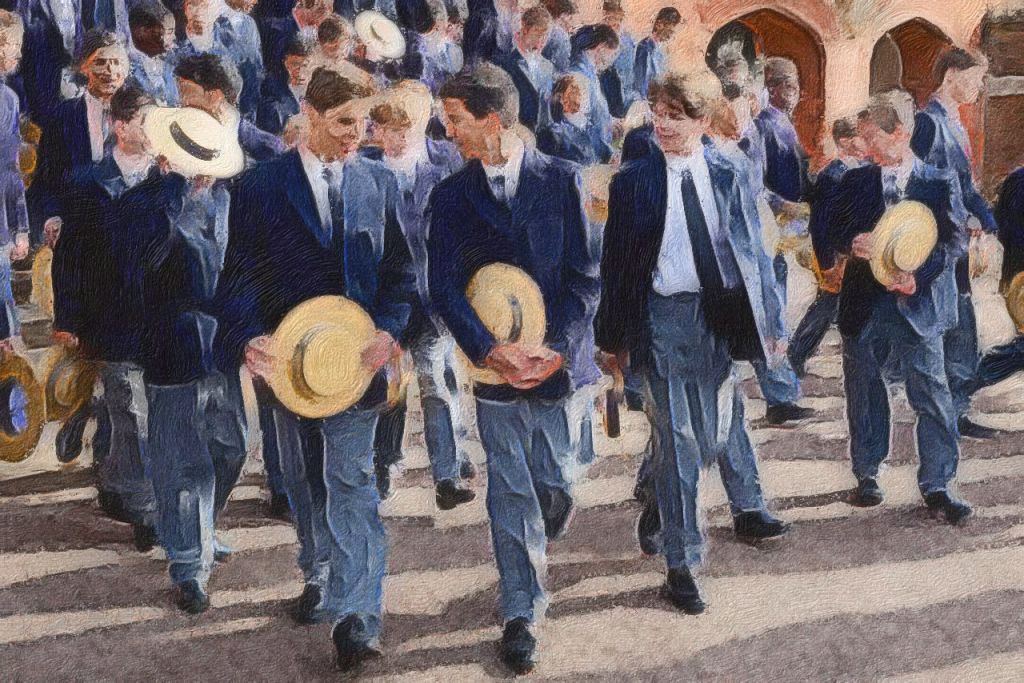
In 1850, thirty-three boys were expelled from the Carshalton and Woolwich Military Academies for what the paper called “grossly immoral practices.” The report described their behaviour as being of “a distressing and disgusting nature.” Their humiliation was made public: they were marched through the streets and deposited on the doorsteps of their families.

David decided that the youngest son of the genteel Morgan family would be one of these unfortunate boys.

But the discovery distracted him. As he continued searching, he found other accounts of young men disgraced and dismissed from the armed forces.

In 1976, several young airmen in the Royal Air Force were reportedly paid to perform sex acts at parties hosted by executives from influential companies. The story surfaced soon after eighteen soldiers were dismissed for posing for suggestive photographs in a gay magazine.

A decade later, two sailors were discovered together in a cabin aboard HMS Torbay. The ensuing investigation implicated three more men, including an officer, for homosexual acts.

David knew from experience that when boys were thrown together, it was almost inevitable that those inclined that way would find one another. The thought brought back pleasant memories of his schooldays at Harrow in the 1970s—before he was expelled, that is.

When he was fifteen, David had been caught in flagrante delicto with another boy. Peter had been a year older and known to most as ‘cock of the school’. David had been afraid of Peter because he strutted around as if he owned the place. He was the toughest boy—and the most arrogant—and Peter had often been at the end of his cruel jibes. 

One sunny evening David had found a spot under a tree to read his well-thumbed copy of The Passing of the Modern Age. He had been disturbed by a group of older boys on their way to rugby practice. They hadn’t noticed him in the shadows and passed by without comment. David watched them go and marvelled that boys’ legs could be extremely attractive.

He had just tackled the crisis of individualism when someone came out of the bushes. Peter had split from the group and doubled back. David, in awe of the older boy, feared the worst and put his book down.

“Come with me,” said Peter.

David did as he was told and followed Peter through the bushes towards the tractor shed. There was no doubt that Peter was going to inflict some kind of schoolboy torture on him. He expected to see other boys waiting to witness his humiliation.

But there was nobody around.

Inside the shed, Peter forced David up against the back wheel of the groundsman’s Massey Ferguson. He stuck his bubble-gum tongue inside David’s mouth and started kissing him. David had not resisted. 

“Let me make love to you,” Peter had instructed and began tugging at David’s trousers. He stuffed the trailing end of David’s school tie into his mouth to stop him making any noise and bent him over the wheel of the tractor. That, as David reflected later, had been the most exciting thing that had ever happened.

They returned to the tractor shed often after that—until the day the groundsman, having left his house key in the tractor, came back for it. He found them both naked and reported them to the headmaster. They were expelled from the school and never saw each other again.

That first encounter with Peter never left his thoughts. All these years later, he accepted that their relationship had been purely physical—there had been no love between them. What remained was the memory of contact, and the illicit thrill of something strictly forbidden. The excitement, as someone had once put it, lay in the chase.

But David’s thoughts also drifted to Nigel—or Nige, as he preferred to be called—a young sailor he had met in the late eighties.

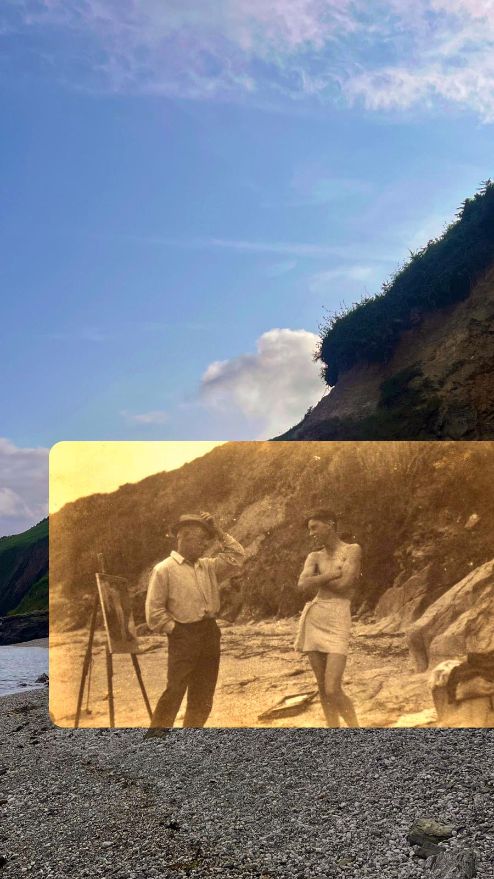
David had been twenty-five, holidaying with friends in Barbados. It was a hot July, and most days were spent lounging on the crowded stretch of Rockley Beach. Fifteen years later, he returned to the same place and found it completely deserted.

He could still remember the book he’d been reading—Koko, a horror-mystery by Peter Straub—pristine when he bought it at the airport, dog-eared within days. He had set it down in the sand, closed his eyes, and listened to the conversations drifting around him.

Vendors moved along the beach, trying to persuade holidaymakers that the unlabelled bottles of pure aloe vera they carried were the secret to a perfect tan. David had bought one, of course, only to discover it did nothing except increase the risk of sunburn. 

David had drifted off for a few minutes, and when he woke he found himself surrounded by young men in tight bathing costumes. “Sailors from a British warship,” his friend Debbie smirked. They were gathered in small clusters, towels spread out on the sand, cans of beer passed easily between them.

The one he later learned was called Nige lay stretched out nearest to him. David found himself drawn to the pale, slender body—the long legs, the flat stomach, and the way his shorts seemed to accentuate what lay beneath—of the nineteen-year-old.

They fell into conversation, and David learned that Nige was an able seaman aboard HMS Intrepid. A bit rough and ready, he thought—the Yorkshire accent lending him an air of unpolished charm—but friendly. More than anything, David found him most handsome.

It was David who suggested a beer at an open-air bar at the far end of the beach. They talked and drank bottles of Banks—“pee beer,” as the young Black barmaid jokingly called it—until they noticed the beach had emptied and a magnificent sunset had taken hold in the west. In Barbados, the day did not fade so much as vanish; the sun slipped cleanly into the sea, and night arrived almost at once. Then the tree frogs began to make themselves heard.

David never quite reflected on what followed.

Nige, in T-shirt and shorts, remarked with easy indifference that he felt hot and sticky, and wished he were back aboard ship for a shower. David—less innocently—suggested he come back to his room instead, where he could use his. The young seaman accepted without hesitation, and the two of them crossed the road together.

A few words might have applied; aroused, horny, frisky, and most definitely ‘in the mood’. Nige took his shower and invited David to join him, which was all that he had hoped for. And then they had indulged in hours of drunken sex, only halted by Nige’s necessity to get back to ship before curfew.

David stood naked in the doorway as Nige left. At that exact moment, Anderson—a good-looking, God-fearing porter—passed by, his glance lingering just long enough for curiosity to harden into suspicion, and then into something closer to disgust.

Still, David and Nige agreed to meet again the following day.

Only years later, after some research, did David grasp how serious the consequences might have been had they been reported. Nige—young, impulsive—would likely never have considered that homosexuality was an offence in the armed forces, one that could have led to immediate dismissal. David, meanwhile, would have risked falling foul of the island’s colonial laws, under which homosexuality was illegal. A conviction might have meant life imprisonment in Glendairy Prison, notorious for its brutality, overcrowding, and inhumane conditions—grimly known as a “house of horrors” before it was destroyed by fire during a riot in 2007.

Ignorance had allowed David to preserve certain memories, untouched and untroubled.

But he sometimes wondered what had become of Nige, who would now be fifty-six and long since retired—no doubt altered by time: the silky crew cut gone, the firmness of youth softened into weight, skin loosening, and body hair in unwelcome places. Had they passed each other in the street, he might not have given him a second glance—and Nige, he suspected, would have done the same.

Things had changed.

Homosexuality was legalised in the British armed forces at the turn of the millennium. But Barbados had been slower to catch up. The island had enacted its Sexual Offences Act in 1992, which carried a grim warning: “Any person who commits buggery is guilty of an offence and liable on conviction on indictment to imprisonment for life.” Even worse, the law specified that the offence applied “whether natural or unnatural, involving the use of the genital organs for the purpose of arousing or gratifying sexual desire.”

Homosexuality had gone entirely underground, though David took some comfort in the fact that prosecutions had been relatively few. It was not until 2022 that the law was finally repealed, and same-sex relationships legally recognised, when the Sexual Offences Act was declared unconstitutional.

David finally admitted the truth: he had let himself grow lazy. His novel would never be finished if he continued to daydream.

The David Problem: Notes from a Life


An Afternoon at Kennington

F Scott Fitzgerald often used seasonal change to reflect the emotional trajectory of his characters. In The Great Gatsby, the narrative opens in the optimism of spring, reaches its fevered climax on the “hottest day” of summer, and concludes amid the quiet decay of early autumn. A similar pattern might be observed in David’s work. It has been noted that in almost all his books he refers to a particular season in the opening paragraph—yet, once established, the season is never mentioned again.

He pondered this as he walked through Kennington Park with Joshua. He was trying to compose the opening paragraph of a new book yet found himself unable to begin without invoking spring. The task was made more difficult by Joshua, who insisted on talking without pause.

Joshua waved a hand across the grass toward the flowerbeds, where the first signs of growth were beginning to appear.

Spring again.

“Freddie told me a weird thing. He was walking through the park and saw Bob Marley playing football with some guys from the Rasta Temple.” Joshua waited for a reaction, but David was still wrestling with the seasons and didn’t respond. “Are you listening to me?”

“Don’t you think it’s strange that Freddie was at this spot when he saw Bob Marley playing football?”

“That would have been impossible because Bob Marley died in 1981, and what year was Freddie born in?” 

Joshua had been prepared for this and guessed that Freddie was a millennial child. “That’s why the story is so spooky, but he swears that it was Bob Marley playing football, and that he waved to him.”

David had long decided that Freddie was kooky.

“I’ve told you before,” Joshua continued. “Freddie is a ‘ghost whisperer’ and sees things that we can’t.” 

“Like the ghost of Bob Marley?”

“Well Freddie did research and discovered that Bob Marley used to stay at house in St. Agnes Place and that he was photographed playing football here.”

David did not believe in the afterlife and regretted that Joshua seemed so easily taken in by it all. He was reminded of the time Freddie had visited Cleaver Square and claimed it was haunted by a man—someone who had murdered his female partner, a widow who made her living selling greengroceries.

“I can’t believe you can’t smell the cauliflowers,” Freddie had shouted.

Not long afterwards, while researching for a book, David came across a newspaper article from the 1960s that described Cleaver Square as “a square for the dead.”

“Freddie talks bullshit,” David sighed. Yet he could recall once seeing a photograph of Bob Marley playing football.

“There was that time we were walking along Kennington Lane,” Joshua went on, “and Freddie said he could see a man playing a barrel organ. I couldn’t see anything. But Freddie described two barefoot boys running out of a nearby house to collect pennies from passers-by. The man shouted, ‘’Ere you two—hop it!’ Do you know who he said one of the boys was?”

“I’ve no idea.”

“Charlie Chaplin—as a boy.”

David was not persuaded.

“How interesting.”

“And another time we were outside the Tankard and Freddie said he saw Charlie Chaplin peering in at the men from the vaudeville—dressed in chequered suits and bowler hats.”

David knew well enough that Chaplin had grown up around here. It had once inspired him to begin a short story about the time Chaplin destroyed an entire film rather than pay taxes on it. The incident was true enough, but the manuscript had never been finished and was still languishing somewhere.

Joshua had no idea, but David had once slept with Freddie. It had happened at a New Year’s Eve party near Elephant & Castle, when David had been in his forties and Freddie an irritating little twink. As the years passed, he had only grown more annoying—though also better looking. Now that David was in his sixties, he occasionally toyed with the idea of feigning an interest in the paranormal in the faint hope that past conquests might somehow be revived. But he had been with Joshua for eighteen years, and the thought of the “ghost twink” was quickly put out of his mind.

David sat down on a park bench.

“This is where Gay Pride began,” he said. “It was 1986. I was twenty-two and not brave enough. I came a few years later, when there was a big demonstration for gay rights. Thousands turned up. I remember Ian McKellen urging everyone to be open about their sexuality—to come out. I also recall Sandie Shaw singing.”

“Sandie who?”

David had forgotten that Joshua was still in his thirties, and the generation gap seemed to widen the older he grew. These days, while Joshua championed the big gay events, David preferred to avoid them. The crowds and the screaming queens were banished. The last time Pride had come around, he had spent the day rereading Edmund White’s A Boy’s Own Story instead. It had been the first gay book he had ever read, and he had kept it hidden beneath his mattress in case his mother found it.

Later, at the White Bear Theatre bar, David sipped a white rum and tonic. It was about all he could drink since being diagnosed with Type 2 diabetes—the small indignities of growing old, though it seemed these days that everyone was diabetic. Joshua, meanwhile, drank a pint of Madri, blissfully unaware of the perils that lay ahead in later life.

“I once saw a play in the theatre behind here,” David said. “I can’t remember what it was called, but it had something to do with a ring that had belonged to Leonardo da Vinci. It passed through a group of frequently naked gay men in America at the end of the twentieth century. My straight friend went to the bar during the interval, and someone asked him, ‘You watching the football?’ It turned out a match was being screened in the pub.

“‘Nah,’ he said. ‘I’m watching the queer play out the back. Mind you, I probably won’t stay if there are any more cocks showing.’

“That was it—that was the title: Leonardo’s Ring. Which said it all.”

Joshua had wanted to take David to see a Henry Moore sculpture on the Brandon Estate, but the older man had dismissed the idea.

“If there are two artists I hate most, it’s Henry Moore… and Barbara Hepworth. The whole world seems obsessed with Barbara fucking Hepworth.”

Afterwards David felt a twinge of guilt, because Joshua was also an artist. These days everyone seemed to be a fucking artist. Joshua made contemporary work too—it was his passion—but to David it often appeared absurd. Of course, he would never say so and accepted that the pieces had to be displayed around the apartment.

Joshua had also begun attracting the attention of collectors. Works that once sold for a few pounds now fetched thousands. Occasionally it crossed David’s mind that one day Joshua might become more famous than he was—and under his own name. David, despite being a well-known writer, had always published under a nom de plume.

“I would have liked to have been young and gay in the eighties,” Joshua said.

“Are you kidding?”

“But it was so pioneering—gay rights, marches for equality. Groundbreaking stuff.”

“And it was also miserable. There was nowhere to go. Queer bashing. Cottaging. Rent boys in dirty bedsits. Plucking up the courage to buy a copy of Gay Times at the newsagents. And, of course, AIDS.”

That generational divide again. Joshua had never lived in a society more backward than the one he knew now. In fact, David believed things were infinitely better. He had grown weary of people who complained endlessly about discrimination, forgetting how bleak the past had often been.

“There’s something else you should consider,” David added. “If you had been young and gay in the eighties, then now you’d be old and gay in the ‘roaring’ twenties.”

David: A Good Story, Apparently

“A swell so big and strong it will wipe clean everything before it.”

I got a message from David. The first I’d heard from him since our falling out in December. I hadn’t been expecting an apology and didn’t get one. I wasn’t even sure one was required. Some days I thought I might be the one who owed it. Still, the silence had broken, and that felt like something.

‘My boy turned forty this week and wanted to see where he was born. I took him to the Kapiʻolani Medical Center, where his mother gave birth to him. It wasn’t what he had in mind. But he stood straight, like the military taught him, and was too polite to tell me to go to hell. He was a Kamaʻāina — child of the land — but this wasn’t where he grew up.’

“What???” I replied.

David rang immediately.

I paused Heated Rivalry, which had literally just started. I hadn’t even got past the opening credits. Everyone had been talking about it, which was precisely why I’d been avoiding it. The same thing had happened with Adolescence. The louder the praise, the more stubbornly uninterested I became. But Heated Rivalry had the added incentive of steamy gay sex scenes — and I liked the idea that large audiences wanted that and were openly enjoying it. So fine. I’d given in. And then David called.

“It’s a paragraph I’ve just written,” he said. “I found a draft of something I wrote about Hawaii in the eighties. A good story’s been hiding in a drawer for forty years. It’s time to rewrite it. Update it.”

“Hawaii?”

“If memory serves, I based it on a Rolling Stone article about a teen suicide. But I think that was Kansas. Or somewhere like it. No idea why I chose Hawaii.”

“Suicide?”

“That only comes at the end.”

“Well,” I said, buying time, “I suppose there has to be a happy ending.”

“A suicide and a birth,” he said, as if that clarified things. “You get the opening now?”

I didn’t. Except that David was a successful writer, and it clearly made sense to him. Which, apparently, was enough.

“I think I know why I chose Hawaii,” he continued. “There was a film I saw. Big Wednesday. Surfing. Jan-Michael Vincent, Gary Busey. Semi-naked most of the time. Very young. Very hot.”

“Who?” My patience was thinning.

“Ah. Before your time. Though now that I think of it, that film was set in California.”

“Get to the point, David. The longer we talk, the longer I’m delayed from steamy gay sex. What’s the story actually about?”

“Whoa,” he laughed. “So you’ve sorted things out with Charlie. What did I tell you? You can’t keep a good man down.”

I froze. Had I really discussed my prolonged sexual drought with David?

“I’ll be brief,” he said. “It’s about jealousy. At least on one side. When three people are involved, somebody always loses.”

This was unexpected territory for him. David could spin a tight crime plot or disappear happily into a historical setting, but relationships were something he normally sidestepped entirely.

“It feels a bit left-field,” I said. “And why go back to something written that long ago?”

“It was shite,” he said cheerfully. “I never read past the first page after I shoved it in a drawer. My first novel came out ten years later — my style had changed completely by then. But time’s counting down. It feels like unfinished business. I want to turn it into something wonderful.”

“How old were you when you wrote it?”

“Let’s see… I started it in 1984, so I’d have been twenty. Finished it the year after. That’s why the characters were that age.” He paused. “It’ll read like I’m reliving myself.” Then, suddenly: “Goddammit. I remember now. I’d just read Michener’s Hawaii. That’s why. Oahu, specifically. And Magnum P.I. was on television.”

I thought about my own life. Whether anything I’d written would still exist in forty years. Whether I’d ever be considered established, in any meaningful sense. I’d been carrying an idea for a book for years, but inertia kept winning. Instead, I scraped a living writing about country houses and cities. It all felt increasingly dull. Stranger still, it occurred to me that David must have written that early draft on a typewriter — a genuinely painful way to work, as far as I was concerned.

He said he had to go.

“By the way,” he added, “I’ve finished the Isherwood biography on Kindle. It ended rather abruptly. One moment he was alive, the next he was gone. Dead. But I won’t mention it again. You seem sensitive about that.”

I restarted Heated Rivalry. Two seconds later, my phone buzzed.

‘Forgot to say. I’m going for a drink with a young man — a student — only nineteen. Just out of nappies, really. Don’t tell Josh, but of all people, I thought you’d like to know. 😏’

The Isherwood Problem: Youth, Age and the Right to Desire

Don Bachardy and Christopher Isherwood. Early 1950s. Photograph by Zeitgeist Films / Everett Collection.

My friend David is reading a biography of the writer Christopher Isherwood on his Kindle. It has taken him a long time to get through—not because the book is difficult, but because it is extremely long. He joked that his Kindle had travelled with him from London to Munich and Paris, and back again, and he had only reached the fifty-percent mark.

“That’s the problem with an e-book,” he said. “We don’t talk about pages anymore. We obsess over percentages.”

I suggested that perhaps he was in too much of a hurry to finish it.

“That’s true,” he reflected, “but don’t you always have one eye on what you’re going to read next?”

David is a lot older than me, and I’m not entirely sure where we first met. He is educated, though—one of those men whose words are almost always guaranteed to entertain. We were walking beside the canal from Paddington Station towards Little Venice. It was dark, lonely, and faintly threatening. I half-expected a knife-wielding mugger to emerge from the shadows at any moment.

For someone like me, who comes from the provinces, London can feel dangerous. David had no such concerns. He regarded nighttime as the best time to wander its quieter streets, harvesting inspiration for his novels, though on this occasion he had also had to tolerate my repeated complaints.

He tried to change the subject.

“The other day I went into Daunt Books on Marylebone High Street,” he said, “and overheard two older women talking. One of them said, There are so many books to read, and so little time left to do it. That made me think about my own mortality. It’s probably why I’m in such a hurry to finish the Isherwood biography.”

It was the first time I’d heard him refer to his age in that way. I’d never really considered that it might trouble him.

It was my turn to change the subject.

“To be honest, I’ve never read Isherwood,” I said. “I find him a bit of a privileged bore.”

He seemed not to hear me.

“There are several comparisons between Isherwood and myself,” he continued. “I’ve been struggling to come up with new ideas recently, and while reading the biography I came across a quote from his diaries: A lack of creative inclination to cope with a constructed, invented plot—the feeling, why not write what one experiences from day to day? Why invent, when life is so prodigious?”

He paused, as if letting the words settle.

“That resonated with me. I’ve decided that my future writing will only be based on real life experiences. That will be far more satisfying.”

David’s work had always relied on a radiant imagination—several bestsellers proved that—but this declaration unsettled me. As if anticipating my concern, he smiled.

“I have a lifetime of fascinating stories involving my closest friends,” he said. “Some of them might raise a few eyebrows.”

“Did Isherwood do as he suggested?” I asked.

“Absolutely. He created characters based on people he knew. Sometimes he even wrote about himself in the third person, omniscient. I plan to do the same. I’ll call my character David—and absolve myself of any blame.”

Little Venice. Where the canals whisper secrets under the London stars

We passed moored canal barges. Most were dark, but a few glowed from within: a man cooking over a tiny stove, a woman bent over her laptop, someone stretched out watching television. Their lives were visible through brightly lit portholes, as if privacy were optional.

“There are other similarities between Isherwood and me,” David went on. “When he was forty-eight he met his long-term partner, who was only eighteen. Does that sound familiar? Joshua was twenty-one when I met him. I was forty-four. Seventeen years later, we’re still together.”

“To be honest,” I said, “I’m surprised your relationship has lasted this long.”

I thought of the times he had propositioned me, and of the occasions I had refused him. I would have been eight when he met Joshua, who was now approaching forty. I had been in my early twenties when I first met David.

“The secret,” he said, “is not to make a relationship exclusive. Not my words—Isherwood’s. He and Don Bachardy both had sex with other people.”

It sounded close to a confession.

“Young men enjoy the benefits of being with an older man,” he continued. “Even if they get their sex elsewhere. Boys can take on the identity of their mentor. Bachardy picked up Isherwood’s accent within a year. Joshua is still his own person, but he always comes home. He values stability.”

Above us, traffic thundered along the Westway flyover. Sirens cut through the night. London had become a city of constant alarm. We were nearing Little Venice—named, supposedly, by Lord Byron, who compared its rubbish-filled waters to the Italian city he had once lived in. In the darkness we could just make out Browning’s Island.

“This is where Paddington Bear was once carried by a swan,” David joked. “Though I suppose that means nothing to you.”

My mind was elsewhere.

“I know times were different,” I said, “but Isherwood might today be accused of grooming a young boy.”

“I knew you’d say that,” David replied. “And yes—you’re right. An established literary figure and a college freshman. There were even unkind rumours in New York that he was with a twelve-year-old. His friends disliked Bachardy. But they turned a moral weakness into a long-term relationship. Rather like Joshua and me.”

He paused.

“Back then, people were blissfully unaware. Today everything is played out before a global audience. If the same thing happened now, Isherwood would be cancelled—even if nothing illegal had occurred. We used to call it boy-love. An appreciation of male beauty going back to the Greeks and Romans. Now it’s considered dirty. That’s something I struggle with.”

A person with limited education is at a disadvantage when arguing with David. He always has the clever words ready. My clumsiness betrayed me.

“Can’t you see that there’s something disgusting about the age difference?”

He frowned—not so much at my disapproval, but at my inelegance.

“When I was young,” he said, “homosexuality wasn’t acceptable. Many of us missed out on young love. Then the AIDS crisis came. Now we grow old resentful, because there’s a void. Is it so terrible that we try to recover something we lost? You’re the generation without constraint. You don’t understand our predicament.”

He stopped walking.

“No matter how old you are,” he said, “there will always be something exquisite about youth.”

“Why?” I asked. “Isherwood came from an even older generation. And what you’re saying sounds pederastic to people my age.”

“When Isherwood was young in the 1920s, he was driven out of Germany by the Nazis. Berlin became dangerous. By the time Bachardy appeared, Isherwood was already considered ancient. Some say the boy did the chasing. The relationship later became non-sexual. Bachardy had other lovers.”

A group of students approached—three boys, two girls—laughing loudly before falling into an awkward silence as they passed us. I recognised the look. Suspicion. Not for the first time, I’d been mistaken for a male hooker. I resisted the urge to run after them and explain myself.

David smirked.

“I think I know why you struggle with age disparity,” he said. “That look on your face—it wasn’t moral outrage. It was embarrassment. Shame. You’re ashamed to be seen with someone older.”

He shook his head.

“That’s not a virtue I admire. One day you’ll find yourself old without warning. And the object of your desire will be much younger. I hope that boy doesn’t think the way you do now.”

Christopher and His Kind is a 1976 memoir by Christopher Isherwood first printed in a 130-copy edition