Tag Archives: story

Charlie: The Promise of Paris – Partie 4

Not for the first time, Charlie had not been entirely honest. When we arrived at his parents’ apartment, it was immediately clear they hadn’t been expecting me. It made my situation more disconcerting. Still, they welcomed me into their tastefully decorated rooms—ornate, unmistakably Parisian.

I had left Thomas, Ambre and Léo behind, taking my first tentative steps towards reconciliation with Charlie. Yet I could not shake a lingering sense of disappointment. All three had hugged me as I left—our plan à quatre had come to an end, but it would stay with me for a long time. We crossed Paris in uneasy silence, neither of us willing to admit that we had both behaved badly.

“This is completely unexpected,” Charlie’s mother said. “But it is a wonderful surprise, and we are delighted to see you both. I have not seen Charlie for such a long time, and at last we get to meet the person he shares an apartment with.”

Charlie leaned in and whispered in my ear. “My mother still hopes I might give her grandchildren and refuses to accept that it will never happen.”

His father shook my hand warmly and patted my shoulder. “Come in and make yourself at home,” he said. “I shall make coffee for us all.”

“You never said anything about visiting,” his mother added. “If I had known, I would have prepared something special. Never mind—we shall go out. I’ll call Thomas and see if he can join us.”

Charlie cut in quickly. “Thomas is working. I have already seen him, but he sends his love to Maman.” He glanced at me cautiously; it could not have escaped her notice.

“Such a shame,” his father sighed. “It is not often we have both our sons together. “But” he added, turning to me, “when Charlie and Thomas are in the same room, things can become a little… lively. Perhaps it is for the best.”

It was certainly for the best. If Charlie and Thomas had begun arguing, it would have been about one thing—me—and that would have made everything unbearably awkward. I might even have had to explain that I had been caught in a love tryst with both their sons.

“Follow me,” Charlie said.

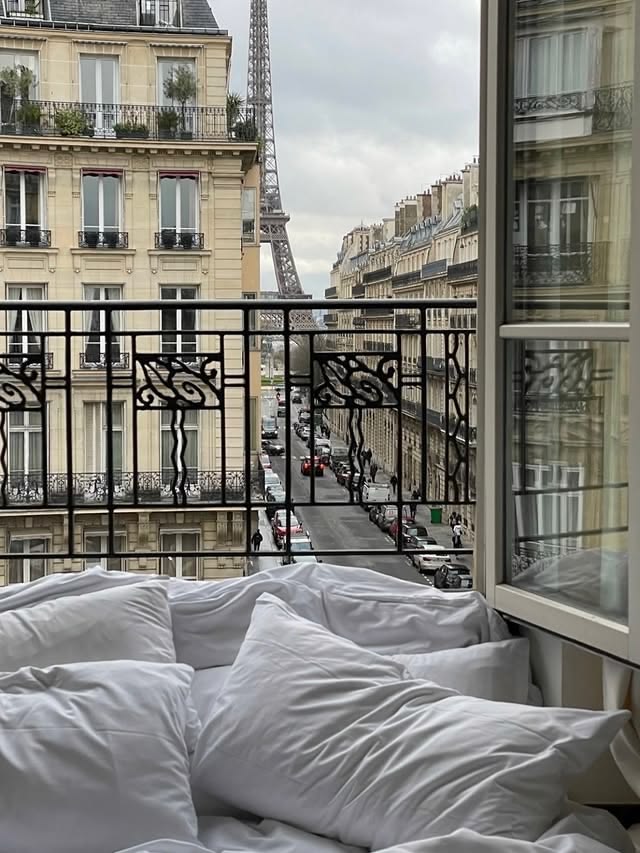
He led me through the apartment to a bedroom that had clearly once been his. The bed sat directly beneath the window; he climbed onto it and pushed open the large panes. The street stretched out in a straight line towards the Seine, and on the opposite bank, the Eiffel Tower rose above everything.

“This room is perfect in summer,” he said. “It’s wonderful to sleep with the windows open, your head almost out in the street.” Six soft pillows were stacked against the iron grille. I placed my holdall beside his and pretended to take an interest in the view.

“I’m glad you came with me,” he admitted. “For a moment, I thought you might stay with Thomas—and that would have made me very unhappy.”

If he was expecting reassurance, I wasn’t going to give it.

“I’m very upset about those photographs in Le Pénis,” I said. “Why, Charlie? Why pose naked—and not have the decency to tell me?”

“I was foolish,” he admitted, “but I found it exciting. It was some time ago, when I went to Lille with Matis. He persuaded me to pose. I knew he intended to submit them to magazines in France. I was wrong on two counts: I thought they weren’t good enough, and I never expected you to see them.”

“But I did, Charlie.”

“Yes,” he said quietly. “And I regret that. But I must live my own life.”

“And what about me? Did you ever consider how I might feel?”

“I always consider your feelings, Miles. But I suspect your problem isn’t really the photographs. It’s something that was mentioned earlier.”

“What do you mean?”

“That you have never seen me naked. That we have never made love.”

My silence gave him his answer.

“You, see?” he said softly. “I knew that was on your mind. But you must understand—my reluctance is for your own protection. I have lived carelessly, in both Paris and London, and I promised myself I would not return to that life. It does not mean I don’t love you—quite the opposite. And when it does happen, it will be because the moment is right. Love is meant to be something beautiful.”

It was not the explanation I had expected, and it did nothing to satisfy me.

A faint flush rose to his cheeks; he chose his words carefully.

“Despite appearances, I am a shy person. And yes—before you say it—those photographs were difficult for me. I had to force myself. But there is something else.”

I stared at him, incredulous. Shy was the last word I would ever have used to describe Charlie.

“There is also the fact,” he continued, “that you are highly sexed. We are compatible in many ways, but not in that.”

“So it’s my fault?”

“I didn’t say that,” he replied quickly. “But I know you will seek sex elsewhere. I just didn’t expect it to be with my brother.”

Since his arrival in Paris, everything had become a quiet contest of blame—and he was adept at shifting it onto me.

“If you want me to apologise for last night, I won’t.”

“Your promiscuity frightens me,” he said. “I’m afraid you will catch something—and put me at risk as well.”

“If you think I’ve been sleeping around, you are mistaken. Yes, I’m attracted to people—but for years, the only person I’ve wanted is you.” I sat down on the neatly made bed. “Last night was an exception. I was angry, drunk—and yes, I find Thomas attractive. But it wasn’t planned. It just happened. It was new to me. I won’t pretend I didn’t enjoy it. But I also need to live my own life.”

“But you have hurt me,” Charlie said, his voice breaking. “I never imagined that you would make love to my brother before me.”

We had reached an impasse.

“If you like, I can return to Thomas and leave you alone.”

“Non!” he exclaimed. “I want you to stay with me. We must try to make this work.”

“But I don’t see how we can. Our trust has been compromised—by both of us.”

For the first time since I had known him, I saw fear in Charlie’s eyes.

“I beg you not to give up on us. I came to Paris to make our relationship work. I am certain we can return to the life we have in England and put all this behind us.”

I was not so sure. Away from Charlie, I had tasted a kind of freedom that had awakened something in me. If we were to make this work, he would have to change—and I doubted that he would. And yet, despite my coldness, I felt a flicker of pity. I considered forgiving him for those revealing images in Le Pénis. I also wanted his forgiveness—for Thomas, for Ambre, for Léo. In the space of twenty-four hours, everything between us had shifted. But if I gave in now, Charlie would always hold the advantage.

My phone buzzed. A WhatsApp message lit up the screen: Bianchi, in Verona. His timing was uncanny, as though he had sensed an opening and meant to claim it.

“Let’s talk about this later,” I said.

Charlie’s parents took us out for dinner at a small restaurant on rue de Passy. It was expensive, and I felt slightly underdressed, out of place. His parents made polite conversation in English as we waited for our main courses. I played my part, courteous and attentive, while Charlie remained withdrawn and silent.

“What is the matter?” his mother asked. “Is something troubling you?”

“No,” he replied. “I’m just tired.”

“Charlie tells us you are a writer,” his father said, turning to me with quick interest. “Is it true you write about travel?”

“It is,” I said. “But I would like to write about other things.”

“Have you considered a novel?”

“I have,” I admitted. “But I’m not sure I have the patience—or the skill—to write a good one.”

“My sister, Cecilie, has written a book,” his mother announced. “It was dreadful. She attempted a grand romance, with a few murders thrown in. It ended up chaotic—and not at all romantic.”

“My Aunt Cecilie knows about murder,” Charlie interjected. “Her first husband was killed by his business partner, and she became very wealthy as a result. We have often suspected she was having an affair with the man who killed him.”

“That will do, Charlie.”

But he continued, undeterred.

“Of course, infidelity is common in our family. You must look around this table to realise there are secrets waiting to be uncovered.”

He looked at each of us in turn—his parents, then me. I remembered what Thomas had told me: that he suspected he was not his father’s son. The flicker in his father’s expression suggested there might be truth in it—or at least, guilt of another kind.

“Should I assume something is wrong between you?” his mother asked.

Charlie left the answer to me.

“I think every relationship has its difficult moments,” I said evenly. But the mood had already soured.

Charlie’s behaviour throughout the meal suggested he might not be as ready to forgive as he had claimed.

Afterwards, we made strained conversation as we walked back to his parents’ apartment. Rain had begun to fall, quietly at first, then more steadily—as though the evening required it.

Inside, we were offered brandy—expensive, warming. I was pleased to discover that his father smoked. He suggested we step out onto the balcony together. Closing the French doors behind us, he gestured for me to sit.

Below us, the hum of traffic drifted upward, mingling with the occasional burst of laughter from passers-by in the street.

In the half-light, I could see Charlie in him. His thinning grey hair had once been as dark and full as his son’s. He carried himself with a surprising vitality, every inch the businessman—someone accustomed to inspiring confidence, to being believed.

“You are the only person Charlie has ever introduced to us. That must mean you are important to him.” He spoke calmly, with quiet precision. It was not a question, but a statement. “And yet, the circumstances suggest there is a problem between you.”

“We’ve been very happy together,” I said. “But let’s just say we have both done things we now regret.”

“Would you care to elaborate?”

It was a difficult decision. Should I tell him everything? Neither of his sons would come out of it well—nor, for that matter, would I. But there was something in his manner, a steadiness, that suggested he would not rush to judgement.

“Before you answer,” he said, “allow me to tell you a few things. I love both my sons, but—as Charlie implied—there are secrets in this family. Charlie is my flesh and blood, but he takes after his mother, who, in her youth, was… let us say, complicated.” He paused briefly. “I am closest to Thomas, though he is not my son in the strict sense. I am not his biological father. He was the result of one of his mother’s affairs. And yet, Thomas is very like me. He has loved me in a way that has made me deeply proud.”

He hesitated, then continued.

“But do not imagine that fault lies only with their mother. I, too, have been unfaithful—many times. Age tempers these things or perhaps exhausts them. We settle, eventually. But my sons… they have inherited more than we intended. In their own ways, they are becoming what we once were.” He studied me for a moment. “Am I close to the truth of your situation?”

“I believe you are, sir.”

And so, I told him everything.

As I spoke, I watched him carefully, searching for some flicker of judgement or surprise. But he remained composed, listening, nodding occasionally, as though nothing I said was entirely unfamiliar. When I finished, he was silent for a long moment.

“The question I must ask,” he said at last, “is which of my sons you love.”

“I suppose the honest answer is that I love them both.”

“But love is a delicate thing,” he replied. “Do not mistake it for desire. I suspect it is Charlie whom you love. Thomas, perhaps, is a distraction.” He took a measured breath. “I am not surprised by Charlie’s actions. Nor am I surprised that Thomas would seek to provoke his brother. That is their nature. But you, Miles—you are the unknown quantity. Everything now depends on how you choose to respond.”

“That is the problem,” I admitted. “I don’t know how to deal with it.”

“Charlie craves attention,” he said. “He will do almost anything to be noticed. But beneath that, there is a boy who wants to settle down with someone he truly loves—and he is afraid to reveal those feelings.” He paused, weighing his words. “If you want my advice—and I offer it as someone who knows his son—then leave him. Leave Paris without telling him where you are going. Let him believe that he might lose you.”

He glanced out into the night before continuing.

“He will return to England in a hurry, convinced that you have gone back there. Whether you are waiting for him… or not, is entirely your decision.”

The David Problem: Notes from a Life

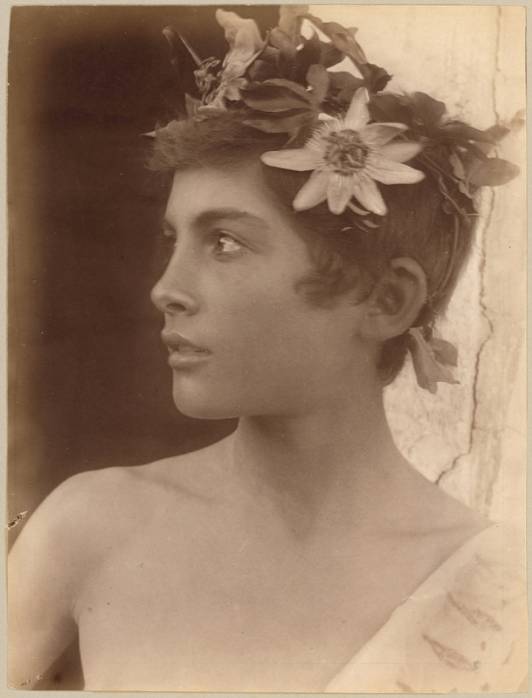
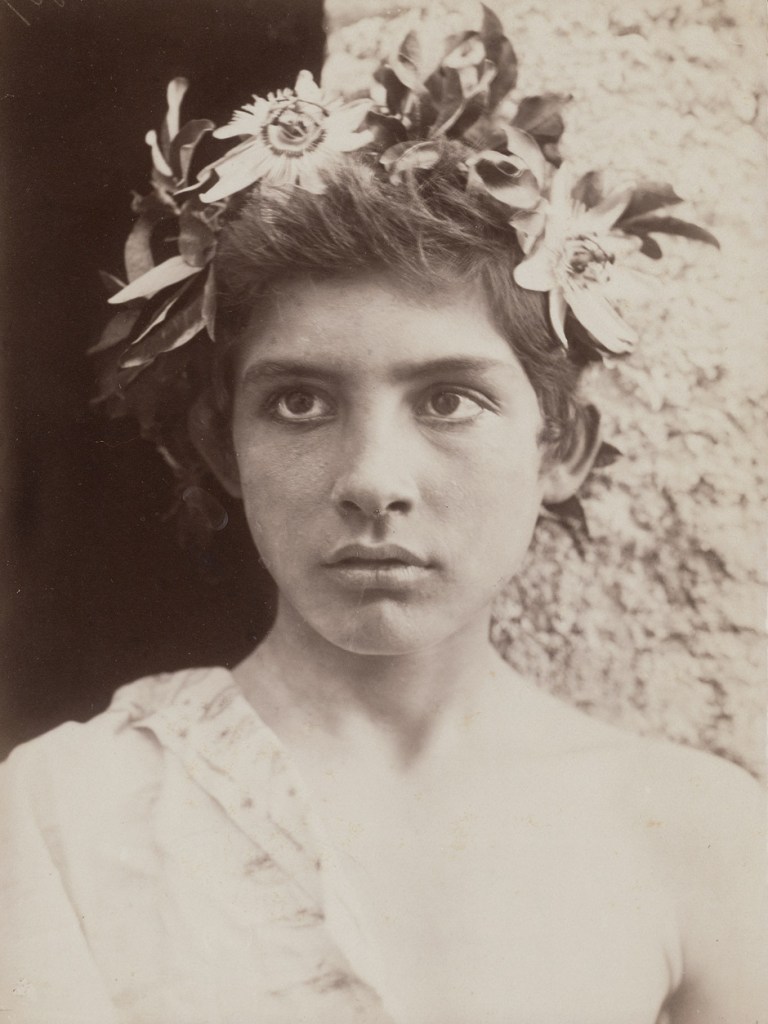
Giacomo crowned with passion-flowers. c.1890-1900. Wilhelm von Gloeden

Art, Innocence, and the Burden of Looking Back

David was in a quandary; the problem was of his own making. It was a friend of Joshua who wanted a name — a name that would read ‘curated by’ and command attention. Of course, David had agreed, but now he had his regrets.

An email from Pamela Hutchinson had been the source of it all. This exhibition is inappropriate and offensive. When David failed to respond, she went to the media, who were only too eager to champion her cause.

“Fucking do-gooder,” he had moaned to Joshua.

But it transpired that she knew far more than he had anticipated.

“The boys he used were underage and exploited by an unscrupulous man.” Those were the words a journalist from The Standard had used over the phone.

“How does anyone know that?”

The exhibition at the McDonald Gallery on Wellington Street was to include sixty photographs taken by the German, Wilhelm von Gloeden. The concept mirrored a similar exhibition mounted by the photographer in the 1890s.

Back then, there had been no objection to von Gloeden’s work.

“The Victorians were either more accepting or considerably more naïve,” David reflected. “His work has been displayed all over the world, and I doubt they faced the kind of problems I’m dealing with now.”

David wasn’t selecting the photographs — that responsibility lay with Nathaniel Wilson, the American who had approached him — but he had agreed to write a critical essay for the catalogue. Yet as the backlash grew, it was David whom people sought out. Mail Online had already published a particularly damning article, one that threatened his reputation as a credible writer.

Joshua had researched von Gloeden and discovered that his notoriety only emerged in the latter part of the last century. Before then, his work had received glowing reviews from newspapers around the world.

“Count von Gloeden is very clever in the way he introduces nude figures of Sicilian boys into his landscapes. It is something quite out of the ordinary, and for those who appreciate artistic work, the figure studies — with their almost classical subjects — will be found of especial interest.”

He read this passage out aloud to David, who noted that it came from a newspaper published in 1909.

“I suppose it’s my fault,” Joshua reasoned. “I must admit, I didn’t realise the subject matter might be considered objectionable now.”

The story of Count Wilhelm von Gloeden had always fascinated David. He had first encountered his work in an old book — The Spell of the Southern Shores; or, From Sea to Sea in Italy — written by Caroline Atwater Mason in 1915. It had been illustrated with landscape images taken by von Gloeden.

Von Gloeden had been born into a well-heeled Prussian family in 1856 and later travelled to Naples, where his cousin, Wilhelm von Plüschow, a photographer who also specialised in pictures of young nude men, encouraged him to take up photography. In his early twenties, suffering from tuberculosis, von Gloeden moved on to Taormina, then a remote village, only accessible by donkey, in Sicily.

He was one of two men credited with turning Taormina into a tourist destination.

The first was Otto Geleng, a Prussian painter who, having fallen ill in Rome, travelled to Taormina in 1863 to convalesce. When three Parisian critics came to visit, the only local inn — the Bellevue — proved inadequate, and Geleng transformed the house in which he was staying into a hotel. It became the Hotel Timeo, still thriving today. When the critics returned to France, the articles they wrote drew the first wave of tourists from Prussia and France, soon followed by visitors from Holland, England, America, Russia, and Poland.

The next was Von Gloeden, a member of the German nobility, who was wealthy, extravagant, sociable — and more than a little eccentric. He kept a large collection of birds — ravens, parrots, nightingales, canaries — and delighted in teaching them to talk and whistle military marches.

He began taking photographs as a hobby, but when his stepfather was accused of treason by Kaiser Wilhelm II and stripped of his possessions, the flow of money to Taormina dried up. Von Gloeden was forced to rely increasingly on photography for his income.

He installed a studio and laboratory in his villa and printed images of local landscapes and architecture as postcards and souvenirs.

The baron also set about persuading shy, nubile young boys to pose in the manner of Greek statues.

“Many of the pictures have a fascinating charm that recalls the odes of Horace and other classical poets of these sunlit lands. All his models seem to the manner born, their graceful lines and quiet, expressive faces harmonising so perfectly with surroundings of luxuriant foliage, abundant flowers, and sunlit glades.”

That, along with their easy smiles, was about all they wore.

David rang Nathaniel, who seemed to be keeping a low profile in New York.

“The problem,” David said, “is that people now see the photographs as child pornography.”

“They’re of their time,” Nathaniel replied. “They belong to a particular moment in photography — when people were still working out how to handle flesh in strong light and shadow. And you must admit, for such an early stage, it’s handled with real skill.”

“What are you getting at?”

“I mean,” Nathaniel went on, “you’re looking at sun-darkened skin under a harsh, blazing light — not the pale tones you’d get in England’s softer sunshine.”

David was none the wiser. It sounded as though Nathaniel was reading from notes laid out in front of him.

“And besides,” Nathaniel continued, “this was when photography was beginning to supplant fine art. Visitors wanted clarity — every detail sharp, everything evenly lit. That was what they valued.”

If David had been hoping for reassurance from Nathaniel, he wasn’t finding it.

“But the nude photographs appear to be of underage boys,” David suggested.

“They’re not underage boys,” Nathaniel replied. “They’re dark-skinned, classically proportioned lads — fine-limbed peasant boys. I’ll grant you, the work does come under scrutiny from time to time, but we are talking about art.”

“If that’s the case,” David said, “then I’ll forward all media enquiries to you.”

He ended the call and turned to find Joshua hovering with fresh information.

“I came across something about a von Gloeden exhibition in Sydney — in the nineties, I think. Detectives were sent in after a complaint, quite high-level, claiming the photographs amounted to child pornography. But in the end, they decided the images were harmless.”

“Exactly,” David said, warming to the argument, finding himself cast as an unlikely devil’s advocate. “Why do people take offence at something so trivial? The models themselves hardly seem troubled by any sense of impropriety.”

“But…” Joshua hesitated, choosing his words carefully, “there’s no getting around the fact that von Gloeden used these photographs of nude boys not just as art, but as a kind of advertisement — for the sort of clientele Taormina began to attract.”

“That’s a bit harsh,” David replied, though he was aware that von Gloeden had been openly homosexual and known for his late-night revelries, both at his villa and in the surrounding meadows. It spoke to von Gloeden’s charm — and his influence — that the people of Taormina tolerated his unconventional behaviour, even when it involved their own sons. The town, after all, had prospered, riding a wave of economic growth driven by the very visitors he helped to draw there.

Joshua continued.

“I don’t think we can deny that von Gloeden was a gentleman who liked young boys and took a great many photographs of them — mostly nude.”

That night, David resolved to look more closely into von Gloeden’s life and work. What he found would help him reach a decision: whether to withdraw from the exhibition or stay and weather the criticism.

He trawled through old newspapers and discovered that attitudes had shifted in the latter part of the twentieth century, and that von Gloeden’s reputation had suffered accordingly. The tone had hardened. One writer dismissed him as “that poor old homosexual, the Baron von Gloeden, who hid lust behind an academic glass.” Another claimed the photographs seemed “designed for a market of privileged oglers,” while a third described him as “an artful dodger whose work slipped past the censors.” Even the more measured critiques carried an edge, suggesting his images gratified “three desires at once: art, classical tranquillity, and the sanctioned glimpse of desirable bodies.” One publication went further still, branding von Gloeden a charlatan.

Von Gloeden’s work seemed almost tame by today’s standards, yet he could not ignore the fact that his steady production of homoerotic images had proved immensely profitable, earning him admiration across Europe.

Most of the photographs, he noted, were sepia-toned, printed on gold-hued salted paper. The boys posed with a certain taste and deliberation: a dark-haired youth stretching eagerly sideways and upwards to peer through a window; a group of boys reclining along the rough parapet of a height overlooking a lake ringed by mountains. Both compositions made full use of their romantic natural settings. The wider body of work followed similar themes, many images featuring boys whose graceful bodies were adorned with wreaths of laurel and flowers, set against pale masonry or slender columns. In some, distant bays appeared through arching boughs heavy with white blossom.

One journal compared von Gloeden’s photographs to the paintings of Lawrence Alma-Tadema.

But, as he delved deeper, David discovered a great many photographs of completely naked boys that left nothing to the imagination.

He also came across a reference to Pancrazio Buciunì, who had died in 1963, a year before David was born. At fourteen, he had entered von Gloeden’s service and later became one of his most frequent models — known as Il Moro — and, likely, his lover. Von Gloeden had taken more than 7,000 exposures and, upon his death in 1931, left them all to Buciunì. 

In 1936, Buciunì was prosecuted by the Fascists for possession of “pornographic material,” and many of the Baron’s plates were destroyed under court order. Yet he had the foresight to conceal around 1,500 of them beneath the stones of his floor. While von Gloeden’s photographs had already travelled widely across the world, it was largely thanks to Buciunì’s intervention that many of the surviving images — including those now destined for exhibition — had endured at all.

But David’s thoughts kept circling back to the present.

Pamela Hutchinson, who had first raised concerns, spoke for a wider audience — those whose views were shaped by a more modern moral framework.

The ages of the boys had never been definitively established, and David discovered that many may have perished in the 1908 Messina earthquake, though Taormina itself seemed to have escaped the worst of it. In truth, the extent to which minors were depicted erotically might never be fully known.

There was also the question of power: von Gloeden, a wealthy aristocrat, and the impoverished peasant boys who lived at his mercy. In Sicily, young boys commonly went nude at the beach, and across much of the Mediterranean, homosexuality was often regarded as a passing phase in adolescence.

For struggling families, payment in exchange for their sons posing for von Gloeden would have been difficult to refuse. Yet it was equally hard to ignore the likelihood that he exploited these boys, his images serving, in part, the interests of sexual tourism.

David could not deny that, throughout the twentieth century, von Gloeden’s work had frequently been labelled obscene. What unsettled him was the realisation that earlier generations had not seen it that way at all — to them, it had been art: a new form, even, one that threatened to unsettle the dominance of traditional fine art.

Joshua interrupted.

“Have you made a decision yet?”

David toyed with a ruler, buying himself a moment, as though the answer required more thought than it did.

“I have,” he said at last. “For all the criticism, the exhibition matters. I need to write something that acknowledges everything we’ve uncovered — the admirable and the troubling — and accept that some will find it distasteful. There’s a temptation to sanitise the past, to smooth it into something more palatable, but ignoring it doesn’t make it disappear. It happened. The least we can do is face it honestly, from all sides.” He paused, then added, with a faint shrug, “Besides, as they say, even bad publicity has its uses.”

Giacomo garlanded with passion-flowers. c.1890-1900. Wilhelm von Gloeden

Gypsy Blood: Some Bare-Knuckle Fighter in his Family

Colvey said I had something and wanted to know more. I had no fuckin’ clue what he meant. He stepped in close, his face right up in mine, and for a second, I thought he was gonna headbutt me. His eyes were this icy blue—never noticed before—and they had that look that made you feel small. I stared back, like I wasn’t scared, but I was.

I wanted to ask what his problem was, but Colvey always said silence spoke louder than words. So I kept my mouth shut.

“There’s no one here,” he said. “Told the boys to fuck off.”

Just then, a bit of glass dropped from the busted skylight and smashed on the floor. He didn’t even blink. “But they’re still watching,” he said. “They wanna see me cut you.”

I didn’t dare look away. If I did, he’d know he had me. So, I just stared at his face. They said he had gypsy blood—some bare-knuckle fighter in his family. Probably bullshit. There was a scar under his left eye from when someone bottled him once. Bit of stubble, strong jaw, eyes like razors. Eyebrows shaped. Long lashes. Minty fuckin’ breath.

“You tryna stare me out, bro?”

Didn’t answer. Then he blinked. Looked away for half a second. Tiny moment, but I saw it.

Then—slick movement—blade at my cheek. Pressed it in till I felt it cut. Warm blood sliding down my face.

Door creaked open. Metal scraping.

“You cool?” Mason shouted.

“Fuck!” Colvey hissed. He was pissed.

“All good, bro,” he yelled back, easing the knife away.

I could tell he was gutted. He’d wanted to slice me good. Maybe he still would’ve, but Mason was climbing through the mess toward us.

“What’s going on?” Mason said.

Colvey wiped the knife on his T-shirt, leaving a red smear. “Nothin’, bro. Just sorting a few things. Where’s the boys?”

“They’ve gone. Told ‘em to call it.” Mason clocked the blood on my cheek. “Clean yourself up, dickhead.”

They turned to go. Colvey slung an arm around Mason’s shoulders. Whispered something. Kicked a paint can that rattled off into the dark.

My heart was still banging. I took deep breaths. I’d got off lucky. Stood my ground, though. Still here.

At the door, Colvey turned and shouted, “I’ll see you again, pussy!”

Mason flipped me the finger, then did that wanking motion. “Fuckin’ knobhead!”

That’s when I realised I’d pissed myself.


“Bro, answer your fuckin’ phone!” Blake was yelling when I finally picked up. Music blasting behind him. “I’ve been calling loads, you blanked me.”

“Yeah, been busy,” I said.

“Why’s Colvey after you?”

“I dunno,” I said. “Didn’t say.”

“He’s goin’ mental, bruv. Proper mental. Said he’s gonna kill you.”

“Well, he didn’t,” I said. “And I’m goin’ home to sleep.”

“Nah, come Billy’s,” Blake said. “The boys wanna hear what happened.”

I thought about it. But there was a wet patch on my joggers that made me feel sick, and a cut on my face that didn’t bother me at all.

I kept replaying it in my head. I’d done something to piss him off, that much was clear. I just didn’t know what. I hadn’t stolen from him, hadn’t touched his gear, hadn’t said shit behind his back. And I sure as hell hadn’t been with his girl. That was never happening.

Still, this was proper bad. I’d half expected him to stab me, but he hadn’t. Told myself Colvey’d never killed anyone—but who knew? Maybe he just hadn’t needed to.

What scared me most was thinking he might cut me off from the crew. Then what?

The night felt dead. Cold. Empty. And I felt smaller than I’d ever felt before.

Charlie: The Promise of Paris – Partie 3

Caught Between Brothers, Desire, and Sex
French films—where sex feels real. Skin is just skin, textured, imperfect; faces carry lines; bodies are allowed to be naked, warm, a little unguarded. That was my first thought when I woke the next morning: that I had been inside a film, and now there lingered a soft, satisfied glow, the sense that something good had happened.

We were all naked.

Thomas lay close beside me, his right arm draped across my chest. Ambre was sprawled over our legs, her head tipped over the edge of the bed. Léo’s head was tucked beneath my left arm, one leg thrown across my midriff. I couldn’t have moved even if I had wanted to.

It had been very late when we returned to Thomas’s rooms. We had drunk far too much. And somewhere in that blur, the three of them had shown me something about sex in France—something unforced, unashamed, almost instinctive. The rest dissolved into fragments, but I woke with a lingering, uncertain impression: that, perhaps, I had crossed a threshold I hadn’t expected and shared something new.

And then I thought of Charlie, back home.

The anger I’d felt—at discovering those explicit photographs of him in Le Pénis—had dulled overnight, settling into something cooler, more measured. In its place came the faint, unsettling sense that the balance had shifted. I hadn’t replied to his messages, hadn’t answered the calls he’d tried to make. I imagined him now: alone, uneasy, carrying the weight of a secret no longer entirely his own.

And there was something else.

I had slept with Thomas, with Ambre, with Léo. The thought lingered, complicated and strangely satisfying. That I had been with Charlie’s brother felt, in some quiet, private way, like the sharpest form of retaliation available to me—an unspoken act that tilted things, however slightly, back in my favour.

For it to have the effect I imagined, Charlie would have needed to take the first Eurostar of the morning and walk through the door at that exact moment—only then would he have found us as we were, the four of us bound together by something reckless, unguarded, and impossible to explain away.

“Bonjour,” Thomas murmured into my ear, his voice still heavy with sleep as his fingers idly traced my chest. “How are you today, my English lover?”

Léo was awake too, stretching out beside me. It was only then I noticed the words Esprit libre tattooed along his arm—something I had somehow missed before. “Miles,” he breathed softly, shifting closer, his warmth pressing into mine.

Amid all of this, Ambre slept on, undisturbed, as though the morning belonged entirely to her dreams.

Thomas was the first to get up. The night before, he had warned us that he had work in the morning—that he would come to regret his small indulgences. I watched as he slipped from the bed and wandered, still naked, into the small kitchenette to make coffee.

He moved with an easy, unselfconscious grace—tall and lean, his pale skin catching the soft morning light. There was something quietly inviting in the ease of his body, a softness to him that made it difficult to look away.

I felt, unexpectedly, a flicker of disappointment as he pulled himself from the warmth of us, as though something of the night had gone with him.

Léo took it as an invitation to move closer. He kissed me softly, his lips brushing mine, the faint roughness of his stubble grazing my skin. There was a quiet confidence in him, a suggestion that the night could easily begin again.

But Ambre, roused by the promise of coffee, chose that moment to wake. With a casual gesture, she tossed a crumpled sheet over us both before slipping out of bed and wandering into the kitchenette, where she joined Thomas and helped herself to a stale croissant.

“What are you thinking about?” Léo asked.

“I’m thinking about that Bertolucci film—the one where a brother and sister take in his teenage friend.”

Innocents,” he said, after a moment. “The Dreamers was the English title. It shows how different French sensibilities can be—more permissive, less constrained. Like Les Enfants Terribles, with its own tangled intimacy between brother and sister. But there are no siblings here.” He paused, a faint smile forming. “The only brother worth mentioning is Charlie, who—if I understand correctly—has managed to embarrass himself rather thoroughly with his boyfriend.”

“Ah, Charlie,” I said. “That’s something I’ll have to deal with.”

Ambre perched on the edge of the bed, finishing the last of her croissant. She retrieved her phone from the floor and began tapping out a message, only half-listening.

“Miles,” Léo went on, his tone light, almost teasing, “you find yourself in a rather enviable position. You’re able to make comparisons—observe what each brother has to offer. Charlie, who, judging by Le Pénis, is… generously endowed. And Thomas, whom you seemed to appreciate last night, is rather more modest. Would you agree?”

Ambre raised her little finger in the air, a mischievous glint in her eye. “I don’t think Thomas is in any position to impress anyone with the size of his bifler,” she said, laughing.

She wasn’t entirely wrong, I thought. Thomas may have come second to Charlie in that regard, but there was something about him—something understated, quietly appealing—that stirred a different kind of interest in me.

As if to underline the point, Thomas reappeared with the coffee and came to stand over me, the morning light catching him in a way that made it difficult to think of anything else.

“What are you going to do about Charlie?” he asked.

“I’ll message him later,” I said.

“Forgive me, Miles,” Ambre added, almost lightly. “But I’ve already messaged him. I told him you spent the night with us—nothing more than that, of course—but enough for him to understand that the four of us may have… misbehaved.”

“Oh,” I said, caught off guard. “Was that wise?”

Thomas came to sit beside me and brushed a quick kiss against my cheek. “Brothers are meant to share their toys,” he said with a faint smile. “And besides, Ambre’s right—after what he did to you, he deserved to hear something.”

Léo shifted closer, his touch unexpectedly intimate, then lifted his gaze to meet mine. “There’s a difference, isn’t there,” he said quietly, “between posing for photographs and actually taking part in something.”

And just like that, I felt it—the subtle, unwelcome shift. The balance, which had briefly seemed to favour me, tilted back toward Charlie.

After showering and dressing, we followed Thomas down to the bar below. We found a table outside and ordered Orangina, which he promptly fortified with generous measures of Cointreau. It might have suited the night before, but just after midday the taste felt oddly sharp, almost unwelcome.

“A few of these,” Thomas said, with quiet encouragement, “will put you in the right frame of mind to speak to my little brother.”

The conversation was interrupted when one of Thomas’s colleagues appeared at the table, breathless with excitement. She spoke quickly, hands moving as much as her voice, pausing only when someone cut in with a question.

Thomas frowned, then glanced at me, unwilling to let me be shut out of something so clearly urgent. He began to translate, his English halting, searching for the right words as he went.

“She… she is saying… a group of American boys, they went into a café nearby, last night. And—how you say—they noticed a very beautiful French girl, sitting with her friends.” He hesitated, brow furrowing. “One of them, as… a kind of bet, tries to speak with her. But she is not interested. She shows this, very clearly. Still… he continues.”

Thomas paused, as if rearranging the story in his head.

“Then a French boy—he does not like this—and he punches the American. In the face.” He gestured vaguely to his own cheek. “And after this… it becomes worse. The American, he takes out a gun. He fires. He misses, but… the café, it is chaos. People shouting, more guns, even knives…”

He exhaled, shaking his head slightly.

“The police are called—the Préfecture. The Americans, they run upstairs, to escape. And then…” He faltered, searching again. “A policeman, he is pushed from a window. He falls—rolls over the awning—and lands in the street below.”

Ambre and Léo both reacted with open disgust, though how much of the story was true remained uncertain. Léo placed a hand on my knee and gave it a small, deliberate squeeze, as if to underline the gravity of what we’d just heard.

But the moment quickly lost its weight.

Outside Bar Dieudonné, Charlie was standing on the pavement.

The others hadn’t noticed him yet, but I had—and for a second, I could only stare, caught somewhere between disbelief and recognition.

He moved towards us, a travel bag slung over his shoulder, running a hand through his thick hair. I tried to read his expression—whether it was anger, or embarrassment—but couldn’t quite settle on either. By then, Thomas had seen him too, his voice cutting gently through the table.

“Charlie. What are you doing here?”

Charlie’s eyes went straight to me, sharp, accusing. “I thought it would be easier to come to Paris,” he said, “since none of my messages or calls were being answered.”

Thomas stood to greet him, pulling him into a brief embrace, but there was something restrained in it—something almost reluctant. I felt it too, that same flicker of disappointment.

It seemed Charlie had a way of appearing wherever I went.

Charlie dropped his bag to the floor and pulled up a chair, his movements abrupt, almost territorial. He made a visible effort to ignore Thomas, Ambre, and Léo, as though shutting them out might simplify things. As for me, I still had no idea what I was going to say.

The waitress slipped away unnoticed, sensing the shift in the air, and Thomas drew up a chair of his own. The five of us sat there, suspended in a strained, uncomfortable silence.

Charlie broke it.

“It seems I have gate-crashed an orgie,” he said, placing deliberate weight on the final word.

No one reacted. Ambre and Léo shifted awkwardly, and Thomas reached for my hand, a quiet gesture of support.

“We were drunk,” I said at last. “I had reason to be. It’s not every day you discover your partner naked in a gay magazine.”

“I wanted to explain that,” Charlie replied, his tone tightening, “but I haven’t exactly been given the chance.”

“Then explain,” Thomas said evenly.

Charlie exhaled. “They were taken a long time ago. I was in Paris, and someone offered me a lot of money to pose. I didn’t tell you, Miles, because I knew it would upset you.”

“That’s true,” I said. “But not as much as it did yesterday.”

“It isn’t something shameful,” he continued. “The male body is beautiful. I liked the idea that someone thought I was worth photographing. And posing for images like that is not the same as…” He hesitated, his gaze flicking toward Thomas before settling back on me. “…what you’ve done. With my brother. And the others.” His glance toward Ambre and Léo carried a trace of disdain.

“It was one night,” Léo said lightly. “It didn’t mean anything.” Ambre let out a small, disbelieving snort.

Charlie shook his head, his frustration now turning toward Thomas. “I can’t forgive you. This happens every time I have something of my own—you take it. That’s why I left for England. And still, somehow, you manage it.”

“Wait,” I cut in. “None of this would have happened if we hadn’t found those photos.”


“That’s not true,” Charlie said, his voice sharpening. “I knew something was going on between you and Thomas. When you came to Paris, I knew you’d see each other. So Ambre’s message…” He gave a small, bitter smile. “It didn’t surprise me. It only confirmed what I already suspected.”

“We are French,” Thomas said, with a faint, knowing shrug. “We do the wildest things when they are expected of us. We have welcomed Miles—made him feel at home. For that, you should be grateful, Charlie.”

Ambre, who had been silent until now, leaned forward, her tone calm but unflinching.

“And we also know that the two of you don’t sleep together. Miles hasn’t even seen you naked.” She tilted her head slightly. “That isn’t natural. The fault is yours, Charlie. You are boyfriends, yes? And yet you keep him at a distance. So he looks elsewhere.” Her gaze shifted to me, softer now. “I hope last night was good for you.”

She had, with disarming ease, landed on the truth.

“It’s true,” I said. “I don’t really know what we are, Charlie. We live together; we get on well—but I’d be embarrassed to explain it to anyone else. That this is all there is.”

Charlie looked unsettled, as though trying to assemble a response that would satisfy both me and him.

“You came to Paris to find him,” Thomas said, more gently now. “That must mean something. Forget everything else—what’s happened, what you think it means. If you came here to make things right, then do it. There is still something between you worth saving.” He paused, then added, without apology, “As for Miles—I won’t pretend otherwise. I like him. And I know he likes me. But I also have Ambre, and Léo. They know who I am. I follow what I feel, while I can. There’s something in that, little brother.”

In a few quiet sentences, Thomas stripped the argument back to its core, leaving little room for accusation.

Charlie drew a breath. “I’ve spoken to our parents,” he said. “I’m staying with them while I’m in Paris. I asked if Miles could stay too—they said yes.” He glanced at me, something softer now beneath the tension. “But if you’d rather stay here… with Thomas… I’ll understand.”

I realised then how deeply I had been pulled into something that had begun long before me—a quiet, unresolved rivalry between two brothers. I hadn’t expected to stand at its centre, still less to feel responsible for how it might end.

I loved Charlie. That much was certain.

But Thomas—there was something about him, something immediate and consuming, that I couldn’t ignore.

And it seemed, whether I was ready or not, that a choice had to be made.

The David Problem: Notes from a Life

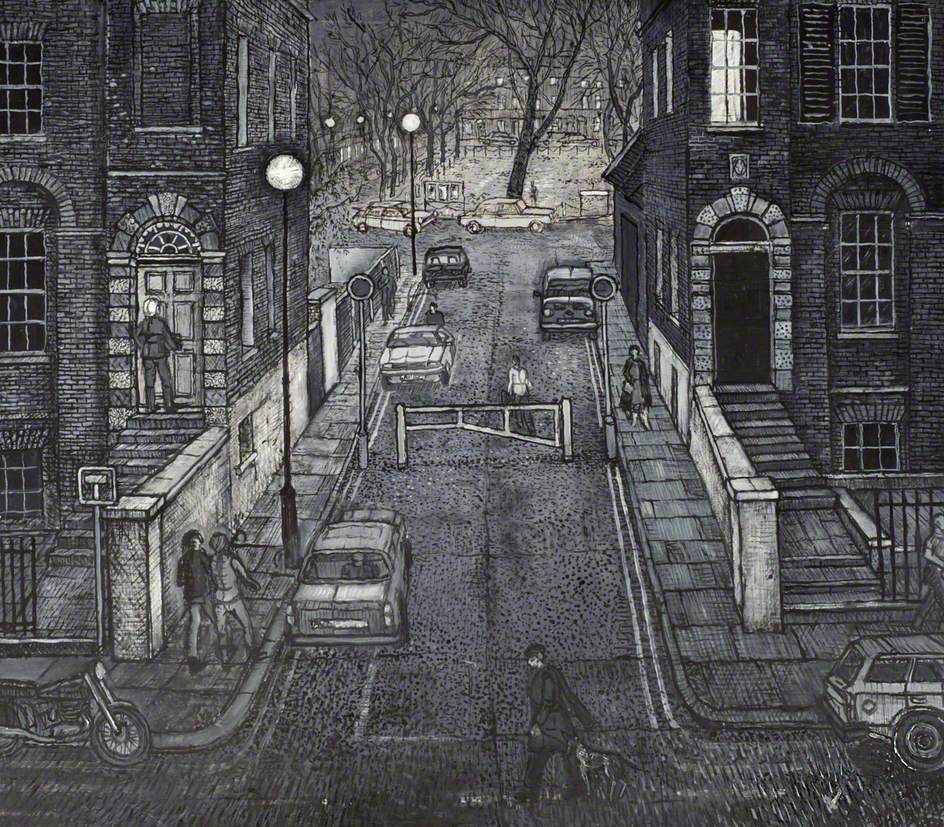
Peter Snow – Cleaver Square from Kennington Park Road (1988). From the Southwark Art Collection.

The Countess, the Living, and the Dead

There was a video featuring Adam Rickitt, who had been big in Coronation Street, in which he appeared naked. The song had been around when David had been clinging to the frayed edges of his youth. He hadn’t pulled it off. Everything went downhill afterwards. Adam Rickitt went to New Zealand to appear in a soap and was accused of stealing a block of cheese, a bottle of HP Sauce and a jar of coffee from a supermarket. David had moved out of the family home because the banks were knocking at the door.

On Sunday night, they had called at a gay bar, and David saw Adam Rickitt on the screen again. “I would gladly have sniffed his bollocks,” he told Joshua, who turned his nose up. “What the fuck is this shite?”

David recalled dancing to Adam Rickitt at Cruz 101 in Manchester. He was high on ecstasy at the time. But he’d gone to a friend’s flat afterwards and written the best chapter of a book he had never written—longhand, too. Then he had left it behind, where it ended up in a black wheelie bin.

Mancunian days. Every weekend in the North West. But he remembered little. The only memory he retained was of a cute little chicken who had taken his shirt off and started singing, “Sexy… everything about you, so sexy.”

David went home with him. The biggest shithole in Longsight, with every room knee-deep in empty Coke bottles. The bed was hidden behind a mountain of takeaway boxes. It had taught him that all that glittered was definitely not gold.

He related the story to Joshua while walking home in the rain.

“You’re too posh,” Joshua warned him. “Too many frills and high expectations.”

“But I ended up with you,” David replied.

 “Your problem is that you look too much at the past, and forget about the future.”

“But there isn’t much of that left, is there?” 

David was feeling down.

March had been a bad month. April looked bleaker.

“There are too many deaths, Joshua. Once, I went to weddings all the time. Now I go to funerals. I suppose we’re all in the same boat, because everybody dies.”

But Joshua was too young to understand and nudged him on the arm. 

David was referring specifically to their next-door neighbour, who had surrendered to the inevitable. In the square, Dorothy Jerman had been known as the ‘Countess’ and lived alone. Not many had known why she was called the Countess, but there was a suggestion that it was a nickname given to her by a former landlord at the Prince of Wales opposite.

“That’s right,” she once told David. “He was the Brixton Bomber, a former boxer, who took over in the 1960s and upset residents by installing a juke box. It attracted teenagers and the lawyers and solicitors who lived nearby wanted a quiet pub and drove him away. But he was a good chap, and called me the Countess because he wanted to get into my knickers. Little did he know that I never wore any.”

The Countess, a portrait painter, had moved here in the early sixties when Cleaver Square had been different to what it became. She shared it with her kids after a messy divorce and remained after they had grown up and left. By all accounts, she was a ‘rebel’ who famously held wild parties that spilled out into the street. 

David inherited the house next door and on most fine days, the Countess could be found sitting on the front steps, a glass of wine at hand, either reading a paperback or making conversation with anyone who passed. 

And the Countess had loved Joshua from the moment David invited him to move in with him. Two fucking artists, David had mused. Joshua would sit on the steps as she stroked his blond hair and told him stories about her life.

She claimed to have chosen Cleaver Square on the recommendation of a friend, Innes Fripp, a landscape painter and portrait artist who had taught at the nearby City and Guilds of London Art School and once had a studio in the square.

David had looked up the connection and found that it might have been true. He also discovered that the area had once been called Prince’s Square, named after two houses flanking the entrance, built for Joseph Prince by Michael Searles in the 1760s. The name was changed in 1937, a throwback to Mary Cleaver, who had owned the land in the eighteenth century.

“This is where sea captains lived,” the Countess once boasted, “but the square fell on hard times by the end of the nineteenth century and attracted old music-hall stars instead. It fell on evil days—crumbling brick façades hiding three families across three floors. During the war, the council requisitioned many of the houses for bombed-out families. The trees died, and the gardens were razed.

“South of the river was one vast slum when I arrived. When I fled Chelsea’s superficiality, the square was dilapidated, with shabby red-brick houses—homes for dockers and clerks—but every door stood open. Everybody knew everybody else. Materially, they had little, but they shared it when needed. Then the developers came, and with them came the barristers, judges, and MPs. That was when the doors shut. The young people drifted away, saying the square was not worth living in—it was dead. That is how we ended up with John Major.”

The houses went for millions now, but the Countess had not been tempted to sell. She could have died a millionaire, but preferred to live with her memories and pry into the lives of people she did not know… and who might have looked down on her, had it not been for her cheek and charisma.

When David arrived in the square, the Countess welcomed him as somebody who lived on her level. Shortly before he died, David’s uncle, William, had kicked out the previous tenants with a view to selling it. It was vacant when David discovered that the property now belonged to him.

But now the old woman had died.

It was good fortune that the Countess had resolutely refused to lock her front door. Joshua had gone looking for her and found the body slumped in a fireside armchair: a flute of flat champagne beside her and a dog-eared copy of Valley of the Dolls in her lap. He had panicked and gone running round to David, with no idea what to do.

Only the day before, David had made an unnerving discovery. The Countess had told him that he was not an Aries after all, but a Taurus. It had taken sixty-two years to learn the truth. But David, who normally paid little heed to astrology, realised that he preferred being a ram to a bull—it was better for a gay man, he suggested.

“A cusp baby,” the Countess commiserated, “and if it helps, you have adopted elements from each star sign.

“You do love a grand romance—you throw yourself into it, heart first, and breathe your partner in as though they were oxygen. But you bruise easily in love, my dear, and you’re far too quick to feel taken for granted. You’ve a weakness for strays as well—people from all walks, the straighter the better.”

“I do have a weakness for working-class boys,” David agreed. “And Joshua comes from a relatively poor family in Thamesmead.”

“Really?” said the Countess. “I had no idea. He speaks with such charm and dignity—and is incredibly handsome. And Thamesmead is perfectly lovely in the summer.”

“I met him when he was only twenty-one and working at Morrisons. For some reason, I was walking around the lake and came across him standing there, looking at the birds on the water. I found out later that he didn’t know one bird from another—except when we were talking about cocks. He had been cruising for a shag, which he didn’t get, but we talked. I pointed out that Thamesmead had been the setting for A Beautiful Thing, which turned out to be his favourite film. Eighteen years later, here we are.”

The Countess had not finished.

“You may have secret love affairs or fall in love with someone who is quite unavailable to you.”

“That’s not true.” David had been a bit too quick to reply, and the Countess raised her eyes, because she had not, for one minute, believed him.

David was thinking about Miles, his provincial friend, whom he had first met when the boy was eighteen. Putting Joshua aside, he had spent the last eight years trying to seduce Miles, but had failed at every attempt. Unknown to Joshua, David had once fallen in love with Miles. It was never reciprocated, but that feeling never changed. Miles was only interested if you happened to be a good-looking French or Italian boy—certainly not somebody like David.

“Are we referring to Freddie, dear?” the Countess asked.

Freddie lived in Hammersmith and was the same age as Miles, but his eccentricities annoyed David—not least his tendency to point out dead people whom he claimed to see at the most inappropriate times. Once, David had slept with him, and Freddie had told him that there was an old woman sitting knitting at the bottom of the bed. He had also ingratiated himself with the Countess because he claimed that a family friend had used his name for a character in The Archers. That had gone down extremely well, because she listened to the programme without fail.

“The last time that I saw Freddie,” she laughed, “he suggested that there was the presence of two dead women—Christine and Hannah—who once ran a brothel here. I talk to them all the time now, and suggest that far worse things have happened in my time.”

“It is definitely not Freddie,” said David, “and I would appreciate it if you did not repeat that to Joshua.”

“Because Venus represents attraction, and the twelfth house is associated with the feet,” she said, “your feet may be especially attractive—and have erogenous zones!”

He had turned his nose up.

David and Joshua headed home and passed the Countess’s house, which stood in darkness.

“I wonder what will happen to the house,” Joshua speculated.

“Well,” said David, “she must have had a will, and I suppose everything will go to her family.”

They were both aware that the Countess had fallen out with her three children, and only one of her grandsons, Owen, ever visited her. The two of them had known him as a young teenager and knew that he did much of the maintenance work around the house, though there were difficulties the Countess had often fretted over.

“If Owen gets everything,” Joshua mused, “it could prove interesting.”

David thought that Owen had grown into a striking young man, but conveniently overlooked that he suffered from a severe case of ADHD, which made him prone to violent bouts of temper.

“He would most likely sell it and become fabulously wealthy,” he suggested.

David knew that the Countess was of sound mind and that she had deliberately led her family to believe that she suffered from delusions—among them that she saw thousands of long-tailed birds clinging to a tree in her back garden, that the other trees were covered in hundreds of cats, and that dead dogs with fiery eyes lived beneath the bushes.

“At least it stops them visiting a crazy woman,” she had laughed.

“Whoever it is left to will find it contested,” David added, “because they will say that the Countess was of unsound mind when she made it.”

“Maybe she was deranged,” Joshua decided. “She often claimed that all sorts of famous people visited her at one time or another. She once told me a magnificent story about Vivienne Westwood, David Bowie, and Marc Bolan coming to tea—and that they ended up bouncing along the street on great big orange balls.”

Space hoppers,” David implied. “I had one when I was a small child in the 1970s. Did you know that Russell Harty was also a personal friend of the Countess?”

David knew that Joshua would not know who Russell Harty was.

“What was he famous for?”

“Sexual escapades with much younger men,” David replied, “and for hosting chat shows on television.”

David had met him once, when he had still been young enough to turn heads in the street. Harty had just returned from Paris, where he had lunched with Nureyev and Charlotte Rampling at the British Embassy. He made small talk, and David was disappointed that this brief encounter on Greek Street had not led to anything more. Still, it had been enough for him to brag about at Comptons.

A few months later, Harty was dead, having suffered liver failure—a result of hepatitis.

“The Countess knew everyone, or said she did. And now there’s no one left to confirm it.”

“That’s the problem,” said Joshua. “Did these encounters actually happen? Was she connected, or just a brilliant bullshitter? I often wonder the same about some of your stories.”

That last comment hurt David.

“Everything I tell you is true.”

“But nothing ever seems to happen to me. The Countess knew famous people. And you’ve done things—wild things—that make my existence seem ordinary.”

“The older you get, what once seemed ordinary suddenly becomes fascinating. We all look back and realise that we did something special.”

The funeral was due to take place the following Friday. The cortège would leave Cleaver Square at lunchtime and travel to Lambeth Crematorium, where a short service would take place before she was handed over to the devil.

Joshua unlocked the door and turned to David. “Do you think we’ll see anybody famous at the funeral?”

“Probably not,” David replied.

There’s No One Left Who Wanted Me Anymore

Harry Oldham is writing a novel based on his criminal and sordid past. To do so, he has returned to live at Park Hill, where he grew up, and the place that he once left behind. That was then and this is now, in which the old world collides with the new. (Parts 1 to 22 are available to read in the menu)

Perfectly Hard and Glamorous – Part 23

March 1985

They played You Spin Me Round (Like a Record) on the radio. We used it in our act, and every time I heard it, it cut deep—a reminder that everything had gone tits-up.

I had wanted that night at the big house to end things. It had—but not as I’d imagined.

My body ached, inside and out. The lesions across my back, my legs, my arse burned like hell.

The night after the police bust, I tried phoning Paolo. No answer. I needed to see him. I wanted to hold him, to tell him everything would be alright, even though I didn’t believe it myself.

Over the next few days, I made call after call. Nothing. He never rang back. I began to wonder if he wanted rid of me—if he blamed me for it all. If he did, I needed him to understand that I was a victim too.

I couldn’t face going out. I stayed in, watching television, drifting through the day.

“Harry, what the hell’s up with you?”

Dad came home from work. Mum had already told him I’d been moping around the flat.

“Where are Andy and Jack? Why aren’t you out with them? I know you get up to no good, but even that’s better than hanging round here under your mum’s feet.”

I shrugged. Said nothing. They’d find out soon enough.

On the sixth day, Mum went into town. I trashed my bedroom. When she got back, I was gone, leaving chaos behind.

I’d decided to go to Paolo’s house.

I knocked and waited. Movement inside. The door opened to a woman wiping her hands on a towel—Paolo’s mother. She looked exhausted.

“Is Paolo in?”

“Who wants to know?”

“Harry. Can you tell him I’m here?”

She tried to close the door. I stopped it.

“Please,” I said. “I need to speak to him.”

She looked me up and down, eyes wet.

“I just need to know he’s alright.”

“Paolo has told us everything,” she said, her Italian accent hardening her words. “The last thing we need is you turning up here.”

I waited, hoping he’d appear, that he’d tell her it was fine. The house stayed silent.

“My son’s life is ruined,” she said. “He is a finocchio. He will be mocked, blackmailed… and in time, he will die a lonely death.”

“That won’t happen.”

She held rosary beads tight in her hand.

“My beautiful Catholic boy has danced with the devil. If anyone could have saved him, it was you. But you danced with him too. If you had been strong, this shame would not have happened.” She paused. “He trusts you. He thinks he is in love with you.”

“I love him too.”

“It is not love,” she snapped. “It is sodomy. Against the will of God.”

It landed hard.

“Paolo is not here. We sent him to his Aunt Luisa in London. He must return to answer police questions. After that, he will go to relatives in Montescaglioso.”

I felt myself breaking.

“Will you tell him I came?”

“He would never forgive me if I didn’t,” she said, dabbing her eyes. “He will be back Saturday. His father will be working. Ring then. Say goodbye—and promise me you will never contact each other again.”

I nodded. I had no intention of keeping it.

*****

I saw Andy and Jack before they saw me.

They were by the steps outside our block. Andy leaned against the wall in jeans and a white Levi T-shirt. Jack sat on the bottom step in black shorts and a Sheffield Wednesday top, staring at something on his knee.

They looked up as I approached.

I stopped in front of them. Waited.

Then I saw it on the wall behind them:

HARRY IS A QWEER

“Bum bandit,” Andy said, not even looking at me. Jack glanced around, pretending it wasn’t aimed at anyone.

“I want to explain,” I said.

Andy shoved his hands in his pockets and turned to face me. Jack kept his head down.

“What I can’t get over,” Andy said, “is knowing someone for years, then finding out they’ve been living a lie.”

“I never lied.”

“But you turned out queer. What’s that supposed to mean for us? All those years—were you fancying us?”

It seemed every bloke thought that.

“Maybe I didn’t know at first. But don’t flatter yourself. Not every ‘queer’ thinks you’re a catch. I don’t see girls throwing themselves at you either.”

“You’re a bent cunt!”

“Do you want to hear him out?” Jack asked, tentative.

“Don’t bother,” Andy snapped.

“At first I was blackmailed by Frank Smith,” I said. “Then I got pulled into something bigger.” I told them everything.

Andy spat.

“So, it’s true?” he said, almost hopeful it wasn’t.

“Yes. I made good money doing it.”

“But you never told us,” Jack said.

“How could I? What would you have said? Why didn’t I walk away? Because once I started… I liked it.”

“Where does that curly-haired little cunt fit in?” Andy asked. “You denied everything.”

“Paolo? He was in the same position. We got close.”

“Is he your boyfriend?” Jack asked.

No one had ever asked me that.

“Yes,” I muttered. “I suppose he is.”

Silence.

Andy lit a cigarette, offered one to Jack. Not to me.

“Show him,” Jack said.

Andy pulled out a torn front page of The Star.

POLICE SMASH GAY SEX RING

My stomach dropped.

“Want me to read it?” Andy asked.

I nodded.

“It says this is the second operation targeting fucking queers. Loads arrested. My mate Harry—turns out he’s one of them. Charged as a bender.”

Not exactly true—but close enough.

“Your mum and dad will see it,” Jack added.

Andy wasn’t finished.

“We’re done, Harry. You’re not one of us. Not anymore.”

“I want to sort this out—”

“Fuck that.”

I turned to Jack. “Is that what you want?”

He met my eyes. Said nothing.

That was answer enough.

I offered my hand to Andy. Geisha Boys never shook hands.

“Don’t want to catch anything,” he said. “I don’t want AIDS.”

I offered it to Jack. He took it. Held it tighter than I expected.

Then I left them.

“Seeing your boyfriend?” Jack called.

“I’m ringing him Saturday.”

Too much information.

“Harry is a queer!” Andy shouted after me.

His handiwork was on the wall.

*****

In the 1980s, everyone bought The Star. Ritual. Dad picked it up near work, read the football first, then the headlines on the bus home.

They were waiting.

Mum crying. Dad with his head in his hands.

I knew.

“Everything alright?” I asked.

“A few days,” Dad said. “That’s all you’ve got. Pack your things and get out. We’re ashamed of you. We don’t want to know you.”

His voice faltered.

“I won’t be able to show my face. My son’s a Nancy boy.”

*****

Saturday afternoon.

I rang Paolo. His mother answered.

“He’s not here. An old schoolfriend called. He went out for the day.”

“Did you tell him I’d ring?”

“I did,” she said coolly. “It seems he doesn’t want to speak to you.”

I tried again later. Still nothing.

“Tell him to call me.”

“I’ll tell him,” she said, “but he seems more interested in his other friends now.”

“What’s that supposed to mean?”

“It means he’s moving on. Someone like you isn’t what he wants anymore.”

I slammed the phone down.

*****

There was no reprieve from my parents. I delayed packing, hoping they’d calm down.

They didn’t.

On Monday, Dad gave me an ultimatum.

“When I get home Wednesday, you’d better be gone. If not, I’ll throw you out.”

I stood on the balcony, looking over the city. Below, Andy and Jack laughed as they walked down the hill.

Adam came up behind me, wrapping his arms around me.

“What’s going on, Harry? I don’t like it.”

“Me neither,” I said. “But I’m stuffed.”

*****

Tuesday evening.

I packed a few clothes into my Adidas bag. Counted the money I’d made. Hid it at the bottom.

Tomorrow I’d go to June’s.

My parents’ voices drifted from the other room.

I wished I hadn’t turned out such a disappointment. Then again, I always had been. Trouble from the start. Crime. Violence. And now this.

Fuck them, I thought. Fuck all of them. I was still a Geisha Boy.

I went into the lounge, turned on the TV. They left the room.

Basketball on Channel 4. I barely watched.

I picked up The Star.

A body found at a derelict factory in Attercliffe. I recognised the place—we’d smashed it up once. I flicked through, checking for more about the ‘gay sex ring’.

Nothing.

That night I went to Paolo’s street. Waited at a bus stop, hoping he’d appear.

Hours passed.

He never did.

I went home for the last time.

Voices inside. Not just my parents.

They stopped when I slammed the door.

“Harry, come here.”

Two uniformed officers sat on the sofa. Mum and Dad in armchairs. By the window—Ian. The lanky copper I despised.

I thought they’d come to arrest me again.

“Fuck me. What now?”

“It’s a delicate matter,” Ian said. “Sit down.”

I squeezed between the officers.

“When did you last see Paolo Moretti?”

“Not since the arrest. And he won’t speak to me.”

“And since then?”

A cold grip of panic.

“What do you mean? Has something happened?”

“Workmen found his body this morning. 

“No,” I said. “No, that’s not—”

“Found him at the bottom of an old lift shaft.”

Everything stopped.

“He jumped,” Ian added. “Couldn’t handle the shame. Mess everywhere. No note.”

I stood, almost collapsing. One of the officers caught me.

“Goes to show,” Ian laughed, “another homosexual bites the dust.”

“YOU FUCKING BASTARD!”

*****

Early Wednesday morning.

Dark. Empty road. A sign: London – 80 miles.

I didn’t remember how far I’d come.

After the police left, nothing was said.

I lay on my bed and cried into the pillow. Not since infant school.

I needed Andy and Jack—but they were gone.

More than anything, I needed Paolo. I thought of his body beside mine—warm, alive—and it almost broke me.

Gone.

Forever.

I thought about jumping from the balcony. Joining him.

Sometime after midnight, I took my bag and walked out. Said nothing. Not to my parents. Not even to Adam.

A Renault 5 sat near the flats.

I broke in. Hotwired it. Jack had taught me well.

I drove onto the Parkway. Then the M1. Straight towards London.

Fuck them all.

Cruel is the Gospel That Sets Us All Free

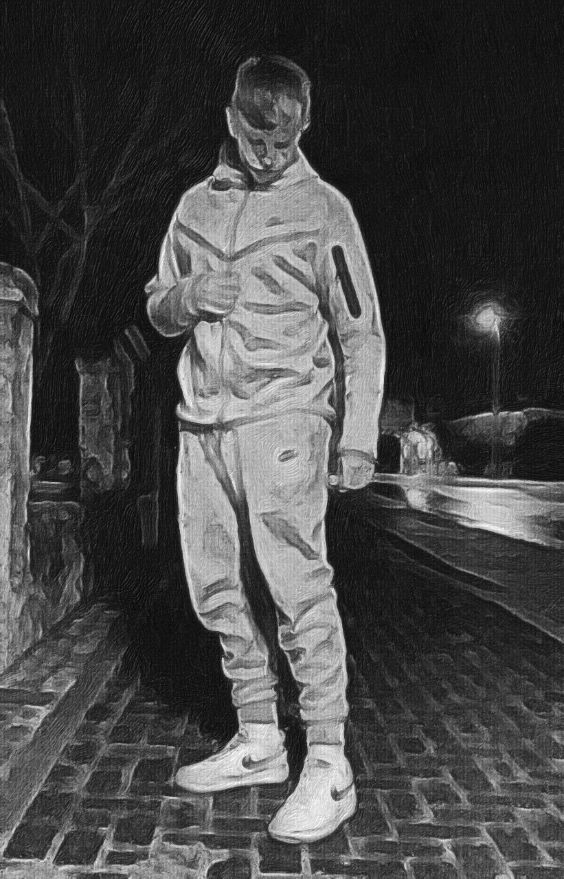
Harry – Charlie Marseille (2026)

Harry Oldham is writing a novel based on his criminal and sordid past. To do so, he has returned to live at Park Hill, where he grew up, and the place that he once left behind. That was then and this is now, in which the old world collides with the new. (Parts 1 to 21 are available to read in the menu)

Perfectly Hard and Glamorous – Part 22

March 1985

If Billy Mason knew everything that happened in Sheffield, then Frank Smith knew even more. That was frightening.

“Now is not the time to pull out.”

“I mean it, Frank,” I said. “We’re done. It doesn’t matter what you say or do. It’s too late.”

We sat around June’s kitchen table with mugs of tea. Frank and June faced us while a lanky CID copper loitered in the doorway. I drummed my fingers on the plastic tablecloth and waited.

Frank picked up a custard cream and nibbled it.

“Alright,” he said. “Billy’s cottoned onto your deviances, but that doesn’t change our arrangement.”

“Except Billy knows we’ve been in contact,” I said. “And it won’t be long before the Rufus Gang know too.”

Frank lit a John Player Special and slid the packet across the table. Paolo had noticed that Frank always smoked when he was thinking. We sat in silence.

June looked sympathetic, but the crease in her forehead told me we weren’t going to like what came next. Paolo bit his lip and rested a nervous hand on my leg.

Frank finally spoke.

“All I ask is that you work tomorrow night. That’s it. After that, it’s over.”

“No,” I said immediately. “We’re not doing it.”

“Well,” he replied calmly, “things might look bleak for you, Harry. Less so for Paolo. Do as I ask and you both walk away.”

He paused.

“But…”

“There’s always a fucking but, Frank.”

“If you refuse, I’ll have no choice but to tell Paolo’s parents.”

“You bastard.”

He shrugged. “It’s not too much to ask.”

Paolo’s hand tightened painfully around my leg. His greatest fear was that his parents would discover the truth about him. Frank knew it.

Blackmail again.

We both understood there was no real choice.

“Just do your stuff and give me the details afterwards,” Frank said. “Names. What they got up to.”

The evidence he’d gathered must have filled a dozen notebooks, yet nothing ever seemed to happen.

“Mind you,” he added with a smirk, “I’m not sure what you’re going to tell the Rufus Gang. Looks like you’ll be going to ground when they come after you. Fuck me, Harry—everyone’s going to have it in for you.”

I already knew that.

“The thing is,” he went on, “the gaffers are starting to lean on me. Especially with this AIDS business kicking off. I hope you’ve both been careful.”

We hadn’t. We’d never even thought about it.

“Oh, my poor loves!” June said softly. “You must be careful. Best you stop now.”

“Fucking queers. Hope it wipes the lot of you out.”

The lanky copper had spoken for the first time.

I’d always assumed my early death would come from a fight or some stupid mistake. AIDS felt distant, unreal—something that happened to other people.

“We have to go,” Frank said, standing.

Paolo spoke quietly.

“Isn’t there something you want to say to us, Frank?”

Frank paused at the door.

“Yeah,” he said. “You’re right. The fucking miners’ strike is over.”

Then he walked out with the other copper.

*****

The waiting’s over, in shock they stare and cue fanfare

The house stood on the edge of the city overlooking the moors. More mansion than house. Flash cars lined the courtyard.

Someone said it had once belonged to a steel magnate. Now it was owned by a man building a retail empire.

Our final gig was going to be the most extravagant yet.

A DJ had set up beneath a row of spotlights. Frankie Goes to Hollywood blasted through the room while beautiful young boys in skimpy shorts carried trays of drinks among the well-heeled guests.

“You might find yourselves a rich sugar daddy tonight.”

Our minder Kenny surveyed the room with amusement. He was built like a tank and clearly capable of handling trouble.

We were taken into an adjoining room where two blond lads were already undressing.

“Are you the Sheffield boys?” one asked.

The rule of Park Hill was not to answer straight away. I simply nodded.

“Mikey,” he said, offering his hand. “This is Joey. We’re Manchester boys.”

It was rare to see lads our age.

I dropped my battered Adidas bag on the sofa.

Paolo wandered over to a silver statuette of a naked boy and examined it closely—his usual trick when he didn’t want to talk to strangers.

“Been doing this long?” Joey asked.

“Too long,” I said. “But this is the last time.”

Mikey and Joey exchanged looks.

“Good luck with that,” Mikey said. “Nobody walks away from Ronnie Rufus.”

We’d heard the stories: ruthless money-making, nobody crossing them.

The DJ burst into the room.

“Hi-energy tonight,” he announced. “Same format, no set list. I’m meant to wind them up until they turn into animals. Fifteen minutes.”

I cracked open the door and peered through.

The room was packed.

Joey stood behind me, watching too.

“See that bloke?” he whispered, pointing to a lonely figure. “Used to be straight.”

“Did he?”

“Apparently, he and his mates tried a Ouija board one night. Next thing he’s a raging homosexual.”

I laughed.

“He reckons a ghost penetrated him and he liked it.”

“Let’s hope the ghost leaves me alone.”

Joey pointed again.

“Recognise the guy in the flowery shirt?”

I shook my head.

“That’s Bobby Blue. TV chat show host. But the rest—professors, teachers, vicars, company bosses, yuppies with too much money.”

I was a council-estate lad. It was strange to think men like this had come to watch four working-class boys behave badly.

Mikey and Joey opened the show.

We watched through the crack in the door as they danced, warming the crowd.

“What are we going to do?” Paolo whispered.

“Nothing else for it,” I said. “We go on like always.”

“And then it’s finished?”

“Yeah. We leave tonight and cut all contact.”

Paolo slipped his arms around me.

“Do you think they’ll leave us alone?”

I already knew the answer.

“No,” I said. “We’ll probably have to disappear for a while.”

Our set was meant to be the centrepiece.

We followed Mikey and Joey onto the floor. Afterwards they’d have time to recover—cigarettes, drinks, a breather—before returning.

We wouldn’t.

Until then we danced.

We touched each other, teased the crowd, played to the music. By the time Evelyn Thomas hit her pounding climax I was inside Paolo, holding back so it looked real.

The real thing came later—for anyone willing to pay twenty quid.

The music stopped abruptly.

“Five minutes each!” the DJ shouted. “Hand your money to the little chicken and form a queue.”

The lights dropped. Music roared back.

Spotlights fixed on us.

For a moment nobody moved.

Then one man stepped forward and handed over a twenty-pound note.

Others followed.

After that everything dissolved.

Hands dragged me in every direction. Bodies pressed against me. I was twisted, pinned, shoved onto a table.

Pain spread through my back and legs.

Across the room I saw the others struggling too. Paolo was taking the worst of it. His slim frame was no match for the men pulling at him. Tears streamed down his face.

Then something cracked across my back.

A whip.

Pain exploded through me.

Again.

Cheers from the crowd.

Again—across my back, then my arse.

Kenny shouted for them to stop, trying to pull people away.

Too late.

The room spun.

I saw Paolo—wide-eyed, terrified—shouting my name.

Then blue lights flashed through the windows.

Sirens screamed closer.

And everything went black.

*****

Because these stardust memories fail to please

“He needs to go to hospital,” the ambulance man said.

I came round inside the ambulance.

“Nah,” said the lanky copper from June’s house. “He’s coming with us.”

“But he needs treatment.”

The copper ignored him.

“Where’s Frank?” I asked.

“Two weeks in Torremolinos.”

Of course he was.

The copper—who said his name was Ian—threw my clothes at me.

“Get dressed.”

The ambulance man handed me water.

“Where are we going?” I asked.

“Back to the nick.”

“And Paolo?”

“Locked up with the rest.”

Frank had sold us out. The moment he realised we were quitting; he’d arranged the raid.

Once dressed, I was handcuffed and pushed into a police car.

At the station the custody sergeant looked up.

“And Harry’s here for what reason?”

Ian recited the charges.

“Contravening the Sexual Offences Act 1956. Gross indecency. Public decency offences. Age of consent violations. Assault occasioning actual bodily harm. Living on the earnings of prostitution.”

The sergeant raised his eyebrows.

“Cell two.”

Ian dragged me down the corridor and kicked me hard before throwing me inside.

That was when I knew I’d reached the bottom.

My body hurt, but the shame hurt more.

I had probably lost my friends, my family, and any future I thought I had.

And prison still waited.

The cell held a wooden platform and a filthy toilet.

A blanket was tossed in before the door slammed shut.

The hatch opened seconds later. Ian looked in.

“You lot fucking disgust me.”

Then it slammed shut again.

I hardly slept.

The next morning, I was taken to the Magistrates’ Court, where a duty solicitor listened as I told him everything.

“You must plead not guilty,” he said. “When this goes to Crown Court we’ll argue entrapment. A good barrister will try to shame the police.”

He paused.

“But I must warn you—cases involving homosexuals aren’t going well now. There’s mass hysteria about AIDS.”

I noticed he had called me a homosexual.

I followed his advice and was released on police bail.

Walking hurt. I considered a taxi until I remembered my money had been in the bag left behind the night before.

The police station was miles out of town.

So, I walked home.

It took two hours.

But a Heaviness Lingers in his Limbs

Paolo – Charlie Marseille (2026)

Harry Oldham is writing a novel based on his criminal and sordid past. To do so, he has returned to live at Park Hill, where he grew up, and the place that he once left behind. That was then and this is now, in which the old world collides with the new. (Parts 1 to 20 are available to read in the menu)

Perfectly Hard and Glamorous – Part 21

March 1985

Ice cream was the reason that Paolo came to Sheffield. He was born at Montescaglioso in the Province of Matera; his father from an ice-cream making family and his mother the only daughter of a farmer. Like a lot of Italian families, they believed that opportunities existed elsewhere. His father, Giovanni, decided that Sheffield might be the best place but perhaps hadn’t realised that the city already had generations of Italian ice-cream sellers. Paolo was two years old when the family settled in England. Being around Italian parents meant that he still had his native accent.

“I wasn’t sure when it was that I realised I preferred boys to girls,” Paolo told me. “But one thing was certain and that was that I must never tell my mother and father. If news ever got back to Italy, then I would become an outcast. Gay boys and Catholicism are frowned upon even though they are known for practising in secret” 

We were taking advantage that his parents had returned to Montescaglioso for a holiday. Paolo had wanted me to stay with him for the two week duration and I had been only too willing. We were in his narrow bed facing the crucifix that hung by a nail on the wall. His sheets were crisp and clean and smelt of lavender that showed that his mother took her household chores seriously. Better than my own mother did. We were both naked; Paolo faced the door as though somebody might walk in; I pressed up against his glowing body and licked the tiny black curls on his neck. His body throbbed with pleasure.

“I suppose that we’re both in a similar position,” I suggested. “Can you imagine how people would react if they found out that I was a bum bandit?”

“And a good one at that,” he moaned. “We do what we love.”

The situation was irrational. We had somehow managed to separate our nightly debaucheries from the moments when we were alone together. Our employment with the Rufus Gang meant that I was expected to deflower Paolo in front of an audience almost every night. Hordes of lecherous men cheered as we went through the motions. But these exhibitions had become mechanical, devoid of feeling. Our love was not something meant to be shared with strangers. Our resentment for the crowd only deepened when they demanded to do the same to each of us in turn.

Everything changed when we were alone. Then we could show our love as it was meant to be. But such opportunities were rare. We both still lived at home, and the chance to share a bed was frustratingly uncommon. Most of the time we met in a secluded corner of the park, sitting close together until darkness fell. Once night came, we could never seem to get enough of each other.

“It was always you that I wanted,” Paolo said.

“You only liked the idea of a bad boy,” I replied. “Someone who was always getting into trouble. Someone you thought you’d never stand a chance of having.”

“But I did, didn’t I?”

“Yeah,” I said. “You did. In the end.”

“When did you realise that you loved me?”

I thought about the conversation at June’s kitchen table. 

“It was the moment that June told me that I had fallen in love. Before that I’d resisted any suggestion and thought that I liked girls because they all seemed to fall in love with me. Not Andy. Not Jack. Always me. But I was bored with it all. The thought of sex bored me. But then something strange happened. And then I remembered the time when Frank Smith made us kiss each other on that bench. Something snapped that night. I’d kissed a guy and something inside me stirred. I didn’t know what it was and struggled to understand it.”

Paolo turned and kissed me on the lips.

“Any regrets?”

“What do you think?”

“Ah, that is a good answer. You are my man, Harry.”

I squeezed him hard. 

“I’ve been thinking,” he said. “Maybe we should go on holiday. I’d like to take you to my hometown in Italy.”

The suggestion caught me off guard.

“Is that a good idea?”

“Why not? We’ve made plenty of money. We should spend some of it. Go somewhere we don’t have to keep looking over our shoulders. And you’ll like Italy.”

“I’m not sure,” I said. “Where would we stay? What would your family think?”

“We could book a hotel.”

Even so, I had my reservations. The farthest I’d ever travelled was Ingoldmells with the boys, and that had ended badly: a fight with a group of lads from Nottingham and a night in a Lincolnshire police cell. The thought of going abroad unnerved me. There was also the small matter that I didn’t have a passport.

But what would you tell your parents?” I asked. 

“Harry, we need to get away and spend some time on our own.”

Another problem occurred to me then. What would I tell Andy and Jack? We’d always done everything together. If they heard I was going on holiday, they’d expect to come along. And I couldn’t tell them I was travelling with Paolo.

As far as they were concerned, Paolo didn’t exist.

The thought hung between us like an elephant in the room.

“I’ll think about it,” I told him, before leaning over and licking his ear.

*****

For weeks afterwards I wrestled with the problem. I knew that, sooner or later, the day of reckoning would come. I just hadn’t expected it to arrive the way it did.

We were playing pool at Penny Black. I was lining up a shot when I saw Billy Mason walk in with something tucked under his arm.

“Fuck,” I muttered.

I fluffed the shot and passed the cue to Jack.

“Don’t look now, boys,” I said quietly, “but look who’s just walked in.”

They both turned immediately.

“Who the fuck are we looking at?” Andy asked.

Then it dawned on me: they only knew Billy Mason by reputation, not by sight.

“I think we should leave,” I said.

Andy set his pint down on the edge of the pool table.

“We’re not going anywhere.”

Jack sank his shot and wandered over to sit down, but I was already planning a hasty exit. Billy seemed to know half the people in the place and spent a few minutes chatting to them. I hoped he hadn’t noticed us.

Then, the next minute, he came walking over—smiling, easy, friendly.

In our world, when a man walked up like that, you braced yourself for the worst.

Andy rolled his shoulders and clenched his fists. Jack got to his feet and began prowling around the table. I tightened my grip on the cue—something that could pass for a weapon if it came to it.

Three against one. Easy.

Except that every other cunt in the place would be on Billy’s side.

“Boys, boys, boys,” he said lightly. “Easy on it.”

Billy gave me a quick nod, but I didn’t return it.

“Harry,” he laughed. “Aren’t you going to introduce me to your friends?”

I said nothing.

“Let me guess,” he went on. “This must be Andy and Jack. I’ve heard plenty about you both, though we haven’t had the pleasure.”

“Who the fuck are you?” Jack asked.

“Billy Mason,” he said. “I thought Harry might have mentioned that he and I recently became acquainted.”

Andy and Jack turned to look at me, puzzled.

“I did a nice little number on him a few weeks ago,” Billy added cheerfully. “Call it payback for the trouble you lads caused my girl.”

Andy seemed to grow an inch or two and stepped forward.

“Don’t try anything,” Billy warned calmly. “There are men in here. Not boys who only think they are.”

“Get the fuck out of our faces,” Andy snapped. His expression was dark—partly because Billy Mason and his lot could wreck us if they wanted to, and partly, perhaps, because there were things I hadn’t told him.

Billy only smiled.

“I’m sure you know I’m a big man in Sheffield,” he said. “I don’t take kindly to people messing with me.”

“That robbery was ages ago,” Jack said.

Billy’s smile faded.

“Oh yes,” he said quietly. “It was. But in my line of work, it pays to remember the people who’ve caused you trouble.” He paused, then shrugged. “Still, I’m not here to settle old scores. Far from it. Let bygones be bygones.”

I’d been so caught up in the moment that I hadn’t noticed what he’d been carrying under his arm. Then he dropped my black Adidas bag onto the table.

“I’m only returning lost property,” he said casually. “I believe this belongs to you, Harry.”

I froze.

“Shall we check that nothing’s missing?”

I lunged for it, but Billy was quicker.

“Oh no,” he said brightly. “I insist we make sure.”

Before I could stop him, he tipped the bag over and began emptying the contents across the table. When he’d finished, he held it upside down to show it was empty, then let it fall to the floor.

My mind was racing. Everything was spread out in front of us. I thought about walking away, but I knew that would only raise more questions.

Andy and Jack edged closer to Billy, though not in any threatening way. They were too busy staring at what lay on the table.

Several tubes of KY jelly—some half used, some still sealed. Two bottles of baby oil. A couple of pairs of clean boxer shorts, and one dirty pair. A grubby T-shirt. A small bottle of poppers.

And a cock ring.

Billy looked straight at me.

“What a curious collection, Harry.”

Now it was Andy and Jack’s turn to look at me. Neither of them spoke. Andy frowned, his brow creasing with confusion. Jack held my gaze for a few seconds, then looked down at the floor.

Billy looked smug.

“Isn’t it funny,” he said to the others, “the things we don’t know about our friends? If I didn’t know better, I might think these belonged to someone who’s a bit of a woofter.”

“Fuck you, Billy,” I shot back. “You’ve planted those to make me look bad. I swear I’ll get my own back.”

It sounded plausible enough, and I thought I might salvage something from the wreckage.

“Yeah, that’s right,” Andy said quickly. “You’d do anything to settle a score. Harry’s not a bum-bandit. Not even close. I suggest you piss off now, because you’re starting to get on my nerves.”

He picked up his pint, drained it in one go, then held the empty glass loosely in his hand.

“Leave,” Jack said, taking the cue from me. He gripped it by the thin end, ready to swing.

“Thought you might say that,” said Billy calmly. “But before I go, there’s something else you ought to know.”

I fixed him with a stare, daring him to say another word.

“You see,” he continued, “there are other things you don’t know about Harry. Me? I know everything. I’ve got eyes and ears everywhere.”

“Go on then,” Andy said.

“Well, for starters, Harry’s in cahoots with a copper. Lucky for you, really. Thanks to him you only got a slap on the wrist for that robbery.”

“And?”

Billy smiled.

“The next bit’s a little delicate, isn’t it, Harry? I’m guessing he hasn’t told you what he gets up to in other people’s houses.” He blew me a kiss. “Handsome Harry’s quite the favourite with the blokes.”

He gestured lazily at the things spread across the table.

“And I suppose all this rather proves the point, doesn’t it?”

Andy and Jack said nothing.

“You’re a fat bastard, Billy,” I said.

By then I didn’t care if he beat the shit out of me. He’d already done enough damage. Getting knocked unconscious almost seemed like the better option. All I could think was: why me?

“I’ll be off then, boys.”

Billy turned as if to leave, then paused.

“Oh—nearly forgot. How’s your Italian boyfriend, Harry?”

Andy smashed the empty glass down on the pool table.

“So long, fellas,” Billy called over his shoulder. “And watch your arses while Harry’s around.”

*****

My head was resting in Paolo’s lap, the tip of his cock pressing against the side of my neck. He stroked my hair gently, his delicate fingers tracing the old scars that ran across my face.

“Andy and Jack went to the bar and bought themselves drinks. Not for me.

“While they sat there staring, I gathered everything from the table and stuffed it back into the bag. That was the worst part of it all—the silence. Not one fucking word.

“In the end I left them sitting in the Penny Black and came straight here.”

“Povero ragazzo mio,” he murmured softly. “Ti amo.”

I didn’t understand but it had a soothing effect.

I’d disturbed Paolo on one of the few nights that we weren’t working. The Golden Girls played out in front of us. He’d turned the sound down low. He drank strong coffee from a tiny cup and offered me some. It tasted vile but I wasn’t Italian.

“I’m finished, Paolo. I’ll never be able to show my face again and I’ve probably lost my two best friends.”

He made shushing sounds.

“And now it’s got to stop.”

“What do you mean?” Paolo asked with concern.

“I’m going to tell Frank that we’re not doing it anymore. That shit has cost me everything.”

“But if we hadn’t done so, we would never have met.”

“There is that, but we have each other now. Honestly, Paolo, we’re in serious shit and we need to get out. We can go and live in Italy. We’ll get jobs. We’ll build new lives.”

Paolo didn’t respond. He was probably thinking the same as I was. It was never going to happen. But I had to think of somewhere that was as far away as possible.

The telephone rang.

Paolo got up to answer it. 

“Pronto.” It appeared that anybody who rang here was going to be Italian. But then Paolo started speaking in English. “When? Where? I shall tell him. Arrivederci.”

“It was Frank,” he said. “He is looking for you and wants us to go to June’s house.”

When the Past Came Back as Tom

Harry Oldham is writing a novel based on his criminal and sordid past. To do so, he has returned to live at Park Hill, where he grew up, and the place that he once left behind. That was then and this is now, in which the old world collides with the new. (Parts 1 to 19 are available to read in the menu)

Perfectly Hard and Glamorous – Part 20

March 2025
Do you ever look at someone and feel certain they remind you of somebody else? The maddening part is not knowing who.

It happened to me last night.

Tom was sprawled on the sofa watching South Park — a show which, until then, I had probably been the only person on the planet never to see. He lay there like he owned the place, which in a way he now did. He hadn’t officially moved in, but he’d managed it in that quiet, stealthy way that gave me no real moment to object.

He wore nothing but a T-shirt and a pair of black football shorts. His head rested in the cushions while one smooth leg hooked lazily over the back of the sofa so that his bare foot dangled in the air.

I had seen that posture before.

Somewhere.
Somehow.

I tried to place it, but nothing came.

“Why are you staring at me, Harry?”

“I’m not,” I lied.

There’s something you should know about Tom, though it probably won’t surprise you.

Shortly after Christmas he’d been arrested for dealing drugs. He spent his weekends drifting around the city-centre clubs selling small bags of cocaine and making what he called “decent money.” One night a CCTV camera caught him in the act and within minutes he was surrounded by police.

Unluckily for him it had been a quiet night. When they searched him they found quite a stash hidden in his underwear. After they relieved him of it, he spent the night in a cell and was told to expect a court summons.

According to Tom, he was only the middleman — which, as it turned out, made matters worse. The man above him was furious about the lost merchandise and decided Tom owed him for it. Before long there was a price on his head.

Not for the first time, Tom had shown up on my doorstep covered in blood.

That was when I discovered how deep his troubles really ran. Two men with baseball bats had beaten him black and blue and informed him that his services were no longer required.

That night Tom told me almost everything.

He said he couldn’t go home to Hillsborough — too many questions, too many explanations. Instead he took a long shower, wrapped himself in a towel, and eventually curled up in his usual place on the sofa.

Since then he’d only ventured outside during the day. Evenings were spent stretched out in front of the television.

So far I hadn’t objected.

I never gave him a hard time about it either. My own past had been far murkier than Tom’s, and I hoped that maybe the experience had taught him something.

If it had, good.
If not, I wasn’t exactly the man to lecture him.

I knew how he must have felt.

The memory came back suddenly — a night nearly forty years earlier.

I hadn’t thought about Billy Mason from Gleadless Valley in decades, but he evidently hadn’t forgotten me.

A few years before that night, the Geisha Boys had robbed cigarettes from an off-licence where Billy’s girlfriend worked. She’d been hurt in the scuffle while Andy and Jack had been arrested. Word eventually got back to Billy about who’d been involved.

Frank Smith — an unruly police sergeant who occasionally did us favours — managed to have the charges dropped. He warned Billy Mason to leave it alone.

But I still remembered Frank’s words.

“The trouble is,” he’d said, “I can’t trust him.”

Billy Mason was the hardest case in the Valley. I normally stayed well clear of the place, but on that particular night I’d been sent there to entertain someone in a maisonette.

No Paolo this time.

It was a comedown after some of the houses I’d visited. No Jaguars or Mercedes outside. Just battered Vauxhall Cavaliers and old Ford Escorts.

But by then the Rufus Gang controlled the city’s rent boys, and when they told you where to go, you went. There was no negotiating.

Before heading up there I called into the John O’Gaunt for a pint.

A stupid mistake, as it turned out.

I hadn’t realised it was Billy Mason’s local.

He spotted me at the bar and followed when I left. I wasn’t exactly sure where I was going and took a shortcut behind some garages.

Another mistake.

Ironically, the only man never actually implicated in the robbery was the one Billy chose to punish.

He smashed a bottle over my head.

While I lay on the ground he kicked and stamped on me until I cried out.

“Don’t let anyone say Billy Mason holds a grudge,” he told me. “That’s wrong. I just hurt them instead.”

Then he left me grovelling in the mud and nicked my bag — several tubes of KY jelly and a spare change of clothes inside.

My head was split open and everything hurt.

I never made it to the maisonette. I staggered miles back home instead.

And if meeting Billy Mason had been an ordeal, the aftermath was nearly worse.

The Rufus Gang were not impressed that I’d failed to turn up. They made their feelings known with another beating and a warning not to cross them again.

“I guess we’ve lived parallel lives,” I said to Tom.

He lay there in the half-light, his body half hidden in shadow.

And then it hit me.

Hard.

Harder than I could have imagined.

“Tell me about yourself, Tom.”

“I’ve told you. There’s nothing to tell.”

“Tell me about your family.”

“What?” He sat up quickly. His face went pale.

Game over.

“What’s this really been about?”

“I don’t know what you mean,” he muttered.

Memories flashed in my head. Old anger. Old violence.

I grabbed him by the throat and shoved him back against the sofa.

He tried to push me away but I was stronger. I pinned him down, my knee digging into his groin.

I wanted to hurt him.

I tightened my grip as he gasped for breath.

“I’ve been so fucking stupid!”

His blue eyes filled with tears. That was confirmation enough.

Just before he lost consciousness I released him.

Instead of fighting back he collapsed into sobs, choking for air, snot running down his nose as he tried to breathe.

I stood over him.

“Tell me who your dad is.”

He couldn’t answer at first. He just curled away, crying. I doubted the tough little bastard had cried in front of anyone before.

Eventually I sat in the chair opposite and waited.

“I’m sorry, Harry,” he whimpered.

“Jack will eat no fat, and Harry no lean. Yet between them both Harry licks Jack’s ass clean.”

I watched him closely.

“Why didn’t you tell me your dad was Jack?”

Tom stared at his feet, fiddling with his toes — something he always did when he was nervous.

“Jack’s the same age as me,” I continued quietly. “Which means he had you late.”

Tom nodded.

“I’m the youngest,” he said. “Got a brother and two sisters.”

I shook my head.

“I’m struggling to understand this. Why all the cloak-and-dagger stuff?”

“My dad knew you were back in Sheffield. He wanted to know why.”

“Why didn’t he ask me himself?”

Tom shrugged helplessly.

“You’ll have to ask him that.”

“And it wasn’t an accident you ended up here?”

“No.”

“Was it planned?”

He nodded again.

“He wanted me to get to know you.”

I laughed bitterly.

“And I fell for it.”

“But why now?” I asked. “We haven’t seen each other in forty years.”

“A few years ago my dad showed me your books,” Tom said. “That’s how I knew who you were. He’d read them all. Said he used to know you, but whenever I asked how he’d change the subject.”

Jack reading books? I struggled to imagine it.

“Did he tell you why I left Sheffield?”

“No. Just that the Geisha Boys turned their backs on you.”

I sighed.

“When I needed my friends most, they fucked me off,” I said simply.

Tom studied the floor before speaking again.

“There’s something else you don’t know. My dad missed you more than you think. Maybe it was guilt. I don’t know.”

“Bollocks,” I said.

“I’m serious. He wanted me to find out if you were okay.”

I lit a cigarette and handed him one. His hands shook as he tried to light it.

“I told him you were doing well,” Tom continued. “That you were writing about the past.”

“And?”

“He looked… sad.”

That caught me off guard.

“I loved your dad,” I admitted quietly. “I loved Andy too. But Jack more.”

Tom listened without interrupting.

“He had everything going for him. Handsome. Charismatic. Brilliant footballer. I even dated his sister for a while just to stay close to him.”

Tom raised an eyebrow.

“So you fancied him?”

“Yes,” I said. “Though I didn’t understand it at the time. Things were different back then.”

We talked until the early hours.

For me it felt like a revelation. For Tom it was a relief not to lie anymore.

Eventually he settled back onto the sofa while I went to bed, though sleep refused to come.


Too many thoughts.

Too many memories.

Some time later the bedroom door creaked open and Tom slipped in beside me.

I turned away.

“Are you still mad at me?” he asked quietly.

“I don’t know,” I said. “But I’m glad the truth’s out.”

After a pause I added:

“Your job was done months ago. Yet you’re still here. Doesn’t Jack find it strange you’re never home?”

Tom hesitated.

“I told him I was staying with my girlfriend.”

“The mysterious girlfriend.”

“Yeah… about that.”

“You haven’t been staying with her, have you?”

“No.”

“Why keep coming here?”

He took a long breath.

“There never was a girlfriend, Harry. But you probably guessed that.”

I didn’t answer.

“I kept coming back because I felt safe here,” he said. “And… I liked being around you. After a while it just felt normal.”

I could hear the nervousness in his voice.

“I guess I hoped it could stay like this.”

I sighed.

“When I came back to Sheffield I wanted peace and quiet,” I said. “But I’ve enjoyed having you around.”

Tom shifted closer.

“I really need a hug right now,” he murmured.

I turned and wrapped an arm around him.

He pressed into my shoulder, warm and solid, his breath brushing my cheek.

For a moment he felt like Jack.

But he wasn’t Jack.

He was his son.

And the feeling was both wonderful and deeply wrong.

“There’s something else,” Tom said after a moment.

“Go on.”

He groaned softly.

“God, this is awkward.”

“Spit it out.”

He took another breath.

“I think… I sort of fell in love with you.”

I laughed quietly.

“So what you’re saying is you’re a faggot after all.”

Tom snorted.

“Oi. I’m supposed to be the one calling you that.”

“That’s how it works,” I replied. “Takes one to know one.”

That was all it took.

We fell asleep wrapped around each other, waking every now and then just to confirm it wasn’t a dream.

For me it felt like something I’d wanted for years without realising.

For Tom it was the beginning of his first real love affair.

When morning came I discovered I couldn’t move because his arm was wrapped firmly around me.

I tried to shift.

He held tighter.

“Tom,” I said.

“Mmm?”

“Let go.”

“Where are you going?”

“I need to get up.”

“Stay a bit longer,” he mumbled, kissing my cheek.

“I have to write.”

“Write what?”

“The rest of my book.”

He opened one eye.

“And when it’s finished?”

“I want you to read it,” I said.

“Why me?”

“Because the ending matters.”

I looked at him carefully.

“Only when you read the ending will you understand everything.”

Fashion Brothers and the Absurd


“I’m in love with a Lego brick,” Josef said, grinning like it was the most normal thing in the world.

Tomas raised an eyebrow. “What do you know, Joe? Are you an AI prostitute now?”

“No,” Josef said seriously, as if clarifying a crucial fact. “I’m Gigolo Joe.” He slammed the cases into the trunk with mock solemnity.

“Are we ready?” Tomas asked.

“Ready when you are, brother. But make it fashion,” Josef said, voice smooth as a sales pitch.

Tomas laughed, a little bitter towards his little brother.“I used to be somebody. I used to take people places.”

Their parents groaned, caught between shame and exasperation. “Put some clothes on, Tomas!”