Tag Archives: relationships

The David Problem: Notes from a Life

The Slow Invisibility of David

There was a conversation David once had with his mother when he was about fourteen. He’d complained about Bank Holidays—that there were too many of them. As mothers do, she agreed. Whatever had prompted the outburst had long since slipped from memory. He was a schoolboy and should have welcomed the extra day off, but Bank Holidays irritated him. They still did.

In truth, they had little relevance to his life. A Monday would be no different from any other. What he preferred were the ordinary ones, when he could go about his business while everyone else worked. Not so the May Day Bank Holiday. If the weather held, the parks would be crowded, and the small café he visited each afternoon would be overrun with snotty-nosed kids.

That, at least, was still to come. For now, David was spending Sunday evening with Joshua and his friends at the King’s Arms, despairing of the whole scene. Bank Holidays drew out all the idiots who would otherwise be glued to whatever rubbish Netflix was serving. A day off work gave them licence to get drunk and be insufferable.

There were advantages, he had to admit. The students were out—released from lectures, granted a day to sleep off the previous night. David liked students. He liked young men who still had their lives ahead of them, who could do things they were too young to regret in the morning.

Joshua noticed his look of desperation.

“At what point does a chicken hawk become a pervert?”

“When he turns sixty-three,” David replied. Only the week before, he had celebrated his sixty-second birthday, and in his mind the label did not yet apply.

Still, he felt uneasy. The handsome boys no longer paid him any attention. They were absorbed in their girlfriends—or boyfriends—and David had become just another older man, regarded, if at all, with a kind of pity.

“Do you see it, Joshua? Do you see that I’m slowly becoming invisible?”

“I fail to see why you’d be interested in anyone else when you should be perfectly happy with me.”

David chose his words carefully. “That I can’t deny. But there is such a thing as window-shopping.”

Joshua turned back to his friends and drifted into a conversation about Madonna and Rosalía. David was tempted to tell them that Madonna belonged to him—that he had grown up with her music, that she was older than he was—but the argument would have been futile. Madonna had long since transcended age.

Once, David had appeared on a television programme with her, shortly after she released her first album—around 1983. He had been introduced as an exciting young writer. She had liked his spiky hair and remarked that he was handsome. For a fleeting moment, he had wondered if she might be coming on to him, though that would have led nowhere. If only, he found himself thinking now.

Joshua’s friends accepted David as his partner, but they had no idea who he really was. It had always been his rule: tell no one he was a successful author. He preferred to be taken for the stereotype—a ‘sugar daddy’ with too much time and nothing to do. Had he told them the story about Madonna, they would have smiled politely and dismissed it as the invention of a fanciful old man. And David, in turn, would have felt guilt at not having anticipated this phase of life—the gradual slowing, the dimming, the uneasy business of growing old.

But David wasn’t that old.

It was a conversation he returned to often with Joshua—usually at Joshua’s instigation, lamenting that he would turn forty in October. David could never quite accept the premise. If anyone had the right to complain, it was surely him. He was still good-looking, his hair thick and intact, though he had to admit he’d filled out around the waist.

The trouble was that David still thought like an eighteen-year-old, without quite acknowledging that age catches up with everyone. While his contemporaries were beginning to slow down, even contemplating retirement, he resisted the idea that anything essential should change simply because the years had passed.

There was also the matter of money.

The royalties from his novels had dwindled, and without a pension sufficient to sustain him, he found himself uneasy about the future. Joshua’s artwork, by contrast, was gaining attention; David suspected he was now earning more than he did. And yet it was still David who provided the house, who carried the financial weight of their life together. Would Joshua care for him when he grew old? An outsider might have answered yes without hesitation, but David was less certain. The age gap unsettled him. Once Joshua was secure, it seemed entirely possible he might choose someone younger, someone more in step with his own life.

Had David voiced these fears, he would have discovered that Joshua had no such intentions. He felt a genuine loyalty, even a debt, and was entirely content in the relationship. The thought of leaving had never crossed his mind. But the unease remained, quietly lodged in David, impervious to reason.

David, too, had grown bored with writing novels. It was becoming harder to find original ideas, and harder still to bring them to a satisfying close. Where once he might have produced two books a year, the pace had slowed; he was fortunate now if he managed one every couple of years. Research, he found, gave him more pleasure than the writing itself. He could spend weeks preparing—filling notebooks with observations and plans—only to discover, when the time came, that the inspiration to shape them had quietly deserted him.

At times he compared himself to Arthur Rimbaud, who abandoned poetry at twenty in favour of a life of action, travel, and trade—if selling coffee and firearms could be called that. Rimbaud had turned away from literature altogether, declaring a need to be “absolutely modern”: action instead of words. After his turbulent and violent affair with Paul Verlaine—an episode that ended with a gunshot wound and a prison sentence—he had likely grown weary of Parisian literary life and the weight of his own notoriety. David sensed a kinship there—though Joshua, at least, had not shot him in the hand—and conveniently overlooked the fact that Rimbaud had been forty-two years younger when he walked away.

It was not lost on him that Rimbaud’s true fame had come only after his death. During his brief career he had been known, certainly—an “enfant terrible” in certain Parisian circles—but his legend was constructed later, through publication and the romantic myth of his life. David found something both comforting and unsettling in that thought.

Whenever he considered Rimbaud, he also thought of Leonardo DiCaprio, who had played him so strikingly on screen. David’s own life had, at moments, been just as scandalous—perhaps more so—but he could not imagine anyone wanting to turn it into a film. And if they did, who, exactly, would be cast to preserve him in youth?

His publisher had offered another, more immediate concern. It had been framed as a warning: reputation alone would not be enough, nor would it guarantee a living. There were new forces at work now. AI was coming, the publisher had said, and for writers it would prove not just a novelty, but a threat.

After a life shaped by “what ifs,” he found himself waiting for the great comeback—if it ever came at all.

He became aware, with a faint jolt, that he had drifted out of Joshua’s conversation with his friends and no longer had any idea what they were talking about. He sat with his drink, half-listening, when a young couple approached, each carrying a glass.

“Do you mind if we sit here?”

David didn’t and shifted to make room. The boy caught his attention immediately—shortish, slim, almost theatrically handsome, with dark hair that fell into something wild and a small cross hanging from one ear. The girl was taller, darker, her face sharply drawn. She might have been strikingly glamorous, if not for the absence of make-up and the careless way she wore her hair. There was something unkempt about them both, a deliberate kind of disarray—grungy, even—which David found compelling.

He felt himself wavering between Joshua and his friends and these new arrivals, uncertain where to place his attention. Had he been honest, he might have admitted to a quiet jealousy—of their youth, their ease, the sense of life still gathering around them.

I’ll write a play, he thought suddenly. I’ll leave London, go somewhere warm, somewhere bright. The idea amused him even as it formed. There was something faintly ridiculous in it—but then, he had always had a weakness for the dramatic.

The young man nodded to David, then lapsed into silence. Neither of them seemed inclined to speak, and the quiet between them grew dense. Had it not been for David’s interest in the boy, he might have left—retreated to the safer promise of a comfortable bed and a good book.

The pub had filled quickly; the bar was now three deep with people waiting to be served. David was nearing the end of his drink and had no desire to join them. Again, the thought of an early night presented itself as the sensible option. But the couple intrigued him—especially the boy, and the curious fact that neither of them seemed to speak to the other. Joshua is right, he thought; I am turning into a pervert.

His days, lately, had been taken up with preparations for the Wilhelm von Gloeden exhibition, and with the uneasy awareness that the photographer was now widely regarded as reprehensible. He thought, too, of Baron Corvo, that notorious writer who had made little effort to disguise his vices. Would he be judged in the same way, after his death? The idea unsettled him, though he could not quite say why—he had done nothing, after all, that he considered wrong.

“Do you fancy my boyfriend, or something?”

David started; he hadn’t realised the girl was speaking to him. He looked at her, puzzled.

“You’ve been sitting there staring at him ever since we sat down.”

“I was thinking, that’s all.”

“Jess,” the boy said quietly, “don’t make a scene.”

Fucking kids, David thought—always on the brink of an argument. And yet, perversely, he liked the boy more for it.

“Well, stop staring at him,” she said.

The boy rose, lifting his empty glass. “I’m going to the bar. Same again, Jess?”

She nodded. David braced himself at the prospect of being left alone with her, but the boy had barely taken a few steps before turning back.

“Can I get you a drink, fella?”

The offer caught David off guard. “Yes, thank you,” he said after a moment. “A white rum and tonic, please.”

The boy disappeared into the crowd. For an instant, David felt a childish urge to turn to Jess and stick his tongue out at her—but he resisted it, not least because she seemed almost to tremble with irritation.

“Have you been together long?” he asked.

“Six months,” she replied sharply.

“You make a very nice couple.”

“We are.”

Within seconds, the boy was back, three drinks in hand.

“How did you manage that?” David asked.

“I don’t hang about,” he said with a grin. “Push to the front and shout the loudest.”

“Thank you,” David replied, taking the glass. “What’s your name?”

“Harrison.” He offered his hand as he sat down, and David shook it.

David became aware that Joshua had noticed. He was watching the three of them with a faint, unmistakable suspicion. David found that he rather liked it—a small reassurance that Joshua, too, could feel jealous when something threatened him. He chose to ignore the look, and before long Joshua was drawn back into conversation with his friends. There would be questions later; David would answer them with an air of innocent mystery.

“It’s busy,” Harrison said, by way of small talk, as though waiting for something more to take hold. Jess said nothing, merely sipped her drink. David nodded, the only one to acknowledge him.

Writers, he thought, are curious by nature. They ask questions. He knew it would irritate Jess further, but he had not come this far in life by holding back. A trace of his old arrogance returned.

“Tell me about yourself, Harrison.”

The moment the words were out, he realised he should have said yourselves. But he hadn’t—and, privately, he was glad of it.

“Not much to tell,” Harrison said, though something in his eyes suggested otherwise.

“What do you do?” David pressed.

Harrison hesitated, then gave a small, crooked smile. “Do you really want to know?”

David nodded, leaning forward slightly.

“The truth is…” Harrison paused, as if weighing the effect of it. “I’ve just got out of prison.”

It was the sort of confession that might have unsettled most people. David, however, took it in stride. He felt, instead, a flicker of interest—something sharper, more dangerous. I’ve always liked bad boys, he thought.

“Go on,” he said, unable to hide his curiosity.

Jess shot Harrison a warning look, but he only shrugged.

“It’s a long story,” he said. “Let’s just say drugs and knives were involved.”

“I don’t see you as the criminal type.”

“I’m just me,” he said with a shrug. “Things go wrong sometimes.”

“He’s a dickhead,” Jess cut in.

“What did you do?” David asked, ignoring her.

“I stole some drugs—top-grade ketamine. The blokes I took it from weren’t best pleased. They came after me, so… I stabbed two of them.”

“And you got caught.”

“Wasn’t difficult for the rozzers. CCTV and all that.”

The revelation should have landed like an apocalypse. Harrison was dangerous—there was no denying that—and yet he seemed almost to relish it. Still, there was something disarmingly guileless about him, as if the weight of what he was saying hadn’t quite settled. David found himself imagining Harrison in prison: too striking to go unnoticed. He was tempted—absurdly—to ask what it had been like.

“Forgive me,” David said, “but you seem too polite—too… innocent—for any of that.”

He felt Jess shift sharply beside him.

“For fuck’s sake,” she snapped. “He’s not right in the head. And if I’m not mistaken, you’re doing your best to get into his knickers.”

Harrison tried again to calm her. “Jess, shut up. He’s just being friendly.”

She turned on David. “What are you, then? Queer?”

David didn’t answer. He simply winked.

“It’s time we were going.”

Joshua was standing behind him. Whether he had heard any of it was unclear, though the timing suggested he had. David finished his drink and rose to join him.

“Nice talking to you,” Harrison said, almost apologetically, standing as well. “Sorry about… all that.”

David waved it off. “Think nothing of it. Enjoy the rest of your freedom,” he added, lightly.

Outside, while Joshua disappeared to the toilet, David lingered and realised he had enjoyed the encounter more than he ought to have. Another one bites the dust, he thought.

The door opened, and David hoped that it was Harrison who was coming after him. But things like that didn’t happen anymore. It wasn’t him. 

Charlie: The Promise of Paris – Partie 4

Not for the first time, Charlie had not been entirely honest. When we arrived at his parents’ apartment, it was immediately clear they hadn’t been expecting me. It made my situation more disconcerting. Still, they welcomed me into their tastefully decorated rooms—ornate, unmistakably Parisian.

I had left Thomas, Ambre and Léo behind, taking my first tentative steps towards reconciliation with Charlie. Yet I could not shake a lingering sense of disappointment. All three had hugged me as I left—our plan à quatre had come to an end, but it would stay with me for a long time. We crossed Paris in uneasy silence, neither of us willing to admit that we had both behaved badly.

“This is completely unexpected,” Charlie’s mother said. “But it is a wonderful surprise, and we are delighted to see you both. I have not seen Charlie for such a long time, and at last we get to meet the person he shares an apartment with.”

Charlie leaned in and whispered in my ear. “My mother still hopes I might give her grandchildren and refuses to accept that it will never happen.”

His father shook my hand warmly and patted my shoulder. “Come in and make yourself at home,” he said. “I shall make coffee for us all.”

“You never said anything about visiting,” his mother added. “If I had known, I would have prepared something special. Never mind—we shall go out. I’ll call Thomas and see if he can join us.”

Charlie cut in quickly. “Thomas is working. I have already seen him, but he sends his love to Maman.” He glanced at me cautiously; it could not have escaped her notice.

“Such a shame,” his father sighed. “It is not often we have both our sons together. “But” he added, turning to me, “when Charlie and Thomas are in the same room, things can become a little… lively. Perhaps it is for the best.”

It was certainly for the best. If Charlie and Thomas had begun arguing, it would have been about one thing—me—and that would have made everything unbearably awkward. I might even have had to explain that I had been caught in a love tryst with both their sons.

“Follow me,” Charlie said.

He led me through the apartment to a bedroom that had clearly once been his. The bed sat directly beneath the window; he climbed onto it and pushed open the large panes. The street stretched out in a straight line towards the Seine, and on the opposite bank, the Eiffel Tower rose above everything.

“This room is perfect in summer,” he said. “It’s wonderful to sleep with the windows open, your head almost out in the street.” Six soft pillows were stacked against the iron grille. I placed my holdall beside his and pretended to take an interest in the view.

“I’m glad you came with me,” he admitted. “For a moment, I thought you might stay with Thomas—and that would have made me very unhappy.”

If he was expecting reassurance, I wasn’t going to give it.

“I’m very upset about those photographs in Le Pénis,” I said. “Why, Charlie? Why pose naked—and not have the decency to tell me?”

“I was foolish,” he admitted, “but I found it exciting. It was some time ago, when I went to Lille with Matis. He persuaded me to pose. I knew he intended to submit them to magazines in France. I was wrong on two counts: I thought they weren’t good enough, and I never expected you to see them.”

“But I did, Charlie.”

“Yes,” he said quietly. “And I regret that. But I must live my own life.”

“And what about me? Did you ever consider how I might feel?”

“I always consider your feelings, Miles. But I suspect your problem isn’t really the photographs. It’s something that was mentioned earlier.”

“What do you mean?”

“That you have never seen me naked. That we have never made love.”

My silence gave him his answer.

“You, see?” he said softly. “I knew that was on your mind. But you must understand—my reluctance is for your own protection. I have lived carelessly, in both Paris and London, and I promised myself I would not return to that life. It does not mean I don’t love you—quite the opposite. And when it does happen, it will be because the moment is right. Love is meant to be something beautiful.”

It was not the explanation I had expected, and it did nothing to satisfy me.

A faint flush rose to his cheeks; he chose his words carefully.

“Despite appearances, I am a shy person. And yes—before you say it—those photographs were difficult for me. I had to force myself. But there is something else.”

I stared at him, incredulous. Shy was the last word I would ever have used to describe Charlie.

“There is also the fact,” he continued, “that you are highly sexed. We are compatible in many ways, but not in that.”

“So it’s my fault?”

“I didn’t say that,” he replied quickly. “But I know you will seek sex elsewhere. I just didn’t expect it to be with my brother.”

Since his arrival in Paris, everything had become a quiet contest of blame—and he was adept at shifting it onto me.

“If you want me to apologise for last night, I won’t.”

“Your promiscuity frightens me,” he said. “I’m afraid you will catch something—and put me at risk as well.”

“If you think I’ve been sleeping around, you are mistaken. Yes, I’m attracted to people—but for years, the only person I’ve wanted is you.” I sat down on the neatly made bed. “Last night was an exception. I was angry, drunk—and yes, I find Thomas attractive. But it wasn’t planned. It just happened. It was new to me. I won’t pretend I didn’t enjoy it. But I also need to live my own life.”

“But you have hurt me,” Charlie said, his voice breaking. “I never imagined that you would make love to my brother before me.”

We had reached an impasse.

“If you like, I can return to Thomas and leave you alone.”

“Non!” he exclaimed. “I want you to stay with me. We must try to make this work.”

“But I don’t see how we can. Our trust has been compromised—by both of us.”

For the first time since I had known him, I saw fear in Charlie’s eyes.

“I beg you not to give up on us. I came to Paris to make our relationship work. I am certain we can return to the life we have in England and put all this behind us.”

I was not so sure. Away from Charlie, I had tasted a kind of freedom that had awakened something in me. If we were to make this work, he would have to change—and I doubted that he would. And yet, despite my coldness, I felt a flicker of pity. I considered forgiving him for those revealing images in Le Pénis. I also wanted his forgiveness—for Thomas, for Ambre, for Léo. In the space of twenty-four hours, everything between us had shifted. But if I gave in now, Charlie would always hold the advantage.

My phone buzzed. A WhatsApp message lit up the screen: Bianchi, in Verona. His timing was uncanny, as though he had sensed an opening and meant to claim it.

“Let’s talk about this later,” I said.

Charlie’s parents took us out for dinner at a small restaurant on rue de Passy. It was expensive, and I felt slightly underdressed, out of place. His parents made polite conversation in English as we waited for our main courses. I played my part, courteous and attentive, while Charlie remained withdrawn and silent.

“What is the matter?” his mother asked. “Is something troubling you?”

“No,” he replied. “I’m just tired.”

“Charlie tells us you are a writer,” his father said, turning to me with quick interest. “Is it true you write about travel?”

“It is,” I said. “But I would like to write about other things.”

“Have you considered a novel?”

“I have,” I admitted. “But I’m not sure I have the patience—or the skill—to write a good one.”

“My sister, Cecilie, has written a book,” his mother announced. “It was dreadful. She attempted a grand romance, with a few murders thrown in. It ended up chaotic—and not at all romantic.”

“My Aunt Cecilie knows about murder,” Charlie interjected. “Her first husband was killed by his business partner, and she became very wealthy as a result. We have often suspected she was having an affair with the man who killed him.”

“That will do, Charlie.”

But he continued, undeterred.

“Of course, infidelity is common in our family. You must look around this table to realise there are secrets waiting to be uncovered.”

He looked at each of us in turn—his parents, then me. I remembered what Thomas had told me: that he suspected he was not his father’s son. The flicker in his father’s expression suggested there might be truth in it—or at least, guilt of another kind.

“Should I assume something is wrong between you?” his mother asked.

Charlie left the answer to me.

“I think every relationship has its difficult moments,” I said evenly. But the mood had already soured.

Charlie’s behaviour throughout the meal suggested he might not be as ready to forgive as he had claimed.

Afterwards, we made strained conversation as we walked back to his parents’ apartment. Rain had begun to fall, quietly at first, then more steadily—as though the evening required it.

Inside, we were offered brandy—expensive, warming. I was pleased to discover that his father smoked. He suggested we step out onto the balcony together. Closing the French doors behind us, he gestured for me to sit.

Below us, the hum of traffic drifted upward, mingling with the occasional burst of laughter from passers-by in the street.

In the half-light, I could see Charlie in him. His thinning grey hair had once been as dark and full as his son’s. He carried himself with a surprising vitality, every inch the businessman—someone accustomed to inspiring confidence, to being believed.

“You are the only person Charlie has ever introduced to us. That must mean you are important to him.” He spoke calmly, with quiet precision. It was not a question, but a statement. “And yet, the circumstances suggest there is a problem between you.”

“We’ve been very happy together,” I said. “But let’s just say we have both done things we now regret.”

“Would you care to elaborate?”

It was a difficult decision. Should I tell him everything? Neither of his sons would come out of it well—nor, for that matter, would I. But there was something in his manner, a steadiness, that suggested he would not rush to judgement.

“Before you answer,” he said, “allow me to tell you a few things. I love both my sons, but—as Charlie implied—there are secrets in this family. Charlie is my flesh and blood, but he takes after his mother, who, in her youth, was… let us say, complicated.” He paused briefly. “I am closest to Thomas, though he is not my son in the strict sense. I am not his biological father. He was the result of one of his mother’s affairs. And yet, Thomas is very like me. He has loved me in a way that has made me deeply proud.”

He hesitated, then continued.

“But do not imagine that fault lies only with their mother. I, too, have been unfaithful—many times. Age tempers these things or perhaps exhausts them. We settle, eventually. But my sons… they have inherited more than we intended. In their own ways, they are becoming what we once were.” He studied me for a moment. “Am I close to the truth of your situation?”

“I believe you are, sir.”

And so, I told him everything.

As I spoke, I watched him carefully, searching for some flicker of judgement or surprise. But he remained composed, listening, nodding occasionally, as though nothing I said was entirely unfamiliar. When I finished, he was silent for a long moment.

“The question I must ask,” he said at last, “is which of my sons you love.”

“I suppose the honest answer is that I love them both.”

“But love is a delicate thing,” he replied. “Do not mistake it for desire. I suspect it is Charlie whom you love. Thomas, perhaps, is a distraction.” He took a measured breath. “I am not surprised by Charlie’s actions. Nor am I surprised that Thomas would seek to provoke his brother. That is their nature. But you, Miles—you are the unknown quantity. Everything now depends on how you choose to respond.”

“That is the problem,” I admitted. “I don’t know how to deal with it.”

“Charlie craves attention,” he said. “He will do almost anything to be noticed. But beneath that, there is a boy who wants to settle down with someone he truly loves—and he is afraid to reveal those feelings.” He paused, weighing his words. “If you want my advice—and I offer it as someone who knows his son—then leave him. Leave Paris without telling him where you are going. Let him believe that he might lose you.”

He glanced out into the night before continuing.

“He will return to England in a hurry, convinced that you have gone back there. Whether you are waiting for him… or not, is entirely your decision.”

Boys Burn Quiet: Open, Heaven

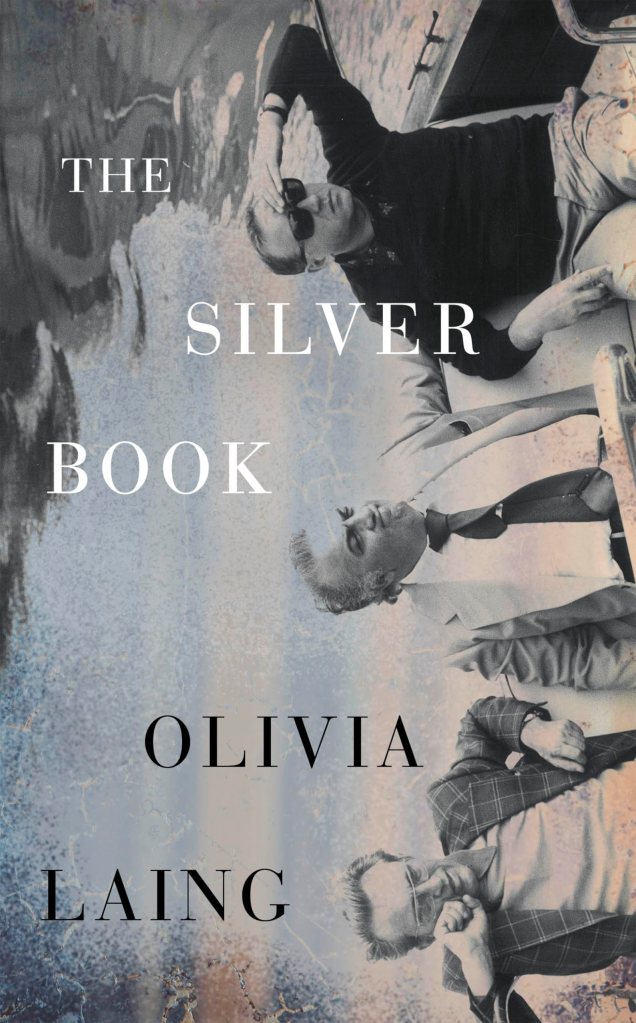
Open, Heaven: Seán Hewitt (2025)

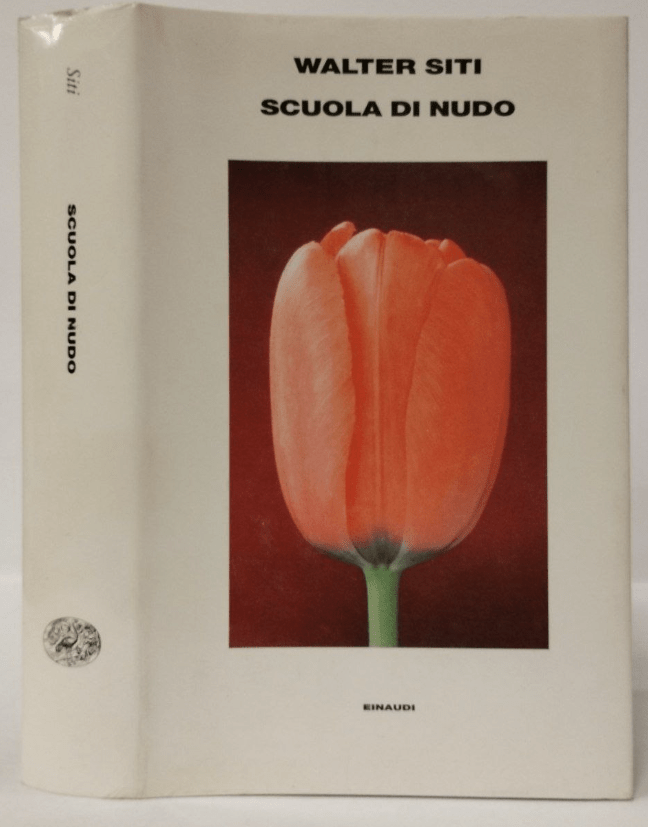
“Now, this nightly ritual had been my secret for years. In my mind, it was linked somehow to that scene – the distance, the watching but never touching. I fixated only on those I thought would not reciprocate, but I could imagine the moment of pre intimacy when they would give in and a secret would be made between us. I understood that this was what desire was: wanting something I could not have, dreaming of holding it. But even then I knew there was a risk, a contradiction: if, by some chance, the object of my desire desired me, I had the sense that the desire might evaporate altogether. So, although there was this burning, urgent thing, I could not exorcise it, and my imagination went into overdrive under restraint. There was never a release, never a completion that didn’t feel soiled and voyeuristic.”

Joshua handed me a pristine paperback. “Read this,” he said. “I think you’ll like it.” The book looked untouched; seeing my hesitation, he added, “I enjoyed it so much I’m giving all my friends a copy.”

I don’t think I’ve ever known anyone do that, and I found myself wondering whether they could really afford such generosity.

But Joshua was right.

The novel is a debut from Seán Hewitt, better known until now as a poet, memoirist, and critic. He is also Assistant Professor in Literary Practice at Trinity College Dublin and a Fellow of the Royal Society of Literature. His first poetry collection, Tongues of Fire, won the Laurel Prize in 2021—the same year he published J.M. Synge: Nature, Politics, Modernism. His memoir, All Down Darkness Wide, followed in 2023, and then came 300,000 Kisses: Tales of Queer Love from the Ancient World; a second poetry collection, Rapture’s Road, appeared in 2024.

Which brings us to Open, Heaven, a debut that confirms him as an all-rounder.

It is, in a way, a love story without quite becoming one—an infatuation we hope will deepen into something more, though it never does.

James, a teenager, dreams of a life beyond his small village; his emerging desires threaten to unsettle his shy exterior. Then he meets Luke—unkempt, handsome, charismatic, and impulsive—sent to stay with his aunt and uncle on a nearby farm.

As the seasons pass, a bond forms between them, one that quietly reshapes their lives. Yet James remains uncertain of Luke’s feelings, and as summer draws to a close, he faces a choice: risk everything for the possibility of love, or let it slip away.

I have a weakness for bad boys, so it was inevitable that I fell for Luke—made all the more appealing by the fact that he turns out to be straight. I was less taken with James, who seems destined to spend the rest of his life wondering, What if I’d forced the issue? Though perhaps that’s unfair. He could just as easily have been me.

I suspect I’ll carry my own catalogue of missed opportunities. Memory has a way of softening the past, making it seem brighter, simpler—chiding you for not taking a chance. But it was never that simple.

Hewitt proves especially perceptive when it comes to these almost-relationships—the ones that hover on the edge of possibility but never quite materialise.

I finished the book still hoping, right up to the final pages, that something might finally happen between them. Afterwards, I read other readers’ responses; the consensus, unsurprisingly, was that it leaves an aching feeling.

Charlie: The Promise of Paris – Partie 3

Caught Between Brothers, Desire, and Sex
French films—where sex feels real. Skin is just skin, textured, imperfect; faces carry lines; bodies are allowed to be naked, warm, a little unguarded. That was my first thought when I woke the next morning: that I had been inside a film, and now there lingered a soft, satisfied glow, the sense that something good had happened.

We were all naked.

Thomas lay close beside me, his right arm draped across my chest. Ambre was sprawled over our legs, her head tipped over the edge of the bed. Léo’s head was tucked beneath my left arm, one leg thrown across my midriff. I couldn’t have moved even if I had wanted to.

It had been very late when we returned to Thomas’s rooms. We had drunk far too much. And somewhere in that blur, the three of them had shown me something about sex in France—something unforced, unashamed, almost instinctive. The rest dissolved into fragments, but I woke with a lingering, uncertain impression: that, perhaps, I had crossed a threshold I hadn’t expected and shared something new.

And then I thought of Charlie, back home.

The anger I’d felt—at discovering those explicit photographs of him in Le Pénis—had dulled overnight, settling into something cooler, more measured. In its place came the faint, unsettling sense that the balance had shifted. I hadn’t replied to his messages, hadn’t answered the calls he’d tried to make. I imagined him now: alone, uneasy, carrying the weight of a secret no longer entirely his own.

And there was something else.

I had slept with Thomas, with Ambre, with Léo. The thought lingered, complicated and strangely satisfying. That I had been with Charlie’s brother felt, in some quiet, private way, like the sharpest form of retaliation available to me—an unspoken act that tilted things, however slightly, back in my favour.

For it to have the effect I imagined, Charlie would have needed to take the first Eurostar of the morning and walk through the door at that exact moment—only then would he have found us as we were, the four of us bound together by something reckless, unguarded, and impossible to explain away.

“Bonjour,” Thomas murmured into my ear, his voice still heavy with sleep as his fingers idly traced my chest. “How are you today, my English lover?”

Léo was awake too, stretching out beside me. It was only then I noticed the words Esprit libre tattooed along his arm—something I had somehow missed before. “Miles,” he breathed softly, shifting closer, his warmth pressing into mine.

Amid all of this, Ambre slept on, undisturbed, as though the morning belonged entirely to her dreams.

Thomas was the first to get up. The night before, he had warned us that he had work in the morning—that he would come to regret his small indulgences. I watched as he slipped from the bed and wandered, still naked, into the small kitchenette to make coffee.

He moved with an easy, unselfconscious grace—tall and lean, his pale skin catching the soft morning light. There was something quietly inviting in the ease of his body, a softness to him that made it difficult to look away.

I felt, unexpectedly, a flicker of disappointment as he pulled himself from the warmth of us, as though something of the night had gone with him.

Léo took it as an invitation to move closer. He kissed me softly, his lips brushing mine, the faint roughness of his stubble grazing my skin. There was a quiet confidence in him, a suggestion that the night could easily begin again.

But Ambre, roused by the promise of coffee, chose that moment to wake. With a casual gesture, she tossed a crumpled sheet over us both before slipping out of bed and wandering into the kitchenette, where she joined Thomas and helped herself to a stale croissant.

“What are you thinking about?” Léo asked.

“I’m thinking about that Bertolucci film—the one where a brother and sister take in his teenage friend.”

Innocents,” he said, after a moment. “The Dreamers was the English title. It shows how different French sensibilities can be—more permissive, less constrained. Like Les Enfants Terribles, with its own tangled intimacy between brother and sister. But there are no siblings here.” He paused, a faint smile forming. “The only brother worth mentioning is Charlie, who—if I understand correctly—has managed to embarrass himself rather thoroughly with his boyfriend.”

“Ah, Charlie,” I said. “That’s something I’ll have to deal with.”

Ambre perched on the edge of the bed, finishing the last of her croissant. She retrieved her phone from the floor and began tapping out a message, only half-listening.

“Miles,” Léo went on, his tone light, almost teasing, “you find yourself in a rather enviable position. You’re able to make comparisons—observe what each brother has to offer. Charlie, who, judging by Le Pénis, is… generously endowed. And Thomas, whom you seemed to appreciate last night, is rather more modest. Would you agree?”

Ambre raised her little finger in the air, a mischievous glint in her eye. “I don’t think Thomas is in any position to impress anyone with the size of his bifler,” she said, laughing.

She wasn’t entirely wrong, I thought. Thomas may have come second to Charlie in that regard, but there was something about him—something understated, quietly appealing—that stirred a different kind of interest in me.

As if to underline the point, Thomas reappeared with the coffee and came to stand over me, the morning light catching him in a way that made it difficult to think of anything else.

“What are you going to do about Charlie?” he asked.

“I’ll message him later,” I said.

“Forgive me, Miles,” Ambre added, almost lightly. “But I’ve already messaged him. I told him you spent the night with us—nothing more than that, of course—but enough for him to understand that the four of us may have… misbehaved.”

“Oh,” I said, caught off guard. “Was that wise?”

Thomas came to sit beside me and brushed a quick kiss against my cheek. “Brothers are meant to share their toys,” he said with a faint smile. “And besides, Ambre’s right—after what he did to you, he deserved to hear something.”

Léo shifted closer, his touch unexpectedly intimate, then lifted his gaze to meet mine. “There’s a difference, isn’t there,” he said quietly, “between posing for photographs and actually taking part in something.”

And just like that, I felt it—the subtle, unwelcome shift. The balance, which had briefly seemed to favour me, tilted back toward Charlie.

After showering and dressing, we followed Thomas down to the bar below. We found a table outside and ordered Orangina, which he promptly fortified with generous measures of Cointreau. It might have suited the night before, but just after midday the taste felt oddly sharp, almost unwelcome.

“A few of these,” Thomas said, with quiet encouragement, “will put you in the right frame of mind to speak to my little brother.”

The conversation was interrupted when one of Thomas’s colleagues appeared at the table, breathless with excitement. She spoke quickly, hands moving as much as her voice, pausing only when someone cut in with a question.

Thomas frowned, then glanced at me, unwilling to let me be shut out of something so clearly urgent. He began to translate, his English halting, searching for the right words as he went.

“She… she is saying… a group of American boys, they went into a café nearby, last night. And—how you say—they noticed a very beautiful French girl, sitting with her friends.” He hesitated, brow furrowing. “One of them, as… a kind of bet, tries to speak with her. But she is not interested. She shows this, very clearly. Still… he continues.”

Thomas paused, as if rearranging the story in his head.

“Then a French boy—he does not like this—and he punches the American. In the face.” He gestured vaguely to his own cheek. “And after this… it becomes worse. The American, he takes out a gun. He fires. He misses, but… the café, it is chaos. People shouting, more guns, even knives…”

He exhaled, shaking his head slightly.

“The police are called—the Préfecture. The Americans, they run upstairs, to escape. And then…” He faltered, searching again. “A policeman, he is pushed from a window. He falls—rolls over the awning—and lands in the street below.”

Ambre and Léo both reacted with open disgust, though how much of the story was true remained uncertain. Léo placed a hand on my knee and gave it a small, deliberate squeeze, as if to underline the gravity of what we’d just heard.

But the moment quickly lost its weight.

Outside Bar Dieudonné, Charlie was standing on the pavement.

The others hadn’t noticed him yet, but I had—and for a second, I could only stare, caught somewhere between disbelief and recognition.

He moved towards us, a travel bag slung over his shoulder, running a hand through his thick hair. I tried to read his expression—whether it was anger, or embarrassment—but couldn’t quite settle on either. By then, Thomas had seen him too, his voice cutting gently through the table.

“Charlie. What are you doing here?”

Charlie’s eyes went straight to me, sharp, accusing. “I thought it would be easier to come to Paris,” he said, “since none of my messages or calls were being answered.”

Thomas stood to greet him, pulling him into a brief embrace, but there was something restrained in it—something almost reluctant. I felt it too, that same flicker of disappointment.

It seemed Charlie had a way of appearing wherever I went.

Charlie dropped his bag to the floor and pulled up a chair, his movements abrupt, almost territorial. He made a visible effort to ignore Thomas, Ambre, and Léo, as though shutting them out might simplify things. As for me, I still had no idea what I was going to say.

The waitress slipped away unnoticed, sensing the shift in the air, and Thomas drew up a chair of his own. The five of us sat there, suspended in a strained, uncomfortable silence.

Charlie broke it.

“It seems I have gate-crashed an orgie,” he said, placing deliberate weight on the final word.

No one reacted. Ambre and Léo shifted awkwardly, and Thomas reached for my hand, a quiet gesture of support.

“We were drunk,” I said at last. “I had reason to be. It’s not every day you discover your partner naked in a gay magazine.”

“I wanted to explain that,” Charlie replied, his tone tightening, “but I haven’t exactly been given the chance.”

“Then explain,” Thomas said evenly.

Charlie exhaled. “They were taken a long time ago. I was in Paris, and someone offered me a lot of money to pose. I didn’t tell you, Miles, because I knew it would upset you.”

“That’s true,” I said. “But not as much as it did yesterday.”

“It isn’t something shameful,” he continued. “The male body is beautiful. I liked the idea that someone thought I was worth photographing. And posing for images like that is not the same as…” He hesitated, his gaze flicking toward Thomas before settling back on me. “…what you’ve done. With my brother. And the others.” His glance toward Ambre and Léo carried a trace of disdain.

“It was one night,” Léo said lightly. “It didn’t mean anything.” Ambre let out a small, disbelieving snort.

Charlie shook his head, his frustration now turning toward Thomas. “I can’t forgive you. This happens every time I have something of my own—you take it. That’s why I left for England. And still, somehow, you manage it.”

“Wait,” I cut in. “None of this would have happened if we hadn’t found those photos.”


“That’s not true,” Charlie said, his voice sharpening. “I knew something was going on between you and Thomas. When you came to Paris, I knew you’d see each other. So Ambre’s message…” He gave a small, bitter smile. “It didn’t surprise me. It only confirmed what I already suspected.”

“We are French,” Thomas said, with a faint, knowing shrug. “We do the wildest things when they are expected of us. We have welcomed Miles—made him feel at home. For that, you should be grateful, Charlie.”

Ambre, who had been silent until now, leaned forward, her tone calm but unflinching.

“And we also know that the two of you don’t sleep together. Miles hasn’t even seen you naked.” She tilted her head slightly. “That isn’t natural. The fault is yours, Charlie. You are boyfriends, yes? And yet you keep him at a distance. So he looks elsewhere.” Her gaze shifted to me, softer now. “I hope last night was good for you.”

She had, with disarming ease, landed on the truth.

“It’s true,” I said. “I don’t really know what we are, Charlie. We live together; we get on well—but I’d be embarrassed to explain it to anyone else. That this is all there is.”

Charlie looked unsettled, as though trying to assemble a response that would satisfy both me and him.

“You came to Paris to find him,” Thomas said, more gently now. “That must mean something. Forget everything else—what’s happened, what you think it means. If you came here to make things right, then do it. There is still something between you worth saving.” He paused, then added, without apology, “As for Miles—I won’t pretend otherwise. I like him. And I know he likes me. But I also have Ambre, and Léo. They know who I am. I follow what I feel, while I can. There’s something in that, little brother.”

In a few quiet sentences, Thomas stripped the argument back to its core, leaving little room for accusation.

Charlie drew a breath. “I’ve spoken to our parents,” he said. “I’m staying with them while I’m in Paris. I asked if Miles could stay too—they said yes.” He glanced at me, something softer now beneath the tension. “But if you’d rather stay here… with Thomas… I’ll understand.”

I realised then how deeply I had been pulled into something that had begun long before me—a quiet, unresolved rivalry between two brothers. I hadn’t expected to stand at its centre, still less to feel responsible for how it might end.

I loved Charlie. That much was certain.

But Thomas—there was something about him, something immediate and consuming, that I couldn’t ignore.

And it seemed, whether I was ready or not, that a choice had to be made.

The Distance Between Us Was Never Truly Death

“Paolo went to your country to die, and now, Harry, you have come to his country, where you will also die.” Harry arrives at the small Italian town of Montescaglioso, where it is time to make peace with the person he once loved. The final part of an unlikely story.  (Parts 1 to 24 are available to read in the menu)

Perfectly Hard and Glamorous – Part 25

April 2026

The clock struck twelve at the Chiesa di San Rocco in Piazza Roma. The warmth from the Easter sun was unfamiliar, but as shadows crept from the old buildings and advanced towards the monument, the coolness of the spring afternoon would follow, and remind us that where we came from didn’t matter. One place could be much the same as another.

Piazza Roma was mostly deserted except for a handful of pedestrians who emerged from between these crumbling buildings and went about their business. The peace was only shattered by the noise of a scooter which entered from Corsa della Repubblica. On it, a ragazzo, wearing short sleeves and crash helmet, noticed me standing alone, revved its engine, and circled several times around me. All the time he watched, as there would be other people watching too. 

High above the square, on top of an unlikely building, was a webcam; its five cameras pointing in different directions. Somebody in a cramped New York apartment or a hotel room in Bali, was able to see what was happening in sleepy Montescaglioso. The views were familiar. I looked at them every day, and now, I was also one of the strangers on the screen.

The ragazzo eventually pulled up beside me and cut the engine. He removed his crash helmet and revealed himself to be in his late teens, with black curly hair and neat stubble on his chin. “Sei inglese?” he asked. “Sì, io sono,” I replied. “Then you must be Harry,” he said with broken English. 

He introduced himself as Tino and retrieved a second crash helmet from the sottosella. “Put this on,” he advised, “and get on the back.” I did as I was told and placed my arms around his waist. The engine kicked into life, and he sped off down Via Cavour; through cobblestone lanes that twisted and turned, both sides lined with old houses painted in shades of pink and yellow that the southern sun had slowly faded.

The farther we rode out of town, the wider the roads became, and the houses grew larger and newer. When we reached the petrol station at Strada Provinciale, Tino swung right and came to a stop beneath huge Italian cypresses leading to the gates. We dismounted, and I took in the panoramic views of the surrounding Basilicata. I noticed that the area below the cemetery had been used as a dumping ground for builders’ waste from the construction sites we had passed. Tino opened the sottosella, deposited both helmets, and retrieved a plastic bag. 

“Paolo went to your country to die,” said Tino. “And now, Harry, you have come to his country, where you will also die.” An exchange of the dead. I was the lad from the working classes who had sunk to the bottom before being gifted a chance to rise again. I was about to confront my past again.

Tino took me into the Cimitero Comunale and along corridors of loculi, multi-storey rows of concrete vaults stacked several levels high. The sight was striking; each grave was decorated with vases of fresh flowers. It was a Catholic tradition, an artistic expression, and a practical solution to space limitations. Italian culture maintained a strong, ongoing connection with the dead.

“My family were upset when you asked to visit,” Tino told me as we walked along. “The older ones are still angry and did not want you to come. But it was the younger ones who were able to change their minds.”

“Please thank them for doing so.”

“They call you the ‘English Boy’—the one who came from the projects. Our elders believe that Uncle Paolo did something gravely wrong, and that you were the cause of it. It is the only way they can forgive him. Blame you. Maybe the younger members of the family have more compassion and understanding, and we are more interested in seeing the boy who became the source of such hatred.”

The boy he referred to was no longer a boy. I was now in my sixties and had waited far too long to come here. Tino looked at me, and I could not help noticing his delicate brown eyes, which seemed to be searching for answers.

“I am older than Uncle Paolo was when he died. He will remain a boy forever. In the same way, you have not aged either, Harry. You are still the boy who was responsible for sending him to his tragic death. It is the boy that people will condemn.”

Like Paolo’s family, I had also believed that Paolo had taken his own life. The shame of being arrested and exposed as a homosexual had been too much. But Frank Smith had taken forty years to tell me otherwise: that Andy, my best friend, had blamed Paolo for coming between us—for ruining my life—and had sought revenge by sending him to a horrific death from the top of an abandoned factory.

It had taken me twelve months to process that news. Those last seconds, when Paolo knew that he was going to die. What had been going through his mind? Those intense emotions—fear, love, regret. Had Paolo thought about me in those last moments?

I was about to tell Tino the truth but didn’t get the chance. He had stopped in front of a small, rectangular niche on the bottom row and pointed.

I noticed the flowers first—chrysanthemums, alongside a mix of vibrant and white blooms, carefully arranged in small glass vases. There were also tulips, symbolising the freshness of spring, new beginnings, and hope.

And I saw Paolo again—for the first time in forty-one years.

There was a black-and-white photograph: a headshot of him looking at the camera, that nervous expression, expressive eyes, thick black hair with the same curl that always fell across his forehead, and a half-smile. Paolo was looking at me. A look of surprise. I had finally come to see him. The years of regret washed away, and we were back together again. I saw him smiling. “I loved you, Harry, but I was taken away. The years were long, but you found me again. Ti amo, Harry.”

It was a moment where grief, memory, and love converged.

Tino reached into the plastic bag and handed me a white rose to place in front of the photograph.

“I shall leave you to make your peace,” he said, and slipped away to a bench at the end of the avenue.

I put my hand on the marble slab that had been used to seal the tomb. It felt warm in the afternoon sun. I traced the inscription with my finger—Paolo Antonio Moretti—Amato da tutti coloro che lo conoscevano—beautifully carved in italics by an Italian craftsman. 

“Well… Paolo. Here I am. I never imagined that I would speak to you again. The last time I saw you was at that big house, when we were all arrested. My last recollection is of you looking terrified and shouting my name. I’ve replayed that moment every day for over forty years. Shouting my name because you were scared, and I couldn’t do anything. Do you know how painful that memory has been?

“I tried to speak in the days afterwards, but everyone hated me and wouldn’t let me anywhere near you. They said that I had corrupted you. I suppose your parents were trying to protect you… and they told me that you didn’t want to see me. That hurt, and I’ve tried to come to terms with it ever since, but I never believed it.

“And then you were gone. Forever. Do you know how that felt? The realisation that you love somebody so much, but can never see, touch, or love them… ever again. It was the most painful thing that ever happened to me.”

A tiny sparrow landed on the ground beside me. In Italian folklore, these are seen as a sign from the dead, and it hopped around my feet before flying up onto Paolo’s grave.

“Last year I saw Frank Smith. He told me that you didn’t commit suicide. That was a relief to me—for a while, anyway—but then I found out that it was Andy who killed you. It meant that your parents were right to blame me. My best friend killed you because he was jealous of us. That is something your family needs to know.

“What happened afterwards? I went to pieces. I nicked a car and drove to London, where I stayed for years. I worked as a rent boy and then became a writer. Can you imagine that? A small-time shit from Park Hill who couldn’t string a sentence together. But I’ve written books that proved I could do something with my life. I also met a guy called Scott, who I thought I loved, but now I realise that I probably didn’t.

“I went back to Sheffield—to Park Hill—which had completely changed and wrote about our past. It is the most successful book I’ve written. Everyone thinks it is fiction… but everything in it was true. About growing up, the Geisha Boys, meeting you, loving you, and the things we did.

“But I had to leave again. I didn’t belong there anymore. Many ghosts were laid to rest, but I couldn’t exorcise the memories.

“And now I’m here in Montescaglioso, where I can stay close to you. I’ve brought Tom with me and we’re buying an apartment on Viale Europa, not far from here. It’s modest, but for someone who lived at Park Hill, it will herald a new start.

“Tom is Jack’s youngest son and was a bit of a tearaway—a bit like I was. But he’s attached himself to me and will look after me as I grow older. Growing old is something you won’t know about, but it’s very overrated.

“And I met Jack again. I needed to know that he had forgiven me, but it turned out that he wanted my forgiveness too. The tragedy is that we wasted years feeling guilty. Both of us were afraid to make contact.

“Most importantly, I needed his blessing about Tom, and do you know what he said? When we were teenagers, he thought there was something different about me, but couldn’t pin it down. When it all came out into the open, he expected me to make a move on him. If I had, he said that he wouldn’t have said no. That floored me. He gave me his blessing about Tom because he knew that I’d turned his life around.”

Tino was approaching, and the small sparrow flitted between the flowers with a burst of energy. I stopped talking but couldn’t leave it like that.

“I must go now, but I shall return soon. Ti amo, Paolo.”

“I heard what you were saying to Uncle Paolo,” Tino said. “Did you love him as much as you say you did?”

“I did,” I confessed, “and it was a relationship that should never have happened. Did you know that the first night that I met Paolo, I punched him in the face… and immediately regretted it. He was incredibly sweet and beautiful. I wish you could have met him.”

“And this Tom that you spoke about—he has come to Montescaglioso with you?”

“Another unlikely relationship. Tom is much younger than me, and the story is far too complicated to explain. But he is a link between the past and the present.”

Tom was waiting for me when I returned to Piazza Roma. He smiled—a dazzling grin that showed his face had already tanned under the Italian sun. I explained that Tino had promised to visit us at the new apartment and that he had also asked for a copy of Perfectly Hard and Glamorous.

“But the book is in English,” he replied.

“I know,” I said, “but he wants it because that book is part of his family history.”

And that is the end of this long story.

The journey from a bleak northern city that had little going for it in the 1980s to the present, in a small Italian town that nobody has heard of. Tino was right when he suggested that Paolo had travelled to another country to die, and that I had done the same. And that is what will happen.

We are both happy here and will never leave.

Sometimes, when I stand on the balcony of our new apartment at Viale Europa and look at the house across the street, I imagine that I am seeing Park Hill again. And then the laundry tries to break free with the help of the strong wind that blows from the distant olive groves and wheat fields, and the memories evaporate.

I watch people going about their business—the animated, loud conversations, the frequent gesticulation, and that strong personal style. Both the young and the old, slipping into cafés, shops, and gelaterie. Walking between sun-drenched, ochre-washed buildings and piazzas, with the noise of Vespas weaving through the narrow streets. They are blissfully unaware of that sensory blend of ancient history and modern life; unaware that historic architecture is now adorned with contemporary graffiti.

The Italians are wonderful people.

I also think about everyone who shaped that journey: those who are dead—my parents, my best friend Andy, whom I may never forgive, and Paolo, whom I visit every week. I even think about Frank Smith and Billy Mason. Then there is the living—Jack, who will make regular visits to Italy and remind me that I was once a Geisha Boy, who swore, fought, and offered my body to anyone who wanted it; and Tom, who one day will replace Paolo as the love of my life.

The David Problem: Notes from a Life

Peter Snow – Cleaver Square from Kennington Park Road (1988). From the Southwark Art Collection.

The Countess, the Living, and the Dead

There was a video featuring Adam Rickitt, who had been big in Coronation Street, in which he appeared naked. The song had been around when David had been clinging to the frayed edges of his youth. He hadn’t pulled it off. Everything went downhill afterwards. Adam Rickitt went to New Zealand to appear in a soap and was accused of stealing a block of cheese, a bottle of HP Sauce and a jar of coffee from a supermarket. David had moved out of the family home because the banks were knocking at the door.

On Sunday night, they had called at a gay bar, and David saw Adam Rickitt on the screen again. “I would gladly have sniffed his bollocks,” he told Joshua, who turned his nose up. “What the fuck is this shite?”

David recalled dancing to Adam Rickitt at Cruz 101 in Manchester. He was high on ecstasy at the time. But he’d gone to a friend’s flat afterwards and written the best chapter of a book he had never written—longhand, too. Then he had left it behind, where it ended up in a black wheelie bin.

Mancunian days. Every weekend in the North West. But he remembered little. The only memory he retained was of a cute little chicken who had taken his shirt off and started singing, “Sexy… everything about you, so sexy.”

David went home with him. The biggest shithole in Longsight, with every room knee-deep in empty Coke bottles. The bed was hidden behind a mountain of takeaway boxes. It had taught him that all that glittered was definitely not gold.

He related the story to Joshua while walking home in the rain.

“You’re too posh,” Joshua warned him. “Too many frills and high expectations.”

“But I ended up with you,” David replied.

 “Your problem is that you look too much at the past, and forget about the future.”

“But there isn’t much of that left, is there?” 

David was feeling down.

March had been a bad month. April looked bleaker.

“There are too many deaths, Joshua. Once, I went to weddings all the time. Now I go to funerals. I suppose we’re all in the same boat, because everybody dies.”

But Joshua was too young to understand and nudged him on the arm. 

David was referring specifically to their next-door neighbour, who had surrendered to the inevitable. In the square, Dorothy Jerman had been known as the ‘Countess’ and lived alone. Not many had known why she was called the Countess, but there was a suggestion that it was a nickname given to her by a former landlord at the Prince of Wales opposite.

“That’s right,” she once told David. “He was the Brixton Bomber, a former boxer, who took over in the 1960s and upset residents by installing a juke box. It attracted teenagers and the lawyers and solicitors who lived nearby wanted a quiet pub and drove him away. But he was a good chap, and called me the Countess because he wanted to get into my knickers. Little did he know that I never wore any.”

The Countess, a portrait painter, had moved here in the early sixties when Cleaver Square had been different to what it became. She shared it with her kids after a messy divorce and remained after they had grown up and left. By all accounts, she was a ‘rebel’ who famously held wild parties that spilled out into the street. 

David inherited the house next door and on most fine days, the Countess could be found sitting on the front steps, a glass of wine at hand, either reading a paperback or making conversation with anyone who passed. 

And the Countess had loved Joshua from the moment David invited him to move in with him. Two fucking artists, David had mused. Joshua would sit on the steps as she stroked his blond hair and told him stories about her life.

She claimed to have chosen Cleaver Square on the recommendation of a friend, Innes Fripp, a landscape painter and portrait artist who had taught at the nearby City and Guilds of London Art School and once had a studio in the square.

David had looked up the connection and found that it might have been true. He also discovered that the area had once been called Prince’s Square, named after two houses flanking the entrance, built for Joseph Prince by Michael Searles in the 1760s. The name was changed in 1937, a throwback to Mary Cleaver, who had owned the land in the eighteenth century.

“This is where sea captains lived,” the Countess once boasted, “but the square fell on hard times by the end of the nineteenth century and attracted old music-hall stars instead. It fell on evil days—crumbling brick façades hiding three families across three floors. During the war, the council requisitioned many of the houses for bombed-out families. The trees died, and the gardens were razed.

“South of the river was one vast slum when I arrived. When I fled Chelsea’s superficiality, the square was dilapidated, with shabby red-brick houses—homes for dockers and clerks—but every door stood open. Everybody knew everybody else. Materially, they had little, but they shared it when needed. Then the developers came, and with them came the barristers, judges, and MPs. That was when the doors shut. The young people drifted away, saying the square was not worth living in—it was dead. That is how we ended up with John Major.”

The houses went for millions now, but the Countess had not been tempted to sell. She could have died a millionaire, but preferred to live with her memories and pry into the lives of people she did not know… and who might have looked down on her, had it not been for her cheek and charisma.

When David arrived in the square, the Countess welcomed him as somebody who lived on her level. Shortly before he died, David’s uncle, William, had kicked out the previous tenants with a view to selling it. It was vacant when David discovered that the property now belonged to him.

But now the old woman had died.

It was good fortune that the Countess had resolutely refused to lock her front door. Joshua had gone looking for her and found the body slumped in a fireside armchair: a flute of flat champagne beside her and a dog-eared copy of Valley of the Dolls in her lap. He had panicked and gone running round to David, with no idea what to do.

Only the day before, David had made an unnerving discovery. The Countess had told him that he was not an Aries after all, but a Taurus. It had taken sixty-two years to learn the truth. But David, who normally paid little heed to astrology, realised that he preferred being a ram to a bull—it was better for a gay man, he suggested.

“A cusp baby,” the Countess commiserated, “and if it helps, you have adopted elements from each star sign.

“You do love a grand romance—you throw yourself into it, heart first, and breathe your partner in as though they were oxygen. But you bruise easily in love, my dear, and you’re far too quick to feel taken for granted. You’ve a weakness for strays as well—people from all walks, the straighter the better.”

“I do have a weakness for working-class boys,” David agreed. “And Joshua comes from a relatively poor family in Thamesmead.”

“Really?” said the Countess. “I had no idea. He speaks with such charm and dignity—and is incredibly handsome. And Thamesmead is perfectly lovely in the summer.”

“I met him when he was only twenty-one and working at Morrisons. For some reason, I was walking around the lake and came across him standing there, looking at the birds on the water. I found out later that he didn’t know one bird from another—except when we were talking about cocks. He had been cruising for a shag, which he didn’t get, but we talked. I pointed out that Thamesmead had been the setting for A Beautiful Thing, which turned out to be his favourite film. Eighteen years later, here we are.”

The Countess had not finished.

“You may have secret love affairs or fall in love with someone who is quite unavailable to you.”

“That’s not true.” David had been a bit too quick to reply, and the Countess raised her eyes, because she had not, for one minute, believed him.

David was thinking about Miles, his provincial friend, whom he had first met when the boy was eighteen. Putting Joshua aside, he had spent the last eight years trying to seduce Miles, but had failed at every attempt. Unknown to Joshua, David had once fallen in love with Miles. It was never reciprocated, but that feeling never changed. Miles was only interested if you happened to be a good-looking French or Italian boy—certainly not somebody like David.

“Are we referring to Freddie, dear?” the Countess asked.

Freddie lived in Hammersmith and was the same age as Miles, but his eccentricities annoyed David—not least his tendency to point out dead people whom he claimed to see at the most inappropriate times. Once, David had slept with him, and Freddie had told him that there was an old woman sitting knitting at the bottom of the bed. He had also ingratiated himself with the Countess because he claimed that a family friend had used his name for a character in The Archers. That had gone down extremely well, because she listened to the programme without fail.

“The last time that I saw Freddie,” she laughed, “he suggested that there was the presence of two dead women—Christine and Hannah—who once ran a brothel here. I talk to them all the time now, and suggest that far worse things have happened in my time.”

“It is definitely not Freddie,” said David, “and I would appreciate it if you did not repeat that to Joshua.”

“Because Venus represents attraction, and the twelfth house is associated with the feet,” she said, “your feet may be especially attractive—and have erogenous zones!”

He had turned his nose up.

David and Joshua headed home and passed the Countess’s house, which stood in darkness.

“I wonder what will happen to the house,” Joshua speculated.

“Well,” said David, “she must have had a will, and I suppose everything will go to her family.”

They were both aware that the Countess had fallen out with her three children, and only one of her grandsons, Owen, ever visited her. The two of them had known him as a young teenager and knew that he did much of the maintenance work around the house, though there were difficulties the Countess had often fretted over.

“If Owen gets everything,” Joshua mused, “it could prove interesting.”

David thought that Owen had grown into a striking young man, but conveniently overlooked that he suffered from a severe case of ADHD, which made him prone to violent bouts of temper.

“He would most likely sell it and become fabulously wealthy,” he suggested.

David knew that the Countess was of sound mind and that she had deliberately led her family to believe that she suffered from delusions—among them that she saw thousands of long-tailed birds clinging to a tree in her back garden, that the other trees were covered in hundreds of cats, and that dead dogs with fiery eyes lived beneath the bushes.

“At least it stops them visiting a crazy woman,” she had laughed.

“Whoever it is left to will find it contested,” David added, “because they will say that the Countess was of unsound mind when she made it.”

“Maybe she was deranged,” Joshua decided. “She often claimed that all sorts of famous people visited her at one time or another. She once told me a magnificent story about Vivienne Westwood, David Bowie, and Marc Bolan coming to tea—and that they ended up bouncing along the street on great big orange balls.”

Space hoppers,” David implied. “I had one when I was a small child in the 1970s. Did you know that Russell Harty was also a personal friend of the Countess?”

David knew that Joshua would not know who Russell Harty was.

“What was he famous for?”

“Sexual escapades with much younger men,” David replied, “and for hosting chat shows on television.”

David had met him once, when he had still been young enough to turn heads in the street. Harty had just returned from Paris, where he had lunched with Nureyev and Charlotte Rampling at the British Embassy. He made small talk, and David was disappointed that this brief encounter on Greek Street had not led to anything more. Still, it had been enough for him to brag about at Comptons.

A few months later, Harty was dead, having suffered liver failure—a result of hepatitis.

“The Countess knew everyone, or said she did. And now there’s no one left to confirm it.”

“That’s the problem,” said Joshua. “Did these encounters actually happen? Was she connected, or just a brilliant bullshitter? I often wonder the same about some of your stories.”

That last comment hurt David.

“Everything I tell you is true.”

“But nothing ever seems to happen to me. The Countess knew famous people. And you’ve done things—wild things—that make my existence seem ordinary.”

“The older you get, what once seemed ordinary suddenly becomes fascinating. We all look back and realise that we did something special.”

The funeral was due to take place the following Friday. The cortège would leave Cleaver Square at lunchtime and travel to Lambeth Crematorium, where a short service would take place before she was handed over to the devil.

Joshua unlocked the door and turned to David. “Do you think we’ll see anybody famous at the funeral?”

“Probably not,” David replied.

Charlie: The Promise of Paris – Partie 1


Paris in the spring. The city had emerged from winter into blooming flowers, mild air, and sudden rain showers. Not like England, where winter still clung stubbornly to everything.

If I returned to Paris, Charlie had insisted that he should be the one to take me. It was the city where he had grown up, where his family still lived. But to Charlie’s frustration, he had not been able to come. He had recently landed a job as a nightclub DJ—something he had wanted desperately and had then come to hate.

“No, Charlie, you’ve only been here a few weeks. You can’t take a holiday.”

His anger and frustration were matched only by my hidden delight.

“You cannot go to Paris without me,” Charlie had pleaded.

“It is work, not pleasure,” I told him, adopting a serious tone. “I’m being paid to write about an art gallery.” It was an elaborate lie.

“But you’re not an art expert. I would have been able to tell you what is good and what is bad.”

I shrugged this off, quietly pleased at my good fortune.

“There’s no choice in the matter. I must go, and that’s that.”

Before I left, Charlie looked me straight in the eye.

“You must promise that you won’t see Thomas.”

“Charlie, I’m going to be busy. I won’t have time to see anyone—least of all Thomas.” 

He was not placated.

“Promise me. Cross your heart that you’ll have no contact with him.”

“I promise I won’t see Thomas,” I lied. “Cross my heart and hope to die.”

Thomas was Charlie’s older brother, of dubious parentage, and I had met him only once, years earlier, when he stayed at our apartment for a few days. Charlie was convinced that Thomas had tried to seduce me.

That part was true.

Nothing had happened, but Thomas had left an impression.

We messaged each other regularly. More accurately, we flirted—quite shamelessly—and Charlie had no idea.

It was the same with Bianchi in Verona. Charlie had no idea that he existed either.

I climbed the steps from the Métro at Rue du Bac and found the bar on Boulevard Saint-Germain. Bar Dieudonné stood on a corner, occupying the first two floors of a traditional Haussmann building. A striped, blue awning ran along the façade, beneath which stainless-steel tables and matching chairs spilled onto the pavement. A handful of people sat outside, lingering over drinks.

This was the bar that Thomas managed, though I couldn’t see him. A young waiter took my order and raised his eyebrows slightly when I asked for a café crème—it was well into the afternoon.

I have always thought the best parts of this neighbourhood were the little streets that slipped away from Boulevard Saint-Germain: narrow cobbled lanes with outdoor cafés and dusty curio shops. But there was no work to do, and there would be plenty of time for wandering. For now, I sat back and watched the passing crowds—bohemians and tourists alike—talking loudly, smiling, drifting past in loose, cheerful hordes.

A small Algerian boy approached and held out his hand.

My French is about as good as my Italian, and I struggled for something to say. In the end I muttered “fuck off,” which only earned me a puzzled look. I waved him away instead, and he slunk back into the crowd, looking dejected.

I assumed I must be close to the house where Jean‑Paul Marat, one of the more notorious figures of the French Revolution, had been stabbed to death while writing in his bath. Yet this elegant corner of the 6th arrondissement had attracted many other ghosts over the years—Oscar Wilde, Charles Baudelaire, Ernest Hemingway, Jean‑Paul Sartre, and Simone de Beauvoir, among countless others. Shadows from earlier lives, but still somehow present.

A pair of hands suddenly covered my eyes from behind.

“Ah,” a voice said. “I see my intended lover has finally arrived.”

It was Thomas—tall, slender, delicate, with skin as pale as snow. A baseball cap hid most of his blond hair, which seemed to have been cut short. He kissed me lightly on both cheeks and then pulled me into a hug that felt surprisingly strong for someone with such an elegant frame.

“I hope my brother isn’t hiding somewhere, ready to appear and ruin everything.”

“I’m alone,” I said, “though Charlie has an uncanny ability to know everything that goes on—even when he isn’t there.”

Thomas sat opposite me and smiled, revealing perfect white teeth.

A small pang of guilt drifted through me.

“Where does Charlie think you’re staying?”

“An Airbnb,” I replied. “That way he won’t be able to track me down quite so easily.”

For a moment I wondered what I was doing here. Why was I willing to jeopardise everything with Charlie?

There was only one honest answer: sex.

My friend Levi says I have an addiction to it, and he may be right. On the Eurostar to Paris I had looked up the symptoms, and the similarities with my own life had been unsettling: continuing despite knowing the consequences; using it as a coping mechanism for something missing; an inability to control the urges; risky behaviour; escaping shame through sex; living a secret life to hide things from partners; compulsive pornography; confusing sexual attraction with intimacy.

The list had felt uncomfortably familiar.

I loved Charlie, and I had good reason to believe that he loved me. He was the perfect pin-up boy—French, handsome, with a body people envied. Everyone said they were jealous of us. The perfect couple.

Yet I also knew that Charlie would happily sleep with anyone who offered, while somehow maintaining an aversion to sleeping with me. That hurt more than I cared to admit. It was an awkward conversation we had both avoided.

Which meant I was always looking elsewhere.

Charlie, I suspected, probably was too.

Thomas, I decided, was the next closest thing to sleeping with Charlie. The same genes, the same beauty—though expressed differently. He possessed an allure that was quieter, more evocative.

And impossible to ignore.

“I must work until late,” he said, “but you can stay in my rooms upstairs.”

I slung my bag over my shoulder and followed him through a large doorway beside the bar. We climbed several flights of marble stairs, the walls decorated with faded mosaic patterns, until we reached his door.

“I should apologise,” Thomas said as he unlocked it. “My rooms are untidy. I’m not as particular as Charlie.”

He wasn’t exaggerating.

The place reminded me of the many student apartments I had visited over the years—not dirty exactly, but nothing seemed to belong anywhere.

The main room was dominated by an enormous television fixed to the wall. Beneath it sat what could only be described as a gaming command centre, surrounded by controllers, headsets, and cables. A huge brown leather sofa occupied the middle of the room.

Unopened boxes were stacked in three corners, while the fourth had become a kind of tech graveyard—a tangled nest of charging cables, old headphones, and abandoned power banks. The window ledges were crowded with pot plants, some thriving, others clearly beyond saving.

The small kitchen counters were cluttered with dishes and coffee mugs—clean, but apparently without a cupboard willing to receive them. In one corner sat the remains of several breakfasts: croissants, chocolatines, pain aux raisins, brioche, alongside fresh bread, ground coffee, and hot chocolate.

It seemed Thomas lived almost entirely on whatever the pâtisserie across the street happened to produce.

The bedroom was no better.

A floordrobe of clean and discarded clothes spread across the wooden floor. He had adopted the “bare mattress” aesthetic: no sheets, the bed unmade, pillows scattered in all directions except where they were meant to be.

“Throw your bag in here,” he said casually. “Like I warned you—it’s a bit of a mess.”

The bathroom was clean, though untidy. Half-empty bottles of shower gel and shampoo lined the edge of the shower, alongside an assortment of deodorants and colognes. Toothpaste tubes lay scattered near the sink. Two toothbrush holders stood side by side, each containing a single toothbrush.

The toilet and bidet had been recently cleaned with pine disinfectant, and a full roll of ‘papier toilette’ had been folded into an elegant point, as if in a luxury hotel.

The illusion was spoiled, however, by the pile of discarded cardboard tubes that had accumulated beside the waste bin.

I had the impression that Thomas wanted to impress in certain places, though for the most part the effort had fallen short.

The contrast between the way Thomas and Charlie lived could hardly have been greater. Still, I wasn’t too concerned. I had stayed in places far worse than this.

Charlie had insisted that Thomas had a girlfriend, although the tone of Thomas’s messages to me had suggested otherwise. Flirty, flirty French boy.

But one small detail gave me pause: the two separate toothbrushes.

Almost as if he had read my thoughts, Thomas chose that moment to complicate matters.

“My girlfriend, Ambre, will be along later,” he said nonchalantly. “She’s bringing my friend Léo with her. They’ve promised to take you out this afternoon.”

I was left alone and cleared a small space for my neatly folded clothes. There would be no confusion about what belonged to whom. I also placed my own toothbrush beside the others.

That meant there were now three toothbrushes in the bathroom.

I made myself a strong coffee and waited for the arrival of Ambre and Léo.

They arrived in a burst of energy. Like Thomas and Charlie, their English was excellent, and although they often slipped into French when speaking to each other, they were careful to translate whatever they had said.

Ambre was a slim brunette who seemed to radiate personality. Bright and bubbly, she swept through the rooms with an effortless charm that felt distinctly French.

Léo, by comparison, was quieter.

He looked about twenty: dark-haired, reasonably handsome, with the faint beginnings of a moustache that might have taken months to achieve.

“Thomas was right,” Ambre said with a wink. “You are a very handsome homo boy. So, we must take you to Le Marais and let our boys decide for themselves.”

I couldn’t quite tell whether Léo was gay or not, but he appeared perfectly happy to be included in the plan.

They were easy to get along with, and before long it felt as though we had known each other for years. We wandered through several crowded bars, drinking pastis and mimosas, before eventually stopping at Joe le Sexy—a shop that might best be described as a kinky gay boutique, selling everything from books to toys and explicit magazines.

Ambre bought several bottles of Rush poppers and dropped them into a brown paper bag that did little to disguise where they had come from.

Léo grew visibly embarrassed when I began leafing through several issues of Le Pénis, a magazine that contained exactly what its title suggested. He peered over my shoulder, offering approving or disapproving noises depending on the size and shape of the appendage on display.

Up to this point I had become so caught up in the carefree afternoon that I hadn’t checked my phone. When I finally glanced at it in the shop, several messages from Charlie were waiting.

They followed a familiar pattern: polite curiosity slowly hardening into anxiety once I hadn’t replied.

“Where are you?”

“Did you find the art gallery?”

“What are you doing this afternoon?”

“Answer me.”

“Make sure you do not go to find Thomas.”

I carefully composed a reply.

“All good, Charlie. Found the gallery. Busy talking. Call you later x”

Almost immediately a thumb-up appeared

I felt strangely comfortable with the small fiction I had created. The sunshine had put me in a carefree mood, and the alcohol had washed away any lingering doubts that I might be behaving like a bit of a skank.

When I put my phone away, Léo was still browsing through Le Pénis. I rested my chin lightly on his shoulder, and he seemed perfectly content for me to share the explicit photographs with him. He smelled faintly of Bleu de Chanel and something musky beneath it.

I decided that I really did like French boys.

He turned the pages idly, but suddenly something caught my eye, and I stopped him at once.

“What is it?” Léo asked.

“Turn back a few pages.”

He flipped slowly through the magazine until I told him to stop.

I froze.

Léo stared at the page, trying to understand what had unsettled me.

Unsettled wasn’t quite the word. It felt more like a bomb going off.

“I can’t believe it,” I said quietly. “These are photographs of Charlie.”

Léo looked puzzled. I later forgave him for not recognising him—he had apparently never met him—but there was no doubt in my mind.

Several glossy colour images showed Charlie completely naked, proudly demonstrating that this magazine truly deserved its title. In Charlie’s case, it might more accurately have been called Grandiose Le Pénis.

The penis was magnificent.

A rush of conflicting sensations flooded through me. Mortification. Confusion. Disbelief.

And anger—enough to make me want to tear someone’s head off.

“Fuck me, Léo,” I muttered. “That’s my boyfriend.”

“What are you saying?”

“I’m saying that this enormous dick shouldn’t be in here.”

Léo didn’t seem to know how to respond and called Ambre over for support. He spoke rapidly in French while she gave short replies that sounded increasingly disapproving.

“Let me see,” she said.

Léo held up the magazine while she studied the photographs of Charlie, although what this was meant to accomplish remained unclear to me.

“And you did not know?” she asked.

“No!” I snapped.

“Maybe it is AI,” she suggested thoughtfully. “Maybe this zizi does not belong to him. Maybe it has been… enhanced.”

“The point isn’t the size of his dick,” I said. “The point is that he’s showing it in a magazine—especially when…”

I stopped myself.

“Especially when what?” Léo asked.

“Especially when I have absolutely no idea what size his dick is,” I said. “Because I’ve never seen it.”

Ambre and Léo exchanged a quick glance. Neither seemed to know what they were supposed to say.

“Ça va aller,” Ambre said gently. “We must speak with Thomas. Perhaps he knows something about this. I will call him now.”

She stepped outside the shop and spoke quickly into her phone.

“Poor thing,” said Léo softly.

Ambre returned a few minutes later, slightly out of breath.

“I spoke with Thomas. He knows nothing about it.”

By that point I had slipped into a strange kind of numb shock.

Ambre bought the offending issue of Le Pénis and dropped it into the same brown bag that already contained the bottles of poppers.

“And now,” she announced firmly, “we are going to find another bar and get you extremely drunk.”

But a Heaviness Lingers in his Limbs

Paolo – Charlie Marseille (2026)

Harry Oldham is writing a novel based on his criminal and sordid past. To do so, he has returned to live at Park Hill, where he grew up, and the place that he once left behind. That was then and this is now, in which the old world collides with the new. (Parts 1 to 20 are available to read in the menu)

Perfectly Hard and Glamorous – Part 21

March 1985

Ice cream was the reason that Paolo came to Sheffield. He was born at Montescaglioso in the Province of Matera; his father from an ice-cream making family and his mother the only daughter of a farmer. Like a lot of Italian families, they believed that opportunities existed elsewhere. His father, Giovanni, decided that Sheffield might be the best place but perhaps hadn’t realised that the city already had generations of Italian ice-cream sellers. Paolo was two years old when the family settled in England. Being around Italian parents meant that he still had his native accent.

“I wasn’t sure when it was that I realised I preferred boys to girls,” Paolo told me. “But one thing was certain and that was that I must never tell my mother and father. If news ever got back to Italy, then I would become an outcast. Gay boys and Catholicism are frowned upon even though they are known for practising in secret” 

We were taking advantage that his parents had returned to Montescaglioso for a holiday. Paolo had wanted me to stay with him for the two week duration and I had been only too willing. We were in his narrow bed facing the crucifix that hung by a nail on the wall. His sheets were crisp and clean and smelt of lavender that showed that his mother took her household chores seriously. Better than my own mother did. We were both naked; Paolo faced the door as though somebody might walk in; I pressed up against his glowing body and licked the tiny black curls on his neck. His body throbbed with pleasure.

“I suppose that we’re both in a similar position,” I suggested. “Can you imagine how people would react if they found out that I was a bum bandit?”

“And a good one at that,” he moaned. “We do what we love.”

The situation was irrational. We had somehow managed to separate our nightly debaucheries from the moments when we were alone together. Our employment with the Rufus Gang meant that I was expected to deflower Paolo in front of an audience almost every night. Hordes of lecherous men cheered as we went through the motions. But these exhibitions had become mechanical, devoid of feeling. Our love was not something meant to be shared with strangers. Our resentment for the crowd only deepened when they demanded to do the same to each of us in turn.

Everything changed when we were alone. Then we could show our love as it was meant to be. But such opportunities were rare. We both still lived at home, and the chance to share a bed was frustratingly uncommon. Most of the time we met in a secluded corner of the park, sitting close together until darkness fell. Once night came, we could never seem to get enough of each other.

“It was always you that I wanted,” Paolo said.

“You only liked the idea of a bad boy,” I replied. “Someone who was always getting into trouble. Someone you thought you’d never stand a chance of having.”

“But I did, didn’t I?”

“Yeah,” I said. “You did. In the end.”

“When did you realise that you loved me?”

I thought about the conversation at June’s kitchen table. 

“It was the moment that June told me that I had fallen in love. Before that I’d resisted any suggestion and thought that I liked girls because they all seemed to fall in love with me. Not Andy. Not Jack. Always me. But I was bored with it all. The thought of sex bored me. But then something strange happened. And then I remembered the time when Frank Smith made us kiss each other on that bench. Something snapped that night. I’d kissed a guy and something inside me stirred. I didn’t know what it was and struggled to understand it.”

Paolo turned and kissed me on the lips.

“Any regrets?”

“What do you think?”

“Ah, that is a good answer. You are my man, Harry.”

I squeezed him hard. 

“I’ve been thinking,” he said. “Maybe we should go on holiday. I’d like to take you to my hometown in Italy.”

The suggestion caught me off guard.

“Is that a good idea?”

“Why not? We’ve made plenty of money. We should spend some of it. Go somewhere we don’t have to keep looking over our shoulders. And you’ll like Italy.”

“I’m not sure,” I said. “Where would we stay? What would your family think?”

“We could book a hotel.”

Even so, I had my reservations. The farthest I’d ever travelled was Ingoldmells with the boys, and that had ended badly: a fight with a group of lads from Nottingham and a night in a Lincolnshire police cell. The thought of going abroad unnerved me. There was also the small matter that I didn’t have a passport.

But what would you tell your parents?” I asked. 

“Harry, we need to get away and spend some time on our own.”

Another problem occurred to me then. What would I tell Andy and Jack? We’d always done everything together. If they heard I was going on holiday, they’d expect to come along. And I couldn’t tell them I was travelling with Paolo.

As far as they were concerned, Paolo didn’t exist.

The thought hung between us like an elephant in the room.

“I’ll think about it,” I told him, before leaning over and licking his ear.

*****

For weeks afterwards I wrestled with the problem. I knew that, sooner or later, the day of reckoning would come. I just hadn’t expected it to arrive the way it did.

We were playing pool at Penny Black. I was lining up a shot when I saw Billy Mason walk in with something tucked under his arm.

“Fuck,” I muttered.

I fluffed the shot and passed the cue to Jack.

“Don’t look now, boys,” I said quietly, “but look who’s just walked in.”

They both turned immediately.

“Who the fuck are we looking at?” Andy asked.

Then it dawned on me: they only knew Billy Mason by reputation, not by sight.

“I think we should leave,” I said.

Andy set his pint down on the edge of the pool table.

“We’re not going anywhere.”

Jack sank his shot and wandered over to sit down, but I was already planning a hasty exit. Billy seemed to know half the people in the place and spent a few minutes chatting to them. I hoped he hadn’t noticed us.

Then, the next minute, he came walking over—smiling, easy, friendly.

In our world, when a man walked up like that, you braced yourself for the worst.

Andy rolled his shoulders and clenched his fists. Jack got to his feet and began prowling around the table. I tightened my grip on the cue—something that could pass for a weapon if it came to it.

Three against one. Easy.

Except that every other cunt in the place would be on Billy’s side.

“Boys, boys, boys,” he said lightly. “Easy on it.”

Billy gave me a quick nod, but I didn’t return it.

“Harry,” he laughed. “Aren’t you going to introduce me to your friends?”

I said nothing.

“Let me guess,” he went on. “This must be Andy and Jack. I’ve heard plenty about you both, though we haven’t had the pleasure.”

“Who the fuck are you?” Jack asked.

“Billy Mason,” he said. “I thought Harry might have mentioned that he and I recently became acquainted.”

Andy and Jack turned to look at me, puzzled.

“I did a nice little number on him a few weeks ago,” Billy added cheerfully. “Call it payback for the trouble you lads caused my girl.”

Andy seemed to grow an inch or two and stepped forward.

“Don’t try anything,” Billy warned calmly. “There are men in here. Not boys who only think they are.”

“Get the fuck out of our faces,” Andy snapped. His expression was dark—partly because Billy Mason and his lot could wreck us if they wanted to, and partly, perhaps, because there were things I hadn’t told him.

Billy only smiled.

“I’m sure you know I’m a big man in Sheffield,” he said. “I don’t take kindly to people messing with me.”

“That robbery was ages ago,” Jack said.

Billy’s smile faded.

“Oh yes,” he said quietly. “It was. But in my line of work, it pays to remember the people who’ve caused you trouble.” He paused, then shrugged. “Still, I’m not here to settle old scores. Far from it. Let bygones be bygones.”

I’d been so caught up in the moment that I hadn’t noticed what he’d been carrying under his arm. Then he dropped my black Adidas bag onto the table.

“I’m only returning lost property,” he said casually. “I believe this belongs to you, Harry.”

I froze.

“Shall we check that nothing’s missing?”

I lunged for it, but Billy was quicker.

“Oh no,” he said brightly. “I insist we make sure.”

Before I could stop him, he tipped the bag over and began emptying the contents across the table. When he’d finished, he held it upside down to show it was empty, then let it fall to the floor.

My mind was racing. Everything was spread out in front of us. I thought about walking away, but I knew that would only raise more questions.

Andy and Jack edged closer to Billy, though not in any threatening way. They were too busy staring at what lay on the table.

Several tubes of KY jelly—some half used, some still sealed. Two bottles of baby oil. A couple of pairs of clean boxer shorts, and one dirty pair. A grubby T-shirt. A small bottle of poppers.

And a cock ring.

Billy looked straight at me.

“What a curious collection, Harry.”

Now it was Andy and Jack’s turn to look at me. Neither of them spoke. Andy frowned, his brow creasing with confusion. Jack held my gaze for a few seconds, then looked down at the floor.

Billy looked smug.

“Isn’t it funny,” he said to the others, “the things we don’t know about our friends? If I didn’t know better, I might think these belonged to someone who’s a bit of a woofter.”

“Fuck you, Billy,” I shot back. “You’ve planted those to make me look bad. I swear I’ll get my own back.”

It sounded plausible enough, and I thought I might salvage something from the wreckage.

“Yeah, that’s right,” Andy said quickly. “You’d do anything to settle a score. Harry’s not a bum-bandit. Not even close. I suggest you piss off now, because you’re starting to get on my nerves.”

He picked up his pint, drained it in one go, then held the empty glass loosely in his hand.

“Leave,” Jack said, taking the cue from me. He gripped it by the thin end, ready to swing.

“Thought you might say that,” said Billy calmly. “But before I go, there’s something else you ought to know.”

I fixed him with a stare, daring him to say another word.

“You see,” he continued, “there are other things you don’t know about Harry. Me? I know everything. I’ve got eyes and ears everywhere.”

“Go on then,” Andy said.

“Well, for starters, Harry’s in cahoots with a copper. Lucky for you, really. Thanks to him you only got a slap on the wrist for that robbery.”

“And?”

Billy smiled.

“The next bit’s a little delicate, isn’t it, Harry? I’m guessing he hasn’t told you what he gets up to in other people’s houses.” He blew me a kiss. “Handsome Harry’s quite the favourite with the blokes.”

He gestured lazily at the things spread across the table.

“And I suppose all this rather proves the point, doesn’t it?”

Andy and Jack said nothing.

“You’re a fat bastard, Billy,” I said.

By then I didn’t care if he beat the shit out of me. He’d already done enough damage. Getting knocked unconscious almost seemed like the better option. All I could think was: why me?

“I’ll be off then, boys.”

Billy turned as if to leave, then paused.

“Oh—nearly forgot. How’s your Italian boyfriend, Harry?”

Andy smashed the empty glass down on the pool table.

“So long, fellas,” Billy called over his shoulder. “And watch your arses while Harry’s around.”

*****

My head was resting in Paolo’s lap, the tip of his cock pressing against the side of my neck. He stroked my hair gently, his delicate fingers tracing the old scars that ran across my face.

“Andy and Jack went to the bar and bought themselves drinks. Not for me.

“While they sat there staring, I gathered everything from the table and stuffed it back into the bag. That was the worst part of it all—the silence. Not one fucking word.

“In the end I left them sitting in the Penny Black and came straight here.”

“Povero ragazzo mio,” he murmured softly. “Ti amo.”

I didn’t understand but it had a soothing effect.

I’d disturbed Paolo on one of the few nights that we weren’t working. The Golden Girls played out in front of us. He’d turned the sound down low. He drank strong coffee from a tiny cup and offered me some. It tasted vile but I wasn’t Italian.

“I’m finished, Paolo. I’ll never be able to show my face again and I’ve probably lost my two best friends.”

He made shushing sounds.

“And now it’s got to stop.”

“What do you mean?” Paolo asked with concern.

“I’m going to tell Frank that we’re not doing it anymore. That shit has cost me everything.”

“But if we hadn’t done so, we would never have met.”

“There is that, but we have each other now. Honestly, Paolo, we’re in serious shit and we need to get out. We can go and live in Italy. We’ll get jobs. We’ll build new lives.”

Paolo didn’t respond. He was probably thinking the same as I was. It was never going to happen. But I had to think of somewhere that was as far away as possible.

The telephone rang.

Paolo got up to answer it. 

“Pronto.” It appeared that anybody who rang here was going to be Italian. But then Paolo started speaking in English. “When? Where? I shall tell him. Arrivederci.”

“It was Frank,” he said. “He is looking for you and wants us to go to June’s house.”

My Week, For What It Was Worth


On the boy delivering junk mail…
He stopped some distance from the door. He seemed like a prowling cat suddenly aware that there might be danger. He stayed still, contemplating whether to proceed or retreat. His eyes were nervous and suspicious. And I, standing almost naked in the doorway, smiled as if to say, “I might only be wearing yesterday’s dirty Calvin Klein’s but I’m no threat.” But he made his decision and turned away.

On the woman who told me…
“It was a long time ago. I was young and pregnant and very drunk. I went to a guy in Spain who agreed to give me a tattoo on my huge stomach. I chose that yellow, grinning, trippy smiling ‘acid’ face. After I gave birth it looked like a deflated balloon and I’ve had to live with it.”

On resolving Liam’s finances…
Liam the skater boy, who is short, cute, wears round glasses and has hairy legs. He told me that his girlfriend had moved out and now he was struggling to pay the rent. The briefest thought crossed my mind. I nearly suggested that he sell his body, and become my rent boy. But I didn’t. I remembered that I will not pay for sex until I am old.

On buying old homoerotic novels…
My compulsion to buy vintage homoerotic novels – The Loom of Youth, Despised and Rejected, Tell England. The age of innocence… or was it? Those intense male relationships that remained aesthetic, psychological, and slightly dangerous, rather than purely physical. The obsession with male beauty and youth. The internal conflict between desire and morality. The longing that could not be fulfilled.

On meeting the boy with the moustache…
The small skinny student with an angelic face who had grown a moustache. I hated it and resisted the urge to say so because I knew that he already lacked confidence. He, who couldn’t look me in the eye like he was ashamed of something. Who looked slightly scruffy in the careless way that hinted at potential—like a statue still hidden inside the stone.

On getting lots of messages…
Like naughty schoolboys sniggering at other people’s shortcomings, we trade a constant stream of nonsense and casual insults about the world around us. It is the only language we seem to share, the only ground we truly have in common. From boys to men—ten years of a love affair that never happened. And yet each message makes my heart sing, filling me with a fragile hope, and I find myself wondering whether, somewhere on the other end, he might be feeling the same.

On listening to David reminiscing…
An old song came on the radio: Calling Occupants of Interplanetary Craft. A sci-fi anthem about humanity attempting telepathic contact with extraterrestrial beings. I had never heard it before and mocked the corny American DJ intro.

David frowned. It turned out to be one of his favourites.

“Days at sea,” he said. “I think of a cloudy afternoon on a choppy Mediterranean, sailing from somewhere to somewhere. Feeding coins into a jukebox and drinking weak shandy from white plastic cups. Enough of it that we convinced ourselves we were drunk, though really it was just hormonal schoolboys egging one another on.

“It was a big hit for The Carpenters. Actually a cover of a song by a group called Klaatu, who people once claimed were The Beatles recording under a pseudonym. Absolute bollocks.”

When the Past Came Back as Tom

Harry Oldham is writing a novel based on his criminal and sordid past. To do so, he has returned to live at Park Hill, where he grew up, and the place that he once left behind. That was then and this is now, in which the old world collides with the new. (Parts 1 to 19 are available to read in the menu)

Perfectly Hard and Glamorous – Part 20

March 2025
Do you ever look at someone and feel certain they remind you of somebody else? The maddening part is not knowing who.

It happened to me last night.

Tom was sprawled on the sofa watching South Park — a show which, until then, I had probably been the only person on the planet never to see. He lay there like he owned the place, which in a way he now did. He hadn’t officially moved in, but he’d managed it in that quiet, stealthy way that gave me no real moment to object.

He wore nothing but a T-shirt and a pair of black football shorts. His head rested in the cushions while one smooth leg hooked lazily over the back of the sofa so that his bare foot dangled in the air.

I had seen that posture before.

Somewhere.
Somehow.

I tried to place it, but nothing came.

“Why are you staring at me, Harry?”

“I’m not,” I lied.

There’s something you should know about Tom, though it probably won’t surprise you.

Shortly after Christmas he’d been arrested for dealing drugs. He spent his weekends drifting around the city-centre clubs selling small bags of cocaine and making what he called “decent money.” One night a CCTV camera caught him in the act and within minutes he was surrounded by police.

Unluckily for him it had been a quiet night. When they searched him they found quite a stash hidden in his underwear. After they relieved him of it, he spent the night in a cell and was told to expect a court summons.

According to Tom, he was only the middleman — which, as it turned out, made matters worse. The man above him was furious about the lost merchandise and decided Tom owed him for it. Before long there was a price on his head.

Not for the first time, Tom had shown up on my doorstep covered in blood.

That was when I discovered how deep his troubles really ran. Two men with baseball bats had beaten him black and blue and informed him that his services were no longer required.

That night Tom told me almost everything.

He said he couldn’t go home to Hillsborough — too many questions, too many explanations. Instead he took a long shower, wrapped himself in a towel, and eventually curled up in his usual place on the sofa.

Since then he’d only ventured outside during the day. Evenings were spent stretched out in front of the television.

So far I hadn’t objected.

I never gave him a hard time about it either. My own past had been far murkier than Tom’s, and I hoped that maybe the experience had taught him something.

If it had, good.
If not, I wasn’t exactly the man to lecture him.

I knew how he must have felt.

The memory came back suddenly — a night nearly forty years earlier.

I hadn’t thought about Billy Mason from Gleadless Valley in decades, but he evidently hadn’t forgotten me.

A few years before that night, the Geisha Boys had robbed cigarettes from an off-licence where Billy’s girlfriend worked. She’d been hurt in the scuffle while Andy and Jack had been arrested. Word eventually got back to Billy about who’d been involved.

Frank Smith — an unruly police sergeant who occasionally did us favours — managed to have the charges dropped. He warned Billy Mason to leave it alone.

But I still remembered Frank’s words.

“The trouble is,” he’d said, “I can’t trust him.”

Billy Mason was the hardest case in the Valley. I normally stayed well clear of the place, but on that particular night I’d been sent there to entertain someone in a maisonette.

No Paolo this time.

It was a comedown after some of the houses I’d visited. No Jaguars or Mercedes outside. Just battered Vauxhall Cavaliers and old Ford Escorts.

But by then the Rufus Gang controlled the city’s rent boys, and when they told you where to go, you went. There was no negotiating.

Before heading up there I called into the John O’Gaunt for a pint.

A stupid mistake, as it turned out.

I hadn’t realised it was Billy Mason’s local.

He spotted me at the bar and followed when I left. I wasn’t exactly sure where I was going and took a shortcut behind some garages.

Another mistake.

Ironically, the only man never actually implicated in the robbery was the one Billy chose to punish.

He smashed a bottle over my head.

While I lay on the ground he kicked and stamped on me until I cried out.

“Don’t let anyone say Billy Mason holds a grudge,” he told me. “That’s wrong. I just hurt them instead.”

Then he left me grovelling in the mud and nicked my bag — several tubes of KY jelly and a spare change of clothes inside.

My head was split open and everything hurt.

I never made it to the maisonette. I staggered miles back home instead.

And if meeting Billy Mason had been an ordeal, the aftermath was nearly worse.

The Rufus Gang were not impressed that I’d failed to turn up. They made their feelings known with another beating and a warning not to cross them again.

“I guess we’ve lived parallel lives,” I said to Tom.

He lay there in the half-light, his body half hidden in shadow.

And then it hit me.

Hard.

Harder than I could have imagined.

“Tell me about yourself, Tom.”

“I’ve told you. There’s nothing to tell.”

“Tell me about your family.”

“What?” He sat up quickly. His face went pale.

Game over.

“What’s this really been about?”

“I don’t know what you mean,” he muttered.

Memories flashed in my head. Old anger. Old violence.

I grabbed him by the throat and shoved him back against the sofa.

He tried to push me away but I was stronger. I pinned him down, my knee digging into his groin.

I wanted to hurt him.

I tightened my grip as he gasped for breath.

“I’ve been so fucking stupid!”

His blue eyes filled with tears. That was confirmation enough.

Just before he lost consciousness I released him.

Instead of fighting back he collapsed into sobs, choking for air, snot running down his nose as he tried to breathe.

I stood over him.

“Tell me who your dad is.”

He couldn’t answer at first. He just curled away, crying. I doubted the tough little bastard had cried in front of anyone before.

Eventually I sat in the chair opposite and waited.

“I’m sorry, Harry,” he whimpered.

“Jack will eat no fat, and Harry no lean. Yet between them both Harry licks Jack’s ass clean.”

I watched him closely.

“Why didn’t you tell me your dad was Jack?”

Tom stared at his feet, fiddling with his toes — something he always did when he was nervous.

“Jack’s the same age as me,” I continued quietly. “Which means he had you late.”

Tom nodded.

“I’m the youngest,” he said. “Got a brother and two sisters.”

I shook my head.

“I’m struggling to understand this. Why all the cloak-and-dagger stuff?”

“My dad knew you were back in Sheffield. He wanted to know why.”

“Why didn’t he ask me himself?”

Tom shrugged helplessly.

“You’ll have to ask him that.”

“And it wasn’t an accident you ended up here?”

“No.”

“Was it planned?”

He nodded again.

“He wanted me to get to know you.”

I laughed bitterly.

“And I fell for it.”

“But why now?” I asked. “We haven’t seen each other in forty years.”

“A few years ago my dad showed me your books,” Tom said. “That’s how I knew who you were. He’d read them all. Said he used to know you, but whenever I asked how he’d change the subject.”

Jack reading books? I struggled to imagine it.

“Did he tell you why I left Sheffield?”

“No. Just that the Geisha Boys turned their backs on you.”

I sighed.

“When I needed my friends most, they fucked me off,” I said simply.

Tom studied the floor before speaking again.

“There’s something else you don’t know. My dad missed you more than you think. Maybe it was guilt. I don’t know.”

“Bollocks,” I said.

“I’m serious. He wanted me to find out if you were okay.”

I lit a cigarette and handed him one. His hands shook as he tried to light it.

“I told him you were doing well,” Tom continued. “That you were writing about the past.”

“And?”

“He looked… sad.”

That caught me off guard.

“I loved your dad,” I admitted quietly. “I loved Andy too. But Jack more.”

Tom listened without interrupting.

“He had everything going for him. Handsome. Charismatic. Brilliant footballer. I even dated his sister for a while just to stay close to him.”

Tom raised an eyebrow.

“So you fancied him?”

“Yes,” I said. “Though I didn’t understand it at the time. Things were different back then.”

We talked until the early hours.

For me it felt like a revelation. For Tom it was a relief not to lie anymore.

Eventually he settled back onto the sofa while I went to bed, though sleep refused to come.


Too many thoughts.

Too many memories.

Some time later the bedroom door creaked open and Tom slipped in beside me.

I turned away.

“Are you still mad at me?” he asked quietly.

“I don’t know,” I said. “But I’m glad the truth’s out.”

After a pause I added:

“Your job was done months ago. Yet you’re still here. Doesn’t Jack find it strange you’re never home?”

Tom hesitated.

“I told him I was staying with my girlfriend.”

“The mysterious girlfriend.”

“Yeah… about that.”

“You haven’t been staying with her, have you?”

“No.”

“Why keep coming here?”

He took a long breath.

“There never was a girlfriend, Harry. But you probably guessed that.”

I didn’t answer.

“I kept coming back because I felt safe here,” he said. “And… I liked being around you. After a while it just felt normal.”

I could hear the nervousness in his voice.

“I guess I hoped it could stay like this.”

I sighed.

“When I came back to Sheffield I wanted peace and quiet,” I said. “But I’ve enjoyed having you around.”

Tom shifted closer.

“I really need a hug right now,” he murmured.

I turned and wrapped an arm around him.

He pressed into my shoulder, warm and solid, his breath brushing my cheek.

For a moment he felt like Jack.

But he wasn’t Jack.

He was his son.

And the feeling was both wonderful and deeply wrong.

“There’s something else,” Tom said after a moment.

“Go on.”

He groaned softly.

“God, this is awkward.”

“Spit it out.”

He took another breath.

“I think… I sort of fell in love with you.”

I laughed quietly.

“So what you’re saying is you’re a faggot after all.”

Tom snorted.

“Oi. I’m supposed to be the one calling you that.”

“That’s how it works,” I replied. “Takes one to know one.”

That was all it took.

We fell asleep wrapped around each other, waking every now and then just to confirm it wasn’t a dream.

For me it felt like something I’d wanted for years without realising.

For Tom it was the beginning of his first real love affair.

When morning came I discovered I couldn’t move because his arm was wrapped firmly around me.

I tried to shift.

He held tighter.

“Tom,” I said.

“Mmm?”

“Let go.”

“Where are you going?”

“I need to get up.”

“Stay a bit longer,” he mumbled, kissing my cheek.

“I have to write.”

“Write what?”

“The rest of my book.”

He opened one eye.

“And when it’s finished?”

“I want you to read it,” I said.

“Why me?”

“Because the ending matters.”

I looked at him carefully.

“Only when you read the ending will you understand everything.”