Tag Archives: David Hockney

My Week, For What It Was Worth


On going out and getting drunk in Verona …

Francesco called me noioso, which I had no trouble interpreting as “boring”. And he wasn’t wrong. There comes a point in everyone’s life when drinking simply becomes too much. If I’m honest, that moment arrived for me in my early twenties. Others, like Francesco, were still going strong well into their thirties.

I was on my sixth Birra Moretti, and the combination of oppressive heat and alcohol was beginning to take its toll. Italians don’t generally binge drink, preferring a few leisurely glasses of wine instead. But Francesco had once lived in London and had wholeheartedly embraced the British tradition of getting shitfaced in the shortest possible time.

I was sinking fast.

Francesco—whose name I’m delighted to say translates rather wonderfully as “Frank Horse” in English—suggested that later we should head to Paradiso, an underground club that played 1980s Italo-disco for people who had missed it the first time around. There was a rumour that Disco Bambino would be DJing, but when I checked, he wasn’t even in the country.

With three hours still to kill before Paradiso opened, I knew I wasn’t going to make it. “Noioso,” he repeated when I told him I was heading back to the apartment to sleep it off. “But first we must go to the river. It will be cooler.”

By Italian standards, Frank Horse was no longer especially handsome. He had put on weight, dressed as though he had wandered straight out of the 1980s, and would have blended seamlessly into Paradiso. His nose had also been permanently bent after a fight in Piazza Bra.

But he hadn’t always looked that way.

Once upon a time, Frank Horse had been slim, handsome and one of Pietro’s boys. Eventually Pietro grew tired of his heavy drinking and cast him aside. It seemed that I had become his long-term replacement until Pietro dropped dead from a heart attack. Frank Horse now earned his living as a distinctly unhurried car mechanic in a rather dubious garage off Via XX Settembre. Yet, despite everything, he had never shown me the slightest resentment. He had always remained perfectly cordial.

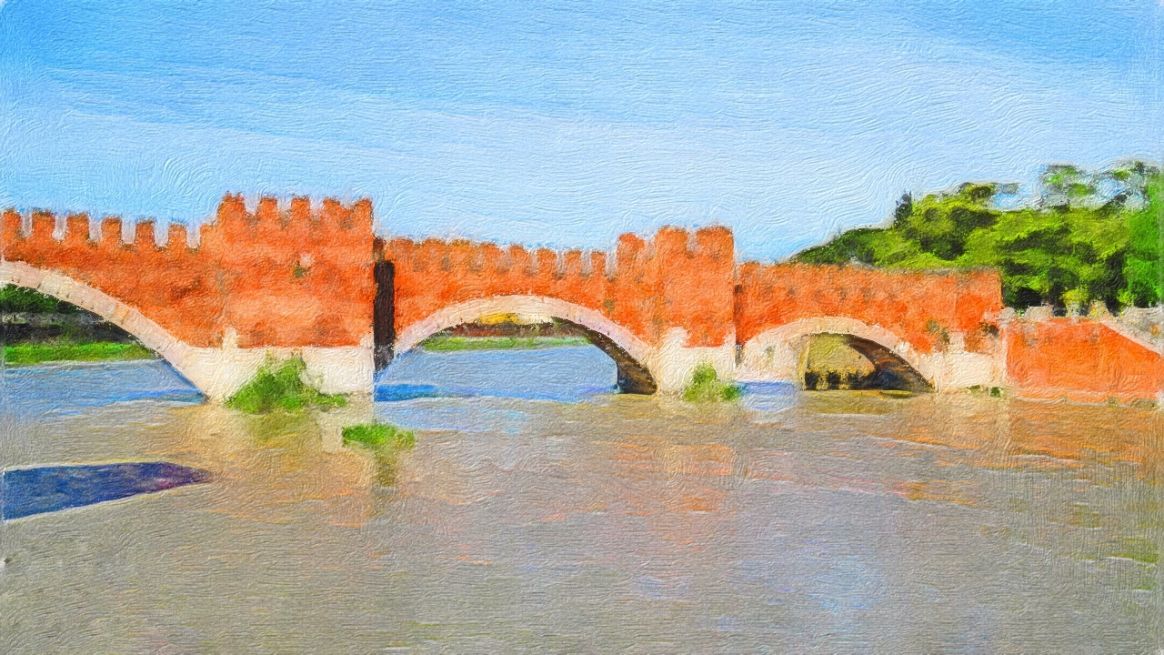
He dragged me to Ponte di Castelvecchio, the fortified medieval bridge spanning the Adige, where tourists crowded together, phones and cameras raised. I squeezed past them to peer through one of the crenellations and marvelled at the broad sweep of water gliding silently beneath us, the afternoon sun dazzling on its surface.

Behind me, an American voice was enthusiastically explaining the bridge’s history.

“Of course, it’s not really the original bridge because it was blown up by the German army in 1945 and rebuilt using the stones recovered from the river.”

After a fair amount to drink, I have a habit of retreating into my own little world.

Had I been fully aware of my surroundings, I might have noticed the commotion further along the bridge, followed by a loud cheer. Seconds later there was an enormous splash as somebody landed feet first in the Adige. The young man waved happily as the current carried him towards Ponte della Vittoria.

Frank Horse eventually climbed out further downstream, where he was promptly arrested by the decidedly humourless Polizia Locale.

Alas, he never made it to Paradiso.

On finding that leather’s just for the look…

There is a room at the top of Signora Bruschi’s house that is filled with clutter. It is where unwanted things are taken to be forgotten. The good lady mentioned that there were boxes up there that had belonged to Pietro—and that they probably belonged to me now. It was a less-than-subtle hint that I ought to sort through them. I pretended not to hear.

Three boxes appeared in my room the following day.

Box Number One

Inside was an old Italian-language paperback, Fratelli by John Preston. The price sticker on the back still read L. 4.500. Time had turned the edges of the pages a brittle amber, carrying the faint scent of vanilla, dust and old glue. The book fell open naturally at page 142, where a paragraph had been permanently marked by the back of an old glossy Polaroid.

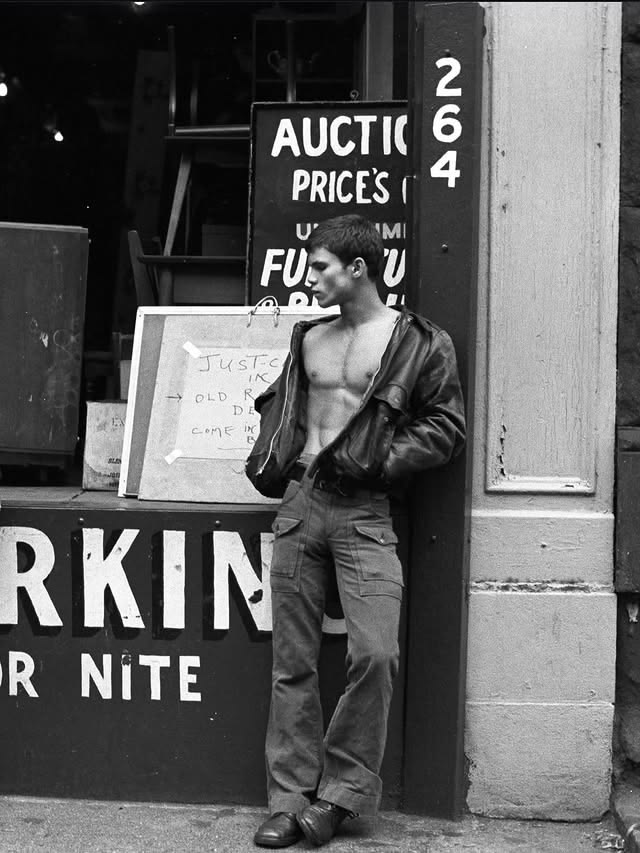
I recognised the photograph immediately. I’d seen it before. It was Hustler by Christopher Makos and taken in 1977: a handsome young man wearing nothing but a pair of jeans and a leather jacket, provocatively unzipped to reveal a well-toned chest.

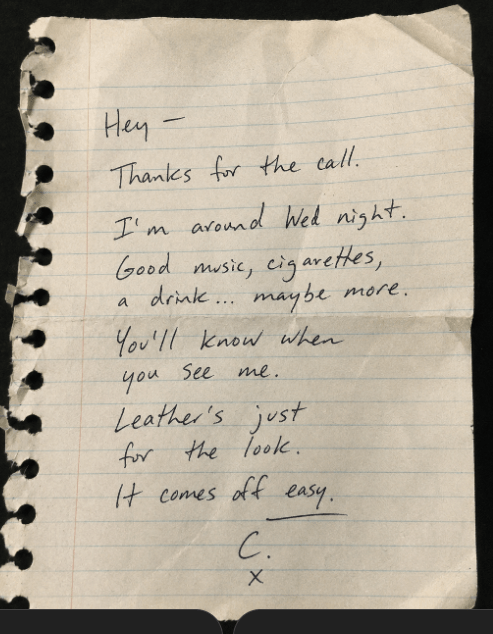
Tucked inside the pages was a note, apparently torn from an old notebook.

One line leapt out at me.

“Leather’s just for the look. It comes off easy.”

On looking at young Peter again …

Well, I’m apparently being accused of hating David Hockney.

According to my inbox, my post about Peter Schlesinger, his lover and muse for three years, was unfairly biased in favour of the American (who, incidentally, is alive and well). Fair enough. But while I’ve always admired Hockney’s work—indeed, I seem to be surrounded by Hockney art at the moment—I never found the man himself in the least bit attractive.

The same could not be said of Peter Schlesinger fifty years ago. He was, surely, every man’s erotic dream.

I’ve now managed to get hold of Schlesinger’s A Chequered Past (2003), a collection of photographs taken during the 1960s and 1970s, accompanied by brief autobiographical reflections. (Note to self: why are old photography books always so darned expensive?)

The point I had tried to make—and evidently failed to make very well—was that Hockney was extraordinarily fortunate to have shared part of his life with someone like Schlesinger. Today, of course, such a teacher-student relationship would rightly raise serious ethical questions.

And perhaps Hockney was a little naïve not to realise that young free spirits have always had a habit—as they still do—of looking around the next corner.

How I would have loved to have been a fly on the wall during that “dramatic and public break-up” in Cadaqués in 1971.
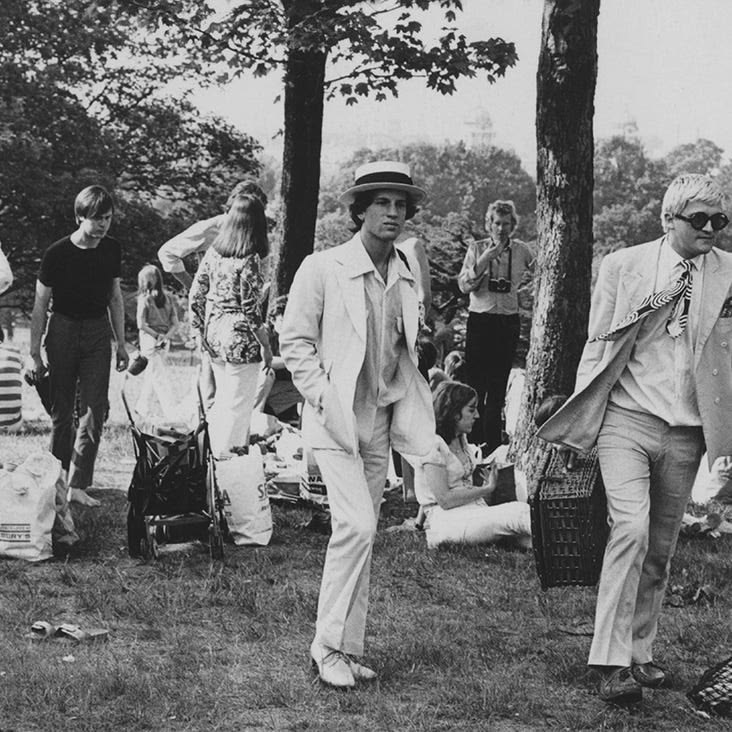

On being fooled by Dorian Grai …

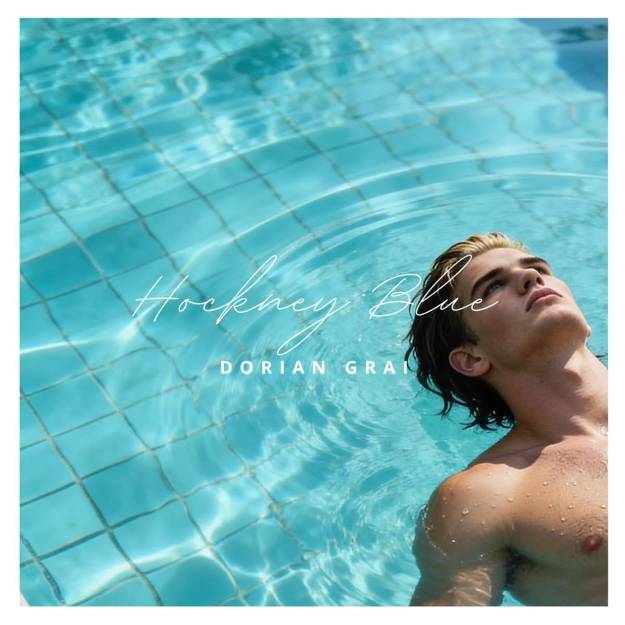
Spotify chucked a recommendation my way.

It was a singer called Dorian Grai and a song entitled Hockney Blue, which I found surprisingly seductive. It is a tribute to David Hockney’s swimming pool paintings, particularly those populated by cute, half-naked young men.

A snapshot of the lyrics gives you the general drift.

I’ve had one night on my youth slipping away ever since I saw the boy who knew nothing of decay.

He slipped into the water cool, how it possessed him. So that every drop glistened as a diamond on his skin.

I can see him now as he swims across, how his body’s framed in that azure box.

And I had to be an admirer of the boy I knew I could never love.

So I wish him well, how I make my peace, and I take his portrait as a memory. And I see the stars and I smell the flowers, how the day is gone forever.

He was the boy in the turquoise swimming shorts, tanned skin, black hair, his body lean and honed and young.

He slipped into the swimming pool of Hockney blue.

So that all I could do was sit still, held beneath my eyes.

According to Blakeman Records, Dorian Grai is a twenty-year-old British-American digital artist. Hockney Blue is described as a smooth tropical house track with delicate harmonies and jazzy motifs—a paean both to the paintings of David Hockney and to the yearning regret of a love that never had the chance to blossom.

There is also an interview with the handsome young man.

“I’ll never forget how it felt to write my first song and to listen back to it. I was electrified by the act of creativity—that I had made this thing that had never existed before in the world—and I was hooked.”

Well, I like the song and I like the sentiment, but—and it is a very big but—it is entirely AI-generated, as is Dorian Grai himself.

To be fair, there is no attempt at deception. Everything is out in the open, right down to the lustfully created video of him swimming half-naked in a pool.

On the cute and willing…
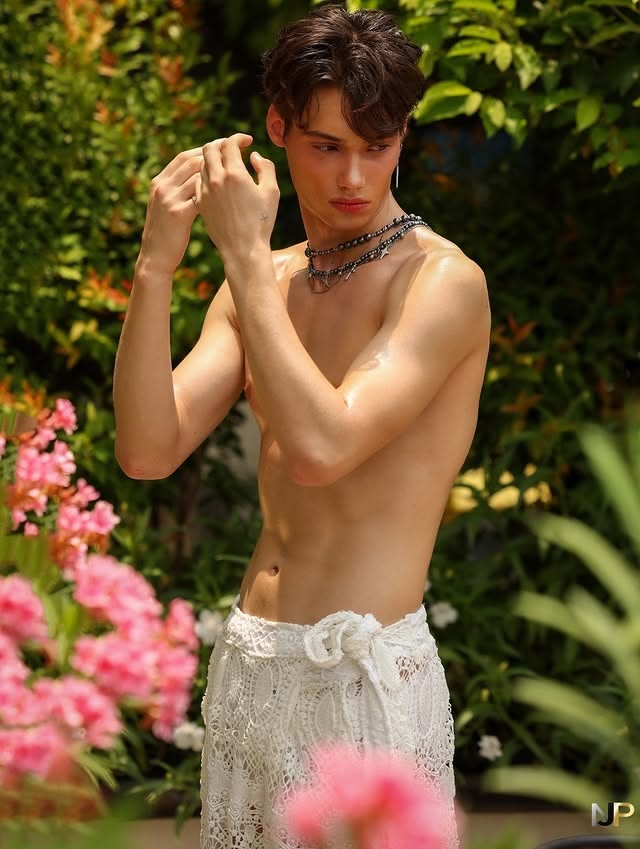
Yehor at MOSS Management, Paris. Photo by Pasith Thirawatworakun (2026)

The Boy Who Never Grew Old

I think I may have fallen in love with someone.

A twenty-something with soft, youthful features and a quiet demeanour. He is highly desirable; his image has become an indelible symbol of Californian beauty and desire.

There is a problem.

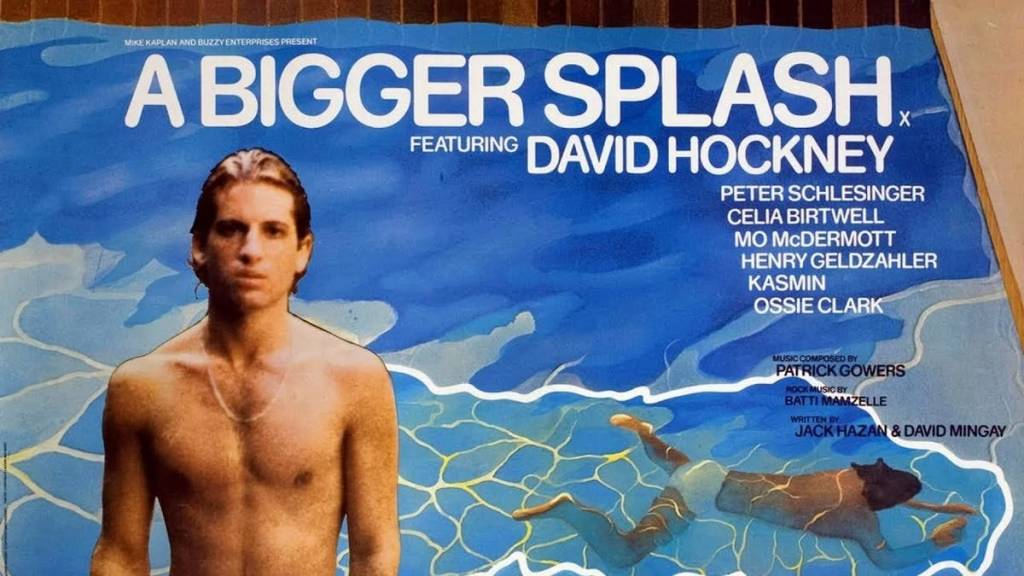
A Bigger Splash, directed by Jack Hazan, was a groundbreaking film that merged documentary with scripted drama to explore a poignant period in David Hockney’s life between 1971 and 1973.

Released in 1974, A Bigger Splash chronicles the emotional fallout and creative struggle that followed Hockney’s devastating break-up with his young partner and muse, Peter Schlesinger. It received mixed reviews, with Private Eye dismissively referring to it as A Bugger’s Pash.

And yes, I have fallen in love with Schlesinger as he was more than fifty years ago.

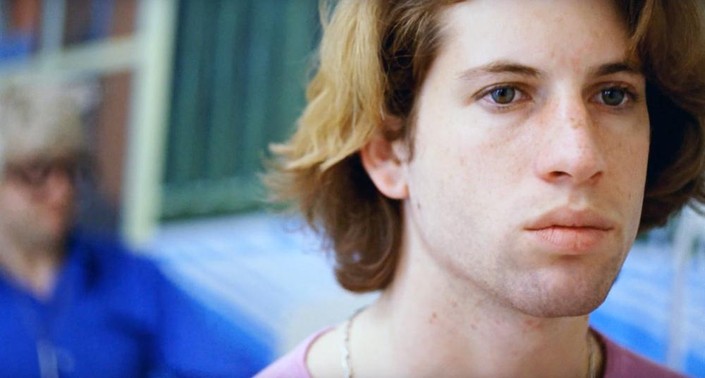
In the film we see Schlesinger, clad only in white briefs, dancing with himself before an easel. He gets it on with a friend, the actor Eddie Kalinsky, skinny-dips with a pool full of twinks, and later swims alone, completely naked, before climbing out and revealing everything we wanted to know.

He was a handsome fellow with long, floppy hair, and Hockney was understandably devastated to lose him. In retrospect, A Bigger Splash is a remarkable piece of filmmaking, freezing Schlesinger in time.

He was in his mid-twenties and was rumoured to have agreed to appear only during the final months of production, and only if he was paid.

Hockney was said to have been “utterly shattered” by A Bigger Splash and allegedly offered Hazan $20,000 to destroy it.

These old films play tricks on us. They invite us into an imagined one-to-one connection, creating the illusion that we know the subject’s true personality. We fill the historical gaps with our own desires, values and fantasies. In effect, we create the perfect partner.

But it is a one-sided, unreciprocated affair. It gives us the experience of romantic love and emotional attachment without the risk of rejection or conflict. He can never disappoint me, change his mind, or break the spell of his visual perfection.

Schlesinger became the myth of the eternal muse.

There is another problem.

Our minds struggle to comprehend the ageing process, and the fact that Schlesinger is alive and well, now approaching eighty, threatens to shatter that myth.

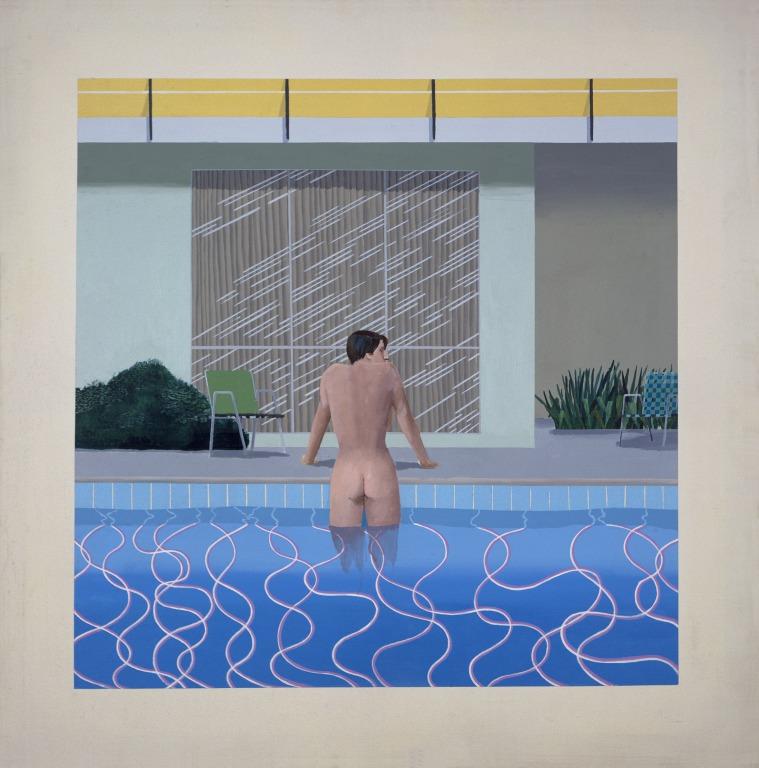
Schlesinger was born in 1948 in Encino, in California’s sun-drenched San Fernando Valley, the son of an insurance agent and a social worker. He studied drawing at UCLA and, in 1966, aged eighteen, met Hockney, who was teaching a summer class. He soon became the subject of one of Hockney’s best-known paintings, Peter Getting Out of Nick’s Pool.

He had stepped into an unfamiliar world, and who could have blamed him? Suddenly he was socialising with museum curator Henry Geldzahler and art dealers Nicholas Wilder and John Kasmin, while also befriending novelist Christopher Isherwood and artist Don Bachardy.

After graduating, Schlesinger moved to London with Hockney and enrolled at the Slade School of Fine Art. There he was introduced to Hockney’s bohemian circle, including the designer duo Ossie Clark and Celia Birtwell.

Hockney and Schlesinger were together for three years, and it was fortunate that Hazan chose the period of their separation as the backdrop for his documentary.

The question I kept asking myself was simple: why did the relationship end?

By then Hockney was in his thirties, and the imbalance in both age and influence inevitably played its part. Schlesinger struggled to establish an identity of his own while living within Hockney’s enormous social and professional orbit.

There was also the suggestion that Hockney became consumed by his work, leaving Schlesinger isolated, waiting for an artist who often seemed to prioritise the canvas over the relationship.

The cracks had already appeared.

The most convincing explanation, however, is that Schlesinger had fallen in love with someone closer to his own age—someone equally beautiful.

Schlesinger met the Swedish-born design student Eric Boman in March 1971 at Mr Chow’s restaurant in Knightsbridge. Following the London premiere of Visconti’s Death in Venice, Paloma Picasso invited Boman, Manolo Blahnik and Andy Warhol’s business partner Fred Hughes to dinner with Hockney and Schlesinger.

Hockney later regretted deciding not to attend.

“David was not interested,” recalled Boman, “so this adorable boy turned up at our table in a camel hair Ossie Clark coat.”

Schlesinger said it was love at first sight.

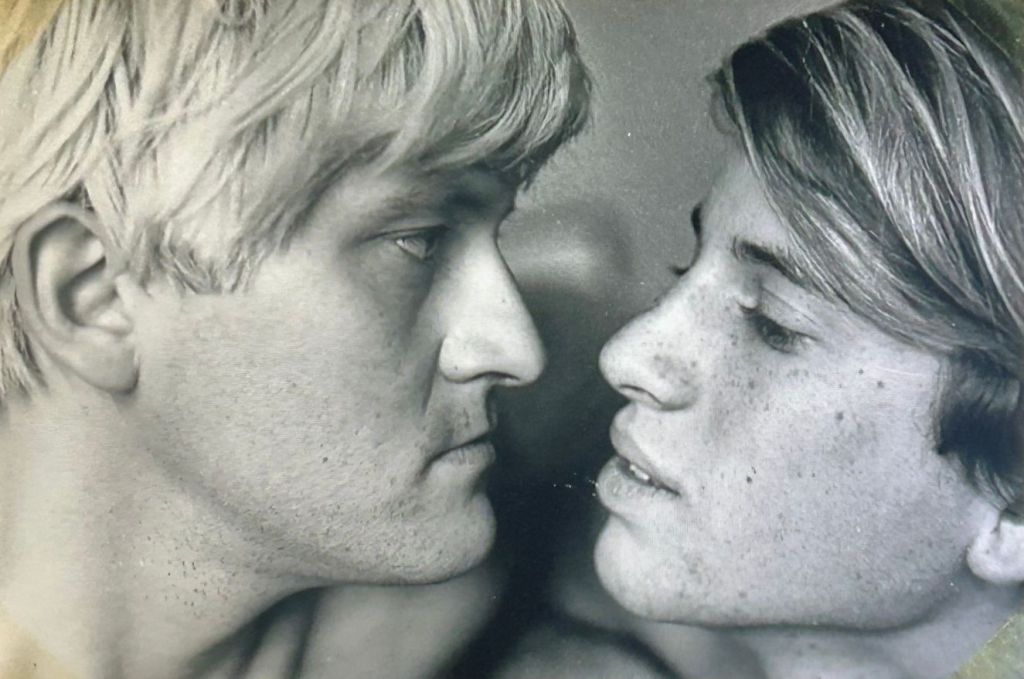
The final straw came a few months later during a group holiday in Cadaqués, Spain, where Schlesinger and Boman met again. Fatigued by constant drama, emotional claustrophobia and the pressure of being Hockney’s primary visual obsession, Schlesinger found himself drawn ever closer to Boman.

“Peter came with David Hockney and notoriously stayed on, causing their real dramatic and public break up. It was considered best that Peter and I go home, and we left at the crack of dawn in Ossie Clark’s Bentley, hoping to spend a night at Tony Richardson’s on the way, but he’d have none of it out of solidarity to DH. So we ended up at Mick and Bianca’s (Jagger). The next morning, Ossie put us on a train at Sainte-Anne, and since we had no reservations, the conductor let us stand in the corridor all the way to Paris in our swimsuits – the beginning of our new life.”

Hockney sank into depression and responded with bitterness and jealousy. In A Bigger Splash, he remarked that he might consider destroying the ‘Peter’ works. But, in fairness to Hockney, and all others who had lost their first love, who could have blamed him.

It took Schlesinger a long time to escape Hockney’s emotional pull. Jack Hazan later recalled in a Vice interview that Hockney would entice Schlesinger back under the pretence of painting him, simply so he could be near him. Schlesinger reportedly found this both “petulant” and “suffocating”, and longed to escape Hockney’s web.

One of the most important paintings from this period—and one that features in A Bigger Splash—is Portrait of an Artist (Pool with Two Figures). In 2018 it sold at auction for a record-breaking $90 million.

“I don’t even think it’s a portrait of me, really,” Schlesinger said. “The figure standing beside the pool was a solution to a ‘conceptual’ problem, regarding composition and light, rather than an outpouring of romantic longing.”

After the break-up, Schlesinger moved into his own studio around the corner from Hockney. His relationship with Boman involved a lengthy commute between Notting Hill and Battersea by bus and bicycle.

Alongside painting, Schlesinger had always been interested in photography, but it was Boman who made a career from it. After borrowing Schlesinger’s Pentax camera, he became highly sought after for his art, fashion and society photography.

“Eric is very methodical and likes setups. I just snap pictures and he doesn’t understand that,” Schlesinger once said.

Eric Boman

During the 1980s Schlesinger also became disenchanted with painting and turned instead to ceramics, an art form he continues to pursue.

The couple moved to New York in 1978 and, a year later, settled in a tenth-floor loft where the Flatiron District meets Chelsea, in a building that had once housed a girdle factory. Four years later they bought a mid-nineteenth-century Greek Revival house near Bellport on Long Island, where they spent their summers.

Schlesinger and Boman remained together for fifty-one years, with Hockney once referring to them as a “couple of old maids.”

Eric Boman died of pancreatic cancer in 2022.

In recent years Schlesinger said he had no contact with Hockney and, referring to A Bigger Splash, reflected: “It’s not about me. It’s so long ago, it’s like a different person.”

But Schlesinger is like a painting in a museum.

Perhaps the only way to live forever is inside a work of art, and Schlesinger’s life remains preserved in Hockney’s paintings and, to some extent, in A Bigger Splash.

It is vintage media: a pre-digital art world, a lost world of effortless style, leisure and raw creativity.

And I am still in love with the young Peter Schlesinger.

Peter Getting Out of Nick’s Pool. David Hockney (1966)
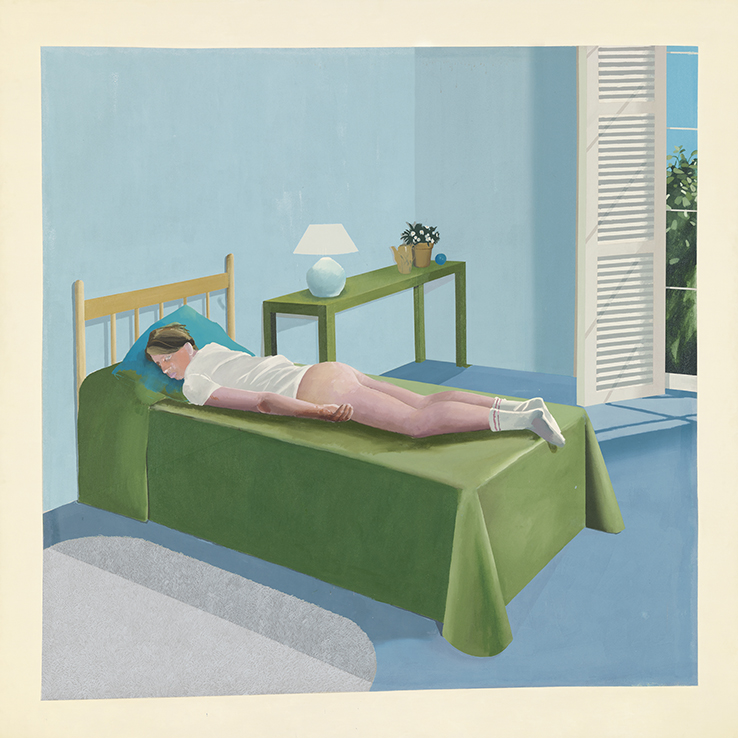
The Room, Tarzana. David Hockney (1967)
The last word. Peter Schlesinger’s Instagram post after Hockney’s death.

 My Week, For What It Was Worth

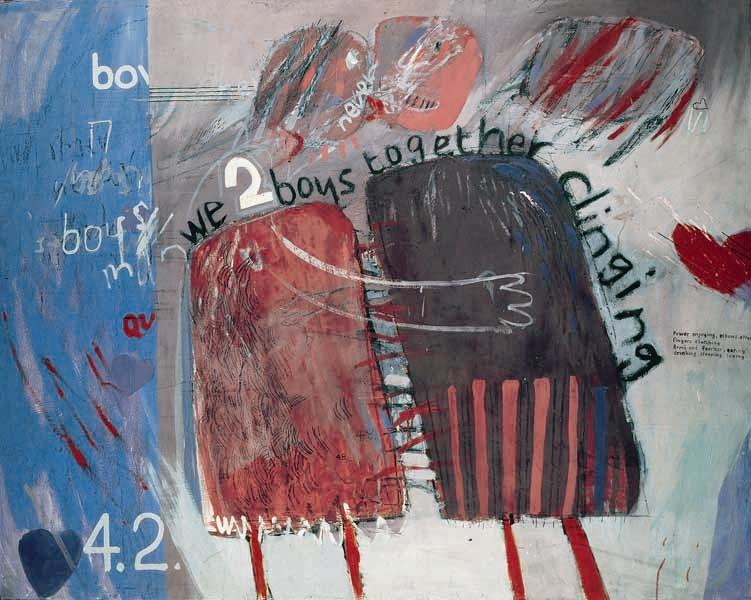
We Two Boys Together Clinging. David Hockney (1961). Its name derives from a poem by Walt Whitman and two lines from it are scribbled to the right. It also references a newspaper clipping detailing a climbing accident – ‘Two Boys Cling to Cliff All Night’ which Hockney interpreted as an illusion to his idol, Cliff Richard. (Arts Council Collection)

On the life of David Hockney…
A strange thing happened. I mentioned to a friend that I wanted to watch A Bigger Splash — the 1974 documentary about the artist David Hockney, in which his lover of three or four years, Peter Schlesinger, leaves him during filming.

I still hadn’t watched it, and the following day, it was announced that Hockney had died at the age of 88.

The news reminded me of a few years ago when I was given a Hockney print, Two Boys Clinging Together. I made a convincing show of being overwhelmed by it, but the truth was rather different. The print never made it onto the wall; to my eye, it looked like something I might have painted when I was four. His work never entirely won me over.

That said, I have always liked his California pool paintings from the 1960s and 1970s, although nobody has ever bought me one. My favourite is Peter Getting Out of Nick’s Pool (1966), which depicted the 19-year-old Schlesinger climbing from a swimming pool at the Hollywood apartment block where art dealer and gallery owner, Nick Wilder, lived.

I spent a few hours reading about Hockney — a man who, if I am honest, irritated me immensely. His dour Yorkshire monotone seemed at odds with the loud bow ties, red braces and trademark spectacles. He occupied the same corner of my imagination as the writer Alan Bennett; the two could almost have been twins. Yet it is impossible not to admire his courage. He was painting gay love at a time when homosexuality was still effectively illegal in Britain.

America held a particular attraction for him:

“I must admit, I’d begun to be interested in America from a sexual point of view; I’d seen American Physique Pictorial magazines when I first came to London. And they were full of what I thought were very beautiful bodies. I painted Domestic Scene from a photograph in Physique Pictorial, where there’s a boy with a little apron tied around his waist, scrubbing the back of another boy in a rather dingy American room; I thought, ‘That’s what a domestic scene must be like there.’”

But my favourite Hockney quotation comes from David Hockney in Paris, a BBC documentary from 1975:

“Men in white socks are very sexy. White tee-shirts are quite sexy, but not so sexy as socks.”

Peter Getting Out of Nick’s Pool. David Hockney (1966).
Rodney Harvey (1967–1998) was an American actor, dancer, and model celebrated for his appearances in critically acclaimed 1990s films like My Own Private Idaho.

On good looking guys who died young…
It is an unhealthy fascination. I have a curious interest in those young guys who left us too soon. I have a list of the unfortunates and will get to them in future posts. But the list is tragically long. There’s something mythic about it. At the height of beauty, talent, or promise, they stop aging while we keep going. They are fixed in our memory and will never change; permanently charged with youth and possibility. Although, there are too many stories where death came about due to self destruction – the doomed poet, the tragic actor and the brilliant addict. I mourn them all and kid myself that if I’d been around them their fate might have been different.

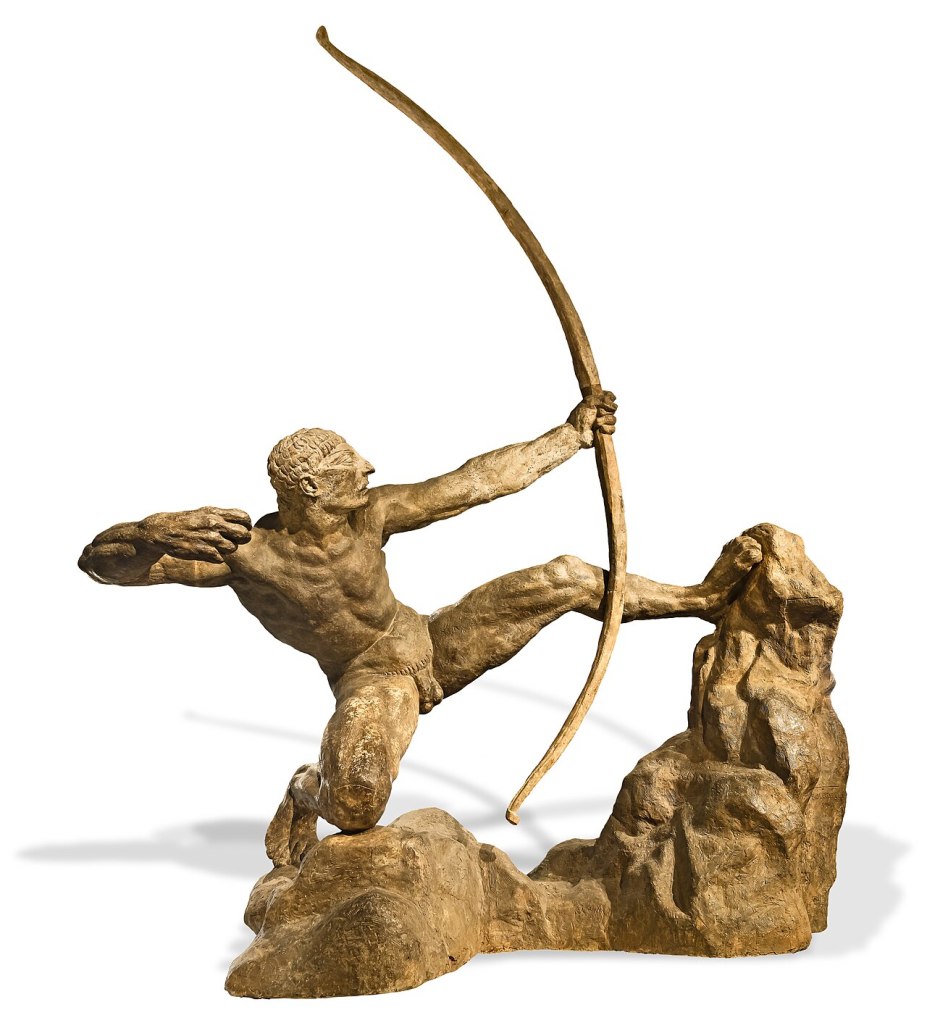
Héraklès Archer – Hercules the Archer . Antoine Bourdelle (1909) .

On a sculptor and a real-life model…
I’m not entirely sure I like the sculpture, but I’m fascinated by how it was created. Hercules the Archer (1909), by the French sculptor Antoine Bourdelle (1861-1929), now exists in several versions, although it was originally commissioned by the financier and philanthropist Gabriel Thomas as a unique work.

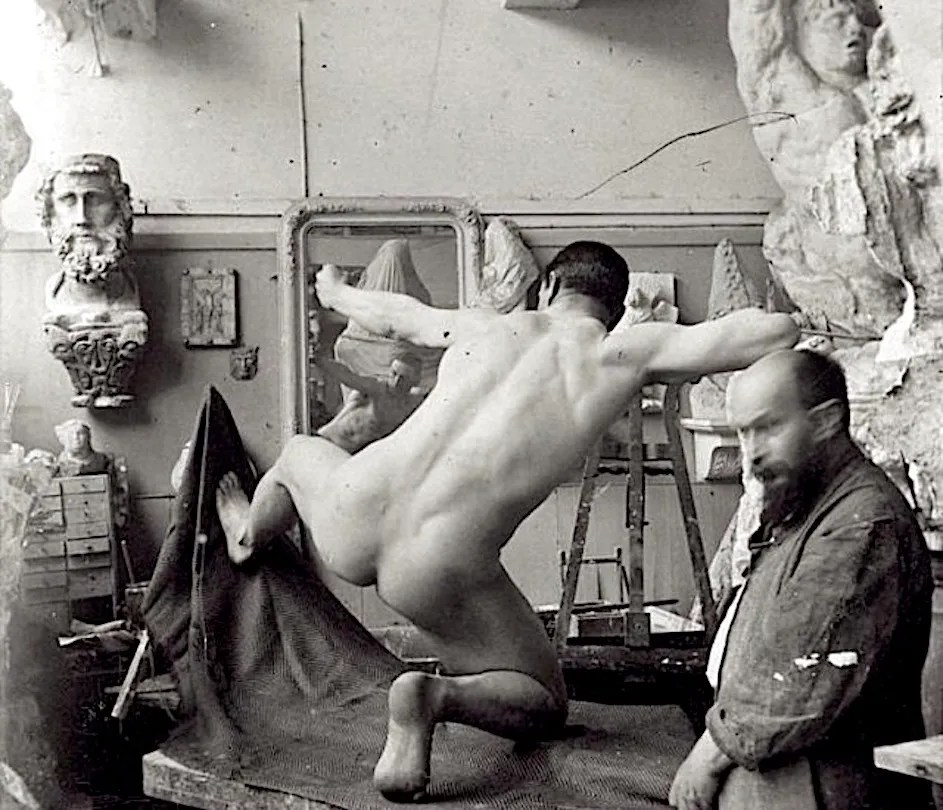
Bourdelle modelled the sculpture in clay during the summer of 1909, using his friend Paul Gustave André Doyen-Parigot (1854–1916), a captain in the French Army, as his model. An accomplished sportsman, Doyen-Parigot possessed the physical strength and athleticism required for the pose. The dramatic extension of the body and the intense muscular tension of archery allowed Bourdelle to emphasise the model’s powerful physique.

At Doyen-Parigot’s request for anonymity, however, Bourdelle altered the head, distancing the finished figure from a direct portrait and transforming it into the heroic image of Hercules.

Paul Gustave André Doyen-Parigot modelling for Antoine Bourdelle.

On having childhood regrets…
What if I had understood what was happening? What if I had been brave enough to acknowledge it? What might have become of us? Would he still have been my best friend?

Why was I thinking about Darren this week? Perhaps because some questions never quite leave us. When he later discovered that I was gay, he drifted out of my life. We have not spoken since.

On finding a poem about Manly Love…
Douglas Malloch (1877–1938) was an American poet, short-story writer and Associate Editor of American Lumberman, a trade paper in Chicago.

Manly Love
Deep in your heart understand
the love of a man for a man;
He’ll go with you over the trail,
the trail that is lonesome and long;
His faith will not falter nor fail,
nor falter the lilt of his song.
He knows both your soul and your sins,
and does not too carefully scan,—
The Highway to Heaven begins
with the love of a man for a man!


– Donald Malloch

The poem is preserved in modern literary history as an early piece of Western gay literature. It is notably featured in The Columbia Anthology of Gay Literature, compiled by Byrne R. S. Fone. It was also collected in historic specialty anthologies such as Men and Boys (edited by Edward Mark Slocum), which curated historical verses exploring Greek love, male friendships, and same-sex devotion across different eras.

On the cute and willing…
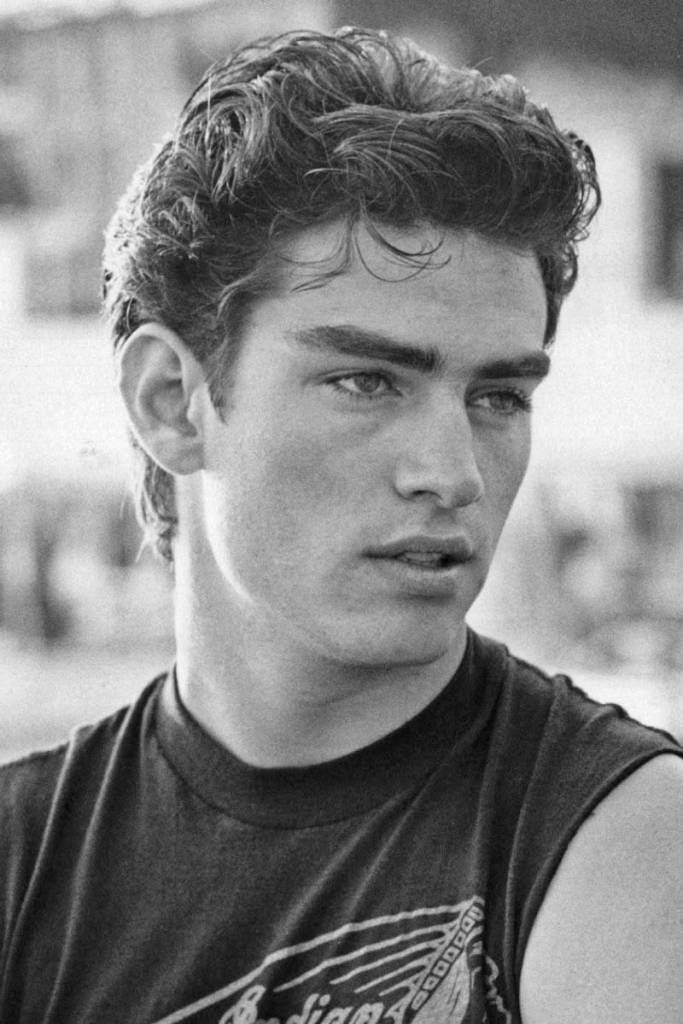
Johannes Knop shot by Gabriela Bluske (2026).