Tag Archives: Sculpture

 My Week, For What It Was Worth

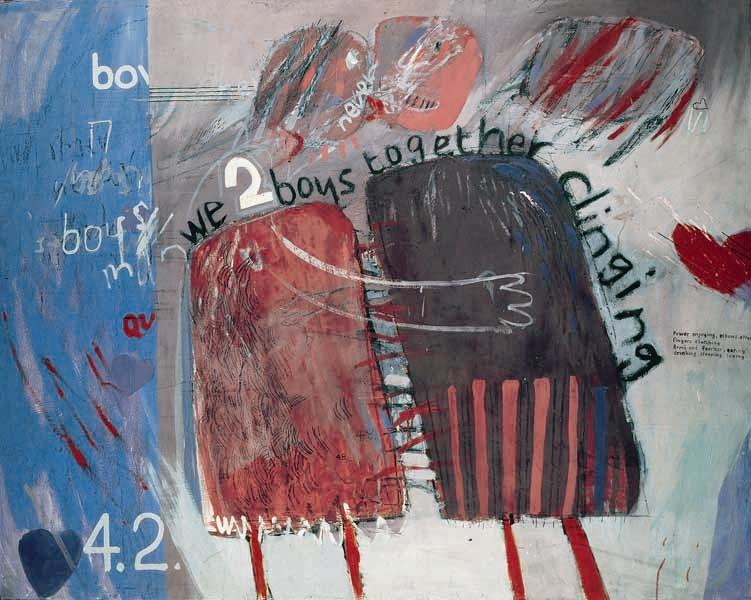
We Two Boys Together Clinging. David Hockney (1961). Its name derives from a poem by Walt Whitman and two lines from it are scribbled to the right. It also references a newspaper clipping detailing a climbing accident – ‘Two Boys Cling to Cliff All Night’ which Hockney interpreted as an illusion to his idol, Cliff Richard. (Arts Council Collection)

On the life of David Hockney…
A strange thing happened. I mentioned to a friend that I wanted to watch A Bigger Splash — the 1974 documentary about the artist David Hockney, in which his lover of three or four years, Peter Schlesinger, leaves him during filming.

I still hadn’t watched it, and the following day, it was announced that Hockney had died at the age of 88.

The news reminded me of a few years ago when I was given a Hockney print, Two Boys Clinging Together. I made a convincing show of being overwhelmed by it, but the truth was rather different. The print never made it onto the wall; to my eye, it looked like something I might have painted when I was four. His work never entirely won me over.

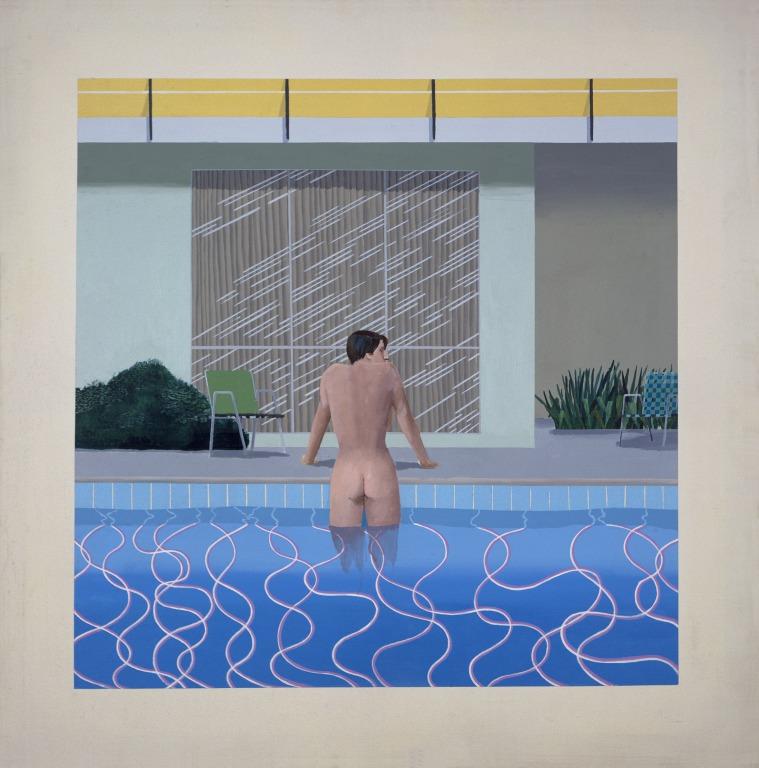
That said, I have always liked his California pool paintings from the 1960s and 1970s, although nobody has ever bought me one. My favourite is Peter Getting Out of Nick’s Pool (1966), which depicted the 19-year-old Schlesinger climbing from a swimming pool at the Hollywood apartment block where art dealer and gallery owner, Nick Wilder, lived.

I spent a few hours reading about Hockney — a man who, if I am honest, irritated me immensely. His dour Yorkshire monotone seemed at odds with the loud bow ties, red braces and trademark spectacles. He occupied the same corner of my imagination as the writer Alan Bennett; the two could almost have been twins. Yet it is impossible not to admire his courage. He was painting gay love at a time when homosexuality was still effectively illegal in Britain.

America held a particular attraction for him:

“I must admit, I’d begun to be interested in America from a sexual point of view; I’d seen American Physique Pictorial magazines when I first came to London. And they were full of what I thought were very beautiful bodies. I painted Domestic Scene from a photograph in Physique Pictorial, where there’s a boy with a little apron tied around his waist, scrubbing the back of another boy in a rather dingy American room; I thought, ‘That’s what a domestic scene must be like there.’”

But my favourite Hockney quotation comes from David Hockney in Paris, a BBC documentary from 1975:

“Men in white socks are very sexy. White tee-shirts are quite sexy, but not so sexy as socks.”

Peter Getting Out of Nick’s Pool. David Hockney (1966).
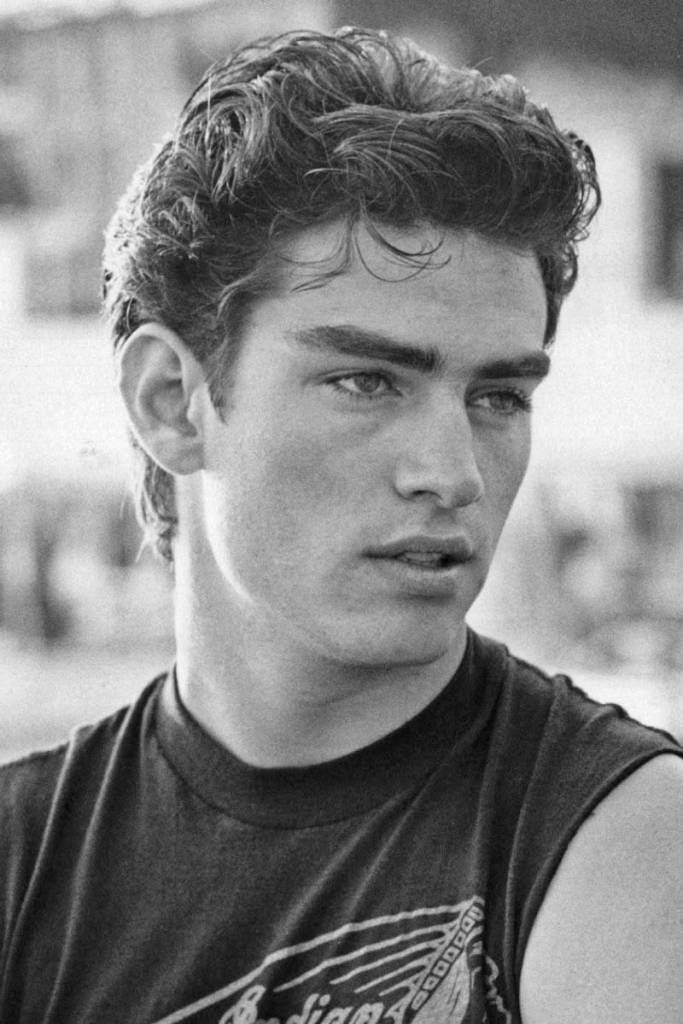
Rodney Harvey (1967–1998) was an American actor, dancer, and model celebrated for his appearances in critically acclaimed 1990s films like My Own Private Idaho.

On good looking guys who died young…
It is an unhealthy fascination. I have a curious interest in those young guys who left us too soon. I have a list of the unfortunates and will get to them in future posts. But the list is tragically long. There’s something mythic about it. At the height of beauty, talent, or promise, they stop aging while we keep going. They are fixed in our memory and will never change; permanently charged with youth and possibility. Although, there are too many stories where death came about due to self destruction – the doomed poet, the tragic actor and the brilliant addict. I mourn them all and kid myself that if I’d been around them their fate might have been different.

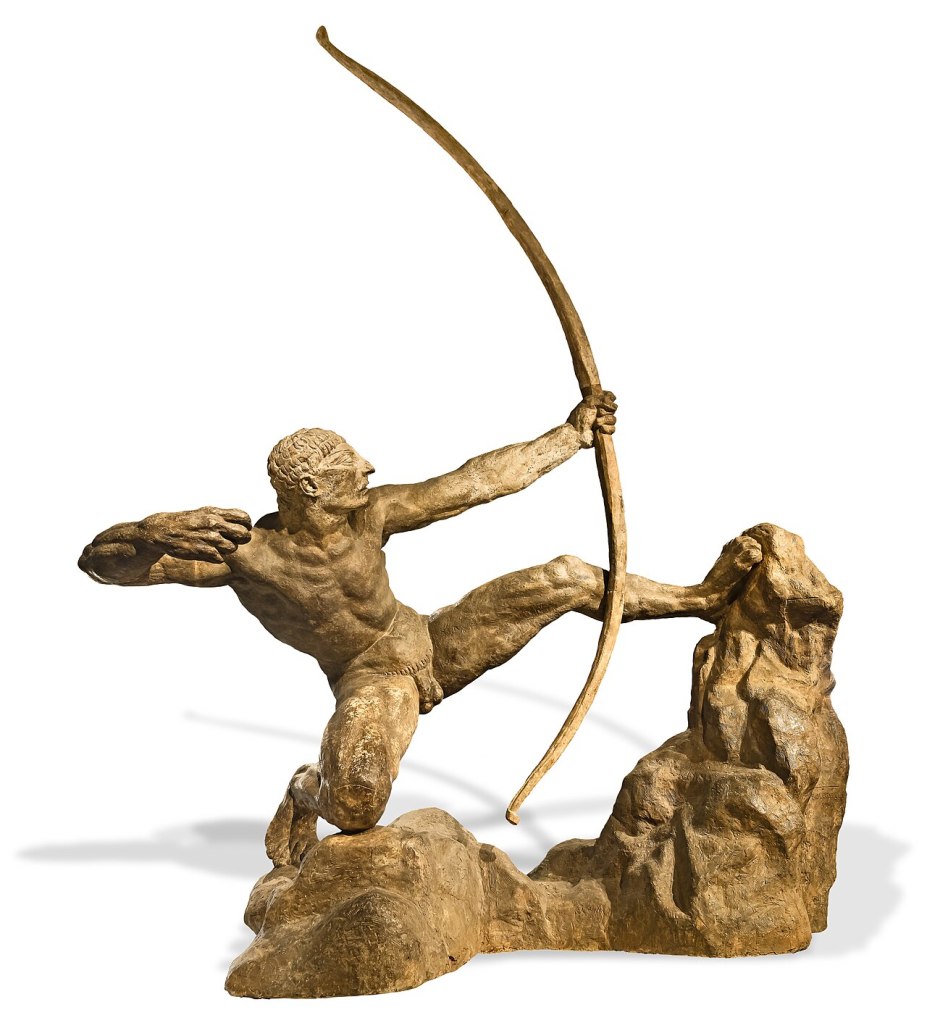
Héraklès Archer – Hercules the Archer . Antoine Bourdelle (1909) .

On a sculptor and a real-life model…
I’m not entirely sure I like the sculpture, but I’m fascinated by how it was created. Hercules the Archer (1909), by the French sculptor Antoine Bourdelle (1861-1929), now exists in several versions, although it was originally commissioned by the financier and philanthropist Gabriel Thomas as a unique work.

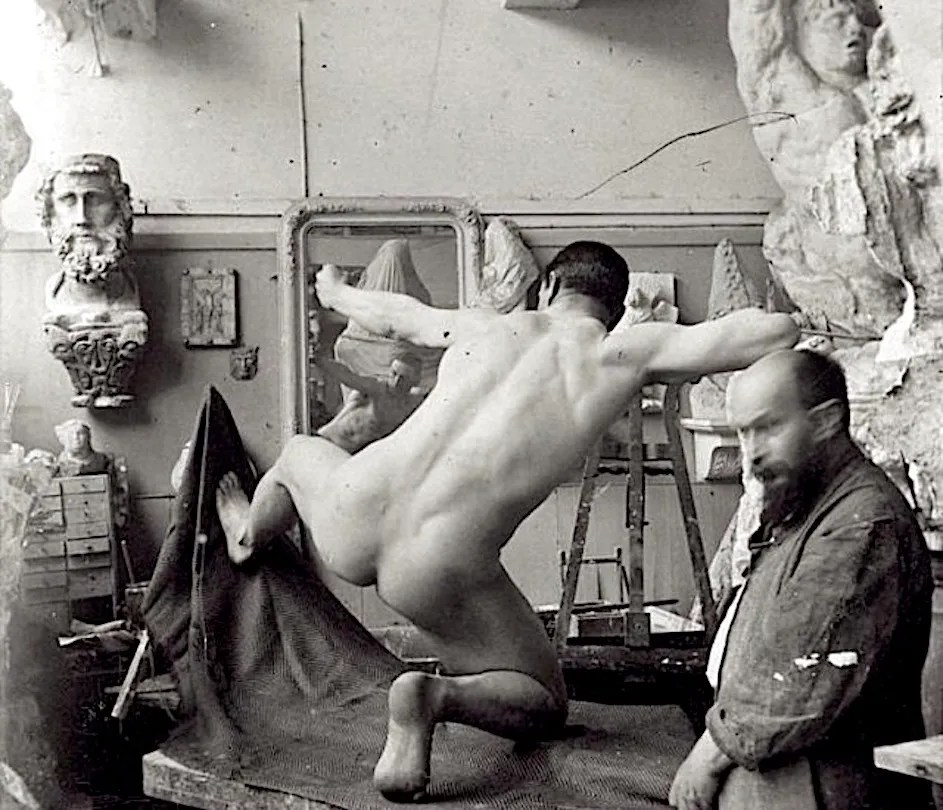
Bourdelle modelled the sculpture in clay during the summer of 1909, using his friend Paul Gustave André Doyen-Parigot (1854–1916), a captain in the French Army, as his model. An accomplished sportsman, Doyen-Parigot possessed the physical strength and athleticism required for the pose. The dramatic extension of the body and the intense muscular tension of archery allowed Bourdelle to emphasise the model’s powerful physique.

At Doyen-Parigot’s request for anonymity, however, Bourdelle altered the head, distancing the finished figure from a direct portrait and transforming it into the heroic image of Hercules.

Paul Gustave André Doyen-Parigot modelling for Antoine Bourdelle.

On having childhood regrets…
What if I had understood what was happening? What if I had been brave enough to acknowledge it? What might have become of us? Would he still have been my best friend?

Why was I thinking about Darren this week? Perhaps because some questions never quite leave us. When he later discovered that I was gay, he drifted out of my life. We have not spoken since.

On finding a poem about Manly Love…
Douglas Malloch (1877–1938) was an American poet, short-story writer and Associate Editor of American Lumberman, a trade paper in Chicago.

Manly Love
Deep in your heart understand
the love of a man for a man;
He’ll go with you over the trail,
the trail that is lonesome and long;
His faith will not falter nor fail,
nor falter the lilt of his song.
He knows both your soul and your sins,
and does not too carefully scan,—
The Highway to Heaven begins
with the love of a man for a man!


– Donald Malloch

The poem is preserved in modern literary history as an early piece of Western gay literature. It is notably featured in The Columbia Anthology of Gay Literature, compiled by Byrne R. S. Fone. It was also collected in historic specialty anthologies such as Men and Boys (edited by Edward Mark Slocum), which curated historical verses exploring Greek love, male friendships, and same-sex devotion across different eras.

On the cute and willing…
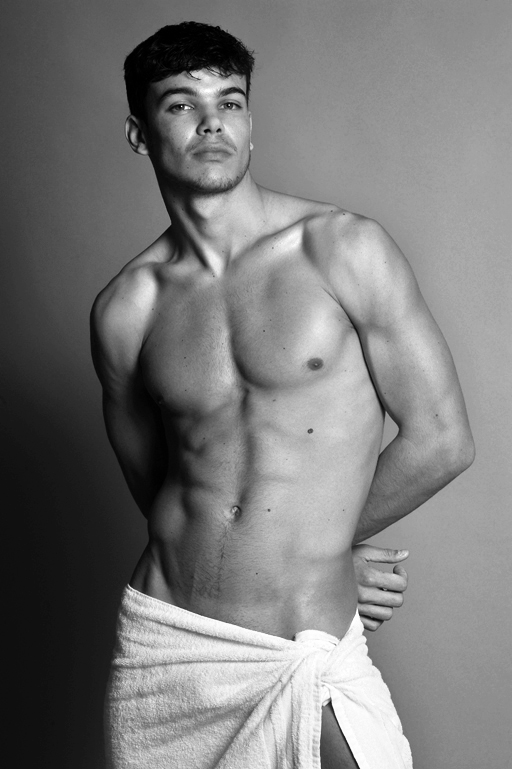
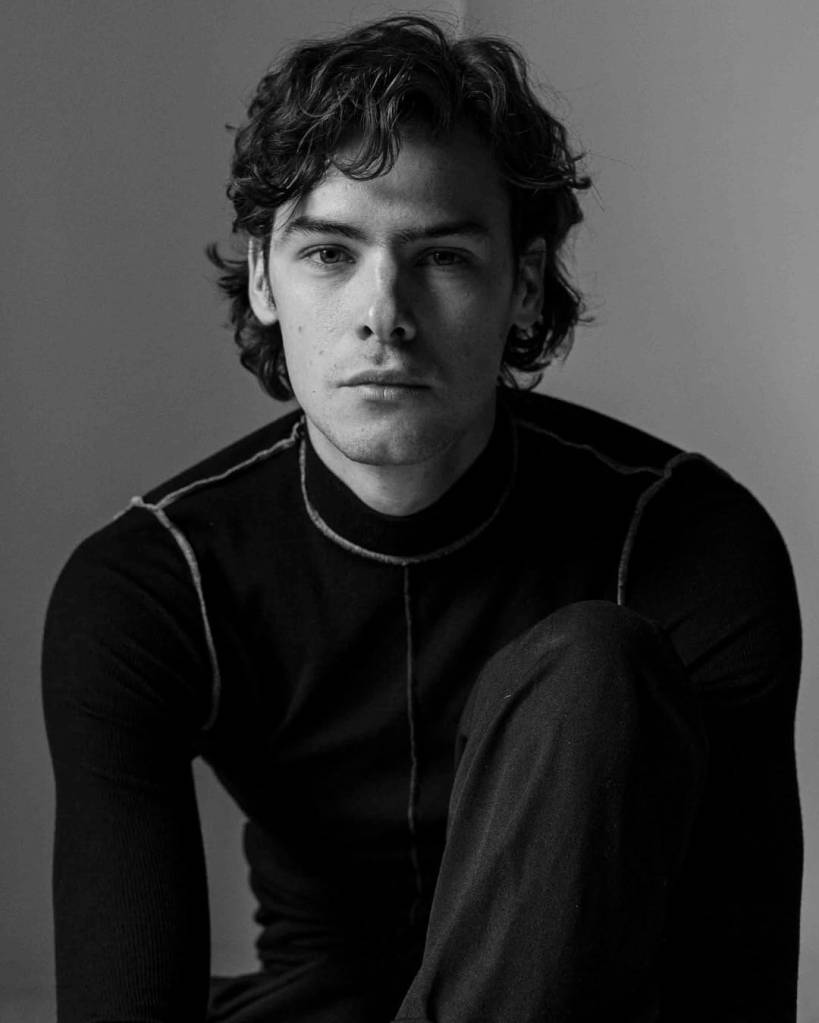
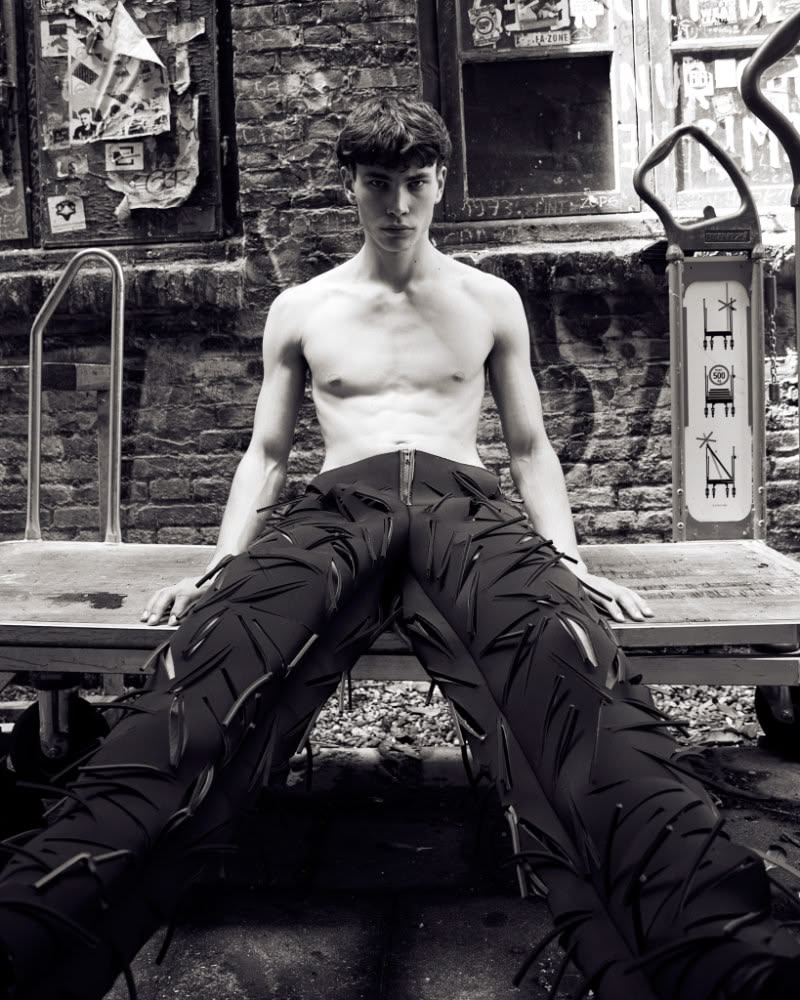
Johannes Knop shot by Gabriela Bluske (2026).

 My Week, For What It Was Worth

The City of the Sun. Photo by Sam Wright, 2024.

On considering my dwindling finances…
I’ve no concept of saving money, which is fine when your job allows a comfortable lifestyle. But that isn’t the case anymore. Work is disappearing fast. People are still interested in reading about European cities – history, best places to go and the secrets that they provide. People still want to read about these places and occasionally make good use of my observations. The number of posh magazines that cost a fortune to buy is increasing and there are thousands of websites wanting to make themselves look good. But the winds of change are making me redundant. First, it was decided that they didn’t want me to travel  anymore – stay at home and research them or, better still, find somebody who lives there to do it. That saved them a lot of money. And now, with AI, they don’t need anybody at all. I’ve considered writing about other subjects but, guess what, nobody wants a real person to write it, especially one that will want to be paid. I read an interview with the author Lee Child, who, in a time now covered in cobwebs, was made redundant and decided to write a novel. He became a millionaire with Jack Reacher. But that’s not going to happen either. As one magazine editor told me, those days have gone, and it was bad luck that I chose a career at the wrong time.

On the missing ‘squatting boy’…
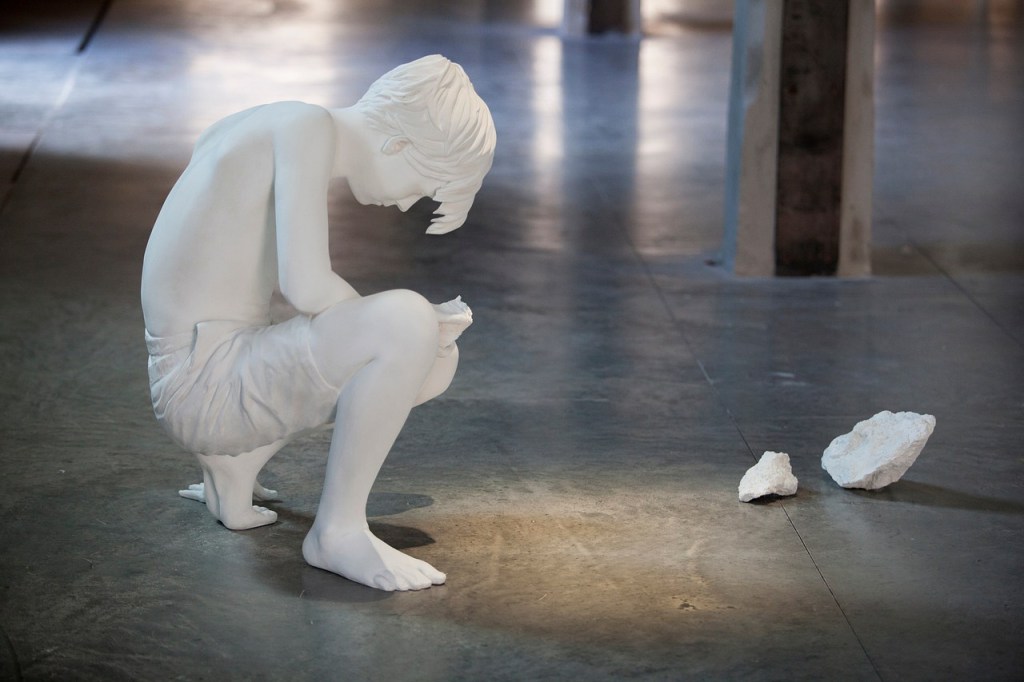
I found a photograph of a sculpture and immediately fell in love with it. It formed part of a three-piece installation titled El problema del caballo (The Horse Problem), displayed in the historic Arsenale — the former cannon foundry- at the Venice Biennale in 2017. Its creator, Claudia Fontes, born and raised in Argentina but now living in England, constructed a scene suspended in time: a monumental horse flanked by a life-sized woman and a squatting boy, all facing a shower of rocks hanging motionless in the air, their shadows scattering across the space to form the fractured outline of the animal itself. The boy seems caught between witnessing the event and studying the fragments at his feet, as though unsure whether he is observing destruction or deciphering it.

I tried to discover what became of the work afterwards, but it appears to have simply vanished. Does it lie forgotten somewhere now — draped beneath a tarpaulin, gathering dust and cobwebs in some anonymous warehouse? Or worse, was it dismantled and destroyed? There is something almost unbearable in the thought that a work of such strange beauty could disappear so completely. Why create something so haunting, so precise in its evocation of wonder and catastrophe, only to hide it away from the world? I am told that, in contemporary art, the act of creation and the conceptual gesture can hold greater value than the object itself. Yet that explanation feels strangely unsatisfying when confronted with something one longs to see.

The Squatting Boy’ – Claudia Fontes (2017)

On the benefits of hot weather…
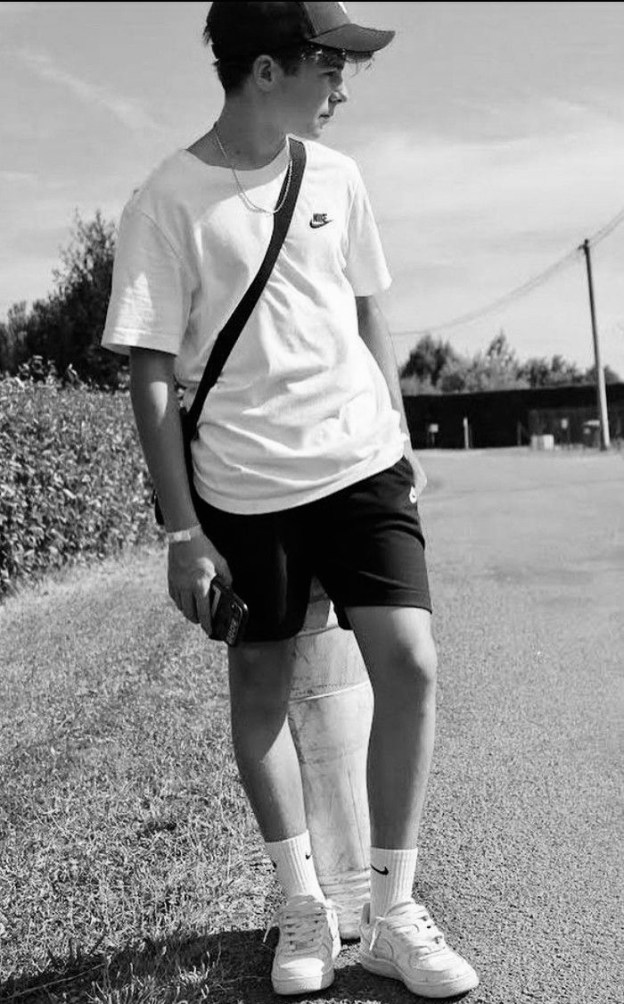
Heatwave. Black shorts. White tees. It has become the standard summer uniform: simple, effortless, and quietly revealing. There is something undeniably appealing about the combination — the clean contrast of dark shorts against sunlit skin, the casual ease of a white T-shirt worn loose in the heat.

Part of the attraction lies in a natural appreciation for fit, athletic legs and the relaxed confidence that warm-weather dressing encourages. Well-shaped calves, strong thighs, and defined muscles suggest health, balance, and physical vitality without seeming overly deliberate. Summer style works best when it appears unforced.

More than anything, it conveys ease. The look belongs to long evenings, beaches, city pavements shimmering in the heat, holidays, freedom, and movement. It suggests someone comfortable in their own body and unconcerned with trying too hard — a kind of self-assurance that people instinctively respond to. There is also an air of fun and openness to it, something approachable and youthful that feels inseparable from summer itself.

On dabbling with Bailey…
Bailey is cute, but I can’t cope with his hypochondria. A nosebleed needs major surgery. He says that his nose bled so much that his teeth hurt. Beauty sometimes hides intelligence, but, there again, maybe it isn’t intelligence that I’m looking for. It’s not about sex either. It’s about getting naked, cuddling in bed and hoping that he doesn’t talk too much.

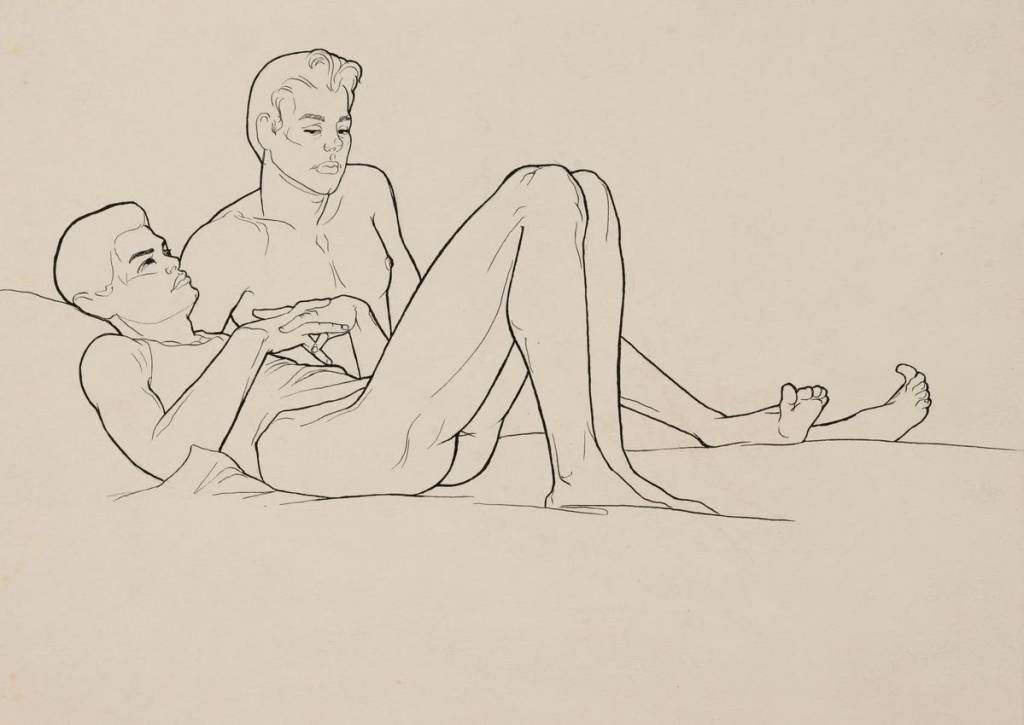
La sieste, circa 1960. Drawing by Raymond Carrance

On the Lamentation for Jonathan…
A poem from ancient Hebrew literature, The Lamentation for Jonathan — also known as David’s Lament or The Song of the Bow — is among the most celebrated elegies in the Bible, appearing in Books of Samuel (2 Samuel 1:19–27). It forms part of King David’s mournful response to the deaths of King Saul and Jonathan — Saul’s son, David’s closest companion, and the man with whom he shared a profound and fateful bond. Both were killed in battle against the Philistines on Mount Gilboa.

Jonathan and David had made a covenant together, for Jonathan loved David “as his own soul.” Jonathan stripped himself of his robe and gave it to David, along with his garments, his sword, his bow, and his girdle:

The beauty of Israel is slain on the high places;
How are the mighty fallen!
I am distraught for you, my brother Jonathan;
Very pleasant have you been with me!
Your love was wonderful : passing the love of women!
How are the mighty fallen:
And the weapons of war perished!

The passage has an emotional intensity that still feels startlingly intimate. The language of grief, devotion, and physical closeness moves far beyond the formal language of political alliance or military comradeship. It is beautifully homoerotic — though there are always those who insist that we should not read too much into it.

On agreeing with Joseph Caprio…
I have often been criticised for photographing only beautiful men, for creating images than are purely aesthetic and rather superficial. On first impression, that may seem to be the case. In my defence, if I had to justify my work – if justification is necessary – I would say that I am made anxious by the passing of time and that I have a certain distaste for the world and so, when I am in the studio, I seek one thing: to forget reality for a moment and to dream. To dream that I am in a world where there is only beauty, a world where time takes no toll. Yet my mind, my soul, is ever present and casts its shadow as I work. It would therefore be a mistake to stop at first impressions.” – Joseph Caprio

Romeo. Photo by Joseph Caprio

On considering writing a biography…

On the cute and willing…
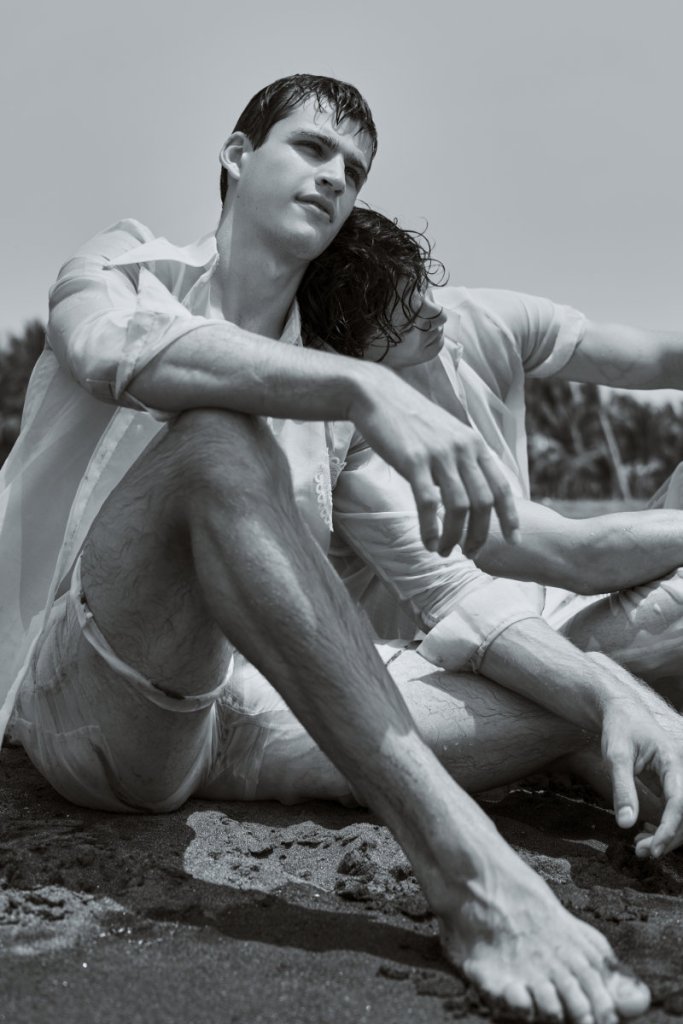
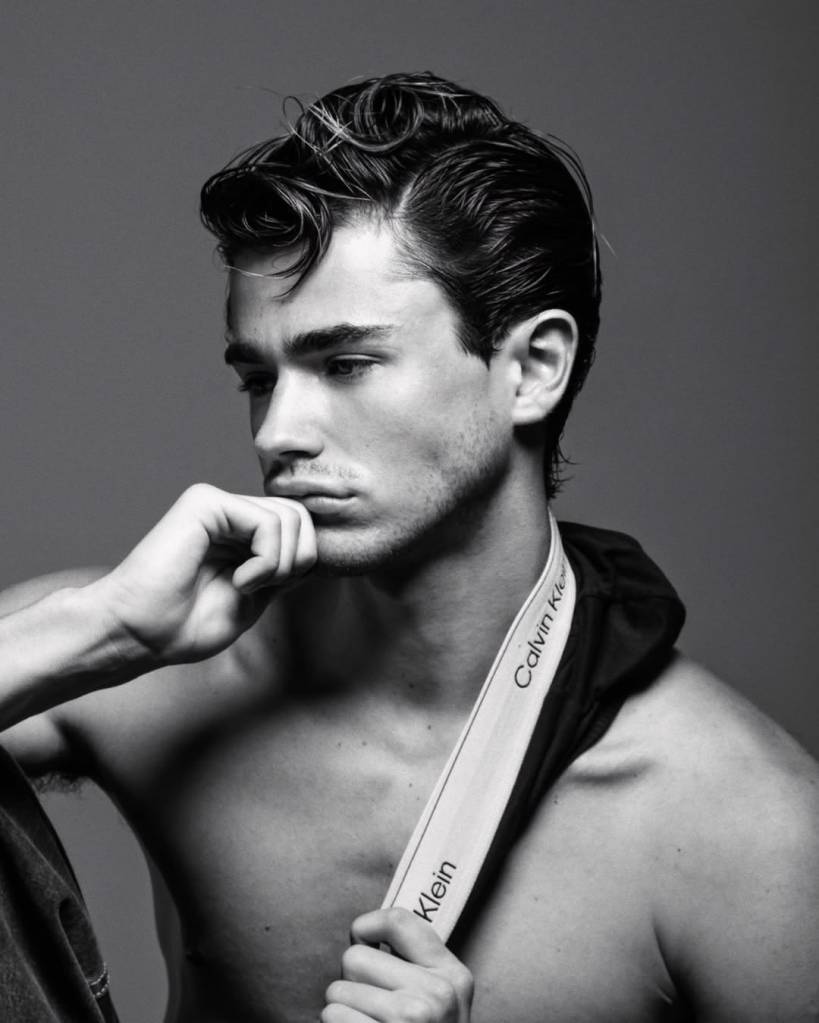
Mattis Perez and Alex Joos. Photo by Anton Patdu, for Fucking Young! Online (2026)