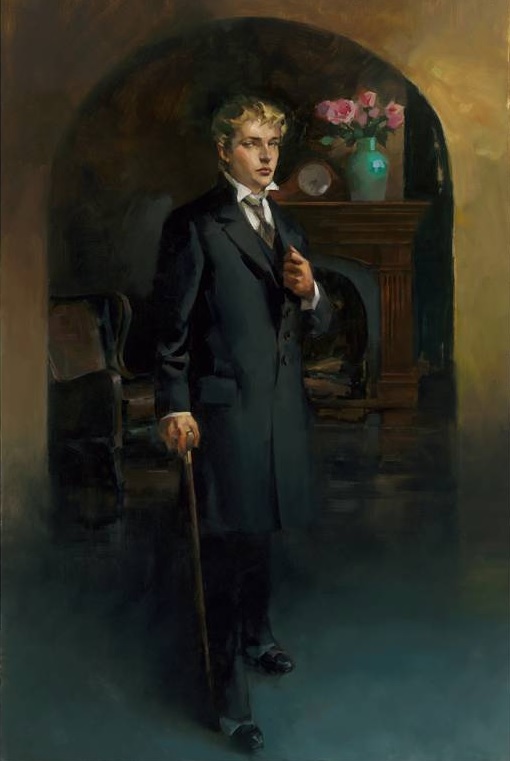
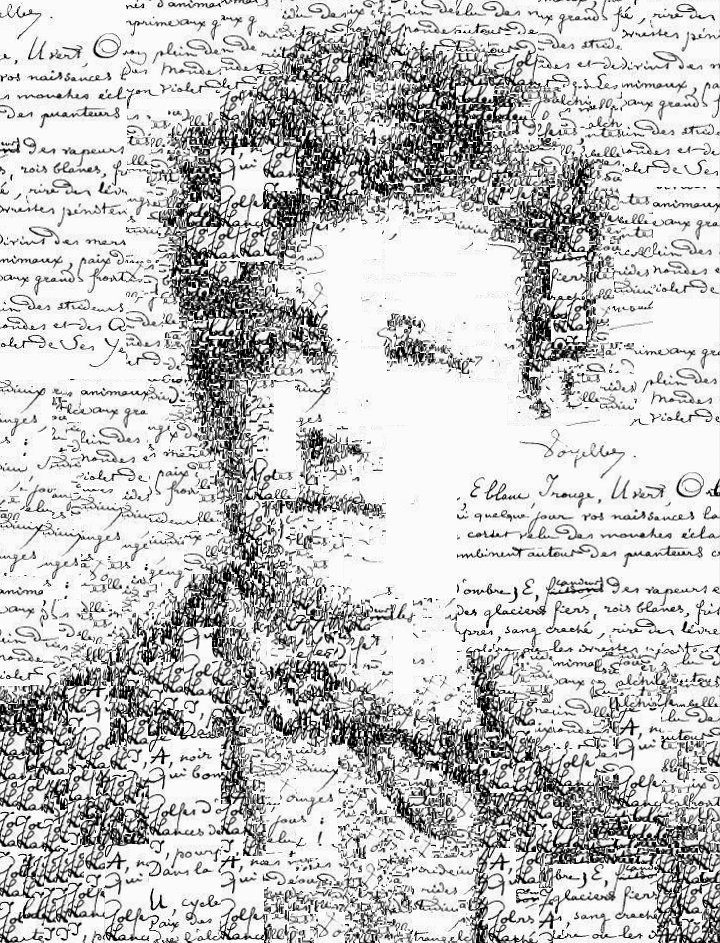
Image: The Picture of Dorian Gray – Gregrory Manchess
‘One evening about seven o’clock I determined to go out in search of some adventure. I felt that this gray, monstrous London of ours, with its myriads of people, its splendid sinners, and its sordid sins, as you once said, must have something in store for me. I fancied a thousand things. The mere danger gave me a sense of delight. I remembered what you had said to me on that wonderful night when we first dined together, about the search for beauty being the poisonous secret of life. I don’t know what I expected, but I went out, and wandered eastward, soon losing my way in a labyrinth of grimy streets and black grassless squares.’
From ‘A Picture of Dorian Gray’ by Oscar Wilde (1890)
A deeply coded text. While The Picture of Dorian Gray does not explicitly describe sexual acts, it is widely considered a foundational queer or homoerotic novel. The language, deep obsession between male characters, and themes of hidden desires heavily reflect same-sex attraction, which led to the book being used as evidence in Oscar Wilde’s 1895 trial for homosexuality.
On considering my dwindling finances… I’ve no concept of saving money, which is fine when your job allows a comfortable lifestyle. But that isn’t the case anymore. Work is disappearing fast. People are still interested in reading about European cities – history, best places to go and the secrets that they provide. People still want to read about these places and occasionally make good use of my observations. The number of posh magazines that cost a fortune to buy is increasing and there are thousands of websites wanting to make themselves look good. But the winds of change are making me redundant. First, it was decided that they didn’t want me to travel anymore – stay at home and research them or, better still, find somebody who lives there to do it. That saved them a lot of money. And now, with AI, they don’t need anybody at all. I’ve considered writing about other subjects but, guess what, nobody wants a real person to write it, especially one that will want to be paid. I read an interview with the author Lee Child, who, in a time now covered in cobwebs, was made redundant and decided to write a novel. He became a millionaire with Jack Reacher. But that’s not going to happen either. As one magazine editor told me, those days have gone, and it was bad luck that I chose a career at the wrong time.
On the missing ‘squatting boy’… I found a photograph of a sculpture and immediately fell in love with it. It formed part of a three-piece installation titled El problema del caballo (The Horse Problem), displayed in the historic Arsenale — the former cannon foundry- at the Venice Biennale in 2017. Its creator, Claudia Fontes, born and raised in Argentina but now living in England, constructed a scene suspended in time: a monumental horse flanked by a life-sized woman and a squatting boy, all facing a shower of rocks hanging motionless in the air, their shadows scattering across the space to form the fractured outline of the animal itself. The boy seems caught between witnessing the event and studying the fragments at his feet, as though unsure whether he is observing destruction or deciphering it.
I tried to discover what became of the work afterwards, but it appears to have simply vanished. Does it lie forgotten somewhere now — draped beneath a tarpaulin, gathering dust and cobwebs in some anonymous warehouse? Or worse, was it dismantled and destroyed? There is something almost unbearable in the thought that a work of such strange beauty could disappear so completely. Why create something so haunting, so precise in its evocation of wonder and catastrophe, only to hide it away from the world? I am told that, in contemporary art, the act of creation and the conceptual gesture can hold greater value than the object itself. Yet that explanation feels strangely unsatisfying when confronted with something one longs to see.
The Squatting Boy’ – Claudia Fontes (2017)
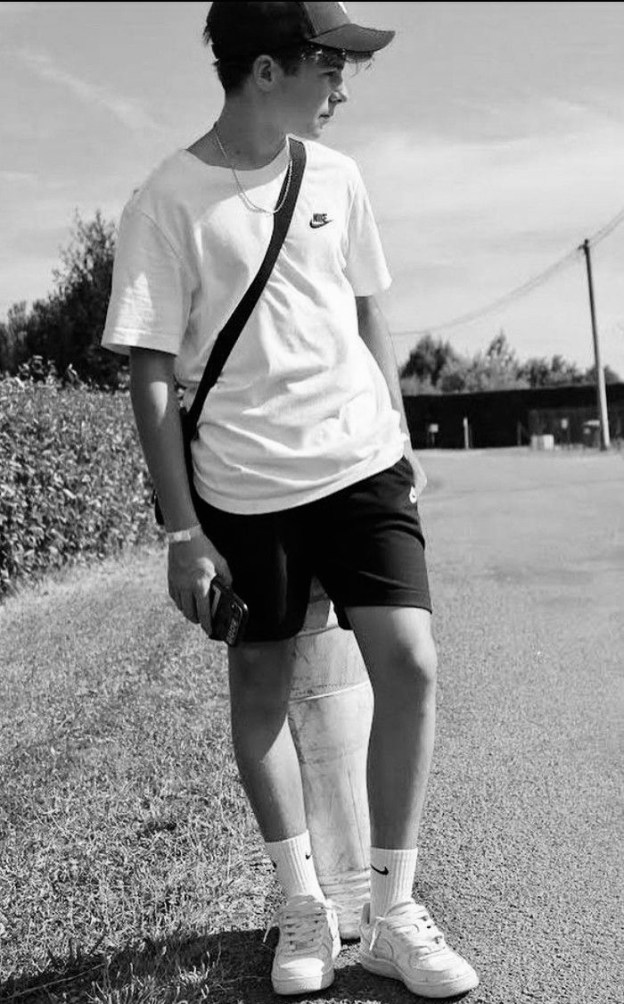
On the benefits of hot weather… Heatwave. Black shorts. White tees. It has become the standard summer uniform: simple, effortless, and quietly revealing. There is something undeniably appealing about the combination — the clean contrast of dark shorts against sunlit skin, the casual ease of a white T-shirt worn loose in the heat.
Part of the attraction lies in a natural appreciation for fit, athletic legs and the relaxed confidence that warm-weather dressing encourages. Well-shaped calves, strong thighs, and defined muscles suggest health, balance, and physical vitality without seeming overly deliberate. Summer style works best when it appears unforced.
More than anything, it conveys ease. The look belongs to long evenings, beaches, city pavements shimmering in the heat, holidays, freedom, and movement. It suggests someone comfortable in their own body and unconcerned with trying too hard — a kind of self-assurance that people instinctively respond to. There is also an air of fun and openness to it, something approachable and youthful that feels inseparable from summer itself.
On dabbling with Bailey… Bailey is cute, but I can’t cope with his hypochondria. A nosebleed needs major surgery. He says that his nose bled so much that his teeth hurt. Beauty sometimes hides intelligence, but, there again, maybe it isn’t intelligence that I’m looking for. It’s not about sex either. It’s about getting naked, cuddling in bed and hoping that he doesn’t talk too much.
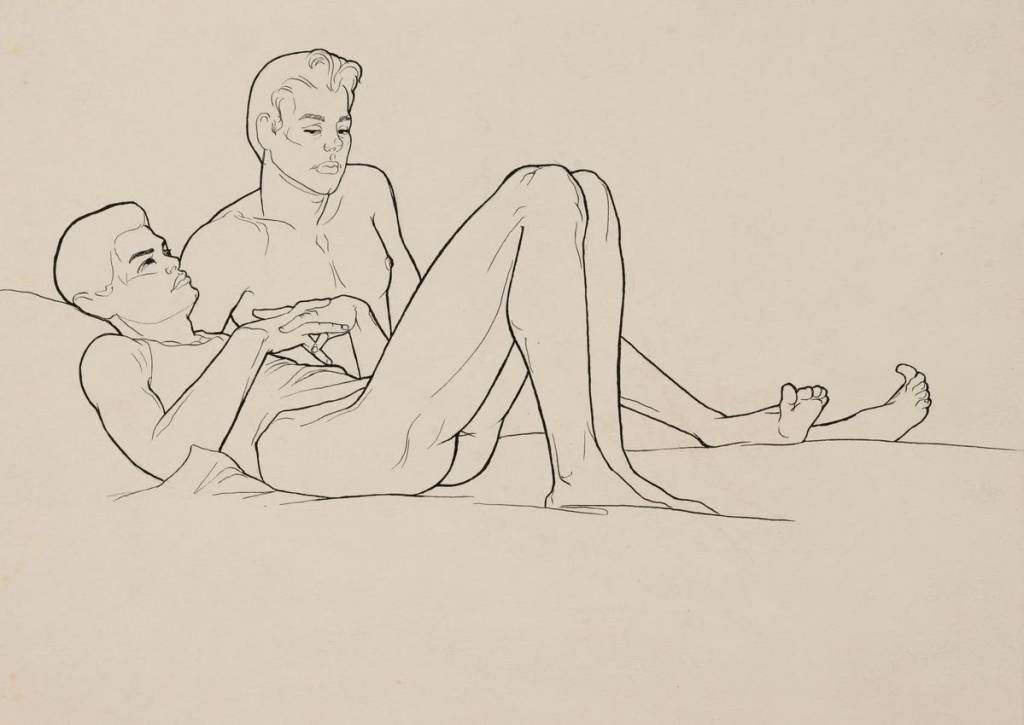
La sieste, circa 1960. Drawing by Raymond Carrance
On the Lamentation for Jonathan… A poem from ancient Hebrew literature, The Lamentation for Jonathan — also known as David’s Lament or The Song of the Bow — is among the most celebrated elegies in the Bible, appearing in Books of Samuel (2 Samuel 1:19–27). It forms part of King David’s mournful response to the deaths of King Saul and Jonathan — Saul’s son, David’s closest companion, and the man with whom he shared a profound and fateful bond. Both were killed in battle against the Philistines on Mount Gilboa.
Jonathan and David had made a covenant together, for Jonathan loved David “as his own soul.” Jonathan stripped himself of his robe and gave it to David, along with his garments, his sword, his bow, and his girdle:
The beauty of Israel is slain on the high places; How are the mighty fallen! I am distraught for you, my brother Jonathan; Very pleasant have you been with me! Your love was wonderful : passing the love of women! How are the mighty fallen: And the weapons of war perished!
The passage has an emotional intensity that still feels startlingly intimate. The language of grief, devotion, and physical closeness moves far beyond the formal language of political alliance or military comradeship. It is beautifully homoerotic — though there are always those who insist that we should not read too much into it.
On agreeing with Joseph Caprio… “I have often been criticised for photographing only beautiful men, for creating images than are purely aesthetic and rather superficial. On first impression, that may seem to be the case. In my defence, if I had to justify my work – if justification is necessary – I would say that I am made anxious by the passing of time and that I have a certain distaste for the world and so, when I am in the studio, I seek one thing: to forget reality for a moment and to dream. To dream that I am in a world where there is only beauty, a world where time takes no toll. Yet my mind, my soul, is ever present and casts its shadow as I work. It would therefore be a mistake to stop at first impressions.” – Joseph Caprio
Romeo. Photo by Joseph Caprio
On considering writing a biography…
On the cute and willing…
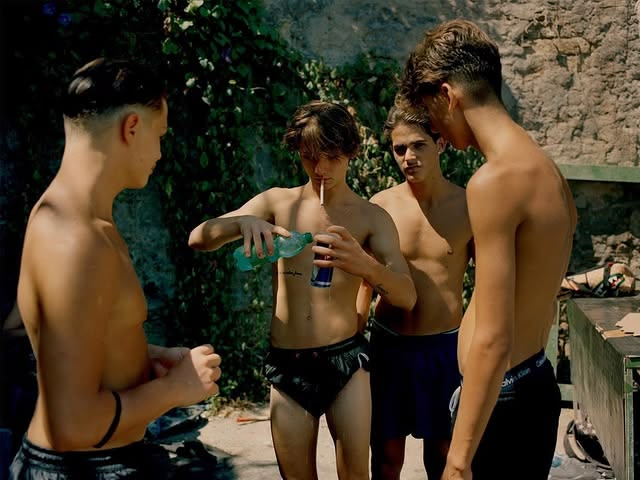
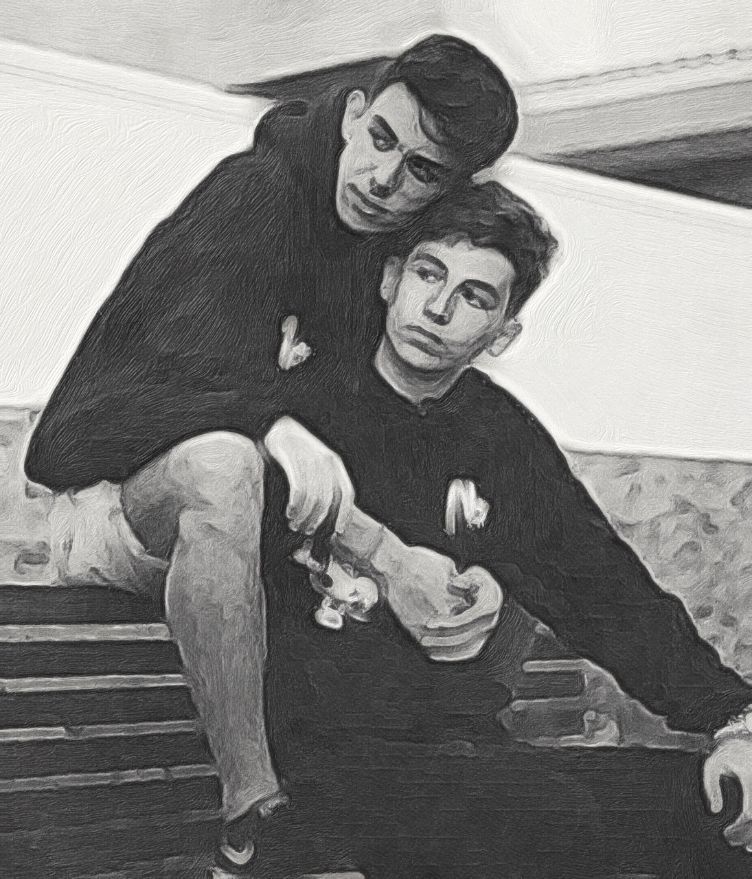
Mattis Perez and Alex Joos. Photo by Anton Patdu, for Fucking Young! Online (2026)
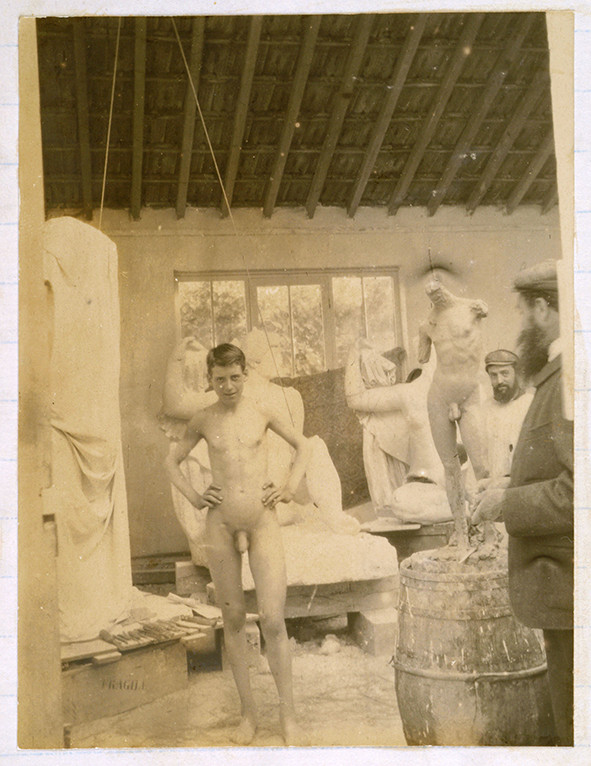
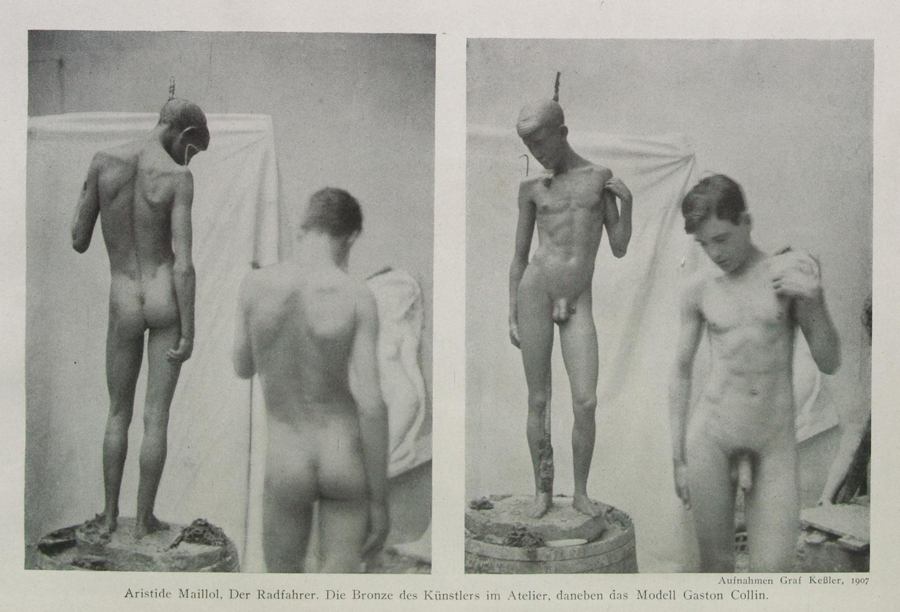
Gaston George Colin (1891–1957), by most accounts a young cyclist, perhaps even a jockey, and later a pilot—but certainly a chauffeur to Harry Graf Kessler, the well-connected German diplomat, writer, and patron of modern art.
Kessler’s diaries reveal that he began a relationship with the seventeen-year-old in 1907, hosting him both at the family castle and during stays in Paris, Rome, and Denmark.
While in Paris that same year, Kessler asked his friend Aristide Maillol to create a life-sized marble statue of the young man. He was said to have wanted a likeness of Narcissus, inspired by ancient Greece, which he saw as a culture where relationships between men and youths were openly acknowledged.
The outcome, however, was not a marble statue but a smaller bronze work, The Racing Cyclist (Le coureur cycliste), capturing a classical ideal of beauty and strength.
Maillol, who rarely worked with male nudes, struggled with the piece—his efforts complicated by Kessler’s constant attention to detail. The sculpture was not cast until early 1909, and Maillol remained dissatisfied, noting its unusual proportions, particularly the enlarged head and penis.
It was eventually exhibited in the French pavilion of Decorative Arts at the Turin Universal Exhibition in 1911.
Following the Nazis’ rise to power in 1933, a fearful Kessler left Germany for Paris, later moving on to Mallorca and finally to southern France. It was only in 1985, when his early diaries were discovered in a bank vault, that the extent of his fixation on Gaston Colin came to light.
Four casts are known: Kessler’s original is now held at the Kunstmuseum Basel, while others are in the Museum Folkwang, the Musée d’Orsay, and the Bavarian State Painting Collection in Berlin. Additional versions may exist, as Maillol is believed to have produced a second edition around 1925.
On finding that Joseph (or Sam) was queer…
It turns out Joseph lied to me. I found out that the flirty boy with the rolled sleeves, the nice arse, and the quiet smile is called Sam. And he hasn’t served me coffee for weeks. I still go in every day, but he’s disappeared—off studying, or back to his girlfriend. Then on Monday, he came in as a customer, joking with the staff behind the counter. A good-looking guy followed him in. Sam touched him lightly on the arm, and the guy patted him on the arse. They left holding hands, and I had to accept that Sam wasn’t available to me anymore.
It was an emotional snap. The interest hadn’t been given time to fade; it just hit a wall. That turns into jealousy very quickly—why them, not me? Seeing that physical ease between them—the touch, the closeness—intensified everything. It wasn’t simply that he was taken; it was seeing what that looked like. That’s what stung more than I expected. I told myself not to inflate things beyond what they were. I hadn’t even been rejected—just abruptly cut off.
I had to stop idealising someone I’d barely interacted with, especially once they became unavailable. That was the truth of it: there had been no real interaction. My mind had filled in the gaps, making Sam more significant than he ever really was.
But there was still that lingering feeling—a symbol the mind clings to—a sense of missed opportunity.
On discovering Arthur Rimbaud’s homoerotic poem…
Stupra II (1871) Our buttocks are not theirs. I have often seen people unbuttoned behind some hedge; and, in those shameless bathings where children are gay, I used to observe the form and performance of our arse.
Firmer, in many cases pale, it possesses striking forms which the screen of hairs covers; for women, it is only in the charming parting that the long tufted silk flowers.
A touching and marvellous ingenuity such as you see only in the faces of angels in holy pictures imitates the cheek where the smile makes a hollow.
Oh! for us to be naked like that, seeking joy and repose, facing one’s companion’s glorious part, both of us free to murmur and sob?
Arthur Rimbaud (1854-1891) The Latin ‘stupra’ is plural for stuprum, which means an obscene and/or illegitimate copulation. Because of their explicit homoerotic content, these poems were not published during Rimbaud’s lifetime. They first appeared in a private, limited edition in 1923.
On watching a film that seemed familiar…
There was a similarity — a flicker of déjà vu. It softened the boundary between experience and memory, as though something new had already been lived. For a moment, my mind misread the present as the past, conjuring a false familiarity. Certain scenes felt strangely recognisable, as if they belonged to me already.
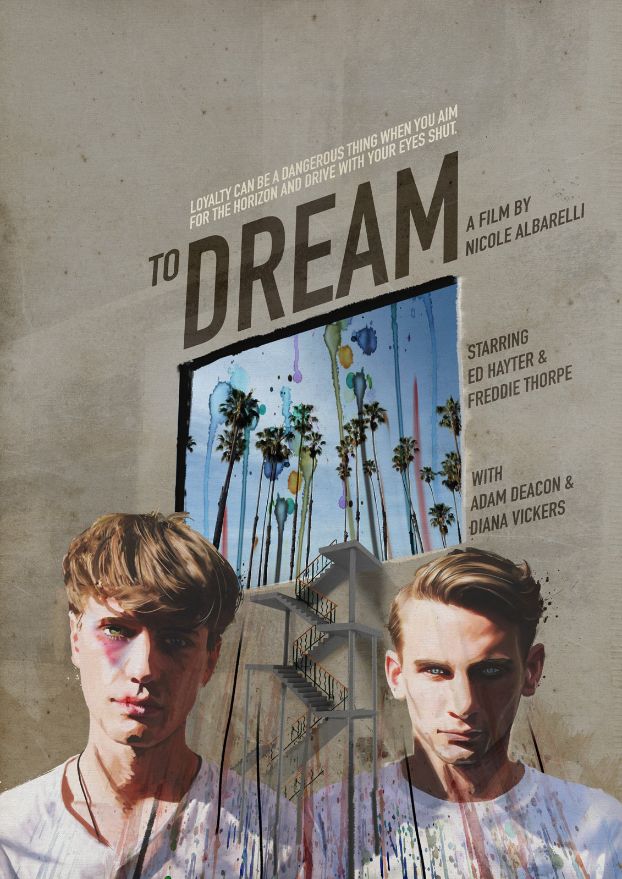
To Dream is a story of friendship — hopeful, intimate — set against a harsh inner-city backdrop. Best friends Luke and Tommy live in an unforgiving corner of London. Having dropped out of school and still at home, they find themselves dreaming of what might come next. Their shared ambition has always been escaping: to leave London’s grime behind for an imagined American paradise. It is a dream that has carried them through the realities of abusive homes, and one that binds them tightly together. But as family tensions worsen, and Luke’s new love interest begins to unsettle their bond, loyalty pushes Tommy toward a decision that will alter their lives forever. (Winter Film Festival – New York City).
Change the setting, reshape the structure — the dynamic remains. Four years on, as I approached the final instalment of Perfectly Hard and Glamorous, this little-seen B-movie felt like an omen.
Then I realised what I had missed: the father. There is always an abusive father. Somehow, I had forgotten him.
To Dream. United Kingdom (2026). Directed and produced by Baltimore-born, London-based Nicole Albarelli. Starring Freddie Thorp, Edward Hayter, Adam Deacon, Frank Jakeman.
The day was hot and sunny like most days were in California. It was a good time to eat outside. A car growled along the freeway and for a moment I thought it might be you.
“Yes, it brings back memories. But old age plays tricks and I haven’t heard that sound for a very long time.”
I asked the new boy what the date was and he said it was 29 September. “That makes tomorrow the thirtieth then.” He looked at me like young people do. “I guess it does,” he said kindly and went about clearing the breakfast remains.
The new boy, who was called Trent, put a copy of The Hollywood Reporter in front of me. “I know you like reading the showbiz news, Joe.” I flicked through it but I only recognised old studio names.
“The people that we once knew have gone and so did the good movies.”
I heard Trent talking to Maria, a Mexican girl who had been here for years. “I think Joe is talking to himself,” he said. “They all talk to themselves here,” she told him. “Or they talk to somebody who isn’t there. Sit with him for a while.”
“Did you hear that? They think I’m senile. Old age isn’t nice. The truth is, there aren’t many people to chat with these days. The ones who want to talk are strangers, but even they get up and go.”
Trent sat at the table and lit a cigarette. He was in his early twenties and I suppose might have been considered handsome. He was blonde and blue-eyed like most boys around here. He hadn’t shaved and probably hadn’t slept. The cigarette dangled from the corner of his mouth and I couldn’t help staring. “Is everything okay, Joe?”
“Look at him. Remember when you used to do that with your cigarette?”
The boy made small talk. He needed to make old people feel part of this strange world, and wanted me to act like everything was normal. But I was lost to the memories that lived inside my head.
“Are you looking at him? This boy cares nothing about how he looks but his soul shines. He is what you should have been.”
“So tomorrow is the 30th of September. Is that date important?” I’m roused from my thoughts and saw that Trent was waiting for an answer.
“I want to tell him to get in his car and find a good road to kill himself. That way he will be remembered as he is now.”
A breeze blew across the fields and made the trees around us sway and whisper.
“I knew that you couldn’t resist coming back to look.”
“Sometimes you die because living is not an option,” I told Trent. He looked confused. “I have known people who destroyed themselves to continue living.”
“What do you want me to say, Jim? What do you want me to say that I’ve not said a thousand times?”
“I don’t understand what you’re saying Joe.” Trent leant across the table and took my hands in his. “What is it that you’re trying to say?” I looked at his worried face and saw myself as a young man.
“A long time ago, I knew a boy about your age. He had everything and didn’t realise it. But he died and everything stopped.”
“Who was he, and what was he like?” Trent knew that I am an ex-smoker and offered me the cigarette. I took a drag but handed it back when I started coughing.
“Are you listening, Jim? I don’t want to shatter an illusion but I’m still pissed with you, and it might do me good to tell the truth, but I know I’m going to lie again.”
“He was kind and gentle,” I said. “And very talented. He was one of the finest actors I ever saw.”
“Well that’s what the world chose to believe, isn’t it?”
I looked at Trent and realised that he was from a generation who cared nothing for the past. When he was older, he might be interested in history and remember this conversation. He was supposed to be working and looked around to see if the bosses were watching. When he squinted, I saw a boy too vain to wear glasses. “I’m going back home to see my parents,” he said. “I haven’t seen them in months.” I was struck by his accent and asked where home might be? “I’m from Branson, Missouri, Joe.”
“That street corner on Overland Avenue where we met. You rode a motorbike and made small talk. ‘I’m from Fairmount, Indiana,’ you told me, and then you asked me if I wanted a blow job. Here’s another boy, far from home, in a place that promises everything, but gives nothing.”
Maria appeared and gave me my medication. Five tablets, three times a day. If I don’t take them I will die. Except that I’m on borrowed time anyway.
“I shall see you in hell because that’s where people like us end up. You’ll still be a handsome son of a bitch and will grunt when I ask you something, and I’ll be an ugly old man. How is that fair?
“Remember when I told you I loved you? The next day you came around and sat staring at me. Not a word for an hour. Staring like a madman. And I looked back, trying to make you talk, but you wouldn’t say anything. Then you pissed in the corner of the apartment and left.”
Somebody was in trouble. There were sirens on the freeway. Police cars, ambulances, and fire trucks. A chopper flew overhead. Everyone was in a hurry to help someone who might be trapped in the wreckage of a car.
“Tomorrow is the 30th September, and seventy years on, I believe you deliberately crashed. Was it because of me? Did you intend to die? Did you think that they could put those fractured pieces back together again? Did you want to be immortal?