
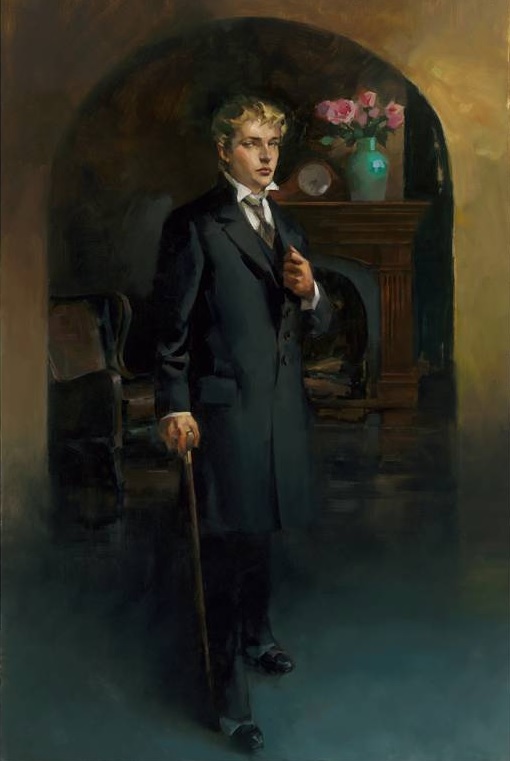
‘One evening about seven o’clock I determined to go out in search of some adventure. I felt that this gray, monstrous London of ours, with its myriads of people, its splendid sinners, and its sordid sins, as you once said, must have something in store for me. I fancied a thousand things. The mere danger gave me a sense of delight. I remembered what you had said to me on that wonderful night when we first dined together, about the search for beauty being the poisonous secret of life. I don’t know what I expected, but I went out, and wandered eastward, soon losing my way in a labyrinth of grimy streets and black grassless squares.’
From ‘A Picture of Dorian Gray’ by Oscar Wilde (1890)
A deeply coded text. While The Picture of Dorian Gray does not explicitly describe sexual acts, it is widely considered a foundational queer or homoerotic novel. The language, deep obsession between male characters, and themes of hidden desires heavily reflect same-sex attraction, which led to the book being used as evidence in Oscar Wilde’s 1895 trial for homosexuality.

