Category Archives: Stolen Words

Stolen Words: Tell England – A Study in a Generation

“You know I like Archie Pennybet very much indeed. In fact, I think I like him better than anyone else in the world, ‘septing of course my relations.” – Edgar Doe.

One of my recurring frustrations with old books is this.

Every so often, I pick up a novel now regarded as homoerotic and wonder how on earth its first readers failed to notice what was sitting in plain sight.

A second dose from Ernest Raymond’s 1922 First World War novel, Tell England: A Study in a Generation, a book that goes to extraordinary lengths to beat around the bush.

When it was published, the poor dears read it as a patriotic, high-church Anglican tribute to the tragic “lost generation” of British public schoolboys sent to Gallipoli. The lingering focus on male beauty and passionate friendships seems to have passed them by.

You may recall from an earlier post that Raymond himself later openly acknowledged the novel’s homosexual subplot.

The first half of the novel, Five Gay Years of School, introduces the narrator, Rupert Ray, and his classmates as young men who are acutely aware of their own attractiveness, opening one school chapter with Archie Pennybet’s  boast: “I’m the best-looking person in this room.” Time and again, they are presented as magnificent, almost perfect creations of God.

At the heart of the story is Rupert’s deeply emotional attachment to his classmate Edgar Doe, who is quite unmistakably homosexual. Their relationship is marked by jealousy, devotion, and emotional intensity that often resembles a love affair far more than ordinary friendship.

“I say, why does Doe avoid us now?” 

“The Gray Doe,” sneered Penny. “Oh he – She’s in love, I suppose. With Radley.”

“Don’t drivel,” I commanded. “Why does he hang about with that awful Freedham?”

“When you’re my age, Rupert,” began Penny, in kind and accommodating explanation, “you’ll know that there are such things as degenerates and decadents. Freedom is one. And very soon Doe will be another.”

“Well, hang it,” I said, “if you think that, how can you joke about it, and leave him to go his way?”

“Oh, the young fellow must learn wisdom. And he’s not in any danger of being copped. I’m the only one that suspects, and I guessed because I’m exceptionally brilliant. Besides, if he wants to go to the devil for a bit, you can’t take his arm and go with him.”

“No,” I said, “but you can take his arm and bring him back.”

The schoolmaster, Radley, is described as regarding the boys with a “strong, active love.” Rupert comments: “We were his hobby. I have met many such lovers of youth.”

In the second half of the novel, the boys are sent to Gallipoli. The emotional and physical admiration established during their schooldays evolves into a romanticised martyrdom, where dying beautifully for England becomes the ultimate fulfilment of their youth.

By Jove, Ernest Raymond was clever.

He wrote about male intimacy with remarkable emotional and physical closeness without provoking the censors of the 1920s. Wrapped in high-church religiosity and fervent patriotism, it was accepted by the general public as nothing more than an innocent, heart-rending tribute to fallen soldiers.

Stolen Words: ‘The mere danger gave me a sense of delight.’

Image: The Picture of Dorian Gray – Gregrory Manchess

‘One evening about seven o’clock I determined to go out in search of some adventure. I felt that this gray, monstrous London of ours, with its myriads of people, its splendid sinners, and its sordid sins, as you once said, must have something in store for me. I fancied a thousand things. The mere danger gave me a sense of delight. I remembered what you had said to me on that wonderful night when we first dined together, about the search for beauty being the poisonous secret of life. I don’t know what I expected, but I went out, and wandered eastward, soon losing my way in a labyrinth of grimy streets and black grassless squares.’

From ‘A Picture of Dorian Gray’ by Oscar Wilde (1890)

A deeply coded text. While The Picture of Dorian Gray does not explicitly describe sexual acts, it is widely considered a foundational queer or homoerotic novel. The language, deep obsession between male characters, and themes of hidden desires heavily reflect same-sex attraction, which led to the book being used as evidence in Oscar Wilde’s 1895 trial for homosexuality. 

Stolen Words: Sonnet to Youth

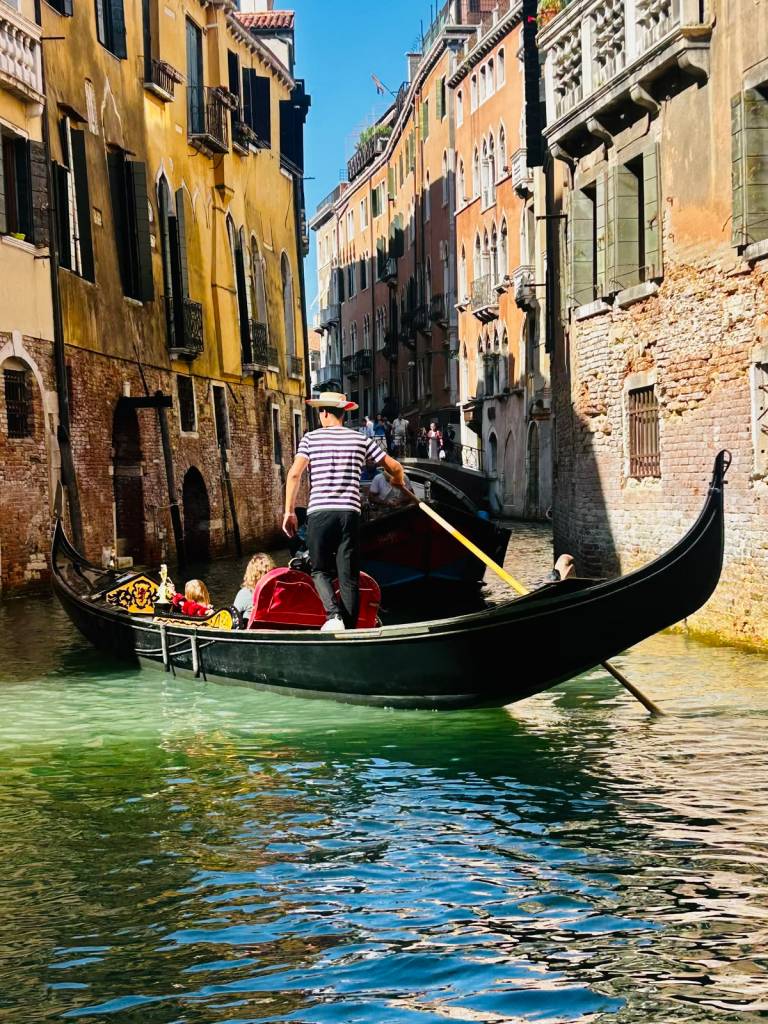
The Green Waterways; Henry Scott Tuke (1926)

Sonnet to Youth (No 1076)
Youth, beautiful and daring, and divine,
Loved of the Gods, when yet the happy earth
Was joyful in its mourning and new birth;
When yet the very odours of the brine
Love’s cradle, filled with sweetness all the shrine
Of Venus, ere these starveling times of dearth,
Of priest-praised abstinence, made void of mirth,
Had given us water where we asked for wine.

Youth, standing sweet, triumphant by the sea
All freshness of the day and all the light
Of morn on thy white limbs, firm, bared and bright
For conflict, and assured of victory,
Youth, make one conquest more; and take again
Thy rightful crown, in lovers’ hearts to reign
!

Words credited to the artist Henry Scott Tuke (1858-1929).
From The Artist (1889)

This text appears attached to the entry for Perseus and Andromeda (R121) in Tuke’s Registers. According to Charles Kains Jackson, who later informed the compiler S.E. Cottam, a sonnet published in the 1889 issue of The Artist was written by Henry Scott Tuke. The poem in question is likely the same work; however, the evidence is insufficient to confirm Tuke’s authorship with certainty.

Stolen Words: “You’ve timed your lives wonderfully, my boys.”

“Spendid, perfectly splendid!” replied the Colonel. “Eighteen, by Jove! You’ve timed your lives wonderfully, my boys. To be eighteen in 1914 is to be the best thing in England. England’s wealth used to consist in other things. Nowadays you boys are the richest thing she’s got. She’s solvent with you, and bankrupt without you. Eighteen, confound it! It’s a virtue to be your age, just as it’s a crime to be mine. Now, look here” – the Colonel drew up his chair, as if he were going to get to business – “look here. Eighteen years ago you were born for this day. Through the last eighteen years you’ve been educated for it. Your birth and breeding were given you that you might officer England’s youth in this hour. And now you enter upon your inheritance. Just as this is the day in the history of the world so yours is the generation. No other generation has been called to such grand things, and to such crowded, glorious living. Any other generation at your age would be footling around, living in a shallow existence in the valleys, or just beginning to climb a slope to higher things. But you” – here the Colonel tapped the writing-table with his forefinger – “you, just because you’ve timed your lives aright, are going to be transferred straight to the mountain-tops. Well, I’m damned. Eighteen!”

The passage is taken from Tell England: A Study in a Generation, a novel written by Ernest Raymond and published in February 1922 in the United Kingdom. Its themes are the First World War and the young men sent to fight it. The body of the novel is divided into two halves (or “books”), both narrated by Rupert Ray. The first book tells the story of his and his friends’ progress through school; while the second deals with the experiences of (specifically) Ray and his friend Edgar Doe during the war.

Forty-five years after the novel’s publication, Raymond wrote: “Another thing that is a cause of wonder to me as I re-read the book is the indubitable but wholly unconscious homosexuality in it,” since “‘homosexuality’ was a word which — absurd as this seems now — I had never heard.”

Stolen Words: Pasolini – The Projects

This iconic photograph captures the Italian film director and poet Pier Paolo Pasolini at the Monte dei Cocci (also known as Monte Testaccio) in Rome, 1960.

It was there that I had met, or in fact only seen, another youth, Nino, who was reduced almost completely to his pure image. It was a sunny day, and everything shimmered, the garbage and weeds, tall buildings and shacks. He was standing in the sun in a purple shirt, his deep blue eyes filled with a strange, almost cruel innocence. He was a boy like so many others, with a job, or perhaps in search of a job. I saw him some time later, grown up and somewhat thickened, on the train to Ostia, with his father and mother, and probably some younger brothers and sisters. His gaze was somewhat cloudy, but it was still pure and innocent. He joyfully introduced me to his parents. His father was robust, still young, and seemed like an honest factory worker, and his mother, who also seemed young, showed the brusque tenderness typical of Roman mothers just slightly softened and mitigated by the fact that her son already had the bearing of a young man. A year or two later, I’m not sure, I crossed paths with a friend of Nino’s called Bruno and asked about the boy. Bruno thought for a moment, comically knitting his brow. Then he came to a decision and raised his hand in front of his face, with the fingers apart. He meant that Nino was in jail, at Regina Coeli.

From: Chronicles of Rome, Pier Paolo Pasolini, 1961.

Stolen Words: A digital mask allows people to be authentic


“Man is least himself when he talks in his own person. Give him a mask, and he will tell you the truth”

Words by Oscar Wilde in his 1891 essay The Critic as Artist.

Stolen Words: Boys in the Trees – Carly Simon

By the Lake: An Ode to Freedom and Youth by Niv Shank. HeyBoyMag (2025)

“I’m home again in my old narrow bed
Where I grew tall and my feet hung over the end
The low beam room with the window looking out
On the soft summer garden
Where the boys grew in the trees.”

Boys in the Trees (1978). Lyrics by Carly Simon.

Stolen Words – The Camouflage of Virtue


“The self-righteousness of that age was really camouflage to disguise its own hypocrisy, and the people who were loudest in their condemnation of my father were often those whose own lives could least bear investigation.”

– Vyvyan Holland writing in Son of Oscar Wilde. Published by Rupert Hart-Davis (1954)

And I can’t help thinking that the same still applies…

Stolen Words – At Dawn – Bertram Lawrence

Sicilian Youth with Flowers – Wilhelm von Gloeden (1900)

He came in the glow of the noon-tide sun,
He came in the dusk when the day was done,
He came with the stars; but I saw him not,
 I saw him not.

But ah, when the sun with his earliest ray
Was kissing the tears of the night away,
I dreamed of the moisture of warm wet lips
Upon my lips.

Then sudden the shades of the night took wing,
And I saw that love was a beauteous thing,
For I clasped to my breast my curl-crowned king,
My sweet boy-king. 

John Francis Bloxam writing under his pseudonym of Bertram Lawrence . It appeared in The Chameleon, a one-off literary magazine edited by Bloxam, in December 1894.

Stolen Words: “It was a beautiful breakup.”

Steven Polaris Buitrago by Studio Pegasus and Eroticco in ‘Daring Pool Day’

“In my 20s a few days after I moved to LA. I met Josh. Someone who changed who I am today. Someone who changed my life. We both fell in love. He took me away from the nightlife and from the gay adult industry, I thought I was gonna get into. Josh was on top of my life from the day I met him. During those five years, Josh put me to college, took me on trips, took me to the doctor, and had my bad teeth fixed. He literally gives me all his 30s and I give him part of my 20s. It was beautiful and I learned so much from him. We spent five amazing years together but like everything, it had an end and we ended it. It was a beautiful breakup. It was mutual. And in some way healthy.”

– Meet Steven Polania Buitrago – VoyageLA – 13 July, 2020