Fabian Strachan Woodley (1888–1957) was a Bristol-born teacher, journalist, and poet whose wartime writing evolved from youthful patriotism to profound melancholy after a devastating personal loss.
In June 1916, his lover, twenty-year-old Lieutenant Myles O’Donovan of the Royal Munster Fusiliers, a native of County Cork, was killed by shellfire. In response, Woodley wrote To Lieut O’D (1916), a deeply personal elegy in his memory.
The poem marked a turning point in Woodley’s work. Gone were the optimistic patriotic verses of his early war years, replaced by a poignant meditation on grief and the waste of young life. He evokes O’Donovan’s vitality and laughter before the brutal interruption of a screaming shell brings his life to an abrupt end in the trenches.
To Lieut O’D was later included in Woodley’s 1921 collection, A Crown of Friendship.
To Lieut. O’D (1916)
See him standing at the corner, Cynosure of friendly eyes, Challenging their kindly sallies, Combatting with swift replies.
Eyes alight with Life and Laughter, Brown eyes full of mirth and fun; Fresh face tanned by months of warfare, Lithe limbs browned by summer sun.
Suddenly a shell comes screaming, Through the blue vault overheard, Strikes – His laughing lips are silent, All his splendid youth lies dead.
Death! whose arrow countless thousands And unerring aim have proved, Could you not have aimed untruly, Spared for me the boy I loved?
“I loved everything in this world. And all I had was my blank notebook under the sun.”
Sandro Penna, the Italian poet, believed his finest work consisted of only a handful of lines.
Why write a long poem when four lines will do?
A man after my own heart.
I leave my job filled With dry words. But at the gate The gods have set down for my joy A boy playing with boredom.
Penna also loved to walk—through fields and parks, but above all through the working-class districts of Rome, usually after dark.
We are left in little doubt as to what drew him there.
His friend, Pier Paolo Pasolini, knew that Penna was captivated by the same ragazzi who wandered the city’s outskirts.
The evening kidnapped My quarreling boys Their angel voices Warring. Now they stand In the mothering shelter of new lights In houses across the street.
Engraved in the bright sky The silent smudge Of a hero on a horse
Under the first star.
Penna’s way of life, however, also caused concern.
In 1956, he brought a 14-year-old street boy, Raffaele Cedrino, to the home he shared with his mother. The boy remained part of Penna’s life, on and off, until 1970.
I saw my dark haired boy Seated in the audience Smoking a cigarette He has the brightest eyes.
Penna died alone in the same house on Via della Mola dei Fiorentini in 1977.
In brief: Born in Perugia in 1906, Sandro Penna spent most of his life in Rome. Although he trained as an accountant, he never settled into regular employment, instead earning a living through newspaper work, proofreading, and dealing in art.
In 2014, Peter Valente described Penna’s verse as “candid, uncluttered, minimalist, and of profound lyrical intensity.” It is difficult to think of a finer summary.
There had been a thunderstorm warning across the Veneto, but nobody believed it. They complained about the relentless heat and the pitiless sun, longing instead for shorter days, cold mornings, and snow.
Even so, the wind hinted that relief might finally be on its way. It rattled the café awnings, scraped chairs across pavements, and sent menus tumbling into the next street. In Signora Bruschi’s courtyard the washing twisted itself tightly around the line, while the terracotta pots overflowing with pelargoniums, lavender, salvias, petunias and Mexican fleabane bore the worst of it. One of the smaller pots toppled from the kitchen step and shattered. Even the tiny finches that usually flitted between the potted citrus trees abandoned the branches for the shelter of a shaded corner, where they sang with frantic urgency. Signora Bruschi rushed outside clutching a broom and shouted for us to rescue the washing before it blew away.
It was Cola who first noticed the bruised-purple cloud creeping across the sky. Others followed behind it, darker still, advancing with slow deliberation as though reluctant to commit themselves. They lingered above the city, steadily subduing the sun. With every passing minute the light faded, the heat loosened its grip, and the stale air trapped inside the old stone walls for weeks was finally released. When the wind eased, Signora Bruschi scolded us for throwing the clean washing into the basket instead of folding it properly.
An uneasy stillness settled over Verona. The city seemed to pause in expectation. Even the finches fell silent.
Bianchi stepped into the doorway and sniffed the air. It carried that strange sweetness that always arrives before heavy rain, reminding us of freshly cut grass. He pointed towards the sky, where the clouds had taken on an unsettling greenish hue, their tops spreading into broad, flat anvils. For a fleeting moment the sun broke through, casting dramatic shafts of light that sharpened every corner of Signora Bruschi’s courtyard.
Then came the first distant growl of thunder from somewhere beyond Lake Garda.
A blinding flash of lightning sent Bianchi darting back inside. From neighbouring houses came cheers, laughter and exaggerated cries of alarm. Only a handful of raindrops struck the marble flagstones before Signora Bruschi ushered everyone indoors.
Moments later the wind returned with renewed force, and the rain followed.
It swept across the city from the west in solid sheets, lashing the parched streets and hammering rooftops. The sheer weight of water became a roaring wall of sound that swallowed everything else. Gutters overflowed, torrents cascaded from the roofs, and water surged across the courtyard until it pooled outside the kitchen door. Drains that had lain dry for weeks surrendered almost immediately. Through the window we watched the neighbouring buildings dissolve behind a curtain of rain until they became little more than grey silhouettes.
“The heavens are teeming,” Signora Bruschi cried.
Brilliant forks of lightning split the sky, vanishing almost as soon as they appeared. Each flash was followed by a violent crack and then a rolling explosion of thunder that rattled the windowpanes and shook the house to its foundations.
Again.
And again.
“I hope it stops soon,” Bianchi whispered.
Cola, however, seemed delighted.
He dashed into the courtyard, pulling off his T-shirt as he ran, and stood ankle-deep in the rising water, lifting his face towards the sky as the rain drenched him within seconds. By the time he wandered back inside, his jeans clung to his legs and streams of water spread across Signora Bruschi’s kitchen floor. Without missing a beat, she clipped him around the back of the head, snatched a towel from the washing basket, and thrust it into his hands.
“My son is stupido,” she sighed, with equal measures of exasperation and affection.
Pietro’s Books, Bianchi’s Curiosity …
College has broken up for the summer and, when he is not working, Bianchi is usually either trailing me around Signora Bruschi’s house or reading in my apartment. Since my return, our hostess has been content for him to stay, but she has made it abundantly clear that no relationship of any kind is to develop between us. Consequently, Bianchi has taken up residence in my rooms while I have been relegated to sharing Cola’s bed.
My stay in Verona is only temporary, and I have no illusions that, once I return to the UK, Bianchi will have any claim on my Italian life.
For now, however, he has been quietly investigating my possessions in an earnest attempt to learn everything he can about me. He has also been working his way through Pietro’s boxes, which Signora Bruschi finally carried down from the attic for me to sort.
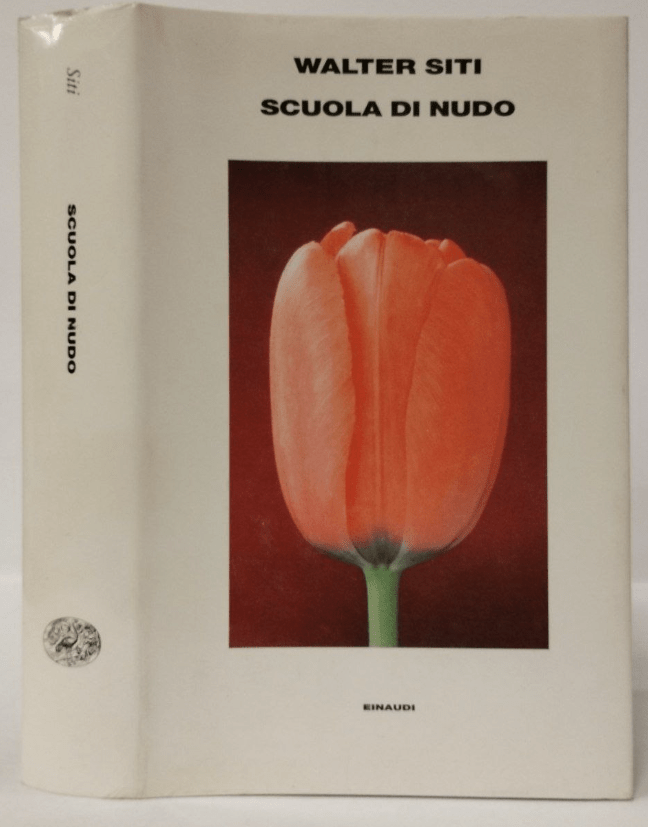
That is how Bianchi came to be sitting on my sofa with one of Pietro’s hardback novels from the 1990s.
Scuola di nudo is an intimidating thing: six hundred pages of uninterrupted Italian, which effectively rules out any possibility of my reading it.
“It is about a university professor in Pisa,” Bianchi explained, “who explores his obsession with male beauty and desire, and who is very critical of his colleagues.”
“Would I like it?” I asked.
“Probably not. I think you like magazines instead.”
The remark was aimed squarely at the infamous French copy of Le Pénis lying beside my bed, a publication that, until then, he had politely pretended not to notice.
“There is no plot,” he continued. “But it is interesting. And there are many scandals.”
I suspect Bianchi has already grown bored with the novel, despite his insistence to the contrary, and is persevering with it largely because he thinks it will impress me.
I looked up the author, Walter Siti, and discovered that he taught at several Italian universities, wrote screenplays, and has also been a reviewer for La Stampa.
As for Scuola di nudo, I remain none the wiser. Bianchi’s fractured English synopsis is, I suspect, as close to understanding the novel as I am ever likely to get.
Not my Taormina …
Severin wishes I were back in Taormina. I’m not so sure.
Dolce & Gabbana recently unveiled its new Alta Sartoria collection at the Teatro Antico, with the Ionian Sea below and Mount Etna rising behind it. The guest list was suitably glamorous: Erling Haaland and Isabel Haugseng Johansen, Theo James and Ruth Kearney, Christian Bale, Monica Bellucci, Jennifer Lopez and Michele Morrone.
I wasn’t invited.
That, in a way, is the point.
Taormina isn’t really for north European wastrels like Severin and me. It’s for people willing to spend the equivalent of a monthly mortgage on a single night’s stay, pay limousine prices for taxis and happily buy things marked up tenfold simply because they can.
It is the most expensive destination in Sicily.
We visited out of season and enjoyed it, although even then the White Lotus pilgrims were beginning to get on my tits. According to Severin, they’ve since become unbearable.
I left after a few weeks. He stayed.
He now spends sixteen hours a day working in a restaurant, and even the flat that came with the job has lost its appeal. The owners have suggested he share it with three other young waiters, each expected to pay an exorbitant rent. Rooms are scarce in Taormina, they say.
Watching from afar, I realise the place isn’t really for me.
Give me the Taormina where writers, poets, artists and photographers arrived on the backs of flea-bitten donkeys and drank cheap wine in tiny houses with compacted earth floors.
Give me Alfio, paid peanuts to work in a hotel whose rooms now cost five times what I paid only weeks ago. The same Alfio who took us where the locals ate, introduced us to the Taormina hidden behind the postcards, and preferred the company of ordinary people to wealthy tourists.
Give me the sweaty boys chasing a football across a dusty patch of wasteland, before somebody decides it would make the perfect site for another luxury boutique hotel.
Severin won’t last the summer.
Sooner or later, he’ll leave Sicily in search of something better.
I’m tempted to invite him to Verona. But that would test Signora Bruschi’s generosity.
The First Twink …
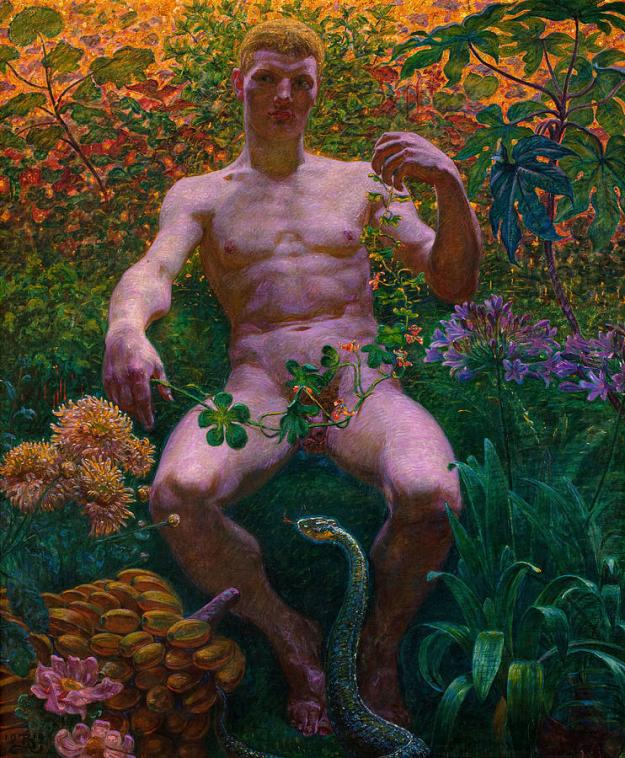
“Adam, as in Adam and Eve. I think he was the first twink and he was definitely a power bottom. The snake of it all in the garden is sus to me.” – Grant Gibbs
Adam in Paradise. Kristian Zahrtmann (2020)
On the cute and willing…
Ruslan Danilchenko. Photographed by Kiana Beijleveld
“Thus began a friendship entirely different from any Gordon had known before. He did not know what his real sentiments were; he did not even attempt to analyse them. He only knew that when he was with Morcombe he was indescribably happy. There was something in him so natural, so unaffected, so sensitive to beauty. After this Morcombe came up to Gordon’s study nearly every evening, and usually Foster left them alone together, and went off in search of Collins.
“Indeed this friendship, coupled with his admiration for Ferrers, was all that kept Gordon from wild excesses during the dark December days and the drear opening weeks of the Easter term. During the long morning hours, when Gordon was supposed to be reading history, more than once there came over him a wish to plunge himself into the feverish waters of pleasure, and forget for a while the doubts and disappointments that overhung everything in his life. At times he would sit in the big window-seat, when the school was changing class-rooms, and as he saw the sea of faces, some big, some small, who had drifted with the stream, and had soon forgotten early resolutions and principles in the conveniently broadminded atmosphere of a certain side of Public School Life, he realised how easily he could slip into that life and be engulfed. No one would mind; his position would be the same, no one would think worse of him. Unless, of course, he was caught. Then probably everyone would turn round upon him; that was the only unforgivable sin – to be found out. But it was rarely that anyone was caught; and the descent was so easy. In his excitement he might perhaps forget a little.”
I have never quite understood what all the fuss was about.
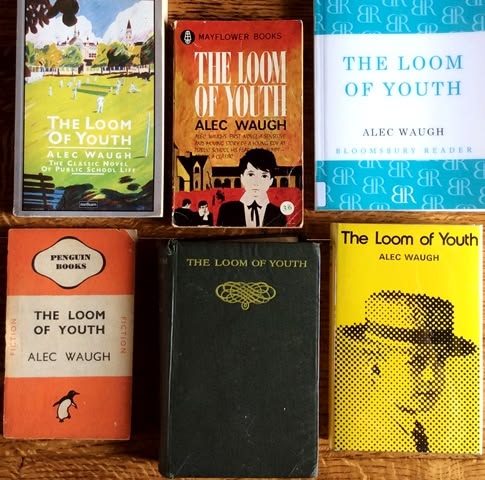
When The Loom of Youth by Alec Waugh was published in 1917, it provoked a minor literary scandal.
Written when Waugh was just seventeen and a half, the novel is both a realistic and romantic portrait of the early twentieth-century British public school system. Through its protagonist, Gordon Caruthers, he explores the complex social hierarchies, academic pressures and personal relationships that shape life at the fictional Fernhurst School.
The novel broke long-standing Victorian taboos by acknowledging the romantic and homosexual attachments that could develop between schoolboys, although by modern standards its treatment is remarkably restrained.
Indeed, the two passages reproduced above are about the only real indication that Gordon Caruthers and his fellow pupil, Morcombe, shared anything approaching a romantic attachment.
Contemporary reviews were, for the most part, favourable, though many cautiously skirted around the subject, resorting to euphemisms such as “immorality”, “decadence”, “sentimental relations” and “unhealthy” adolescent behaviour.
The fiercest opposition came not from the literary press but from conservative periodicals, educational journals and coordinated letter-writing campaigns organised by public school authorities, who regarded the novel as a damaging attack on their institutions.
Waugh depicted a world in which schoolboys cheated, schoolmasters were often out of touch, and both could become easy targets for the casual cruelties of adolescence.
He also challenged the Victorian conviction that team sports—particularly rugby and cricket—instilled the moral character and leadership required to govern the British Empire.
Then there was the schoolboy slang, which horrified many critics and parents, who dismissed the dialogue as vulgar, ungentlemanly and symptomatic of cultural decline.
As Waugh had himself been educated at Sherborne School in Dorset, the school quickly recognised itself as the model for Fernhurst and regarded the novel as a profound betrayal. By exposing the realities of life inside one of England’s elite public schools, Waugh opened institutions that had long been shielded from public scrutiny and, in the process, stirred anxiety among parents and former pupils alike.
Sherborne believed it had little choice but to expel him from its old boys’ association, the Old Shirburnian Society.
Reading it today, it is difficult to see what so alarmed its detractors. What once seemed a shocking exposé now reads as an unusually perceptive, and surprisingly tender, account of adolescence.
“It seemed as though it was happening to somebody else. He heard the rattle of German machine guns and believed they were aimed elsewhere. He pitied the unfortunate comrades who fell into the mud and filthy water, yet silently thanked the Lord that it was them and not him. Surely He had made him immune to this brutal enemy. He was too young to die.
“Then his tunic exploded before his eyes. Chunks of blood, cloth and gore splattered across his chest and stomach like enormous raindrops. There was no pain. Not at first. Then came the realisation that these were the very bullets meant for somebody else. After that came the searing pain—sharp, sudden, inexplicable. His insides had exploded. The Lord had deserted him after all.
“Those were his final thoughts as he fell to his knees: that he was going to die, and his secret would remain with him on the banks of the Sambre–Oise Canal at Ors.“
*****
I am one of those who subscribes to the view that the poet was homosexual. Others, of course, suggest otherwise. His connections with a homosexual literary circle that included Siegfried Sassoon, Robbie Ross, Osbert Sitwell and Scottish writer C.K. Scott Moncrieff is well documented.
The truth of the matter died with Owen at Ors in November 1918.
Wilfred Owen had only five poems published during his lifetime. The vast majority of his work was published posthumously, much of it written between August 1917 and September 1918 during his stay at Craiglockhart Hospital in Edinburgh and a subsequent period in Scarborough.
One such poem, Who Is the God of Canongate?, is believed to have been written at Scarborough in November 1917, when Owen joined the Manchester Regiment, billeted at the Clarence Gardens Hotel (now the Clifton Hotel), where he spent much of his free time writing in a turret bedroom.
The poem has often been interpreted as an evocation of male prostitution in Canongate, Edinburgh, and Covent Garden, London, collectively represented as a “little god” who walks the pavements barefoot. This “lily-lad” is visited up “secret stairs” by men who “lift their lusts and let them spill”.
Did Owen write from experience? Or had he merely heard stories that inspired the poem?
“You know I like Archie Pennybet very much indeed. In fact, I think I like him better than anyone else in the world, ‘septing of course my relations.” – Edgar Doe.
One of my recurring frustrations with old books is this.
Every so often, I pick up a novel now regarded as homoerotic and wonder how on earth its first readers failed to notice what was sitting in plain sight.
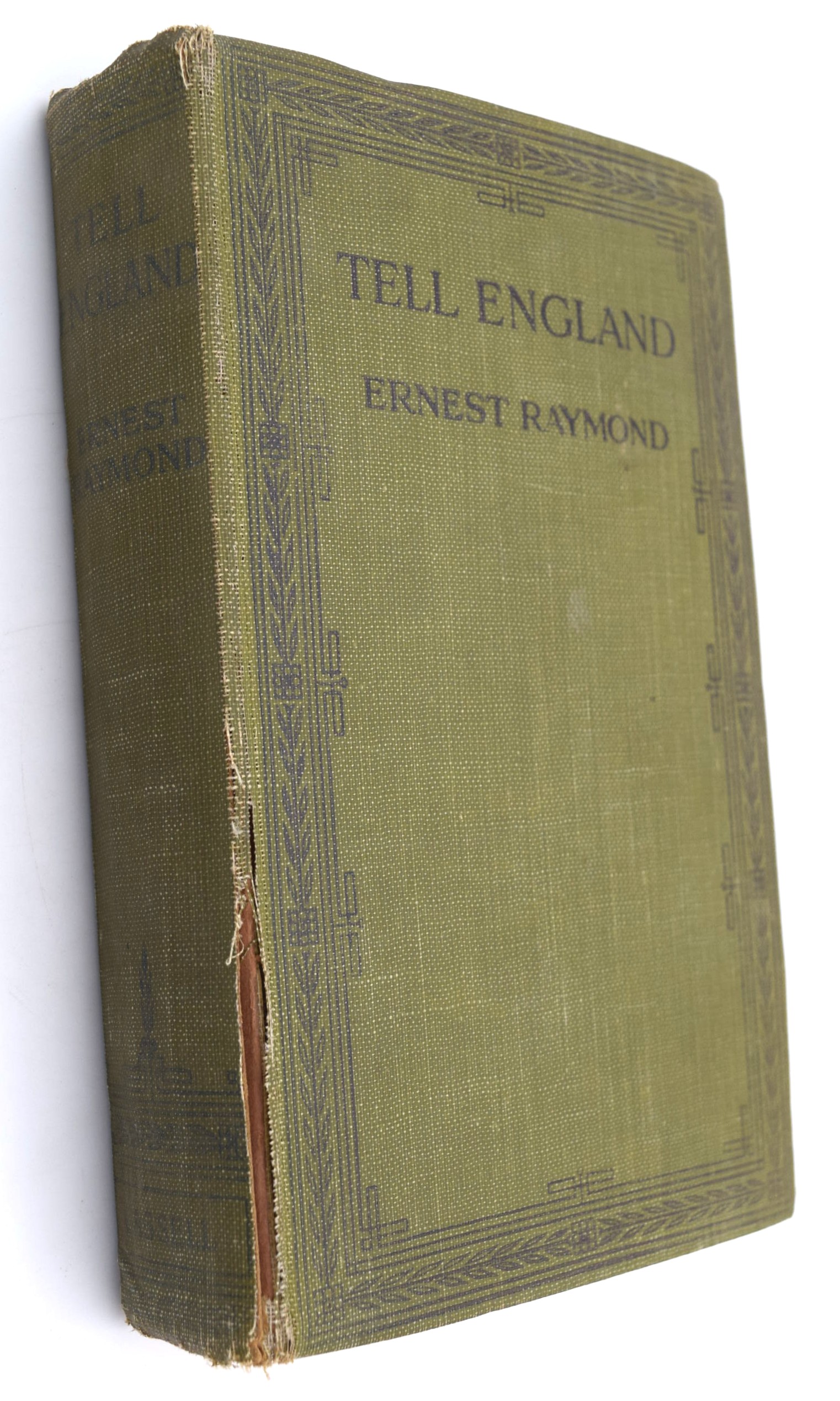
A second dose from Ernest Raymond’s 1922 First World War novel, Tell England: A Study in a Generation, a book that goes to extraordinary lengths to beat around the bush.
When it was published, the poor dears read it as a patriotic, high-church Anglican tribute to the tragic “lost generation” of British public schoolboys sent to Gallipoli. The lingering focus on male beauty and passionate friendships seems to have passed them by.
You may recall from an earlier post that Raymond himself later openly acknowledged the novel’s homosexual subplot.
The first half of the novel, Five Gay Years of School, introduces the narrator, Rupert Ray, and his classmates as young men who are acutely aware of their own attractiveness, opening one school chapter with Archie Pennybet’s boast: “I’m the best-looking person in this room.” Time and again, they are presented as magnificent, almost perfect creations of God.
At the heart of the story is Rupert’s deeply emotional attachment to his classmate Edgar Doe, who is quite unmistakably homosexual. Their relationship is marked by jealousy, devotion, and emotional intensity that often resembles a love affair far more than ordinary friendship.
“I say, why does Doe avoid us now?”
“The Gray Doe,” sneered Penny. “Oh he – She’s in love, I suppose. With Radley.”
“Don’t drivel,” I commanded. “Why does he hang about with that awful Freedham?”
“When you’re my age, Rupert,” began Penny, in kind and accommodating explanation, “you’ll know that there are such things as degenerates and decadents. Freedom is one. And very soon Doe will be another.”
“Well, hang it,” I said, “if you think that, how can you joke about it, and leave him to go his way?”
“Oh, the young fellow must learn wisdom. And he’s not in any danger of being copped. I’m the only one that suspects, and I guessed because I’m exceptionally brilliant. Besides, if he wants to go to the devil for a bit, you can’t take his arm and go with him.”
“No,” I said, “but you can take his arm and bring him back.”
The schoolmaster, Radley, is described as regarding the boys with a “strong, active love.” Rupert comments: “We were his hobby. I have met many such lovers of youth.”
In the second half of the novel, the boys are sent to Gallipoli. The emotional and physical admiration established during their schooldays evolves into a romanticised martyrdom, where dying beautifully for England becomes the ultimate fulfilment of their youth.
By Jove, Ernest Raymond was clever.
He wrote about male intimacy with remarkable emotional and physical closeness without provoking the censors of the 1920s. Wrapped in high-church religiosity and fervent patriotism, it was accepted by the general public as nothing more than an innocent, heart-rending tribute to fallen soldiers.
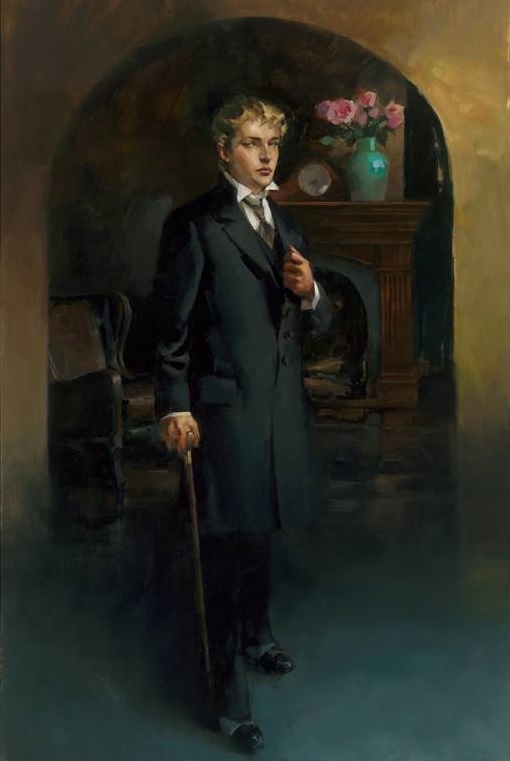
Image: The Picture of Dorian Gray – Gregrory Manchess
‘One evening about seven o’clock I determined to go out in search of some adventure. I felt that this gray, monstrous London of ours, with its myriads of people, its splendid sinners, and its sordid sins, as you once said, must have something in store for me. I fancied a thousand things. The mere danger gave me a sense of delight. I remembered what you had said to me on that wonderful night when we first dined together, about the search for beauty being the poisonous secret of life. I don’t know what I expected, but I went out, and wandered eastward, soon losing my way in a labyrinth of grimy streets and black grassless squares.’
From ‘A Picture of Dorian Gray’ by Oscar Wilde (1890)
A deeply coded text. While The Picture of Dorian Gray does not explicitly describe sexual acts, it is widely considered a foundational queer or homoerotic novel. The language, deep obsession between male characters, and themes of hidden desires heavily reflect same-sex attraction, which led to the book being used as evidence in Oscar Wilde’s 1895 trial for homosexuality.
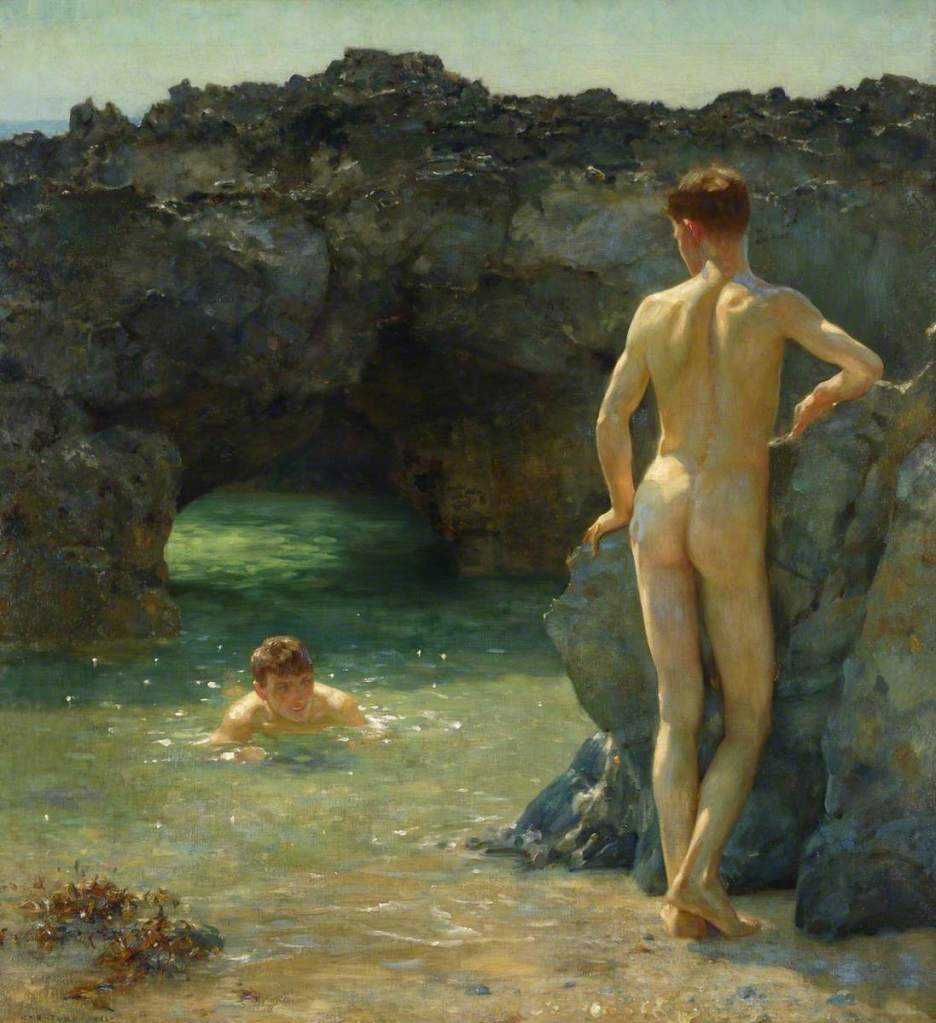
Sonnet to Youth (No 1076) Youth, beautiful and daring, and divine, Loved of the Gods, when yet the happy earth Was joyful in its mourning and new birth; When yet the very odours of the brine Love’s cradle, filled with sweetness all the shrine Of Venus, ere these starveling times of dearth, Of priest-praised abstinence, made void of mirth, Had given us water where we asked for wine.
Youth, standing sweet, triumphant by the sea All freshness of the day and all the light Of morn on thy white limbs, firm, bared and bright For conflict, and assured of victory, Youth, make one conquest more; and take again Thy rightful crown, in lovers’ hearts to reign!
Words credited to the artist Henry Scott Tuke (1858-1929). From The Artist (1889)
This text appears attached to the entry for Perseus and Andromeda (R121) in Tuke’s Registers. According to Charles Kains Jackson, who later informed the compiler S.E. Cottam, a sonnet published in the 1889 issue of The Artist was written by Henry Scott Tuke. The poem in question is likely the same work; however, the evidence is insufficient to confirm Tuke’s authorship with certainty.
“Spendid, perfectly splendid!” replied the Colonel. “Eighteen, by Jove! You’ve timed your lives wonderfully, my boys. To be eighteen in 1914 is to be the best thing in England. England’s wealth used to consist in other things. Nowadays you boys are the richest thing she’s got. She’s solvent with you, and bankrupt without you. Eighteen, confound it! It’s a virtue to be your age, just as it’s a crime to be mine. Now, look here” – the Colonel drew up his chair, as if he were going to get to business – “look here. Eighteen years ago you were born for this day. Through the last eighteen years you’ve been educated for it. Your birth and breeding were given you that you might officer England’s youth in this hour. And now you enter upon your inheritance. Just as this is the day in the history of the world so yours is the generation. No other generation has been called to such grand things, and to such crowded, glorious living. Any other generation at your age would be footling around, living in a shallow existence in the valleys, or just beginning to climb a slope to higher things. But you” – here the Colonel tapped the writing-table with his forefinger – “you, just because you’ve timed your lives aright, are going to be transferred straight to the mountain-tops. Well, I’m damned. Eighteen!”
The passage is taken from Tell England: A Study in a Generation, a novel written by Ernest Raymond and published in February 1922 in the United Kingdom. Its themes are the First World War and the young men sent to fight it. The body of the novel is divided into two halves (or “books”), both narrated by Rupert Ray. The first book tells the story of his and his friends’ progress through school; while the second deals with the experiences of (specifically) Ray and his friend Edgar Doe during the war.
Forty-five years after the novel’s publication, Raymond wrote: “Another thing that is a cause of wonder to me as I re-read the book is the indubitable but wholly unconscious homosexuality in it,” since “‘homosexuality’ was a word which — absurd as this seems now — I had never heard.”
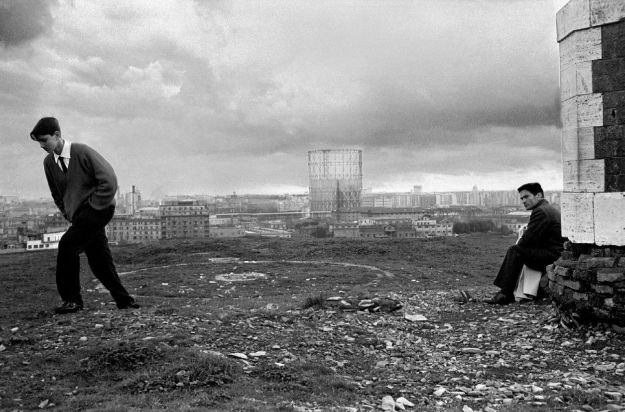
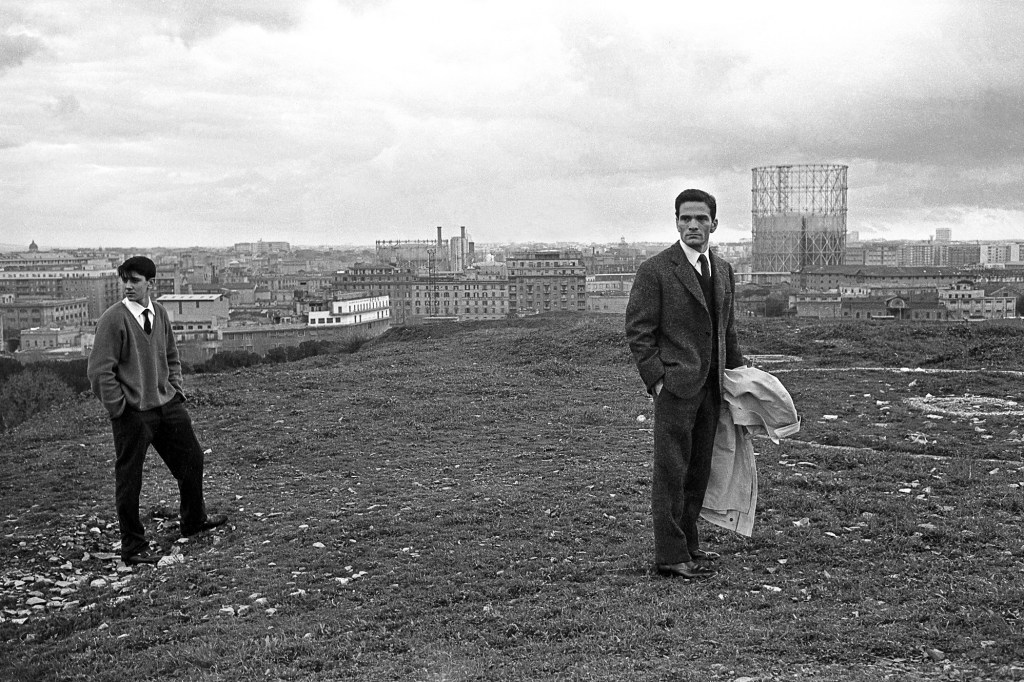
This iconic photograph captures the Italian film director and poet Pier Paolo Pasolini at the Monte dei Cocci (also known as Monte Testaccio) in Rome, 1960.
It was there that I had met, or in fact only seen, another youth, Nino, who was reduced almost completely to his pure image. It was a sunny day, and everything shimmered, the garbage and weeds, tall buildings and shacks. He was standing in the sun in a purple shirt, his deep blue eyes filled with a strange, almost cruel innocence. He was a boy like so many others, with a job, or perhaps in search of a job. I saw him some time later, grown up and somewhat thickened, on the train to Ostia, with his father and mother, and probably some younger brothers and sisters. His gaze was somewhat cloudy, but it was still pure and innocent. He joyfully introduced me to his parents. His father was robust, still young, and seemed like an honest factory worker, and his mother, who also seemed young, showed the brusque tenderness typical of Roman mothers just slightly softened and mitigated by the fact that her son already had the bearing of a young man. A year or two later, I’m not sure, I crossed paths with a friend of Nino’s called Bruno and asked about the boy. Bruno thought for a moment, comically knitting his brow. Then he came to a decision and raised his hand in front of his face, with the fingers apart. He meant that Nino was in jail, at Regina Coeli.
From: Chronicles of Rome, Pier Paolo Pasolini, 1961.