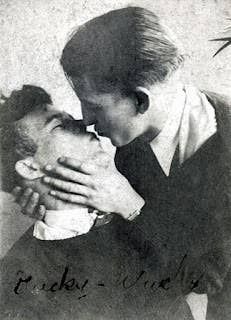
Two boys had met to bid “goodbye,” One was my friend, the other 1; He was going home—going home to die.
I know for long he talked to me, But I think I only heard the sea— It moaned and moaned incessantly,
I dared not look at him—I saw The wind play with a wisp of straw: ‘Twas early Spring and cold and raw.
But when the station came in sight Through parted clouds the sun shone bright. Flooding the world with warmth and light.
A moment later in the train I glanced at, with a stab of pain, The face I never saw again.
The train went out: dark grew the sky And all at once tempestuously A storm of hail swept far and night.
But darkness could not blot or kill That sunlit face—it never will: By night and day I see it still.
Edwin Emmanuel Bradford’s The Parting first appeared in The Romance of Youth and Other Poems in 1910, with later editions appearing around 1920. It is tempting to read it as a wartime farewell between two young men, particularly because of its language of death and separation.
But the date matters.
This is 1910.
The First World War is still four years away.
So who, exactly, are these two boys?
Bradford gives us almost nothing. Just the meeting. The silence. The cold. The train. And that extraordinary final image of the boy’s face surviving everything — even darkness.
The poem belongs to the strange, fascinating world of early twentieth-century Uranian literature: writing that openly explored romantic and homoerotic relationships between men and adolescent boys.
Bradford himself lived an extraordinary double life. He was an Anglican vicar, respectable enough to be reviewed seriously and, remarkably, often favourably. At the same time, he was publishing poetry about male beauty, youth and desire.
That tension is part of what makes The Parting so haunting.
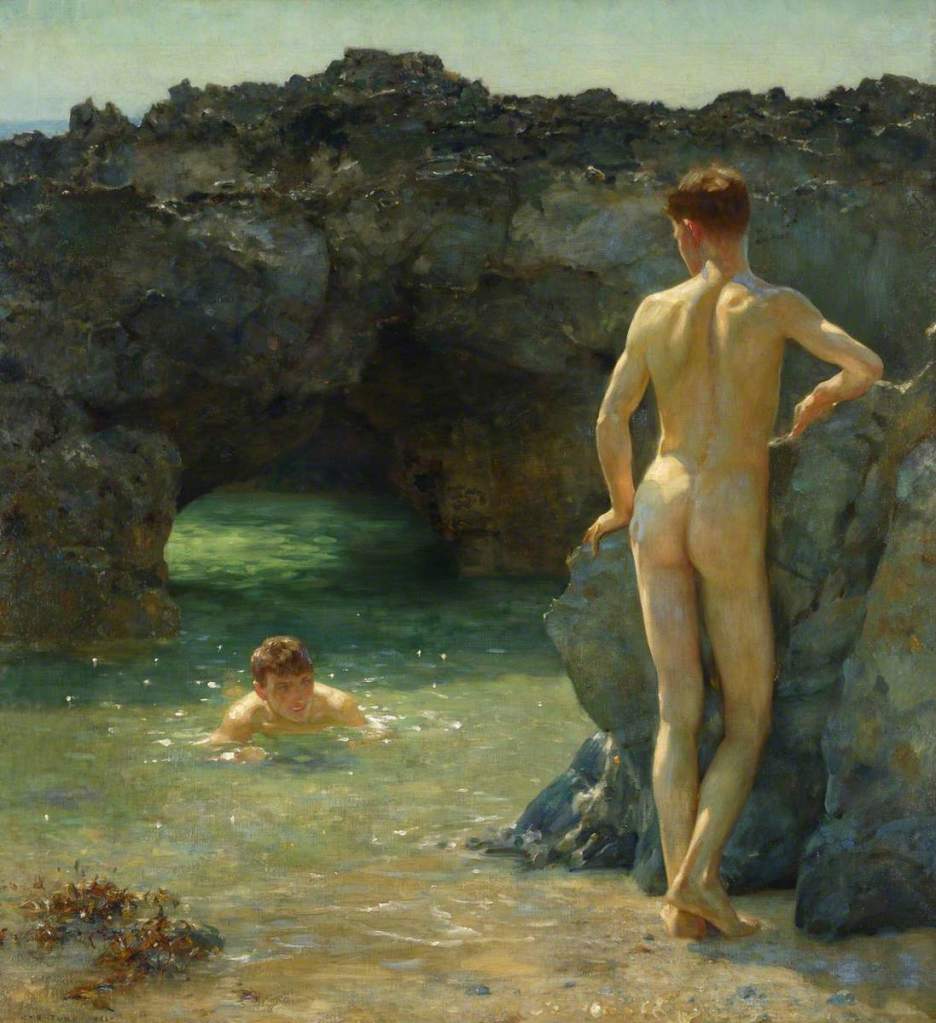
The Bather in the Blue Grotto at Capri is a homoerotic poem by the English clergyman and Uranian poet Edwin Emmanuel Bradford, first published in The New Chivalry and Other Poems in 1918.
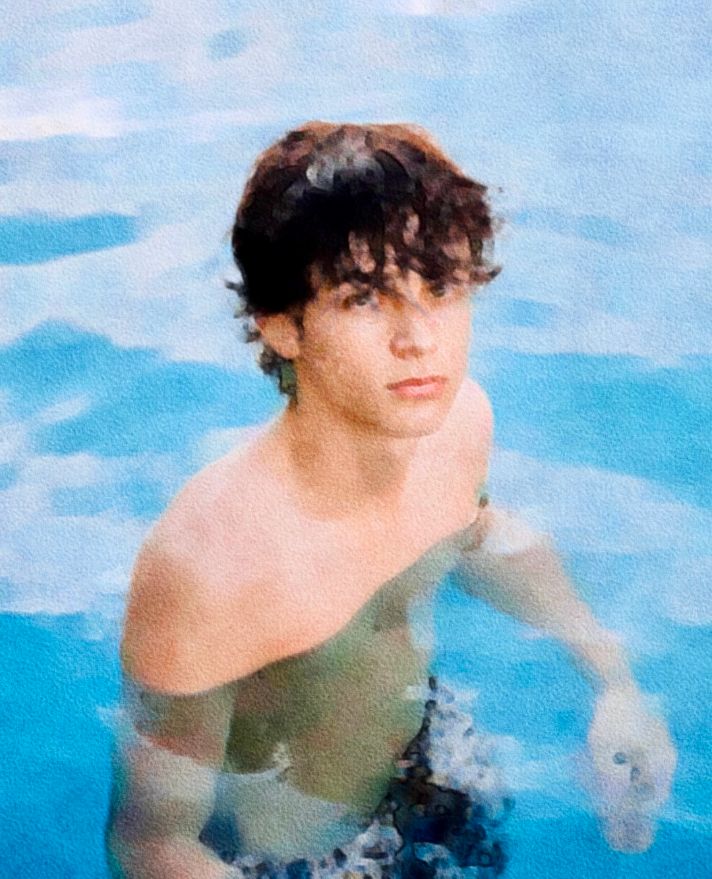
The poem takes us into the famous Blue Grotto, where Bradford watches a young bather preparing to dive. What follows is an unabashed celebration of male youth and physical beauty. The body is described almost like a painting: the curly brown hair, the dark eyes, the sun-browned skin, the small details that become, in Bradford’s gaze, something close to an ideal.
Prepared to dive, he flings aside his vest, And waits the signal. Brown’s his curly hair, Deep brown his eyes, and now we see it bare, Though face and hands are browner than the rest, Save two brown nipples on the boyish breast, His sun-burnt body’s nut brown everywhere.
Bradford himself is an intriguing figure. Born in 1860, he was an English clergyman, theologian, poet and novelist who wrote extensively about male beauty, desire and romantic attachment between men and boys. He belonged to the Uranian tradition—a largely underground literary culture in which male-male love could be expressed through poetry and fiction at a time when homosexuality was both socially condemned and, in Britain, criminalised.
And yet Bradford’s work was not entirely hidden away. Between 1908 and 1930, Kegan Paul published twelve volumes of his writing. His poetry also received attention from the mainstream press, sometimes with surprisingly favourable reviews.
There is something rather extraordinary about finding this openly homoerotic vision of a young male body in a respectable English poetry collection of 1918. Bradford looks at the bather in the blue light of Capri and simply allows himself to admire him.
A century later, the poem feels both of its time and strangely direct: an old-fashioned language wrapped around a very uncomplicated act of looking.
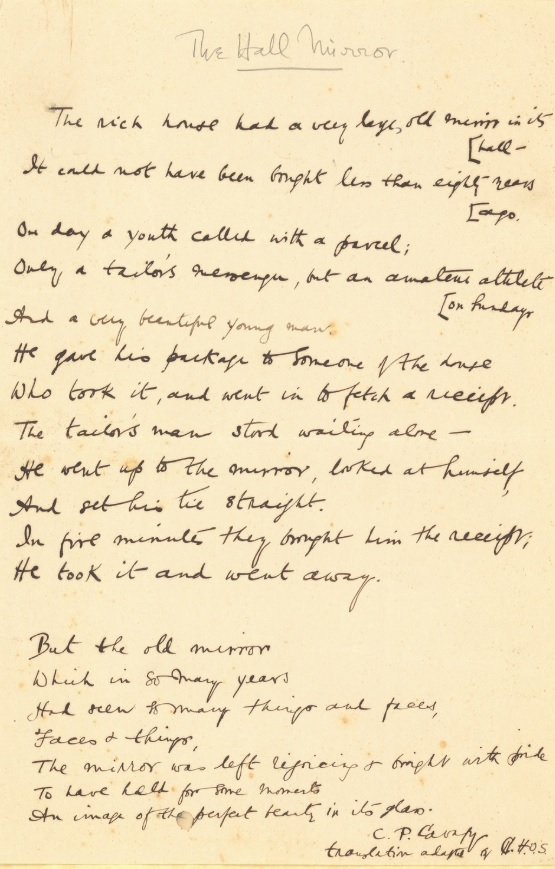
The rich house had a very large, old mirror in its hall. It could have been bought not less than eighty years ago. One day a youth called with a parcel; Only a tailor’s messenger, but an amateur athlete on Sundays And a very beautiful young man. He gave his package to someone of the house, Who took it and went in to fetch a receipt. The tailor’s man stood waiting alone – He walked up to the mirror, looked at himself and set his tie straight. In five minutes they brought him the receipt; He took it and went away.
But the old mirror Which in so many years Had seen so many thousands of things and faces, The mirror was left rejoicing And proud to have had hold for some moments An image of the perfect beauty in its glass.
Translated from Greek by C.H.O. Scaife in collaboration with Constantine P. Cavafy. Originally published in The Spectator on September 27, 1935.
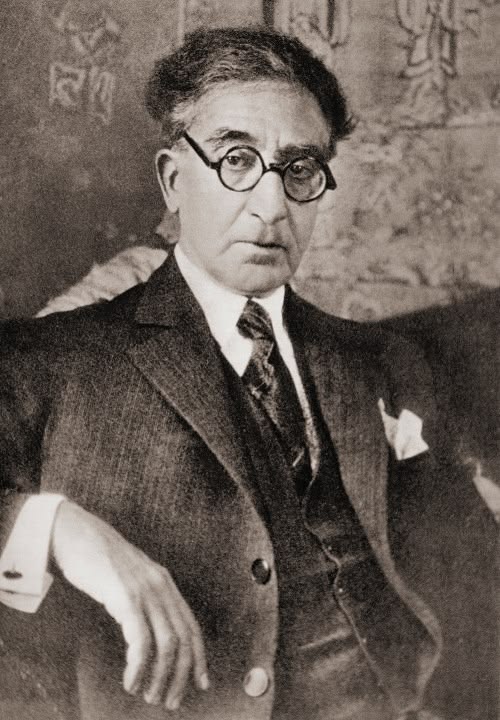
Constantine P. Cavafy (1863–1933) was an extraordinarily influential Egyptian-Greek poet widely considered the most distinguished voice of modern Greek literature and a towering figure of 20th-century Western poetry. Born and based mostly in the cosmopolitan hub of Alexandria, Egypt, his work uniquely blended historical realism, profound skepticism, and deeply personal, intimate expressions of homosexual desire. He spent over thirty years working as a quiet clerk in the Irrigation Service of the Egyptian Ministry of Public Works while writing poetry in his spare hours
The speaker looks at beautiful young people in the present and wonders where they were when he was a child. Every generation believes beauty belongs to someone else. Every generation eventually discovers that it was temporary.
Canal Saint-Martin. Photo by Andrii Bulavka (2026)
Where were they when I was a kid, the gorgeous young I see?
Did they drop from the moon on each sand dune
or arrive at five just for me?
Where were they with their hair and their teeth and their shoulders and stomachs, too;
did they fall out of sight on each summer’s night, just to tempt me and bend me with fear?
I see them now crowd the streets and the beach, the subways and fashion stores,
they seem so cool, unruffled and cruel and make light fools of us all.
But as you expect, soon, quite direct, they’ll become just as you and I:
then the curious types from their shadows will gripe, just what did become of us all?
Perry Brass The poem originally appeared in Sex-Charge (1991).
Perry Brass is an acclaimed American author, journalist, poet, and pioneering LGBTQ+ rights activist. Born in Savannah, Georgia, in 1947, he became a core figure in the post-Stonewall gay liberation movement in New York City.
Mark Morrisroe, Self-Portrait with Broken Finger, Christmas 1984
I would have fallen in love with him. No doubt about that. And he would have ruined my life.
But that never happened.
A bullet rolled out of his ashes. Shot in the back at seventeen. That was all that remained.
Myles Vale
Mark Morrisroe (1959-1989) was an influential American photographer, performance artist, and filmmaker who served as a central figure in the Boston punk scene of the 1970s and the New York art boom of the 1980s. When he was 17 years old, he was shot in the back, leaving him with a bullet lodged next to his spine for the rest of his life. He died of AIDS complications. His last words to his friends were “take my photo”. On the second click of the shutter he was gone.
Fabian Strachan Woodley (1888–1957) was a Bristol-born teacher, journalist, and poet whose wartime writing evolved from youthful patriotism to profound melancholy after a devastating personal loss.
In June 1916, his lover, twenty-year-old Lieutenant Myles O’Donovan of the Royal Munster Fusiliers, a native of County Cork, was killed by shellfire. In response, Woodley wrote To Lieut O’D (1916), a deeply personal elegy in his memory.
The poem marked a turning point in Woodley’s work. Gone were the optimistic patriotic verses of his early war years, replaced by a poignant meditation on grief and the waste of young life. He evokes O’Donovan’s vitality and laughter before the brutal interruption of a screaming shell brings his life to an abrupt end in the trenches.
To Lieut O’D was later included in Woodley’s 1921 collection, A Crown of Friendship.
To Lieut. O’D (1916)
See him standing at the corner, Cynosure of friendly eyes, Challenging their kindly sallies, Combatting with swift replies.
Eyes alight with Life and Laughter, Brown eyes full of mirth and fun; Fresh face tanned by months of warfare, Lithe limbs browned by summer sun.
Suddenly a shell comes screaming, Through the blue vault overheard, Strikes – His laughing lips are silent, All his splendid youth lies dead.
Death! whose arrow countless thousands And unerring aim have proved, Could you not have aimed untruly, Spared for me the boy I loved?
“I loved everything in this world. And all I had was my blank notebook under the sun.”
Sandro Penna, the Italian poet, believed his finest work consisted of only a handful of lines.
Why write a long poem when four lines will do?
A man after my own heart.
I leave my job filled With dry words. But at the gate The gods have set down for my joy A boy playing with boredom.
Penna also loved to walk—through fields and parks, but above all through the working-class districts of Rome, usually after dark.
We are left in little doubt as to what drew him there.
His friend, Pier Paolo Pasolini, knew that Penna was captivated by the same ragazzi who wandered the city’s outskirts.
The evening kidnapped My quarreling boys Their angel voices Warring. Now they stand In the mothering shelter of new lights In houses across the street.
Engraved in the bright sky The silent smudge Of a hero on a horse
Under the first star.
Penna’s way of life, however, also caused concern.
In 1956, he brought a 14-year-old street boy, Raffaele Cedrino, to the home he shared with his mother. The boy remained part of Penna’s life, on and off, until 1970.
I saw my dark haired boy Seated in the audience Smoking a cigarette He has the brightest eyes.
Penna died alone in the same house on Via della Mola dei Fiorentini in 1977.
In brief: Born in Perugia in 1906, Sandro Penna spent most of his life in Rome. Although he trained as an accountant, he never settled into regular employment, instead earning a living through newspaper work, proofreading, and dealing in art.
In 2014, Peter Valente described Penna’s verse as “candid, uncluttered, minimalist, and of profound lyrical intensity.” It is difficult to think of a finer summary.
“It seemed as though it was happening to somebody else. He heard the rattle of German machine guns and believed they were aimed elsewhere. He pitied the unfortunate comrades who fell into the mud and filthy water, yet silently thanked the Lord that it was them and not him. Surely He had made him immune to this brutal enemy. He was too young to die.
“Then his tunic exploded before his eyes. Chunks of blood, cloth and gore splattered across his chest and stomach like enormous raindrops. There was no pain. Not at first. Then came the realisation that these were the very bullets meant for somebody else. After that came the searing pain—sharp, sudden, inexplicable. His insides had exploded. The Lord had deserted him after all.
“Those were his final thoughts as he fell to his knees: that he was going to die, and his secret would remain with him on the banks of the Sambre–Oise Canal at Ors.“
*****
I am one of those who subscribes to the view that the poet was homosexual. Others, of course, suggest otherwise. His connections with a homosexual literary circle that included Siegfried Sassoon, Robbie Ross, Osbert Sitwell and Scottish writer C.K. Scott Moncrieff is well documented.
The truth of the matter died with Owen at Ors in November 1918.
Wilfred Owen had only five poems published during his lifetime. The vast majority of his work was published posthumously, much of it written between August 1917 and September 1918 during his stay at Craiglockhart Hospital in Edinburgh and a subsequent period in Scarborough.
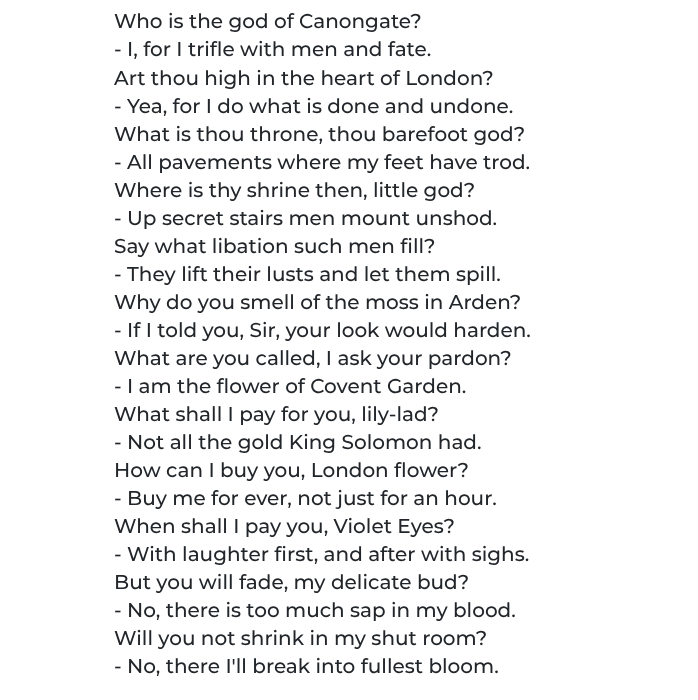
One such poem, Who Is the God of Canongate?, is believed to have been written at Scarborough in November 1917, when Owen joined the Manchester Regiment, billeted at the Clarence Gardens Hotel (now the Clifton Hotel), where he spent much of his free time writing in a turret bedroom.
The poem has often been interpreted as an evocation of male prostitution in Canongate, Edinburgh, and Covent Garden, London, collectively represented as a “little god” who walks the pavements barefoot. This “lily-lad” is visited up “secret stairs” by men who “lift their lusts and let them spill”.
Did Owen write from experience? Or had he merely heard stories that inspired the poem?
Sonnet to Youth (No 1076) Youth, beautiful and daring, and divine, Loved of the Gods, when yet the happy earth Was joyful in its mourning and new birth; When yet the very odours of the brine Love’s cradle, filled with sweetness all the shrine Of Venus, ere these starveling times of dearth, Of priest-praised abstinence, made void of mirth, Had given us water where we asked for wine.
Youth, standing sweet, triumphant by the sea All freshness of the day and all the light Of morn on thy white limbs, firm, bared and bright For conflict, and assured of victory, Youth, make one conquest more; and take again Thy rightful crown, in lovers’ hearts to reign!
Words credited to the artist Henry Scott Tuke (1858-1929). From The Artist (1889)
This text appears attached to the entry for Perseus and Andromeda (R121) in Tuke’s Registers. According to Charles Kains Jackson, who later informed the compiler S.E. Cottam, a sonnet published in the 1889 issue of The Artist was written by Henry Scott Tuke. The poem in question is likely the same work; however, the evidence is insufficient to confirm Tuke’s authorship with certainty.
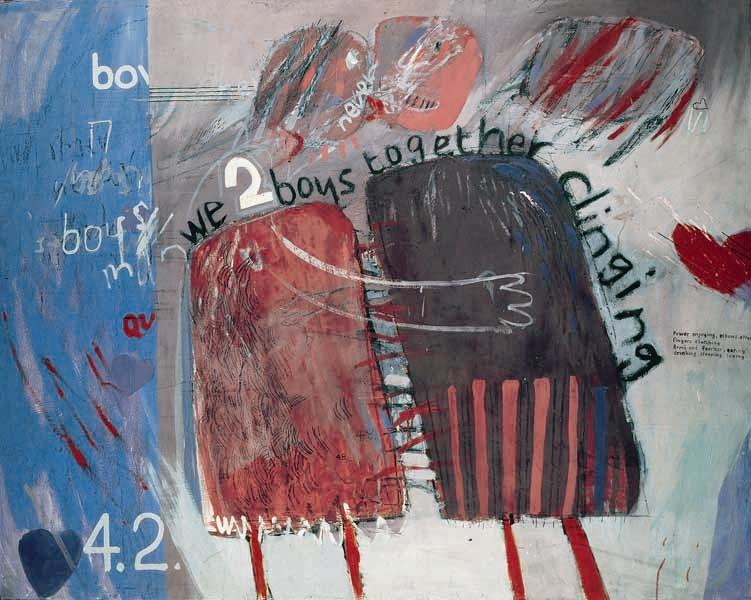
We Two Boys Together Clinging. David Hockney (1961). Its name derives from a poem by Walt Whitman and two lines from it are scribbled to the right. It also references a newspaper clipping detailing a climbing accident – ‘Two Boys Cling to Cliff All Night’ which Hockney interpreted as an illusion to his idol, Cliff Richard. (Arts Council Collection)
On the life of David Hockney… A strange thing happened. I mentioned to a friend that I wanted to watch A Bigger Splash — the 1974 documentary about the artist David Hockney, in which his lover of three or four years, Peter Schlesinger, leaves him during filming.
I still hadn’t watched it, and the following day, it was announced that Hockney had died at the age of 88.
The news reminded me of a few years ago when I was given a Hockney print, Two Boys Clinging Together. I made a convincing show of being overwhelmed by it, but the truth was rather different. The print never made it onto the wall; to my eye, it looked like something I might have painted when I was four. His work never entirely won me over.
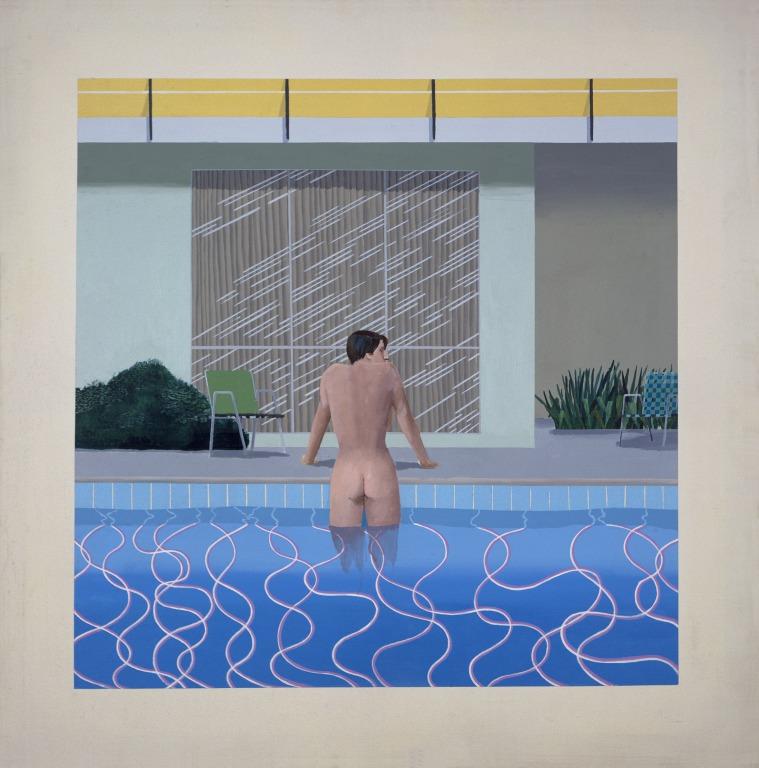
That said, I have always liked his California pool paintings from the 1960s and 1970s, although nobody has ever bought me one. My favourite is Peter Getting Out of Nick’s Pool (1966), which depicted the 19-year-old Schlesinger climbing from a swimming pool at the Hollywood apartment block where art dealer and gallery owner, Nick Wilder, lived.
I spent a few hours reading about Hockney — a man who, if I am honest, irritated me immensely. His dour Yorkshire monotone seemed at odds with the loud bow ties, red braces and trademark spectacles. He occupied the same corner of my imagination as the writer Alan Bennett; the two could almost have been twins. Yet it is impossible not to admire his courage. He was painting gay love at a time when homosexuality was still effectively illegal in Britain.
America held a particular attraction for him:
“I must admit, I’d begun to be interested in America from a sexual point of view; I’d seen American Physique Pictorial magazines when I first came to London. And they were full of what I thought were very beautiful bodies. I painted Domestic Scene from a photograph in Physique Pictorial, where there’s a boy with a little apron tied around his waist, scrubbing the back of another boy in a rather dingy American room; I thought, ‘That’s what a domestic scene must be like there.’”
But my favourite Hockney quotation comes from David Hockney in Paris, a BBC documentary from 1975:
“Men in white socks are very sexy. White tee-shirts are quite sexy, but not so sexy as socks.”
Peter Getting Out of Nick’s Pool. David Hockney (1966).
Rodney Harvey (1967–1998) was an American actor, dancer, and model celebrated for his appearances in critically acclaimed 1990s films like My Own Private Idaho.
On good looking guys who died young… It is an unhealthy fascination. I have a curious interest in those young guys who left us too soon. I have a list of the unfortunates and will get to them in future posts. But the list is tragically long. There’s something mythic about it. At the height of beauty, talent, or promise, they stop aging while we keep going. They are fixed in our memory and will never change; permanently charged with youth and possibility. Although, there are too many stories where death came about due to self destruction – the doomed poet, the tragic actor and the brilliant addict. I mourn them all and kid myself that if I’d been around them their fate might have been different.
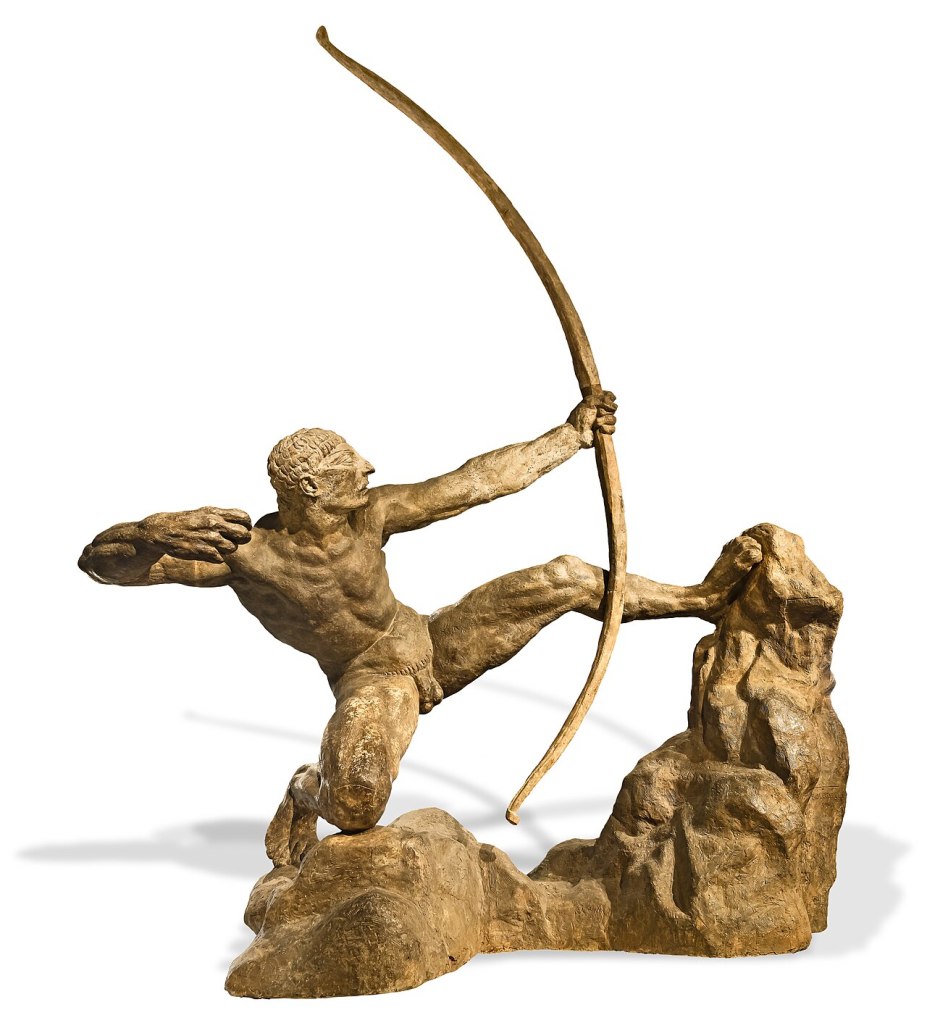
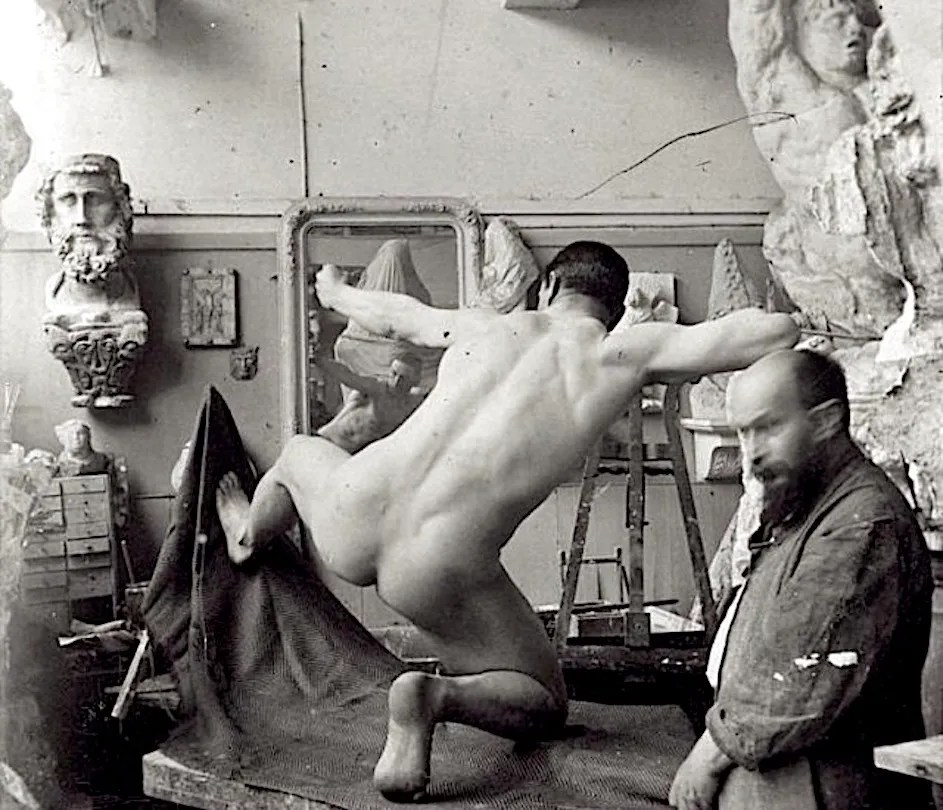
Héraklès Archer – Hercules the Archer . Antoine Bourdelle (1909) .
On a sculptor and a real-life model… I’m not entirely sure I like the sculpture, but I’m fascinated by how it was created. Hercules the Archer (1909), by the French sculptor Antoine Bourdelle (1861-1929), now exists in several versions, although it was originally commissioned by the financier and philanthropist Gabriel Thomas as a unique work.
Bourdelle modelled the sculpture in clay during the summer of 1909, using his friend Paul Gustave André Doyen-Parigot (1854–1916), a captain in the French Army, as his model. An accomplished sportsman, Doyen-Parigot possessed the physical strength and athleticism required for the pose. The dramatic extension of the body and the intense muscular tension of archery allowed Bourdelle to emphasise the model’s powerful physique.
At Doyen-Parigot’s request for anonymity, however, Bourdelle altered the head, distancing the finished figure from a direct portrait and transforming it into the heroic image of Hercules.
Paul Gustave André Doyen-Parigot modelling for Antoine Bourdelle.
On having childhood regrets… What if I had understood what was happening? What if I had been brave enough to acknowledge it? What might have become of us? Would he still have been my best friend?
Why was I thinking about Darren this week? Perhaps because some questions never quite leave us. When he later discovered that I was gay, he drifted out of my life. We have not spoken since.
On finding a poem about Manly Love… Douglas Malloch (1877–1938) was an American poet, short-story writer and Associate Editor of American Lumberman, a trade paper in Chicago.
Manly Love… Deep in your heart understand the love of a man for a man; He’ll go with you over the trail, the trail that is lonesome and long; His faith will not falter nor fail, nor falter the lilt of his song. He knows both your soul and your sins, and does not too carefully scan,— The Highway to Heaven begins with the love of a man for a man!
– Donald Malloch
The poem is preserved in modern literary history as an early piece of Western gay literature. It is notably featured in The Columbia Anthology of Gay Literature, compiled by Byrne R. S. Fone. It was also collected in historic specialty anthologies such as Men and Boys (edited by Edward Mark Slocum), which curated historical verses exploring Greek love, male friendships, and same-sex devotion across different eras.