
In 1918, Bradford dared to look
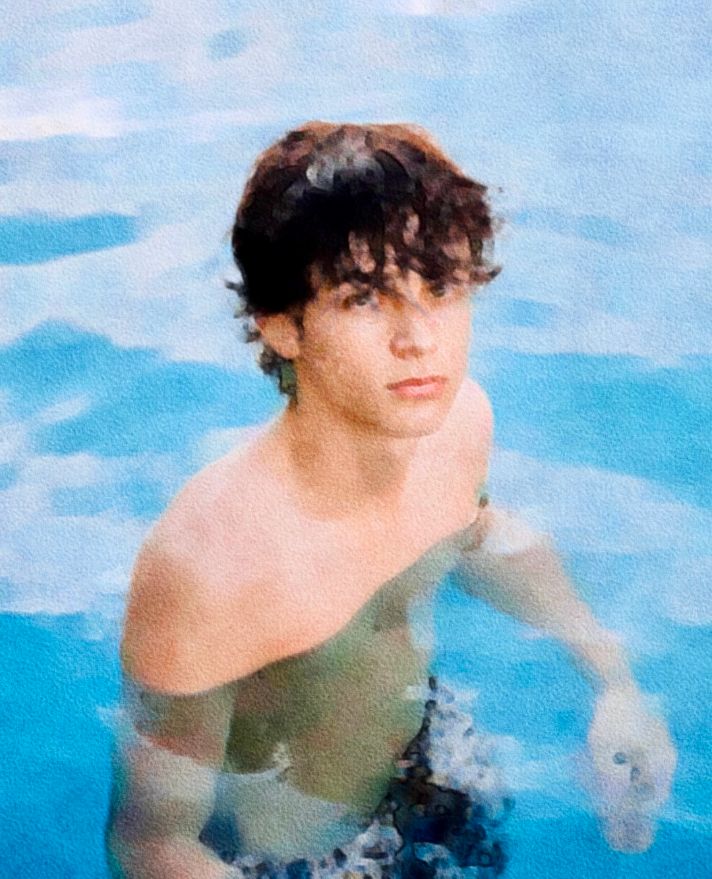
The Bather in the Blue Grotto at Capri is a homoerotic poem by the English clergyman and Uranian poet Edwin Emmanuel Bradford, first published in The New Chivalry and Other Poems in 1918.
The poem takes us into the famous Blue Grotto, where Bradford watches a young bather preparing to dive. What follows is an unabashed celebration of male youth and physical beauty. The body is described almost like a painting: the curly brown hair, the dark eyes, the sun-browned skin, the small details that become, in Bradford’s gaze, something close to an ideal.
Prepared to dive, he flings aside his vest,
And waits the signal. Brown’s his curly hair,
Deep brown his eyes, and now we see it bare,
Though face and hands are browner than the rest,
Save two brown nipples on the boyish breast,
His sun-burnt body’s nut brown everywhere.
Bradford himself is an intriguing figure. Born in 1860, he was an English clergyman, theologian, poet and novelist who wrote extensively about male beauty, desire and romantic attachment between men and boys. He belonged to the Uranian tradition—a largely underground literary culture in which male-male love could be expressed through poetry and fiction at a time when homosexuality was both socially condemned and, in Britain, criminalised.
And yet Bradford’s work was not entirely hidden away. Between 1908 and 1930, Kegan Paul published twelve volumes of his writing. His poetry also received attention from the mainstream press, sometimes with surprisingly favourable reviews.
There is something rather extraordinary about finding this openly homoerotic vision of a young male body in a respectable English poetry collection of 1918. Bradford looks at the bather in the blue light of Capri and simply allows himself to admire him.
A century later, the poem feels both of its time and strangely direct: an old-fashioned language wrapped around a very uncomplicated act of looking.

