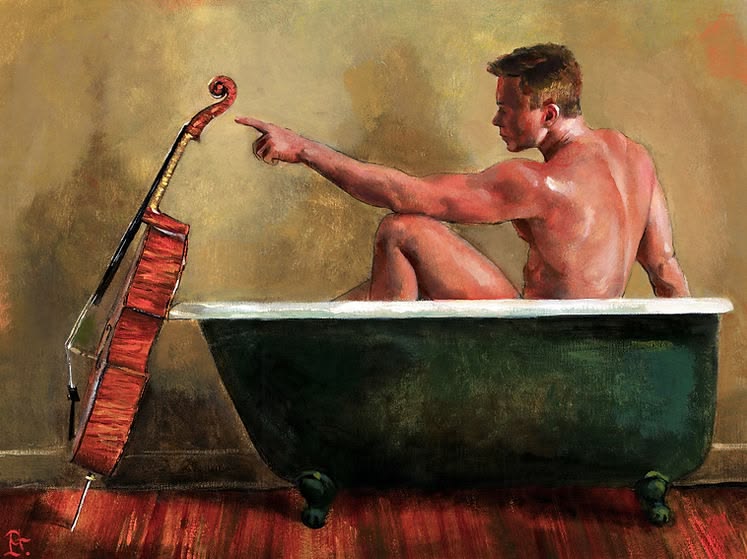
A Cellist Elevated by His Bath: Philip Gladstone (2007)
He had been in there for nearly an hour. Long enough for the water to cool, for the steam to disappear from the mirror, for the afternoon to slip into something approaching evening. He ought to have got out. There were things to do, people who might be waiting. But he had never been particularly good at doing what was expected of him.
Instead, he pointed at the cello.
There is nothing quite so exciting as a young guy in a bath. Especially one who brings his cello.
A Cellist Elevated by His Bath was painted in 2007 by American artist Philip Gladstone, whose work I’m beginning to think deserves considerably more attention.
Born in Philadelphia, Gladstone is known for his evocative figurative paintings, often featuring the male nude as protagonist, muse and general cause of distraction. He now paints full-time in a renovated barn studio at his antique farmhouse in rural Maine. Not a bad setting for an artist with such a particular eye for the male form.
This painting belongs to his long-running Tubs Series, in which bathers, animals and assorted objects find themselves in antique tubs that feel less like bathroom fixtures and more like protective, womb-like spaces. The results are surreal, dreamlike and just a little absurd.
And then there is the cello. The pose. The pointing finger.
I have questions. But I’m not sure I want answers.
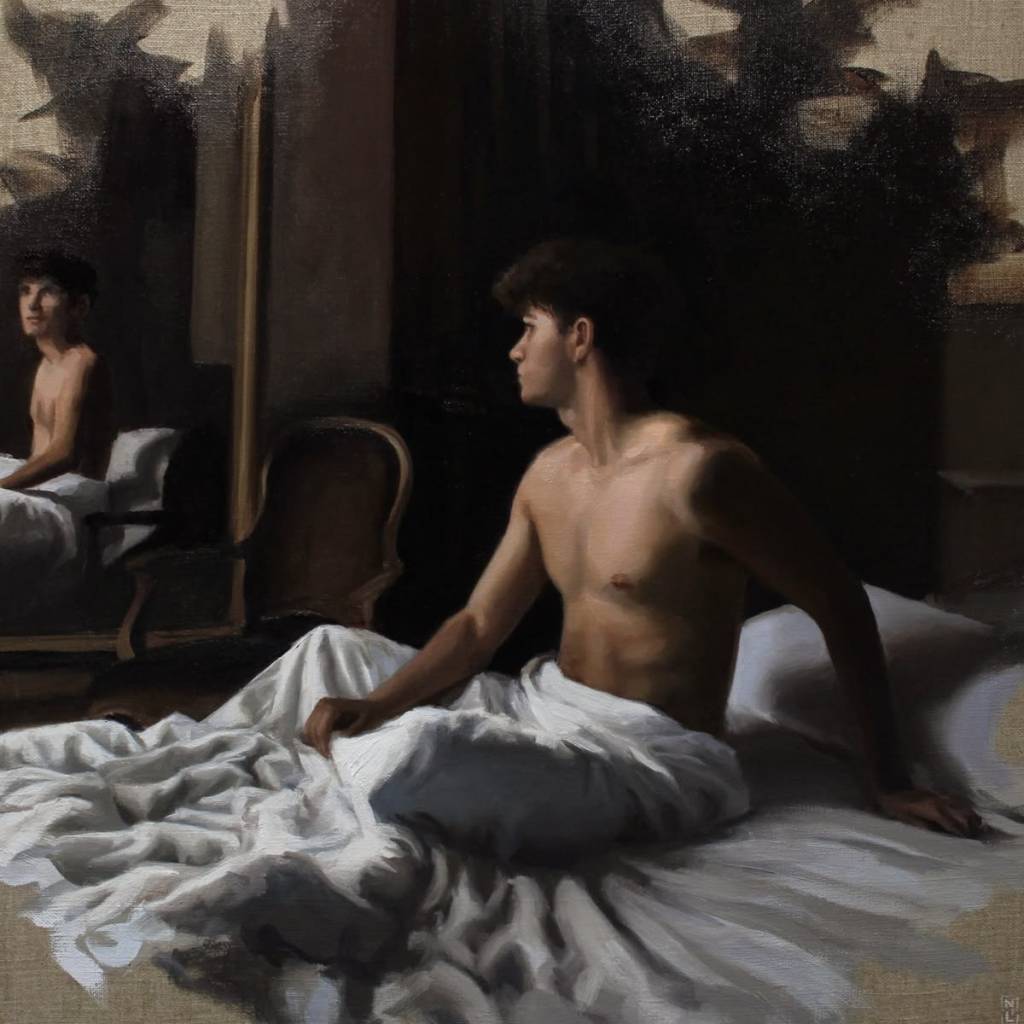
Després del somni (After the Dream): Nil Masip Boget(2025)
It makes you sick, doesn’t it?
Here’s someone who is only twenty years old, extremely good looking — and, annoyingly, an amazing artist too.
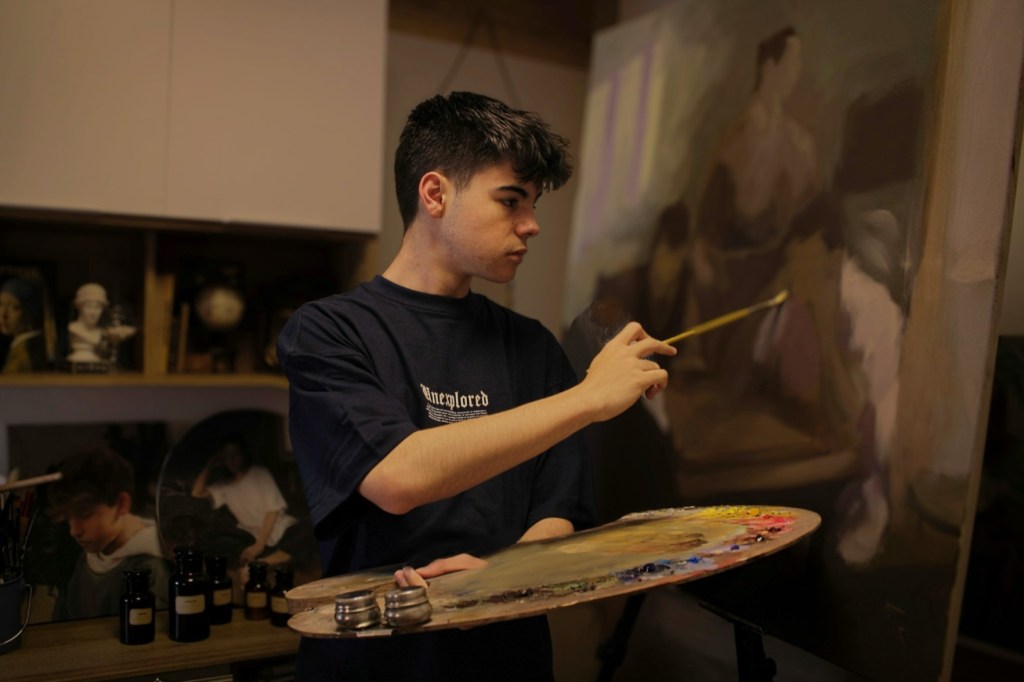
Barcelona-based Nil Masip Boget is a classical and figurative painter who trained at the Barcelona Academy of Art and Acadèmia La Gràcia. He has already won several awards, and his work is now held in public and private collections across Europe and the USA. He has also just had his first solo exhibition, sense por d’oblidar, at Inéditad Gallery in Barcelona.
He works mainly in oils, using light, colour and texture to create paintings that feel quiet and introspective. There is often a sense of silence in his work — moments caught somewhere between thought, memory and dream.
Després del somni (After the Dream) was the last oil painting he completed for Happiness Journey, a contemporary art exhibition held in Barcelona last year.
It shows a shirtless young man sitting on a bed, wrapped in crumpled white sheets. He looks away from us, towards the right of the canvas, while a mirror on the far left gives us a second, more distant view of him.
It is a beautifully strange composition. The dark background seems to remove the outside world altogether, leaving the boy suspended in some private, timeless space between sleep and waking. The mirror adds another layer — self-reflection, vulnerability, perhaps even the feeling of watching yourself from outside your own body.
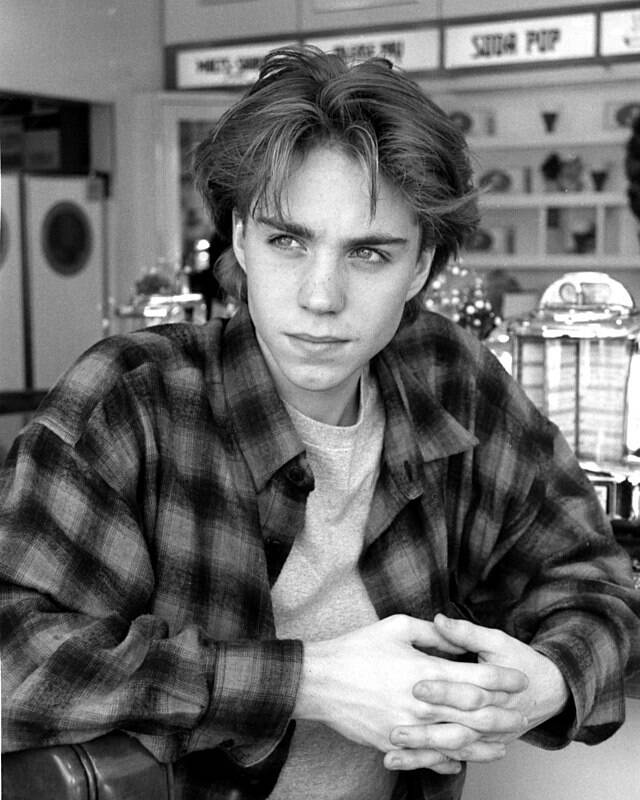
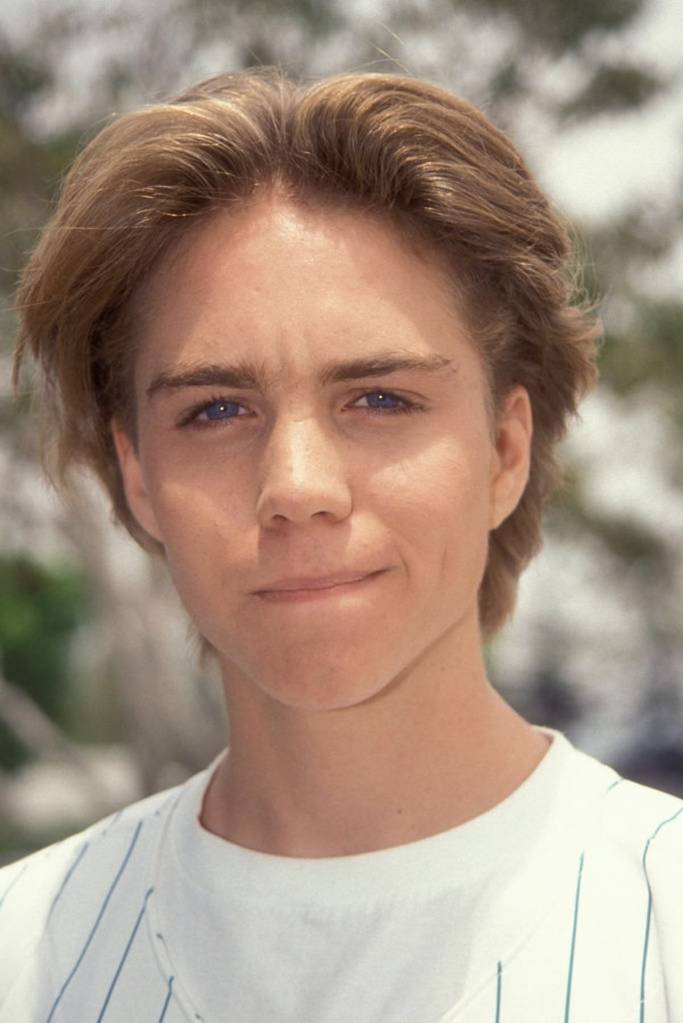
Jonathan Brandis and the loneliness of being forgotten
While researching Jonathan Brandis, I had the strange feeling that he reminded me of someone.
Then I realised.
He looked uncannily like my friend.
I would later discover that they shared some of the same torments.
But there is a difference.
Jonathan Brandis is dead.
My friend isn’t.
“I want to be remembered as an actor who put in some good work in the beginning of his career, even better work at the end of his career and slowly, successfully made the transition into writing and directing,” he told Nicki Swift in the Hartford Courant in 1994.
It didn’t end that way.
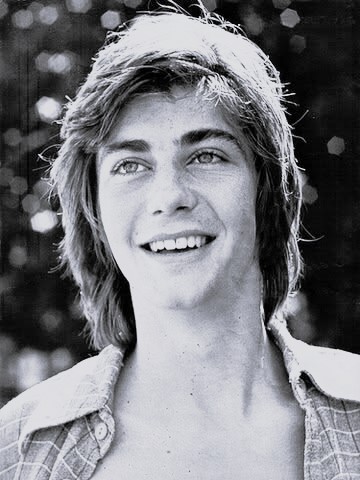
Brandis was boyishly handsome. Dark blond hair. Blue eyes.
Yes, the eyes were beautiful.
In the 1990s, Tiger Beat readers voted him their number one ‘dreamboat’, while Seventeen placed him among its ten sexiest guys.
At the height of his fame, he was receiving 4,000 fan letters a week. Three studio guards were needed to escort him through the mobs of fans at Universal Studios in Orlando, where seaQuest DSV, the Steven Spielberg-produced futuristic underwater fantasy, was filmed.
Between 1993 and 1995, Brandis played Lucas Wolenczak, a teenage computer genius who bonded with Darwin, a dolphin capable of communicating with the crew.
Born in Connecticut in 1976, Brandis began modelling for advertisements as a child. By nine, he had moved to Los Angeles.
There were television appearances in L.A. Law, Who’s the Boss?, Full House and Blossom.
Then came the films.
Most famously, he played Bastian in The NeverEnding Story II: The Next Chapter in 1991.
He auditioned for the role of Anakin Skywalker in Star Wars: Episode II – Attack of the Clones. Hayden Christensen got the part.
It was no big thing.
seaQuest DSV was just around the corner.
Then seaQuest was cancelled.
And suddenly the boy who had been everywhere was finding it difficult to get the roles he thought he deserved.
There were television movies. Smaller parts.
But the momentum had gone.
Brandis was devastated when most of his appearance in the 2002 war drama Hart’s War ended up on the cutting-room floor.
Underneath the persona, the long career lull — and the creeping realisation that he was no longer the boy Hollywood had once wanted — became sources of anxiety.
He began drinking heavily.
He allegedly told people he wanted to kill himself.
In November 2003, a friend found the 27-year-old Brandis hanging in the hallway of his Los Angeles apartment.
Paramedics rushed him to Cedars-Sinai Medical Center.
He died the following day.
There was no suicide note.
There were no drugs in his system.
At first glance, Brandis might seem like another tragic victim of Hollywood.
A beautiful young man who had been adored, then discarded.
But perhaps it was more complicated than that.
In his memoir Growing Up Urkel, Jaleel White writes about Brandis and the strange pressure placed on young actors who grow up in the business.
“Just like me, he had dedicated his entire life to achieving what Leonardo DiCaprio and the rest of his peer group had seemingly accomplished with ease.”
When White learned that Brandis had died, he wrote that he “cried for what felt like a fallen soldier.”
Years later, Brandis’s father offered another explanation.
He suggested that his son may have been bipolar.
“His death wasn’t due to the entertainment industry,” he said. “I look back now, and in his 20s, he showed signs of manic depression.”
Perhaps that is the more uncomfortable truth.
The industry may have contributed to the disappointment, the loss of status, the feeling of being forgotten.
But the darkness may have been there long before the lights went out.
The Bather in the Blue Grotto at Capri is a homoerotic poem by the English clergyman and Uranian poet Edwin Emmanuel Bradford, first published in The New Chivalry and Other Poems in 1918.
The poem takes us into the famous Blue Grotto, where Bradford watches a young bather preparing to dive. What follows is an unabashed celebration of male youth and physical beauty. The body is described almost like a painting: the curly brown hair, the dark eyes, the sun-browned skin, the small details that become, in Bradford’s gaze, something close to an ideal.
Prepared to dive, he flings aside his vest, And waits the signal. Brown’s his curly hair, Deep brown his eyes, and now we see it bare, Though face and hands are browner than the rest, Save two brown nipples on the boyish breast, His sun-burnt body’s nut brown everywhere.
Bradford himself is an intriguing figure. Born in 1860, he was an English clergyman, theologian, poet and novelist who wrote extensively about male beauty, desire and romantic attachment between men and boys. He belonged to the Uranian tradition—a largely underground literary culture in which male-male love could be expressed through poetry and fiction at a time when homosexuality was both socially condemned and, in Britain, criminalised.
And yet Bradford’s work was not entirely hidden away. Between 1908 and 1930, Kegan Paul published twelve volumes of his writing. His poetry also received attention from the mainstream press, sometimes with surprisingly favourable reviews.
There is something rather extraordinary about finding this openly homoerotic vision of a young male body in a respectable English poetry collection of 1918. Bradford looks at the bather in the blue light of Capri and simply allows himself to admire him.
A century later, the poem feels both of its time and strangely direct: an old-fashioned language wrapped around a very uncomplicated act of looking.
An obsession with grabbing hold of vintage books at a reasonable price. I have a curious interest in the Sitwells. Twice, quite inadvertently, I have found myself meeting a few of the modern ones. But it is the dead Sitwells who remain the most famous — and the most eccentric.
Sometimes there is a surprise hidden inside.
Osbert Sitwell, modernist author, poet, satirist and prominent cultural figure, lived from 1892 to 1969. Alongside his equally famous siblings, Edith and Sacheverell, he was known for his formidable personality, eccentricity and fierce nonconformity.
His book Open the Door was published in 1941. That same year, with characteristic generosity, Osbert sent copies to friends.
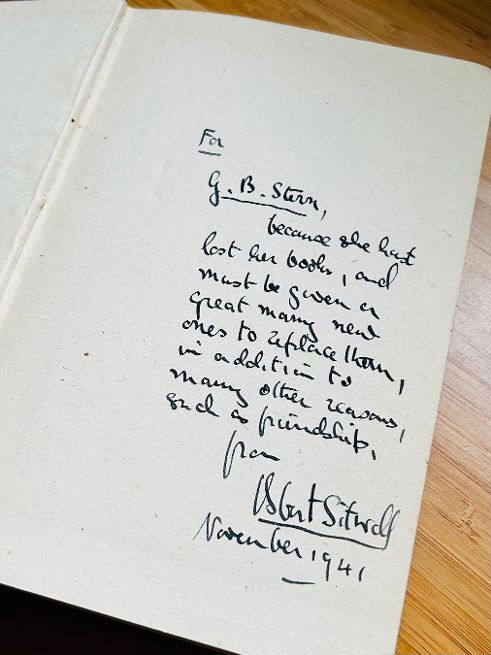
In my copy there is an inscription:
For G. B. Stern, because she lost her books, and must be given a great many new ones to replace them, in addition to many other reasons, and a friendship, from Osbert Sitwell, November 1941.
G. B. Stern — Gladys Bronwyn Stern — was an English novelist, playwright, journalist and literary critic. Over a career spanning six decades she wrote more than forty novels, as well as plays, short stories, screenplays and memoirs. She moved through the literary world of London with friends and acquaintances including H. G. Wells, W. Somerset Maugham, Rebecca West and Noël Coward.
And then there is the reason for Osbert’s inscription.
In 1941, during the German air raids on London, Stern’s home was hit by a bomb and completely destroyed. She survived physically unharmed, but lost almost everything: her house, her library, family heirlooms, papers and personal belongings.
She emerged from the rubble with virtually nothing.
Except the clothes she was wearing and her favourite walking stick.
And then, two months later, Osbert Sitwell sent her a book.
A Fox at Battersea
I get why David Hockney’s muse, Peter Schlesinger, left him for Eric Boman (1946–2022). I mean, who wouldn’t have? I found this photograph in a book, taken by Schlesinger at Battersea in 1977. I’d say Boman was a bit of a ‘Fox’, as they said in the 1970s. Wouldn’t you agree? Schlesinger famously recalled that people would crash their cars in the street just to steal a glance at him. He was a rare creature: as beautiful on the inside as he was on the outside, leaving an undeniable and unforgettable mark on the world. And yet, somehow, he still isn’t worthy of a Wikipedia page.
What Becomes of Joey?
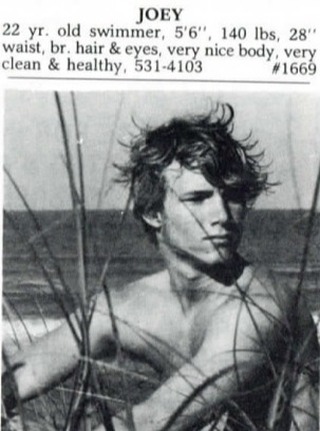
Getting my head around the fact that Joey, turning a trick or two in 1987, would be 61 now. I’m sure he never imagined that the beauty being advertised here was something temporary. We are shallow and cruel. We fall for youth, then discard it when it disappears. Would we even give Joey the time of day now?
Troppo giusto!
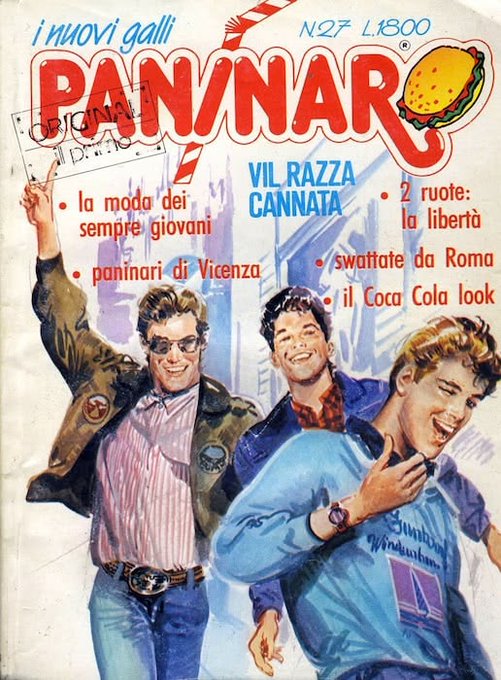
Paninaro. Milan, 1980s. Fast food. Designer labels. Mopeds. New York fantasies. Basically, a whole aesthetic before anyone called it an aesthetic. I wish I’d been a Paninaro.
“Girls, boys, arts, pleasure,/ Food, cars, travel, food, cars, travel, travel,/ New York, New York, New York,/ Armani, Armani, A-A-Armani, Versace, Cinque”.
The Decadent Comrades
Casimir, destroyer of peace, and Leonid, son of the lion, shared a love of baked apple, cinnamon and each other. Branded remnants of ‘bourgeois decadence’ and capitalist moral decay, they were shunned by their comrades. In their loneliness, they turned to a growing art form called ‘gaysky pornsky’.
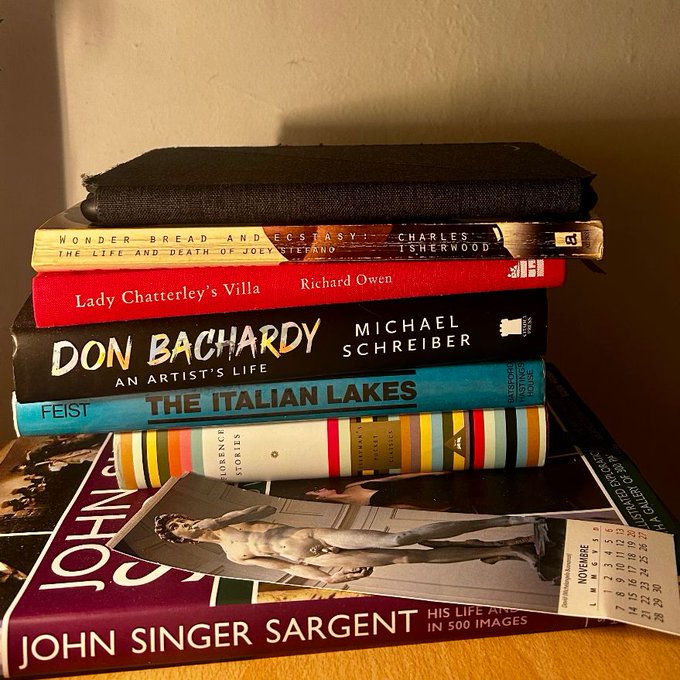
Bedtime Books
Bedside table energy: beautiful men, Italian lakes, doomed artists and absolutely no intention of going to sleep.
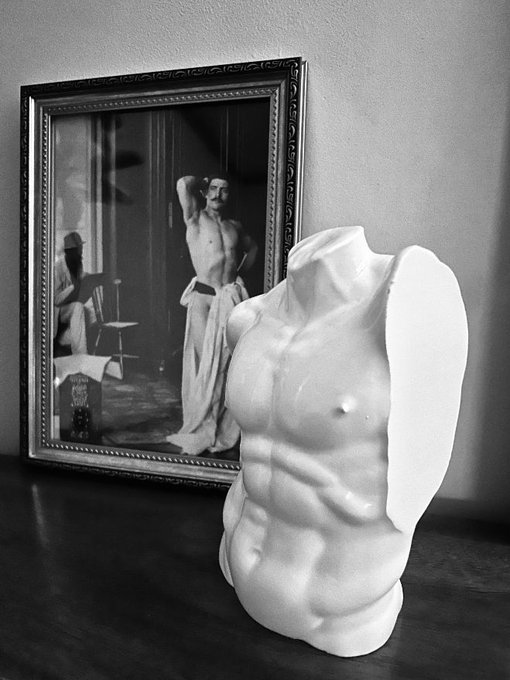
That Unspoken Rizz
The Split from Desire. True eroticism in representation. Classic inspo. The male form as the ultimate standard of aesthetic excellence. Male beauty has been serving since antiquity.
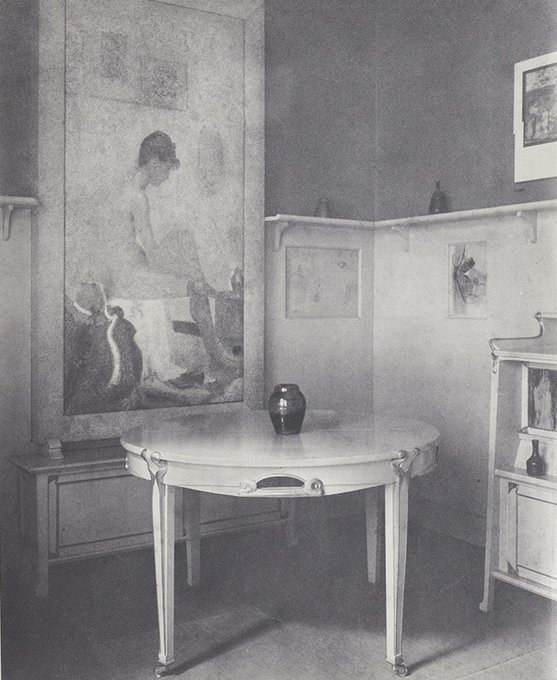
German Decadence
Says it all. The dining room of Harry Graf Kessler’s apartment in Berlin, circa 1900. An inherent critic of the rigid, hyper-masculine culture of Imperial Germany. He expressed his aesthetic and homoerotic interests in everyday life, writing in his diaries about his attraction to athletes at boxing matches in London or handsome sailors in Belgium.
The church doors swung open and the newlyweds emerged into the afternoon heat beneath a shower of rice and the ringing of bells.
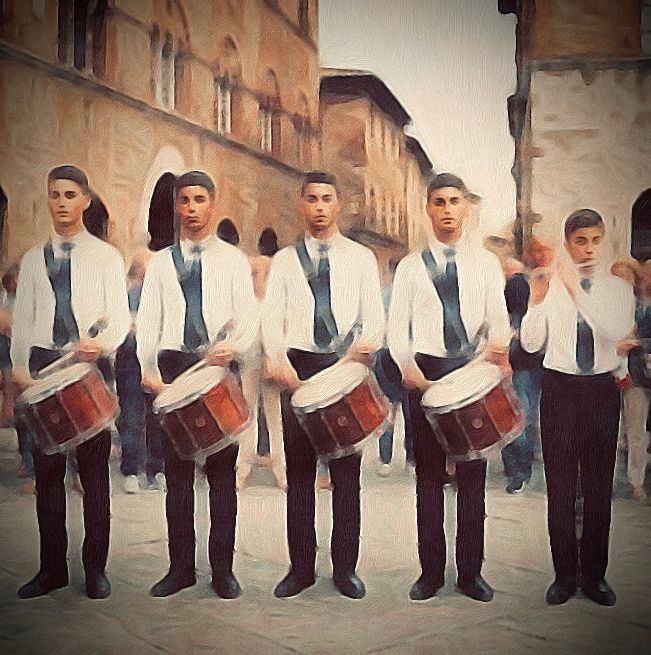
Forty paces away, five young musicians stood against the ancient stone wall of the piazza.
Four drummer boys and a piccolo.
They were impossibly handsome. Young, dark-haired and brown-skinned, dressed in white shirts, black trousers and polished black shoes. They stood in a neat row, looking rather more serious than the occasion required.
I fall in love too easily.
As the bride and groom stepped into the sunlight, the drummers raised their sticks.
The first strike seemed to shake the whole piazza.
Then the piccolo began.
A bright, piercing melody rose above the deep thunder of the drums, slipping between the old buildings and disappearing somewhere among the terracotta roofs. The five boys played without looking at the wedding guests. They simply stood there and played, as though the music belonged to them and we had merely been permitted to hear it.
I watched them.
I knew nothing about them.
Not their ages, where they lived, what they did when they weren’t playing at weddings. I didn’t even know their names.
And yet, for those few minutes, I loved them.
When the music ended, the bells suddenly seemed very loud.
The boys lowered their instruments. There was no bow, no waiting for applause. They simply turned and walked away, disappearing into a narrow alley beside the church.
As they went, one loosened his black tie. Another rolled up his sleeves. One of the drummers said something that made the others laugh.
And that was all.
They vanished into the old town, five young Italians swallowed by the afternoon.
I stood there for a moment longer.
It seemed terribly unfair that people could enter your life so completely and then disappear from it without ever knowing they had been there.
I would never see them again.
I would never know their names.
But for a few minutes in a sunlit piazza, four drummer boys and a piccolo had made me fall in love.
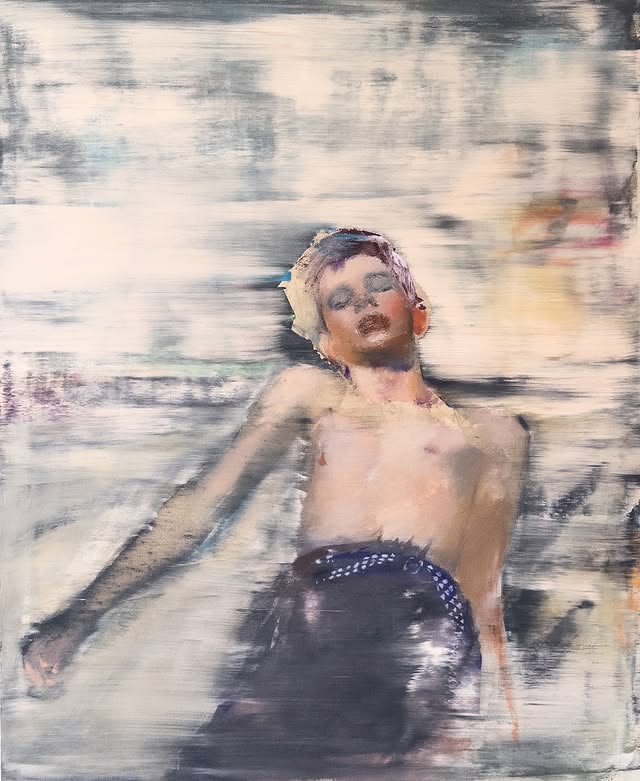
Reclining Boy was featured at the VCRB Gallery in Antwerp, Belgium, as part of Eugene Shako’s collective exhibition titled Silent Narratives, which ran from April 28 to June 7, 2026.
Stillness. Closed eyes. Wet hair. Bare skin. The world rushing around him. He doesn’t seem to care. There is something beautiful about that. Perhaps it is the vulnerability. Perhaps it is the arrogance of youth. Or perhaps I simply want to lie beside him and watch the world disappear.
There’s something about Shadko’s paintings that blurs reality with imagination.
The longer I look, the more I see.
And sometimes I wonder if I am seeing something that nobody else sees.
Shadko is a Belarusian artist living and working in Warsaw. His paintings begin with images — photographs, social media, something glimpsed online, something that catches his eye. He takes these fragments and passes them through himself. He studies them. Distorts them. Reimagines them.
Nothing remains quite as it was.
His paintings are often about faces and bodies. Youth. Vulnerability. Isolation. That strange fragility of adolescence.
His figures seem to exist somewhere outside reality. Alone. Spotlighted. Suspended in an imaginary world.
And perhaps that is what draws me in.
The feeling that there is something just beneath the surface.
Something I can see.
Something you might not.
Shadko studied at the Glebov Art College in Minsk and the Nicolaus Copernicus University in Toruń, Poland.
Long days and nights working as a waiter have meant that his German juices have finally run dry.
Severin is a drifter — or, as he likes to put it, a rolling stone. He wanders from city to city, from job to job, looking for another Pietro; somebody who will take him in and pay for everything.
But he still has to find his next Pietro.
I confess I had thought Taormina might be where he finally settled down. His up-and-down relationship with Alfio had all the hallmarks of being long-term. I realise now that Severin is still looking for what he perceives to be the right person.
He has come up with a number of options for the months ahead — and they all seem to involve me.
With Verona out of the question, he is now considering a trip to Britain and would like to stay with me. I have explained that I am selling my apartment and will most likely be renting a room at Deej’s place in London by the time he arrives.
He has also raised his ‘World Tour’ idea again, and I have had to let him down gently on this one because my finances could best be described as unreliable at the moment.
Then Severin suggested meeting up in Rome. What’s more, he wants to invite Elio. It would, he reasoned, be a chance for Pietro’s three boys to get together again.
I have a soft spot for Severin, but I have my doubts about Elio. He was Pietro’s favourite and benefited most from his death. If my understanding is correct, Elio is pretty much set up for life.
Unlike Severin and myself.
The last I heard, Elio had launched a modelling agency in Milan which, no doubt, would boost his coffers even further. I had only met him once, at a Christmas meal at Bulgari Milano, where Pietro had thought nothing of showing off his three young ‘darlings’.
It might have been a disaster, but the three of us had actually got on rather well.
Severin and I never attended Pietro’s funeral.
We weren’t invited.
That is probably where some of my irritation with Elio comes from.
I confided all this to Signora Bruschi by telephone.
“I have never met Severin,” she said. “But I suspect that he has a good reason for wanting to spend time with you.”
“And that is?” I asked, rather dimly.
“Have you not considered that he might want to have a relationship with you?”
I hadn’t.
Signora Bruschi might be right.
After all, I hear from Severin most days. He messages and rings me during his breaks from the restaurant. I rather enjoy our conversations, but not once had I considered anything more.
“If that is the case,” she continued, “there is the problem of Bianchi.”
Oh! I thought.
The Chase Never Ends
Back in the UK. University city. Freshers everywhere. Oh, it brings back memories.
Young people dressed by their parents, scared as shit, homesick by the hour. I remember being a big brother, a lover, the older one who knew a little more about the world.
But I get older and they get younger.
Still, the chase never seems to end. I’ve missed this.
Bailey appears as though I’ve never been away. Doe-eyed, beautiful, and seemingly thick as shit — although perhaps that is part of his charm. He shows me the new tattoos across his back and, despite myself, they excite me.
Dilemma.
I miss Bianchi and his Italian charm.
Then Bailey tells me he’s disabled on his own prick, which raises a few questions.
And yet I’m tempted by the sheer stupidity of his beauty.
A Euro Child
There are two lives.
Italy versus the UK.
I’ve had the best summer. Montescaglioso, Taormina and Verona.
Not to mention too much about Paris.
Coming home feels like a sentence.
An apartment that is dead, yet full of good memories.
Charlie is gone, but his presence is everywhere. Clothes, books, paintings. A scent that still lingers.
But Charlie has disappeared.
I fear it is for good.
Who would have thought that a magazine could have brought it all to an end?
Estate agents pander to everything.
I think of Severin. I think of Cola. I think of Bianchi.
And I realise that I am, really, a Euro child.
Then I had a dream.
I dreamt of Sandro, the carabiniere, and his warnings. Of all the people who might have appeared, I dreamt of Sandro more than anyone else.
Why Sandro?
He has somehow crept, uninvited, into my consciousness.
Fellini, Fascism, and a Fling: How to Spice Up Your 1970s Italian Art Crisis
Olivia Laing
Naughty.
Retro.
Short chapters.
Fellini.
A life I might have killed for.
And then I remembered—
that is exactly what happened to Pasolini.
I read a review:
“The Silver Book is a novel distorted by the medium it has shaped itself to flatter: it is an Instagram feed bound between book covers. There can be no ugly, unseeable truth here; only the artful pose is of value.”
Ouch.
A Stumble-Find and a Good Looker
I’m always on the lookout for a good looker. Even better if they came to a tragic end.
Gerry Sundquist turned out to be a slow burner. A stumble-find on a sun-soaked terrace in Taormina.
The actor who was once called ‘the best-looking man on television’ and who dated Nastassja Kinski deserved some attention. This was back in the 1970s and, unsurprisingly, I’d never heard of him.
I know a lot about him now. Just about everything except the size of his penis. Had I been around back then, I would have made damned sure I knew that too.
I know about his rise to stardom. His cataclysmic downfall. His gruesome death.
Always a winner with readers.
So thank you, Gerry Sundquist, for providing me with the most-read post on this site. It started slowly. Then exploded.
Who would have thought it?
The Ultimate Guide to Ruining a French Vacation
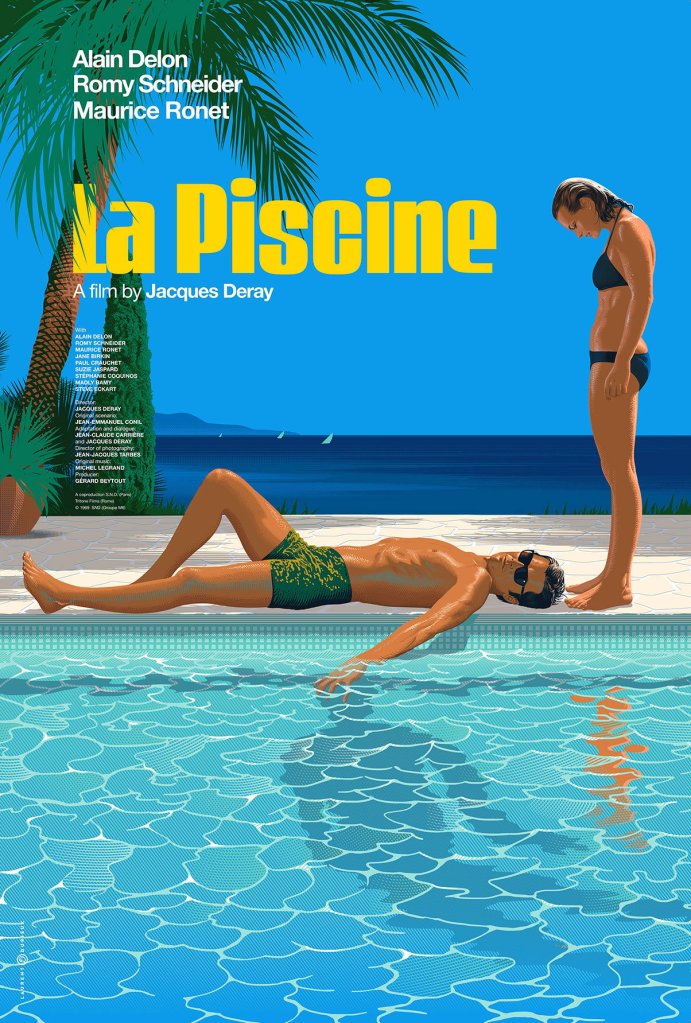
La Piscine (1969) – a summer moodboard. Alain Delon and Romy Schneider serve peak 60s quiet luxury by a Saint-Tropez pool, but it’s all high-key toxicity. Stunning on the surface; underneath it’s just pure, unhinged resentment. The most beautiful surfaces hide the deepest dangers. My new favourite word is feral. This is completely feral.
Unsent & Unfiltered
The secret lover can’t hold his shit.
And so I wrote a message that was never sent.
“Breath of fresh air. So naive that it’s beautiful. But I will be pissed off if you show this to anyone. Please don’t piss me off. 😊 Stay gold.”
On the Cute and the Willing
Milan Ruoppolo. Photographed by Winter Vandenbrink (2026)
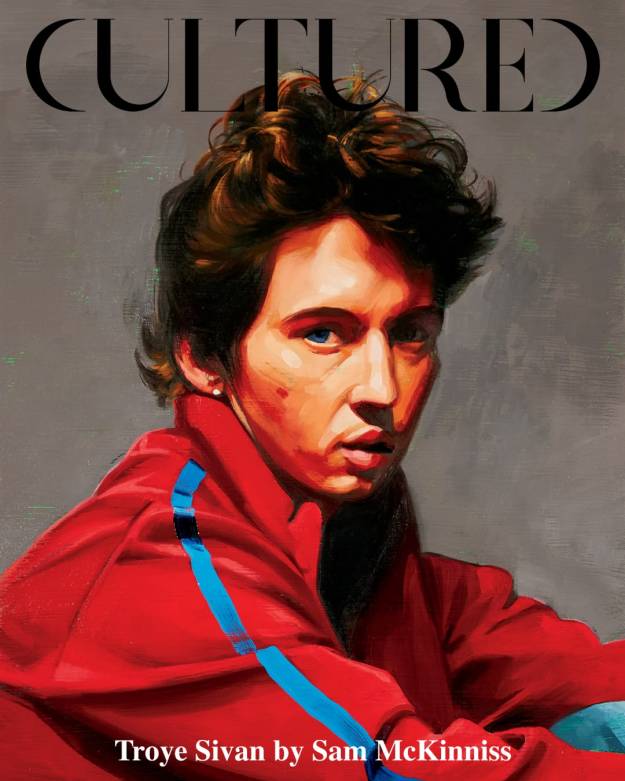
Like, I didn’t know that Troye Sivan is really called Troye Sivan Mellet. That Sivan is the ninth month of the Hebrew calendar, usually falling in May or June, and that he was born in June — on 7 Sivan, as it happens.
And I still think he is a ‘dirty’ boy.
As far as art is concerned, Sivan has now popped up on the cover of the latest issue of CULTURED magazine, painted by American artist Sam McKinniss, who also interviewed him for the issue. The result is this rather gorgeous, slightly feverish portrait — and surely some magazine covers are destined to become collector’s items.
McKinniss, born in 1985 and based in New York, has been described as an ‘artist of celebrity’, having painted figures from popular culture and created the cover for Lorde’s Melodrama (2017), arguably one of his most memorable commissions.
He graduated from the Glasgow School of Art in 2005 before going on to exhibit throughout the United States and Europe. His paintings can veer from celebrity portraiture to lush, pop-cultural fantasy, with the occasional reclining male nude thrown in for good measure.
McKinniss first discovered Sivan on Instagram, when the then twenty-year-old had just released Blue Neighbourhood. He came across him again in 2018, when he saw Sivan in Joel Edgerton’s conversion-therapy drama Boy Erased. McKinniss remembered being impressed that someone from the pop world would take part in such a difficult and necessary film.
And now, years later, he has painted him.
Which, when you think about it, seems entirely appropriate.
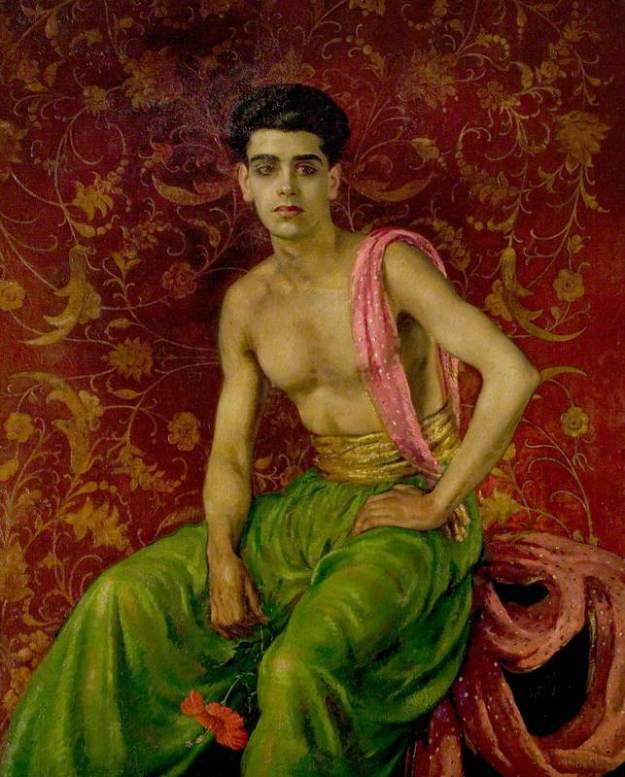
“A half nude youth of splendid beauty faces the spectator, wearing Oriental breeches of green, with a sash of gold, and a drapery of magenta — all this splendour relieved against a figured background of dark red and gold. The scarlet hibiscus flower, held ever so languidly by the golden youth, is intended to constitute the climax of all this Oriental glory.”
That was how The Scarlet Hibiscus was described when it was exhibited at the Modern Society of Portrait Painters exhibition at the Royal Institute, Piccadilly, in 1922. The artist was Edinburgh-born William Bruce Ellis Ranken.
The painting remained in Ranken’s private collection until his death in 1941, when his collection was dispersed among public museums and galleries across Britain.
Standing almost two metres tall in its frame, The Scarlet Hibiscus was eventually donated to Nottingham Castle Museum by Ranken’s sister, Janette. It has been known there ever since as Hibiscus Flower.
The identity of the sitter remains something of a mystery. Ranken’s sister suggested that he might have been the British ballet dancer Anton Dolin. The sitter’s darker complexion would seem to argue against that identification, although Ranken was hardly above exercising a little artistic licence.
Whatever his identity, the young man is unmistakably the star of the picture. This is male beauty turned into spectacle: highly stylised, intensely decorative and with a sensual concentration on the male form. It is precisely the kind of work that makes Ranken so fascinating today, particularly as questions surrounding his sexuality have become increasingly part of the discussion of his art.
Much of Ranken’s work was destroyed during the Second World War, while the fashionable world that had once embraced his particular brand of glamour had already begun to move on. By the time he died, his social and financial fortunes had considerably diminished.
Yet perhaps the most interesting thing about Ranken is how differently we see him now. Once regarded largely as a society portraitist whose moment had passed, he is increasingly being recognised as a pioneering queer British artist — and as a painter who was quite prepared to celebrate the beauty of the male body.