Tag Archives: Words

Boys, Daggers and Pseudonyms


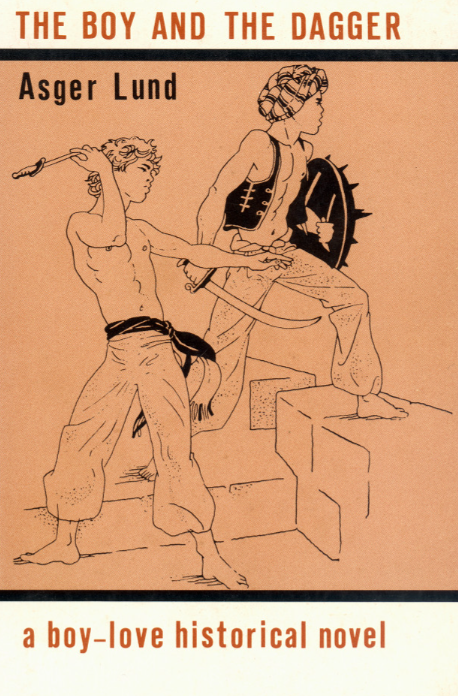
“For the boy was beautiful: blond curly hair, blue eyes which seemed to catch all the dim light of the tap-room, a spare but tightly muscled chest seen through a shirt open to his navel (because, evidently, its buttons had long ago been parted from it). The lad moved about the edges of the room, in the shadows, with pitchers of water and cider, alert to the needs of the other guests but observant, too, of the traveler at the corner table. Once or twice their glances met, and then our spy or informer might have heard the young man continue under his breath, “Yes, with a little expert attention and some new garments you might be a worthy page for Torben Lerche!”

Asger Lund, The Boy and the Dagger (1961)
Drengen og dolken

This might be historical ‘boy-love pulp fiction’.

Or perhaps something stranger.

Asger Lund was one of the many names used by the Danish writer and artist Kjeld Asger Frydenlund (1929–2013). The Boy and the Dagger was originally published in Denmark in 1961, although my copy is the English edition, published in October 1982 by Spartacus in Amsterdam. It is described as a “boy-love historical novel” and illustrated by Richard Steen.

Germany. France. Spain. North Africa.

It sounds like an adventure novel, but there is something much more peculiar going on here.

Frydenlund was a draftsman before he became a writer. His influences included Art Nouveau, Pierre Joubert and comic strips. Mostly black and white. Strong lines. Boys.

And then the names begin to multiply.

Stanley W. Baker. Pete Freeman. Horst Irgens. Asger Lund. Richard Steen. Sometimes simply RS. All the same man.

From 1952 onwards, under RS and later Richard Steen, he produced drawings of boys in a stark black-on-white style. From around 1960, as Horst Irgens, the drawings became darker and more photographic, using heavy shadows, hatching and stippling.

Then, from the 1970s, came Asger Lund.

Writer. Artist. Pseudonym. Another identity.

There is something fascinating about it all. Not simply the book itself, but the strange little underground world around it — pulp novels, drawings, pseudonyms and magazines, all circulating in a culture that now feels almost impossibly distant.

The Boy and the Dagger.

Even the title sounds like something I should probably not be reading.

The Psychologist Says…

I got stuck somewhere between narcissism and the Lego


Somebody will probably be able to correct me, but I cannot find any credible evidence that J. H. Newton was actually a psychologist in the 1940s. Perhaps he was. Perhaps he wasn’t. Perhaps these words came from the pen of a dedicated — albeit rather clever — hack, employed to churn out ‘The Psychologist Says’ every week.

Either way, read on.

What do we mean by the love life of the child? Psychologists usually divide the love-life of a child into three or four stages.

The first stage is known as the auto-erotic stage which appears in infancy. The child is interested in his own body and is exploratory. During this period the child will insert beans and other foreign particles into his nose or ears. During this age the child may also locate the erogenous parts of the body and begin the practice of sexual acts.

Psychologists designate the second period as the narcissistic period, originating from the story of the beautiful youth who fell in love with his own image in a glassy pool. In the very nature of the case the child loves himself first.

The third stage in the child’s love life is known as the homosexual period. It is the gang age of the boy. The boy is more loyal to his gang than his parents. The gang often has more influence over the boy than the home.

Dr. Ruch says from the boys’ club or gang, youth may learn lessons of loyalty, independence, and social-mindedness that may not be distinctly beneficial to the developing boy. Boys’ clubs may need some supervision, but not too much.

Some homosexuals may never recover. If they marry, the outcome is usually very unsatisfactory and unhappy. It is just as important that the homosexuals grow out of this period into the period called the heterosexual stage as it is that the youth learn writing, arithmetic and the rest. Happiness and success in life depends upon it.

The fourth stage of the child’s love-life is commonly called the heterosexual period. It is the period of love between the opposite sexes. It should be encouraged and not discouraged.

The first stage, the auto-erotic period, usually extends to the fifth or sixth year; the stage of childish narcissism, from the sixth to the eleventh year; the homosexual stage extends approximately to sixteenth or seventeenth year; and thereafter the heterosexual period.

From The Paris News, Texas, February 1941.

I might laugh.

Actually, I do laugh.

But it also makes me think.

About being five years old and being taken to hospital after pushing Lego pieces up my bum.

About apparently progressing beautifully through the narcissistic stage, because I was — and remain — completely in love with myself.

About failing to receive the appropriate supervision, thereby discovering that boy gangs were, apparently, incredibly erotic.

And about staying Peter Pan for considerably longer than the good doctor might have considered healthy.

Because, according to this wonderfully alarming piece of 1941 psychology, I should have grown out of all that homosexual gang nonsense and eventually entered the glorious heterosexual period.

I missed the appointment.

Perhaps I was too busy with the Lego.

The Asphalt Doesn’t Remember


Powerful. Sad. And brutally direct.

While researching the death of Alessandro Momo, I came across an Italian article whose opening paragraph said almost everything that needed to be said. The Italians have a remarkable ability to get straight to the point — no throat-clearing, no sentimental padding, just the thing itself.

I wish I could tell you who wrote it. Unfortunately, I haven’t been able to identify the author. So I can only reproduce the English translation here, and leave the original writer their anonymity.

The Asphalt Doesn’t Remember

“The asphalt doesn’t remember. So many boys have been torn apart. Crushed into the streets along with their scooters. Their skin scraped away on the road. Like an apple. Like cheese scattered over pasta.

Plastic, blood, rubber, raw flesh, the cast iron of engines. Then tar. Crushed stone. The proportions change, but this is the asphalt of Rome.

A city that lives on two wheels.

And dies on them.”

Stolen Words: “It was a beautiful breakup.”

Steven Polaris Buitrago by Studio Pegasus and Eroticco in ‘Daring Pool Day’

“In my 20s a few days after I moved to LA. I met Josh. Someone who changed who I am today. Someone who changed my life. We both fell in love. He took me away from the nightlife and from the gay adult industry, I thought I was gonna get into. Josh was on top of my life from the day I met him. During those five years, Josh put me to college, took me on trips, took me to the doctor, and had my bad teeth fixed. He literally gives me all his 30s and I give him part of my 20s. It was beautiful and I learned so much from him. We spent five amazing years together but like everything, it had an end and we ended it. It was a beautiful breakup. It was mutual. And in some way healthy.”

– Meet Steven Polania Buitrago – VoyageLA – 13 July, 2020 

My Head is Full of Random Shit

*****

“Video Angelus internehilium et imortalis Even as we speak our hearts entwine. Senex et angelus video venestus caelum. Equiden lavare in meus vita empeteus Ah eeh ah eeh ah.”

*****

The boy who likes the excitement of fear.

“I worry about being thrown off the carousel in later life.” 

A skinny body and dirty pants.

*****

“He’s got it. Yeah, baby, he’s got it. I’m your Penis, I’m your fire. At your desire. Well, I’m your Penis, I’m your fire. At your desire.”

*****

Be careful who you choose because it can go wrong.

Is it that Bailey is still a virgin?

A shelter on a beach full of books.

A lake in an abandoned quarry.

Is it love that never quite reaches an orgasm?

A boy who turns up late is always popular.

Pasticcio.

The Organ of Lorenzini.

Stolen Words: “In our youth we are all beautiful.”


“When I see this image, the first thing that comes to mind is my theory that in our youth we are all beautiful! Is it because in our twenties very few things scare us, or because life has barely run us over yet? It is not my intention to make you think that this is the best period of our lives, I absolutely don’t think that! But there is something there, perhaps the little life one still has behind them, that gives this stage a bright patina. Later, that shine doesn’t disappear, it just changes its nature. It becomes deeper, more complex, sometimes harder to see at first glance, but no less real.” – Nuria Velasco

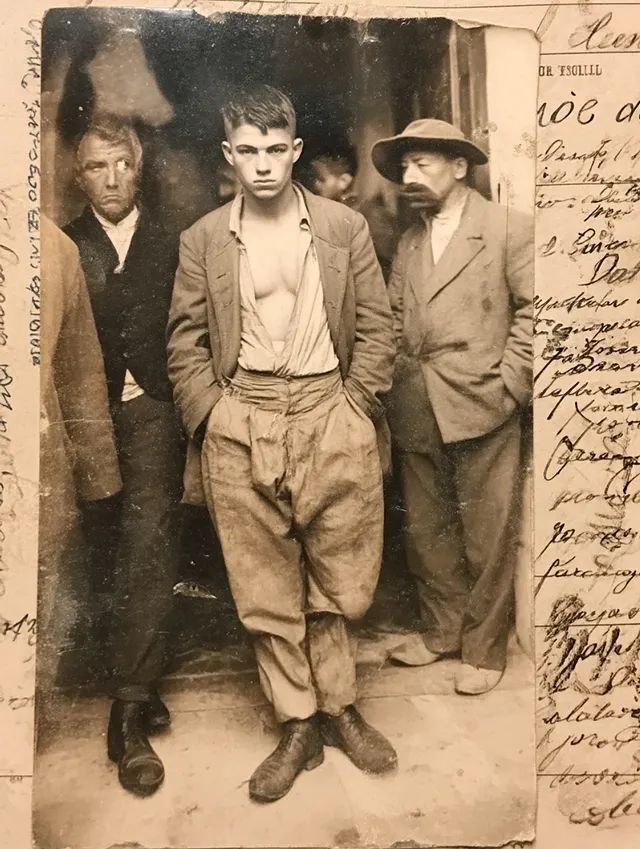
Old Photos Cabinet

Life Story: The Third Drop

I noticed him but he chose not to notice me. After he had dropped his mobile phone on the floor for the third time, he realised that he had to say something.

Stolen Words – “It takes me years to finish a book.”


“I have no talent. It’s just a question of working, of being willing to put in the time.”
– Novelist Graham Greene (1904-1991) speaking to American author Michael Mewshaw in 1972.

Come with me, where dreams are born, and time is never planned


The curtains quiver, the window blows open and into the room flies a lovely boy clad only in cobwebs and autumn leaves and the juices that ooze out of trees.

Seven cool things that I heard this week


“ I heard Earth, Wind and Fire singing ‘Ba-dee-ya’ on the radio, and I thought, oh no, this is another step towards autumn.” – a woman on the bus referring to the song September.

“There in the shade, like a cool drink waiting, he sat with slow fire in his eyes, just waiting.”  – Johnny Hartman singing A Slow Hot Wind. 

“He comes from an old Dorset family that made grandfather clocks and had a swan’s head as their emblem.” – a posh woman boasting about the man who her daughter is marrying.

“Hey, is there anywhere to play pickleball around here?” – a student in Starbucks.

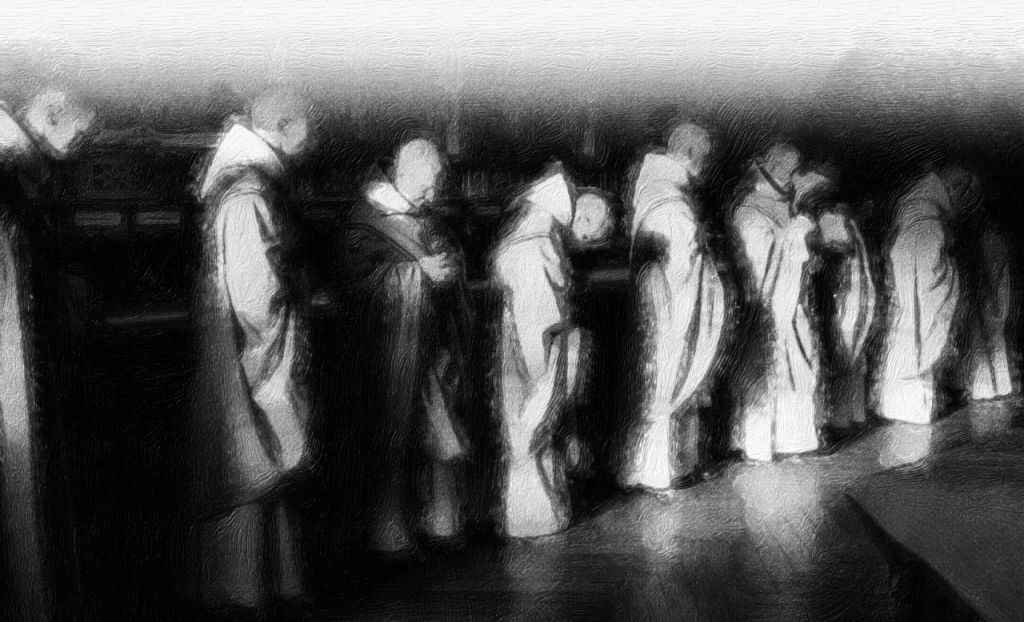
“I can hear monks chanting.” – Charlie laid in bed in the middle of the night.

“The drawback is that you always get corn dust up your bum.” – a farmer on the radio.

“Come and look at this rock, it’s shaped like your willy!” – a young girl shouting to her older brother.