Tag Archives: blog

 My Week, For What It Was Worth

On meeting an artist’s muse…
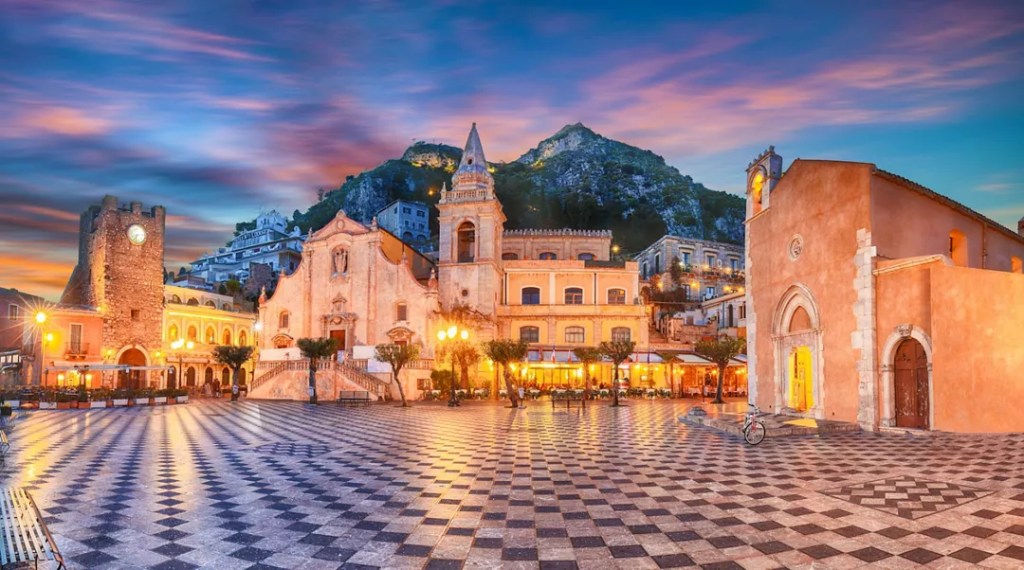
Alfio had spent far more time with us than his employer at the hotel would have appreciated. The young Sicilian thought nothing of closing reception for a few hours in order to show us the hidden corners of Taormina. For that, Severin and I were grateful, for it allowed us to avoid the endless groups of tourists who traipsed through the town from morning until night. Alfio led us down narrow alleys to viewpoints overlooking the coastline; to small cafés and restaurants frequented only by locals; and introduced us to people whom he thought we might find interesting. For Severin, who would be working here throughout the summer, this was invaluable, and more than once the thought crossed my mind that he might never leave at all. It also occurred to me that this generosity may not have been entirely selfless on Alfio’s part. He knew that I would soon be leaving Sicily, and that afterwards he would have Severin to himself.

One such person Alfio introduced us to was an elderly gentleman named Santo, who lived in a modest upstairs apartment on Via Bagnoli Croci. The visit stemmed from a conversation I had had with Alfio about Baron Wilhelm von Gloeden and the photographs he had taken of young Sicilian boys in the 1890s. My friend David is involved in a forthcoming exhibition of von Gloeden’s work in London, and had spoken to me about the controversy that already surrounded it.

Santo spoke no English, and Alfio conversed with him in the local dialect. He welcomed us warmly with a toothless smile. His apartment was small and crowded with the mementos of a lifetime. Sacred images covered the walls, save for a faded black-and-white photograph hanging beside the door. Looking more closely, I saw that it depicted a barely clothed young boy seated upon a rock. The old man noticed my interest and said something to Alfio, who translated for me. The photograph was of Santo himself at the age of sixteen, taken in the 1950s, and it might easily have been mistaken for a von Gloeden image had the photographer not already been long dead by then.

Santo opened the small window to let in some air and gestured for us to sit while he prepared hot lemon tea. Alfio explained that Santo had worked many jobs in Taormina over the years: fisherman, labourer, barber, before spending his later working life in a hotel much like his own. Now in his eighties, Santo told Alfio that the old photograph had been taken by the German photographer Konrad Helbig. Following in the legacy of von Gloeden, others had come to Taormina hoping to emulate his work.

Yet Santo remembered little about the man himself, beyond the fact that he had paid him a few lire, as he had done with several of Santo’s male friends. The money had been welcome, and Santo admitted that he might have earned more had he posed nude, as some of the others did. But it all seemed impossibly distant now, he told Alfio — another life belonging to another century.

On three teenage brothers…
The three German boys — aged twelve, thirteen, and fourteen — are paraded each day by their parents. They resemble one another in many ways: slender adolescent bodies, dark hair, the same boisterous, brotherly energy. Only the eldest wears spectacles; the younger two tease him mercilessly, blissfully unaware that they will soon follow him into short-sightedness themselves.

Their father indulges the rowdy behaviour with an almost inevitable pride — perhaps because he sees in them an echo of his own youth — and so the task of keeping them in line falls, as ever, to the mother. Each morning the boys greet us with exaggerated politeness, only to dissolve into giggles once they have passed. Severin says they call us the schwules paar — the gay couple — though more from a desire to provoke laughter in one another than from any malice.

“But,” Severin says, “I have no doubt at all that the eldest boy is most definitely gay.”

On saying goodbye to everyone…
I must move on. My time in Taormina has come to an end. I know it will remain one of those memories that returns in old age, vivid and untouched by time. The town had always possessed a certain allure in my imagination, though the reality proved different from what I had once envisioned. The days of Wilhelm von Gloeden making his way there along rough donkey tracks are long gone. Taormina is now an expensive resort town, crowded with visitors from every corner of the world. Yet, as with any place, I have always been drawn less to what the masses come to see than to what lies beyond their notice.

For that, I remain grateful to Alfio, who revealed a version of Taormina few tourists ever encounter. Before I left, the young Sicilian first shook my hand, then reconsidered and embraced me instead. It felt unexpectedly sincere.

I shall miss the boys who emerged from the shadows each evening to play football on the wasteland. Once, long ago, boys like them would have been exploited by those who paid them to pose for dubious photographs. Now the balance has reversed; they have become the opportunists themselves, charming wealthy tourists into buying cheap souvenirs at outrageous prices. Yet beneath the hustling they were still only boys, quick to abandon commerce the moment a plastic football appeared, racing about in clouds of dust and laughter.

And I shall miss Severin most of all — someone I had long ago consigned to the past. By chance our paths crossed again in a crowded airport, and we both ended up in Taormina. Once, we had regarded each other with suspicion, each secretly wondering whether Pietro had preferred the other. In time, we came to understand how foolish that jealousy had been.

Severin had remade himself into a wanderer, drifting wherever happiness seemed possible. I suspected that once I departed, he would move in with Alfio and perhaps even become his lover. Yet I could not shake the feeling that, sooner or later, he would return to hustling in the back streets again.

When the time came for me to leave, Severin thanked me for giving him a bed and kissed me on both cheeks. “I shall miss our pecks,” he said. “Always a peck for morning, noon, and night.” He made me promise that we would keep in touch and, for once, I found myself hoping that we would.

On the cute and willing…

Boy Italia

 My Week, For What It Was Worth

On leaving Montescaglioso…
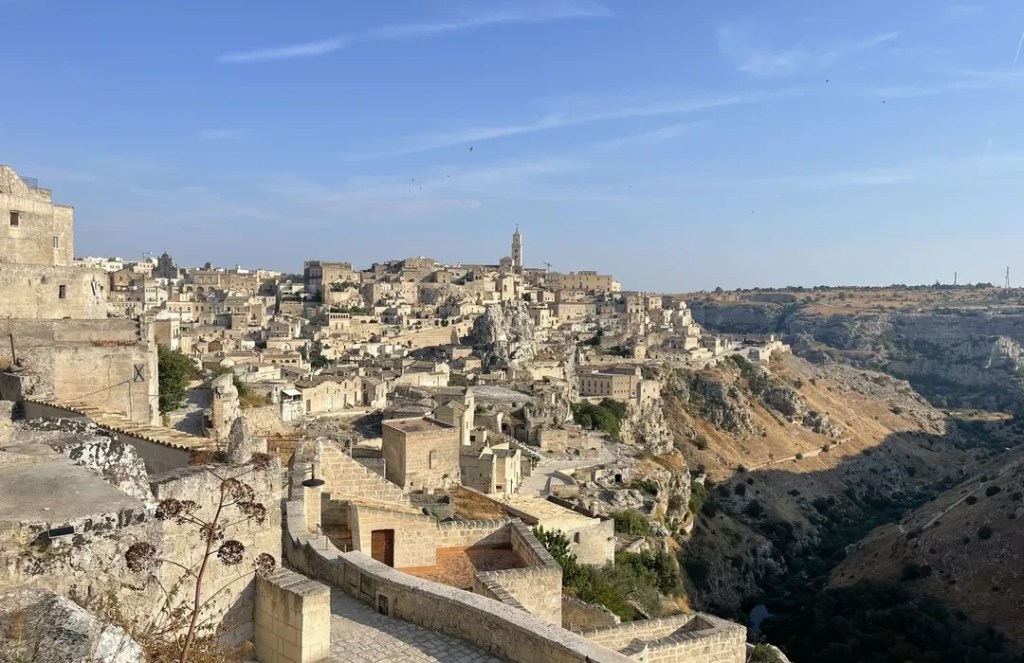
On from Montescaglioso—which I missed the moment I left on the small bus to Matera. I must return. The hilltop town exists in its own world, seemingly remote from the rest of Italy, yet it was warm and welcoming, and somehow managed to revive me.

It was really a minibus, stopping at every opportunity to pick up local women. For them, the journey to Matera felt like a day out—temporarily freed from household chores and feeding their families. They all seemed to know one another, speaking in rapid Italian, their voices rising and falling as they complained about the small details of their everyday lives. And yet, I couldn’t help feeling a quiet jealousy—that they could afford to live such ordinary, mundane lives.

There was only one other man on the journey, and he kept to himself, absorbed in his music. He looked about eighteen, and I imagined he was on his way to meet a girl in Matera. But then his phone rang, and the conversation turned to something entirely different: La Dolce Vita Orient Express, a new train service set to begin in May.

The route sounded almost romantic. It would begin in Rome, travel to Venice, then head down the Adriatic coast to Bari. From there, passengers would be shuttled to Matera—my destination—with its cave churches and underground water cisterns. Back on the train in Bari, the journey would continue towards Taormina in Sicily—which made my ears prick up—before heading on to Palermo and eventually returning to Rome.

It seemed the young man was being offered a job in Matera, one that would benefit from this new train service. He played it cool—neither accepting nor refusing—but you could tell he understood that opportunities like this don’t come around often.

The bus dropped me at Matera Centrale station, where I discovered that my train to Altamura was actually departing from Matera Sud, about two kilometres away. It required a short connecting train journey to get there. It was only once I was on that train that I learned Matera had once been derided as a symbol of poverty, yet had since reinvented itself as a creative hub—full of boutique hotels, buzzing cafés… and, of course, plenty of tourists.

On travelling to Taormina…
It was surreal, but we met like lost friends—two people who shared a past, yet barely knew each other. I spotted Severin, with his blond hair and Germanic good looks, as we waited for the ITA Airways flight from Bari–Karol Wojtyła to Catania. The airport name didn’t sound remotely Italian, and I soon discovered why—it was Polish, named after Pope John Paul II.

Severin was from Bremen and had spent the last few years living in Turin. He, too, had been one of Pietro’s “lost” boys, and after Pietro’s sudden death had found himself with a modest sum of money and nowhere to live. I had been more fortunate, receiving a similar amount but allowed to remain in the Verona apartment, thanks to the generosity of Signora Bruschi. But now my home is back in England.

We hadn’t seen each other since that Christmas when Pietro had taken us out for a meal at a restaurant in Milan. It was there we met Elio, who turned out to be Pietro’s favourite—and who had inherited the bulk of his estate, enough to ensure he would never need to work again.

Severin, now in his late twenties, seemed genuinely pleased to see me, and was delighted to discover that we were both bound for Taormina. He looked thinner than I remembered, and had begun to grow a small goatee—something Pietro would never have approved of. Good on him, I thought. I noticed a bruise on his chin, and he explained he had been caught up in Turin’s May Day demonstrations, when protesters tried to break through a police cordon. I hadn’t expected Severin to have become quite such a rebel.

On the aircraft, we talked about old times, each of us offering a quiet, tentative sympathy to the other. Once, we had been adversaries; now, we were something closer to conspirators. Severin had tried to contact Elio after Pietro’s death, but had been met with a swift rebuff. He had also tried to reach me, but hadn’t known where to find me. The chance meeting at the airport had clearly delighted him.

Severin was heading to Taormina to work as a waiter for the summer season. The money Pietro had left him had run out, and now he survived by drifting from one job to the next.

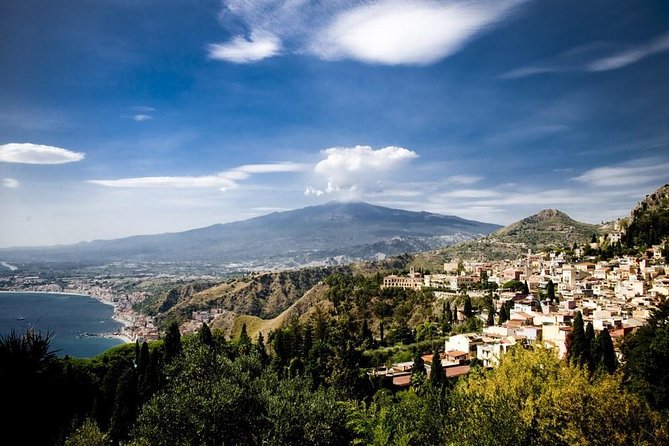
After arriving in Catania, we caught a train to Messina and got off at Taormina–Naxos. From there, we took the bus up into Taormina, where the heavens promptly opened. Inadequately dressed, we wandered through its charming maze of ancient, narrow cobbled alleyways, and along the bustling, elegant—largely pedestrianised—Corso Umberto. We dodged the hundreds of tourists clutching umbrellas, and after the calm of Montescaglioso, I found the crowds slightly overwhelming. Yet it was the smooth, endless stretch of the Mediterranean that held my gaze—and the uneasy thought that Mount Etna lay somewhere close by, hidden in the rainclouds.

It soon became clear that Severin had nowhere to stay. His plan had been to wander the streets of Taormina in search of something cheap. Until his job began—and with it, the promise of a room—the chances of finding affordable accommodation seemed slim. The town may once have existed in a kind of beautiful poverty, but ever since Victorian writers, poets, and artists had discovered it, its fortunes had changed. And soon, the La Dolce Vita Orient Express would be arriving too.

I was staying at a small hotel on Via Don Giovanni Bosco, its balconies overflowing with flowers, and—true to my nature—I offered Severin a bed until he found his footing. At the very least, it meant I wouldn’t be entirely alone as I tried to settle into a strange town.

On never trusting Mount Etna…
Everybody in Taormina wants you to visit Mount Etna. It is one of the highest volcanoes in Europe, and one of the most active in the world. Alfio, who works on reception at my hotel, suggested that Severin and I take a guided tour. But we both look at Etna and feel quietly relieved by the forty-five kilometres between us and its summit. Never trust an active volcano.

From Taormina, a plume of white smoke drifts from the summit, with no immediate sign of eruption. Yet, according to Alfio, Etna has entered a new eruptive phase that began at Christmas. The crater, he says, is emitting lava, ash, and the occasional flow. He tries to reassure us that Etna poses no real threat to Taormina. Apart from the light dusting of ash that sometimes falls when the wind turns, he tells us to follow the advice of the locals—the Sicilian way is not to worry.

He recalls that, as a small child, he once saw flames suddenly shoot up from the crater, only to subside just as quickly. The same thing happened again the following morning.

Alfio doubts we’ll manage to get up at dawn, but suggests taking us to a hill above the ruined amphitheatre to watch the sunrise. Despite getting to bed at two in the morning, and waking with the lingering effects of strong wine, we let ourselves be dragged through the narrow streets.

The sun rose from the southern edge of Italy and caught the white dome of Etna, tinting it a soft, rose-pink. The colour spread quickly down the snow, deepening until the whole summit glowed like a ruby instead of pale white. Night’s shadows slipped off the slopes, giving way to a rich purple that sank into the valleys and over the orange groves, darkening as it went—until the morning light washed across everything, and the mountains returned to their steady, familiar greens and browns.

That was as near to Mount Etna as I cared to be.

On a poem about Taormina…
I found a poem about Taormina on All Poetry which was written by someone referred to only as ecekaradag13, and who appears to have a fondness for Italy.

Taormina
Above the Ionian Sea,
this teatro of pretense
where German tourists
photograph Greek ruins
through the lens of their prosperity,
never seeing the Sicilian boys
who sweep their marble steps
for coins that disappear
into foreign pockets.
The ancient theater still echoes
with tragedies more honest
than the comedy performed daily
by boutique owners
selling “authentic” Sicily
to cruise ship pilgrims
seeking enlightenment
at duty-free prices.
Etna smolders in the distance,
that honest mountain
which at least admits
its capacity for destruction,
unlike the hoteliers
who smile in four languages
while their housekeepers
scrub other people’s dreams
from Egyptian cotton sheets.
In the shadow of San Domenico,
where Wilde once walked
his particular exile,
the local boys still gather
at sunset, their beauty
a currency more reliable
than the lira,
their bodies maps
of an economy
the guidebooks never mention.
The bougainvillea blooms
in violent purple protest
against the limestone walls,
while below, the working class
of Giardini-Naxos
send their children
up the mountain
to serve aperitivos
to those who mistake
privilege for culture,
consumption for communion
with the divine.
This is paradise
built on the backs
of the invisible,
where even the gods
have learned to speak
the international language
of tourist euros.

On the cute and willing…

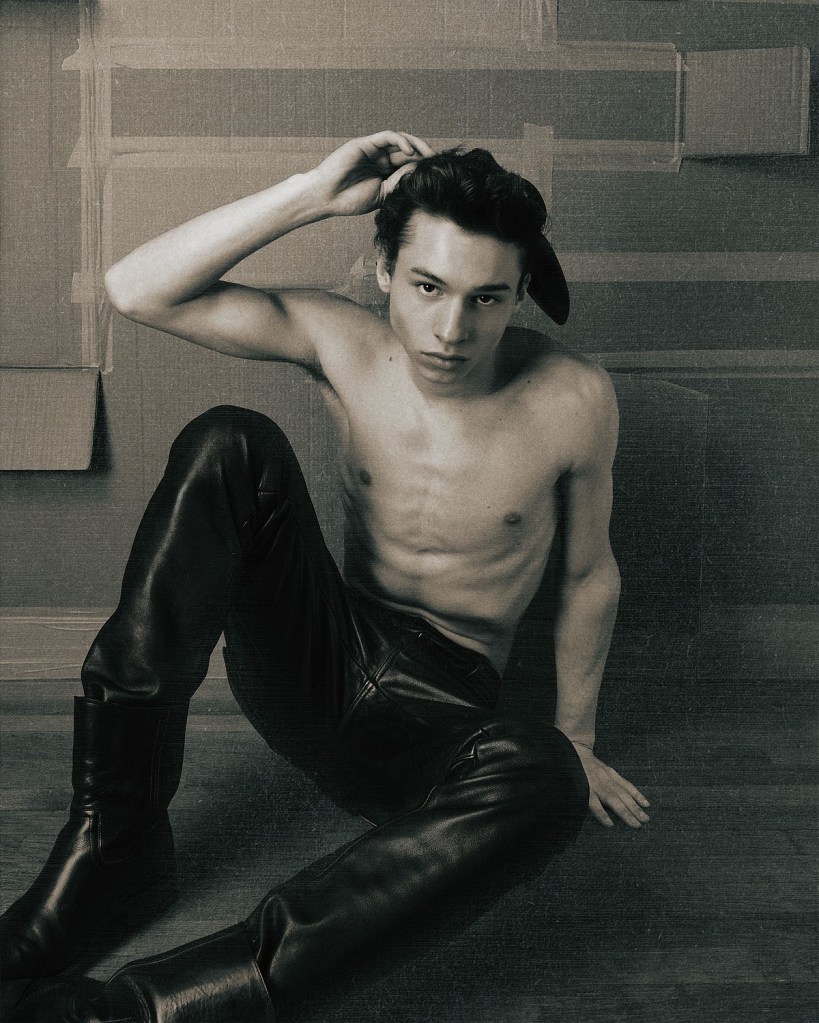
Julien Rondard. Photo by Wanderley Da Costa.

 My Week, For What It Was Worth

On driving behind a cute-assed cyclist…
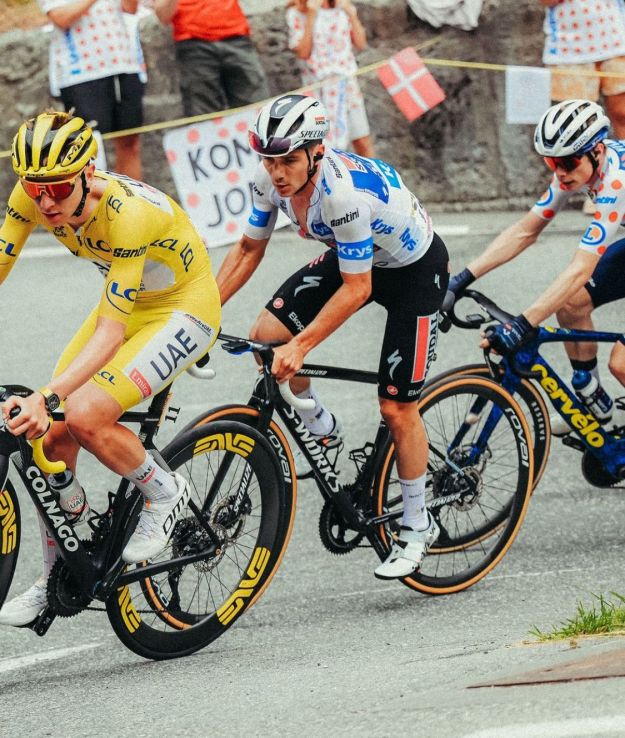
I found myself trailing a cyclist who was hammering the pedals with admirable ferocity; his lycra-clad form rose and fell in a hypnotic rhythm, all sleek lines and aerodynamic intent. There’s something undeniably compelling about a well-put-together rider on a racing bike—graceful, efficient, almost cinematic.

But as I pulled alongside to overtake, the illusion collapsed rather abruptly. What I had taken for youthful athleticism was, in fact, a fully paid-up member of the MAMIL brigade—Middle-Aged Men in Lycra—an increasingly unavoidable presence on the roads. The term, apparently coined by Mintel in 2010, captures a very specific phenomenon in modern cycling culture.

The charitable definition goes something like this: men typically aged 35–50+ who embrace high-performance cycling, clad in tight technical gear and mounted on eye-wateringly expensive carbon-fibre machines. It’s said to be driven by a desire for physical challenge, a reprieve from work and domesticity, and perhaps a quiet rebellion against the passing of time.

Which is all very noble, of course.

And yet—at the risk of sounding deeply ungenerous—I can’t help but feel a flicker of disappointment every time the helmet comes into focus. If you’re hoping for lithe, Tour de France–calibre elegance, you may be better off watching the actual Tour de France. Out here on ordinary roads, the reality is… rather more middle management on wheels.

On binge-watching The Count of Monte Cristo…
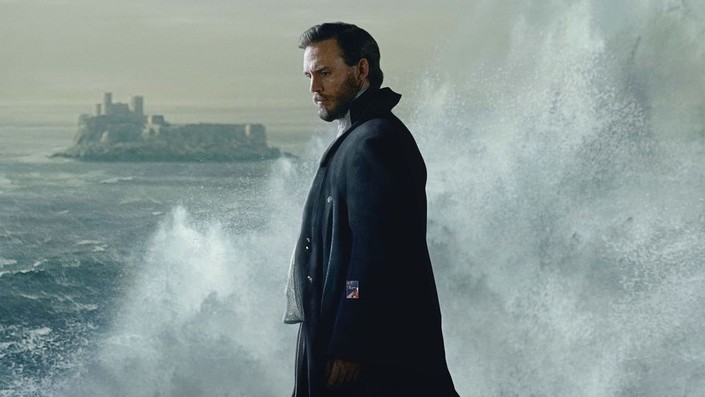
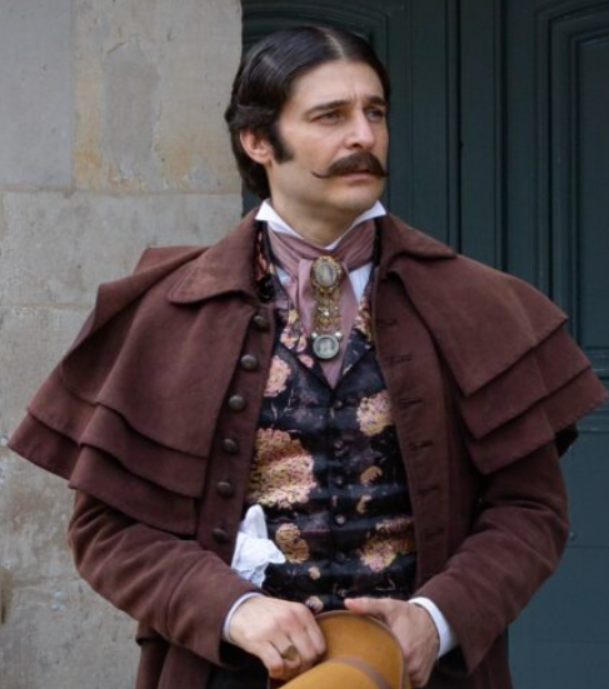
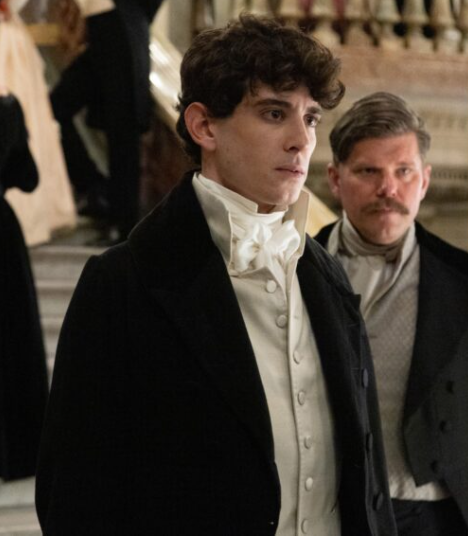
There was only one real reason for watching The Count of Monte Cristo—not the recent film, but the Italo-French collaboration from two years ago. My interest lay not with Edmond Dantès himself, nor with the familiar arc of his imprisonment and revenge, but with two Italian actors—Lino Guanciale and Nicolas Maupas—who have recently piqued my curiosity.

Edmond Dantès, a sailor falsely accused of treason, is imprisoned in the Château d’If off Marseille. After fifteen years, he escapes, discovers treasure on an uninhabited island, and assumes the identity of the Count of Monte Cristo, plotting revenge against those who betrayed him. Like the figure in the Alexandre Dumas novel, he emerges compelling, if inevitably vengeful.

The production is noted for its cinematic look, authentic costumes, and striking Mediterranean locations. Reviews were mixed: The Guardian criticised its wooden dialogue and performances, though conceded it could still be an enjoyable watch.

It wasn’t Sam Claflin in the lead, nor was it Jeremy Irons—though Irons was, as ever, effective as the ageing Abbé Faria, lending the role a quiet authority.

Instead, my attention returned to Guanciale and Maupas. I’ve seen Lino Guanciale as the lead in two Italian-language series: La porta rossa, where he plays a ghost, and Il Commissario Ricciardi, where he sees them. Here, he appears as a chubbier Luigi Vampa, a quieter presence but still recognisable.

Nicolas Maupas, born to a French father and Italian mother, is best known as Filippo Ferrari in Mare fuori, set in a juvenile prison in Naples. In this adaptation, he plays Albert de Morcerf with a naïve, easy charm that makes the character immediately likeable.

My interest in Italian television and film feels increasingly insatiable, though it relies almost entirely on subtitles. Here, however, The Count of Monte Cristo was performed in English, allowing both Guanciale and Maupas to speak in my native tongue—an accommodation that also reflects the ambitions of an international co-production, assembling a cast drawn from Italy, France, Denmark, and England.

Lino Guanciale as Luigi Vampa
Nicholas Maupas as Albert de Morcerf

On ditching a short story…
I wrote a short story but something didn’t sit right. I thought it was good, but there was an uneasiness. Like it had the making of something but lacked oomph. And I worked at it from several angles but still it gave me reservations. I showed it to someone and they said, “This is not you at all.” And so the story was shelved.

On seeing a young guy’s underwear…
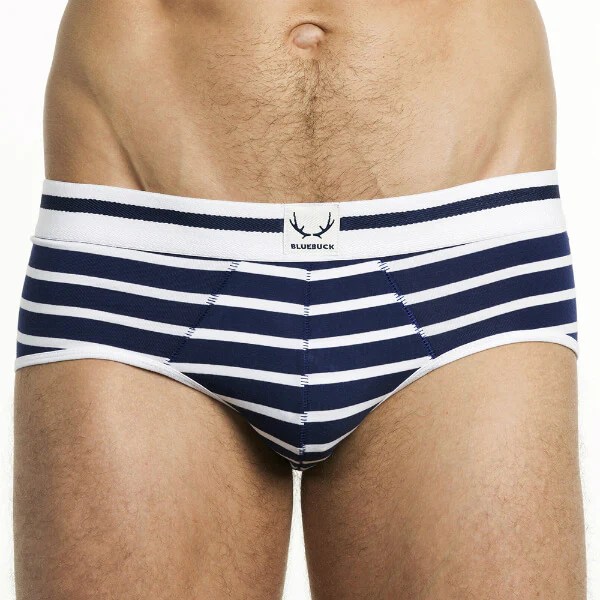
The only thing colourful about him was his underwear, which I discovered by accident, though afterwards I wondered if anything about it had been accidental at all. He carried himself so carefully, as if afraid of drawing attention, yet there it was—a glimpse of colour (blue and white) that didn’t belong to the guy I thought I knew. It unsettled me, not because it was bold, but because it suggested he was.

On hearing somebody talking about an elderly writer…
“At some stage he will be afraid to start writing a new book because he might die before he finishes it.”

Privacy is what we used to call liberty
Ubiquitous cameras in public spaces. Online tracking, data harvesting, targeted ads. Governments or corporations monitoring our behaviour. Something fundamental has shifted in how we understand freedom. 

Liberty used to mean freedom from intrusion. The right to be left alone, to speak, think, move, and live without constant oversight. Privacy is now treated as a narrower, more technical concern—something about data protection, personal information, or what you choose to share.

Privacy is what we used to call liberty.

On the cute and willing…

Ilya Kovalev. Photo by Archie the Photographer, 2026.

My Week, For What It Was Worth

On chilling out in a Southern Italian town…

Montescaglioso is where a story ends. But I picked a week when the Italian weather was unwelcoming: fine by day, but extremely foggy by night. It is to be expected, because Montescaglioso sits high on a hill.

And then the winds came—strong Sciricco and Maestrale winds that brought heavy rain and quickly sent it away again. For this reason, the locals were happier to stay indoors until conditions improved.

Montescaglioso is where the heart beats a little slower.

Where there are people, I watch them… observing their character and capturing their mannerisms. Most are unaware that this old town was once inhabited by Greeks and Romans.

Some of them will end up in a story.

There is the young boy who is inconspicuous in the corner of a café; he drinks Coke with lemon and reads a paperback copy of Black Run by Antonio Manzini. Every few pages he stops and scrolls through his iPhone. He appears to have friends, but at that moment is bored with his own company.

Then there is the handsome boy, whom I watch with curiosity until it becomes something closer to obsession. He eats pasta with one hand, while the other rests inside his underwear, absent-mindedly playing with himself. He stops when he realises I am watching, and I am immediately disappointed. I want to tell him it is none of my business what he does, but that feels like a perverse thing to say.

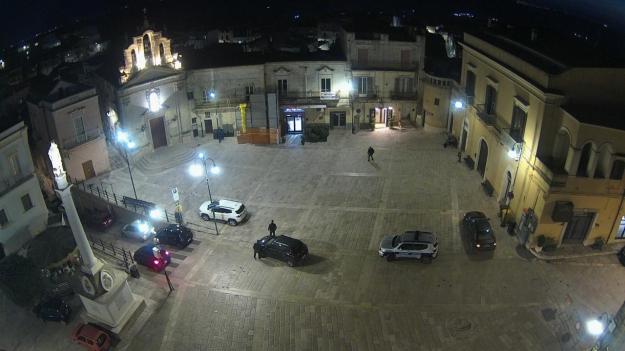
The teenagers who congregate beneath the tall statue of San Rocco, the patron saint of Montescaglioso, in Piazza Roma. They are immaculately dressed in smart jeans, designer puffer jackets, and new trainers, because the nights are chilly. They talk for hours because there is nothing else for them to do. I do not understand what they are saying—they speak too fast—but they seem friendly.

The man who pulls up in a Grande Panda and sees me sitting on a bench outside an old building, its yellow paint faded with time. He speaks remarkably good English and educates me on the history of the town: the stories of local people who left at the beginning of the last century and moved to New York and Toronto. He tells me that Francis Ford Coppola is a second-generation Italian-American, born to parents of southern Italian descent. His paternal grandparents emigrated from Bernalda, which is only a few miles away, and the director now owns a hotel there.

The old man who walks his dog every evening and stops to talk. He points to the Chiesa di San Rocco and tells me it was badly damaged in an earthquake that struck Montescaglioso in 1827, and was later restored with the construction of stone vaults and a new façade. He tells me that ancient Greek tombs were once discovered beneath the piazza, and that the church once stood outside the town—there is the possibility of undiscovered graves beneath the surrounding houses.

I decide that there is much history to be found, but I am only interested in the present, where the young people appear permanently sun-tanned, animated, and possessed of an easy, unstudied allure that feels particular to this part of the world—especially to someone from northern Europe.

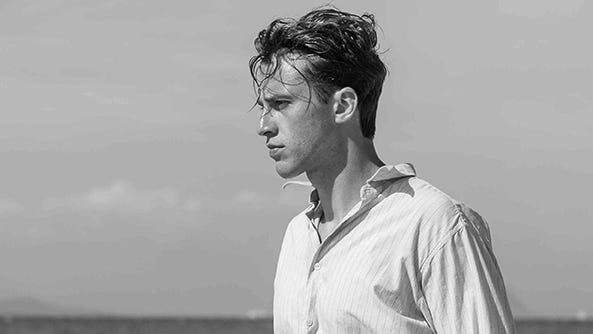
On lusting over Benjamin Voisin in The Stranger…

I know somebody who claims to have met French actor Benjamin Voisin. It may or may not be true because that person has a tendency to tell lies. But the story he tells is a good one because he said that Voisin smoked a lot, wasn’t completely fluent in English, but came across as a nice chap. And he was convinced that he was gay, but that bit has yet to be confirmed.

I first saw Voisin in François Ozon’s Summer of 85 (Été 85), and at the time I thought the director might have chosen a better-looking boy. But then came the trailer for Ozon’s The Stranger (L’Étranger), along with the publicity stills, and I kept finding myself asking, “Who is that good-looking guy?”

It has felt like an age waiting for The Stranger to arrive. Based on Albert Camus’ novella, it was originally shot in colour, though Ozon ultimately chose to release it in black and white—a decision that feels entirely right.

There is a scene in which Meursault (Voisin) kills an Arab boy. He studies the body on the ground—first the armpits, then the lips—before firing… several times. It’s one of Ozon’s familiar devices, turning something ostensibly straightforward into something quietly, disconcertingly homoerotic.

“I wanted to make everything erotic,” Ozon says. “The girls are erotic. The boys are erotic. The nature is erotic. Everything has to be erotic and sensual. That’s what I wanted. And the choice of the black-and-white [cinematography]was a way to show this sensuality in the world.”

If that wasn’t enough we see Voisin’s naked body a few times, a pretty bum that requires squeezing, and even get a glimpse of his manhood.

On coming upon an unwelcome adversary…

The boyfriend of the love of your life stands before you. What are you supposed to do? Granted, he’s good-looking. But he lays claim to someone who should be mine. For that reason, I can’t ignore everything that’s wrong with him. I want lightning to strike him dead. There is a solution to this jealousy—but it’s not one I dare to consider.

On reading an anecdote from Rufus Wainwright…
“What’s the best thing a cabbie has said to you?”

“Well, my handle on Uber is just the letter R, and I went into a cab once and the driver said, “R, what’s that stand for?” And I said, “Rufus.” And he said, “Oh, like Rufus Wainwright? I wonder what happened to him?” I just went along with it…”

As flies to wanton boys are we to the gods…

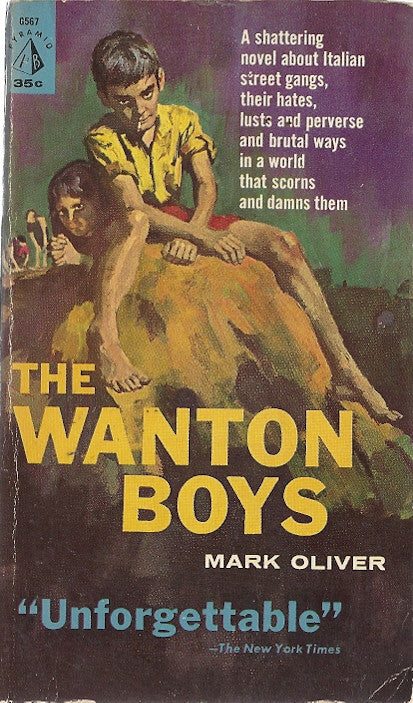
The Wanton Boys, Mark Oliver, 1959.

He was a thin, brown-eyed, sad-looking boy, one of ten children of a poor Italian fisherman who had been drowned at sea. Sometimes he begged a little, and sometimes he stole, but hunger grew in him every day. There was no more salt in the home, only garlic to help the long loaves down. Garlic or one of the half-rotten tomatoes that the wasteful spaghetti-makers threw away, and it was a race in the mornings to get to the garbage cans before the dogs and the other starving scavengers.”

I found a parcel on the doorstep. Tearing it open, I uncover a battered copy of The Wanton Boys. I am beside myself with excitement. It’s an early birthday present from a friend too impatient to wait for the day itself. This ragged mass-market copy, improbably, is worth a small fortune.

The blurb is enticing:

“A shattering novel about Italian street gangs, their hates, lusts and perverse and brutal ways in a world that scorns and damns them.”

I love a book about lust – and perverse and brutal ways.

On the cute and willing…

Vimzrut. Photo by Ruslan Pukshyn, 2026

My Week, For What It Was Worth

On reading Like People in History…


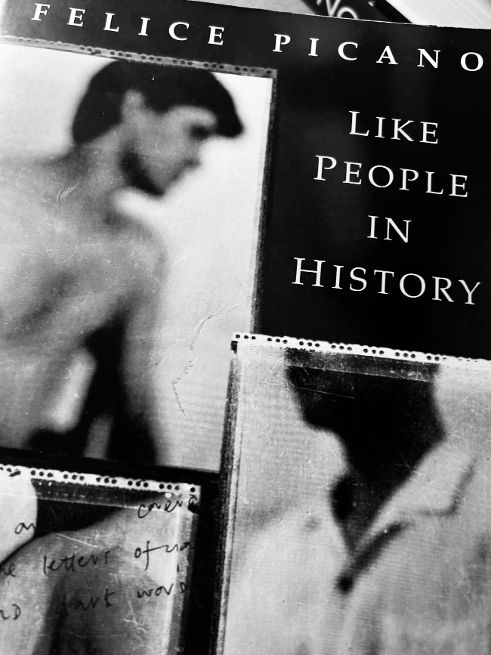
In January 2000, somebody called Gregory Nash pencilled his name on the front page of a paperback book. I don’t know what happened to it for the next 26 years, but a few weeks ago, a friend found it at a second hand book shop in London and gave it to me as a present.

Published in 1995, Like People in History, by Felice Picano, traced not just the protagonists’ lives but provided the defining moments of American gay history between 1954 and 1991. 

‘The big novel we’ve all been waiting for – the gay Gone with the Wind,’ wrote Edmund White at the time, which was hardly surprising. Picano and White were both founding members of the Violet Quill Club, considered to have been a gay urban version of the Bloomsbury Group. They met regularly in Manhattan and on Fire Island in the early 1980s to discuss their works in progress.

I must explain that I thoroughly enjoyed the book although comparing it with Gone with the Wind didn’t do it any favours. 

“Sex is the defining characteristic,” critic Patricia Rodriguez wrote back then. “He (Picano) buys into every stereotype that many gays wince at, giving ammunition to bigots. Nothing’s ever as good as it was when THEY were on the cutting edge.”  (Fort Worth Star-Telegram 1995).

If I have interpreted her correctly, Rodriguez was referring to the 1970s. The archetypal mincing queens with moustaches and lots of hair, who danced to loud disco music, and spoke to each other like they were girls. 

“Mary, you are too much. She’s giving everything. Don’t be so dramatic, girl.” 

Well, they were having a good time, and who could have blamed them. 

But afterwards it became a problem with some gays, particularly for those who hadn’t been there. Such as me. 

I guess that what I am trying to say is that the seventies gay scene (particularly in the USA) aged badly. Too flamboyant and in your face – and decades before RuPaul hyped it up again. 

If AIDS curtailed the eighties, then the reset came in the 1990s. 

Since then, everything seems to have been less colourful and non-scene, and which those from the 1970s might consider boring.

I prefer it this way.

Picano, who published 17 novels and eight volumes of memoirs, died last year, and was better qualified to write about the scene than most. And he did it well. Me? I am trying my best not to come across as a disrespectful and ungrateful cunt.

My adopted copy of Like People in History goes onto my gay literature shelf and stands alongside other members of the Violet Quill Club: Christopher Cox, Robert Ferro, Michael Grumley, Andrew Holleran and George Whitmore. Four had died of AIDS by 1990 and only Holleran is still alive. 

 Last word to Picaro:

“We were all friends and lovers – literally. Robert Ferro and Michael Grumley were partners since the University of Iowa writing school. Andrew Holleran was also at that school. Michael and Robert were together for years. I met Edmund White in Greenwich Village in 1976, and George Whitmore in ‘77. Chris Cox was Edmund’s boyfriend: George and I were tempestuous boyfriends at the time, but he was instrumental in forming the group. Robert was also very socially active, so he and George pulled it together.”

On coming upon a skanky boy…


I don’t know your name. I don’t know how old you are. I don’t know where you live. I know absolutely nothing about you.

But I do know that you are a bad apple that has fallen from the tree. Realise that people judge you for what you are.  A skank – dirty, untrustworthy, disreputable, and sexually promiscuous.

Levi, the Polish boy with the Yorkshire accent, once picked up on something I had written.

“Boys who stuff their hands down their underwear because they think it makes them hard. Boys who pretend their sweet smelling piss and cum fingers are guns.”

He understands that I am hopelessly addicted to skanky boys.

And lust is only a starting point for deeper connections.

On realising that if I had been around in 1960…


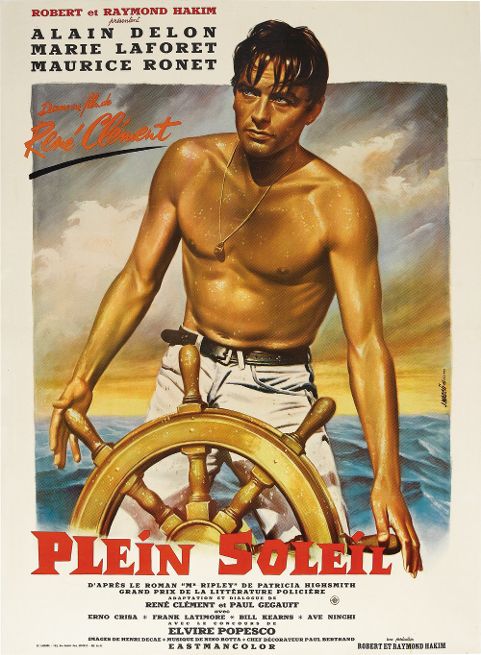
I would have been going to the cinema and masturbating over Alain Delon in Plein Soleil. That unnatural beauty, chilling menace and simmering homoeroticism. And don’t get me started on Rocco and his Brothers.

On that furtive glance from beneath his baseball cap…
The look that said: “I know that we’ve known each other for ten years, and I know that you’ve always loved me, and I’ve been a complete shit to you. But now that I’m in my prime, I’m ready and willing to have that relationship.”

On the barman who smiled at me…
I cannot say, in all honesty, whether he was handsome or not. But beauty is not everything. He was shy, and polite, which said something. And when he faced me there was a hint of attraction that appealed to my shallow mind. 

I cannot say that wearing shorts was a good idea either. I know fine legs when I see them and yet I was still deciding whether it was the case here. But he was brave enough to wear them on a cold March night and that showed guts. And when the realisation hit that I was still staring at them, I knew that he probably had good legs after all. 

But what absolutely blew me away was when, amidst his boredom, he saw that I was giving him attention and cracked a most beautiful smile. It was all so sudden. A big genuine smile. The last time a chicken smiled like that, he ended up moving in with me. 

On the cute and willing…

Marcelo Jimenez, model. Photograph by Ryan Duffin

My Week, For What It Was Worth

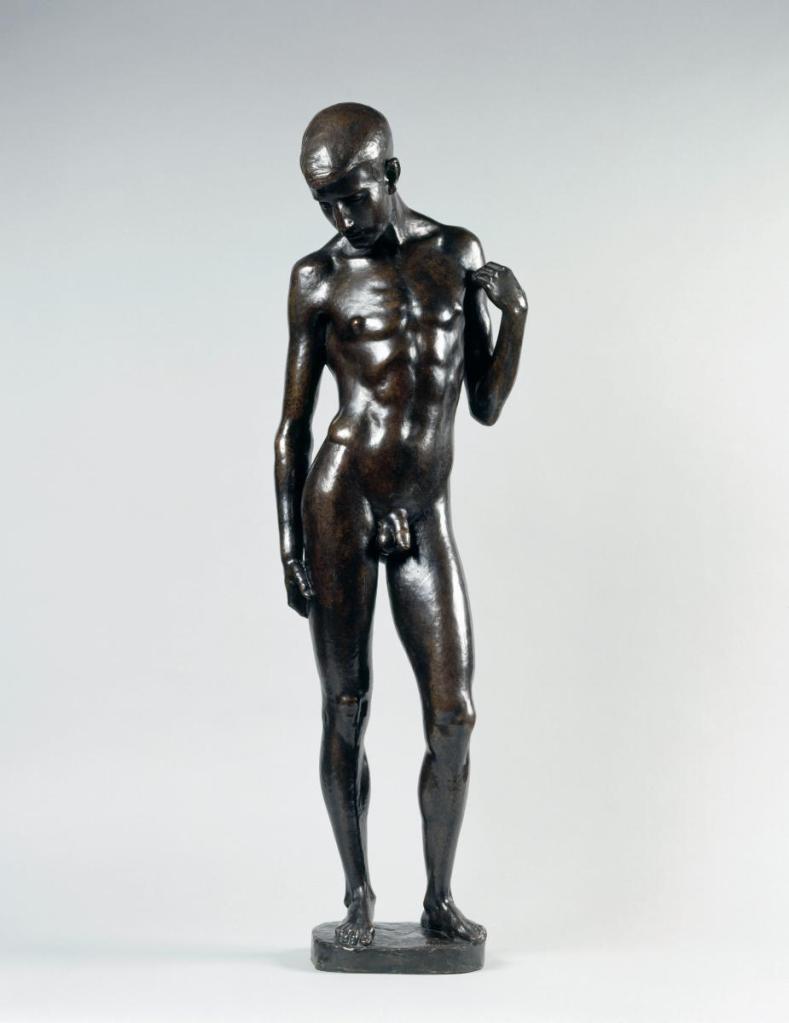
Le coureur cycliste (1907-08). Gaston George Colin was a young cyclist, Harry Graf Kessler a rich German aristocrat attracted by his figure, and Aristide Maillol the French sculptor stuck between them.

On falling for a bronze statue…
Aristide Maillol. He seduced us with stone. Flirted in bronze. Gaston Colin. A mystery. Le Cycliste. A favour for a friend. Harry Graf Kessler. But Maillol didn’t do dick. But Charlie said, “It is conceivable that he hated the male penis. Much the same as I do with the female vagina.”

On realising that I know nothing about female anatomy…
And so, to be real, I know nothing about female anatomy. Where to stick it? What to do? What to say? Multiple choice. Confused with a clitoris, vulva and a vagina. In case of emergency. Anus. Refer to Dummies Guide to Girl Parts.

On teenage scally boys messing with me…
Broken promises and lies. Rebellious and street smart. Teenage scally boys who disrespected me. No trust, I told them. I’m burned now. I kicked the shit out of one of them. They threw eggs at me.

On flirting with the guy with a girlfriend…
A flick of the eyes. Said it all. My heart surged. Not my normal type. A bit chunky. But good chunky. Everything changed. There was hope. 

On discovering Len and Cub…
Sweet boys. Lives can be forgotten. Lives can be rediscovered. Long after they are dead. I liked Cub.

Leonard “Len” Keith and Joseph “Cub” Coates fell for each other in early 20th-century New Brunswick, at a time and place where queer relationships were taboo. 

On a house in a small Italian village…
Tuscany. Eight houses. Fifteen people. Nine males. One handsome twink actor. No money to buy. Gutted.

On choosing my gay pen name…
Pericoloso Eros.

On lusting after Matchstick Man…
Getting thinner. Getting stickier. Getting bonier. Dickier. His girlfriend? Getting bigger, rounder, cockier. Fat bitch! 

On being jealous over Joe…
Because some Aussie twink in Perth claimed him and explored his cargo before I had the chance. 

On listening to two guys talking…
“Your psychology is impressive. Wikipedia or Chat GPT?”

On someone’s thoughts about Saturday Night Live…
“Here’s the thing: I’ve rarely met a British person living in the US who has actually found SNL funny. It’s hard to say why this is.” – Emma Brockes (The Guardian)

On the cute and willing…

Finny Tapp, model. Photographed by Gleb Behrens

My Week, For What It Was Worth

Klaus Mann (1906 – 1949)

On finding a photo of 16-year-old Klaus Mann…

Klaus Mann. Cute twink. What did you become? A chaotic mix: part mongrel, openly queer, a junkie, and premature anti-Fascist. The eldest son of German literary giant Thomas Mann. Born with a permanent side-eye for the world and zero patience.

Every book he published before 1933 got tossed straight into the flames during the Nazi book burnings.

His 1942 autobiography, The Turning Point, reads like a roll call of lost friends; an unsettling number of the people in it had died by suicide, more than feels believable in one life.

Seven years later, in Cannes, he followed the same tragic path.

“Memories are made of peculiar stuff, elusive and yet compelling, powerful and fleet. You cannot trust your reminiscences, and yet there is no reality except the one we remember.” – Klaus Mann (The Turning Point)

On being famous in a hundred years…

I will die and in a hundred years people will decide that I was iconic. Maybe I was just too avant-garde for my era, and everyone needed a lot of time to catch up. Or maybe… I was just a shit writer and in a hundred years time people won’t be writing at all. And when they rediscover my work, it will make my shit writing seem like that of an intellectual. 

On hearing about an intriguing snack…

“He said that he would fix me a snack, but that it might take a little time. I read while he disappeared into the kitchen. When he returned fifteen minutes later, he handed me a plate containing three salted crackers and an unknown delicacy that had been thinly spread over each one. I asked what it was, but he shushed me and said that they were best eaten straight away. I ate them and afterwards he told me that the crackers had been covered with his sperm.”

On the urge to write gay porn…

I write gay sex scenes in which nothing really happens. So why not write gay porn where everything does? The thought crosses my mind, but embarrassment stops me. I have no wish to shock anyone, or to offend.

People tell me there is money in it. In that world you can have sex with anyone you like on the page—the most beautiful man, the ugliest. No limits, no refusals. Anything can happen because you decide it does.

The urge to write it grows stronger.

But then my unhealthy fascination with Baron Corvo returns, as it often does, and he appears in my dreams again. He reminds me—rather coldly—that, like him, I am already sufficiently depraved, bordering on the disgusting, and that there is really no need to write about it.

On realising what I look at each morning…

I’ve started following a French blog called Gay Cultes—my daily hit of a beautiful male body, a little lust, and a sprinkle of homo culture. And it makes me a little jealous because it is simple and never misses. 

On loving these lines in a book…

“He spat and beat his donkey, which farted, kicking one leg. I followed his advice, as the commotion I seemed to be causing was making me a little uncomfortable.”

On observing three guys in a band…

Three guys are standing there with guitar cases on their backs, talking among themselves. From what I catch, they’re starting a band.

For a second I feel this urge to tell them they’re absolutely doomed. Not because of the music—who knows, they might be good. But visually? It’s a disaster. Two chubby guys and one tall, spotty skeleton. 

On finding a good poem…

Together
Sleeping together … how tired you were …
How warm our room … how the firelight spread
On wall and ceiling and great white bed!
We spoke in whispers, as boys will do,
And now it was l—and then it was you
Slept a moment, to wake-time fled;—
“I’m not a bit sleepy,” one of us said.
I woke in your arms,—you were sound asleep.
So close together we had tried to creep,—
Clinging fast in the darkness, we lay
Sleeping together,—that yesterday!

C. Mansfeld

On hearing a man say to his small son…

“Gi’ it a look. It’s reyt callin’ out, innit? All sat there beggin’ for it—everythin’ tha needs t’ knock up a proper bit o’ slopdosh, if tha’s not soft.” 

*****

Did I believe in life after love? In love after love? In life after life? I was unsure at that time.

But we were happy.

My Week, For What It Was Worth


On the boy delivering junk mail…
He stopped some distance from the door. He seemed like a prowling cat suddenly aware that there might be danger. He stayed still, contemplating whether to proceed or retreat. His eyes were nervous and suspicious. And I, standing almost naked in the doorway, smiled as if to say, “I might only be wearing yesterday’s dirty Calvin Klein’s but I’m no threat.” But he made his decision and turned away.

On the woman who told me…
“It was a long time ago. I was young and pregnant and very drunk. I went to a guy in Spain who agreed to give me a tattoo on my huge stomach. I chose that yellow, grinning, trippy smiling ‘acid’ face. After I gave birth it looked like a deflated balloon and I’ve had to live with it.”

On resolving Liam’s finances…
Liam the skater boy, who is short, cute, wears round glasses and has hairy legs. He told me that his girlfriend had moved out and now he was struggling to pay the rent. The briefest thought crossed my mind. I nearly suggested that he sell his body, and become my rent boy. But I didn’t. I remembered that I will not pay for sex until I am old.

On buying old homoerotic novels…
My compulsion to buy vintage homoerotic novels – The Loom of Youth, Despised and Rejected, Tell England. The age of innocence… or was it? Those intense male relationships that remained aesthetic, psychological, and slightly dangerous, rather than purely physical. The obsession with male beauty and youth. The internal conflict between desire and morality. The longing that could not be fulfilled.

On meeting the boy with the moustache…
The small skinny student with an angelic face who had grown a moustache. I hated it and resisted the urge to say so because I knew that he already lacked confidence. He, who couldn’t look me in the eye like he was ashamed of something. Who looked slightly scruffy in the careless way that hinted at potential—like a statue still hidden inside the stone.

On getting lots of messages…
Like naughty schoolboys sniggering at other people’s shortcomings, we trade a constant stream of nonsense and casual insults about the world around us. It is the only language we seem to share, the only ground we truly have in common. From boys to men—ten years of a love affair that never happened. And yet each message makes my heart sing, filling me with a fragile hope, and I find myself wondering whether, somewhere on the other end, he might be feeling the same.

On listening to David reminiscing…
An old song came on the radio: Calling Occupants of Interplanetary Craft. A sci-fi anthem about humanity attempting telepathic contact with extraterrestrial beings. I had never heard it before and mocked the corny American DJ intro.

David frowned. It turned out to be one of his favourites.

“Days at sea,” he said. “I think of a cloudy afternoon on a choppy Mediterranean, sailing from somewhere to somewhere. Feeding coins into a jukebox and drinking weak shandy from white plastic cups. Enough of it that we convinced ourselves we were drunk, though really it was just hormonal schoolboys egging one another on.

“It was a big hit for The Carpenters. Actually a cover of a song by a group called Klaatu, who people once claimed were The Beatles recording under a pseudonym. Absolute bollocks.”

The Weight of Wonder

When You Look at Boys – Charlie Marseille (2026)

When you look at boys, do you really look – do you look in detail? People see Bradley and assume that beauty must imply intelligence. It doesn’t. The truth is, he’s a bit of a himbo. There’s a Yorkshire saying for people like that: “thick as pig shit.” And Bradley, I suppose, fits it perfectly. He smiles – handsome, devilish – with a guileless sense of wonder. But how long can I keep swallowing my frustration? Physical attraction fades quickly, and I realise the only role he can play is arm candy: a beautiful body, empty-headed, ornamental.

My Own Private Idaho – River Phoenix doesn’t just act – he drifts, aches, and unravels… and now we know that it was real

My Own Private Idaho. Keanu Reeves and River Phoenix. Promotional still (1991)

Scott: I only have sex with a guy for money.

Mike: Yeah, I know.

Scott: And two guys can’t love each other.

Mike: Yeah.

Mike: Well, I don’t know. I mean… I mean, for me, I could love someone even if I, you know, wasn’t paid for it… I love you, and… you don’t pay me.

Scott: Mike…

Mike: I really wanna kiss you, man… Well goodnight, man… I love you though… You know that… I do love you.

***

Watched ‘My Own Private Idaho’ for the first time. Charlie asked me if I’d seen Keanu Reeves recently because he looked old. But he was 61-years-old. River Phoenix still looks exactly the same… but that was how he left things. I remembered that I’d mentioned Phoenix before… but in one of my stories, he had appeared as a ghost. 

It wasn’t going to be called ‘My Own Private Idaho’… better than ‘Blue Funk’ or ‘Minions of the Moon’… and named after a B-52s song. Inspired by Shakespeare’s Henry IV plays… Prince Hal and Hotspur and Falstaff… but here it was Scott Favor, privileged bisexual, Mike Waters, narcoleptic gay hustler searching for his mother, and Bob Pigeon, coke-dealing chickenhawk. Gus Van Sant: “My films are usually about relationships. I think you make films about things you lack.”

I can’t stop thinking about River Phoenix because, I guess, I’m in love with yet another dead man.

1987… “Run to the rescue with love and peace will follow.” – River Phoenix.

1989… Star burning bright. Beautiful. Lightness. Creative. Camera object.

1991… Indie moment. ‘My Own Private Idaho’. Realism to fantasy. Challenging the norm. Self-destructive attitudes. Dark themes. Cool culture. Downbeat hustlers. Wanderers. A chance to become an adult actor. Gus Van Sant simply being Gus Van Sant. 

Keanu Reeves laying in bed playing with his nipple. What River Phoenix needed after making this movie – a bath, a shave, an exfoliating facial scrub.

“How do you see yourself fitting in with younger Hollywood acting?” (A sweet voice). “I don’t see any of them in the perspective or in the limelight of Hollywood. I really don’t ever want to get that objective or self-consciousness of my place in this world of showbusiness.”

1993… LA nightclub. Halloween. Music blasting. Sitting on a couch. Tired. Intoxicated. Skinny. Bad skin. Ticking time bombs. Heroine. Cocaine. Morphine. Marajuana. Valium. Cold remedies. Addiction is an open secret here. And then the star exploded all over the pavement. Never did anyone move from casual drug use to death so quickly. The night that Fellini died – ‘A director’s sweet life. An actor’s brief life.’

Retrospective.

2025… ‘My Own Private Idaho’. Turning point. A troubling effect. Midnight rock sessions. Alcohol. Uncontrollable drug use. Crystal meth. Hooked. No chance of going back now. Progressive and fatal. Like ‘The Little Shop of Horrors’…if you go too near to the plant it will eat you. The best performance… but from now on he didn’t care enough about himself to look after himself. What about those he left behind? Nobody did anything to help him when he was alive… guilt… and lasting sadness.

Have a nice day!

My Own Private Idaho. Keanu Reeves and River Phoenix. Promotional still (1991)
My Own Private Idaho. Keanu Reeves and River Phoenix. Movie poster (1991)