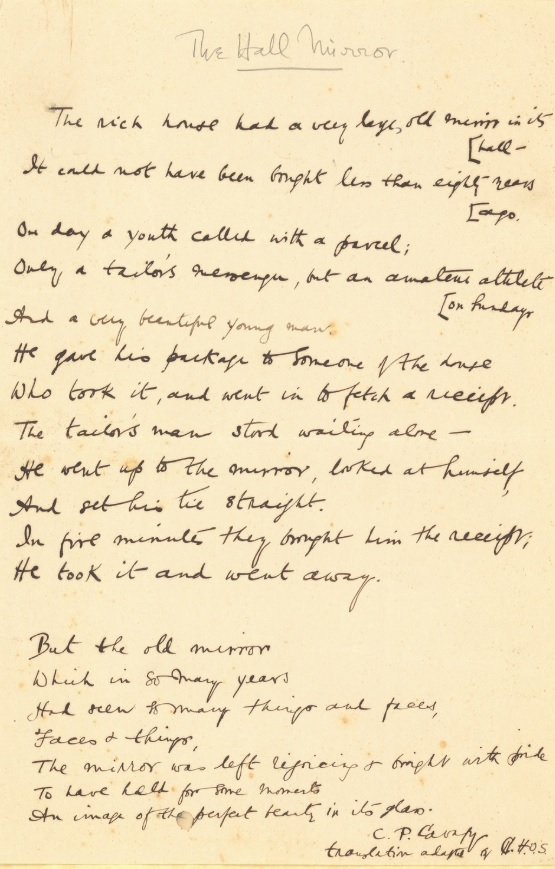
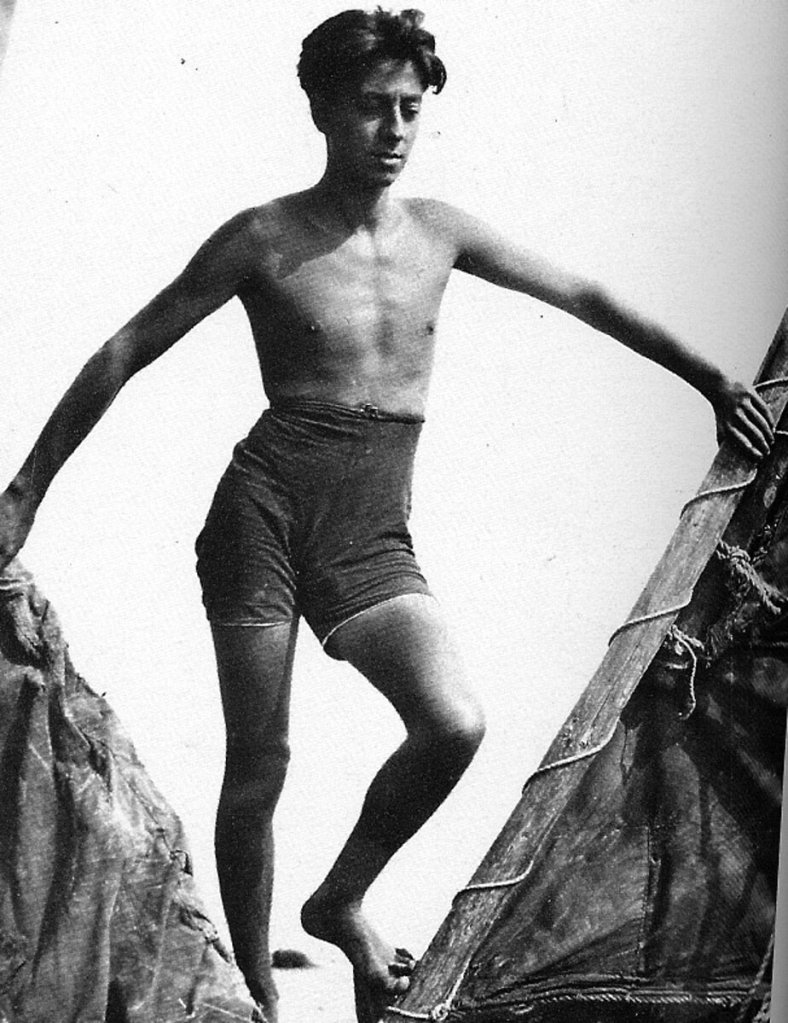
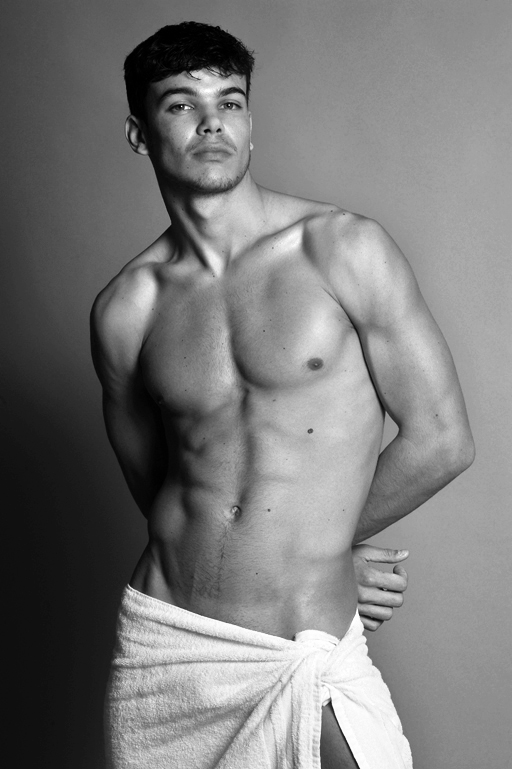
The rich house had a very large, old mirror in its hall. It could have been bought not less than eighty years ago. One day a youth called with a parcel; Only a tailor’s messenger, but an amateur athlete on Sundays And a very beautiful young man. He gave his package to someone of the house, Who took it and went in to fetch a receipt. The tailor’s man stood waiting alone – He walked up to the mirror, looked at himself and set his tie straight. In five minutes they brought him the receipt; He took it and went away.
But the old mirror Which in so many years Had seen so many thousands of things and faces, The mirror was left rejoicing And proud to have had hold for some moments An image of the perfect beauty in its glass.
Translated from Greek by C.H.O. Scaife in collaboration with Constantine P. Cavafy. Originally published in The Spectator on September 27, 1935.
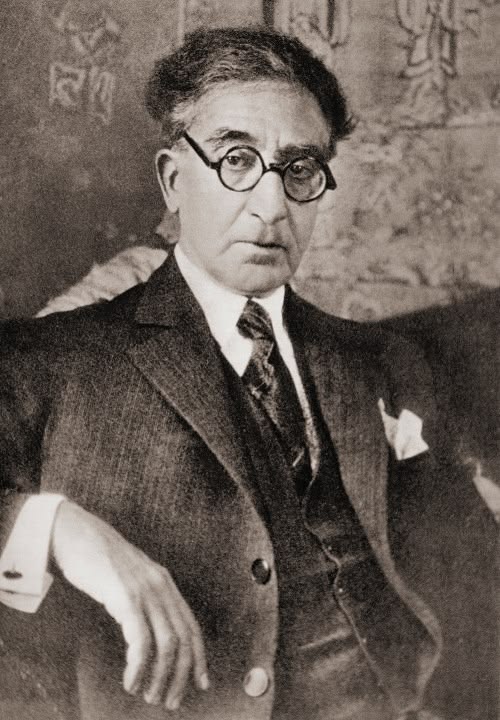
Constantine P. Cavafy (1863–1933) was an extraordinarily influential Egyptian-Greek poet widely considered the most distinguished voice of modern Greek literature and a towering figure of 20th-century Western poetry. Born and based mostly in the cosmopolitan hub of Alexandria, Egypt, his work uniquely blended historical realism, profound skepticism, and deeply personal, intimate expressions of homosexual desire. He spent over thirty years working as a quiet clerk in the Irrigation Service of the Egyptian Ministry of Public Works while writing poetry in his spare hours
The speaker looks at beautiful young people in the present and wonders where they were when he was a child. Every generation believes beauty belongs to someone else. Every generation eventually discovers that it was temporary.
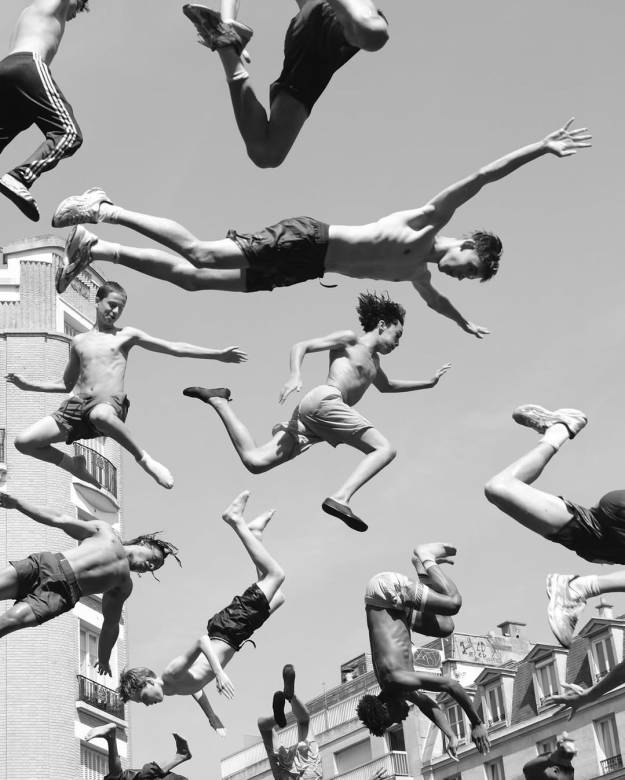
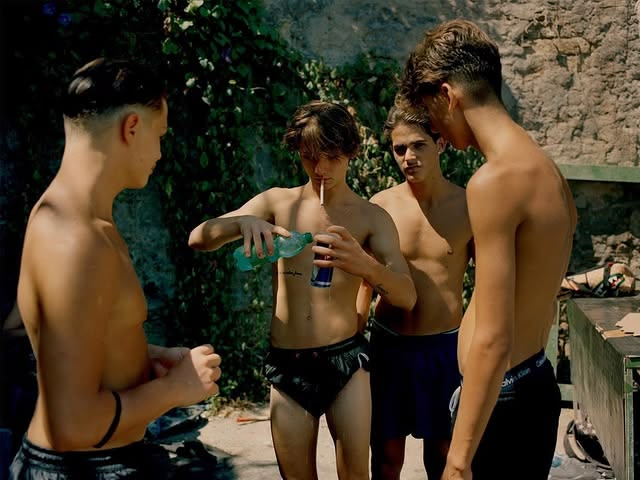
Canal Saint-Martin. Photo by Andrii Bulavka (2026)
Where were they when I was a kid, the gorgeous young I see?
Did they drop from the moon on each sand dune
or arrive at five just for me?
Where were they with their hair and their teeth and their shoulders and stomachs, too;
did they fall out of sight on each summer’s night, just to tempt me and bend me with fear?
I see them now crowd the streets and the beach, the subways and fashion stores,
they seem so cool, unruffled and cruel and make light fools of us all.
But as you expect, soon, quite direct, they’ll become just as you and I:
then the curious types from their shadows will gripe, just what did become of us all?
Perry Brass The poem originally appeared in Sex-Charge (1991).
Perry Brass is an acclaimed American author, journalist, poet, and pioneering LGBTQ+ rights activist. Born in Savannah, Georgia, in 1947, he became a core figure in the post-Stonewall gay liberation movement in New York City.
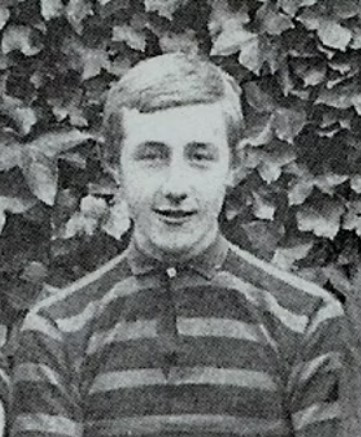
Fabian Strachan Woodley (1888–1957) was a Bristol-born teacher, journalist, and poet whose wartime writing evolved from youthful patriotism to profound melancholy after a devastating personal loss.
In June 1916, his lover, twenty-year-old Lieutenant Myles O’Donovan of the Royal Munster Fusiliers, a native of County Cork, was killed by shellfire. In response, Woodley wrote To Lieut O’D (1916), a deeply personal elegy in his memory.
The poem marked a turning point in Woodley’s work. Gone were the optimistic patriotic verses of his early war years, replaced by a poignant meditation on grief and the waste of young life. He evokes O’Donovan’s vitality and laughter before the brutal interruption of a screaming shell brings his life to an abrupt end in the trenches.
To Lieut O’D was later included in Woodley’s 1921 collection, A Crown of Friendship.
To Lieut. O’D (1916)
See him standing at the corner, Cynosure of friendly eyes, Challenging their kindly sallies, Combatting with swift replies.
Eyes alight with Life and Laughter, Brown eyes full of mirth and fun; Fresh face tanned by months of warfare, Lithe limbs browned by summer sun.
Suddenly a shell comes screaming, Through the blue vault overheard, Strikes – His laughing lips are silent, All his splendid youth lies dead.
Death! whose arrow countless thousands And unerring aim have proved, Could you not have aimed untruly, Spared for me the boy I loved?
“I loved everything in this world. And all I had was my blank notebook under the sun.”
Sandro Penna, the Italian poet, believed his finest work consisted of only a handful of lines.
Why write a long poem when four lines will do?
A man after my own heart.
I leave my job filled With dry words. But at the gate The gods have set down for my joy A boy playing with boredom.
Penna also loved to walk—through fields and parks, but above all through the working-class districts of Rome, usually after dark.
We are left in little doubt as to what drew him there.
His friend, Pier Paolo Pasolini, knew that Penna was captivated by the same ragazzi who wandered the city’s outskirts.
The evening kidnapped My quarreling boys Their angel voices Warring. Now they stand In the mothering shelter of new lights In houses across the street.
Engraved in the bright sky The silent smudge Of a hero on a horse
Under the first star.
Penna’s way of life, however, also caused concern.
In 1956, he brought a 14-year-old street boy, Raffaele Cedrino, to the home he shared with his mother. The boy remained part of Penna’s life, on and off, until 1970.
I saw my dark haired boy Seated in the audience Smoking a cigarette He has the brightest eyes.
Penna died alone in the same house on Via della Mola dei Fiorentini in 1977.
In brief: Born in Perugia in 1906, Sandro Penna spent most of his life in Rome. Although he trained as an accountant, he never settled into regular employment, instead earning a living through newspaper work, proofreading, and dealing in art.
In 2014, Peter Valente described Penna’s verse as “candid, uncluttered, minimalist, and of profound lyrical intensity.” It is difficult to think of a finer summary.
“It seemed as though it was happening to somebody else. He heard the rattle of German machine guns and believed they were aimed elsewhere. He pitied the unfortunate comrades who fell into the mud and filthy water, yet silently thanked the Lord that it was them and not him. Surely He had made him immune to this brutal enemy. He was too young to die.
“Then his tunic exploded before his eyes. Chunks of blood, cloth and gore splattered across his chest and stomach like enormous raindrops. There was no pain. Not at first. Then came the realisation that these were the very bullets meant for somebody else. After that came the searing pain—sharp, sudden, inexplicable. His insides had exploded. The Lord had deserted him after all.
“Those were his final thoughts as he fell to his knees: that he was going to die, and his secret would remain with him on the banks of the Sambre–Oise Canal at Ors.“
*****
I am one of those who subscribes to the view that the poet was homosexual. Others, of course, suggest otherwise. His connections with a homosexual literary circle that included Siegfried Sassoon, Robbie Ross, Osbert Sitwell and Scottish writer C.K. Scott Moncrieff is well documented.
The truth of the matter died with Owen at Ors in November 1918.
Wilfred Owen had only five poems published during his lifetime. The vast majority of his work was published posthumously, much of it written between August 1917 and September 1918 during his stay at Craiglockhart Hospital in Edinburgh and a subsequent period in Scarborough.
One such poem, Who Is the God of Canongate?, is believed to have been written at Scarborough in November 1917, when Owen joined the Manchester Regiment, billeted at the Clarence Gardens Hotel (now the Clifton Hotel), where he spent much of his free time writing in a turret bedroom.
The poem has often been interpreted as an evocation of male prostitution in Canongate, Edinburgh, and Covent Garden, London, collectively represented as a “little god” who walks the pavements barefoot. This “lily-lad” is visited up “secret stairs” by men who “lift their lusts and let them spill”.
Did Owen write from experience? Or had he merely heard stories that inspired the poem?
Sonnet to Youth (No 1076) Youth, beautiful and daring, and divine, Loved of the Gods, when yet the happy earth Was joyful in its mourning and new birth; When yet the very odours of the brine Love’s cradle, filled with sweetness all the shrine Of Venus, ere these starveling times of dearth, Of priest-praised abstinence, made void of mirth, Had given us water where we asked for wine.
Youth, standing sweet, triumphant by the sea All freshness of the day and all the light Of morn on thy white limbs, firm, bared and bright For conflict, and assured of victory, Youth, make one conquest more; and take again Thy rightful crown, in lovers’ hearts to reign!
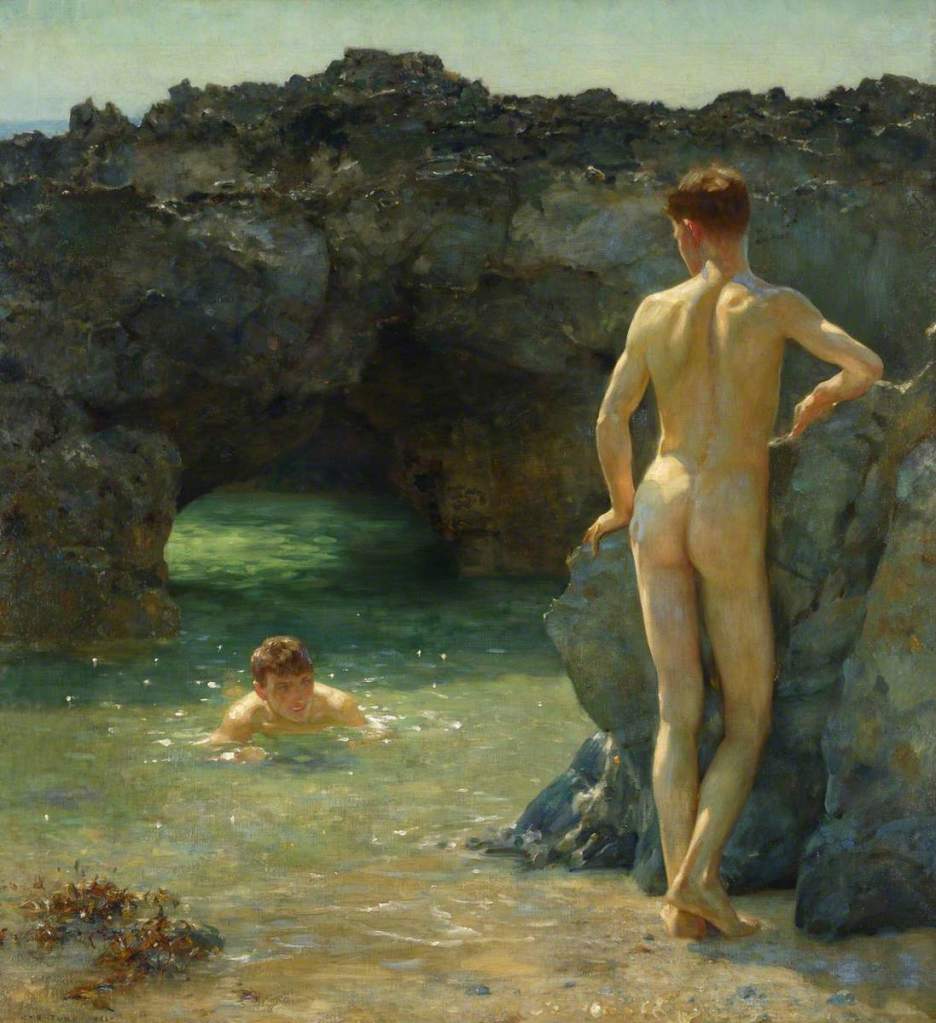
Words credited to the artist Henry Scott Tuke (1858-1929). From The Artist (1889)
This text appears attached to the entry for Perseus and Andromeda (R121) in Tuke’s Registers. According to Charles Kains Jackson, who later informed the compiler S.E. Cottam, a sonnet published in the 1889 issue of The Artist was written by Henry Scott Tuke. The poem in question is likely the same work; however, the evidence is insufficient to confirm Tuke’s authorship with certainty.
On considering my dwindling finances… I’ve no concept of saving money, which is fine when your job allows a comfortable lifestyle. But that isn’t the case anymore. Work is disappearing fast. People are still interested in reading about European cities – history, best places to go and the secrets that they provide. People still want to read about these places and occasionally make good use of my observations. The number of posh magazines that cost a fortune to buy is increasing and there are thousands of websites wanting to make themselves look good. But the winds of change are making me redundant. First, it was decided that they didn’t want me to travel anymore – stay at home and research them or, better still, find somebody who lives there to do it. That saved them a lot of money. And now, with AI, they don’t need anybody at all. I’ve considered writing about other subjects but, guess what, nobody wants a real person to write it, especially one that will want to be paid. I read an interview with the author Lee Child, who, in a time now covered in cobwebs, was made redundant and decided to write a novel. He became a millionaire with Jack Reacher. But that’s not going to happen either. As one magazine editor told me, those days have gone, and it was bad luck that I chose a career at the wrong time.
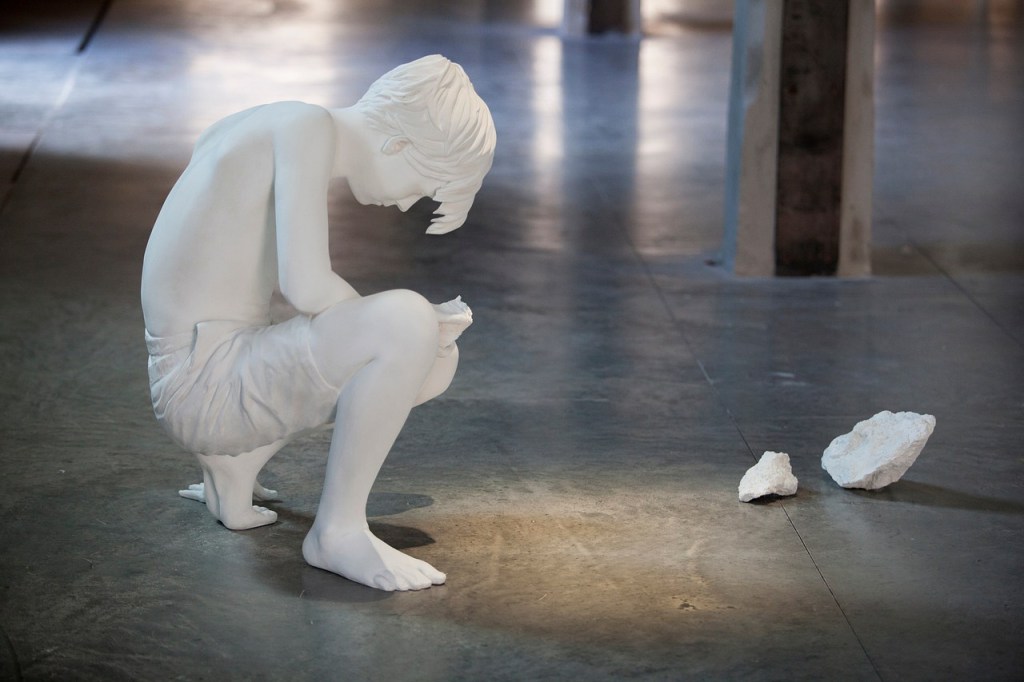
On the missing ‘squatting boy’… I found a photograph of a sculpture and immediately fell in love with it. It formed part of a three-piece installation titled El problema del caballo (The Horse Problem), displayed in the historic Arsenale — the former cannon foundry- at the Venice Biennale in 2017. Its creator, Claudia Fontes, born and raised in Argentina but now living in England, constructed a scene suspended in time: a monumental horse flanked by a life-sized woman and a squatting boy, all facing a shower of rocks hanging motionless in the air, their shadows scattering across the space to form the fractured outline of the animal itself. The boy seems caught between witnessing the event and studying the fragments at his feet, as though unsure whether he is observing destruction or deciphering it.
I tried to discover what became of the work afterwards, but it appears to have simply vanished. Does it lie forgotten somewhere now — draped beneath a tarpaulin, gathering dust and cobwebs in some anonymous warehouse? Or worse, was it dismantled and destroyed? There is something almost unbearable in the thought that a work of such strange beauty could disappear so completely. Why create something so haunting, so precise in its evocation of wonder and catastrophe, only to hide it away from the world? I am told that, in contemporary art, the act of creation and the conceptual gesture can hold greater value than the object itself. Yet that explanation feels strangely unsatisfying when confronted with something one longs to see.
The Squatting Boy’ – Claudia Fontes (2017)
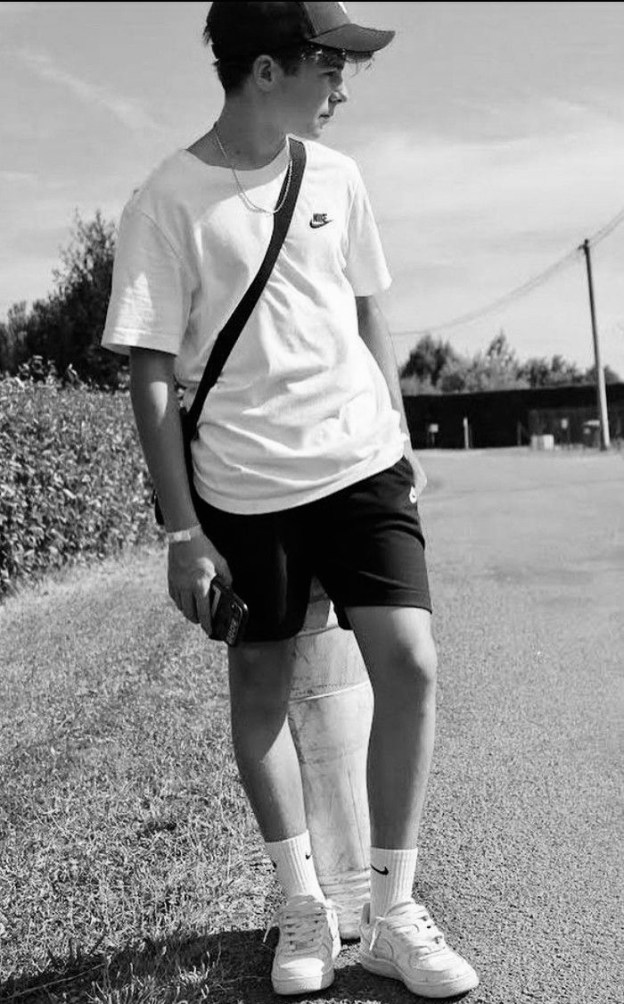
On the benefits of hot weather… Heatwave. Black shorts. White tees. It has become the standard summer uniform: simple, effortless, and quietly revealing. There is something undeniably appealing about the combination — the clean contrast of dark shorts against sunlit skin, the casual ease of a white T-shirt worn loose in the heat.
Part of the attraction lies in a natural appreciation for fit, athletic legs and the relaxed confidence that warm-weather dressing encourages. Well-shaped calves, strong thighs, and defined muscles suggest health, balance, and physical vitality without seeming overly deliberate. Summer style works best when it appears unforced.
More than anything, it conveys ease. The look belongs to long evenings, beaches, city pavements shimmering in the heat, holidays, freedom, and movement. It suggests someone comfortable in their own body and unconcerned with trying too hard — a kind of self-assurance that people instinctively respond to. There is also an air of fun and openness to it, something approachable and youthful that feels inseparable from summer itself.
On dabbling with Bailey… Bailey is cute, but I can’t cope with his hypochondria. A nosebleed needs major surgery. He says that his nose bled so much that his teeth hurt. Beauty sometimes hides intelligence, but, there again, maybe it isn’t intelligence that I’m looking for. It’s not about sex either. It’s about getting naked, cuddling in bed and hoping that he doesn’t talk too much.
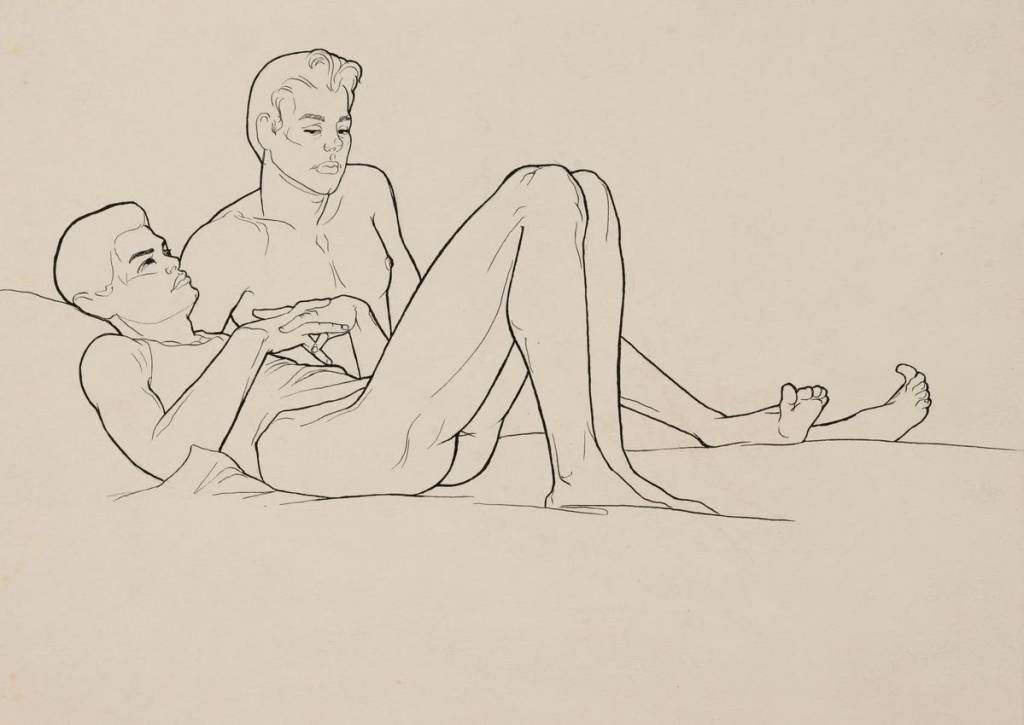
La sieste, circa 1960. Drawing by Raymond Carrance
On the Lamentation for Jonathan… A poem from ancient Hebrew literature, The Lamentation for Jonathan — also known as David’s Lament or The Song of the Bow — is among the most celebrated elegies in the Bible, appearing in Books of Samuel (2 Samuel 1:19–27). It forms part of King David’s mournful response to the deaths of King Saul and Jonathan — Saul’s son, David’s closest companion, and the man with whom he shared a profound and fateful bond. Both were killed in battle against the Philistines on Mount Gilboa.
Jonathan and David had made a covenant together, for Jonathan loved David “as his own soul.” Jonathan stripped himself of his robe and gave it to David, along with his garments, his sword, his bow, and his girdle:
The beauty of Israel is slain on the high places; How are the mighty fallen! I am distraught for you, my brother Jonathan; Very pleasant have you been with me! Your love was wonderful : passing the love of women! How are the mighty fallen: And the weapons of war perished!
The passage has an emotional intensity that still feels startlingly intimate. The language of grief, devotion, and physical closeness moves far beyond the formal language of political alliance or military comradeship. It is beautifully homoerotic — though there are always those who insist that we should not read too much into it.
On agreeing with Joseph Caprio… “I have often been criticised for photographing only beautiful men, for creating images than are purely aesthetic and rather superficial. On first impression, that may seem to be the case. In my defence, if I had to justify my work – if justification is necessary – I would say that I am made anxious by the passing of time and that I have a certain distaste for the world and so, when I am in the studio, I seek one thing: to forget reality for a moment and to dream. To dream that I am in a world where there is only beauty, a world where time takes no toll. Yet my mind, my soul, is ever present and casts its shadow as I work. It would therefore be a mistake to stop at first impressions.” – Joseph Caprio
Romeo. Photo by Joseph Caprio
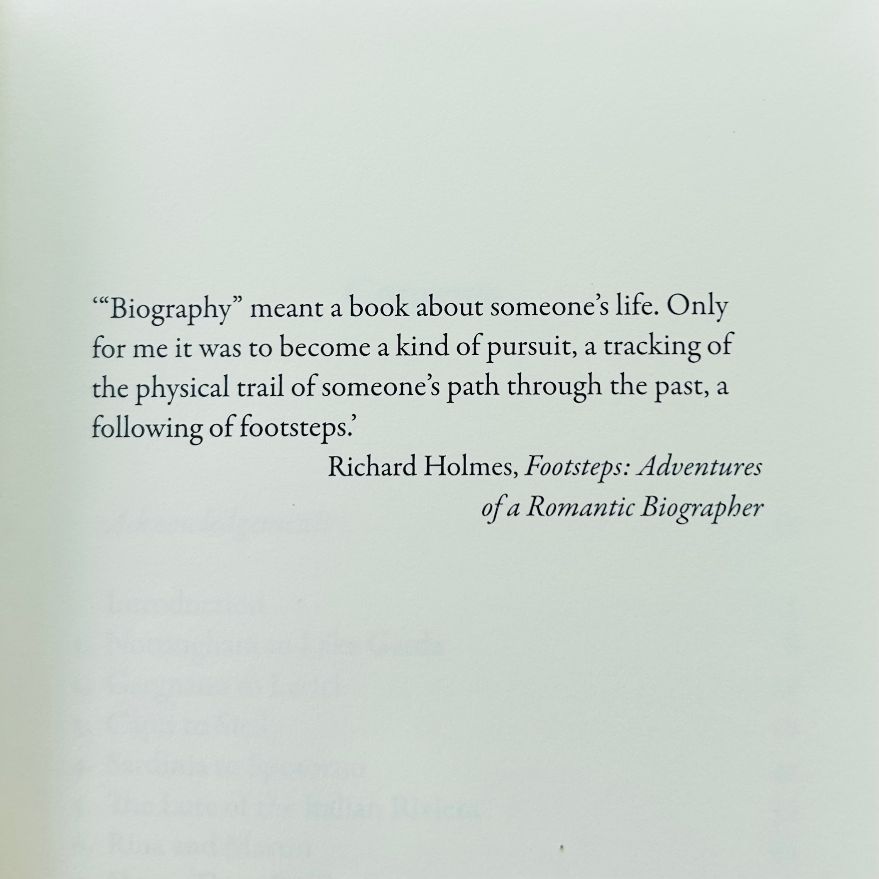
On considering writing a biography…
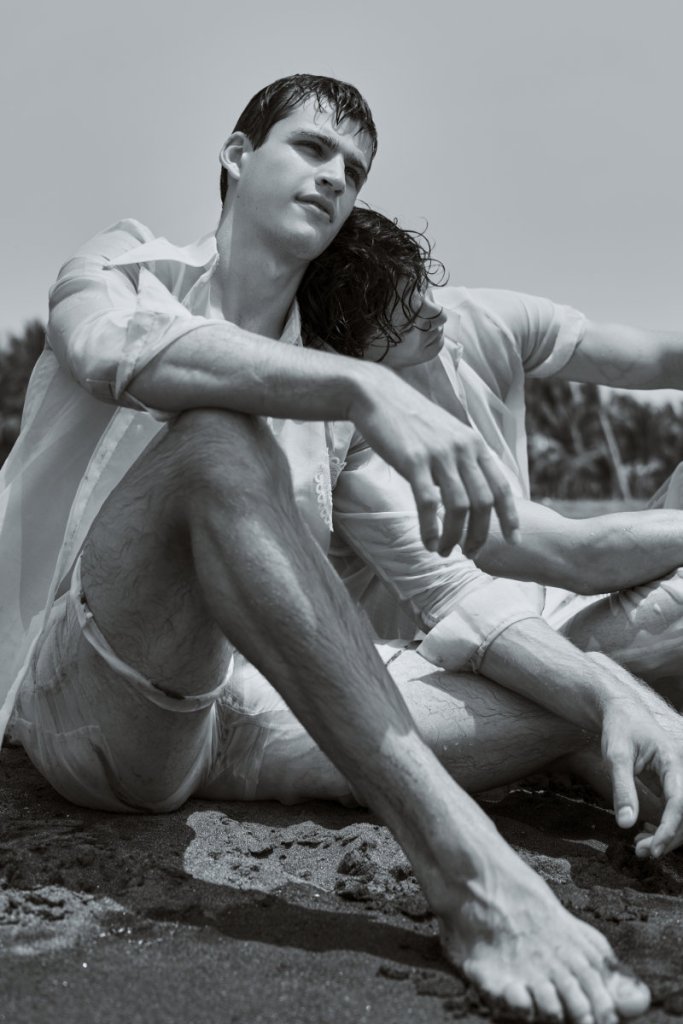
On the cute and willing…
Mattis Perez and Alex Joos. Photo by Anton Patdu, for Fucking Young! Online (2026)
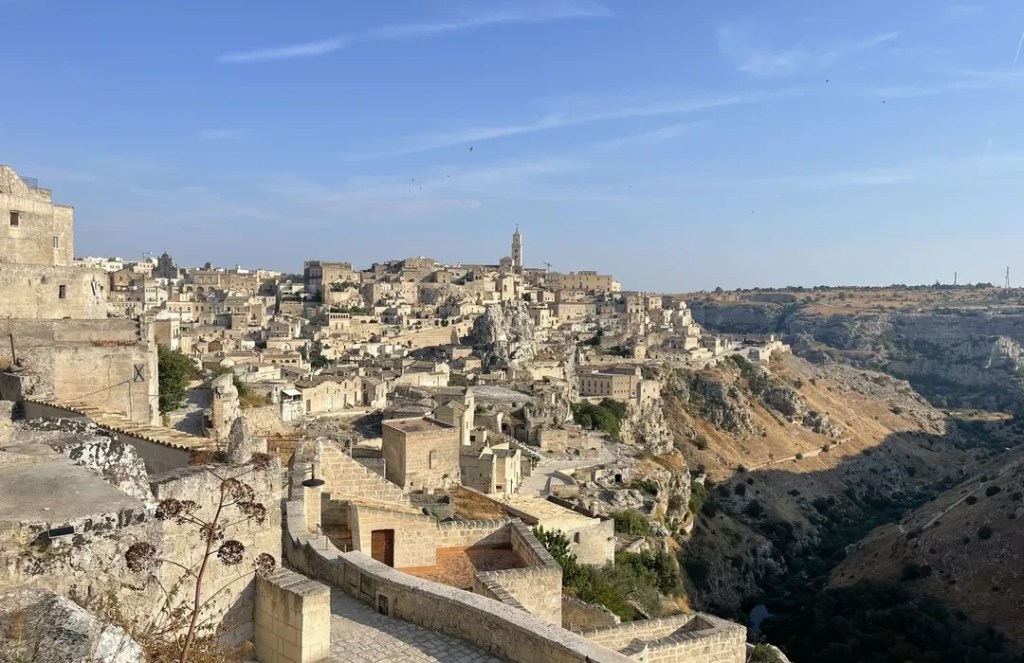
On leaving Montescaglioso… On from Montescaglioso—which I missed the moment I left on the small bus to Matera. I must return. The hilltop town exists in its own world, seemingly remote from the rest of Italy, yet it was warm and welcoming, and somehow managed to revive me.
It was really a minibus, stopping at every opportunity to pick up local women. For them, the journey to Matera felt like a day out—temporarily freed from household chores and feeding their families. They all seemed to know one another, speaking in rapid Italian, their voices rising and falling as they complained about the small details of their everyday lives. And yet, I couldn’t help feeling a quiet jealousy—that they could afford to live such ordinary, mundane lives.
There was only one other man on the journey, and he kept to himself, absorbed in his music. He looked about eighteen, and I imagined he was on his way to meet a girl in Matera. But then his phone rang, and the conversation turned to something entirely different: La Dolce Vita Orient Express, a new train service set to begin in May.
The route sounded almost romantic. It would begin in Rome, travel to Venice, then head down the Adriatic coast to Bari. From there, passengers would be shuttled to Matera—my destination—with its cave churches and underground water cisterns. Back on the train in Bari, the journey would continue towards Taormina in Sicily—which made my ears prick up—before heading on to Palermo and eventually returning to Rome.
It seemed the young man was being offered a job in Matera, one that would benefit from this new train service. He played it cool—neither accepting nor refusing—but you could tell he understood that opportunities like this don’t come around often.
The bus dropped me at Matera Centrale station, where I discovered that my train to Altamura was actually departing from Matera Sud, about two kilometres away. It required a short connecting train journey to get there. It was only once I was on that train that I learned Matera had once been derided as a symbol of poverty, yet had since reinvented itself as a creative hub—full of boutique hotels, buzzing cafés… and, of course, plenty of tourists.
On travelling to Taormina… It was surreal, but we met like lost friends—two people who shared a past, yet barely knew each other. I spotted Severin, with his blond hair and Germanic good looks, as we waited for the ITA Airways flight from Bari–Karol Wojtyła to Catania. The airport name didn’t sound remotely Italian, and I soon discovered why—it was Polish, named after Pope John Paul II.
Severin was from Bremen and had spent the last few years living in Turin. He, too, had been one of Pietro’s “lost” boys, and after Pietro’s sudden death had found himself with a modest sum of money and nowhere to live. I had been more fortunate, receiving a similar amount but allowed to remain in the Verona apartment, thanks to the generosity of Signora Bruschi. But now my home is back in England.
We hadn’t seen each other since that Christmas when Pietro had taken us out for a meal at a restaurant in Milan. It was there we met Elio, who turned out to be Pietro’s favourite—and who had inherited the bulk of his estate, enough to ensure he would never need to work again.
Severin, now in his late twenties, seemed genuinely pleased to see me, and was delighted to discover that we were both bound for Taormina. He looked thinner than I remembered, and had begun to grow a small goatee—something Pietro would never have approved of. Good on him, I thought. I noticed a bruise on his chin, and he explained he had been caught up in Turin’s May Day demonstrations, when protesters tried to break through a police cordon. I hadn’t expected Severin to have become quite such a rebel.
On the aircraft, we talked about old times, each of us offering a quiet, tentative sympathy to the other. Once, we had been adversaries; now, we were something closer to conspirators. Severin had tried to contact Elio after Pietro’s death, but had been met with a swift rebuff. He had also tried to reach me, but hadn’t known where to find me. The chance meeting at the airport had clearly delighted him.
Severin was heading to Taormina to work as a waiter for the summer season. The money Pietro had left him had run out, and now he survived by drifting from one job to the next.
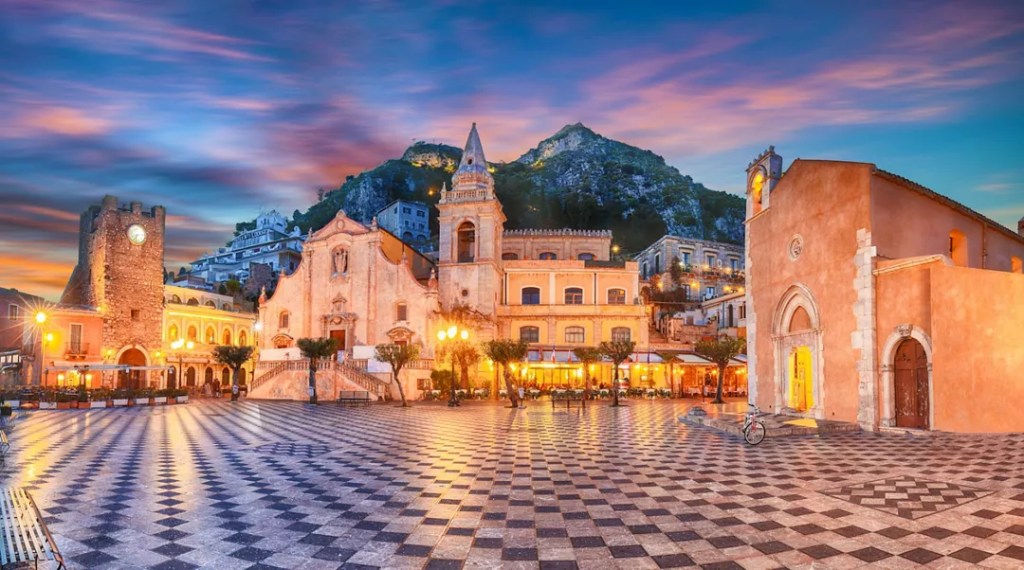
After arriving in Catania, we caught a train to Messina and got off at Taormina–Naxos. From there, we took the bus up into Taormina, where the heavens promptly opened. Inadequately dressed, we wandered through its charming maze of ancient, narrow cobbled alleyways, and along the bustling, elegant—largely pedestrianised—Corso Umberto. We dodged the hundreds of tourists clutching umbrellas, and after the calm of Montescaglioso, I found the crowds slightly overwhelming. Yet it was the smooth, endless stretch of the Mediterranean that held my gaze—and the uneasy thought that Mount Etna lay somewhere close by, hidden in the rainclouds.
It soon became clear that Severin had nowhere to stay. His plan had been to wander the streets of Taormina in search of something cheap. Until his job began—and with it, the promise of a room—the chances of finding affordable accommodation seemed slim. The town may once have existed in a kind of beautiful poverty, but ever since Victorian writers, poets, and artists had discovered it, its fortunes had changed. And soon, the La Dolce Vita Orient Express would be arriving too.
I was staying at a small hotel on Via Don Giovanni Bosco, its balconies overflowing with flowers, and—true to my nature—I offered Severin a bed until he found his footing. At the very least, it meant I wouldn’t be entirely alone as I tried to settle into a strange town.
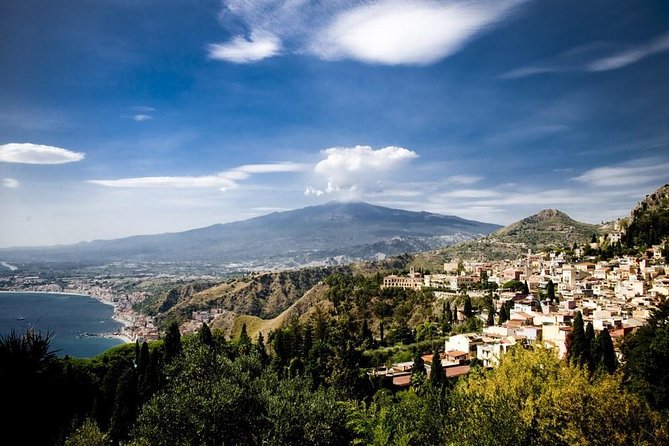
On never trusting Mount Etna… Everybody in Taormina wants you to visit Mount Etna. It is one of the highest volcanoes in Europe, and one of the most active in the world. Alfio, who works on reception at my hotel, suggested that Severin and I take a guided tour. But we both look at Etna and feel quietly relieved by the forty-five kilometres between us and its summit. Never trust an active volcano.
From Taormina, a plume of white smoke drifts from the summit, with no immediate sign of eruption. Yet, according to Alfio, Etna has entered a new eruptive phase that began at Christmas. The crater, he says, is emitting lava, ash, and the occasional flow. He tries to reassure us that Etna poses no real threat to Taormina. Apart from the light dusting of ash that sometimes falls when the wind turns, he tells us to follow the advice of the locals—the Sicilian way is not to worry.
He recalls that, as a small child, he once saw flames suddenly shoot up from the crater, only to subside just as quickly. The same thing happened again the following morning.
Alfio doubts we’ll manage to get up at dawn, but suggests taking us to a hill above the ruined amphitheatre to watch the sunrise. Despite getting to bed at two in the morning, and waking with the lingering effects of strong wine, we let ourselves be dragged through the narrow streets.
The sun rose from the southern edge of Italy and caught the white dome of Etna, tinting it a soft, rose-pink. The colour spread quickly down the snow, deepening until the whole summit glowed like a ruby instead of pale white. Night’s shadows slipped off the slopes, giving way to a rich purple that sank into the valleys and over the orange groves, darkening as it went—until the morning light washed across everything, and the mountains returned to their steady, familiar greens and browns.
That was as near to Mount Etna as I cared to be.
On a poem about Taormina… I found a poem about Taormina on All Poetry which was written by someone referred to only as ecekaradag13, and who appears to have a fondness for Italy.
Taormina Above the Ionian Sea, this teatro of pretense where German tourists photograph Greek ruins through the lens of their prosperity, never seeing the Sicilian boys who sweep their marble steps for coins that disappear into foreign pockets. The ancient theater still echoes with tragedies more honest than the comedy performed daily by boutique owners selling “authentic” Sicily to cruise ship pilgrims seeking enlightenment at duty-free prices. Etna smolders in the distance, that honest mountain which at least admits its capacity for destruction, unlike the hoteliers who smile in four languages while their housekeepers scrub other people’s dreams from Egyptian cotton sheets. In the shadow of San Domenico, where Wilde once walked his particular exile, the local boys still gather at sunset, their beauty a currency more reliable than the lira, their bodies maps of an economy the guidebooks never mention. The bougainvillea blooms in violent purple protest against the limestone walls, while below, the working class of Giardini-Naxos send their children up the mountain to serve aperitivos to those who mistake privilege for culture, consumption for communion with the divine. This is paradise built on the backs of the invisible, where even the gods have learned to speak the international language of tourist euros.
To Find a Kiss of Yours: Federico García Lorca (Translation by Sarah Arvio)
To find a kiss of yours what would I give. A kiss that strayed from your lips dead to love. My lips taste the dirt of shadows. To gaze at your dark eyes what would I give. Dawns of rainbow garnet fanning open before God— The stars blinded them one morning in May. And to kiss your pure thighs what would I give. Raw rose crystal sediment of the sun.
Renowned for his vivid imagery and emotional intensity, Lorca’s work often circled longing and desire; here, those themes unfold through a sequence of questions—each one probing what the speaker might sacrifice for intimacy.
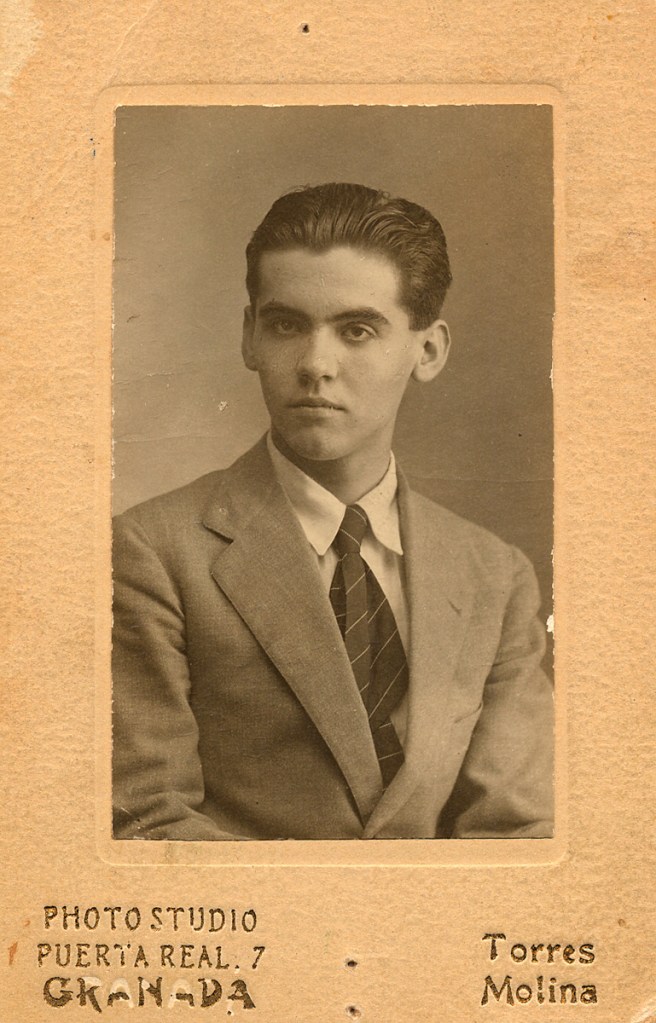
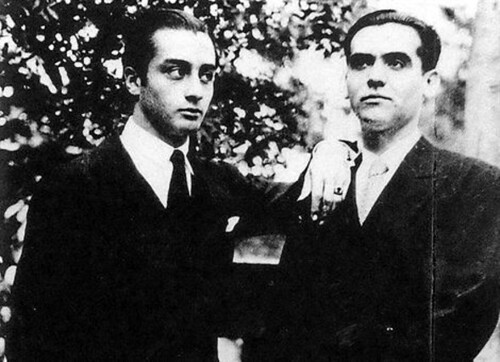
Federico García Lorca (1898–1936) This year marks the 90th anniversary of Lorca’s death. He was, by all accounts, a striking man: Iberian elegance, cultural poise, a magnetic presence. Thick, dark curls; penetrating eyes; a face alive with expression. Today, Lorca is recognised as one of Spain’s most important poets—his reputation only sharpened by the brutality of his death at just 38.
In the early days of the Spanish Civil War, Lorca was arrested in Granada, imprisoned, and within days taken to a roadside outside the city and shot by forces aligned with Francisco Franco. The exact reasons were never formally clarified. The regime’s official statement reduced his execution to a bureaucratic fiction: he had died of “war wounds.”
His body has never been recovered, despite repeated attempts to locate the mass graves into which victims like him were cast. Ian Gibson’s The Assassination of Federico García Lorca remains one of the most thorough investigations into the circumstances of his death, suggesting that his sexuality—at least as much as his politics—made him a target. One member of the execution squad reportedly boasted of firing “two bullets into his ass for being a queer.”
Lorca’s romantic life remains partly obscured, but figures associated with him include sculptor Emilio Aladrén Perojo, composer Manuel de Falla, and writer Juan Ramírez de Lucas. Whether he shared a romantic relationship with Salvador Dalí is still debated.
Across his work, Lorca returned again and again to the tension between desire and repression. Male longing appears coded, fractured, and often veiled—its intensity heightened precisely because it could not be spoken plainly within the society he inhabited.
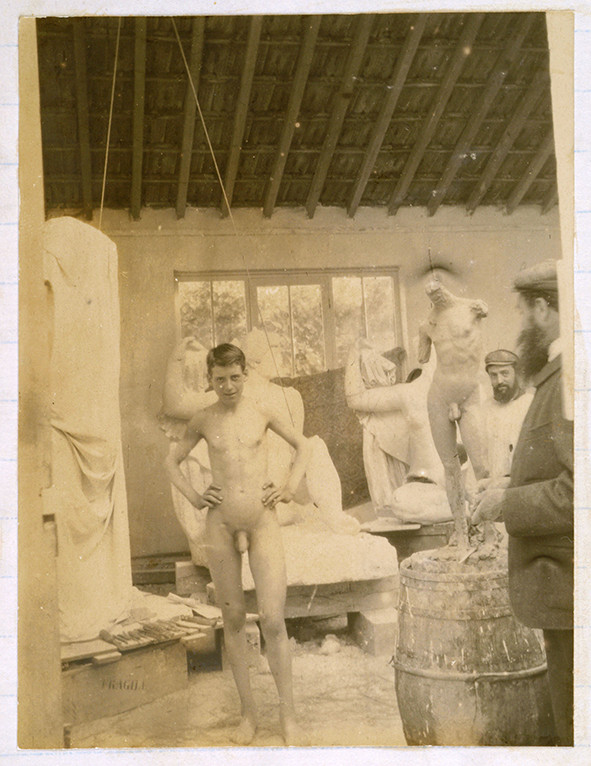
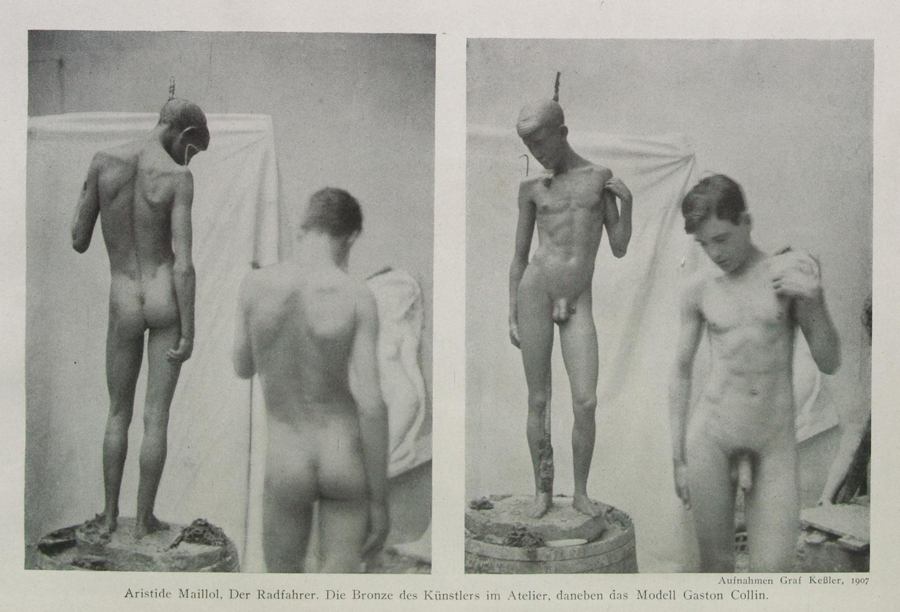
Gaston George Colin (1891–1957), by most accounts a young cyclist, perhaps even a jockey, and later a pilot—but certainly a chauffeur to Harry Graf Kessler, the well-connected German diplomat, writer, and patron of modern art.
Kessler’s diaries reveal that he began a relationship with the seventeen-year-old in 1907, hosting him both at the family castle and during stays in Paris, Rome, and Denmark.
While in Paris that same year, Kessler asked his friend Aristide Maillol to create a life-sized marble statue of the young man. He was said to have wanted a likeness of Narcissus, inspired by ancient Greece, which he saw as a culture where relationships between men and youths were openly acknowledged.
The outcome, however, was not a marble statue but a smaller bronze work, The Racing Cyclist (Le coureur cycliste), capturing a classical ideal of beauty and strength.
Maillol, who rarely worked with male nudes, struggled with the piece—his efforts complicated by Kessler’s constant attention to detail. The sculpture was not cast until early 1909, and Maillol remained dissatisfied, noting its unusual proportions, particularly the enlarged head and penis.
It was eventually exhibited in the French pavilion of Decorative Arts at the Turin Universal Exhibition in 1911.
Following the Nazis’ rise to power in 1933, a fearful Kessler left Germany for Paris, later moving on to Mallorca and finally to southern France. It was only in 1985, when his early diaries were discovered in a bank vault, that the extent of his fixation on Gaston Colin came to light.
Four casts are known: Kessler’s original is now held at the Kunstmuseum Basel, while others are in the Museum Folkwang, the Musée d’Orsay, and the Bavarian State Painting Collection in Berlin. Additional versions may exist, as Maillol is believed to have produced a second edition around 1925.
On finding that Joseph (or Sam) was queer…
It turns out Joseph lied to me. I found out that the flirty boy with the rolled sleeves, the nice arse, and the quiet smile is called Sam. And he hasn’t served me coffee for weeks. I still go in every day, but he’s disappeared—off studying, or back to his girlfriend. Then on Monday, he came in as a customer, joking with the staff behind the counter. A good-looking guy followed him in. Sam touched him lightly on the arm, and the guy patted him on the arse. They left holding hands, and I had to accept that Sam wasn’t available to me anymore.
It was an emotional snap. The interest hadn’t been given time to fade; it just hit a wall. That turns into jealousy very quickly—why them, not me? Seeing that physical ease between them—the touch, the closeness—intensified everything. It wasn’t simply that he was taken; it was seeing what that looked like. That’s what stung more than I expected. I told myself not to inflate things beyond what they were. I hadn’t even been rejected—just abruptly cut off.
I had to stop idealising someone I’d barely interacted with, especially once they became unavailable. That was the truth of it: there had been no real interaction. My mind had filled in the gaps, making Sam more significant than he ever really was.
But there was still that lingering feeling—a symbol the mind clings to—a sense of missed opportunity.
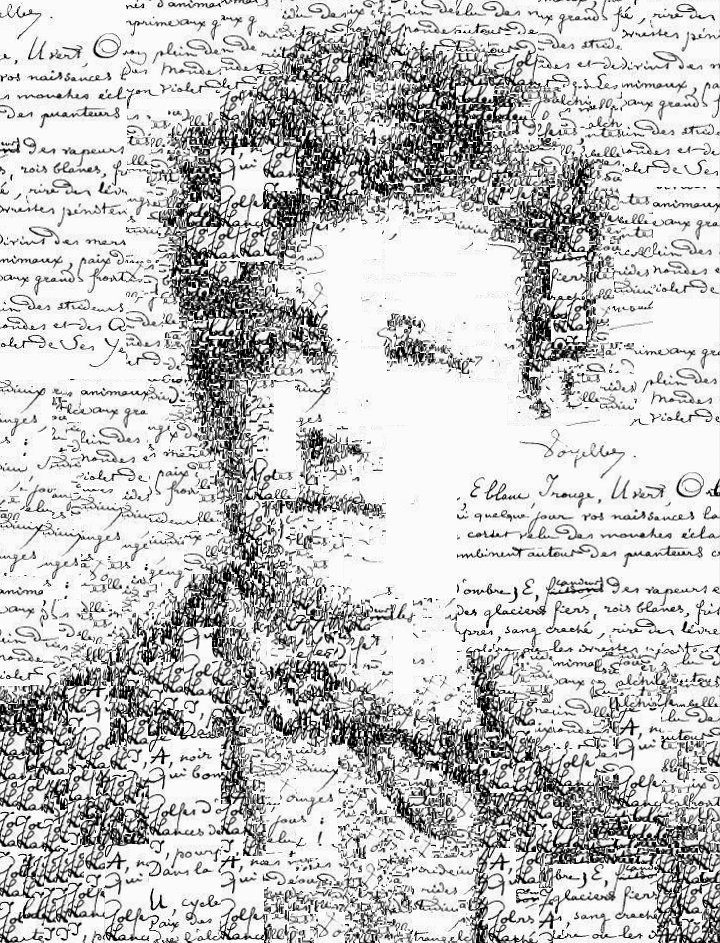
On discovering Arthur Rimbaud’s homoerotic poem…
Stupra II (1871) Our buttocks are not theirs. I have often seen people unbuttoned behind some hedge; and, in those shameless bathings where children are gay, I used to observe the form and performance of our arse.
Firmer, in many cases pale, it possesses striking forms which the screen of hairs covers; for women, it is only in the charming parting that the long tufted silk flowers.
A touching and marvellous ingenuity such as you see only in the faces of angels in holy pictures imitates the cheek where the smile makes a hollow.
Oh! for us to be naked like that, seeking joy and repose, facing one’s companion’s glorious part, both of us free to murmur and sob?
Arthur Rimbaud (1854-1891) The Latin ‘stupra’ is plural for stuprum, which means an obscene and/or illegitimate copulation. Because of their explicit homoerotic content, these poems were not published during Rimbaud’s lifetime. They first appeared in a private, limited edition in 1923.
On watching a film that seemed familiar…
There was a similarity — a flicker of déjà vu. It softened the boundary between experience and memory, as though something new had already been lived. For a moment, my mind misread the present as the past, conjuring a false familiarity. Certain scenes felt strangely recognisable, as if they belonged to me already.
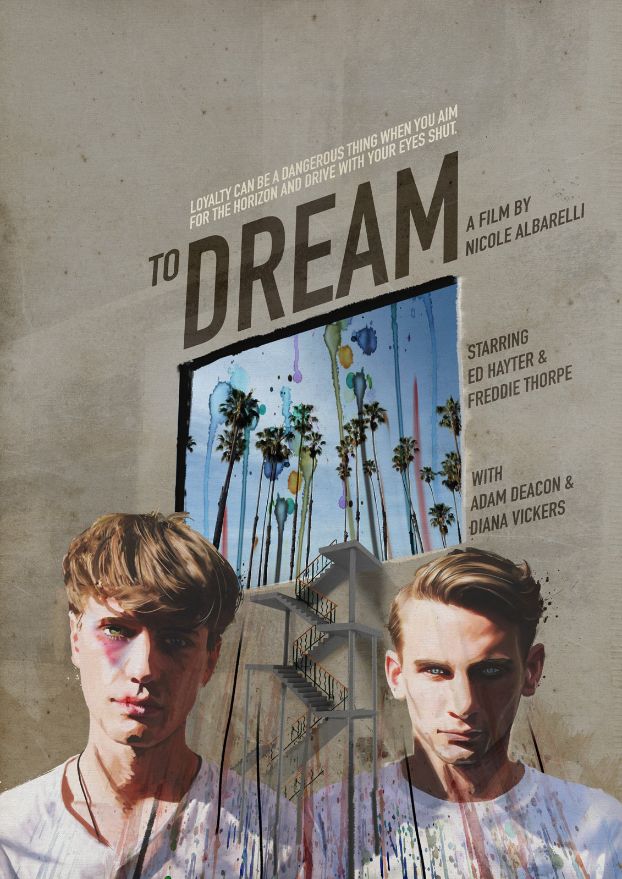
To Dream is a story of friendship — hopeful, intimate — set against a harsh inner-city backdrop. Best friends Luke and Tommy live in an unforgiving corner of London. Having dropped out of school and still at home, they find themselves dreaming of what might come next. Their shared ambition has always been escaping: to leave London’s grime behind for an imagined American paradise. It is a dream that has carried them through the realities of abusive homes, and one that binds them tightly together. But as family tensions worsen, and Luke’s new love interest begins to unsettle their bond, loyalty pushes Tommy toward a decision that will alter their lives forever. (Winter Film Festival – New York City).
Change the setting, reshape the structure — the dynamic remains. Four years on, as I approached the final instalment of Perfectly Hard and Glamorous, this little-seen B-movie felt like an omen.
Then I realised what I had missed: the father. There is always an abusive father. Somehow, I had forgotten him.
To Dream. United Kingdom (2026). Directed and produced by Baltimore-born, London-based Nicole Albarelli. Starring Freddie Thorp, Edward Hayter, Adam Deacon, Frank Jakeman.