Tag Archives: Reading

The Grudge Against Glory

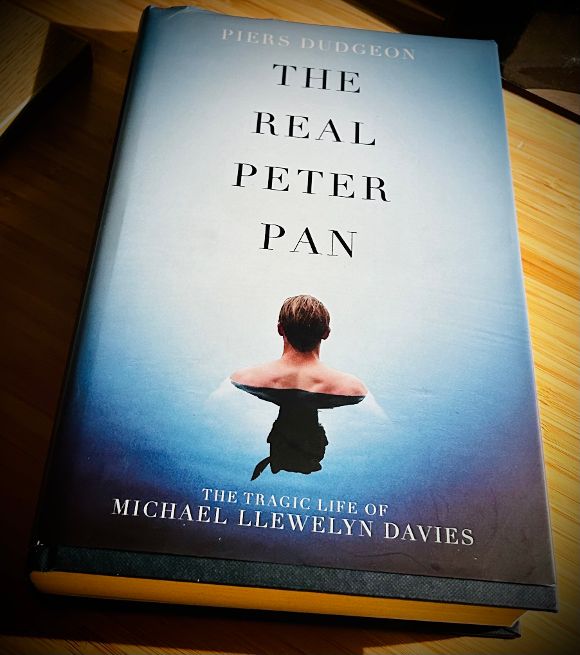
Fate is inscrutable, chance is unreadable, and circumstance is unfathomable. No one knows what he may one day suffer. The private sorrows of Sir James Barrie illustrate the insecurity of mortal happiness. Life has bestowed on him fame without stint and wealth without measure. All over the world his plays are spouting money as a gusher spouts oil. Riches pursue him day and night. He cannot escape from the golden rivers. But fame and fortune do not exempt him from the furtive blows of fate. Of his four foster-sons, Michael Llewelyn Davies was the best beloved. On the eve of his twenty-first year he perishes like Milton’s Lycidas. The witless unreason of the tragedy shocks us. Is there a grudge against glory, a spite against fame, a vendetta against dazzling fortune? Is there immunity in obscurity?

– Sunday Express – 22 May 1921


Boys Burn Quiet: Open, Heaven

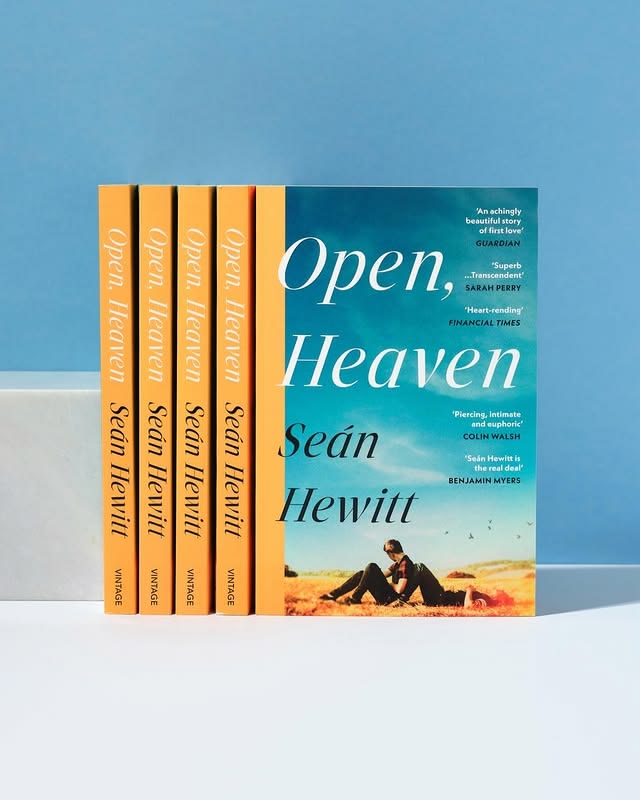
Open, Heaven: Seán Hewitt (2025)

“Now, this nightly ritual had been my secret for years. In my mind, it was linked somehow to that scene – the distance, the watching but never touching. I fixated only on those I thought would not reciprocate, but I could imagine the moment of pre intimacy when they would give in and a secret would be made between us. I understood that this was what desire was: wanting something I could not have, dreaming of holding it. But even then I knew there was a risk, a contradiction: if, by some chance, the object of my desire desired me, I had the sense that the desire might evaporate altogether. So, although there was this burning, urgent thing, I could not exorcise it, and my imagination went into overdrive under restraint. There was never a release, never a completion that didn’t feel soiled and voyeuristic.”

Joshua handed me a pristine paperback. “Read this,” he said. “I think you’ll like it.” The book looked untouched; seeing my hesitation, he added, “I enjoyed it so much I’m giving all my friends a copy.”

I don’t think I’ve ever known anyone do that, and I found myself wondering whether they could really afford such generosity.

But Joshua was right.

The novel is a debut from Seán Hewitt, better known until now as a poet, memoirist, and critic. He is also Assistant Professor in Literary Practice at Trinity College Dublin and a Fellow of the Royal Society of Literature. His first poetry collection, Tongues of Fire, won the Laurel Prize in 2021—the same year he published J.M. Synge: Nature, Politics, Modernism. His memoir, All Down Darkness Wide, followed in 2023, and then came 300,000 Kisses: Tales of Queer Love from the Ancient World; a second poetry collection, Rapture’s Road, appeared in 2024.

Which brings us to Open, Heaven, a debut that confirms him as an all-rounder.

It is, in a way, a love story without quite becoming one—an infatuation we hope will deepen into something more, though it never does.

James, a teenager, dreams of a life beyond his small village; his emerging desires threaten to unsettle his shy exterior. Then he meets Luke—unkempt, handsome, charismatic, and impulsive—sent to stay with his aunt and uncle on a nearby farm.

As the seasons pass, a bond forms between them, one that quietly reshapes their lives. Yet James remains uncertain of Luke’s feelings, and as summer draws to a close, he faces a choice: risk everything for the possibility of love, or let it slip away.

I have a weakness for bad boys, so it was inevitable that I fell for Luke—made all the more appealing by the fact that he turns out to be straight. I was less taken with James, who seems destined to spend the rest of his life wondering, What if I’d forced the issue? Though perhaps that’s unfair. He could just as easily have been me.

I suspect I’ll carry my own catalogue of missed opportunities. Memory has a way of softening the past, making it seem brighter, simpler—chiding you for not taking a chance. But it was never that simple.

Hewitt proves especially perceptive when it comes to these almost-relationships—the ones that hover on the edge of possibility but never quite materialise.

I finished the book still hoping, right up to the final pages, that something might finally happen between them. Afterwards, I read other readers’ responses; the consensus, unsurprisingly, was that it leaves an aching feeling.

The Avid Reader and Those Who Watched Him

Hollacombe Court was a typical new-build apartment complex just off the Uxbridge Road. Four six-storey blocks stood around a large courtyard, entered through a gated archway at one end or via doors at the base of each stairwell. It was elegant without pretension and suited young professionals who preferred life beyond the city.

Elian—meaning God has answered—was of Iberian descent, though born in Dartford, and he had never considered moving to Spain. He had arrived at Hollacombe Court that summer and quickly became known to residents whose windows overlooked the courtyard. In his twenties, he might easily have been called handsome, and his athletic build drew the curious attention of anyone in search of an eligible bachelor.

He spent most summer evenings in the courtyard, with its cream flagstones, raised flowerbeds, and central water feature. He was often found sitting or stretched across one of the dozen stone benches set into the planted borders. He seemed to favour the one nearest the fountain, where water slipped between the fingers of the Greek god Zeus and fell into a circular pool below. Whether any of the residents could have named the statue, however, was open to question.

This was how Elian came to the notice of those living at Hollacombe Place.

Most assumed he had finished work, eaten, and chosen to pass the remaining hours of the evening outdoors with a book. That, above all, was what people noticed. While others switched on the television, Elian could almost always be seen reading. What he read remained a mystery, as few residents used the courtyard, leaving him—more often than not—undisturbed.

To those who glanced out, Elian had become a fixture. His presence lent a quiet reassurance. If, by chance, he was absent, it stirred a faint unease, as though something were amiss. Many had even taken to checking for him several times over the course of an evening. When darkness fell, it became customary to watch him close his book and make the short walk back into his block, though no one knew which apartment was his.

But there were those at Hollacombe Court who watched Elian for more selfish reasons. Had you challenged them, they would have denied it, yet it was hard to ignore that they had fallen in love with him—his Mediterranean looks, olive skin, and thick, black hair. On hot, humid days, they took particular pleasure in seeing him in football shorts, his six-pack on show, his long, smooth legs stretched out before him.

Elian enjoyed those evenings because he was an avid reader, with a particular fondness for novels, and for that reason he never felt lonely. He could summon characters from any book he had read; they were his companions.

His favourite writers were Lee Child, Alan Hollinghurst, and Colm Tóibín, and he often imagined himself as the protagonist in their novels. He had also discovered the work of André Aciman and Tim Parks, whose books stirred his imagination in different ways. When he finished a novel, he placed it carefully on his bookshelf, arranged by author and in order of publication. The classics, however, held little appeal; he found them too dour and overly wordy for his taste.

But reading aside, there was another reason Elian liked to sit in the courtyard.

Reading in full view of so many people made him feel connected. He knew they watched him, desired him even, and he welcomed the attention. He wanted to belong to a society that saw only his outward form; his need for acceptance was universal. Being seen confirmed his existence and importance, satisfying a deep psychological need for belonging. At times, he wondered whether this desire to be observed was a way of compensating for a lack of inner confidence.

And he was able to do this without interference. He liked that people looked at him yet respected his solitude. This paradox became a careful balance between the social need for validation and the personal need for quiet, self-reflection, and protection. He wanted the thrill of being in the spotlight, but also the safety of anonymity. When alone, Elian was answerable to no one, and in that freedom he could exist without fear of judgement.

And so the summer passed in a kind of quiet contentment. Elian with his books, and the curious residents of Hollacombe Court satisfied to watch over him.

Stolen Words – The Camouflage of Virtue


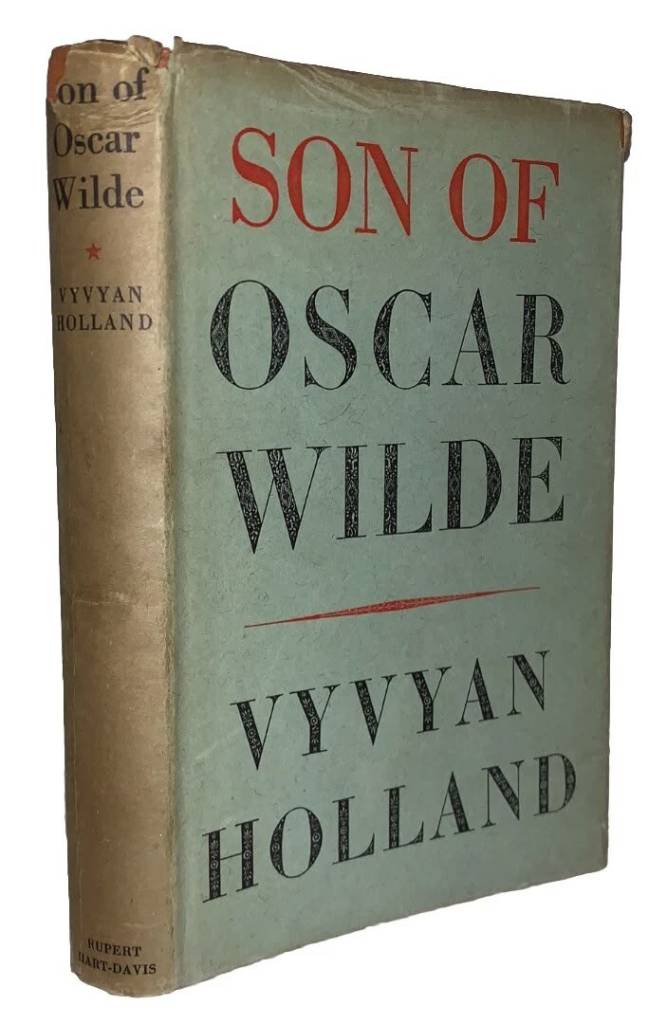
“The self-righteousness of that age was really camouflage to disguise its own hypocrisy, and the people who were loudest in their condemnation of my father were often those whose own lives could least bear investigation.”

– Vyvyan Holland writing in Son of Oscar Wilde. Published by Rupert Hart-Davis (1954)

And I can’t help thinking that the same still applies…

Stolen Words: I was fixated on their points of contact


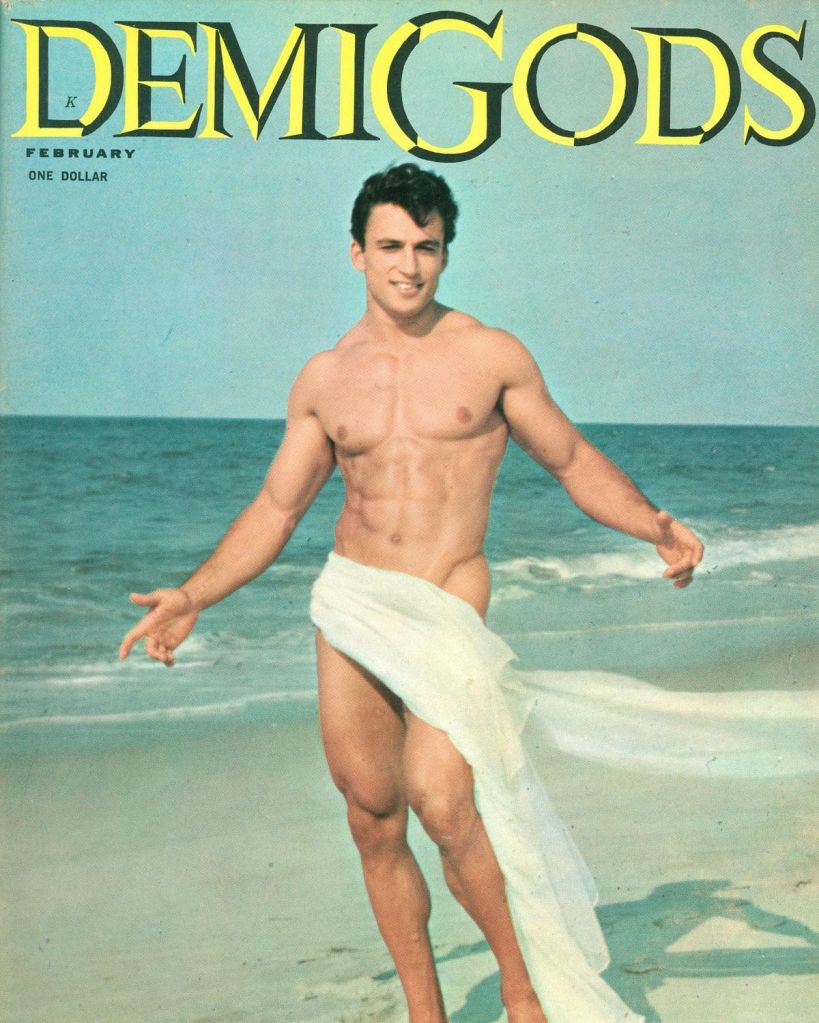
“I was probably eight or nine, a child of the postwar boom, and on vacation with my family at the Jersey shore. We had stopped at a convenience store on the way home from a day at the beach, and I was pawing through the store’s magazine rack while my mother shopped. I don’t remember picking up the magazine, but it opened to a page which stopped and startled me. Two mostly naked teenagers were posed for a picture titled “Victor and Vanquished,” one slung over the other’s shoulders—the spoils of a heated but not unfriendly war. Both boys were smiling, exhilarated, but I was fixated on their points of contact, especially where the naked groin of the Vanquished touched the Victor’s bare shoulder. What did that feel like? What could that feel like? Thinking about it made me dizzy and more aroused than I realized.”

Vince Aletti – The New Yorker – May 2025

My Own Private Idaho – River Phoenix doesn’t just act – he drifts, aches, and unravels… and now we know that it was real

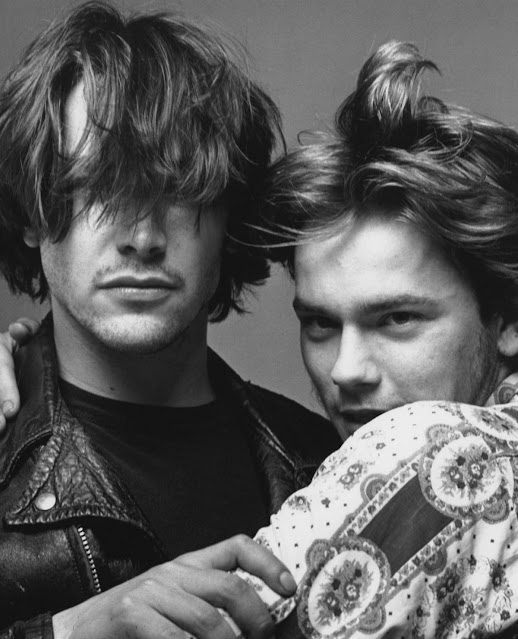
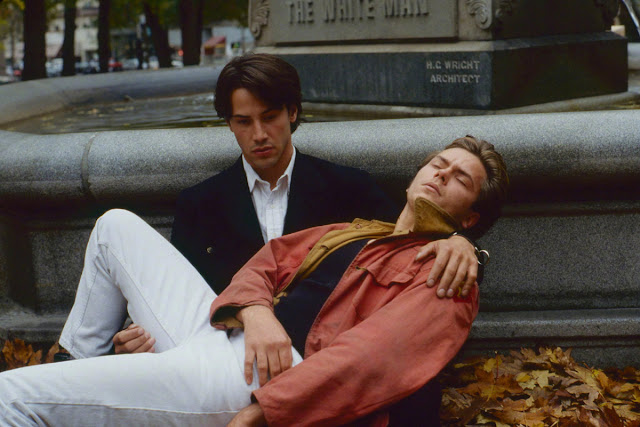
My Own Private Idaho. Keanu Reeves and River Phoenix. Promotional still (1991)

Scott: I only have sex with a guy for money.

Mike: Yeah, I know.

Scott: And two guys can’t love each other.

Mike: Yeah.

Mike: Well, I don’t know. I mean… I mean, for me, I could love someone even if I, you know, wasn’t paid for it… I love you, and… you don’t pay me.

Scott: Mike…

Mike: I really wanna kiss you, man… Well goodnight, man… I love you though… You know that… I do love you.

***

Watched ‘My Own Private Idaho’ for the first time. Charlie asked me if I’d seen Keanu Reeves recently because he looked old. But he was 61-years-old. River Phoenix still looks exactly the same… but that was how he left things. I remembered that I’d mentioned Phoenix before… but in one of my stories, he had appeared as a ghost. 

It wasn’t going to be called ‘My Own Private Idaho’… better than ‘Blue Funk’ or ‘Minions of the Moon’… and named after a B-52s song. Inspired by Shakespeare’s Henry IV plays… Prince Hal and Hotspur and Falstaff… but here it was Scott Favor, privileged bisexual, Mike Waters, narcoleptic gay hustler searching for his mother, and Bob Pigeon, coke-dealing chickenhawk. Gus Van Sant: “My films are usually about relationships. I think you make films about things you lack.”

I can’t stop thinking about River Phoenix because, I guess, I’m in love with yet another dead man.

1987… “Run to the rescue with love and peace will follow.” – River Phoenix.

1989… Star burning bright. Beautiful. Lightness. Creative. Camera object.

1991… Indie moment. ‘My Own Private Idaho’. Realism to fantasy. Challenging the norm. Self-destructive attitudes. Dark themes. Cool culture. Downbeat hustlers. Wanderers. A chance to become an adult actor. Gus Van Sant simply being Gus Van Sant. 

Keanu Reeves laying in bed playing with his nipple. What River Phoenix needed after making this movie – a bath, a shave, an exfoliating facial scrub.

“How do you see yourself fitting in with younger Hollywood acting?” (A sweet voice). “I don’t see any of them in the perspective or in the limelight of Hollywood. I really don’t ever want to get that objective or self-consciousness of my place in this world of showbusiness.”

1993… LA nightclub. Halloween. Music blasting. Sitting on a couch. Tired. Intoxicated. Skinny. Bad skin. Ticking time bombs. Heroine. Cocaine. Morphine. Marajuana. Valium. Cold remedies. Addiction is an open secret here. And then the star exploded all over the pavement. Never did anyone move from casual drug use to death so quickly. The night that Fellini died – ‘A director’s sweet life. An actor’s brief life.’

Retrospective.

2025… ‘My Own Private Idaho’. Turning point. A troubling effect. Midnight rock sessions. Alcohol. Uncontrollable drug use. Crystal meth. Hooked. No chance of going back now. Progressive and fatal. Like ‘The Little Shop of Horrors’…if you go too near to the plant it will eat you. The best performance… but from now on he didn’t care enough about himself to look after himself. What about those he left behind? Nobody did anything to help him when he was alive… guilt… and lasting sadness.

Have a nice day!

My Own Private Idaho. Keanu Reeves and River Phoenix. Promotional still (1991)
My Own Private Idaho. Keanu Reeves and River Phoenix. Movie poster (1991)

Stolen Words / The Beautiful Boy has been absent from our field of vision

Klein Youth – Charlie Marseilles

“We speak of the body of the young man at his fullest development, just on the brink of maturity, a young man who has retained some of his original innocence. The model for the classic Greek was the young athlete, from an aristocratic family, who competed in the nude in the original Olympic Games. It is not until later that the natural male form was used as a medium for the expression of godliness, an idea that later became the basis for a popular religious sect. A look back through the twentieth century will demonstrate just how long the Beautiful Boy has been absent from our field of vision. Examine the popular male images of the past 60 years. How many of them have been both young and beautiful?”

Helen Ziou – Valley Advocate Amherst – April 1984

Back off – I’m not that person now

The soul of a good time. But something changed. I’m not a social person anymore, but everybody wants me to be. They talk shit all night. I want to say, “Please go away, I prefer my own company now.”

To die will be an awfully big adventure

Michael Llewelyn Davies (1900-1921)

The script didn’t work. We looked at it for hours… days even… until somebody said… “Ditch the Peter Pan shit, because everybody knows the Peter Pan shit already… focus on Michael, and only Michael, a handsome son of a bitch who Peter Pan would have fucked anyway.” 

Stolen Words / The latest thing from Harvard

Image: Irina Biatturi

“Don’t fail to drop in to tea tomorrow old girl, or you’ll miss the treat of your life. A new beauty, my dear, the latest thing from Harvard. You may have read of him – Harold Halfseas. Has chestnut hair in crisp like waves all round his forehead; oval face, pure Grecian profile, marble and rose complexion and a magnificent figure. You’ll come? Thanks, darling! I thought you would.”

– From the World News – Columbus, Ohio – 2 December 1923