Tag Archives: gay fiction

The David Problem: Notes from a Life

The Slow Invisibility of David

There was a conversation David once had with his mother when he was about fourteen. He’d complained about Bank Holidays—that there were too many of them. As mothers do, she agreed. Whatever had prompted the outburst had long since slipped from memory. He was a schoolboy and should have welcomed the extra day off, but Bank Holidays irritated him. They still did.

In truth, they had little relevance to his life. A Monday would be no different from any other. What he preferred were the ordinary ones, when he could go about his business while everyone else worked. Not so the May Day Bank Holiday. If the weather held, the parks would be crowded, and the small café he visited each afternoon would be overrun with snotty-nosed kids.

That, at least, was still to come. For now, David was spending Sunday evening with Joshua and his friends at the King’s Arms, despairing of the whole scene. Bank Holidays drew out all the idiots who would otherwise be glued to whatever rubbish Netflix was serving. A day off work gave them licence to get drunk and be insufferable.

There were advantages, he had to admit. The students were out—released from lectures, granted a day to sleep off the previous night. David liked students. He liked young men who still had their lives ahead of them, who could do things they were too young to regret in the morning.

Joshua noticed his look of desperation.

“At what point does a chicken hawk become a pervert?”

“When he turns sixty-three,” David replied. Only the week before, he had celebrated his sixty-second birthday, and in his mind the label did not yet apply.

Still, he felt uneasy. The handsome boys no longer paid him any attention. They were absorbed in their girlfriends—or boyfriends—and David had become just another older man, regarded, if at all, with a kind of pity.

“Do you see it, Joshua? Do you see that I’m slowly becoming invisible?”

“I fail to see why you’d be interested in anyone else when you should be perfectly happy with me.”

David chose his words carefully. “That I can’t deny. But there is such a thing as window-shopping.”

Joshua turned back to his friends and drifted into a conversation about Madonna and Rosalía. David was tempted to tell them that Madonna belonged to him—that he had grown up with her music, that she was older than he was—but the argument would have been futile. Madonna had long since transcended age.

Once, David had appeared on a television programme with her, shortly after she released her first album—around 1983. He had been introduced as an exciting young writer. She had liked his spiky hair and remarked that he was handsome. For a fleeting moment, he had wondered if she might be coming on to him, though that would have led nowhere. If only, he found himself thinking now.

Joshua’s friends accepted David as his partner, but they had no idea who he really was. It had always been his rule: tell no one he was a successful author. He preferred to be taken for the stereotype—a ‘sugar daddy’ with too much time and nothing to do. Had he told them the story about Madonna, they would have smiled politely and dismissed it as the invention of a fanciful old man. And David, in turn, would have felt guilt at not having anticipated this phase of life—the gradual slowing, the dimming, the uneasy business of growing old.

But David wasn’t that old.

It was a conversation he returned to often with Joshua—usually at Joshua’s instigation, lamenting that he would turn forty in October. David could never quite accept the premise. If anyone had the right to complain, it was surely him. He was still good-looking, his hair thick and intact, though he had to admit he’d filled out around the waist.

The trouble was that David still thought like an eighteen-year-old, without quite acknowledging that age catches up with everyone. While his contemporaries were beginning to slow down, even contemplating retirement, he resisted the idea that anything essential should change simply because the years had passed.

There was also the matter of money.

The royalties from his novels had dwindled, and without a pension sufficient to sustain him, he found himself uneasy about the future. Joshua’s artwork, by contrast, was gaining attention; David suspected he was now earning more than he did. And yet it was still David who provided the house, who carried the financial weight of their life together. Would Joshua care for him when he grew old? An outsider might have answered yes without hesitation, but David was less certain. The age gap unsettled him. Once Joshua was secure, it seemed entirely possible he might choose someone younger, someone more in step with his own life.

Had David voiced these fears, he would have discovered that Joshua had no such intentions. He felt a genuine loyalty, even a debt, and was entirely content in the relationship. The thought of leaving had never crossed his mind. But the unease remained, quietly lodged in David, impervious to reason.

David, too, had grown bored with writing novels. It was becoming harder to find original ideas, and harder still to bring them to a satisfying close. Where once he might have produced two books a year, the pace had slowed; he was fortunate now if he managed one every couple of years. Research, he found, gave him more pleasure than the writing itself. He could spend weeks preparing—filling notebooks with observations and plans—only to discover, when the time came, that the inspiration to shape them had quietly deserted him.

At times he compared himself to Arthur Rimbaud, who abandoned poetry at twenty in favour of a life of action, travel, and trade—if selling coffee and firearms could be called that. Rimbaud had turned away from literature altogether, declaring a need to be “absolutely modern”: action instead of words. After his turbulent and violent affair with Paul Verlaine—an episode that ended with a gunshot wound and a prison sentence—he had likely grown weary of Parisian literary life and the weight of his own notoriety. David sensed a kinship there—though Joshua, at least, had not shot him in the hand—and conveniently overlooked the fact that Rimbaud had been forty-two years younger when he walked away.

It was not lost on him that Rimbaud’s true fame had come only after his death. During his brief career he had been known, certainly—an “enfant terrible” in certain Parisian circles—but his legend was constructed later, through publication and the romantic myth of his life. David found something both comforting and unsettling in that thought.

Whenever he considered Rimbaud, he also thought of Leonardo DiCaprio, who had played him so strikingly on screen. David’s own life had, at moments, been just as scandalous—perhaps more so—but he could not imagine anyone wanting to turn it into a film. And if they did, who, exactly, would be cast to preserve him in youth?

His publisher had offered another, more immediate concern. It had been framed as a warning: reputation alone would not be enough, nor would it guarantee a living. There were new forces at work now. AI was coming, the publisher had said, and for writers it would prove not just a novelty, but a threat.

After a life shaped by “what ifs,” he found himself waiting for the great comeback—if it ever came at all.

He became aware, with a faint jolt, that he had drifted out of Joshua’s conversation with his friends and no longer had any idea what they were talking about. He sat with his drink, half-listening, when a young couple approached, each carrying a glass.

“Do you mind if we sit here?”

David didn’t and shifted to make room. The boy caught his attention immediately—shortish, slim, almost theatrically handsome, with dark hair that fell into something wild and a small cross hanging from one ear. The girl was taller, darker, her face sharply drawn. She might have been strikingly glamorous, if not for the absence of make-up and the careless way she wore her hair. There was something unkempt about them both, a deliberate kind of disarray—grungy, even—which David found compelling.

He felt himself wavering between Joshua and his friends and these new arrivals, uncertain where to place his attention. Had he been honest, he might have admitted to a quiet jealousy—of their youth, their ease, the sense of life still gathering around them.

I’ll write a play, he thought suddenly. I’ll leave London, go somewhere warm, somewhere bright. The idea amused him even as it formed. There was something faintly ridiculous in it—but then, he had always had a weakness for the dramatic.

The young man nodded to David, then lapsed into silence. Neither of them seemed inclined to speak, and the quiet between them grew dense. Had it not been for David’s interest in the boy, he might have left—retreated to the safer promise of a comfortable bed and a good book.

The pub had filled quickly; the bar was now three deep with people waiting to be served. David was nearing the end of his drink and had no desire to join them. Again, the thought of an early night presented itself as the sensible option. But the couple intrigued him—especially the boy, and the curious fact that neither of them seemed to speak to the other. Joshua is right, he thought; I am turning into a pervert.

His days, lately, had been taken up with preparations for the Wilhelm von Gloeden exhibition, and with the uneasy awareness that the photographer was now widely regarded as reprehensible. He thought, too, of Baron Corvo, that notorious writer who had made little effort to disguise his vices. Would he be judged in the same way, after his death? The idea unsettled him, though he could not quite say why—he had done nothing, after all, that he considered wrong.

“Do you fancy my boyfriend, or something?”

David started; he hadn’t realised the girl was speaking to him. He looked at her, puzzled.

“You’ve been sitting there staring at him ever since we sat down.”

“I was thinking, that’s all.”

“Jess,” the boy said quietly, “don’t make a scene.”

Fucking kids, David thought—always on the brink of an argument. And yet, perversely, he liked the boy more for it.

“Well, stop staring at him,” she said.

The boy rose, lifting his empty glass. “I’m going to the bar. Same again, Jess?”

She nodded. David braced himself at the prospect of being left alone with her, but the boy had barely taken a few steps before turning back.

“Can I get you a drink, fella?”

The offer caught David off guard. “Yes, thank you,” he said after a moment. “A white rum and tonic, please.”

The boy disappeared into the crowd. For an instant, David felt a childish urge to turn to Jess and stick his tongue out at her—but he resisted it, not least because she seemed almost to tremble with irritation.

“Have you been together long?” he asked.

“Six months,” she replied sharply.

“You make a very nice couple.”

“We are.”

Within seconds, the boy was back, three drinks in hand.

“How did you manage that?” David asked.

“I don’t hang about,” he said with a grin. “Push to the front and shout the loudest.”

“Thank you,” David replied, taking the glass. “What’s your name?”

“Harrison.” He offered his hand as he sat down, and David shook it.

David became aware that Joshua had noticed. He was watching the three of them with a faint, unmistakable suspicion. David found that he rather liked it—a small reassurance that Joshua, too, could feel jealous when something threatened him. He chose to ignore the look, and before long Joshua was drawn back into conversation with his friends. There would be questions later; David would answer them with an air of innocent mystery.

“It’s busy,” Harrison said, by way of small talk, as though waiting for something more to take hold. Jess said nothing, merely sipped her drink. David nodded, the only one to acknowledge him.

Writers, he thought, are curious by nature. They ask questions. He knew it would irritate Jess further, but he had not come this far in life by holding back. A trace of his old arrogance returned.

“Tell me about yourself, Harrison.”

The moment the words were out, he realised he should have said yourselves. But he hadn’t—and, privately, he was glad of it.

“Not much to tell,” Harrison said, though something in his eyes suggested otherwise.

“What do you do?” David pressed.

Harrison hesitated, then gave a small, crooked smile. “Do you really want to know?”

David nodded, leaning forward slightly.

“The truth is…” Harrison paused, as if weighing the effect of it. “I’ve just got out of prison.”

It was the sort of confession that might have unsettled most people. David, however, took it in stride. He felt, instead, a flicker of interest—something sharper, more dangerous. I’ve always liked bad boys, he thought.

“Go on,” he said, unable to hide his curiosity.

Jess shot Harrison a warning look, but he only shrugged.

“It’s a long story,” he said. “Let’s just say drugs and knives were involved.”

“I don’t see you as the criminal type.”

“I’m just me,” he said with a shrug. “Things go wrong sometimes.”

“He’s a dickhead,” Jess cut in.

“What did you do?” David asked, ignoring her.

“I stole some drugs—top-grade ketamine. The blokes I took it from weren’t best pleased. They came after me, so… I stabbed two of them.”

“And you got caught.”

“Wasn’t difficult for the rozzers. CCTV and all that.”

The revelation should have landed like an apocalypse. Harrison was dangerous—there was no denying that—and yet he seemed almost to relish it. Still, there was something disarmingly guileless about him, as if the weight of what he was saying hadn’t quite settled. David found himself imagining Harrison in prison: too striking to go unnoticed. He was tempted—absurdly—to ask what it had been like.

“Forgive me,” David said, “but you seem too polite—too… innocent—for any of that.”

He felt Jess shift sharply beside him.

“For fuck’s sake,” she snapped. “He’s not right in the head. And if I’m not mistaken, you’re doing your best to get into his knickers.”

Harrison tried again to calm her. “Jess, shut up. He’s just being friendly.”

She turned on David. “What are you, then? Queer?”

David didn’t answer. He simply winked.

“It’s time we were going.”

Joshua was standing behind him. Whether he had heard any of it was unclear, though the timing suggested he had. David finished his drink and rose to join him.

“Nice talking to you,” Harrison said, almost apologetically, standing as well. “Sorry about… all that.”

David waved it off. “Think nothing of it. Enjoy the rest of your freedom,” he added, lightly.

Outside, while Joshua disappeared to the toilet, David lingered and realised he had enjoyed the encounter more than he ought to have. Another one bites the dust, he thought.

The door opened, and David hoped that it was Harrison who was coming after him. But things like that didn’t happen anymore. It wasn’t him. 

Boys Burn Quiet: Despised and Rejected

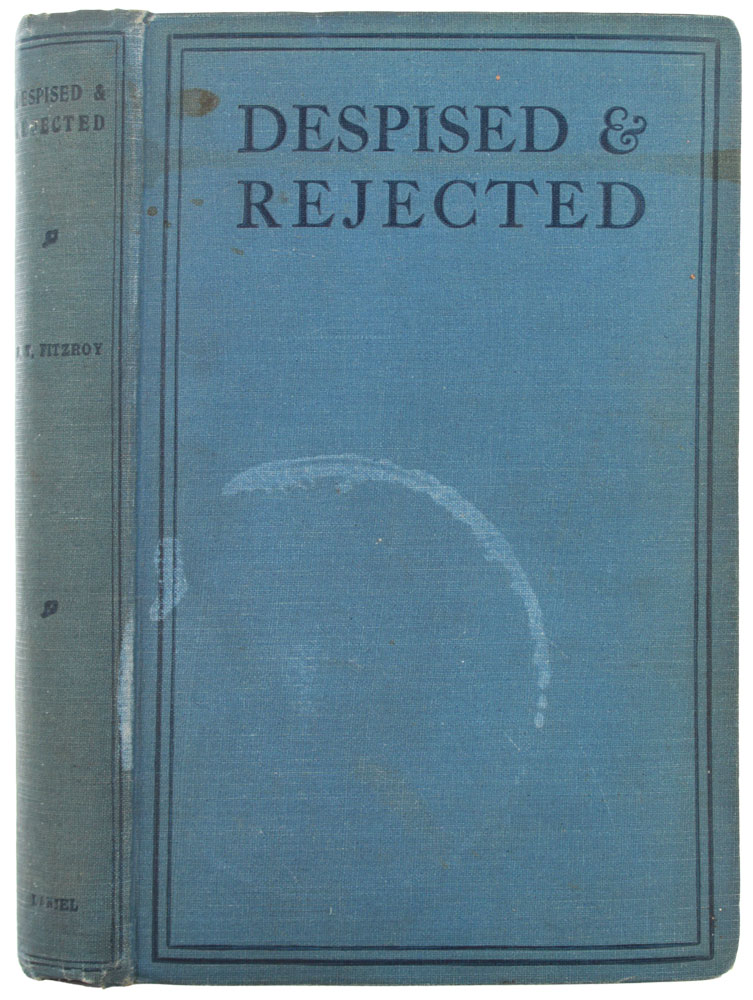
Extracts from Despised and Rejected by A.T. Fitzroy (Rose Allatini) (1918)

“Dennis thought again, with an odd pang of tenderness, how absurdly young he looked, and how his mother must love to stroke back the dark hair from his forehead. There was a photograph of her on the mantelpiece – a tired-looking woman with dull eyes and long slender hands. The father, from his portrait, was evidently thick-set, with side-whiskers and a self-assertive expression. A queer couple, they seemed, to have bred this finely-strung creature with the tanned face, sensitive level brows, and great black eyes that burned with a smouldering fire.”

“Dennis added in a lower voice, ‘I shouldn’t find one like you. I shouldn’t find anything half as good.’

Alan glanced up with a quick flush of pleasure. ‘You’ve liked meeting me, then… Ah, but you can’t have liked it half as much as I’ve liked meeting you. Think of it – after all this time and among these people, suddenly to come across another human being from the world I’ve almost forgotten!’

Dennis said half-aloud: ‘Consider the even greatest wonder of meeting someone from a world that one didn’t know really existed – that one had scarcely dared to dream into existence.’

Alan cried eagerly: ‘Then you’ll stop on here for a bit, won’t you? Give a poor starving wretch a chance!’

“It would be cruel to refuse Alan’s request. In spite of the magnitude of the task which the boy had set himself, and although he was engrossed in it heart and soul, he was still young enough to want his play-time, genuine play-time; not the play-time of which, he had told Dennis…. He was asking for play-time now, but Dennis knew that he must not yield; must tear himself away from a danger doubly dangerous, because, far from wishing to avoid it, he longed to succumb to it!”

***

These striking lines were considered daring in 1918 and, perhaps inevitably, Despised and Rejected was banned. Not, however, for the excerpts above, but for other seemingly innocuous lines:

“Isn’t this worth fighting for?” Dennis smiled as he answered the question: “It’s worth more than that; it’s worth – not fighting for!”

Despised and Rejected was published in May 1918, while Britain was still at war with Germany. It was first submitted to George Allen & Unwin, but Stanley Unwin rejected it on the grounds that the firm might be liable to prosecution. He instead suggested offering the novel to C.W. Daniel Ltd, which agreed to publish it.

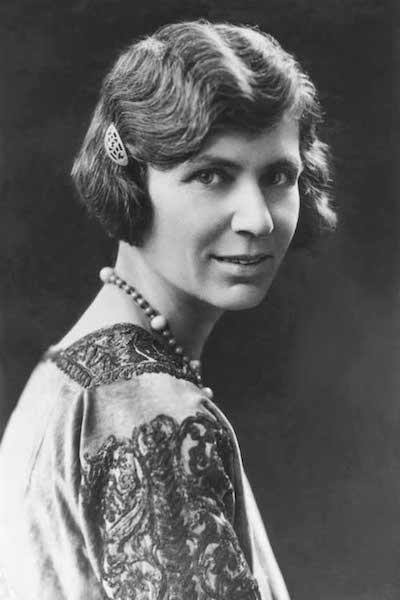
The book was written under the pseudonym A.T. Fitzroy, the nom de plume of Rose Allatini, whose first novel had been published by Mills & Boon in 1914. She was born in Vienna in 1890 to a Polish mother and an Italian father, but was raised in England.

The publisher’s publicity offered a revealing indication of the novel’s themes:

“A vigorous and original story, dealing in an illuminating way the two classes of people who are very commonly misunderstood – the Conscientious Objectors who refuse military service, and the so-called Uranians whose domestic attachments are more in the way of friendship than of ordinary marriages.”

When reviews appeared, critics focused less on the anti-war message and more on what they perceived as the novel’s treatment of homosexuality:

“The treatment of sexual matters is strictly decorous and there is nothing to attract the reader in search of sensationalist fiction, which is just as well, for the author’s standpoint is pitifully repellant.”

This, however, was mild compared to what followed:

“It is a beastly book, full of unnatural vice, and not written in the admirable literary style which gave a glamour to a certain book by Oscar Wilde.”

And,

“If the author wished to enlist our sympathy for those who are congenitally, sexually perverted, it could be wished that she had asked our pity and not for our admiration, and did not consider such persons as necessary for the production of the higher type, that which the whole considers to be wrong is not therefore proved to be right.”

And,

“A thoroughly poisonous book, every copy which ought to be put on the fire forthwith.”

In September 1918, Charles William Daniel, the publisher of Despised and Rejected, appeared before Sir Charles Wakefield at the Mansion House. He had been summoned at the insistence of the Director of Public Prosecutions for making unlawful statements likely to prejudice recruitment, as well as the training and discipline of those serving in His Majesty’s Forces, contrary to Regulation 27 of the Defence of the Realm Regulations.

Notably, the homosexual content did not appear to be the central issue; rather, it was the novel’s anti-war message that provoked concern.

Daniel pleaded not guilty, and the case was adjourned to allow Sir Charles to read the book for himself. When proceedings resumed in October, Sir Charles stated that the question of obscenity was not before him, though he did not hesitate to describe the work as “morally unhealthy and most pernicious.”

Penalties totalling £460 were imposed on Daniel, with the threat of imprisonment should he default on payment. In all, 1,012 copies of Despised and Rejected had been printed, of which 667 had been sold; the remainder were confiscated.

The Herald, which had previously shown sympathy toward Oscar Wilde, launched an appeal to cover the fine. It was oversubscribed, and among the contributors was Stanley Unwin—who had originally rejected the manuscript.

After this, Despised and Rejected fell into obscurity until it was republished by Gay Men’s Press in 1988.

Today, a first edition can command prices in excess of £1,000, and even later editions are often costly. However, modern readers can obtain a more affordable paperback edition, now republished under Rose Allatini’s own name.

In her personal life, Rose Allatini married the composer Cyril Scott in 1921, and the couple had two children. They separated in 1939, after which she lived with fellow writer Melanie Mills—an arrangement that has prompted comparisons with the character of Antoinette in Despised and Rejected.

Over the course of her career, Allatini published around 40 novels under several names, including A.T. Fitzroy, Mrs Cyril Scott, and Lucian Wainwright, though the majority—around 30—appeared under the pseudonym Eunice Buckley. She died in 1980.

Rose Allatini (1890-1980)

Boys Burn Quiet: Open, Heaven

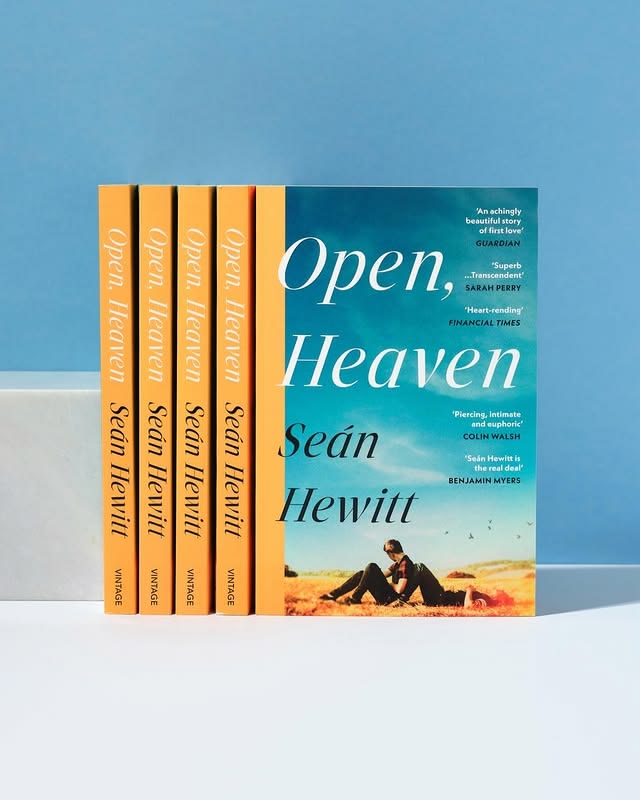
Open, Heaven: Seán Hewitt (2025)

“Now, this nightly ritual had been my secret for years. In my mind, it was linked somehow to that scene – the distance, the watching but never touching. I fixated only on those I thought would not reciprocate, but I could imagine the moment of pre intimacy when they would give in and a secret would be made between us. I understood that this was what desire was: wanting something I could not have, dreaming of holding it. But even then I knew there was a risk, a contradiction: if, by some chance, the object of my desire desired me, I had the sense that the desire might evaporate altogether. So, although there was this burning, urgent thing, I could not exorcise it, and my imagination went into overdrive under restraint. There was never a release, never a completion that didn’t feel soiled and voyeuristic.”

Joshua handed me a pristine paperback. “Read this,” he said. “I think you’ll like it.” The book looked untouched; seeing my hesitation, he added, “I enjoyed it so much I’m giving all my friends a copy.”

I don’t think I’ve ever known anyone do that, and I found myself wondering whether they could really afford such generosity.

But Joshua was right.

The novel is a debut from Seán Hewitt, better known until now as a poet, memoirist, and critic. He is also Assistant Professor in Literary Practice at Trinity College Dublin and a Fellow of the Royal Society of Literature. His first poetry collection, Tongues of Fire, won the Laurel Prize in 2021—the same year he published J.M. Synge: Nature, Politics, Modernism. His memoir, All Down Darkness Wide, followed in 2023, and then came 300,000 Kisses: Tales of Queer Love from the Ancient World; a second poetry collection, Rapture’s Road, appeared in 2024.

Which brings us to Open, Heaven, a debut that confirms him as an all-rounder.

It is, in a way, a love story without quite becoming one—an infatuation we hope will deepen into something more, though it never does.

James, a teenager, dreams of a life beyond his small village; his emerging desires threaten to unsettle his shy exterior. Then he meets Luke—unkempt, handsome, charismatic, and impulsive—sent to stay with his aunt and uncle on a nearby farm.

As the seasons pass, a bond forms between them, one that quietly reshapes their lives. Yet James remains uncertain of Luke’s feelings, and as summer draws to a close, he faces a choice: risk everything for the possibility of love, or let it slip away.

I have a weakness for bad boys, so it was inevitable that I fell for Luke—made all the more appealing by the fact that he turns out to be straight. I was less taken with James, who seems destined to spend the rest of his life wondering, What if I’d forced the issue? Though perhaps that’s unfair. He could just as easily have been me.

I suspect I’ll carry my own catalogue of missed opportunities. Memory has a way of softening the past, making it seem brighter, simpler—chiding you for not taking a chance. But it was never that simple.

Hewitt proves especially perceptive when it comes to these almost-relationships—the ones that hover on the edge of possibility but never quite materialise.

I finished the book still hoping, right up to the final pages, that something might finally happen between them. Afterwards, I read other readers’ responses; the consensus, unsurprisingly, was that it leaves an aching feeling.

My Week, For What It Was Worth

On chilling out in a Southern Italian town…

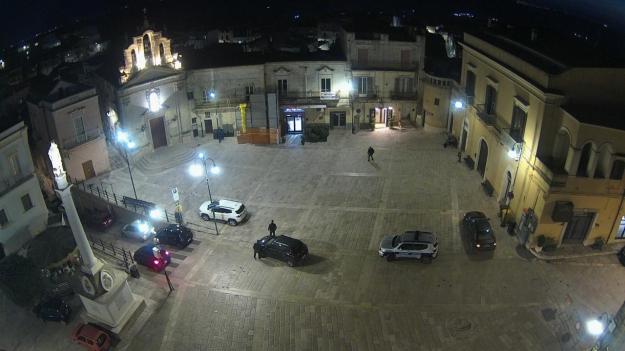
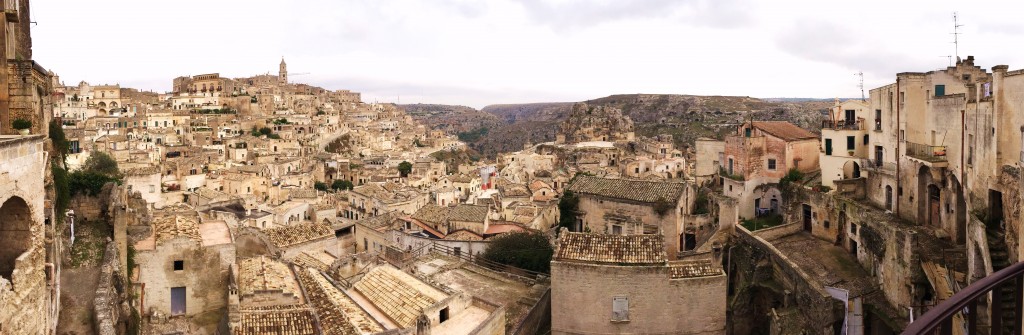
Montescaglioso is where a story ends. But I picked a week when the Italian weather was unwelcoming: fine by day, but extremely foggy by night. It is to be expected, because Montescaglioso sits high on a hill.

And then the winds came—strong Sciricco and Maestrale winds that brought heavy rain and quickly sent it away again. For this reason, the locals were happier to stay indoors until conditions improved.

Montescaglioso is where the heart beats a little slower.

Where there are people, I watch them… observing their character and capturing their mannerisms. Most are unaware that this old town was once inhabited by Greeks and Romans.

Some of them will end up in a story.

There is the young boy who is inconspicuous in the corner of a café; he drinks Coke with lemon and reads a paperback copy of Black Run by Antonio Manzini. Every few pages he stops and scrolls through his iPhone. He appears to have friends, but at that moment is bored with his own company.

Then there is the handsome boy, whom I watch with curiosity until it becomes something closer to obsession. He eats pasta with one hand, while the other rests inside his underwear, absent-mindedly playing with himself. He stops when he realises I am watching, and I am immediately disappointed. I want to tell him it is none of my business what he does, but that feels like a perverse thing to say.

The teenagers who congregate beneath the tall statue of San Rocco, the patron saint of Montescaglioso, in Piazza Roma. They are immaculately dressed in smart jeans, designer puffer jackets, and new trainers, because the nights are chilly. They talk for hours because there is nothing else for them to do. I do not understand what they are saying—they speak too fast—but they seem friendly.

The man who pulls up in a Grande Panda and sees me sitting on a bench outside an old building, its yellow paint faded with time. He speaks remarkably good English and educates me on the history of the town: the stories of local people who left at the beginning of the last century and moved to New York and Toronto. He tells me that Francis Ford Coppola is a second-generation Italian-American, born to parents of southern Italian descent. His paternal grandparents emigrated from Bernalda, which is only a few miles away, and the director now owns a hotel there.

The old man who walks his dog every evening and stops to talk. He points to the Chiesa di San Rocco and tells me it was badly damaged in an earthquake that struck Montescaglioso in 1827, and was later restored with the construction of stone vaults and a new façade. He tells me that ancient Greek tombs were once discovered beneath the piazza, and that the church once stood outside the town—there is the possibility of undiscovered graves beneath the surrounding houses.

I decide that there is much history to be found, but I am only interested in the present, where the young people appear permanently sun-tanned, animated, and possessed of an easy, unstudied allure that feels particular to this part of the world—especially to someone from northern Europe.

On lusting over Benjamin Voisin in The Stranger…

I know somebody who claims to have met French actor Benjamin Voisin. It may or may not be true because that person has a tendency to tell lies. But the story he tells is a good one because he said that Voisin smoked a lot, wasn’t completely fluent in English, but came across as a nice chap. And he was convinced that he was gay, but that bit has yet to be confirmed.

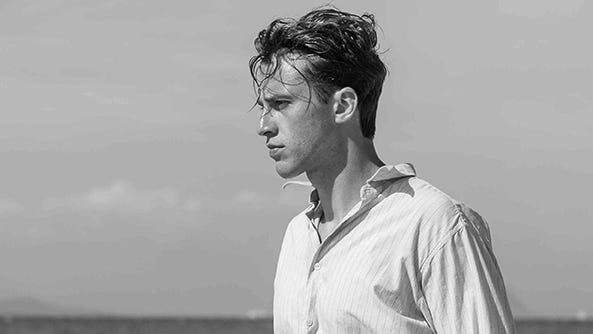
I first saw Voisin in François Ozon’s Summer of 85 (Été 85), and at the time I thought the director might have chosen a better-looking boy. But then came the trailer for Ozon’s The Stranger (L’Étranger), along with the publicity stills, and I kept finding myself asking, “Who is that good-looking guy?”

It has felt like an age waiting for The Stranger to arrive. Based on Albert Camus’ novella, it was originally shot in colour, though Ozon ultimately chose to release it in black and white—a decision that feels entirely right.

There is a scene in which Meursault (Voisin) kills an Arab boy. He studies the body on the ground—first the armpits, then the lips—before firing… several times. It’s one of Ozon’s familiar devices, turning something ostensibly straightforward into something quietly, disconcertingly homoerotic.

“I wanted to make everything erotic,” Ozon says. “The girls are erotic. The boys are erotic. The nature is erotic. Everything has to be erotic and sensual. That’s what I wanted. And the choice of the black-and-white [cinematography]was a way to show this sensuality in the world.”

If that wasn’t enough we see Voisin’s naked body a few times, a pretty bum that requires squeezing, and even get a glimpse of his manhood.

On coming upon an unwelcome adversary…

The boyfriend of the love of your life stands before you. What are you supposed to do? Granted, he’s good-looking. But he lays claim to someone who should be mine. For that reason, I can’t ignore everything that’s wrong with him. I want lightning to strike him dead. There is a solution to this jealousy—but it’s not one I dare to consider.

On reading an anecdote from Rufus Wainwright…
“What’s the best thing a cabbie has said to you?”

“Well, my handle on Uber is just the letter R, and I went into a cab once and the driver said, “R, what’s that stand for?” And I said, “Rufus.” And he said, “Oh, like Rufus Wainwright? I wonder what happened to him?” I just went along with it…”

As flies to wanton boys are we to the gods…

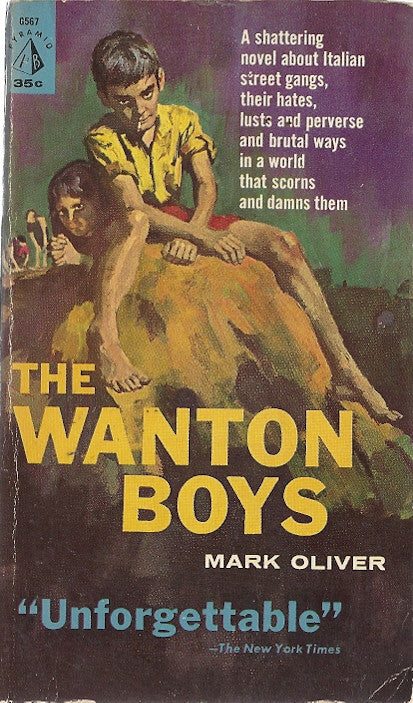
The Wanton Boys, Mark Oliver, 1959.

He was a thin, brown-eyed, sad-looking boy, one of ten children of a poor Italian fisherman who had been drowned at sea. Sometimes he begged a little, and sometimes he stole, but hunger grew in him every day. There was no more salt in the home, only garlic to help the long loaves down. Garlic or one of the half-rotten tomatoes that the wasteful spaghetti-makers threw away, and it was a race in the mornings to get to the garbage cans before the dogs and the other starving scavengers.”

I found a parcel on the doorstep. Tearing it open, I uncover a battered copy of The Wanton Boys. I am beside myself with excitement. It’s an early birthday present from a friend too impatient to wait for the day itself. This ragged mass-market copy, improbably, is worth a small fortune.

The blurb is enticing:

“A shattering novel about Italian street gangs, their hates, lusts and perverse and brutal ways in a world that scorns and damns them.”

I love a book about lust – and perverse and brutal ways.

On the cute and willing…

Vimzrut. Photo by Ruslan Pukshyn, 2026

The Distance Between Us Was Never Truly Death

“Paolo went to your country to die, and now, Harry, you have come to his country, where you will also die.” Harry arrives at the small Italian town of Montescaglioso, where it is time to make peace with the person he once loved. The final part of an unlikely story.  (Parts 1 to 24 are available to read in the menu)

Perfectly Hard and Glamorous – Part 25

April 2026

The clock struck twelve at the Chiesa di San Rocco in Piazza Roma. The warmth from the Easter sun was unfamiliar, but as shadows crept from the old buildings and advanced towards the monument, the coolness of the spring afternoon would follow, and remind us that where we came from didn’t matter. One place could be much the same as another.

Piazza Roma was mostly deserted except for a handful of pedestrians who emerged from between these crumbling buildings and went about their business. The peace was only shattered by the noise of a scooter which entered from Corsa della Repubblica. On it, a ragazzo, wearing short sleeves and crash helmet, noticed me standing alone, revved its engine, and circled several times around me. All the time he watched, as there would be other people watching too. 

High above the square, on top of an unlikely building, was a webcam; its five cameras pointing in different directions. Somebody in a cramped New York apartment or a hotel room in Bali, was able to see what was happening in sleepy Montescaglioso. The views were familiar. I looked at them every day, and now, I was also one of the strangers on the screen.

The ragazzo eventually pulled up beside me and cut the engine. He removed his crash helmet and revealed himself to be in his late teens, with black curly hair and neat stubble on his chin. “Sei inglese?” he asked. “Sì, io sono,” I replied. “Then you must be Harry,” he said with broken English. 

He introduced himself as Tino and retrieved a second crash helmet from the sottosella. “Put this on,” he advised, “and get on the back.” I did as I was told and placed my arms around his waist. The engine kicked into life, and he sped off down Via Cavour; through cobblestone lanes that twisted and turned, both sides lined with old houses painted in shades of pink and yellow that the southern sun had slowly faded.

The farther we rode out of town, the wider the roads became, and the houses grew larger and newer. When we reached the petrol station at Strada Provinciale, Tino swung right and came to a stop beneath huge Italian cypresses leading to the gates. We dismounted, and I took in the panoramic views of the surrounding Basilicata. I noticed that the area below the cemetery had been used as a dumping ground for builders’ waste from the construction sites we had passed. Tino opened the sottosella, deposited both helmets, and retrieved a plastic bag. 

“Paolo went to your country to die,” said Tino. “And now, Harry, you have come to his country, where you will also die.” An exchange of the dead. I was the lad from the working classes who had sunk to the bottom before being gifted a chance to rise again. I was about to confront my past again.

Tino took me into the Cimitero Comunale and along corridors of loculi, multi-storey rows of concrete vaults stacked several levels high. The sight was striking; each grave was decorated with vases of fresh flowers. It was a Catholic tradition, an artistic expression, and a practical solution to space limitations. Italian culture maintained a strong, ongoing connection with the dead.

“My family were upset when you asked to visit,” Tino told me as we walked along. “The older ones are still angry and did not want you to come. But it was the younger ones who were able to change their minds.”

“Please thank them for doing so.”

“They call you the ‘English Boy’—the one who came from the projects. Our elders believe that Uncle Paolo did something gravely wrong, and that you were the cause of it. It is the only way they can forgive him. Blame you. Maybe the younger members of the family have more compassion and understanding, and we are more interested in seeing the boy who became the source of such hatred.”

The boy he referred to was no longer a boy. I was now in my sixties and had waited far too long to come here. Tino looked at me, and I could not help noticing his delicate brown eyes, which seemed to be searching for answers.

“I am older than Uncle Paolo was when he died. He will remain a boy forever. In the same way, you have not aged either, Harry. You are still the boy who was responsible for sending him to his tragic death. It is the boy that people will condemn.”

Like Paolo’s family, I had also believed that Paolo had taken his own life. The shame of being arrested and exposed as a homosexual had been too much. But Frank Smith had taken forty years to tell me otherwise: that Andy, my best friend, had blamed Paolo for coming between us—for ruining my life—and had sought revenge by sending him to a horrific death from the top of an abandoned factory.

It had taken me twelve months to process that news. Those last seconds, when Paolo knew that he was going to die. What had been going through his mind? Those intense emotions—fear, love, regret. Had Paolo thought about me in those last moments?

I was about to tell Tino the truth but didn’t get the chance. He had stopped in front of a small, rectangular niche on the bottom row and pointed.

I noticed the flowers first—chrysanthemums, alongside a mix of vibrant and white blooms, carefully arranged in small glass vases. There were also tulips, symbolising the freshness of spring, new beginnings, and hope.

And I saw Paolo again—for the first time in forty-one years.

There was a black-and-white photograph: a headshot of him looking at the camera, that nervous expression, expressive eyes, thick black hair with the same curl that always fell across his forehead, and a half-smile. Paolo was looking at me. A look of surprise. I had finally come to see him. The years of regret washed away, and we were back together again. I saw him smiling. “I loved you, Harry, but I was taken away. The years were long, but you found me again. Ti amo, Harry.”

It was a moment where grief, memory, and love converged.

Tino reached into the plastic bag and handed me a white rose to place in front of the photograph.

“I shall leave you to make your peace,” he said, and slipped away to a bench at the end of the avenue.

I put my hand on the marble slab that had been used to seal the tomb. It felt warm in the afternoon sun. I traced the inscription with my finger—Paolo Antonio Moretti—Amato da tutti coloro che lo conoscevano—beautifully carved in italics by an Italian craftsman. 

“Well… Paolo. Here I am. I never imagined that I would speak to you again. The last time I saw you was at that big house, when we were all arrested. My last recollection is of you looking terrified and shouting my name. I’ve replayed that moment every day for over forty years. Shouting my name because you were scared, and I couldn’t do anything. Do you know how painful that memory has been?

“I tried to speak in the days afterwards, but everyone hated me and wouldn’t let me anywhere near you. They said that I had corrupted you. I suppose your parents were trying to protect you… and they told me that you didn’t want to see me. That hurt, and I’ve tried to come to terms with it ever since, but I never believed it.

“And then you were gone. Forever. Do you know how that felt? The realisation that you love somebody so much, but can never see, touch, or love them… ever again. It was the most painful thing that ever happened to me.”

A tiny sparrow landed on the ground beside me. In Italian folklore, these are seen as a sign from the dead, and it hopped around my feet before flying up onto Paolo’s grave.

“Last year I saw Frank Smith. He told me that you didn’t commit suicide. That was a relief to me—for a while, anyway—but then I found out that it was Andy who killed you. It meant that your parents were right to blame me. My best friend killed you because he was jealous of us. That is something your family needs to know.

“What happened afterwards? I went to pieces. I nicked a car and drove to London, where I stayed for years. I worked as a rent boy and then became a writer. Can you imagine that? A small-time shit from Park Hill who couldn’t string a sentence together. But I’ve written books that proved I could do something with my life. I also met a guy called Scott, who I thought I loved, but now I realise that I probably didn’t.

“I went back to Sheffield—to Park Hill—which had completely changed and wrote about our past. It is the most successful book I’ve written. Everyone thinks it is fiction… but everything in it was true. About growing up, the Geisha Boys, meeting you, loving you, and the things we did.

“But I had to leave again. I didn’t belong there anymore. Many ghosts were laid to rest, but I couldn’t exorcise the memories.

“And now I’m here in Montescaglioso, where I can stay close to you. I’ve brought Tom with me and we’re buying an apartment on Viale Europa, not far from here. It’s modest, but for someone who lived at Park Hill, it will herald a new start.

“Tom is Jack’s youngest son and was a bit of a tearaway—a bit like I was. But he’s attached himself to me and will look after me as I grow older. Growing old is something you won’t know about, but it’s very overrated.

“And I met Jack again. I needed to know that he had forgiven me, but it turned out that he wanted my forgiveness too. The tragedy is that we wasted years feeling guilty. Both of us were afraid to make contact.

“Most importantly, I needed his blessing about Tom, and do you know what he said? When we were teenagers, he thought there was something different about me, but couldn’t pin it down. When it all came out into the open, he expected me to make a move on him. If I had, he said that he wouldn’t have said no. That floored me. He gave me his blessing about Tom because he knew that I’d turned his life around.”

Tino was approaching, and the small sparrow flitted between the flowers with a burst of energy. I stopped talking but couldn’t leave it like that.

“I must go now, but I shall return soon. Ti amo, Paolo.”

“I heard what you were saying to Uncle Paolo,” Tino said. “Did you love him as much as you say you did?”

“I did,” I confessed, “and it was a relationship that should never have happened. Did you know that the first night that I met Paolo, I punched him in the face… and immediately regretted it. He was incredibly sweet and beautiful. I wish you could have met him.”

“And this Tom that you spoke about—he has come to Montescaglioso with you?”

“Another unlikely relationship. Tom is much younger than me, and the story is far too complicated to explain. But he is a link between the past and the present.”

Tom was waiting for me when I returned to Piazza Roma. He smiled—a dazzling grin that showed his face had already tanned under the Italian sun. I explained that Tino had promised to visit us at the new apartment and that he had also asked for a copy of Perfectly Hard and Glamorous.

“But the book is in English,” he replied.

“I know,” I said, “but he wants it because that book is part of his family history.”

And that is the end of this long story.

The journey from a bleak northern city that had little going for it in the 1980s to the present, in a small Italian town that nobody has heard of. Tino was right when he suggested that Paolo had travelled to another country to die, and that I had done the same. And that is what will happen.

We are both happy here and will never leave.

Sometimes, when I stand on the balcony of our new apartment at Viale Europa and look at the house across the street, I imagine that I am seeing Park Hill again. And then the laundry tries to break free with the help of the strong wind that blows from the distant olive groves and wheat fields, and the memories evaporate.

I watch people going about their business—the animated, loud conversations, the frequent gesticulation, and that strong personal style. Both the young and the old, slipping into cafés, shops, and gelaterie. Walking between sun-drenched, ochre-washed buildings and piazzas, with the noise of Vespas weaving through the narrow streets. They are blissfully unaware of that sensory blend of ancient history and modern life; unaware that historic architecture is now adorned with contemporary graffiti.

The Italians are wonderful people.

I also think about everyone who shaped that journey: those who are dead—my parents, my best friend Andy, whom I may never forgive, and Paolo, whom I visit every week. I even think about Frank Smith and Billy Mason. Then there is the living—Jack, who will make regular visits to Italy and remind me that I was once a Geisha Boy, who swore, fought, and offered my body to anyone who wanted it; and Tom, who one day will replace Paolo as the love of my life.

The Truth Will Set You Free, but it Will Also Hurt

Harry Oldham is writing a novel based on his criminal and sordid past. To do so, he has returned to live at Park Hill, where he grew up, and the place that he once left behind. That was then and this is now, in which the old world collides with the new. (Parts 1 to 23 are available to read in the menu)

Perfectly Hard and Glamorous – Part 24

April 2025

I swear there were tears in Tom’s eyes when he finished reading the closing chapter of my story. The reasons were unclear. Perhaps he believed I had been dealt a cruel hand. Perhaps he had come to realise that Jack—his father—had played a part in my abrupt departure from family and closest friends. And then there was Paolo’s suicide, and the shameful way the police had treated us.

I was young, and everything had become intolerable. The only option had been to nick a car and head for London, where I was unknown and made to feel thoroughly unwelcome. But youth is resilient, and even though it took me nearly forty years, I climbed out of the gutter and—dare I say it—became almost respectable.

I knew, of course, that I had played a part in my own downfall.

But this was now, and something had shifted the moment Tom revealed who his father was. We had become unlikely lovers—the ageing novelist and the young drug dealer. It pulled the past sharply into the present, and with it came complications.

The most obvious issue was the age difference. Tom had gate-crashed my world and taken root within it. The intrusion had been deliberate, set in motion by his father, Jack. Yet Tom had stayed; a compelling glimpse into a generation with which I had no real connection. More than anything, I had watched him change—from a surly young man into someone capable of warmth and compassion—and that, to me, had been irresistible, though I had no right to expect anything at all.

There was also Jack, whose hand I had last shaken forty years earlier, when my fate had been sealed. Those final words—“Seeing your boyfriend?” He had meant Paolo, whose own destiny was unfolding elsewhere, and without me. At the time, I had taken Jack’s question as sarcasm, but years later, when time had dulled the memory, I began to hear it differently; perhaps he had been genuinely interested.

The question still lingered.

I imagined Jack asking it again: “Seeing your boyfriend?” Only now he was no longer referring to Paolo, but to his own son—and this time, I heard it as a threat.

But there was another complexity that I hadn’t expected. 

A letter arrived on April Fool’s Day, forwarded by my publisher. It promised answers to past events.

One sunny morning, a few days later, I found a dilapidated bench overlooking the city centre. I waited until he arrived and sat beside me. He was a very old man now, moving only with difficulty, supported by a walking stick. He reminded me of someone from long ago. “If you’re not with the Mooney’s, then who are you with? You’re not with the Park lads—I’ve never seen you before.” “We’re the Geisha Boys,” Jack had explained.

We did not look at one another but stared out at the view.

“I did a lot of business here. Do you remember this bench, Harry? It’s where you and Paolo first met.” The voice was frail, the muscles long since weakened.

“How was Torremolinos?” I asked.

“I don’t remember,” Frank Smith replied. “I drank too much, smoked too much, and the wife would’ve read the riot act afterwards. Gone now, bless her. She was the only one who could keep me in line.”

He turned to me and held out a conciliatory hand.

“I thought you might punch me,” he said. “But I told myself, if you did, it would probably kill me.”

I shook his hand. More than that, I offered him a cigarette, which he accepted.

“We’ve spent a lot of time shaking hands and sharing cigarettes—but I think this is a first for us, Harry. I came here thinking I might give you a hard time, for old times’ sake, but I realised it was only in my head. I don’t have the strength for that anymore. I’m ninety-two now.”

“I got your letter.”

“My daughter has a way with words. Not like me—I’d have been dead before I finished it. She didn’t want to send it. Thought I was too old to be dredging up the past.”

Frank began to cough, and I hoped it wouldn’t take him before he had the chance to explain. When it passed, he took another drag on the cigarette.

“We left things badly, Harry. But I watched from a distance. I had connections in the Met—they kept me informed. There were a few scrapes, as you know, but my boys saw to it.”

I thought back to the arrests. Three for soliciting, twice for violence, once for shoplifting. I had always assumed the London coppers had gone easy on me.

“It worked, Harry,” he went on. “I knew you’d come good in the end. You became a successful writer. That eased my conscience. And here we are.”

“It’s only possible to ease a conscience if you had one to begin with.”

“I’m going to tell you a few things, and I want you to listen. Will you let me?”

I nodded.

“Sheffield was a bad place in the eighties. Crime, vice—the police were struggling to keep a lid on it. We were under pressure to get results, whatever it took. Some of us became… unorthodox. But we got results, and that kept the ‘pips and crown’ happy.

I was tasked with clearing out criminal gangs who thought they could make money exploiting a minority—the gays. We had to infiltrate them, and the best way was to pose as bent coppers who could help them. I’ll admit, I took my share of hush money along the way.

“We started with the weakest gang—that’s where you came in. The others thought they were paying me to remove the competition. What they didn’t know was that I’d use the same tactic on them. And it worked. There were smaller players too—groups who saw what happened and abandoned their plans. If I’d failed, Harry, I suspect you might have tried your hand as a small-time operator yourself.”

So far, Frank had told me nothing I didn’t already know.

“You might have wondered how you got pulled into it. There was a night I came to your flat—we thought you’d set fire to Manor Library. You’d just had a bath, and I did something small, just to make a point. I ran a finger down your chest. I expected you to live up to your reputation and kick off. But you didn’t. That made me think. Had I stumbled onto something about Harry Oldham that he didn’t yet know himself?

“I already had Paolo in my pocket—that was easy. He was scared out of his wits, would have done anything. What I needed was someone who looked the part and could handle himself. That was you, Harry. My instincts were right, though I was surprised how naturally you took to it—not least, becoming involved with Paolo.

“The rest, as they say, is history. I made Inspector off the back of it.”

Frank had mentioned Paolo, and even now, after all these years, it still hurt.

“I never saw Paolo again, Frank. And I never got the chance to say goodbye.”

“You mentioned having a conscience. But I must ask you the same. Did you have a conscience, Harry? You were happy enough to take the money. It only stopped when Billy Mason outed you.”

“Maybe I only found my conscience afterwards.”

“At the time, I thought I was doing the right thing. And, if I’m honest, I hated queers—and then the AIDS crisis began, and I hated them even more. But I changed. And the two people who changed me were Paolo and you.”

“What do you mean, Frank?”

“I liked Paolo. Sweet little Paolo, always polite. I never had any intention of outing him to his parents. I liked you too, Harry—rough and ready. If I kept you in line, everything held together. And you were different from the others. There was a spectrum: Andy, a complete head case; Jack, who wanted to be the same but didn’t have it in him; and you, who didn’t have the faintest idea what you wanted to be. I never intended to out you either. But I needed you both to believe that I could.

“And don’t think I didn’t have regrets. I had plenty. Things went downhill quickly. I hadn’t realised that DC Ian Thornhill was such a bastard. He hated queers even more than I did—and he had it in for you, Harry. He couldn’t understand why I was trying to protect you. To him, you were scum who deserved locking up. I came back from holiday to find you’d been arrested and charged. The work I had to do to sort that out…”

“And Paolo’s death made everything worse. Questions were asked—why he’d taken his own life. I was one of them.

“The gaffers got involved as well. The ringleaders managed to slip away, leaving their lackeys to take the fall. There were bigger names mixed up in it all—judges, solicitors, doctors, even coppers. Anyone with something to hide. What they were doing was illegal, but they were never charged. They knew the right people, high up in the force. I questioned it, and do you know what the gaffers said? Keep quiet, Frank, and we’ll make sure you’re looked after. The weight of it landed on ordinary blokes looking for a cheap thrill. The publicity ruined most of them.

“And then everything changed after Hillsborough. New bosses came in, looking for scapegoats. Everything had to be squeaky clean. They started reopening old cases—anything where the police might be held accountable. It got uncomfortable. I was questioned about Paolo, about you, about my role in it all. What I’d done was illegal too—and there was no one left to protect me.”

“What happened?”

“I left the force. And I’ve been looking over my shoulder ever since, expecting a knock at the door.”

Frank’s revelations showed me a side of him I had never imagined. Not once had I thought him capable of regret. It changed something between us—but it did not change what had happened. And once again, I knew I had to accept my own share of the blame.

Frank had not finished.

“I’ve read all your books, Harry. Had to, didn’t I? In a way, it gave me some satisfaction knowing you’d made something of yourself.”

“There’s something you should know,” I told him. “The next book is finished. It’s about the Geisha Boys—Andy, Jack, Paolo, me… and you, Frank. And you don’t come out of it well.”

He smiled.

“I’m not going to ask you to leave me out. What’s done is done. Go ahead—publish it. But there are a few things I need to say first.”

Frank gripped my arm.

“Do you know what happened to Andy and Jack?”

“I’ve met Jack’s son,” I said. “Tom. It’s a long story. I know Jack was asking questions about me, but he doesn’t know anything about Andy.”

“Things changed after you left for London,” Frank went on. “The case was closed as far as the exploitation went, but there was another side to it. Andy and Jack thought they could carry on without you… but it didn’t work out that way.

“I knew Andy was trouble, but you pushed him over the edge. Everything started to unravel. He began operating on his own—serious stuff: drugs, armed robbery, the lot. Jack wanted no part of it.

“But the deeper Andy got, the more he attracted attention from people bigger and smarter than him. All we had to do was wait. It ended badly, a few years later. Beaten to death at a flat in Nottingham. His body wasn’t found for weeks. I won’t pretend I was sorry.”

For years, I had held on to the hope that one day I might reconcile with Andy and Jack. Wishful thinking. But learning that Andy—my oldest friend—was dead still struck hard.

“Did Jack know?”

“Probably not,” Frank said. “Andy turned on everyone who knew him. The family kept it quiet. By then, Jack’s lot had already moved out of Park Hill.”

“We looked up to Andy,” I said. “He was everything we thought we wanted to be.”

“But he couldn’t cope without you.”

“That was his choice,” I said, bitterness creeping in. “I needed him. I needed Jack. But then I got arrested. That settled any doubts they had about me. After that, they didn’t want me anymore.”

“That part was your doing. You wanted out—you made that clear enough. I wanted to hold off, because I wasn’t going to be around, but you forced my hand. If you’d waited, it would have ended anyway… just without the mess it caused.”

I wanted to ask Frank something I had asked myself countless times. The answer mattered.

“Do you think I was to blame for Paolo’s death?”

“Well,” he said, “his family certainly did. According to them, you turned him into a queer and drove him to take his own life. They moved back to Italy afterwards. Not what you wanted to hear, is it?”

“No, Frank.”

“But I knew Paolo loved you. He told me. I told him not to be a sentimental fool. So—do I think you were to blame?” He paused. “No. I don’t. If anything, I’m the one who should carry that. And there’s something else I need to tell you. Something that changes everything.”

“When I came back from holiday, I couldn’t find my notebook—the one with all the names, addresses, telephone numbers. I searched my desk. Gone. A few days later, I needed a file from Ian Thornhill’s desk, and while I was looking, I found the notebook buried under a stack of papers. When I asked him about it, he said he’d needed a number for a case. Which case? I asked. He said he couldn’t remember.

“I checked the notebook—made sure nothing was missing—and noticed a coffee stain on the page for M. There were only three entries there. Two were old informants already inside. The third was Moretti—Paolo.

“I asked Ian again. He said he’d needed Paolo’s number in a hurry and had grabbed my notebook instead of going through the files. It sounded plausible. But something didn’t sit right.

“I checked the records. There had been calls and visits between Paolo’s family and other officers—but none from Ian. Anyone else might have thought nothing of it—that he’d passed the number on to someone else. But I knew better.

“That night, I took him for a drink. Started talking about Paolo’s case. Told him the gaffer was asking questions about the lead-up to the suicide, that I needed to know everything—even anything off the books—so I could cover for everyone if it came to it.

“That’s when he told me.”

“Told you what?”

“A few days before they found Paolo’s body, someone had called asking for me. Ian told him I was on holiday. But the caller said he’d been told to ring me for a number. And the idiot gave it to him—just like that. No questions. And worse than that, Ian reckoned the caller was Andy.”

“What?” I gasped. “Andy didn’t even know him.”

“Let me finish, Harry.”

“After that, I went to Park Hill to find him. It wasn’t difficult. He was with Jack in the Parkway. I told Jack to clear off and dragged Andy outside. That’s what I liked about that place—plenty of dark corners. He looked a mess: bags under his eyes, stubble on his chin, drunk. There was no fight in him. I pinned him against the wall and told him exactly what I thought.”

“What was that?”

“Oh, Harry,” he sighed. “Don’t you see?”

I didn’t.

“The next day, I went to see Paolo’s family. I asked his mother if he’d received any calls before he died. No, she said—she’d tried to intercept them all. But then she let something slip. There had been one call she hadn’t reached in time—when your mate managed to pass on a message, telling Paolo to meet you at your usual place.”

“What place?”

“An abandoned factory.”

“Frank, I can’t believe that. Are you saying—”

“Yes,” Frank said. “I told Andy what I suspected. Paolo had gone out, thinking he was meeting you. But when he got there, it was Andy. And Andy blamed him for everything—for coming between you, for being queer, for making you the same.”

I shook my head, unable to take it in.

But Frank went on.

“He killed Paolo. Pushed him from the edge of the building.”

“No, Frank. That can’t be true. Andy was many things, but not that. I don’t believe it.”

“All Andy said to me that night at Park Hill were two words: Prove it. But that was enough. Enough to know I was right. And he was right too—because he knew I could never make it stick.”

I broke down, and Frank let me.

“It was good to see you again, Harry. I mean that. And I’m sorry things turned out the way they did.”

“Why didn’t you tell me all this years ago?”

“I thought about it. But I knew what you’d do. You’d have wanted revenge.”

He was right.

“There’s an expression—never shit on your own doorstep. I remember saying that to Billy Mason. He did me a favour—a big one—and he waited for the right moment to return it. Took his chance somewhere else… Nottingham, as it happens.”

“What are you saying?”

Frank struggled to his feet.

“I have to go,” he said. “My daughter’s picking me up in five minutes.” He began to hobble away, then paused.

“I meant to ask,” he said. “Are you seeing anyone?”

“Would you believe me if I said I was involved with Jack’s son?”

“Yes,” he said, with a faint smile. “I would.”

Charlie: The Promise of Paris – Partie 2

Thomas – Charlie Marseille (2026)

I had assumed that French people’s reputation for being sexually daring and uninhibited was overstated. My relationship with Charlie confirmed it. An observer could have thought that I was more typical of the French than he was. Charlie avoided sexual gratification: my desire for sex could be insatiable.

My reason for going to Paris was not, as I had told Charlie, to review an exhibition at an art gallery, but simply to find Thomas, his older brother, who had urged me to go. Charlie had every reason to suspect that this had been my intention all along. He had watched my contrived journey around the city with scepticism. Every message, each question, was an effort to catch me out.

Charlie knew much more about his unlikely brother than he cared to mention. “Make sure you do not go to see Thomas.” It was a warning that implied something unthinkable might happen if I did. That was the allure. I hoped that something might happen.

My arrival had stirred a buzz of excitement. Thomas had greeted me like a returning lover. But there was still ambivalence. He had rooms above Bar Dieudonné and I had noticed the only bed which suggested that I was going to share it with him.

The arrival of Ambre was the first time I realised that he had a girlfriend, and I confess that I initially regarded her as unwelcome competition. His friend, Léo, added to the uncertainty. After that, I resigned myself to sleeping on the brown leather sofa.

While Thomas worked at the bar, Ambre and Léo took me into Le Marais and we ended up at Joe Le Sexy, a gay sex boutique, where I had discovered naked photos of Charlie in the glossy magazine Le Pénis.

Ambre consulted Thomas and took it upon herself to make me drunk. After drinking too many Vodka-Apples I began telling them everything that was wrong with Charlie. They comforted me in a way I had never known. Ambre kept kissing me and brushing her cheek against mine. Léo insisted on nibbling my ear and letting his lips trail down my neck. I found that I was enjoying the attention.

We encountered Thomas as he was shutting down Bar Dieudonné for the night. He slipped his arm around me. “My brother is an idiot,” he whispered. “But we shall make your stay memorable, and then you might not wish to go back.” He insisted that we go to a late-night café on Rue de Seine where bar staff gathered after work.

It was a small place; tables with candles squeezed into every available space; the walls covered in black and white prints of Paris in the 1960s; chart music turned low. “Brigitte Bardot, Françoise Hardy and Serge Gainsbourg used to come here,” said Ambre.

There was a vacant table in a dark corner.

“Come,” Thomas gestured. “Sit beside me and we can lust over Ambre and Léo together.” His hand rested lightly on my knee.

A young man brought bottles of red wine and fussed attentively over us.

“The waiter who was in charge of that part of the room was a young, handsome fellow, about 23 years of age,” said Ambre, smiling. Her eyes followed the blushing boy and then settled upon Léo.

“Civil, good-natured, and obliging,” Léo interjected. “He was a favourite with both master and son, the latter of whom, black-eyed beauty as he was, seemed to regard him with even affection.”

He signalled for Ambre to continue.

“But he was only a waiter: he was an heir,” she sighed and shook her head in quiet sadness. “Mutual affection is, in civilised parts of the world, a mere folly.”

Everyone laughed.

“The French are crazy people,” the waiter said to me with a shrug.

When he had gone, Thomas restored a sense of order around the table.

“I must see the incriminating photographs that have caused such remue-ménage.”

Ambre pulled out Le Pénis and handed it to him.

Thomas slowly flicked through the magazine, carefully studying each page, raising his eyebrows once or twice. We, the jury, waited until he finally reached the images of Charlie. Léo kicked me under the table while Thomas spent a long time examining the photographs.

“Thomas!” Ambre shrieked. “If you spend any more time looking at them, I shall think that you are becoming aroused by your own brother. What do you think?”

“I think it is a tragedy and a regeneration,” he replied. “Good pictures. Unusual themes—beautiful, dramatic, romantic—exquisitely thrilling and appealing. What more can I say.” 

So far, I had been allowed to wallow in my misery; the quiet spectator who was content to let the others remain the focus of attention. But Ambre and Léo were waiting for me to say something.

“Your critique is interesting, it is almost an art form,” I managed to say, “but, sadly, that is not the way I see it.”

Thomas gave a great sigh and stroked my hand.

“I understand that you are hurting. I understand that you are embarrassed and angry. But we are not talking about war, suffering, or death. We are talking about photographs.”

“Only photographs,” I agreed, “but naked photographs of Charlie with an erection. It was a shock because I had no idea that he had agreed to be photographed in this way. Charlie usually tells me everything. In this case, he didn’t because he knew that I would disapprove.”

“And why would you have done so?” asked Ambre.

“Because,” I stammered, “I fail to see why the world should see him like this when I have not. Why has he allowed this to happen? I feel like a fool.”

My phone pinged again as it had done dozens of times. I looked at my messages, some accusatory, and some, I might add, showing concern. But I had no desire to reply. Among them, I saw that Bianchi had also messaged, and, for once, I did not feel guilty.

“Give me your phone,” Thomas demanded.

I resisted. It was said that a boy and his dog were inseparable, and the same might have applied to a boy and his phone. Especially when you knew that Thomas was about to do something that I might regret.

Thomas held his hand out and waited until I reluctantly handed it to him.

He laid the copy of Le Pénis on the table and took a photograph of it. Then he opened WhatsApp and sent it to Charlie.

It was as simple as that. No need to make excuses for not replying to messages. Make him see that I was angry without saying anything.

Almost immediately, the phone pinged.

“No, monsieur,” Thomas warned. “You are not permitted to look at it and certainly not allowed to answer it… at least not for three years.”

Charlie maintained that Thomas was stupid but, from what I saw and heard, I began to understand that the opposite was true. Thomas was like Charlie in some ways, and, as the older of the two brothers, had been able to refine his instincts in a way that made Charlie seem less complete.

Thomas turned and kissed me. His lips were warm and soft, and I felt the brush of stubble against my chin. When he pressed his tongue into my mouth I yielded, accepting that this had been the moment I had waited for. There was a soft, melodic hum—Ambre’s way of showing that she found this display of affection ‘cute’ and ‘heartwarming’. Léo gripped my inner thigh. “Nous prendrons soin de toi, ami,” he said soothingly.

We were interrupted by the waiter who, satisfied that the occupants of this corner table were unlikely to cause any trouble, had brought more red wine.

We talked for ages: nothing of any consequence.

“Thomas tells us that you are an established travel writer. That must be very exciting.”

“Well,” I volunteered, “Thomas is only partly correct. I am a travel writer who does not go anywhere.”

“And that you are also living in Italy.”

“Again, Thomas is being creative with the truth. I can stay in a room that Signora Bruschi keeps for me. It is not mine, and when I go, which is not often, I am allowed to stay rent free.”

“But you are able to make a living?”

I decided that the truth could wait for another day and nodded. My head spun slightly as I did so.

“Miles must earn money to keep Charlie,” Thomas interjected. “My brother is known for not paying his own way. But I think that they are in love most of the time.”

I pulled a face.

“I am a student at Paris Diderot University,” Léo said. “I study history and one day I shall win a Nobel Prize for my genius.”

Ambre howled with laughter.

“And that means you are always spending your time with friends, visiting cafés, and enjoying the nightlife. Studying is only a small part.”

“And do not underestimate the importance of sleep,” he said “Ambre does nothing worthwhile. She works in a fashion store at Canal Saint-Martin and spends her days complaining about loathsome Parisians with too much money and no manners.”

We talked for ages: nothing of any consequence.

“Where did you all meet?” I asked.

“We do not know when or how we met,” said Thomas. “A French thing. It is usually through a friend, or a friend of a friend, and after we have been introduced, they disappear and we are left with each other. It is a union of those people who are not wanted.”

“Non,” Ambre decided, “it was about sex.”

“What?”

“The French prioritise the art of seduction, and our appetites are natural and normal rather than shameful. We were certainly attracted to each other sexually.”

If that were true, then I had been unfortunate enough to have become involved with the only French person who did not follow such principles. But Charlie had allowed strangers to see him in a way that I, his lover, had never been permitted to. I thought back to the times when I had tried to be affectionate and the refusals that followed. And now there was the realisation that, if this relationship was to survive, it might have to be shared through the pages of magazines like Le Pénis.

I slipped away to the toilet, and, with Thomas not there to admonish me, I could not resist the urge to look at my phone. The last message from Charlie had been an hour ago and read: I love you. Really, I do. I had always understood the meaning of a Queen’s silence, or what might now be a King’s silence, and I was not drunk enough to forget it. I did not reply.

When I returned, Ambre was lip-synching to Melodrama. Léo was nowhere to be seen. Thomas had that ecstatic look on his face which suggested that he had taken something. But then I noticed that Léo had slipped beneath the table and was giving him a blow job. When somebody came over to say hello, Thomas shook their hand as he came in Léo’s mouth.

My Week, For What It Was Worth

On reading Like People in History…


In January 2000, somebody called Gregory Nash pencilled his name on the front page of a paperback book. I don’t know what happened to it for the next 26 years, but a few weeks ago, a friend found it at a second hand book shop in London and gave it to me as a present.

Published in 1995, Like People in History, by Felice Picano, traced not just the protagonists’ lives but provided the defining moments of American gay history between 1954 and 1991. 

‘The big novel we’ve all been waiting for – the gay Gone with the Wind,’ wrote Edmund White at the time, which was hardly surprising. Picano and White were both founding members of the Violet Quill Club, considered to have been a gay urban version of the Bloomsbury Group. They met regularly in Manhattan and on Fire Island in the early 1980s to discuss their works in progress.

I must explain that I thoroughly enjoyed the book although comparing it with Gone with the Wind didn’t do it any favours. 

“Sex is the defining characteristic,” critic Patricia Rodriguez wrote back then. “He (Picano) buys into every stereotype that many gays wince at, giving ammunition to bigots. Nothing’s ever as good as it was when THEY were on the cutting edge.”  (Fort Worth Star-Telegram 1995).

If I have interpreted her correctly, Rodriguez was referring to the 1970s. The archetypal mincing queens with moustaches and lots of hair, who danced to loud disco music, and spoke to each other like they were girls. 

“Mary, you are too much. She’s giving everything. Don’t be so dramatic, girl.” 

Well, they were having a good time, and who could have blamed them. 

But afterwards it became a problem with some gays, particularly for those who hadn’t been there. Such as me. 

I guess that what I am trying to say is that the seventies gay scene (particularly in the USA) aged badly. Too flamboyant and in your face – and decades before RuPaul hyped it up again. 

If AIDS curtailed the eighties, then the reset came in the 1990s. 

Since then, everything seems to have been less colourful and non-scene, and which those from the 1970s might consider boring.

I prefer it this way.

Picano, who published 17 novels and eight volumes of memoirs, died last year, and was better qualified to write about the scene than most. And he did it well. Me? I am trying my best not to come across as a disrespectful and ungrateful cunt.

My adopted copy of Like People in History goes onto my gay literature shelf and stands alongside other members of the Violet Quill Club: Christopher Cox, Robert Ferro, Michael Grumley, Andrew Holleran and George Whitmore. Four had died of AIDS by 1990 and only Holleran is still alive. 

 Last word to Picaro:

“We were all friends and lovers – literally. Robert Ferro and Michael Grumley were partners since the University of Iowa writing school. Andrew Holleran was also at that school. Michael and Robert were together for years. I met Edmund White in Greenwich Village in 1976, and George Whitmore in ‘77. Chris Cox was Edmund’s boyfriend: George and I were tempestuous boyfriends at the time, but he was instrumental in forming the group. Robert was also very socially active, so he and George pulled it together.”

On coming upon a skanky boy…


I don’t know your name. I don’t know how old you are. I don’t know where you live. I know absolutely nothing about you.

But I do know that you are a bad apple that has fallen from the tree. Realise that people judge you for what you are.  A skank – dirty, untrustworthy, disreputable, and sexually promiscuous.

Levi, the Polish boy with the Yorkshire accent, once picked up on something I had written.

“Boys who stuff their hands down their underwear because they think it makes them hard. Boys who pretend their sweet smelling piss and cum fingers are guns.”

He understands that I am hopelessly addicted to skanky boys.

And lust is only a starting point for deeper connections.

On realising that if I had been around in 1960…


I would have been going to the cinema and masturbating over Alain Delon in Plein Soleil. That unnatural beauty, chilling menace and simmering homoeroticism. And don’t get me started on Rocco and his Brothers.

On that furtive glance from beneath his baseball cap…
The look that said: “I know that we’ve known each other for ten years, and I know that you’ve always loved me, and I’ve been a complete shit to you. But now that I’m in my prime, I’m ready and willing to have that relationship.”

On the barman who smiled at me…
I cannot say, in all honesty, whether he was handsome or not. But beauty is not everything. He was shy, and polite, which said something. And when he faced me there was a hint of attraction that appealed to my shallow mind. 

I cannot say that wearing shorts was a good idea either. I know fine legs when I see them and yet I was still deciding whether it was the case here. But he was brave enough to wear them on a cold March night and that showed guts. And when the realisation hit that I was still staring at them, I knew that he probably had good legs after all. 

But what absolutely blew me away was when, amidst his boredom, he saw that I was giving him attention and cracked a most beautiful smile. It was all so sudden. A big genuine smile. The last time a chicken smiled like that, he ended up moving in with me. 

On the cute and willing…

Marcelo Jimenez, model. Photograph by Ryan Duffin

There’s No One Left Who Wanted Me Anymore

Harry Oldham is writing a novel based on his criminal and sordid past. To do so, he has returned to live at Park Hill, where he grew up, and the place that he once left behind. That was then and this is now, in which the old world collides with the new. (Parts 1 to 22 are available to read in the menu)

Perfectly Hard and Glamorous – Part 23

March 1985

They played You Spin Me Round (Like a Record) on the radio. We used it in our act, and every time I heard it, it cut deep—a reminder that everything had gone tits-up.

I had wanted that night at the big house to end things. It had—but not as I’d imagined.

My body ached, inside and out. The lesions across my back, my legs, my arse burned like hell.

The night after the police bust, I tried phoning Paolo. No answer. I needed to see him. I wanted to hold him, to tell him everything would be alright, even though I didn’t believe it myself.

Over the next few days, I made call after call. Nothing. He never rang back. I began to wonder if he wanted rid of me—if he blamed me for it all. If he did, I needed him to understand that I was a victim too.

I couldn’t face going out. I stayed in, watching television, drifting through the day.

“Harry, what the hell’s up with you?”

Dad came home from work. Mum had already told him I’d been moping around the flat.

“Where are Andy and Jack? Why aren’t you out with them? I know you get up to no good, but even that’s better than hanging round here under your mum’s feet.”

I shrugged. Said nothing. They’d find out soon enough.

On the sixth day, Mum went into town. I trashed my bedroom. When she got back, I was gone, leaving chaos behind.

I’d decided to go to Paolo’s house.

I knocked and waited. Movement inside. The door opened to a woman wiping her hands on a towel—Paolo’s mother. She looked exhausted.

“Is Paolo in?”

“Who wants to know?”

“Harry. Can you tell him I’m here?”

She tried to close the door. I stopped it.

“Please,” I said. “I need to speak to him.”

She looked me up and down, eyes wet.

“I just need to know he’s alright.”

“Paolo has told us everything,” she said, her Italian accent hardening her words. “The last thing we need is you turning up here.”

I waited, hoping he’d appear, that he’d tell her it was fine. The house stayed silent.

“My son’s life is ruined,” she said. “He is a finocchio. He will be mocked, blackmailed… and in time, he will die a lonely death.”

“That won’t happen.”

She held rosary beads tight in her hand.

“My beautiful Catholic boy has danced with the devil. If anyone could have saved him, it was you. But you danced with him too. If you had been strong, this shame would not have happened.” She paused. “He trusts you. He thinks he is in love with you.”

“I love him too.”

“It is not love,” she snapped. “It is sodomy. Against the will of God.”

It landed hard.

“Paolo is not here. We sent him to his Aunt Luisa in London. He must return to answer police questions. After that, he will go to relatives in Montescaglioso.”

I felt myself breaking.

“Will you tell him I came?”

“He would never forgive me if I didn’t,” she said, dabbing her eyes. “He will be back Saturday. His father will be working. Ring then. Say goodbye—and promise me you will never contact each other again.”

I nodded. I had no intention of keeping it.

*****

I saw Andy and Jack before they saw me.

They were by the steps outside our block. Andy leaned against the wall in jeans and a white Levi T-shirt. Jack sat on the bottom step in black shorts and a Sheffield Wednesday top, staring at something on his knee.

They looked up as I approached.

I stopped in front of them. Waited.

Then I saw it on the wall behind them:

HARRY IS A QWEER

“Bum bandit,” Andy said, not even looking at me. Jack glanced around, pretending it wasn’t aimed at anyone.

“I want to explain,” I said.

Andy shoved his hands in his pockets and turned to face me. Jack kept his head down.

“What I can’t get over,” Andy said, “is knowing someone for years, then finding out they’ve been living a lie.”

“I never lied.”

“But you turned out queer. What’s that supposed to mean for us? All those years—were you fancying us?”

It seemed every bloke thought that.

“Maybe I didn’t know at first. But don’t flatter yourself. Not every ‘queer’ thinks you’re a catch. I don’t see girls throwing themselves at you either.”

“You’re a bent cunt!”

“Do you want to hear him out?” Jack asked, tentative.

“Don’t bother,” Andy snapped.

“At first I was blackmailed by Frank Smith,” I said. “Then I got pulled into something bigger.” I told them everything.

Andy spat.

“So, it’s true?” he said, almost hopeful it wasn’t.

“Yes. I made good money doing it.”

“But you never told us,” Jack said.

“How could I? What would you have said? Why didn’t I walk away? Because once I started… I liked it.”

“Where does that curly-haired little cunt fit in?” Andy asked. “You denied everything.”

“Paolo? He was in the same position. We got close.”

“Is he your boyfriend?” Jack asked.

No one had ever asked me that.

“Yes,” I muttered. “I suppose he is.”

Silence.

Andy lit a cigarette, offered one to Jack. Not to me.

“Show him,” Jack said.

Andy pulled out a torn front page of The Star.

POLICE SMASH GAY SEX RING

My stomach dropped.

“Want me to read it?” Andy asked.

I nodded.

“It says this is the second operation targeting fucking queers. Loads arrested. My mate Harry—turns out he’s one of them. Charged as a bender.”

Not exactly true—but close enough.

“Your mum and dad will see it,” Jack added.

Andy wasn’t finished.

“We’re done, Harry. You’re not one of us. Not anymore.”

“I want to sort this out—”

“Fuck that.”

I turned to Jack. “Is that what you want?”

He met my eyes. Said nothing.

That was answer enough.

I offered my hand to Andy. Geisha Boys never shook hands.

“Don’t want to catch anything,” he said. “I don’t want AIDS.”

I offered it to Jack. He took it. Held it tighter than I expected.

Then I left them.

“Seeing your boyfriend?” Jack called.

“I’m ringing him Saturday.”

Too much information.

“Harry is a queer!” Andy shouted after me.

His handiwork was on the wall.

*****

In the 1980s, everyone bought The Star. Ritual. Dad picked it up near work, read the football first, then the headlines on the bus home.

They were waiting.

Mum crying. Dad with his head in his hands.

I knew.

“Everything alright?” I asked.

“A few days,” Dad said. “That’s all you’ve got. Pack your things and get out. We’re ashamed of you. We don’t want to know you.”

His voice faltered.

“I won’t be able to show my face. My son’s a Nancy boy.”

*****

Saturday afternoon.

I rang Paolo. His mother answered.

“He’s not here. An old schoolfriend called. He went out for the day.”

“Did you tell him I’d ring?”

“I did,” she said coolly. “It seems he doesn’t want to speak to you.”

I tried again later. Still nothing.

“Tell him to call me.”

“I’ll tell him,” she said, “but he seems more interested in his other friends now.”

“What’s that supposed to mean?”

“It means he’s moving on. Someone like you isn’t what he wants anymore.”

I slammed the phone down.

*****

There was no reprieve from my parents. I delayed packing, hoping they’d calm down.

They didn’t.

On Monday, Dad gave me an ultimatum.

“When I get home Wednesday, you’d better be gone. If not, I’ll throw you out.”

I stood on the balcony, looking over the city. Below, Andy and Jack laughed as they walked down the hill.

Adam came up behind me, wrapping his arms around me.

“What’s going on, Harry? I don’t like it.”

“Me neither,” I said. “But I’m stuffed.”

*****

Tuesday evening.

I packed a few clothes into my Adidas bag. Counted the money I’d made. Hid it at the bottom.

Tomorrow I’d go to June’s.

My parents’ voices drifted from the other room.

I wished I hadn’t turned out such a disappointment. Then again, I always had been. Trouble from the start. Crime. Violence. And now this.

Fuck them, I thought. Fuck all of them. I was still a Geisha Boy.

I went into the lounge, turned on the TV. They left the room.

Basketball on Channel 4. I barely watched.

I picked up The Star.

A body found at a derelict factory in Attercliffe. I recognised the place—we’d smashed it up once. I flicked through, checking for more about the ‘gay sex ring’.

Nothing.

That night I went to Paolo’s street. Waited at a bus stop, hoping he’d appear.

Hours passed.

He never did.

I went home for the last time.

Voices inside. Not just my parents.

They stopped when I slammed the door.

“Harry, come here.”

Two uniformed officers sat on the sofa. Mum and Dad in armchairs. By the window—Ian. The lanky copper I despised.

I thought they’d come to arrest me again.

“Fuck me. What now?”

“It’s a delicate matter,” Ian said. “Sit down.”

I squeezed between the officers.

“When did you last see Paolo Moretti?”

“Not since the arrest. And he won’t speak to me.”

“And since then?”

A cold grip of panic.

“What do you mean? Has something happened?”

“Workmen found his body this morning. 

“No,” I said. “No, that’s not—”

“Found him at the bottom of an old lift shaft.”

Everything stopped.

“He jumped,” Ian added. “Couldn’t handle the shame. Mess everywhere. No note.”

I stood, almost collapsing. One of the officers caught me.

“Goes to show,” Ian laughed, “another homosexual bites the dust.”

“YOU FUCKING BASTARD!”

*****

Early Wednesday morning.

Dark. Empty road. A sign: London – 80 miles.

I didn’t remember how far I’d come.

After the police left, nothing was said.

I lay on my bed and cried into the pillow. Not since infant school.

I needed Andy and Jack—but they were gone.

More than anything, I needed Paolo. I thought of his body beside mine—warm, alive—and it almost broke me.

Gone.

Forever.

I thought about jumping from the balcony. Joining him.

Sometime after midnight, I took my bag and walked out. Said nothing. Not to my parents. Not even to Adam.

A Renault 5 sat near the flats.

I broke in. Hotwired it. Jack had taught me well.

I drove onto the Parkway. Then the M1. Straight towards London.

Fuck them all.

The David Problem: Notes from a Life


The Boys of Harrow… and Rockley Beach

David had been researching his new novel: a story set in nineteenth-century Woolwich, where two families are pitched against one another. The plot was already mapped out, but he now wanted to weave in an episode he had discovered in an old newspaper.

In 1850, thirty-three boys were expelled from the Carshalton and Woolwich Military Academies for what the paper called “grossly immoral practices.” The report described their behaviour as being of “a distressing and disgusting nature.” Their humiliation was made public: they were marched through the streets and deposited on the doorsteps of their families.

David decided that the youngest son of the genteel Morgan family would be one of these unfortunate boys.

But the discovery distracted him. As he continued searching, he found other accounts of young men disgraced and dismissed from the armed forces.

In 1976, several young airmen in the Royal Air Force were reportedly paid to perform sex acts at parties hosted by executives from influential companies. The story surfaced soon after eighteen soldiers were dismissed for posing for suggestive photographs in a gay magazine.

A decade later, two sailors were discovered together in a cabin aboard HMS Torbay. The ensuing investigation implicated three more men, including an officer, for homosexual acts.

David knew from experience that when boys were thrown together, it was almost inevitable that those inclined that way would find one another. The thought brought back pleasant memories of his schooldays at Harrow in the 1970s—before he was expelled, that is.

When he was fifteen, David had been caught in flagrante delicto with another boy. Peter had been a year older and known to most as ‘cock of the school’. David had been afraid of Peter because he strutted around as if he owned the place. He was the toughest boy—and the most arrogant—and Peter had often been at the end of his cruel jibes. 

One sunny evening David had found a spot under a tree to read his well-thumbed copy of The Passing of the Modern Age. He had been disturbed by a group of older boys on their way to rugby practice. They hadn’t noticed him in the shadows and passed by without comment. David watched them go and marvelled that boys’ legs could be extremely attractive.

He had just tackled the crisis of individualism when someone came out of the bushes. Peter had split from the group and doubled back. David, in awe of the older boy, feared the worst and put his book down.

“Come with me,” said Peter.

David did as he was told and followed Peter through the bushes towards the tractor shed. There was no doubt that Peter was going to inflict some kind of schoolboy torture on him. He expected to see other boys waiting to witness his humiliation.

But there was nobody around.

Inside the shed, Peter forced David up against the back wheel of the groundsman’s Massey Ferguson. He stuck his bubble-gum tongue inside David’s mouth and started kissing him. David had not resisted. 

“Let me make love to you,” Peter had instructed and began tugging at David’s trousers. He stuffed the trailing end of David’s school tie into his mouth to stop him making any noise and bent him over the wheel of the tractor. That, as David reflected later, had been the most exciting thing that had ever happened.

They returned to the tractor shed often after that—until the day the groundsman, having left his house key in the tractor, came back for it. He found them both naked and reported them to the headmaster. They were expelled from the school and never saw each other again.

That first encounter with Peter never left his thoughts. All these years later, he accepted that their relationship had been purely physical—there had been no love between them. What remained was the memory of contact, and the illicit thrill of something strictly forbidden. The excitement, as someone had once put it, lay in the chase.

But David’s thoughts also drifted to Nigel—or Nige, as he preferred to be called—a young sailor he had met in the late eighties.

David had been twenty-five, holidaying with friends in Barbados. It was a hot July, and most days were spent lounging on the crowded stretch of Rockley Beach. Fifteen years later, he returned to the same place and found it completely deserted.

He could still remember the book he’d been reading—Koko, a horror-mystery by Peter Straub—pristine when he bought it at the airport, dog-eared within days. He had set it down in the sand, closed his eyes, and listened to the conversations drifting around him.

Vendors moved along the beach, trying to persuade holidaymakers that the unlabelled bottles of pure aloe vera they carried were the secret to a perfect tan. David had bought one, of course, only to discover it did nothing except increase the risk of sunburn. 

David had drifted off for a few minutes, and when he woke he found himself surrounded by young men in tight bathing costumes. “Sailors from a British warship,” his friend Debbie smirked. They were gathered in small clusters, towels spread out on the sand, cans of beer passed easily between them.

The one he later learned was called Nige lay stretched out nearest to him. David found himself drawn to the pale, slender body—the long legs, the flat stomach, and the way his shorts seemed to accentuate what lay beneath—of the nineteen-year-old.

They fell into conversation, and David learned that Nige was an able seaman aboard HMS Intrepid. A bit rough and ready, he thought—the Yorkshire accent lending him an air of unpolished charm—but friendly. More than anything, David found him most handsome.

It was David who suggested a beer at an open-air bar at the far end of the beach. They talked and drank bottles of Banks—“pee beer,” as the young Black barmaid jokingly called it—until they noticed the beach had emptied and a magnificent sunset had taken hold in the west. In Barbados, the day did not fade so much as vanish; the sun slipped cleanly into the sea, and night arrived almost at once. Then the tree frogs began to make themselves heard.

David never quite reflected on what followed.

Nige, in T-shirt and shorts, remarked with easy indifference that he felt hot and sticky, and wished he were back aboard ship for a shower. David—less innocently—suggested he come back to his room instead, where he could use his. The young seaman accepted without hesitation, and the two of them crossed the road together.

A few words might have applied; aroused, horny, frisky, and most definitely ‘in the mood’. Nige took his shower and invited David to join him, which was all that he had hoped for. And then they had indulged in hours of drunken sex, only halted by Nige’s necessity to get back to ship before curfew.

David stood naked in the doorway as Nige left. At that exact moment, Anderson—a good-looking, God-fearing porter—passed by, his glance lingering just long enough for curiosity to harden into suspicion, and then into something closer to disgust.

Still, David and Nige agreed to meet again the following day.

Only years later, after some research, did David grasp how serious the consequences might have been had they been reported. Nige—young, impulsive—would likely never have considered that homosexuality was an offence in the armed forces, one that could have led to immediate dismissal. David, meanwhile, would have risked falling foul of the island’s colonial laws, under which homosexuality was illegal. A conviction might have meant life imprisonment in Glendairy Prison, notorious for its brutality, overcrowding, and inhumane conditions—grimly known as a “house of horrors” before it was destroyed by fire during a riot in 2007.

Ignorance had allowed David to preserve certain memories, untouched and untroubled.

But he sometimes wondered what had become of Nige, who would now be fifty-six and long since retired—no doubt altered by time: the silky crew cut gone, the firmness of youth softened into weight, skin loosening, and body hair in unwelcome places. Had they passed each other in the street, he might not have given him a second glance—and Nige, he suspected, would have done the same.

Things had changed.

Homosexuality was legalised in the British armed forces at the turn of the millennium. But Barbados had been slower to catch up. The island had enacted its Sexual Offences Act in 1992, which carried a grim warning: “Any person who commits buggery is guilty of an offence and liable on conviction on indictment to imprisonment for life.” Even worse, the law specified that the offence applied “whether natural or unnatural, involving the use of the genital organs for the purpose of arousing or gratifying sexual desire.”

Homosexuality had gone entirely underground, though David took some comfort in the fact that prosecutions had been relatively few. It was not until 2022 that the law was finally repealed, and same-sex relationships legally recognised, when the Sexual Offences Act was declared unconstitutional.

David finally admitted the truth: he had let himself grow lazy. His novel would never be finished if he continued to daydream.