Tag Archives: Verona

My Week, For What It Was Worth


On going out and getting drunk in Verona …

Francesco called me noioso, which I had no trouble interpreting as “boring”. And he wasn’t wrong. There comes a point in everyone’s life when drinking simply becomes too much. If I’m honest, that moment arrived for me in my early twenties. Others, like Francesco, were still going strong well into their thirties.

I was on my sixth Birra Moretti, and the combination of oppressive heat and alcohol was beginning to take its toll. Italians don’t generally binge drink, preferring a few leisurely glasses of wine instead. But Francesco had once lived in London and had wholeheartedly embraced the British tradition of getting shitfaced in the shortest possible time.

I was sinking fast.

Francesco—whose name I’m delighted to say translates rather wonderfully as “Frank Horse” in English—suggested that later we should head to Paradiso, an underground club that played 1980s Italo-disco for people who had missed it the first time around. There was a rumour that Disco Bambino would be DJing, but when I checked, he wasn’t even in the country.

With three hours still to kill before Paradiso opened, I knew I wasn’t going to make it. “Noioso,” he repeated when I told him I was heading back to the apartment to sleep it off. “But first we must go to the river. It will be cooler.”

By Italian standards, Frank Horse was no longer especially handsome. He had put on weight, dressed as though he had wandered straight out of the 1980s, and would have blended seamlessly into Paradiso. His nose had also been permanently bent after a fight in Piazza Bra.

But he hadn’t always looked that way.

Once upon a time, Frank Horse had been slim, handsome and one of Pietro’s boys. Eventually Pietro grew tired of his heavy drinking and cast him aside. It seemed that I had become his long-term replacement until Pietro dropped dead from a heart attack. Frank Horse now earned his living as a distinctly unhurried car mechanic in a rather dubious garage off Via XX Settembre. Yet, despite everything, he had never shown me the slightest resentment. He had always remained perfectly cordial.

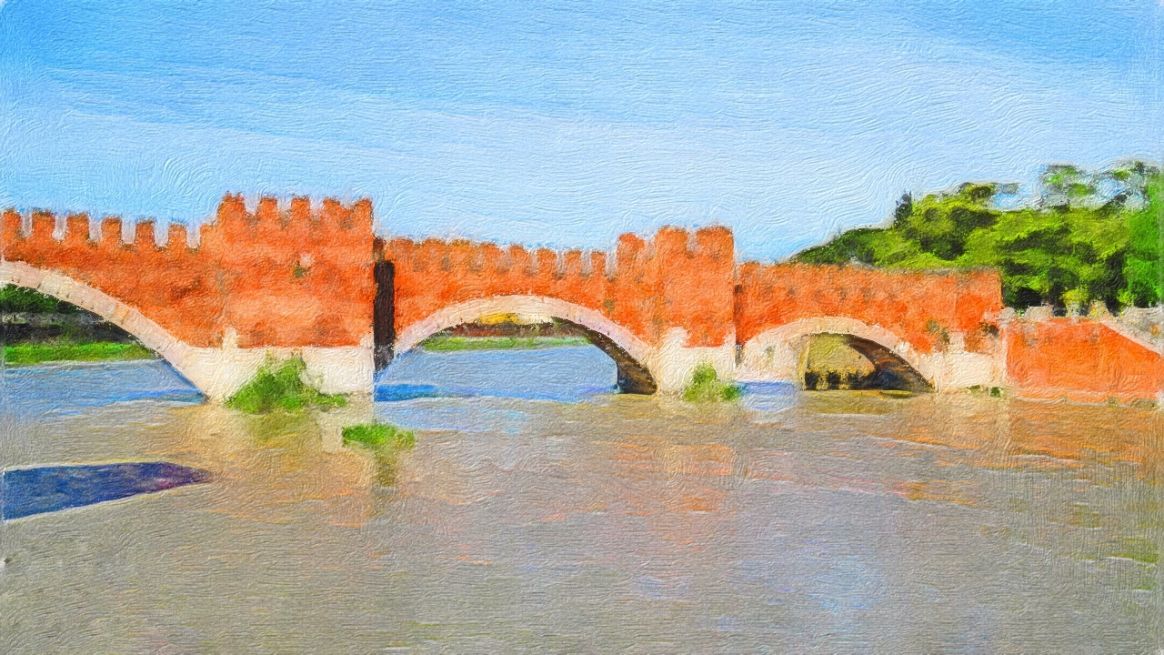
He dragged me to Ponte di Castelvecchio, the fortified medieval bridge spanning the Adige, where tourists crowded together, phones and cameras raised. I squeezed past them to peer through one of the crenellations and marvelled at the broad sweep of water gliding silently beneath us, the afternoon sun dazzling on its surface.

Behind me, an American voice was enthusiastically explaining the bridge’s history.

“Of course, it’s not really the original bridge because it was blown up by the German army in 1945 and rebuilt using the stones recovered from the river.”

After a fair amount to drink, I have a habit of retreating into my own little world.

Had I been fully aware of my surroundings, I might have noticed the commotion further along the bridge, followed by a loud cheer. Seconds later there was an enormous splash as somebody landed feet first in the Adige. The young man waved happily as the current carried him towards Ponte della Vittoria.

Frank Horse eventually climbed out further downstream, where he was promptly arrested by the decidedly humourless Polizia Locale.

Alas, he never made it to Paradiso.


On finding that leather’s just for the look…

There is a room at the top of Signora Bruschi’s house that is filled with clutter. It is where unwanted things are taken to be forgotten. The good lady mentioned that there were boxes up there that had belonged to Pietro—and that they probably belonged to me now. It was a less-than-subtle hint that I ought to sort through them. I pretended not to hear.

Three boxes appeared in my room the following day.

Box Number One

Inside was an old Italian-language paperback, Fratelli by John Preston. The price sticker on the back still read L. 4.500. Time had turned the edges of the pages a brittle amber, carrying the faint scent of vanilla, dust and old glue. The book fell open naturally at page 142, where a paragraph had been permanently marked by the back of an old glossy Polaroid.

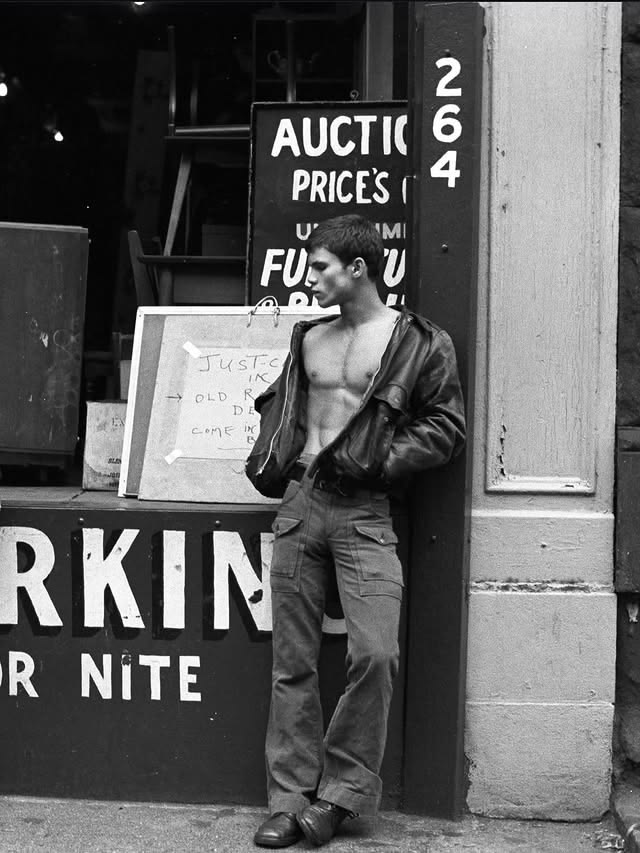
I recognised the photograph immediately. I’d seen it before. It was Hustler by Christopher Makos and taken in 1977: a handsome young man wearing nothing but a pair of jeans and a leather jacket, provocatively unzipped to reveal a well-toned chest.

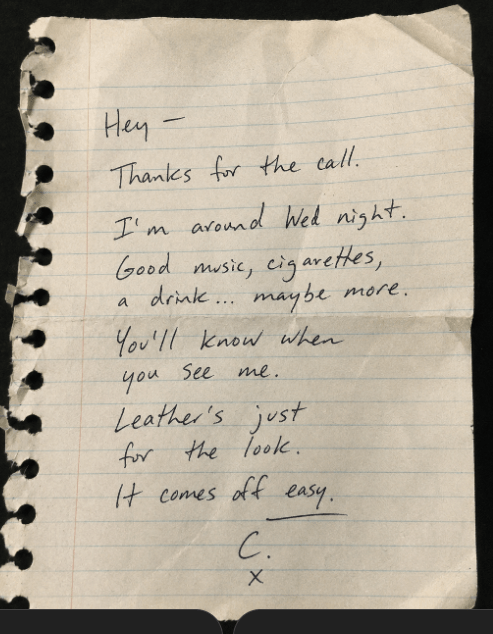
Tucked inside the pages was a note, apparently torn from an old notebook.

One line leapt out at me.

“Leather’s just for the look. It comes off easy.”


On looking at young Peter again …

Well, I’m apparently being accused of hating David Hockney.

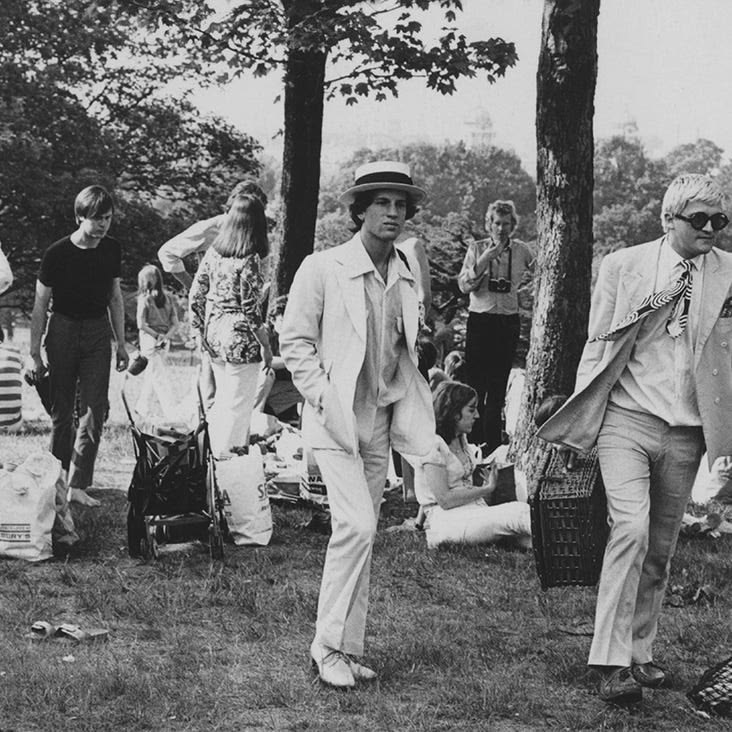
According to my inbox, my post about Peter Schlesinger, his lover and muse for three years, was unfairly biased in favour of the American (who, incidentally, is alive and well). Fair enough. But while I’ve always admired Hockney’s work—indeed, I seem to be surrounded by Hockney art at the moment—I never found the man himself in the least bit attractive.

The same could not be said of Peter Schlesinger fifty years ago. He was, surely, every man’s erotic dream.

I’ve now managed to get hold of Schlesinger’s A Chequered Past (2003), a collection of photographs taken during the 1960s and 1970s, accompanied by brief autobiographical reflections. (Note to self: why are old photography books always so darned expensive?)

The point I had tried to make—and evidently failed to make very well—was that Hockney was extraordinarily fortunate to have shared part of his life with someone like Schlesinger. Today, of course, such a teacher-student relationship would rightly raise serious ethical questions.

And perhaps Hockney was a little naïve not to realise that young free spirits have always had a habit—as they still do—of looking around the next corner.

How I would have loved to have been a fly on the wall during that “dramatic and public break-up” in Cadaqués in 1971.


On being fooled by Dorian Grai …

Spotify chucked a recommendation my way.

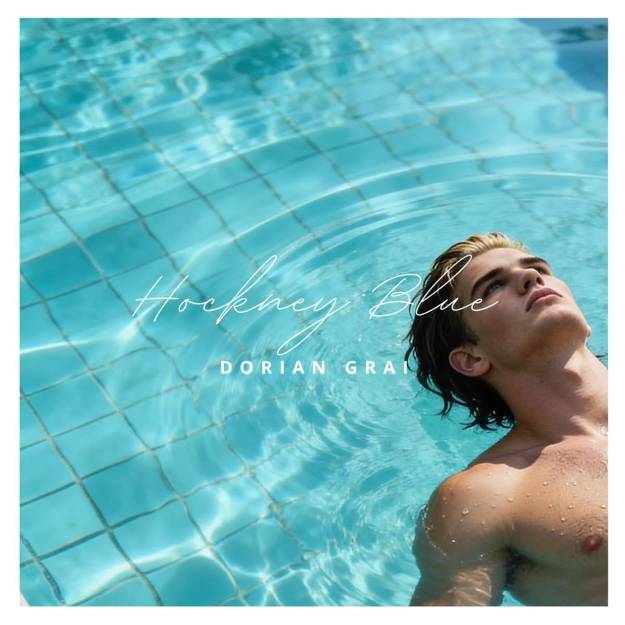
It was a singer called Dorian Grai and a song entitled Hockney Blue, which I found surprisingly seductive. It is a tribute to David Hockney’s swimming pool paintings, particularly those populated by cute, half-naked young men.

A snapshot of the lyrics gives you the general drift.

I’ve had one night on my youth slipping away ever since I saw the boy who knew nothing of decay.

He slipped into the water cool, how it possessed him. So that every drop glistened as a diamond on his skin.

I can see him now as he swims across, how his body’s framed in that azure box.

And I had to be an admirer of the boy I knew I could never love.

So I wish him well, how I make my peace, and I take his portrait as a memory. And I see the stars and I smell the flowers, how the day is gone forever.

He was the boy in the turquoise swimming shorts, tanned skin, black hair, his body lean and honed and young.

He slipped into the swimming pool of Hockney blue.

So that all I could do was sit still, held beneath my eyes.

According to Blakeman Records, Dorian Grai is a twenty-year-old British-American digital artist. Hockney Blue is described as a smooth tropical house track with delicate harmonies and jazzy motifs—a paean both to the paintings of David Hockney and to the yearning regret of a love that never had the chance to blossom.

There is also an interview with the handsome young man.

“I’ll never forget how it felt to write my first song and to listen back to it. I was electrified by the act of creativity—that I had made this thing that had never existed before in the world—and I was hooked.”

Well, I like the song and I like the sentiment, but—and it is a very big but—it is entirely AI-generated, as is Dorian Grai himself.

To be fair, there is no attempt at deception. Everything is out in the open, right down to the lustfully created video of him swimming half-naked in a pool.


On the cute and willing…

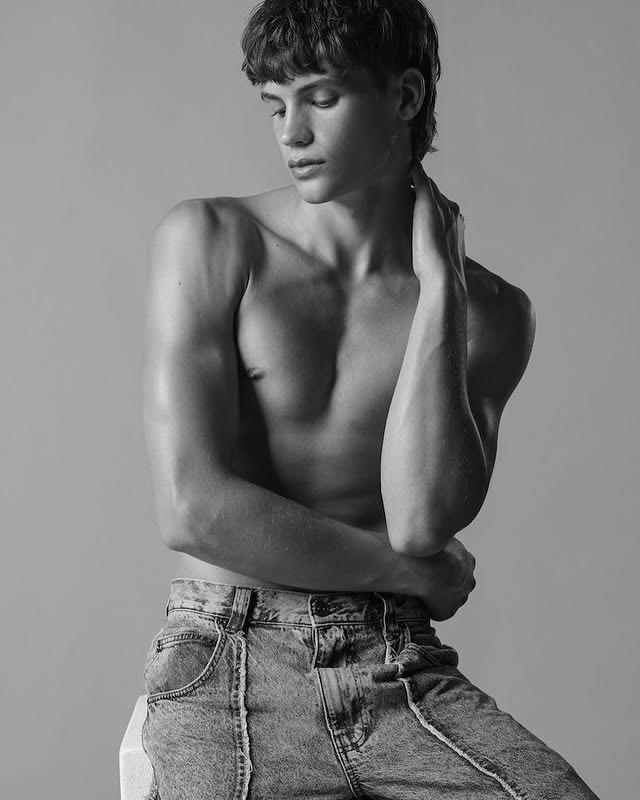
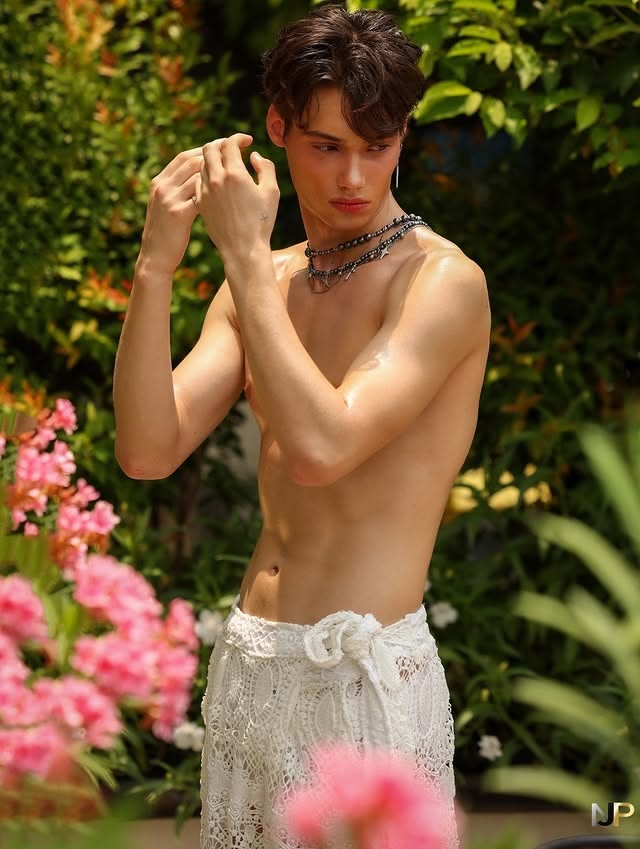
Yehor at MOSS Management, Paris. Photo by Pasith Thirawatworakun (2026)

My Week, For What It Was Worth

On being naked, sleepless and bitten in Verona …

I am told a story about a man who goes to visit his mother’s grave at Cimitero Monumentale di Verona. He stands before it in prayer and then drops dead himself, overcome by the heat.

The problem with this story is that I have heard it before.

There was the case of a man in the town of Garlasco, near Milan, who collapsed while standing at his parents’ grave. In Naples, another was found slumped across his father’s tomb.

In Italy, they sometimes try to outdo one another, and that makes it difficult to distinguish fact from fiction.

The heat, however, is real enough.

The Italian health ministry has been issuing its maximum Level 3 red alert — known as the bollino rosso — for cities across the country, including Verona.

The heatwave is being driven by the African anticyclone known as “Cerberus”, bringing temperatures with little variation between day and night and daytime highs of up to 40°C.

For now, the apartment where I am staying is woefully unprepared. There is no air conditioning, only a collection of small electric fans that offer little respite. 

Signora Bruschi insisted that I keep the wooden shutters closed to block out the sun. She also instructed me to keep the windows shut.

I ignored her.

I needed fresh air.

Now the heat from outside has permeated and made the room unbearable.

I sleep naked, but sleep itself has become impossible. The nights are spent tossing and turning in my own sweat. When I wake, I discover that aggressive tiger mosquitoes, which are supposedly creatures of the day, have spent the night feasting on me. My body is covered in bites and an unsightly heat rash stretches across both arms.

Alas, I no longer feel beautiful. A plain, white-skinned English boy like me can only dream of the cold, the rain and, perhaps, even snow.

On the three naked butts …

Italian boys are more cultured than English and German boys.

Severin, the German boy, and I, the English boy, have not forgotten those hurtful words.

Over time, Severin and I have found each other like long-lost brothers. Recently he heard from Elio — the chosen one — who has discovered a diary belonging to Pietro.

Inside was the following entry:

“Elio is the lover I have always wanted, but he is spoiled and without scruples. Perfect for me. Severin is cute but stupid. He will do whatever I want him to. Miles could be wonderful, but he always thinks with his dick. There is no loyalty there.

“But I love them all, and I call them my three naked butts.”

Nude of Three Boys by Wilhelm von Gloeden

On Thomas and the Paris heatwave …

Thomas messaged me from Paris, where the temperature had become stuck at 40°C. He had covered his windows with emergency blankets to keep the heat out, though this also prevented him from seeing the world beyond them.

“It is hot and gloomy,” he moaned.

His girlfriend, Ambre, had abandoned her apartment in Batignolles. Poor insulation and a lack of external shutters had turned it into an oven. “The blazing sun hit her windows all day — she couldn’t breathe and felt dizzy because there was no air,” he explained.

“I have a headache all the time and now we must walk around my rooms completely naked,” he added, clearly for my benefit.

The image of Thomas — tall, skinny and entirely unclothed — was not an unpleasant one.

“And Léo was arrested for possessing drugs and had to spend the night in a police cell where temperatures reached more than 43°C.”

I was tempted to ask Thomas whether the heat had prompted Léo to shed his clothes as well and, if so, whether such a display might have proved provocative to his fellow prisoners.

Thomas signed off with a question:

“Are you missing me?”

On the boy by the water …

A cold stream. Stepping stones. It attracted students from Università degli Studi di Verona. If fashion models of either sex were to be discovered anywhere, this was the place to find them.

Nakedness was almost a prerequisite.

Gods and goddesses baked beneath a merciless sun, seeking relief in fast-running water, plunging into deep pools and sunbathing in temperatures that might well kill them. Youth does not concern itself with such things until it is too late.

I sat beneath the shade of the only tree.

I love the sun, but the sun does not love me. It burns me at the slightest opportunity. I had no desire to move because all around me was visual heaven. A multiple-choice examination in beauty: who was the most handsome, the sexiest, the most likely.

My eyes settled upon a young man wearing pale blue striped shorts that clung to his buttocks from the dampness. His hair was swept back as though he belonged on the streets of Milan. I could not see his eyes because they were hidden behind wraparound sunglasses.

But it was his body that held my attention.

His soft, undeveloped chest. His slim frame. The perfectly proportioned legs he stretched out before him. He was the colour of a bronzed angel, without a blemish to be seen.

He lay upon a rock below me, water rushing around him, and I wanted to take his photograph but dared not because it would have seemed too obvious.

He assumed I was looking at him, just as I assumed he was looking at me, though neither of us could be certain.

If I had been forced to choose anyone there, he would have been the one.

Then he turned his head and smiled.

I smiled back, though I could not be sure the smile had been intended for me.

He lay back and the water rose around him. For a moment I thought I could detect the suggestion of an erection, though that may simply have been the product of an overactive imagination.

He sat upright again and flicked back his hair. His profile caught the light.

Then he shouted up and asked me for the time.

Four o’clock.

All was well.

A voice in my head suggested that a little flirtation was taking place. But I knew better than that. I knew the type of boy he probably was. He knew he was beautiful and, perhaps, enjoyed the effect he had on others. A fly-catcher, drawing us in simply for the pleasure of watching us hover.

I got up to find my friends and smirked as I stepped past him.

I decided to love him only as a memory.

Artwork by Daniel Jaen (2019)

On waiting for the fall …

We wait for the one who built the empire to fail.

We, the loyal followers, are waiting for the collapse. It cannot be far away.

And when it comes, we, the loyal followers, will make our move.

On the cute and willing…

Lucas at Avantage Management (Budapest)

Straight Out of Verona – Part 6 – Pietro


There was a long story behind my relationship with Signora Bruschi – and the apartment. I was about Cola’s age when I first met an Italian boy named Nico and moved to Perugia. Those were long, hot summer days and steamy nights, but autumn soon cast its shadow over the affair. Quite frankly, we grew bored of each other. Being a free spirit, I hopped on a train to Milan.

That was where I met Pietro Mancini, an older gentleman with decidedly queer tendencies, who owned a large accountancy firm with branches in Turin, Milan, and Verona. I enjoyed the attention: the fine clothes, fancy restaurants, lavish holidays, and an endless supply of money. In return, I excused his camp mannerisms and tiresome gestures. I was his toy—his plaything—a good-looking boy at his beck and call.

Until I discovered there was nothing exclusive about this arrangement.

When Pietro suggested I move into his rented apartment in Verona, I saw it as the next step in what felt like a dreamlike adventure. Since he spent most of his time in Milan, I was spared his unwelcome advances and free to live as I pleased. Verona suited me, and it was there that my friendship with Signora Bruschi and her son, Cola, began.

On the day that Cola blurted out: “Is it true that you like to fuck boys?” His mother promptly clouted him on the head with a wooden spoon, but he pressed on: “Signor Mancini has a boy in every town, but I’m glad it was you who came to Verona.” I had been naïve enough to think I was the only one. His words made perfect sense, and the warning bells began to ring.

I didn’t begrudge Pietro his indulgences, but selfishly, I worried that I might fall out of favour and be cast aside when it suited him. On his next visit to Verona, over dinner in Piazza Bra, I demanded the truth. That was when I learned about Severin, a German boy in his Turin apartment, and Elio, my Italian replacement in Milan—apparently his favourite. “Italian boys are more cultured than English and German boys,” Pietro told me.

At Christmas, Pietro invited me to Milan, where I met Severin and Elio for the first time. He expected us to get along, but little was said between us. After a festive meal at Bulgari Milano, and more than enough drink, we realised we were all victims of his lustful whims. A conspiratorial bond formed between us.

In the new year, I returned to Verona, expecting Pietro to arrive on business the following week. On the day of his arrival, I went to Verona Porta Nuova to meet his train, but he wasn’t on it. I returned to the apartment and waited. That night, Elio called: Pietro had dropped dead of a heart attack.

Signora Bruschi was kind and told me I could stay in the apartment. I explained I couldn’t afford the rent, but she insisted it would not be a problem.

In the months that followed, with no money coming in, I lived on the Bruschi family’s generosity. Pietro’s affairs were slowly unravelled, and eventually his will was read. Nineteen-year-old Elio inherited the bulk of the estate, including the Milan apartment. Severin and I received only nominal sums—decent, but since the Turin and Verona apartments were rented, we were effectively homeless.

With little Italian and no job prospects, I left Verona and returned to the UK.

The apartment, however, was kept clean and tidy by Signora Bruschi, who insisted it remain empty and always available for me if I visited. The last time had been fourteen months ago—before Charlie gate-crashed my life.

Straight Out of Verona – Part 5 – Bianchi

Bianchi – Charlie Marseilles

Charlie messaged me in the morning, as I knew he would. Despite the thousand kilometers between Paris and Verona, he stirred my guilty conscience, even though I hadn’t felt guilty when I went to bed.

What did you get up to last night?

Cola had dragged me to the cinema with Cinzia, and along the way, we picked up her younger brother in Castel d’Azzuno. “This is Salvo,” she said as the young boy got into the back of Cola’s car. “But we call him Bianchi, and he doesn’t speak much English.”

Bianchi turned out to be eighteen, but his small size made him look much younger. Cola had been right; there was no doubt that he was beautiful, with a delicate face, inquisitive dark eyes, a dainty nose, and thick black hair. He nodded, sat beside me without saying a word, and put earbuds in to listen to music on his phone.

We drove to the UCI multiplex on Via Monte Amiata to see Caught Stealing, or as it’s known in Italian, Una Scomoda Circostanza, starring Austin Butler, whom I found both weird-looking and handsome at the same time.

Cola and Cinzia sat together while I was between Cinzia and her brother. I tried to make small talk with Bianchi, but the language barrier proved difficult, and we both fell into awkward silence before the movie started.

Caught Stealing had been dubbed into Italian, which put me at a disadvantage because I struggled to follow the narrative. Cola had suggested we go to a smaller cinema where it was being shown in its original form with subtitles, but I thought this would be unfair to them.

The tradition of dubbing English-speaking movies into Italian dates back to a time when most of the population was illiterate and struggled with subtitles. Mussolini’s government saw dubbing as an opportunity to control foreign content, and the rise of the industry with skilled voice actors has persisted ever since.

I cast furtive glances at Bianchi, who seemed distracted, disinterested, and perhaps even guarded. Once or twice, he looked my way and smiled with embarrassment, but for the most part, he looked away.

He was a beautiful boy, but Cola’s sly yet playful attempt at matchmaking was never going to work because of the age difference.

Afterwards, we went for coffee. Cola and Cinzia spoke in English, and Bianchi listened and smiled as though he was part of the conversation. There were fleeting glimpses of curiosity and connection. What had begun as a seemingly casual setup gradually revealed the possibility of a deeper attraction, or at least a moment of recognition between us.

Straight Out of Verona – Part 2 – Cola

Nicola – Charlie Marseiiles

When I crawled into bed, it was so hot and humid that I struggled to sleep, making do with an electric fan and open windows. But Verona came alive early and just as I was about to drop off, the traffic, and sirens from the ‘ambulanzas’ on route to Borgo Trento, denied me the pleasure.

I blinked through the morning until there was a polite knock. Fragmented dreams stumbled into consciousness. I tried to ignore the short taps, but whoever it was wasn’t going to go away. I climbed out of bed, with eyes that felt like sandpaper, and opened the door.

It was Cola. “Buongiorno,” he quipped. “My mother told me that you had returned.” I let him inside and noticed how tall he had become. He frowned at my unruly appearance and held up a bag of fresh cornetti. “I shall make coffee, and you must tell me where you have been for so long.” 

I had known Signora Bruschi’s son since he was fifteen, from days when the skinny boy sat on the front doorstep and made cheeky remarks to ladies who passed by. His mother warned him that it was not how good catholic boys behaved but she already knew that Nicola was a lost cause. “He takes after his father,” she had confided, “and has such a violent temper.”

Cola had taken a shine to me after I’d stayed here the first time. He waltzed in and out and helped himself to the contents of the fridge. Then he would beg me to play football with him on the campo giochi until the light started to fade. “He treats you like a big brother,” Signora Bruschi told me. “You are a hero to him, and I pray to St. Gianna Beretta Molla that he will follow your good ways.” The fact that I hadn’t kept in touch bothered me.

Cola was eighteen now, still skinny, but he towered above me. I pulled on a tee shirt and sat at the table while he made coffee. 

“What have you got planned for today?” I had hoped to wander through the day without an agenda but sensed that this might be about to change. 

“Nothing,” I volunteered. 

“Then let me take you out in my new car.”

Cola’s strong coffee wasn’t to my taste. I would have preferred a latte but Italians regard this as sacrilege and so I accepted it without comment. 

“My mother says that you have a French boyfriend.” He waited for an answer, but I didn’t respond.

The truth is, I’d argued with Charlie before coming here and was annoyed with him. When he snapped at me, I’d matched his gallic temperament with a dose of Anglo-Saxon home truths. Afterwards, he had sullenly caught the Eurostar to Paris, and I had come to Verona, to the apartment that was rarely used. 

Buckle up, hot shot. Time to take flight… and land with impact.

Cola’s new car turned out to be a bright yellow Abarth 500 that he drove too fast. I tried to ignore his erratic driving as I did the alarm bells that were hammering inside my head. How many teenagers could afford a car like this? As far as I was aware, Cola didn’t have a regular job, and I feared that he was mixing with the wrong people, something that was easy to do in Italy.

Straight Out of Verona – Part 1 – The Arrival

Ponte Pietra – Verona

The apartment has stood empty for fourteen months. Now I return to it, in a city smothered with sunlight and heat, a place where distractions fall away. Here, I will write of the world I have just left, the world to which I must soon return—dragging up stories from a cemetery of memories. I have always written best from the outside, peering in.

At night the air thickens, heavy and damp. Through the high windows of this old townhouse I look out, remembering what happened here long ago. A man stabbed in the heart with a kitchen knife, left to rot for weeks before anyone noticed, the flies devouring him first. Signora Bruschi, who has scoured the floors and scrubbed the walls, insists it was not in these rooms.

I do not believe her. Yet under the pale wash of moonlight, in a room fragrant with flowers tumbling from the iron balcony, the truth hardly matters. I hum softly to myself, listening to the percolating hiss of coffee on the stove, until the first birdsong threads through the great London Plane outside—the one whose trunk carries the carved names of lovers and bored teenagers.

I take my place on the terrace beneath its green-striped awning, my Chromebook open beside a steaming bowl of carrot cream soup from the little shop on Via Giuseppe Cesare Abba. Overhead, a man and woman murmur in their rooms. Strangers still, but as the night deepens their voices taper into silence.

Sometime after midnight, Charlie’s message arrives from Paris. He is staying there with his family for a few days. Tonight he tells me he walked to the site of the old Hôpital Broussais – not in search of medicine, but to stand on the ground where Jean-Paul Sartre once drew his final breath.