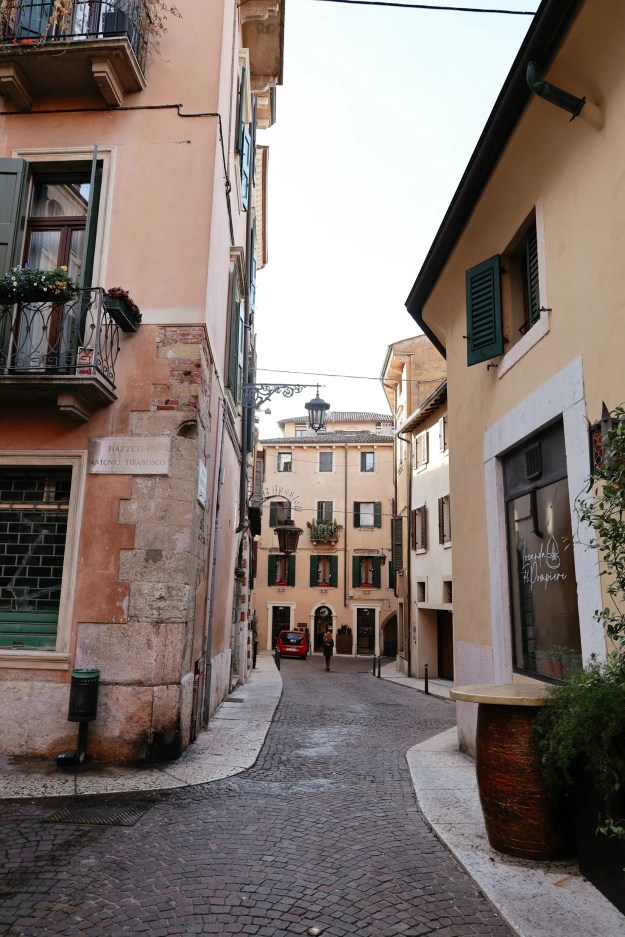
Deej wanted to visit Shakespeare and Company in Paris. For this, I was expected to travel 750 kilometres and hold his hand. It was probably a good idea to leave Verona for a while anyway. There is a lot I can do in Paris, but I prefer to remain elusive, slipping into the city unnoticed.
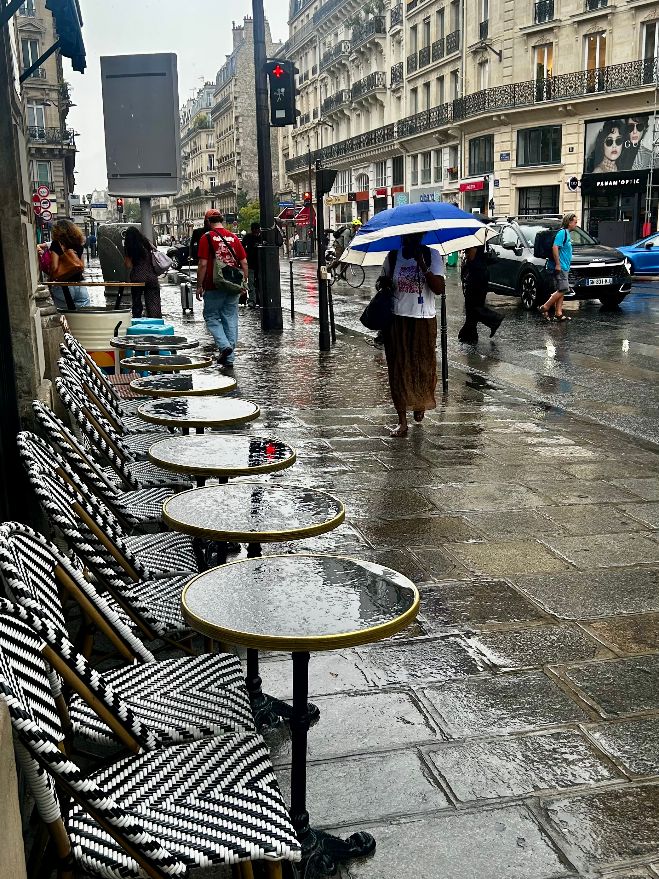
I met Deej at CDG and we caught the train to Châtelet–Les Halles, from where it was a ten-minute walk to Rue des Gravilliers. As soon as we emerged from the station, it started to pour with rain. I mean, fucking pour. Within minutes we were soaked.
The hotel was easy to miss. It occupied a collection of renovated buildings hidden behind two enormous wooden doors, with no sign to announce that we had arrived. The instructions, however, were perfect. Along a narrow path, up three flights of winding stairs and there it was: our room overlooking a tiny courtyard, with windows facing other windows on the opposite side.
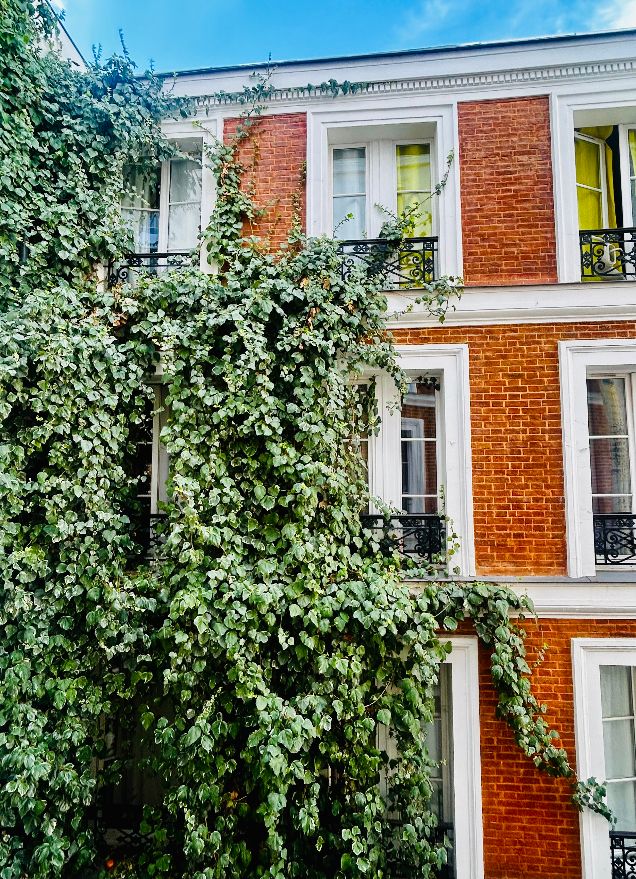
Ivy had taken over the walls. It climbed around the windows, covered some of them completely and seemed intent on swallowing the whole place.
The room was tiny but modern in a very nineties sort of way, and impeccably clean. A huge double bed occupied most of the space, leaving room for a small table and two chairs, a kitchenette and a bathroom that was little more than a cubby hole.
There was an art to taking a shower. There was nowhere to manoeuvre. Drop the shower gel and you were stuffed.
We had both travelled light: the shirts we were wearing, a couple of spare T-shirts and a pair of jeans. Unfortunately, the shirts had already got wet and were now hanging up to dry. Deej had already set his sights on one of my T-shirts and begged to borrow it.
I said no.
The next moment he was wearing it.
Deej, however, liked to sleep and would disappear for hours at a time.
I would wander off to my favourite place: a shaded courtyard filled with ivy and tall bamboo that kept out the sun. It was in almost permanent gloom. After the rain, the place filled with delicious scents and for a moment it seemed like something Gabriel García Márquez might have written in One Hundred Years of Solitude.
But this was France, where the heat had been insufferable and relentless.
Deej blamed me for the rain.
Eventually the sun returned, although the courtyard was so heavily shaded that every so often I had to look upwards just to check that it was still shining.
I spent hours reading there.
I finished my Beverley Nichols biography.
Deej cannot understand my fascination with dead people, which might explain why he frequently took to his bed.
Nichols had been one of the Bright Young Things of the 1920s. Look him up if you have never heard of him.
Shortly before his death in 1983, he said:
“Osbert Sitwell said that I was the first of the young bright people and now I am the last of them.”
I would have loved to have been Beverley Nichols. He had been everything I hoped to be.
From time to time I was joined by other guests: Americans, Spanish, Italians and Germans. They all behaved differently, but always with politeness. I would listen to their conversations because strangers can be an invaluable source of inspiration.
There was a Canadian couple with a son called Sam, probably fifteen or sixteen. He was ginger and had marvellous legs.
They sat around a table eating chicken baguettes bought from a local supermarket. The father complained that the bread contained sesame seeds, which seemed to be a disappointment.
“Why do you look like you are sucking dick?” Sam asked in a soft voice.
My ears pricked up.
“My jaw hurts,” his father explained. “Years ago I was eating semi-stale peanut brittle and something snapped. It hurt for a while but eventually the pain went away. Now I sometimes struggle to eat and it looks like I might be sucking dick.”
“Sam, what do you know about sucking dick?” asked a concerned Mommy.
I told Deej that I wasn’t doing the tourist thing. It was out of the question. I hate tourists. I hate the big queues, the clogged pavements and the meaningless photographs taken on phones that will probably never be looked at again. I hate the queues outside Shakespeare and Company, where people wait patiently to buy overpriced books they could probably buy cheaper somewhere else.
I have an urge to kick tourists whenever they get in the way.
I am like the Portuguese poet and writer Fernando Pessoa, who described active tourism as an expression of restless, unimaginative misery.
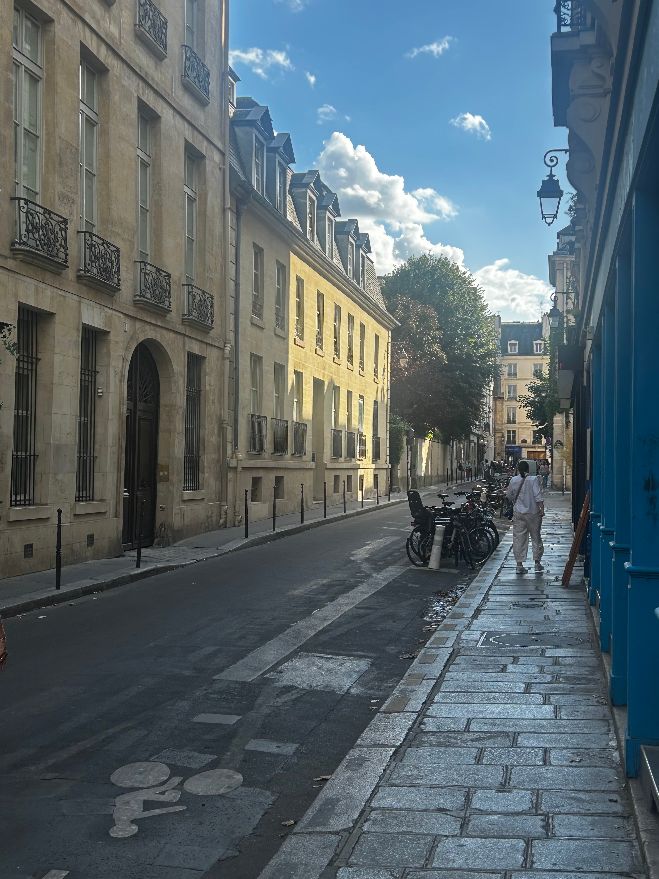
Instead, we explored the backstreets of Le Marais, where I learned that the district had once been the floodplain of the Seine. The bourgeoisie moved here in the seventeenth century, encouraged by King Henri IV’s creation of the Place des Vosges, then called Place Royale, between 1607 and 1612. What had once been marshland became the trendiest residential district in Paris.
I explained to Deej that the ground beneath our feet was soaked in blood and the guillotined heads of those same bourgeois.
Like an idiot, he looked down at the pavement to see what I meant.
In the early twentieth century, Le Marais was a bit of a shit show.
The grand houses had been divided into flats. Heavy industry moved into rooms where aristocrats had once danced. It became a no-go area where crime prospered and prostitutes gathered on street corners.
It is hard to imagine that now.
The authorities eventually ploughed money into Le Marais. Its buildings were renovated, its history brought back to life and its streets transformed.
I love Le Marais.
With its beautiful buildings, cafés and pocket parks, it has become one of my favourite districts in Paris.
I must tell you about the handsome French boy who was working at a bar we visited.
He was a picture to be treasured.
Wild dark hair, eyes with a quiet spark, teeth straight and orderly whenever he spoke. There were even a few traces of teenage spots on his cheeks, which somehow added to his appeal.
Deej, who is as straight as they come, was completely uninterested in my infatuation. While I followed the boy’s every movement, Deej noticed a mouse running beneath the tables and chairs. He was so fascinated by it that he failed to notice the dirty looks the boy was giving me.
He made it quite clear that he didn’t like me.
I would like to tell you that we met the boy in the street later. That he was hopelessly drunk and vomiting into the gutter. That we walked past him, looked at each other and laughed at his misfortune.
But we didn’t.
And perhaps that is the problem with real life. It so rarely provides the ending you deserve.
Norrie followed him in and all reserve then broke down. This happy state of affairs lasted for two days, but invariably short lived. There will be, he told himself, ‘rocks ahead’. It is just as well that he adopted this attitude, for who should arrive to accompany them to Henley, but the detestable Eddy, with his ‘bad complexion and a Cockney accent’. Instantly, Norrie was all over him and Beverley was forgotten. The weekend, not surprisingly, was a complete disaster. Once again, he tried to put a brave face on it and when they were joined by a boy called ‘Steegy’, he made a bid for the newcomer – only to be outflanked by Norrie who finished up with both Eddy and Steegy.
From ‘Beverley Nichols – A Life’, by Bryan Connon, 1991.
It was dark by the time we went out, but the heat was still oppressive. The only place left to buy milk was the little corner shop that opened and closed according to the whims of its owners. Nobody knew its hours. There was never any guarantee it would be open.
But Signora Bruschi had panicked. She needed milk for my morning coffee and for Bianchi’s Vitabella Corn Flakes. We could easily have managed without it, but she liked everything to be perfect. At confession, she would probably tell Don Carlo she had forgotten to buy milk and had therefore sinned.
Cola whistled as we walked. He had unbuttoned his shirt because he believed the months spent working for Signor Valenti had transformed him into a young Roman god. After sharing a bed with him for so long, I was inclined to agree. But Bianchi had been moved to the attic, and I was once again sleeping in my own room, with a large bed all to myself.
As we approached Via Cesare Trezza, Cola stiffened. He stopped whistling and buttoned his shirt. A young man stood beneath a streetlight, smoking a roll-up.
“Pezzo di merda,” Cola muttered.
The man had dark skin and closely cropped black hair. He wore jeans and a designer puffer jacket with nothing underneath, exposing his bare chest. His trainers were scuffed but spotless. Silver rings glinted on his fingers, a faded tattoo disappeared beneath the collar of his jacket, and an expensive pair of sunglasses rested on top of his head.
As we drew level, he gave a low, taunting whistle intended for us alone.
“He’s Sinti,” Cola said once we had passed. “He hangs around here. Dangerous. If you ever see him again, cross the street.”
Dangerous, I thought.
But extraordinarily handsome.
A Collector of People
It is all mirrors and smoke screens: the endless quest to protect an identity.
I shared my work with a friend—one of the privileged few—and he recognised the characteristics of people we both know, though inhabiting the wrong bodies.
“I am a collector of people,” I told him. “And it has always been my intention to confuse.”
The Same Quiet Corner
I love the sun, but the sun does not love me. Shade is essential. It is time to discover whether cool air still exists. A time to slow down, to forget myself for a while and leave the rest of the world behind. Everybody needs a place to disappear.
Most days I come to these steps, where nobody thinks to look for me.
I sit beside carefully tended planters of oleander, bougainvillea and English lavender, the air fragrant with their scent. I drink my coffee in peace. It is silent except for the distant toll of a church bell or the occasional motor scooter threading its way through the alleyways.
Then a young man arrives. He always chooses a place nearby and settles down with a book. No matter what time I come, sooner or later he appears and quietly takes his seat. I ought to resent the intrusion, but I cannot. He is as pale as I am, and I suspect he, too, is a foreigner.
It is a curious thing.
We travel from distant places, only to find the same quiet corner of the world.
Circe’s Gift
Bianchi came up behind me and began ruffling my hair.
“Ti sto trasformando in un maiale,” he said. I’m turning you into a pig.
The display of affection was lost on me.
Later, I discovered that the bond between humans and pigs is forged in Homer’s The Odyssey by the powerful sorceress Circe on the island of Aeaea. When Odysseus’s crew stumble upon her palace, she welcomes them with a meal of cheese, barley, honey, and wine, laced with a potion. After they have eaten, she raises her wand and transforms them into swine, imprisoning them in her pens
Now I am a pig.
The Return of Antinous
People do not understand me. They cannot see why I am drawn to old things. But I am, and I have no idea why. More than anything, I like books about dead people.
At the moment I am reading a biography of Beverley Nichols, the English writer, playwright and broadcaster who died in 1983.
It is a banger.
His longing for intense, sometimes masochistic homosexual encounters existed alongside the refined, middle-class domesticity he cultivated in his bestselling memoirs.
Rather like me.
I would happily live my life as Beverley Nichols did, though I could do without the growing old part.
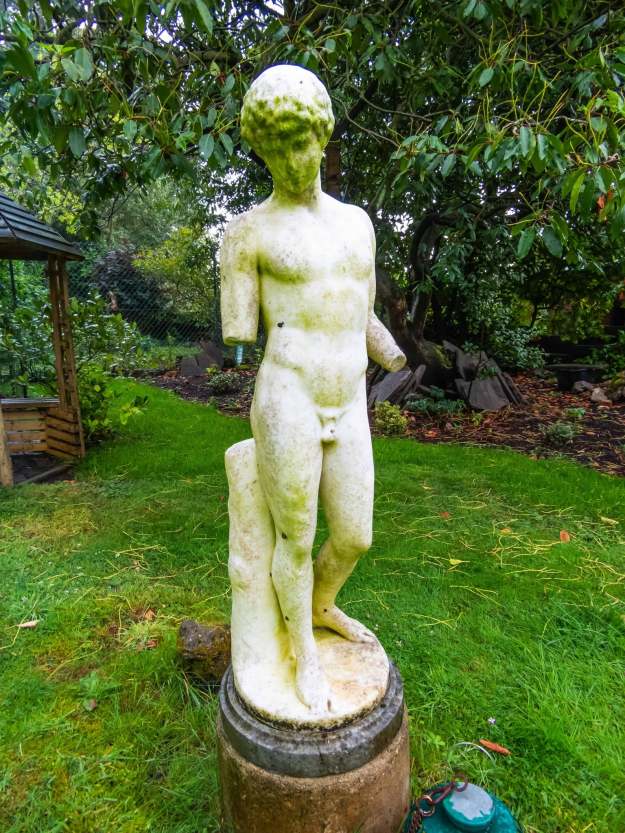
Which brings me to Antinous, the beautiful young Greek whose love affair with the Emperor Hadrian made him immortal. A statue of Antinous stood for decades in the gardens of Nichols’s house, Allways, in Glatton.
Nichols had bought the statue from Henry “Bogey” Harris, the wealthy London aesthete and art collector who lived in Bedford Square.
“Antinous would be much happier living in the Huntingdonshire countryside than at Bedford Square in London,” Nichols declared.
When Nichols sold the house, Antinous was left behind.
In the 1960s, the new owner ordered the statue to be removed. “One could clearly see his man parts and his bottom!” she complained.
It was thought to have been destroyed.
Imagine my delight to discover that, only a few years ago, Antinous was found abandoned in an overgrown corner of the garden. Restored to his former beauty, he now stands once more in his rightful place, gazing back towards the house below.
A forgotten actor, a lost Hitchcock film, the lifelong companion of Beverley Nichols, and a pioneer of British television. The remarkable life of Cyril Butcher deserves to be remembered.
Cyril Butcher
Metaphorically speaking, I spent two days and one long night sitting opposite Cyril Butcher at Signora Bruschi’s kitchen table. I questioned him, shared my frustrations and searched for answers that never came. The only response was the occasional concerned glance from Signora Bruschi, who had begun to suspect that I was talking to myself.
I assured her it was research. Anyone who has spent hours buried in old newspapers, forgotten magazines and fading archive material will know how easily the outside world disappears.
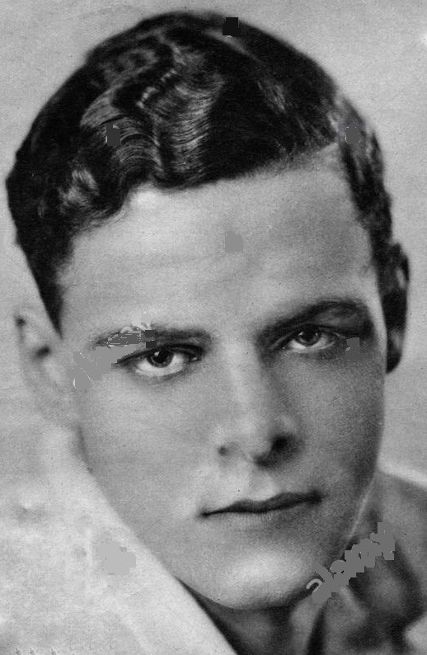
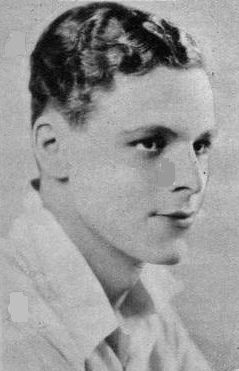
The trail began with a copy of Film Weekly from 1930. There, among its yellowing pages, was a photograph of a dreamy-looking young man named Cyril Butcher. He was twenty years old and had just become one of two winners of a nationwide competition offering a six-month scholarship at Elstree Studios, worth £250 together with a weekly salary of £10.
There had been 6,783 entrants, although Film Weekly never revealed precisely what they had been asked to do. One winner was always a young man and the other a young woman. Butcher entered through the Picture House in Ipswich; his fellow winner, Aileen Despard, represented the Rialto Cinema in Raynes Park, south-west London.
Standing six feet tall, weighing eleven and a half stone, with brown hair and brown eyes, Butcher evidently impressed a formidable judging panel. Among them were some of British cinema’s most promising directors, including Alfred Hitchcock, Ewald André Dupont, Norman Walker and Walter Summers.
The prize was more than a scholarship. British International Pictures quickly placed the two winners in a ten-minute comedy short entitled An Elastic Affair, directed by Hitchcock himself. The film premiered at the London Palladium, where Butcher and Despard were presented with contracts by the studio’s founder, John Maxwell.
Ironically, An Elastic Affair was a talking picture shown in a theatre that had yet to install sound equipment. Audiences watched the performances in silence.
Butcher appeared simply as ‘The Boy’; Despard as ‘The Girl’. One contemporary reviewer described his performance as “amateurish”, before generously conceding that he had never acted before. After a further screening in Ipswich, the film disappeared from circulation. Today it is regarded as one of Alfred Hitchcock’s lost films.
Later that same year Butcher appeared as ‘Dancer’ Johnny in Richard Eichberg’s crime melodrama Night Birds. It proved to be his final screen role.
I showed his photograph to Signora Bruschi.
“Bel ragazzo,” she murmured thoughtfully.
Then, after another glance:
“Omosessuale?”
She had guessed correctly.
Two years after his brief flirtation with cinema, Butcher came to the attention of Beverley Nichols, already one of Britain’s best-known writers. Novelist, journalist, playwright, broadcaster, composer and public speaker, Nichols embodied the glittering world of the Bright Young Things while carefully concealing his homosexuality from public view.
The two met during auditions for a theatrical adaptation of Nichols’ bestselling novel Evensong, itself inspired by the celebrated Australian soprano Dame Nellie Melba, whom Nichols had known personally during her later years.
Nichols was thirty-four. Butcher was twenty-two.
Their meeting would shape the rest of Butcher’s life.
He moved into Nichols’ cottage, Allways, at Glatton in Cambridgeshire, a picturesque Tudor thatched house whose gardens later inspired Nichols’ celebrated gardening trilogy beginning with Down the Garden Path.
Whether Fleet Street suspected the true nature of their relationship is difficult to judge. If rumours circulated, editors exercised remarkable discretion. Newspapers invariably described Butcher as a friend, visitor or business associate, never anything more intimate.
For more than half a century they remained together.
When Beverley Nichols died in 1984, after fifty-three years of companionship, Butcher inherited the largest share of his estate, valued at £131,750.
The public knew Beverley Nichols.
Very few remembered Cyril Butcher.
The obvious question is what Butcher himself made of it all.
The archives, frustratingly, have little to say.
His own voice is almost entirely absent. He left no memoir, no revealing interviews and no collection of personal letters that might explain the man behind the carefully posed publicity photographs. Almost everything we know comes from newspapers, theatre programmes and the lives of other people. It is enough to reconstruct his career, but rarely enough to understand his character.
Cyril Butcher
His family background was rather more remarkable than his modest film career might suggest.
Henry Ernest Butcher, Cyril’s father, was born in Ipswich and trained at the Royal Academy of Music before leaving England to pursue a career in German opera. For twelve years he sang across Germany, Austria, Switzerland and Poland, establishing himself on the Continental stage. In Cologne, in 1907, he married Gertrud Maria Maassen. Two years later, while the couple were living in St Gallen, Switzerland, their only son, Cyril, was born.
The First World War abruptly transformed the family’s fortunes.
As an Englishman working in the Austro-Hungarian Empire, Henry Butcher found his contracts cancelled almost overnight. Effectively stranded in Vienna, he reinvented himself under the Germanised name Heinrich Butscher and spent three years playing imposing villains and heavy dramatic roles for Viennese film companies.
Meanwhile, young Cyril was sent to the relative safety of Switzerland, where he spent the war at boarding school. Although born abroad, he was brought up as unmistakably English, eventually returning with his parents when they settled once again in Ipswich in 1919.
The stage fascinated him from an early age.
Before that dream could become reality he spent a brief period as a cadet in the Merchant Navy, only to discover that life at sea held little appeal. He abandoned it for work in a gasworks while nurturing rather more glamorous ambitions. He hoped to become a dancer in musical revues and, failing that, imagined a career as a writer.
Then came the Film Weekly competition.
Winning transformed an unknown twenty-year-old into a national curiosity almost overnight. Newspapers delighted in reporting the details that today seem wonderfully quaint. He stood six feet tall, weighed eleven and a half stone, had brown eyes and brown hair, and apparently possessed exactly the sort of wholesome good looks that British International Pictures believed audiences wanted to see.
Yet the promise proved fleeting.
After An Elastic Affair and Night Birds, film producers looked elsewhere. The great cinematic career that had seemed so certain never materialised.
The theatre, however, proved more welcoming.
When his screen career faltered, Butcher found steady work in the musical revues he had always loved. In October 1931 he appeared as Captain Donegal in a revival of Florodora, followed by performances in This World of Ours, Fanfare and Noël Coward’s Words and Music. He was never a leading man, but he worked consistently, quietly building a respectable theatrical career.
It was during this period that Beverley Nichols entered his life.
Beverley Nichols
Whether Butcher genuinely fell in love with Nichols or recognised the opportunities that accompanied the relationship can never be known. The two possibilities are not mutually exclusive. Affection and ambition have often travelled together, particularly in professions where introductions and patronage mattered.
What is beyond dispute is that Butcher’s horizons widened dramatically.
Between 1932 and 1935 he wrote the stage and screen pages for Nora Shackleton Heald, editor of The Queen, the weekly magazine read by Britain’s aristocracy and fashionable society. When Heald moved to The Lady the following year, Nichols also became one of its occasional contributors.
Butcher was increasingly making his living not simply as an actor, but as a journalist.
He also wrote for The Sketch, contributing a series entitled The Worst Moments of My Life, in which well-known public figures recalled their most embarrassing or uncomfortable experiences. The articles were later collected in In Extremis: Worst Moments in the Lives of the Famous, published in 1934.
Then there was the matter of Brighton.
That year the town council published a promotional booklet about the seaside resort under Beverley Nichols’ name. It later emerged that the work had in fact been ghost-written by Butcher, with Nichols content to accept the credit.
It raises an intriguing possibility.
If Butcher could disappear so completely behind Nichols’ public persona once, might he have done so on other occasions?
The evidence simply isn’t there.
But it is difficult not to wonder.
The theatre remained Butcher’s natural home throughout the 1930s.
Between 1936 and the outbreak of the Second World War he appeared in a succession of musical revues and stage productions. He rarely enjoyed star billing, but there was satisfaction in regular work, and he increasingly found opportunities beyond acting.
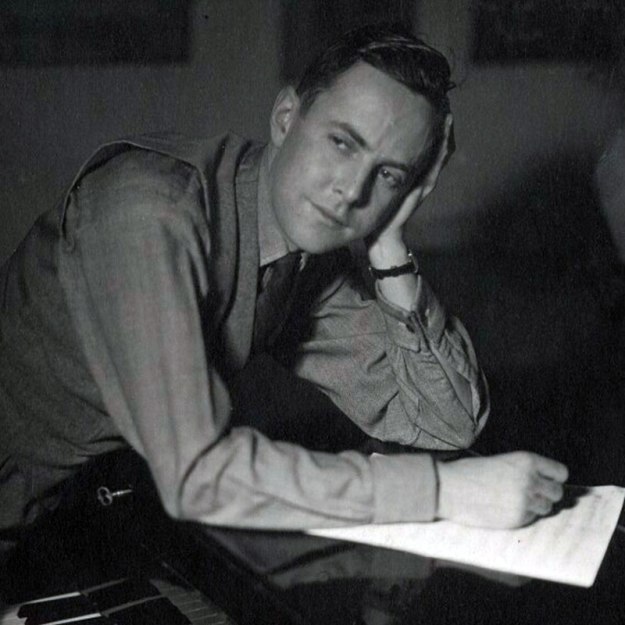
Together with the pianist, composer and playwright Albert Arlen, he wrote and directed Counterfeit, a comedy thriller in twenty scenes. After previewing in Richmond it transferred to London’s Duke of York’s Theatre, where it featured a young Charles Hawtrey, years before the Carry On films would make him a household name.
The reviews, unfortunately, were lukewarm.
Around the same time, Beverley Nichols found himself under growing financial and personal pressure. In 1937 he sold Allways, the idyllic Cambridgeshire cottage that had inspired his famous gardening books. Publicly, the sale was attributed to the need to finance his latest West End production, Floodlight, itself destined to disappoint at the box office.
There may, however, have been another reason.
Village gossip had become increasingly hostile. Nichols’ frequent male visitors attracted attention, while rumours of moonlit skinny-dipping parties and young local men invited to the house circulated far beyond Glatton. Whether exaggerated or not, such stories carried genuine danger. Homosexuality remained a criminal offence, and a whispering campaign could destroy both careers and reputations.
War interrupted everything.
In 1940 Butcher joined the Royal Navy. Little has emerged about his wartime service, but once peace returned he resumed the theatrical life that had been placed on hold for six long years.
Nichols and Butcher settled at Merry Hall in Ashtead, Surrey, in 1946. The elegant Georgian house, surrounded by extensive gardens, would become famous through Nichols’ gardening books, although behind the scenes Butcher was contributing far more than readers realised.
In 1949 he wrote Dear Heart!, a comedy staged by the Playwrights’ Theatre Group at London’s Chepstow Theatre Club. By then, however, another medium was beginning to eclipse the stage.
Television.
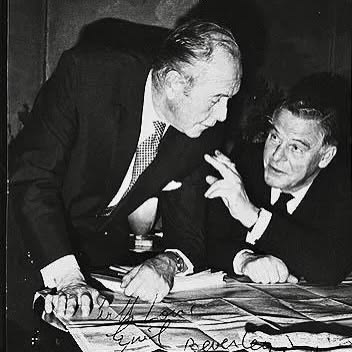
Beverely Nichols and Cyril Butcher
When Butcher began writing a television column for The Sketch in 1950, the medium was still finding its feet. His weekly articles charted life inside the BBC’s Alexandra Palace studios and later recorded the birth of commercial television with the curiosity of someone who recognised he was witnessing history in the making.
Five and a half years later he crossed the divide himself.
Associated-Rediffusion, Britain’s first Independent Television contractor, recruited Butcher to write and direct drama. It proved to be the defining chapter of his professional life.
Today, when scenes can be filmed repeatedly until perfection is achieved, it is easy to forget how television drama was once created.
In the 1950s almost everything went out live.
A forgotten line, a jammed door, a misplaced prop or a camera appearing in shot became part of the broadcast forever. If a programme needed repeating, there was no videotape waiting on a shelf. The entire cast and crew returned to the studio and performed the production all over again from the beginning.
It demanded absolute concentration.
Between 1955 and 1960 Butcher directed episodes of The Granville Melodramas, ITV Play of the Week, ITV Television Playhouse and Murder Bag. Week after week he helped establish the grammar of British television drama at a time when the rules were still being invented.
His achievements have largely been forgotten.
Yet millions of viewers watched programmes that passed through his hands.
In 1953, while rehearsing Nichols’ little-known play La Plume de ma Tante at Bromley Theatre, Butcher left midway through production after being called away to direct a television adaptation of Evensong—the very work that had first brought the two men together more than twenty years earlier.
Life has a curious habit of closing circles.
In 1958 Nichols and Butcher moved for the last time, settling at Sudbrook Cottage in Richmond, where they would remain together for the rest of their lives.
By the end of the 1950s, Butcher’s career had begun to change direction.
For two years he served as Senior Director of Schools Programmes before returning briefly to drama. By now, however, the industry’s priorities were shifting. The man who had once directed ambitious live productions increasingly found himself overseeing factual programmes with decidedly less glamour. Titles such as Shopping For You, Shop on the Corner, election coverage and broadcasts from the Ideal Home Exhibition reflected the changing demands of commercial television rather than any decline in his ability.
His final appointment at Associated-Rediffusion was as Head of its newly established Commercial Production Department.
Then came an altogether unexpected opportunity.
Television in Ethiopia was in its infancy. The Ethiopian Television Service had only recently begun broadcasting when Butcher accepted the post of Director-General, moving to Addis Ababa in 1965. For two years he helped shape a national broadcaster from the ground up, an experience unlike anything he had previously encountered.
His contribution did not go unnoticed. Emperor Haile Selassie awarded him the Order of the Ethiopian Empire in recognition of his work.
By the time Butcher returned to Britain, the pace of his life had slowed considerably.
In 1967 and 1968 he and Beverley Nichols embarked on an extended journey through South Africa, Singapore and the Far East while researching The Sun in My Eyes. Nichols wrote the text; Butcher supplied the photographs.
The arrangement had become familiar.
One man occupied the public stage.
The other often worked quietly behind the scenes.
Retirement, when it finally came, was only partial. Butcher continued to review television for The Stage, lent his support to plans for a fringe theatre in Wimbledon and, in 1984, became the subject of Old Stagers, a BBC Radio 2 programme celebrating veterans of British theatre and entertainment.
It was a rare moment in which the spotlight fell, however briefly, upon him.
When Beverley Nichols died in 1984, Butcher inherited the greater part of an estate valued at £131,750. He continued living at Sudbrook Cottage, despite suggestions that the house might have to be sold to meet taxes and other liabilities.
It never was.
Four years later, in 1988, Cyril Butcher died at the age of seventy-nine.
The handsome young man from Film Weekly had long since disappeared.
There are still people who remember Beverley Nichols and who knew of his lifelong relationship with Butcher. Most biographies suggest that, by their later years, companionship had replaced passion. Nichols’ attraction to younger men is well documented, as are his discreet encounters with the “rough trade” of London, while Butcher appears to have accepted those indiscretions with quiet resignation.
What passed between them in private is known only to history.
It is tempting to wonder whether Butcher’s contribution to Nichols’ success extended beyond the few acknowledged examples. We know that he ghost-wrote at least one published work and spent decades living alongside one of Britain’s most prolific authors. Did other manuscripts pass beneath his pen? Did other ideas become Nichols’ bylines?
The evidence is silent.
Perhaps it always will be.
After two days and one long night sitting opposite Cyril Butcher at Signora Bruschi’s kitchen table, I know a great deal more about his life than I did when I began.
I know that he was the young man who caught Alfred Hitchcock’s eye and starred in one of the director’s lost films. I know that he spent more than fifty years beside one of Britain’s most celebrated writers, helped shape the earliest years of commercial television, accepted an imperial decoration from Haile Selassie and quietly contributed to British theatre, journalism and broadcasting.
Yet, in another sense, I know almost nothing about him.
The archives reveal the milestones of his life, but not the life itself.
They tell us where he worked, whom he loved and what he achieved, yet remain stubbornly silent on the questions that matter most: what kind of man was he, what made him happy, what made him laugh and, when the lights finally went out, whether he believed he had lived the life he wanted.
Perhaps that is the fate of those who spend their lives just beyond the spotlight.
History remembers the stars.
It is less kind to those who helped them shine.
As I left Signora Bruschi’s kitchen, I glanced once more at the photograph of the twenty-year-old Cyril Butcher.
For a fleeting moment, it felt as though he was looking back.