Paris, But Make It Complicated
Deej wanted to visit Shakespeare and Company in Paris. For this, I was expected to travel 750 kilometres and hold his hand. It was probably a good idea to leave Verona for a while anyway. There is a lot I can do in Paris, but I prefer to remain elusive, slipping into the city unnoticed.
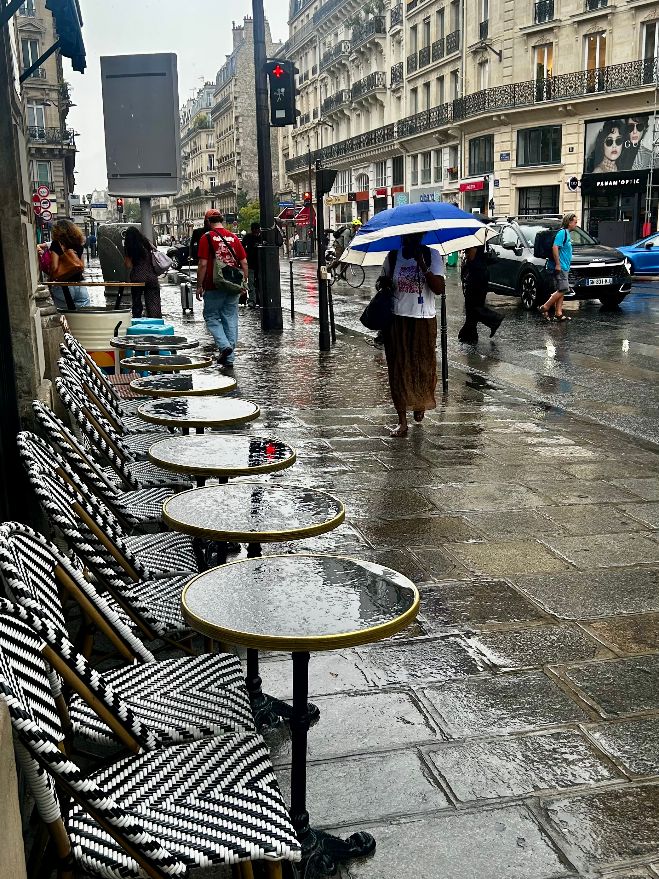
I met Deej at CDG and we caught the train to Châtelet–Les Halles, from where it was a ten-minute walk to Rue des Gravilliers. As soon as we emerged from the station, it started to pour with rain. I mean, fucking pour. Within minutes we were soaked.
The hotel was easy to miss. It occupied a collection of renovated buildings hidden behind two enormous wooden doors, with no sign to announce that we had arrived. The instructions, however, were perfect. Along a narrow path, up three flights of winding stairs and there it was: our room overlooking a tiny courtyard, with windows facing other windows on the opposite side.
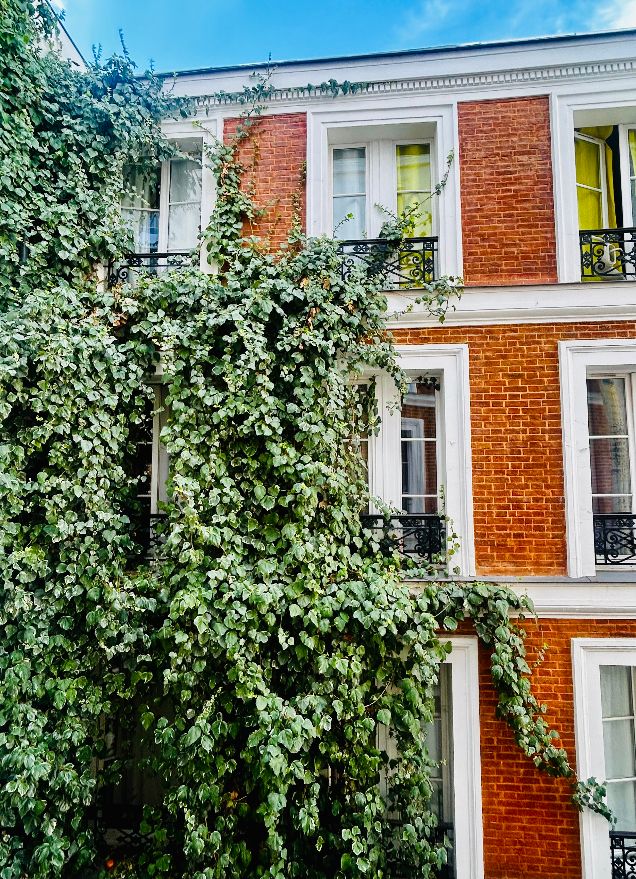
Ivy had taken over the walls. It climbed around the windows, covered some of them completely and seemed intent on swallowing the whole place.
The room was tiny but modern in a very nineties sort of way, and impeccably clean. A huge double bed occupied most of the space, leaving room for a small table and two chairs, a kitchenette and a bathroom that was little more than a cubby hole.
There was an art to taking a shower. There was nowhere to manoeuvre. Drop the shower gel and you were stuffed.
We had both travelled light: the shirts we were wearing, a couple of spare T-shirts and a pair of jeans. Unfortunately, the shirts had already got wet and were now hanging up to dry. Deej had already set his sights on one of my T-shirts and begged to borrow it.
I said no.
The next moment he was wearing it.
Deej, however, liked to sleep and would disappear for hours at a time.
I would wander off to my favourite place: a shaded courtyard filled with ivy and tall bamboo that kept out the sun. It was in almost permanent gloom. After the rain, the place filled with delicious scents and for a moment it seemed like something Gabriel García Márquez might have written in One Hundred Years of Solitude.
But this was France, where the heat had been insufferable and relentless.
Deej blamed me for the rain.
Eventually the sun returned, although the courtyard was so heavily shaded that every so often I had to look upwards just to check that it was still shining.
I spent hours reading there.
I finished my Beverley Nichols biography.
Deej cannot understand my fascination with dead people, which might explain why he frequently took to his bed.
Nichols had been one of the Bright Young Things of the 1920s. Look him up if you have never heard of him.
Shortly before his death in 1983, he said:
“Osbert Sitwell said that I was the first of the young bright people and now I am the last of them.”
I would have loved to have been Beverley Nichols. He had been everything I hoped to be.
From time to time I was joined by other guests: Americans, Spanish, Italians and Germans. They all behaved differently, but always with politeness. I would listen to their conversations because strangers can be an invaluable source of inspiration.
There was a Canadian couple with a son called Sam, probably fifteen or sixteen. He was ginger and had marvellous legs.
They sat around a table eating chicken baguettes bought from a local supermarket. The father complained that the bread contained sesame seeds, which seemed to be a disappointment.
“Why do you look like you are sucking dick?” Sam asked in a soft voice.
My ears pricked up.
“My jaw hurts,” his father explained. “Years ago I was eating semi-stale peanut brittle and something snapped. It hurt for a while but eventually the pain went away. Now I sometimes struggle to eat and it looks like I might be sucking dick.”
“Sam, what do you know about sucking dick?” asked a concerned Mommy.
I told Deej that I wasn’t doing the tourist thing. It was out of the question. I hate tourists. I hate the big queues, the clogged pavements and the meaningless photographs taken on phones that will probably never be looked at again. I hate the queues outside Shakespeare and Company, where people wait patiently to buy overpriced books they could probably buy cheaper somewhere else.
I have an urge to kick tourists whenever they get in the way.
I am like the Portuguese poet and writer Fernando Pessoa, who described active tourism as an expression of restless, unimaginative misery.
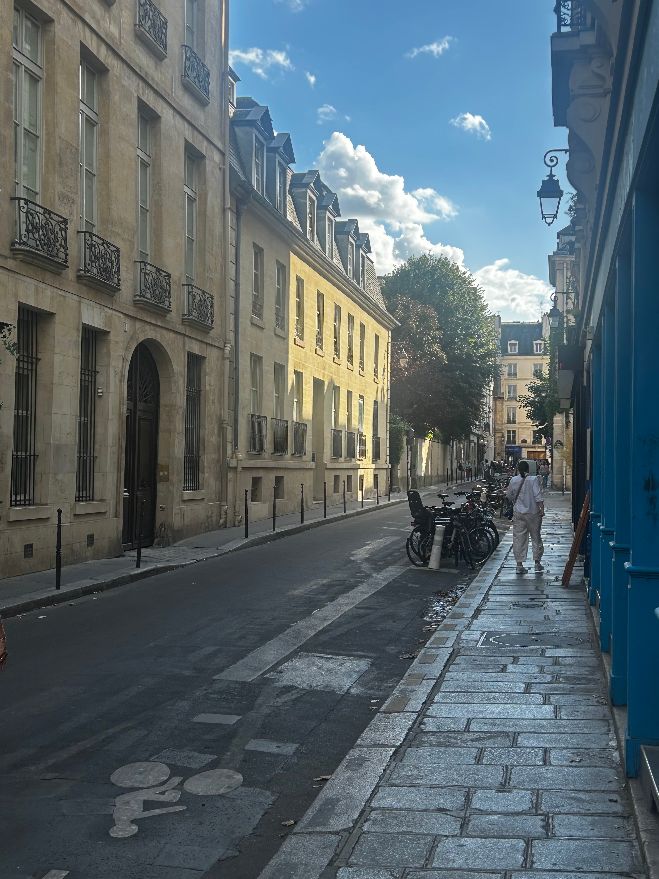
Instead, we explored the backstreets of Le Marais, where I learned that the district had once been the floodplain of the Seine. The bourgeoisie moved here in the seventeenth century, encouraged by King Henri IV’s creation of the Place des Vosges, then called Place Royale, between 1607 and 1612. What had once been marshland became the trendiest residential district in Paris.
I explained to Deej that the ground beneath our feet was soaked in blood and the guillotined heads of those same bourgeois.
Like an idiot, he looked down at the pavement to see what I meant.
In the early twentieth century, Le Marais was a bit of a shit show.
The grand houses had been divided into flats. Heavy industry moved into rooms where aristocrats had once danced. It became a no-go area where crime prospered and prostitutes gathered on street corners.
It is hard to imagine that now.
The authorities eventually ploughed money into Le Marais. Its buildings were renovated, its history brought back to life and its streets transformed.
I love Le Marais.
With its beautiful buildings, cafés and pocket parks, it has become one of my favourite districts in Paris.
I must tell you about the handsome French boy who was working at a bar we visited.
He was a picture to be treasured.
Wild dark hair, eyes with a quiet spark, teeth straight and orderly whenever he spoke. There were even a few traces of teenage spots on his cheeks, which somehow added to his appeal.
Deej, who is as straight as they come, was completely uninterested in my infatuation. While I followed the boy’s every movement, Deej noticed a mouse running beneath the tables and chairs. He was so fascinated by it that he failed to notice the dirty looks the boy was giving me.
He made it quite clear that he didn’t like me.
I would like to tell you that we met the boy in the street later. That he was hopelessly drunk and vomiting into the gutter. That we walked past him, looked at each other and laughed at his misfortune.
But we didn’t.
And perhaps that is the problem with real life. It so rarely provides the ending you deserve.