On considering my dwindling finances…
I’ve no concept of saving money, which is fine when your job allows a comfortable lifestyle. But that isn’t the case anymore. Work is disappearing fast. People are still interested in reading about European cities – history, best places to go and the secrets that they provide. People still want to read about these places and occasionally make good use of my observations. The number of posh magazines that cost a fortune to buy is increasing and there are thousands of websites wanting to make themselves look good. But the winds of change are making me redundant. First, it was decided that they didn’t want me to travel anymore – stay at home and research them or, better still, find somebody who lives there to do it. That saved them a lot of money. And now, with AI, they don’t need anybody at all. I’ve considered writing about other subjects but, guess what, nobody wants a real person to write it, especially one that will want to be paid. I read an interview with the author Lee Child, who, in a time now covered in cobwebs, was made redundant and decided to write a novel. He became a millionaire with Jack Reacher. But that’s not going to happen either. As one magazine editor told me, those days have gone, and it was bad luck that I chose a career at the wrong time.
On the missing ‘squatting boy’…
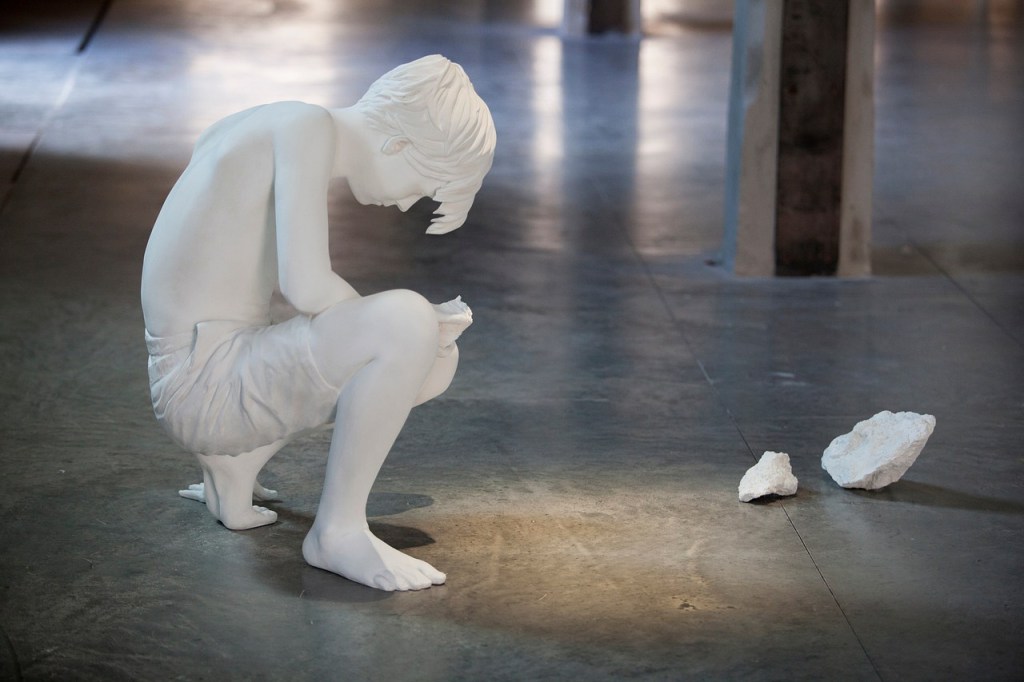
I found a photograph of a sculpture and immediately fell in love with it. It formed part of a three-piece installation titled El problema del caballo (The Horse Problem), displayed in the historic Arsenale — the former cannon foundry- at the Venice Biennale in 2017. Its creator, Claudia Fontes, born and raised in Argentina but now living in England, constructed a scene suspended in time: a monumental horse flanked by a life-sized woman and a squatting boy, all facing a shower of rocks hanging motionless in the air, their shadows scattering across the space to form the fractured outline of the animal itself. The boy seems caught between witnessing the event and studying the fragments at his feet, as though unsure whether he is observing destruction or deciphering it.
I tried to discover what became of the work afterwards, but it appears to have simply vanished. Does it lie forgotten somewhere now — draped beneath a tarpaulin, gathering dust and cobwebs in some anonymous warehouse? Or worse, was it dismantled and destroyed? There is something almost unbearable in the thought that a work of such strange beauty could disappear so completely. Why create something so haunting, so precise in its evocation of wonder and catastrophe, only to hide it away from the world? I am told that, in contemporary art, the act of creation and the conceptual gesture can hold greater value than the object itself. Yet that explanation feels strangely unsatisfying when confronted with something one longs to see.
On the benefits of hot weather…
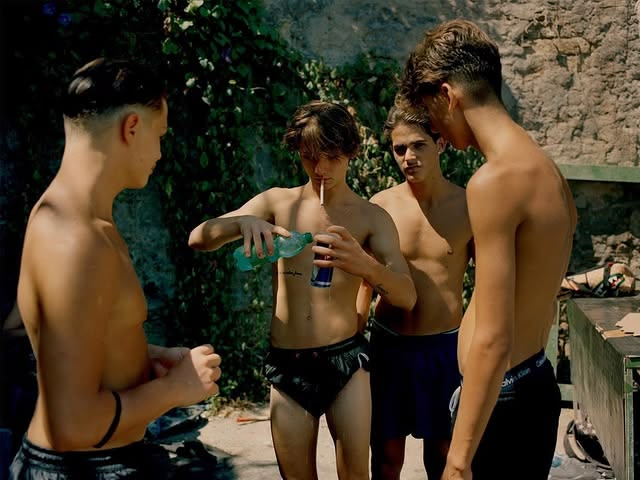
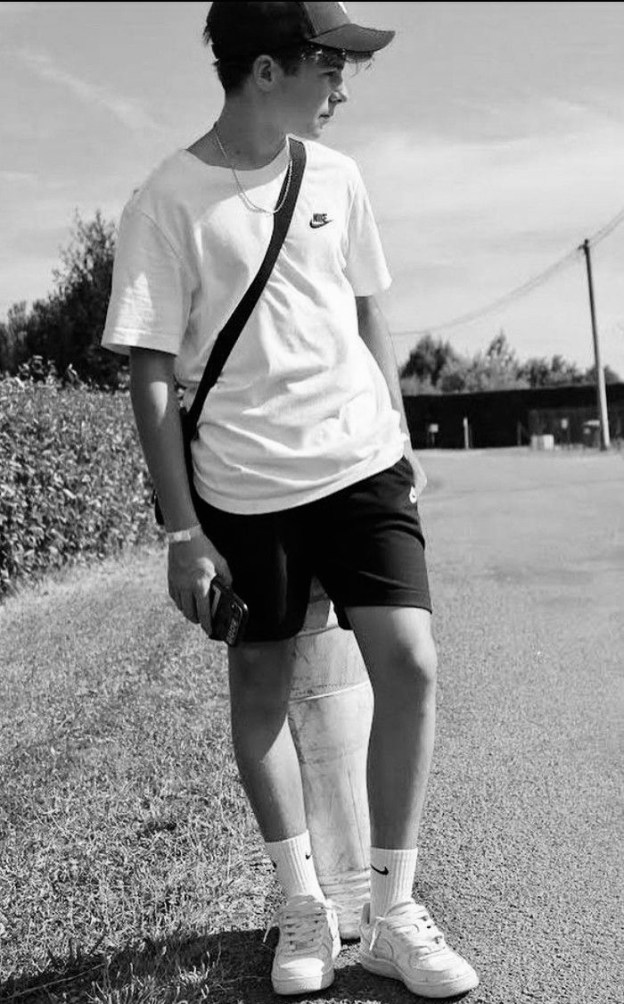
Heatwave. Black shorts. White tees. It has become the standard summer uniform: simple, effortless, and quietly revealing. There is something undeniably appealing about the combination — the clean contrast of dark shorts against sunlit skin, the casual ease of a white T-shirt worn loose in the heat.
Part of the attraction lies in a natural appreciation for fit, athletic legs and the relaxed confidence that warm-weather dressing encourages. Well-shaped calves, strong thighs, and defined muscles suggest health, balance, and physical vitality without seeming overly deliberate. Summer style works best when it appears unforced.
More than anything, it conveys ease. The look belongs to long evenings, beaches, city pavements shimmering in the heat, holidays, freedom, and movement. It suggests someone comfortable in their own body and unconcerned with trying too hard — a kind of self-assurance that people instinctively respond to. There is also an air of fun and openness to it, something approachable and youthful that feels inseparable from summer itself.
On dabbling with Bailey…
Bailey is cute, but I can’t cope with his hypochondria. A nosebleed needs major surgery. He says that his nose bled so much that his teeth hurt. Beauty sometimes hides intelligence, but, there again, maybe it isn’t intelligence that I’m looking for. It’s not about sex either. It’s about getting naked, cuddling in bed and hoping that he doesn’t talk too much.
On the Lamentation for Jonathan…
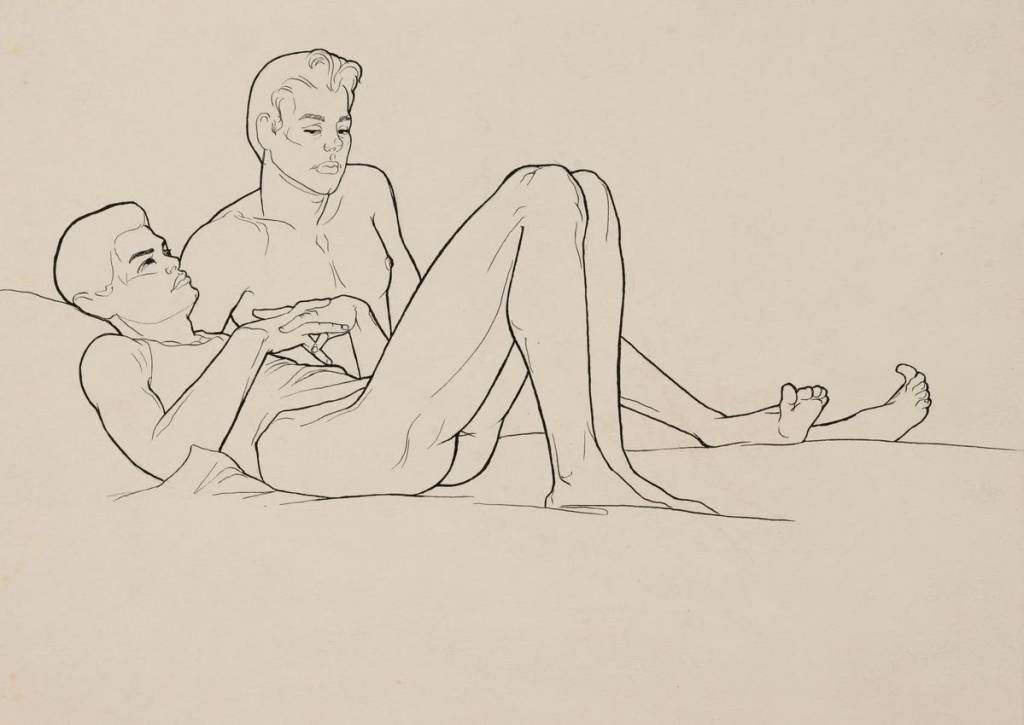
A poem from ancient Hebrew literature, The Lamentation for Jonathan — also known as David’s Lament or The Song of the Bow — is among the most celebrated elegies in the Bible, appearing in Books of Samuel (2 Samuel 1:19–27). It forms part of King David’s mournful response to the deaths of King Saul and Jonathan — Saul’s son, David’s closest companion, and the man with whom he shared a profound and fateful bond. Both were killed in battle against the Philistines on Mount Gilboa.
Jonathan and David had made a covenant together, for Jonathan loved David “as his own soul.” Jonathan stripped himself of his robe and gave it to David, along with his garments, his sword, his bow, and his girdle:
The beauty of Israel is slain on the high places;
How are the mighty fallen!
I am distraught for you, my brother Jonathan;
Very pleasant have you been with me!
Your love was wonderful : passing the love of women!
How are the mighty fallen:
And the weapons of war perished!
The passage has an emotional intensity that still feels startlingly intimate. The language of grief, devotion, and physical closeness moves far beyond the formal language of political alliance or military comradeship. It is beautifully homoerotic — though there are always those who insist that we should not read too much into it.
On agreeing with Joseph Caprio…
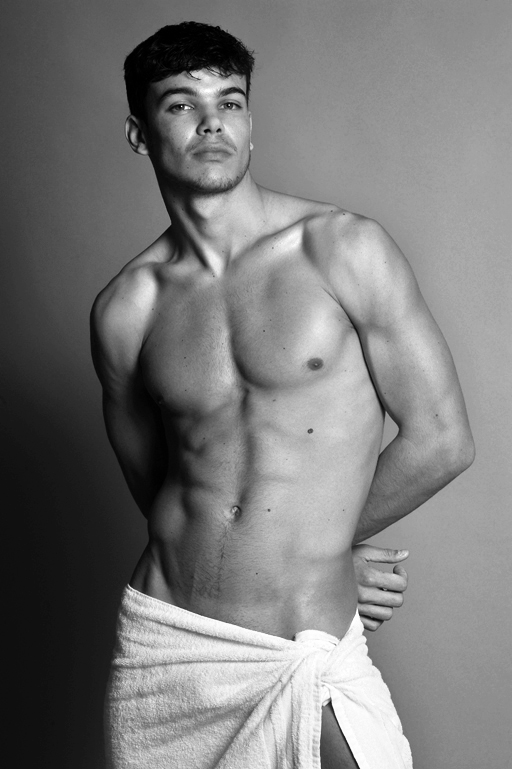
“I have often been criticised for photographing only beautiful men, for creating images than are purely aesthetic and rather superficial. On first impression, that may seem to be the case. In my defence, if I had to justify my work – if justification is necessary – I would say that I am made anxious by the passing of time and that I have a certain distaste for the world and so, when I am in the studio, I seek one thing: to forget reality for a moment and to dream. To dream that I am in a world where there is only beauty, a world where time takes no toll. Yet my mind, my soul, is ever present and casts its shadow as I work. It would therefore be a mistake to stop at first impressions.” – Joseph Caprio
On considering writing a biography…
On the cute and willing…