A Noble Name, an Ordinary Life …
Signora Bruschi received a visit from an old neighbour, Signor Luigi Bevilacqua, an elegant man who owns a second-hand bookshop filled with volumes I cannot read because they are all in Italian. They sat together over coffee, exchanging news of people they had known for years. Signora Bruschi is not usually one for gossip, but she seemed happy to make an exception on this occasion.
Signor Bevilacqua belongs to the historic Bevilacqua-Lazise family, whose legacy includes Paolo Veronese’s magnificent Bevilacqua-Lazise Altarpiece, which I admired in the Museo di Castelvecchio.
Like Signora Scala next door, however, these old aristocratic families survive largely in name alone. Signor Bevilacqua is a man of modest means who shops at Eurospin and watches Un posto al sole on television. There was something rather pleasing about that contrast.
Curiosity sent me down the inevitable rabbit hole. The history of the Bevilacqua-Lazise dynasty is so extensive that it is easy to wander from one fascinating detail to the next until you realise you have strayed a very long way from where you began.
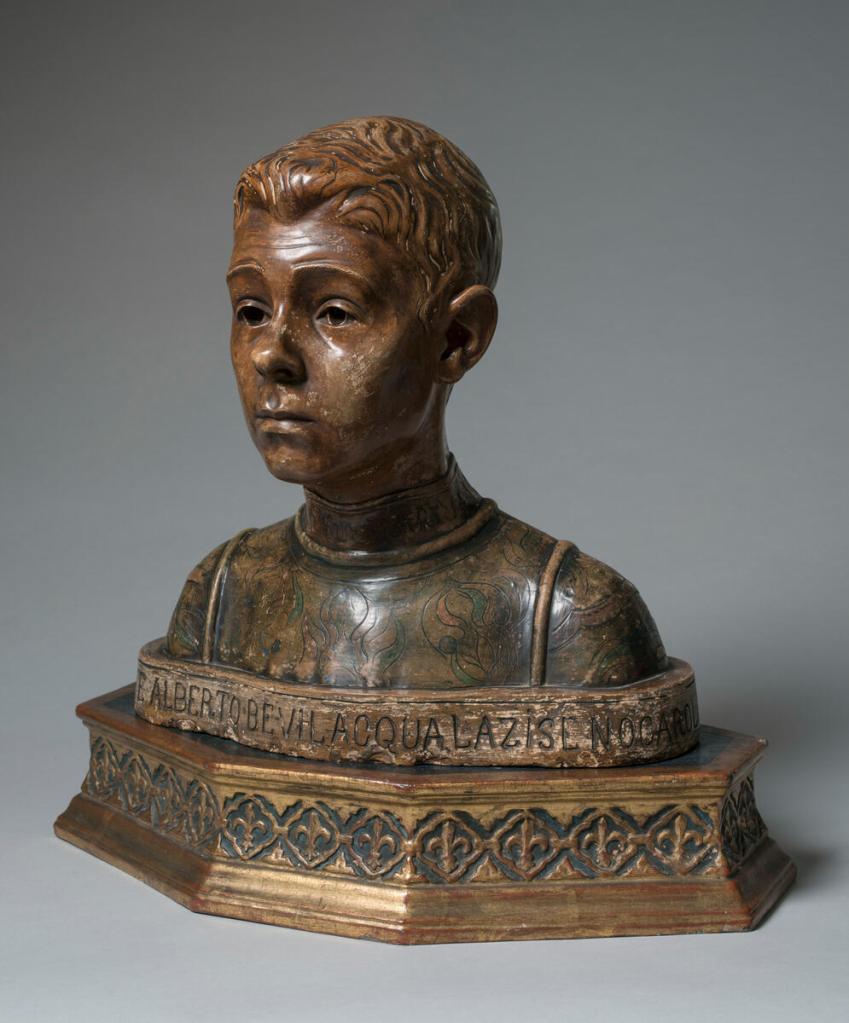
I suspect that Conte Alberto Bevilacqua may have been one of Luigi’s forebears. A member of the Bevilacqua-Lazise family, Alberto is best remembered as the youthful subject of an 1899 terracotta portrait bust by the sculptor Hendrik Christian Andersen. The bust was acquired by Henry James, who displayed it on the chimneypiece at Lamb House in Rye.
James wrote:
“I’ve struck up a tremendous intimacy with dear little Conte Alberto, & we literally can’t live without each other. He is the first object my eyes greet in the morning & the last at night.”
The sculpture captures Alberto as a boy with an eager, inquisitive expression—not unlike Bianchi—and it remains at Lamb House today as part of the National Trust collection.
My favourite quote …
“I think that there’s something very, very severely neurologically deficient about the generation right under me. I think screenagers, as they call them now, are fucked. God go with them. Good luck.” – Katya Zamolodchikova

Coffee Before Country …
Lautaro bought me a coffee. It was a peace offering, as if to say, I might be from Argentina, but please don’t judge me. I turned my back on him and laughed, which, in truth, was rather childish.
Everything Sounds Better in Italian …
Sitting on the steps of an old Catholic church, I listened to a young man speaking with his mentor. He worked his way through a list of places where they might hold a meeting. He had clearly done his homework, arriving with notes and a carefully considered list of options. His mentor questioned each suggestion, and the young man answered thoughtfully.
They spoke in Italian that I could follow—slowly, passionately—and somehow this entirely mundane conversation sounded impossibly romantic.
The Church, the Ball, the Boys …
Late afternoon. I sat on an old bench, a memorial to Concetta Rossini, who died in 1996.
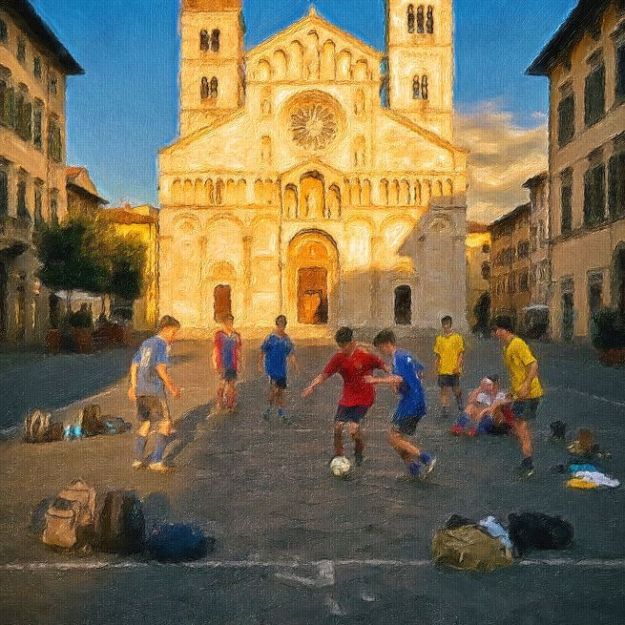
Teenage boys played football—World Cup heroes, though none of them Italian. Echoing thuds. The hollow knock of a plastic ball rebounding off weathered travertine steps and ancient wooden doors. Worn backpacks and abandoned electric scooters became goalposts against a sacred backdrop that had witnessed centuries of community life.
Sharp, rhythmic cries of “Lascia! Batti! Tira!” ricocheted off the high stone walls, mingling with the peal of the church bells. Apart from me, the only spectators were weathered marble saints, rose windows and towering columns, silently watching the fleeting, restless energy of youth.
The sharp, geometric shadows cast by the church’s Baroque façade slowly crept across the piazza, offering a cool sanctuary from the heavy afternoon heat. Just a few feet away, sunlight blazed across the cobblestones, drawing a glowing boundary as the game flowed in and out of the light.
To those boys, this might just as easily have been the San Siro or the Stadio Olimpico.
Great Freedom, Small Mercies …
I watched Great Freedom—Große Freiheit in German—with Bianchi. Franz Rogowski plays Hans Hoffmann, a man repeatedly imprisoned under Paragraph 175, the law that criminalised homosexuality.
Halfway through the film, Bianchi asked why Rogowski “spoke funny”. Irritatingly, he had a point. I later discovered that Rogowski’s distinctive speech is the result of surgery to repair a cleft palate and lip during childhood. I told Bianchi not to be so cruel, whereupon he kicked me hard with his bare foot, managing only to hurt himself in the process.
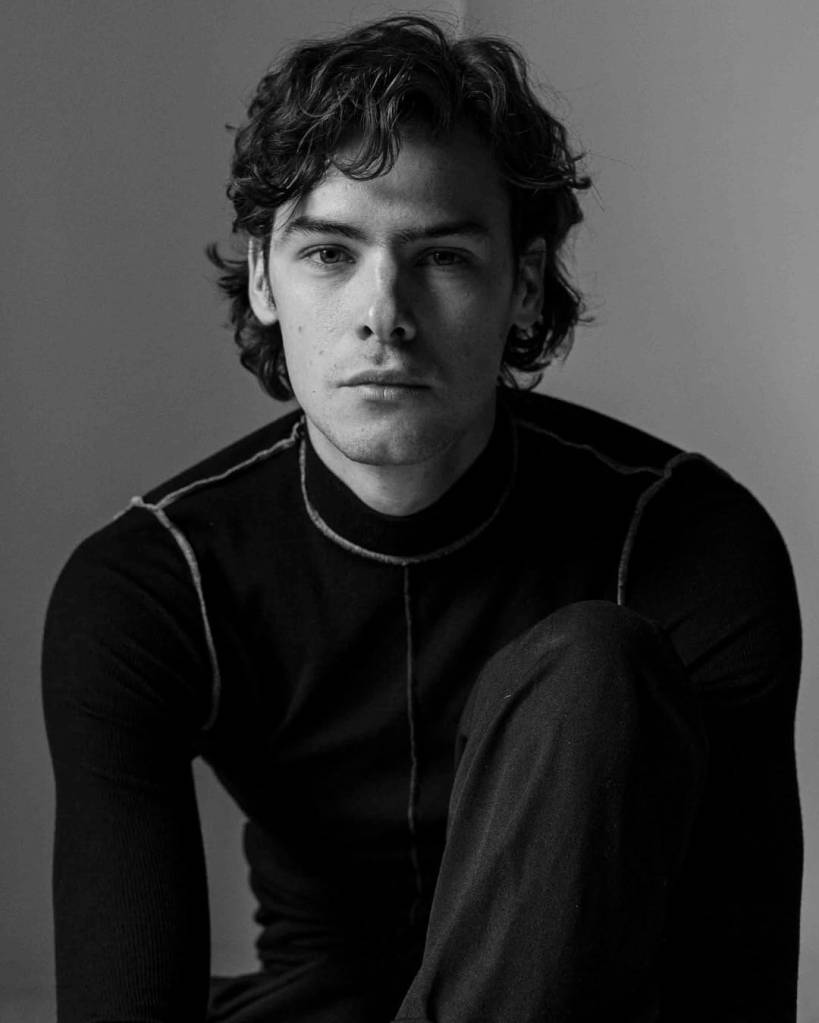
One character, Oskar, played by Thomas Prenn, immediately caught my eye. Unfortunately, my newfound admiration was short-lived, as he promptly fell to his death from a rooftop.
Bianchi noticed my disappointment and, in his own uniquely compassionate way, consoled me by kicking me with his other foot.
Given that Prenn’s character is German, I was surprised to discover that the actor was born in Innichen, Italy, before studying at the Ernst Busch Academy of Dramatic Arts in Berlin. Fluent in both Italian and German, he would be the ideal person to translate between Bianchi, Severin and me—assuming he was available and prepared to tolerate us.
On the cute and willing…