Some of the most beautiful people choose to live the hardest lives
I swear that I once read that there was a home in California for retired gay porn stars from the 1980s and 1990s. The weekly film night looked fun. But I stand to be corrected because I can’t find any evidence of it now.
I once knew a gay porn star. At least, that’s what he called himself. A bit of a fabrication, really. He made one movie and was dropped because of his inability to maintain an erection. The last I heard, he was a shop assistant at Mango Man in Alicante.
A lucky escape, really.
For all of us.
Yes. I’m stuck in a bubble of lube at the moment.
After being star-struck with Joey Stefano (RIP), another challenger surfaces for the ‘I fucked my life up’ award.
Christian Fox.
By the time you read this, it will be thirty years, almost to the day, since the 22-year-old died from a lethal ketamine overdose at his apartment in New Orleans. His body was discovered three days later. A suicide note was recovered from the scene.
There are a few social media posts that say Fox was ‘a lovely guy’.
But dead guys are always lovely guys.
The same thing happens when a young guy steals a car, evades a police chase and then wraps himself around a tree. Suddenly, he was a ‘lovely lad’.
I don’t know whether Christian Fox—love the name—was a lovely lad or not.
Chi Chi LaRue, patron saint of dead gay porn stars, called him one of the most challenging individuals to work with. He had a reputation for being difficult.
Beyond a shadow of a doubt, I would have liked him.
He ticked every box. And not just because of the athletic physique and ‘honey-blond’ aesthetic.
Born Christopher John McLaughlin in Port Hardy, British Columbia, in 1974, he had an unstable childhood and was placed into foster care at thirteen. He ran away after allegedly being sexually abused and travelled across Canada and the United States using fraudulent identification to conceal his age.
He became an underage dancer at late-night gay venues and adopted the name Christian Fox.
Don’t you admire the spunk of the kid?
He reportedly made his first adult film on his eighteenth birthday and became an exclusive model and actor for Falcon Studios. At the same time, he appeared in gay publications including Manshots, Jock, In Touch and Gay Video Guide.
Like Stefano, he bucked the trend and became known as a ‘premier bottom’ performer.
But Fox developed increasingly serious problems with substance abuse, making him progressively unreliable. By early 1996, his career was effectively over.
Fox had insisted that he would not allow his porn career to become something that wore him down or something of which he would eventually be ashamed.
When his talent agency terminated his contract, the writing was on the wall.
To secure legal residency in the United States, he entered into a marriage of convenience with an American friend and relocated to New Orleans.
But by then, the real problem wasn’t pornography.
It was everything else.
Substance abuse. Depression. Isolation. The inability to imagine what came next.
When Chi Chi LaRue warned him that he might suffer the same fate as Joey Stefano, Fox reportedly replied that he ‘wanted to go’.
LaRue also suggested that Fox was confused about his sexuality.
His neighbours only saw a young man who rode a motorcycle and walked around the French Quarter in a black leather jacket.
Success had come too easily and too young.
Behind the façade was a different world.
Fox was suffering from severe depression.
The porn industry didn’t care if somebody was mentally unstable. And when the cameras stopped rolling, Fox had no obvious way back into the real world.
Shortly before he was due to enter rehab, Fox attempted suicide by throwing himself through a plate-glass window. His injuries prevented him from being admitted.
His wife, Shawn, left him shortly afterwards.
And then, a month later, he was dead.
Twenty-two.
That is the bit I keep coming back to.
Not the body. Not the porn. Not the photographs. Not even the ridiculous mythology that grows around young men who die before they have had the opportunity to become anything else.
Twenty-two.
A whole life still sitting there, unused.
Perhaps that is why I like the idea of the retirement home for old porn stars. I want it to exist.
I want to imagine them at seventy, eighty, sitting around a communal television watching films they made when they were twenty, arguing about who had the best arse, complaining about the heating and asking what happened to everyone else.
Because somebody should get old.
Somebody should get the chance to become boring.
Somebody should survive long enough to look back and think:
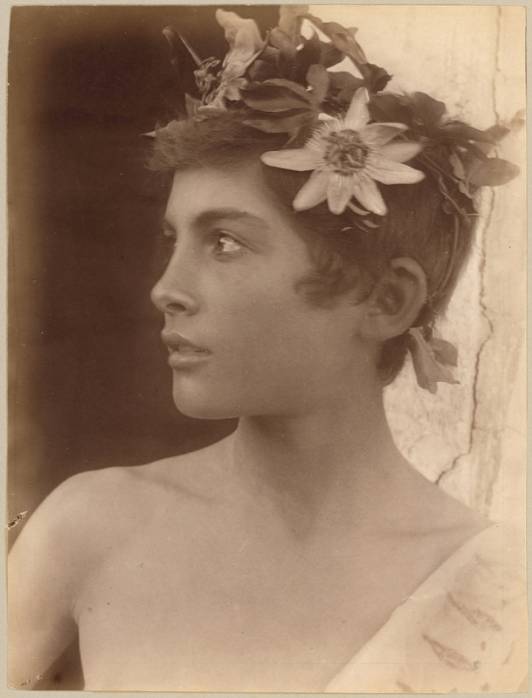
Giacomo crowned with passion-flowers. c.1890-1900. Wilhelm von Gloeden
Art, Innocence, and the Burden of Looking Back
David was in a quandary; the problem was of his own making. It was a friend of Joshua who wanted a name — a name that would read ‘curated by’ and command attention. Of course, David had agreed, but now he had his regrets.
An email from Pamela Hutchinson had been the source of it all. This exhibition is inappropriate and offensive. When David failed to respond, she went to the media, who were only too eager to champion her cause.
“Fucking do-gooder,” he had moaned to Joshua.
But it transpired that she knew far more than he had anticipated.
“The boys he used were underage and exploited by an unscrupulous man.” Those were the words a journalist from The Standard had used over the phone.
“How does anyone know that?”
The exhibition at the McDonald Gallery on Wellington Street was to include sixty photographs taken by the German, Wilhelm von Gloeden. The concept mirrored a similar exhibition mounted by the photographer in the 1890s.
Back then, there had been no objection to von Gloeden’s work.
“The Victorians were either more accepting or considerably more naïve,” David reflected. “His work has been displayed all over the world, and I doubt they faced the kind of problems I’m dealing with now.”
David wasn’t selecting the photographs — that responsibility lay with Nathaniel Wilson, the American who had approached him — but he had agreed to write a critical essay for the catalogue. Yet as the backlash grew, it was David whom people sought out. Mail Online had already published a particularly damning article, one that threatened his reputation as a credible writer.
Joshua had researched von Gloeden and discovered that his notoriety only emerged in the latter part of the last century. Before then, his work had received glowing reviews from newspapers around the world.
“Count von Gloeden is very clever in the way he introduces nude figures of Sicilian boys into his landscapes. It is something quite out of the ordinary, and for those who appreciate artistic work, the figure studies — with their almost classical subjects — will be found of especial interest.”
He read this passage out aloud to David, who noted that it came from a newspaper published in 1909.
“I suppose it’s my fault,” Joshua reasoned. “I must admit, I didn’t realise the subject matter might be considered objectionable now.”
The story of Count Wilhelm von Gloeden had always fascinated David. He had first encountered his work in an old book — The Spell of the Southern Shores; or, From Sea to Sea in Italy — written by Caroline Atwater Mason in 1915. It had been illustrated with landscape images taken by von Gloeden.
Von Gloeden had been born into a well-heeled Prussian family in 1856 and later travelled to Naples, where his cousin, Wilhelm von Plüschow, a photographer who also specialised in pictures of young nude men, encouraged him to take up photography. In his early twenties, suffering from tuberculosis, von Gloeden moved on to Taormina, then a remote village, only accessible by donkey, in Sicily.
He was one of two men credited with turning Taormina into a tourist destination.
The first was Otto Geleng, a Prussian painter who, having fallen ill in Rome, travelled to Taormina in 1863 to convalesce. When three Parisian critics came to visit, the only local inn — the Bellevue — proved inadequate, and Geleng transformed the house in which he was staying into a hotel. It became the Hotel Timeo, still thriving today. When the critics returned to France, the articles they wrote drew the first wave of tourists from Prussia and France, soon followed by visitors from Holland, England, America, Russia, and Poland.
The next was Von Gloeden, a member of the German nobility, who was wealthy, extravagant, sociable — and more than a little eccentric. He kept a large collection of birds — ravens, parrots, nightingales, canaries — and delighted in teaching them to talk and whistle military marches.
He began taking photographs as a hobby, but when his stepfather was accused of treason by Kaiser Wilhelm II and stripped of his possessions, the flow of money to Taormina dried up. Von Gloeden was forced to rely increasingly on photography for his income.
He installed a studio and laboratory in his villa and printed images of local landscapes and architecture as postcards and souvenirs.
The baron also set about persuading shy, nubile young boys to pose in the manner of Greek statues.
“Many of the pictures have a fascinating charm that recalls the odes of Horace and other classical poets of these sunlit lands. All his models seem to the manner born, their graceful lines and quiet, expressive faces harmonising so perfectly with surroundings of luxuriant foliage, abundant flowers, and sunlit glades.”
That, along with their easy smiles, was about all they wore.
David rang Nathaniel, who seemed to be keeping a low profile in New York.
“The problem,” David said, “is that people now see the photographs as child pornography.”
“They’re of their time,” Nathaniel replied. “They belong to a particular moment in photography — when people were still working out how to handle flesh in strong light and shadow. And you must admit, for such an early stage, it’s handled with real skill.”
“What are you getting at?”
“I mean,” Nathaniel went on, “you’re looking at sun-darkened skin under a harsh, blazing light — not the pale tones you’d get in England’s softer sunshine.”
David was none the wiser. It sounded as though Nathaniel was reading from notes laid out in front of him.
“And besides,” Nathaniel continued, “this was when photography was beginning to supplant fine art. Visitors wanted clarity — every detail sharp, everything evenly lit. That was what they valued.”
If David had been hoping for reassurance from Nathaniel, he wasn’t finding it.
“But the nude photographs appear to be of underage boys,” David suggested.
“They’re not underage boys,” Nathaniel replied. “They’re dark-skinned, classically proportioned lads — fine-limbed peasant boys. I’ll grant you, the work does come under scrutiny from time to time, but we are talking about art.”
“If that’s the case,” David said, “then I’ll forward all media enquiries to you.”
He ended the call and turned to find Joshua hovering with fresh information.
“I came across something about a von Gloeden exhibition in Sydney — in the nineties, I think. Detectives were sent in after a complaint, quite high-level, claiming the photographs amounted to child pornography. But in the end, they decided the images were harmless.”
“Exactly,” David said, warming to the argument, finding himself cast as an unlikely devil’s advocate. “Why do people take offence at something so trivial? The models themselves hardly seem troubled by any sense of impropriety.”
“But…” Joshua hesitated, choosing his words carefully, “there’s no getting around the fact that von Gloeden used these photographs of nude boys not just as art, but as a kind of advertisement — for the sort of clientele Taormina began to attract.”
“That’s a bit harsh,” David replied, though he was aware that von Gloeden had been openly homosexual and known for his late-night revelries, both at his villa and in the surrounding meadows. It spoke to von Gloeden’s charm — and his influence — that the people of Taormina tolerated his unconventional behaviour, even when it involved their own sons. The town, after all, had prospered, riding a wave of economic growth driven by the very visitors he helped to draw there.
Joshua continued.
“I don’t think we can deny that von Gloeden was a gentleman who liked young boys and took a great many photographs of them — mostly nude.”
That night, David resolved to look more closely into von Gloeden’s life and work. What he found would help him reach a decision: whether to withdraw from the exhibition or stay and weather the criticism.
He trawled through old newspapers and discovered that attitudes had shifted in the latter part of the twentieth century, and that von Gloeden’s reputation had suffered accordingly. The tone had hardened. One writer dismissed him as “that poor old homosexual, the Baron von Gloeden, who hid lust behind an academic glass.” Another claimed the photographs seemed “designed for a market of privileged oglers,” while a third described him as “an artful dodger whose work slipped past the censors.” Even the more measured critiques carried an edge, suggesting his images gratified “three desires at once: art, classical tranquillity, and the sanctioned glimpse of desirable bodies.” One publication went further still, branding von Gloeden a charlatan.
Von Gloeden’s work seemed almost tame by today’s standards, yet he could not ignore the fact that his steady production of homoerotic images had proved immensely profitable, earning him admiration across Europe.
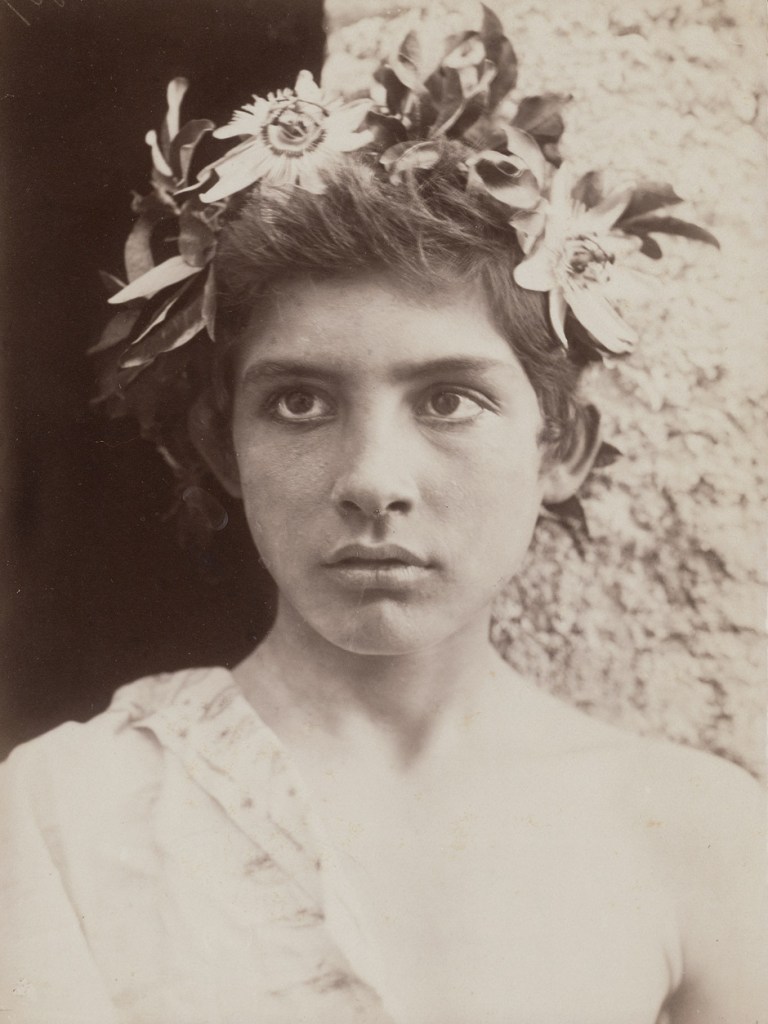
Most of the photographs, he noted, were sepia-toned, printed on gold-hued salted paper. The boys posed with a certain taste and deliberation: a dark-haired youth stretching eagerly sideways and upwards to peer through a window; a group of boys reclining along the rough parapet of a height overlooking a lake ringed by mountains. Both compositions made full use of their romantic natural settings. The wider body of work followed similar themes, many images featuring boys whose graceful bodies were adorned with wreaths of laurel and flowers, set against pale masonry or slender columns. In some, distant bays appeared through arching boughs heavy with white blossom.
One journal compared von Gloeden’s photographs to the paintings of Lawrence Alma-Tadema.
But, as he delved deeper, David discovered a great many photographs of completely naked boys that left nothing to the imagination.
He also came across a reference to Pancrazio Buciunì, who had died in 1963, a year before David was born. At fourteen, he had entered von Gloeden’s service and later became one of his most frequent models — known as Il Moro — and, likely, his lover. Von Gloeden had taken more than 7,000 exposures and, upon his death in 1931, left them all to Buciunì.
In 1936, Buciunì was prosecuted by the Fascists for possession of “pornographic material,” and many of the Baron’s plates were destroyed under court order. Yet he had the foresight to conceal around 1,500 of them beneath the stones of his floor. While von Gloeden’s photographs had already travelled widely across the world, it was largely thanks to Buciunì’s intervention that many of the surviving images — including those now destined for exhibition — had endured at all.
But David’s thoughts kept circling back to the present.
Pamela Hutchinson, who had first raised concerns, spoke for a wider audience — those whose views were shaped by a more modern moral framework.
The ages of the boys had never been definitively established, and David discovered that many may have perished in the 1908 Messina earthquake, though Taormina itself seemed to have escaped the worst of it. In truth, the extent to which minors were depicted erotically might never be fully known.
There was also the question of power: von Gloeden, a wealthy aristocrat, and the impoverished peasant boys who lived at his mercy. In Sicily, young boys commonly went nude at the beach, and across much of the Mediterranean, homosexuality was often regarded as a passing phase in adolescence.
For struggling families, payment in exchange for their sons posing for von Gloeden would have been difficult to refuse. Yet it was equally hard to ignore the likelihood that he exploited these boys, his images serving, in part, the interests of sexual tourism.
David could not deny that, throughout the twentieth century, von Gloeden’s work had frequently been labelled obscene. What unsettled him was the realisation that earlier generations had not seen it that way at all — to them, it had been art: a new form, even, one that threatened to unsettle the dominance of traditional fine art.
Joshua interrupted.
“Have you made a decision yet?”
David toyed with a ruler, buying himself a moment, as though the answer required more thought than it did.
“I have,” he said at last. “For all the criticism, the exhibition matters. I need to write something that acknowledges everything we’ve uncovered — the admirable and the troubling — and accept that some will find it distasteful. There’s a temptation to sanitise the past, to smooth it into something more palatable, but ignoring it doesn’t make it disappear. It happened. The least we can do is face it honestly, from all sides.” He paused, then added, with a faint shrug, “Besides, as they say, even bad publicity has its uses.”
Giacomo garlanded with passion-flowers. c.1890-1900. Wilhelm von Gloeden
“I give my white-skinned boy a pearl Fair as his body and as strange As still pools veiled in mists that change Their mysteries as they wreathe and curl: — So that his visions ever be Wondrous and subtle as the sea, I give my white-skinned boy a pearl.”
This verse comes from The Seven Gifts by Edmund John, published in the May 1916 edition of The English Review. It was introduced with the following note: “Suggested by the fragment of a letter from an Athenian father to his son, in the time of Pericles, now in the possession of Sydney Oswald, Esqre.”
The note was almost certainly fiction—an artful screen to disguise the real impulse behind the poem. Edmund John liked writing about boys.
One of Britain’s most obscure poets, Edmund John (1883–1917) was never afforded the opportunity to establish a reputation. His premature death at thirty-three ensured that his name would slip quietly into obscurity. Only three volumes of poetry were published: The Flute of Sardonyx (1913), The Wind in the Temple (1915), and the posthumous Symphonie Symbolique (1919). Today, he is largely forgotten, his small but striking body of work almost entirely overlooked.
John was born in Woolwich on 27 November 1883 to a Welsh father and a Scottish mother. He studied science—particularly biology and chemistry—before turning to philosophy. With his brother, he ran a boys’ school in Crouch End, supplementing his income by coaching undergraduates.
Travel appears to have played an important role in his development as a poet. The introduction to Symphonie Symbolique suggests that Cuba left a lasting impression:
“Where the glowing colours of the South, the luxuriance of the tropics, provided his palette with a richness that it did not possess before, and gave to his verse an almost exotic warmth and splendour.”
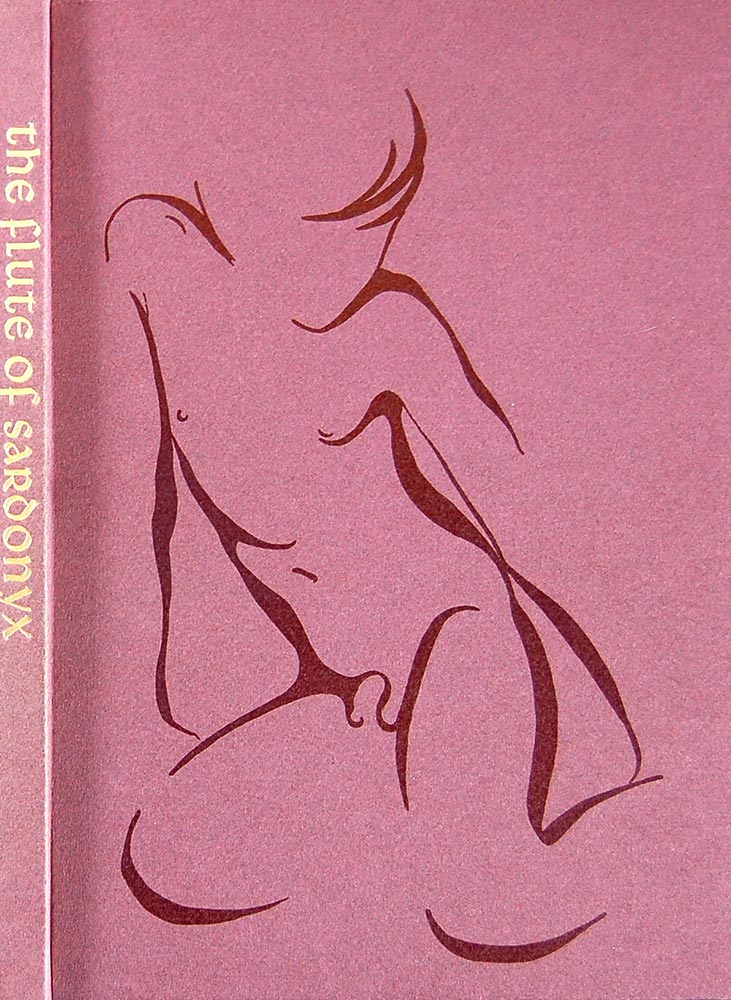
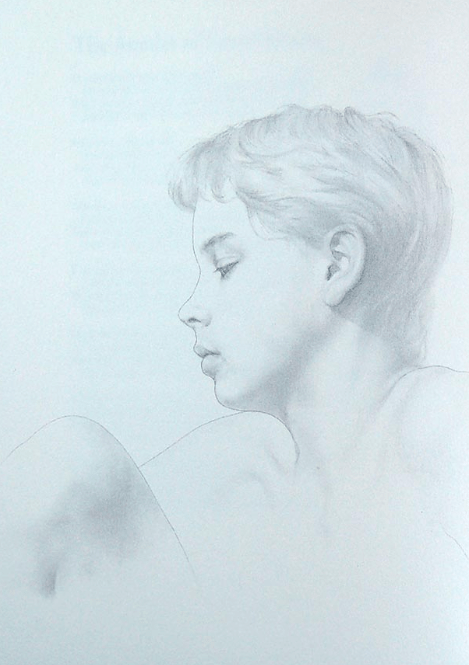
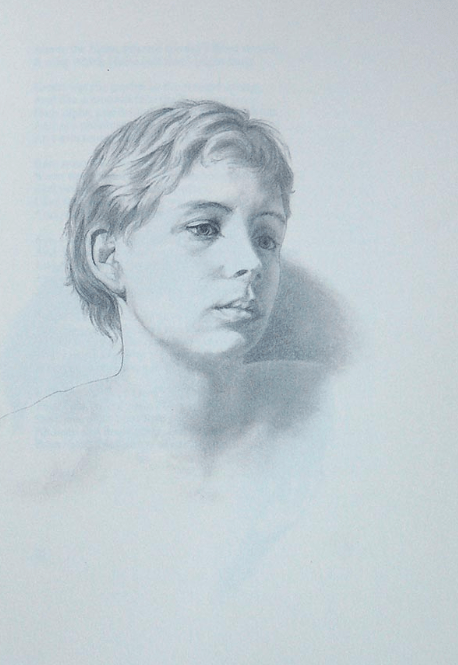
The Flute of Sardonyx (1913). Reprinted in 1991 (The Old Stile Press) with pencil drawing by Nicholas Wilde
His first book of poetry, The Flute of Sardonyx, gained immediate notoriety upon publication. Critics were, for the most part, receptive—perhaps because many failed to grasp its implications. One who did not was James Douglas, a prominent literary critic, who launched a fierce attack on both Edmund John and Stephen Williams, author of the book’s introduction.
“Williams in the introduction of The Flute of Sardonyx seeks to justify or excuse these poems by citing Milton’s definition of poetry, and he implies that Milton meant by the word ‘sensuous’ not merely the normal, healthy, and wholesome senses of the normal, healthy, and wholesome human being, but also the debased, depraved and degraded sensations of a perverted and abnormal erotomania. I have not the slightest doubt that in a court of law an English jury and an English judge would not hesitate to condemn Mr John as being guilty of a gross offence against elementary propriety. I demand without delay the volume should be withdrawn in deference to what I believe to the inevitable and inexorable verdict of public opinion.”
One poem in particular, Salome, provoked Douglas’s outrage.
“These stanzas, I venture to affirm, are of a vileness hitherto unparalleled in English poetry. Nothing approximating to or of approaching depravity has, as far as I am aware, ever been tolerated in English literature.”
Others were scarcely more forgiving. A. E. Manning Foster, writing in The Bookmarker, observed:
“Salome is an Aubrey Beardsley picture in words, and yet it is not entirely pleasing. Mr John brings into his poem what Oscar Wilde in his play on Salome and Flaubert in his short story never did—an unhealthy, perverted strain.”
Herbert Jenkins, John’s publisher, abruptly withdrew The Flute of the Sardonyx, later reissuing it in a revised edition that was, as one commentator noted, “meeker than the Shakespeare we use at school.”
One of the few surviving biographical sketches of Edmund John appears in George Norman Douglas’s memoir Looking Back: An Autobiographical Excursion (1933).
“We met through his sending verses to The English Review after the publication of The Flute of Sardonyx, and it often struck me how greatly his person resembled his writings—sensuous and ornate, elaborate in manner, a little over-dressed, too many rings and tiepins, too much thought expended upon the colour of socks. He would have grown out of these incongruities had he lived. Meanwhile he was young and handsome.
“He could drink like a fish and remain perfectly sober. In those days I bought my whisky in kegs, and it was alarming to see how he could put it away. Good company! At such moments he cast off that veil of precocity, though a certain refinement always clung to him; it was part of his nature.”
John’s second volume, The Wind in the Temple, published in 1915, was widely praised.
“The superb loveliness of these stanzas are beyond praise,” wrote the Westminster Gazette. “Seldom has the enhancing beauty of Greek thought so captivated the soul of a poet; seldom has this enchantment been rendered so felicitously in modern verse.” The Evening Standard noted: “Although owing much to Arthur Symons, these poems have a magic all their own, for Mr John knows the value of the leash, the most difficult of all lessons to be learnt.”
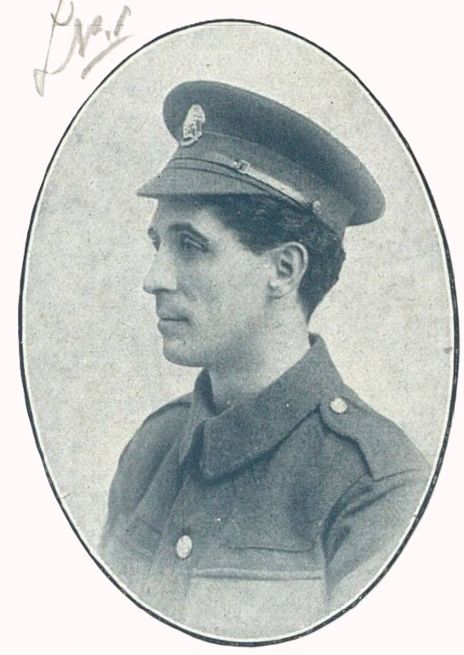
Edmund John in military uniform
Around this time, John enlisted in the 28th (London) Battalion, the Artist’s Rifles, to fight in the First World War. Founded in 1859 amid fears of a French invasion, the regiment attracted volunteers from public schools, universities, and the creative professions—painters, musicians, actors, architects.
John’s death in 1917 might easily be assumed to have been a casualty of war. Douglas, however, suggests otherwise.
“In his correspondence he told me that he had been invalided out of the army (in 1916) on account of his heart. He had also married for money, as he frankly confessed. His tastes were luxurious; coaching, and an occasional volume of verse would never make him feel at ease. It looked as if all were going well, yet I did not like the nervous tones of his letters….”
Seeking to recover his health, John travelled to Italy and settled in Taormina.
“It is a site of great distances—its soft colouring—its streets hushed at noonday as by some weird enchantment—its leaning walls in flower—its secluded gardens—its terraces—its lemon and almond groves; its crystal air, crystal and flare at noon, opal and pearl at either edge of the day; its castled crests and crumbling ruins.”
An obituary followed:
“On the 28th February (1917), at Taormina, Sicily, Edmund John, of heart failure, beloved husband of Kate Dalliba John, of Florence, and dearly loved eldest son of Thomas and Margaret John of 20 Cranley Gardens, London, aged thirty-three.”
Douglas corrected the record bluntly:
“I replied to John’s letter on the 19th of February 1917. On the 28th of the same month he killed himself. A miserable ending of which he seemed to have had a presentiment.”
From this point onward, certainty dissolves. The dead do not speak, and what remains is conjecture.
Certainly, John suffered from a debilitating heart condition and bouts of depression. But other forces may have contributed.
“Ah God, it was the Hope gave to me, Within the womb, of things unknown and fair, The Bud that blossomed into this Despair. Art Thou content, O God, with thus Thy work? Art Thou content that Thou hast planned so well? That Thy cold hands have thrust me into Hell?”
The Flute of Sardonyx. Pencil drawing by Nicholas Wilde (1991)
John’s poetry is suffused with Uranian themes—a term coined in the nineteenth century by Karl Heinrich Ulrichs, before the invention of the word homosexual.
“His eyes are brothers to the sun and sky, His body’s fragrance haunts the murmuring wood, And all the flowers are singing where he stood, And all the leaves are chanting their reply.”
In The Wind in the Temple, love is repeatedly figured as adolescent beauty.
“His body is like milk edged with rose-colour rare, With vine and lure of hemlock in his red-gold hair, Night-kissed, that burns and gleams; His grave sweet scarlet lips are parted voicelessly, His eyes like stars reflected in a violet sea Of dawn and dreams.”
And elsewhere:
“Harder, press harder with your scarlet mouth; Lie close, limbs woven of the passionate South; Twine nearer, subtle satin limbs of June, Burn your gold scented body into mine, Cling to my lips with yours of Graecian wine, Cling closer till the blood come and life swoon…”
Yes, Edmund John was a Uranian poet, and he harboured pederastic desires. Men and Boys (1924) reproduced part of a letter he wrote to a “young friend”:
“I have received your adorable, illustrated letter this morning and loved it so much I immediately made an altar before it, lit by amber candles in copper candlesticks, burnt incense before it and kissed its extreme beautifulness.”
Did his homosexuality weigh heavily upon him?
That John died in Taormina is suggestive. Long regarded as a “Queer Eden” for artists and intellectuals, the town was famed for its beauty, Greek mystique, and relative tolerance—an atmosphere reinforced by Wilhelm von Gloeden’s homoerotic photographs of local youths. Oscar Wilde and André Gide had passed through; later visitors would include Truman Capote, Tennessee Williams, Gore Vidal, Jean Cocteau, Thomas Mann, Somerset Maugham, and Roger Peyrefitte.
There is also the unresolved mystery of John’s marriage to Kate Dalliba, reportedly solemnised in Florence.
“Kate Dalliba, of St. John’s Wood. Famous for her Sunday night salon, referred to as The House of Music. Wealthy musicians in evening dress rub shoulders with poor and budding young geniuses in wrinkled light clothes and soiled linen. All here is democracy, art, Bohemianism.”
Born into a wealthy family in Cleveland, Ohio, Dalliba used her fortune to support artists such as Ezra Pound, Ida Rubinstein, Olga Rudge, and Ildebrando Pizzetti. She lived in Florence and maintained her London house as a free lodging and performance space for travelling musicians and artists.
It is entirely possible that John, described by George Norman Douglas as being poor, was drawn to her wealth. He had openly admitted that he married her for money. The rich older woman and the handsome young poet might have passed, outwardly, as a conventional May–December match.
Whether Dalliba later recognised the truth of the arrangement—and whether this recognition had consequences for John—remains unknown. She herself lost most of her fortune in the Wall Street Crash of 1929.
What remains is a handful of poems, a scandal, a life cut short, and the faint outline of a gifted, troubled poet whose voice—sensuous, excessive, and dangerous—proved too much for his time.
The Flute of Sardonyx. Pencil drawing by Nicholas Wilde (1991)
Ludwig II (Ludwig Otto Friedrich Wilhelm; 25 August 1845 – 13 June 1886)
Bavaria’s favourite monarch ‘Mad’ King Ludwig, who liked to build fancy castles, and whose body was found in a lake in June 1886, along with that of Dr Bernhard von Gudden of the Munich Asylum.
His death was declared suicide by drowning but as the story slides further into history, the conspiracy theories grow – murdered by whom and for what purpose?
The composer Richard Wagner appears to have played Ludwig like an orchestra violin, and there were rumours of sexual relationships with Paul Maximillian Lamoral, Prince of Thurn and Taxis, chief equerry Richard Hornig, the Hungarian theatre actor Josef Kainz, and courtier Alfons Weber.
And then there was Karl Hesselschwerdt, quartermaster of the Royal Stables, who allegedly procured young cavalrymen for Ludwig’s pleasure.
Alas, Ludwig Otto Friedrich Wilhelm, King of Bavaria, also known as Count Palatine of the Rhine, Duke of Bavaria, Duke of Franconia and Duke in Swabia, was probably no madder than the rest of us. His extravagance used against him to declare his insanity.