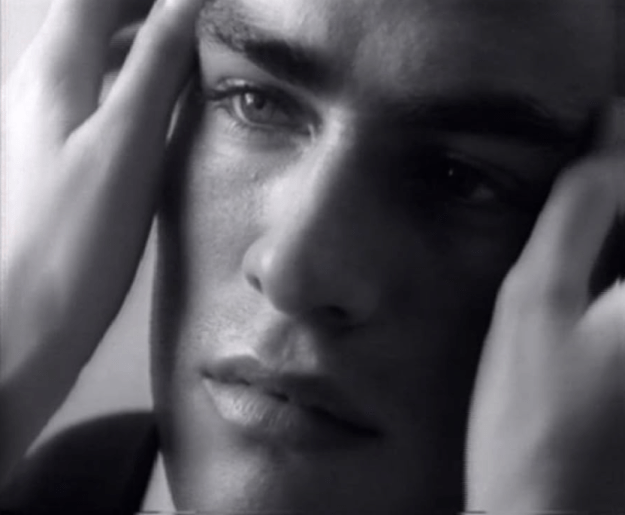
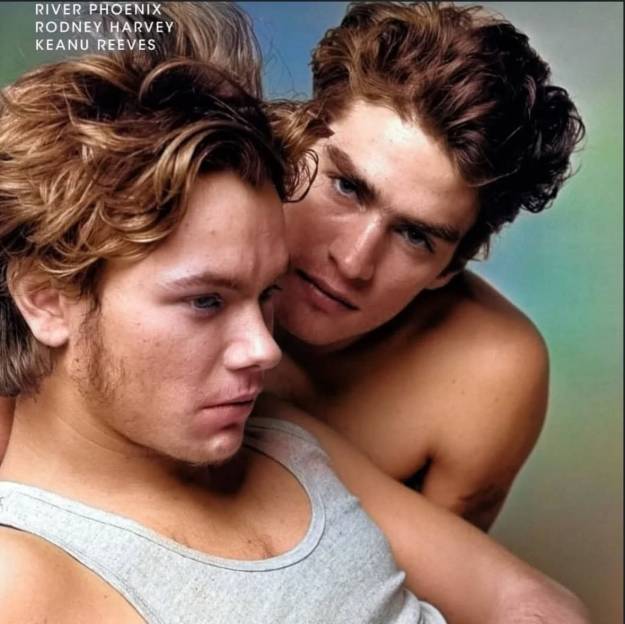
In December 1998, Holly Millea wrote a piece for Premiere magazine about the death of actor and model Rodney Harvey, who had died eight months earlier. It is a long and painful read — almost too painful to finish — but it remains the definitive account of a young man who had everything placed before him and slowly watched it disappear. It was an extraordinary piece of journalism.
Rodney Harvey. A half-Italian, half-Irish boy from the rough streets of South Philadelphia who grew up wanting to be one of two things: an actor or a horse jockey. And when I say he was bad, I mean it in the most endearing sense. If there was trouble to be found, it was usually Rodney who found it. Fighting, petty crime, drugs — the catalogue of youthful misbehaviour seemed to follow him. Yet everybody adored him. He was charming, fearless, mischievous… and impossibly beautiful.
So beautiful that he achieved one of his ambitions almost by accident: spotted on the street while attempting to buy a gun, he was cast as Jose in Mixed Blood (1984), a film about Brazilian drug dealers in Manhattan’s Lower East Side who go to war with a rival Latino gang.
That was the beginning.
Other roles followed in Five Corners, Salsa, Guncrazy, Twin Peaks, and My Own Private Idaho. But perhaps he became best known to a younger audience as Sodapop Curtis in the television adaptation of S.E. Hinton’s The Outsiders.
His looks also made him a favourite of photographer Bruce Weber, who photographed Harvey alongside Madonna for Life magazine and cast him in his Chet Baker documentary Let’s Get Lost. His face was so striking that Calvin Klein used him in a campaign for Obsession for Men.
For a while, there seemed to be no stopping Rodney Harvey.
“He was one of the biggest life-grabbers. I don’t know many people that beautiful and fun and exciting and sensitive and strong and anxious about life,” said his friend Drew Barrymore, who was part of a circle that included David Arquette, Balthazar Getty and Amanda Anka.
Then there were the women — relationships with Lisa Marie, his Salsa co-star Magali Alvarado, and later Roxana Zal. Harvey could attract almost anyone he wanted, but his addictions and destructive behaviour left a trail of pain among those who cared for him.
The life of crime and drugs that had followed him from South Philadelphia eventually returned to claim him.
Some pointed to My Own Private Idaho, Gus Van Sant’s film in which Harvey played Gary, a street hustler. Stories circulated about excess, wild parties and drug use around that period, and some believed that this was when his heroin addiction became impossible to control.
Drugs had always existed in Harvey’s world, but money and fame gave him the means to descend further.
Bruce Weber later recalled photographing the cast of Idaho and noticing a change in Harvey. The brightness remained, but there was a sadness behind his eyes that nobody seemed able to reach.
The so-called “Curse of Idaho” had already claimed the life of River Phoenix in 1993 and became linked, in the public imagination, with Harvey’s own tragic decline.
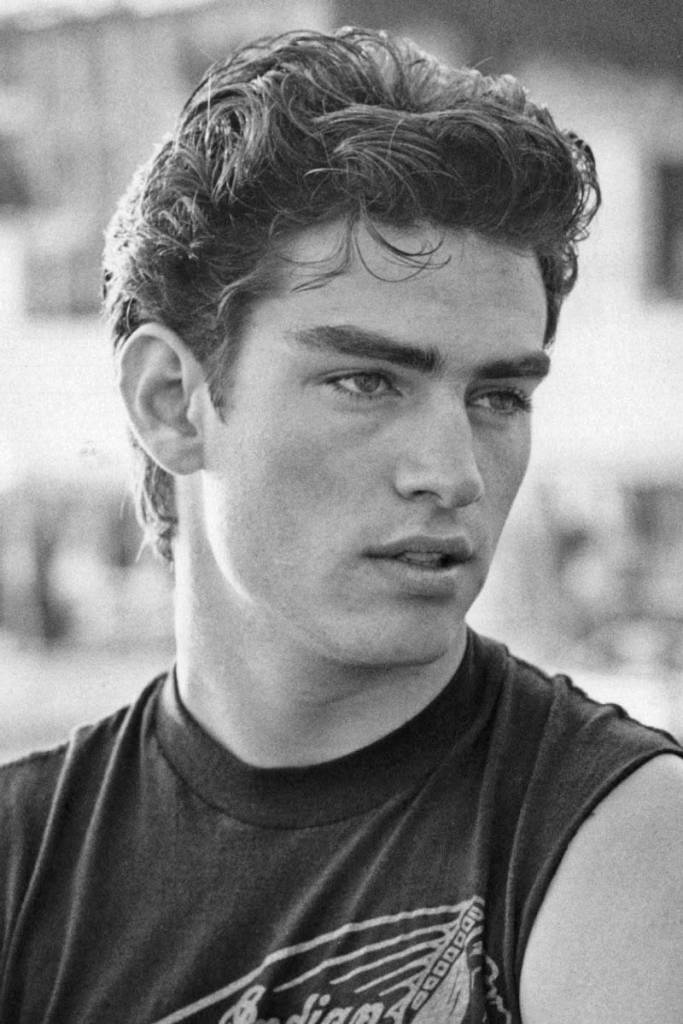
By the time Guncrazy was released in 1992, Harvey’s reputation in Hollywood had deteriorated. The young man who had once been considered a rising star was now consumed by addiction. He spent his money, stole from friends and strangers alike to support his habit, and was repeatedly arrested. There were stories of wealthy older men who continued to help him, even after he had betrayed their trust — perhaps unable to resist the memory of the beautiful young man he had once been.
Even his appearance changed beyond recognition. The striking face that had graced magazine pages and advertising campaigns disappeared. In its place was a man ravaged by addiction — thin, scarred and physically broken.
Millea’s article contained part of a letter Harvey wrote while serving one of his many jail sentences:
“I knew that the life I was leading was going nowhere. I had spent hundreds of thousands of dollars. My acting career was over, my respect, all my morals, were gone.”
The end came in April 1998.
Harvey checked into a small room at the Hotel Barbizon in Los Angeles. A maid discovered him dead the following morning.
“A pair of black sunglasses lay at his feet on the linoleum floor along with some used syringes, an empty balloon, a hollow metal tube, and the bottom half of a 7Up can sticky with brown residue.”
A spent syringe still hung from his left forearm.
That final attempt to find euphoria, relief and escape had instead become the moment that ended everything.
Perhaps the greatest sadness is that generations who came afterwards barely know that Rodney Harvey ever existed. A young man who was once photographed by the greatest artists of his era, who moved among Hollywood’s brightest stars and who seemed destined for immortality, has largely faded from cultural memory.
And yet that may be his legacy. Rodney Harvey remains preserved in photographs, films and the memories of those who loved him — a haunting reminder of how beauty, talent and opportunity can never, on their own, save a person from themselves. A rose that bloomed brilliantly, withered too soon, but whose brief fragrance still lingers.