Tag Archives: forgotten stars

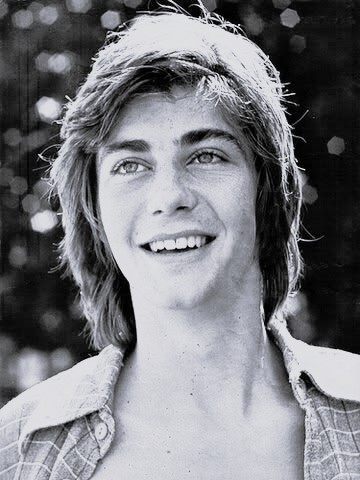
The Eternal Barnaby Tucker


A Hollywood dream that ended in darkness


It was January 1968.

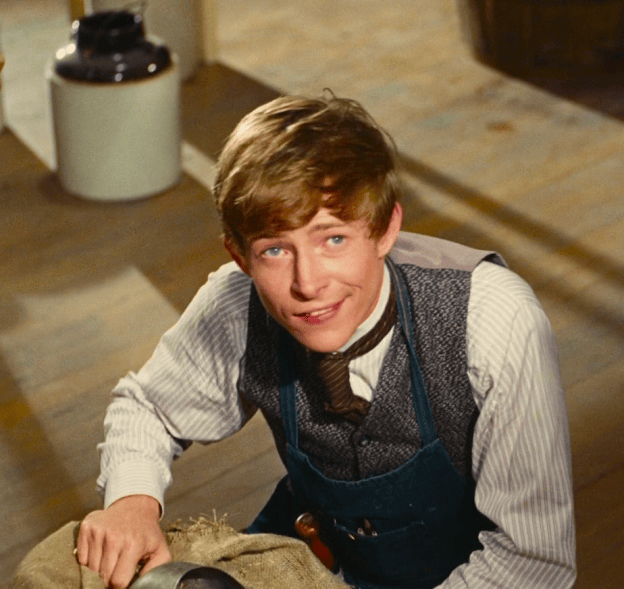
A screen test. A handsome, fair-skinned boy with freckles and reddish-blond hair. Small and slight. Youthful, expressive, innocent. He is energetic, pitch-perfect and physically effortless in the dance routine. There is a naivety about him, and a wide-eyed charm.

Gene Kelly, the director, is taken with the boy and casts him as seventeen-year-old Barnaby Tucker in the movie version of Hello, Dolly!

The actor is twenty-four-year-old Danny Lockin, who looks much younger than his age.

That was almost sixty years ago, and Lockin could never have known that he was destined to become the eternal Barnaby Tucker.

Nine years later, in August 1977, Lockin was found dead in a California apartment, stabbed and slashed nearly a hundred times, his body mutilated.

We will never know what went wrong with Danny Lockin. Nor will we ever know exactly what happened on the night he was murdered.

It is a classic Hollywood tale.

Lockin was born in Hawaii in 1943 and raised in Omaha, Nebraska. After leaving Benson High School and the dance team, the Checkers, he completed his schooling in Anaheim, California. He studied at Eugene Loring’s American School of Dance and later appeared in Carey Leverette’s Dance Arts Studio Festival.

There, he was spotted by Marc Platt, Radio City Music Hall’s choreographer, who recommended him for a San Francisco musical revue. Under Leverette’s management, Lockin studied acting and was cast in the film version of Gypsy in 1962. He had a small part in The Stripper the following year and appeared on television in Father of the Bride, several episodes of Dr Kildare, The Lieutenant and Mr Novak.

Lockin plunged into stage work, appearing in an Off-Broadway production of Morning Sun and, in 1964, a Broadway revival of West Side Story. The following year he auditioned for the role of Rolf in the film version of The Sound of Music.

But it was the role of the energetic store clerk Barnaby Tucker in Hello, Dolly! that made his name.

On either side of the film, Lockin played Barnaby on Broadway and in touring productions, appearing with ten Dollys: Betty Grable, Ginger Rogers, Ethel Merman, Phyllis Diller, Eve Arden, Dorothy Lamour, Annie Russell, Carol Channing and, of course, Barbra Streisand.

That was five years of Hello, Dolly!

Then the show abruptly closed on Broadway, and Lockin’s star faded almost as quickly as it had risen. He disappeared from public view. Drinking problems and possible substance abuse prevented him from working. There was a short run with Tom Sawyer in Kansas City, but at twenty-eight he returned to his mother’s house in Orange County and began teaching dance.

After his murder, a family friend said:

“He looked so young that it was difficult for him to find an adult role. He was frustrated that he couldn’t open new doors for himself. He was up against people who had the power and he told too many people off in the business. He began drinking because of his frustration and became more unruly and opinionated. He didn’t make many friends as a result.”

His temper. His demand for perfection. Perhaps they did him in.

His marriage to Kathryn Haas, a dancer in a stage production of Hello, Dolly!, in 1967 lasted only two years and ended following the birth of their son, Jeremy. Afterwards, Lockin became disillusioned with women and told friends that there had been a change in his sex life.

The engaging jack-in-the-box was bisexual.

In 1977, he appeared on The Gong Show at Burbank, hoping perhaps to be noticed again. Chuck Barris confusingly announced Lockin and his dance partner, Billy Jo Conway, as “Billy Jo and the Danny Trio.” They stormed it with a song-and-dance routine that earned them joint first place.

For a moment, it seemed as though something had returned.

On a high, his mother, Jean Lockin, took him for a meal before dropping him off at the Mug Bar in Garden Grove, where he intended to play pinball.

“He had the old light back in his eyes,” she said.

That was the last time she ever saw him.

On the night of August 21, 1977, Lockin’s killer, thirty-four-year-old Charles Leslie Hopkins, called the police and said that a man had entered his apartment and tried to rob him. When officers arrived at the Kona Palms apartment, they found Danny Lockin’s body.

Lockin had been wearing skin-tight dancing trousers without pockets for identification, and the body was so badly mutilated that the police were initially unable to identify him. Photographs of the lifeless face were circulated around the city, but his identity was eventually established when his fingerprints were matched with those taken following his previous arrests for drunken driving.

Hopkins, a known homosexual, was arrested after it was discovered that he had left the Mug Bar with Lockin and travelled with him to the apartment. Further investigation revealed that Hopkins had moved the body from room to room and attempted to clean up the blood before calling the police.

At his trial, Hopkins was convicted of voluntary manslaughter and sentenced to four years in prison.

Four years.

An inexplicable miscarriage of justice.

The irony is that shortly before his death, Lockin had recorded a song in a small studio he had rented.

“Today is grey, and I’m just waiting for some sunshine. But, gee, I wish tomorrow would appear.”

“He was no saint,” his mother reflected.

And now Danny Lockin is almost forgotten.

Except for Barnaby Tucker.

Except for those immortal lines from a song.

“Out there. Full of sunshine and full of sparkle. Close your eyes and see it glisten, Barnaby. Listen, Barnaby.”

Boys Burn Quiet: Rodney Harvey – Beautiful and Forgotten

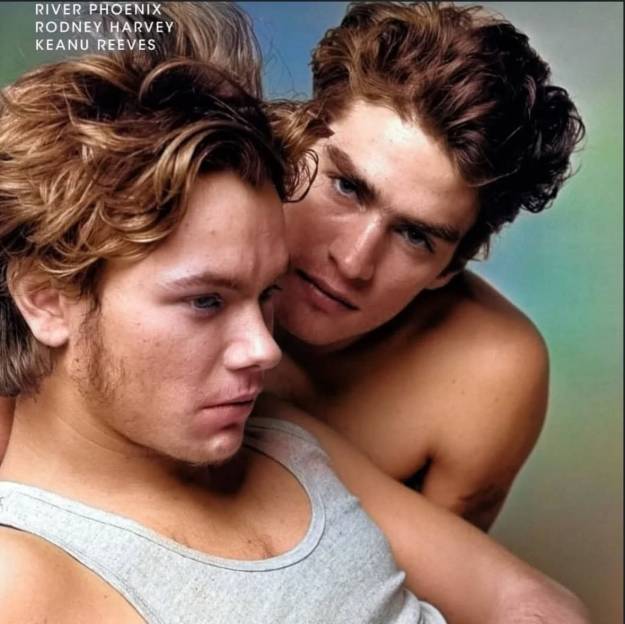
‘The Curse of Idaho’ – River Phoenix with Rodney Harvey

In December 1998, Holly Millea wrote a piece for Premiere magazine about the death of actor and model Rodney Harvey, who had died eight months earlier. It is a long and painful read — almost too painful to finish — but it remains the definitive account of a young man who had everything placed before him and slowly watched it disappear. It was an extraordinary piece of journalism.

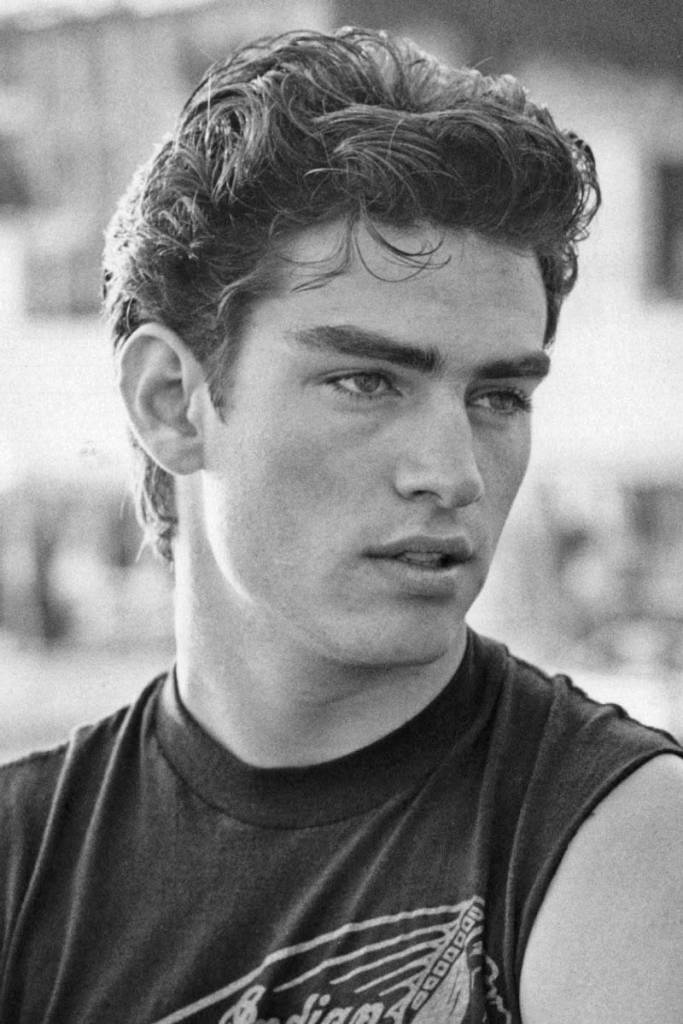
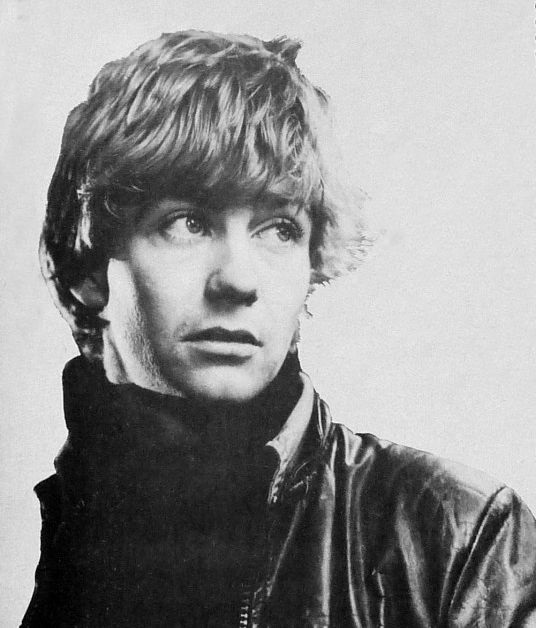
Rodney Harvey. A half-Italian, half-Irish boy from the rough streets of South Philadelphia who grew up wanting to be one of two things: an actor or a horse jockey. And when I say he was bad, I mean it in the most endearing sense. If there was trouble to be found, it was usually Rodney who found it. Fighting, petty crime, drugs — the catalogue of youthful misbehaviour seemed to follow him. Yet everybody adored him. He was charming, fearless, mischievous… and impossibly beautiful.

So beautiful that he achieved one of his ambitions almost by accident: spotted on the street while attempting to buy a gun, he was cast as Jose in Mixed Blood (1984), a film about Brazilian drug dealers in Manhattan’s Lower East Side who go to war with a rival Latino gang.

That was the beginning.

Other roles followed in Five Corners, Salsa, Guncrazy, Twin Peaks, and My Own Private Idaho. But perhaps he became best known to a younger audience as Sodapop Curtis in the television adaptation of S.E. Hinton’s The Outsiders.

His looks also made him a favourite of photographer Bruce Weber, who photographed Harvey alongside Madonna for Life magazine and cast him in his Chet Baker documentary Let’s Get Lost. His face was so striking that Calvin Klein used him in a campaign for Obsession for Men.

For a while, there seemed to be no stopping Rodney Harvey.

“He was one of the biggest life-grabbers. I don’t know many people that beautiful and fun and exciting and sensitive and strong and anxious about life,” said his friend Drew Barrymore, who was part of a circle that included David Arquette, Balthazar Getty and Amanda Anka.

Then there were the women — relationships with Lisa Marie, his Salsa co-star Magali Alvarado, and later Roxana Zal. Harvey could attract almost anyone he wanted, but his addictions and destructive behaviour left a trail of pain among those who cared for him.

The life of crime and drugs that had followed him from South Philadelphia eventually returned to claim him.

Some pointed to My Own Private Idaho, Gus Van Sant’s film in which Harvey played Gary, a street hustler. Stories circulated about excess, wild parties and drug use around that period, and some believed that this was when his heroin addiction became impossible to control.

Drugs had always existed in Harvey’s world, but money and fame gave him the means to descend further.

Bruce Weber later recalled photographing the cast of Idaho and noticing a change in Harvey. The brightness remained, but there was a sadness behind his eyes that nobody seemed able to reach.

The so-called “Curse of Idaho” had already claimed the life of River Phoenix in 1993 and became linked, in the public imagination, with Harvey’s own tragic decline.

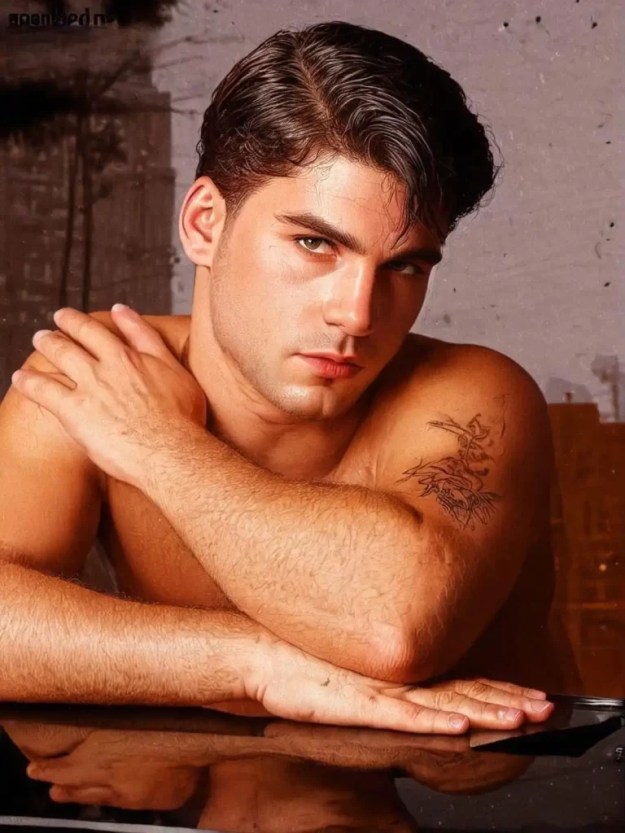
Rodney Harvey (1967-1998)

By the time Guncrazy was released in 1992, Harvey’s reputation in Hollywood had deteriorated. The young man who had once been considered a rising star was now consumed by addiction. He spent his money, stole from friends and strangers alike to support his habit, and was repeatedly arrested. There were stories of wealthy older men who continued to help him, even after he had betrayed their trust — perhaps unable to resist the memory of the beautiful young man he had once been.

Even his appearance changed beyond recognition. The striking face that had graced magazine pages and advertising campaigns disappeared. In its place was a man ravaged by addiction — thin, scarred and physically broken.

Millea’s article contained part of a letter Harvey wrote while serving one of his many jail sentences:

“I knew that the life I was leading was going nowhere. I had spent hundreds of thousands of dollars. My acting career was over, my respect, all my morals, were gone.”

The end came in April 1998.

Harvey checked into a small room at the Hotel Barbizon in Los Angeles. A maid discovered him dead the following morning.

“A pair of black sunglasses lay at his feet on the linoleum floor along with some used syringes, an empty balloon, a hollow metal tube, and the bottom half of a 7Up can sticky with brown residue.”

A spent syringe still hung from his left forearm.

That final attempt to find euphoria, relief and escape had instead become the moment that ended everything.

Perhaps the greatest sadness is that generations who came afterwards barely know that Rodney Harvey ever existed. A young man who was once photographed by the greatest artists of his era, who moved among Hollywood’s brightest stars and who seemed destined for immortality, has largely faded from cultural memory.

And yet that may be his legacy. Rodney Harvey remains preserved in photographs, films and the memories of those who loved him — a haunting reminder of how beauty, talent and opportunity can never, on their own, save a person from themselves. A rose that bloomed brilliantly, withered too soon, but whose brief fragrance still lingers.

Rodney Harvey for Calvin Klein’s fragrance Obsession (1990)

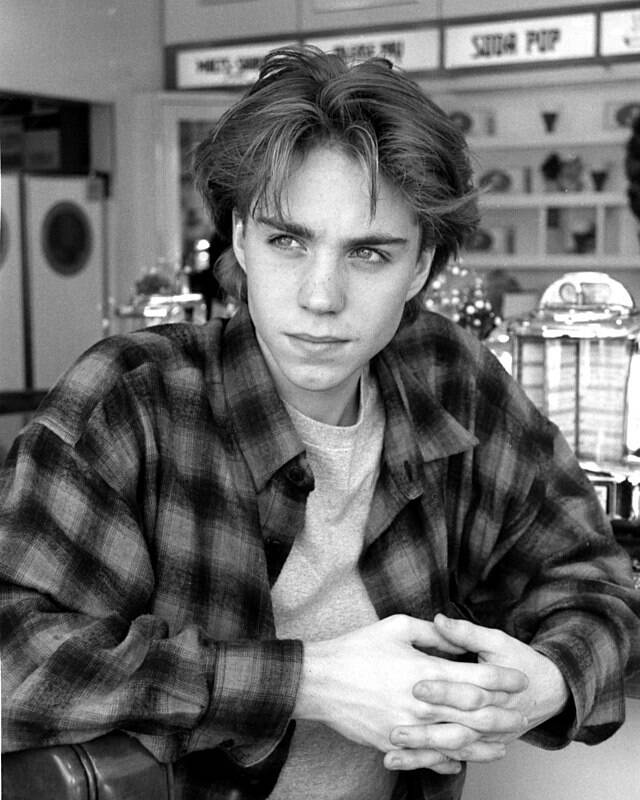
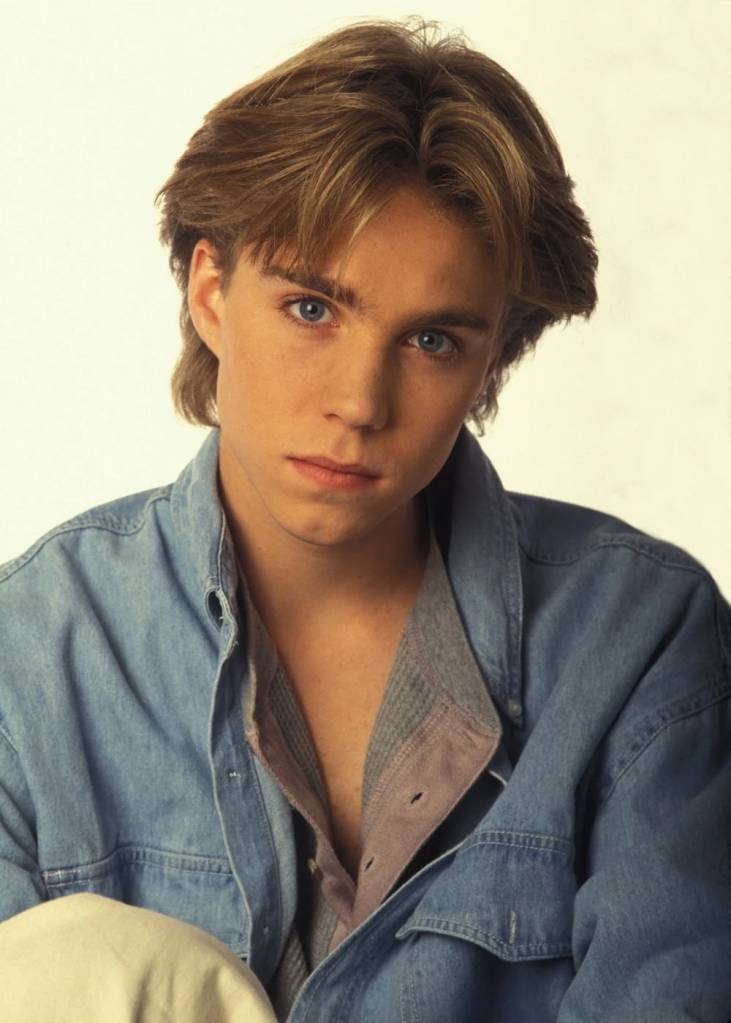
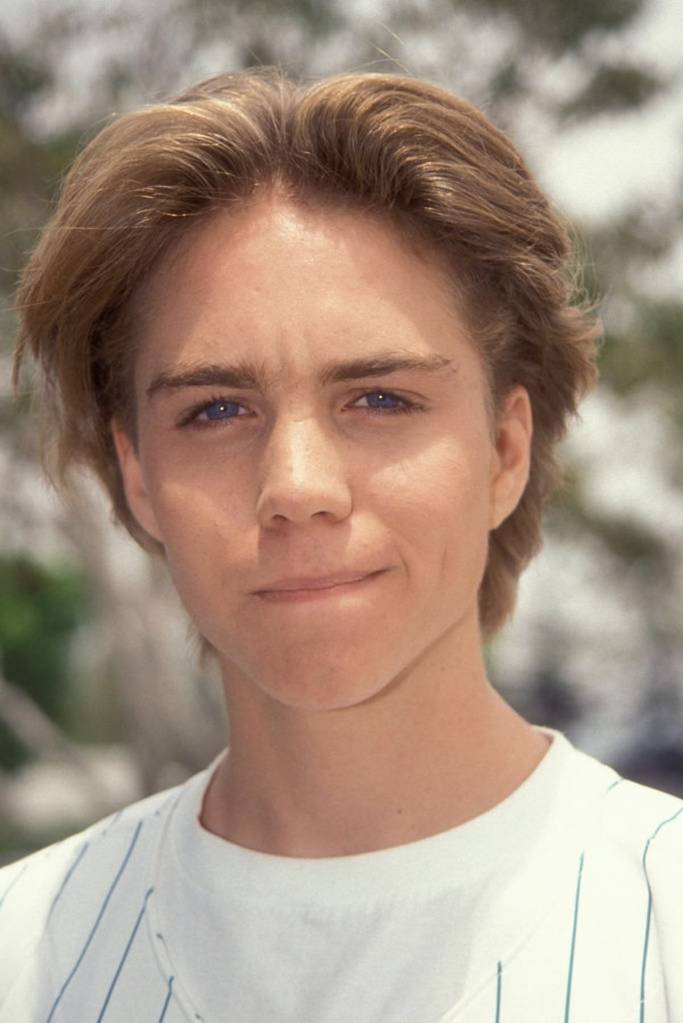
Boys Burn Quiet: The Rise and Fall of Gerry Sundquist

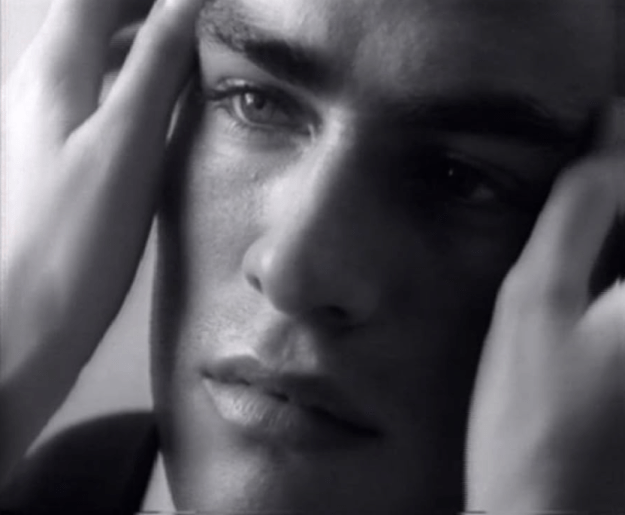
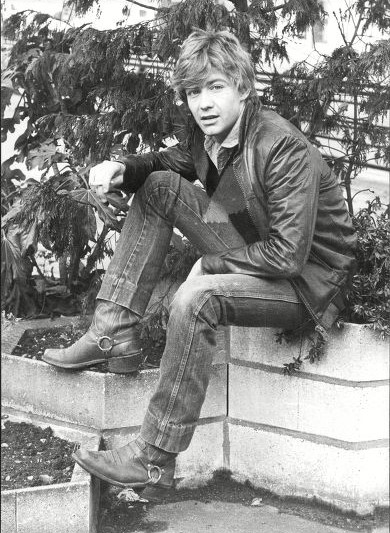
Gerry Sundquist: The best looking man on TV (1975)

Imagine it: you were once described as “the best-looking man on television”. Then you lost your looks, put on weight, and became addicted to heroin. Worse still, you became a liability — punching a producer and beating up your own brother after he threw your drugs out of the window. Unsurprisingly, the acting offers dried up. How would you handle it? How would you turn things around? Perhaps you couldn’t.

This is the story of an actor who was exceptionally handsome and might have gone on to far greater things had it not been for a destructive streak that eventually consumed him.

Gerald Christopher Sundquist — known as Ged or Sunny — was born in Stretford, Manchester, in 1955. He attended St John’s School in Chorlton and later St Augustine’s R.C. School in Wythenshawe. One former school friend described him as “part of the disco youth club teenage scene” and popular with his contemporaries. But he was no angel. In fact, he was something of a bad boy — smoking on the school bus, nicking chocolates from the sweet shop. Still, everybody loves a bad boy, right? “He had the world’s biggest blue eyes and could pick up a girl at fifty paces.”

He joined the Stretford Children’s Theatre and left school at sixteen to work the night shift at the Kellogg’s factory in Manchester. It was there that he was spotted by Granada TV casting director Doreen Jones, who cast him as Jim Woolcott in the nine-part children’s serial Soldier and Me in 1974. The role led to another part, Billy Adams in the ATV serial The Siege of Golden Hill in 1975.

His theatrical breakthrough came when he played the lead in All Walks of Leg at the Young Vic, adapted from John Lennon’s books In His Own Write and A Spaniard in the Works. Next came the National Theatre in 1976, where he played Alan Strang in Equus opposite Colin Blakely. Critic B.A. Young wrote: “As the boy, Gerry Sundquist brings the sexual side of his fixation nearer the surface than in any other performance of the part I have seen. He is a slim, good-looking young man.” The story went that Sundquist had inherited his father’s Swedish looks.

And yes, he was undeniably a bit of a dish. Other people thought so too.

While appearing in Equus, a letter arrived from Buckingham Palace inviting him to visit. The invitation came from two gay chefs employed within the Royal Household. Sundquist, however, declined the offer.

By now he had become a hot property, appearing in a succession of television and film roles while still returning to the theatre between projects.

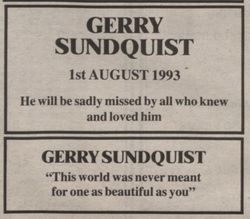
“This world was never meant for someone as beautiful as you.”

In 1978 he starred opposite Nastassja Kinski in Passion Flower Hotel, in which girls at an exclusive German boarding school live across a lake from an equally exclusive boys’ school. The pair became romantically involved. Sundquist nicknamed her “Nasty” and reportedly preferred spending time with the German actress to attending his own brother’s wedding.

He went on to play Michael Radlett in The Mallens (1980), Karpenko in Peter Brook’s Meetings With Remarkable Men (1979), and Pip in the BBC adaptation of Great Expectations (1981).

There were other roles too: Gerry in The Music Machine (1979), Tommy Frisking in Alexandria… Why? (1979), Pierre in The Hunchback of Notre Dame (1982), and Claudius in The Last Days of Pompeii.

But all of this came before the fall.

Had it succeeded, Sundquist’s appearance in The Music Machine might have catapulted him to international stardom. The film was billed as Britain’s answer to Saturday Night Fever — all glitter balls, disco lights, and North London dance-floor drama. Sundquist later admitted: “I actually had two left feet when I started making The Music Machine, but since then I must have improved enough to at least look convincing on screen. I literally went clump, clump, clump when I tried to dance.”

Unfortunately, The Music Machine was a flop, and Sundquist never quite reached the heights that had once seemed inevitable.

The film’s writer and producer, James Kenelm Clarke, later blamed its failure on the fact that neither of the two leads — Sundquist and Patti Boulaye — could really dance.

Still, there were plenty of pin-up photographs for British teenage girls — the sort of magazines young gay boys quietly borrowed from their sisters. Sundquist regularly appeared in full-page spreads, half-naked and sporting a finely toned torso. He certainly looked the part.

And there were women — lots of them, perhaps too many — though he never married.

But it was all beginning to unravel.

“No matter how much fame you have, it’s not something that belongs to you.”

What the public did not see were the underlying problems that came with fame and fortune. His life became a rollercoaster of highs and lows, and the warning signs were there if anyone had cared to notice them.

In 1980, Sundquist was fined £100 for growing cannabis. At the hearing, he said he had not worked since The Mallens ended and was living “off his fat” because he could not claim unemployment benefit. 

According to his older brother Geoffrey, Gerry had always dabbled in soft drugs, but things worsened after he met a girl involved with harder substances. That marked the beginning of his rapid decline. He eventually came off heroin and switched to methadone, but the earlier success never returned. By then, he had become something of a pariah within the industry.

The 1980s were lean years. His brother paid him to do odd jobs, while Sundquist picked up occasional voiceover work.

But he struggled badly with the comedown from fame.

After a four-year absence from television, his final screen appearance came in 1992, playing Jimmy Matthews in an episode of the police drama The Bill titled Lost Boy. After that, there was nothing.

In 1993, Sundquist threw himself under a train at Norbiton station in South London. There was never any doubt that it was suicide; he left notes for his family that read: “Please forgive me. I love you all. I’ve ruined my life.”

After his death, the casting director who had discovered him, Doreen Jones, reportedly said she wished she had taken a different route to work on the day she spotted him at the Kellogg’s factory.

What a waste.

His name died quietly with him and is now barely remembered.

From The Stage: 23 September 1993