Imagine it: you were once described as “the best-looking man on television”. Then you lost your looks, put on weight, and became addicted to heroin. Worse still, you became a liability — punching a producer and beating up your own brother after he threw your drugs out of the window. Unsurprisingly, the acting offers dried up. How would you handle it? How would you turn things around? Perhaps you couldn’t.
This is the story of an actor who was exceptionally handsome and might have gone on to far greater things had it not been for a destructive streak that eventually consumed him.
Gerald Christopher Sundquist — known as Ged or Sunny — was born in Stretford, Manchester, in 1955. He attended St John’s School in Chorlton and later St Augustine’s R.C. School in Wythenshawe. One former school friend described him as “part of the disco youth club teenage scene” and popular with his contemporaries. But he was no angel. In fact, he was something of a bad boy — smoking on the school bus, nicking chocolates from the sweet shop. Still, everybody loves a bad boy, right? “He had the world’s biggest blue eyes and could pick up a girl at fifty paces.”
He joined the Stretford Children’s Theatre and left school at sixteen to work the night shift at the Kellogg’s factory in Manchester. It was there that he was spotted by Granada TV casting director Doreen Jones, who cast him as Jim Woolcott in the nine-part children’s serial Soldier and Me in 1974. The role led to another part, Billy Adams in the ATV serial The Siege of Golden Hill in 1975.
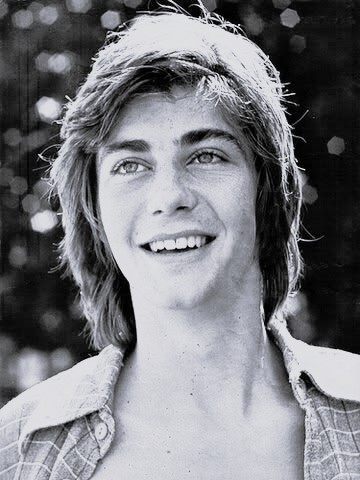
His theatrical breakthrough came when he played the lead in All Walks of Leg at the Young Vic, adapted from John Lennon’s books In His Own Write and A Spaniard in the Works. Next came the National Theatre in 1976, where he played Alan Strang in Equus opposite Colin Blakely. Critic B.A. Young wrote: “As the boy, Gerry Sundquist brings the sexual side of his fixation nearer the surface than in any other performance of the part I have seen. He is a slim, good-looking young man.” The story went that Sundquist had inherited his father’s Swedish looks.
And yes, he was undeniably a bit of a dish. Other people thought so too.
While appearing in Equus, a letter arrived from Buckingham Palace inviting him to visit. The invitation came from two gay chefs employed within the Royal Household. Sundquist, however, declined the offer.
By now he had become a hot property, appearing in a succession of television and film roles while still returning to the theatre between projects.
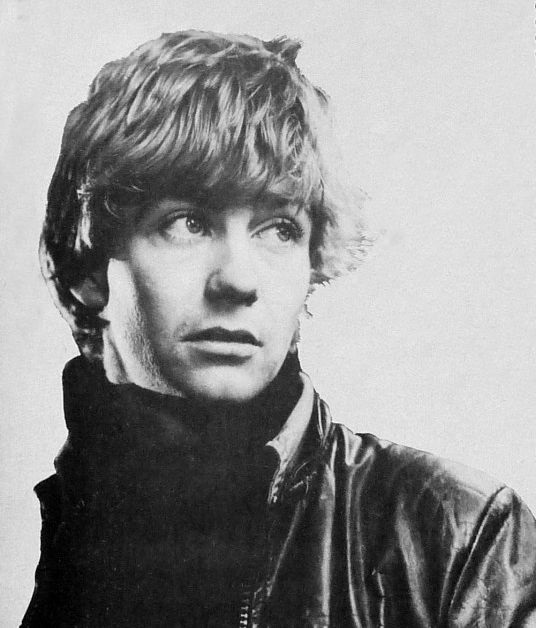
In 1978 he starred opposite Nastassja Kinski in Passion Flower Hotel, in which girls at an exclusive German boarding school live across a lake from an equally exclusive boys’ school. The pair became romantically involved. Sundquist nicknamed her “Nasty” and reportedly preferred spending time with the German actress to attending his own brother’s wedding.
He went on to play Michael Radlett in The Mallens (1980), Karpenko in Peter Brook’s Meetings With Remarkable Men (1979), and Pip in the BBC adaptation of Great Expectations (1981).
There were other roles too: Gerry in The Music Machine (1979), Tommy Frisking in Alexandria… Why? (1979), Pierre in The Hunchback of Notre Dame (1982), and Claudius in The Last Days of Pompeii.
But all of this came before the fall.
Had it succeeded, Sundquist’s appearance in The Music Machine might have catapulted him to international stardom. The film was billed as Britain’s answer to Saturday Night Fever — all glitter balls, disco lights, and North London dance-floor drama. Sundquist later admitted: “I actually had two left feet when I started making The Music Machine, but since then I must have improved enough to at least look convincing on screen. I literally went clump, clump, clump when I tried to dance.”
Unfortunately, The Music Machine was a flop, and Sundquist never quite reached the heights that had once seemed inevitable.
The film’s writer and producer, James Kenelm Clarke, later blamed its failure on the fact that neither of the two leads — Sundquist and Patti Boulaye — could really dance.
Still, there were plenty of pin-up photographs for British teenage girls — the sort of magazines young gay boys quietly borrowed from their sisters. Sundquist regularly appeared in full-page spreads, half-naked and sporting a finely toned torso. He certainly looked the part.
And there were women — lots of them, perhaps too many — though he never married.
But it was all beginning to unravel.
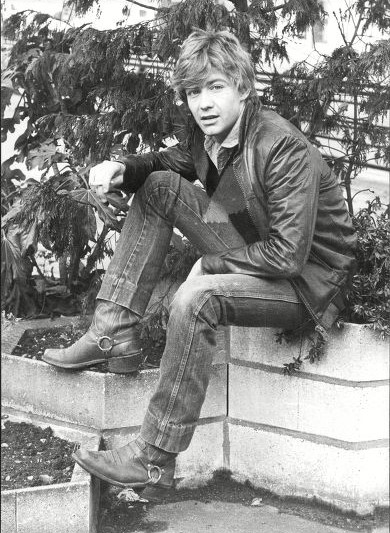
What the public did not see were the underlying problems that came with fame and fortune. His life became a rollercoaster of highs and lows, and the warning signs were there if anyone had cared to notice them.
In 1980, Sundquist was fined £100 for growing cannabis. At the hearing, he said he had not worked since The Mallens ended and was living “off his fat” because he could not claim unemployment benefit.
According to his older brother Geoffrey, Gerry had always dabbled in soft drugs, but things worsened after he met a girl involved with harder substances. That marked the beginning of his rapid decline. He eventually came off heroin and switched to methadone, but the earlier success never returned. By then, he had become something of a pariah within the industry.
The 1980s were lean years. His brother paid him to do odd jobs, while Sundquist picked up occasional voiceover work.
But he struggled badly with the comedown from fame.
After a four-year absence from television, his final screen appearance came in 1992, playing Jimmy Matthews in an episode of the police drama The Bill titled Lost Boy. After that, there was nothing.
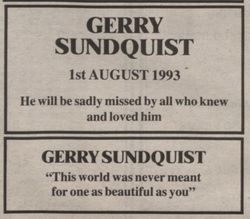
In 1993, Sundquist threw himself under a train at Norbiton station in South London. There was never any doubt that it was suicide; he left notes for his family that read: “Please forgive me. I love you all. I’ve ruined my life.”
After his death, the casting director who had discovered him, Doreen Jones, reportedly said she wished she had taken a different route to work on the day she spotted him at the Kellogg’s factory.
What a waste.
His name died quietly with him and is now barely remembered.