
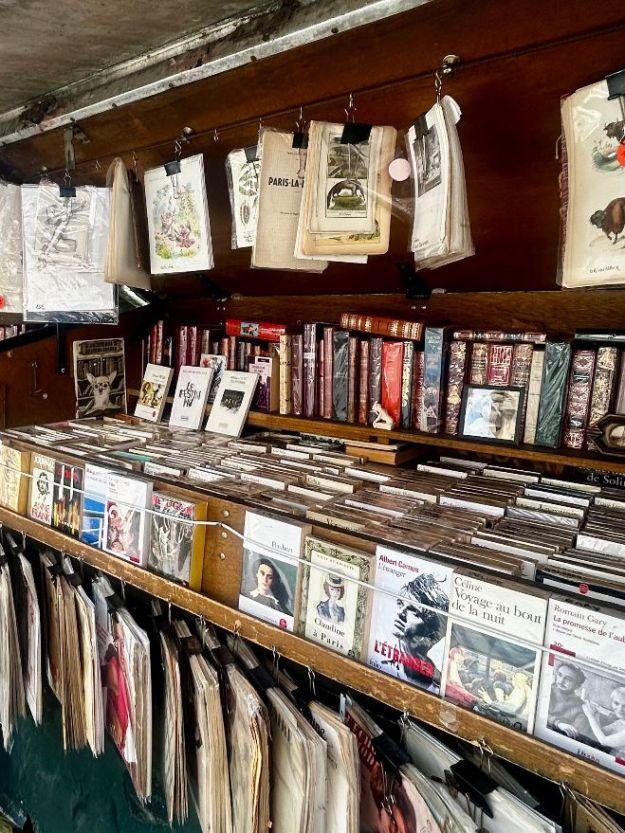
Two Camus
Cool. Only one word to describe them.
The famous booksellers along the River Seine are known as les bouquinistes. Together, they form the world’s largest open-air book market, turning the banks of the Seine into a cultural landmark once described as “the only river in the world that runs between two bookshelves.”
Apparently, the boîtes have to be painted Vert Wagon — Carriage Green — the same colour traditionally used for Parisian park benches, railings and Morris columns.
Deej wanted to see every single one.
Strange, really, considering he can’t understand a word of French.
“I want to buy things I can display around my flat,” he said.
The tradition of open-air bookselling dates back to the sixteenth century, when mobile peddlers sold pamphlets, engravings and second-hand books from baskets and temporary stalls on the bridges of Paris.
The regulations remain strict, with the emphasis still firmly on vintage print: antiquarian and rare leather-bound books, second-hand French literature and classic translations, old postcards, stamps, historical maps, retro advertising posters and hand-painted engravings.
Deej dragged me past what felt like every stall, stopping to browse hundreds of books.
And after all that, he bought two Albert Camus novels — L’Étranger and La Peste.
Which, given that he can’t read French, he could quite easily have bought on Amazon.
My Vocabulary Needs Work
It’s basically about improving my writing. Every post nudges it somewhere new and, hopefully, slightly more interesting. I sent a sample to David, a man who knows about these things, and asked what he thought.
“Dangerous, slightly absurd, affectionate, sexy in places, and with that very particular Miles-ish ability to notice something completely inappropriate at precisely the wrong moment. But, as someone who feeds on dictionaries and masturbates over a thesaurus, please try and extend your vocabulary.”
Fair enough.
He pointed me towards Tom Read Wilson and his gloriously camp ‘Word of the Day’ posts on Instagram. And honestly? He turned out to be charmingly eccentric, ridiculously articulate, and incredibly camp.

The Problem with Soungouroffs
“What is the worst thing that can happen to an artist?” asked Philippe Garnier in perfect English.
He was a distinguished gentleman and sat beside me while his golden Labrador chased other dogs around Square Georges Cain. They raced along the circular path with a freedom not usually afforded to them; dogs of every shape and size playing together as though they had temporarily forgotten their differences.
Garnier is an art expert, which seems to be a surprisingly popular profession in Paris.
I know absolutely nothing about art, except that I like certain types of paintings. Usually, those of an explicit and homoerotic nature.
“I shall tell you,” he said. “It is for your work to be attributed to somebody else entirely.”
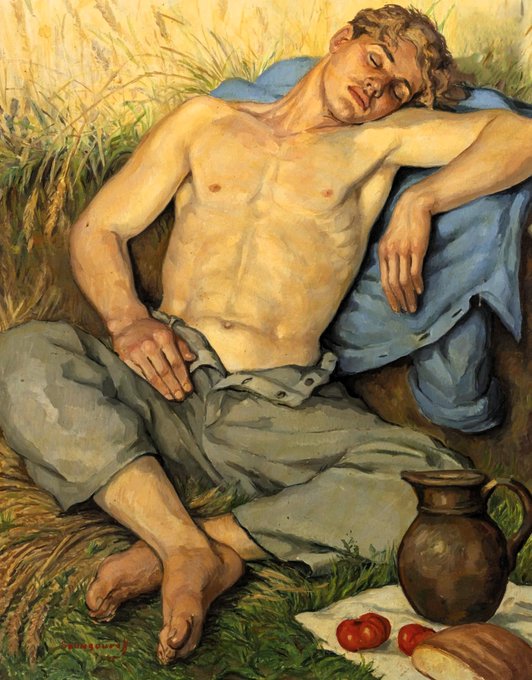
He showed me an image on his phone. A shirtless young man was lying peacefully in the heat of an afternoon.
“La Sieste,” Garnier explained. “Painted in 1945. Relief, peace and escape from conflict. The work of an Estonian painter called Anatoli Soungouroff. Do you think he is a sailor or a fisherman?”
I studied the boy and liked him.
“He was extremely beautiful,” I said, “and I wouldn’t have cared what he did.”
The dog returned to his master and did a large shit directly in front of us.
Without hesitation, Garnier bent down and scooped it up with a poop bag. He tied the handles without once losing his train of thought.
“Soungouroff moved to France in 1930 and made his creative homes in Paris and Cannes. He became friends with Jean Cocteau, Christian Bérard and Roger Peyrefitte. But by the 1960s he was starving. He paid his bar tab at a gay bar, Le Zanzibar, by painting murals of young sailors and gypsies on the walls. One of them was thirty feet long.”
He sounded like a man of my taste and therefore worthy of further investigation.
“The point I am making,” he continued, “is that Soungouroff’s work is often attributed to another painter — Antonin Ivanovich Soungouroff — who was a different artist entirely.”
Garnier went to deposit Baguette’s poop in a nearby bin.
Yes, his dog really was called Baguette.
“But,” he continued when he returned, “if you see a painting of a young male — a fisherman, sailor or harlequin — painted by a Soungouroff, then it will almost certainly be the work of ‘Tola’. Look for the same full lips. The same baggy eyes that reveal secrets.”
I looked again at the young man on Garnier’s phone.
He certainly had lips.
And eyes.
Note:
The “eternal bachelor” was Anatoli Sergeevich “Tola” Soungouroff (1911–1982).
A Little Shelter from the World
Paris at night. Au Café du Marais.
Music plays softly in the background, which Deej describes as ‘folky-wolky’. We are tired, but clink our coffee cups together and agree that we are good friends.
Then the storm clouds gather.
Rain splatters the worn flagstones, tentative at first, then with increasing intensity. The thunder comes next, followed by sudden flashes of lightning and, finally, the great blanket of rain racing down the street towards us.
Soon, the customers are marooned beneath huge umbrellas, huddled together against the deluge. But ours feels the most comfortable, the most welcoming, as though it has been placed there especially for us. A little shelter from the world.
The sky keeps flashing. Thunder rumbles overhead, gathering force until it erupts into cataclysmic explosions. The noise drowns out the music, so the waiter turns it up.
Dylan sings Lay Lady Lay, about some girl lying across a big brass bed.
This old song haunts me wherever I go.
I know very little about Dylan, except that he once looked better than his songs and smelt worse.
Shagdough
“Nah,” said Deej. “Not my scene at all.”
But I made him go to a gay bar anyway.
“Are you shagdough?”
That’s Deej-speak for asking if I’m begging for it.
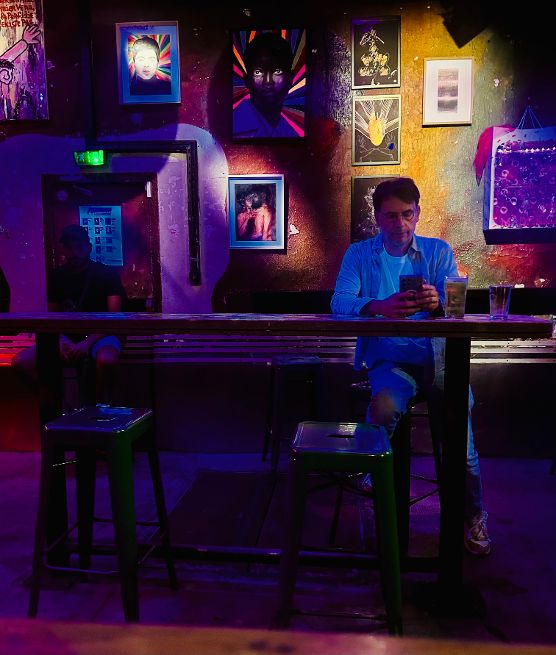
I show compassion. I take him down a backstreet to a place for older queers, where there is at least a possibility that I might become shagdough.
There is hardly anyone in.
A murderer sits staring at us from a dark corner. An abuser pretends to look at his phone but is really taking sneaky pictures. A kidnapper sings karaoke, thrusts a microphone into our faces and insists that we sing along in French. A mugger offers to buy us expensive drinks.
We’ve exhausted the entire clientele.
I love the danger.
Deej is absolutely shitting himself.
A Straight Faggot
We walked back to the hotel. The streets are wet now, cleansed of people, the city briefly emptied by the storm.
But there are voices in the distance.
Out of sight at first, but getting closer.
Then comes a shrill scream from a flamboyant queen, followed by a high-pitched cackle that seems to echo between the buildings. Four guys turn the corner. Another over-the-top scream, loud enough to wake everyone in the surrounding hotels. Then that awful cackle again.
The others tell him to be quiet, but he is clearly drunk and beyond caring.
They pass us, disappearing into the wet darkness.
Deej turns to me.
“What an annoying faggot! Why can’t he be a straight faggot like you?”
In the Silence & On the Timeline
“I think about you a great deal, and you know this without my needing to tell you, but in the silence and between the lines you must read all the affection I feel for you and all the tenderness stored in my heart.”
From a lost letter from 1936 and written by 38-year-old Federico García Lorca to his lover, Ramírez de Lucas, who was barely 16 at the time. Ramírez de Lucas may have been the lover who inspired Lorca’s ‘Sonnets of Dark Love’.
It now translates as:
me thinking about you 24/7 like it’s literally my full-time job 😭 you already know I’m down bad, so I don’t even need to say it. but pls read between the lines bc there’s actually a ridiculous amount of love and affection in my heart for you rn ❤️🩹
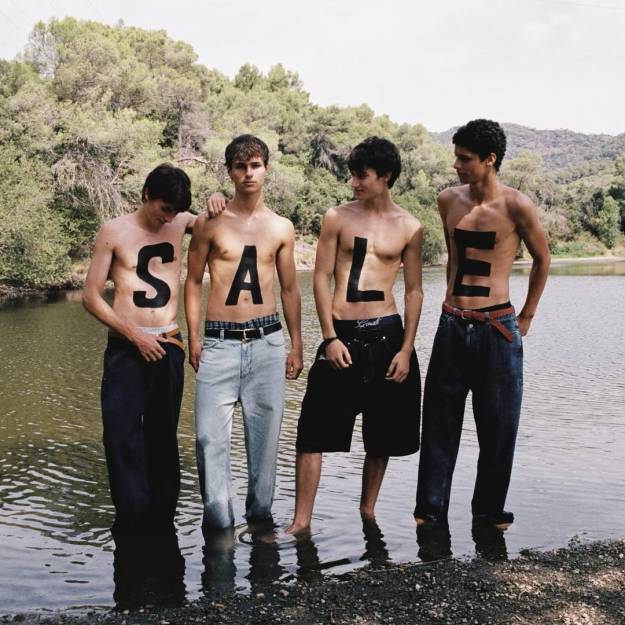
Appetising Young Boys for Sale
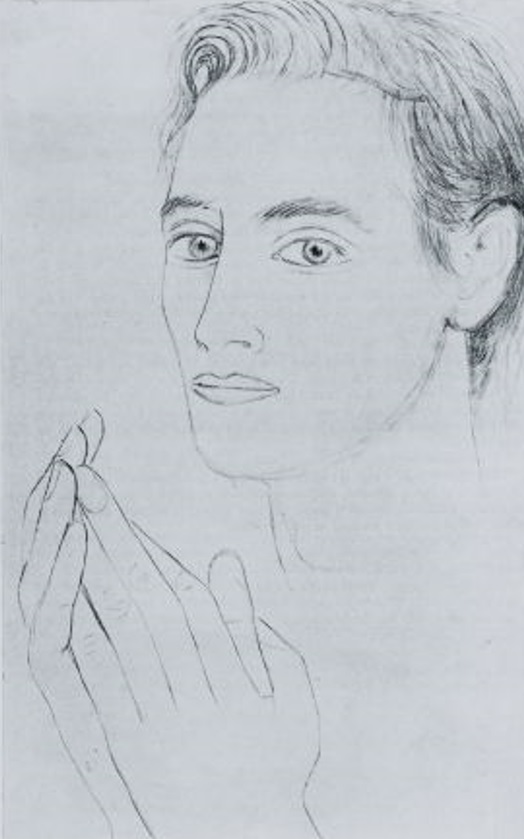
Four boys. Boys for sale. They’re going cheap. Only ten euros. That — or thereabouts. Nice boys. Rather pale. Through lack of sleep. Feed them protein shakes. Stop them getting stout. If I should say they weren’t very greedy, I could not, I’d be telling you a tale. Four boys. Boys for sale. Come take a peep. Have you ever seen such nice boys for sale?
On the Cute and the Willing