
Rimbaud Still Prods Me Up the Bum
Most of us live to old age and never achieve the notoriety that Arthur Rimbaud did. He was only thirty-seven when he died, minus a leg, in 1891.
I like a bit of Rimbaud.
I even like his poetry.
We are stuck, however, with the knowledge that this raw, untamed youth, this rebellious genius, was, in truth, a bit of a ‘dirty arse’. And yet we gaze at Étienne Carjat’s iconic 1871 portrait, taken when Rimbaud was only seventeen, and lust after the boy with the wild, uncombed hair, slightly crooked tie and defiant stare.
Why wouldn’t we admire someone who, in that same year, penned the Sonnet of the Arsehole — originally titled L’Idole, or Le Sonnet du Trou du Cul — that gloriously obscene little collaboration with Paul Verlaine? Rimbaud wrote the opening quatrains; Verlaine supplied the tercets.
Rimbaud still prods me up the bum from time to time.
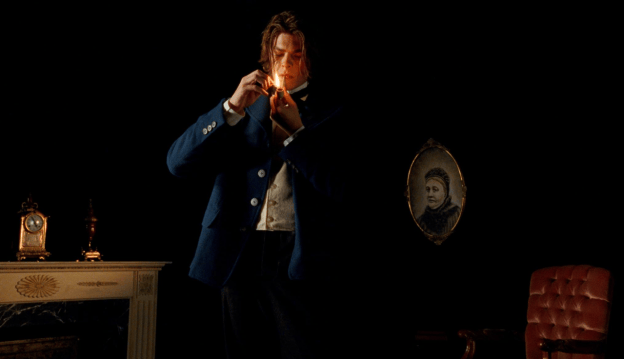
The latest occasion is the result of a new three-hour biopic, A. Rimbaud, written, co-produced and directed by American independent filmmaker Patrick Wang.
The chances of seeing it seem fairly remote, given its slow-burn release schedule.
Australian actor Blake Draper plays Rimbaud in what appears to be almost a one-man film.
“Utterly captivating to watch, in no small part because Draper balances theatrical expressiveness with nuance for the movie camera,” writes Variety.
Before He Was Gone
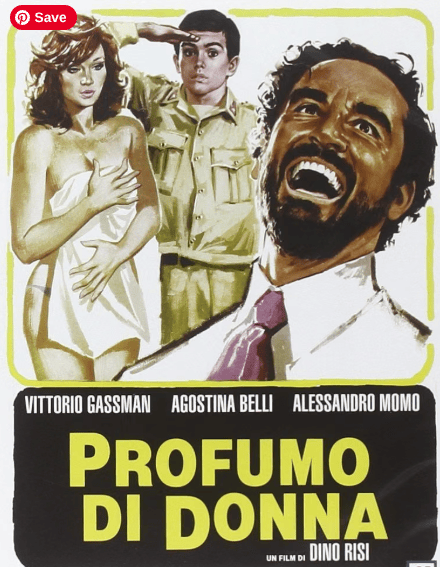
I managed to watch Profumo di donna (1974), the last film made by the Italian actor Alessandro Momo before his tragic death in a motorbike accident.
Its English title was Scent of a Woman. The film received two Oscar nominations and would later become the direct inspiration and source material for the much better-known 1992 American remake starring Al Pacino and Chris O’Donnell.
You might recall that Momo was only seventeen and not legally permitted to ride a motorcycle. The bike’s owner, 21-year-old actress Eleonora Giorgi, was investigated over the circumstances surrounding his death but was never indicted, having reportedly been told by Momo that he was 21.
I now have two observations.
First, Momo looked tiny, although there appear to be no reliable details about his height. One piece of information I came across suggests that he was actually a normal-height, slender adolescent rather than someone of unusually short or “tiny” stature.
Second, Momo looked about twelve years old. He certainly didn’t look 21, as he had apparently told Giorgi.
But what a handsome little devil he was.
I couldn’t help feeling sad watching him, knowing that just days after completing the film he would be dead. Never to grow old. Never to become the actor he might have become. There is something particularly poignant about seeing someone so young on screen when you know that their entire adult life has already been taken away from them.
Something else annoyed me, and it is something I have noticed in quite a few old Italian films: the way the dialogue was dubbed in post-production.
It always comes across as rather obvious—and often strangely awkward. The voices seem to exist slightly apart from the people speaking, as though everyone has been dubbed after the fact, which, of course, they were.
A bit of research suggests that the practice had roots in the Fascist regime’s attempts to eliminate regional dialects in favour of “standard” Italian. Dubbing subsequently became deeply embedded in Italian filmmaking, for a whole variety of practical and artistic reasons.
In Profumo di donna, Momo was dubbed by Sandro Acerbo, who would go on to have a very successful career as a voice actor.
So there I was, watching a fifty-something-year-old film, admiring an impossibly handsome seventeen-year-old actor, being irritated by the dubbing, and all the while knowing that the young man on the screen had only a few days left to live.
Cinema can be a rather strange thing.
A Man On My Bed
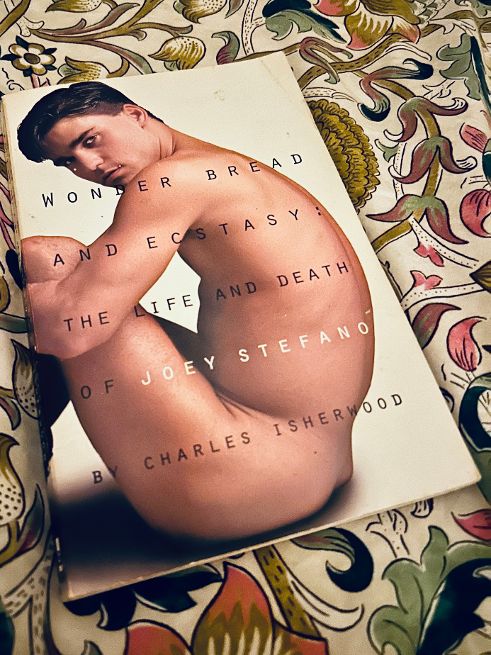
I walked into my room and found Joey Stefano naked on my bed. Actually it was a copy of Wonder Bread and Ecstasy: The Life and Death of Joey Stefano by Charles Isherwood that was published in 1996.
It makes it a very old book in my eyes.
I don’t want to say too much about Joey Stefano because it will spoil things for next week.
But, you will have surmised from the title that he is dead.
My friend David put me onto Joey Stefano.
“The two of you would have been most incompatible,” he suggested. “He wasn’t called the ‘hungry bottom’ for nothing.”
For the Only English Person I Know
Luigi Bevilacqua, that elegant old gentleman, left me a gift, carefully wrapped in green floral Tassotti paper and tied with gold-coloured string.
It was a small book in a blue cloth case binding.
If I considered the book about Joey Stefano to be very old, then this book was absolutely ancient.
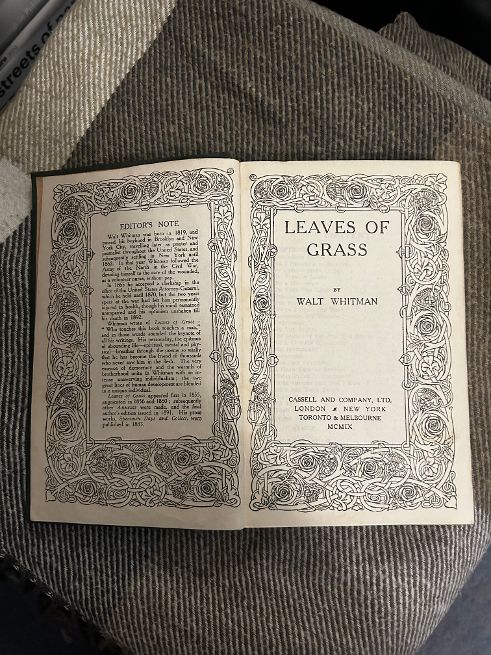
Leaves of Grass by Walt Whitman.
This particular English-language edition was published in 1909.
“Luigi sells second-hand books in Veronetta,” said Signora Bruschi. “He found this copy in a storeroom and will find it hard to sell.”
There was a handwritten card inside.
“Per l’unica persona inglese che conosco.”
For the only English person that I know.
The Algorithm Did Well
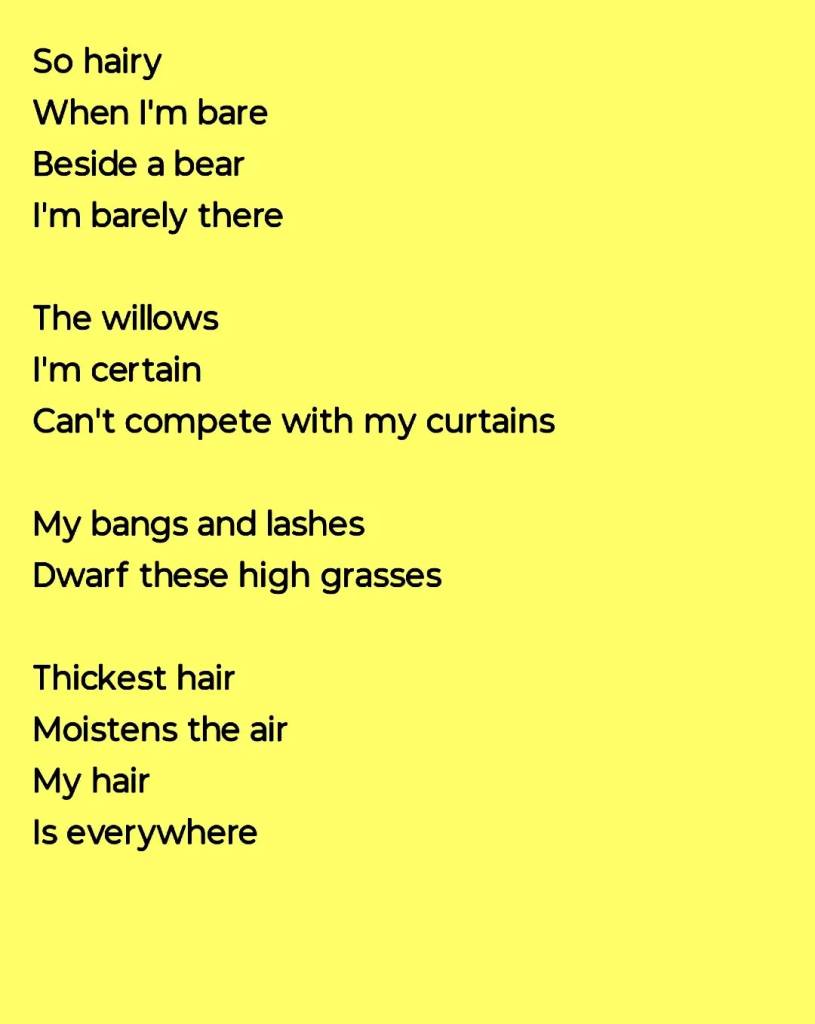
Scrolling through my phone because I’m bored, and the Al Gore-ithms point me towards 17-year-old Corin Altemus, who is a multidisciplinary artist. Yes, I had to look that up as well.
Altemus spends long periods being bored too, and turns to YouTube to talk about whatever happens to pop into his head. He slaps. I could watch and listen to him all day. I could probably talk with him all day too.
His Instagram feed is full of his artwork. It all looks good, although I don’t actually understand any of it. But tucked in amongst the art are a few random poems.
“Dumb stuff I wrote this morning,” he says.
Totally up my street

On the Cute and the Willing

 Perfectly Hard and Glamorous