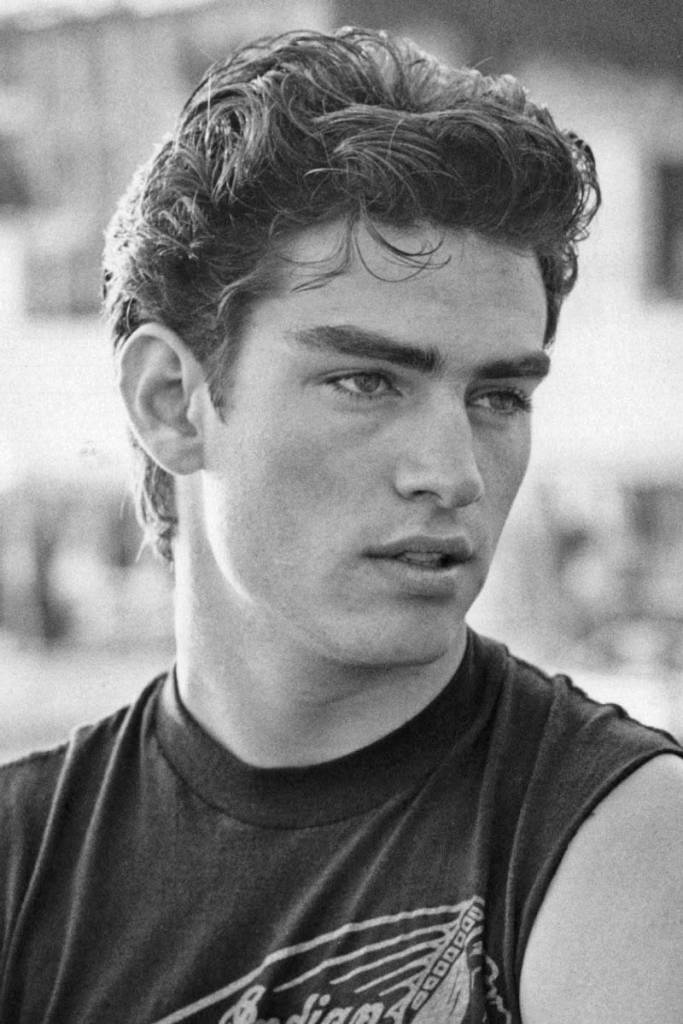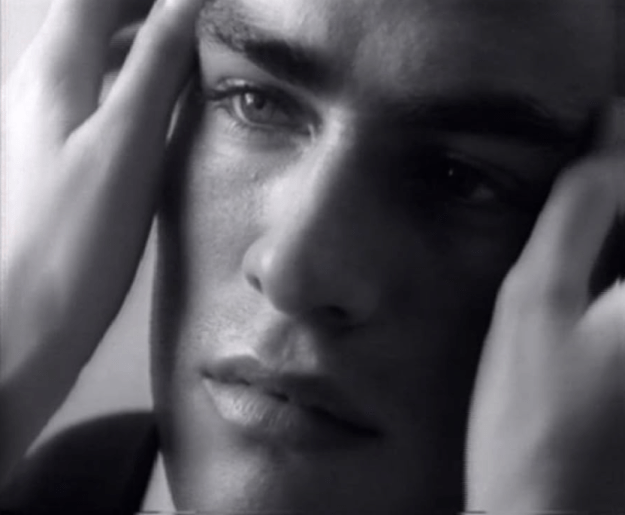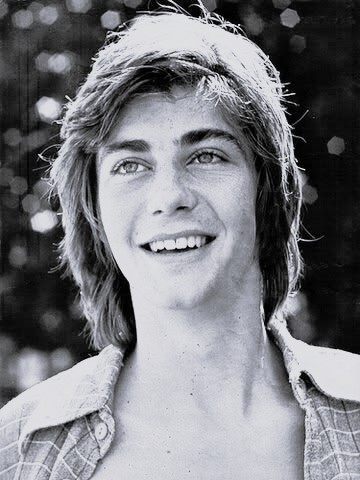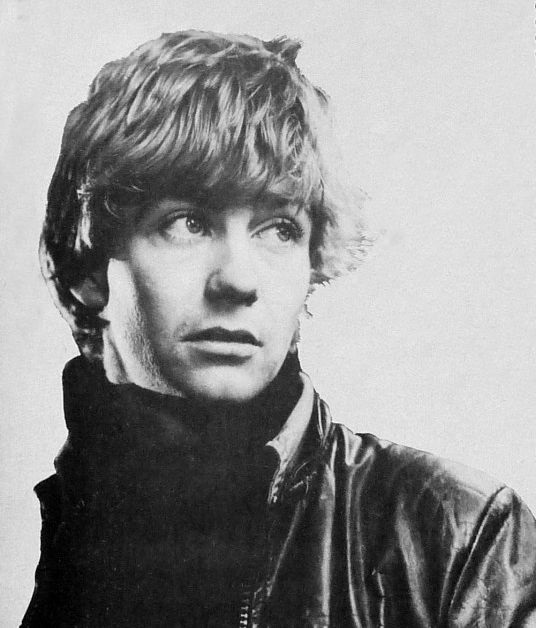
A forgotten actor, a lost Hitchcock film, the lifelong companion of Beverley Nichols, and a pioneer of British television. The remarkable life of Cyril Butcher deserves to be remembered.
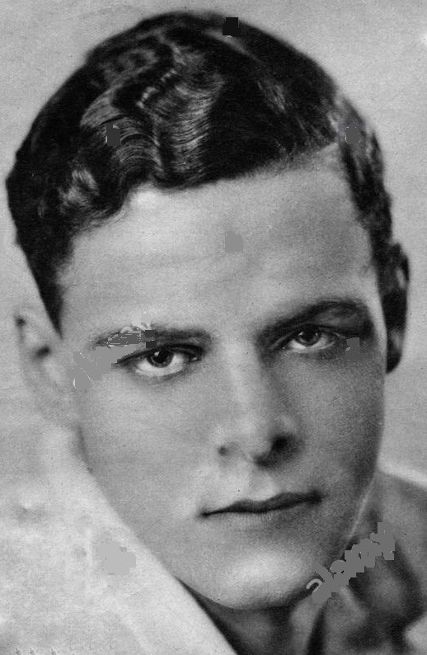
Metaphorically speaking, I spent two days and one long night sitting opposite Cyril Butcher at Signora Bruschi’s kitchen table. I questioned him, shared my frustrations and searched for answers that never came. The only response was the occasional concerned glance from Signora Bruschi, who had begun to suspect that I was talking to myself.
I assured her it was research. Anyone who has spent hours buried in old newspapers, forgotten magazines and fading archive material will know how easily the outside world disappears.
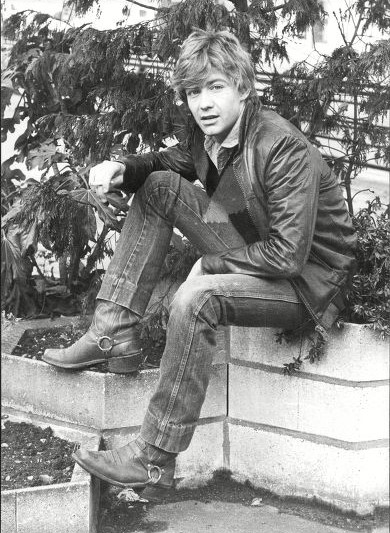
The trail began with a copy of Film Weekly from 1930. There, among its yellowing pages, was a photograph of a dreamy-looking young man named Cyril Butcher. He was twenty years old and had just become one of two winners of a nationwide competition offering a six-month scholarship at Elstree Studios, worth £250 together with a weekly salary of £10.
There had been 6,783 entrants, although Film Weekly never revealed precisely what they had been asked to do. One winner was always a young man and the other a young woman. Butcher entered through the Picture House in Ipswich; his fellow winner, Aileen Despard, represented the Rialto Cinema in Raynes Park, south-west London.
Standing six feet tall, weighing eleven and a half stone, with brown hair and brown eyes, Butcher evidently impressed a formidable judging panel. Among them were some of British cinema’s most promising directors, including Alfred Hitchcock, Ewald André Dupont, Norman Walker and Walter Summers.
The prize was more than a scholarship. British International Pictures quickly placed the two winners in a ten-minute comedy short entitled An Elastic Affair, directed by Hitchcock himself. The film premiered at the London Palladium, where Butcher and Despard were presented with contracts by the studio’s founder, John Maxwell.
Ironically, An Elastic Affair was a talking picture shown in a theatre that had yet to install sound equipment. Audiences watched the performances in silence.
Butcher appeared simply as ‘The Boy’; Despard as ‘The Girl’. One contemporary reviewer described his performance as “amateurish”, before generously conceding that he had never acted before. After a further screening in Ipswich, the film disappeared from circulation. Today it is regarded as one of Alfred Hitchcock’s lost films.
Later that same year Butcher appeared as ‘Dancer’ Johnny in Richard Eichberg’s crime melodrama Night Birds. It proved to be his final screen role.
I showed his photograph to Signora Bruschi.
“Bel ragazzo,” she murmured thoughtfully.
Then, after another glance:
“Omosessuale?”
She had guessed correctly.
Two years after his brief flirtation with cinema, Butcher came to the attention of Beverley Nichols, already one of Britain’s best-known writers. Novelist, journalist, playwright, broadcaster, composer and public speaker, Nichols embodied the glittering world of the Bright Young Things while carefully concealing his homosexuality from public view.
The two met during auditions for a theatrical adaptation of Nichols’ bestselling novel Evensong, itself inspired by the celebrated Australian soprano Dame Nellie Melba, whom Nichols had known personally during her later years.
Nichols was thirty-four. Butcher was twenty-two.
Their meeting would shape the rest of Butcher’s life.
He moved into Nichols’ cottage, Allways, at Glatton in Cambridgeshire, a picturesque Tudor thatched house whose gardens later inspired Nichols’ celebrated gardening trilogy beginning with Down the Garden Path.
Whether Fleet Street suspected the true nature of their relationship is difficult to judge. If rumours circulated, editors exercised remarkable discretion. Newspapers invariably described Butcher as a friend, visitor or business associate, never anything more intimate.
For more than half a century they remained together.
When Beverley Nichols died in 1984, after fifty-three years of companionship, Butcher inherited the largest share of his estate, valued at £131,750.
The public knew Beverley Nichols.
Very few remembered Cyril Butcher.
The obvious question is what Butcher himself made of it all.
The archives, frustratingly, have little to say.
His own voice is almost entirely absent. He left no memoir, no revealing interviews and no collection of personal letters that might explain the man behind the carefully posed publicity photographs. Almost everything we know comes from newspapers, theatre programmes and the lives of other people. It is enough to reconstruct his career, but rarely enough to understand his character.
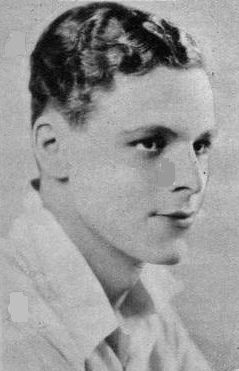
His family background was rather more remarkable than his modest film career might suggest.
Henry Ernest Butcher, Cyril’s father, was born in Ipswich and trained at the Royal Academy of Music before leaving England to pursue a career in German opera. For twelve years he sang across Germany, Austria, Switzerland and Poland, establishing himself on the Continental stage. In Cologne, in 1907, he married Gertrud Maria Maassen. Two years later, while the couple were living in St Gallen, Switzerland, their only son, Cyril, was born.
The First World War abruptly transformed the family’s fortunes.
As an Englishman working in the Austro-Hungarian Empire, Henry Butcher found his contracts cancelled almost overnight. Effectively stranded in Vienna, he reinvented himself under the Germanised name Heinrich Butscher and spent three years playing imposing villains and heavy dramatic roles for Viennese film companies.
Meanwhile, young Cyril was sent to the relative safety of Switzerland, where he spent the war at boarding school. Although born abroad, he was brought up as unmistakably English, eventually returning with his parents when they settled once again in Ipswich in 1919.
The stage fascinated him from an early age.
Before that dream could become reality he spent a brief period as a cadet in the Merchant Navy, only to discover that life at sea held little appeal. He abandoned it for work in a gasworks while nurturing rather more glamorous ambitions. He hoped to become a dancer in musical revues and, failing that, imagined a career as a writer.
Then came the Film Weekly competition.
Winning transformed an unknown twenty-year-old into a national curiosity almost overnight. Newspapers delighted in reporting the details that today seem wonderfully quaint. He stood six feet tall, weighed eleven and a half stone, had brown eyes and brown hair, and apparently possessed exactly the sort of wholesome good looks that British International Pictures believed audiences wanted to see.
Yet the promise proved fleeting.
After An Elastic Affair and Night Birds, film producers looked elsewhere. The great cinematic career that had seemed so certain never materialised.
The theatre, however, proved more welcoming.
When his screen career faltered, Butcher found steady work in the musical revues he had always loved. In October 1931 he appeared as Captain Donegal in a revival of Florodora, followed by performances in This World of Ours, Fanfare and Noël Coward’s Words and Music. He was never a leading man, but he worked consistently, quietly building a respectable theatrical career.
It was during this period that Beverley Nichols entered his life.
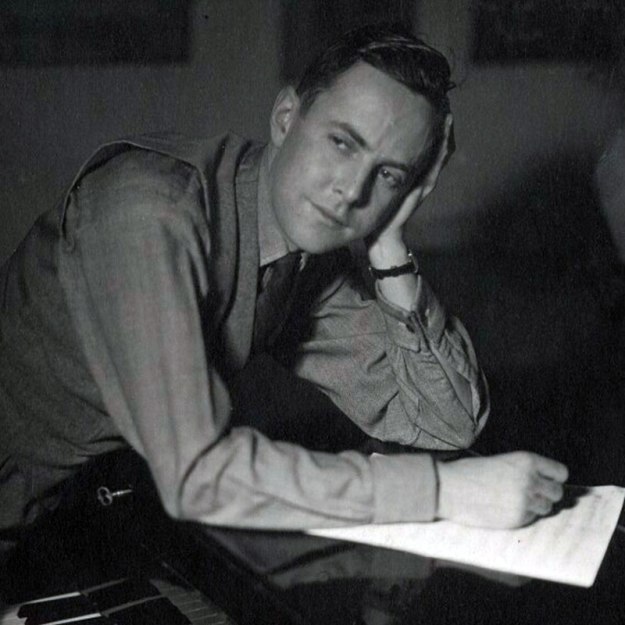
Whether Butcher genuinely fell in love with Nichols or recognised the opportunities that accompanied the relationship can never be known. The two possibilities are not mutually exclusive. Affection and ambition have often travelled together, particularly in professions where introductions and patronage mattered.
What is beyond dispute is that Butcher’s horizons widened dramatically.
Between 1932 and 1935 he wrote the stage and screen pages for Nora Shackleton Heald, editor of The Queen, the weekly magazine read by Britain’s aristocracy and fashionable society. When Heald moved to The Lady the following year, Nichols also became one of its occasional contributors.
Butcher was increasingly making his living not simply as an actor, but as a journalist.
He also wrote for The Sketch, contributing a series entitled The Worst Moments of My Life, in which well-known public figures recalled their most embarrassing or uncomfortable experiences. The articles were later collected in In Extremis: Worst Moments in the Lives of the Famous, published in 1934.
Then there was the matter of Brighton.
That year the town council published a promotional booklet about the seaside resort under Beverley Nichols’ name. It later emerged that the work had in fact been ghost-written by Butcher, with Nichols content to accept the credit.
It raises an intriguing possibility.
If Butcher could disappear so completely behind Nichols’ public persona once, might he have done so on other occasions?
The evidence simply isn’t there.
But it is difficult not to wonder.
The theatre remained Butcher’s natural home throughout the 1930s.
Between 1936 and the outbreak of the Second World War he appeared in a succession of musical revues and stage productions. He rarely enjoyed star billing, but there was satisfaction in regular work, and he increasingly found opportunities beyond acting.
Together with the pianist, composer and playwright Albert Arlen, he wrote and directed Counterfeit, a comedy thriller in twenty scenes. After previewing in Richmond it transferred to London’s Duke of York’s Theatre, where it featured a young Charles Hawtrey, years before the Carry On films would make him a household name.
The reviews, unfortunately, were lukewarm.
Around the same time, Beverley Nichols found himself under growing financial and personal pressure. In 1937 he sold Allways, the idyllic Cambridgeshire cottage that had inspired his famous gardening books. Publicly, the sale was attributed to the need to finance his latest West End production, Floodlight, itself destined to disappoint at the box office.
There may, however, have been another reason.
Village gossip had become increasingly hostile. Nichols’ frequent male visitors attracted attention, while rumours of moonlit skinny-dipping parties and young local men invited to the house circulated far beyond Glatton. Whether exaggerated or not, such stories carried genuine danger. Homosexuality remained a criminal offence, and a whispering campaign could destroy both careers and reputations.
War interrupted everything.
In 1940 Butcher joined the Royal Navy. Little has emerged about his wartime service, but once peace returned he resumed the theatrical life that had been placed on hold for six long years.
Nichols and Butcher settled at Merry Hall in Ashtead, Surrey, in 1946. The elegant Georgian house, surrounded by extensive gardens, would become famous through Nichols’ gardening books, although behind the scenes Butcher was contributing far more than readers realised.
In 1949 he wrote Dear Heart!, a comedy staged by the Playwrights’ Theatre Group at London’s Chepstow Theatre Club. By then, however, another medium was beginning to eclipse the stage.
Television.
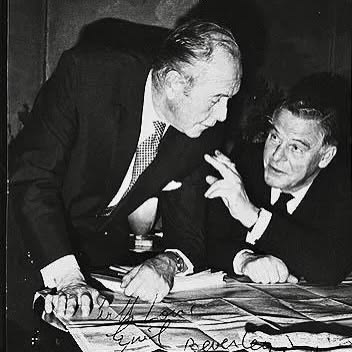
When Butcher began writing a television column for The Sketch in 1950, the medium was still finding its feet. His weekly articles charted life inside the BBC’s Alexandra Palace studios and later recorded the birth of commercial television with the curiosity of someone who recognised he was witnessing history in the making.
Five and a half years later he crossed the divide himself.
Associated-Rediffusion, Britain’s first Independent Television contractor, recruited Butcher to write and direct drama. It proved to be the defining chapter of his professional life.
Today, when scenes can be filmed repeatedly until perfection is achieved, it is easy to forget how television drama was once created.
In the 1950s almost everything went out live.
A forgotten line, a jammed door, a misplaced prop or a camera appearing in shot became part of the broadcast forever. If a programme needed repeating, there was no videotape waiting on a shelf. The entire cast and crew returned to the studio and performed the production all over again from the beginning.
It demanded absolute concentration.
Between 1955 and 1960 Butcher directed episodes of The Granville Melodramas, ITV Play of the Week, ITV Television Playhouse and Murder Bag. Week after week he helped establish the grammar of British television drama at a time when the rules were still being invented.
His achievements have largely been forgotten.
Yet millions of viewers watched programmes that passed through his hands.
In 1953, while rehearsing Nichols’ little-known play La Plume de ma Tante at Bromley Theatre, Butcher left midway through production after being called away to direct a television adaptation of Evensong—the very work that had first brought the two men together more than twenty years earlier.
Life has a curious habit of closing circles.
In 1958 Nichols and Butcher moved for the last time, settling at Sudbrook Cottage in Richmond, where they would remain together for the rest of their lives.
By the end of the 1950s, Butcher’s career had begun to change direction.
For two years he served as Senior Director of Schools Programmes before returning briefly to drama. By now, however, the industry’s priorities were shifting. The man who had once directed ambitious live productions increasingly found himself overseeing factual programmes with decidedly less glamour. Titles such as Shopping For You, Shop on the Corner, election coverage and broadcasts from the Ideal Home Exhibition reflected the changing demands of commercial television rather than any decline in his ability.
His final appointment at Associated-Rediffusion was as Head of its newly established Commercial Production Department.
Then came an altogether unexpected opportunity.
Television in Ethiopia was in its infancy. The Ethiopian Television Service had only recently begun broadcasting when Butcher accepted the post of Director-General, moving to Addis Ababa in 1965. For two years he helped shape a national broadcaster from the ground up, an experience unlike anything he had previously encountered.
His contribution did not go unnoticed. Emperor Haile Selassie awarded him the Order of the Ethiopian Empire in recognition of his work.
By the time Butcher returned to Britain, the pace of his life had slowed considerably.
In 1967 and 1968 he and Beverley Nichols embarked on an extended journey through South Africa, Singapore and the Far East while researching The Sun in My Eyes. Nichols wrote the text; Butcher supplied the photographs.
The arrangement had become familiar.
One man occupied the public stage.
The other often worked quietly behind the scenes.
Retirement, when it finally came, was only partial. Butcher continued to review television for The Stage, lent his support to plans for a fringe theatre in Wimbledon and, in 1984, became the subject of Old Stagers, a BBC Radio 2 programme celebrating veterans of British theatre and entertainment.
It was a rare moment in which the spotlight fell, however briefly, upon him.
When Beverley Nichols died in 1984, Butcher inherited the greater part of an estate valued at £131,750. He continued living at Sudbrook Cottage, despite suggestions that the house might have to be sold to meet taxes and other liabilities.
It never was.
Four years later, in 1988, Cyril Butcher died at the age of seventy-nine.
The handsome young man from Film Weekly had long since disappeared.
There are still people who remember Beverley Nichols and who knew of his lifelong relationship with Butcher. Most biographies suggest that, by their later years, companionship had replaced passion. Nichols’ attraction to younger men is well documented, as are his discreet encounters with the “rough trade” of London, while Butcher appears to have accepted those indiscretions with quiet resignation.
What passed between them in private is known only to history.
It is tempting to wonder whether Butcher’s contribution to Nichols’ success extended beyond the few acknowledged examples. We know that he ghost-wrote at least one published work and spent decades living alongside one of Britain’s most prolific authors. Did other manuscripts pass beneath his pen? Did other ideas become Nichols’ bylines?
The evidence is silent.
Perhaps it always will be.
After two days and one long night sitting opposite Cyril Butcher at Signora Bruschi’s kitchen table, I know a great deal more about his life than I did when I began.
I know that he was the young man who caught Alfred Hitchcock’s eye and starred in one of the director’s lost films. I know that he spent more than fifty years beside one of Britain’s most celebrated writers, helped shape the earliest years of commercial television, accepted an imperial decoration from Haile Selassie and quietly contributed to British theatre, journalism and broadcasting.
Yet, in another sense, I know almost nothing about him.
The archives reveal the milestones of his life, but not the life itself.
They tell us where he worked, whom he loved and what he achieved, yet remain stubbornly silent on the questions that matter most: what kind of man was he, what made him happy, what made him laugh and, when the lights finally went out, whether he believed he had lived the life he wanted.
Perhaps that is the fate of those who spend their lives just beyond the spotlight.
History remembers the stars.
It is less kind to those who helped them shine.
As I left Signora Bruschi’s kitchen, I glanced once more at the photograph of the twenty-year-old Cyril Butcher.
For a fleeting moment, it felt as though he was looking back.
Then I closed the file.