Shadows of Verona: An Offer Too Easily Accepted

Cola returned from Torricelle with important news. Signora Valenti had asked him for my mobile number. Why she wanted it, he had no idea, but he had seen no reason not to give it to her.

I could think of several.

“She will contact you,” Cola said before tucking into the meatballs his mother had prepared. As far as he was concerned, that was the end of the matter.

Bianchi sat opposite, his bare foot brushing against my knee beneath the table. He hadn’t quite followed the conversation and raised an eyebrow, waiting for someone to explain.

Signora Bruschi stood at the hob, stirring a pan with her back to us. Even so, I knew she was listening to every word.

She was a wily woman.

When Cinzia had pleaded for Bianchi to stay with me because Lorenzo was making life difficult for him at home, Signora Bruschi had seen straight through the lie. She allowed him to remain, but not with me. While I had been banished to Cola’s room, Bianchi had temporary use of mine. Now she was clearing out a room in the attic that would soon become his.

Signora Valenti wasted no time.

Later that evening a message arrived asking whether I was free to meet her for coffee the following day.

I read it aloud and was about to reply that I wasn’t available when Signora Bruschi wiped her hands on her apron and joined us at the table.

“It would be rude to refuse,” she said. “After all, you have no reason not to go.”

Signora Bruschi invariably had the final word.

“But,” she added after a pause, “I think it would be better if Bianchi came with you.”

Bianchi’s face lit up.

Cola grinned.

“She wants your body,” he said.


At eleven the following morning we arrived at Liston 12 on Piazza Bra, its terrace overlooking the Roman Arena. It was crowded with tourists, most of whom had no idea they could have paid half the price simply by walking a few streets farther.

I scanned the tables until I spotted Signora Valenti sitting in the shade. She raised a hand to attract our attention.

She wasn’t alone.

Edoardo sat beside her.

Valentina Valenti looked effortlessly glamorous. Her long blonde hair was tied back and oversized designer sunglasses concealed much of her face. She wore a pale pink summer dress and white Jimmy Choo heels.

She rose to greet us, kissing each of us lightly on the cheek. Bianchi’s appearance seemed not to concern her in the slightest as she motioned for us to sit before signalling a waiter for four espressos.

Edoardo remained where he was, idly turning the pages of a menu. He looked profoundly bored by the ritual of introductions.

After I introduced Bianchi, Signora Valenti inclined her head politely.

“I had expected you to send me samples of your work,” she said. “When you didn’t, I was forced to find it online. It wasn’t easy.”

“I’m sorry,” I replied. “I write under a pen name.”

“I know,” she said with a faint smile. “But I am well connected. I know people who are very good at finding whatever I need.”

She reached into an expensive handbag and produced a leather notebook filled with beautifully handwritten notes.

“I know you’re a travel writer. I’ve read several of your articles. They’re well written…” She looked up. “If a little dull.”

Across the table Edoardo gave a quiet snort of amusement.

His dark hair was slicked back as though he had only just stepped out of the shower. A faint scar ran across one cheek. The moment he realised I had noticed it, he covered it with his hand. It was his eyes that lingered with me, however—cold, watchful and instinctively unfriendly.

“I’d like to offer you a job,” Signora Valenti continued.

“A job?”

“My husband’s business has become extremely successful and is expanding internationally. I want you to write the history of the estate—from its modest beginnings to what it has become today.”

“Why me?”

The waiter arrived balancing our coffees with exaggerated care, placing each cup before us as though performing on stage. Signora Valenti dismissed him with an impatient flick of her hand.

“Why not?”

I searched for a polite way to decline without giving offence.

“Everything you need will be available to you,” she continued. “There are boxes of historical records at Torricelli that must be sorted through. Edoardo has agreed to help.”

Judging by the expression on his face, Edoardo had agreed to nothing. He was here because his mother had decided he would be.

The project held little appeal. Neither did the prospect of spending weeks in Edoardo’s company.

“I’m delighted that’s settled,” she said brightly. “I should have been very disappointed had you refused.”

She waited, knowing perfectly well no objection was coming.

“Excellent,” she concluded. “Then it’s agreed.”

A cigarette appeared from nowhere. She lit it with practised elegance and leaned back looking entirely satisfied with herself.

Bianchi looked equally pleased.

“This means you’ll stay in Verona longer.”

“Which creates one problem,” I said. “The rules say I have to leave Italy soon. I’m only here as a tourist.”

“Problems like that don’t exist in our world.”

It was the first time Edoardo had spoken. His voice was flat, almost bored.

“Exactly,” said his mother. “Now, let’s discuss your fee.”

The offer was generous.

Three thousand euros was considerably more than I had ever been paid for a commission, and although the project would take time, it would still leave me free to accept other work.


An Alfa Romeo belonging to the Carabinieri was parked outside Signora Bruschi’s house when we returned.

“Che ci fanno qui?” Bianchi asked.

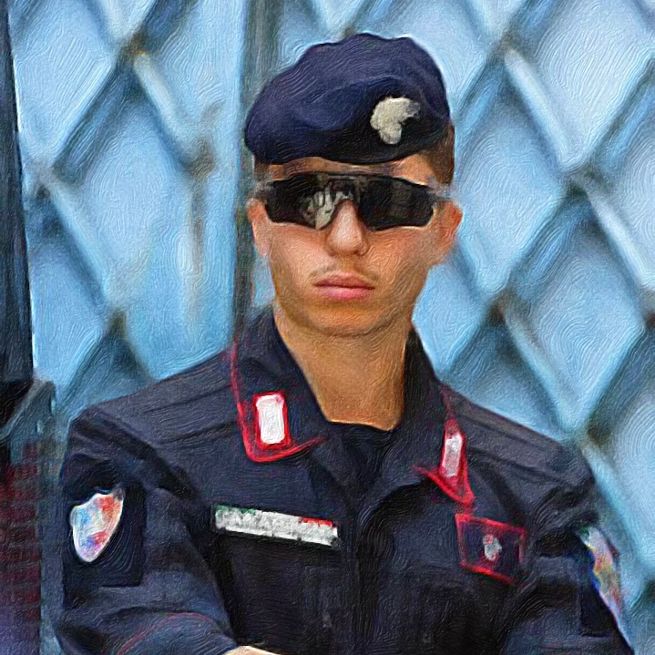
Two uniformed officers were just leaving. The younger of the pair held the front door open as we approached, taking a moment longer than necessary to look us up and down.

He seemed vaguely familiar.

Tall. Handsome. Short-cropped hair.

Our eyes met for several seconds, as though each of us felt we ought to recognise the other.

“Buongiorno,” he said quietly.
The Novel That Outlived Its Author


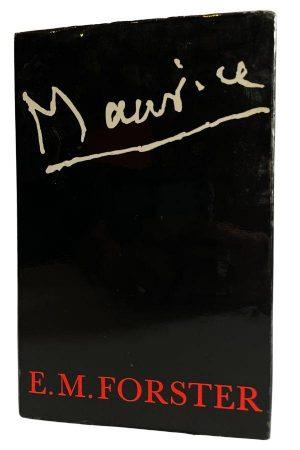
E.M. Forster spent much of his life hiding a part of himself.

In a diary entry from 1964 he wrote:

‘I should have been a more famous writer if I had written or rather published more, but sex has prevented the latter’.

Between 1905 and 1910 he published four novels—Where Angels Fear to Tread, The Longest Journey, A Room with a View and Howards End. By the time A Passage to India appeared in 1924, Forster had grown weary of writing about marriage and the relationships between men and women. It would be the last novel published during his lifetime.

Instead, his imagination increasingly turned towards relationships between men. He wrote stories that explored same-sex desire but refused to publish them, convinced that the world in which he lived was not ready for them.

His novel Maurice finally appeared in 1971, a year after his death. It tells the story of Maurice Hall, whose love affair with his Cambridge friend Clive Durham ultimately gives way to a deeper relationship with the young gamekeeper Alec Scudder. Defying class prejudice, social convention and the threat of blackmail, the novel ends not in tragedy but in hope.

Forster wrote Maurice in 1913–14, yet he could never quite let it go. He revised the manuscript in 1932 and again between 1952 and 1960, repeatedly reworking the ending while remaining determined that the lovers should find happiness.

It is difficult not to wonder whether Maurice became the life that Forster wished he might have lived himself.

While at Cambridge he was infatuated with Hugh Owen Meredith, who is widely believed to have inspired the character of Clive. He was also drawn to working-class men and, in 1930, began a relationship with the London policeman Bob Buckingham that lasted for forty years. During his travels abroad he formed other relationships, reportedly experiencing sex for the first time with a soldier on an Egyptian beach when he was thirty-eight.

In 1970, the biographer P. N. Furbank observed:

“He achieved physical sex very late, and found it easier with people outside his own social class; and it remained a kind of private magic for him – an almost unattainable blessing, for which another person was mainly a pretext.”

The executor of Forster’s estate was Professor W. J. H. Sprott of Nottingham University, best known for translating Sigmund Freud’s New Introductory Lectures on Psycho-Analysis. Among Forster’s papers he discovered the manuscript of Maurice, together with the unfinished novel Arctic Summer, largely written in 1911, which also explored homosexual themes.

There were also a number of short stories written between 1903 and 1958. Published posthumously in 1972, only two had appeared during Forster’s lifetime; the remainder were either overtly homoerotic or explicitly gay stories that would almost certainly have been considered indecent by contemporary standards.

Within his closest circle, Forster made little attempt to conceal his sexuality. He shared successive drafts of Maurice with trusted friends including Siegfried Sassoon, Lytton Strachey, Edward Carpenter, Christopher Isherwood, Xiao Qian and Forrest Reid.

Beyond that circle, however, he was intensely guarded.

In 1962, John Bayley wrote in The Guardian that “the homosexual themes underlie all his novels.”

Forster replied:

“Are you aware that homosexuality is still a criminal offence, and any public implication of it therefore objectionable.”

As Kate Symondson notes on the British Library website, Forster was only sixteen when Oscar Wilde was sentenced in 1895 to two years’ hard labour—the maximum penalty—for homosexual acts. It was a warning that stayed with him for the rest of his life.

The dangers faced by Maurice and Alec were not merely fictional. They reflected the laws, prejudices and fears that shaped Forster’s own existence.

Only in 1967, with the passing of the Sexual Offences Act, were private homosexual acts between men over the age of twenty-one decriminalised in England and Wales. By then Forster was eighty-eight years old, and the novel that had meant so much to him still remained unpublished.

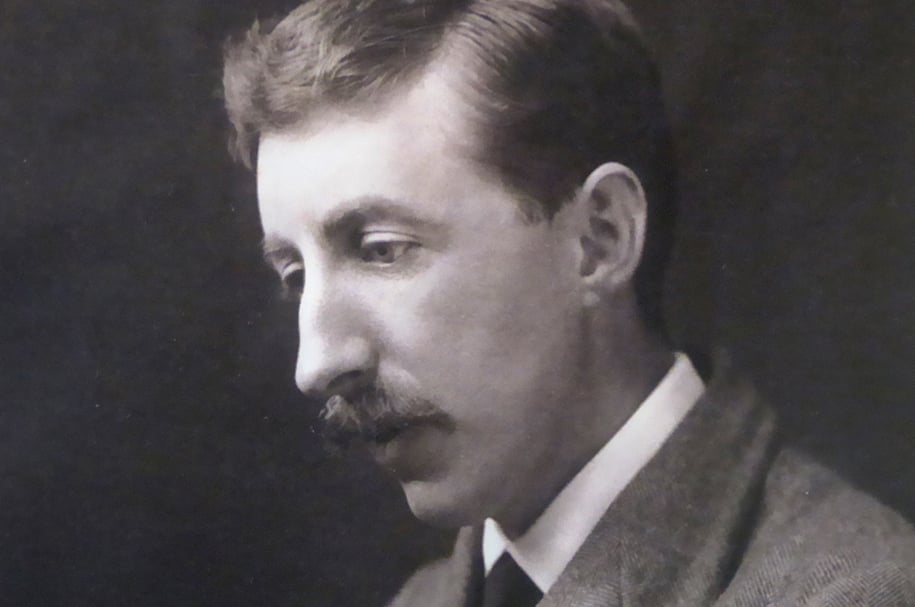
E.M. Forster (1879-1970)

My Week, For What It Was Worth


When the Sky Finally Let Go …

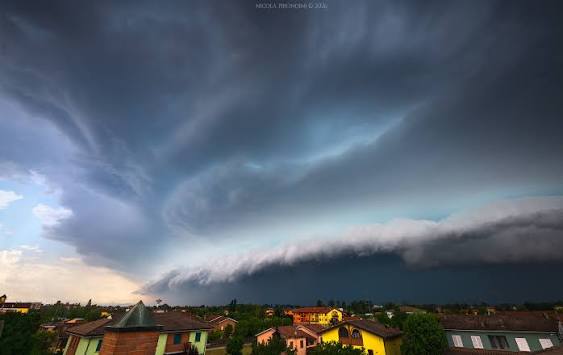
There had been a thunderstorm warning across the Veneto, but nobody believed it. They complained about the relentless heat and the pitiless sun, longing instead for shorter days, cold mornings, and snow.

Even so, the wind hinted that relief might finally be on its way. It rattled the café awnings, scraped chairs across pavements, and sent menus tumbling into the next street. In Signora Bruschi’s courtyard the washing twisted itself tightly around the line, while the terracotta pots overflowing with pelargoniums, lavender, salvias, petunias and Mexican fleabane bore the worst of it. One of the smaller pots toppled from the kitchen step and shattered. Even the tiny finches that usually flitted between the potted citrus trees abandoned the branches for the shelter of a shaded corner, where they sang with frantic urgency. Signora Bruschi rushed outside clutching a broom and shouted for us to rescue the washing before it blew away.

It was Cola who first noticed the bruised-purple cloud creeping across the sky. Others followed behind it, darker still, advancing with slow deliberation as though reluctant to commit themselves. They lingered above the city, steadily subduing the sun. With every passing minute the light faded, the heat loosened its grip, and the stale air trapped inside the old stone walls for weeks was finally released. When the wind eased, Signora Bruschi scolded us for throwing the clean washing into the basket instead of folding it properly.

An uneasy stillness settled over Verona. The city seemed to pause in expectation. Even the finches fell silent.

Bianchi stepped into the doorway and sniffed the air. It carried that strange sweetness that always arrives before heavy rain, reminding us of freshly cut grass. He pointed towards the sky, where the clouds had taken on an unsettling greenish hue, their tops spreading into broad, flat anvils. For a fleeting moment the sun broke through, casting dramatic shafts of light that sharpened every corner of Signora Bruschi’s courtyard.

Then came the first distant growl of thunder from somewhere beyond Lake Garda.

A blinding flash of lightning sent Bianchi darting back inside. From neighbouring houses came cheers, laughter and exaggerated cries of alarm. Only a handful of raindrops struck the marble flagstones before Signora Bruschi ushered everyone indoors.

Moments later the wind returned with renewed force, and the rain followed.

It swept across the city from the west in solid sheets, lashing the parched streets and hammering rooftops. The sheer weight of water became a roaring wall of sound that swallowed everything else. Gutters overflowed, torrents cascaded from the roofs, and water surged across the courtyard until it pooled outside the kitchen door. Drains that had lain dry for weeks surrendered almost immediately. Through the window we watched the neighbouring buildings dissolve behind a curtain of rain until they became little more than grey silhouettes.

“The heavens are teeming,” Signora Bruschi cried.

Brilliant forks of lightning split the sky, vanishing almost as soon as they appeared. Each flash was followed by a violent crack and then a rolling explosion of thunder that rattled the windowpanes and shook the house to its foundations.

Again.

And again.

“I hope it stops soon,” Bianchi whispered.

Cola, however, seemed delighted.

He dashed into the courtyard, pulling off his T-shirt as he ran, and stood ankle-deep in the rising water, lifting his face towards the sky as the rain drenched him within seconds. By the time he wandered back inside, his jeans clung to his legs and streams of water spread across Signora Bruschi’s kitchen floor. Without missing a beat, she clipped him around the back of the head, snatched a towel from the washing basket, and thrust it into his hands.

“My son is stupido,” she sighed, with equal measures of exasperation and affection.

Pietro’s Books, Bianchi’s Curiosity …

College has broken up for the summer and, when he is not working, Bianchi is usually either trailing me around Signora Bruschi’s house or reading in my apartment. Since my return, our hostess has been content for him to stay, but she has made it abundantly clear that no relationship of any kind is to develop between us. Consequently, Bianchi has taken up residence in my rooms while I have been relegated to sharing Cola’s bed.

My stay in Verona is only temporary, and I have no illusions that, once I return to the UK, Bianchi will have any claim on my Italian life.

For now, however, he has been quietly investigating my possessions in an earnest attempt to learn everything he can about me. He has also been working his way through Pietro’s boxes, which Signora Bruschi finally carried down from the attic for me to sort.

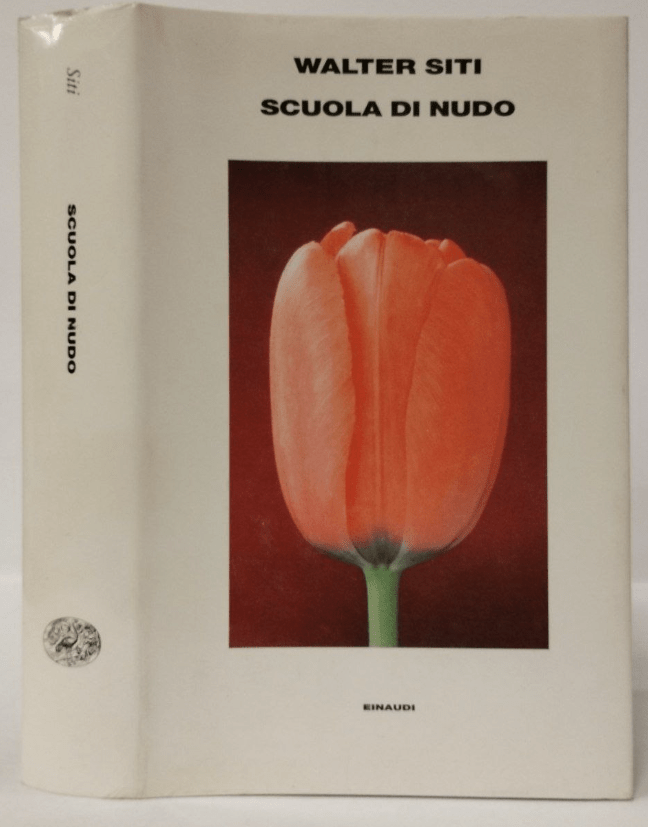
That is how Bianchi came to be sitting on my sofa with one of Pietro’s hardback novels from the 1990s.

Scuola di nudo is an intimidating thing: six hundred pages of uninterrupted Italian, which effectively rules out any possibility of my reading it.

“It is about a university professor in Pisa,” Bianchi explained, “who explores his obsession with male beauty and desire, and who is very critical of his colleagues.”

“Would I like it?” I asked.

“Probably not. I think you like magazines instead.”

The remark was aimed squarely at the infamous French copy of Le Pénis lying beside my bed, a publication that, until then, he had politely pretended not to notice.

“There is no plot,” he continued. “But it is interesting. And there are many scandals.”

I suspect Bianchi has already grown bored with the novel, despite his insistence to the contrary, and is persevering with it largely because he thinks it will impress me.

I looked up the author, Walter Siti, and discovered that he taught at several Italian universities, wrote screenplays, and has also been a reviewer for La Stampa.

As for Scuola di nudo, I remain none the wiser. Bianchi’s fractured English synopsis is, I suspect, as close to understanding the novel as I am ever likely to get.


Not my Taormina …

Severin wishes I were back in Taormina. I’m not so sure.

Dolce & Gabbana recently unveiled its new Alta Sartoria collection at the Teatro Antico, with the Ionian Sea below and Mount Etna rising behind it. The guest list was suitably glamorous: Erling Haaland and Isabel Haugseng Johansen, Theo James and Ruth Kearney, Christian Bale, Monica Bellucci, Jennifer Lopez and Michele Morrone.

I wasn’t invited.

That, in a way, is the point.

Taormina isn’t really for north European wastrels like Severin and me. It’s for people willing to spend the equivalent of a monthly mortgage on a single night’s stay, pay limousine prices for taxis and happily buy things marked up tenfold simply because they can.

It is the most expensive destination in Sicily.

We visited out of season and enjoyed it, although even then the White Lotus pilgrims were beginning to get on my tits. According to Severin, they’ve since become unbearable.

I left after a few weeks. He stayed.

He now spends sixteen hours a day working in a restaurant, and even the flat that came with the job has lost its appeal. The owners have suggested he share it with three other young waiters, each expected to pay an exorbitant rent. Rooms are scarce in Taormina, they say.

Watching from afar, I realise the place isn’t really for me.

Give me the Taormina where writers, poets, artists and photographers arrived on the backs of flea-bitten donkeys and drank cheap wine in tiny houses with compacted earth floors.

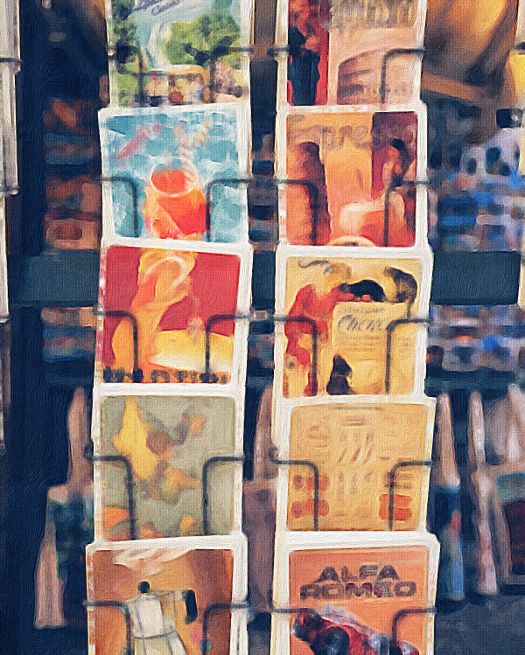
Give me Alfio, paid peanuts to work in a hotel whose rooms now cost five times what I paid only weeks ago. The same Alfio who took us where the locals ate, introduced us to the Taormina hidden behind the postcards, and preferred the company of ordinary people to wealthy tourists.

Give me the sweaty boys chasing a football across a dusty patch of wasteland, before somebody decides it would make the perfect site for another luxury boutique hotel.

Severin won’t last the summer.

Sooner or later, he’ll leave Sicily in search of something better.

I’m tempted to invite him to Verona. But that would test Signora Bruschi’s generosity.


The First Twink …

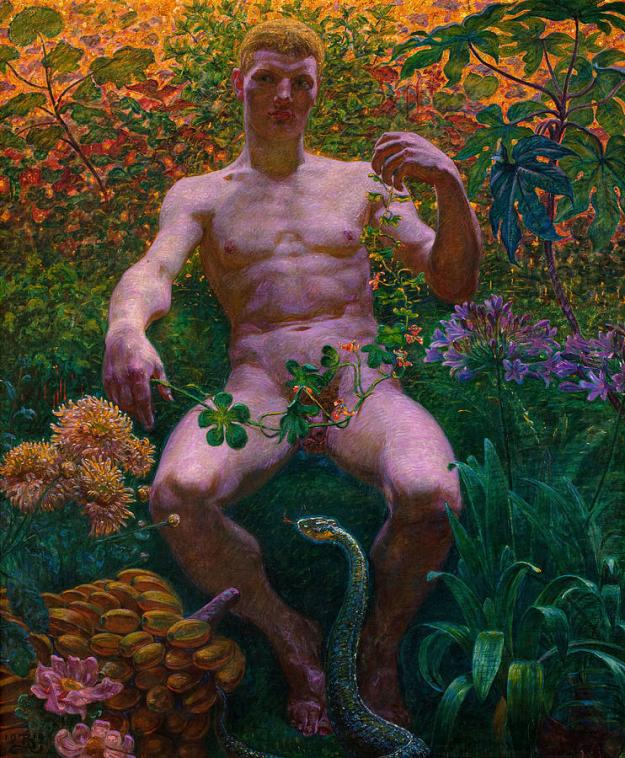
“Adam, as in Adam and Eve. I think he was the first twink and he was definitely a power bottom. The snake of it all in the garden is sus to me.” –  Grant Gibbs

Adam in Paradise. Kristian Zahrtmann (2020)

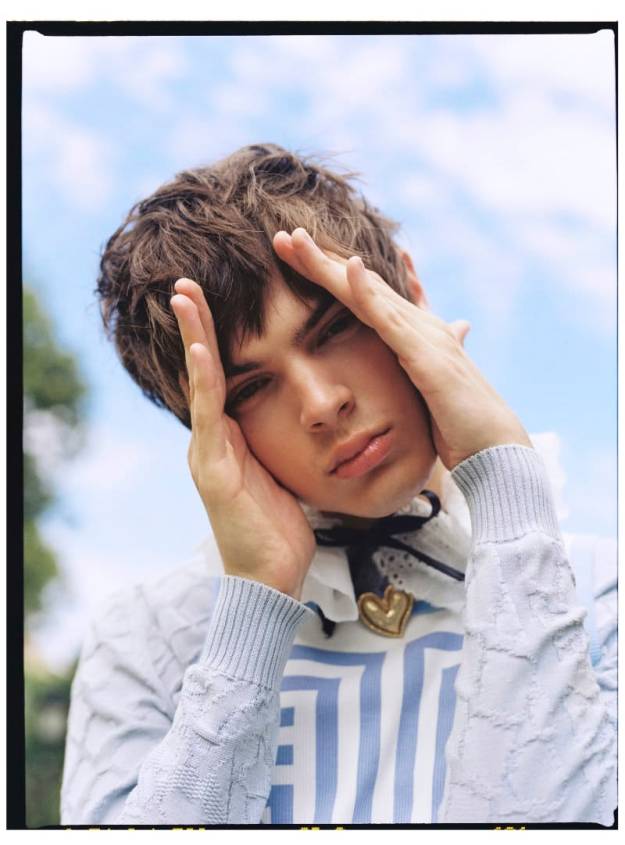
On the cute and willing…

Ruslan Danilchenko. Photographed by Kiana Beijleveld

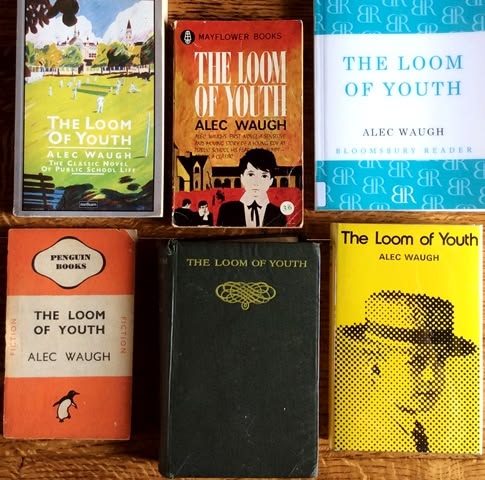
The Loom of Youth: Was it Really That Shocking?

Image:  Old Shirburnian Society

“Thus began a friendship entirely different from any Gordon had known before. He did not know what his real sentiments were; he did not even attempt to analyse them. He only knew that when he was with Morcombe he was indescribably happy. There was something in him so natural, so unaffected, so sensitive to beauty. After this Morcombe came up to Gordon’s study nearly every evening, and usually Foster left them alone together, and went off in search of Collins.

“Indeed this friendship, coupled with his admiration for Ferrers, was all that kept Gordon from wild excesses during the dark December days and the drear opening weeks of the Easter term. During the long morning hours, when Gordon was supposed to be reading history, more than once there came over him a wish to plunge himself into the feverish waters of pleasure, and forget for a while the doubts and disappointments that overhung everything in his life. At times he would sit in the big window-seat, when the school was changing class-rooms, and as he saw the sea of faces, some big, some small, who had drifted with the stream, and had soon forgotten early resolutions and principles in the conveniently broadminded atmosphere of a certain side of Public School Life, he realised how easily he could slip into that life and be engulfed. No one would mind; his position would be the same, no one would think worse of him. Unless, of course, he was caught. Then probably everyone would turn round upon him; that was the only unforgivable sin – to be found out. But it was rarely that anyone was caught; and the descent was so easy. In his excitement he might perhaps forget a little.”

I have never quite understood what all the fuss was about.

When The Loom of Youth by Alec Waugh was published in 1917, it provoked a minor literary scandal.

Written when Waugh was just seventeen and a half, the novel is both a realistic and romantic portrait of the early twentieth-century British public school system. Through its protagonist, Gordon Caruthers, he explores the complex social hierarchies, academic pressures and personal relationships that shape life at the fictional Fernhurst School.

The novel broke long-standing Victorian taboos by acknowledging the romantic and homosexual attachments that could develop between schoolboys, although by modern standards its treatment is remarkably restrained.

Indeed, the two passages reproduced above are about the only real indication that Gordon Caruthers and his fellow pupil, Morcombe, shared anything approaching a romantic attachment.

Contemporary reviews were, for the most part, favourable, though many cautiously skirted around the subject, resorting to euphemisms such as “immorality”, “decadence”, “sentimental relations” and “unhealthy” adolescent behaviour.

The fiercest opposition came not from the literary press but from conservative periodicals, educational journals and coordinated letter-writing campaigns organised by public school authorities, who regarded the novel as a damaging attack on their institutions.

Waugh depicted a world in which schoolboys cheated, schoolmasters were often out of touch, and both could become easy targets for the casual cruelties of adolescence.

He also challenged the Victorian conviction that team sports—particularly rugby and cricket—instilled the moral character and leadership required to govern the British Empire.

Then there was the schoolboy slang, which horrified many critics and parents, who dismissed the dialogue as vulgar, ungentlemanly and symptomatic of cultural decline.

As Waugh had himself been educated at Sherborne School in Dorset, the school quickly recognised itself as the model for Fernhurst and regarded the novel as a profound betrayal. By exposing the realities of life inside one of England’s elite public schools, Waugh opened institutions that had long been shielded from public scrutiny and, in the process, stirred anxiety among parents and former pupils alike.

Sherborne believed it had little choice but to expel him from its old boys’ association, the Old Shirburnian Society.

Reading it today, it is difficult to see what so alarmed its detractors. What once seemed a shocking exposé now reads as an unusually perceptive, and surprisingly tender, account of adolescence. 

The David Problem: Notes from a Life


The 19.24 from Penzance

London. Summertime. The sun blazed and the city baked.

For weeks David had been bracing himself for the Wilhelm von Gloeden exhibition at the McDonald Gallery. He had written notes for the sixty photographs on display, along with an agonisingly long biography of the German photographer for the catalogue.

Now it was opening night. His work was done, and as he strolled along the Strand he felt an unfamiliar sense of relief. All that remained was to survive the evening. He hated social gatherings and would much rather have been sharing a quiet drink with Joshua.

Joshua, however, thrived on occasions like this. He would work the room, dropping discreet hints that he was an emerging force in the contemporary art world, and leave with a pocketful of phone numbers and invitations. David, inevitably, would be expected to accompany him.

His own intention was to remain firmly in the background.

He had already instructed the exhibition’s curator, an American called Nathaniel Wilson, not to mention his presence. David wrote under a pen name and was determined to keep his identity hidden. He had even insisted that his name be removed from all the exhibition material.

Joshua had also insisted on bringing Freddie.

As they approached the gallery, Freddie stopped in his tracks.

“They’ve shot the elephant,” he announced solemnly, “and now there’s a dead elephant in the road.”

Freddie claimed to see the dead.

“Fuck me,” David muttered. “That’s all we need.”

The McDonald Gallery was new. Its owner had installed enormous glass windows and joked that they allowed those without invitations to see exactly what they were missing. David hoped they wouldn’t see too much. Von Gloeden’s photographs were bound to provoke controversy.

His heart sank when he spotted Pamela Hutchinson standing just inside the entrance.

He had warned Nathaniel not to invite her. The warning had been ignored.

David slipped past her and leaned towards Nathaniel.

“She’s a fucking do-gooder,” he whispered.

Nathaniel merely smiled. The New Yorker possessed an enviable ability to brush off negativity. David, by contrast, briefly entertained the idea of punching Pamela in the face before remembering that doing so would rather compromise his anonymity.

They had arrived fashionably late. The gallery was already crowded with people balancing glasses of expensive wine and conducting earnest conversations. The art had become secondary.

David excused himself and wandered over to the photographs he had spent weeks studying. They felt strangely familiar now, almost as though they belonged to him.

His favourite hung at the end of the room: Peppino Scavo, photographed in 1901, reclining nude beside the sea with his eyes closed, serene and oblivious to the camera preserving him for posterity.

“Beautiful,” said a voice behind him.

Another lecherous queen, David thought.

Even so, he found himself agreeing. He had expressed the same opinion countless times while preparing the catalogue notes, but always in private. Hearing someone else voice it left him oddly possessive of the exhibition.

“I’ve been told the notes were written by a famous author,” the man continued. “Any idea who? Hollingworth, perhaps. They have his style. If not him, I’d put money on Tóibín.”

David sighed inwardly.

If the man had done his homework, he would already have known exactly who had written them.

David checked his watch. Daniel should have arrived by now.

They had met on a nudist beach in Cornwall, where an awkward conversation about the paintings of Henry Scott Tuke had somehow blossomed into a friendship. David still winced at the memory of telling Daniel that he looked as though he had stepped out of one of Tuke’s canvases.

Their conversation had eventually turned to the von Gloeden exhibition, and David had invited him to London. The invitation had naturally included a bed at Cleaver Square. To David’s delight, Daniel had accepted and should have been on the 19.24 from Penzance. The 19.24 from Penzance, he thought. It sounded like the title of a crime novel.

His attention was drawn to Nathaniel and Joshua, who were talking to a tall young man with his back to him. There was something oddly familiar about him.

David threaded his way through the crowd.

“Owen,” he said, breaking into a smile.

The young man turned immediately.

“I was just chatting to my new neighbour,” Owen said, “and now the other one’s arrived. How are you, David?”

“New neighbour?”

“My grandmother left me her house, so I’ve decided to move in. At least for the time being.”

He meant the house next door, which had belonged to the Countess until her death a few months earlier.

David and Joshua had known Owen since he was a child and had always been the only neighbours to visit the family regularly. David was fond of the handsome young man, though he also knew about his unpredictable temper.

Approach with caution, he reminded himself.

“That’s wonderful,” David said. “But what brings you here?”

“A friend of a friend,” Owen shrugged. “I’m not convinced it’s really my sort of thing.”

Nathaniel’s eyes had already settled on Owen’s outfit.

“What a fantastic look,” he purred, admiring the suit worn over a plain white T-shirt. “You put the rest of us to shame. Come on, let me show you around. I’ll explain von Gloeden to you.”

He took Owen gently by the arm.

Owen glanced back at David as though asking to be rescued.

“There’s only one reason he wants to show him round,” Joshua murmured. “And I think we can all guess whose knickers he’d like to get into tonight.”

“Nathaniel can be remarkably shallow,” David replied.

At that moment Freddie appeared clutching a full bottle of wine. David glanced at the label—Domaine William Fèvre Chablis Grand Cru Les Clos—and suspected it cost more than he cared to imagine. Freddie had abandoned his crystal glass altogether and was drinking straight from the bottle.

“You’ll never guess who I’ve just seen,” he announced.

His voice had already risen several decibels.

“Please don’t get drunk,” Joshua sighed.

“Who’s drunk?” Freddie protested. “I’ve just seen Charles Dickens in the toilet.”

Several heads turned in their direction.

“Freddie, I would gladly kick you in the balls if it weren’t for the fact that you’re annoyingly handsome.”

David knew exactly how the evening would end. Before the exhibition was over, Freddie would have found someone willing to take a chance on him. The only uncertainty was whether he would sabotage his own good fortune by telling his latest conquest that Charles Dickens was standing behind them.

Only then did David notice Daniel.

The young man stood in the middle of the gallery, rucksack slung over one shoulder, quietly taking everything in.

David resisted the temptation to call across the room, I didn’t recognise you with your clothes on. It was a dreadful cliché, but also true. The last time they had met, Daniel had been sitting naked on Sunny Cove, hugging his knees against the sea breeze.

He realised there was one question he had never asked.

What had brought Daniel to a nudist beach in the first place?

Fully dressed, he looked broader than David remembered. His mousey hair had grown a little longer and a small stud glinted in one ear. Dressed like one of the skateboarders David often watched in Kennington Park, he looked entirely out of place among London’s art crowd.

Joshua, of course, had seen through everything.

On the drive back from Cornwall he had suggested, with infuriating accuracy, that David had taken a shine to him. Ever since, David had made a point of sounding carefully indifferent whenever Daniel’s name arose.

The irony was impossible to ignore.

Twenty years earlier David had written a novel about an older man who convinced himself that a much younger one was secretly in love with him. At the time he had never understood where the idea had come from.

Now, with some alarm, he recognised it.

He had become the man he’d invented.

At last Daniel spotted them and waved.

David pretended not to notice. Better to let Joshua take the lead.

“We’re glad you could make it,” Joshua said warmly.

“How are film studies?” David asked.

“They’re good. We’ve broken up for the summer now.”

“And who,” purred a familiar voice, “is this delightful creature?”

Nathaniel had evidently given up on Owen and returned with a new target.

Joshua made the introductions.

“So you’ve travelled all this way to see our exhibition,” Nathaniel said. “Tell me, are you familiar with von Gloeden?”

“Not at all.”

“Excellent. By the end of the evening you’ll be an authority. I trust you won’t be rushing straight back to Cornwall?”

“Daniel’s staying with us,” Joshua replied.

“And after that,” Daniel added, “I’m spending a few days in Henley-on-Thames with my girlfriend.”

The word landed like a punch.

David hoped his face betrayed nothing.

“We can all mourn the fantasy of what might have been,” Nathaniel laughed.

Joshua looked positively delighted.

When Nathaniel whisked Daniel away to deposit his rucksack in the cloakroom, Joshua turned to David.

“Feeling a bit bummed?”

“What on earth are you talking about?”

“Oh, get over it, David.”

As if matters weren’t bad enough, Pamela Hutchinson appeared.

“There you are,” she said. “I’ve been looking for you. No more hiding behind emails. At last I get to meet the writer in person.” She glanced around the gallery. “I notice your name is nowhere to be seen.”

“I’d rather the attention stayed on the photographs.”

“Or have you finally decided von Gloeden’s work really is pederastic?”

Fucking do-gooder, David thought.

Before he could reply, someone burst into song on the far side of the room.

“La da dee, la dee da…”

Pamela raised an eyebrow.

“I’d say somebody’s had rather too much to drink.”

Freddie.

Joshua hurried off to rescue the evening, eventually managing to shepherd him outside before he serenaded the entire gallery.

“If you’ll excuse me,” David said.

He escaped into the crowd, drifting through a succession of forgettable conversations before finding Daniel standing in front of another photograph. A glass of champagne rested in one hand, a smoked salmon blini in the other.

“Are these originals?” Daniel asked.

“Hardly. They’re modern prints. Even so, they’ll sell for a small fortune.”

“Do people really buy them?”

“More people than you’d imagine.”

Daniel smiled.

“And do you still think I stepped out of one of his photographs… the way you said I stepped out of that painter’s?”

“Tuke,” David reminded him.

The same mischievous smile.

David’s thoughts began to race.

Create some distance. Leave space. Find something else to occupy your mind. Half a loaf was better than none.

“You still haven’t answered.”

“What would you like me to say?”

“Nathaniel thinks I’d make a good male nude. Apparently he knows people in the film industry.”

David had encountered men like Nathaniel all his life. Charming. Persuasive. Always on the lookout for the next beautiful distraction.

But nobody could steal what had never belonged to you.

“Be careful of Nathaniel Wilson,” David said. “Men like him can be very persuasive. Stay close to Joshua and me instead. We’ll make sure you survive the evening. Besides…” He smiled. “What would your girlfriend have to say?”

He felt quietly pleased with himself.

The point had been made.

But Daniel was no longer the shy young man David had met on the beach. Somewhere over the past few weeks he had realised the effect he had on people and was perfectly content to let them compete for his attention.

“That’s funny,” Daniel said, grinning.

“That’s exactly what Nathaniel said about you.”

Daniel wasn’t choosing sides.

He seemed perfectly happy to sit on the fence and watch everyone else do the choosing.

The Price of Staying Beautiful

Francisco ‘Chico’ Lachowski

There is one image I keep returning to

An almost naked young man stands beside a wall, his palms resting against it. Half-turned, he smiles seductively at the camera. He is teasing us: slim, tender, peach-coloured buttocks visible through his underwear, perfectly sculpted legs. He is devilishly cute. He wants to be devoured.

He ignites that unhealthy desire simmering somewhere inside us.

This, I found myself thinking, is the person I want to spend the rest of my life with.

Except the photograph was taken twenty years ago. I would have been an impressionable eight-year-old boy.

The stalker in me wanted to know whatever became of this Boy Adonis.

As it turns out, he’s done rather well for himself.

He left modelling behind and built a successful career as a graphic designer.

Most strikingly, he bears almost no resemblance to the young man in that photograph.

The beautiful twink has become an ordinary forty-something, seemingly happier to indulge in junk food than gym memberships. Time has softened the angles that once made him so desirable.

Be careful what you wish for.

Not everything that glitters shines forever.

Yet he appears genuinely happy, and perhaps that matters more than eternal beauty. There is, it seems, life after the glitz and glamour have faded.

This was supposed to be a post about Brazilian supermodel Francisco Lachowski, one of the rare few who found fame at seventeen and remains in demand at thirty-five.

For every Lachowski, though, there are probably thousands who weren’t so fortunate.

The career of a male model is notoriously brief. By their late twenties many are already ageing out. Facial features lose their youthful sharpness, fresh faces replace familiar ones, and fashion’s relentless obsession with youth moves on without hesitation.

The pressure to remain lean, beautiful and commercially desirable is immense. Those who no longer fit a very specific ideal can find themselves discarded almost overnight.

Despite the glamour and apparent success, there is always one eye on the future—on life beyond the catwalk. Preparing for that transition can bring burnout, financial insecurity, sexual harassment and a heavy psychological toll.

Francisco Lachowski is one of the exceptions.

Discovered through a modelling competition, he won Ford Men’s Supermodel in 2008. His striking facial symmetry, hooded eyes and strong jawline quickly established him as an icon of modern male beauty.

“It changed completely, from being a lost boy who didn’t really know what to do with his life to travelling for the first time overseas and exploring the world working with the biggest names in fashion.”

His transition from teenage heart-throb to adult model became a visual blueprint for millions across Wattpad, Tumblr and, later, TikTok. He has also embraced Instagram, where a substantial online following has become an essential part of a successful modelling career.

For those whose careers end almost as quickly as they begin, however, the glamorous image of the fashion industry often bears little resemblance to reality. Losing relevance can mean losing income, identity and, for some, their mental wellbeing.

Francisco Lachowski. Cute teenage boy to adult model

My Week, For What It Was Worth


He was absolutely right …

It’s been a week of emails and rewrites.

Back and forth.

It’s not normally like this.

The editor of a magazine received my latest submission. It was different from my usual work; this time there were 2,500 words of creative writing. 

Thankfully, he liked it.

Then came the revisions.

Lose the opening paragraphs. Move a sentence. Remove the relationship angle. Tone down my favourite character. Rewrite the ending.

He was starting to annoy me.

A typical comment read:

“Your writing has become noticeably more restrained… Readers tend to trust narrators who don’t feel the need to interpret everything for them.”

All I wanted to do was submit the piece and see a payment appear in my bank account.

But we got there in the end.

Before sending the final draft, I read it one last time and realised something rather irritating.

He was absolutely right.

*****

Photo by Victoria M.

A lesson in speaking Dutch …

Signora Scala lives in the building next door, but spends more time in Signora Bruschi’s kitchen than in her own. It is not unusual to find her sitting at the table chopping vegetables or helping to make bread. All the while she will be engaged in animated conversation, sharing the latest gossip with Signora Bruschi, who appears to tolerate these daily intrusions.

Though she does occasionally test her patience.

“Is there not a week that passes without her mentioning that she is related to the Della Scala family?”

The Della Scala family was the influential medieval dynasty that once ruled Verona. Signora Scala is not technically related to them; she acquired the surname through marriage. Nor does she seem aware that there are thousands of modern-day Scalas living in circumstances every bit as modest as her own.

Signora Scala speaks no English, which makes my presence a constant source of frustration for her, but a welcome distraction for Signora Bruschi and Cola whenever I wander into the kitchen.

“She’s talking bullshit,” Cola might announce loudly, while Signora Scala smiles and nods in complete agreement.

I am something else she struggles to understand.

She cannot comprehend why Signora Bruschi refuses to charge me rent for the apartment.

“He is family,” Signora Bruschi replies.

“But you could live comfortably if you made him pay.”

The truth is that Signora Bruschi is far from poor, and she seems genuinely offended whenever I suggest contributing financially.

Cola insists that his mother fears I might not be able to afford it, and would simply leave.

Signora Scala will tut loudly, make the sign of the cross, and declare, “Ed è anche omosessuale.”

As though I hadn’t understood a word, Cola inevitably provides a translation.

“She says you like to take it up the arse.”

This week, perhaps determined to prove a point, Signora Scala announced that she was taking in a lodger for a month. He was a young Dutch dancer performing with a contemporary dance company at the Teatro Romano. For this, she informed us, she would be paid €150 a week.

Signora Bruschi, quietly folding the ironing, rolled her eyes.

“And what is this Dutch boy called?” she asked politely.

“Jort,” Signora Scala replied.

Except she had decided there was a proper Dutch pronunciation, producing something closer to “Joooorrrrrt.”

Cola pounced immediately.

“Joooorrrrrt,” he bellowed in an impossibly deep voice.

“Sì, Joooorrrrrt,” she confirmed.

“Joooorrrrrt!” he shouted even louder.

“Joooorrrrrt!” she echoed.

“Joooorrrrrt!”

“Joooorrrrrt!”

By now they were practically competing to see who could produce the most theatrical rendition of the poor boy’s name.

It was the finest Joooorrrrrting I had ever witnessed. 

“Oddio,” sighed Signora Bruschi.

*****

Photo by Paul Jasmin

On explaining a one night stand to Cola …

You just know, don’t you?

It is always the timid one, sitting quietly in the corner with the girls who want to protect him. 

Halfway decent-looking, too.

Johnny from Tunbridge Wells.

He’ll ask if I want to play Spider-Man 2 and snort lines of coke from his psychology notes. He rarely has the coke, but it sounds impressive.

I ask whether his mother still buys his underwear. He blushes. He says no, but we both know he is lying.

He freezes like a rabbit caught in a trap, yet he has no real desire to escape.

The next few minutes will make or break him. At least, that’s how it will feel.

Eventually, he drops his jeans, revealing the underwear his mother chose for him.

Now what?

You tell him to take off the underwear. When he does, his embarrassment is written all over him.

*****

My favourite newspaper quote …

“Oh dear. Such a shame to see the US lose at football after their insanely embarrassing president cheated for them. Still, it really brought the world together. The last time this many people cheered on a Belgian resistance, it was 1914 and the Germans had just crossed the Meuse.”


Marina Hyde, writing in The Guardian, UK.

*****


On cargo shorts and crop tops …

Imagine that one hundred years from now someone discovers a single photograph of you. Your music has vanished. No recordings survive. No interviews. No reviews.

What would you want that photograph to say about you?

“Cunt-serving twink.”

Severin introduced me to a rising German Gen-Z singer called Siovo. He played him incessantly in Taormina and, now that I’m back in Verona, I find myself doing much the same.

Siovo is one of the few openly gay artists working in the German pop scene, writing songs that explore queer identity, unrequited love, modern relationships and isolation.

At least, that’s what Severin tells me.

My complete ignorance of the German language means Siovo could just as easily be singing about bin collections or discounted washing powder.

He has also cultivated a distinct visual identity, usually appearing in an unlikely combination of oversized cargo shorts and cropped tops.

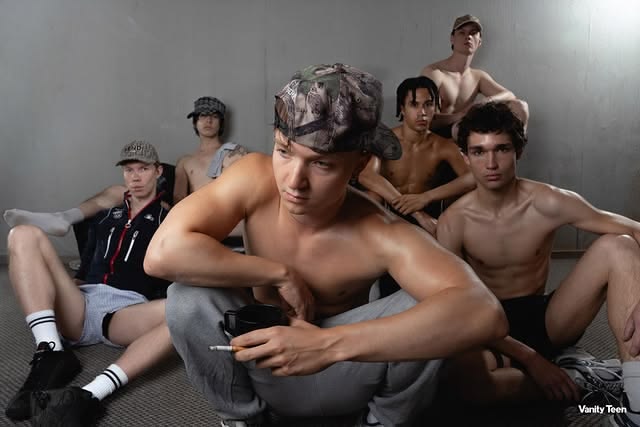
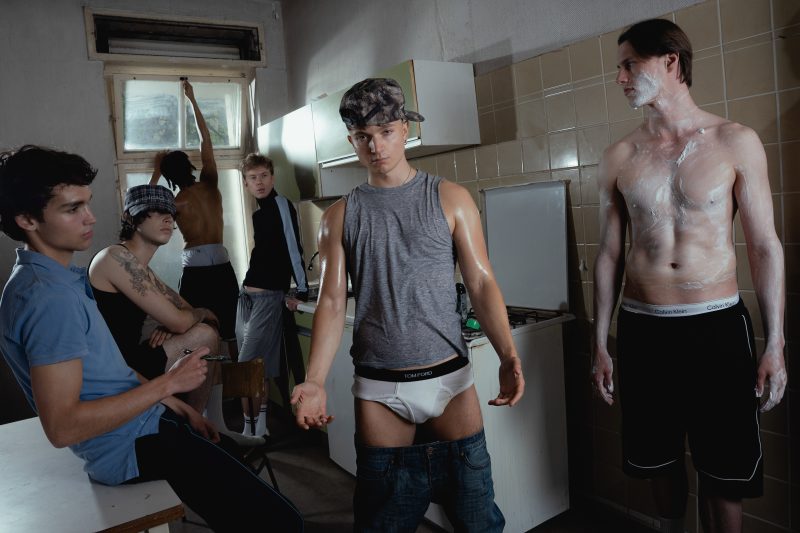
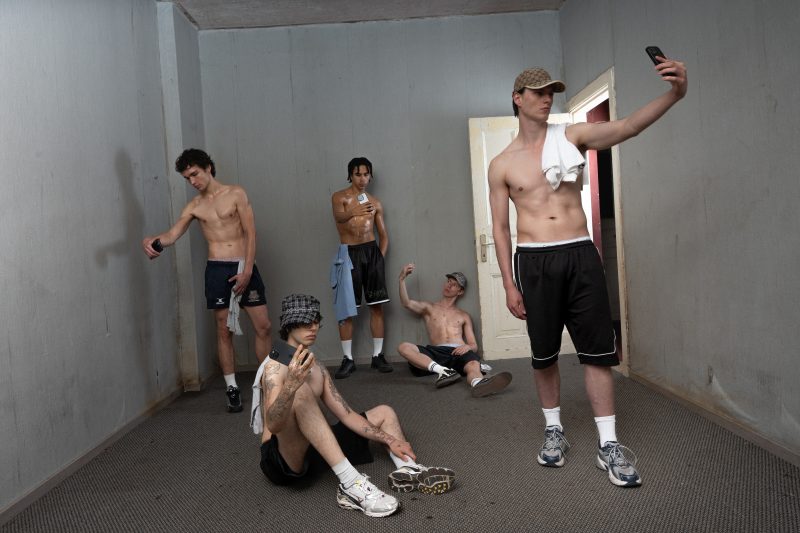
Naturally, I was delighted to discover that he had recently collaborated with photographer Nikolai Voelcker, whose work has a particular talent for capturing chavvy young men in various states of undress.

Lampoon magazine describes his photography rather more elegantly than I ever could:

“Photographer Nikolai Voelcker focuses on male dynamics. Friends joke, stretch limbs, shift postures, and press next to each other. Shoulders bump. Arms connect. These gestures do not carry disclaimers. They occur as part of casual time together. The camera records moments that raise questions about erotic currents in shared male space.

Photos by Nikolai Voelcker

*****


The Silence of Roca Rey …

The last person I saw fervently stroking and kissing rosary beads was Nico, my ex-boyfriend, who went through this disconcerting ritual every time we had sex.

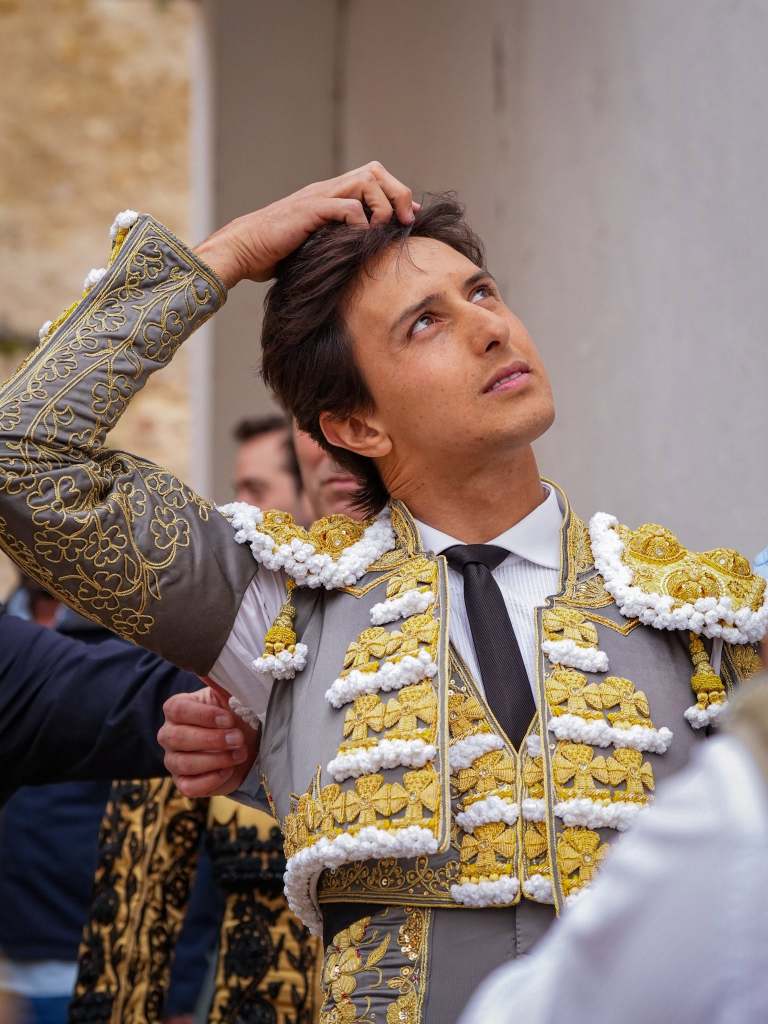
I thought about Nico while watching Albert Serra’s riveting documentary Afternoons of Solitude, about the Peruvian matador Andrés Roca Rey, who appears to share the same devout Catholicism.

Cola watched the documentary on Mubi Italia. It was in Spanish with Italian subtitles, and the only things I understood with any certainty were the bulls.

“Uomo coraggioso,” Cola murmured.

“Uomo bellissimo,” was my reply.

I watched it again later, this time with English subtitles.

Roca Rey is a strikingly handsome twenty-nine-year-old: a man of countless facial expressions and very few words, capable of selling out bullrings across Spain, France and Latin America.

The global controversy surrounding bullfighting rests on a direct clash between animal welfare and cultural preservation.

It is utterly riveting, but an extremely difficult watch.

There is blood. Lots of it. The bulls, after all, never come out on top.

Supporters defend bullfighting as a deeply rooted art form and historical tradition: an epic celebration of human skill, courage and intellect overcoming the raw power of nature.

Phil Hoad, writing in The Guardian, observed:

“Filming Rey in transit in a people carrier, getting apparelled in his hyper-camp getup, rehearsing his mannerisms in a lift, Serra is fundamentally interested in questions of performance and style. In the arena, he documents the finesse and attitude with which the matador confronts, corrals and quells the raw force of nature. In the ring, Rey has an extraordinary repertoire of gestures: preening head tosses straight from a Whitesnake gig; a glowering demon kill-mask out of kabuki theatre.”

Roca Rey spends much of the documentary sitting silently in a people carrier while an entourage of yes-men shower him with endless praise. You were magnificent. So brave. Nobody does it like you. Hoad captures it perfectly: “There’s something almost insecure about the nonstop stream of compliments Rey’s entourage lavish on him.”

Roca Rey rarely responds. More than once I found myself willing him to turn around and shout, “Shut the fuck up!” But he never does. He remains almost unnervingly silent, and those cherubically handsome, boyish looks only make him more fascinating to watch.

*****

On attempting to pick someone up …

I woke him from his slumber. He had been staring without realising it. When I moved, he was startled. That was the moment you knew. You were in complete control; he wasn’t. Sometimes it made me think I hadn’t lost it after all.

I asked why he had been staring. He denied it.

“Well, I was staring at you,” I replied.

That was usually the point where they folded. The bolder ones called your bluff, and when they did, I made a tactical retreat, giving them just enough space to realise they had missed their chance.

They always came back. By then, they wanted what they had pretended not to.

*****

On the cute and willing…

Tim Wolf at East West Models, Germany. Photo by Ralph Geiling.

The Truth Died at Ors

Wilfred Owen (1893-1918) photographed about 1910

“It seemed as though it was happening to somebody else. He heard the rattle of German machine guns and believed they were aimed elsewhere. He pitied the unfortunate comrades who fell into the mud and filthy water, yet silently thanked the Lord that it was them and not him. Surely He had made him immune to this brutal enemy. He was too young to die.

“Then his tunic exploded before his eyes. Chunks of blood, cloth and gore splattered across his chest and stomach like enormous raindrops. There was no pain. Not at first. Then came the realisation that these were the very bullets meant for somebody else. After that came the searing pain—sharp, sudden, inexplicable. His insides had exploded. The Lord had deserted him after all.

“Those were his final thoughts as he fell to his knees: that he was going to die, and his secret would remain with him on the banks of the Sambre–Oise Canal at Ors.“

*****

I am one of those who subscribes to the view that the poet was homosexual. Others, of course, suggest otherwise. His connections with a homosexual literary circle that included Siegfried Sassoon, Robbie Ross, Osbert Sitwell and Scottish writer C.K. Scott Moncrieff is well documented. 

The truth of the matter died with Owen at Ors in November 1918.

Wilfred Owen had only five poems published during his lifetime. The vast majority of his work was published posthumously, much of it written between August 1917 and September 1918 during his stay at Craiglockhart Hospital in Edinburgh and a subsequent period in Scarborough.

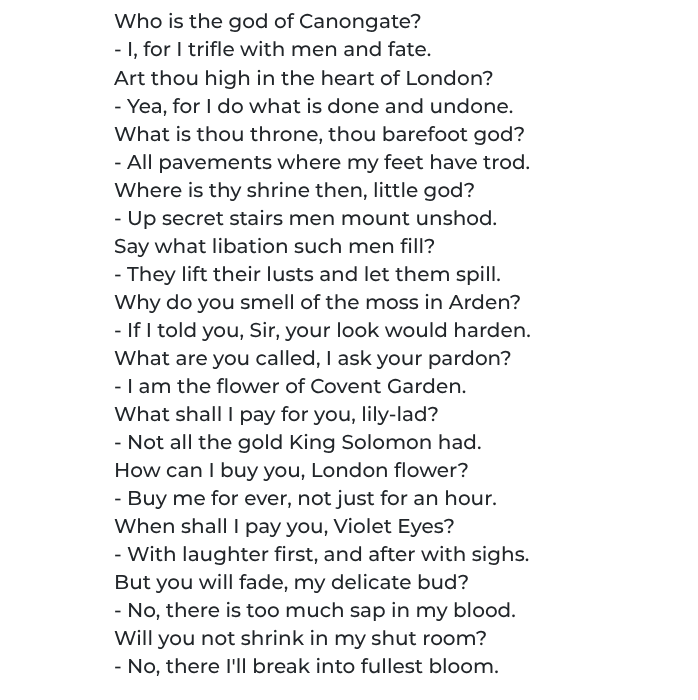
One such poem, Who Is the God of Canongate?, is believed to have been written at Scarborough in November 1917, when Owen joined the Manchester Regiment, billeted at the Clarence Gardens Hotel (now the Clifton Hotel), where he spent much of his free time writing in a turret bedroom.

The poem has often been interpreted as an evocation of male prostitution in Canongate, Edinburgh, and Covent Garden, London, collectively represented as a “little god” who walks the pavements barefoot. This “lily-lad” is visited up “secret stairs” by men who “lift their lusts and let them spill”.

Did Owen write from experience? Or had he merely heard stories that inspired the poem?

Alas, we shall never know.

Shadows of Verona – Where I Belong

Cinzia had come up with the solution to a problem that Signora Bruschi had created. 

I slept with Cola while Bianchi slept alone in my bed.

Cola was now nineteen, tall and slim, and drove a bright yellow Abarth 500 that sounded loud, throaty and aggressive when he arrived back home in the early hours after spending the evening with Cinzia.

He had climbed into his own bed, almost forgetting that somebody had gatecrashed.

“I thought that the bed would be empty,” he teased. “I was certain that you would have crept upstairs to be with Bianchi.”

“And suffer the sharp tongue of your mother? Not likely. I half expected her to be sitting outside the door to make sure that we didn’t.”

Morning brought little relief. Cola’s room was much smaller than my apartment and the heat of the night had been unbearable. Neither had slept well. Cola kicked me to make sure that I was awake and whispered in my ear.

“It is time to get up. I must go and see Signor Valenti and would like you to come along with me.”

“Who is Signor Valenti?” I groaned.

“He is the man that I work for,” he explained, “and he will have a list of jobs that need doing.”

During the night I wondered whether Bianchi had explored my apartment. He had always been curious, the sort of boy who wanted to know everything. I hoped I hadn’t left anything incriminating lying around. Then I remembered the crumpled copy of Le Pénis beside my bed. I had little doubt he would have read it from cover to cover. 

“I’d expected to spend the day with Bianchi,” I muttered.

“That is not going to happen. Cinzia and Bianchi have arranged to go to the summer festival at Gardaland today and will not be back until late. Unfortunately, they do not have tickets for us and so we shall be left behind to drive one another crazy.”

I was disappointed.

“We must go to church,” Cola announced.

I pulled a face.

“Why?”

“I have things to confess.”

Cola burst out laughing and hit me hard on the arm. 

Bianchi was subdued at breakfast. He refused to eat or drink while he waited for his lift that would take him to Gardaland. He made polite conversation but his usual brightness had deserted him 

“Is everything okay, Bianchi?”

He nodded but didn’t reply.

I’m not sure why it is, but silence makes me feel uneasy. But when he held his gaze a moment longer than necessary, it suggested the problem might not have been with me.

We waited on the pavement for the arrival of his friend, Antonio, who, Cola had explained, was Bianchi’s best friend. 

He turned up in a noisy old Fiat Panda with Cinzia beside him.

Antonio was messy, with dark curly hair, soulful brown eyes, and a slightly crooked nose. He wore a worn-out denim jacket and football shirt sporting the blue and yellow of Hellas Verona. 

He got out of the car and kissed Bianchi on the cheek before hugging him tightly. Bianchi blushed.

Cinzia hurried them into the car.

“We shall see you this evening,” she called from the car window.

Bianchi waved as they drove off and soon afterwards sent a message on his phone.

I hoped we might have spent more time together today. Gardaland was Cinzia’s idea. We shall talk this evening.

Cola drove me to Torricelle in the hills north of Verona. I had once been here with Pietro and remembered the panoramic views of the Adige River and the city below. It was also where I saw one of the most beautiful sunsets. He blasted Sfera Ebbasta through the speakers, making conversation almost impossible. But he seemed proud to be taking me to see Signor Valenti.

“He is a very rich man and lives in a wonderful house in its own grounds. I have told him all about you.”

“How did you meet, and what is it that you do for him?”

“Oh, I work around his house and do jobs around the estate,” he replied. 

It all seemed an unlikely world for someone like Cola, and that he had not explained how he had met Signor Valenti had not gone unnoticed.

Away from the historic centre, the land turned green with olive groves, vineyards and lush vegetation. We climbed the hillside and eventually came to a set of stone pillars on the right. Cola spun off the road and dropped down a long winding driveway that was cast in deep shadow by a rich canopy of giant oak trees.

When we burst back into the sunlight it revealed a large house that seemed to be made up of adjoining boxes with floor-to-ceiling glass walls. Parked in front of it was another bright yellow Abarth 500 that was identical to the one that Cola drove.

As Cola parked beside it, I received a message on my phone. It was from Cinzia.

I have an idea. I shall speak with Cola’s mother tomorrow.

For the second time in 24 hours Cinzia had devised a solution to a problem. I grinned and Cola looked at me with bemusement.

“Why are you smiling?”

“I don’t know your girlfriend well, but I am starting to realise that she can be very cunning when she wants to be.”

I had the feeling that whoever lived inside this house would never enjoy the privacy that lesser folk in poorer houses enjoyed. The outside was everywhere you looked. 

The house felt strangely empty. Expensive homes often do. Every room had space to breathe, yet there was little evidence that anybody truly lived there. 

I longed for the comfort and simplicity of Signora Bruschi’s modest home. 

Cola led me through rooms that contained modern sofas and stylish chairs, sleek tables with contemporary sculpture and lots of fresh flowers in huge vases – but little else.

Signor Valenti looked like he was in his forties, with the first signs of grey showing in his black hair. He had once been handsome but still retained the trim figure of somebody who might once have been an athlete. He was smartly dressed with white chinos and an azure blue shirt and seemed stereotypical of the Italian businessman; casual but with a sense of importance.

A woman sat with him around a glass-topped table that had been set up outside. This, I presumed, was Signora Valenti who had once been a beautiful woman. She looked about the same age as her husband with long blonde hair that had been carefully tied back. 

“Nicola.” Signor Valenti seemed pleased to see Cola and gestured for us to be seated. A faint smile showed on Signora Valenti’s lips but she seemed uninterested in our arrival.

Cola poured coffee for us both and spoke in fluent Italian to his host – fast and furious and I had difficulty keeping up. Eventually, Signor Valenti turned towards me and offered his hand.

“I am delighted to meet you, Miles. Please call me Alessandro, and this is my wife, Valentina.” It had a ring to it – Valentina Valenti. “And that,” he nodded towards the swimming pool,” is my son Edoardo.”

A young man swam the length of it before coming to a stop. Only his head could be seen, his wet hair plastered back, as he treaded water. He looked at us with curiosity, but, like his mother, never uttered a word. I waved a greeting but Edoardo didn’t acknowledge it. He, too, it seemed, was devoid of pleasantries.

While Alessandro and Cola talked business, I enjoyed the view.

Finally, Valentina came to life.

“My husband owns everything that you see before you.”

“Impressive,” I replied.

“These are our vineyards and olive groves, and in the buildings to the right is where wine and olive oil is manufactured.”

The Valenti family enjoyed fabulous wealth.

“My husband is also a property developer and has a vast portfolio around Verona.”

Valentina spoke matter of factly, as though defending the reasons for their good fortune. It was as if she was trying to make a point. She put on large sunglasses and I could no longer tell whether she was looking at me or her son.

Cola had the habit of making me appear like somebody I wasn’t. In his eyes, I was unique, although he had no idea what it was that I wrote. 

“Nicola tells us that you are a writer,” she said with a little more warmth.

Alessandro and Cola left us and walked to the edge of the terrace. Alessandro pointed to various parts of his estate, and Cola nodded in understanding.

“Poor Cola is receiving a long list of jobs. It will keep him occupied for weeks which is exactly what my husband wants. And when those jobs are completed, he will give Cola another long list of things to do. Cola is your friend. But he is also Alessandro’s plaything.”

I didn’t quite understand.

“He enjoys having Cola around because he is everything that Edoardo is not. Cola is the son that he wanted. Edoardo is not. My son is spoiled and has no desire to work.”

Edoardo had climbed out of the pool and was rubbing himself down with a towel. I expected him to join us but he walked straight into the house with a scowl.

“Edoardo is jealous of Cola because he gets exactly the same privileges as he does. Edoardo does not consider that Cola works hard for what he gets, whilst he does little.”

“Where did your husband meet Cola?”

She brushed a hand through her hair.

“Oh, I do not know,” she sighed.

Alessandro and Cola disappeared onto the next garden terrace and now we were alone. Valentina flicked through Italian Vogue, not once stopping to read anything; the actions of a bored housewife. 

A WhatsApp message from Bianchi flashed up. It was a photograph from Gardaland – a selfie. Cinzia was grinning while Bianchi had his arm around his friend. They seemed to be enjoying themselves. 

Antonio was not conventionally handsome, but his grin was infectious; he looked happiest of all. 

“You are frowning, Miles,” said Valentina, without looking up from the magazine. 

“No, signora.”

“I would like you to send me some of your work.” It was a command rather than a request. 

We returned to the car after Alessandro had finished with Cola.

Edoardo was checking his gelled hair in the wing mirror of the second Abarth. He had showered and dressed and wore a fragrance that reminded me of  bergamot and pineapple. He was dressed entirely in white; his shirt was loose and unbuttoned to show the smoothness of his chest. 

“Arrivederci,” I said to him.

Edoardo said nothing, started the car and sped away. 

“I seem to bring out the worst in people,” I suggested to Cola as we drove back to Verona. “First Lorenzo, and now Edoardo.”

“Edoardo is strange. He resents that I work here but will not complain because he relies on his father’s wealth. He is not a problem.”

“But he stands to inherit everything one day.”

“No,” Cola quipped. “He will get nothing. They will leave it all to me.” 

He laughed, but I had known Cola since a boy, and knew that when he joked it was to hide something serious.

After Torricelle, the streets of Verona provided welcome relief; I was returning to where I felt comfortable and could act myself again. But Cola was able to step effortlessly between contrasting worlds. 

Verona was in slumber. The pavements were empty;  everyone had retreated into the shadows to find whatever coolness remained. Shopkeepers sat on chairs and fanned themselves. Dogs slept under tables. Teenage boys removed their shirts and lounged on street corners.

Bianchi sent another photo.

The photograph showed Bianchi and Antonio eating ice cream with great blobs balanced on the ends of their noses. It was gloriously childish. Whatever melancholy had shadowed Bianchi that morning had disappeared. 

“We are all small boys at heart,” Cola remarked while looking at my phone and driving far too fast.

The Camera Loved Peter Johnson


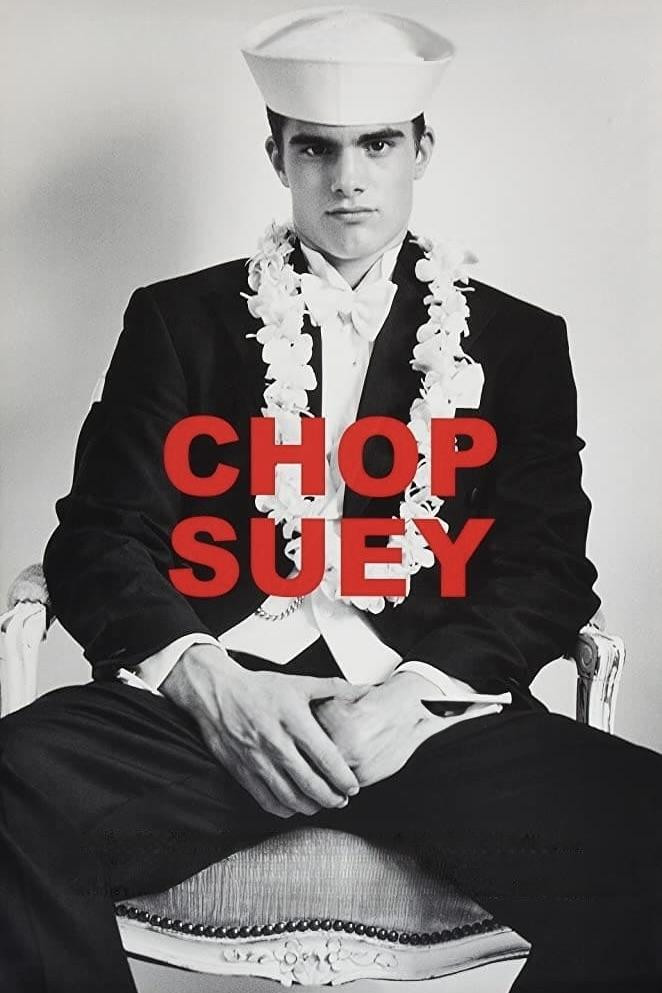
Until now, I had avoided seeing Chop Suey (2001). The title alone suggested nothing that would interest me.

Then a friend encouraged me to watch it and followed up with a cryptic message.

“An elephant appears several times in Chop Suey. It might be the same elephant that wandered into the room and now refuses to leave.”

I knew exactly what he meant.

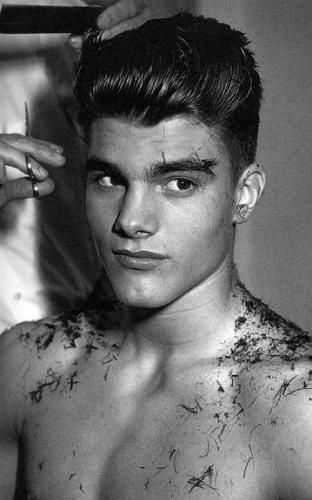
For those who have never seen Chop Suey, it is a documentary anchored around Bruce Weber’s relationship with Peter Johnson, a handsome high-school wrestler from Wisconsin who became a fashion model. Based on Weber’s photo book The Chop Suey Club (1999), it has been described as a visual memoir, using Johnson as a window into the director’s own youth, longing and pursuit of an unattainable ideal.

The film wanders freely between footage of Johnson and archival clips featuring the openly lesbian lounge singer Frances Faye, surfer Christian Fletcher, actor Jan-Michael Vincent, British explorer Sir Wilfred Thesiger, former Vogue editor Diana Vreeland, and, amongst others, the elephant. I challenge anyone to understand immediately what the hell is going on.

But that was the nature of Weber’s filmmaking.

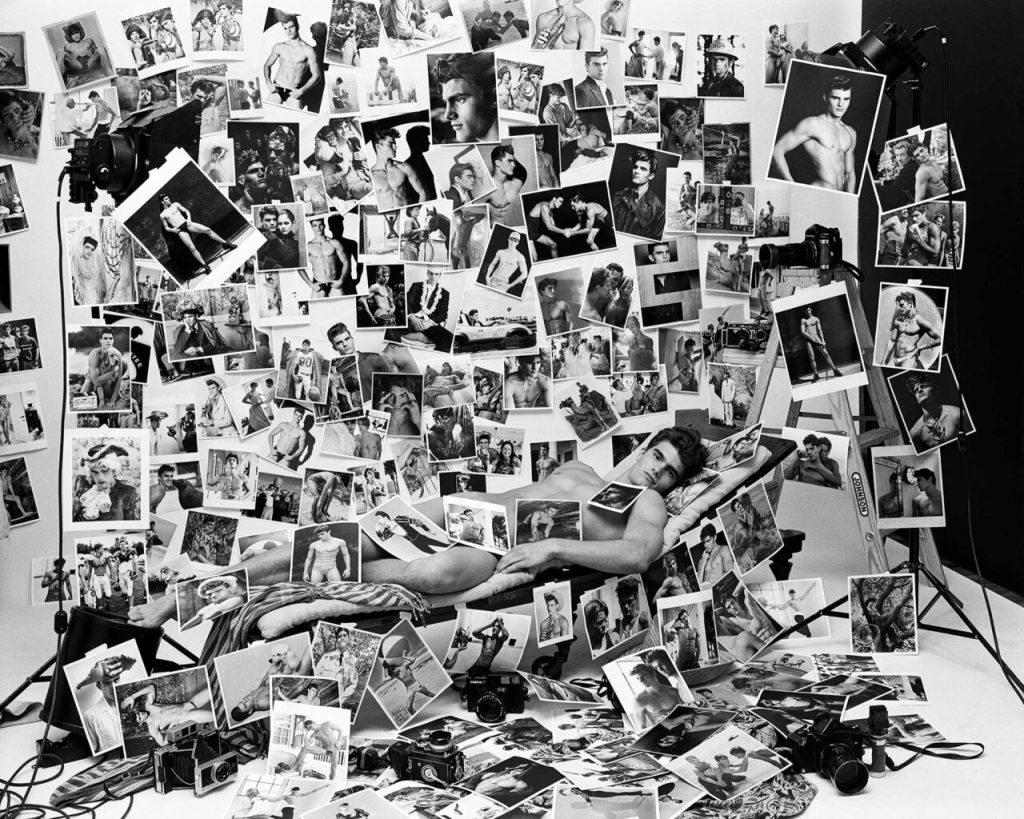
My friend’s remark referred to the recent controversy surrounding Weber, the photographer-cum-filmmaker who shot to fame in the late 1970s and helped reshape advertising throughout the 1980s by becoming one of the first photographers to present male models as overt sexual objects.

At the height of his career he could command more than $20,000 a day. Then came allegations of sexual misconduct and exploitation. Weber denied the accusations, and several lawsuits were later settled out of court.

There are simply too many good photographs for me to turn my back on him.

Speaking at the film’s release, Weber said:

“I just hoped this film might be interesting for students or anyone who ever picked up a camera in their life. It’s a film about how things don’t have to go in their normal progression. I hope that somebody in a small town somewhere might be inspired by it to go their own way.”


Everything in Chop Suey revolves around Peter Johnson and Weber’s fascination with youthful male beauty.

For somebody as shallow-minded as myself, that makes for compelling viewing.

Weber met the 15-year-old Johnson at Dan Gable’s Wrestling Camp in Iowa in 1996. Over the following four years he documented the young man’s maturation as he embarked on a modelling career and eventually started a family.

“I thought that Chop Suey might be the right name for a boy from Wisconsin.”

The documentary is unapologetically homoerotic. Johnson appears clothed, semi-clothed and fully naked. It feels less like voyeurism than the gaze of an artist worshipping his young, athletic and heterosexual muse, exploring longing, unrequited desire and the aesthetics of the male physique.

“Peter Johnson really got a great confidence in himself. He was able to look people straight in the eye, and he wasn’t embarrassed that he was a great poseur.”

Weber has been married to film producer Nan Bush since 1977, a fact that inevitably prompts questions about his own sexuality.

The camera seems hopelessly in love with Johnson, lingering over him in shot after shot. Weber saw in him something almost mythic: youth, beauty and a perfection that could never quite be possessed. Johnson, meanwhile, appears blissfully unaware of the spell he cast. He comes across simply as a decent small-town boy, happy to indulge Weber’s fascination but never defined by it.

When the filming ended, Johnson quietly stepped away from the mythology that had grown up around him. Rather than pursue immortality as somebody else’s muse, he chose anonymity, marriage and the raising of three children. In doing so, he achieved something far rarer than eternal youth: an ordinary life, fully lived.

So, was my friend right to suggest that I might like Chop Suey?

You bet he was.